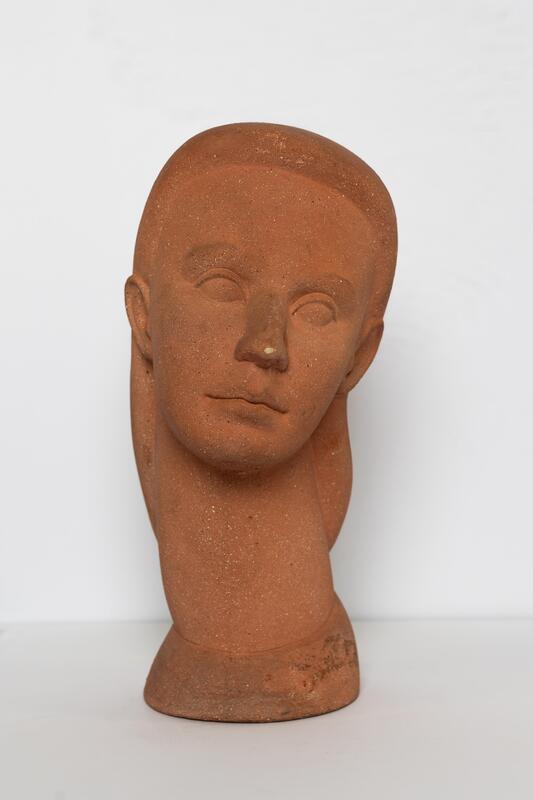
William Artis was a sculptor from Washington, DC. "A Terra-Cotta Head" is a bust of a woman with a solemn expression. The bust has a slight head tilt with an elongated neck.
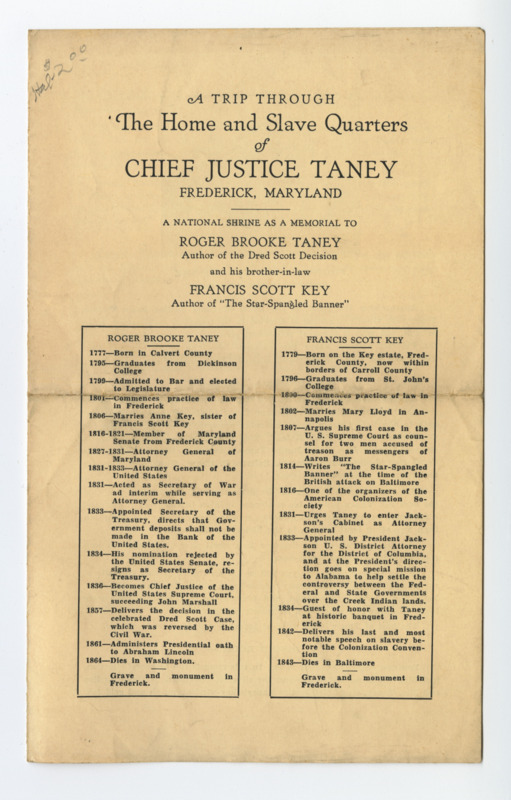
This document provides a glimpse into the Taney estate, showcasing its stairways, drawing room, and slave quarters. Special recognition was given to the Francis Scott Key Room, commemorating his legacy as the writer of the Star-Spangled Banner.
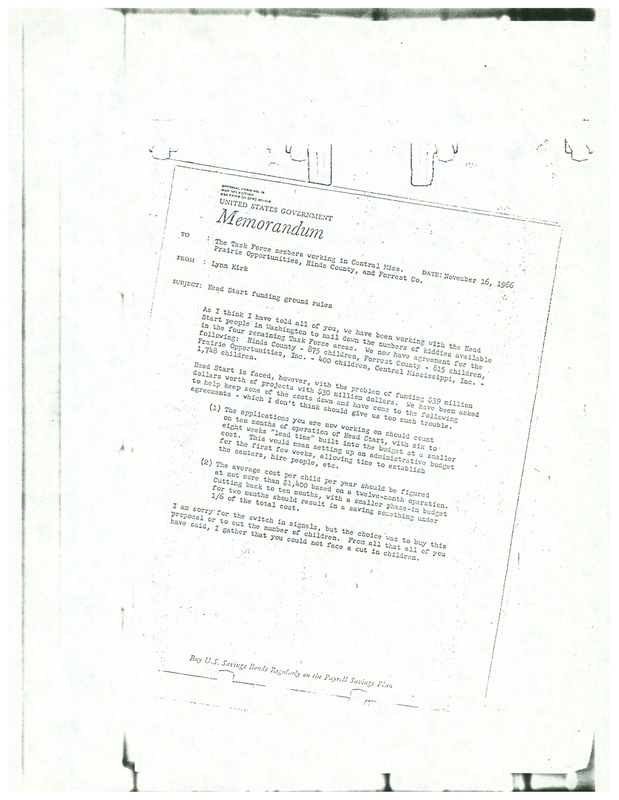
A United States Government Memorandum from Lynn Kirk to The Task Force members working in four different areas of Mississippi with the subject “Head Start funding ground rules.” The memo details how to save money so Head Start can operate with $30 million of a needed $39 million in funding without having to reduce the number of children served.
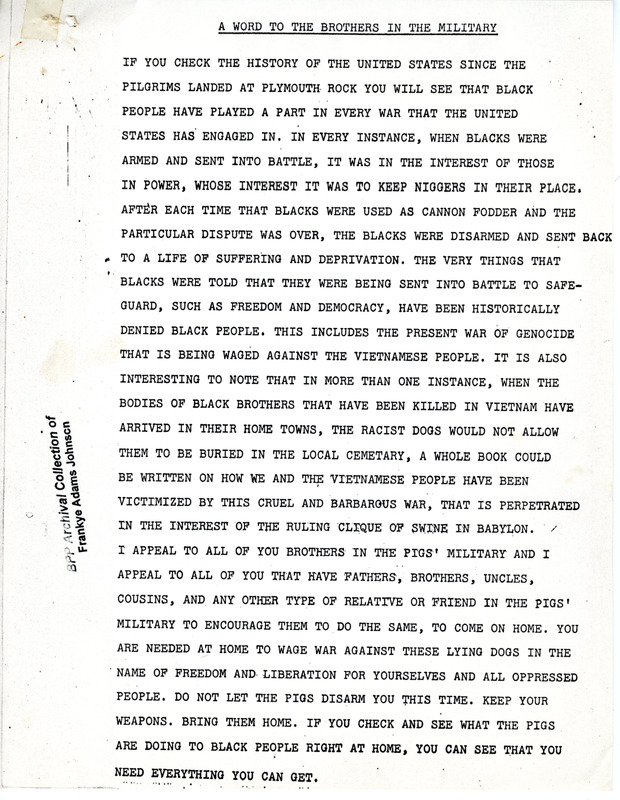
An essay encouraging Black members of the military to turn their weapons on their racist officers and come home with as many weapons as possible, like machine guns and grenades, for the liberation struggle. The author also suggests that the Black military members destroy machinery such as planes, tanks, helicopters, and ammunition dumps.
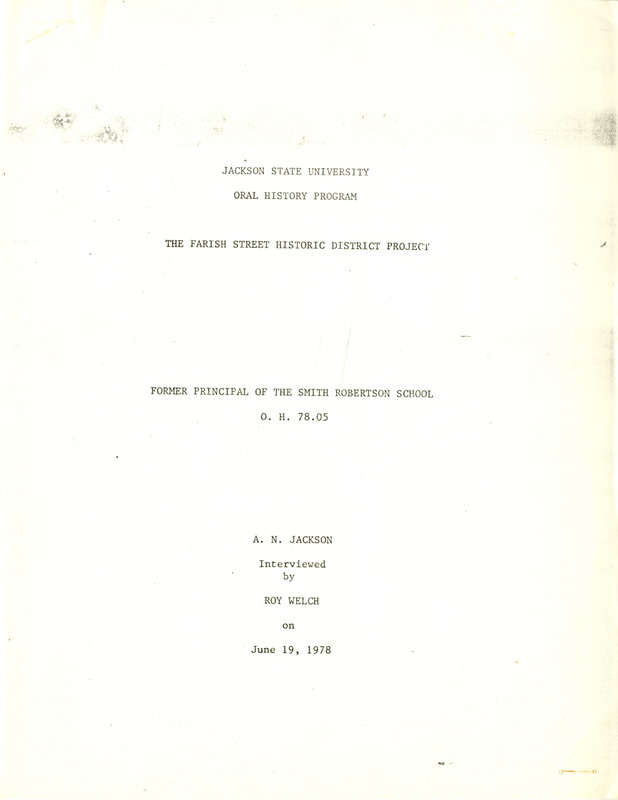
A.N. Jackson moved to Jackson, MS in the 1920s as a teenager. He discusses his grandparents and their lives as slaves; his grandfather fought for the Union Army in the Civil War. He also talks about his teaching career which encompassed the Jackson schools Lanier High School and Smith Robertson School, where he became principal in 1950.
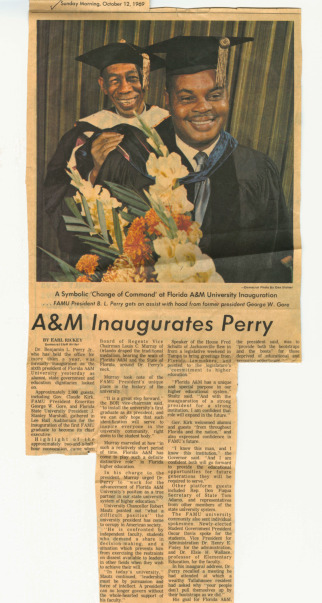
This news article features a rare photograph of the peaceful presidential transition of power at the formal inauguration of Florida A&M President Benjamin L. Perry. In the picture, a smiling B. L. Perry gets assistance with his hood from a beaming former president, George W. Gore.
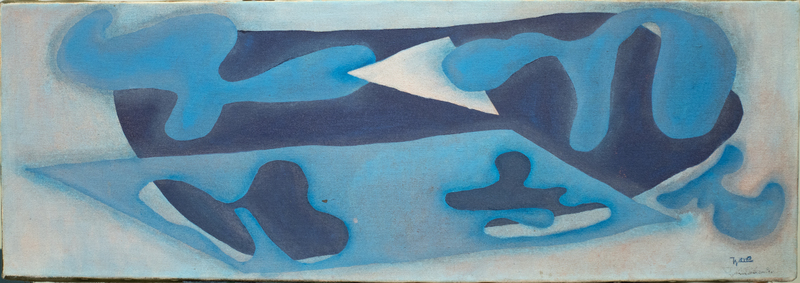
Ware’s blue, abstract painting is created in landscape form. Curved shapes are layered over an oval-shaped form. The top layer is a slanted prism with cutout shapes that slightly imitate the forms floating around. Abstract art of this sort is not commonly featured in the permanent collection of Texas Southern University.
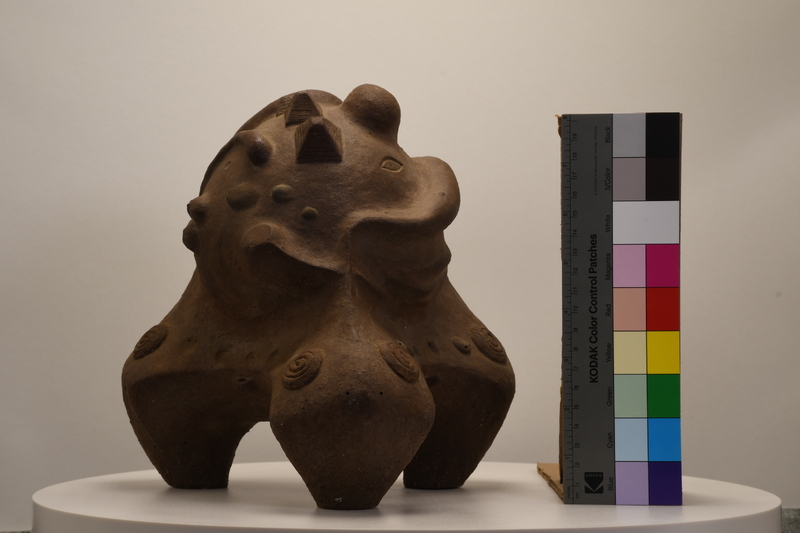
This is an abstract work featuring adornments like swirls, eyes, and pyramids. This blend of symbols suggests themes of hybridity and the fusion of cultures. Professor Carroll Harris Simms' terracotta tradition was inspired by the shrine sculptures of the Nok and Ife peoples of West Africa. In diasporic contexts, the sculptures' significance evolves.
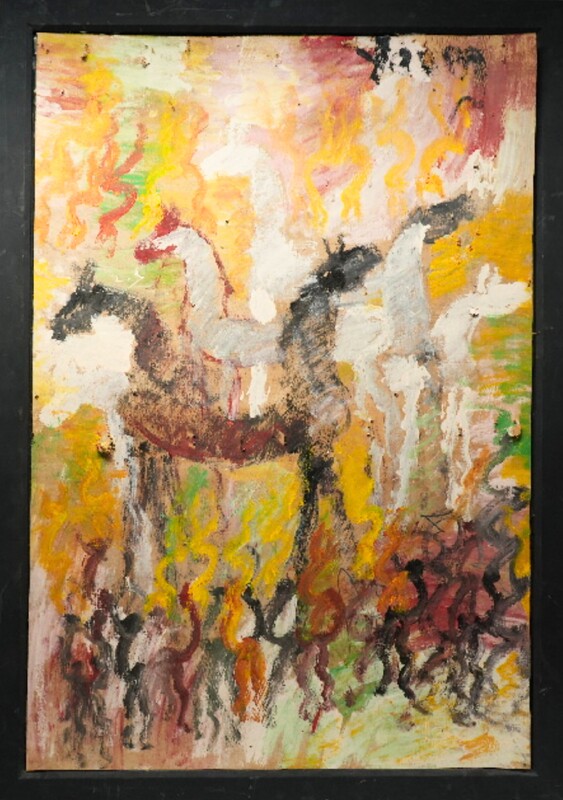
Signature fusion of urban expressionism and folk art. The horses, are a recurring symbol in his work, represent freedom, movement, and resistance. Created with bold, layered brushstrokes on reclaimed wood, the piece embodies themes of liberation and struggle, often inspired by the energy and challenges of inner-city life.
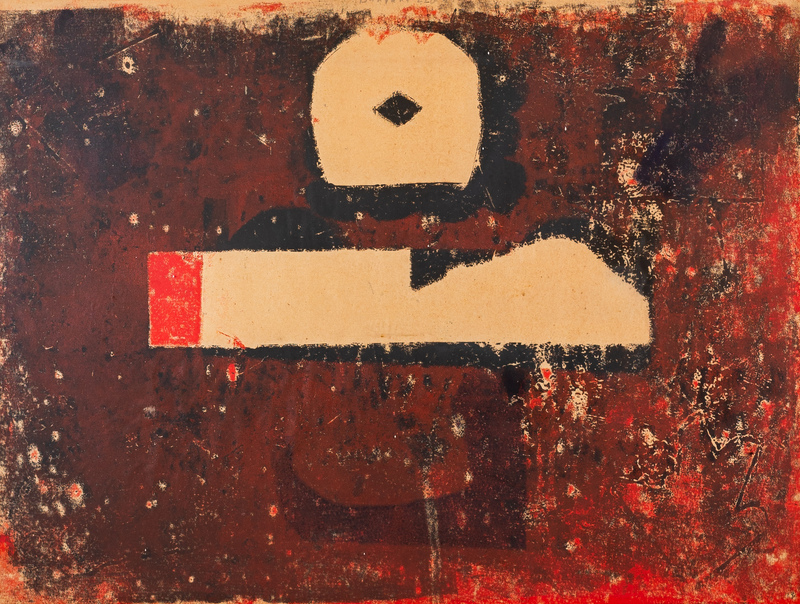
Barbara L. Gallon was an artist from Tallahassee, FL. "Abstraction" centers two abstracted shapes painted in a light tan, paired with a bright red square in the left. They are boarded by black paint and layered on a surface of dark red, brown, black, and tan.
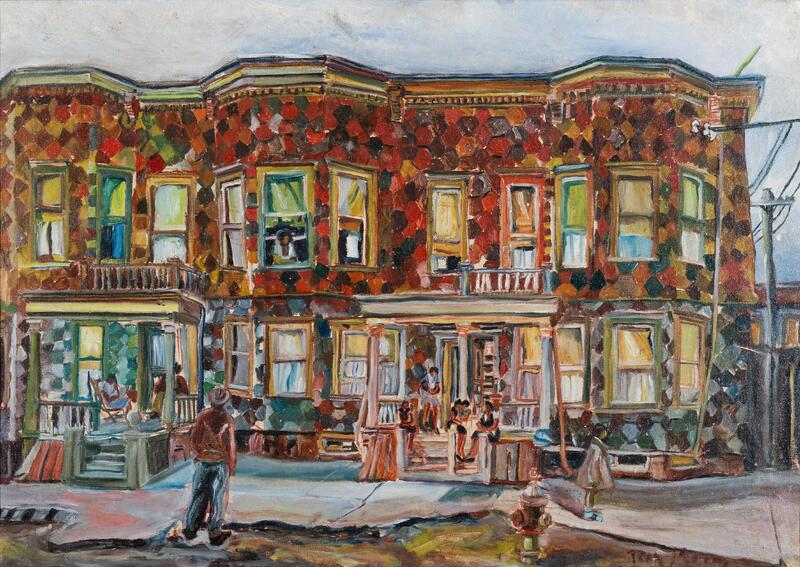
Walter Augustus Simon was an art historian, professor, and artist best known for his abstract oil paintings from Petersburg, VA. "Abstraction—The City—No. 3" depicts a city scene in front of a set of brownstones with abstracted bricks. Several Black people are conversing, relaxing, and playing around the building.
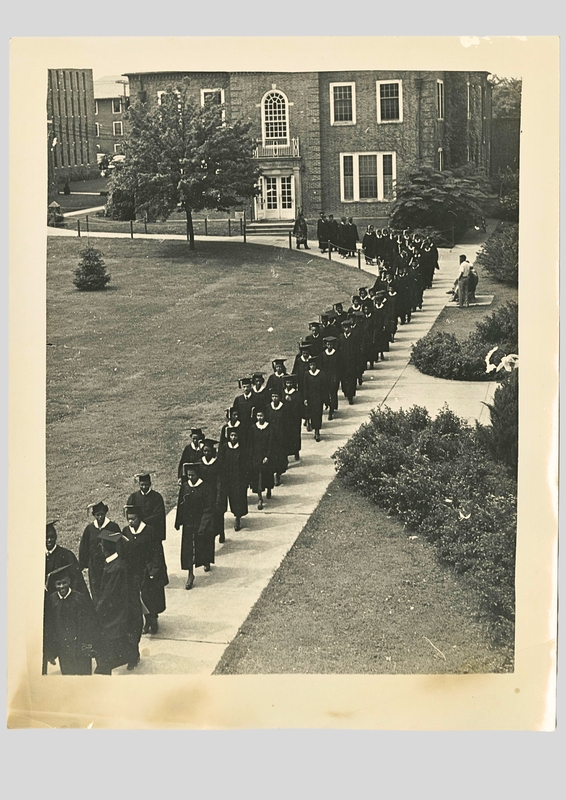
This photograph shows a glimpse into Florida A&M campus life in its early days. Graduating students in a double file line march through campus in graduation memorabilia while others look on. It is unclear when this photograph was taken as no significant identifying information exists.
Case Data and Exhibits for Brown III, a relitigation of Brown v. Topeka Board of Education (1954) that corrected resegregation issues caused by open enrollment school choice in 1992. A document defining the regulation and accreditation of Kansas public schools as relating to administration, courses of study, and instruction.
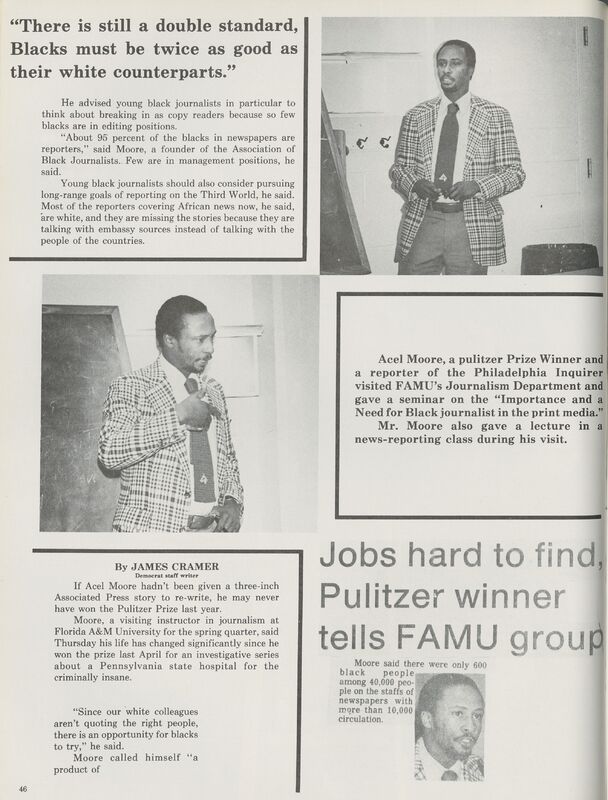
In this page from the 1978 Rattler Yearbook, Acel Moore, a Black Pulitzer Prize Winner and reporter for the Philadelphia Inquirer, visited Florida A&M’s Journalism department and news-reporting class to give a seminar and lecture on the increased need for Black journalists in print media.
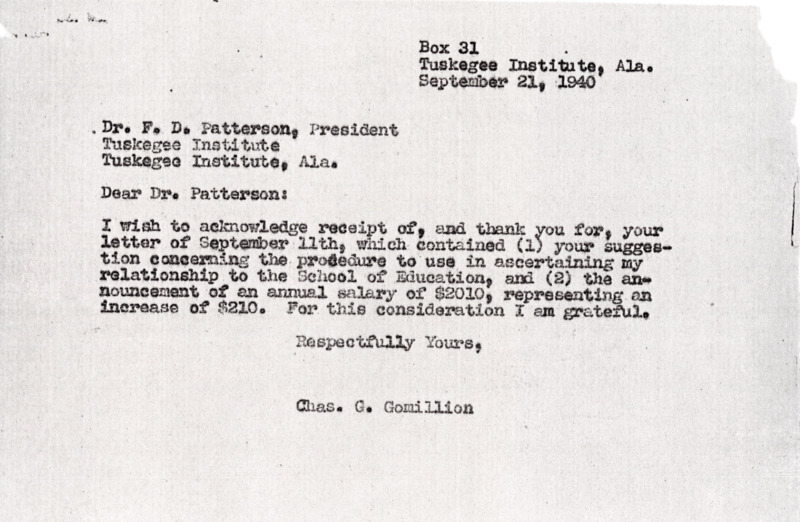
A letter from Charles G. Gomillion to President Frederick D. Patterson acknowledging his receipt of the 09/11/1940 letter and accepting increase in pay to continue working at Tuskegee.
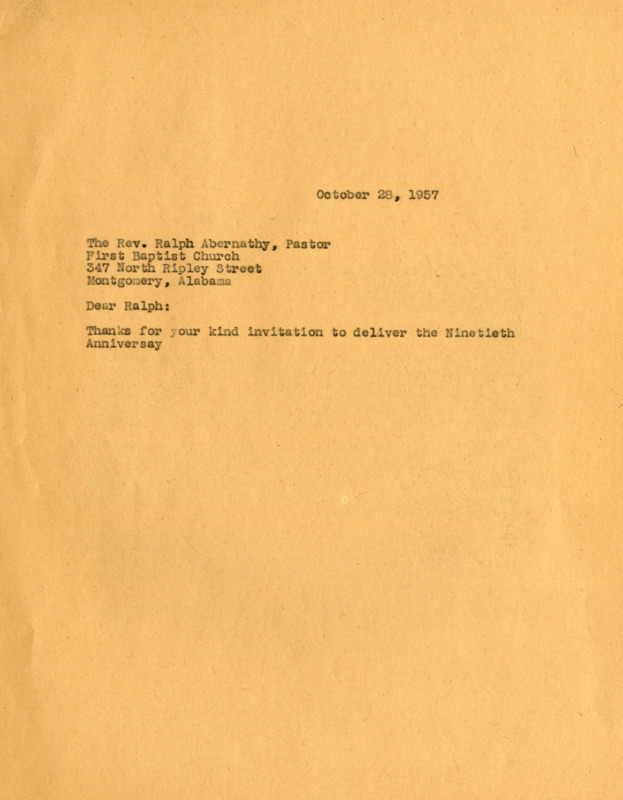
A thank you letter from Chaplain Wynn to Rev. Ralph Abernathy expressing gratitude for the invitation to be guest speaker for First Baptist Church celebration.
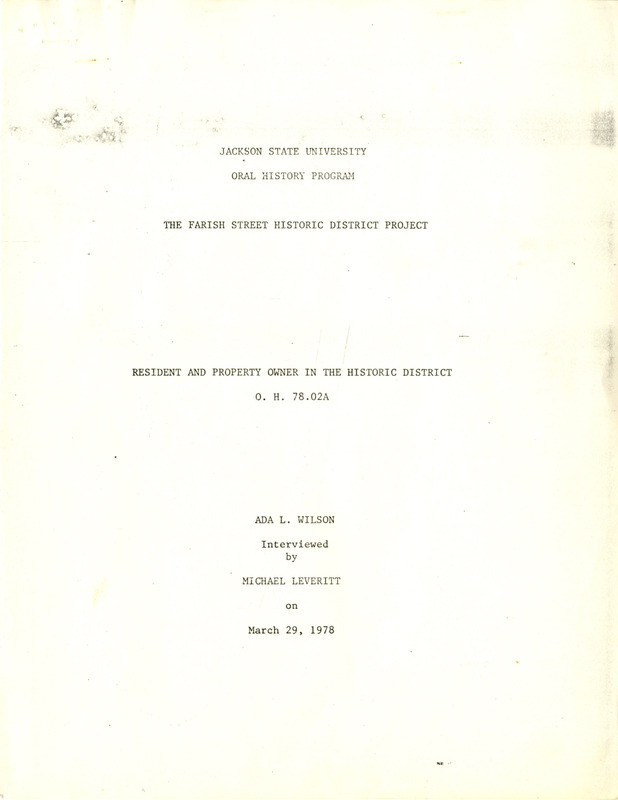
Ada L. Wilson moved to the Farish Street District in 1945 after graduating college and went on to work as a teacher in Jackson Public Schools and Jackson State. She discusses Wilson's Grocery Store, her family’s business in the district. She also talks about her efforts to stop the city from demolishing Smith Robertson School after its closing.
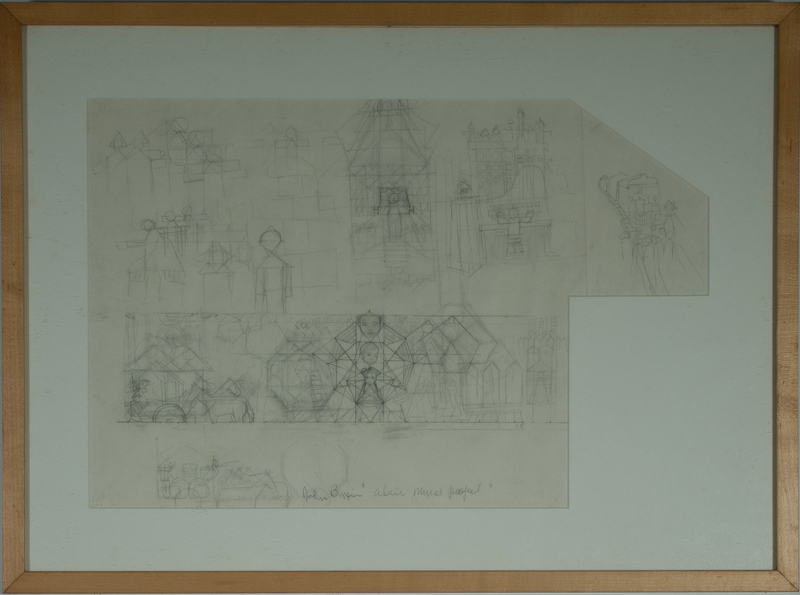
This sketch by John Biggers is part of his planning process for his mural in Christia V. Adair Park, named for an iconic Houston civil rights activist. As part of this project, Biggers also designed a pavilion to contain this mural, drawing inspiration from the homes of the Dogon people of Mali. The mural itself features scenes from Adair's life interspersed with Biggers's own Afrocentric iconography.
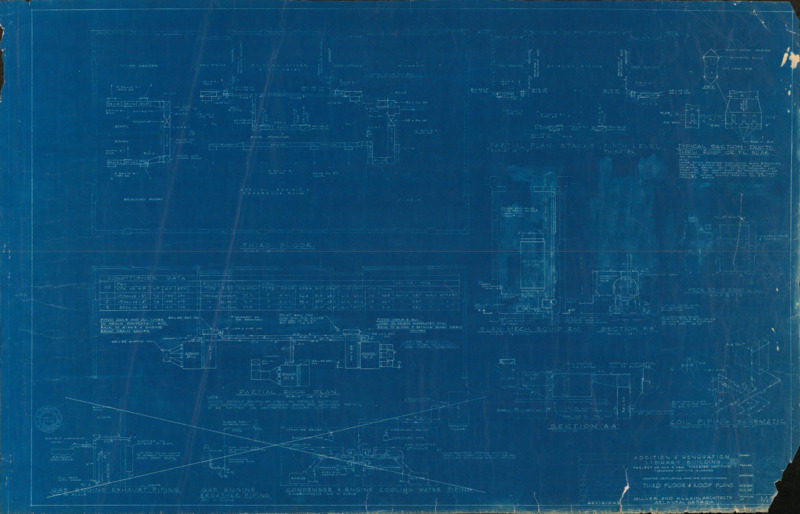
A mechancial HVAC drawing blueprint of the additions and renovations for the Library Building regarding the 3rd Floor and Roof Plans at Tuskegee Institute located in Tuskegee, Alabama.
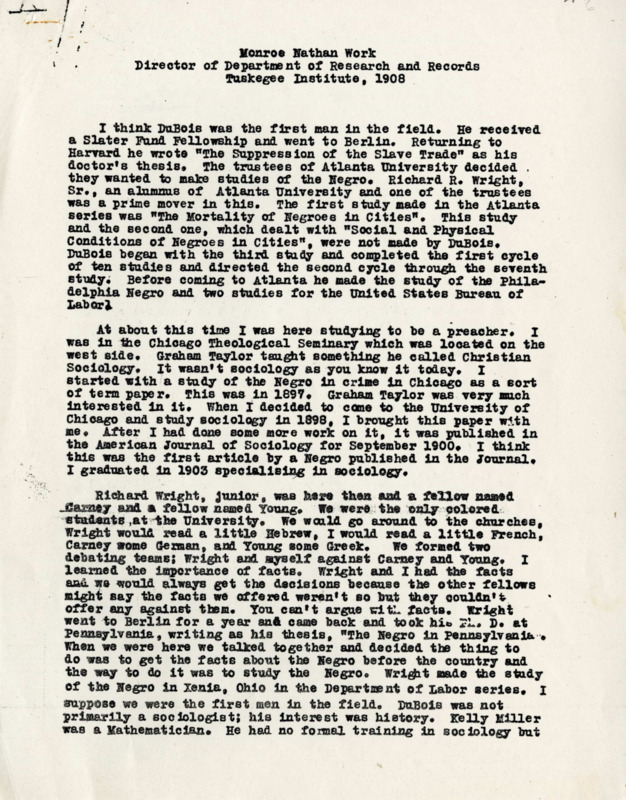
Five pages on Monroe N. Work's life, including his time at Georgia State College with his achievements and honors. At the time of writing, Jessie Guzman was the director of the Department of Research and Records at Tuskegee. Delivered at Institute Chapel.
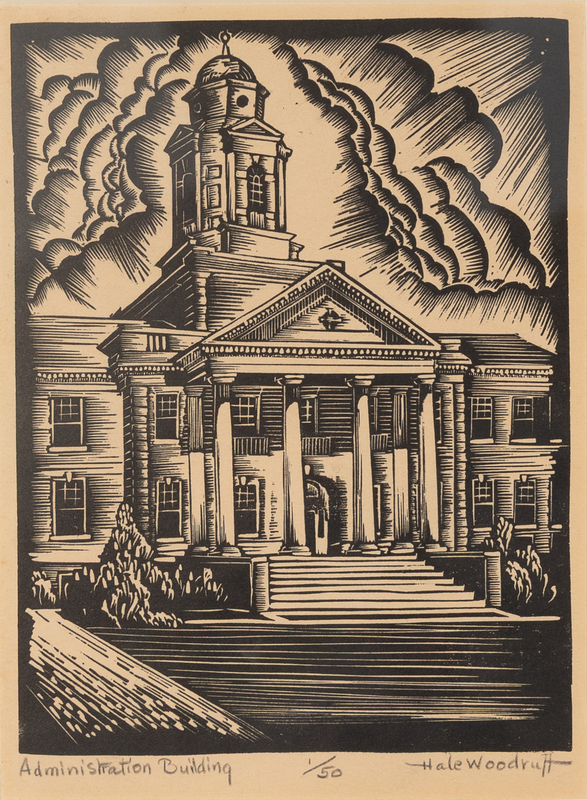
Hale Aspacio Woodruff was an artist and art educator known for his murals, paintings, and prints from Cairo, IL. "Administration Building" depicts Harkness Hall, which still serves as the administration building at Clark Atlanta University.
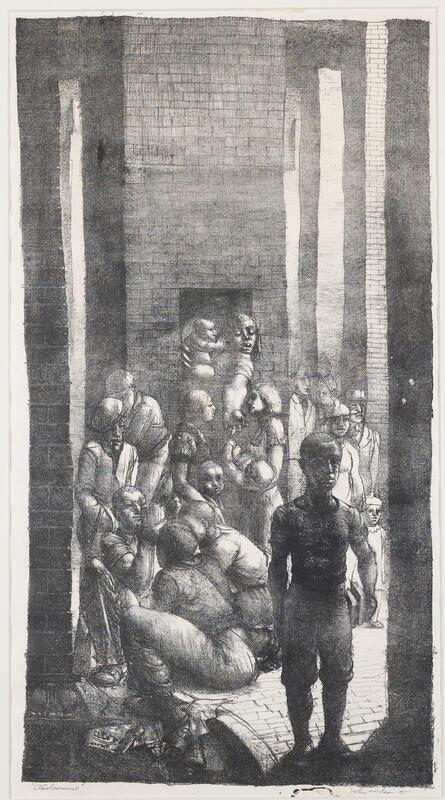
John Woodrow Wilson, a sculptor, painter, and printmaker from Roxbury, MA, was known for his creative portraits and stylistic approach to social justice. "Adolescence" is a sketch depiction of the social interiorities of urban life. A young boy faces the viewer in the foreground while groups of people socialize in the background.
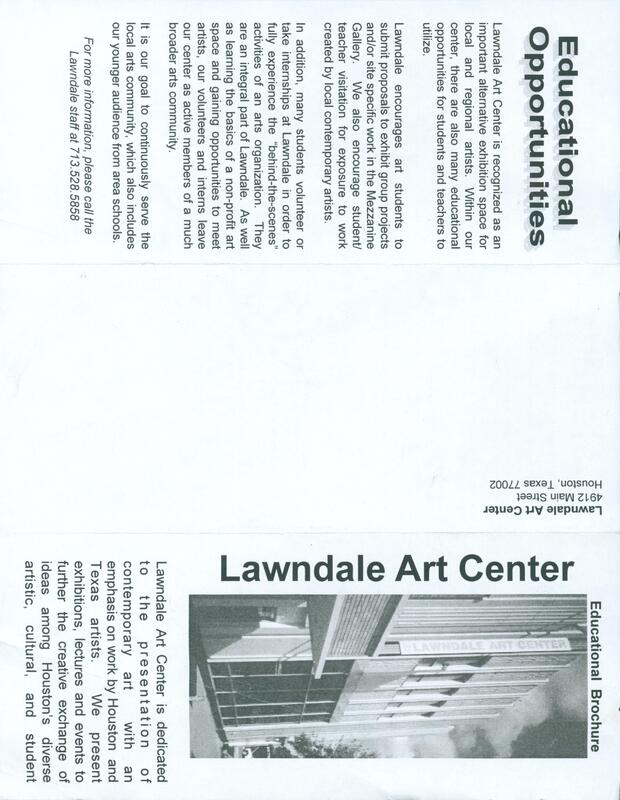
This is a brochure from Lawndale Art Center advertising, among other things, the Otabenga Jones & Associates’ exhibition Symmetrical Patterns of Def. Made up of members Dawolu Jabari Anderson, Jamal Cyrus, Kenya Evans and Robert A. Pruitt, the collective was formed to harness the group's creativity and provide them an entry-point into the art world. The four met and became friends in Harvey Johnson’s drawing class at Texas Southern University.
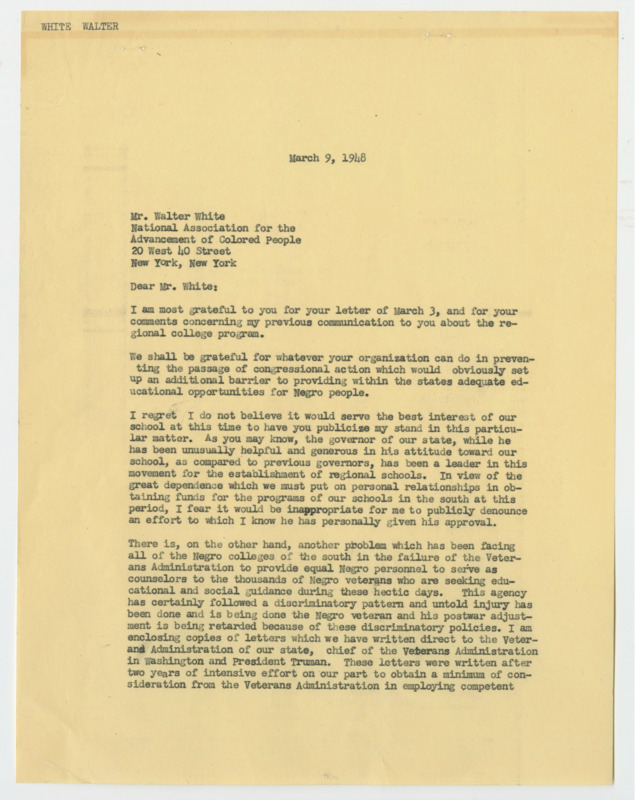
This letter between former Florida A&M president William H. Gray, Jr. and Walter White of the National Association for the Advancement of Colored People (NAACP) discusses the Southern Regional College Plan. Gray wished to stray from the publicity of the controversy; thus, he addressed issues of the Veterans Administration.
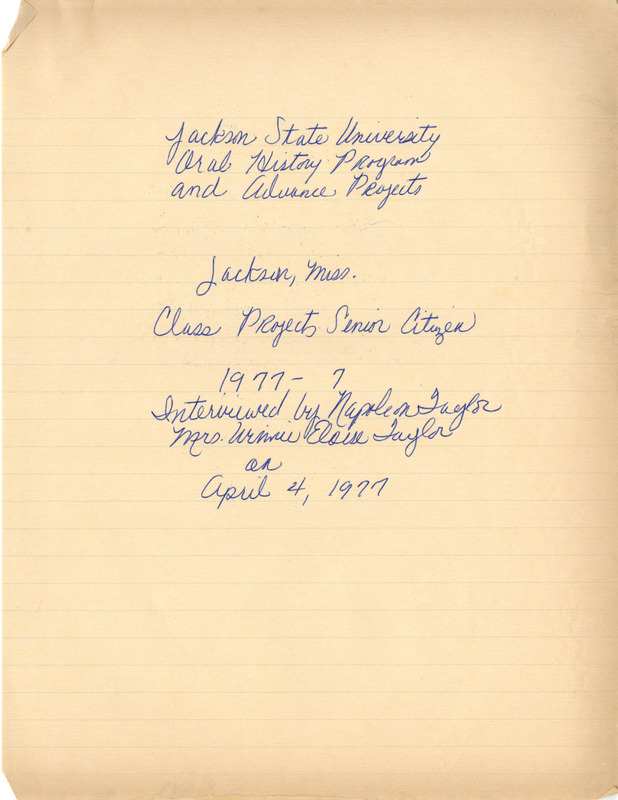
Aerl Cobbs was born in 1900 and lived in Jackson, Mississippi, his whole life. Mr. Cobbs talks about his childhood and the games they played. He remembers some of the great educators in Jackson from his time in various schools in the city. The transcript is handwritten.
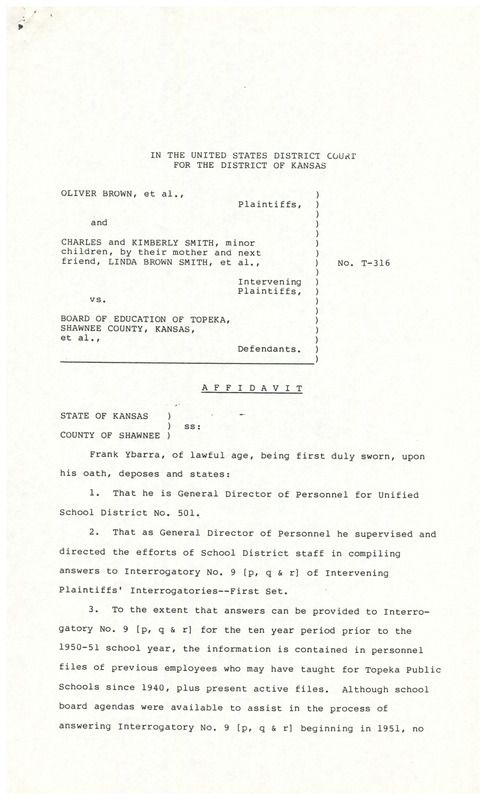
Case Data and Exhibits for Brown III, a relitigation of Brown v. Topeka Board of Education (1954) that corrected resegregation issues caused by open enrollment school choice in 1992. Four affidavits from Topeka School District defendants presenting arguments of why some documents requested by the plaintiff attorneys cannot be produced on time.
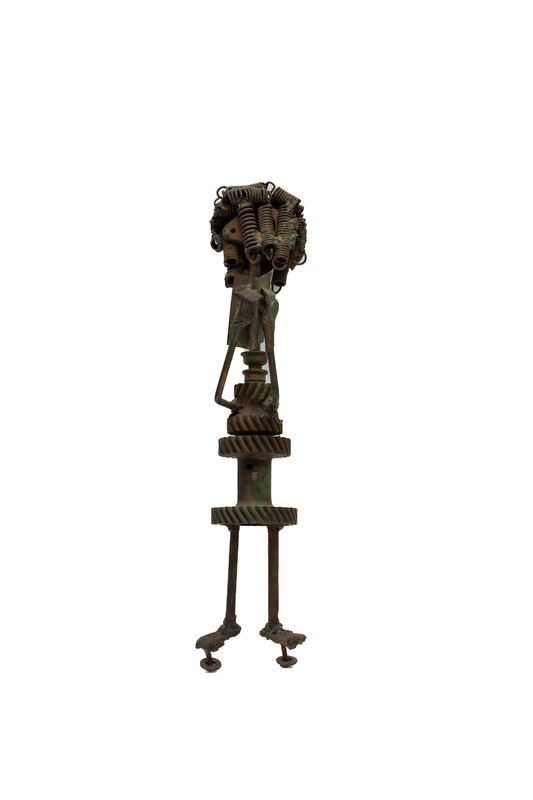
Dr. Eddie Jordan, Sr., was a Southern artist from Wichita Falls, TX. "African Decree" is a metal sculpture of a humanoid figure. It has two legs with feet that stand on stilts and a middle section of the body with vertically stacked bolts. Sculpted metal parts extend to mimic arms, and the spiraled metal pieces represent coiled hair.
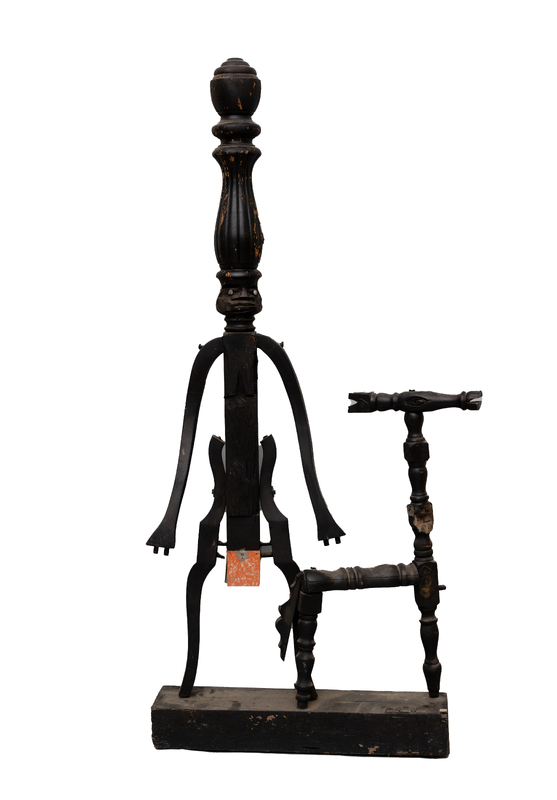
Dr. Eddie Jordan, Sr. was a Southern artist from Wichita Falls, TX. "African Female and Animal" is a wooden assemblage of its namesake made from repurposed furniture.
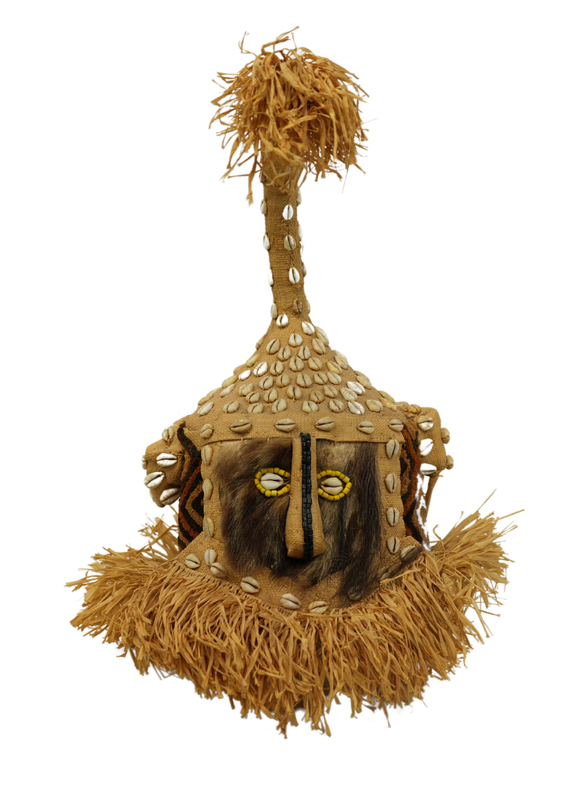
This rare, highly revered royal mask originates from the Kuba tribe in the Kasai region of the Democratic Republic of the Congo. Because the Kuba saw the elephant as a symbol of wealth and leadership, the mask is modeled after an elephant’s trunk and embellished with cowrie beads (which only royalty could handle in exchange for valuable ivory).