A newspaper article from The News Tribune about multiple disruptions on March 2, 1977, in the trial of Assata Shakur (JoAnne Chesimard) for the 1973 killing of a state trooper. Several spectators were ejected from the court after Superior Court Judge Theodore Appleby accused the defense team of orchestrating outbursts during evidence submission.
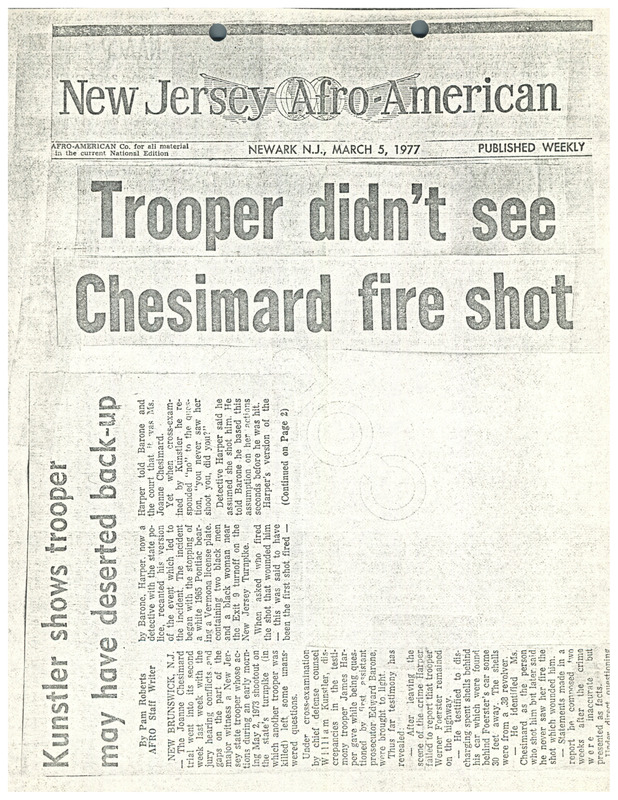
A newspaper from the New Jersey Afro-American about discrepancies in the testimony of trooper James Harper in the trial of Assata Shakur (JoAnne Chesimard) for the 1973 killing of a state trooper. In cross-examination, it was revealed that Harper had not seen Shakur fire the shot that had wounded him even though he had claimed that earlier.
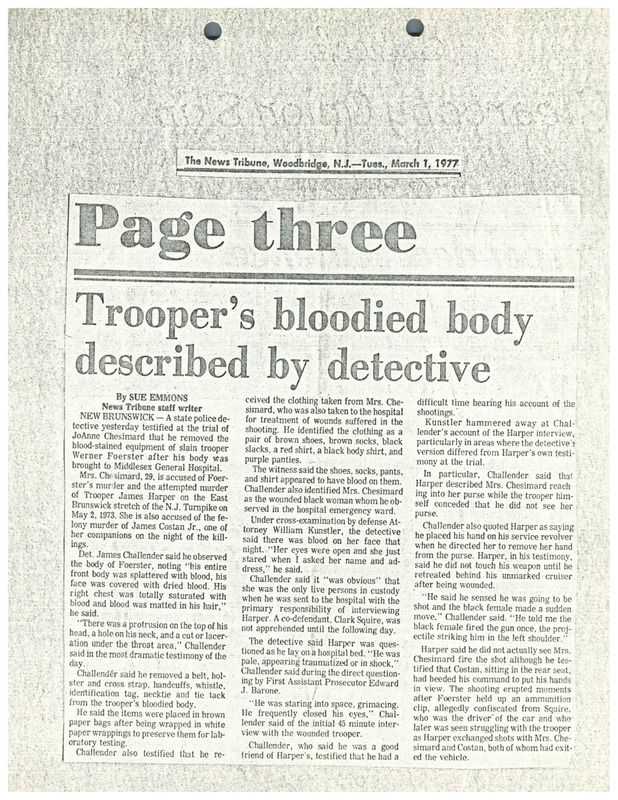
A newspaper article from The News Tribune about the testimony of State Police Detective James Challender describing what he saw at the emergency room where Assata Shakur (JoAnne Chesimard) and wounded state trooper Werner Foerster were taken after he was fatally shot. Shakur was on trial for the 1973 murder of Foerster.
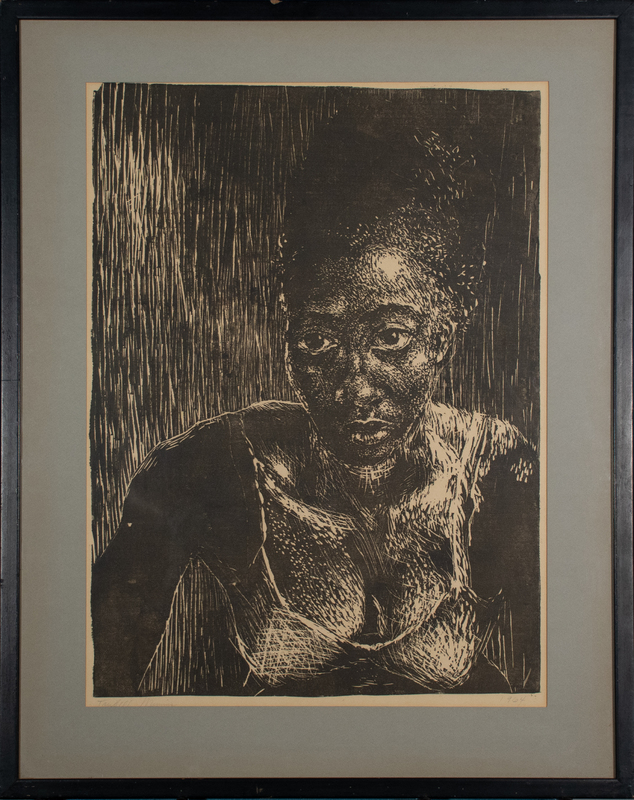
Obey’s print is a self-portrait. Under the direction of Dr. Biggers and Professor Simms, students would paint and draw self-portraits and sometimes sculpt self-portraits of their busts. This print depicts Obey in her bra; she also painted a self-portrait in a similar style. Biggers once referred to Obey as "one of our finest painters.”
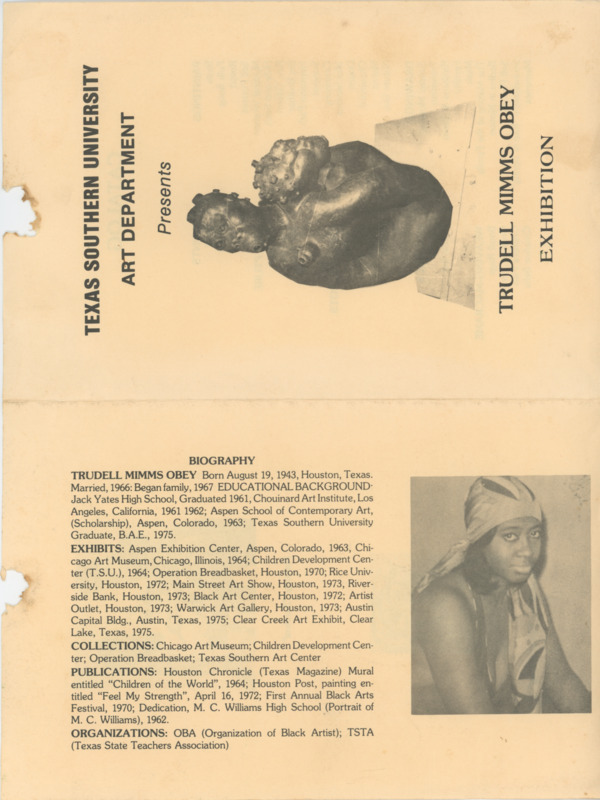
This is a brochure for Obey’s senior art exhibition. The culmination of the Texas Southern art curriculum is a senior exhibition where students showcase artwork created over the course of their undergraduate studies. The brochure features a photo of Obey, a brief biography, a catalog of the artwork featured in the exhibition, a photo of her terracotta sculpture, a photo of one of her drawings, and a photo of one of her paintings. Dr. Biggers remembered Obey as one of his favorite students.
Obey's senior notebook includes her written philosophy of art, photographs of the artist’s works and her process, and a copy of her senior exhibition brochure. As a part of the Texas Southern art curriculum under Dr. John T. Biggers and Professor Carroll Harris Simms, students would create these notebooks to explain their artistry and showcase the works they created as students.
Attorney Frank De Reeves, Board of Commissioners member in the District of Columbia, discussed the importance of direct community action and legal action in the courts to ensure full participation of American citizens in a democratic society, particularly for southern negros.
The Tuskegee Civic Association (TCA) is celebrating its 6th Anniversity for the Crusade for Citizenship. The message by Mr. John Dor, assistant to the assistant Attorney General Civil Rights Division, the United States Department of Justice.
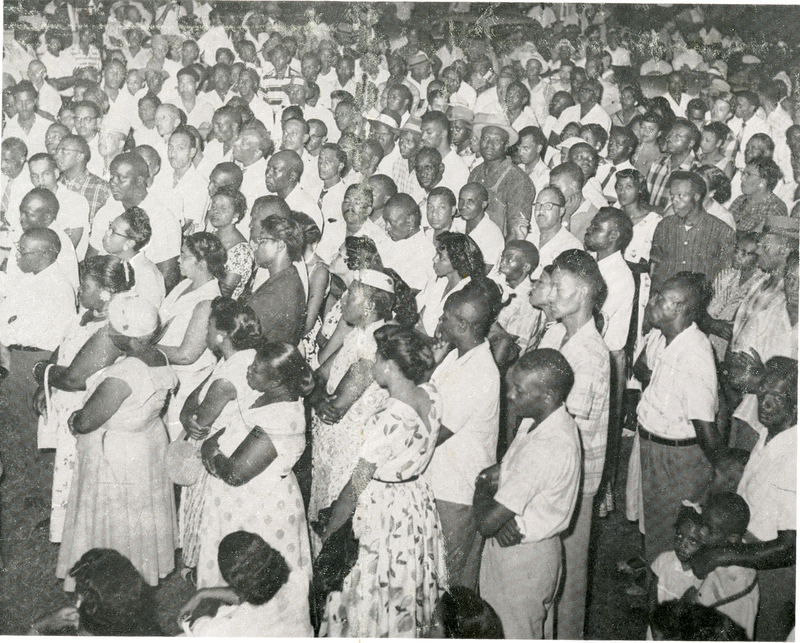
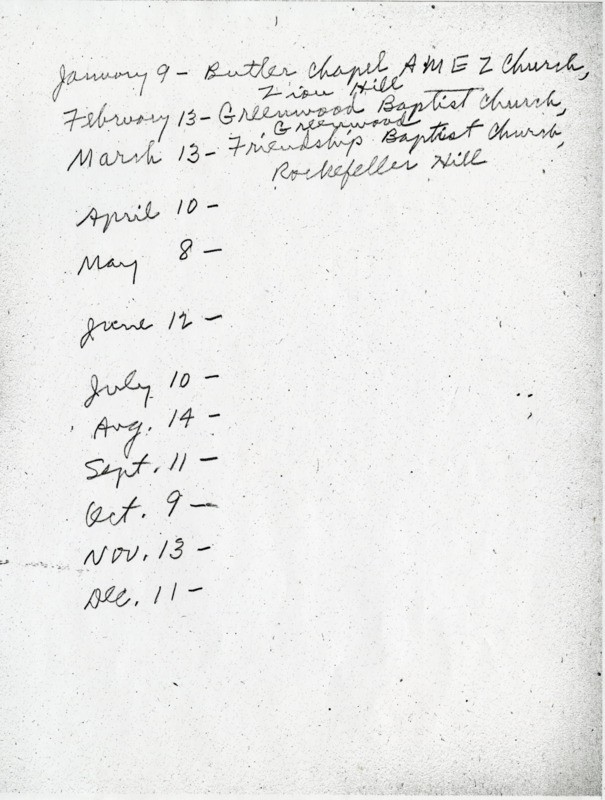
Series of mass meetings sponsored by the Tuskegee Civic Association. The meeting was held at the Greenwood missionary Baptist church. The speaker for the occasion is Reverend S.T. Martin.
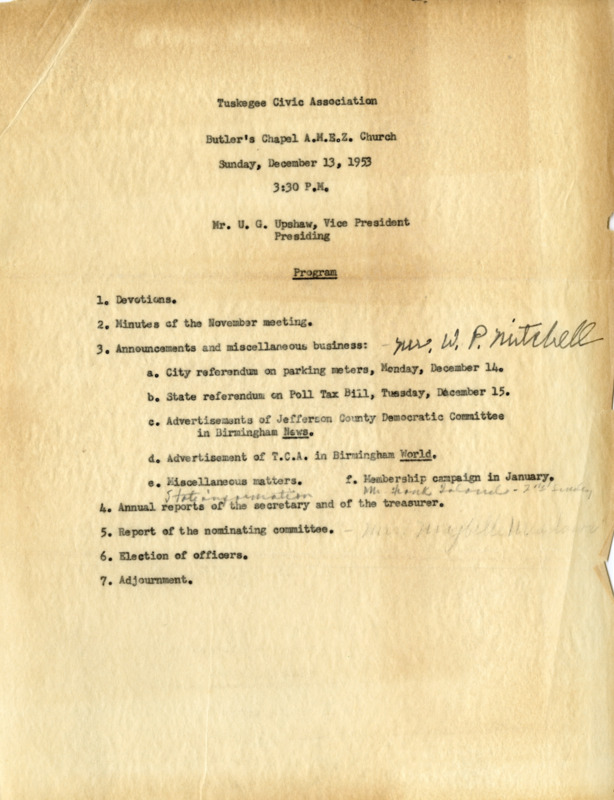
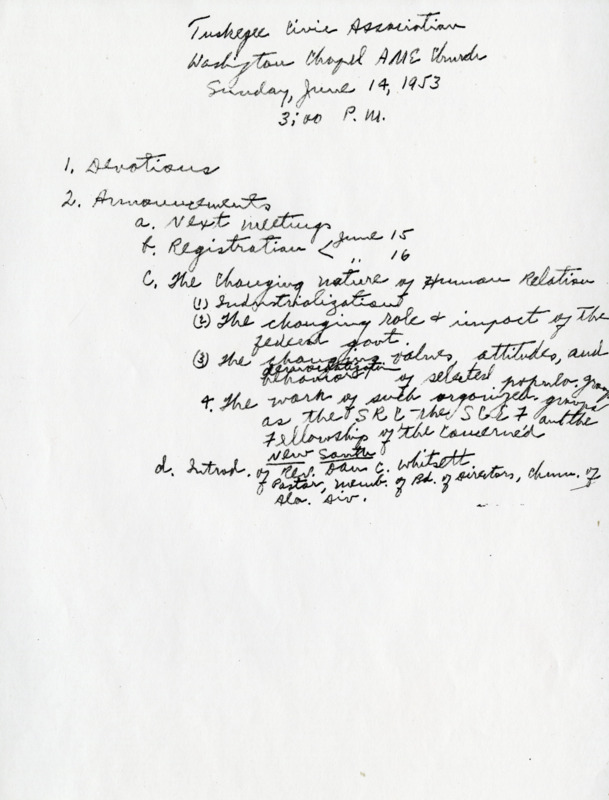
The Tuskegee Civic Association's meeting emphasized the importance of human relations and democratic action, with a focus on improving conditions for African Americans.
The Reverend KLB spoke on the subject of “The reaction of the Tuskegee City Council” and responsibility of Negro citizens and Mr. Emily Field, Director of the Fellowship of the reconciliation New York City.
The Tuskegee Civic Association (TCA) special guest, Rev. Newman, emphasized the importance of living a righteous life by doing justly, loving mercy, and walking humbly with God.
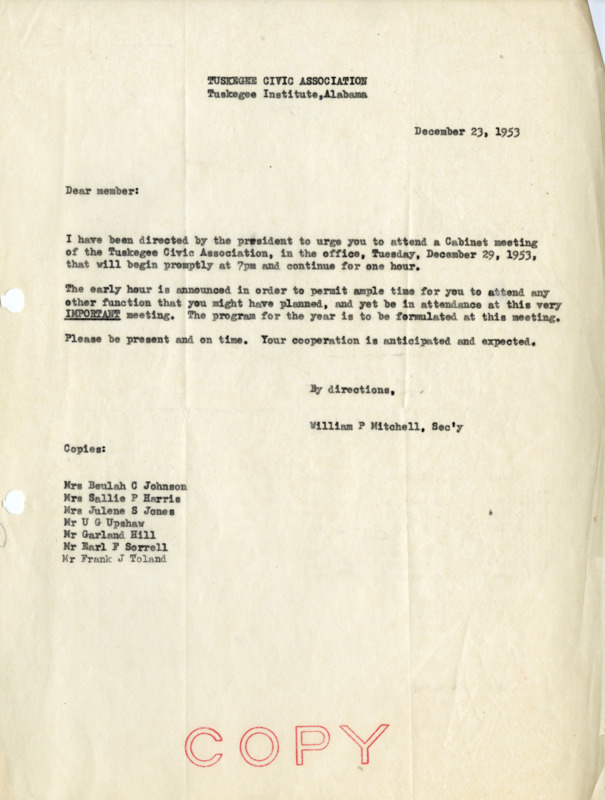
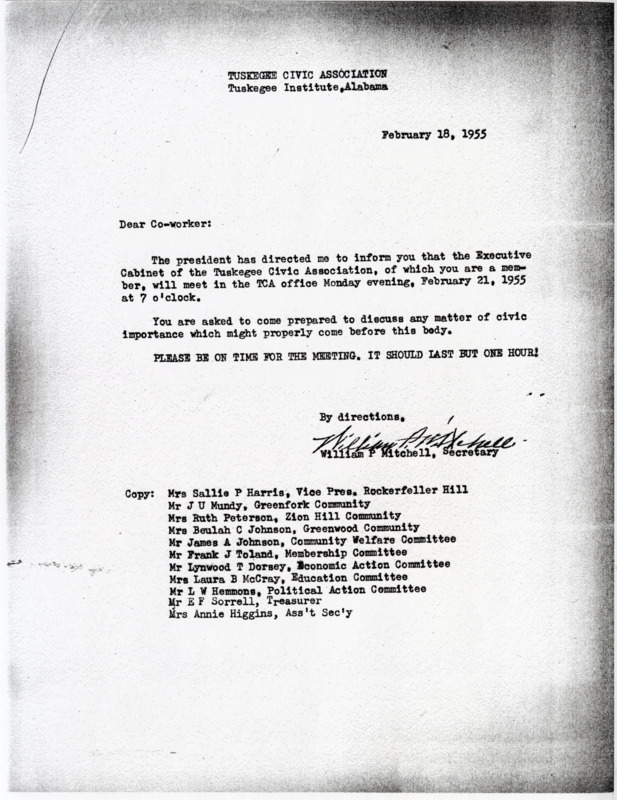
A letter for the Tuskegee Civic Association secretary William P. Mitchell requesting the presence of each member which is needed for an important upcoming TCA meeting.
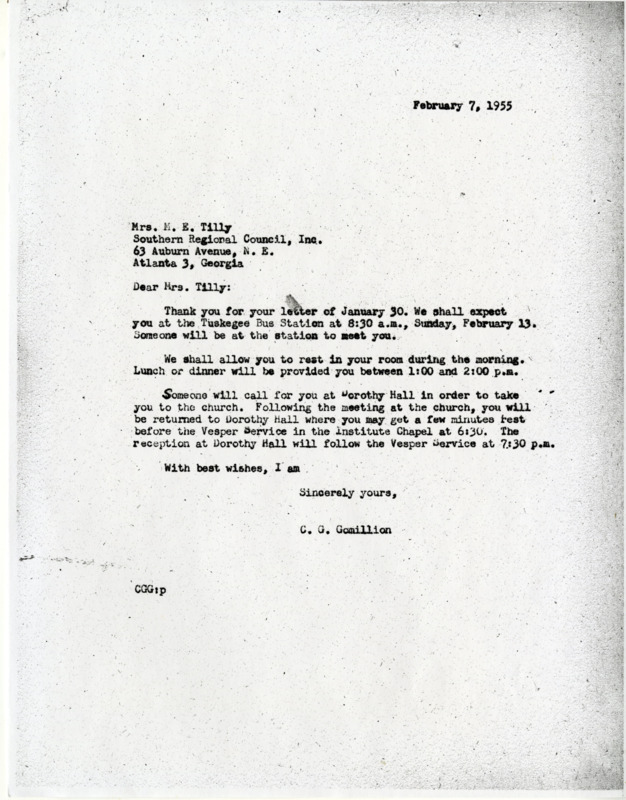
A letter from Charles G. Gomillion to Mrs. Dorothy Tilly explaining the itinerary of her visit and stating that someone will be at the bus station to meet and pick her up.
A letter from the Secretary of the Tuskegee Civic Association William P. Mitchell to a coworker to be ready for a general meeting at 7pm on 02/18/1955.
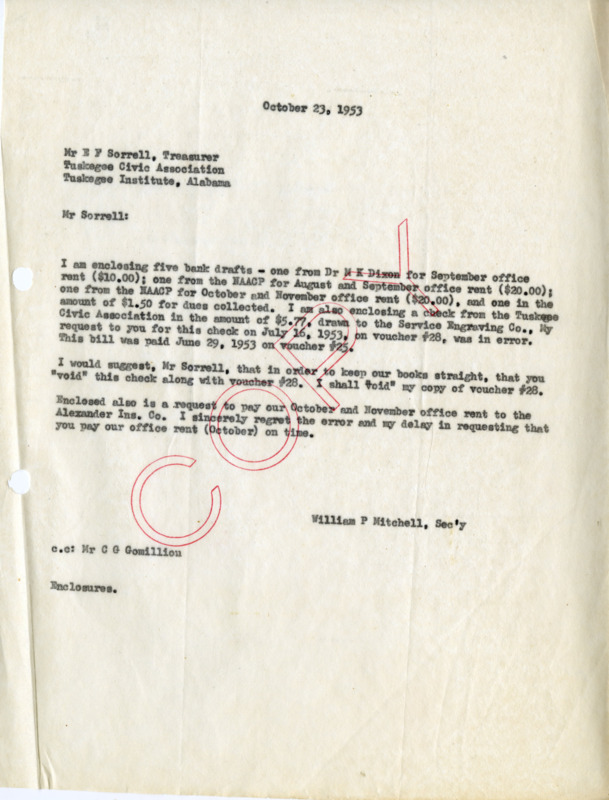
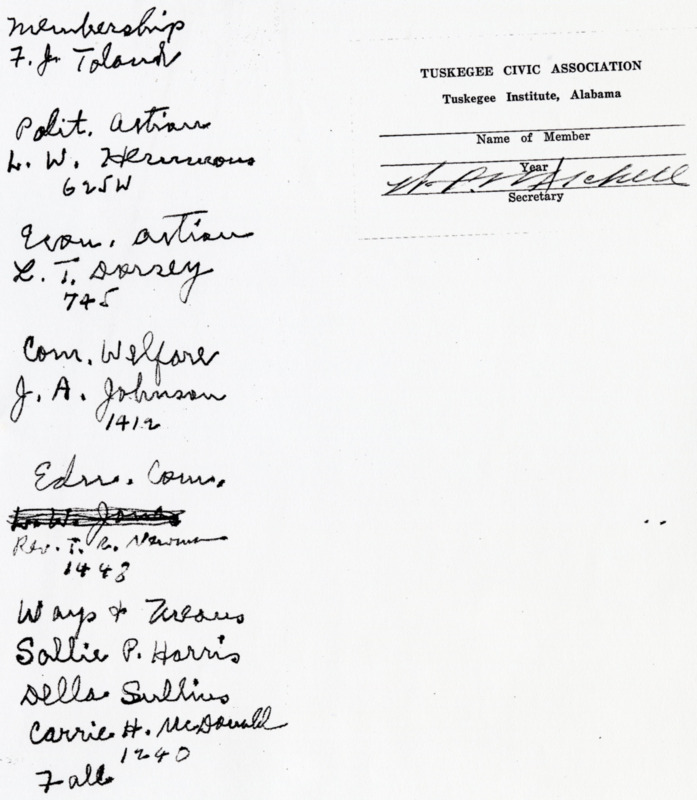
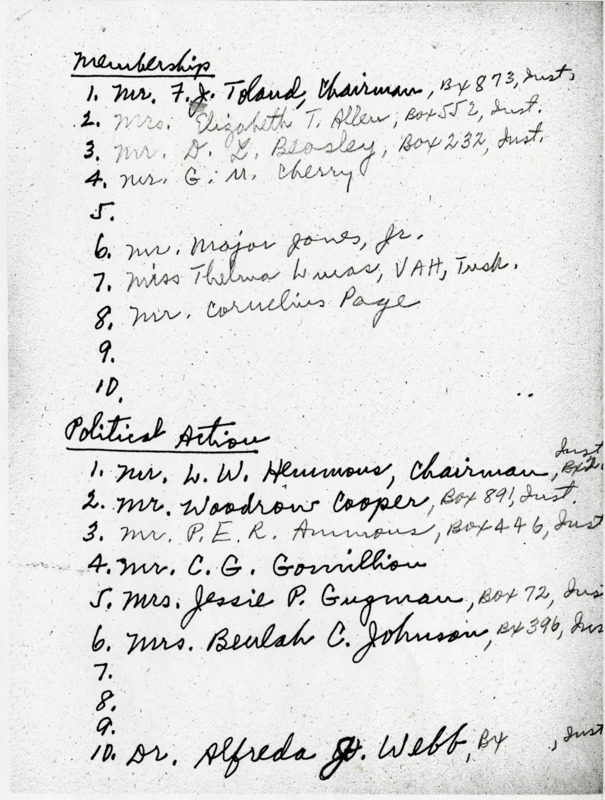
The Tuskegee Civic Association (TCA) was a nonprofit organization founded in 1941, comprised of citizens from larger Macon County, Tuskegee, AL, and Tuskegee Institute. It focused on local political and civic affairs.
Tuskegee Civic Association honored 12 students who desegregated Macon County High School with a meeting that emphasized education, self-determination, political participation, and civic engagement through speeches by Mrs. Margaret Anderson and Senator Buddy F. Welcome from Maryland.