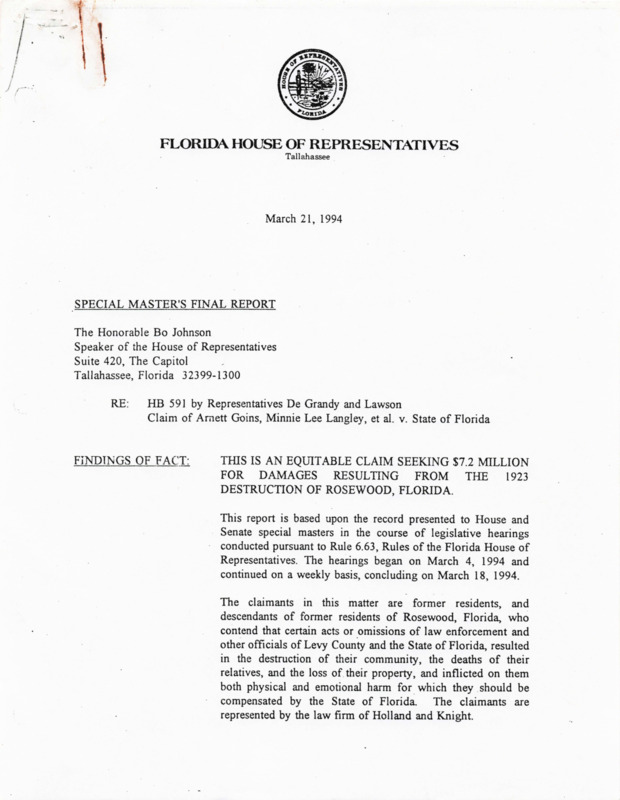
A final report from the Special Master Hearing on Rosewood, outlining the Civil Rights Office's pursuit of $7.2 million in compensation. The report addresses claims of loss of enjoyment of life, references past Congressional cases, and argues the incalculable value owed to descendants after the devastating events.
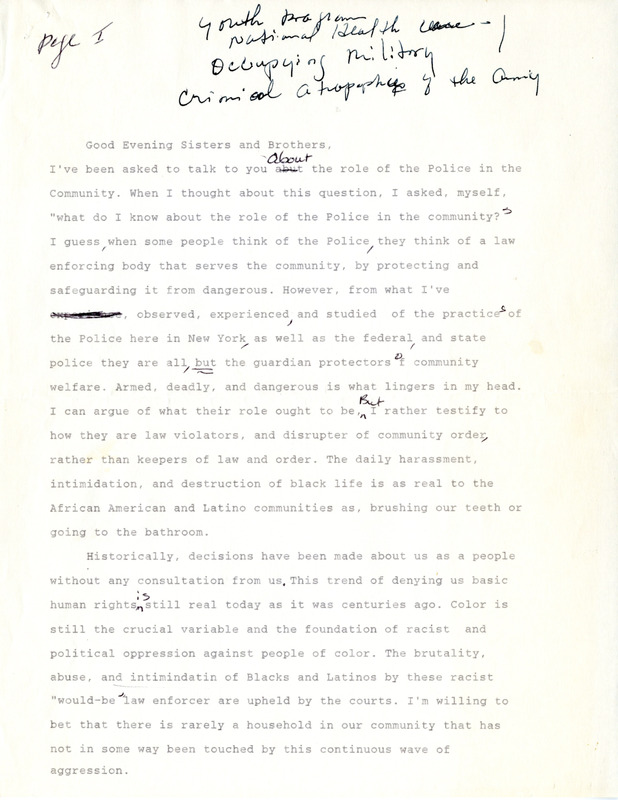
A speech by Frankye Adams-Johnson (Malika) about police in the community. She recalls interactions with the police that she has witnessed and contrasts what the police claim to be with what she sees. There is an outline for a portion of her speech about Black women leading the fight for liberation. She notes that the speech will contain poems.
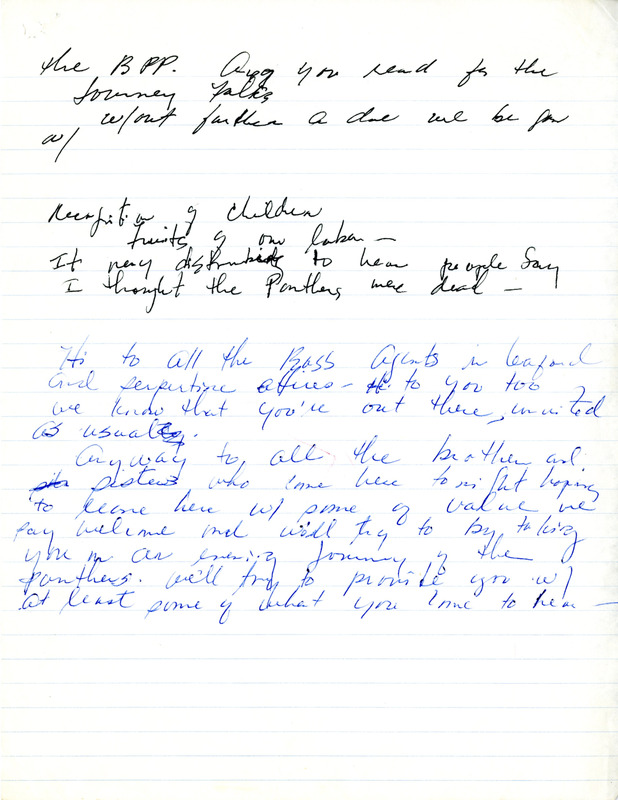
A speech by Frankye Adams-Johnson (Malika) about the Black Panthers delivered to the Community Self-Defense Program. She addresses the goals of the revolution, the actions of government agencies against them, and her motivation for joining the Party. With handwritten edits.
Outline of a speech by Frankye Adams-Johnson (Malika). Her speech is about the Black Panther Party's history, preserving it, and the power of information.
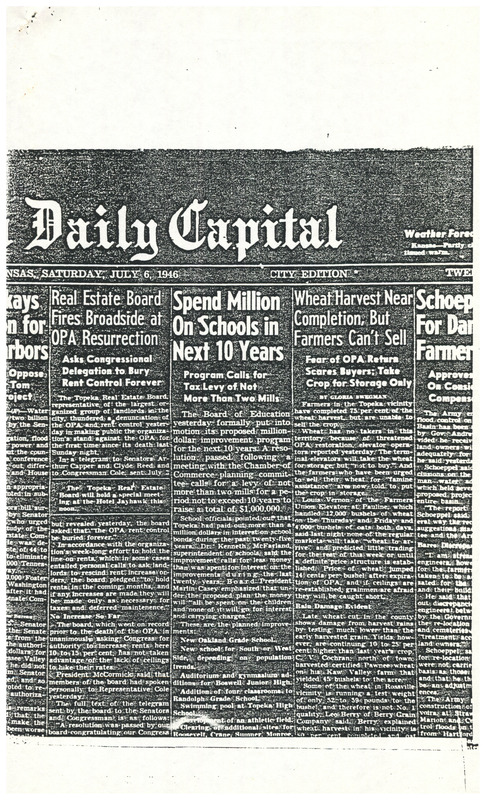
Case Data and Exhibits for Brown III, a relitigation of Brown v. Topeka Board of Education (1954) that corrected resegregation issues caused by open enrollment school choice in 1992. A 1946 newspaper article from the Topeka Daily Capital about a program calling for a tax levy of not more than $2 million dollars for school improvements in Topeka.
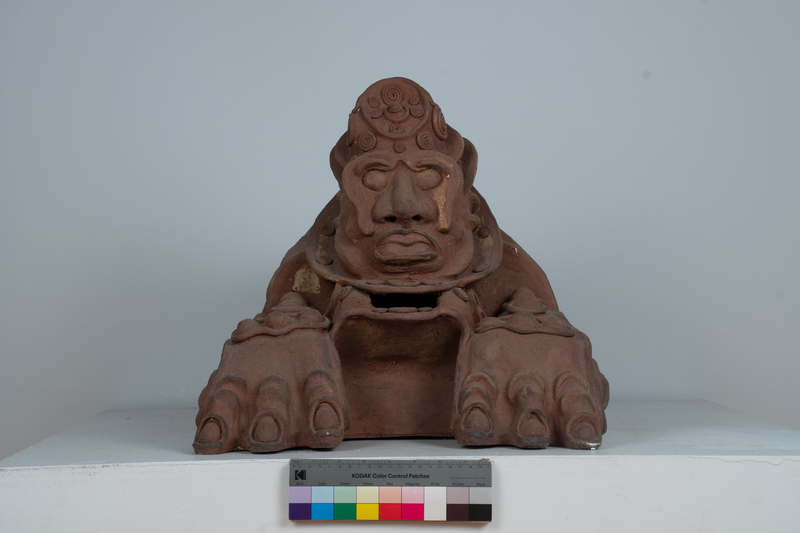
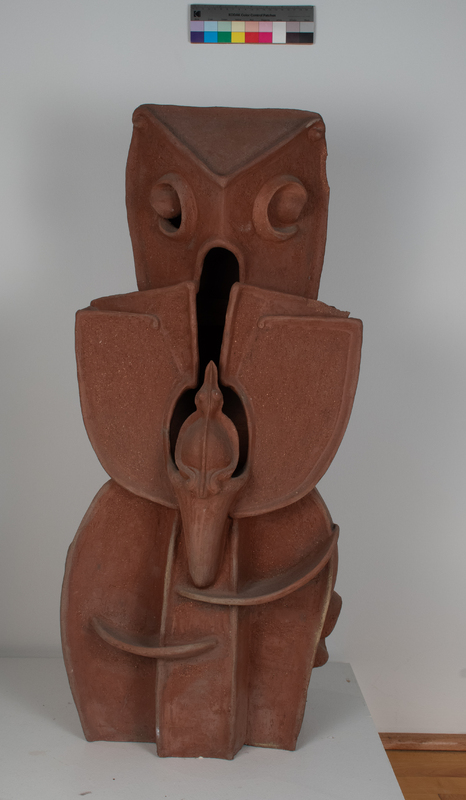
This sculpture’s form resembles a sphinx, with its humanlike face and animal body parts. The body is covered in ornamental embellishments, especially spirals. These decorations are a key characteristic of the terracotta sculptures created by the students of Professor Carroll Harris Simms, with spirals as a key motif.
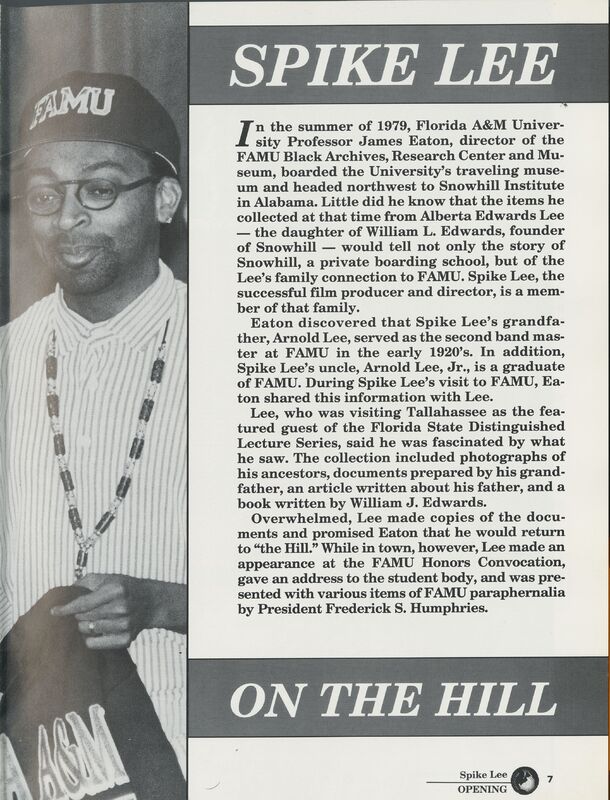
In the summer of 1979, Director of the Meek-Eaton Black Archives Research Center and Museum, James Eaton, discovered Spike Lee’s grandfather was a graduate of Florida A&M and served as the second bandmaster in the early 1920s. After Eaton shared this with him, Lee returned to FAMU to give an address to students.
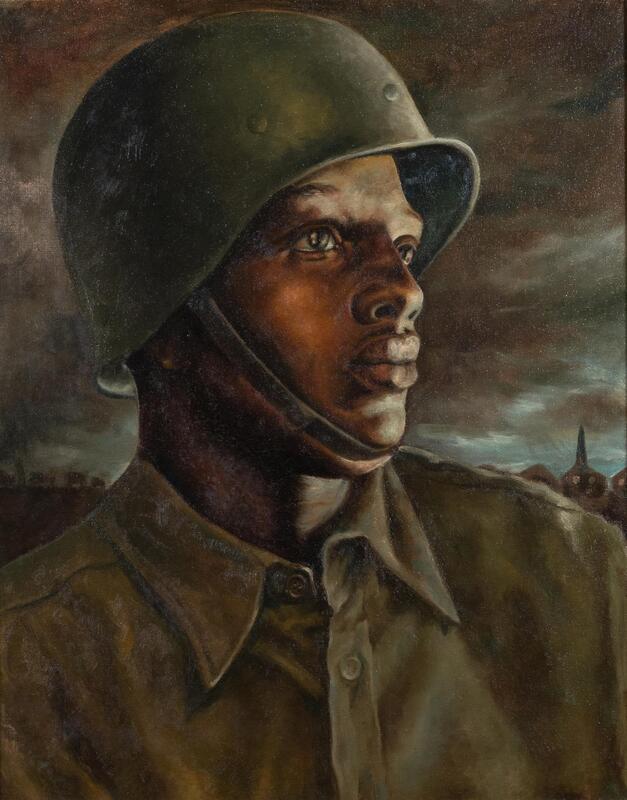
Mark Hewitt was an artist from Boston, MA. Spirit of 366th depicts a portrait of a young Black man from the 366th infantry in an Army uniform. The soldier looks into the distance of a shining light while dark-hued clouds of brown, black, and purple gather overhead.
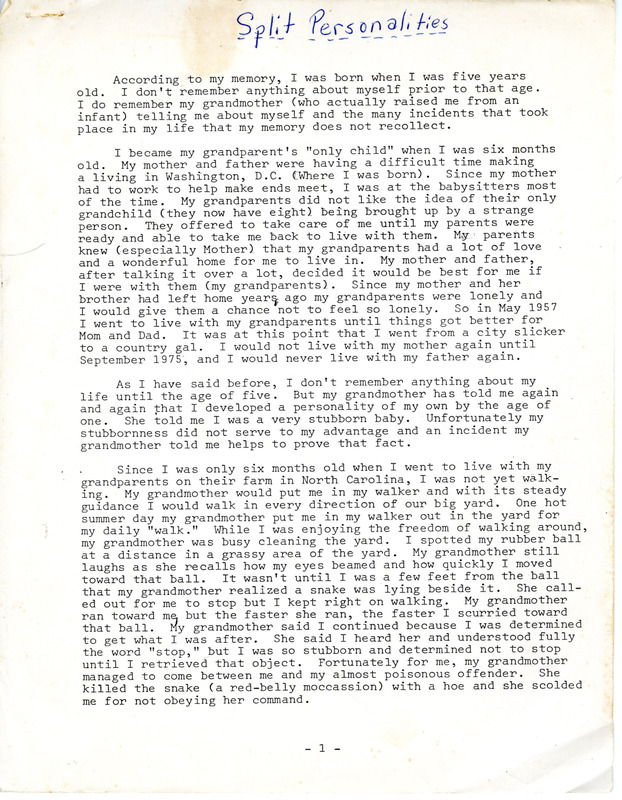
An essay by an unknown woman writing about her different experiences in the South and New York and how those experiences have shaped her personality and worldview. She writes, “I guess I have two personalities. One is my real personality (my Southern upbringing) and the other is the personality the people of New York have forced upon me.”
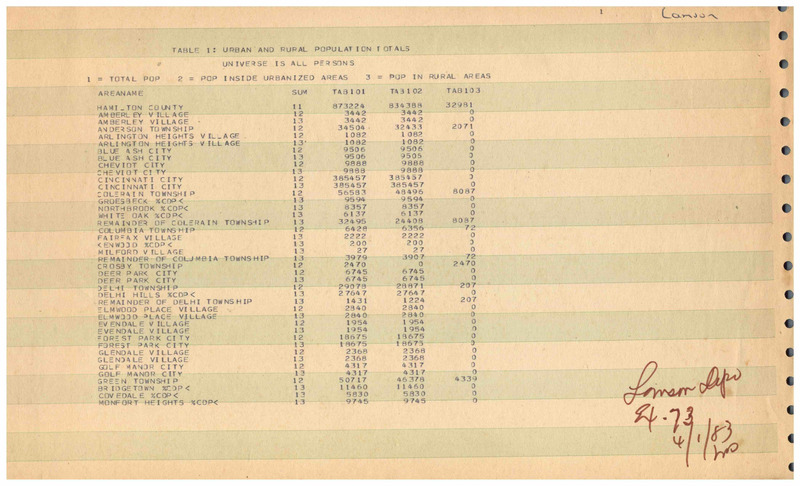
Case Data and Exhibits for Brown III, a relitigation of Brown v. Topeka Board of Education (1954) that corrected resegregation issues caused by open enrollment school choice in 1992. Printed spreadsheets containing detailed census reports for the state of Kansas from April 1982 through April 1983.
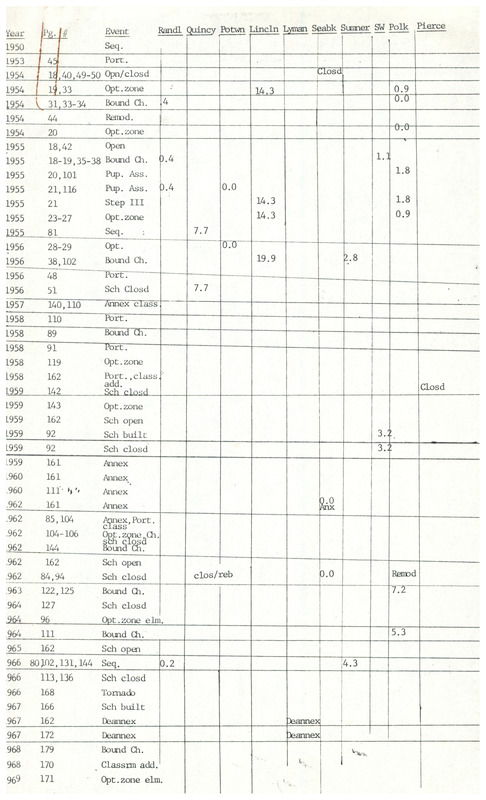
Case Data and Exhibits for Brown III, a relitigation of Brown v. Topeka Board of Education (1954) that corrected resegregation issues caused by open enrollment school choice in 1992. Typed spreadsheets of changes in Topeka Schools from 1950-1980. The types of changes include classroom additions, new construction, natural disasters, and more.
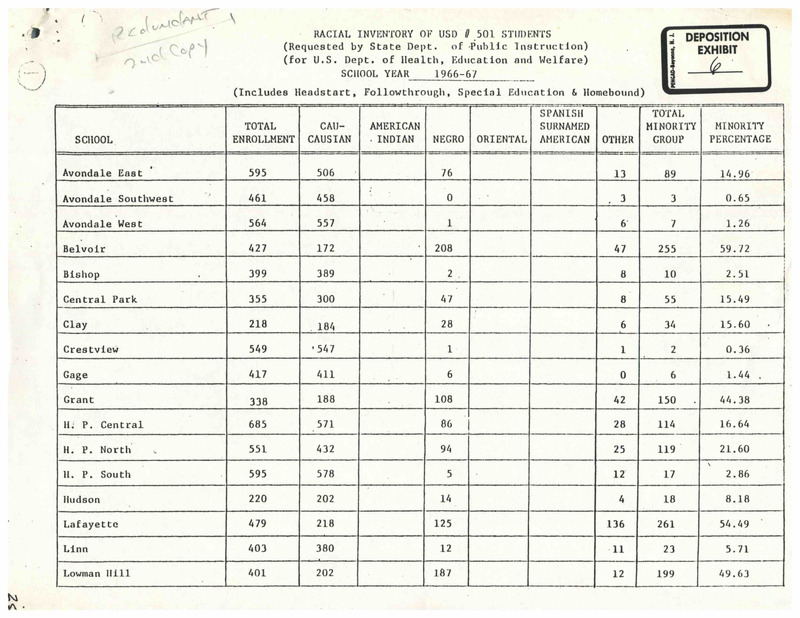
Case Data and Exhibits for Brown III, a relitigation of Brown v. Topeka Board of Education (1954) that corrected resegregation issues caused by open enrollment school choice in 1992. Spreadsheets showing the racial makeup of Topeka Public School students, by school, from 1966-1980. Labeled as deposition exhibit 6.
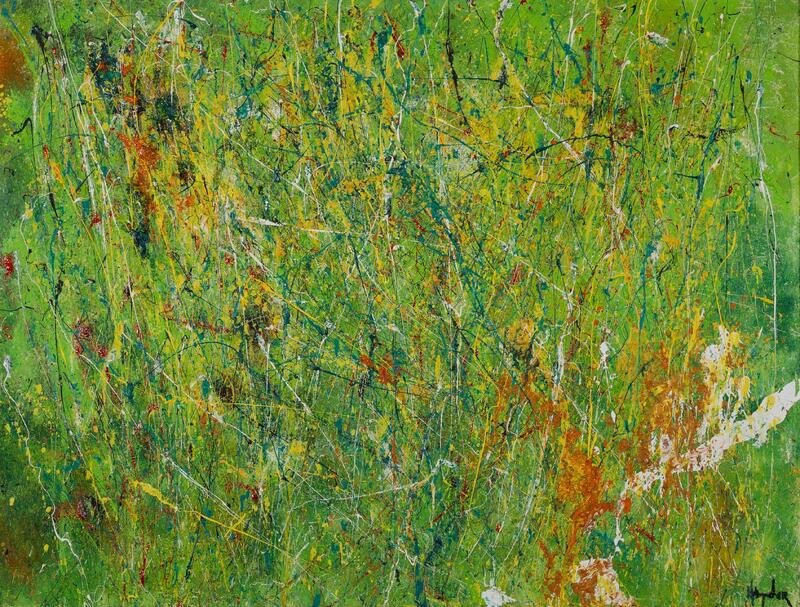
Gilbert H. Hatcher was a painter from Augusta, GA. Spring Folic is an abstract painting with a green background. The color palette includes hues of yellow, red, orange, green, white, and black. Gestural strokes of paint are layered to create a feeling of nature and springtime.
This sculpture features a small bird placed in the lap of a larger abstract figure, perhaps suggesting the larger figure is the small bird’s mother. The body of this sculpture has a smooth surface finished with a thin rim around the edges. The act of nurturing and providing shelter is reflected in the placement of the smaller bird. Mother-child relationships are frequently showcased in TSU student terracottas.
This watercolor painting by Frank Perkins features a scene at a baseball stadium. This work may be an homage to the Negro Leagues, which offered Black baseball players the chance to play professionally prior to Jackie Robinson's integration of Major League Baseball. Iconic Black baseball players like Robinson, Willie Mays, Satchel Paige, Josh Gibson, and many more played in the Negro Leagues.
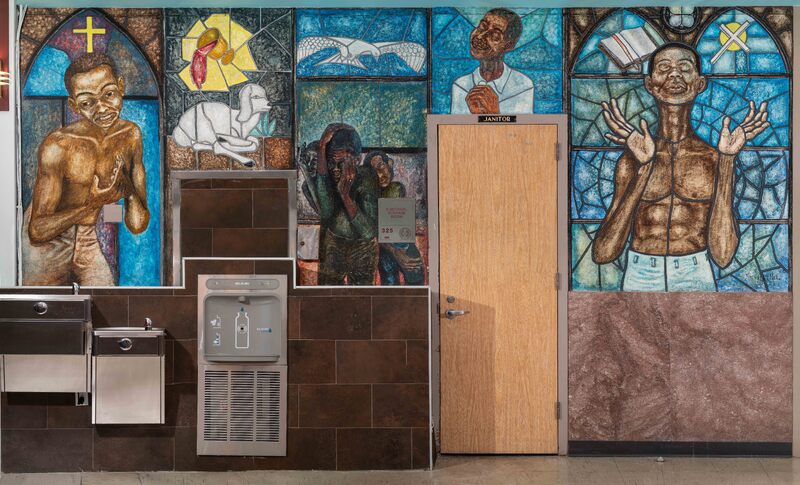
McNeil creates a scene of Black spirituality and worship, surrounding images of Black men with the traditional symbols of the cross, the lamb, the dove, and the wine of communion. Placing two of the figures against stained glass windows yields a direct connection with the interior of the Black church.
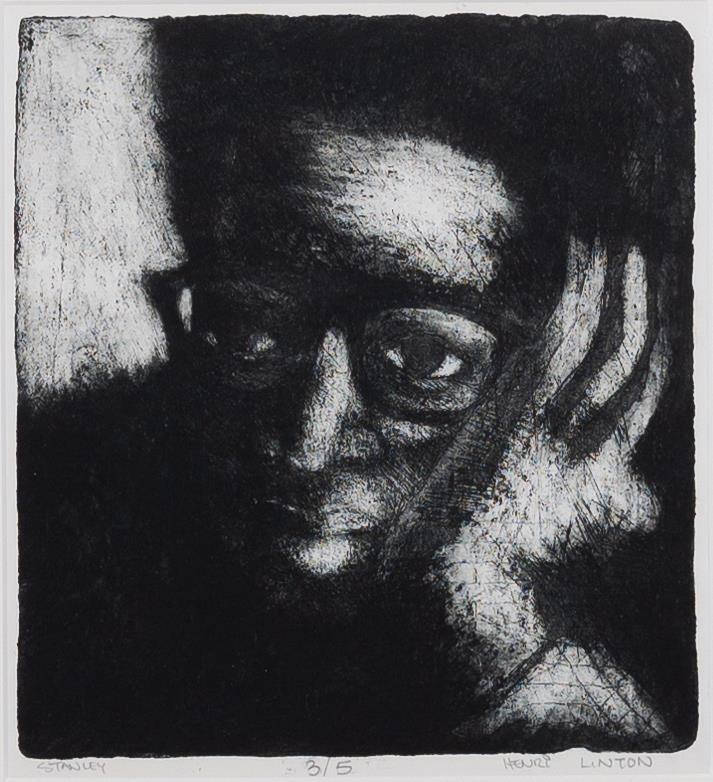
Henri Linton was an artist and art professor from Tuscaloosa, AL. Stanley is a print of a solemn Black man. The subject rests his head in his hand as he looks past the viewer.
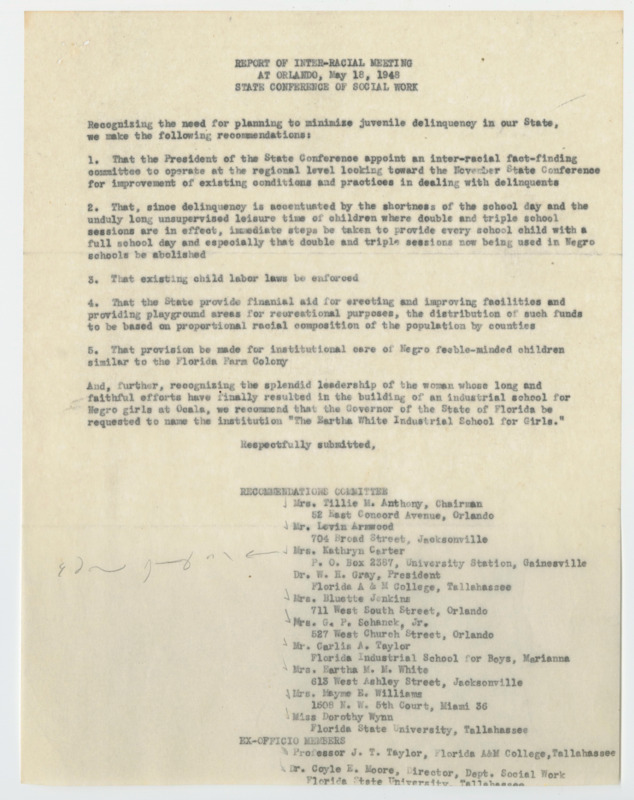
At the 1948 Orlando State Conference of Social Work, which had an interracial meeting, members discussed ways to minimize juvenile delinquency in Florida. They mentioned a need to enforce existing child labor laws, increase school hours, provide financial aid, appoint a regional, interracial fact-finding committee for delinquents, and more.
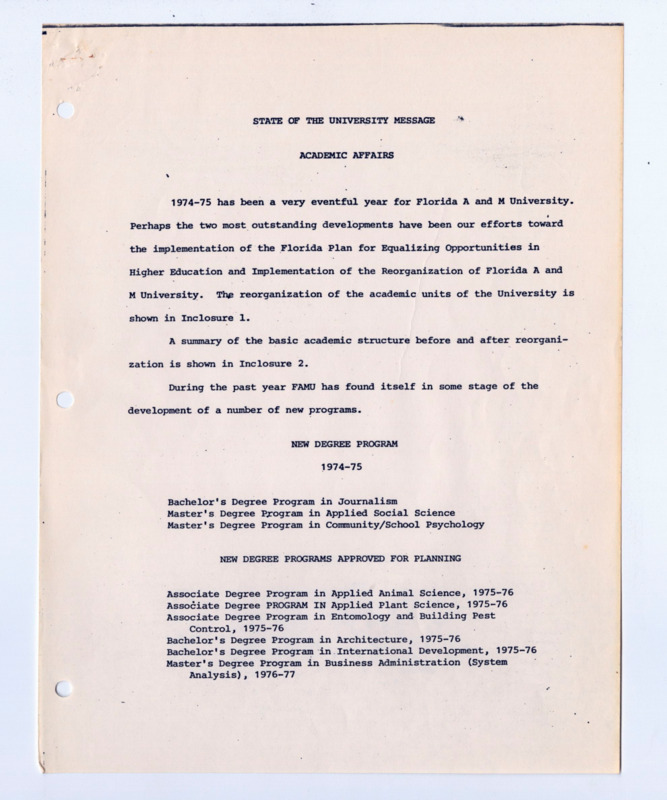
This report summarizes major changes that affected Florida A&M University in the years 1974-1975. FAMU implemented the Florida Plan for Equalizing Opportunities in Higher Education, the Reorganization of FAMU, the Bachelor’s Degree Program in Journalism, and the Master’s Degree Programs in Applied Social Science and Community/School Psychology.
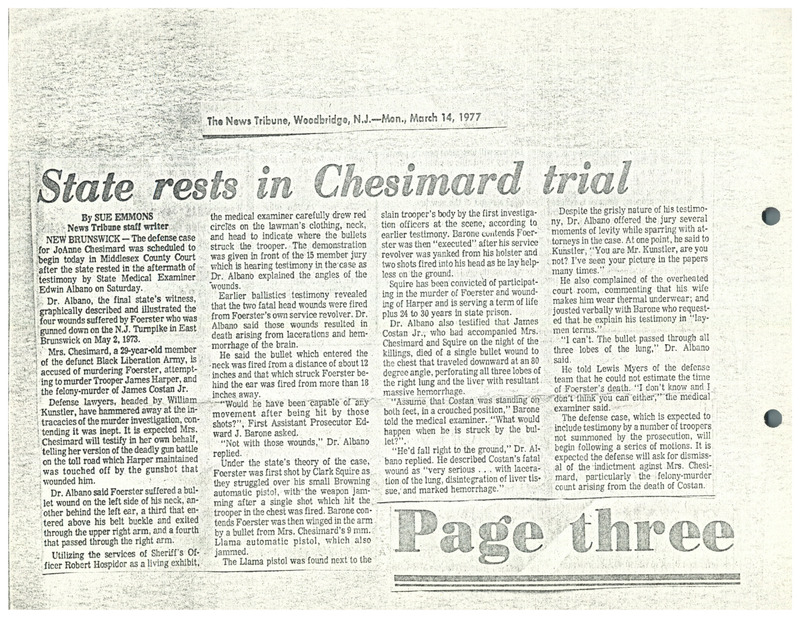
A newspaper article from The News Tribune summarizing key points from the prosecution's case after the state had rested its case against Assata Shakur (JoAnne Chesimard) for the 1973 killing of a state trooper. The defense, after intense cross-examination of prosecution witnesses, was scheduled to begin presenting its case on March 14, 1977.
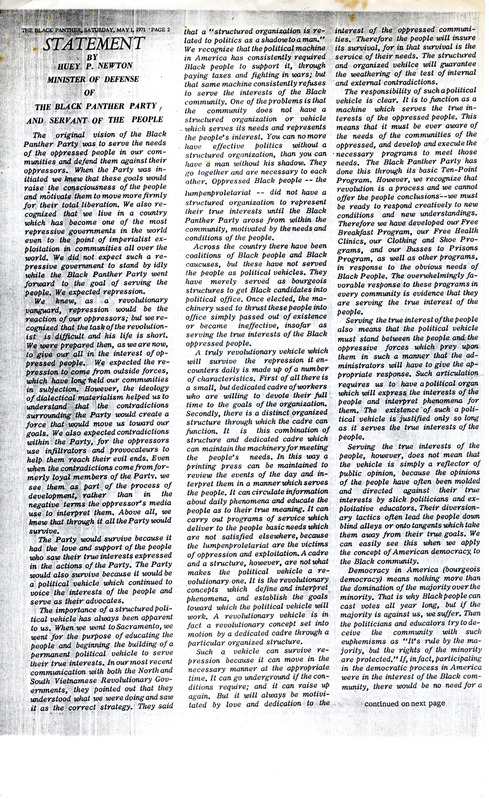
A newspaper article from The Black Panther. Black Panther Party co-founder Huey P. Newton lays out the philosophy of the Black Panther party through a Marxist lens. He highlights the unique ways the Black Panther Party serves the specific needs of colonized Black people in the United States and that the party is constantly adapting.
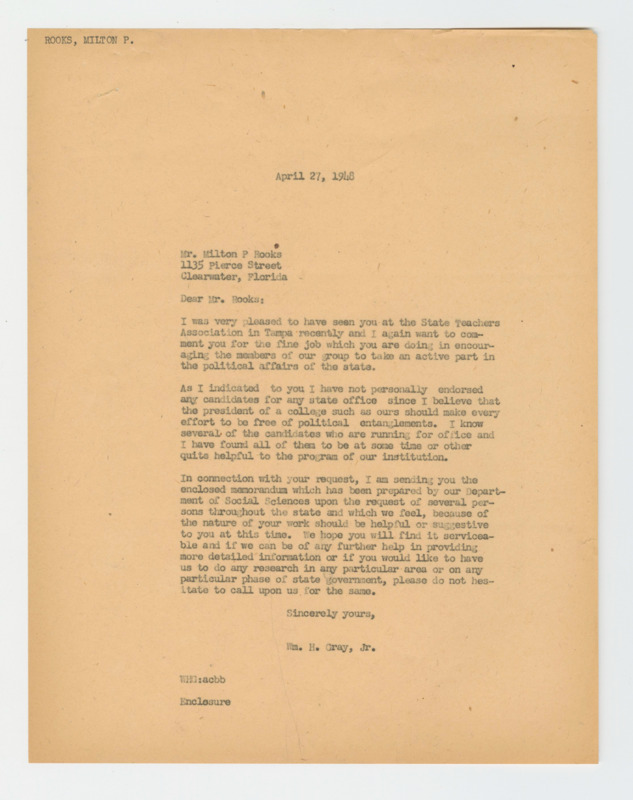
At the 1948 State Teachers Association in Tampa, William H. Gray, Jr. conversed with Milton P. Rooks, a civics scholar in Clearwater, FL. With the help of the Florida A&M College Department of Social Sciences, Gray put together a memorandum on current civil rights problems, offering a succinct view of the state of civil rights in the U.S.
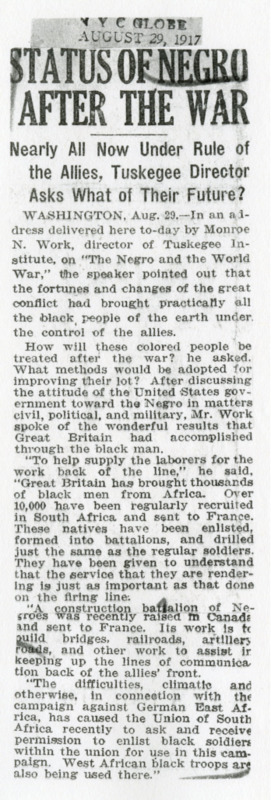
A newspaper article written discussing Monroe N. Work's speech on Negroes after World War I. The author writes how will the colored man should be treated following the war by the victors and points to Great Britain as an Example.
Stevella Adams moved to Jackson in 1932 after graduating from college and getting married. Mrs. Adams talks about her time operating a grocery store on the corner of Monument and Blair Streets in the Farish Street District from 1952 to 1973. The store was originally owned and operated by her late father in law.
Stevens A. Renfrow was born in 1892. He talks about the games he played as a kid and his education, including graduating from Mississippi State University in 1916. Mr. Renfrow also talks about his family and he recalls some of the types of food he and his family ate growing up. The transcript is edited heavily with handwritten notes.
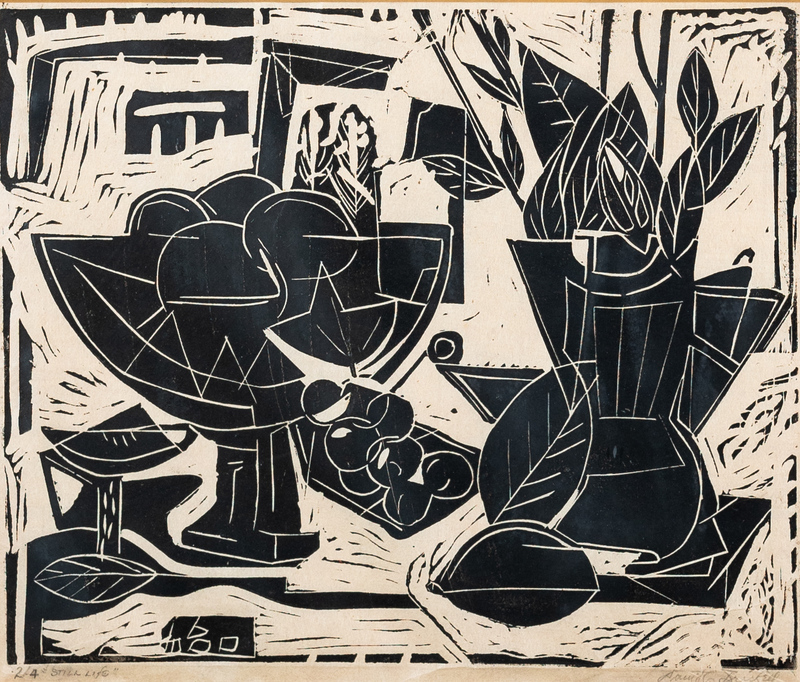
David Driskell was a Black artist, scholar, and curator known for his fusion of African abstract forms and modern aesthetics. Still Life is an abstract print of inanimate kitchen objects. It features a bowl of fruit, plates of food, vases of flowers, and other objects atop a table.
William S. Carter was an abstract, landscape, still-life, and figurative painter from St. Louis, Missouri. Still Life embodies its namesake by depicting a table of commonplace objects with a muted background. Carter's subjects include a teacup, a vase with flowers, fruit, a feather, and an empty vase on top of a haphazard cloth.
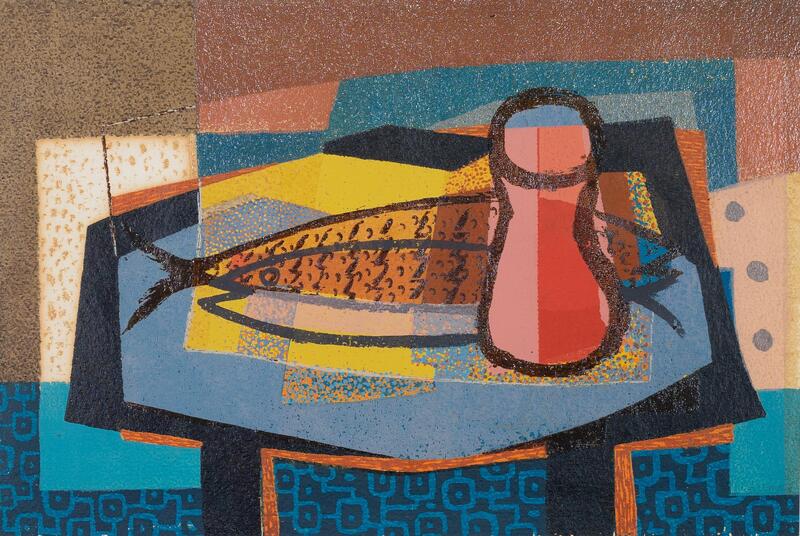
Howard E. Lewis was an Art professor and Korean War veteran from Columbus, OH. Still Life with Fish is a watercolor depiction of two fish and a vase on a table. Lewis uses stark shapes, colors, and patterns to create the fish, vase, table, and background.
Alfa Bell was an artist from Montgomery, AL. Still Life with Fruit is an abstracted print of inanimate kitchen objects with an abstracted background. The piece features a cup, pieces of fruit, and gourds on top of a white sheet in front of a water pitcher and a plate.