Biographical information on President Gore highlights his education, achievements, and memberships, offering a deeper insight into his life and leadership. These three packets go beyond a biography, providing a sketch of his journey, his transition as a new Floridian, and his transformative impact on FAMC and FAMU during his presidency.
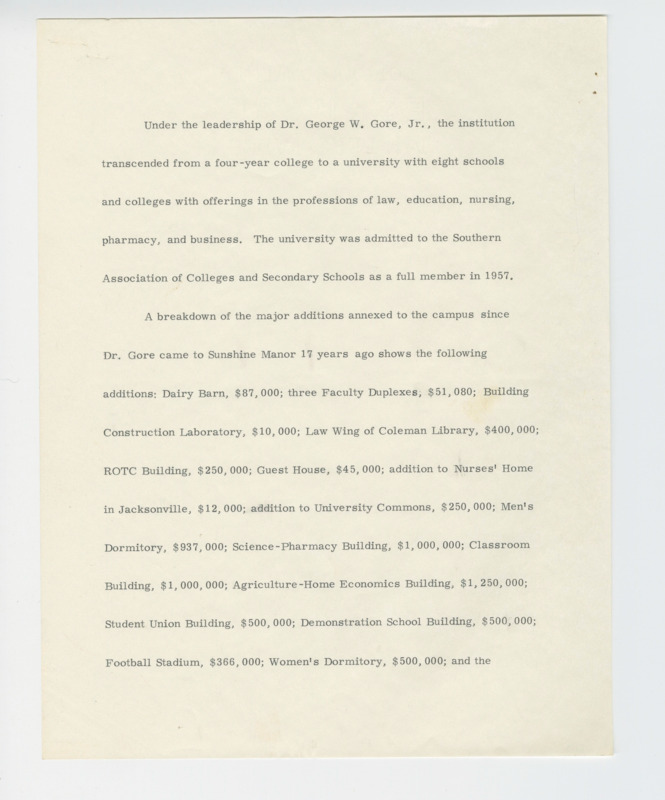
This packet explores President Gore's transformative leadership at Florida A&M College (FAMC), later FAMU, showcasing milestones in accreditation, academic and non-academic advancements, and the growth of music, drama, and departments. It also honors his personal recognitions, including numerous Greek letter awards, and his enduring legacy.
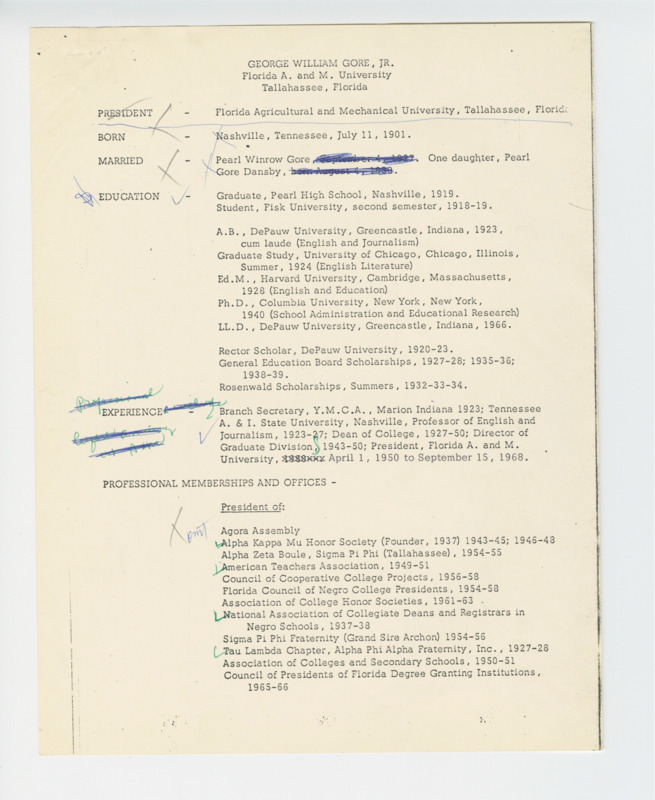
Biographical information on President Gore mentions his education, professional achievements, and memberships. It details his journey as a visionary leader, his academic background, his affiliations with esteemed organizations, and his impact on both FAMC and FAMU during his presidency.
The 1968 stewardship report for President Gore showcases his visionary leadership and transformative achievements at FAMC and FAMU. It highlights advancements in academics, campus development, and student life, reflecting his steadfast commitment to the university’s progress, excellence, and lasting impact on the community.
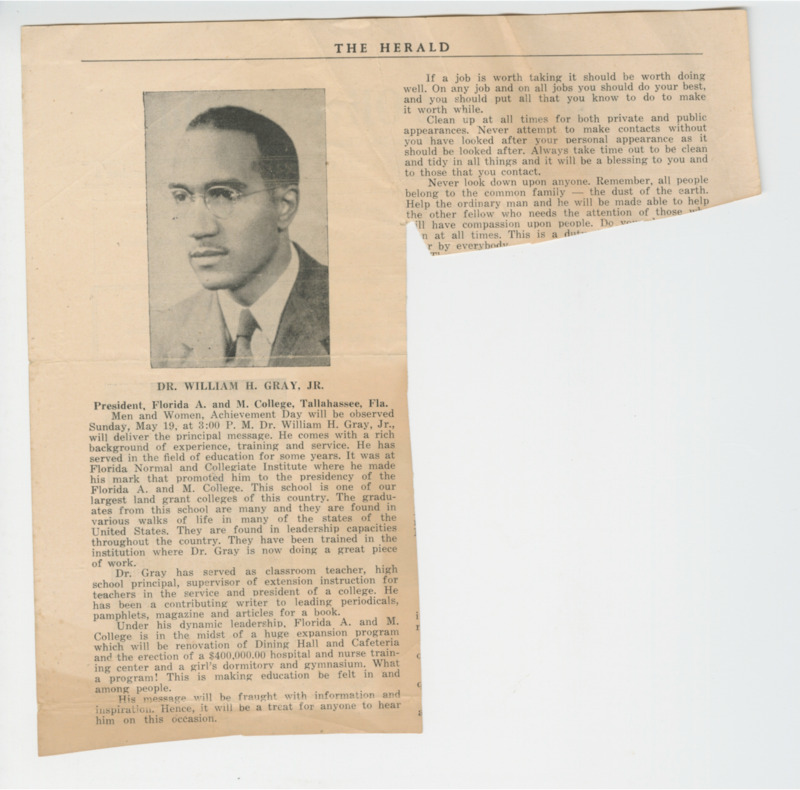
The Herald announced President William H. Gray's Achievement Day address, highlighting his extensive background as a teacher, high school principal, supervisor of extension instruction, and writer. His message, packed with valuable insights, invited both men and women to attend this special event celebrating growth and knowledge.
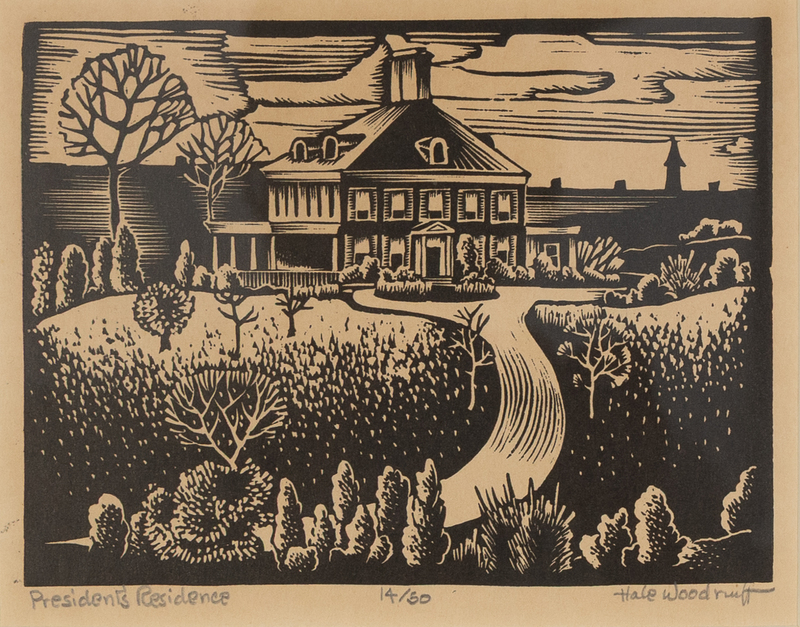
Hale Aspacio Woodruff was an artist and art educator known for his murals, paintings, and prints from Cairo, IL. "President's Residence" depicts the housing provided to Atlanta University's presidents affectionately known as Happy Hill.
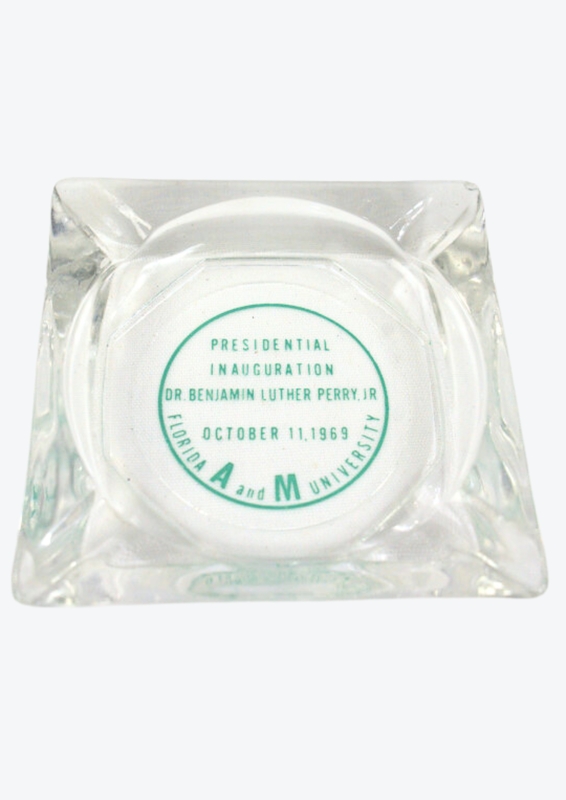
A 1969 presidential inauguration ashtray that commemorates the swearing-in of President B.L. Perry at Florida Agricultural and Mechanical University. As a historical artifact, it symbolizes his leadership during a transformative period for FAMU, marking a significant moment in the university's growth and development.
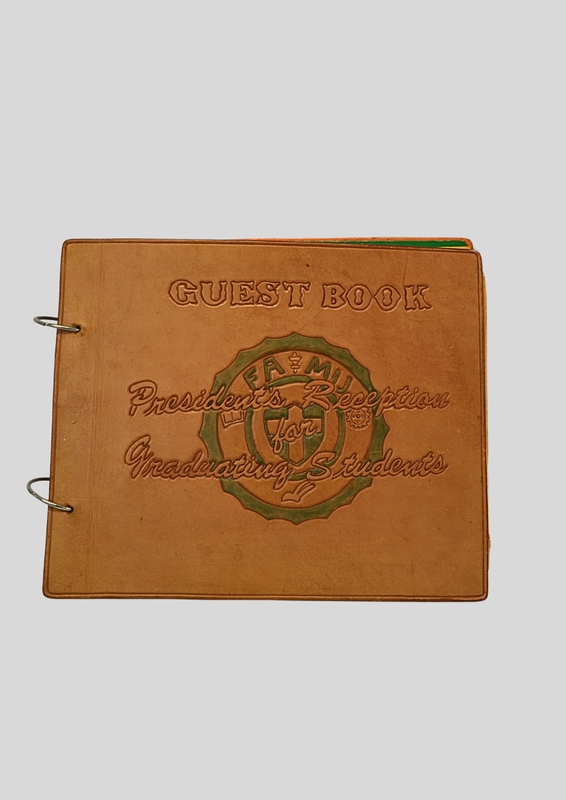
This reception book, created by President B.L. Perry, is dedicated to the graduating students, parents, and friends of Florida Agricultural & Mechanical University. Designed to collect valuable feedback, it records the names, dates, addresses, and remarks of attendees from 1971 to 1977.
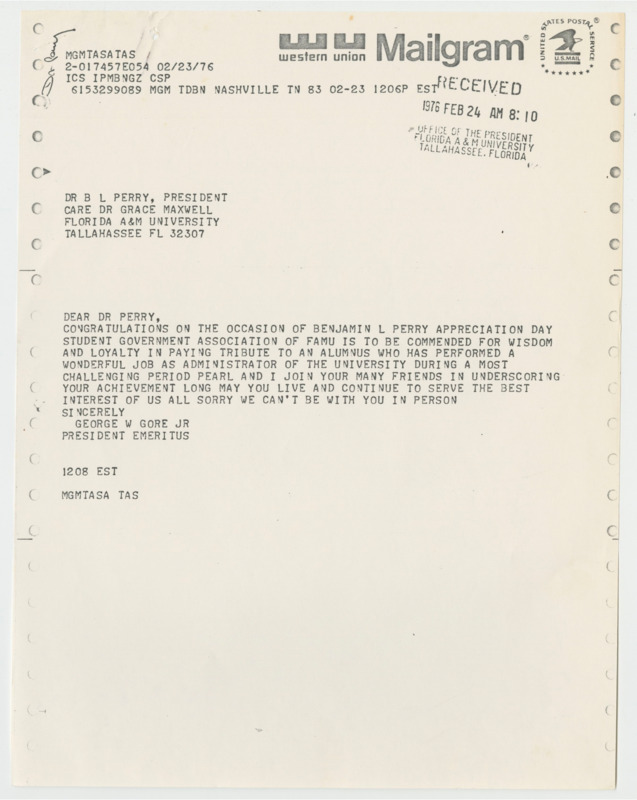
Messages celebrating President B. L. Perry’s Appreciation Day include notes from Former President Gore, who expressed regret for his absence, and C.K. Steele, who praised Perry’s impactful leadership. A convocation pamphlet, sponsored by the Student Government Association, outlines the day’s events honoring President Perry’s dedication to FAMU.
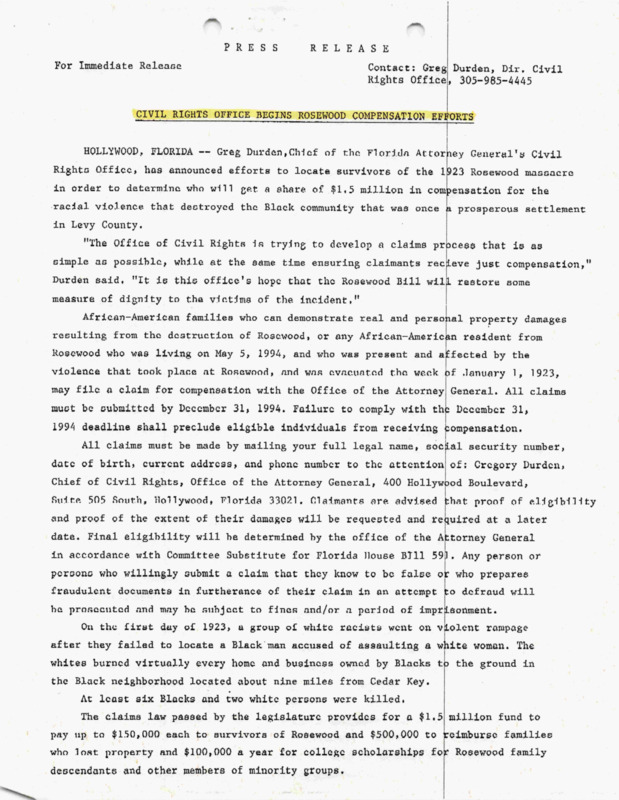
In 1993, the Office of the Attorney General released press releases and facsimile cover sheets instructing communication to gather information regarding the 1923 Rosewood Massacre. Civil rights advocates pushed for compensation for those affected and for the Department of Education to issue scholarships to descendants of the victims.
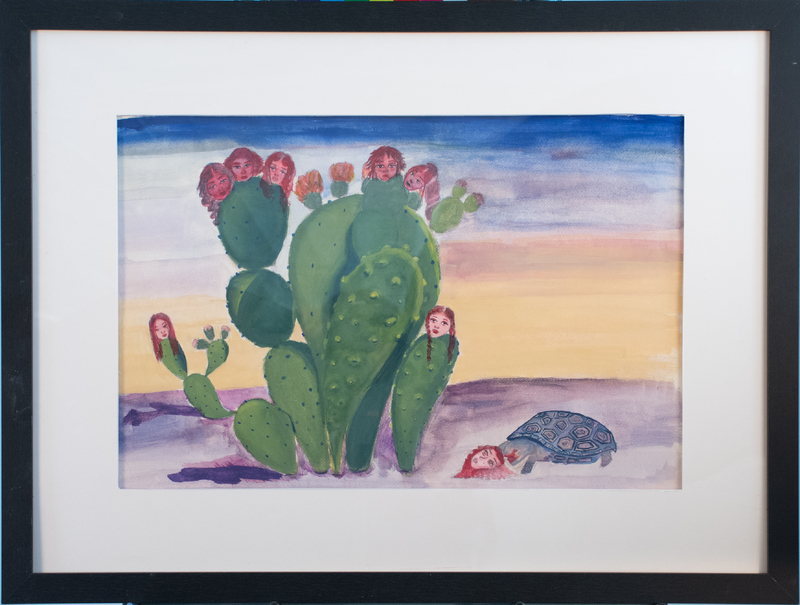
Toussaint's painting, "Prickled," pushes back against the notion that women's role is limited to being nurturers. In her own words, her "creative perspective is rooted in a sensitive and feminine lens—one that challenges the common reduction of femininity to gentleness and passivity." After graduating from Texas Southern University, Toussaint started teaching art in a Houston-area middle school.
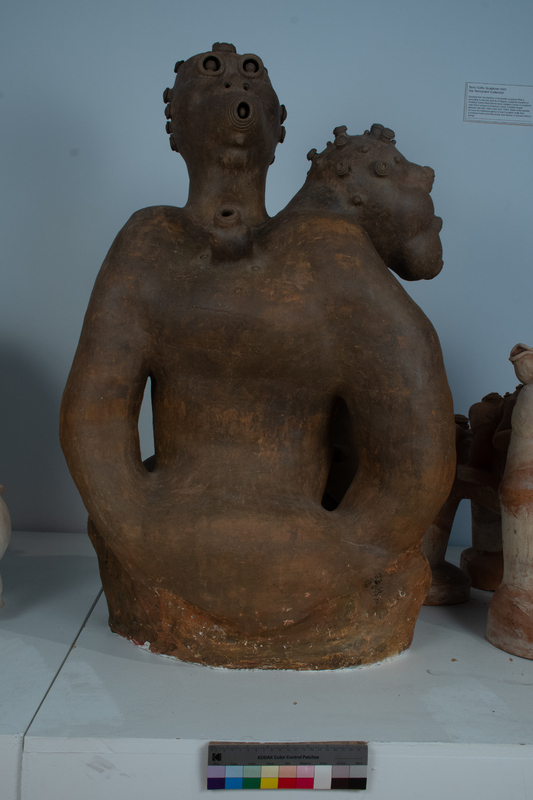
Obey’s sculpture, “Primeval Couple,” features a prehistoric male and female couple fused within the arms of one another. The heads of the figures are decorated with embellished swirls, often featured in the terracottas made by students of Carroll Harris Simms. Simms related Obey’s design to those he had seen in the mountains of northern Nigeria.
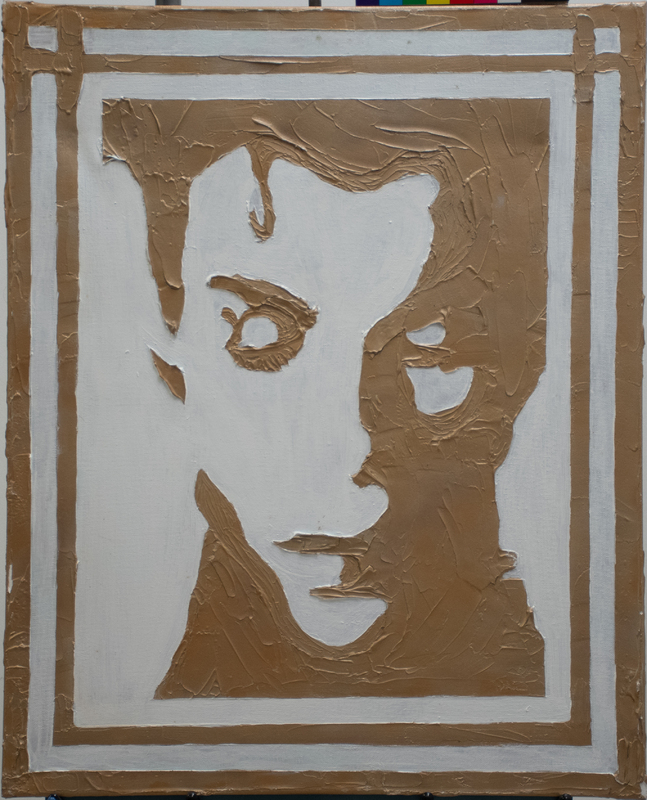
Morris’ painting is a golden, close-up portrait of singer and performer Prince; his head is slightly bowed and his eyes are closed. The painting is inspired by Prince 3, a photograph of the singer taken by Herb Ritts in 1991. Before his death, Prince became one of the best-selling musicians of all time, celebrated for his soaring vocals, multi-instrumental skills, and pioneering aesthetics and sounds.
In this interview, Texas Southern art alumnus Prinston Nnanna discusses his experiences as a student in the class of 2016. He describes TSU's art building as the first place where he learned about living Black artists. He also cites Dr. Biggers as inspiring him to use symbolism in his artwork. Post-graduation, Nnanna teaches at the Pratt Institute.
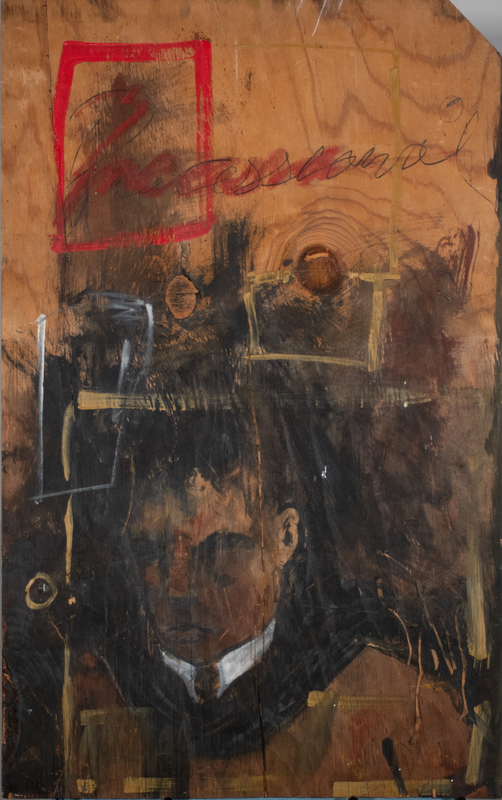
Pruitt’s painting is based on a photo he took of the preacher of his childhood church. At the time this piece was painted, the artist was exploring different faiths and struggling with his religious beliefs. Pruitt cites Basquiat and Rauschenberg as stylistic inspirations that influenced this painting. The muddied brushstrokes used to create this piece reflect the internal struggle of the artist.
On January 12, 1969, Margaret Walker organized the first Winter Convocation celebrating the birth of Martin Luther King Jr. Just 9 months after his assasination, this event would be one of the first formal celebrations of his birthday. The Margaret Walker Center has hosted the Convocation every year since 1969.
A photocopy of the program for the Child Development Group of Mississippi/Community Education Extension 25th Anniversary Reunion from June 30-July 2, 1989 in Warren Hall at Tougaloo College in Jackson, Mississippi. This reunion brought together over 400 former Head Start employees and over 100 students from the Head Start classes of 1965-1969.
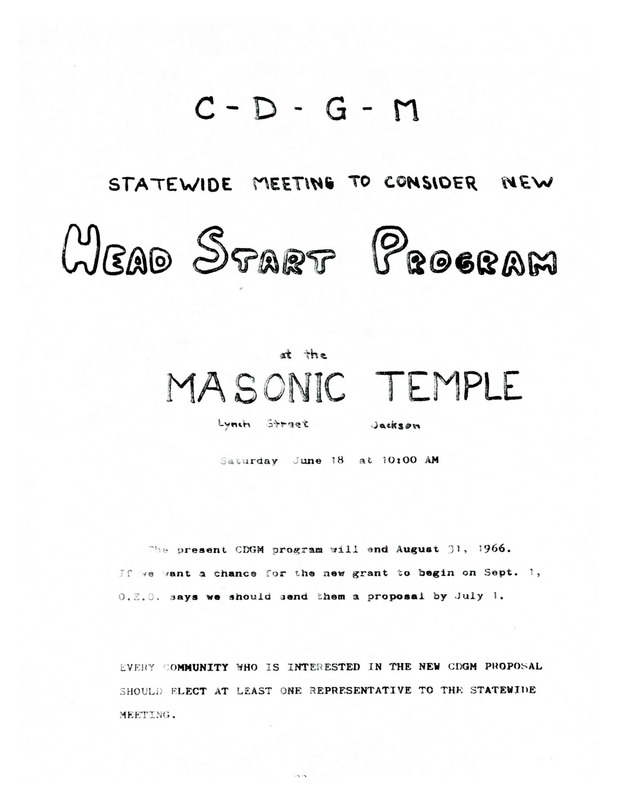
A proposal presented at a meeting at the Masonic Temple on Lynch Street in Jackson, Mississippi. The proposal was approved by the people of Mississippi who applied for funds to operate 170 Head Start Centers. Sections: Foreword, HIstory of Child Development Group of Mississippi (CDGM), The New CDGM, Appendices 1-10.
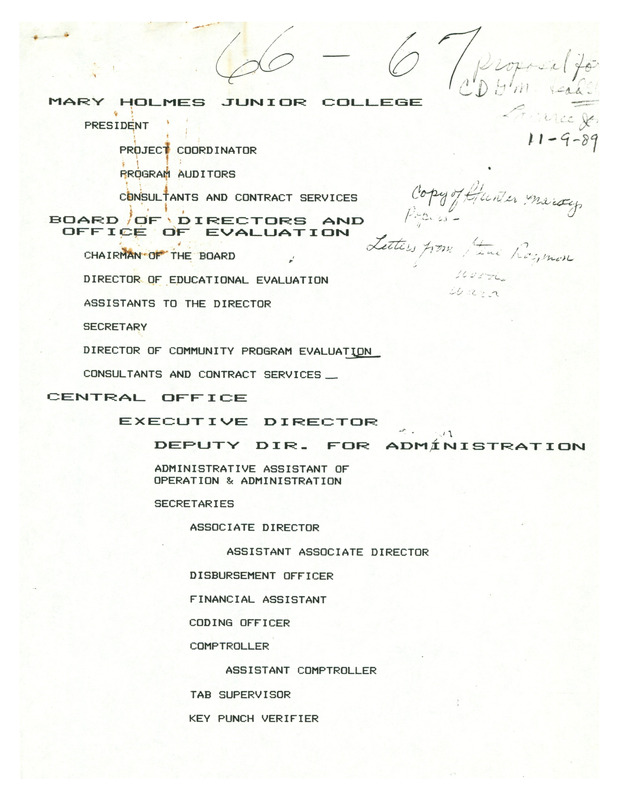
Proposal for opening the first Head Start in Mississippi: List of staff positions and hierarchy. This proposal breaks down the entire administrative structure of Mississippi’s first Head Start program, including the board of directors, central office staff, area directors, and medical and food staff.
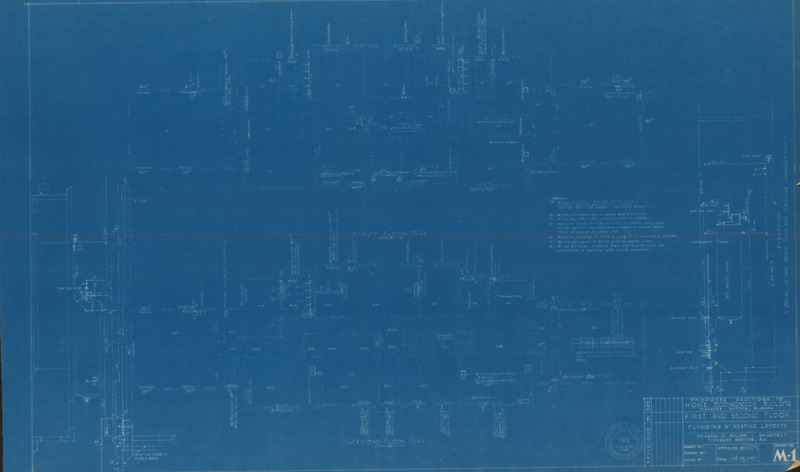
A construction blueprint drawing of the plumbing and heating layouts for the first and second floors for the Home Economics building at Tuskegee. Drawing has details of hot water tank and service connections.
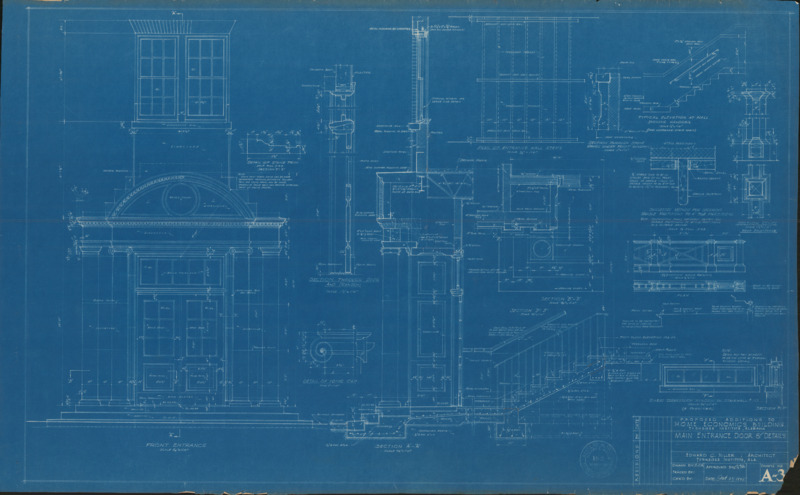
A multi section view drawing blueprint of the home economics main entrance. Drawing includes window sections, building sections, staircase sections, and exterior wall sections.
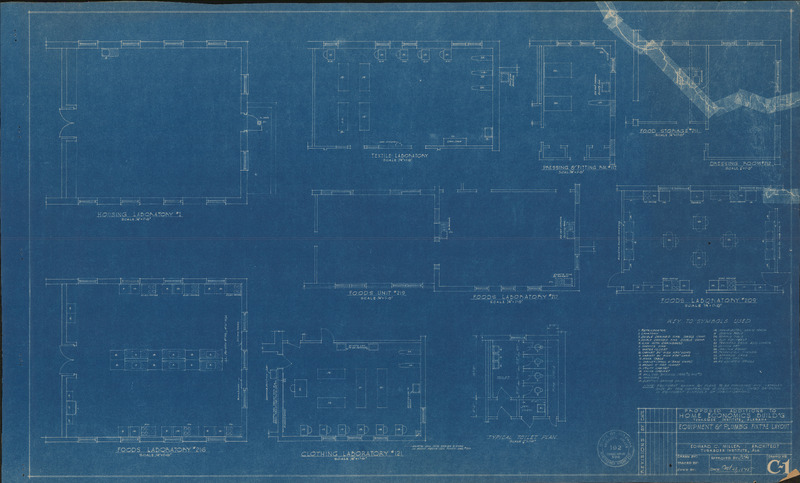
A construction blueprint drawing of the Home Economics Building equipment and plumbing layout. Drawing has notes about key symbols and shows every laboratory with proposed equipment.
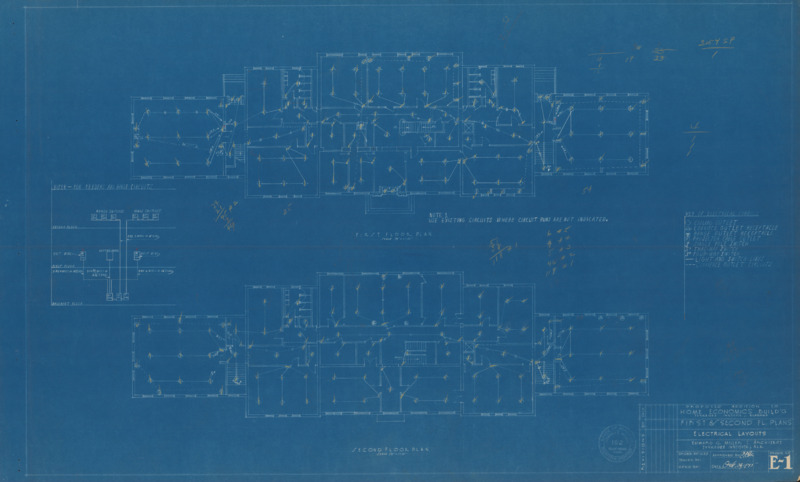
A construction blueprint drawing of the Home Economics Building-1st and 2nd Floor Electrical Layout. Blueprint has electrical outlets layout, key for electrical symbols, riser and feeder range circuits.
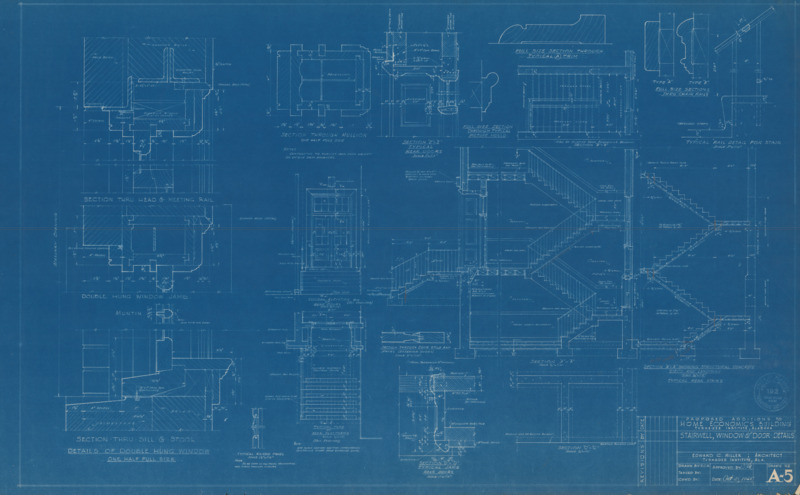
The fifth architectural drawing blueprint for the addtions of the Home Economics Building at Tuskegee Institute. Architectural drawing depicts detailed multi section view of stairways, windows, and doors.
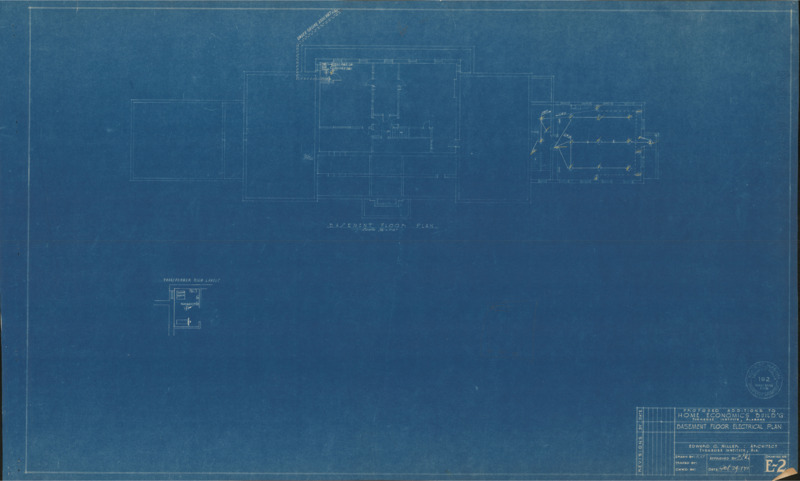
A construction blueprint drawing for the Electrical layout of the Home Economics Buildings Basement. Blueprint depicts transformer room layout and outlet layout.
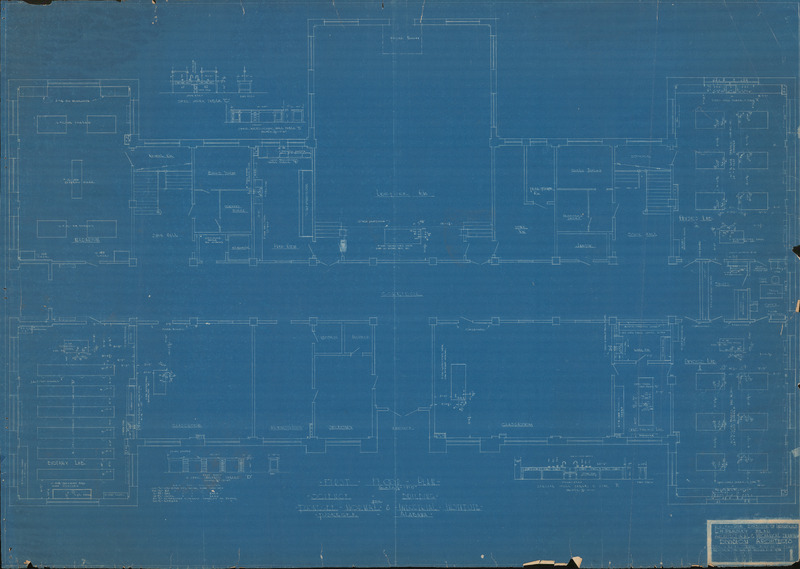
A construction floor plan for the first floor of Science Building at Tuskegee Normal and Industrial Institute in 1931. This drawing shows floor layout for classrooms, labs, lecture halls, restrooms as well as measurements of the lab tables.
Case Data and Exhibits for Brown III, a relitigation of Brown v. Topeka Board of Education (1954) that corrected resegregation issues caused by open enrollment school choice in 1992. A report prepared by leaders in the Topeka Public School District using maps to depict their suggested alternatives for long-range planning for the district.
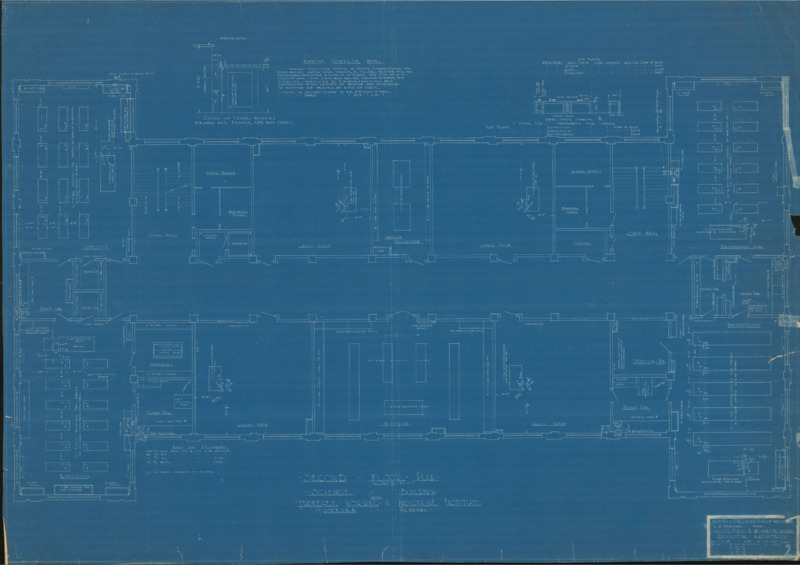
A construction floor plan of the second floor plan of Science Building A at Tuskegee University. This floor plan layout shows the placement of classrooms, science labs, museum, restrooms, and stairways.