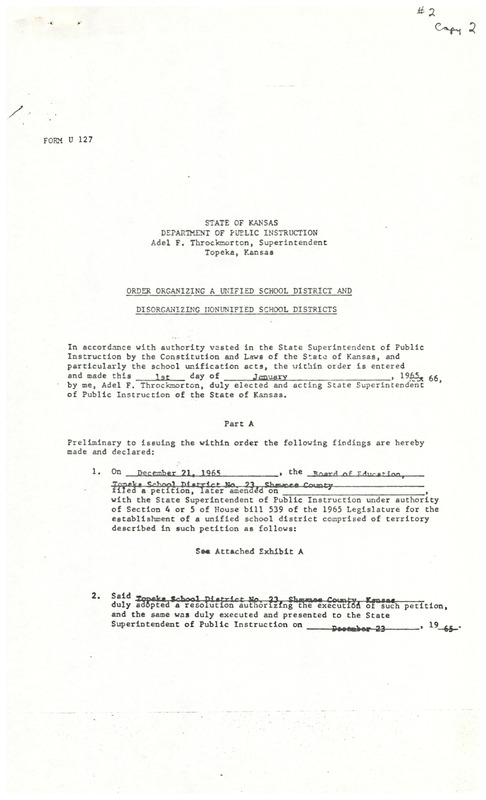
Case Data and Exhibits for Brown III, a relitigation of Brown v. Topeka Board of Education (1954) that corrected resegregation issues caused by open enrollment school choice in 1992. A 1966 order from the Kansas Department of Public Instruction to create a unified school district in Topeka, Kansas, and an administrative structure for the district.
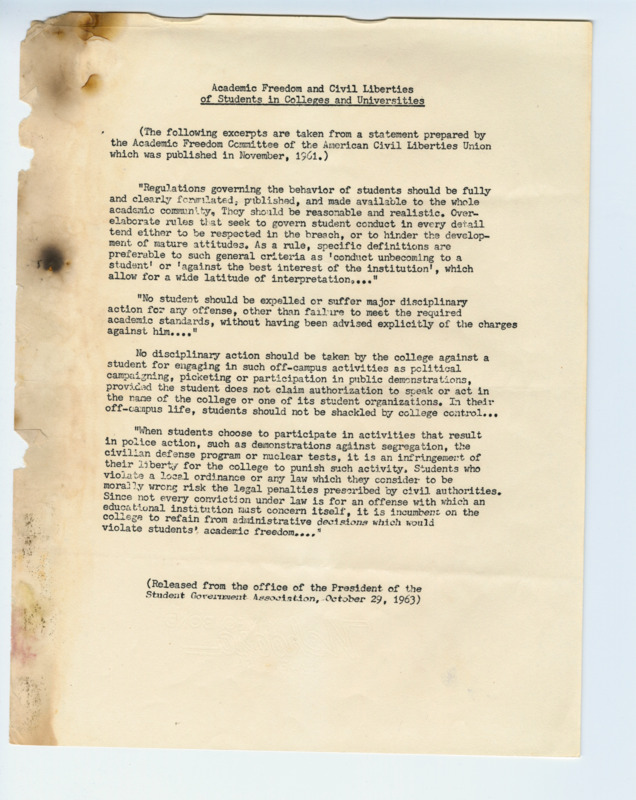
A letter released in 1961 affirms the academic freedom and civil liberties of students at colleges and universities. It states that students will not face academic punishment for breaking the law under circumstances but may face civil charges or significant disciplinary actions, ensuring a balance between personal rights and institutional policies.
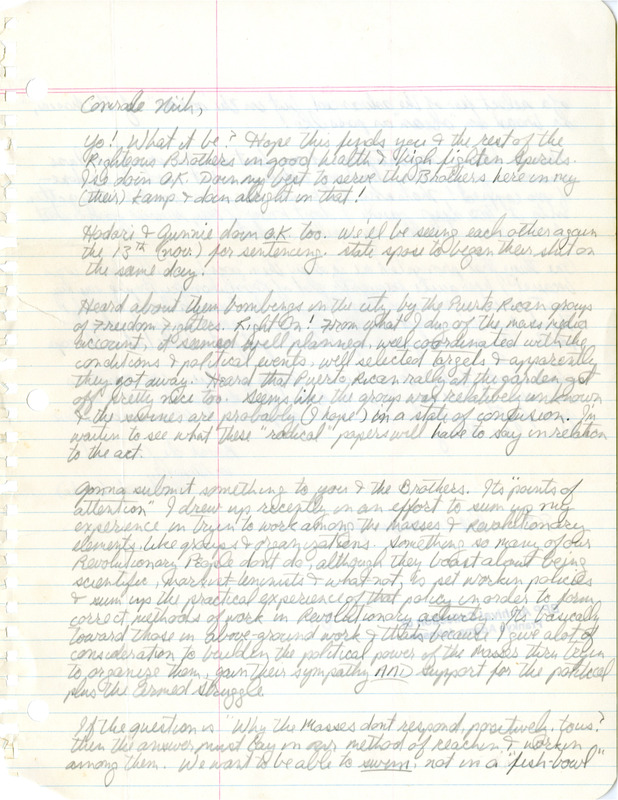
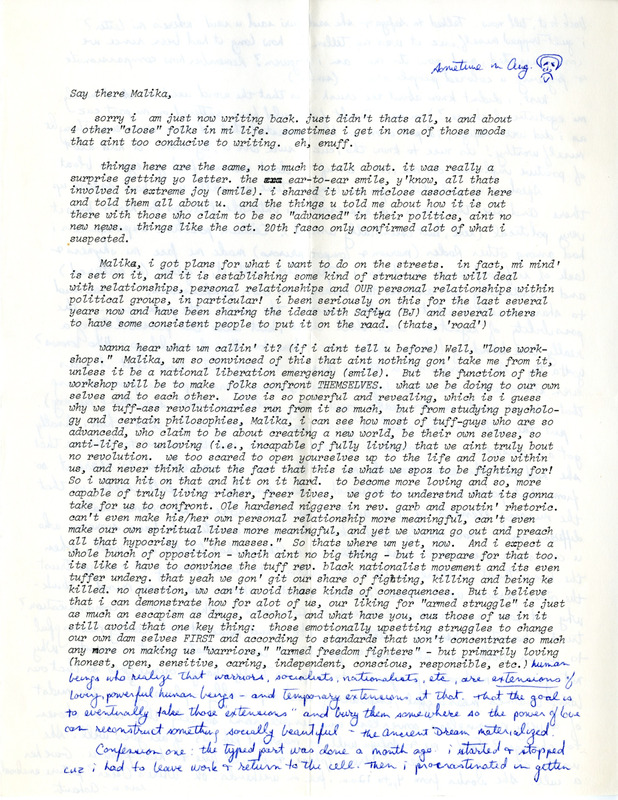
A letter from Ashanti Alston, a Black Liberation Army (BLA) member who was imprisoned for 11 years for a robbery to raise money for the BLA, to Nuh Abdul Qaiyum. He has come up with "points of attention" for the revolutionaries, and he wants Nuh Abdul Qaiyum and the other members to critique them.
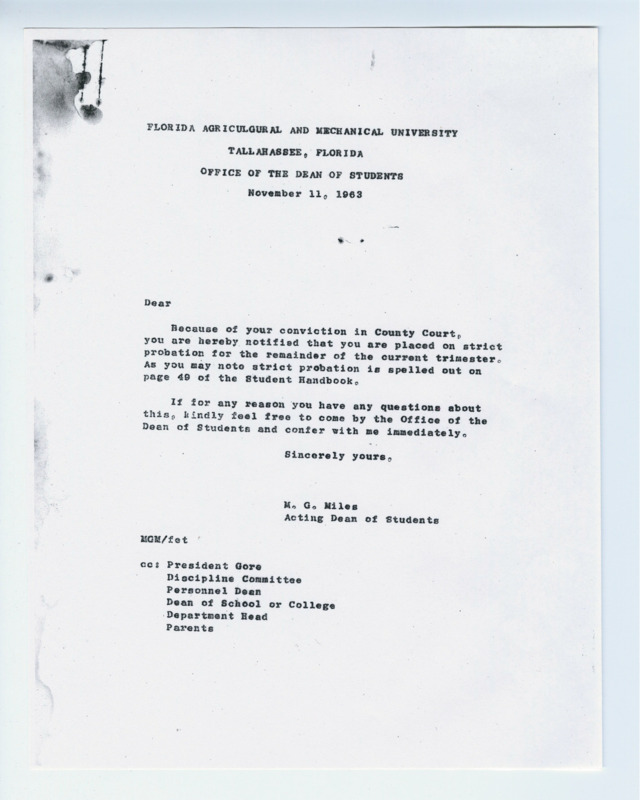
A letter sent to all students on November 11, 1963, detailed disciplinary actions under President Gore’s administration. Records showed 108 students faced academic probation, fines owed to the university, or indefinite suspension, reflecting strict enforcement of university policies during a period of heightened campus unrest.
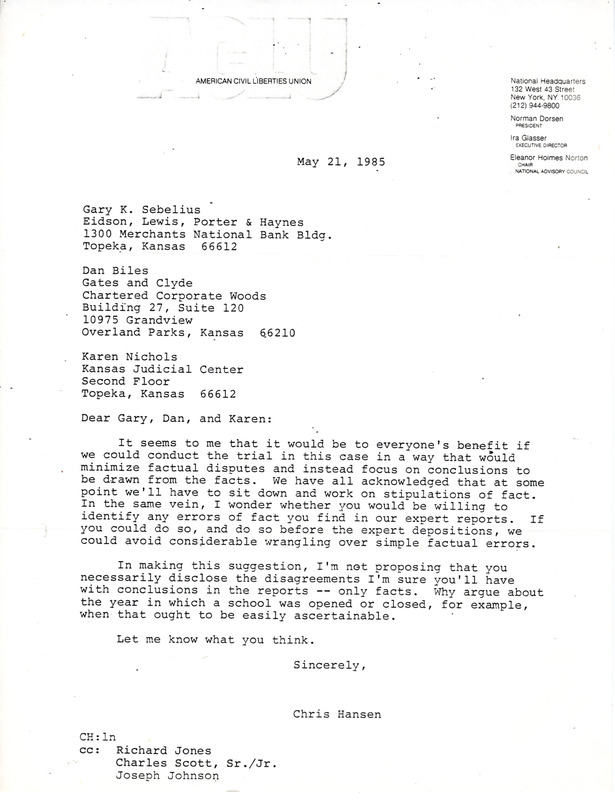
ACLU Attorney Chris Hansen writes to the defendant lawyers to ask for identification of errors they find in reports from their expert witnesses before depositions to avoid spending too much time arguing over simple factual errors. He recommends that the trial focus on conclusions drawn from facts.
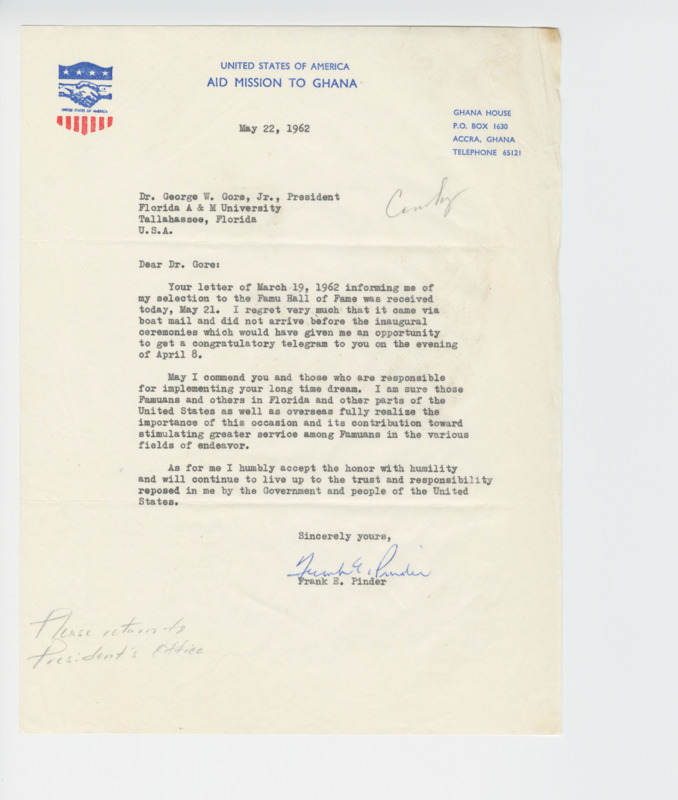
A letter from alumni Frank E. Pinder, based in Accra, Ghana, to President George W. Gore, expressing his gratitude with humility for his selection to the FAMU Hall of Fame. Pinder conveys his deep appreciation for the recognition and acknowledges the university’s impact on his life and career.
Ashanti Alston, a Black Liberation Army (BLA) member who was imprisoned for 11 years for a robbery to raise money for the BLA, writes that he would like to set up love workshops for revolutionaries to make them better leaders after seeing the positive impact that being open and loved has had in his life. The letter is dated “sometime in August.”
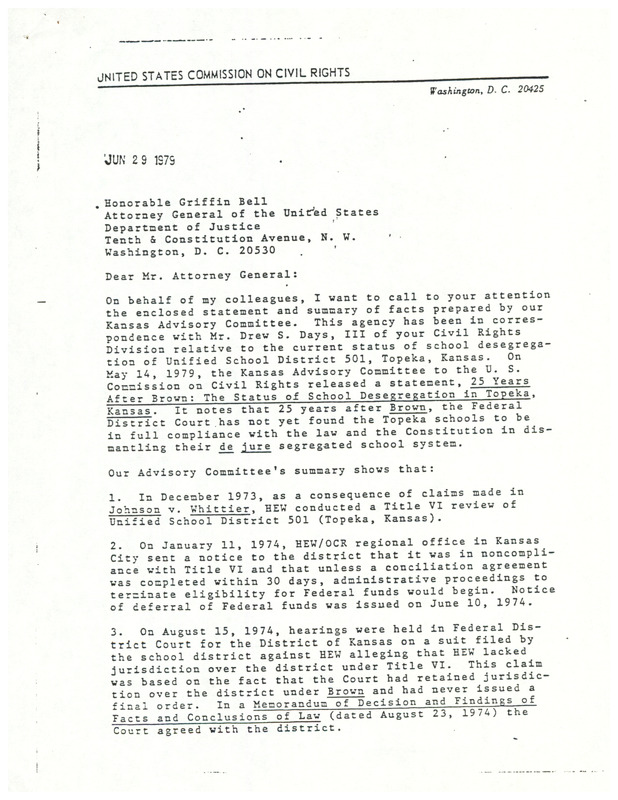
Chairman of the United States Commission on Civil Rights Arthur S. Flemming writes to Attorney General of the United States Department of Justice Griffin Bell to provide him with a statement and summary of facts to the enclosed Kansas Advisory Committee report.
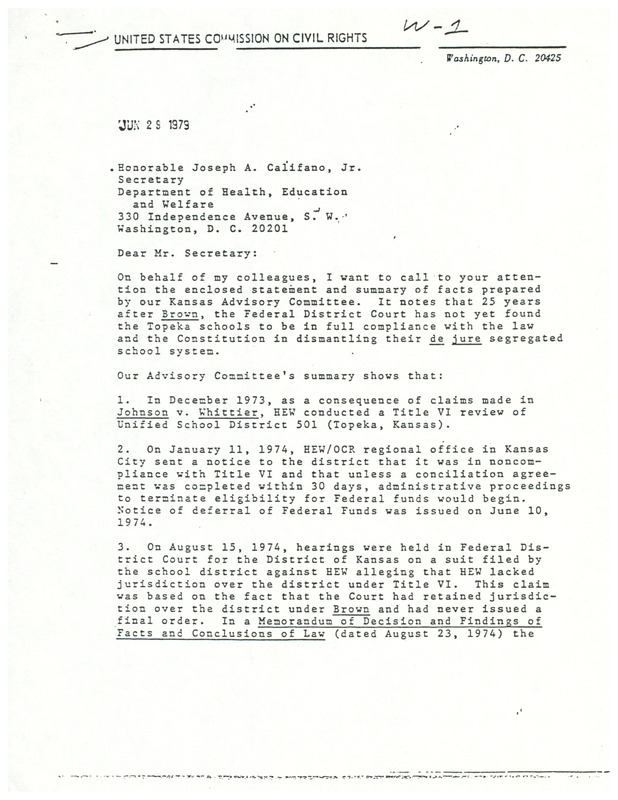
Chairman of the United States Commission on Civil Rights Arthur S. Flemming writes to Secretary of the Department of Health, Education, and Welfare Joseph A. Califano Jr. to provide him with a statement and summary of facts to the enclosed Kansas Advisory Committee report.
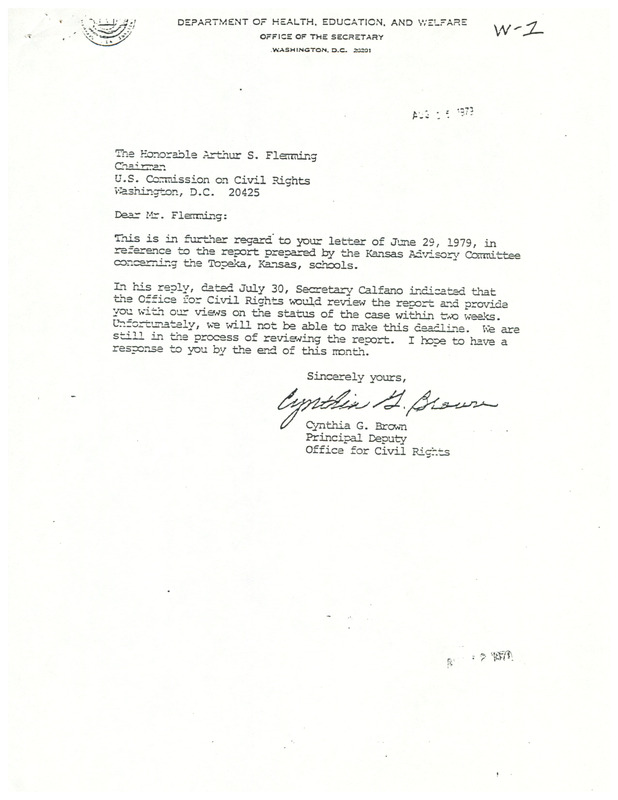
Cynthia G. Brown, Principal Deputy of the Office of Civil Rights in the United States Department of Health, Education, and Welfare, writes to Chairman of the United States Commission on Civil Rights Arthur S. Flemming to alert him that the office is still reviewing his report and hopes to get back to him by the end of the month.
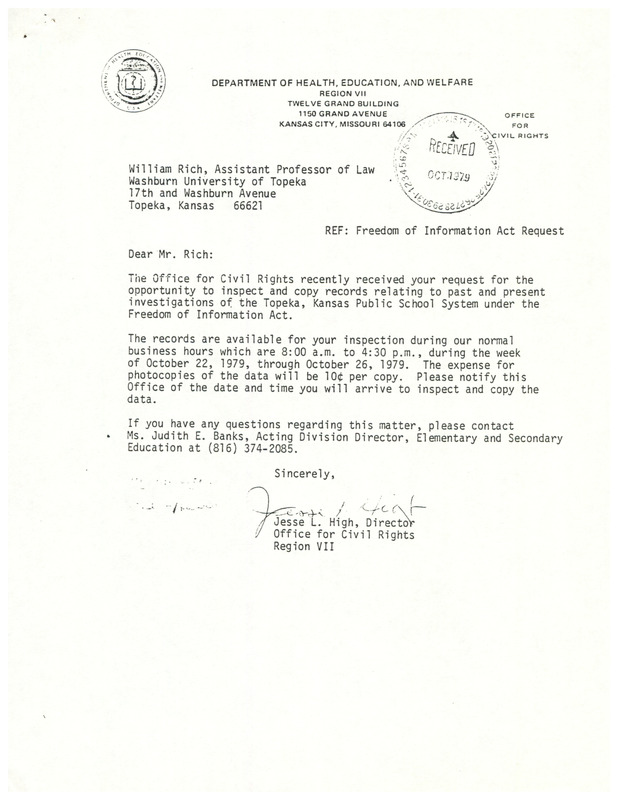
Director of the Office of Civil Rights of the Region VII Department of Health, Education, and Welfare Jesse L. High writes to Assistant Professor of Law at Washburn University of Topeka William Rich to inform him that records pertaining to past and present investigations of Topeka schools will be available for inspection next week.
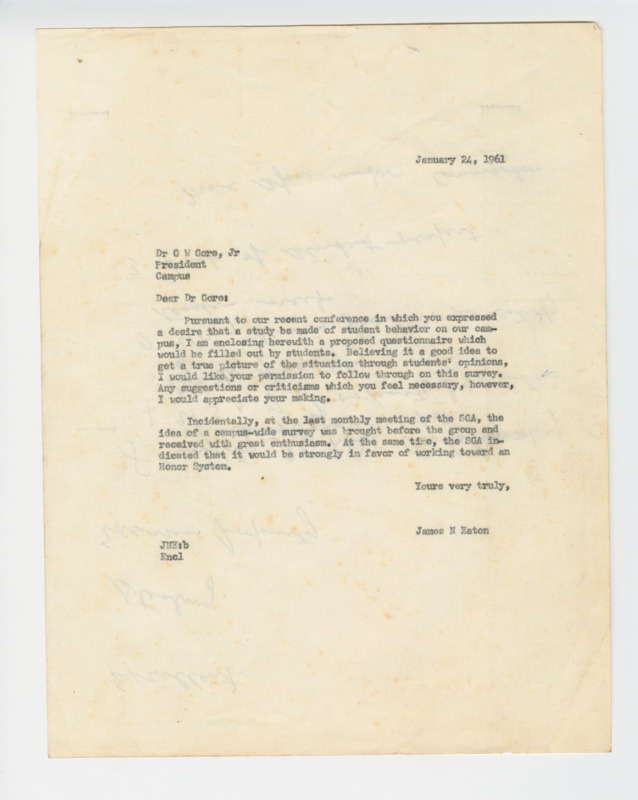
A letter from James Eaton to President George W. Gore discusses plans for conducting a schoolwide student survey, with input from the Student Government Association (SGA) during their monthly meeting. The survey aims to gather student feedback on campus life and emphasizes the importance of student involvement in shaping the school's future.
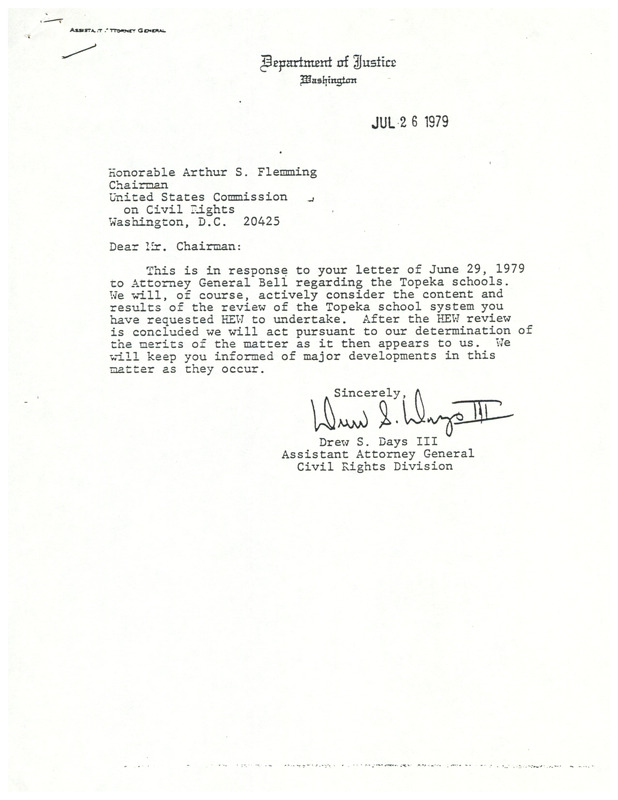
Drew S. Days III, Assistant Attorney General, Civil Rights Division of the U.S. Department of Justice, writes to Chairman of the United States Commission on Civil Rights Arthur S. Flemming to let him know that the Department of Justice is considering his report and any pursuant action it might cause.
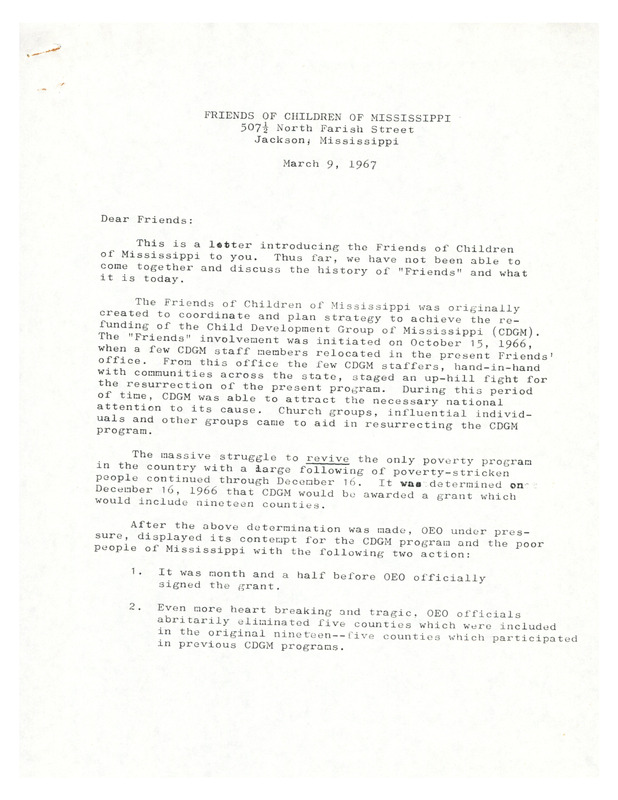
A letter dated March 9, 1967, from Director Frederick R. Mangrum introducing Friends of Children of Mississippi, Inc., and seeking volunteers and financial assistance. Mr. Mangrum outlines the history of the organization and gives details about the issues caused by poverty for so many people in the state.
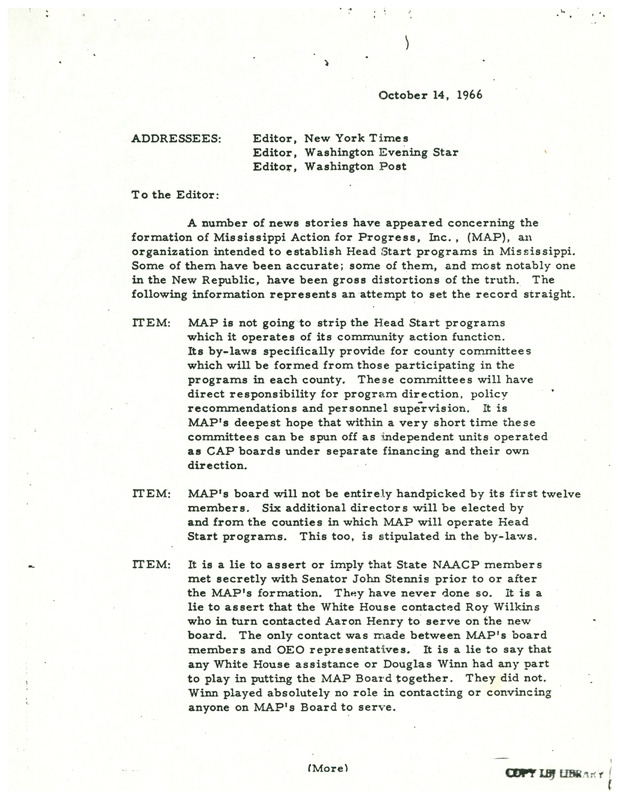
Hodding Carter III, Editor of the Greenville Delta Democrat-Times and board member of Mississippi Action for Progress (MAP), writes to the editors of the New York Times, the Washington Evening Star, and the Washington Post to clear up what he sees as inconsistencies and untruths in reporting about the formation of MAP and its role with Head Start.
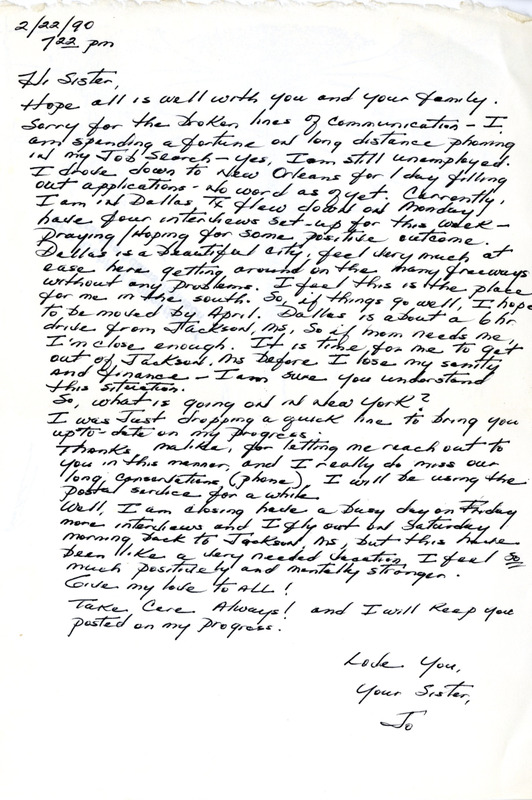
In this letter, Jo, Frankye Adams-Johnson (Malika)'s sister, is writing to update her with the extensive traveling she's been doing in her search for different employment opportunities. She also addresses her communication limitations.
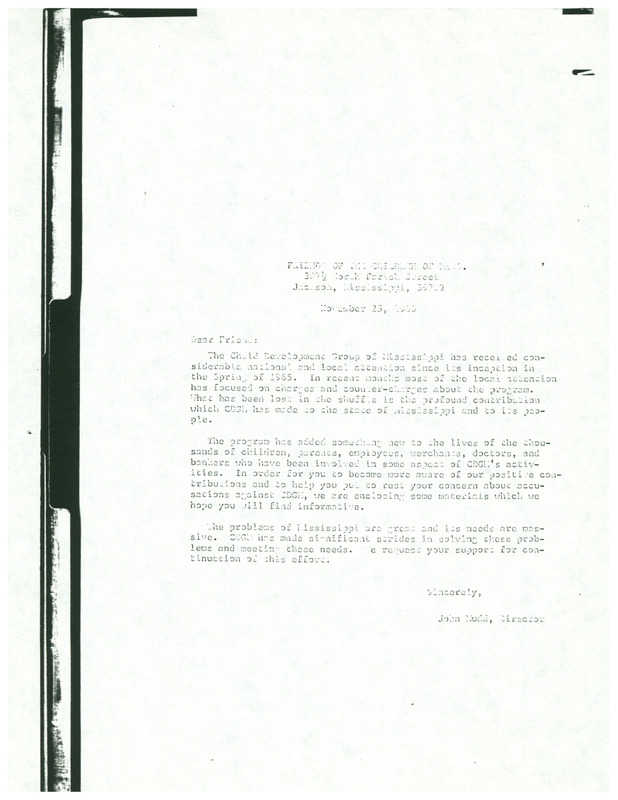
Director of Child Development Group of Mississippi (CDGM) John Mudd writes this letter to supporters of CDGM requesting continued support in the face of accusations of wrongdoing by the organization. Mr. Mudd lists some of the contributions CDGM and Head Start have made to communities in Mississippi.
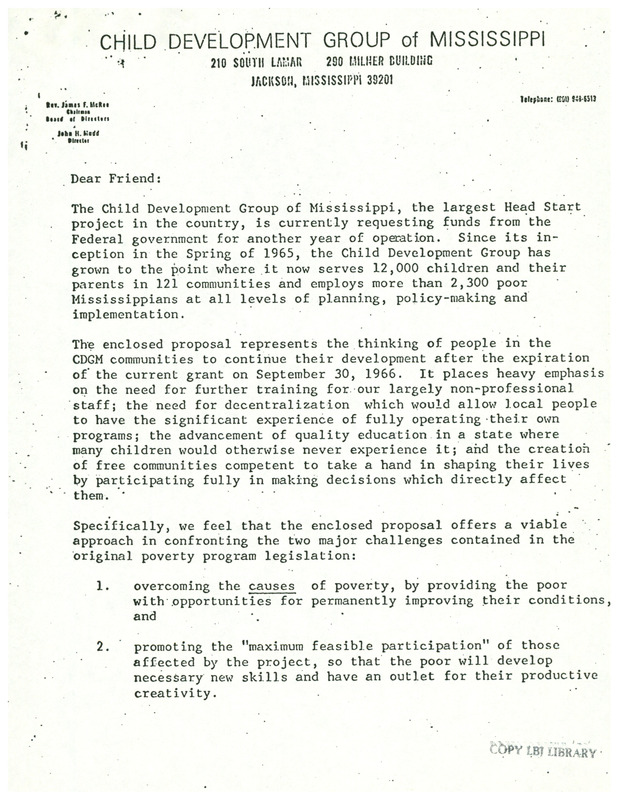
A letter from John Mudd, director of Child Development Group of Mississippi (CDGM) to supporters seeking input on a new funding proposal. The current funding was to expire on September 30, 1966, and CDGM is working to determine how to proceed with acquiring a new round of funding to keep Head Start in Mississippi operating.
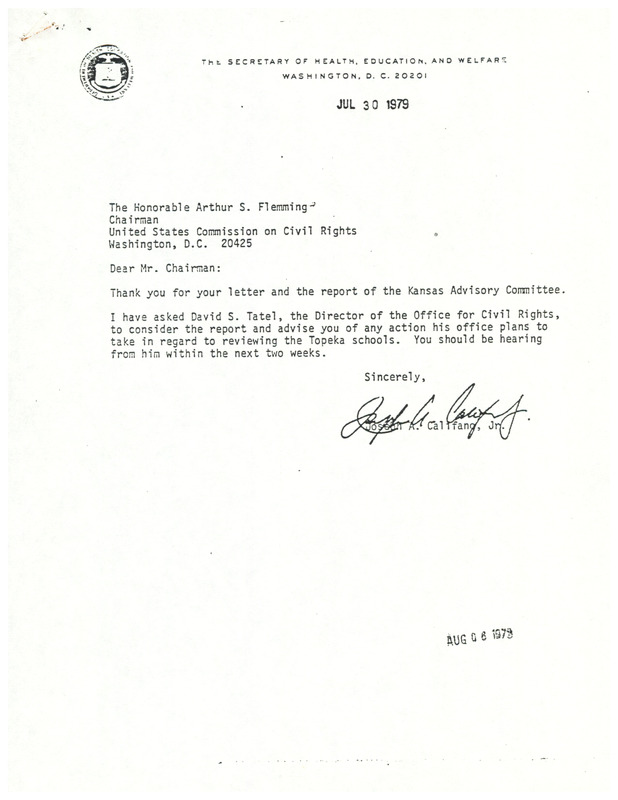
Joseph A. Califano Jr. of the United States Department of Health, Education, and Welfare writes to Chairman of the United States Commission on Civil Rights Arthur S. Flemming to alert him that his office has received his letter and report of the Kansas Advisory Committee and should hear a response within the next two weeks.
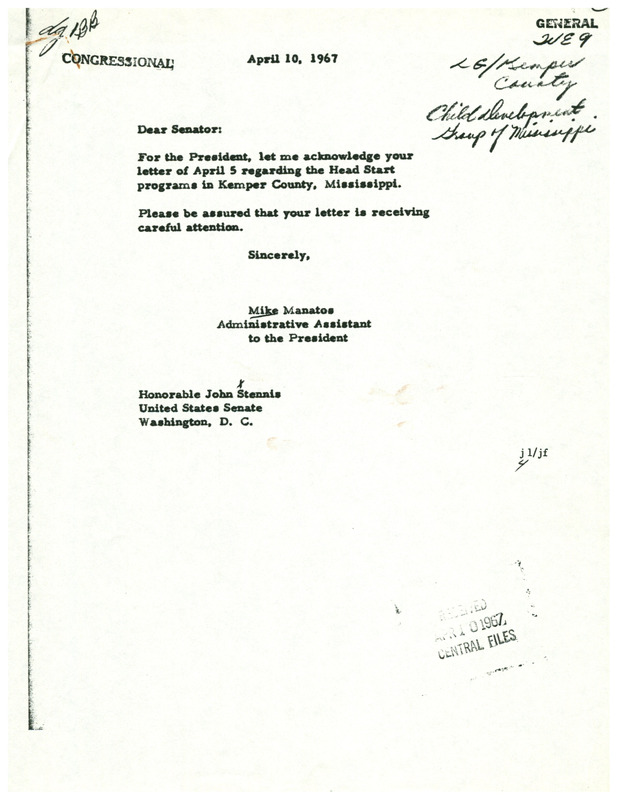
Mike Manatos, Administrative Assistant to President Lyndon Baines Johnson, writes to Senator John Stennis about Head Start in Kemper County, Mississippi. Mr. Manatos writes to acknowledge an April 5th letter from Senator Stennis and assures him the letter is receiving careful attention from the president's office.
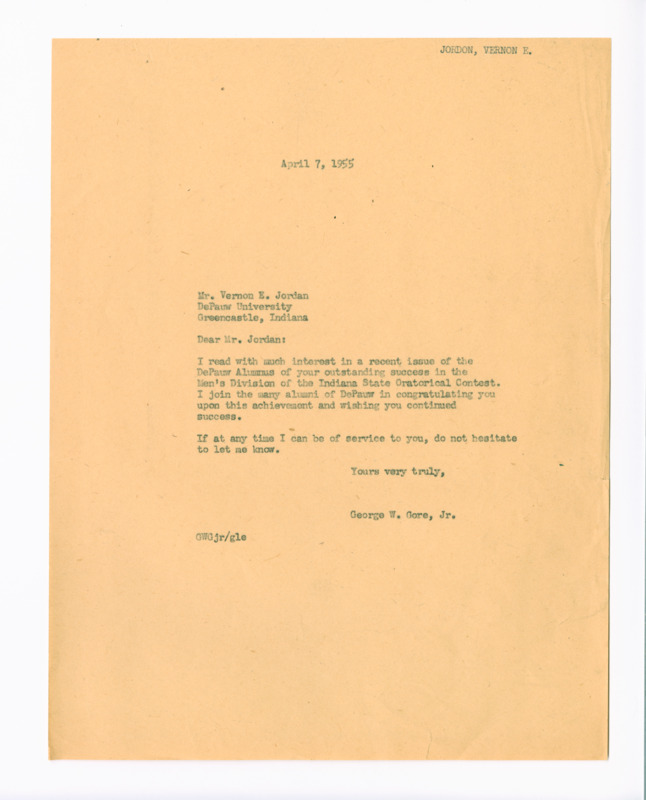
A letter from President George W. Gore to Mr. Vernon E. Jordan extending congratulations on his recent achievements and acknowledging Jordan's dedication and leadership. Gore expresses pride in Jordan’s success and commends his contributions to his field, reinforcing their mutual respect and shared commitment to progress.
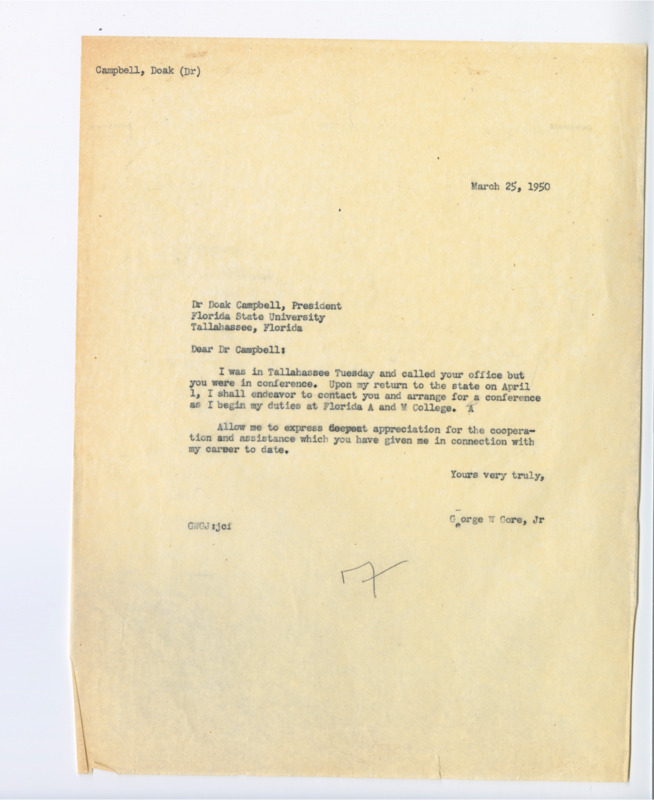
In this letter, President Gore of Florida A&M College wrote a meeting invitation to President Doak Campbell of Florida State University to discuss initiatives that would benefit both institutions and strengthen desegregation efforts. Gore emphasized a need for educational resources and support for diverse student bodies.
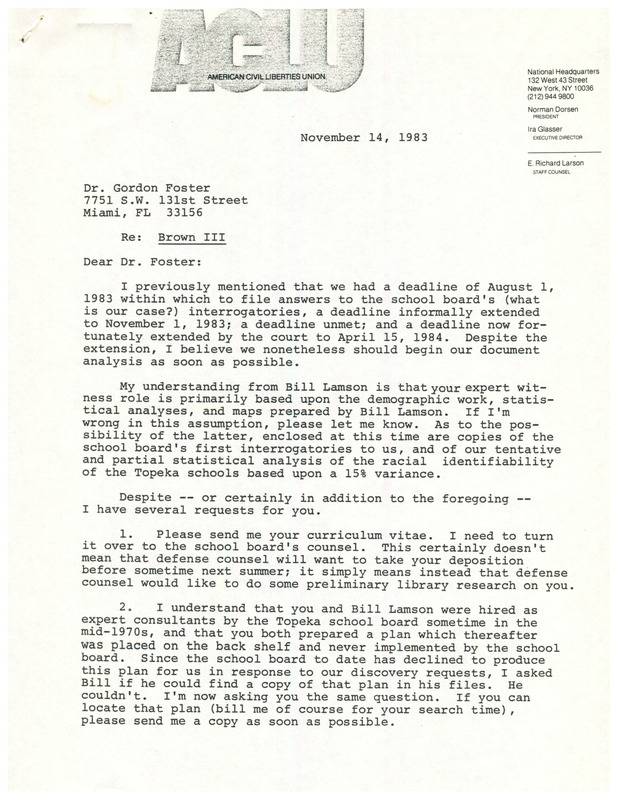
Case Data and Exhibits for Brown III, a relitigation of Brown v. Topeka Board of Education (1954) that corrected resegregation issues caused by open enrollment school choice in 1992. A letter from Richard Larson of the ACLU to Dr. Gordon Foster to inquire about his role as an expert witness in the Brown III case.