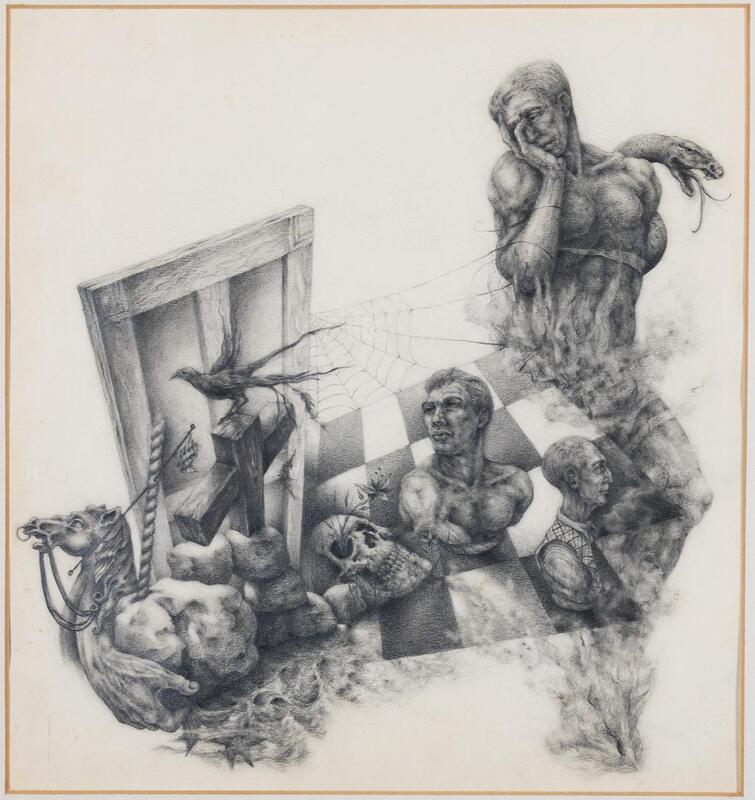
Patricia C. Walker was an artist from Worcester, MA. Man is a surrealist drawing that uses gothic symbols, such as the cross, crow on the tombstone, skull, and older man, to signify human mortality. It also uses Christian iconography, such as Adam and the Snake.
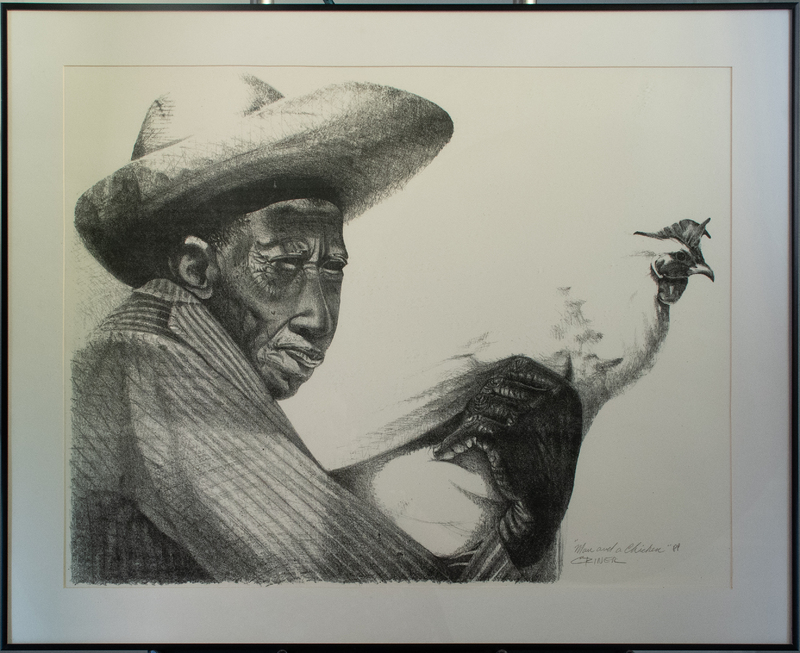
Criner’s print shows an older man wearing a hat and holding a chicken. This print is a black-and-white version of Criner’s piece “Mr. Alvin White, Man With Chicken.” Criner learned printmaking firsthand from Dr. John Biggers and was the longtime artist-in-residence at Houston’s Museum of Printing History.
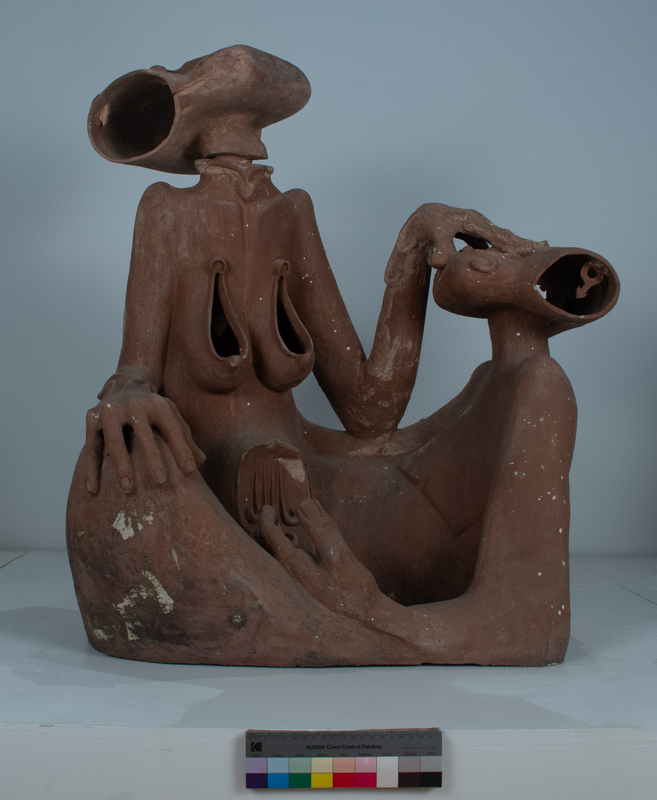
This terracotta was created by an unknown Texas Southern art student. The form suggests a surreal male and female pair warmly embracing each other. The artist employs negative space uniquely in this sculpture; additional gendered embellishments can be seen within the open heads. These exterior decorations were required by Professor Carroll Harris Simms.
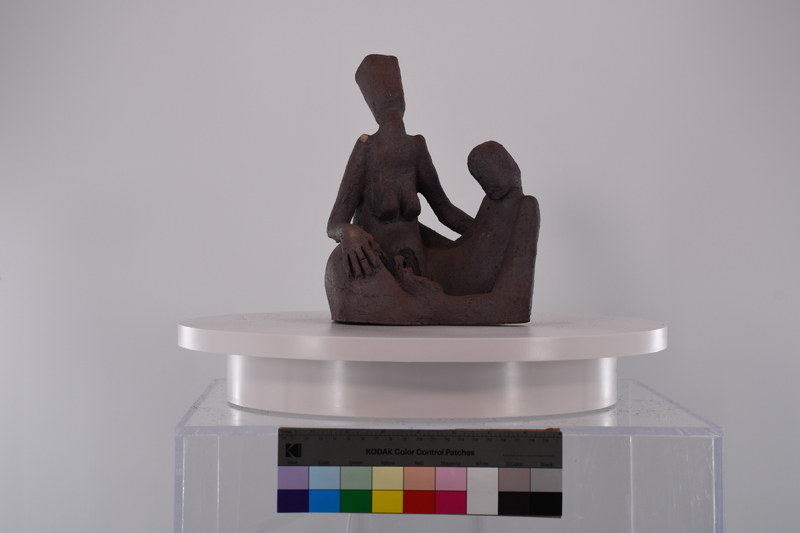
This maquette shows a human-like couple with enlarged heads and hands. The artist suggests their intimacy by joining their lower bodies together. The full-scale sculpture features finer details, such as modified head shapes, embellishments, and greater use of negative space.
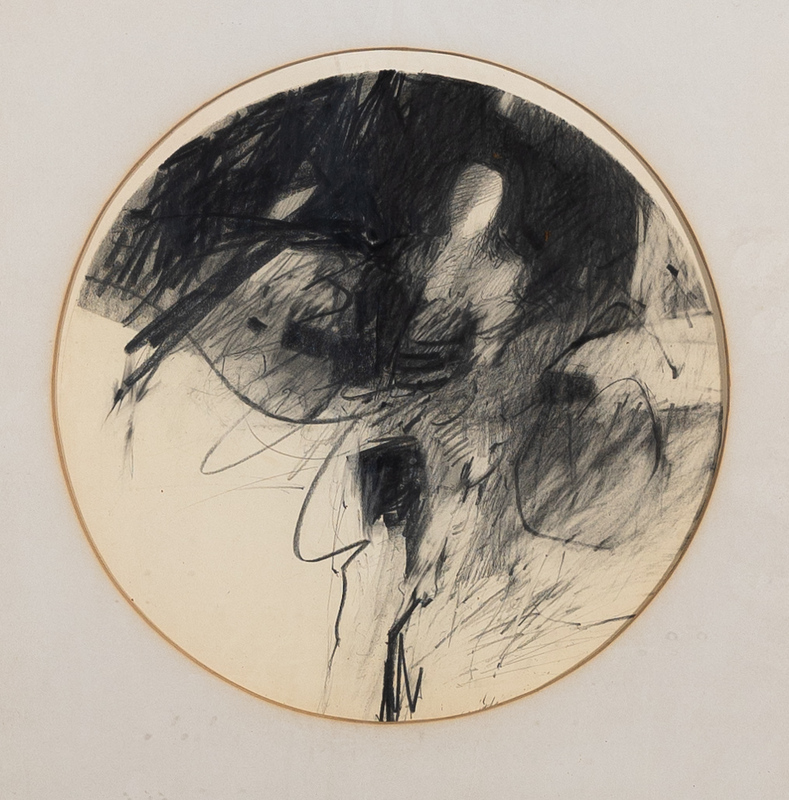
Alvin Smith was an artist from Brooklyn, NY. Man Fleeing from Himself depicts an abstract figure running within a centered circle. Smith creates the figure through the white space left by black pencil strokes.
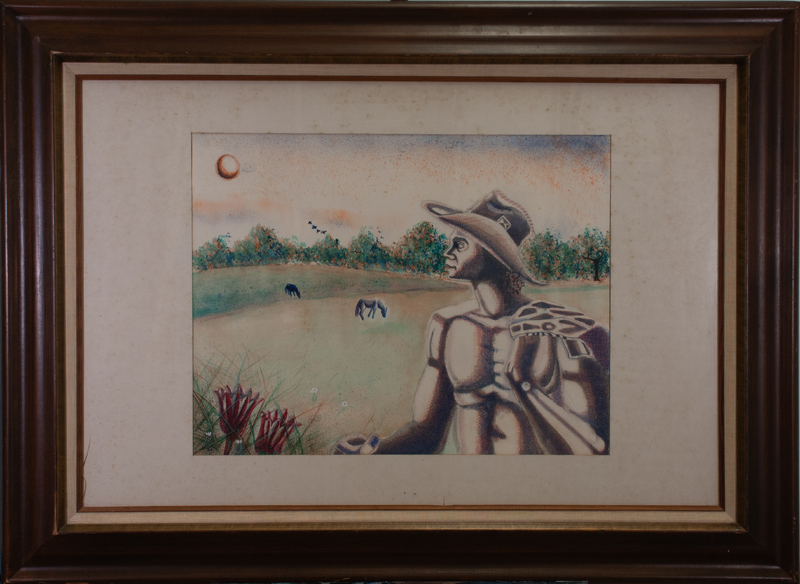
This piece by Bennie Settles shows a man wearing a cowboy hat, looking out onto a mostly empty field with two horses grazing. Settles' works in the permanent collection frequently showcase his style of using rounded shapes and gradients to depict his subjects' muscles and deep care for portraying Black hair.
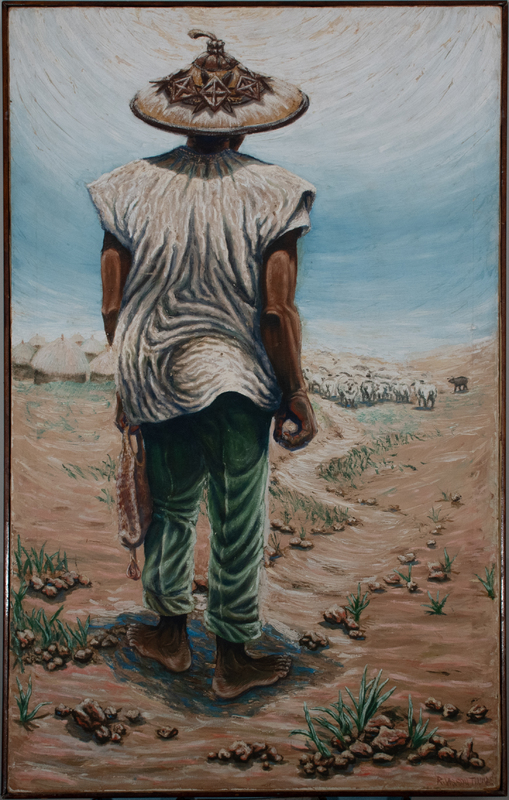
Thomas’s painting shows a barefooted man, looking upon a village and a herd of sheep from a distance. The movement of wind is depicted through his garments swaying around his body. Thomas has a particular way of creating movement in his paintings, especially in the clothing and scenery in his artworks.
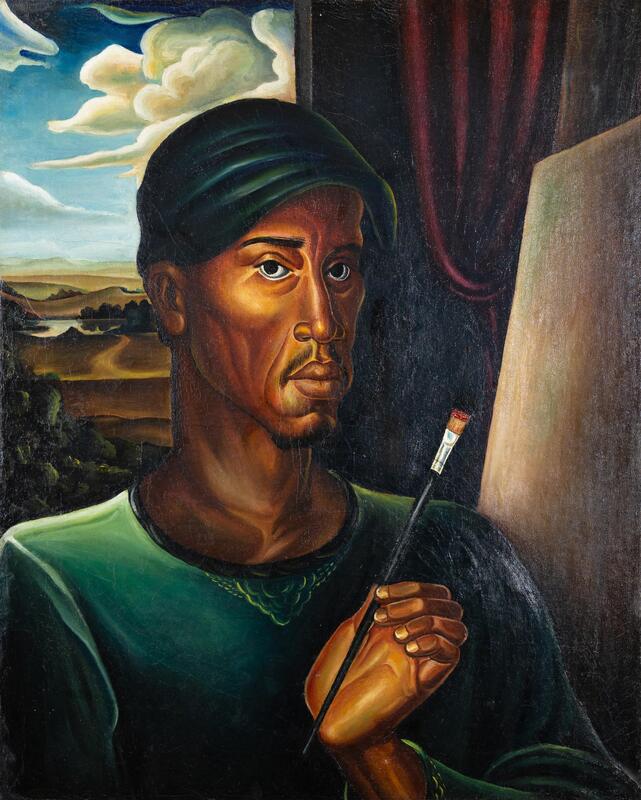
Frederick C. Flemister was an artist from Jackson, GA. Man with Brush is a mannerist self-portrait depicting him in front of an arched window at an empty canvas. Outside of the window is a landscape scene featuring a lake, rolling hillsides, and mountains in the distance.
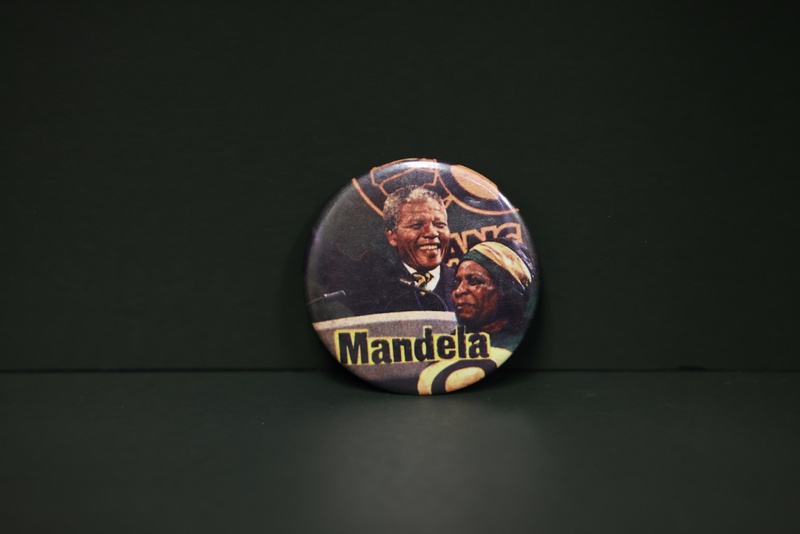
A multi-colored button with a picture of Nelson and Winnie Mandela. Nelson Mandela was an anti-apartheid activist in South Africa. After being imprisoned for 27 years due to his African Nationalist ideology, he was released in 1990 and led efforts to end apartheid. He was elected president in 1994 in the country's first fully democratic election.
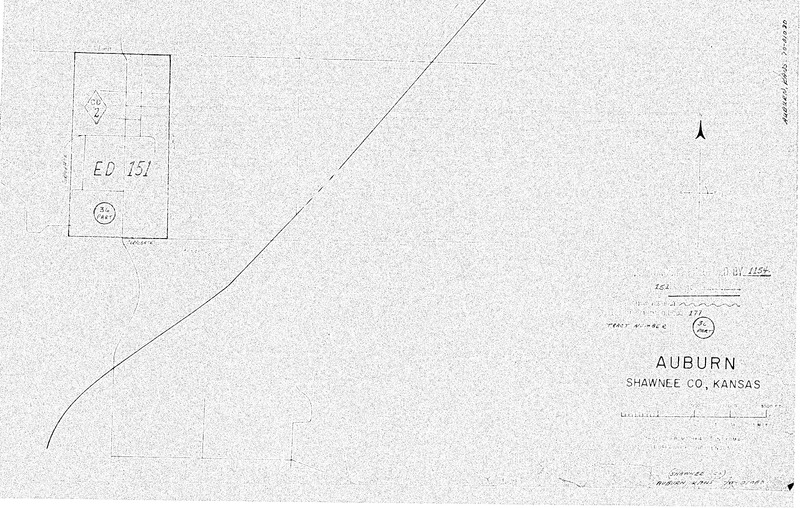
Case Data and Exhibits for Brown III, a relitigation of Brown v. Topeka Board of Education (1954) that corrected resegregation issues caused by open enrollment school choice in 1992. Map of Auburn, Shawnee County, Kansas, showing school district Ed. 151.
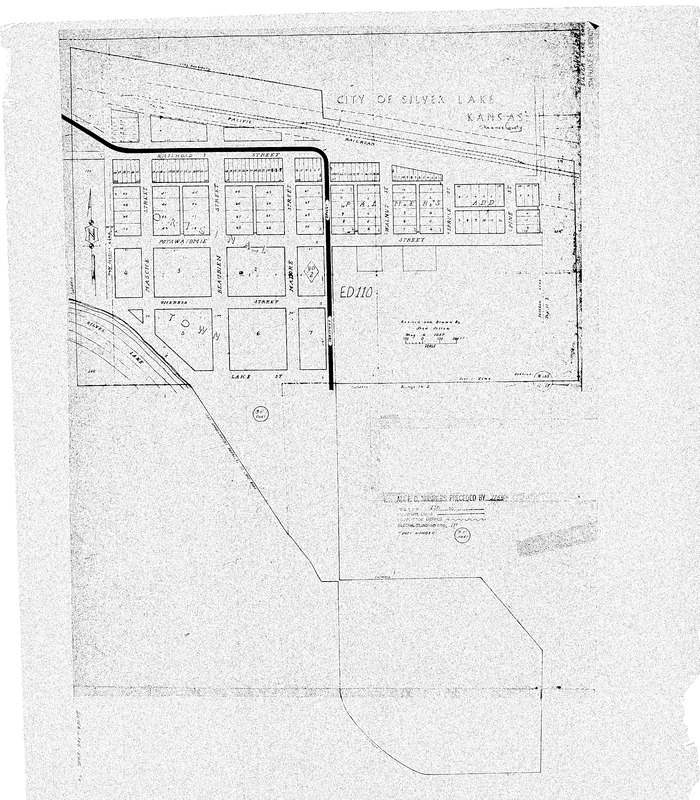
Case Data and Exhibits for Brown III, a relitigation of Brown v. Topeka Board of Education (1954) that corrected resegregation issues caused by open enrollment school choice in 1992. The map shows the city of Silver Lake, Kansas in Shawnee County as it stood in 1937.
Case Data and Exhibits for Brown III, a relitigation of Brown v. Topeka Board of Education (1954) that corrected resegregation issues caused by open enrollment school choice in 1992. The map includes streets, a stream, a city park, and a high school. School districts number 7 and 34 are marked on the map.
Case Data and Exhibits for Brown III, a relitigation of Brown v. Topeka Board of Education (1954) that corrected resegregation issues caused by open enrollment school choice in 1992. The legend breaks down all roads by type and marks boundaries by county, corporate limit, and section line and includes markers for, dwellings, schools, and more.
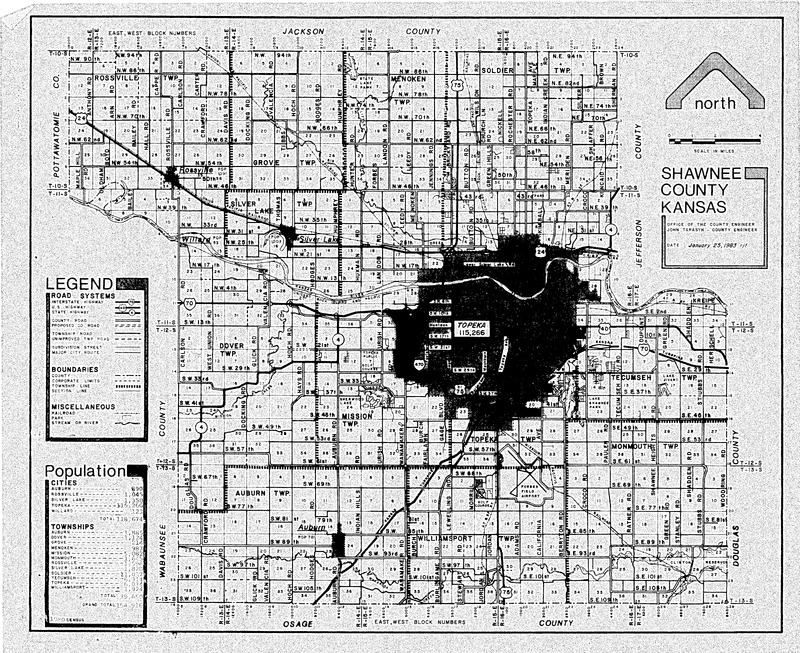
Case Data and Exhibits for Brown III, a relitigation of Brown v. Topeka Board of Education (1954) that corrected resegregation issues caused by open enrollment school choice in 1992. The map legend marks all major roadways, boundaries, parks, waterways, and railroads. There is also a table with population numbers for cities and townships.
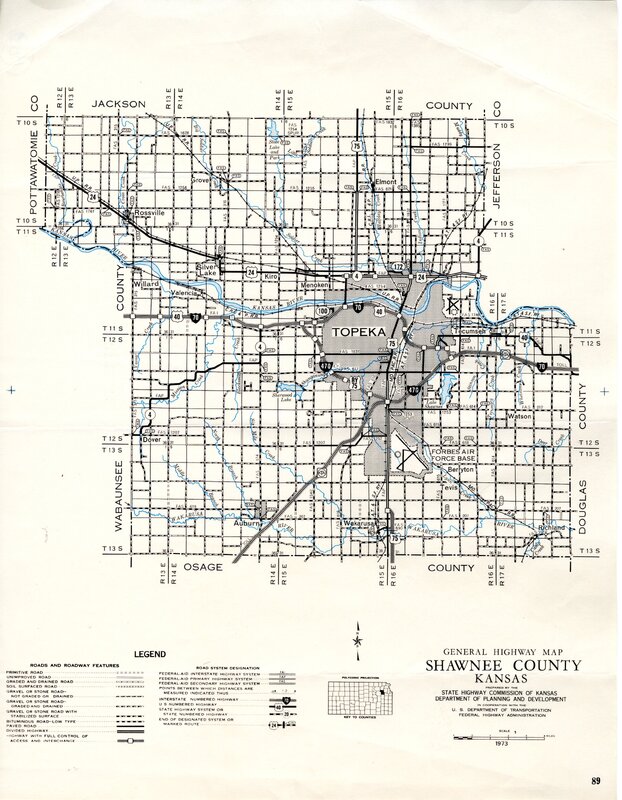
Case Data and Exhibits for Brown III, a relitigation of Brown v. Topeka Board of Education (1954) that corrected resegregation issues caused by open enrollment school choice in 1992. The legend includes designations for each type of road in the county as well as road system designations.
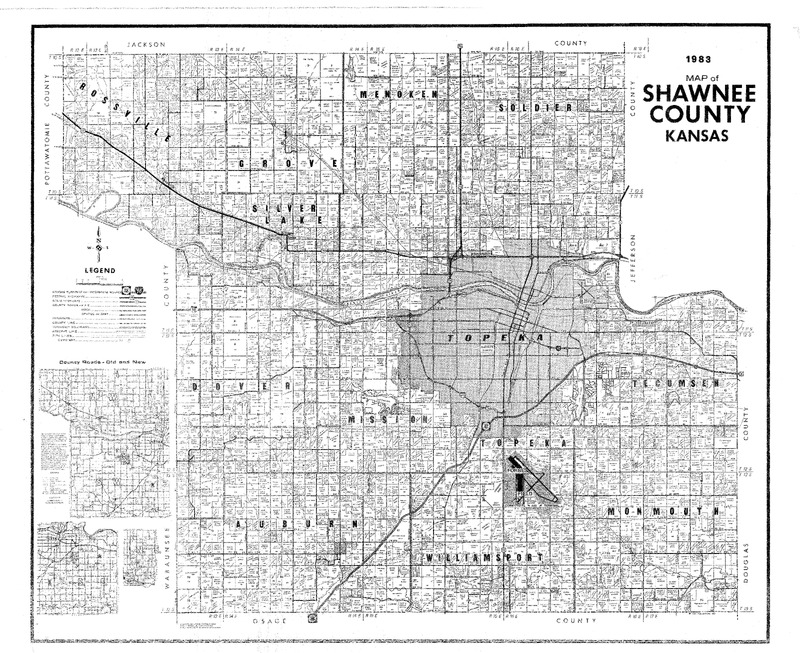
Case Data and Exhibits for Brown III, a relitigation of Brown v. Topeka Board of Education (1954) that corrected resegregation issues caused by open enrollment school choice in 1992. Detailed maps on the left side show County Roads-Old and New in the northwest, northeast, and southeast sections of the county.
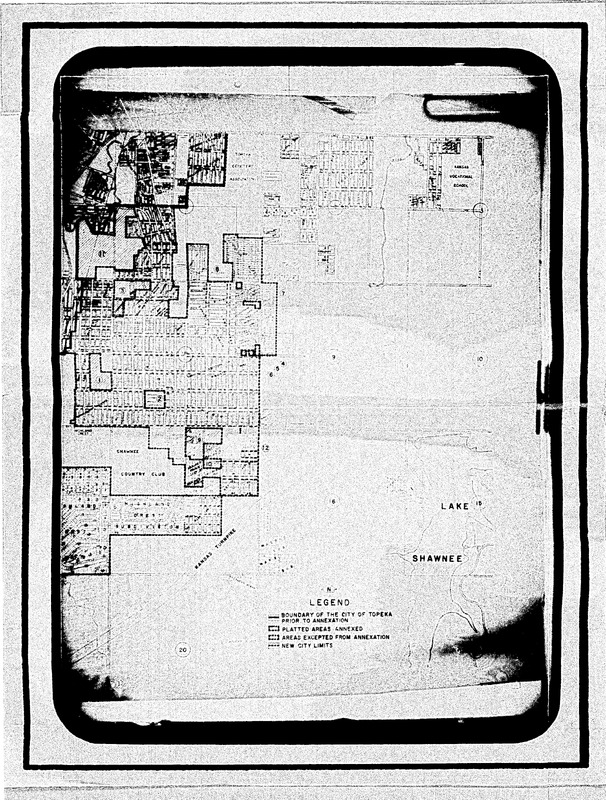
Case Data and Exhibits for Brown III, a relitigation of Brown v. Topeka Board of Education (1954) that corrected resegregation issues caused by open enrollment school choice in 1992. The legend includes Boundary of the city of Topeka prior to annexation; platted areas annexed; areas excepted from annexation; and new city limits.
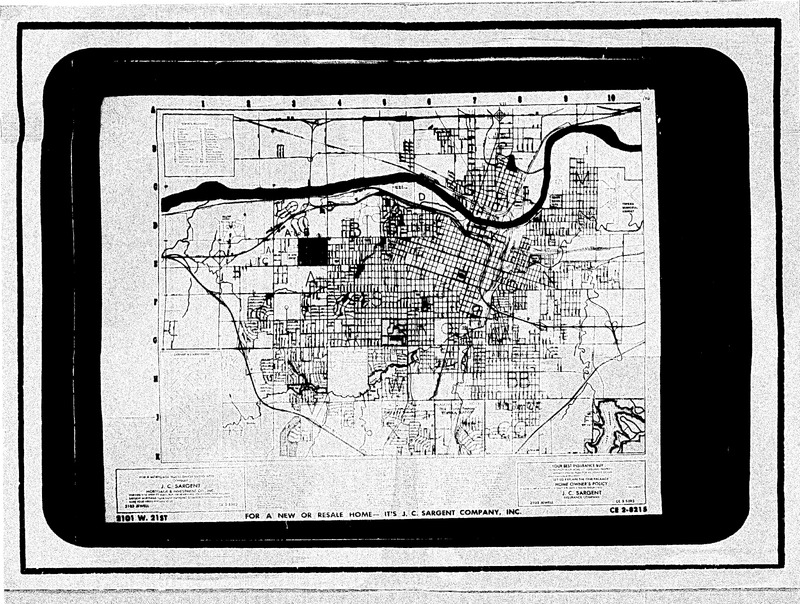
Case Data and Exhibits for Brown III, a relitigation of Brown v. Topeka Board of Education (1954) that corrected resegregation issues caused by open enrollment school choice in 1992. The map was created by J.C. Sargent Company, Inc. and shows residential areas in Topeka, Kansas, with markings by William Lamson marking several areas and streets.
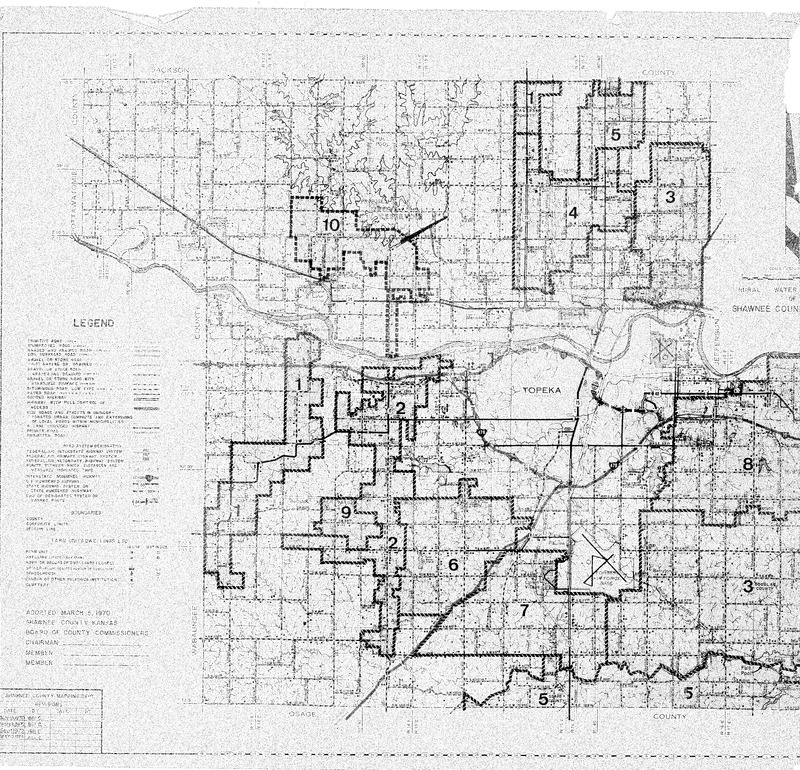
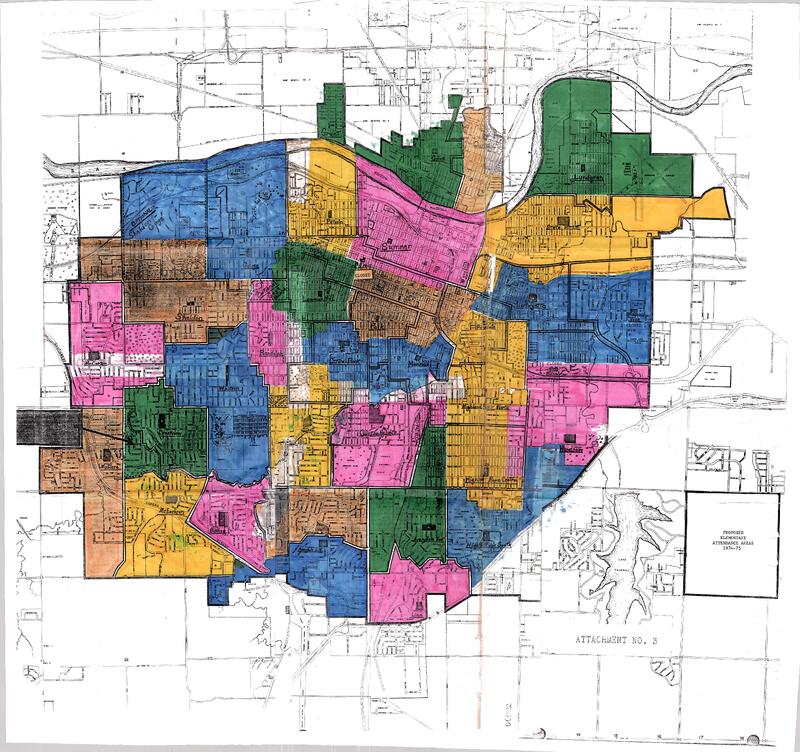
Case Data and Exhibits for Brown III, a relitigation of Brown v. Topeka Board of Education (1954) that corrected resegregation issues caused by open enrollment school choice in 1992. The map shows the Proposed Elementary Attendance Areas for Topeka Public Schools for 1974-1975. William Lamson colored in each area with pens and marked the schools.
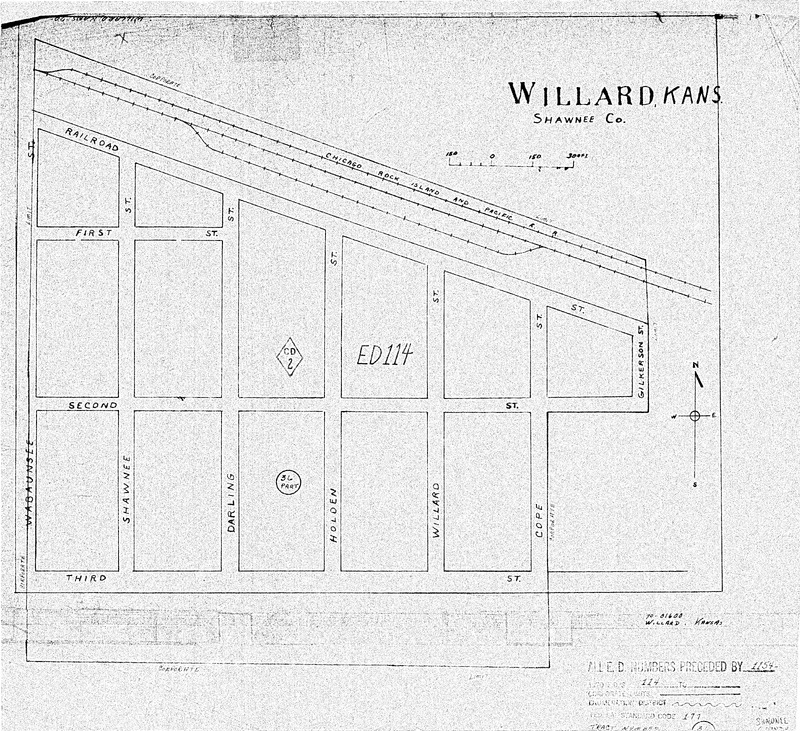
Case Data and Exhibits for Brown III, a relitigation of Brown v. Topeka Board of Education (1954) that corrected resegregation issues caused by open enrollment school choice in 1992. Map of Willard Shawnee County, Kansas, showing school district Ed. 114.
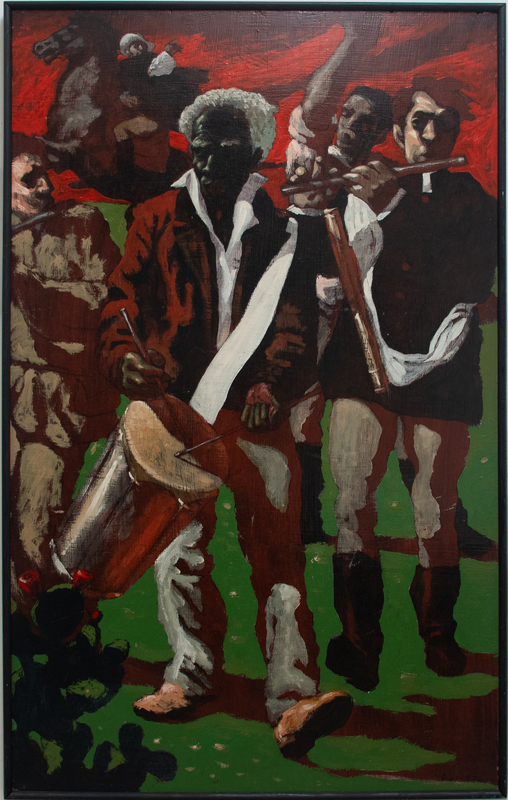
Oliver's painting depicts a group of men marching and playing drums and flutes, seemingly as part of a military expedition. The scene is believed to be drawn from the Battle of San Jacinto, the culminating battle of Texas's war against Mexico. The Black man may be Dick the Drummer, a free Black man who was part of the Texas army band.
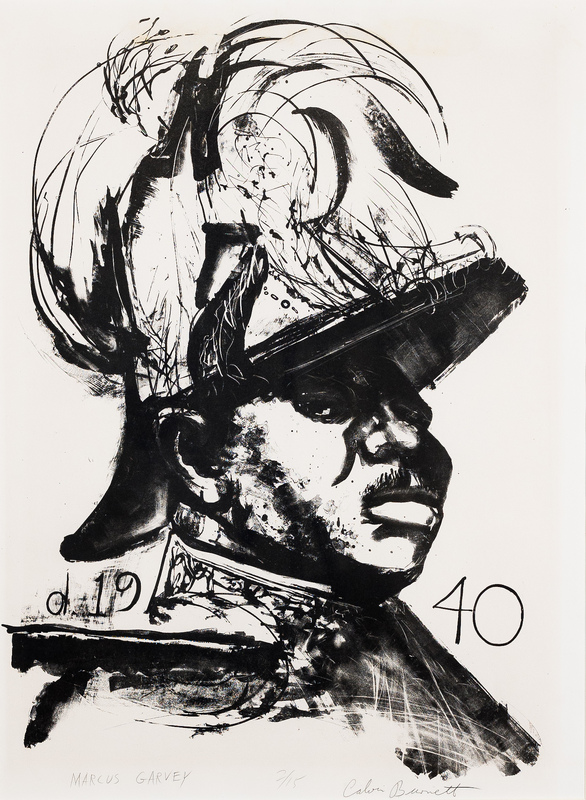
Calvin Burnett was a graphic artist, illustrator, painter, designer, and art teacher from Cambridge, MA. Marcus Garvey is a portrait of its namesake, a Jamaican political activist. Marcus Garvey was a renowned Black nationalist and Pan-Africanist.
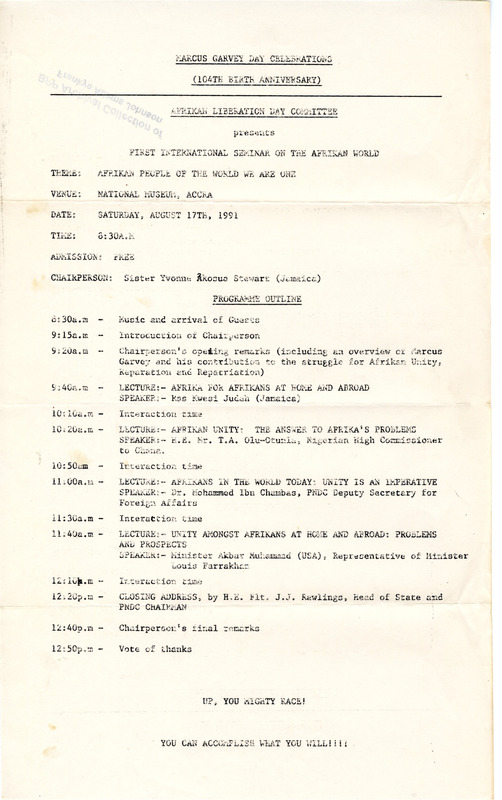
The program for the celebration of Marcus Garvey's 104th birth anniversary. Garvey was founder and first President-General of the Universal Negro Improvement Association and African Communities League (UNIA-ACL). The program is labeled as "First International Seminar on the Afrikan World" with the theme of "Afrikan people of the world we are one."
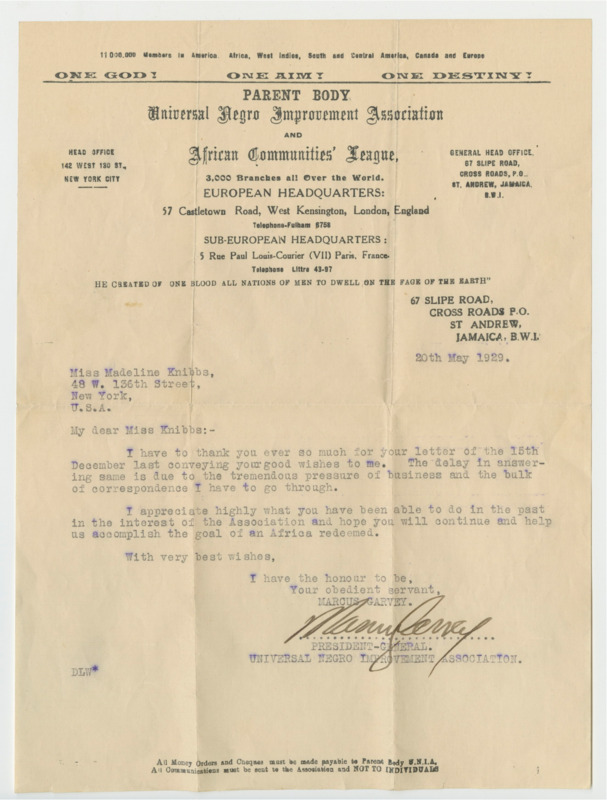
In this 1929 correspondence, Marcus Garvey, the Jamaican-born radical civil rights leader, responded to Madeline Kibbs, a little girl who joined the Universal Negro Improvement Association and African Communities League (the organization he founded). Garvey himself signed this rare, original letter.
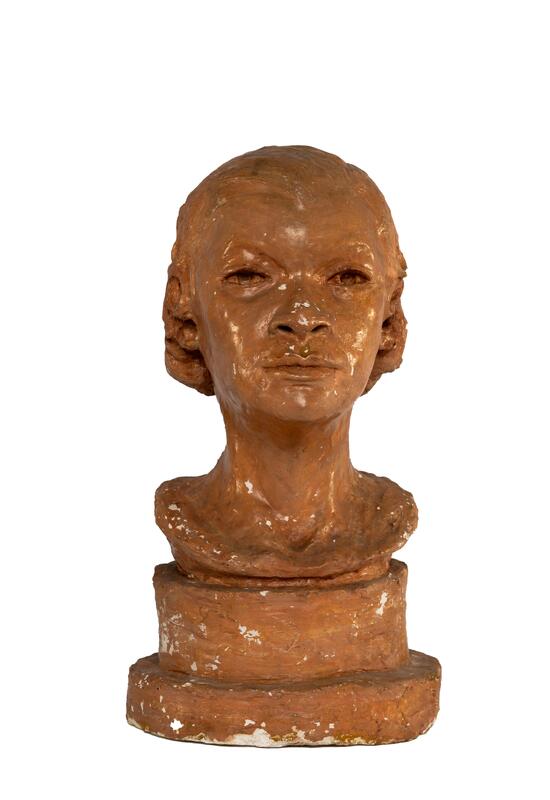
Jewell Woodard Simon was an internationally acclaimed artist, teacher, and poet from Houston, TX. Margaret is a plaster bust of a Black woman. Like her other sculptures, Simon details the subject's features, including her nose, mouth, eyes, ears, and hair texture.
Margaret Jones, in 1967, began working to bring Head Start to Rankin County, Mississippi. Her career began when she was hired as a resource teacher when her daughter began attending Head Start at 3 years old. She eventually was promoted to Head Start Director of Education. She talks about the history of the program during her time there.
Margaret Rundles began working with the Child Development Group of Mississippi (CDGM) in 1967 in Jackson, Mississippi, when the organization moved into the building she was working in. She talks about first starting work as a copy manager and discusses some of the publications that came through her department.
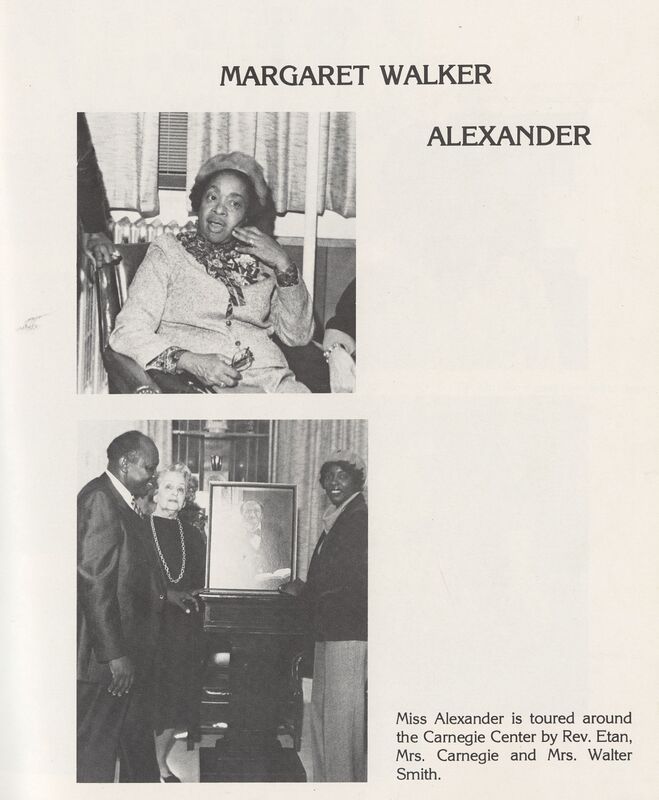
Margaret Walker was a poet best known for her role in the Chicago Black Renaissance, a Black literary movement. Her first poetry collection, For My People, won the Yale Series of Younger Poets Award, making her the first Black woman to do so. 1981, she visited the Carnegia Center, a.k.a Carnegie Library, at the Meek-Eaton Black Archives.
Marian Williams, a gospel singer, provided Tuskegee Institute students with a gospel concert in relation to the Tuskegee Civic Association meeting in 1972.
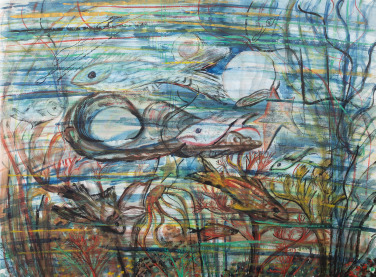
Jewell Woodard Simon was an internationally acclaimed artist, teacher, and poet from Houston, TX. Marine Land Fantasy is an underwater landscape drawing of fish and plants. Simon uses a variety of colors that illustrate aquatic biodiversity. Her use of lines evokes the depth of open water.