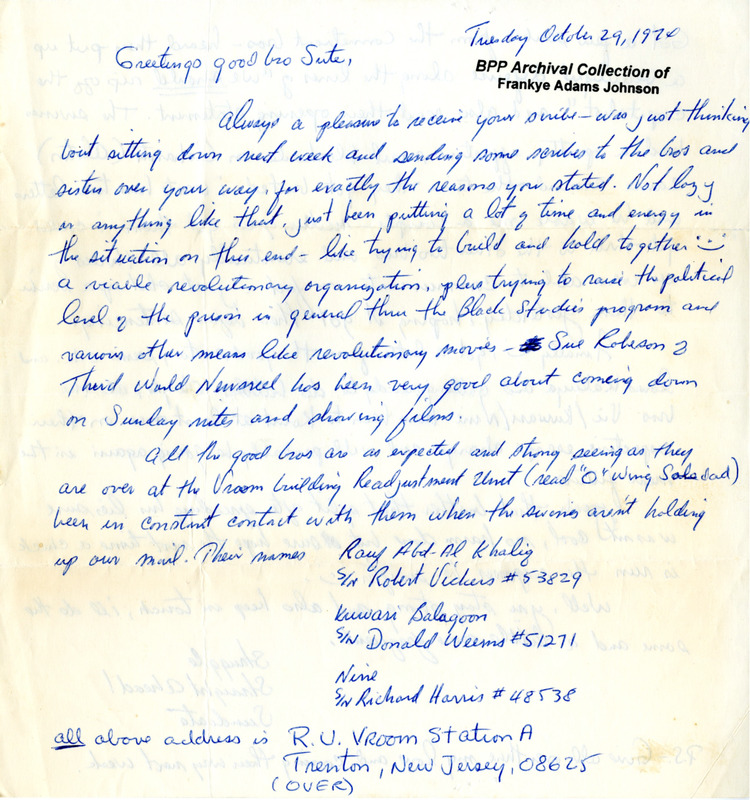
Sundiata Acoli, a member of the Black Liberation Army (BLA) who was convicted in 1974 for the murder of a cop, writes to fellow revolutionary Sute. He addresses his lack of writing, as he is trying to organize revolutionaries in prison. He tells Sute the location of other brothers in the prison and news of their court proceedings.
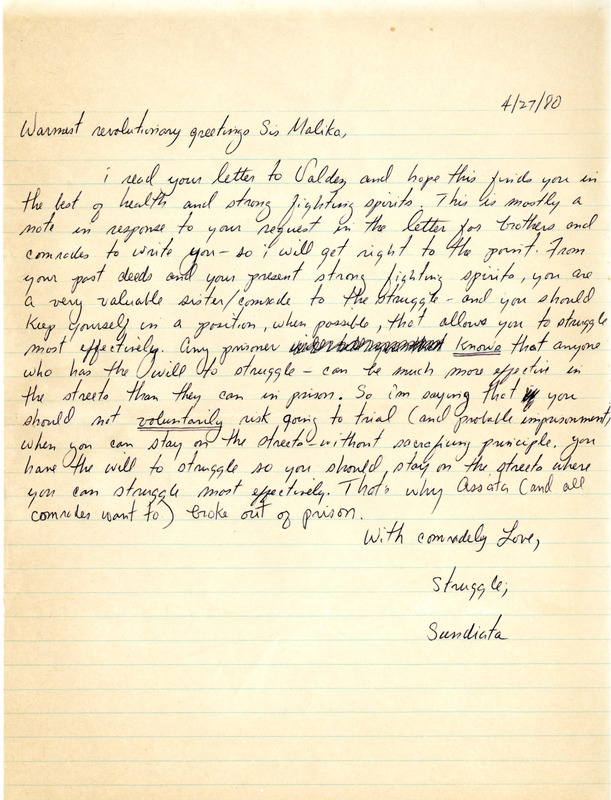
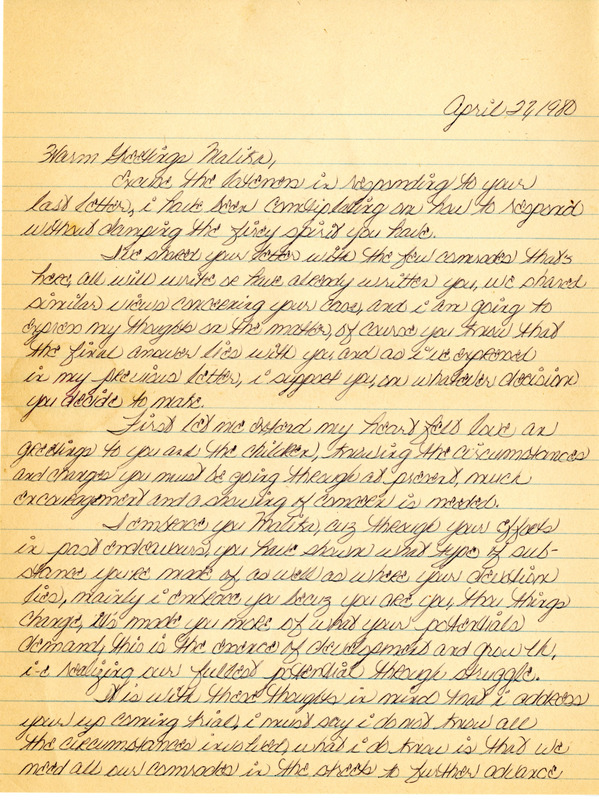
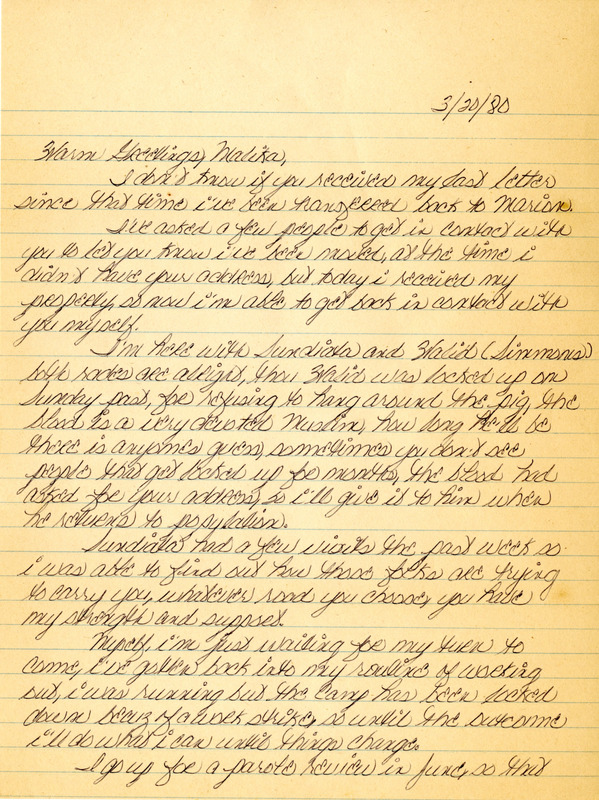
Sundiata Acoli, a member of the Black Panther Party and Black Liberation Army (BLA) who was convicted in 1974 for the murder of a cop, writes Frankye Adams-Johnson (Malika) to tell her that she should do everything in her power to avoid trial and prison, because her effectiveness in the struggle would be weakened in prison.
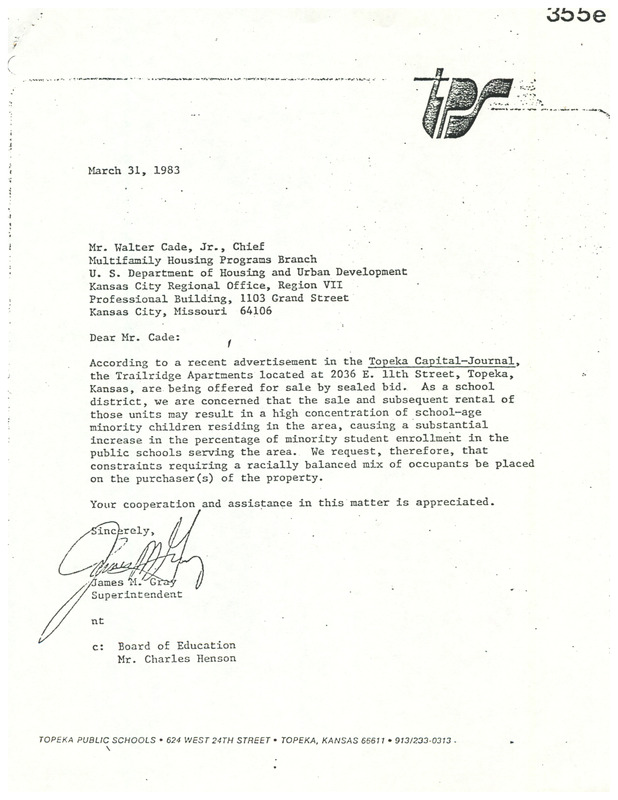
Topeka Public Schools James M. Gray, in a letter to Walter Cade Jr., asks that The Department of Housing and Urban Development (HUD) place constraints on a recently sold rental property in Topeka to ensure that there is a racially balanced mix of occupants.
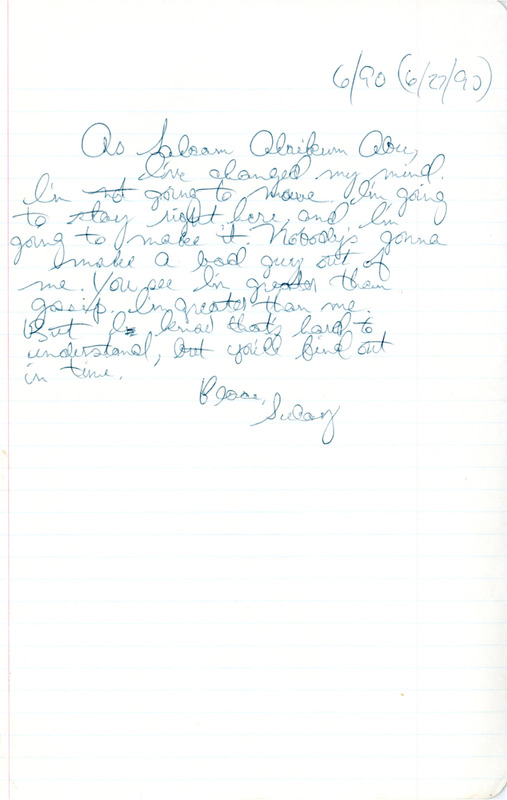
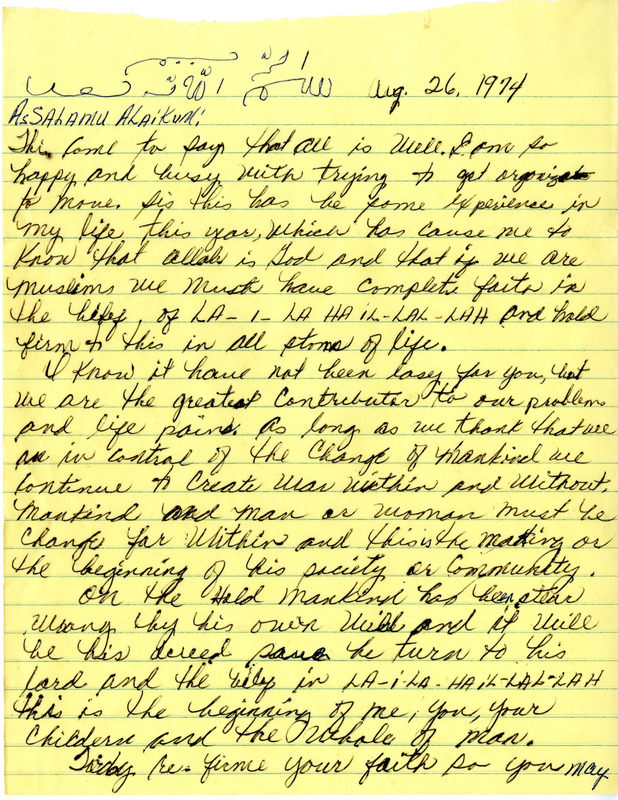
Tahiar Bashir Abu Buthair Adu Hakim explains the importance of keeping the faith as the recipient is separated from their children. She offers to take care of the children and gives advice to the recipient.
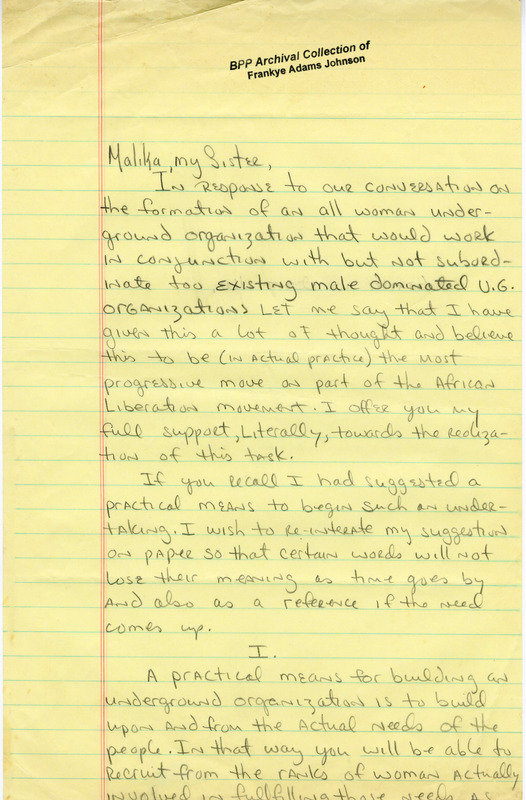
The sender, following up with Frankye Adams-Johnson (Malika) on a previous conversation, writes to her regarding her idea to start a woman-led Black liberation group. The sender gives steps on creating a military intelligence apparatus that will serve the women's militia and connect them to other organizations in the struggle for Black liberation.
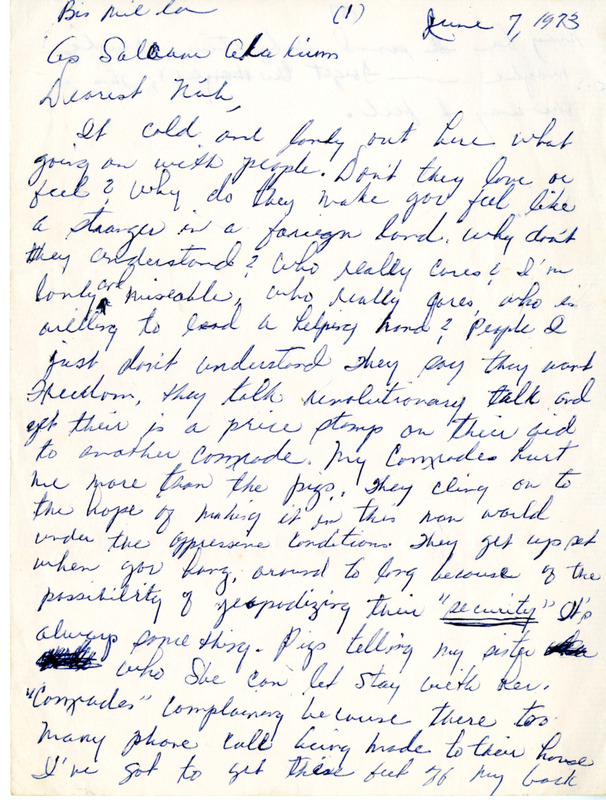
The unknown sender and fellow revolutionary writes to Nuh Abdul Qaiyum, who at this time was being held awaiting trial for a 1971 police shooting, to get some feelings off of their chest about the community, the Black Panther Party, and how people behave. They compare the way they are both treated and viewed by the people around them.
Brother Valdez, an imprisoned member of the Black Panther Party, writes about Frankye Adams-Johnson (Malika)’s court case, explaining the need for people like her, and that prison would diminish her role to nothing. He tells her his desire to see a picture of her and to give his love to everyone.
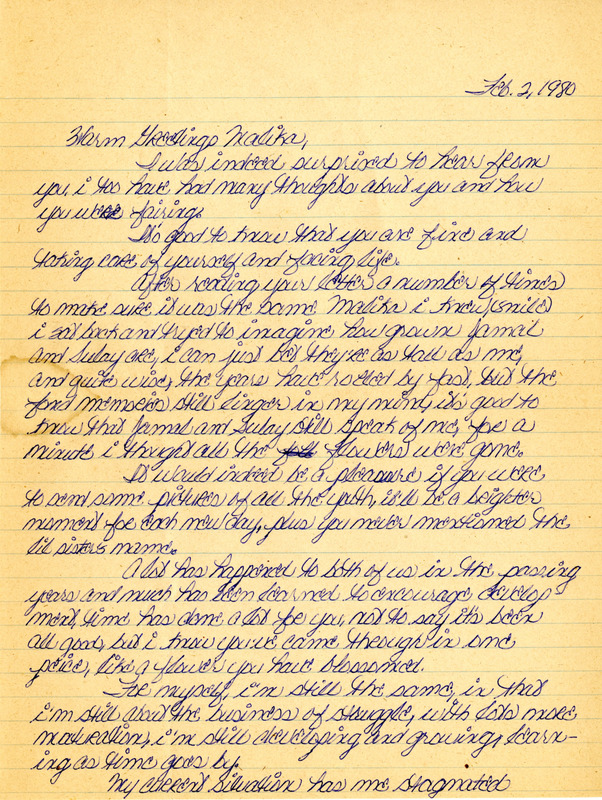
Brother Valdez, an imprisoned member of the Black Panther Party, writes of the youth in the Party while imagining how much they have grown and learned. He details his time in prison and updates Frankye Adams-Johnson (Malika) on the current situation of other members of the Party and tells her to stay strong.
Brother Valdez, an imprisoned member of the Black Panther Party, updates Frankye Adams-Johnson (Malika) on another prisoner that wanted to write to her. He also updates her on his health and maturity. He tells her that the youth must be educated better and faster than they were, and says he will see them soon.
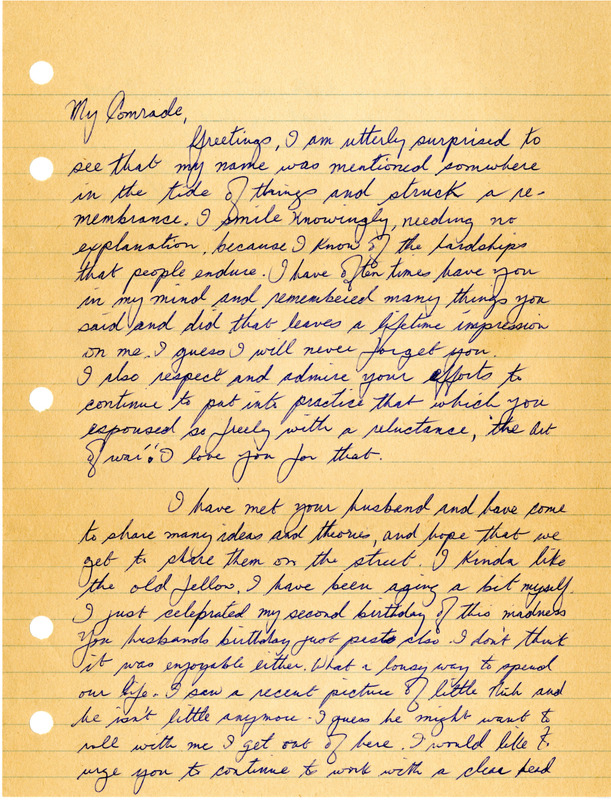
Victor Cumberbatch, sentenced to prison in 1973 on robbery and weapons charges in connection with a Black Liberation Army (BLA) robbery, writes to Frankye Adams-Johnson (Malika). He explains the impression and lifelong impact that she left on him. He mentions meeting her husband, and he relates to him in the sense of growing older in prison.
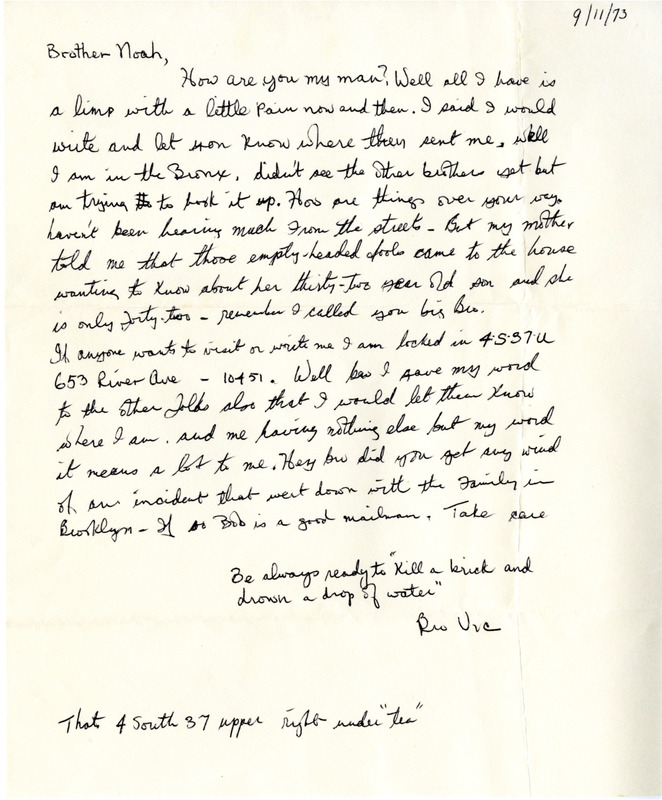
Victor Cumberbatch, who was sentenced to prison in 1973 on robbery and weapons charges in connection with a Black Liberation Army (BLA) robbery, writes to update Albert Washington (Nuh Abdul Qaiyum) on his physical wellbeing and where he is serving his prison sentence. He asks if he has heard anything about an incident in Brooklyn.
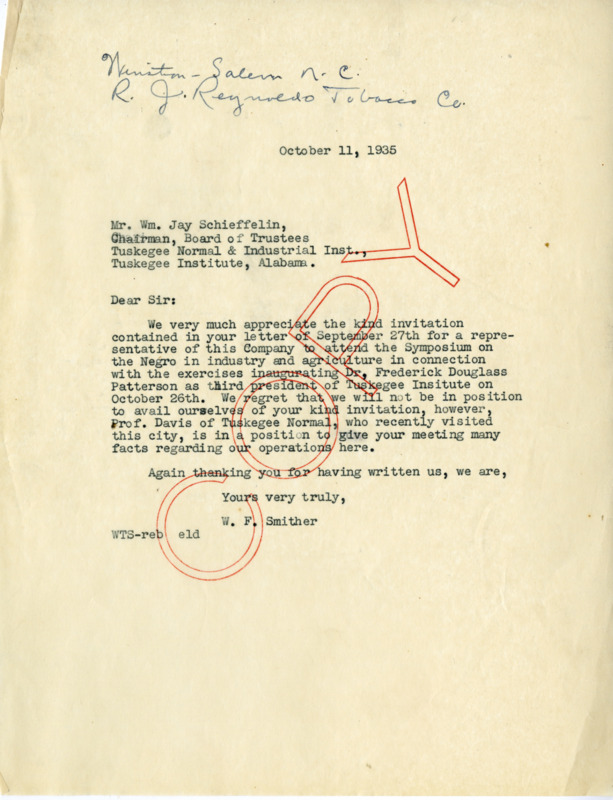
Letter from W. M. Smither to William Jay Schieffelin declining an invitation to attend the "Symposium on the Negro" at Tuskegee Institute. "Winston-Salem, N.C., R. J. Reynolds Tobacco Company" is handwritten across the top of the letter.
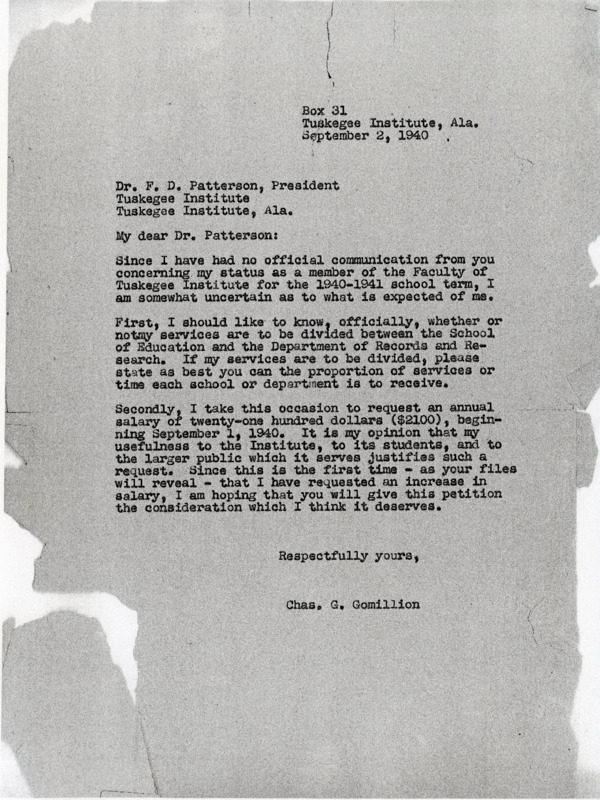
A letter from Charles G. Gomillion, the Dean of Students of Tuskegee University and president of the Tuskegee Civic Association, to President Patterson inquiring about his status as employment status for the 1940-1941 academic year.
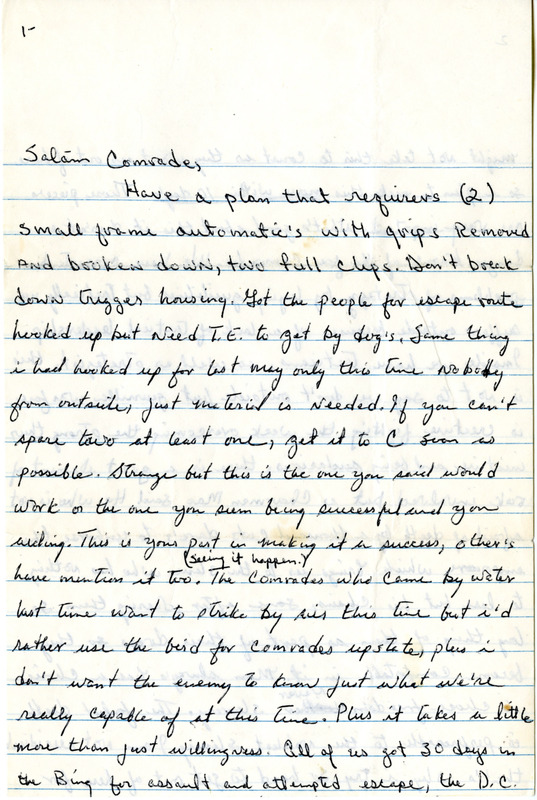
A letter from Nuh Abdul Qaiyum, who is imprisoned, to his wife Frankye Adams-Johnson (Malika). Nuh Abdul Qaiyum writes about materials he needs for an escape from prison. He explains that they are enslaved in prison, and he will choose freedom even if he dies. He ends by writing retrospectively about his personal life and the Black Panther Party.
A letter addressed to “All Black and Oppressed Third World People” from the Malcolm X Section of the Afro-American Liberation Army. The letter is a call for Black people to take up arms and take their freedom from America, even if that means “killing those who stand between us and the oppressor”
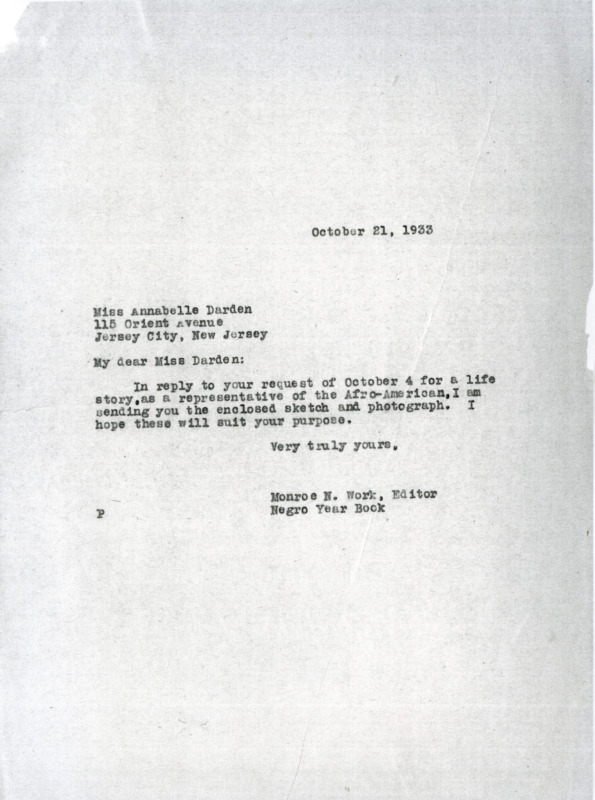
One-page letter responding to Anabelle Darden's request for information about Monroe N. Work to include in the New Jersey Afro-American newspaper. Work included a sketch of his life story and a photograph with his response.
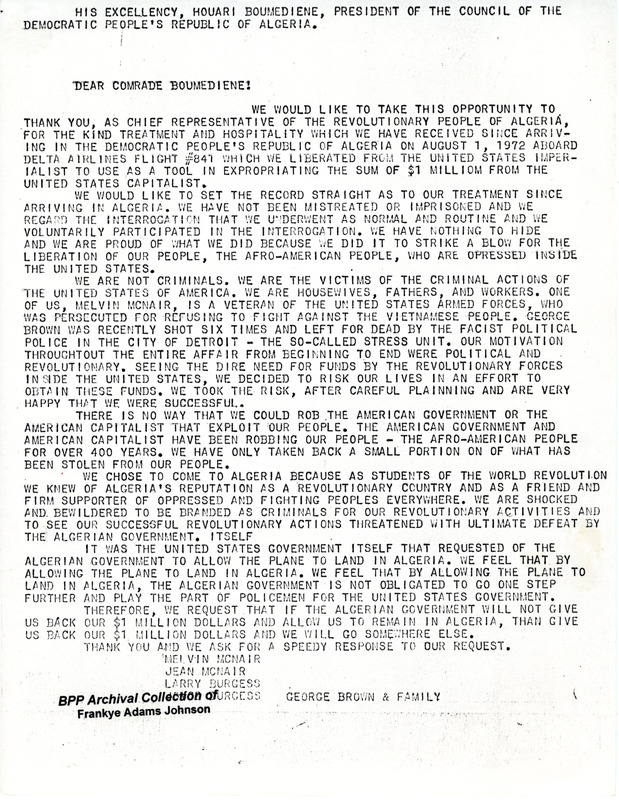
A letter to Algerian president Houari Boumediene from members of the Black Liberation Army (BLA) who had fled to his country from the United States. Melvin McNair, Jean McNair, Larry Burgess, and George Brown hijacked a plane in Miami on July 31, 1972 to seek political asylum in Algeria. The letter talks about their treatment in the country.
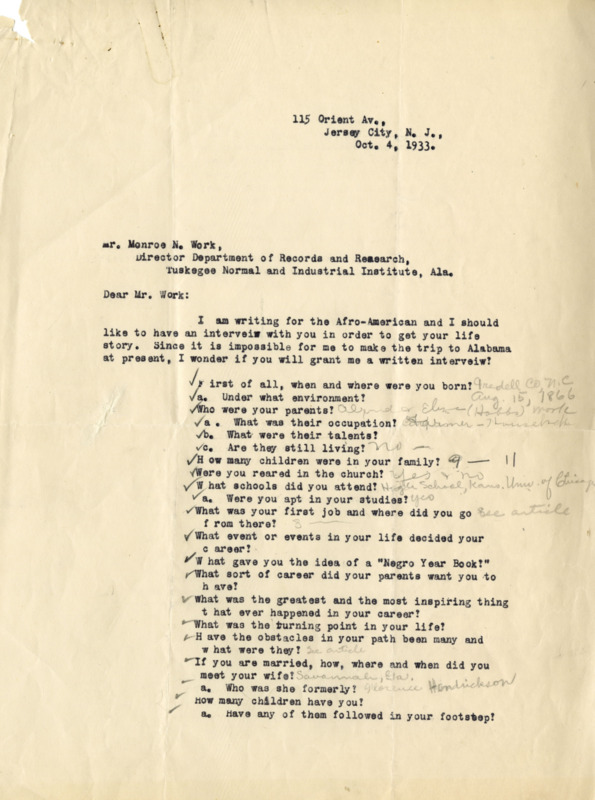
Two-page letter seeking information from Monroe N. Work about his life for inclusion in the New Jersey Afro-American newspaper. More than 20 questions are listed in the letter, some of which have responses next to them written in pencil.
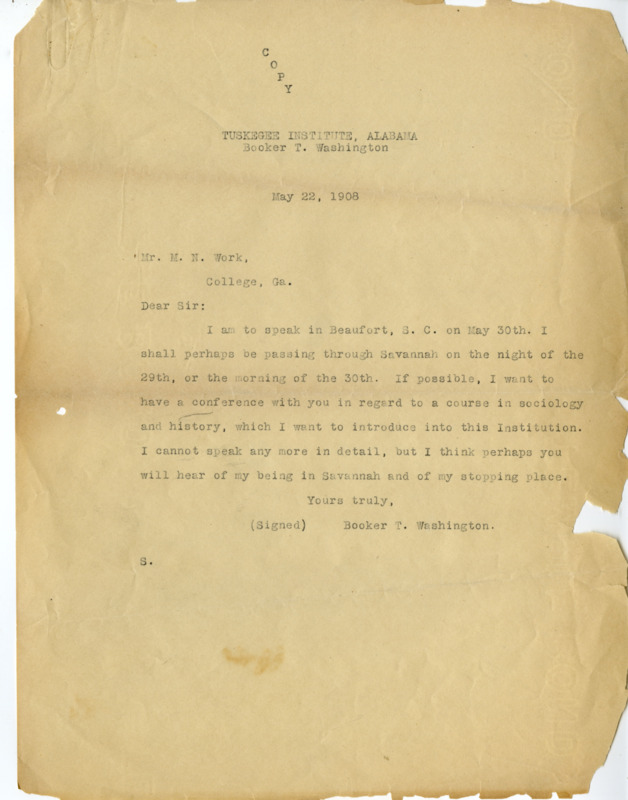
One-page letter requesting that Work meet with Washington about introducing a course at Tuskegee about sociology and history. Washington mentions he will be in Savannah on the 29th or 30th.
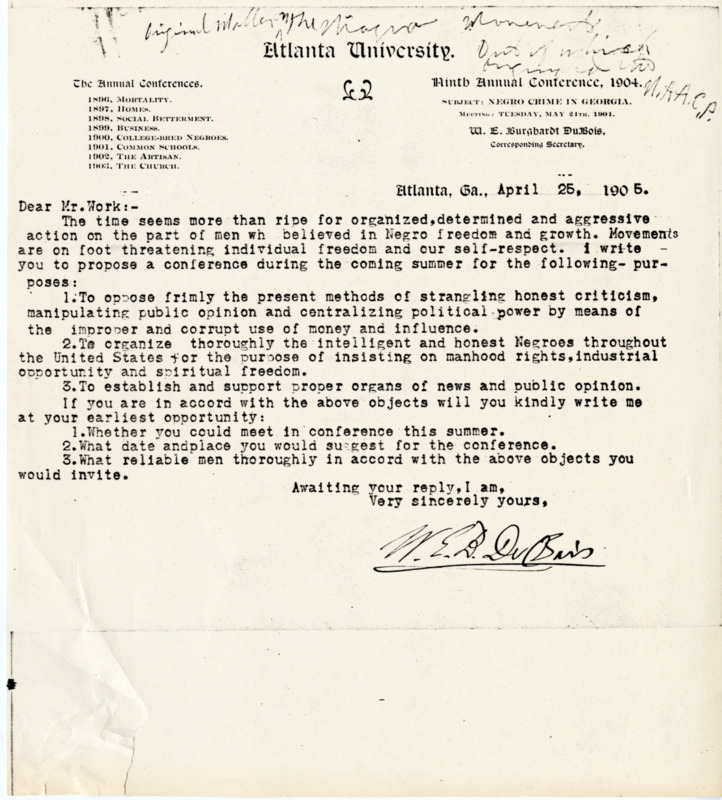
One-page letter from Dr. W.E.B. DuBois to Monroe Work asking him to attend a conference in the coming summer to discuss methods of uplifting the black community. The Niagara Movement and N.A.A.C.P. are written on top of the letter.
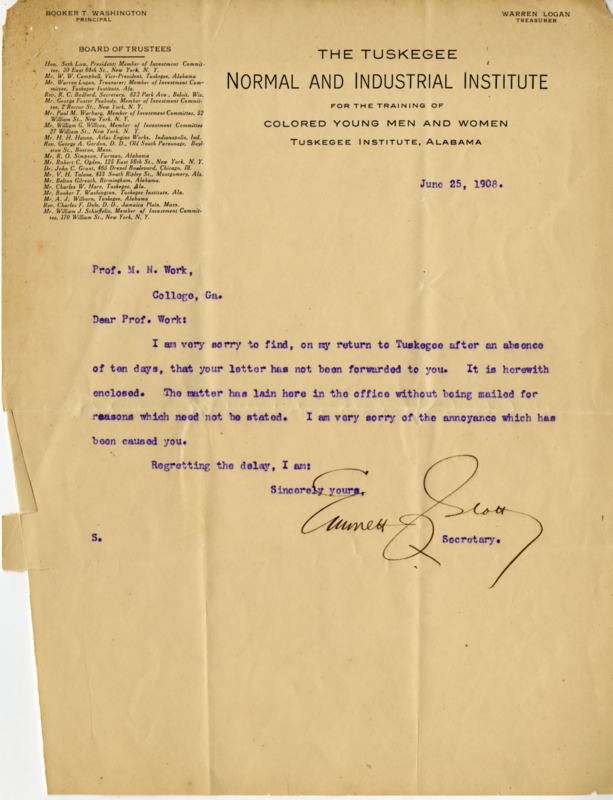
One-page letter to Monroe N. Work in College, Georgia, from Emmett Scott, a secretary at Tuskegee. Scott's letter references a separate letter for Work that had not been forwarded to him. Scott's letter is typed on Tuskegee Institute stationery.
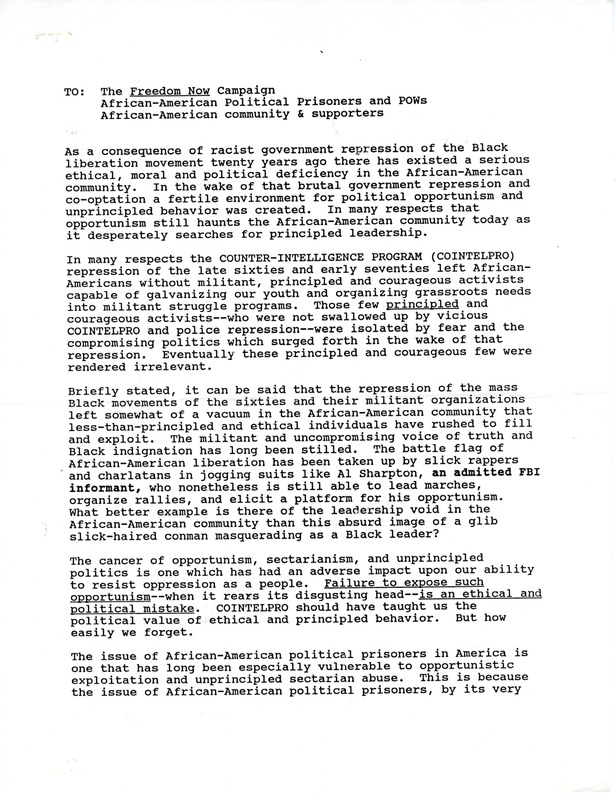
Black Panther Party leader, co-founder of the Black Liberation Army, and political prisoner Dhoruba Bin Wahd (Richard Moore) writes to the Freedom Now Campaign concerning several of the group's members exhibiting opportunistic tendencies on the issue of African-American political prisoners because of a power vacuum in the Black liberation struggle
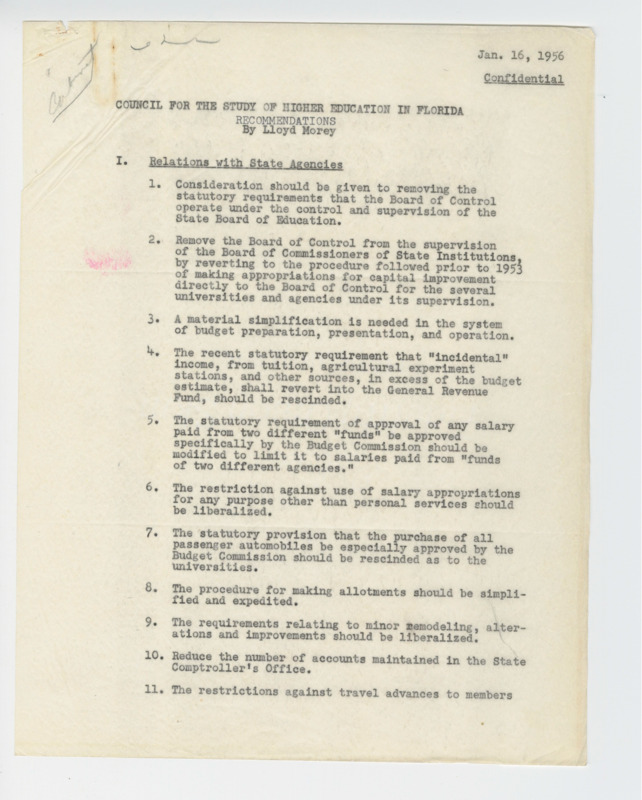
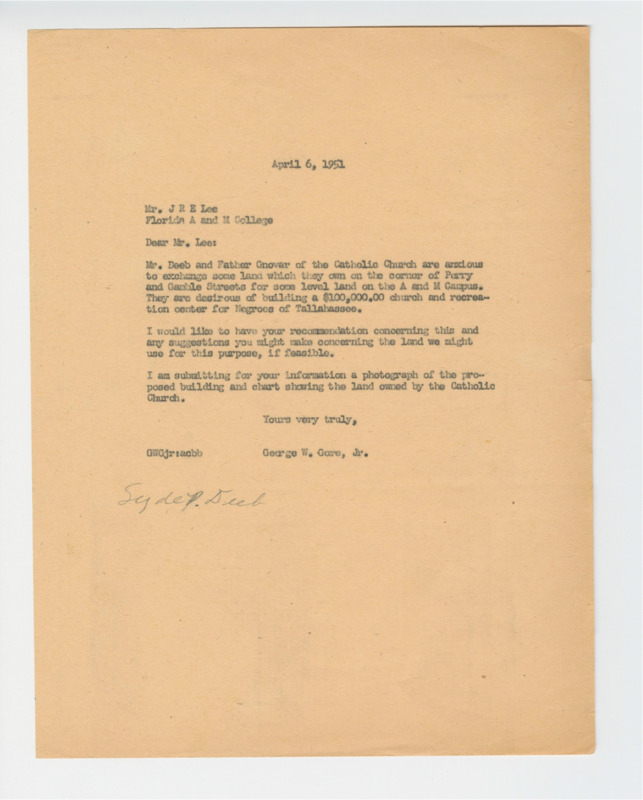
These letters discuss key financial strategies, budgeting, and administrative decisions that shaped university operations. FAMC effectively managed its financial challenges, allocating resources to promote academic advancement and infrastructure development while addressing the changing needs of students and faculty.
Letters detailing the responsibilities and designated duties of the Vice President of the University were included first, followed by confidential business operation packets outlining the general organizational structure of the university's identified 'weaknesses' and proposed options for improvement.
This correspondence collection highlights discussions on critical financial strategies, budgeting challenges, and administrative decisions that directly affected university operations. The letters exemplify how FAMU navigated complex financial landscapes, ensuring that resources were allocated to strengthen both academic and infrastructural growth while responding to the evolving needs of students, faculty, and the broader FAMU community.
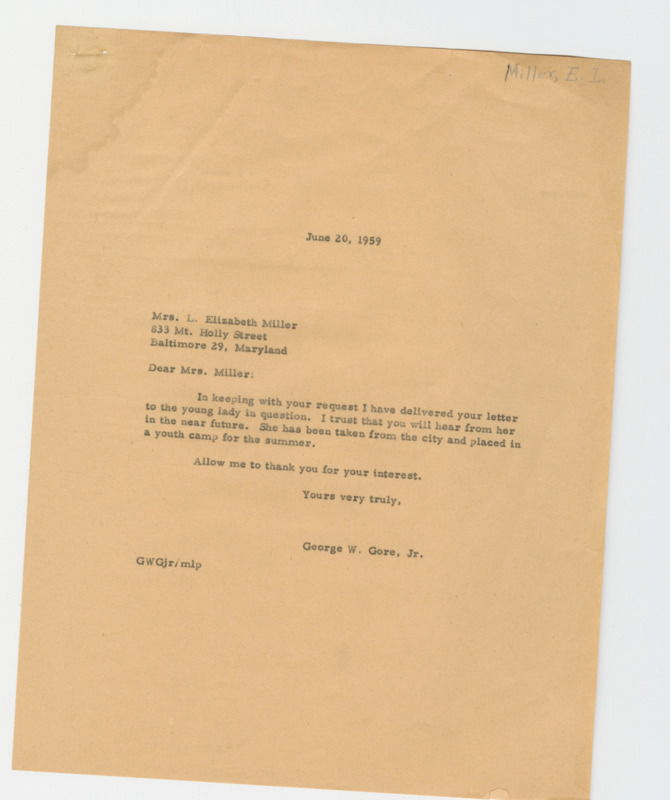
In his correspondence with Mrs. L. Elisabeth Miller, President George W. Gore confirmed the student victim’s relocation for safety and promised prompt communication, demonstrating his commitment to resolving the issue and ensuring her security.
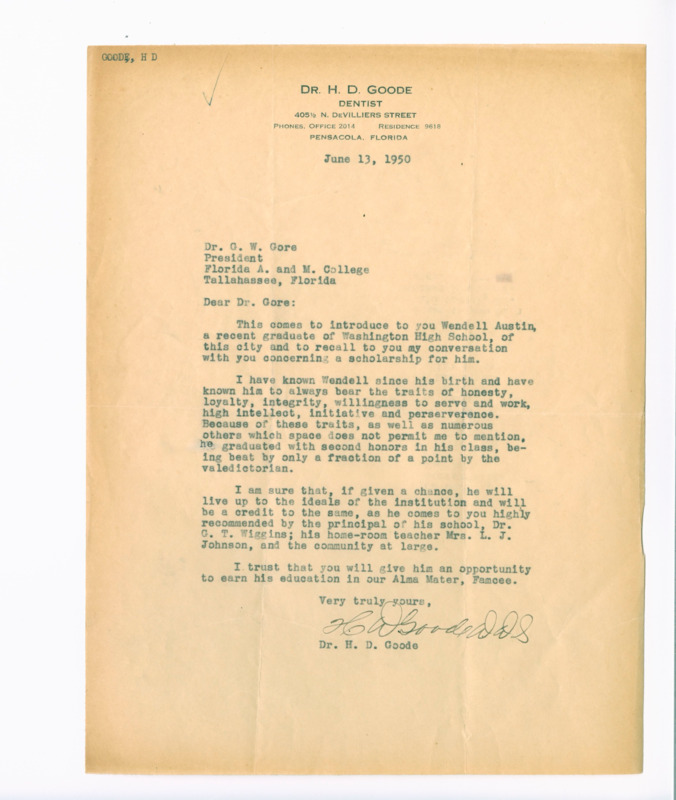
Letters between President George W. Gore and Dr. H. D. Goode discuss the financial details of FAMC’s building costs, including budgeting and expenses, as well as the university's administrative structure. Gore formally invites Dr. Goode to lead the FAMC Alumni Chapter, emphasizing the importance of alumni leadership in university growth.
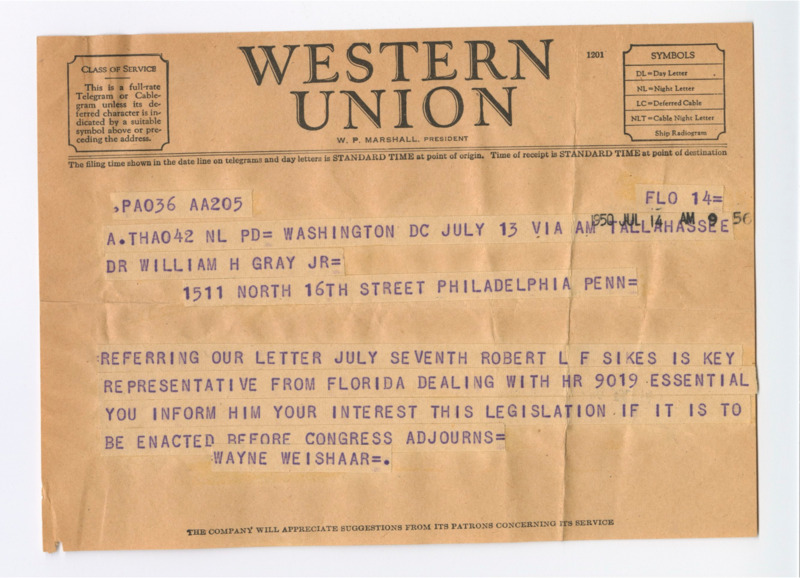
The Philadelphia Afro-American Newspaper mistakenly sent letters addressed to current President George W. Gore to former President William H. Gray. This mix-up caused brief confusion, as both leaders had been instrumental in the advancement and shaping of Florida A&M University’s legacy.