In this interview, Texas Southern art alumnus Kermit Oliver discusses his time at Texas Southern (1962-1967) and his artistic philosophy & practice with Dr. Alvia J. Wardlaw, director and curator of the University Museum. He highlights the religious, personal, historical, and political influences that shape his artwork.
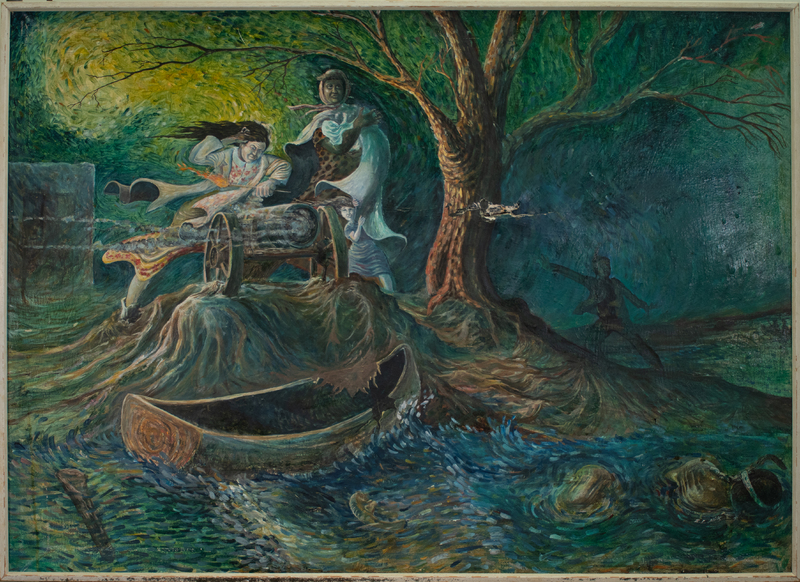
Mills paints a compelling and complex commentary on violence against indigenous people in the United States. In the foreground, a lifeless indigenous person floats next to a wrecked canoe. In the center, a white woman prepares to fire a cannon, still smoking from its last round. Behind her, a stoic Black woman holds one white baby and shelters another white child within her cloak. In the background, a faceless indigenous person reaches towards the scene.
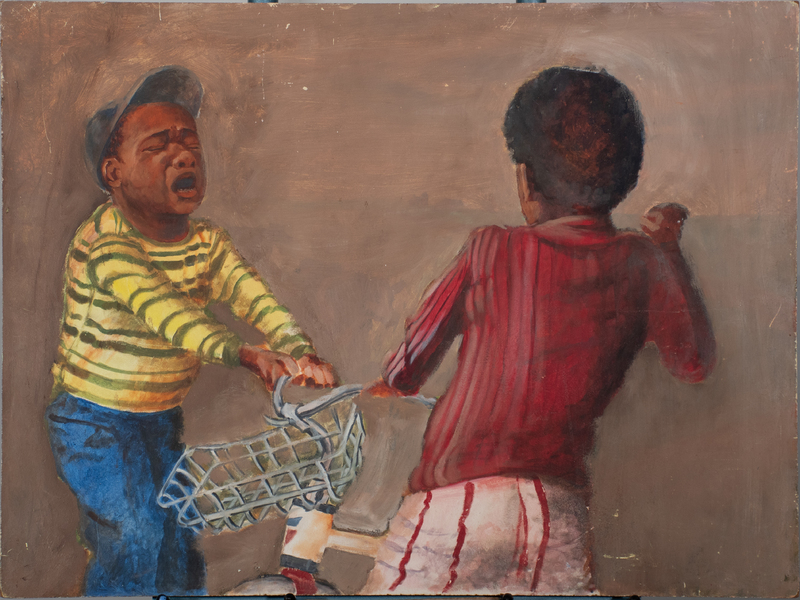
This painting shows children quarreling over a bicycle. The young boy in yellow is painted dramatically wailing, while the other child is portrayed from behind with a raised, balled fist. Dr. John Biggers encouraged Texas Southern student artists to create art based on what they saw. Scenes of children often appear in the permanent collection of TSU.
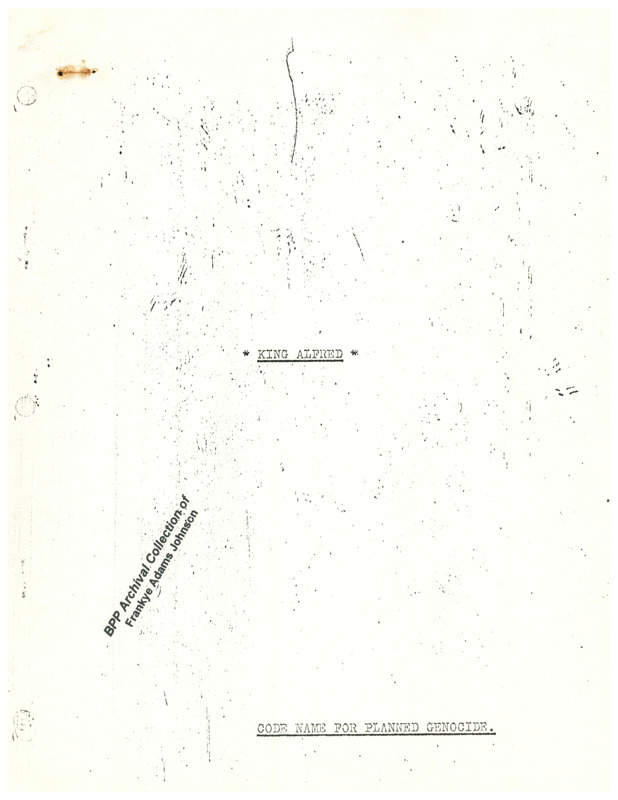
A copy of “The King Alfred Plan,” a fictional CIA-led scheme supporting an international effort to eliminate people of African descent, invented by author John A. Williams in his 1967 novel The Man Who Cried I Am. Copies of the plan circulated in Black communities during the late 1960s and early 1970s, with many people accepting it at face value.
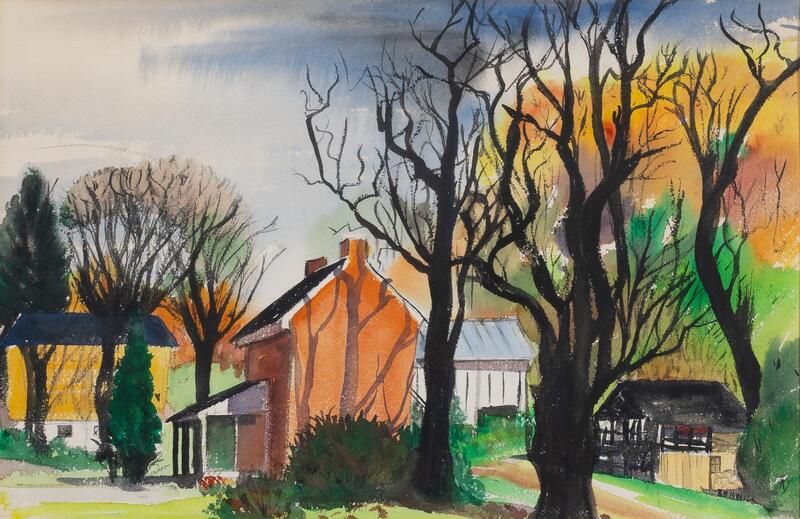
Gladys Williams Renwick was a painter from St.Louis, MO. Kirks Mill is a watercolor painting of a rural neighborhood in Autumn. The painting features four homes of various sizes and colors. There are various trees in the background: some barren and others with orange and green leaves.
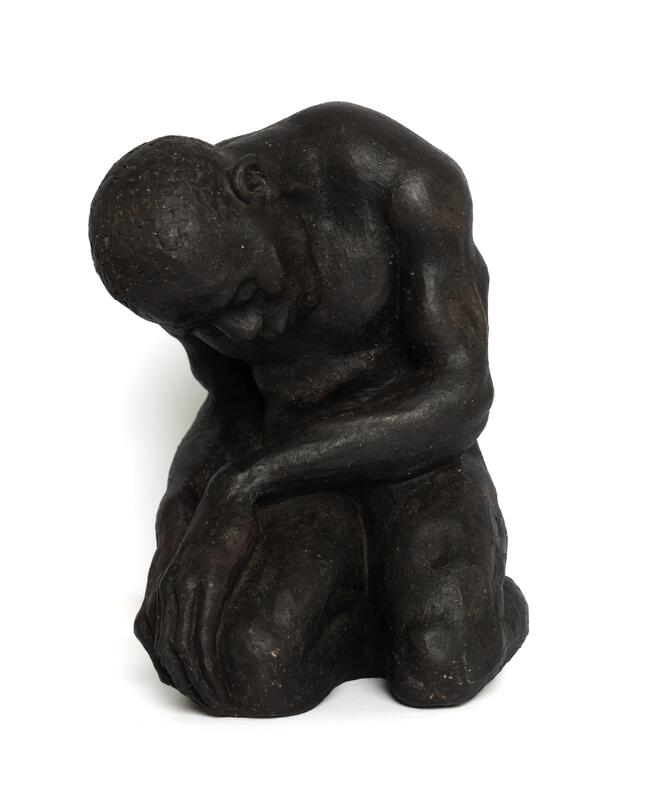
John T. Biggers was an educator, painter, and muralist from Gastonia, NC. Kneeling Figure is a sculpture of a nude man kneeling on his knees. His back is hunched over as he leans to the left with his hands resting on his left knee.
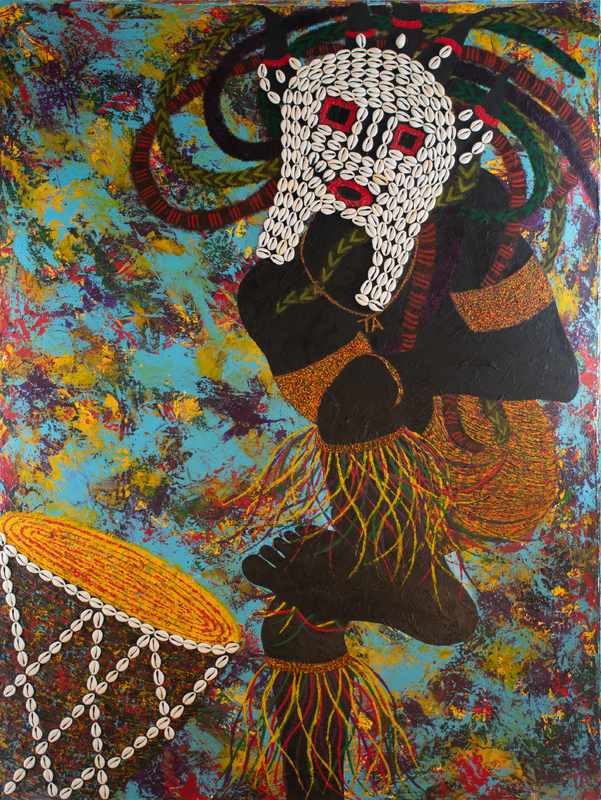
Alcee's mixed media painting, “Konga,” is a testament to music's power to uplift and excite. The artist draws inspiration from his experience working alongside Franck Kemkeng Noah, who taught him about the significance of Bamileke masks and symbols during a residency at TSU, and his St. Lucian heritage, shown in the vibrant colors and fluid movement of the piece. Alcee graduated from Texas Southern University is currently pursuing a teaching certification.
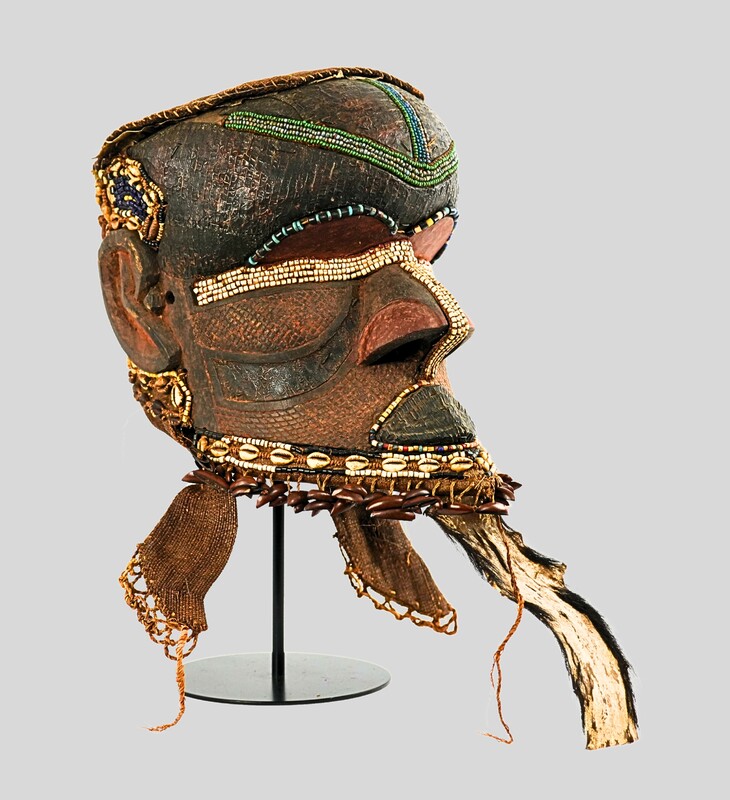
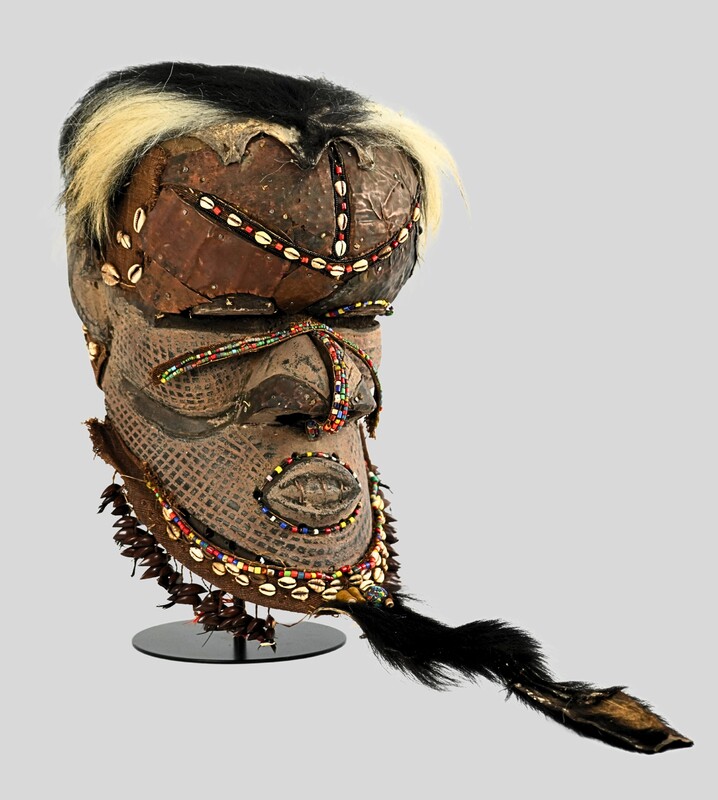
The Kouba masks showcase the rich artistic heritage of the African Kouba culture. Each mask features unique carvings and vibrant colors, reflecting the community's spiritual beliefs and social values. One mask may represent ancestral spirits, while the other might embody specific cultural ceremonies.
The Kouba mask, originating from the Congo, is a striking cultural artifact known for its intricate carvings and vibrant colors. It was traditionally used in rituals and ceremonies and represents ancestral spirits.
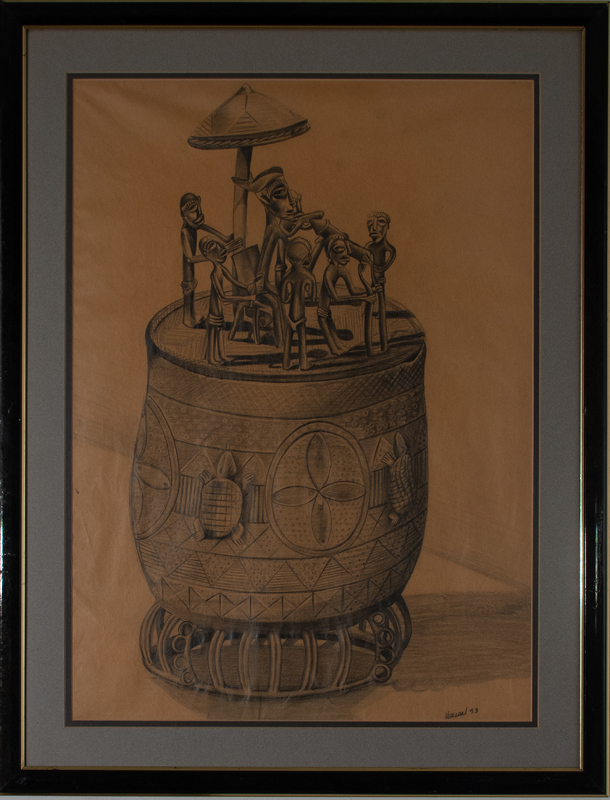
This drawing by Vernon Simmons depicts a kuduo, vessels owned by kings in Akan kingdoms (modern-day Ghana), adorned by tortoises, a sign of longevity. The central figure seated under the umbrella is the nana, a ruler of the Akan people; he is surrounded by attendants. Dr. Biggers was an avid collector of African art and he used pieces from his collection as teaching tools for his students.
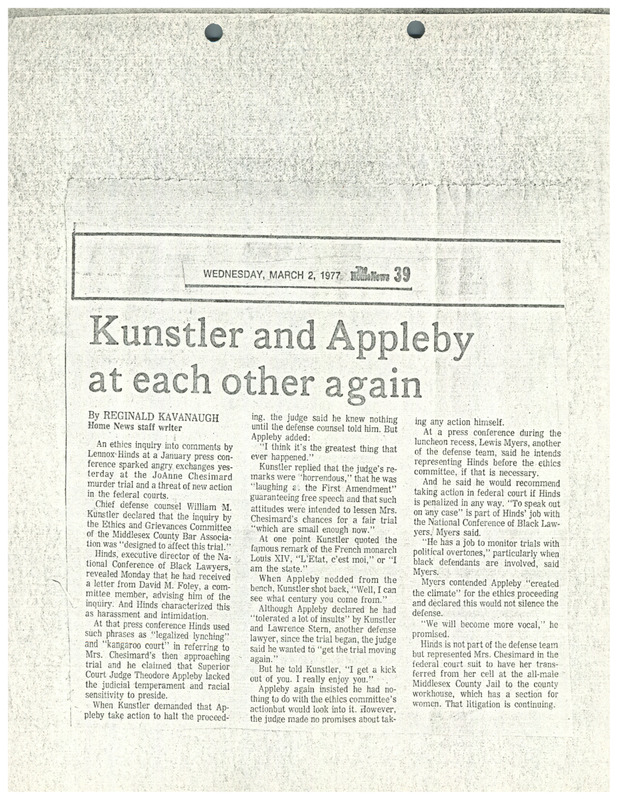
A newspaper article from The Home News about arguing between chief defense counsel William Kunstler and Superior Court Judge Theodore Appleby in the trial of Assata Shakur (JoAnne Chesimard) for the 1973 killing of a state trooper. The argument centered on a citation given to Lennox Hinds, president of the National Conference of Black Lawyers.
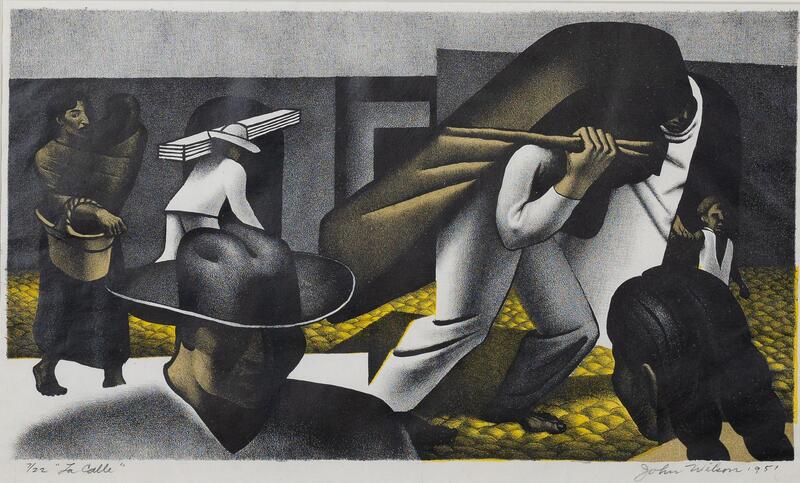
John Woodrow Wilson was a sculptor, painter, printmaker, and educator from Roxbury, MA. La Calle, or The Street, is a print depiction of people traveling a gold cobblestoned street. There are male workers carrying wood and rock slabs, women and their children walking, a woman watching the street, and a man facing the viewer.
LaCrystal Evans was a graduate student at Jackson State University at the time of the interview. She talks about her experiences as a Head Start student in the Greenville, Mississippi, Head Start program in 1969.
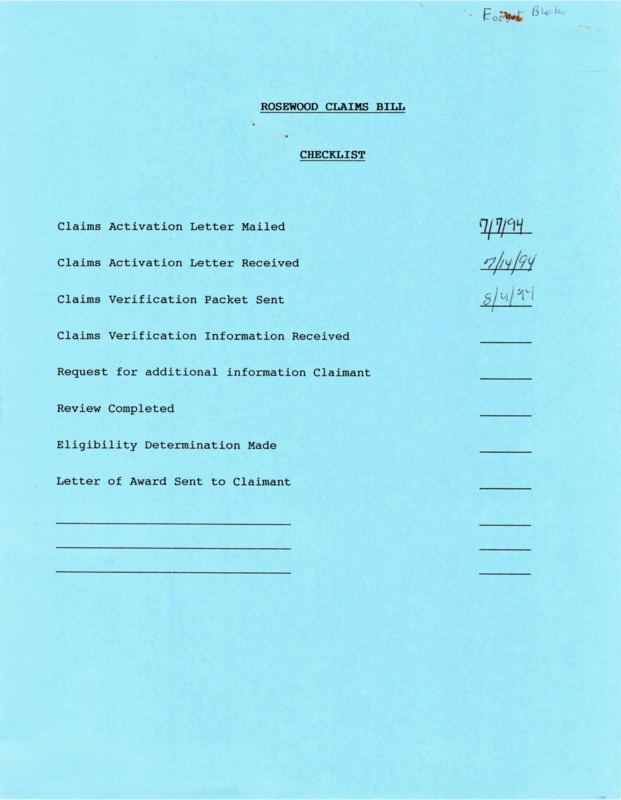
Land deeds, marriage licenses, and delayed birth certificates used to establish and verify the lineage of Rosewood descendants. These documents were essential in tracing family histories, providing proof of connection to Rosewood, and supporting claims for recognition and compensation for future generations.
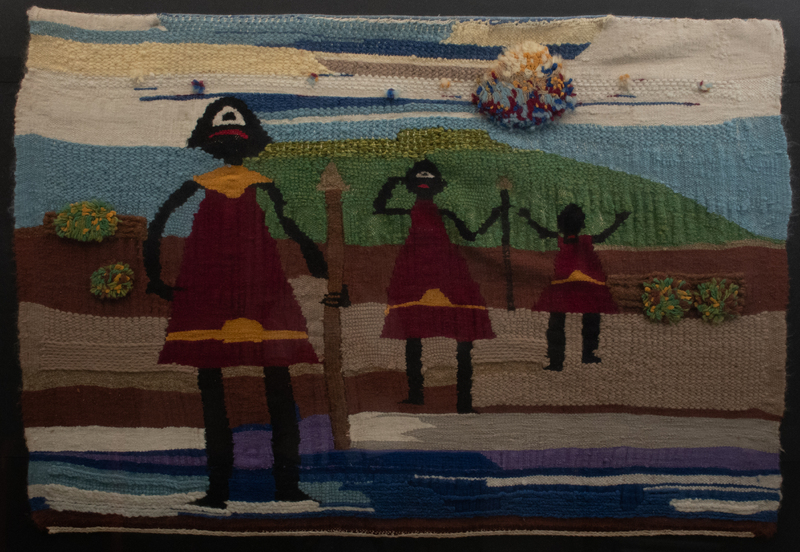
Cole blends weaving methods with surrealist elements in this piece. The work depicts three cyclopes, mythological figures with one eye in the center of their foreheads, standing on a shore. Two of them are holding spears, while a meteor hurtles through the sky. The frowning faces of the figures add to the sense of impending doom.
Merton D. Simpson was an abstract expressionist painter and African art collector from Brooklyn, N.Y. Landscape of Summer is an abstract depiction of a sunny day. Simpson blends shades of yellow, orange, and brown to emulate the luminence of a summer day.
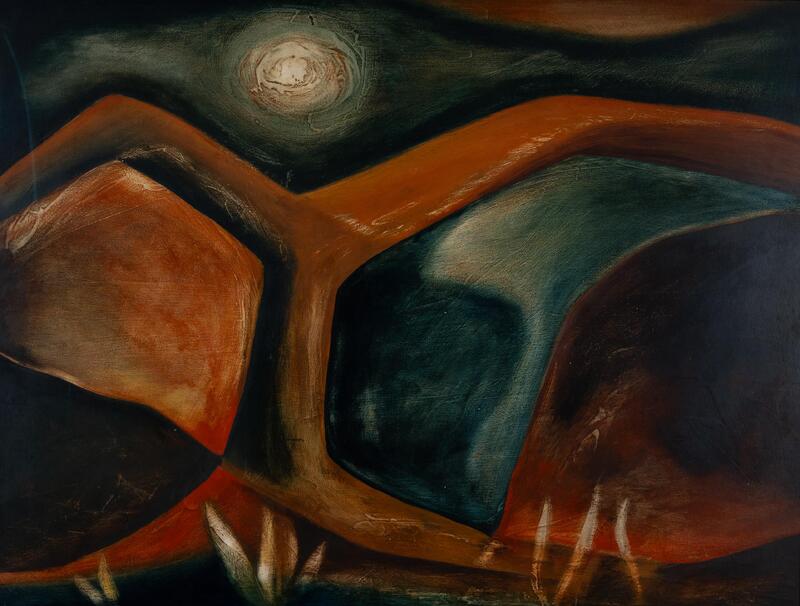
Merton D. Simpson was an abstract expressionist painter and African art collector. Landscape Symphony is an abstract landscape that depicts a white sun with hues of a dark blue-green sky. The connected polygons of vibrant red, green, and orange are the main emphasis of the piece. They reach three bunches of short highlighted strokes in the landscape.
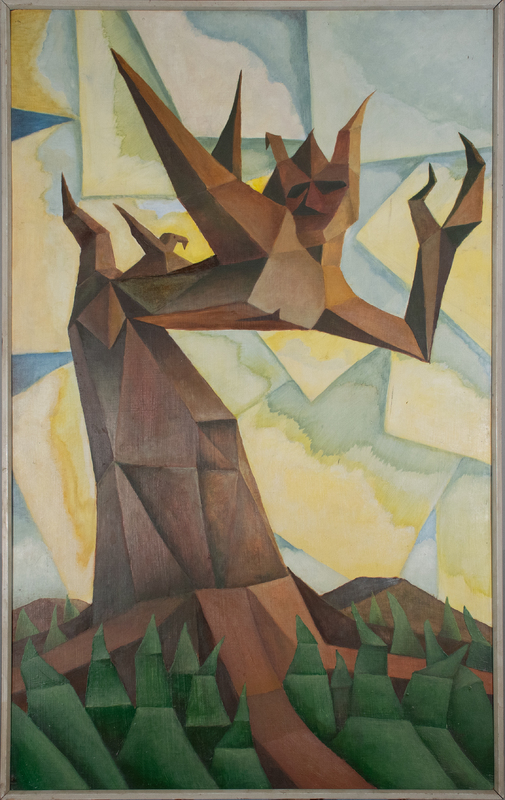
Sifuentes' painting shows a landscape filled with grass and a barren tree, with a bird perched atop. The tree bears human characteristics, perhaps symbolizing the interconnectedness of all living beings. This piece is painted in a geometric style that appears frequently in the work of students of Dr. John T. Biggers during the mid to late 1970s. Sifuentes later went on to become an art professor at Texas Southern.
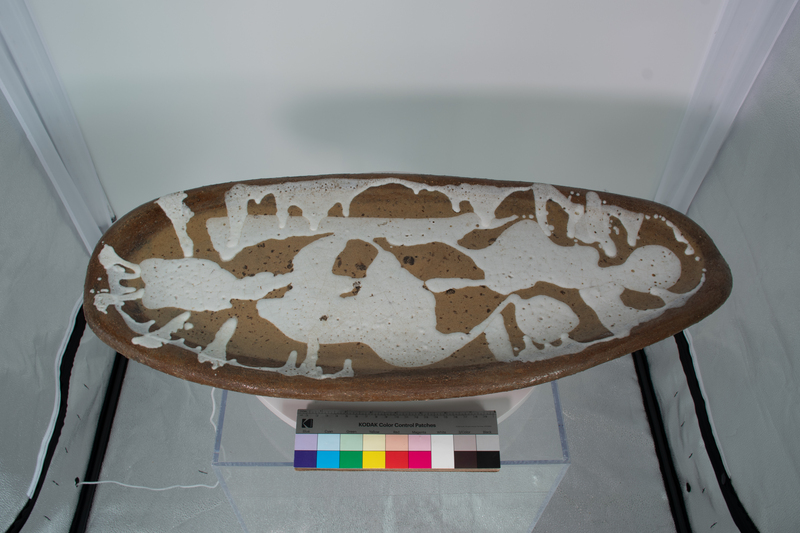
Simms’ large ceramic platter is made from clay with a splotchy white glaze on the top. Carroll Harris Simms worked alongside Dr. John T. Biggers to establish the Texas Southern University Art Department. Simms taught sculpture, ceramics, and jewelry-making classes.
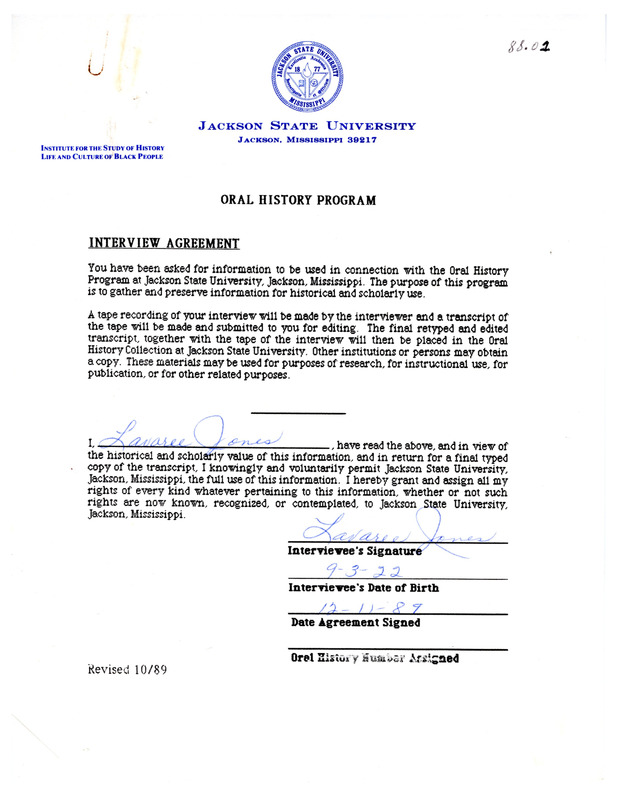
This interview was recorded in Dr. Alferdteen Harrison's oral History class at Jackson State University and is conducted between two students. Lavaree Jones gives a rundown of the history of the beginnings of Head Start starting with the Mississippi Freedom Democratic Party registering voters and Freedom Schools during Freedom Summer.
Lavaree Jones interviewed by Major O'Neal; both are students in Dr. Alferdteen Harrison’s Oral History class at Jackson State University. He asks her 3 questions about the origins of the Head Start program in Mississippi and the role Head Start plays in the Black community.
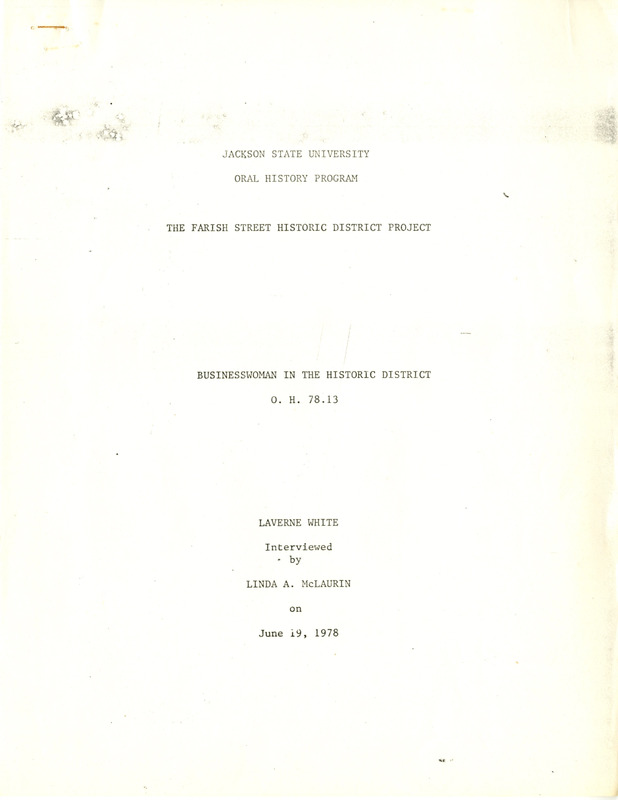
Laverne White moved to Jackson when she was 9 years old and was married to Jackson’s police sergeant for over 40 years. In the interview she talks about her education; her 21-year employment at Boot's Flower Shop in the Farish Street District; her participation in civil rights marches; and the deterioration of the Farish Street District.
Whitney M. Young is the last speaker in a lecture series held by Sperry and Hutchinson and sponsored by the Green Stamp Foundation. The theme of the lecture series was "Toward Civic Democracy in the South", and Mr. Young would be the final speaker discussing the social aspect of the theme.
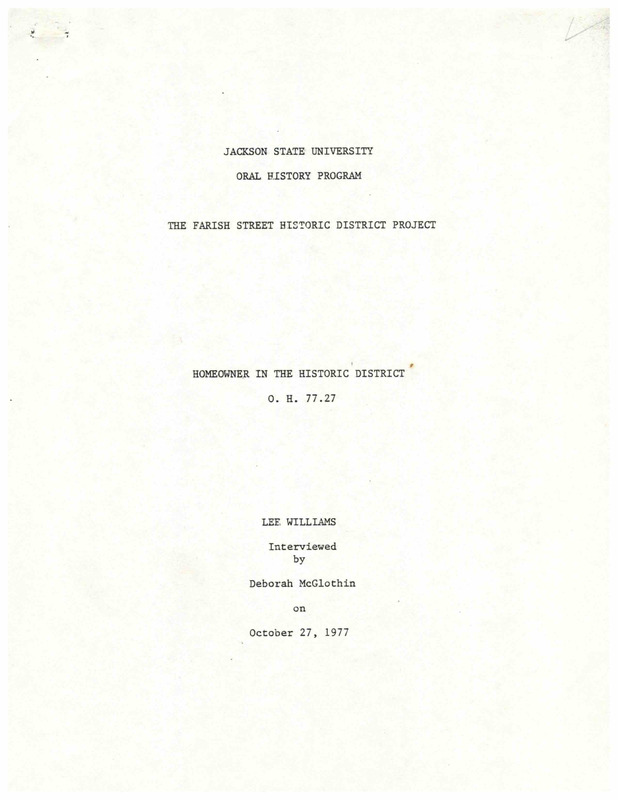
Mr. Lee moved to Dreyfus Street in the Farish Street Historic District in 1924. He attended schools in the district and eventually served as Vice President of Administration at Jackson State for many years. He talks about his time living in the district and the social and cultural life there, including businesses, churches, and music.
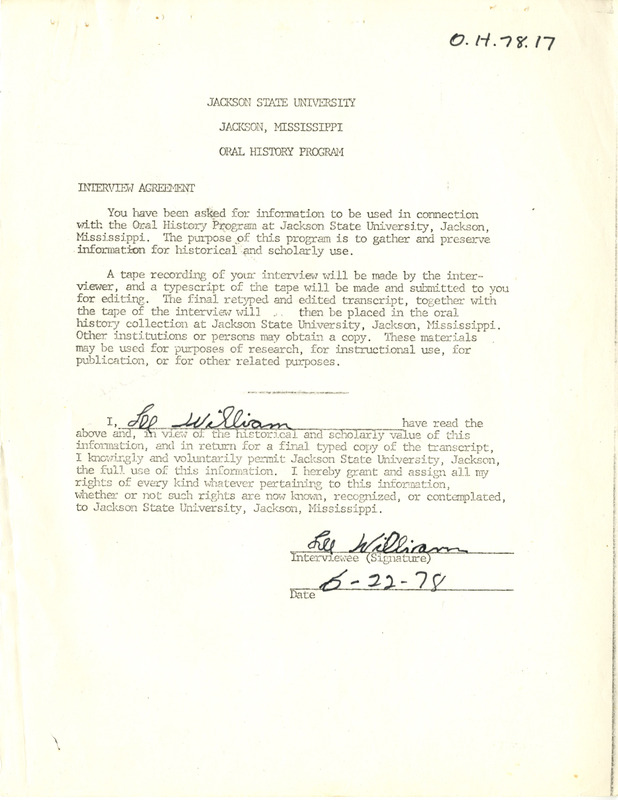
Lee Williams became a homeowner in the Farish Street District in 1924. At the time of the interview he was Vice President for Administration at Jackson State. Mr. Williams discusses a variety of aspects about the district in relation to his time growing up there, including childhood activities and the different jobs he did.
Lee Williams was born in 1900, moved to the Farish Street District in 1915, and lived on various streets for the rest of his life. He attended Smith Robertson School. In the interview, Mr. Williams recounts the different businesses, people, and schools over the years in the district. The transcript contains handwritten edits.
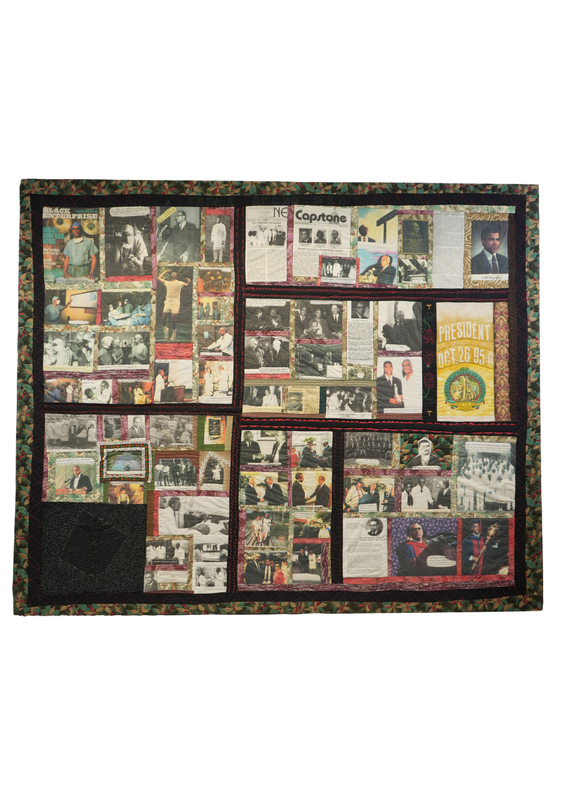
This quilted textile by Debra Hanes is an homage to Dr. LaSalle D. Leffall, Jr., showing the highlights of his career and life. Prevalent in African American culture, this piece is a type of “life quilt”, as this colorful tapestry gives the viewer a glimpse into the doctor’s life with sewn-on prints of letters, magazine covers, and photographs.
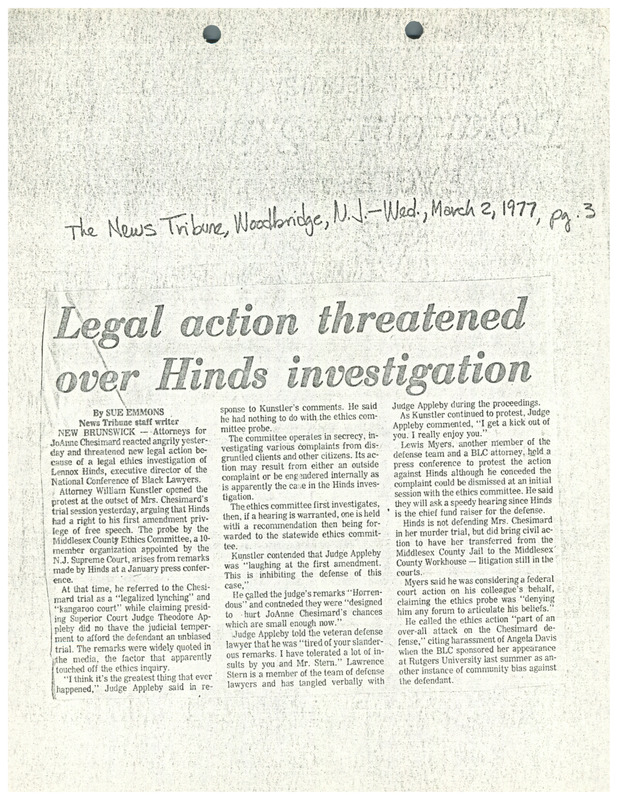
A newspaper article from The News Tribune about Lennox Hinds, president of the National Conference of Black Lawyers, being cited by The Ethics Committee of the Middlesex County Bar Association. Chief defense counsel William Kunstler, representing Assata Shakur (JoAnne Chesimard) in her trial for the 1973 killing of a state trooper, protested it.