Jerome Wyatt started working at Head Start in Jones County, Mississippi, in 1972 as Area Director. Mr. Wyatt talks about his time working with Head Start, including the internal and external problems he had to deal with when coming into the job. He says that White politicians were actively working to take control over the program.
Jerome Wyatt talks about his work at Head Start, primarily in Jones County, since starting in 1972. He discusses the economics of being employed there, community reaction to the program, and his vision for the future of Head Start. The transcript contains handwritten edits.
Attorney Jess Brown moved to the Farish Street District in 1948. He talks about his education and his legal career. He discusses his recollections of businesses on Farish Street and the effect that integration had on them. He also talks about the Civil Rights Movement and the NAACP and some of the cases he was involved with as a lawyer.
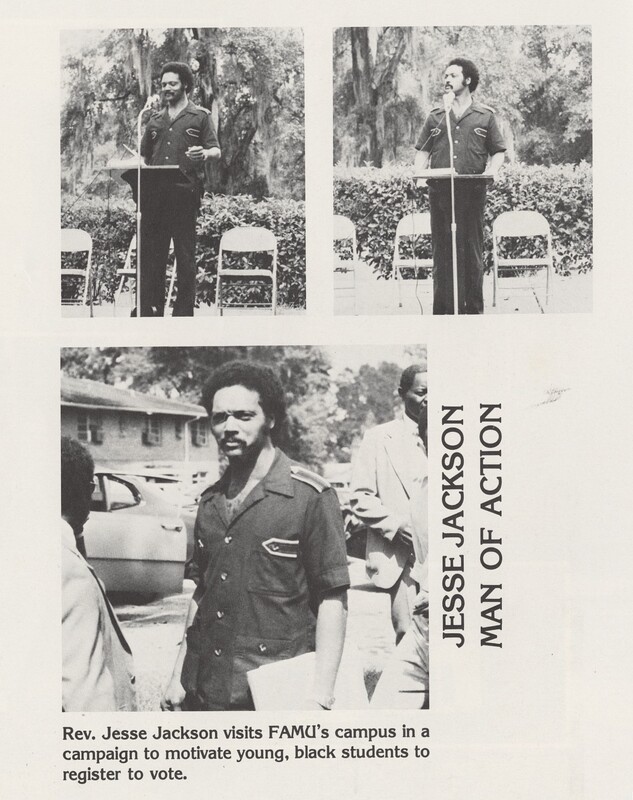
Reverend Jesse Louis Jackson was a civil rights leader who began activism in the 1960s. In the 1980s, he launched two presidential campaigns, ultimately losing the Democratic nomination, but not by expected large margins. In 1981, Jackson visited Florida A&M University to encourage students to register to vote.
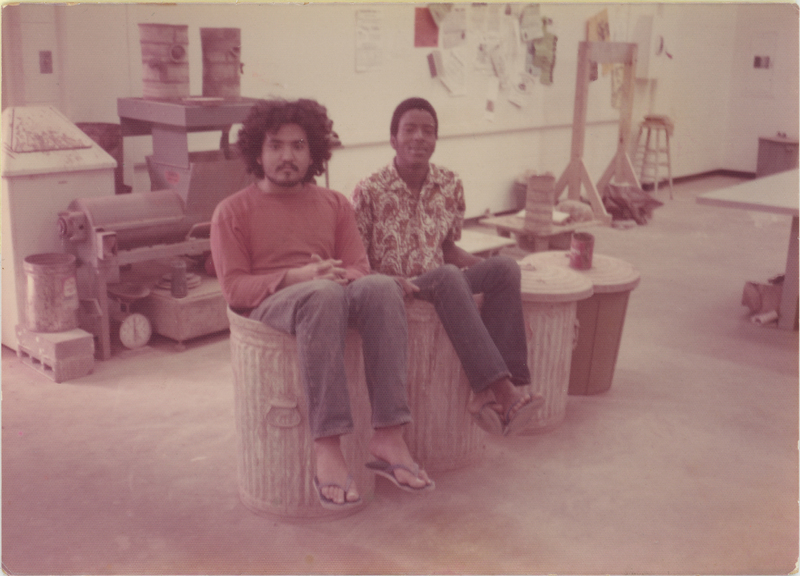
Texas Southern art alumni Jesse Sifuentes and Earl Jones are pictured in this photograph from the mid 1970s. They are seen here in the ceramics room of the John T. Biggers Art Center, seated in the trash cans where clay was stored. Sifuentes later went on to teach ceramics at Texas Southern University.
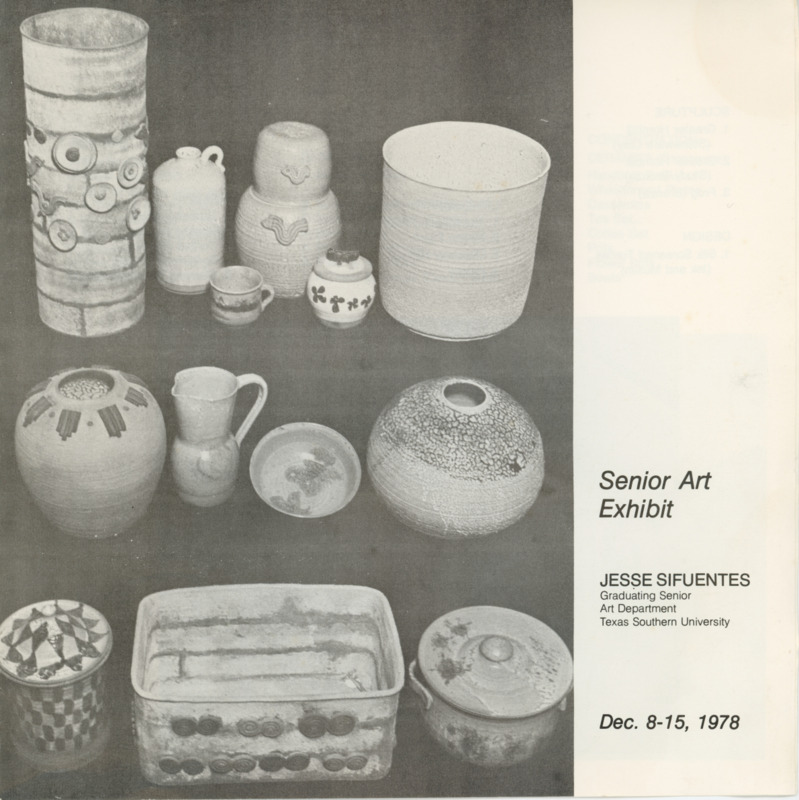
This is a brochure for Sifuentes’ senior art exhibition. The culmination of the Texas Southern art curriculum is a senior exhibition where students showcase artwork created over the course of their undergraduate studies. The brochure features a brief biography, a catalog of the artwork featured in the exhibition, and photos of two of his paintings and several of his ceramics. Sifuentes later returned to TSU to teach pottery, ceramics, and sculpture classes.
Jessie Jelks began work as a teacher with Head Start in 1967 and by 1979 had worked her way up to Education Special Services Specialist. She talks about the improvements and growth of Head Start since she first began working. At the time of the interview she was still working as Education Special Services Specialist.
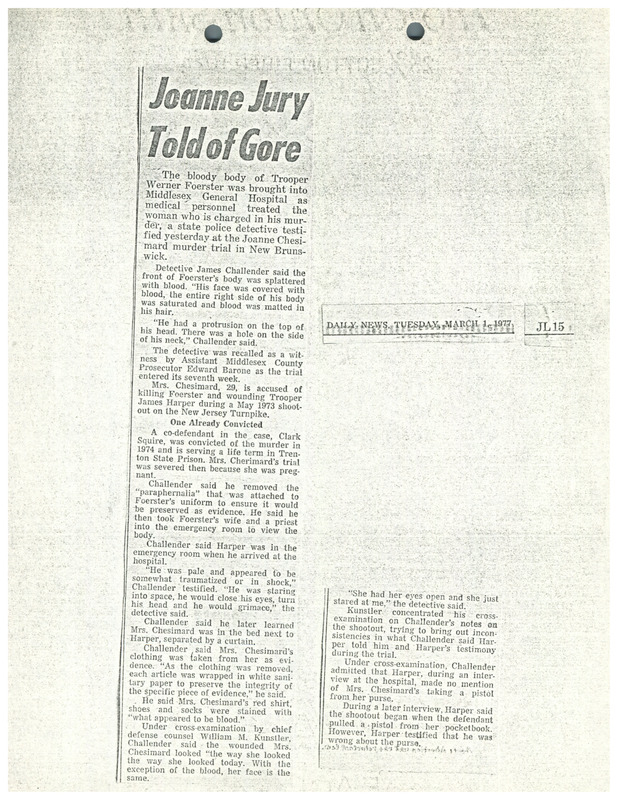
A newspaper article from the Daily News about the testimony of State Police Detective James Challender describing what he saw at the emergency room where Assata Shakur (JoAnne Chesimard) and wounded state trooper Werner Foerster were taken after he was fatally shot. Shakur was on trial for the 1973 murder of Foerster.
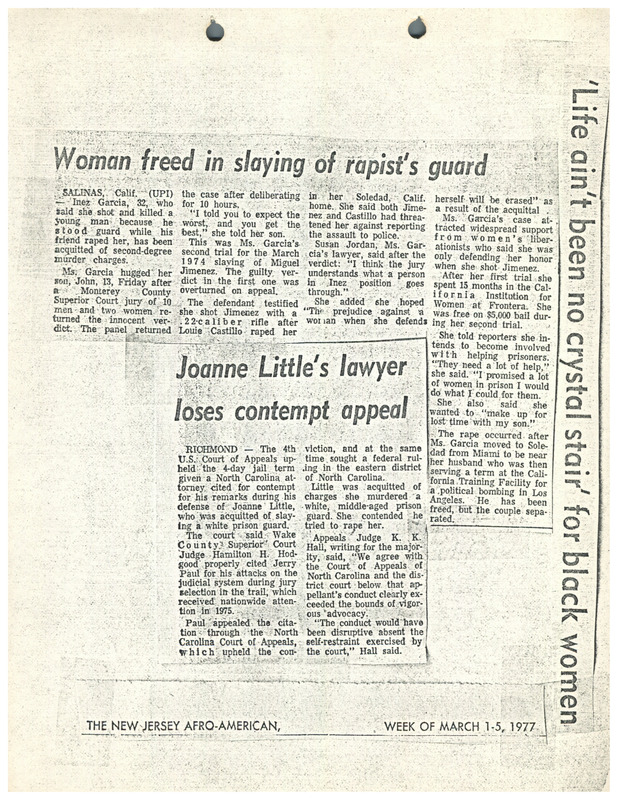
A newspaper article from The New Jersey Afro-American about Attorney Jerry Paul, whose appeal of contempt of court from his successful defense of Joanne Little in 1975 was denied by the 4th U.S. Court of Appeals. Little was the first woman in U.S. history to be acquitted for murder using the defense of using deadly force to resist sexual assault.
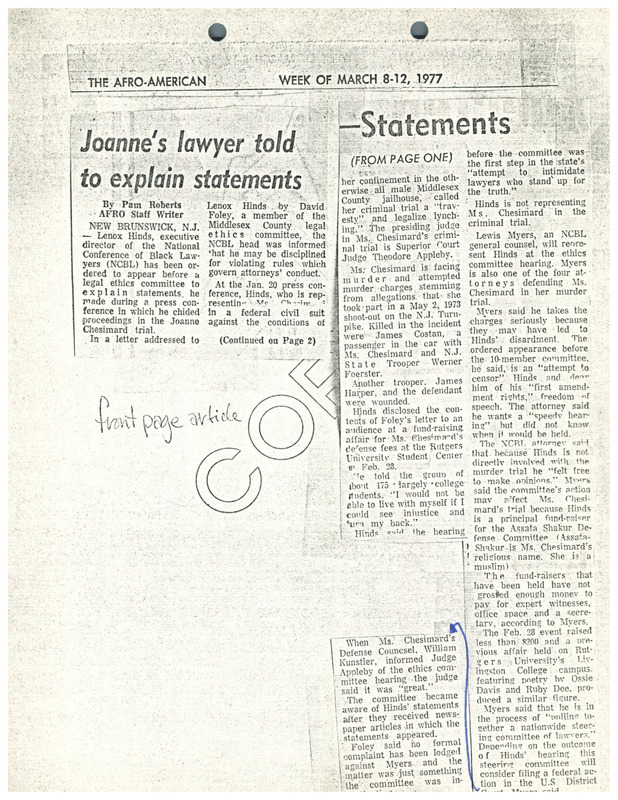
A newspaper article from The Afro-American about Lennox Hinds, president of the National Conference of Black Lawyers, speaking out against his critics for his support of Assata Shakur (JoAnne Chesimard), who was on trial for the 1973 killing of a state trooper, after being cited by The Ethics Committee of the Middlesex County Bar Association.
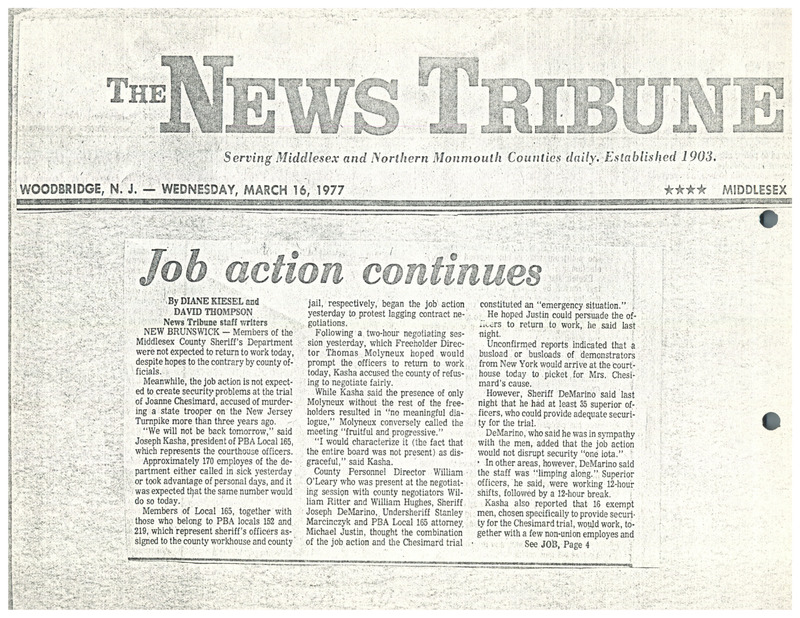
A newspaper article from The News Tribune about no-work action taken by around 170 employees of the Middlesex County Sheriff's Department over lagging contract negotiations. The missing officers are not expected to cause security issues at the Assata Shakur (JoAnne Chesimard) trial for the 1973 killing of a state trooper.
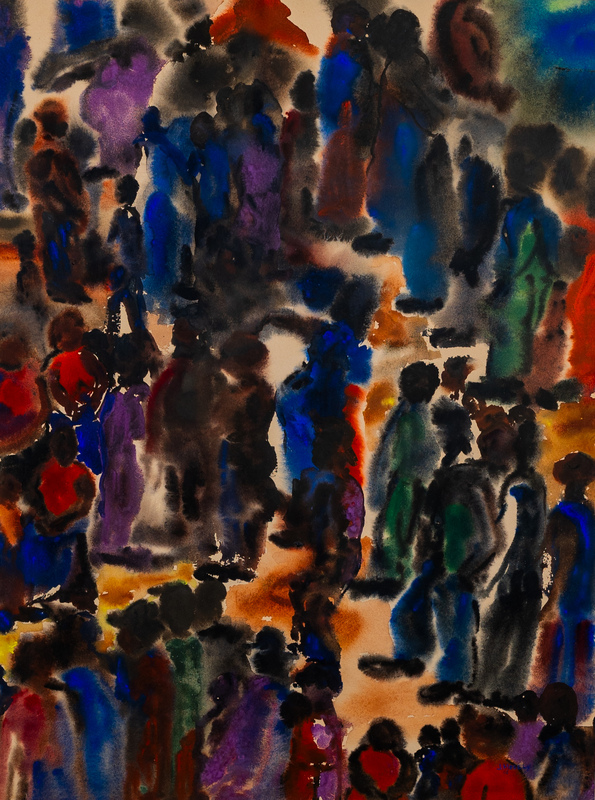
Jimmie Mosely was an artist, navyman, and art professor from Lakeland, FL. Johannesburg is an abstract watercolor depiction of African people traveling through the street. Mosely uses bright colors that emphasize the vibrance of South African culture.
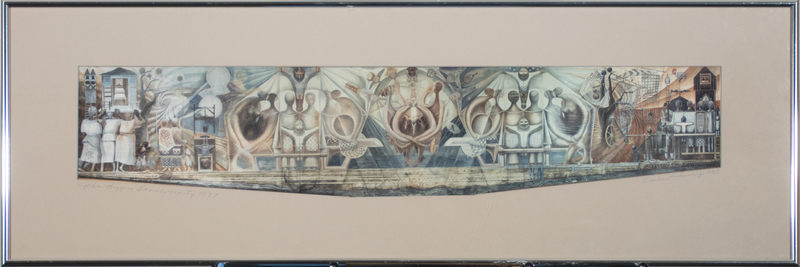
This image was captured by Earlie Hudnall, Jr., longtime TSU campus photographer and student of Dr. Biggers. This photo is of Biggers’ mural Family Unity, located on TSU’s campus in the student center dining hall. The mural was commissioned by the student body in the mid-1970s, and reflects themes of family, ancestry, and rural & urban house structures.
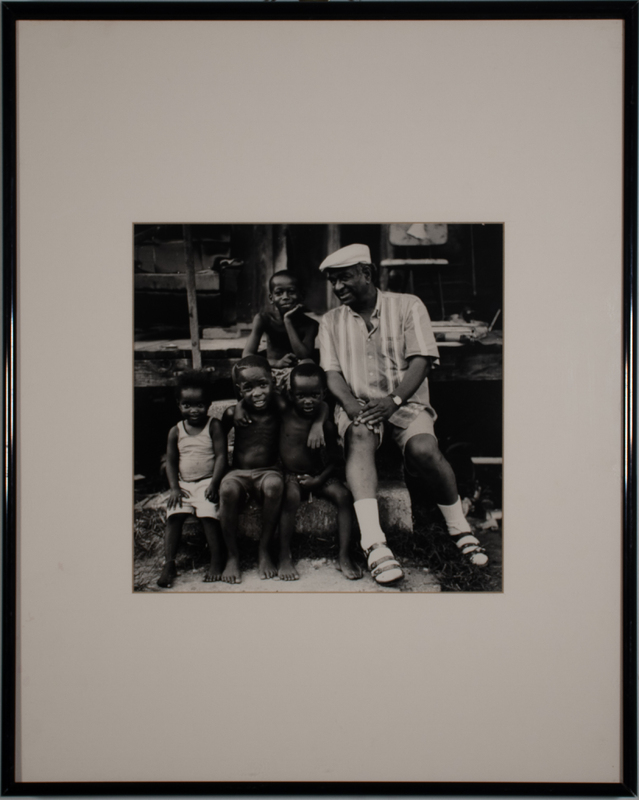
This photograph by Earlie Hudnall, Jr. shows John Biggers seated with boys on a porch. The setting is Laurel, MS, where the men stopped during a road trip on their way to Gastonia, North Carolina, Biggers' hometown. Lacking proper materials, Hudnall stored the negative in water in a McDonald's cup until he could develop it.
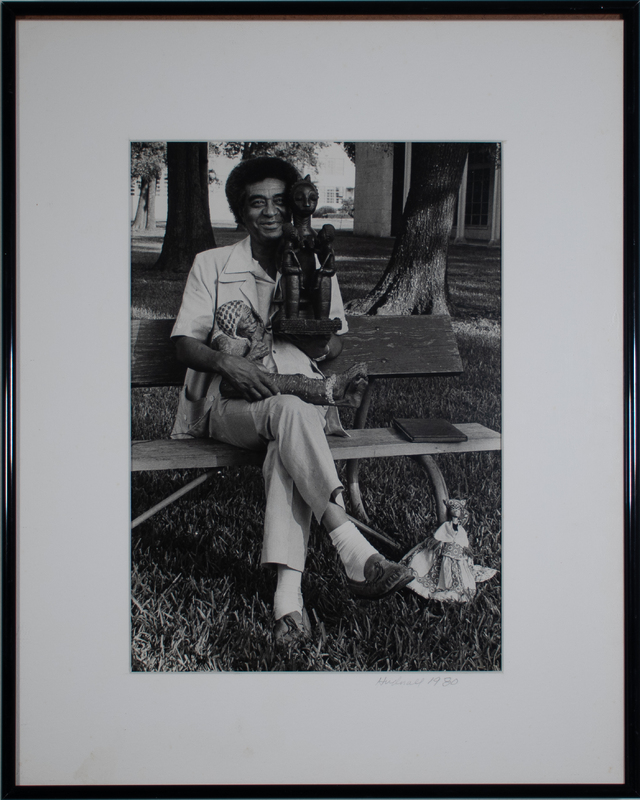
This photograph by Earlie Hudnall, Jr. shows John Biggers seated on a bench near Texas Southern's Fairchild Building. He holds a mother & child sculpture in his left hand and an Aunt Dicy sculpture in his right. A mammy doll is seen to his left on the ground. In 1955, Biggers illustrated J. Mason Brewer's version of the African-American folktale, Aunt Dicy Tales: Snuff-Dipping Tales of the Texas Negro.
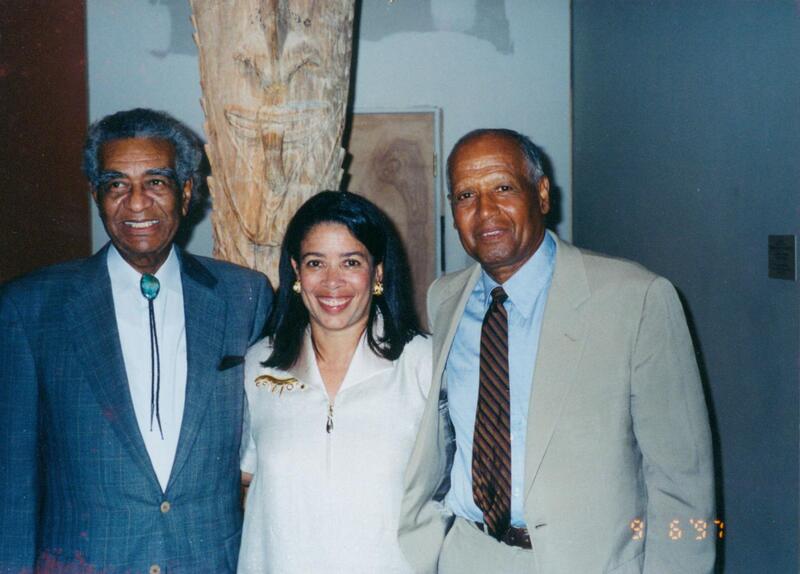
This photograph shows, from left to right, Dr. John T. Biggers, Dr. Alvia J. Wardlaw, and Roy DeCarava. Wardlaw, the founder of the University Museum at Texas Southern, previously served as a curator at the Museum of Fine Arts, Houston, where in 1975 she organized the first retrospective of DeCarava’s photographs. Biggers and DeCarava were mutual admirers; DeCarava appreciated Biggers’ sense of African history, and Biggers praised DeCarava’s attention to the common man.
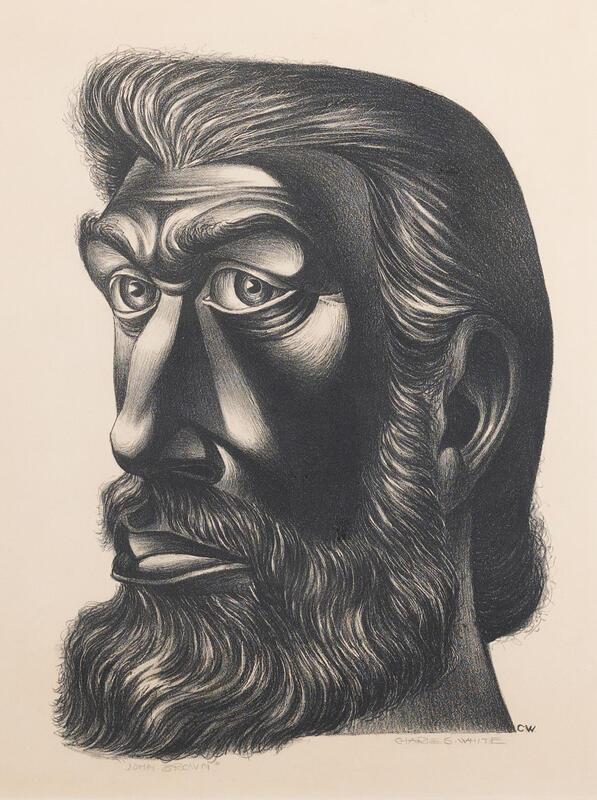
Charles White was a painter, printmaker, muralist, and educator known for his stylistic approach to African American subjects from Chicago, IL. John Brown is a print portrait of its namesake. He was a prominent member of the American abolitionist movement. The print portrays Brown in dark hues as he stares off into the distance.
A commentary on the conflict between technology and progress, history and culture, Davis painted this mural in response to the destruction of several Hannah Hall murals to create windows into a new computer lab. Davis’ own mural was later damaged by subsequent construction, as foreseen in its design.
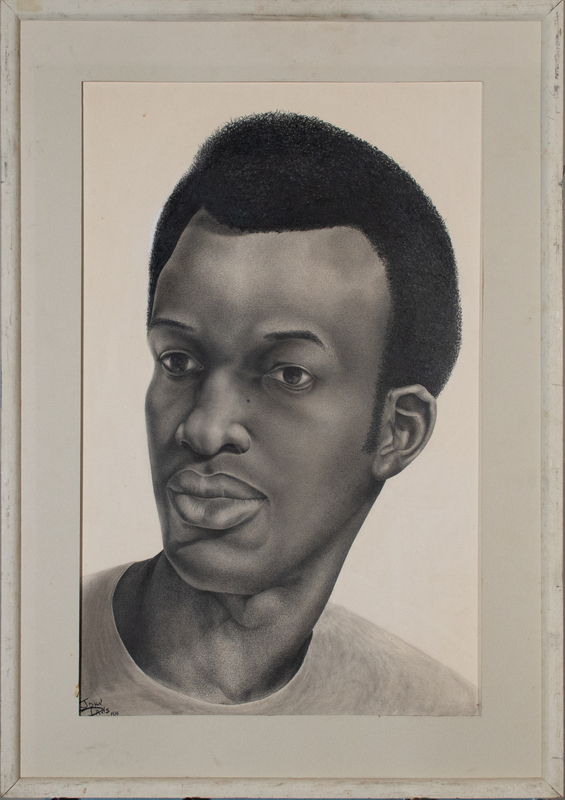
Davis drew his black-and-white self portrait during his time as an art student at Texas Southern University. He drew himself clean-shaven with long sideburns. His use of charcoal creates the smooth and balanced shading seen in this piece.The artist also completed a terracotta self portrait of his head. Self-portraits in drawing classes remain a part of the art major curriculum at TSU.
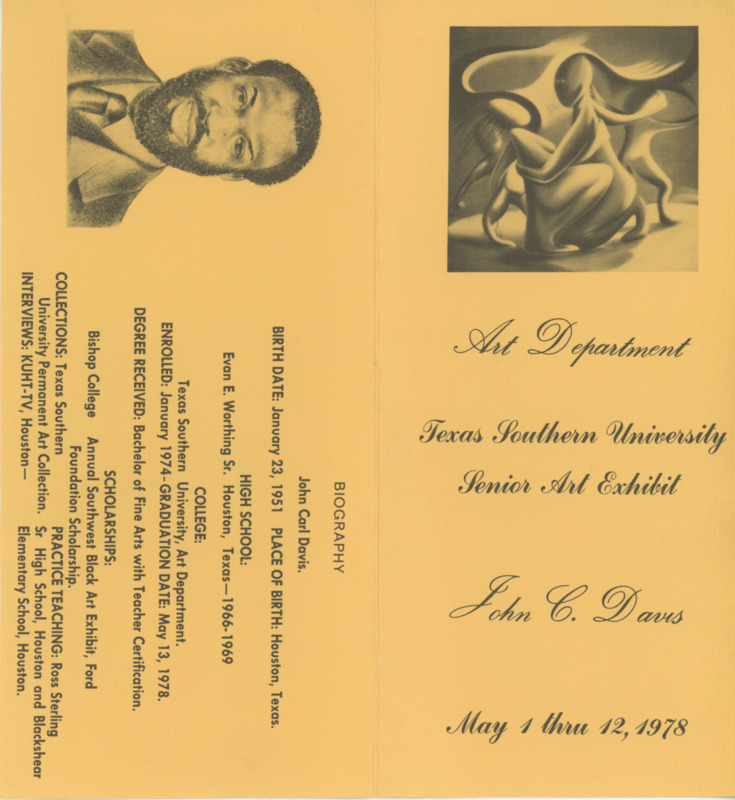
This is a brochure for Davis’ senior art exhibition. The culmination of the Texas Southern art curriculum is a senior exhibition where students showcase artwork created over the course of their undergraduate studies. The brochure features a self-portrait of Davis, a brief biography, a catalog of the artwork featured in the exhibition, and a photo of one of his artworks.
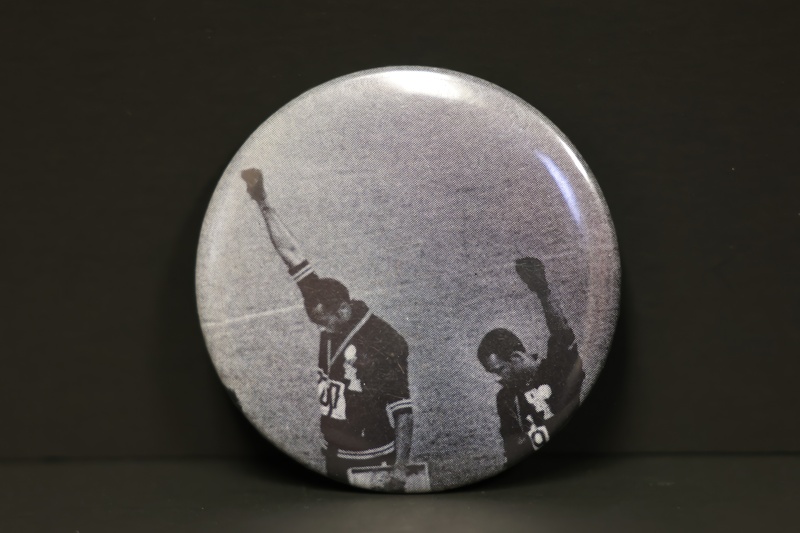
A button with a black and white photo of John Carlos and Tommie Smith giving the Black Power salute at the 1968 Olympics in Mexico City, Mexico after winning bronze and gold medals, respectively, in the 200 meter running event. The salute is considered one of the most overtly political statements in the history of the modern Olympic Games.
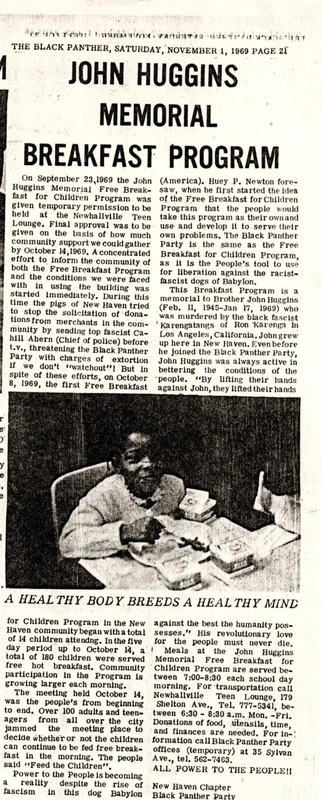
A newspaper article from The Black Panther about the free breakfast program in New Haven, Connecticut. The first free breakfast program in New Haven began on October 8, 1969, and is named after John Huggins, a Black Panther originally from New Haven who was murdered on January 17, 1969, in Los Angeles, California.
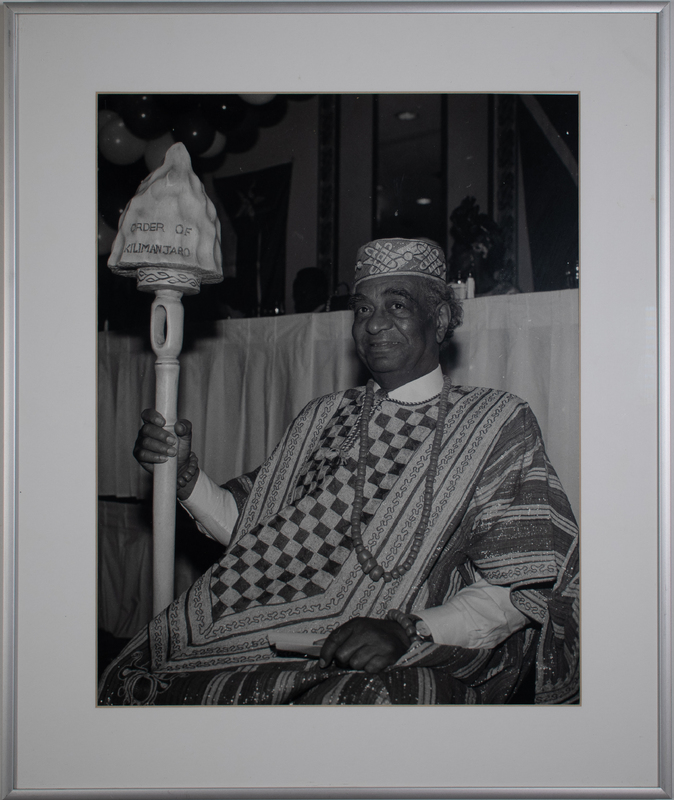
This photograph by Earlie Hudnall, Jr. shows John Biggers being inducted into the Order of Kilimanjaro, an award given to him by the African Union at an event in Houston. Africa and African roots were essential parts of Biggers' art and teachings. He is often credited as one of the first African American artists to visit Africa and begin to incorporate African art and traditions into his art.
In this interview, Texas Southern art alumnus Johnetta Tinker discusses her experiences as a student in the class of 1972. As a student, she worked closely with Dr. Biggers and would sneak into his studio to watch him work. She recalls a strong sense of camaraderie with her classmates. After TSU, she was mentored by Boston artist Allen Crite.
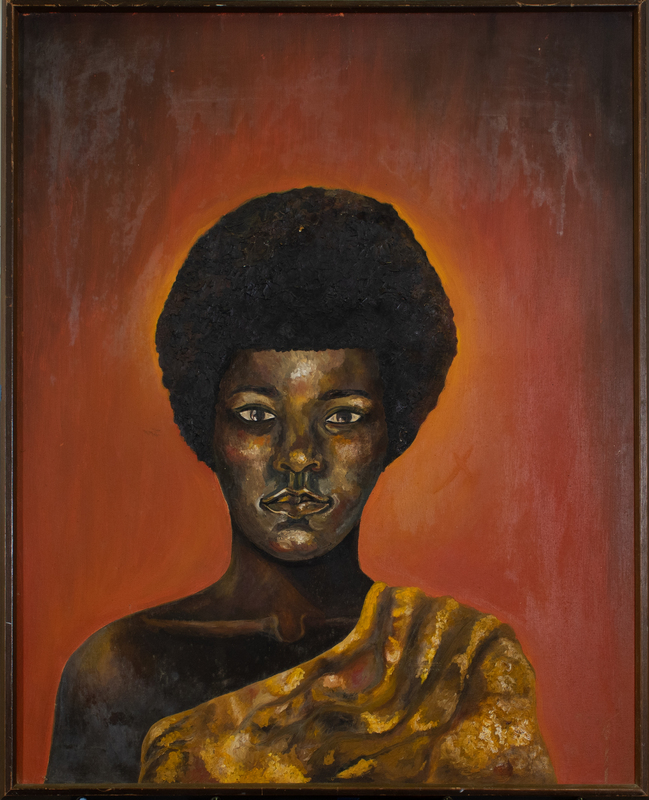
Tinker's painting is a self-portrait of the artist wearing her hair in an afro and a tunic draped over one shoulder. A golden halo emanates from behind her afro, attracting the viewer's eye to the center. As a part of the art curriculum, students would create various self-portraits. Tinker continues to practice art and is now based in Boston.
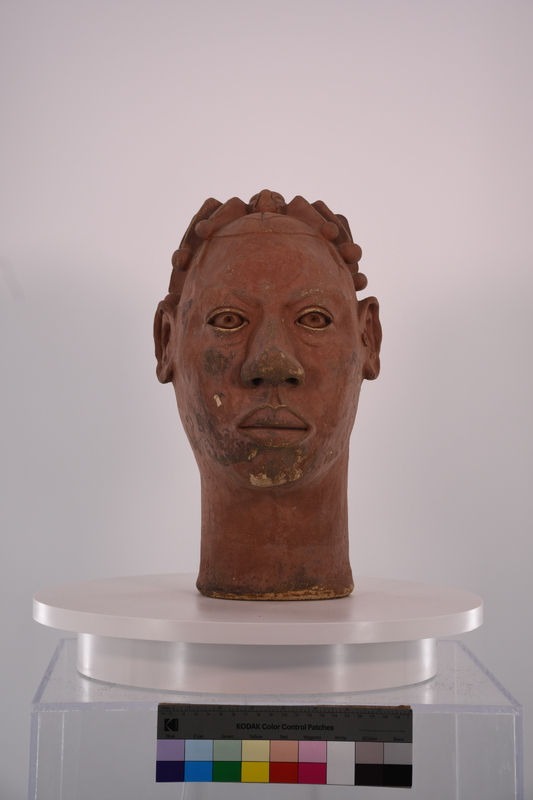
Jones' self-portrait has a piercing facial expression and displays protruding veins near the brow line and a direct stare from the eyes. The crown is adorned with a spider and the outline of a web along the scalp, along with a spiral near the left ear. The design may have been inspired by Spiderman, who debuted in comics 8 years earlier.
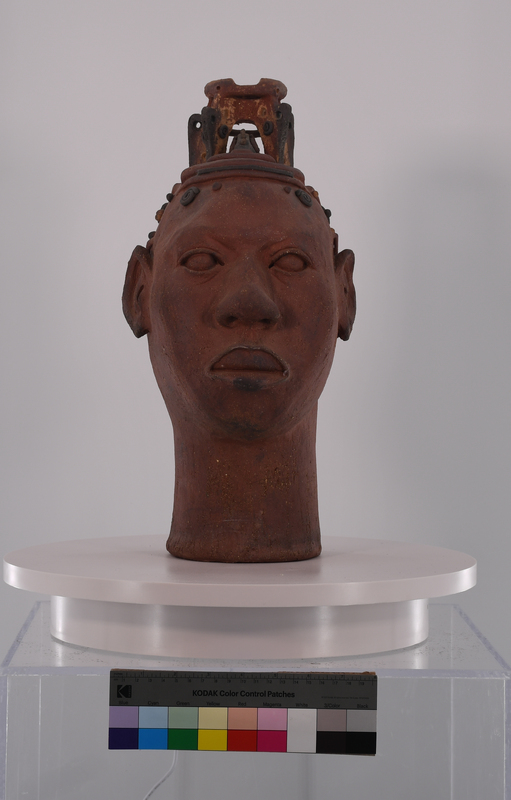
This bust is a self-portrait of the artist. Jones depicted his face with sharp features, high cheekbones, and protruding veins near the brow line. The crown is adorned with spiral motifs, dots, and rolled clay. Atop is a shrine structure, with a turtle within. Turtles and tortoises are often used to symbolize longevity. Students were encouraged to adorn their self-portraits with additional embellishments.
Jones’ senior notebook includes his written philosophy of art, photographs of the artist’s works and his process, and a copy of his senior exhibition brochure. As a part of the Texas Southern art curriculum under Dr. John T. Biggers and Professor Carroll Harris Simms, students would create these notebooks to explain their artistry and showcase the works they created as students.
Johnny Palmer was appointed in 1980 as the first Black sergeant at arms at the Mississippi State Capitol. He had worked at the House as a maintenance and inventory supervisor since 1959. He details the challenges that Robert Clark faced and also talks about the dynamics that the presidents of the major Black colleges had with the House.
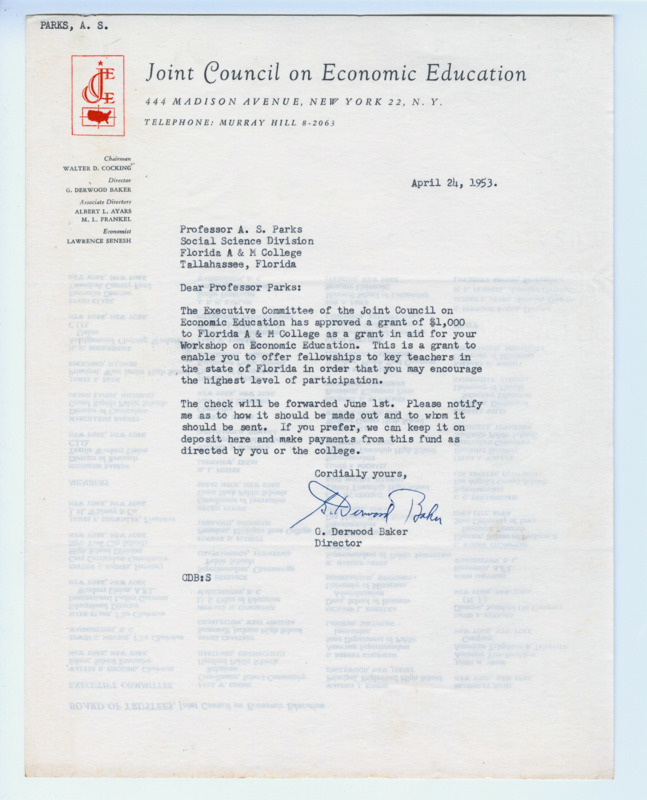
This collection is a series of correspondences between Florida A&M leadership and G. Derwood Baker, the director of the Executive Committee of the Joint Council on Economic Education. What was meant to be a one-time, one-year grant awarded to Florida A&M College became a full-length educational program due to George W. Gore’s help and insistence.