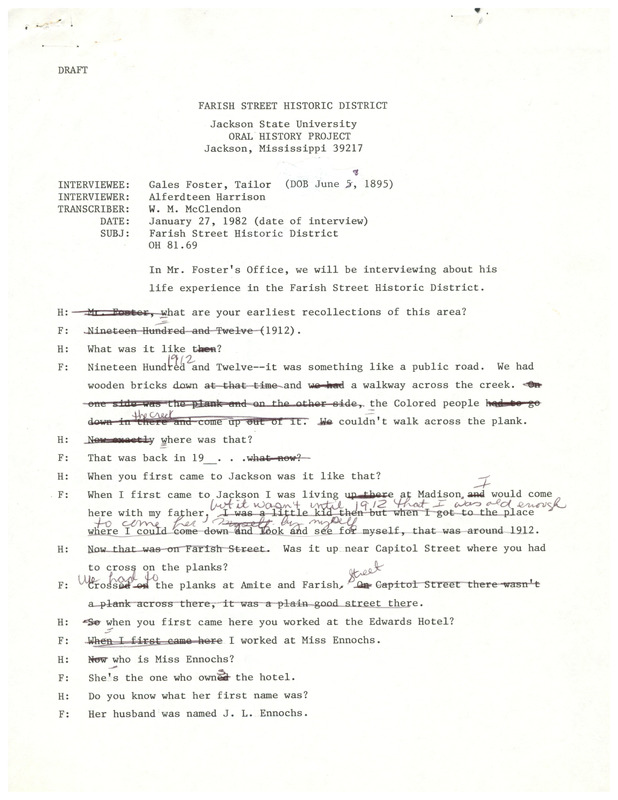
Gale Foster talks about his oldest memories of visiting the Farish Street District, dating back to 1912 when Farish Street was a dirt road. Mr. Foster went on to own a tailor shop on Farish Street and he discusses his history as a tailor and his life as a business owner. The transcript is heavily edited with handwritten notes.
Gale Foster moved to Jackson in 1912, attended Jackson State from 1912-1913, and opened City Barber, Beauty, and Tailor Shop in the Farish Street District in 1919. He talks about the current state of the district as well as offering advice to future Black business people, namely to get an education before starting a business.
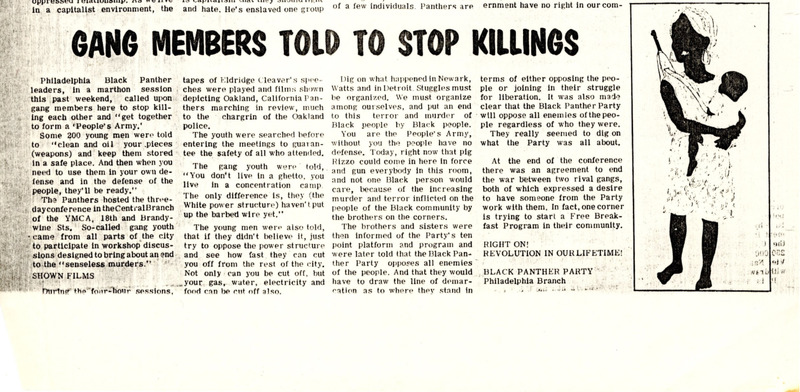
A newspaper article from The Black Panther that describes the calls from Philadelphia, Pennsylvania, Party leaders for gangs in the city to stop the violence and “get together to form a ‘People’s Army,’” This call was made during a three day conference in Philadelphia that brought together gang members and Party leaders to discuss ending violence.
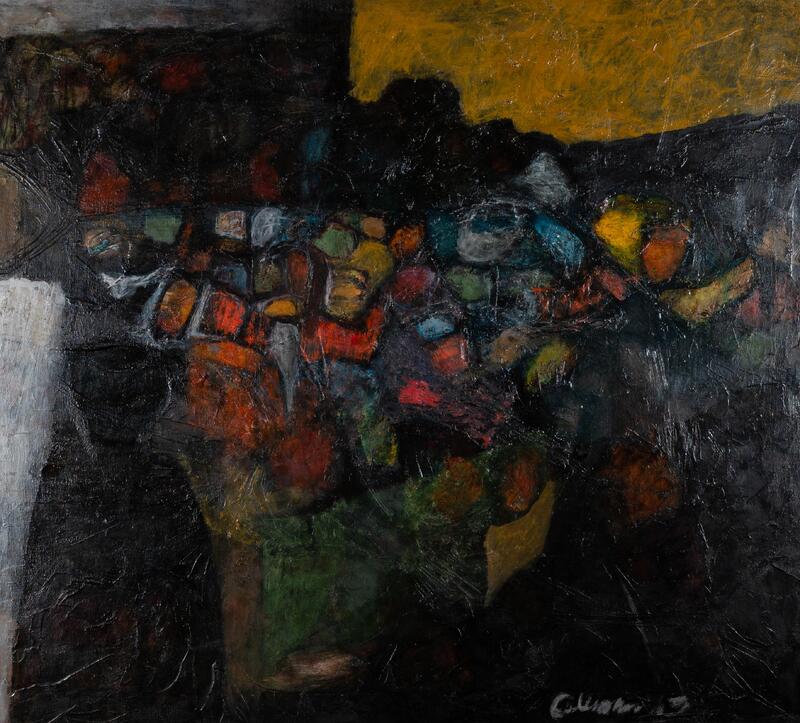
Floyd Coleman was an art historian, educator, and painter in Washington, D.C. "Garden" is an abstract depiction of a patch of land used to grow flowers and vegetables. Coleman uses splotches of vibrant colors on top of a black background.
Gaynette Pugh participated in the Civil Rights Movement in Gulfport, Mississippi, during Freedom Summer in 1964. It was during this work that she was introduced to the Child Development Group of Mississippi (CDGM), where she and others worked to organize the first Head Start program in the area.
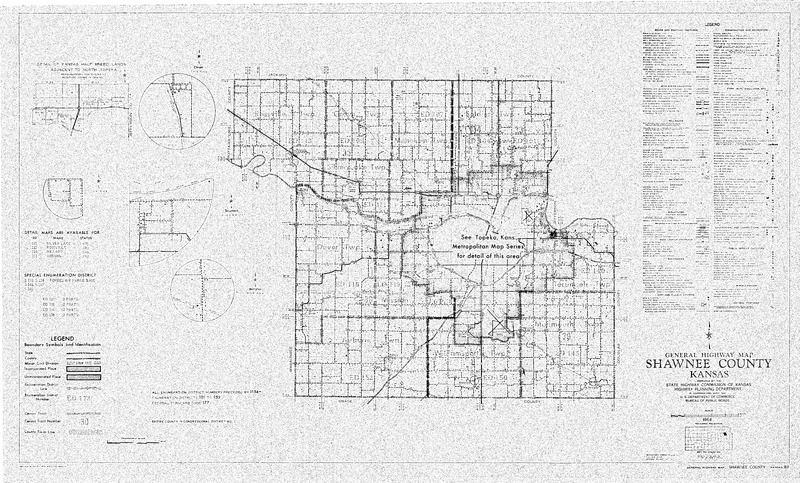
Case Data and Exhibits for Brown III, a relitigation of Brown v. Topeka Board of Education (1954) that corrected resegregation issues caused by open enrollment school choice in 1992. The legend marks roads and roadway features; airways and airports; drainage; structures; conservation and recreation; public service facilities and more.
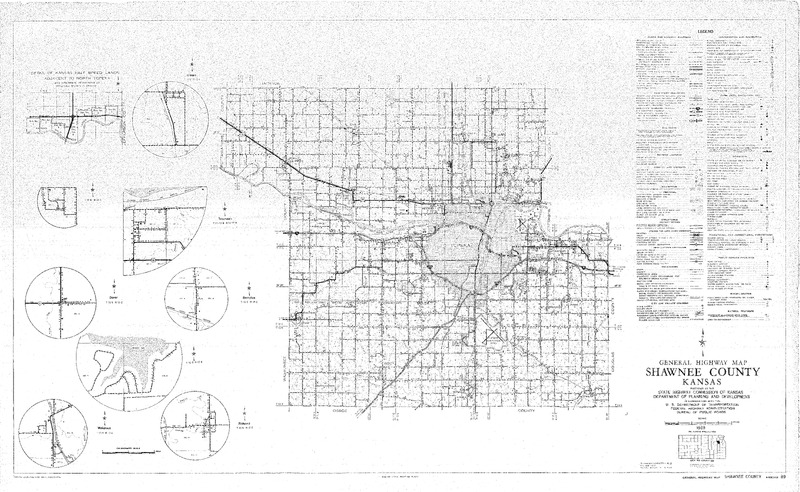
Case Data and Exhibits for Brown III, a relitigation of Brown v. Topeka Board of Education (1954) that corrected resegregation issues caused by open enrollment school choice in 1992. The legend marks roads and roadway features; public service facilities and more. The left-hand side of the map contains more detailed views of several communities.
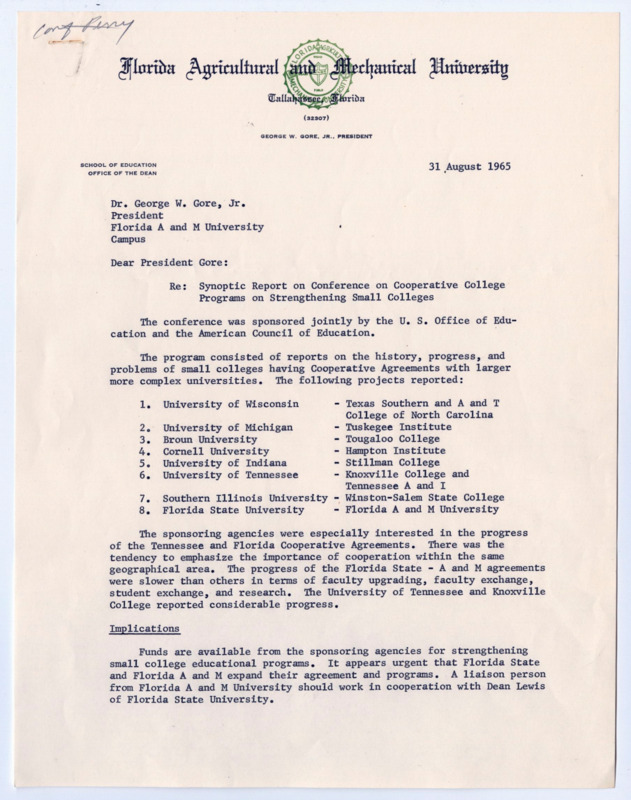
A letter between then Director of Research and Grants, B. L. Perry, Jr., and President Gore and an attached report. Both materials discuss the slow rate of collaboration and progress between Florida State and Florida A&M compared to other colleges’ cooperative programs. Perry calls for improvement of the relationship between the two institutions.
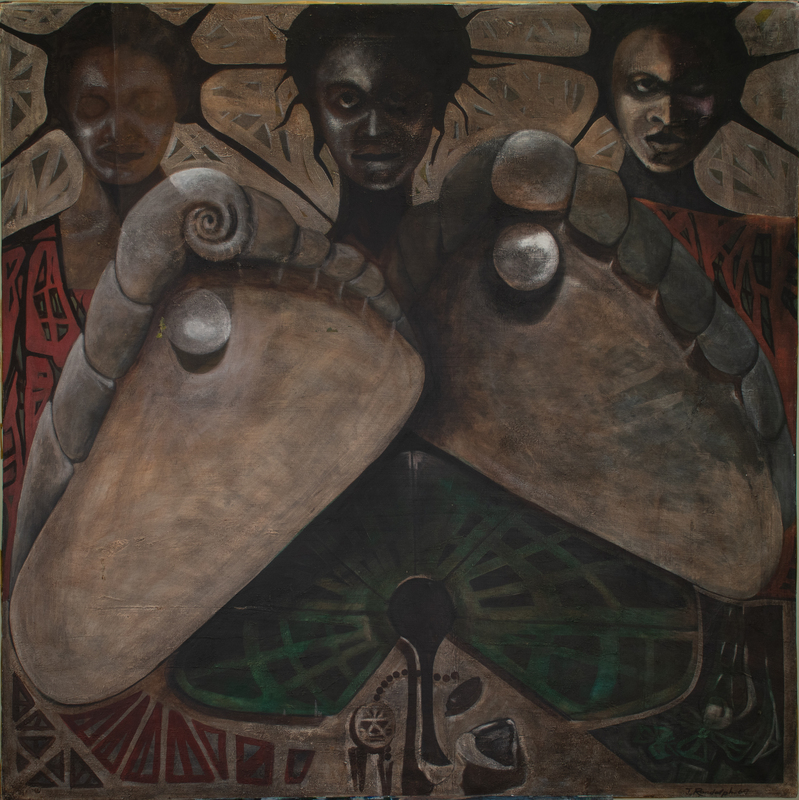
Randolph’s painting shows giant pearls, embedded in oversized shells, in front of a group of three Black women. The pearls reference the beauty of the women, whose hair extends out from their heads to form a unifying pattern between them. Towards the bottom, a leaf fan implies regalness, while the small mask indicates African heritage.
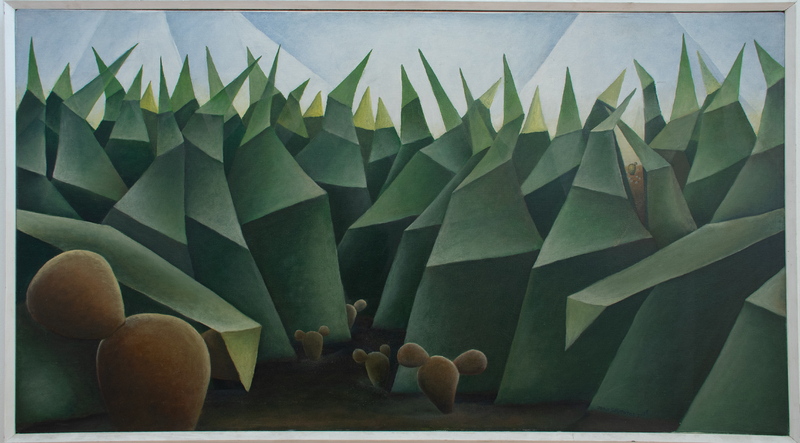
This painting by Jesse Sifuentes shows a landscape scene featuring cactuses. Several TSU art alumni have recalled that Dr. John Biggers taught them based on themes more than techniques. Many works from the 1970s use geometric styles, perhaps a reflection of lessons from the time. Sifuentes went on to become a ceramics professor at Texas Southern.
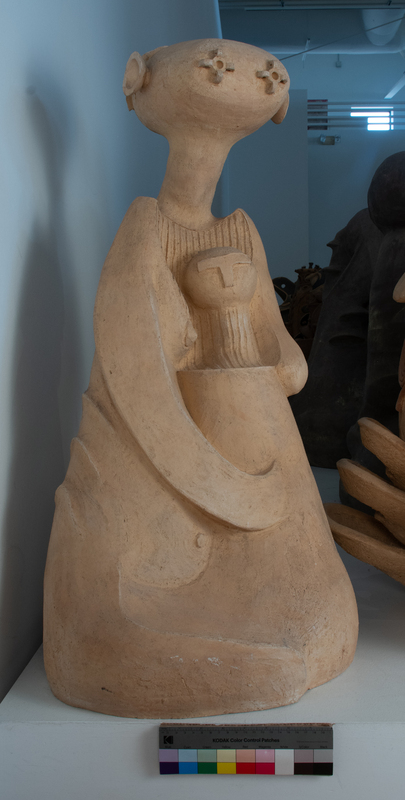
This sculpture is of a mother wrapping her arms around a childlike figure. The artist uses geometric shapes and line work to decorate the bodies and facial features and animate their embrace. Parental protection and the mother-child relationship are frequent subject matters displayed in students' work at Texas Southern University.
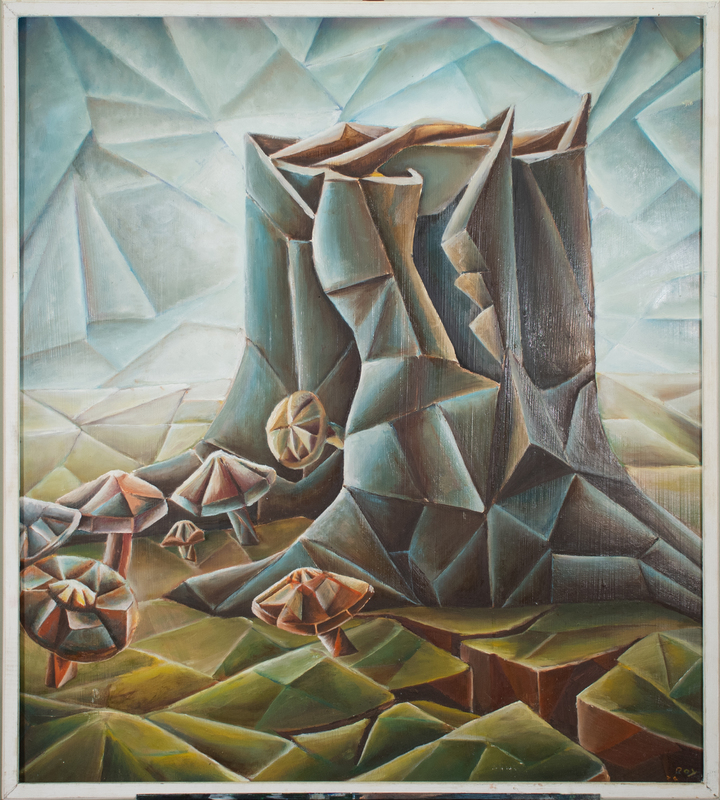
This painting by Roy Vinson Thomas is a landscape piece depicting a tree stump and mushrooms in cubist style. Cubism depicts forms using multiple geometric shapes to create depth. Many works in Texas Southern's permanent collection, particularly from the late 1970s, use this art style.
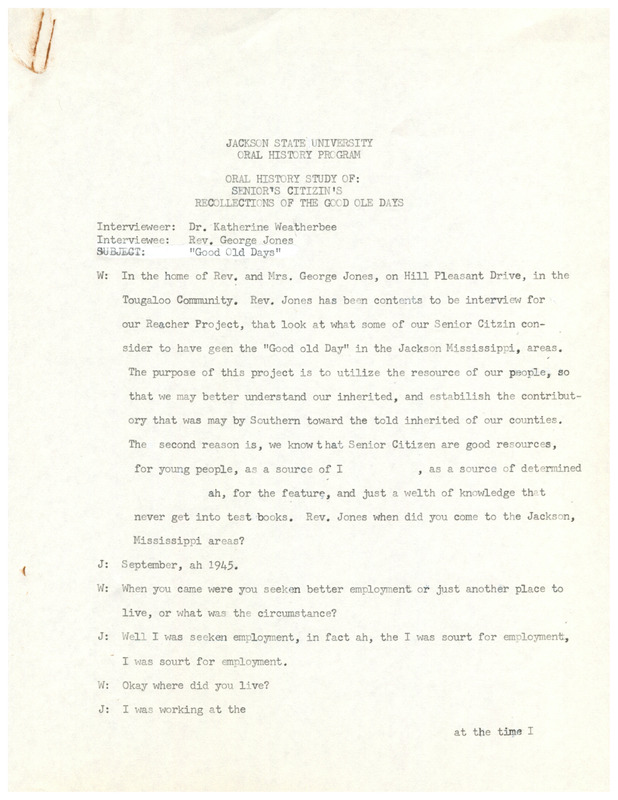
Rev. George Jones moved to the Jackson area in 1945 to work as a college instructor. He discusses his first impressions of Jackson as an educator living on the Tougaloo campus while teaching home economics. He also talks about Sunday school, family, and the positive aspects and culture of the time. The transcript contains handwritten edits.
George Jamison began working for Head Start in 1964 under Child Development Group of Mississippi (CDGM) and decided to keep working after the change over to Mississippi Action for Progress, Inc (MAP). He talks about his travels through Mississippi to meet with communities and promote Head Start after the change. This is the first interview of 2.
In this second of two interviews, George Jamison talks about his role in policy decision and policy writing for the Head Start program. His first position in Head Start was with social services and he began writing policies from there. He also discusses the relationship between Head Start and the Civil Rights Movement in the 1960s.
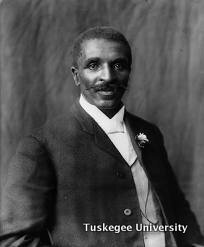
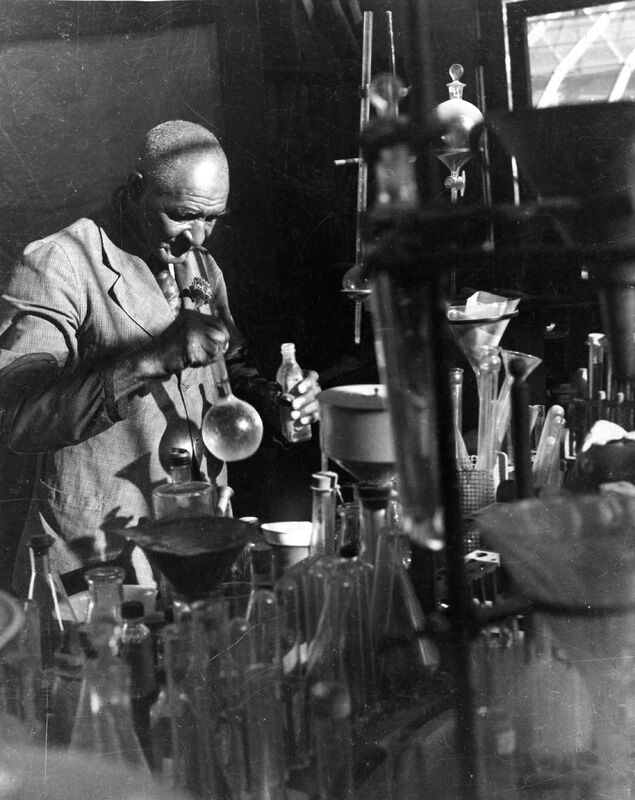
A black and white photo of an elderly George Washington Carver in his lab in the now George Washington Carver Museum. Dr. Carver has a bottle and a beaker in his hands. Carver's picture was tacken by the university's head of photography department and university photographer P.H. Polk.
The 2nd Annual Catholic Committee of the South Convention held in Birmingham, Alabama on April 22, 1941. The audio features speakers introducing what the convention is for and the theme of this particular year's convention which was "The Church and the Negro".
Georgia Ross was an educator in Mississippi for 29 years, beginning her career in 1971 when schools were still segregated. In this interview, Ms. Ross talks about the influence Robert Clark, as a state representative, had on education, saying that he was very forward thinking for a Mississippi legislator and probably ahead of his time.
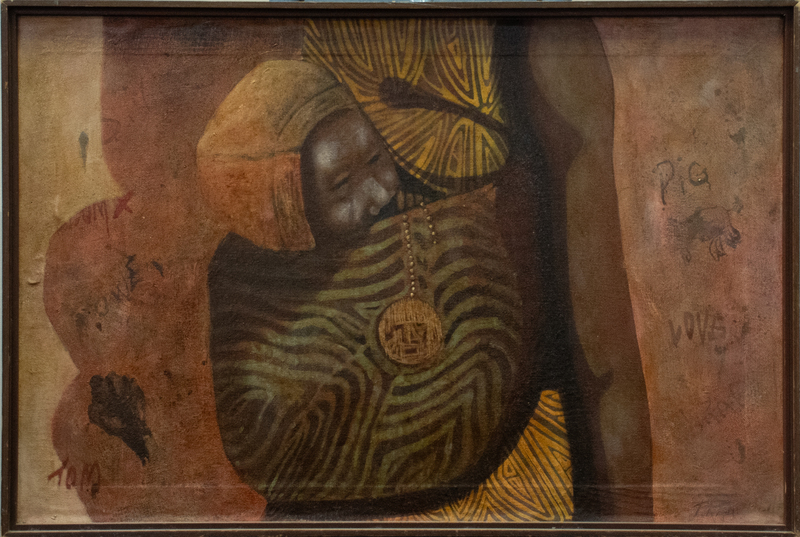
Randolph’s painting shows a mother in an African dress wearing her child on her back with a chitenge. The wall is graffitied with words like pig, power, and love, and an image of a Black power fist. The work contrasts the African aesthetic of the figures with the African-American political graffiti, expressing an idea of global Blackness.
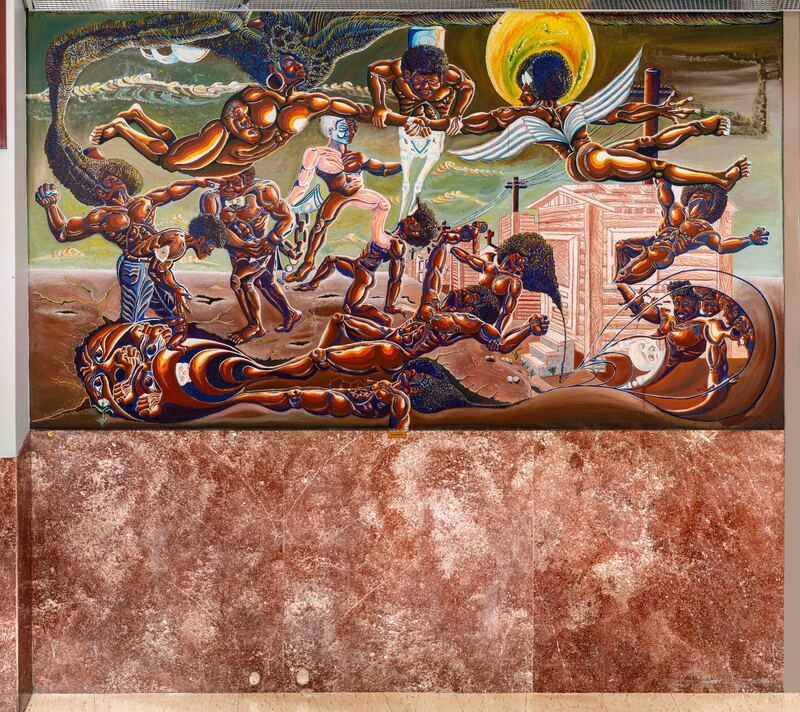
Set against a background of shotgun houses, Black people engage in a struggle to break free from chains and physical limitations. Extreme musculature and angel wings suggest supernatural strengths. A motif in Settles’ work is the power and beauty of Black hair.
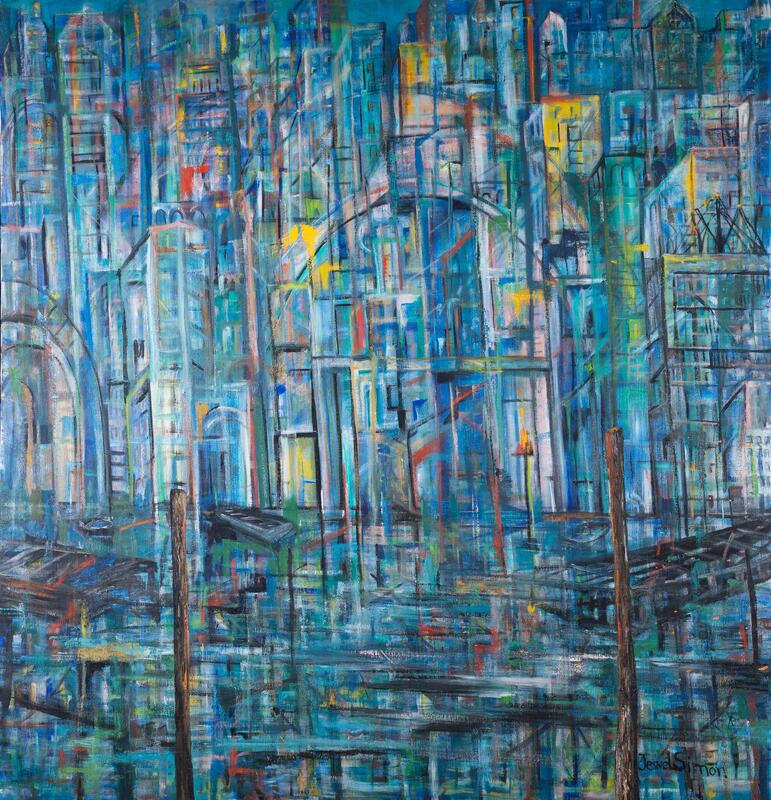
Jewell Woodard Simon was an internationally acclaimed artist, teacher, and poet from Houston, TX. "Ghost Harbour City" depicts an urbanscape and a dock with moored boats. Horizontal and vertical lines shape the city and water and create depth. Simon blends colors to detail the light, shadow, and shape of each building and the seascape.
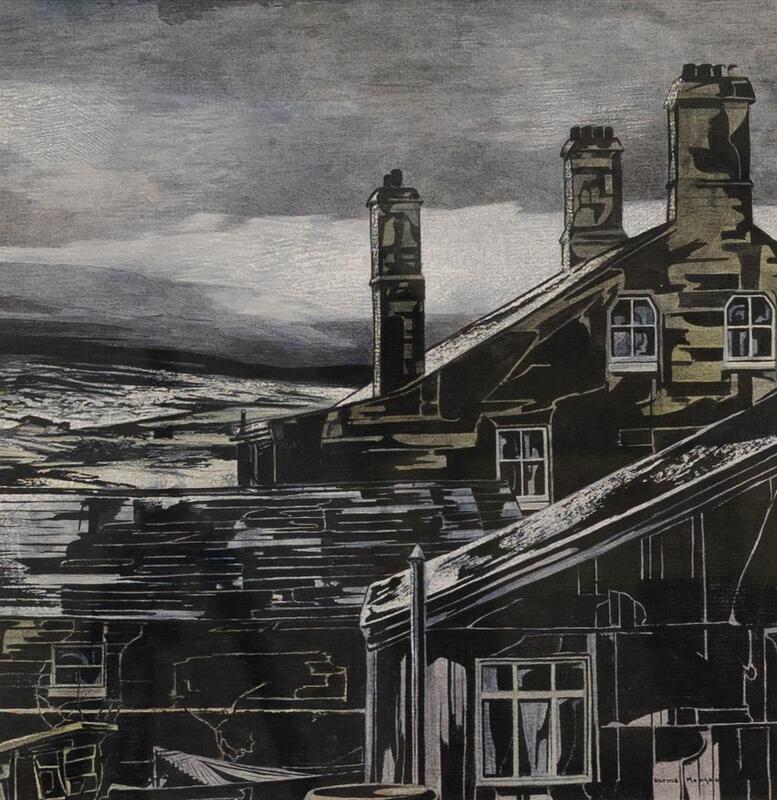
Norma Morgan was a painter from New Haven, Connecticut. "Ghost Light" shows a house and a shed that sit in the close foreground. Their wooden structures are cast in heavy shadow. There is an atmospheric background remaining with a gloomy color palette of gray, black, and white.
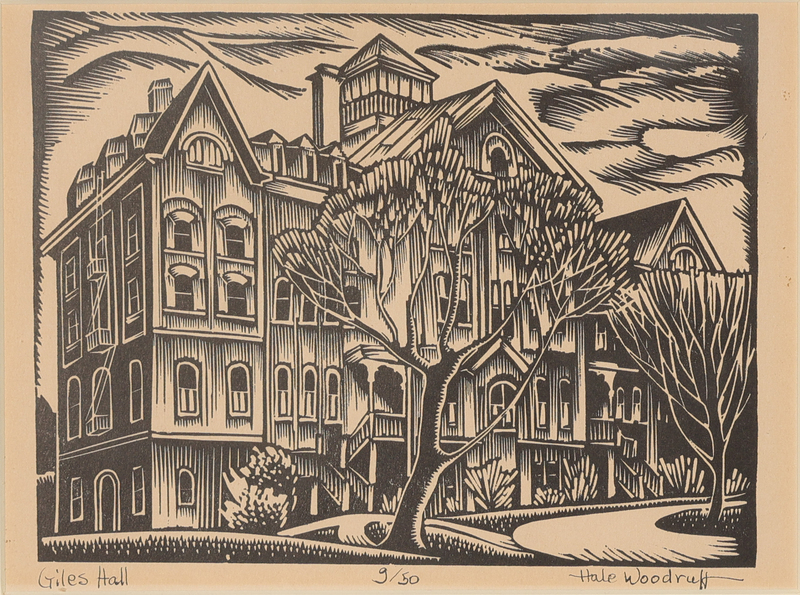
Hale Aspacio Woodruff was an artist and art educator known for his murals, paintings, and prints from Cairo, IL. "Giles Hall" depicts a building on Spelman College's campus which now seves as an academic building. The building was named in honor of woman's education advocate, Harriet E. Giles who served as Spelman's second president. While working at Atlanta Univerity and Spelman College, Woodruff taught courses at the laboratory school at Spelman housed in Giles Hall.
Ginevera Reaves helped to start the Head Start program in Benton, Mississippi, in 1965. She talks about the psychology and home economics classes she took in school, her Bachelor’s Degree in Education and her Master’s Degree in School Administration, and how that broad background gave her a unique perspective on teaching the disadvantaged.