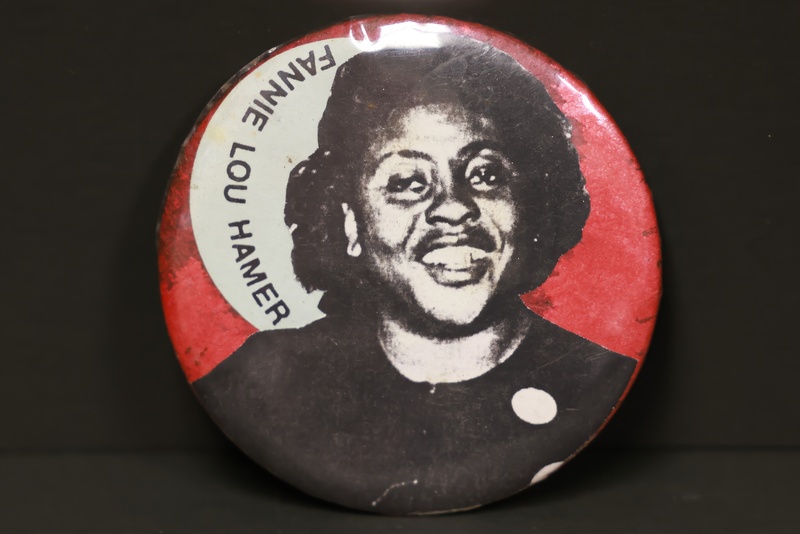
A red and black button with a picture of Fannie Lou Hamer and her name in print. Ms. Hamer was a renowned leader in Mississippi during the Civil Rights Movement. She worked with the Student Nonviolent Coordinating Committee (SNCC) to organize Freedom Summer in 1964 and was also vice-chair of the Mississippi Freedom Democratic Party.
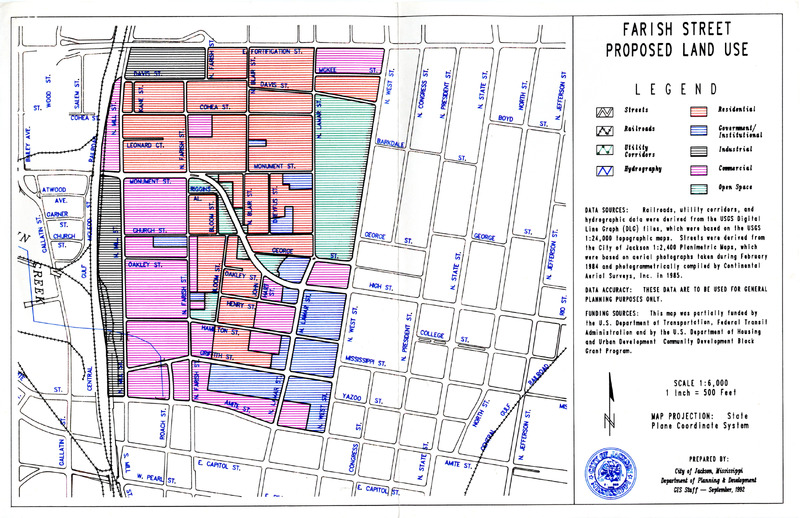
A map of the Farish Street Historic District with markers for different land uses: streets, railroads, utility corridors, hydrography, residential, government/institutional, industrial, commercial, and open space.
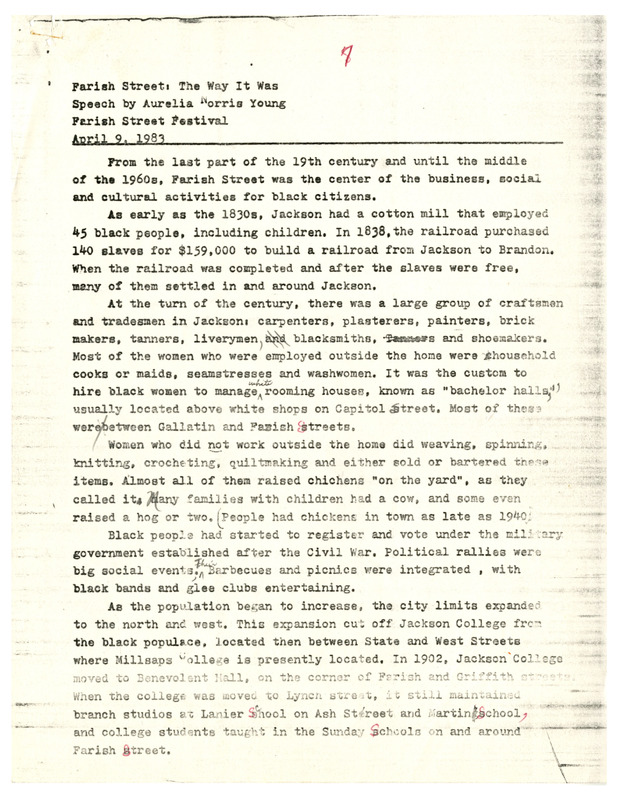
Aurelia Norris Young was a prominent Civil Rights activist and professor of music at Jackson State College and Tougaloo College. She gave this speech on the history of the Farish Street Historic District on April 9, 1983, at the Smith Robertson Neighborhood Folklife Festival, which honored the history and legacy of the district.
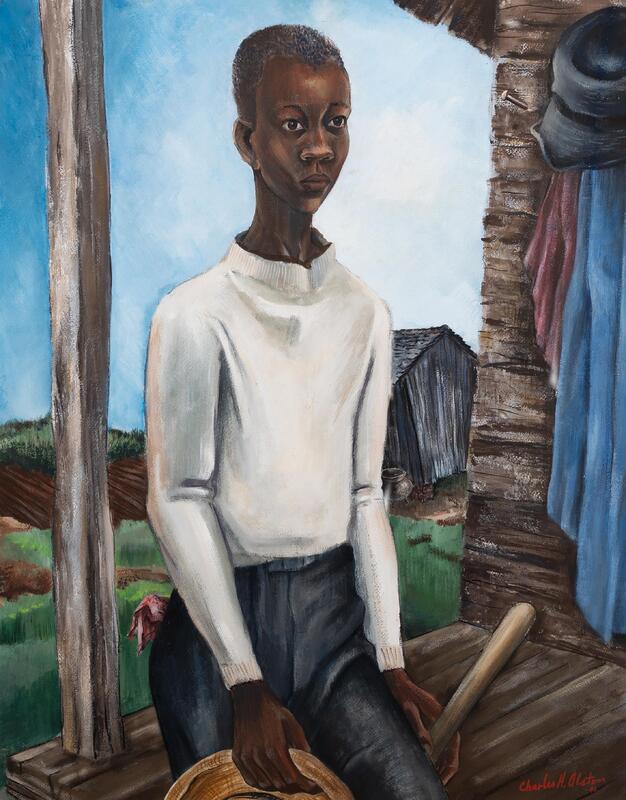
Charles Henry Alston was a Harlem Renaissance painter, sculptor, illustrator, muralist, and teacher. "Farm Boy" is a portrait of a young Black boy holding a hat and a tool on a farm. In the background is a rural landscape of fields and a barn. Alston photographed Black Southern life in North Carolina when he visited rural and farm sites with a Farm Security Administration inspector. His photos served as inspiration for his paintings that depicted Black southern life.
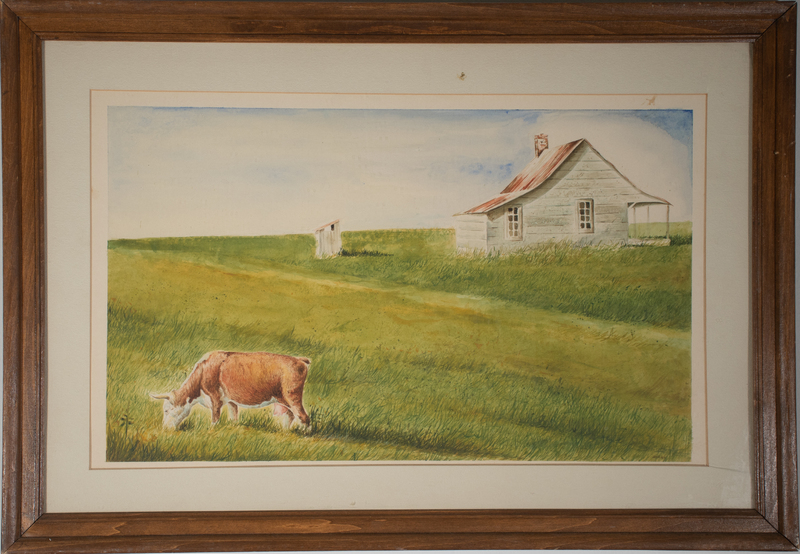
This watercolor painting by Joseph A. Moran features a grazing cow in the foreground and an outhouse and farmhouse in the background. Dr. Biggers encouraged students to create based on what they saw, which may have been this rural scene for this artist.
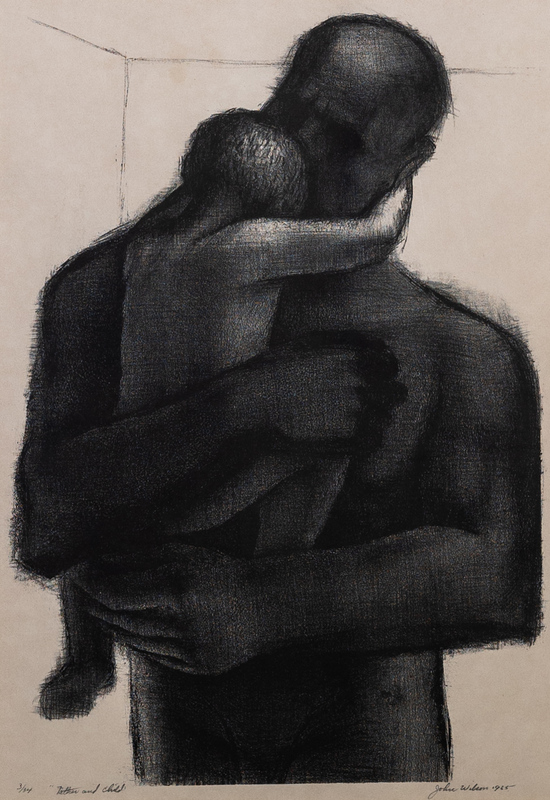
John Woodrow Wilson was a famous painter known for his creative portraits and stylistic approach to social justice. "Father and Child" is a black-and-white print of a seemingly nude father holding his equally nude son. The piece embodies the intimacy between parent and child.
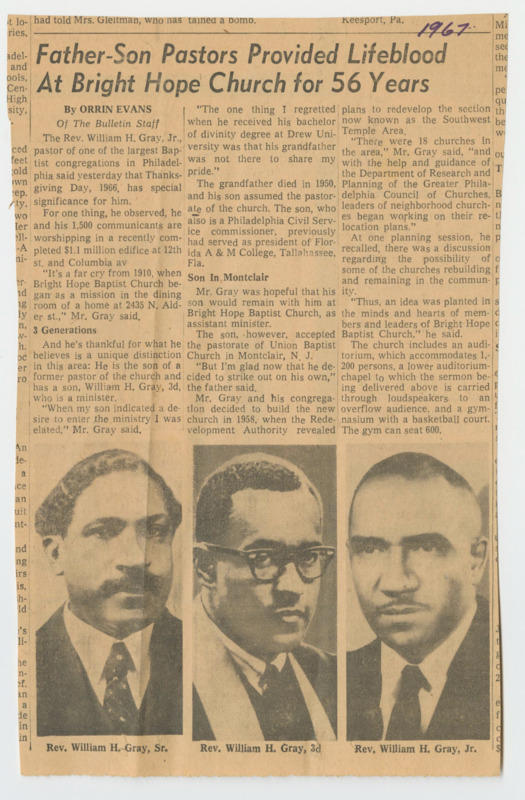
Orrin Evans of The Bulletin staff wrote this piece on three generations of pastors in the local community, one of them being former Florida A&M University President Rev. William H. Gray, Jr. William H. Gray, Jr. was the pastor of one of the largest Baptist congregations in Philadelphia and his son, William H. Gray, III was a minister.
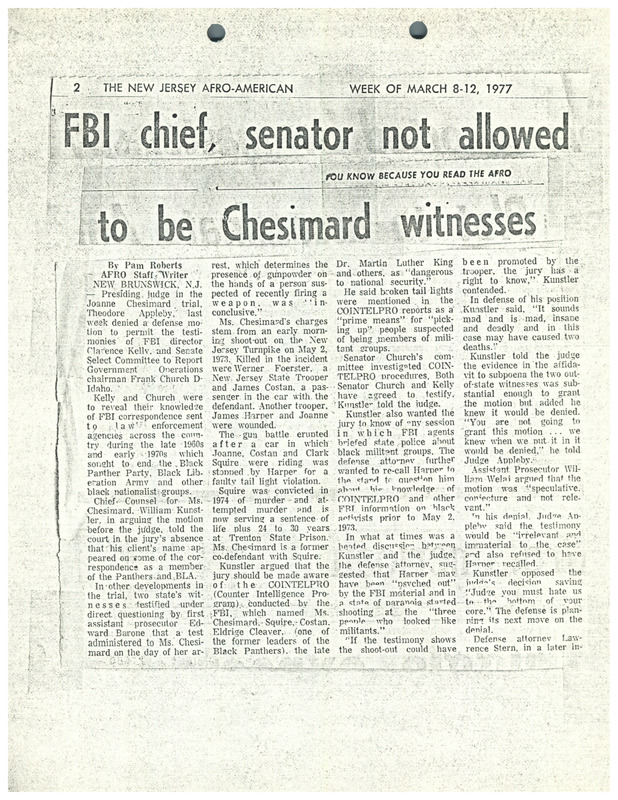
A newspaper article from The New Jersey Afro-American about Judge Theodore Appleby barring the testimony of an FBI agent and senator. Chief defense attorney William Kunstler wanted to use the testimony to establish a police conspiracy against Black militants in the trial of Assata Shakur (JoAnne Chesimard) for the 1973 killing of a state trooper.
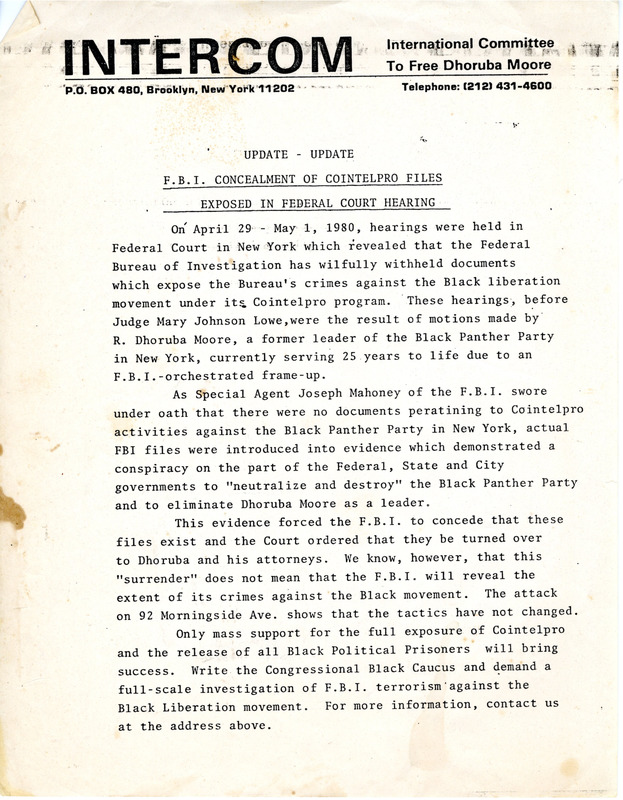
A memo from the International Committee to Free Dhoruba Moore (Dhoruba Bin Wahad a/k/a Richard Moore) asking for members to write to the Congressional Black Caucus to demand a full-scale investigation after evidence of the FBI's Cointelpro program was exposed in court during hearings that were the result of motions filed by Moore.
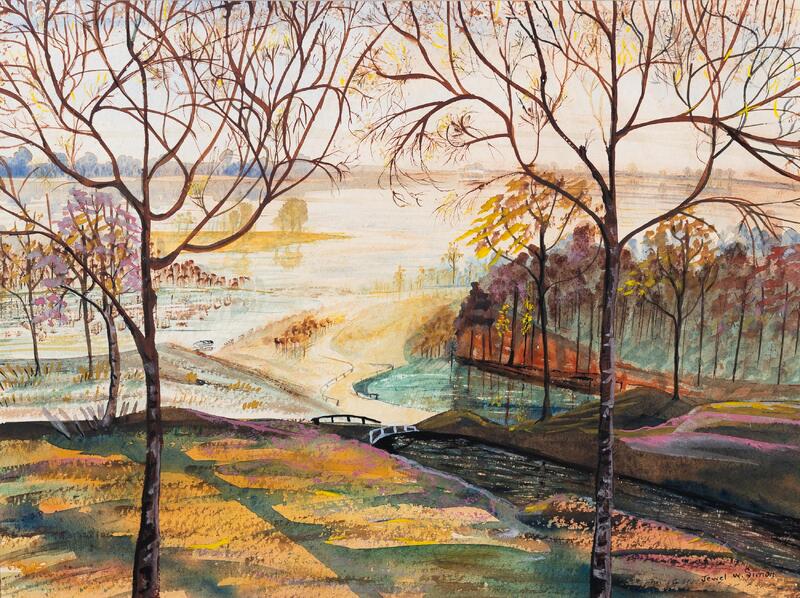
Jewell Woodard Simon was an internationally acclaimed artist, teacher, and poet from Houston, TX. "February Lace" is an atmospheric watercolor of a park in late winter. The scene includes patches of dried and lush grass, trees with red and purple leaves, and a bridge. Simon used the trees in the foreground to create a sense of depth.
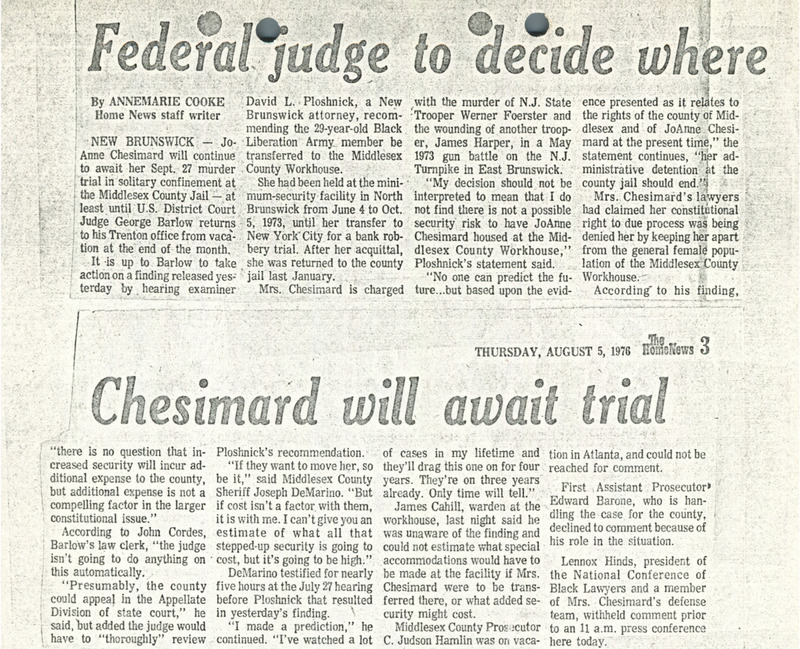
A newspaper article from The Home News about the murder trial of Assata Shakur (JoAnne Chesimard) for the 1973 killing of a state trooper. She will remain in solitary confinement at least until U.S. District Court Judge George Barlow returns from vacation at the end of August to take action on the motion to move her to women's general population.
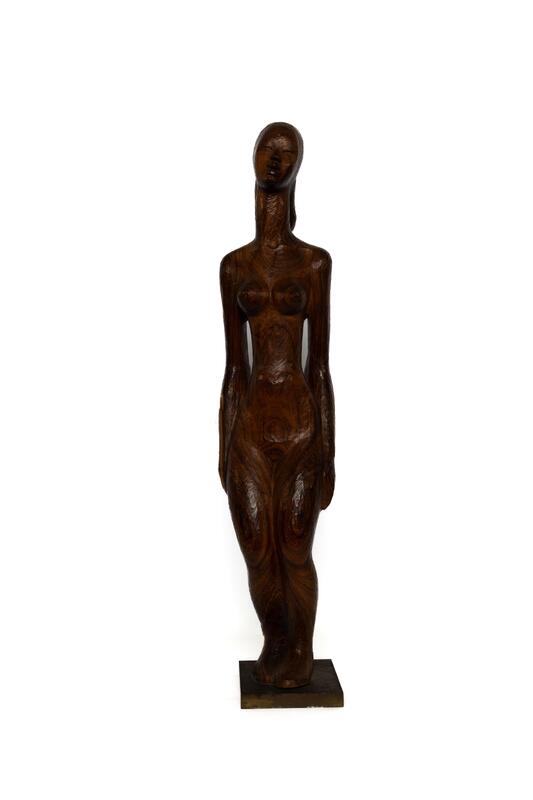
John W. Rhoden was a renowned sculptor from Birmingham, AL. "Female Figure" is a wooden sculpture of a nude woman. The woman's demeanor is peaceful, and she stands slack-armed with a relieved expression.
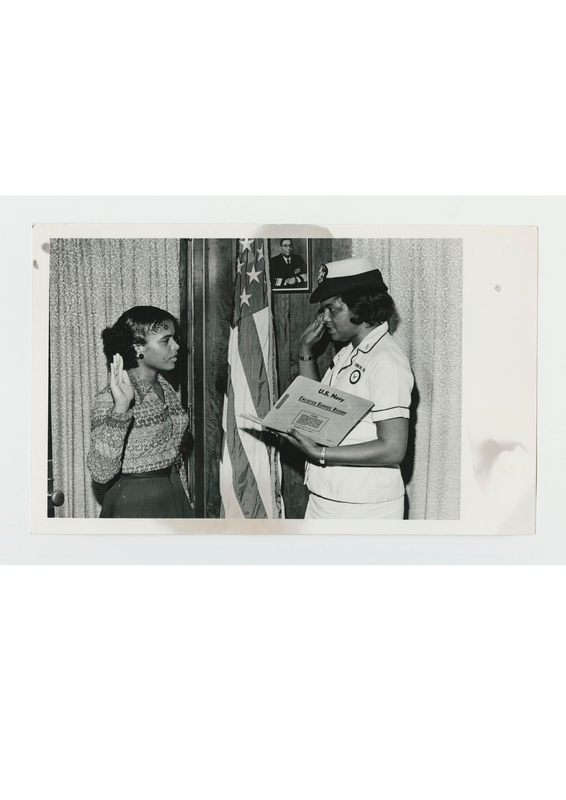
This black and white photograph shows a Black female U.S. Naval Officer swearing in another Black female. The officer holds a book titled “U.S. Navy Enlisted Service Record.”
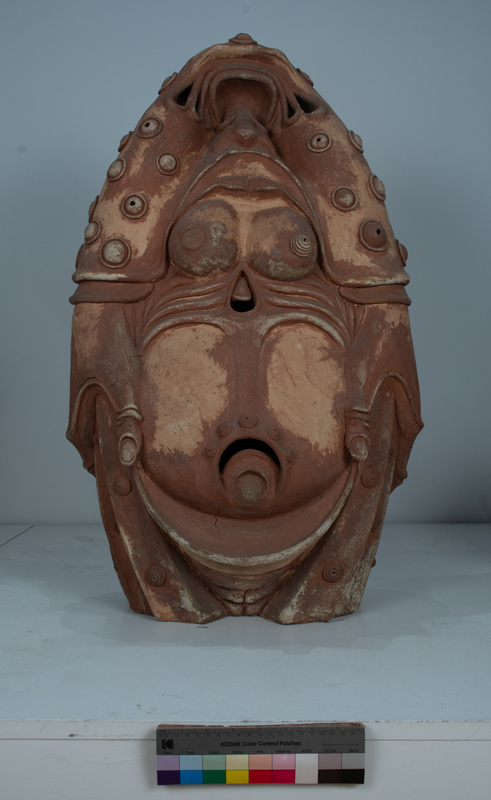
“Fertility” shows an abstract female figure with breasts, an enlarged belly, and oversized hands. Like nearly all students of Professor Simms, Thomas covered his piece in various embellishments, particularly spirals. Oversized hands are also a characteristic of John Biggers’ artwork. The piece has discolored over the years since its creation.
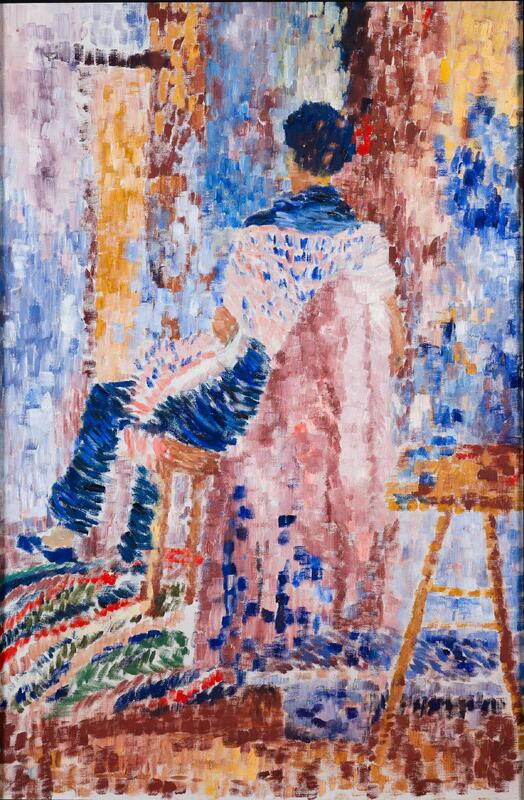
Mildred A Braxton was an artist from Newport News, VA. "Figure #1" shows the subject sitting in a chair facing away from the viewer. The figure is wearing blue and pink attire with fabric hanging on the back of a brown chair. Using techniques similar to Pointillism, Braxton created an environment full of loose brushstrokes.
Hubbard, a student of Carroll Harris Simms, created “Figure With Turtle and Bird” in 1966. This terracotta depicts a bird, atop an abstract tree, surrounding a tortoise. These animals are often paired in folktales, including an Igbo tale where a tortoise fools birds and is punished by having his shell broken. The fable says this is the cause of the irregular shape of tortoise shells.
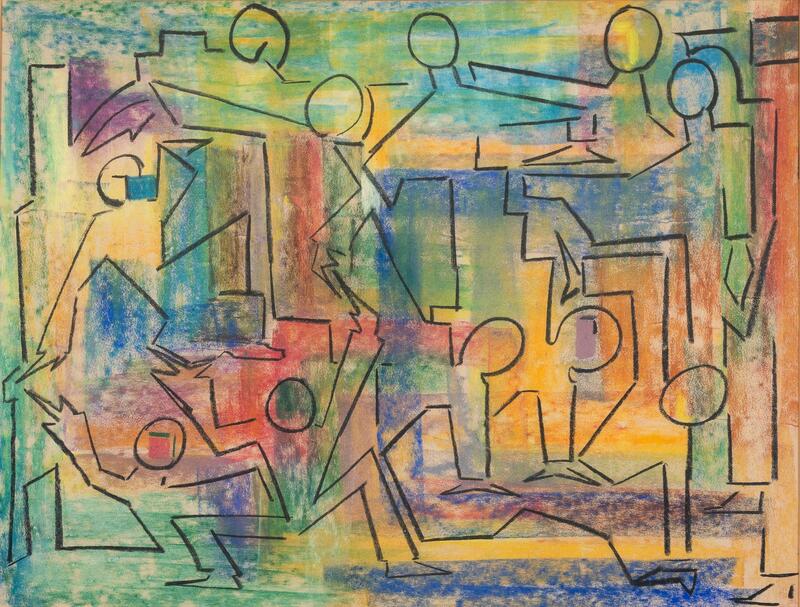
Gerald F. Hooper, Sr. was an artist from Tallahassee, FL. "Figures" depicts geometric figures dancing. Hooper uses circles, quadrilaterals and other shapes to frame the moving figures. The background is a collage of colorful wax strokes.
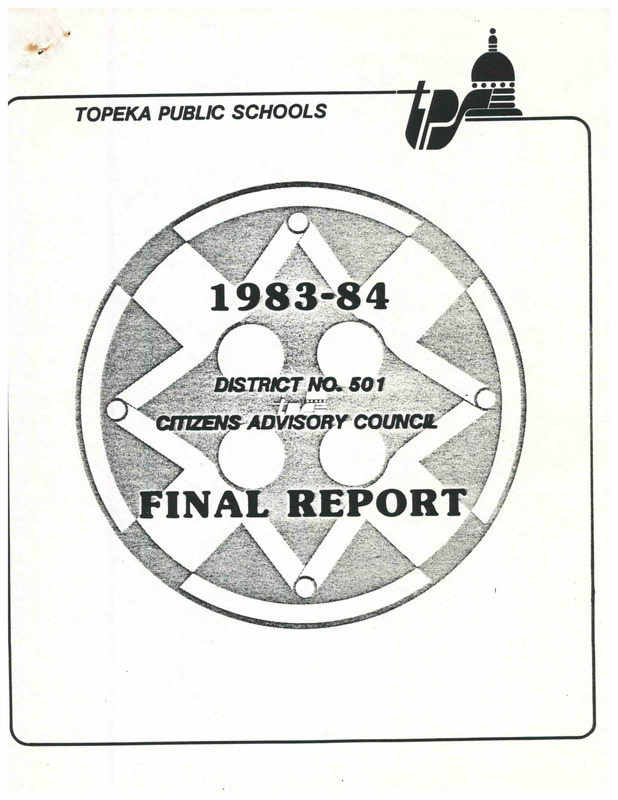
Case Data and Exhibits for Brown III, a relitigation of Brown v. Topeka Board of Education (1954) that corrected resegregation issues caused by open enrollment school choice in 1992. This report from the Topeka School District’s Citizens Advisory Council includes curriculum reviews, computer literacy, and an analysis of the long-term master plan.
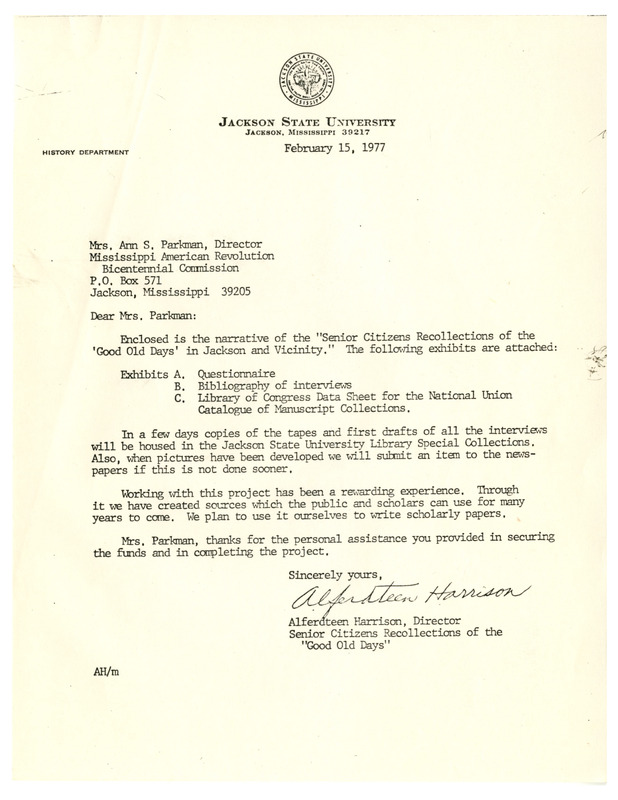
The final report on the Good Old Days Oral History project prepared by members of the Jackson State University History department and Center for Urban Affairs. The report was given to the sponsors of the project, the Mississippi American Revolution Bicentennial Commission and the Mississippi Department of Archives and History.
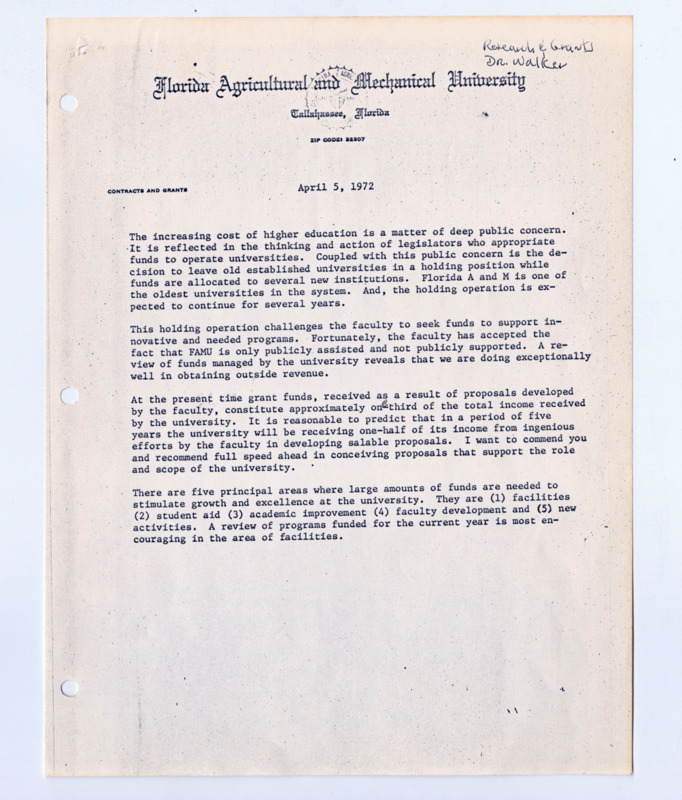
This collection contains a 1972 report from Florida A&M’s Office of Contracts and Grants discussing the increasing cost of higher education due to politicians appropriating funds for university operations. The document presents figures on collateral programs for funding support, aid as a portion of income, and more.
This is an architectural rendering for the Fine Arts Building on Texas Southern’s campus. The building was dedicated as the John T. Biggers Art Center in 1995 to honor the art department’s founder. The building largely retains its original character as depicted in this image.
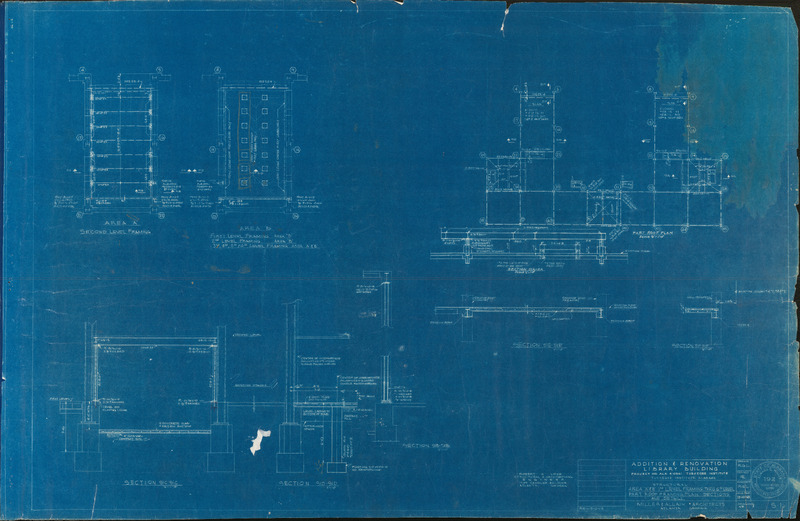
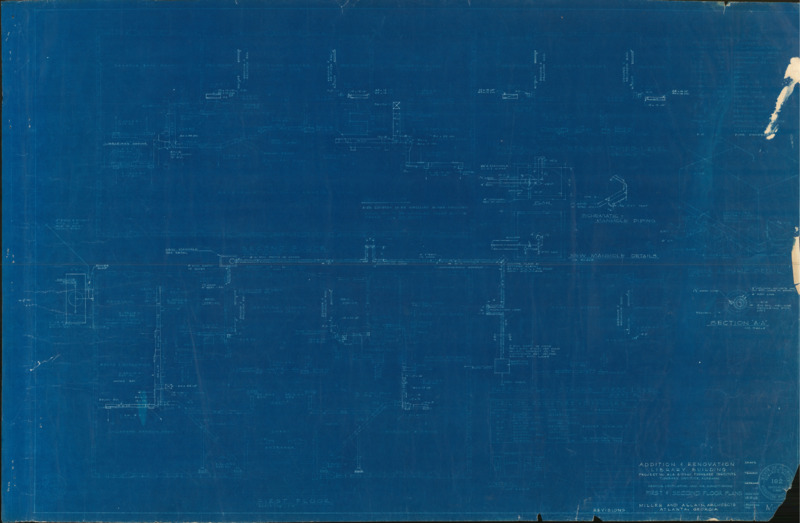
The first structural blueprint drawing of the additions and renovations for the Library Building at Tuskegee Institute loacted in Tuskegee, Alabama. This blueprint drawing shows the 1st - 6th Level Framing/Part Roof Framing Plan.
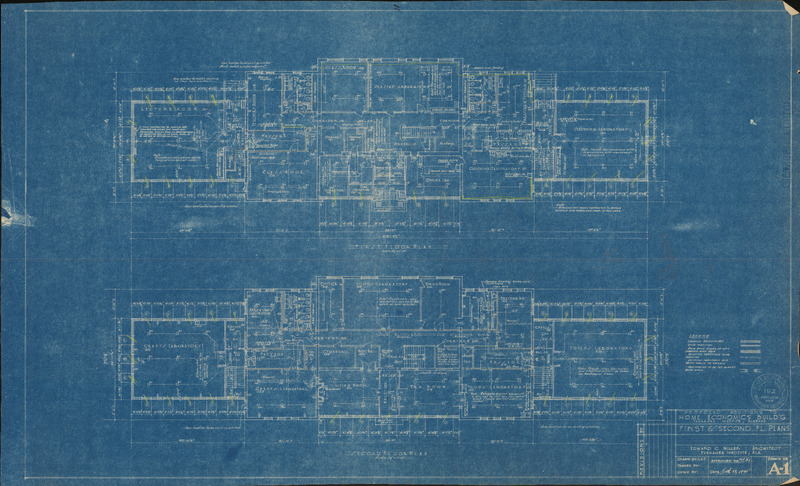
A annotated blueprint for the first and second floor plan drawing blueprint for the Home Economics Building at Tuskegee Institute. Drawing consists of a legend, layout of both floors, measurements for all rooms.
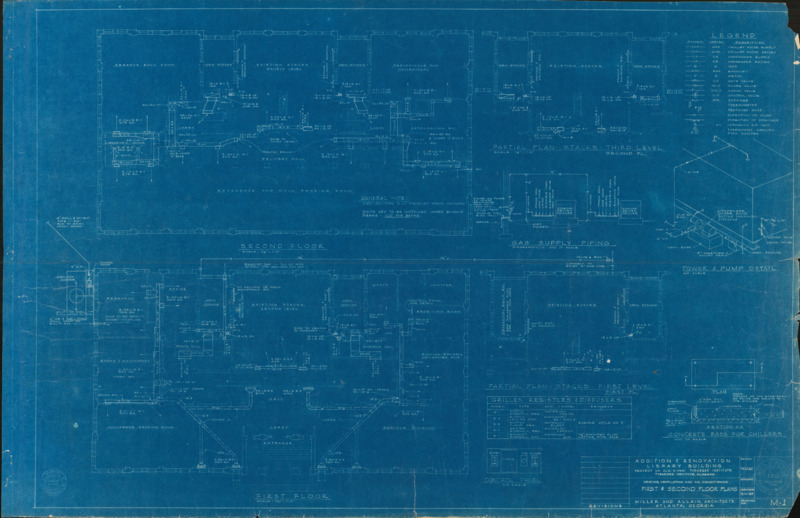
1st mechancial drawing blueprint for the heating, ventilating, and air conditioning of the additions and renovations of the proposed Library Building at Tuskegee Institute located in Tuskegee, Alabama.
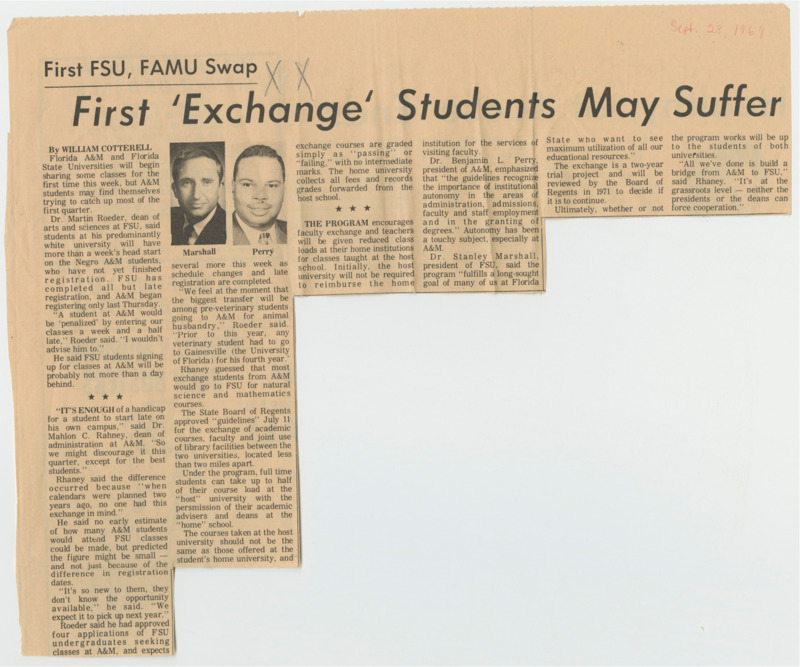
William Cotterell wrote this news article for an unidentifiable news publication. It discusses a new joint opportunity between Florida A&M University and Florida State University but quoted executive officials from FSU warning FAMU students from joining because they risk falling behind in class due to differing institution registration periods.
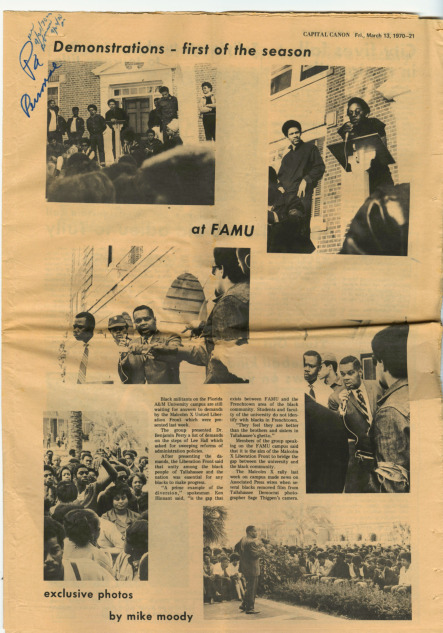
With photographs captured by Mike Moody for the Capitol Canon, this newspaper highlights the student activism prevalent not just in the 1970s but on Florida’s campuses. At Lee Hall, the Malcolm X United Liberation Front, a non-campus affiliated student organization, called for Black unity between students and the greater Tallahassee community.
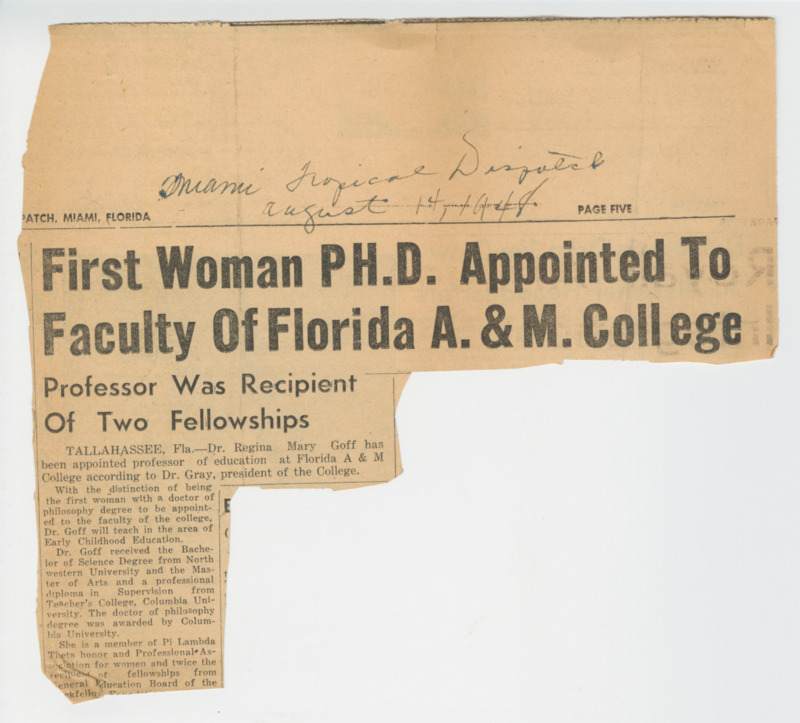
Dr. Regina Mary Goff, the first woman Ph.D. faculty member at Florida A&M College, was featured in a 1946 newspaper clipping. Her academic focus on philosophy and early education, coupled with two fellowships, highlighted her pivotal role in shaping the future of education at the college.
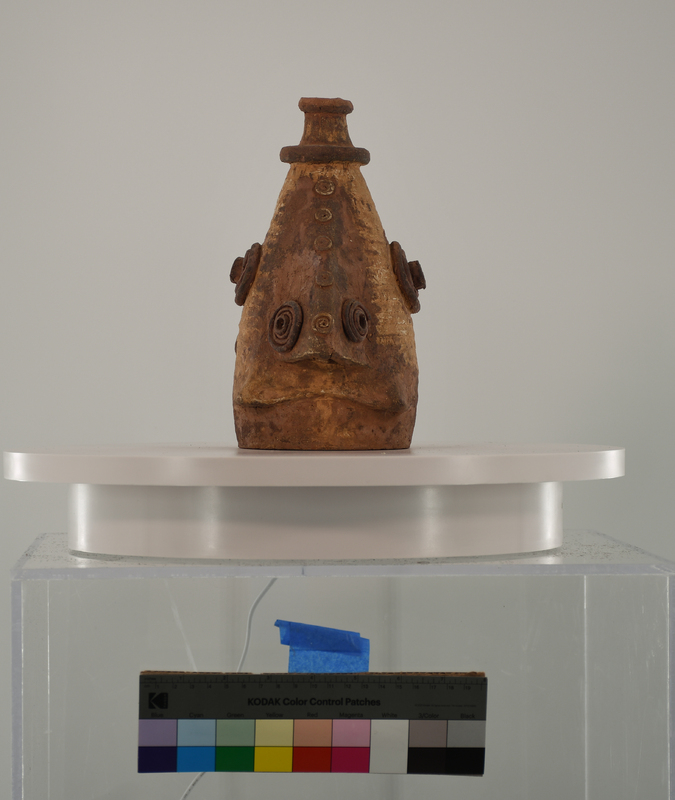
Green’s sculpture is a maquette for his terracotta, which depicts the head and upper fins of a fish. The fish is decorated with ornamental swirls, holes, and ridges. Professor Carroll Harris Simms required his students to add these additional embellishments to their sculptures.