The religious service centers on prayers and a sermon by Dr. Herbert Mays, who uses the Books of Job and Daniel to emphasize enduring faith, integrity, and ethical living rooted in love, rather than serving God for personal gain.
Coretta Scott King preached on the need for the militancy and simplicity of the earliest Christians who were not caught up in the trappings of form and fashion of worship.
Samuel L. Gandy emphasized the importance of seeking authenticity in life and the responsibilities of a profession by combining a common body of knowledge, an associative society, and service to the public.
Andrew L. Johnson reflects on the story of Joseph from the Book of Genesis, emphasizing God’s mercy, forgiveness, and sovereignty in human relationships.
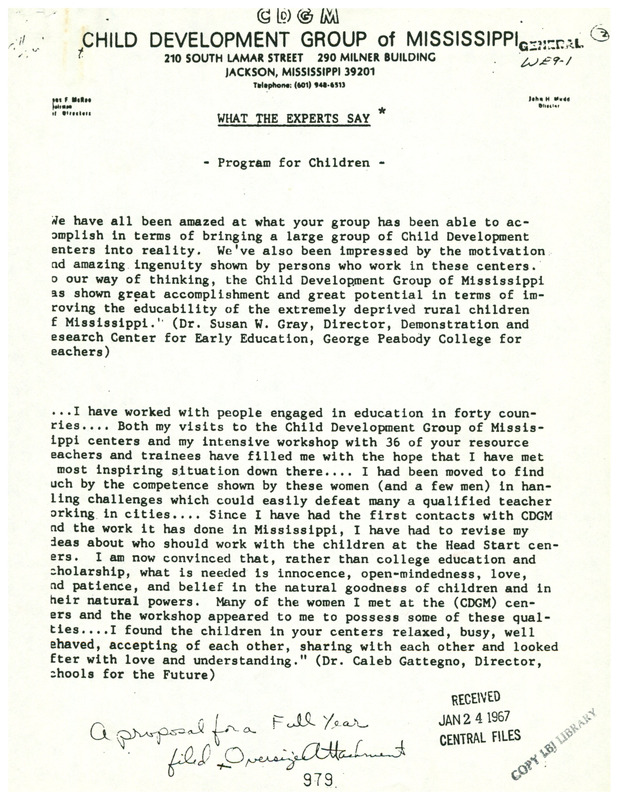
"What the Experts Say": A memo from Child Development Group of Mississippi (CDGM) with a collection of quotes about CDGM taken from reports, letters, and statements to CDGM by consultants contracted to provide services to CDGM during the current grant funding period. All of the quotes highlight positive things about CDGM and Head Start.
Charles E. Boddie emphasizes the importance of knowledge, awareness of one's ignorance and warns against blissful ignorance, and stresses the need for self-awareness and service.
Andrew L. Johnson’s sermon emphasized faith, divine support, and community, blending prayer, scripture, and a symbolic candle lighting to highlight human transience, the need for God's mercy, and the unifying power of shared belief and fellowship.
Andrew L. Johnson emphasized the need for self-awareness and preparation against temptation, using the biblical story of Jesus' temptation in the wilderness as an example.
James T. Crutcher’s sermon at Tuskegee Institute emphasized self-identity, faith, and personal transformation amid societal change, urging youth to reclaim core values and navigate racial, educational, and technological challenges through spiritual grounding and self-awareness.
Andrew L. Johnson explores why Cain failed, focusing on his immature concept of God, inability to handle anger, and lack of knowledge about brotherhood.
William D. White emphasized the importance of forgiveness and patience in resolving conflicts. He highlighted the Robbers Cave experiment, which demonstrated that shared goals can reduce conflict.
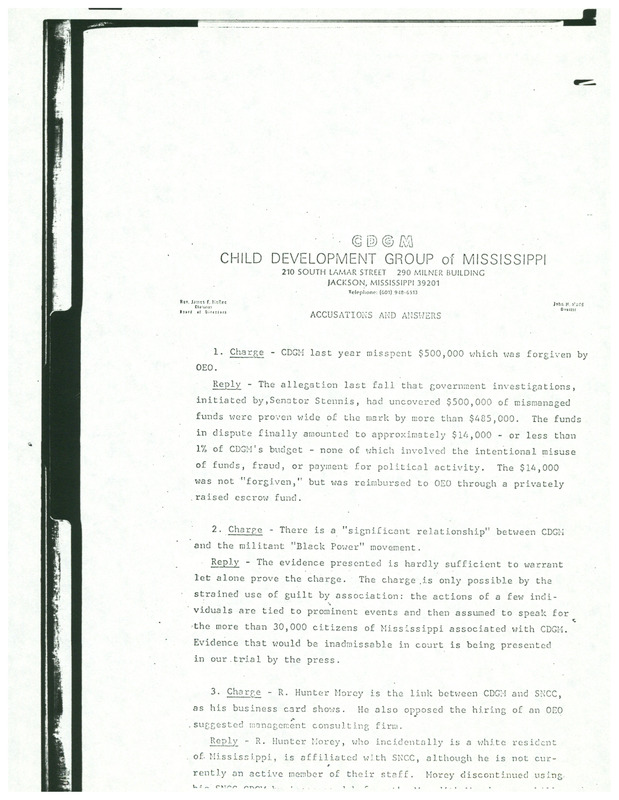
In this memo from Child Development Group of Mississippi (CDGM), the organization replies to charges made by Senator John Stennis and others. These accusations include an alleged $500,000 financial discrepancy that turned out to be only a $15,000 clerical error. CDGM responds to the charge that the organization has ties with Black Power activists.
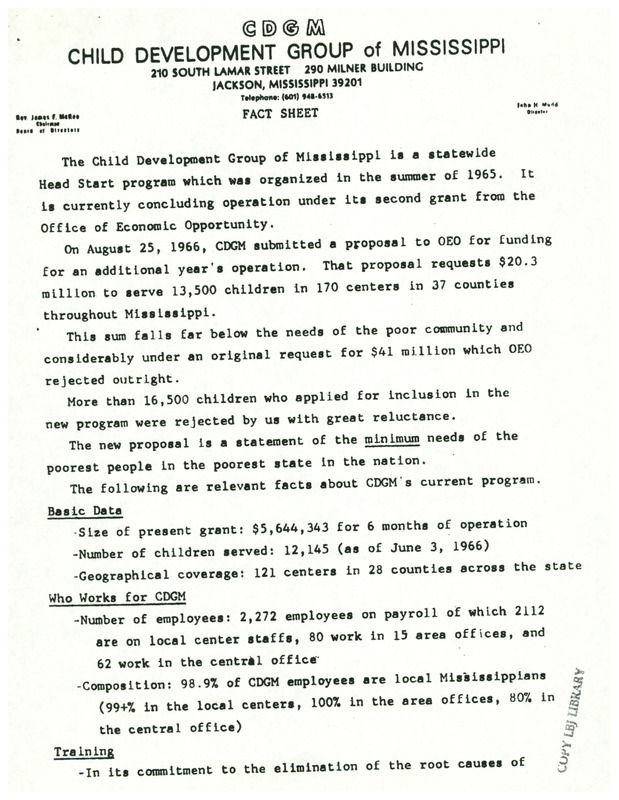
“Fact Sheet”: a memo from Child Development Group of Mississippi (CDGM) outlining the facts about CDGM and Head Start in Mississippi. The memo outlines funding, employees, training programs, committees, councils, board of directors, volunteer work, and statistics about participation in Head Start across the state.
Charles B. Copher emphasized the concept of "full liberation" through Jesus Christ, highlighting three dimensions of human existence: physical and material, psychological, and spiritual.
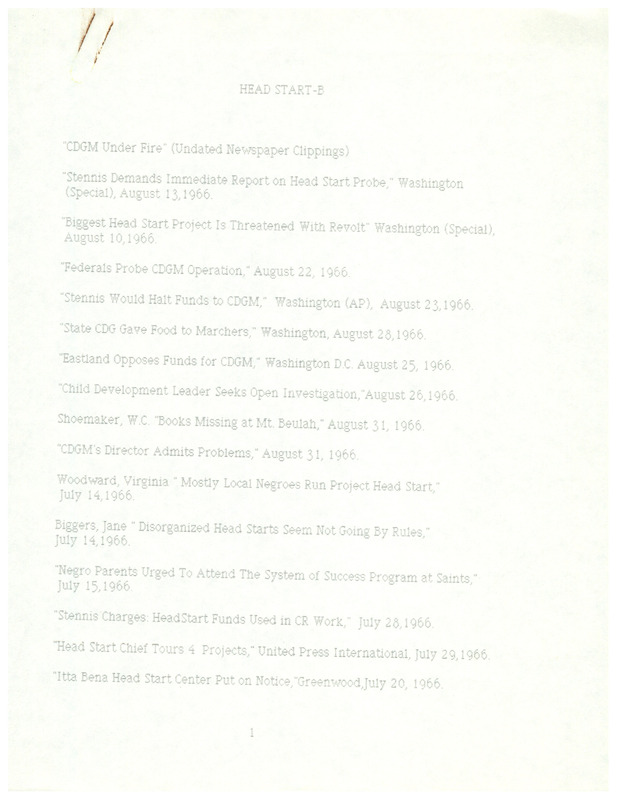
This bibliography lists sources relating to Child Development Group of Mississippi (CDGM) and Head Start. Included are newspaper articles from Mississippi, Washington, D.C., and Virginia.
William Loveless emphasized the importance of community, responsibility, and the evolving role of the church. He reflected on the tragic death of Bruce and Eugenia Johnson, highlighting the dangers of engaging in social issues.
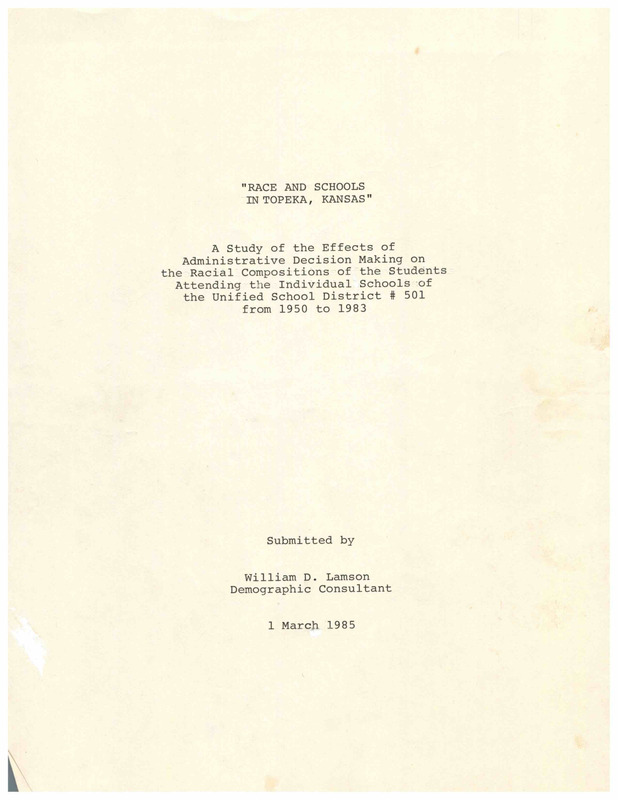
A complete historical breakdown of the effect of administrative decisions on the racial makeup of Topeka schools. Includes full reports on every school in the district as well as analysis on decisions made by the school board and administrators.
Andrew L. Johnson emphasized the importance of worshiping in spirit and truth, and the need for personal and collective responsibility. Johnson highlighted the ongoing technological, political, and economic revolutions, urging the congregation to prepare for global service, work for peace, and embrace lifelong learning skills.
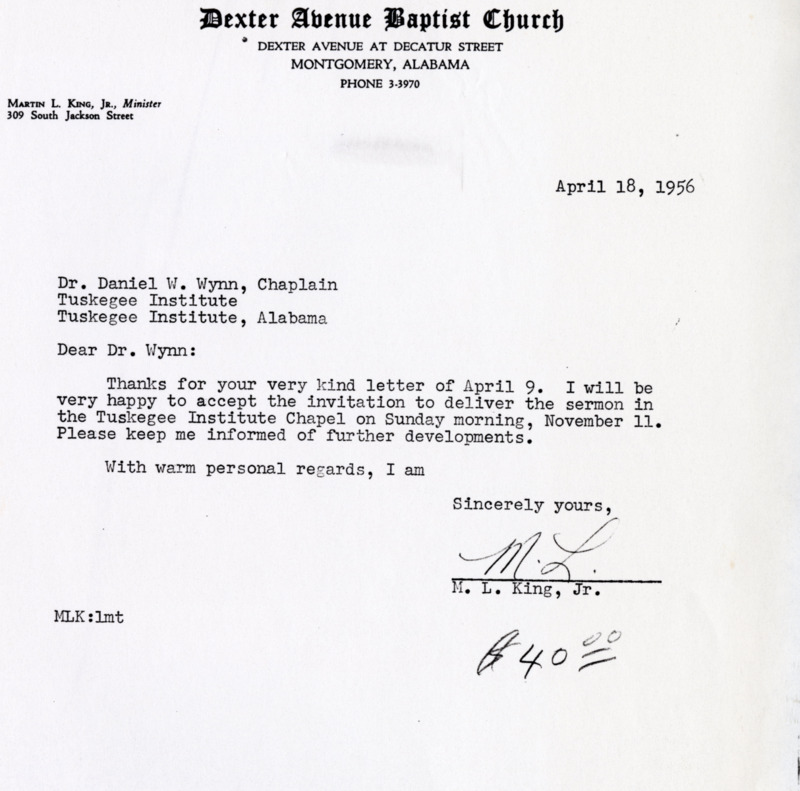
A reply letter from Dr. Martin Luther King Jr. to Chaplain Wynn’s 04/06/1956 letter, informing Chaplain Wynn that he would be happy to speak at the Tuskegee Chapel on 11/11/1956.
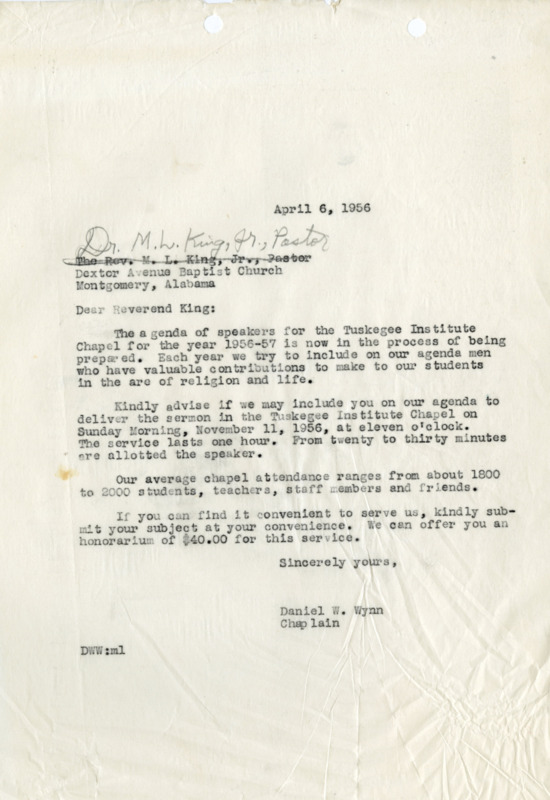
A letter from Chaplain Wynn to Dr. Martin Luther King Jr. on onion paper. The Tuskegee Institute Chapel was in the process of inviting guest speakers to speak to the students, faculty, staff and community. Chaplain Wynn asked if Dr. King could be a guest speaker on 11/11/1956.
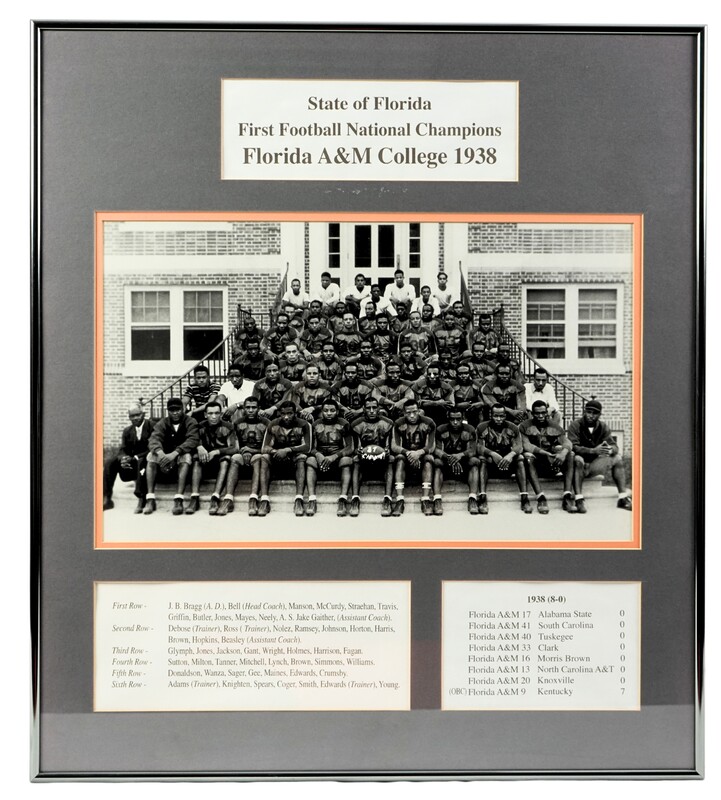
The Florida A&M College (FAMC) Champions Football Team of 1938 embodied the epitome of athletic excellence and teamwork, forging a legacy of triumph that endures to this day. FAMC Coach Alonzo "Jake" Gaither donated it to the Meek-Eaton Black Archives.
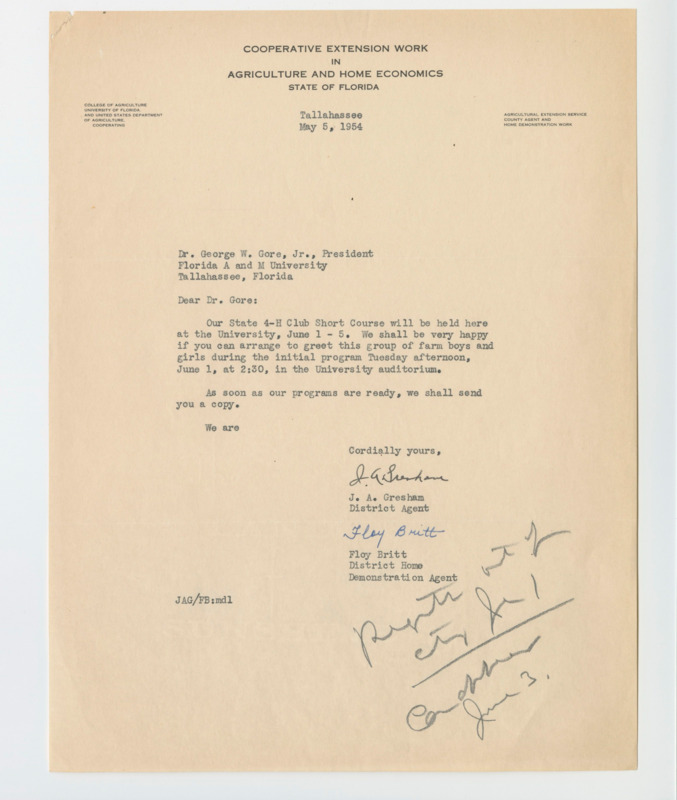
Recurring letters sent between President Gore and Negro District Agents have consistently featured invitations to the 4-H Annual Short Cours and program statistics. This highlights the ongoing efforts to elevate educational standards in Florida's agricultural and home demonstration programs.
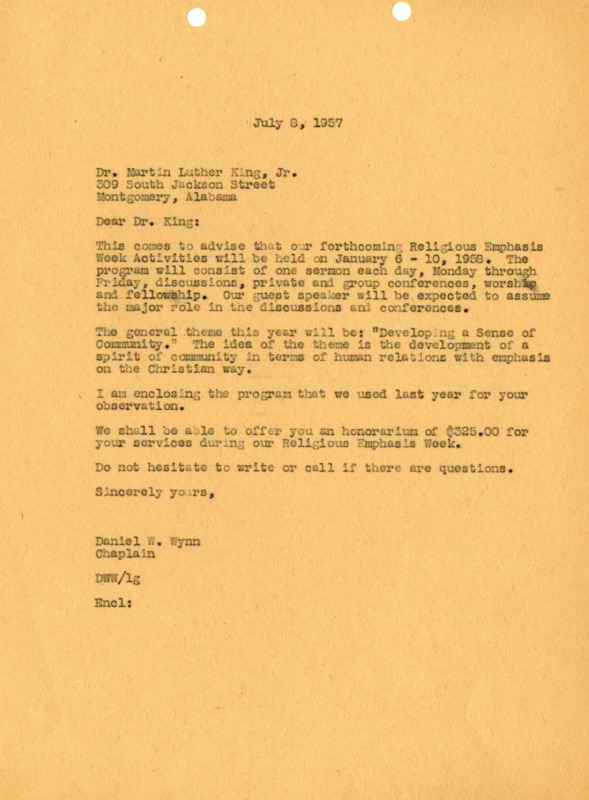
A letter from Chaplain Wynn to Dr. Martin Luther King Jr. advising him on the activities set to take place during the Religious Emphasis Week Activities for Jan 6-10 1958.
A letter from Dr. Martin Luther King Jr. to Chaplain Wynn stating that he would not be able to attend Religious Emphasis Week from Jan 6-10, 1958 due to an overseas trip to India and completing his book.
The 1967 Fall Convocation at Tuskegee Institute celebrated the legacy of its founders and highlighted the contributions of Dr. John A. Hannah, a distinguished educator and civil rights leader, and Miss Dorothy L. Hite, a prominent social worker, was recognized for her humanitarian efforts and leadership in civil rights.
During the 1968 Fall Convocation at Tuskegee Institute, Dr. Luther H. Foster called for unity, cultural focus, and educational excellence in addressing societal challenges facing the Black community, emphasizing wisdom, mutual respect, and a balanced pursuit of human development.
The speaker, Samuel F. Yet, emphasizes the fraternity's role in providing education and opportunities, contrasting past struggles with contemporary issues like education policy and systemic racism.
At the 1972 Fall Convocation, Dr. Frederick D. Patterson emphasized the role of education in fostering clear communication, participatory democracy, and societal progress, while addressing financial challenges in minority institutions and calling for continued excellence and service at Tuskegee Institute.