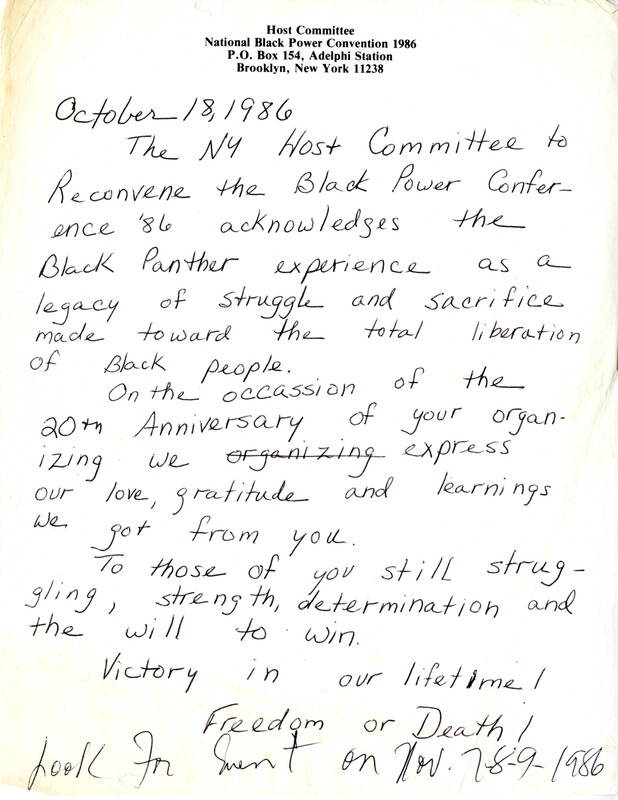
Draft of a Press Release from the NY Host Committee of the Black Power Convention of 1986. The NY Host Committee of the Black Power Convention recognizes the Black Panther experience for their struggle and sacrifice for Black liberation.
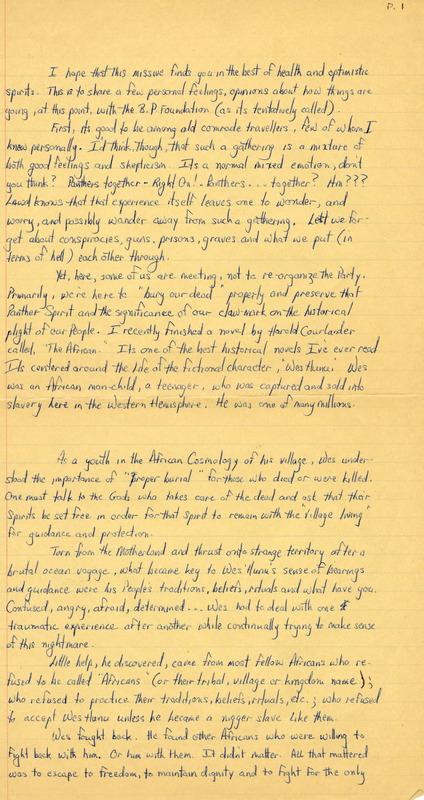
A draft of a speech about the Black Panther Foundation. The speech covers their purpose, preserving the Black Panther legacy, and the lasting effects of the struggle against oppression. The speech calls members to action to do the work for the foundation. The speech ends with a recap of the first few meetings and the members’ personal growth.
Charoennimuang's senior notebook includes her written philosophy of art, photographs of the artist’s works and her process, and a copy of her senior exhibition brochure. As a part of the Texas Southern art curriculum under Dr. John T. Biggers and Professor Carroll Harris Simms, students would create these notebooks to explain their artistry and showcase the works they created as students.
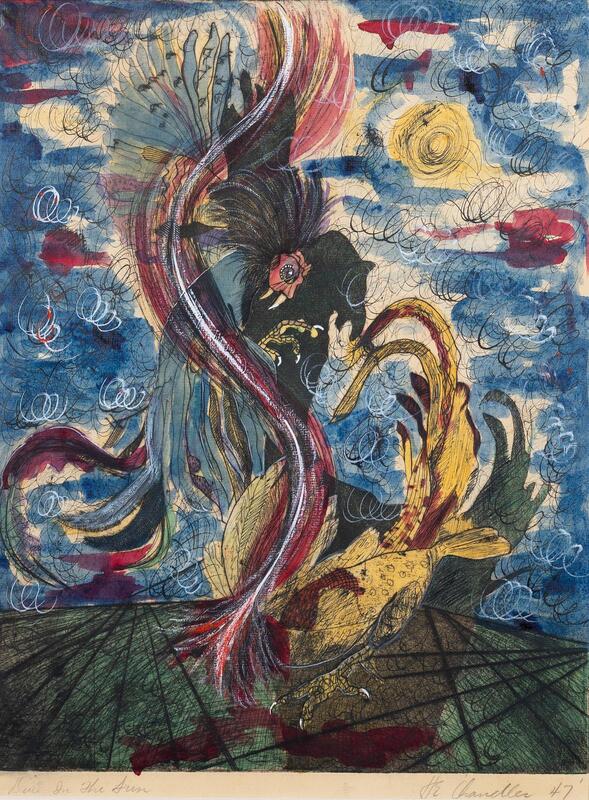
Houston Chandler was a sculptor, printmaker, painter, and teacher from Saint Louis, MO. "Duel in the Sun" is a print artwork of an avian battle on an abstracted landscape. One colorful rooster looks down upon the other it just defeated. The roosters are set on a green field against a blue sky with a swirling yellow sun.
Myrlie Evers, later Myrlie Evers-Williams, is a Civil Rights activist and journalist, who served as chairwoman of the NAACP and wrote several books on Civil Rights and her husband Medgar Evers, who was killed in 1963.
In this interview, Texas Southern art alumnus Earl Jones, Jr. discusses his experience as a student who graduated in 1996. During his first period of study at TSU, Jones painted a mural reflecting on environmentalism and racism—these themes continue into his current works. Nowadays, Jones primarily creates intricate wood carvings.
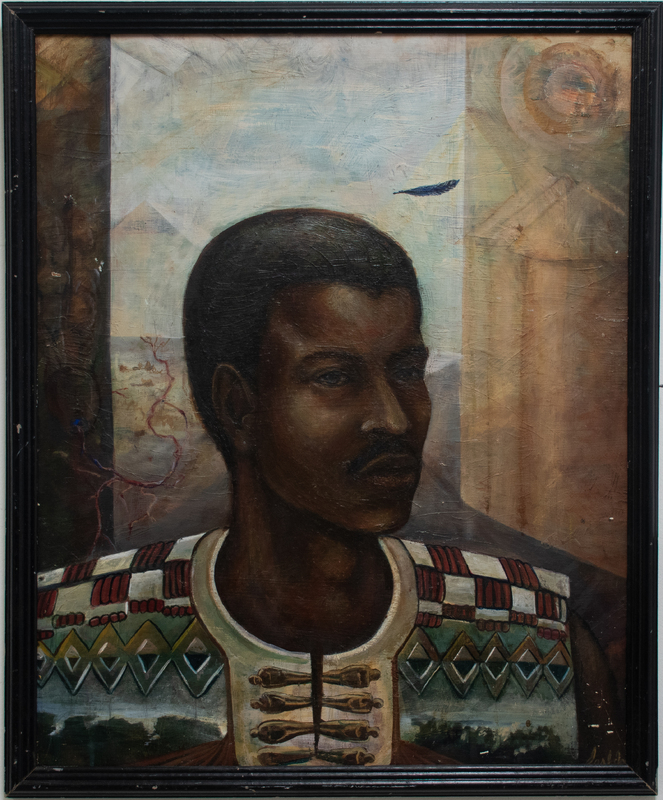
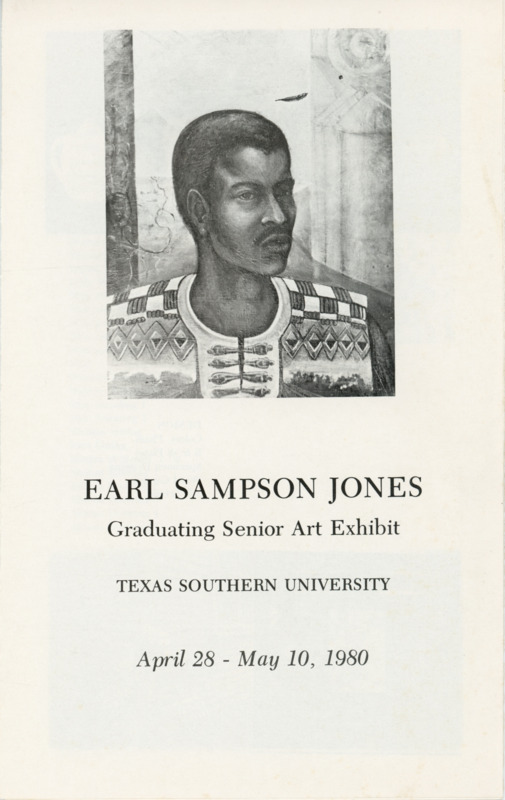
This painting is an Afrocentric self-portrait of Earl Jones, who attended Texas Southern University in the mid-1970s. Jones painted himself wearing a detailed shirt with various patterns reminiscent of African textiles. The background includes round homes with conical roofs. The buttons of Jones' shirt are in the form of humans and the shirt bears the design of a plowed field.
This is a brochure for Jones’ senior art exhibition. The culmination of the Texas Southern art curriculum is a senior exhibition where students showcase artwork created over the course of their undergraduate studies. The brochure features a portrait of Jones, a brief biography, a catalog of the artwork featured in the exhibition, and several photos of his paintings, designs, weavings, and sculptures.
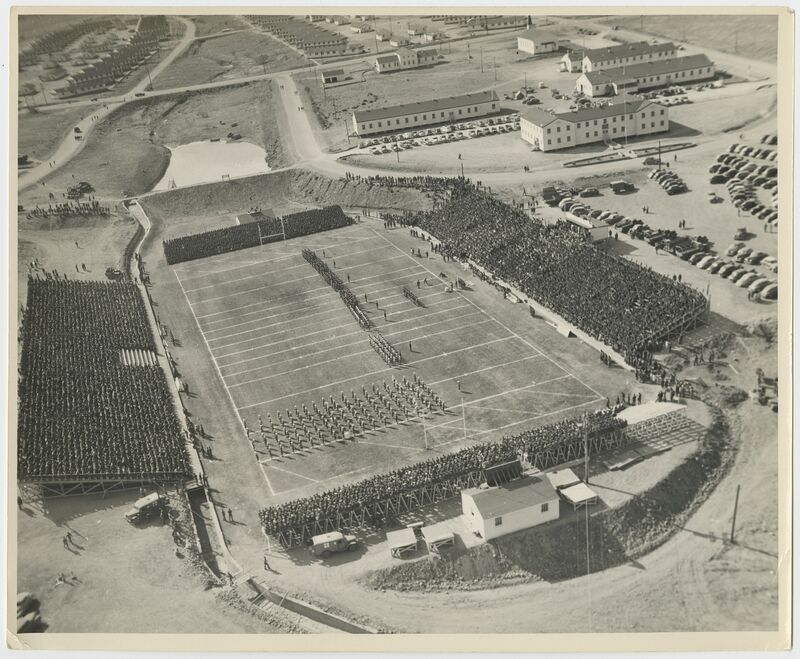
This undated, black-and-white photograph shows an aerial view of Ken Riley Field at Bragg Memorial Stadium in Tallahassee, Florida, during some type of performance, most likely of the Marching 100, Florida A&M University’s marching band. The stadium appears unfinished, with construction and large ditches surrounding the outer seats.
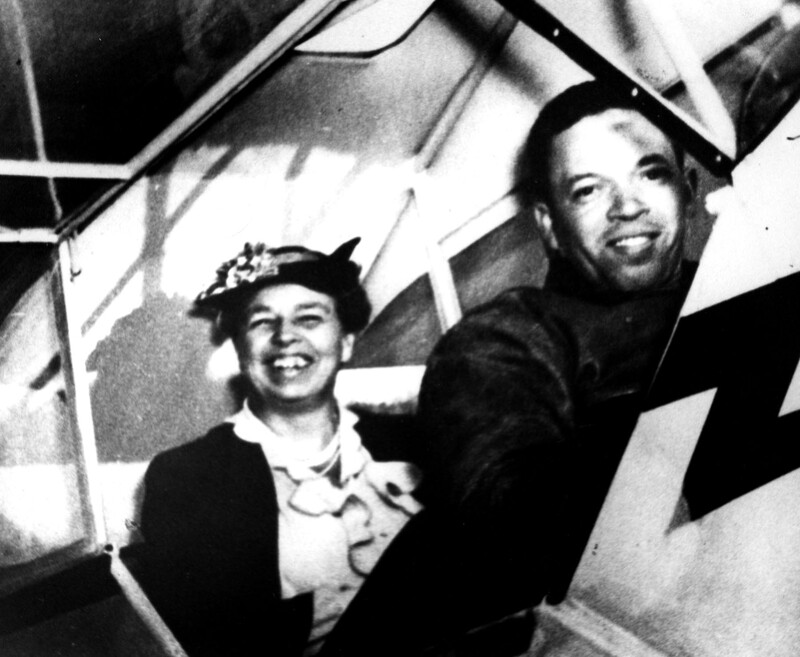
Earnest Crawford moved to Jackson, Mississippi, in 1940 to work for the Coca-Cola company and retired from there in 1965. Mr. Crawford talks about his experience sharecropping and his time spent as an airplane mechanic instructor during World War II. Only a biography, a summary, and an index are included.
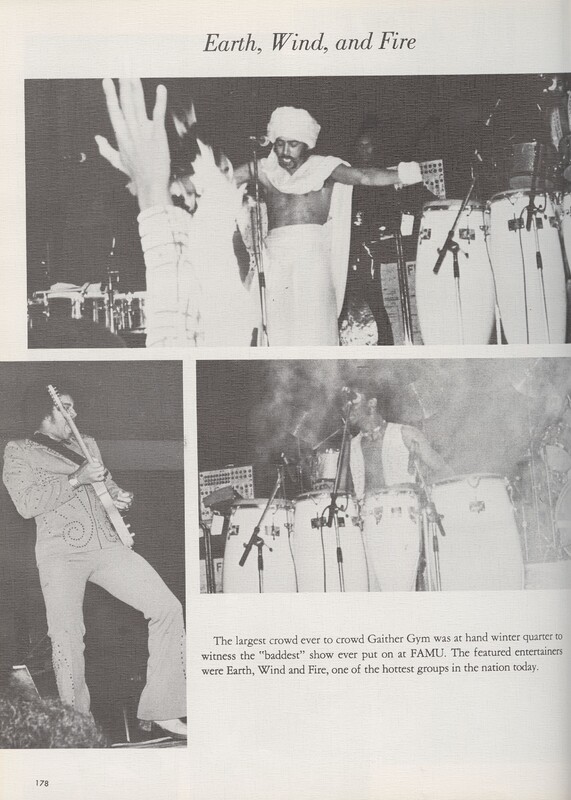
In 1975, Earth, Wind, and Fire, a funk and soul band headed by lead singer Maurice White and best known for their hit song “September,” visited Florida A&M University. According to the caption in the yearbook in which these images were featured, the group drew “the largest crowd to ever crowd Gaither Gym.”
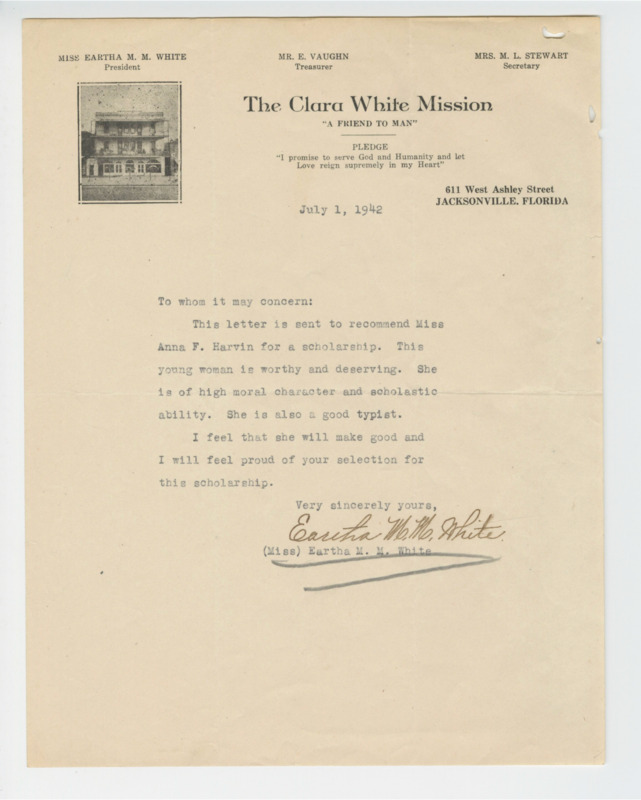
Eartha M. M. White’s letters to President W. H. Gray covered scholarships for women and land purchases for FAMC’s Jacksonville expansion. She was honored as the “Angel of Mercy” for her humanitarian work, with continued dinner invitations from President Gray to discuss her impactful efforts in shaping FAMC's future.
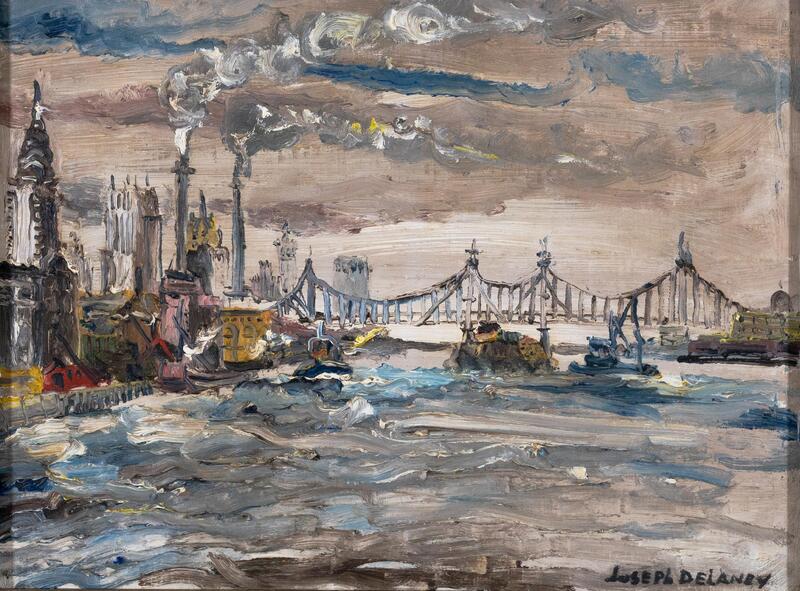
Joseph Delaney, younger brother of Beauford Delaney, was a Harlem Renaissance artist from Knoxville, TN. "East River" depicts the waterway that separates Queens from Manhattan in New York City. The impasto piece shows Queens and several boats by the Queensboro bridge with Manhattan in the distance.
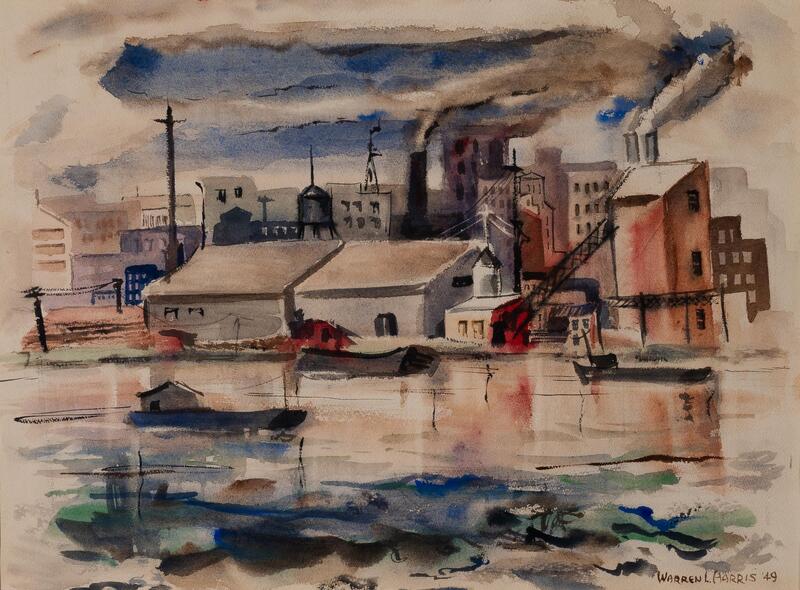
Warren L. Harris was a draftsman from Brooklyn, NY. "East River" is a watercolor painting of its namesake in New York City. Harris captures a scene of multi-floor buildings, a water tower, phone lines, and a factory along the bank of the river. There are several boats in the water.
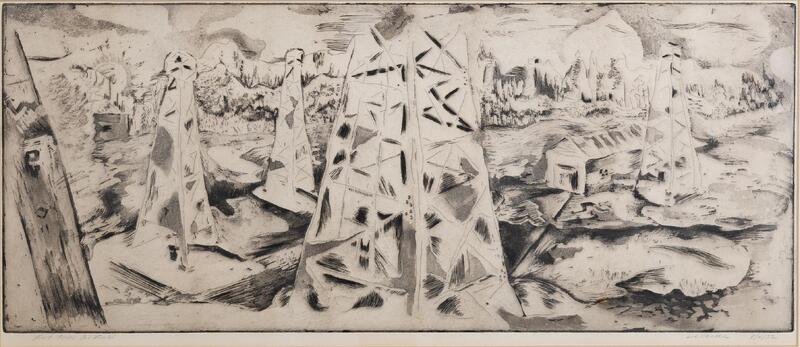
Leroy C. Weaver was an artist and art educator from Prarie View, TX. "East Texas Oil Field" is a print depicting an aerial view oil field in East Texas. The print features several oil rigs and workers' living quarters. In the background, a landscape of forest and trees is visible.
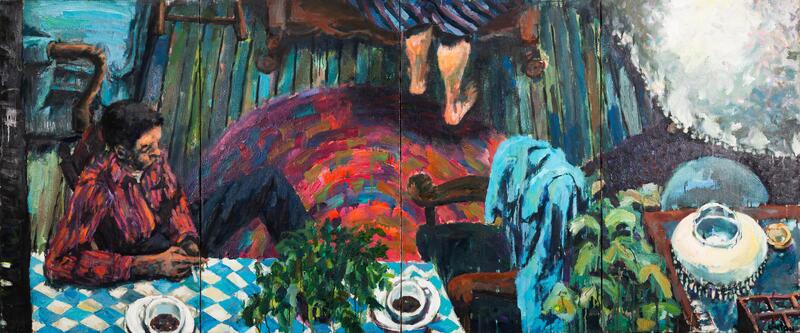
Henri Linton was an artist and art professor from Tuscaloosa, AL. "Easy for One, Hard for Two" is a polyptych depicting the domestic labor expected of wives. The husband sits at the table, fully visible, while the wife's feet and calves are visible as she prepares food for the family in the well-kept house she cares for.
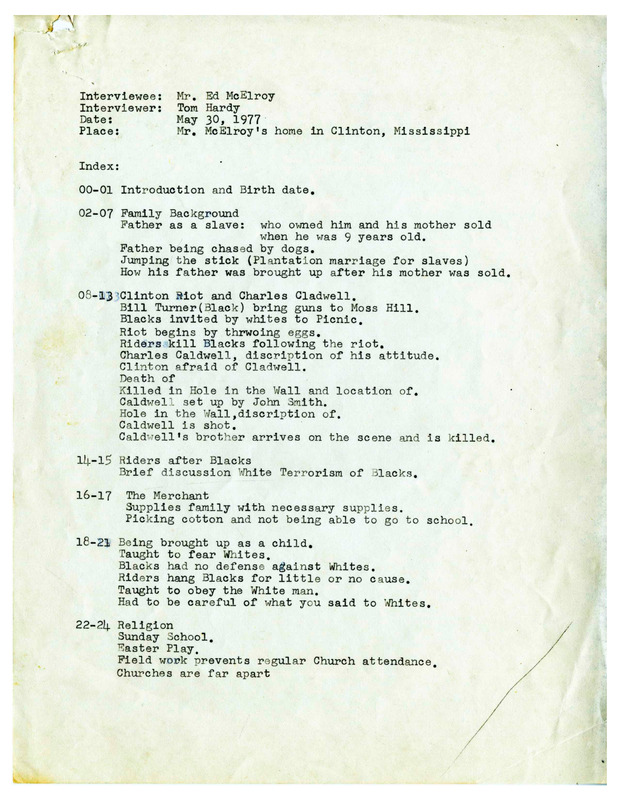
Mr. McElroy was born in 1891 and was a lifelong resident of Clinton. He talks about being the son of a former slave and discusses the oral traditions around the Clinton Riot as well as his education and childhood.
Ed Perry served as a Democrat in the Mississippi Legislature from 1968-2000, later serving as House Clerk for 4 years. In this interview Mr. Perry discusses his educational background and how he landed in the Mississippi government and his experiences working with Robert Clark.
Eddie Smith was founder and first director of Institute of Community Services Head Start program that originated in Marshall County, Mississippi, through Rust College. He talks about how he first got involved with the Child Development Group of Mississippi (CDGM) and Head Start and his work organizing since the Civil Rights Movement.
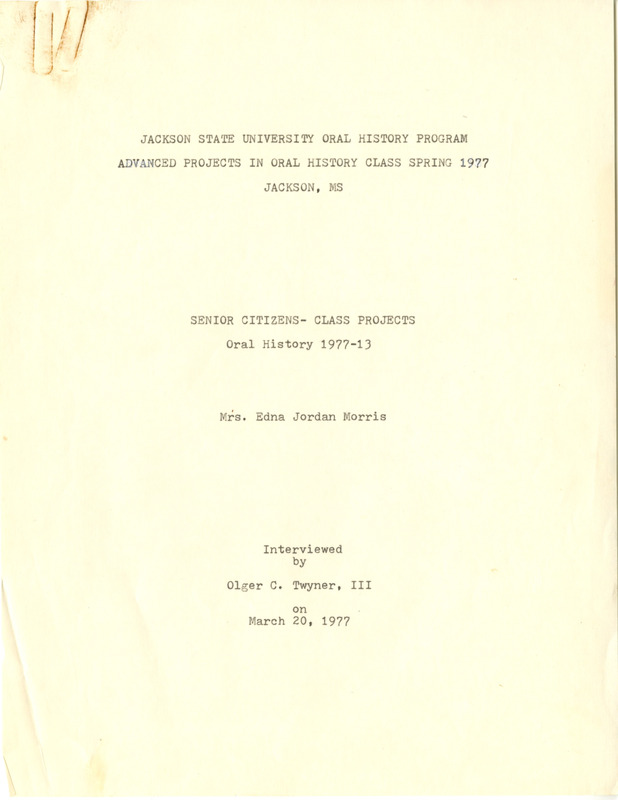
Edna Jordan Morris was born in 1908 in Pachuta, Mississippi. She retired in 1973 after a 25 year teaching career. Ms. Morgan talks about her childhood and the games she played, her education, and church experiences. She also talks about her memories of encounters with White people. The transcript contains handwritten edits
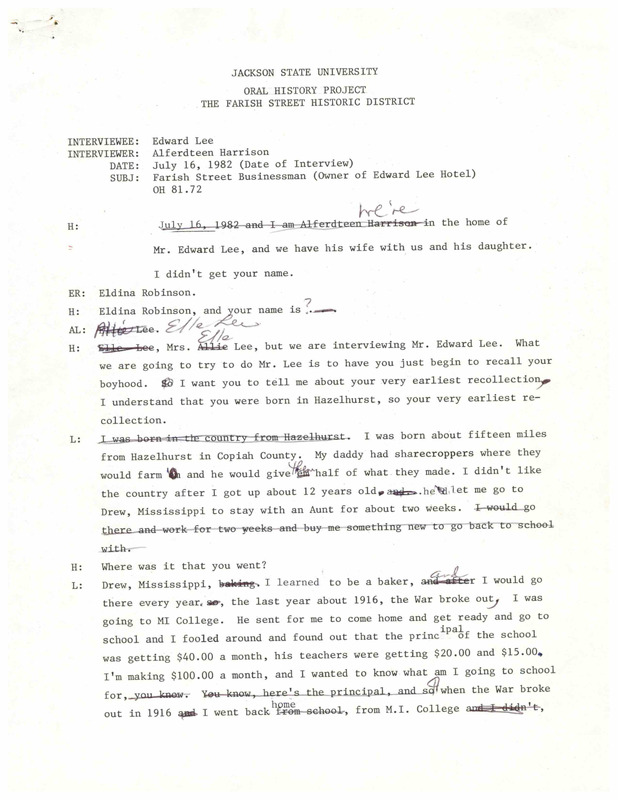
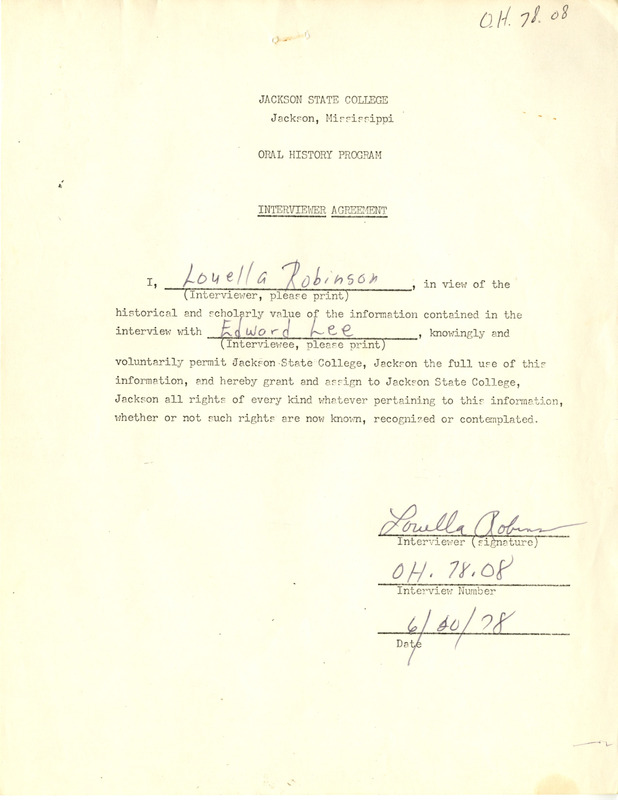
Edward Lee moved to the Farish Street District in 1925 and went on to own several restaurants in the area. He also booked and promoted dances and concerts for clubs and dance halls in the district. Mr. Lee talks about his education, life on a farm, family, and his youth. The transcript is heavily edited with handwritten notes.
Edward Lee moved to the Farish Street District in 1925 and went on to own businesses in the district including The Crystal Palace restaurant and lounge and the Edward Lee Hotel. Mr. Lee talks about his experiences with owning businesses in the district and gives advice to future Black business owners. Transcript is edited with handwritten notes.
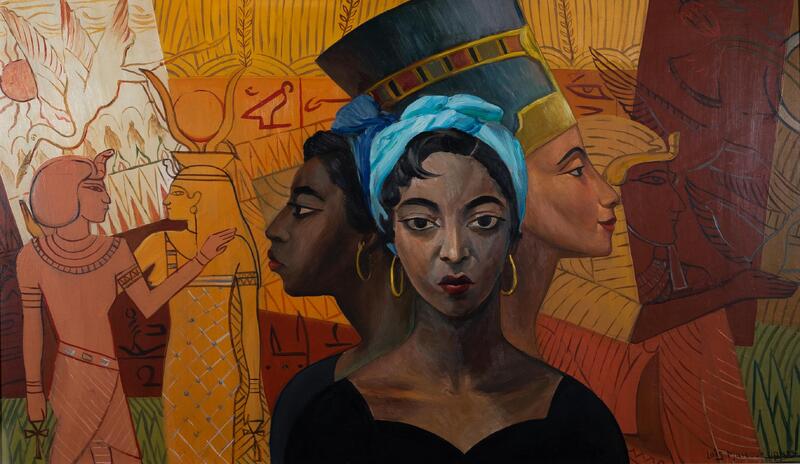
Lois Mailou Jones was an artist and art educator known for her costumes, textile designs, watercolors, paintings, and collages from from Boston, MA. "Egyptian Heritage" presents a genealogical and cultural heritage between contemporary Black people and Ancient Egypt. In the background, Jones uses Ancient Egyptian scenes and hieroglyphics. The painting is indicative of contemporary ideologies that reclaimed African heritage through Egypt.
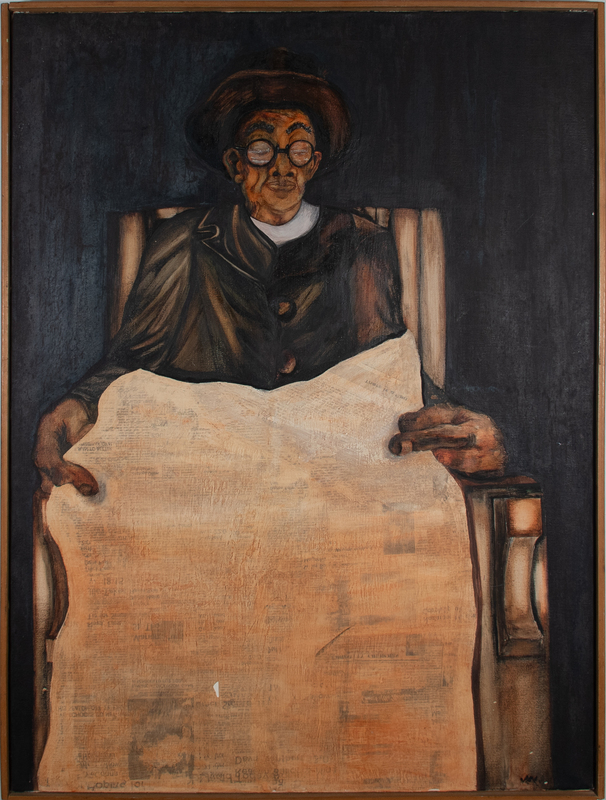
This painting depicts an older Black man sitting and reading a newspaper. The dimly lit scene is minimal and the man, his chair, and the paper are the only aspects visible, highlighting the focus of the painting. The artist cleverly incorporates real newspapers into the piece's media.
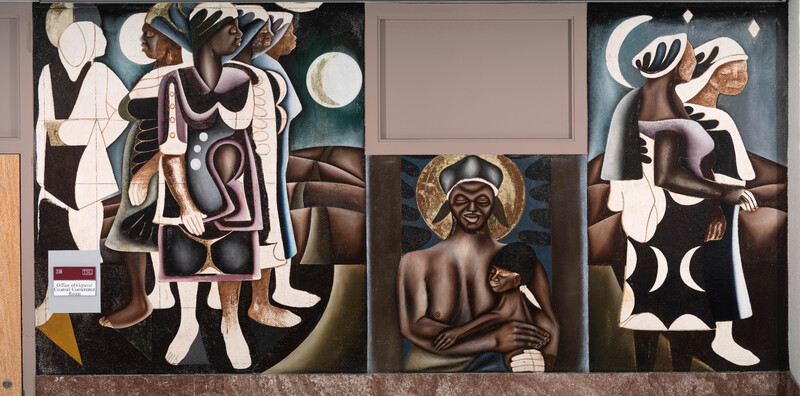
Cleinmann’s mural displays multiple generations of Black women, a manifestation of Biggers’ teachings about their importance. The mural is one of the few unfinished murals in Hannah Hall. Typically, unfinished murals were painted over. The mural was recently restored by conservators.
Senator Leroy Johnson of Atlanta, GA, was a member of the Civil Rights Movement in Atlanta, and came to Tuskegee University in 1965 to speak with the students about the upcoming Georgia election and how to use their voice while voting.
In this interview, Texas Southern art alumnus Elizabeth Montgomery Shelton discusses her experiences as a student in the class of 1971. She was a disciple of Professor Carroll Harris Simms and discusses learning to create clay sculptures from him. She went on to teach in Houston public schools for 37 years after her graduation from Texas Southern.
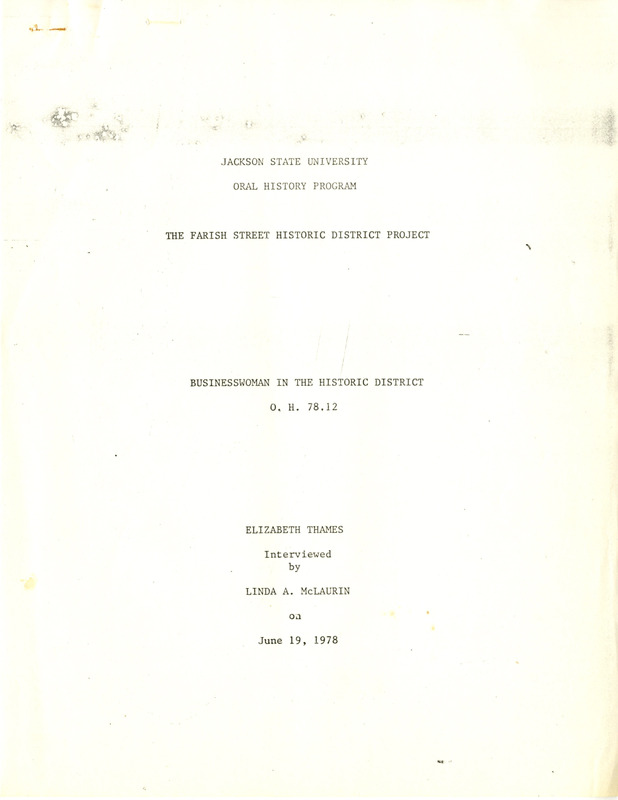
Native Jacksonian, Elizabeth Thames discusses her experiences as the owner of Boot's Flower Shop on Farish Street, where she worked over 25 years as designer, manager and owner. She talks about the effect of the Civil Rights Movement on the general welfare of the people in the district as well as the effects on her business.