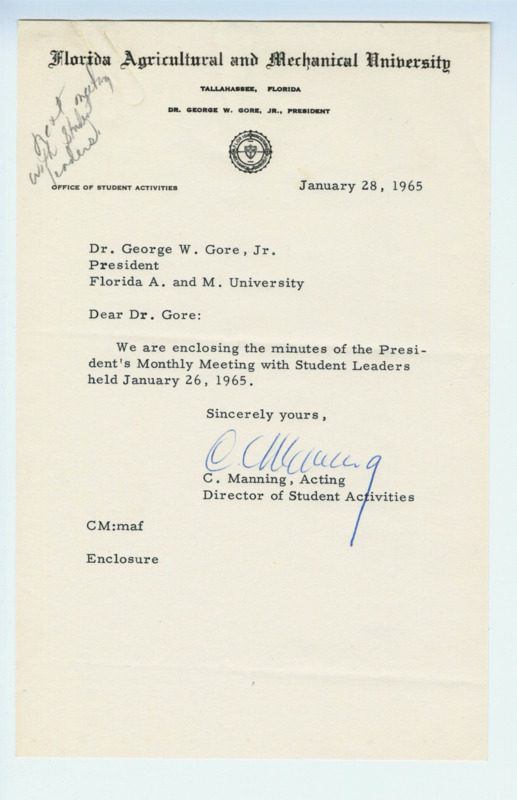
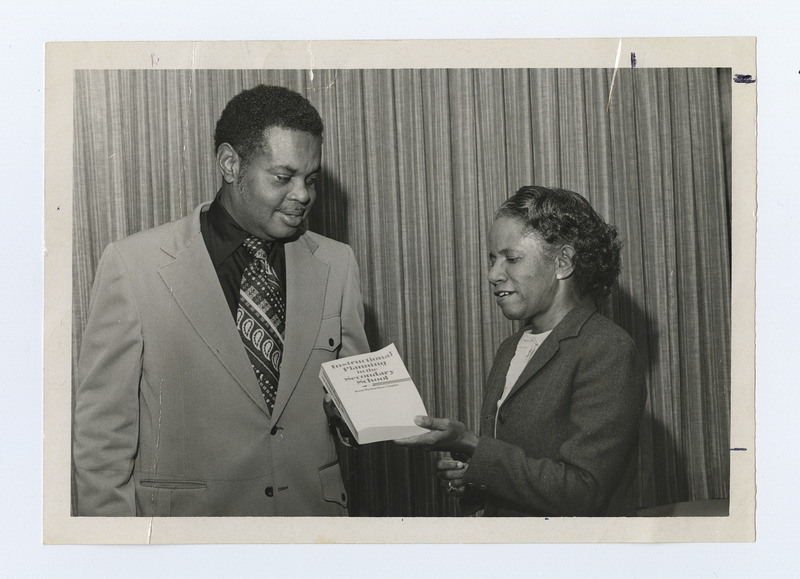
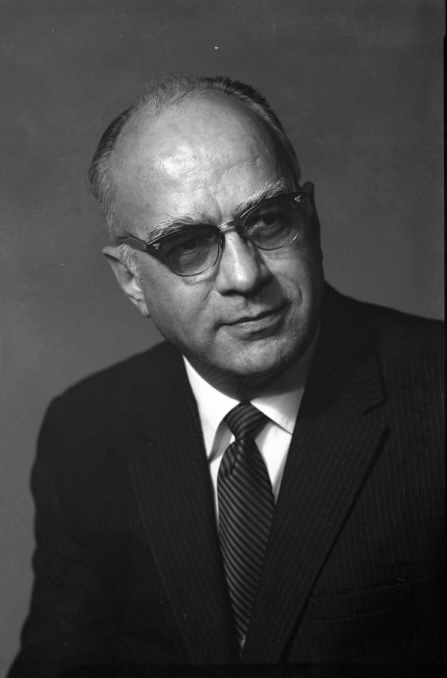
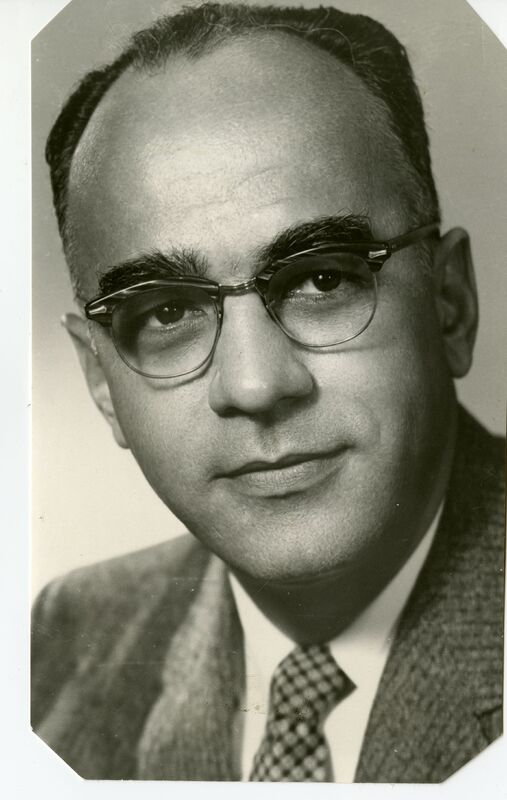
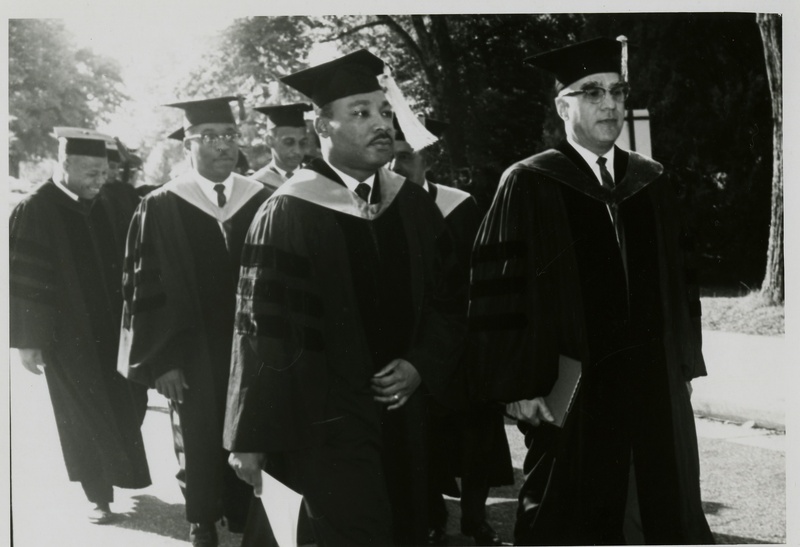
On January 26, 1965, the president’s monthly meeting with student leaders brought together representatives from campus organizations. The president invited all organization presidents to a dinner to discuss initiatives and improvements students wished to see at Florida A&M University, fostering collaboration and shared goals for the campus.
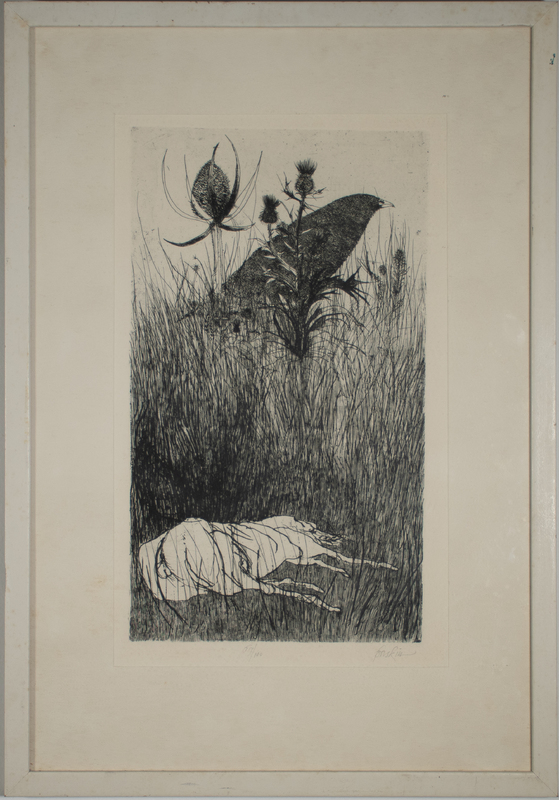
This etching by American artist Leonard Baskin shows a dog dozing in a meadow. A crow rests on a plant above the dog. Unlike most works held by the University Museum, the artist is not an alumnus of Texas Southern, nor tied to the university in any way. Instead, this piece was donated to the museum by a benefactor.
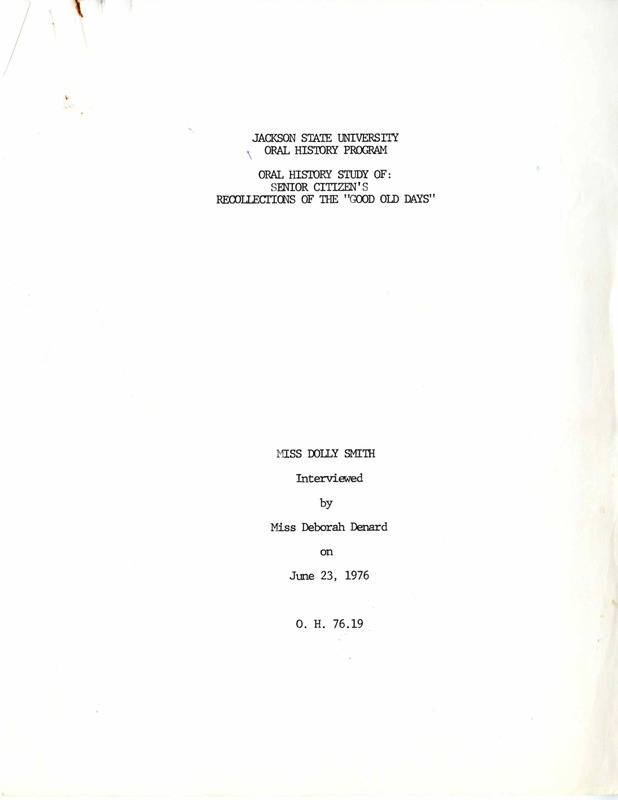
Dolly Smith moved to Jackson with her family in 1919 or 1920 when she was a little girl. She says the “Good Old Days” were the times when things weren't as expensive. She reminisces on her childhood and what life was like during the Great Depression and talks about Black owned businesses, race relations, and music in Jackson.
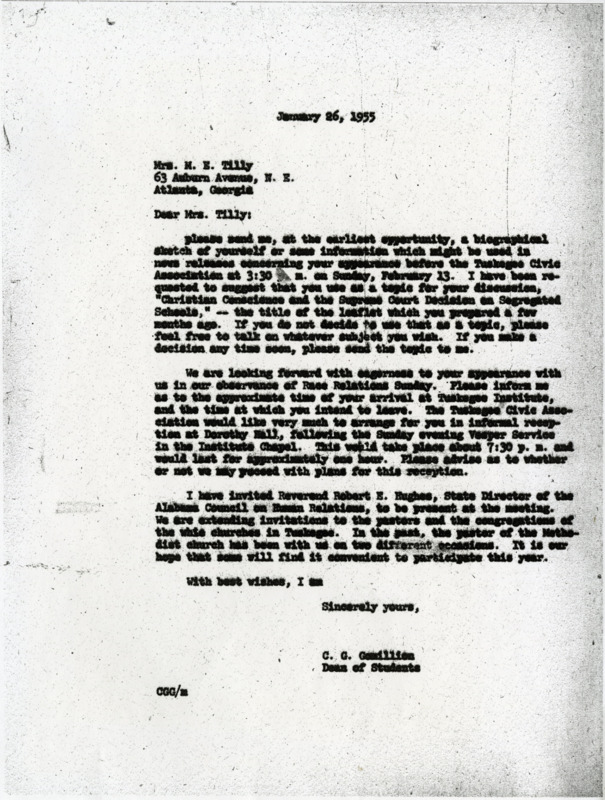
A letter from the president of the Tuskegee Civic Association Charles G. Gomillion requesting a biographical sketch of Mrs. Dorothy Tilly for a TCA news blast to discuss race relations.
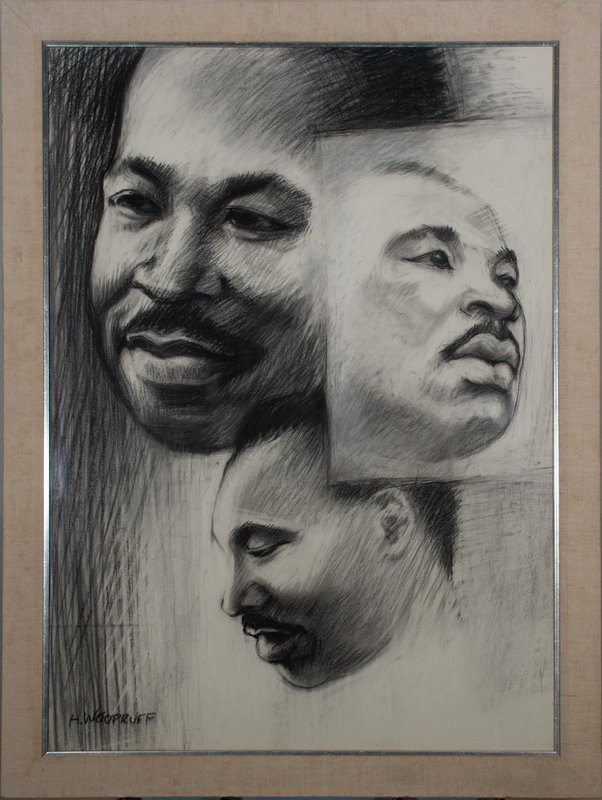
Woodruff’s portrait depicts Martin Luther King Jr., the iconic civil rights leader who was assassinated in 1968. Woodruff taught art at Atlanta University for 15 years and perhaps came into contact with MLK during this time. Two of these three side profiles appear to show King smiling, while in the third he is looking away with a serious expression. Woodruff's Art of the Negro murals at Clark Atlanta University are one of his crowning achievements.
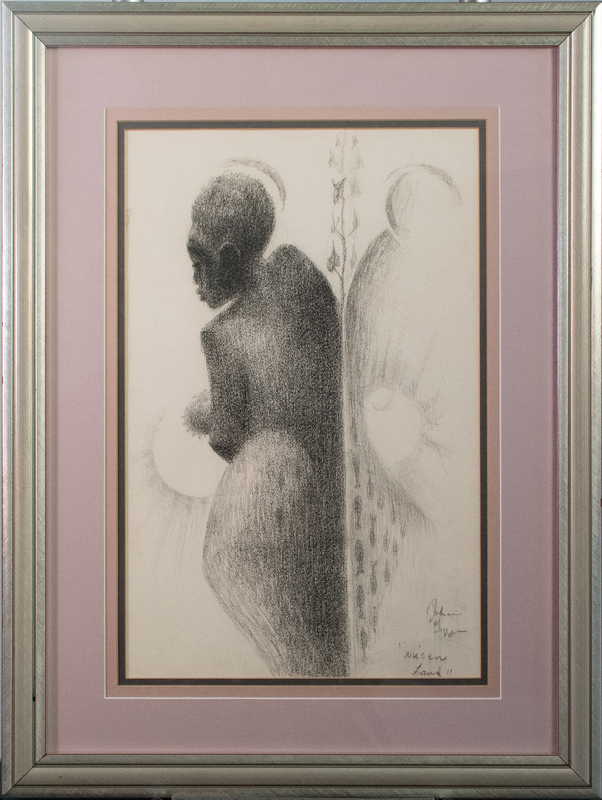
Biggers’ drawing shows a woman and her reflection. The woman, positioned on the left side of the composition, looks slightly back over her left shoulder, while the sun creeps out from around her midsection. The woman is cradling a baby in her arms. Her reflection is drawn loosely with minimal details, and the two are separated by a line of plant and fish shapes.
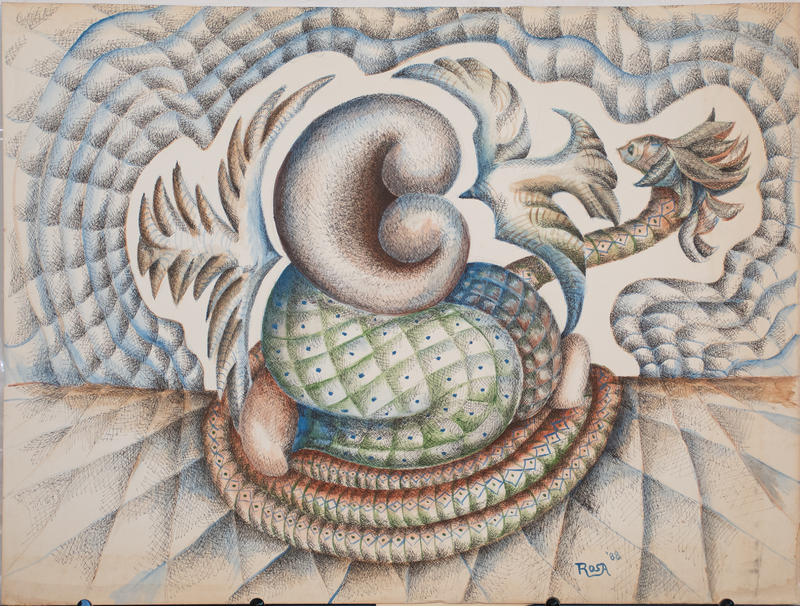
Mendoza’s drawing shows two doves and a serpent protecting an abstract, embryo-like figure. A geometric aura emanates from the bundle of creatures, perhaps alluding to the way parents protect their children. The drawing is created using crosshatching and heavy use of geometric shapes; both of these techniques are characteristic of the work of Dr. John T. Biggers and his students.
Dr. Aaron Shirley began his work with Head Start while working with the Freedom Schools during Freedom Summer in 1964; many of those schools became part of Child Development Group (CDGM). Dr. Shirley talks about his role as a medical services provider for Head Start programs all over Mississippi as part of a team of Black doctors.
Dr. Albert Briton was the medical director for Child Development Group of Mississippi (CDGM) and Head Start from the start of the program, brought in by director John Mudd because white physicians in the state were refusing to work in the program. Dr. Briton talks about his involvement with the Civil Rights Movement leading him to work with CDGM.
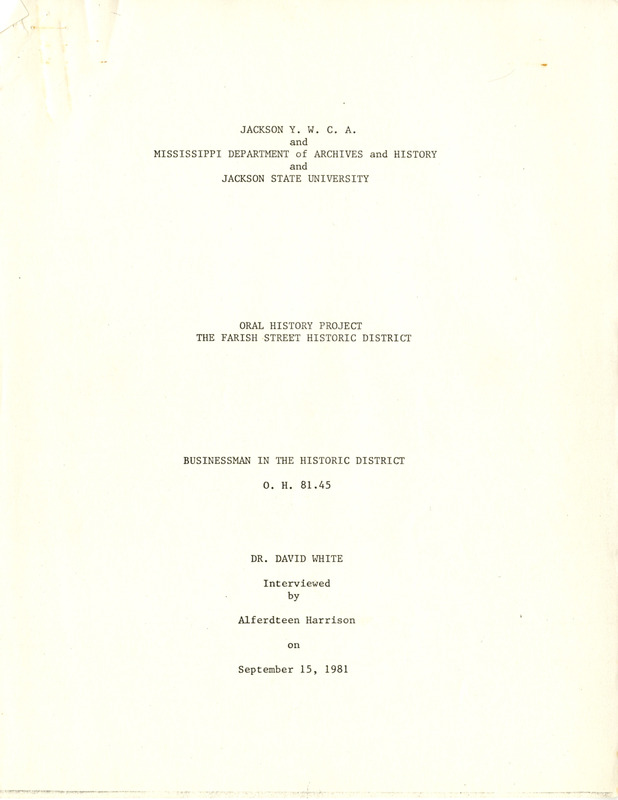
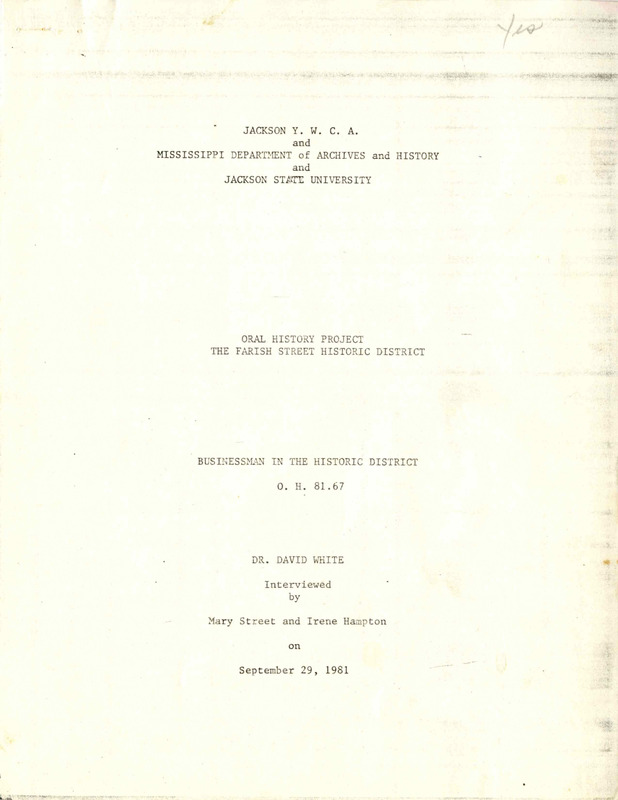
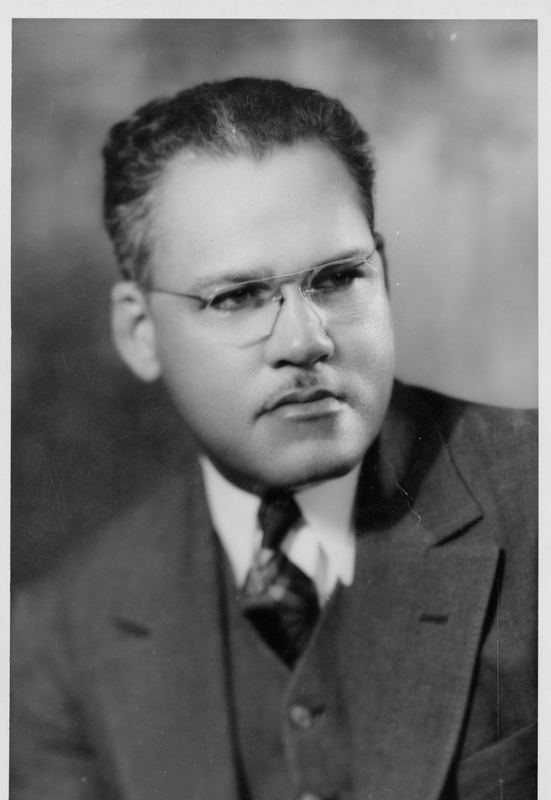
Dr. David White was the first Black optometrist in the state of Mississippi when he moved onto Farish Street in 1951. He talks about Farish Street before and after integration: Black businesses became less prosperous after integration as some Black customers went to white owned businesses. He also talks about his involvement with the NAACP.
Dr. David White was the first Black optometrist in the state of Mississippi when he moved onto Farish Street in 1951. He talks about how his first White customers came during the Civil Rights Movement as there was an active meeting place for activists above his business.
A copy of a photograph of Dr. Jessie Bryant Mosley, Dr. Alferdteen Harrison, and Mayor Dale Danks, Jr. at the Smith Robertson Neighborhood Folklife Festival, April 9-11, 1983. The festival was a grant sponsored event held on the grounds of the Smith Robertson Museum to celebrate the history and culture of the Farish Street Historic District.
Dr. Jim Hendrick's involvement with activism led him to work with Child Development Group of Mississippi (CDGM) to offer medical examinations for Head Start students. He talks about recruiting other doctors as well as some of the medical conditions he saw during these exams. Incomplete, Side B of the recording is missing.
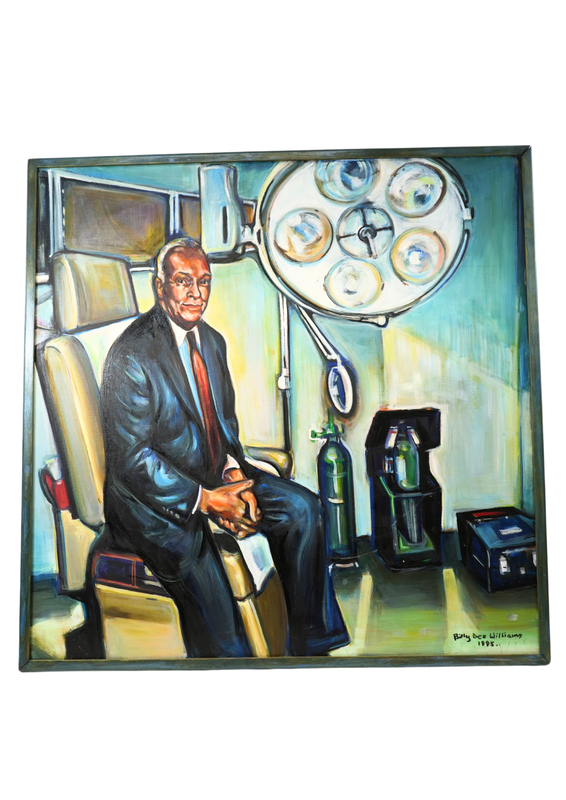
This rare painting created by Billy Dee Williams, the renowned actor best known for Lady Sings the Blues, Star Wars: The Empire Strikes Back, and Mahogany, is a portrait of Dr. LaSalle Leffall. A FAMU alum and the first Black president of the American College of Surgeons, Dr. Leffall is brought to life by Williams through rich, colorful oil paints.
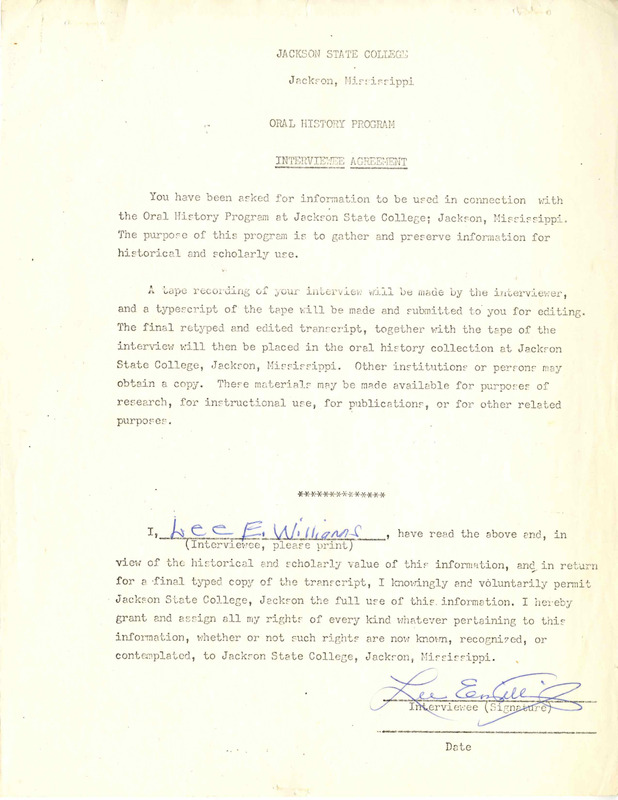
Dr. Lee Williams was a homeowner in the Farish Street District from 1924-1954 and worked as Vice President of Administration at Jackson State University. He talks about his time as a student at Smith Robertson School and Lanier high School. He discusses the effects of segregation on the district and also the current efforts to revitalize the area.
A black and white image of Tuskegee University's fourth president, Dr. Luther H. Foster. Dr. Foster led the university through the turbulent years of the Civil Rights Movement.
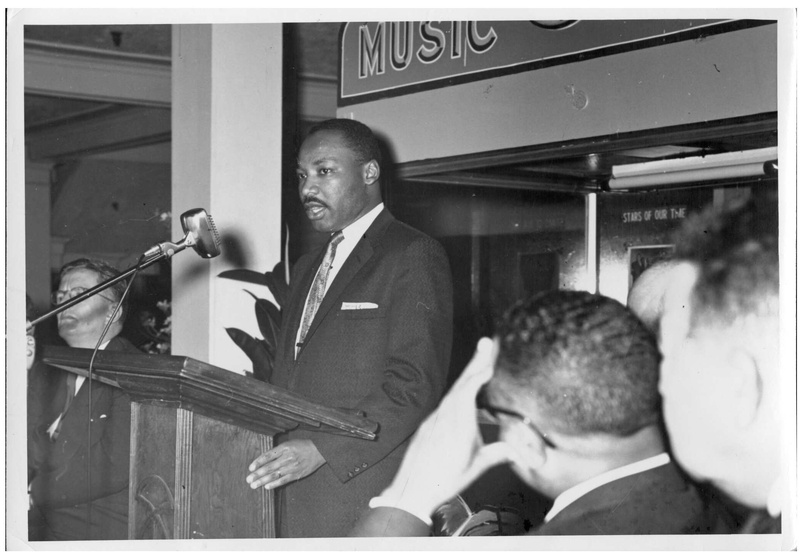
Black and white image of Dr. Martin Luther King, Jr. speaking at a Tuskegee Civic Association meeting in Tuskegee, Alabama during the Civil Rights Movement.
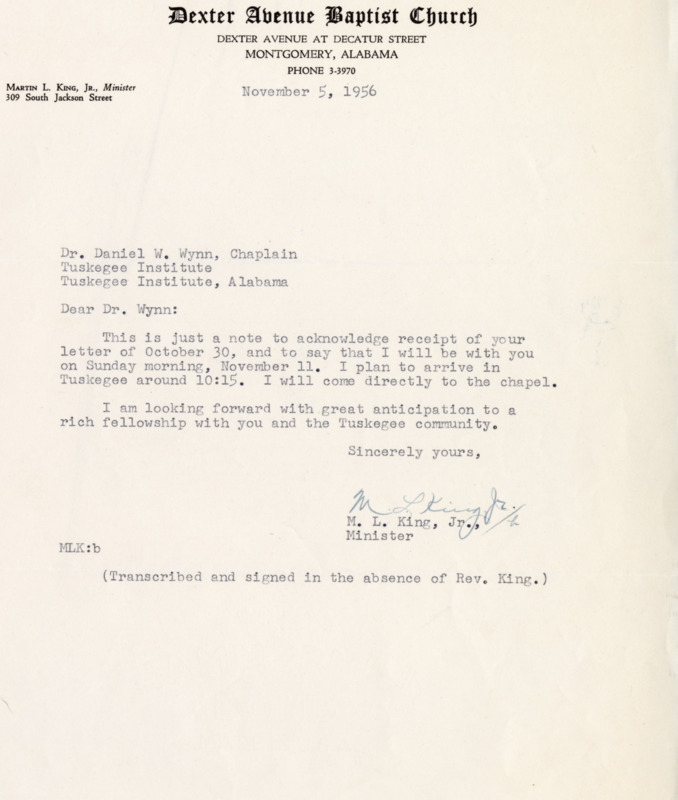
A letter from Dr. Martin Luther King Jr. to Chaplain Wynn stating that he plans to arrive in Tuskegee on 11/15/1956 around 10:15 for Sunday service at the Chapel.
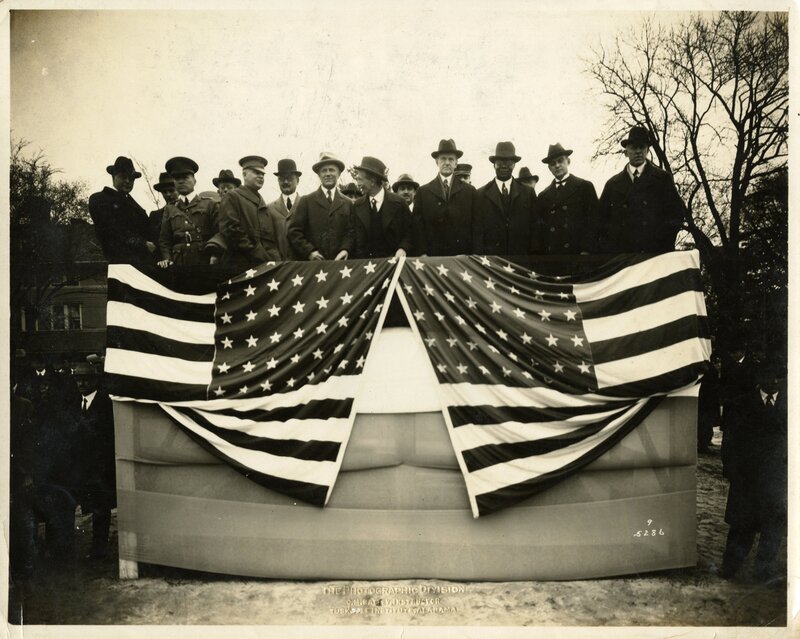
Vice President Calvin Coolidge, Governor William. W. Brandon of Alabama, and Dr. Robert R. Moton, Principal of Tuskegee Institute, were the main speakers at the dedication of the Government Hospital on a 464-acre tract at Tuskegee Institute.
Dr. Rejohnna Brown was working as a teacher in the Delta region of Mississippi when she left her job in the summer of 1965 to join a group that were the forerunners to the region’s first Head Start program, which became known as the Mid Delta Education Association. Dr. Brown decided to do this work because of the poverty she witnessed in the area.
Dr. Robert Smith was founder of the Medical Committee for Human Rights, a Civil Rights Movement organization that fought for better treatment of African Americans in the 1960s. Dr. Smith continued this work as the Head Start medical director in the early days of the program. He talks about his responsibilities and experiences in that position.
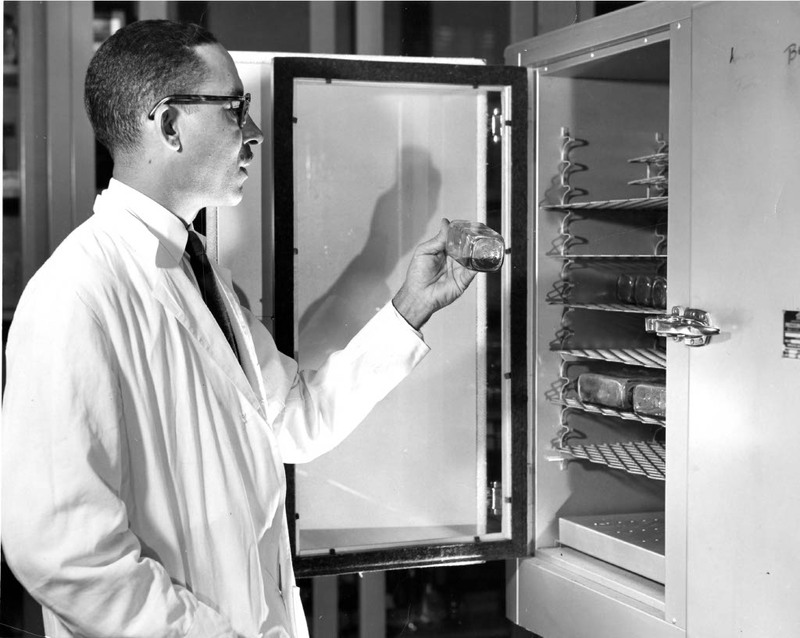
A black-and-white photo of Dr. Russell W. Brown working in a lab. Dr. Brown worked in a variety of roles in Tuskegee's administration, serving twice as Director of the Carver Research Foundation. During his career, Brown worked extensively in research on bacteriology, immunology, and HeLa cells.
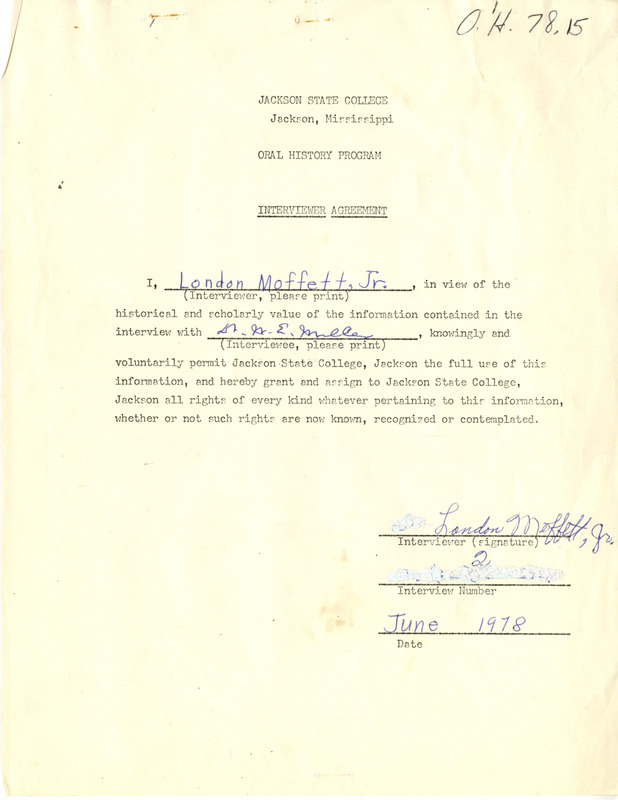
Dr. W.E. Miller was a physician and surgeon. He was born in 1903 and attended Smith Robertson School from 1908-1913. Dr. Miller talks about his time at Smith Robertson School and the community around the school, recounting the activities that were available for young people at the time. The transcript is edited with handwritten notes.
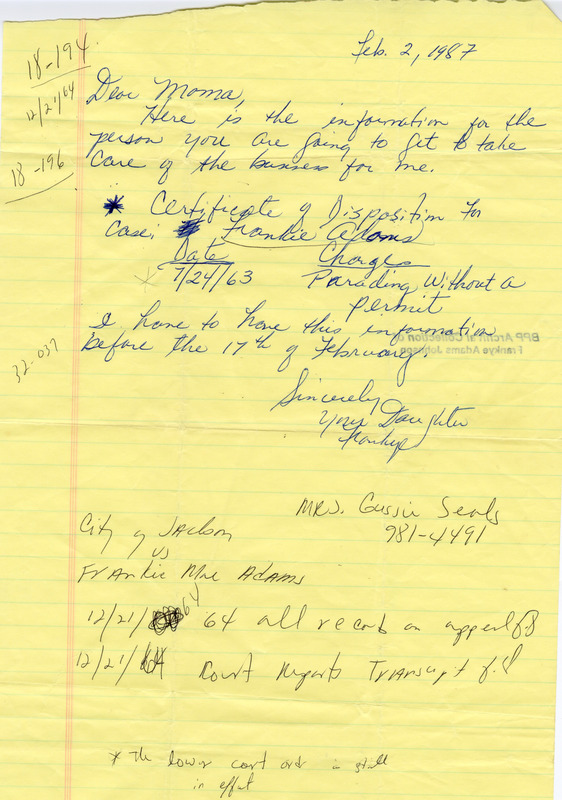
A draft of a letter from Frankye Adams-Johnson (Malika) to "Moma." Frankye Adams-Johnson is requesting her mother to pick up some court documents dating from 1963 and 1964.