Wilmer Jennings was a printmaker, painter, and jeweler from Atlanta, GA.
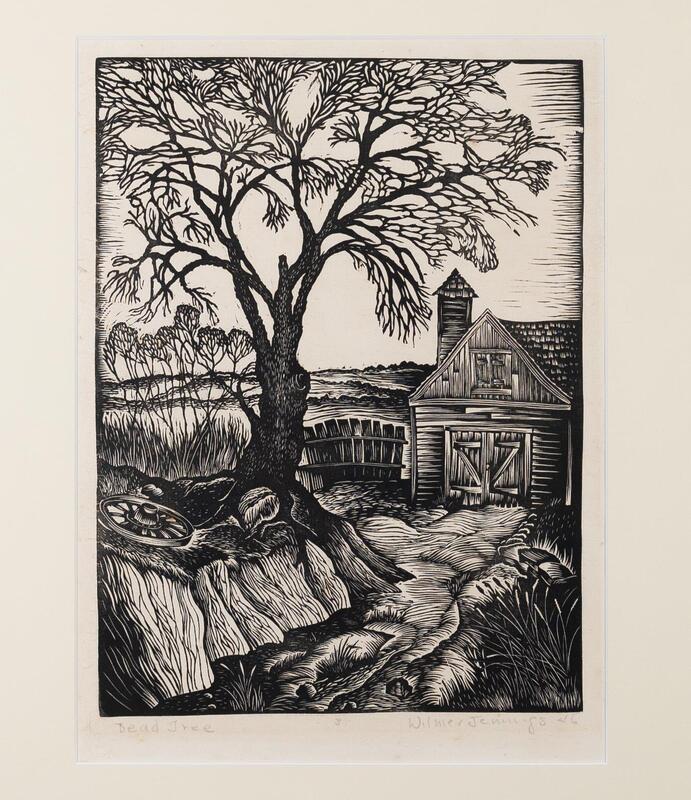
"Dead Tree" depicts a small landscape of a large leafless tree and a barn with a gate. Wilmer’s hatching technique creates a range of both shadows and light throughout the scenery. The tree sitting in the foreground has a dark tone emphasizing it as the main subject.
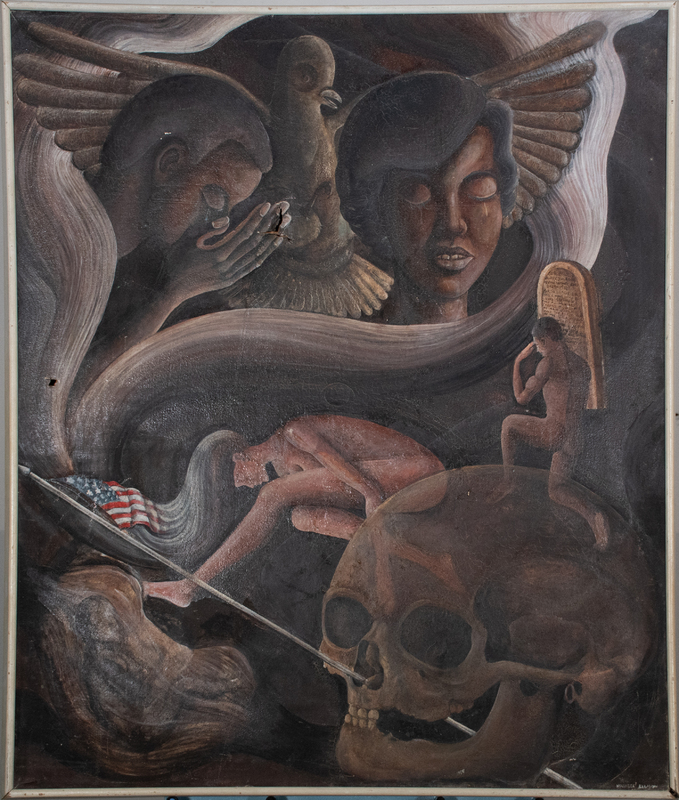
Ellison’s painting reflects the brutality and grief experienced by the Black community. In the foreground, a skull is pierced by the American flag. On the right side, a headstone honoring Martin Luther King, Jr. is surrounded by nude mourners. In the background, a shadowy dove spreads its wings, perhaps representing MLK’s dream of peace being obscured by white supremacist violence.
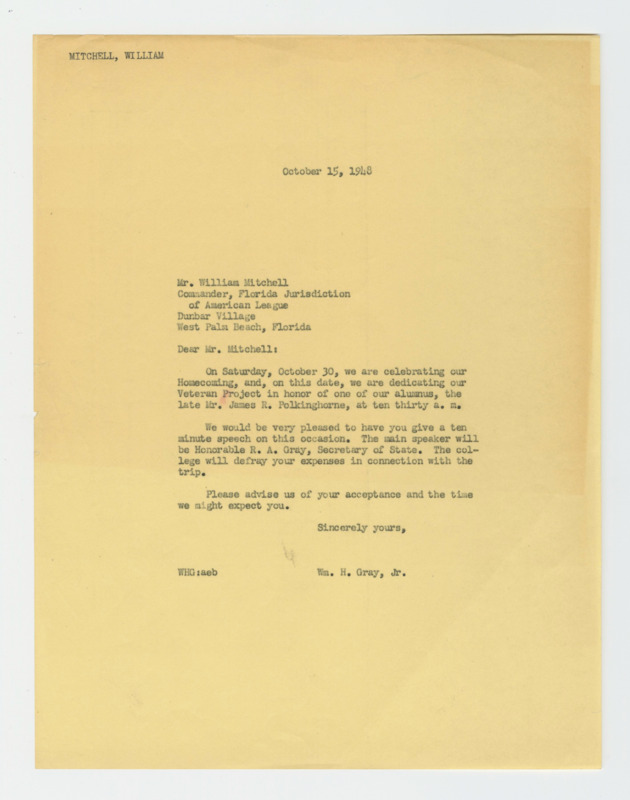
Veterans Village was a housing program created to assist veterans who wished to pursue higher education at Florida A&M College. After First Lieutenant James R. Polkinghorne, Jr., a FAMC student, lost his life in battle in 1948, Veterans Village was dedicated in his honor. These documents detail the process of that feat and the ceremony following.
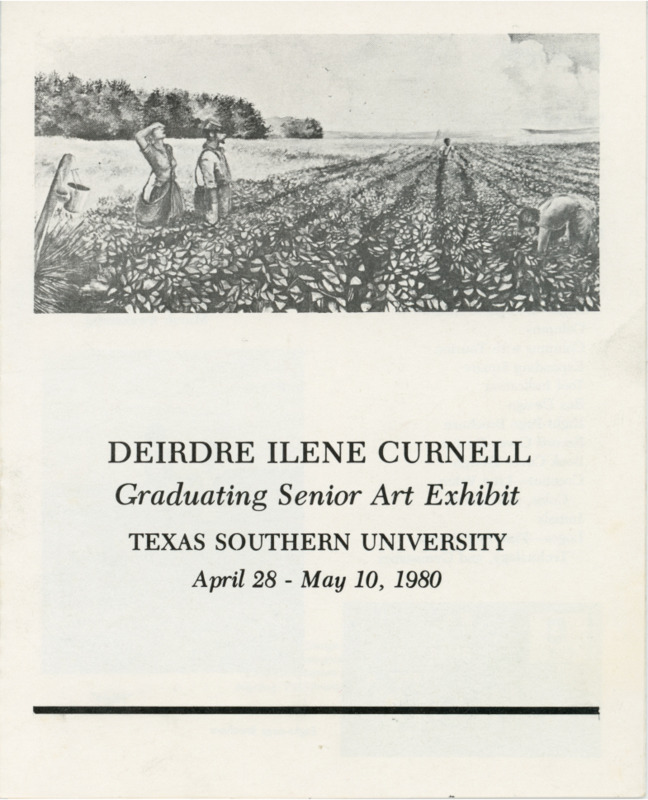
This is a brochure for Curnell’s senior art exhibition. The culmination of the Texas Southern art curriculum is a senior exhibition where students showcase artwork created over the course of their undergraduate studies. The brochure features a photo of Curnell, a brief biography, a catalog of the artwork featured in the exhibition, and photos of several of her artworks and designs.
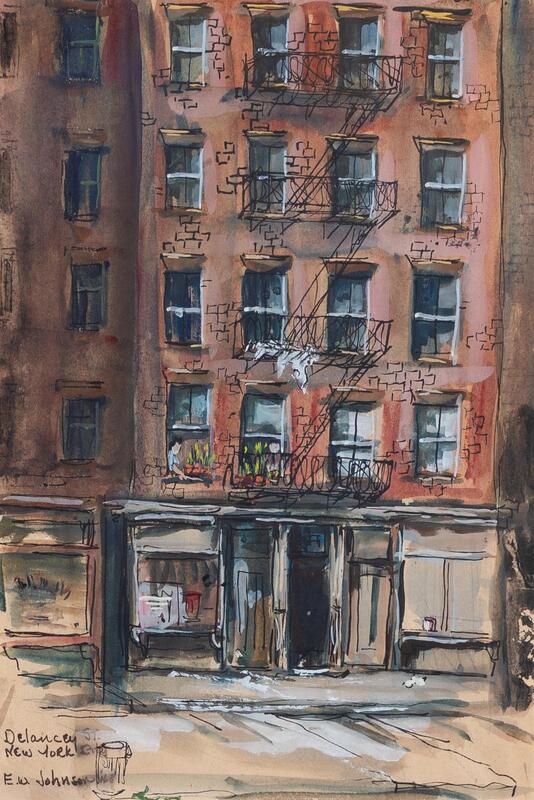
Estella W. Johnson was an artist from New York, NY. "Delancey Street, N.Y.C.," is a watercolor depiction of a multi-use building in New York. There is a red brick apartment above a storefront with a fire escape. There is also a woman watering plants out of her window.
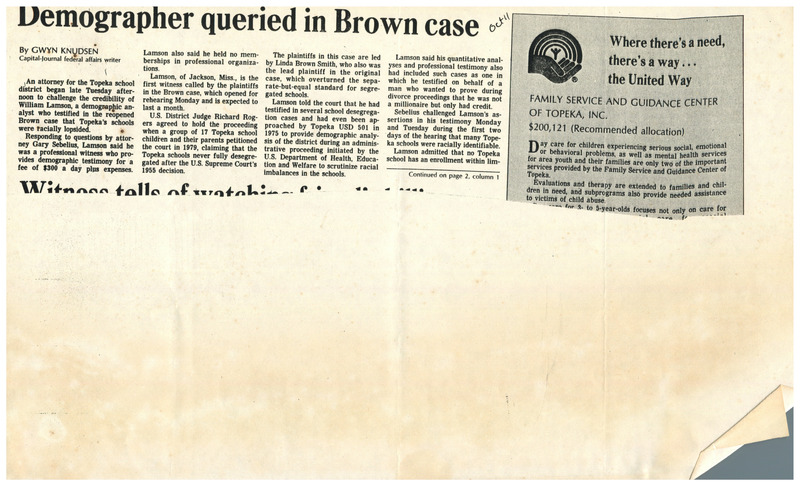
A newspaper article from The Topeka Capital Journal about the cross-examination of expert witness William Lamson by defense attorney Gary Sebelius. Lamson testified about the demographics of Topeka schools and gave analysis on school district boundaries, the placement of portable buildings at schools, and more.
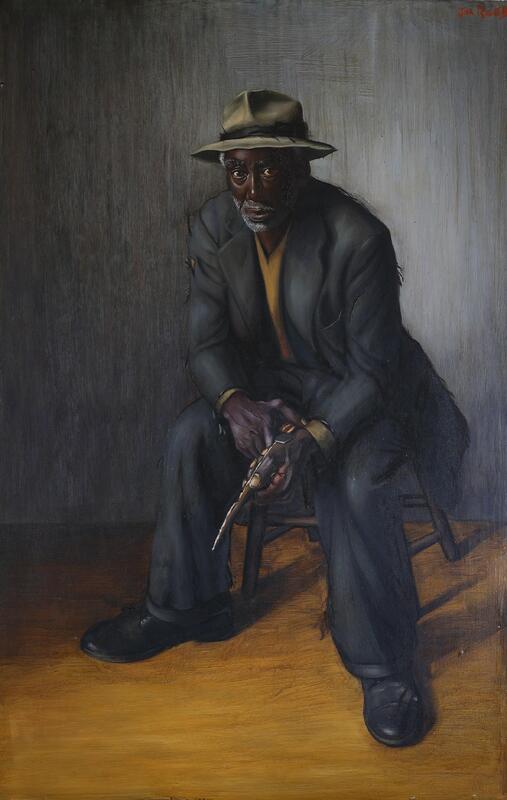
James Reuben Reed was a painter born in Kansas City, MO. "Depressed" is an oil painting of a seated man wearing a tattered gray suit, a hat, and black shoes. He is leaning forward, whiting a piece of wood and looking toward the viewer.
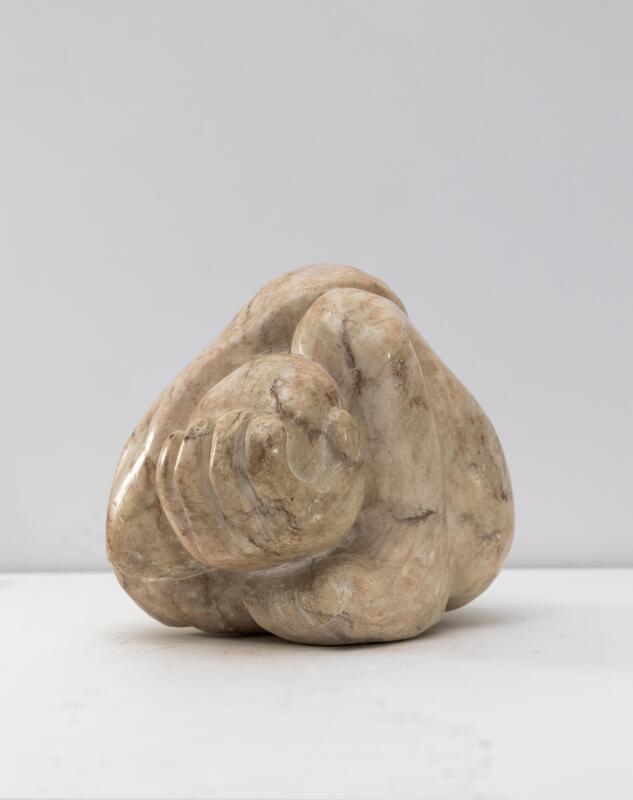
Irabell Cotton was a multidisciplinary artist from Harris, Oklahoma. "Despair" is a marble sculpture depicting a person in an anguished pose. The figure is balled into itself, with its head in one hand and the other arm wrapped around its shoulder.
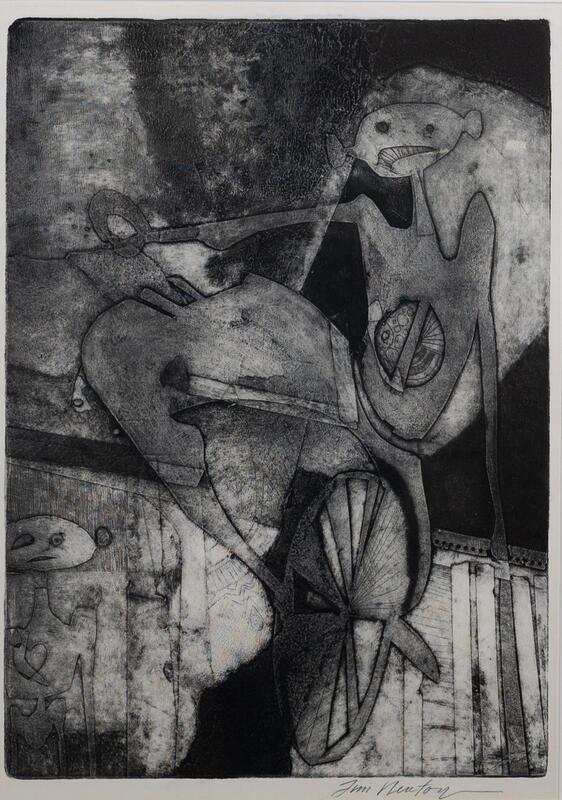
James Newton was a painter, printmaker, scholar, and professor from Delaware. "Desperate Faith" is a print depicting a mystical figure riding a unicycle as another figure watches. The dark, eery background contributes to the surrealism of the piece.
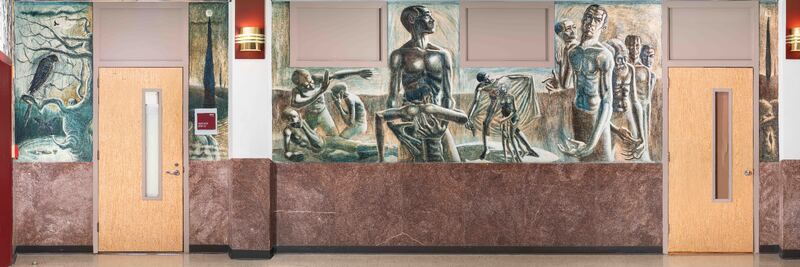
This is a universal scene of the despair and struggle facing a group determined to survive. The lone tree in the moonlight starkly symbolizes the darkness surrounding the scene (center left panel), while the tree rising from a swamp (leftmost panel) suggests hope with the bird, butterfly, and waterlily indicating transformative beauty.
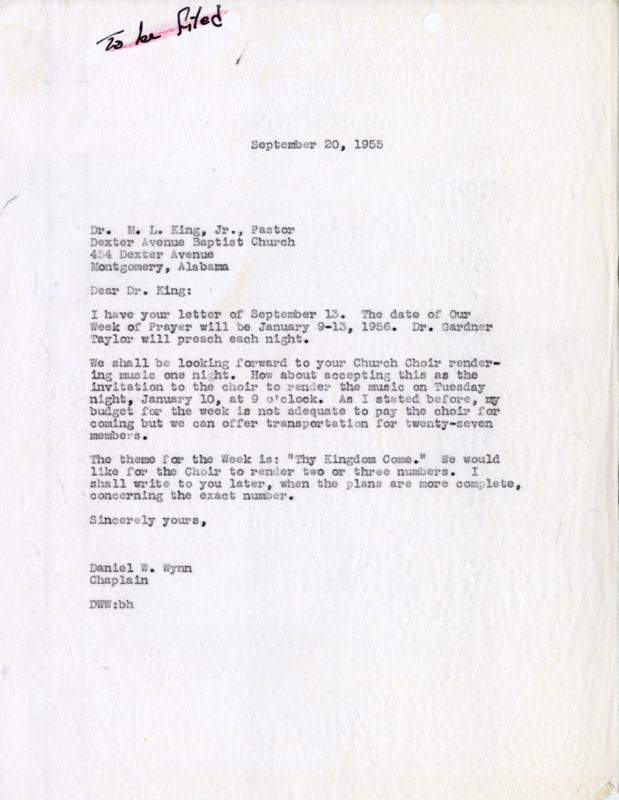
A letter from Chaplain Wynn to Dr. Martin Luther King Jr. on onion skin paper informing about the Week of Prayer taking place at Tuskegee Institute and requesting that the choir of the Dexter Avenue Baptist Church choir can sing two or three songs.
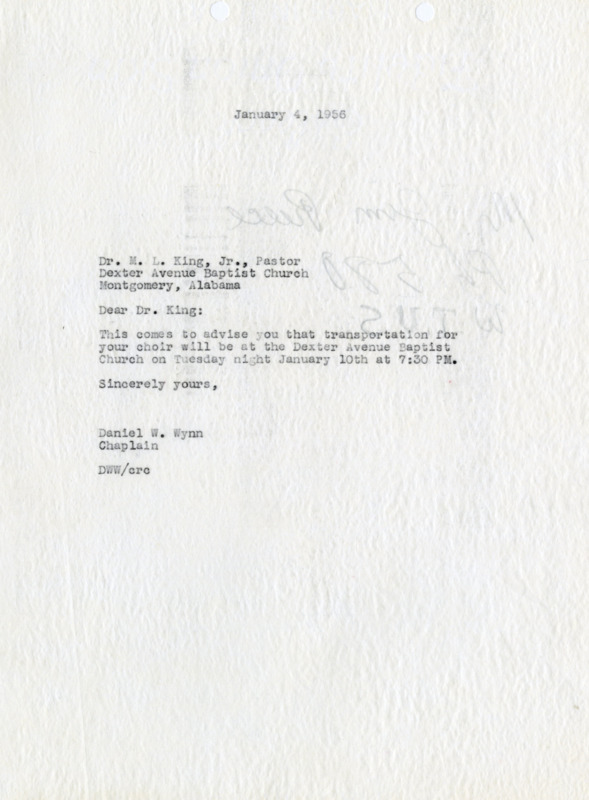
A letter on onion skin paper from Chaplain Wynn to Dr. Martin Luther King Jr. advising him that transportation for his choir will be at his church 01/10/1956 at 7:30pm.
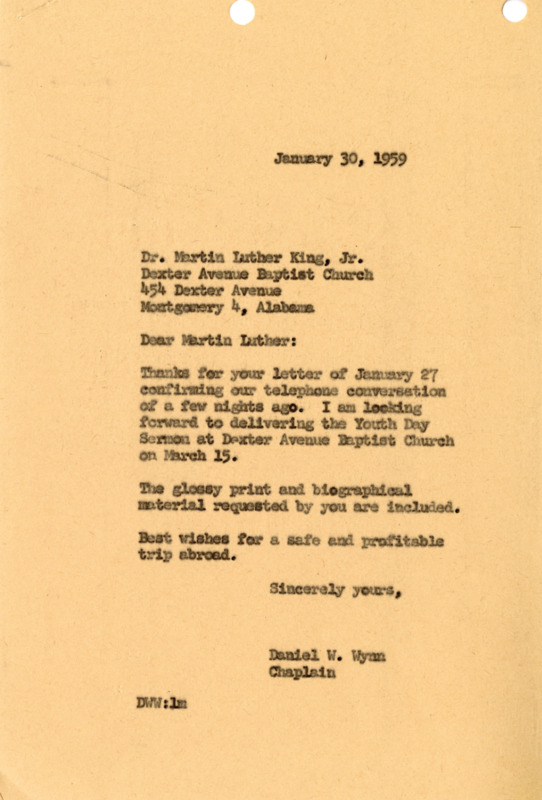
A letter from Chaplain Wynn to Dr. Martin Luther King Jr. expressing excitement for the upcoming Youth Day Sermon at Dexter Avenue Baptist Church. In addition, Chaplain Wynn provided a glossy photo of himself and a biographical sketch that the Dexter Avenue Baptist Church needs for flyers.
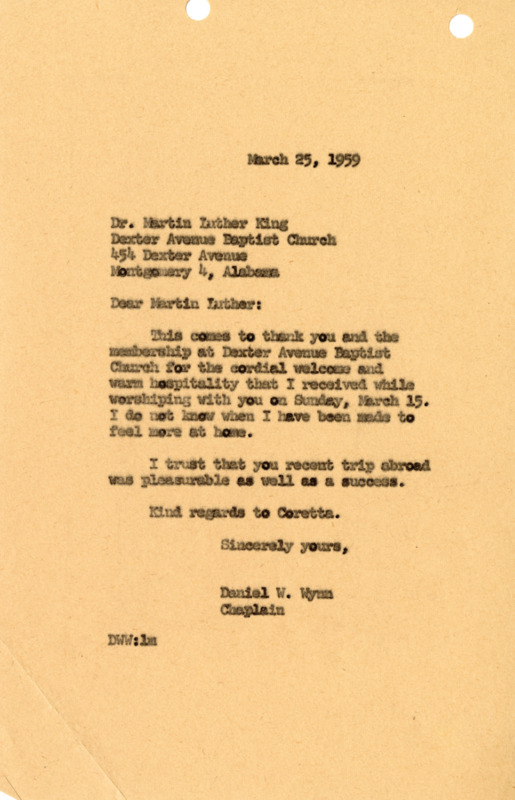
A letter from Chaplain Wynn to Dr. Martin Luther King Jr. expressing gratitude for the warm hospitality and welcome he received during his time at Youth Day Dexter Avenue Baptist Church on March 15, 1959.
Sandifer’s senior notebook includes his written philosophy of art, photographs of the artist’s works, and several of his poems. As a part of the Texas Southern art curriculum under Dr. John T. Biggers and Professor Carroll Harris Simms, students would create these notebooks to explain their artistry and showcase the works they created as students.
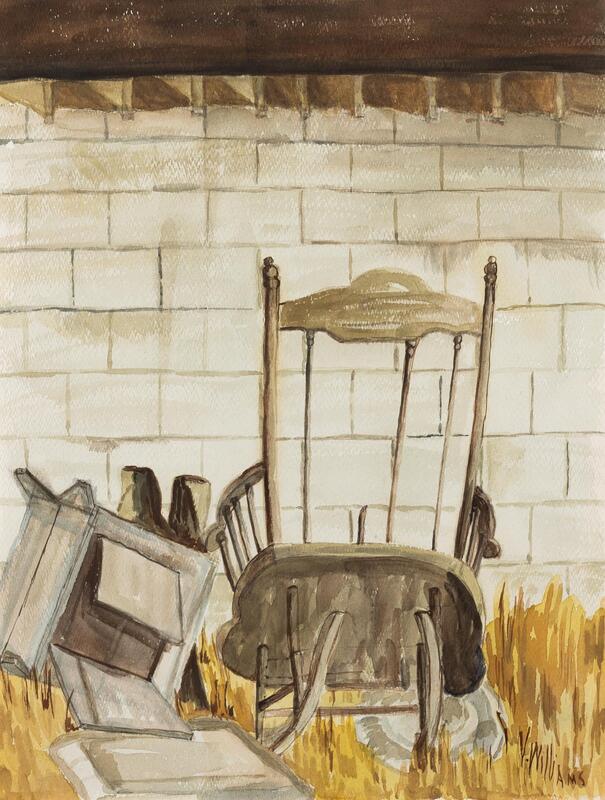
Vivian M. Williams was an artist and art teacher from Coshocton, OH. "Discards" depicts scattered pieces of wooden furniture, including a rocking chair, in a room with white-brown brick walls. The broken pieces have been cast aside on a bed of bright yellow hay with strands of golden brown.
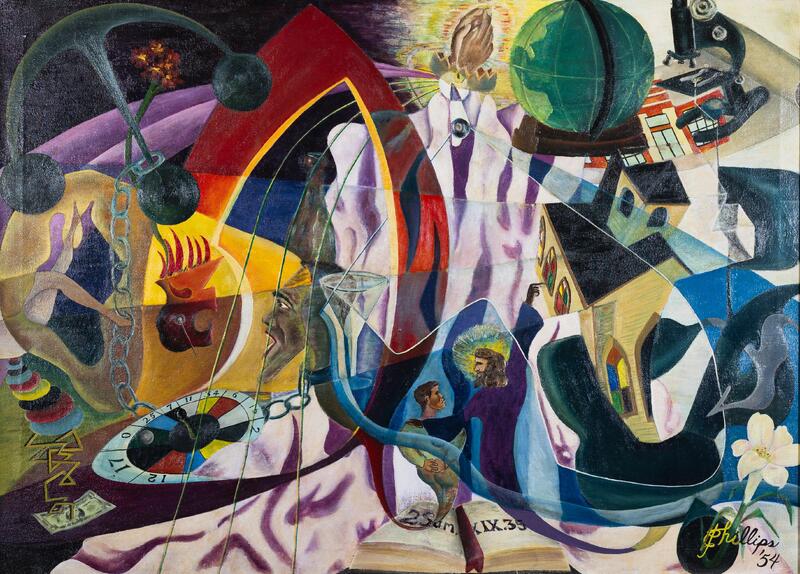
Harper T. Phillips was an artist from Courtland, AL. "Discernment" is a surrealist interrogation of the disciplines used to judge value in society. The left side has a dark background and features symbols of morality and mortality. The right side has a white background and features religious and scientific images and symbols.
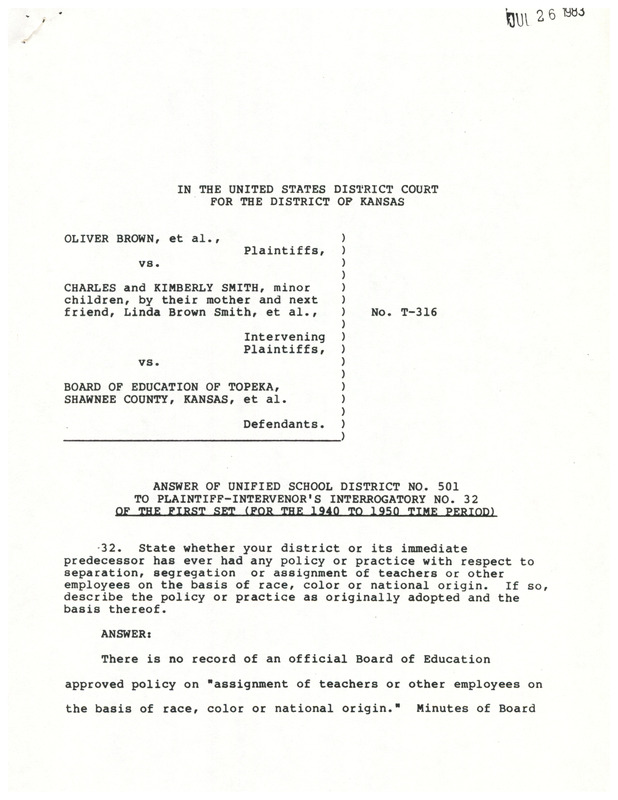
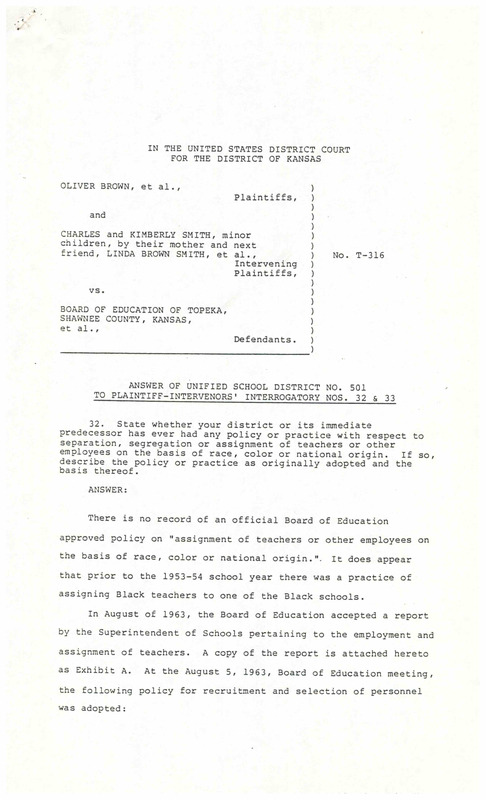
Case Data and Exhibits for Brown III, a relitigation of Brown v. Topeka Board of Education (1954) that corrected resegregation issues caused by open enrollment school choice in 1992. Document to the plaintiffs from the defense answering questions about the separation and segregation of teachers and other employees on the basis of race.
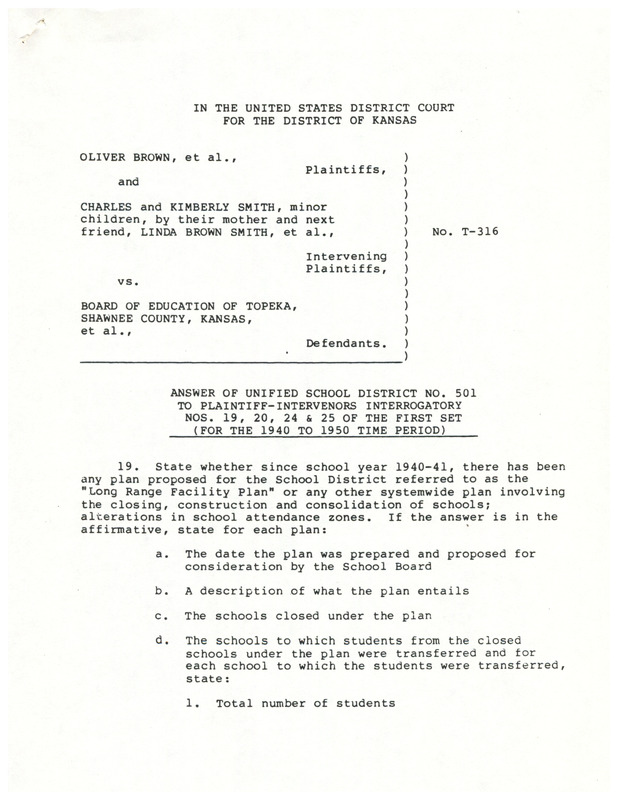
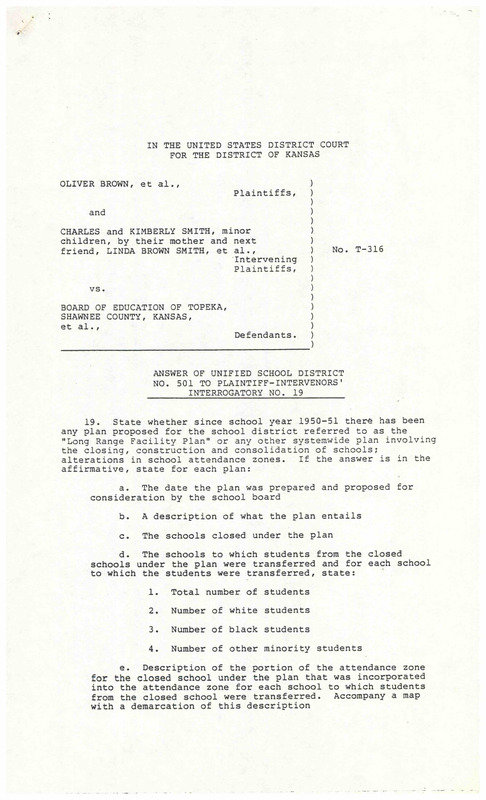
Case Data and Exhibits for Brown III, a relitigation of Brown v. Topeka Board of Education (1954) that corrected resegregation issues caused by open enrollment school choice in 1992. Document to the plaintiffs from the defense answering questions about the district’s Long Range Facility Plan and its effect on the racial makeup of schools.
Case Data and Exhibits for Brown III, a relitigation of Brown v. Topeka Board of Education (1954) that corrected resegregation issues caused by open enrollment school choice in 1992. Document to the plaintiffs from the defense answering detailed questions about the district’s Long Range Facility Plan.
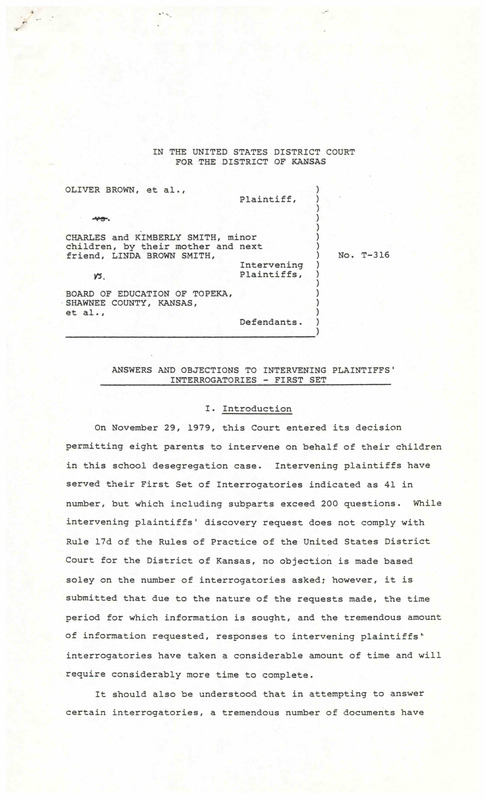
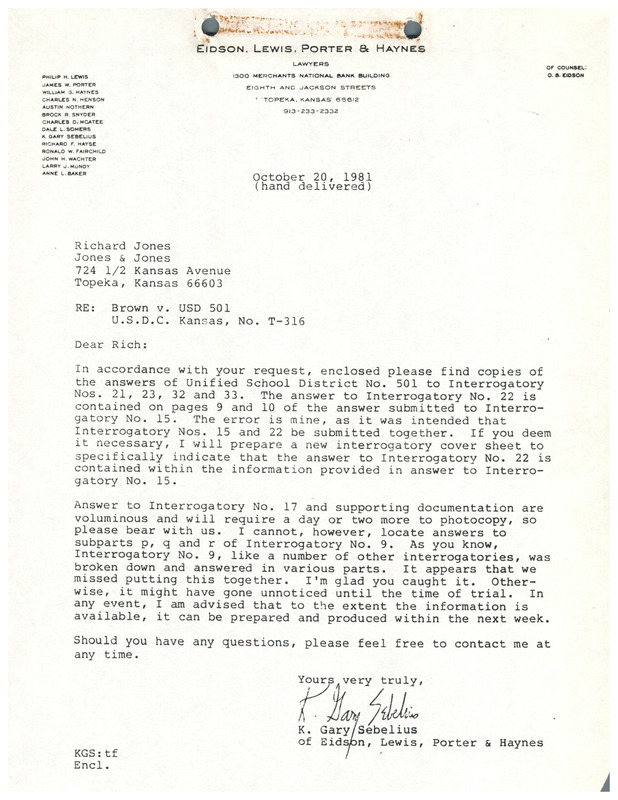
Case Data and Exhibits for Brown III, a relitigation of Brown v. Topeka Board of Education (1954) that corrected resegregation issues caused by open enrollment school choice in 1992. Document to the plaintiffs from the defense in response to the first set of evidence discovery questions. The defense lists their answers as well as their objections.
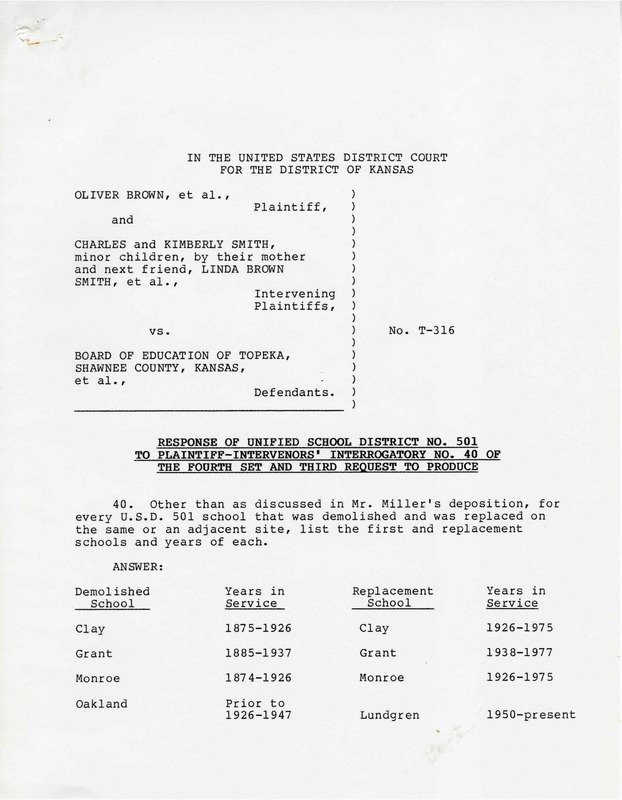
Case Data and Exhibits for Brown III, a relitigation of Brown v. Topeka Board of Education (1954) that corrected resegregation issues caused by open enrollment school choice in 1992. A document submitted by the defense team concerning a plaintiff question about school closures and replacement schools, with handwritten notes from William Lamson.
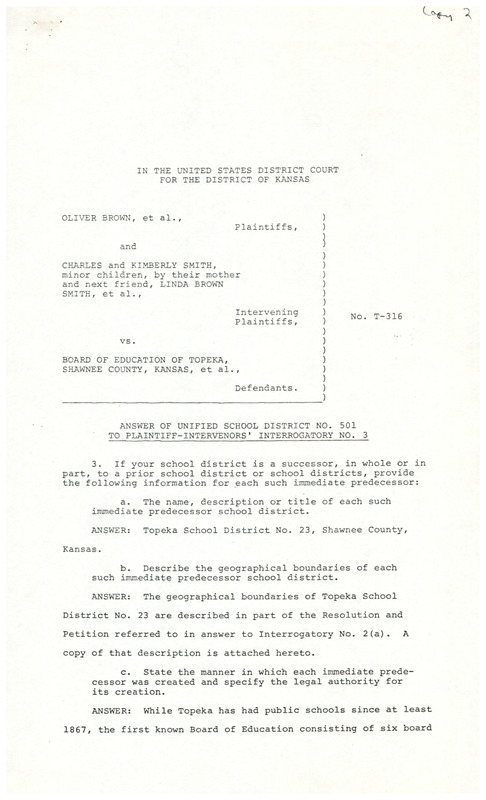
Case Data and Exhibits for Brown III, a relitigation of Brown v. Topeka Board of Education (1954) that corrected resegregation issues caused by open enrollment school choice in 1992. Document to the plaintiffs from the defense answering questions about predecessor districts. The defense says that it’s impossible to pinpoint any older districts.
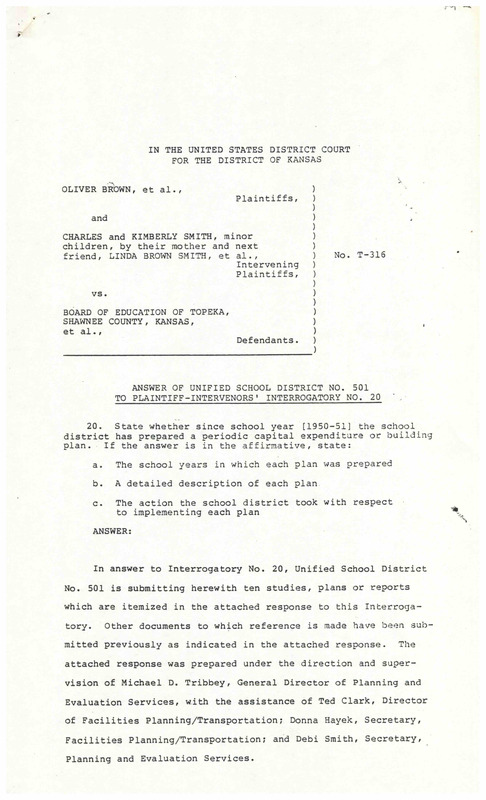
Case Data and Exhibits for Brown III, a relitigation of Brown v. Topeka Board of Education (1954) that corrected resegregation issues caused by open enrollment school choice in 1992. Document to the plaintiffs from the defense answering questions about any periodic capital expenditure plans the district might have prepared or implemented.
Case Data and Exhibits for Brown III, a relitigation of Brown v. Topeka Board of Education (1954) that corrected resegregation issues caused by open enrollment school choice in 1992. Document to the plaintiffs from the defense in response to a question about policies concerning segregation of teaching assignments based on race or national origin.
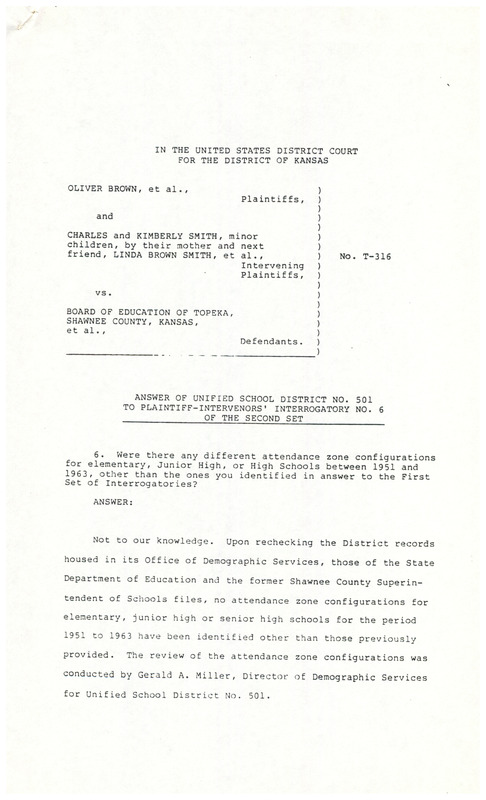
Case Data and Exhibits for Brown III, a relitigation of Brown v. Topeka Board of Education (1954) that corrected resegregation issues caused by open enrollment school choice in 1992. Document to the plaintiffs from the defense in response to a question about attendance configuration zone differences in 1951 and 1963 with the present.
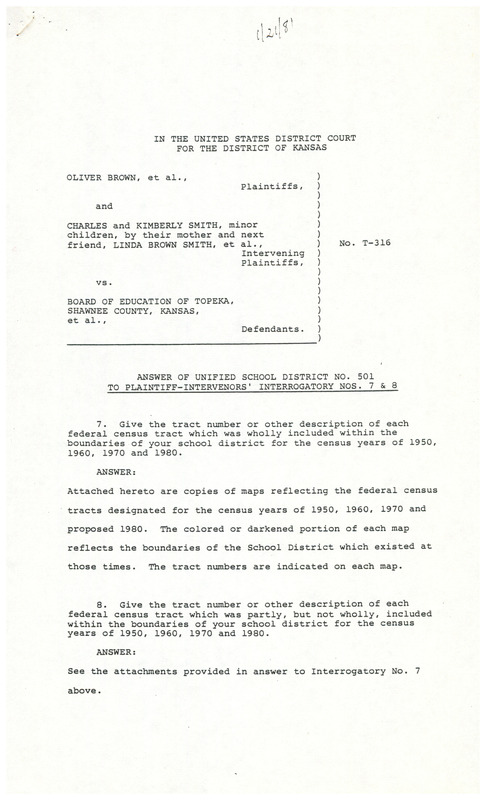
Case Data and Exhibits for Brown III, a relitigation of Brown v. Topeka Board of Education (1954) that corrected resegregation issues caused by open enrollment school choice in 1992. Document to the plaintiffs from the defense answering questions about census tracts from the years 1950, 1960, 1970, and 1980 and their inclusion in the district.
Case Data and Exhibits for Brown III, a relitigation of Brown v. Topeka Board of Education (1954) that corrected resegregation issues caused by open enrollment school choice in 1992. Document to the plaintiffs from the defense answering questions about classroom instruction, including courses, textbooks, extracurricular activities, and more.