A newspaper article from The Black Panther arguing that the greed inherent in capitalism leads to racism which leads to a fascist state defined by police brutality on Black people. The author writes that capitalism is “a parasitic growth that devours whole countries,” and therefore police brutality is a form of genocidal extermination.
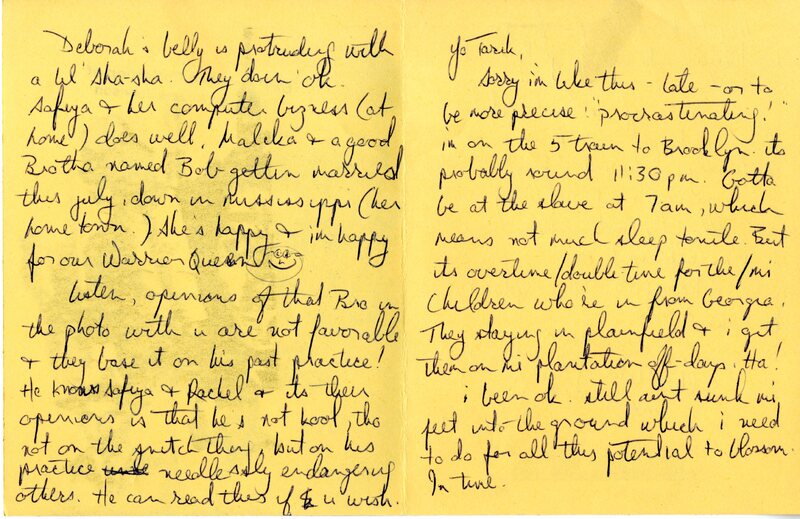
A card from Ashanti Alston, a Black Liberation Army (BLA) member who was imprisoned for 11 years for a robbery to raise money for the BLA, to an unknown recipient. A collage of Malcolm X photos is on the cover. He updates the recipient on a pregnancy and marriage taking place and informs them of his schedule and admits to procrastination.
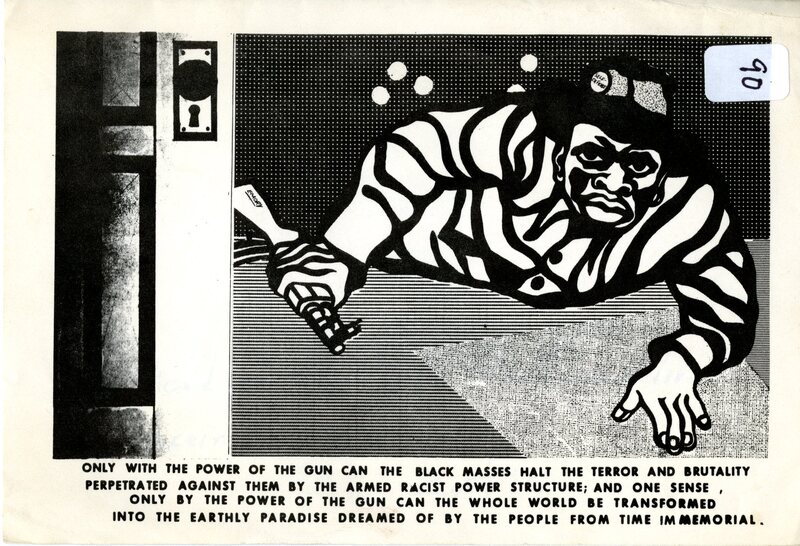
A card from fellow Black revolutionary and friend of Frankye Adams-Johnson (Malika), Curtis. The front of the card is a depiction of a man with a gun and text explaining that only through the gun can freedom be realized by the Black people. On the back of the card he writes “We send you this with revolutionary love and concern, Curtis.”
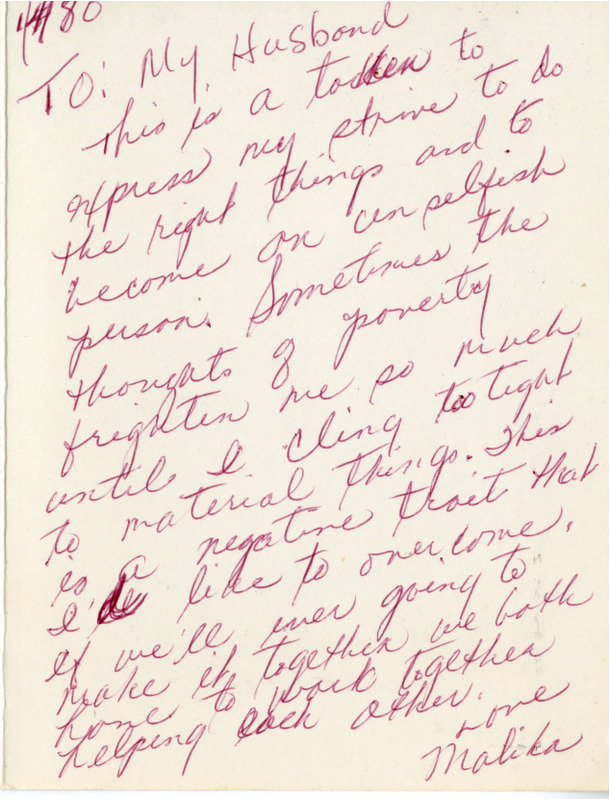
A card from Frankye Adams-Johnson (Malika) to her husband, Nuh Abdul Qaiyum, who was sentenced to prison in 1975 for a 1971 Black Liberation Army (BLA) connected shooting of police officers in New York. She relates her desire to become a complete person and expresses the need for mutual love and effort for her and her husband to last together.
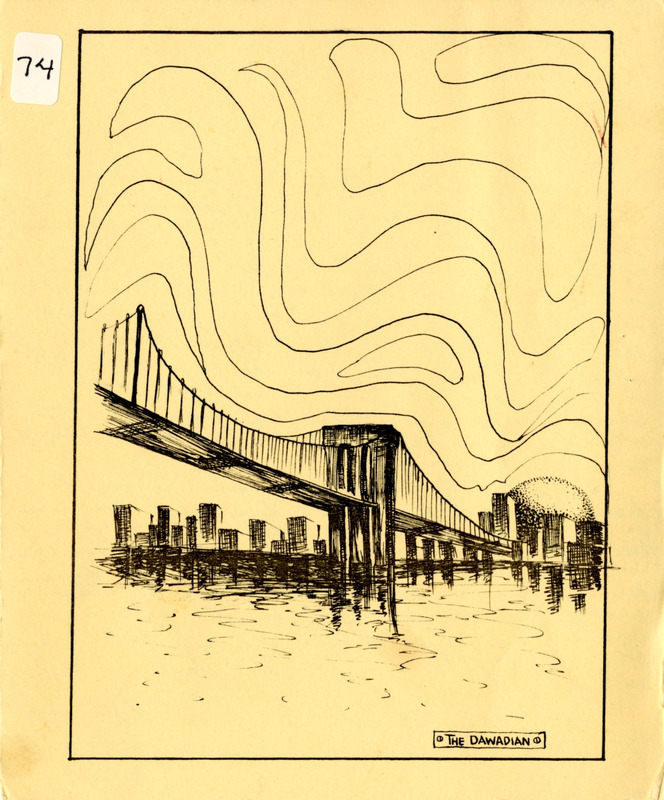
A card from Frankye Adams-Johnson (Malika) to her husband, Nuh Abdul Qaiyum, who is imprisoned. The front of the card is a depiction of a bridge. She writes of the beauty of Black and imagines a day where there will be no fight, and they can be the beautiful people they truly are.
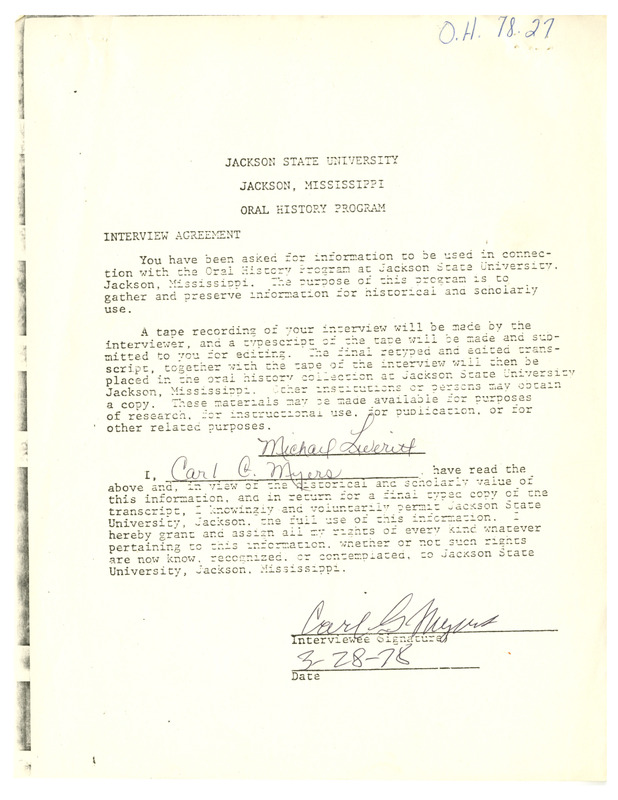
Mr. Myers was the owner of Myers Coffee Company on Farish Street. He talks about his business as well as other businesses in the district and breaks down the different sections of the neighborhood.
Carolyn Parker began working with the Child Development Group of Mississippi (CDGM) in 1966 after years of working clerical jobs for different human rights organizations. She talks about her work in the Civil Rights Movement and the role of community organization in the beginning of Head Start.
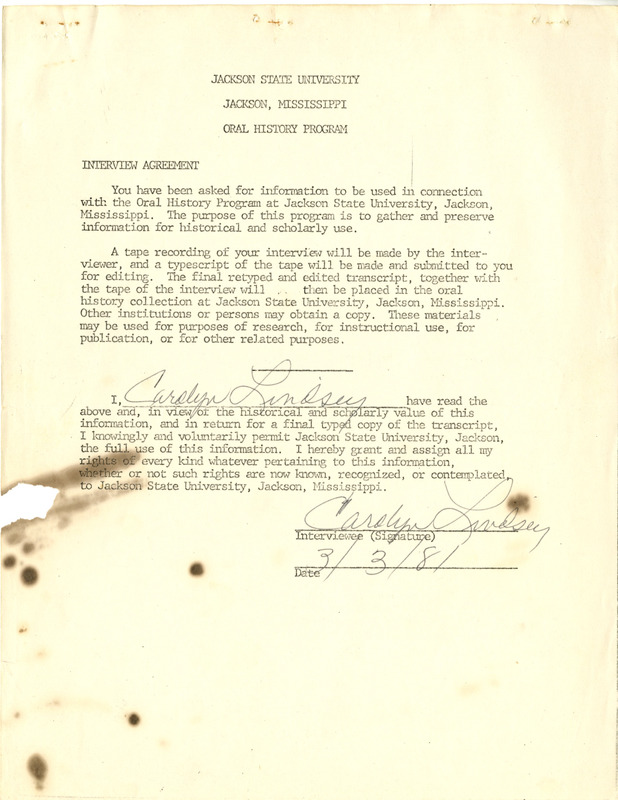
Carolyn Cannon Lindsey attended Smith Robertson School as an elementary student beginning in 1952. At the school she completed 1st, 2nd, 3rd, 5th, and 8th grades. She discusses the segregation of schools during that time. She also recalls some of her teachers and fondest memories of her time as a student there.
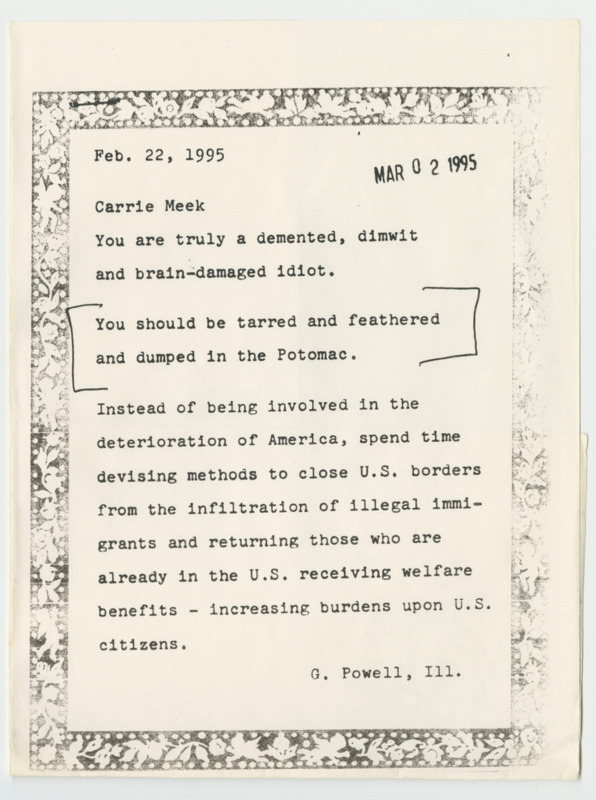
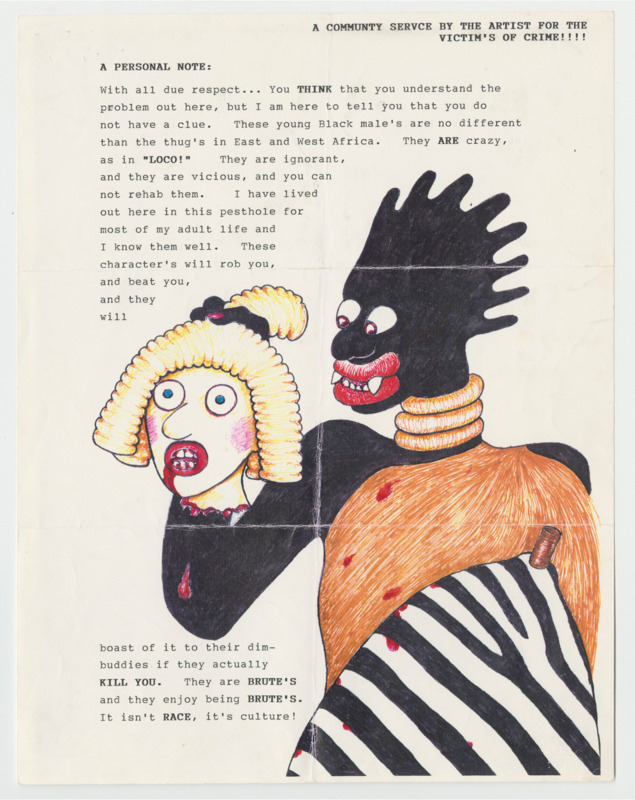
In 1995, G. Powell, III, wrote a letter to U.S. House Rep. Carrie P. Meek filled with disparaging and discriminatory comments. It is hard to determine who exactly Powell was. Still, the document alone shows how much racism the first African American woman elected to represent Florida in the U.S. Congress since the Reconstruction era received.
Within the documents Carrie P. Meek held were racist letters sent to her, like this one. This letter made inflammatory, discriminating, and disparaging comments about Black men, calling them “brutes” and comparing them to “thugs.” It also depicted a hand-drawn racist caricature of a tribal African holding a bloody, severed white person’s head.
Carrie Washington was born in 1895 and moved to the Farish Street District in 1933 and has lived there since. Ms. Washington talks about her time in the district and her experiences working in the homes of white people. She also talks about businesses and buildings in the district and the Great Mississippi Flood of 1927.
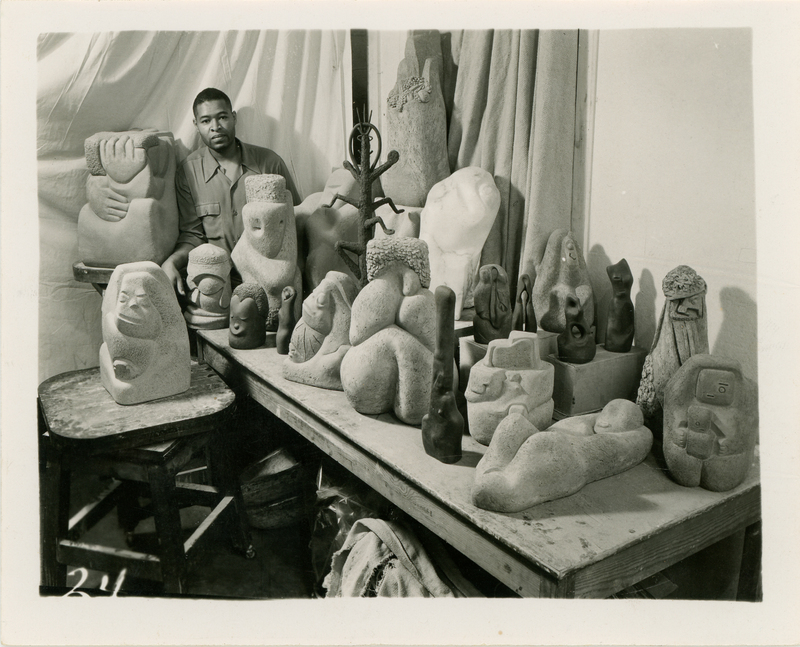
This photograph shows a young Carroll Harris Simms, with many of his sculptures, as an art student at Cranbrook Academy of Art. Simms received his BFA and MFA from Cranbrook, where he was the first African American graduate. Simms recalled the way student and faculty advocates helped him integrate the school. In 1950, Simms came to Texas Southern to help Dr. John T. Biggers run the art department; Simms taught pottery, sculpture, ceramics, and jewelry making classes.
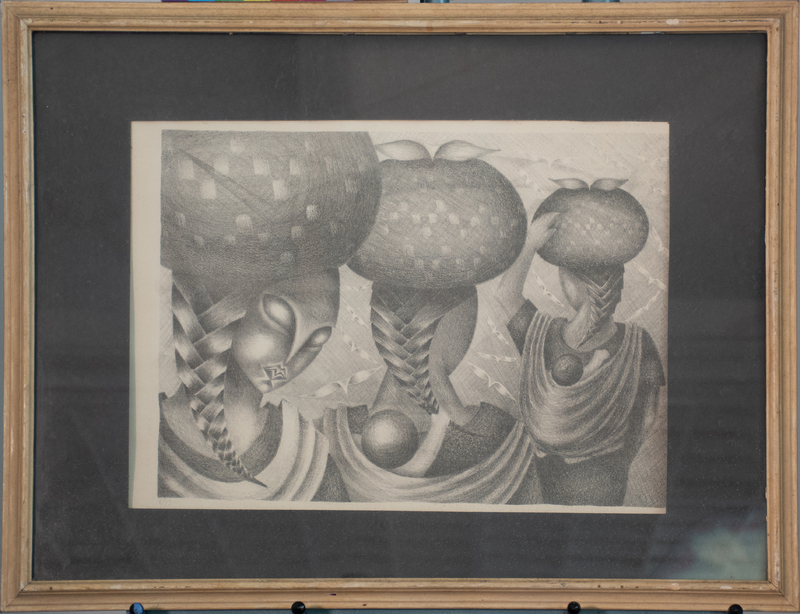
Charoennimuang’s print shows three women wearing babies on their backs and carrying baskets atop their heads. Two of the women’s faces are turned away from the viewer, while the closest gazes back fiercely. All three women’s hair is braided. This print highlights some of the varied and essential types of labor that women carry out.
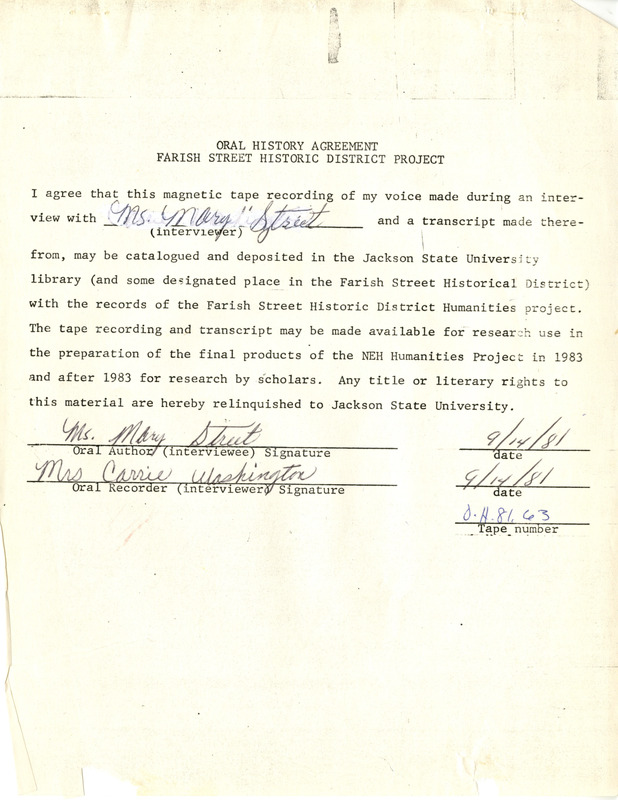
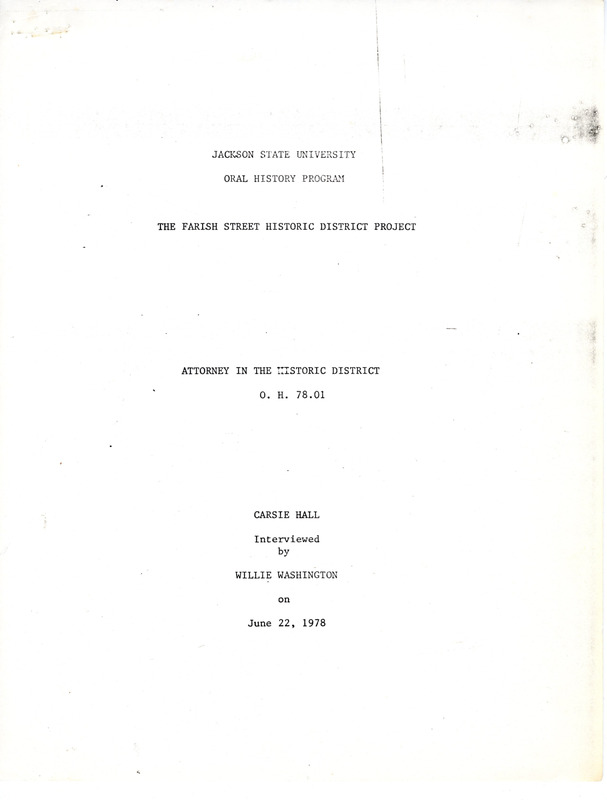
Attorney Carsie Hall moved to Jackson in 1921 to attend Jackson College. He passed the bar exam in 1953 and operated a law firm in the Farish Street District. He talks about a case he worked with the Freedom Marchers during the Civil Rights Movement. He discusses the effect of desegregation on Black businesses and current revitalization efforts.
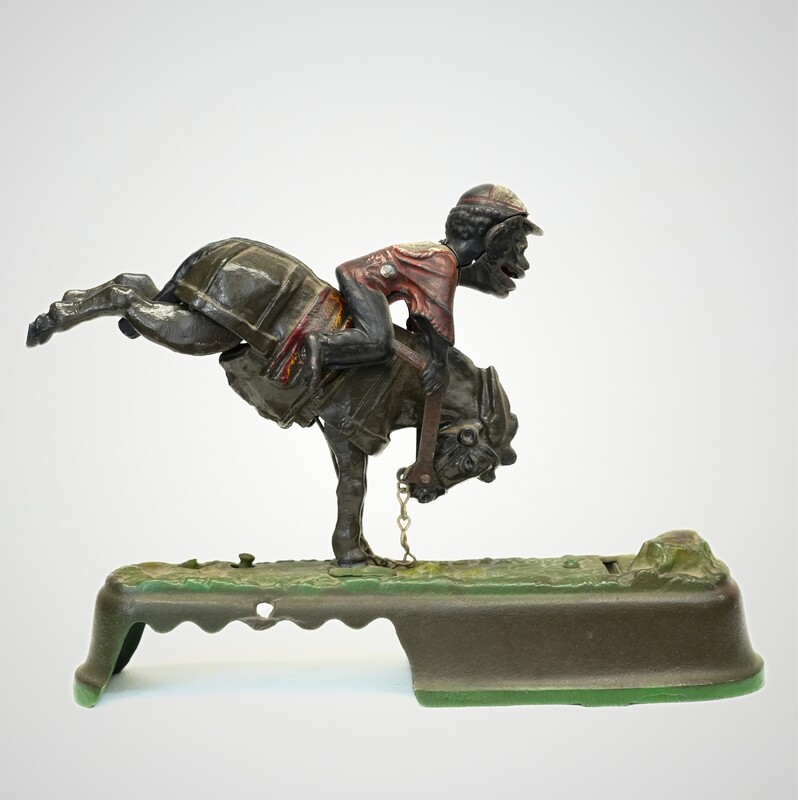
The vintage "Black Jockey Boys" bank is a collectible item depicting a stereotype of African American jockeys, often characterized by exaggerated features and playful expressions. While intended as a whimsical decoration, it reflects the racial caricatures prevalent in the early 20th century.
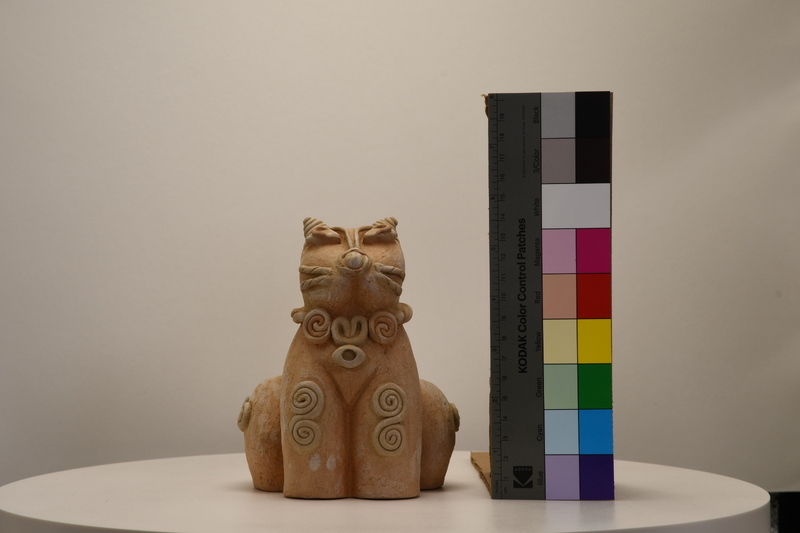
This maquette, created by an unknown Texas Southern University art student, shows a feline creature at attention. There are various swirl patterns and textures on the figure. The swirls are a required component for the maquette project, as Carroll Harris Simms pushed his students to richly embellish their works.
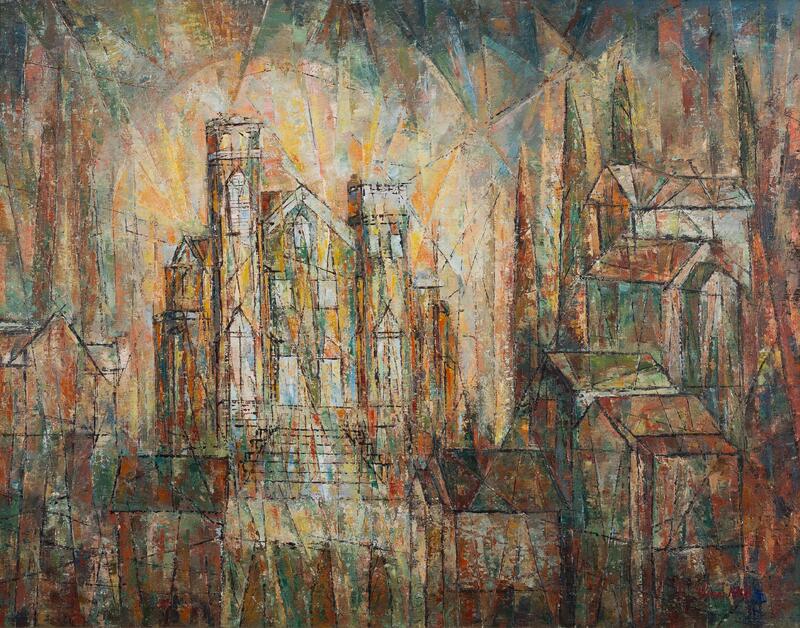
Leonard Jones was an artist from Winston-Salem, N.C. "Cathedral" is a cubist depiction of a cathedral and the town surrounding it. Jones uses a variety of light and dark colors that resemble the aesthetic of stained glass.
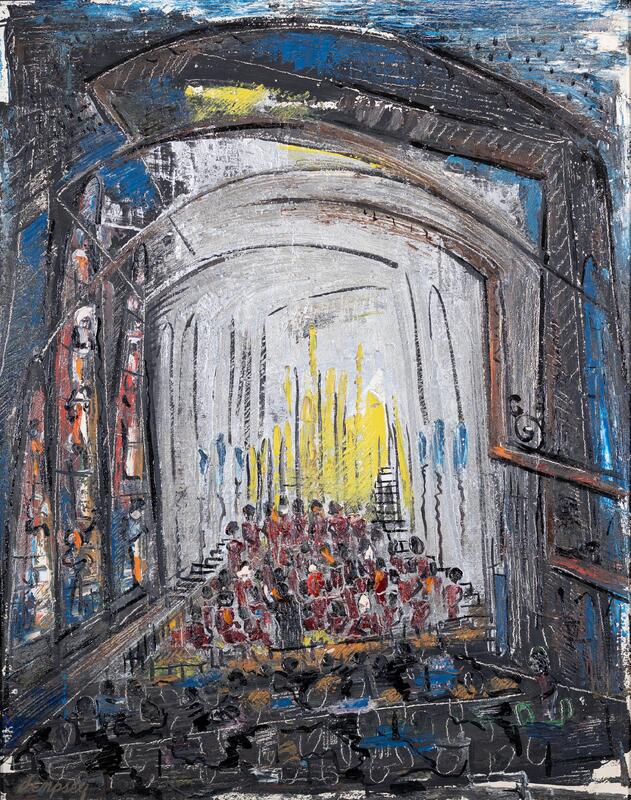
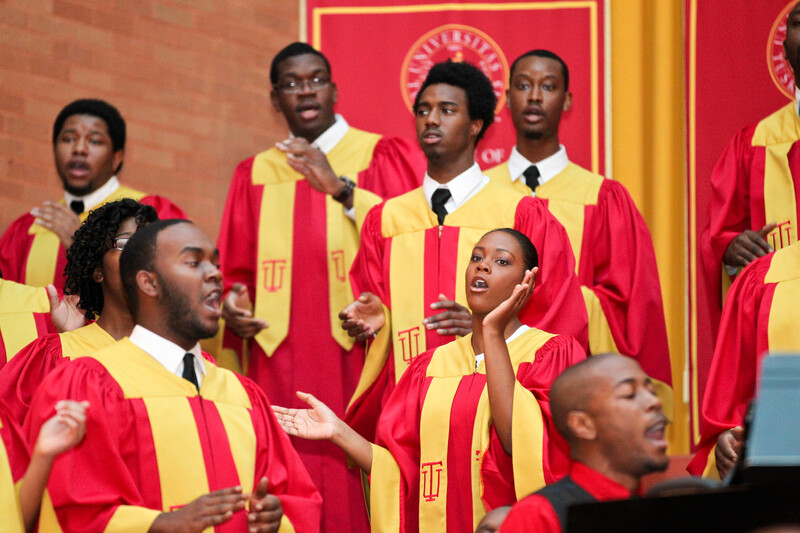
Richard Dempsey was a painter known for his abstractions and portraits of prominent African American leaders from Washington, D.C. "Cathedral and Choir" is an impressionist depiction of the inside of a church. The yellow brushstrokes create a tall organ alongside stained glass; the layered reds, blues, and black show the congregation and choir.
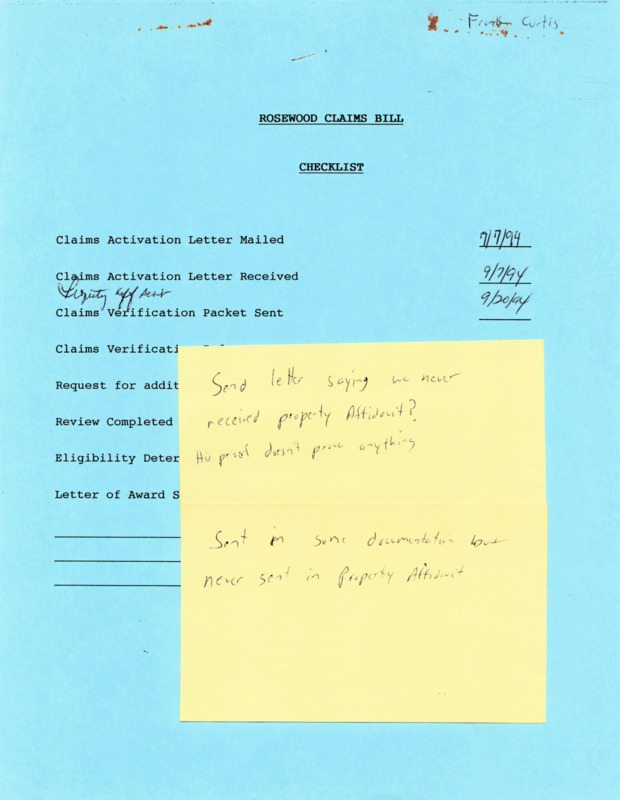
Documents listing last names of Rosewood descendants from the Fourteenth and Fifteenth U.S. Census. These records were essential in establishing population numbers and verifying residency in 1923, serving as key evidence for families seeking justice and compensation following the Rosewood Massacre.
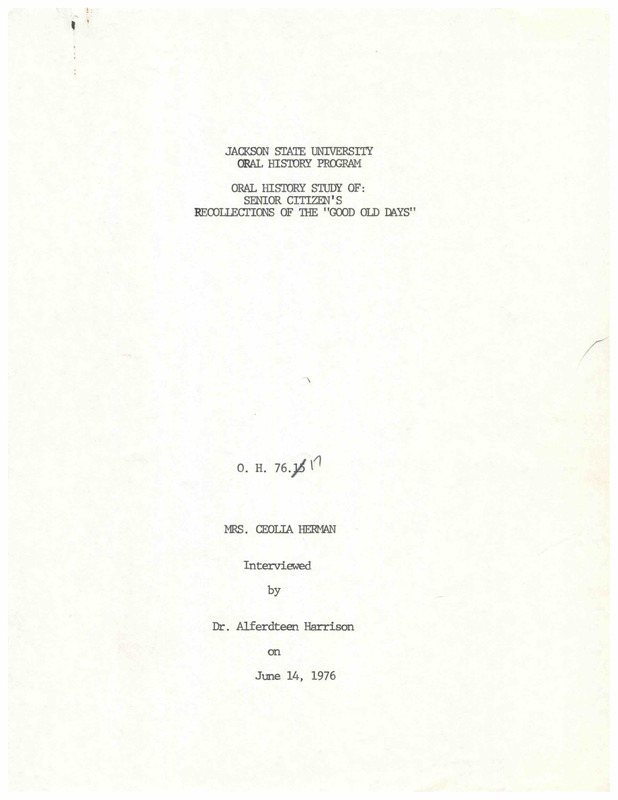
Ceolia Herman was born in McGee, Mississippi, in 1904 and came to Jackson in 1919 to go to high school while living with her sister until getting married and moving to Chicago. She moved back and worked as a nurse and then in a cleaners. She recalls the "Good Old Days" as days when she was younger and didn't have to worry about anything.
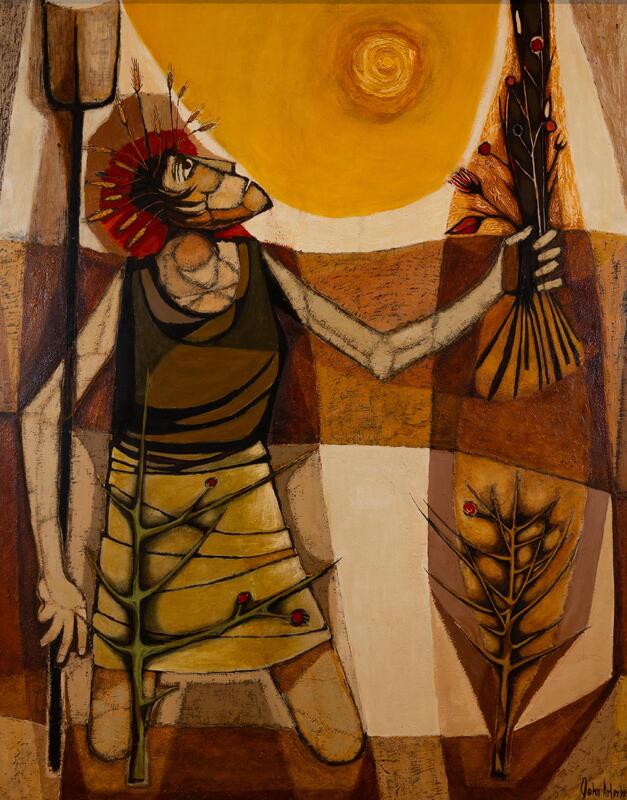
John Arterberry was an artist who worked in the art department at Langston University from Tallahassee, FL. "Ceres" depicts the Roman goddess of agriculture, grain crops, and fertility, looking toward the sun. Ceres wears a crown of wheat stalks and holds a pitchfork in one hand and a bouquet of poppies in the other.
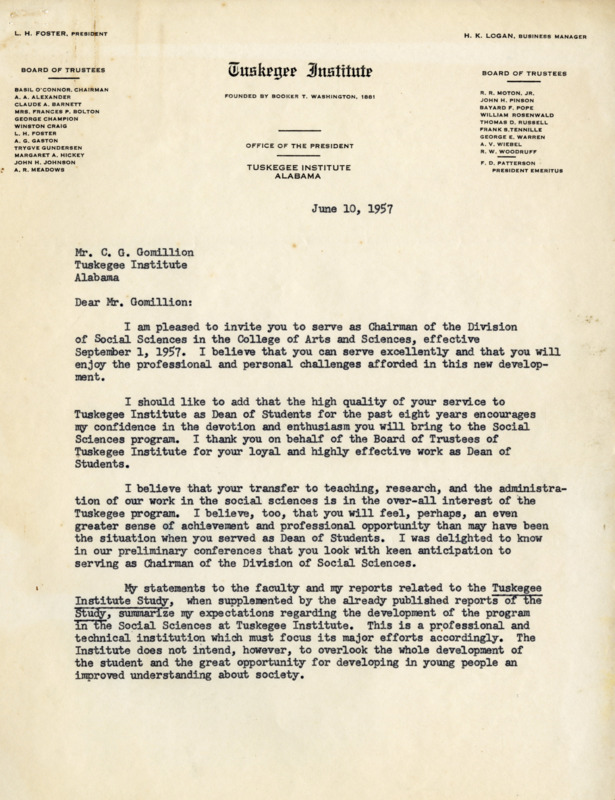
A letter from the university’s fourth president, Dr. Luther Hilton Foster, to Charles G. Gomillion, asking him to serve as Chairman of the Division of Sciences in the College of Arts and Humanities at Tuskegee University.
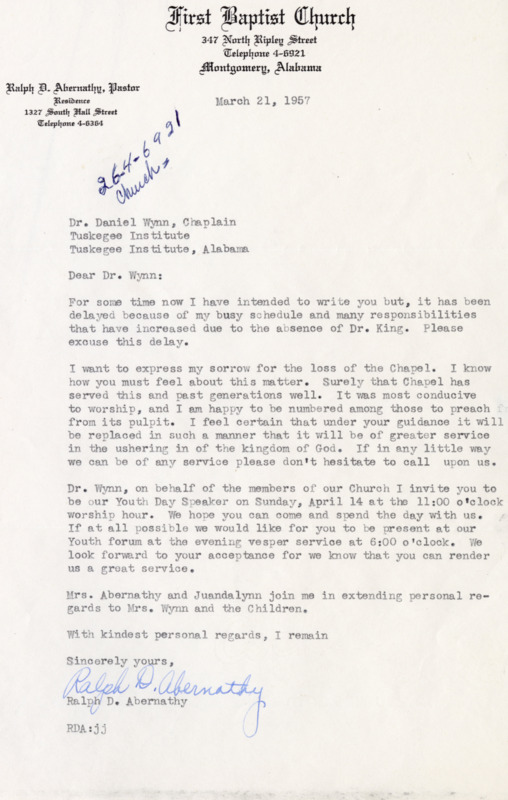
A letter from Rev. Ralph Abernathy to Chaplain Wynn expressing sorrow for the loss of the chapel and offering to be the Youth Day Speaker on 04/11/1957.
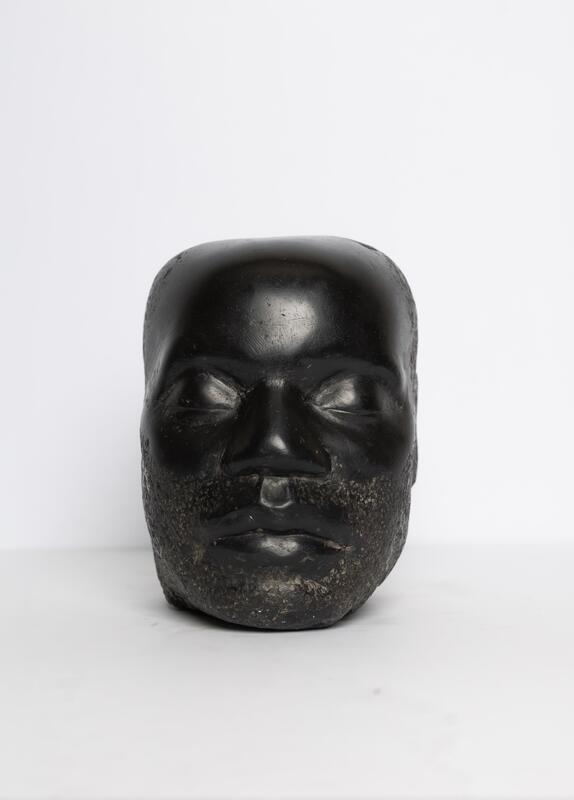
Guy L. Miller was an artist from Los Angeles, CA. "Character" is a sculpture of the head of a bearded Black man. His eyes are closed, and he looks as if he is in a deep slumber. The marble sculpture head has a deep black color, invoking fortitude and calm.
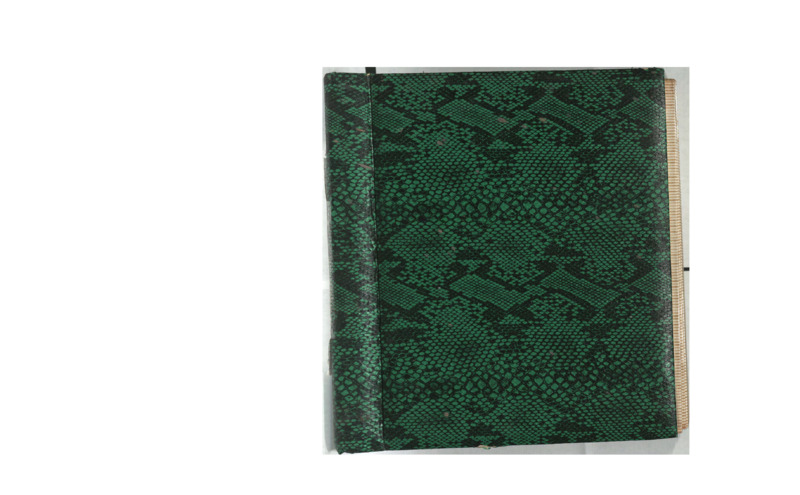
Criner’s senior notebook includes his written philosophy of art, photographs of the artist’s works and his process, and a copy of his senior exhibition brochure. As a part of the Texas Southern art curriculum under Dr. John T. Biggers and Professor Carroll Harris Simms, students would create these notebooks to explain their artistry and showcase the works they created as students.