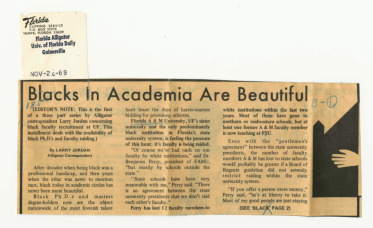
This newspaper article from the Florida Alligator, a University of Florida publication, highlights the growth of Black scholars in academia and an emerging problem: “faculty raiding.” White institutions looking to be more inclusive were regularly poaching Black professors, leaving Black institutions like Florida A&M with fewer faculty.
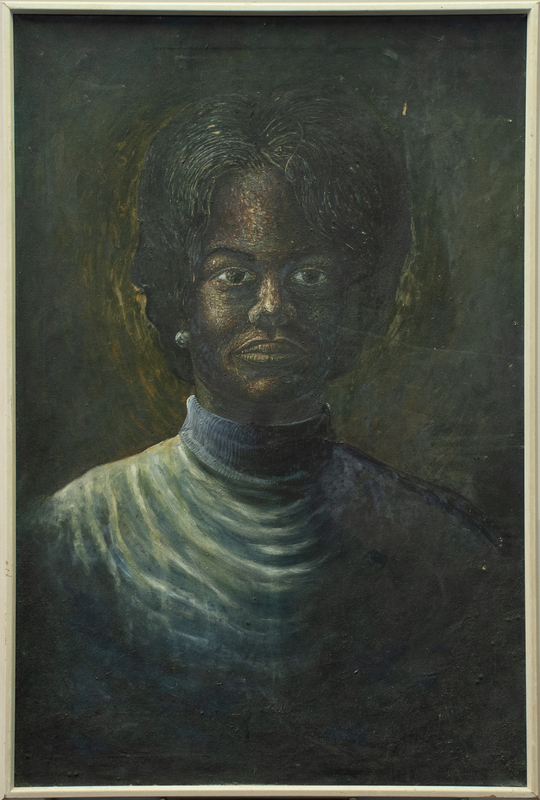
Mills' painting is a portrait of an unknown woman, dressed conservatively in a turtleneck, with short hair and a pearl earring. As a part of the art curriculum, students are required to create portraits during elementary painting. Many of Mills’ pieces share this painting’s muted and dark color palette. Some of Mills’ classmates recall him being color-blind, perhaps partly explaining these color choices.
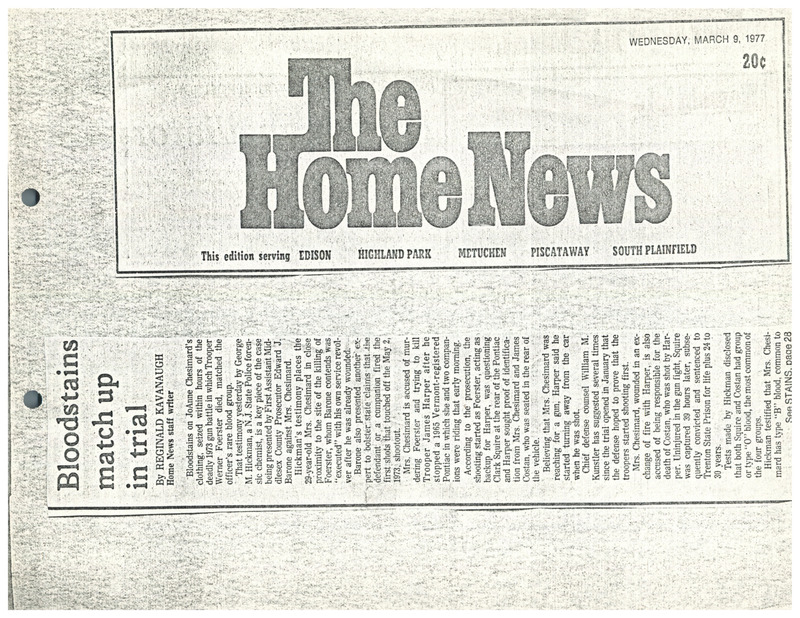
A newspaper article from The Home News about evidence in the trial of Assata Shakur (JoAnne Chesimard) for the 1973 killing of a state trooper. Prosecution witnesses showed that blood found on the clothes of Assata Shakur (JoAnne Chesimard) matched the rare AB blood type of the slain state trooper.
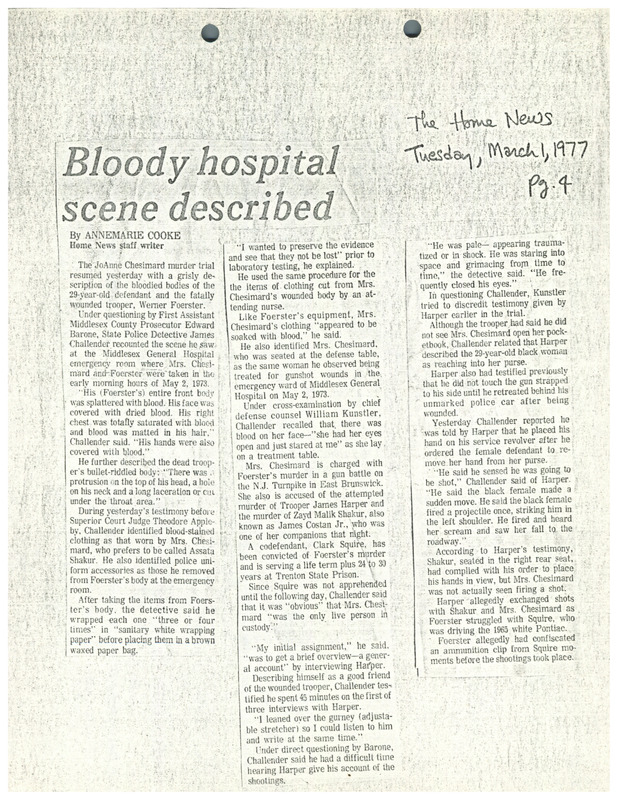
A newspaper article from The Home News about the testimony of State Police Detective James Challender describing what he saw at the emergency room where Assata Shakur (JoAnne Chesimard) and wounded state trooper Werner Foerster were taken after he was fatally shot. Shakur was on trial for the 1973 murder of Foerster.
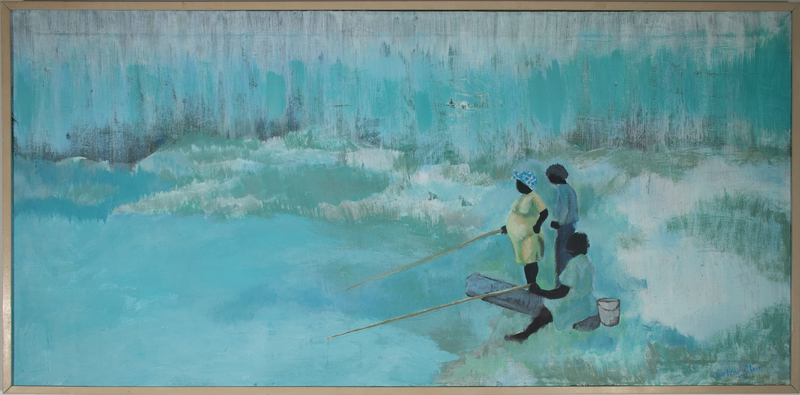
This painting by Charlene Claye shows a group of three people, including at least two women, fishing by a pond. This painting highlights one of the many types of labor Black women perform to support their families and communities. The broad, blue strokes extend a sense of timelessness and depth.
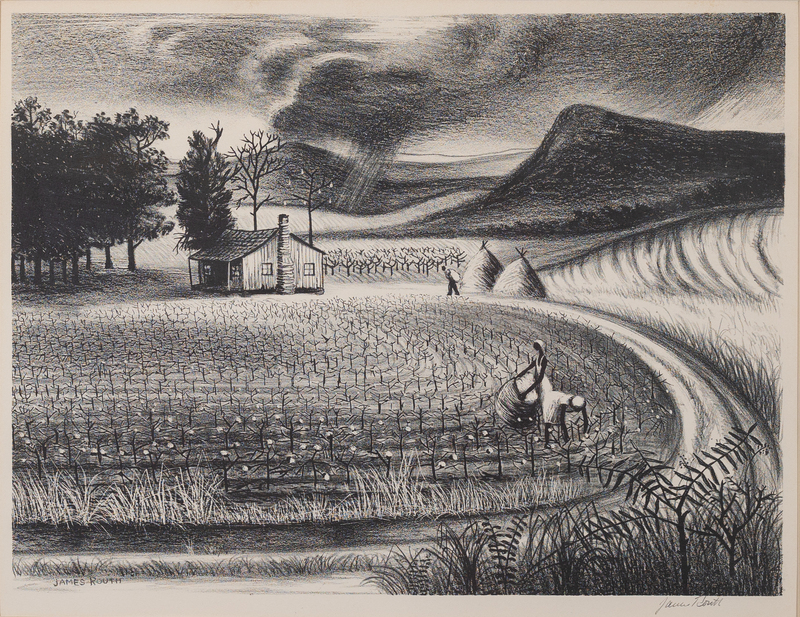
James Routh, Jr. is a painting and printmaker from Atlanta, GA, by way of New Orleans, LA. "Blue Ridge Farm" depicts a rural landscape in the Blue Ridge Mountains, an Appalachian range that extends from Georgia to Pennsylvania. The background shows an atmospheric perspective of two mountains and rain clouds. In the foreground, two women dressed in white are picking cotton while a man behind them carries cotton on his back.
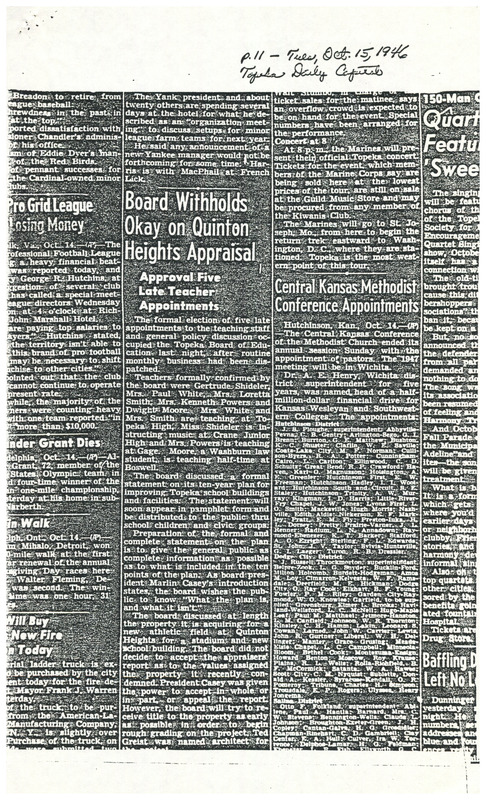
Case Data and Exhibits for Brown III, a relitigation of Brown v. Topeka Board of Education (1954) that corrected resegregation issues caused by open enrollment school choice in 1992. A 1946 newspaper article from the Topeka Daily Capital about the Topeka School Board's discussion of the ten year plan for the school district.
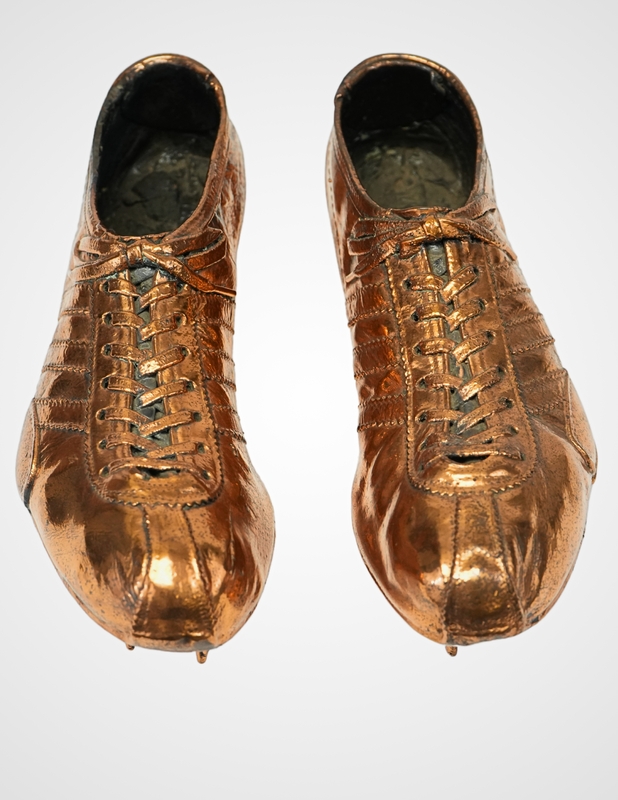
Robert "Bob" Hayes' bronzed track shoes commemorate his exceptional athletic achievements, particularly as a sprinter and Olympic gold medalist. Known as "Bullet," Hayes revolutionized sprinting, winning gold in the 100 meters and helping secure a victory in the 4x100 meter relay at the 1964 Tokyo Olympics.
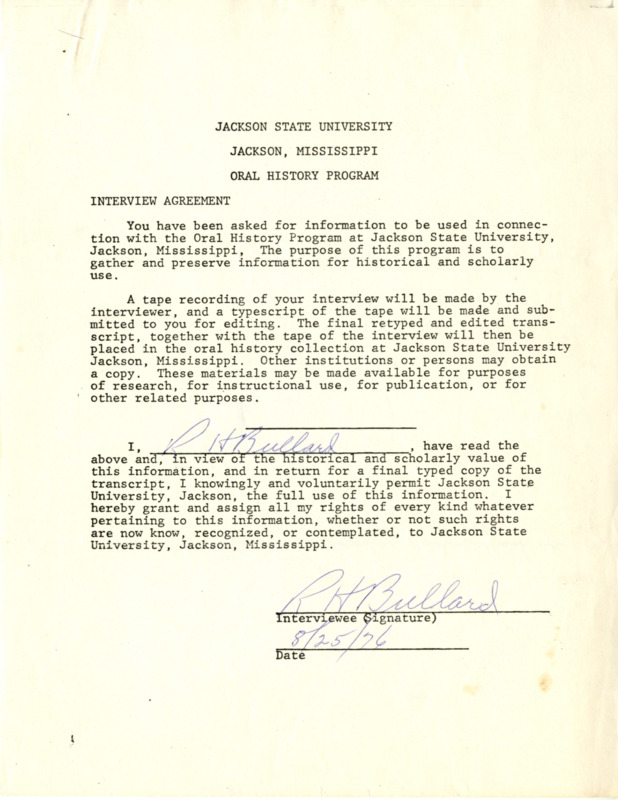
Bob Bullard was born in Jackson, Mississippi, in 1905. Mr. Bullard discusses his earliest recollections of Jackson, Mississippi, forms of entertainment, church life, and school life. He recalls the “Good Old Days” as the days he attended Poindexter Junior High School and worked in his father’s brickyard.
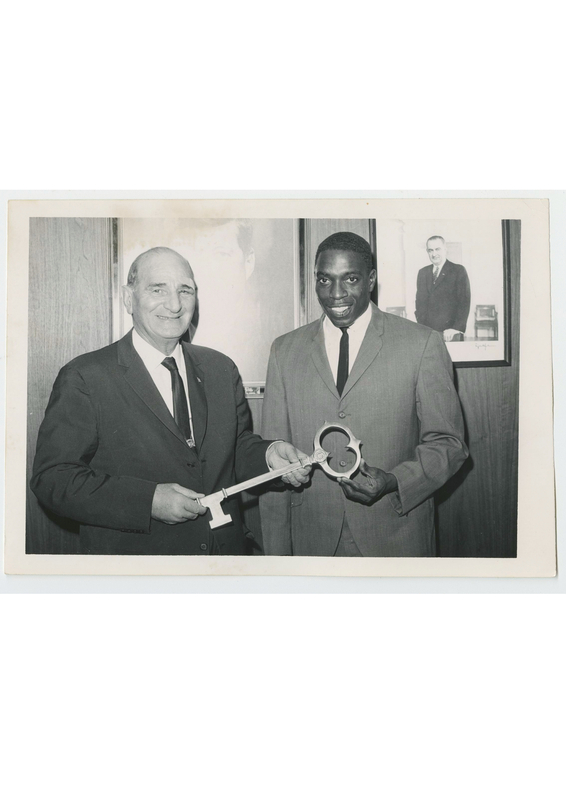
This rare, original black-and-white photograph features award-winning track star and Florida A&M alumni Robert “Bullet Bob” Hayes and an unidentified political figure. In what appears to be a government office, due to the portraits of Presidents John F. Kennedy and Lyndon B. Johnson, Hayes is receiving a ceremonial key.
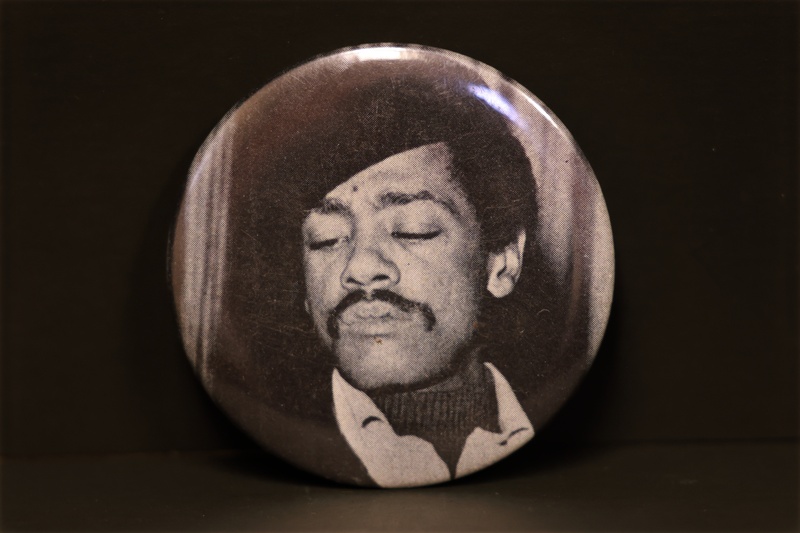
A button with a black and white photo of Bobby Seale. The Black Panther Party for Self Defense was founded in 1966 by Bobby Seale and Huey P. Newton in Oakland, California. Rooted in Black Power and Marxist-Leninist ideologies, the Black Panther Party would soon spread with branches all over the United States.
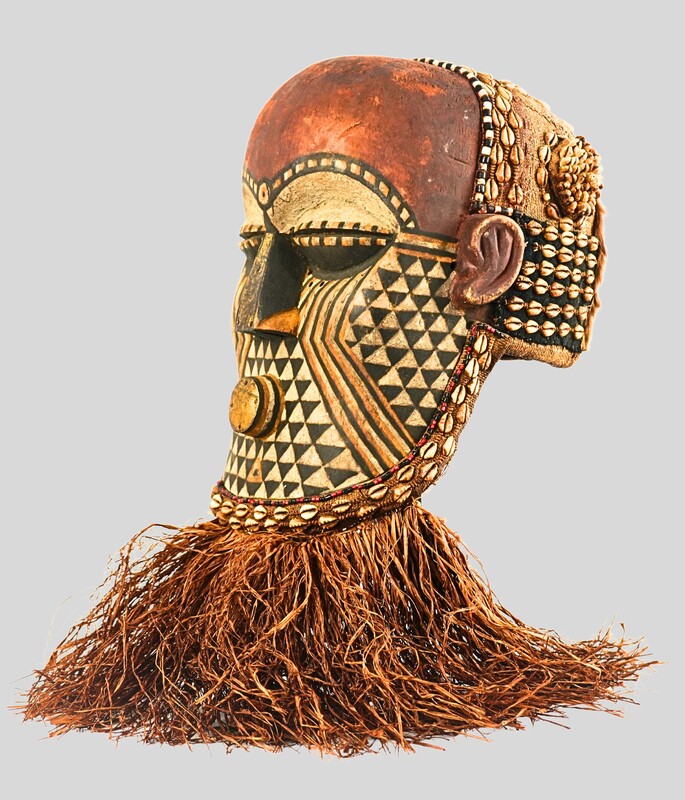
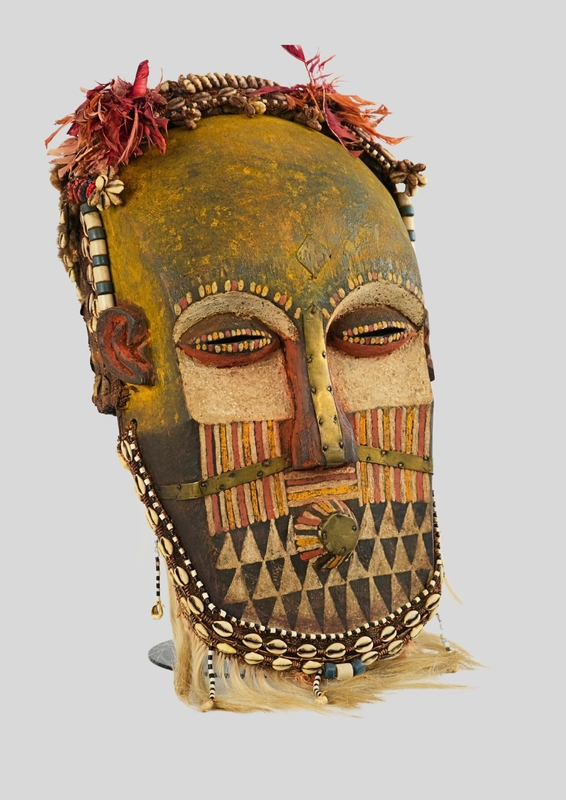
This Bongo mask, intricately carved and vibrantly painted, reflects just how important art was to the Bongo peoples' heritage. A Central African piece known for its expressive features and elaborate designs, it serves a ceremonial purpose and is often used in rituals to connect with ancestral spirits.
This Bongo mask, intricately carved and vibrantly painted, represents the artistic traditions of the Bongo people of Central Africa. Known for its expressive features and elaborate designs, it serves a ceremonial purpose, often used in rituals to connect with ancestral spirits.
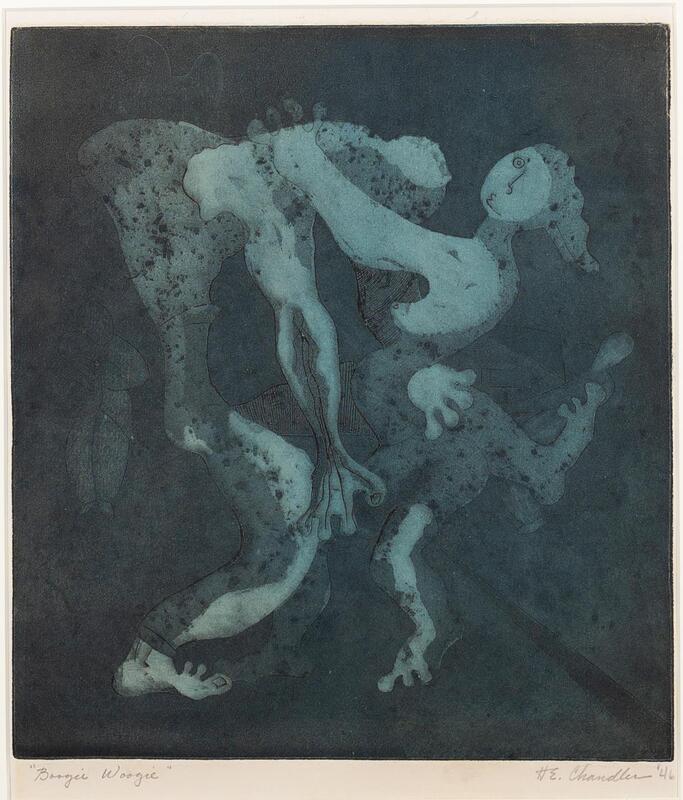
Houston E. Chandler was a sculptor, printmaker, painter, and teacher from Saint Louis, MO. "Boogie Woogie" depicts two abstracted figures dancing the Boogie Woogie, a popular dance in the early 20th century.
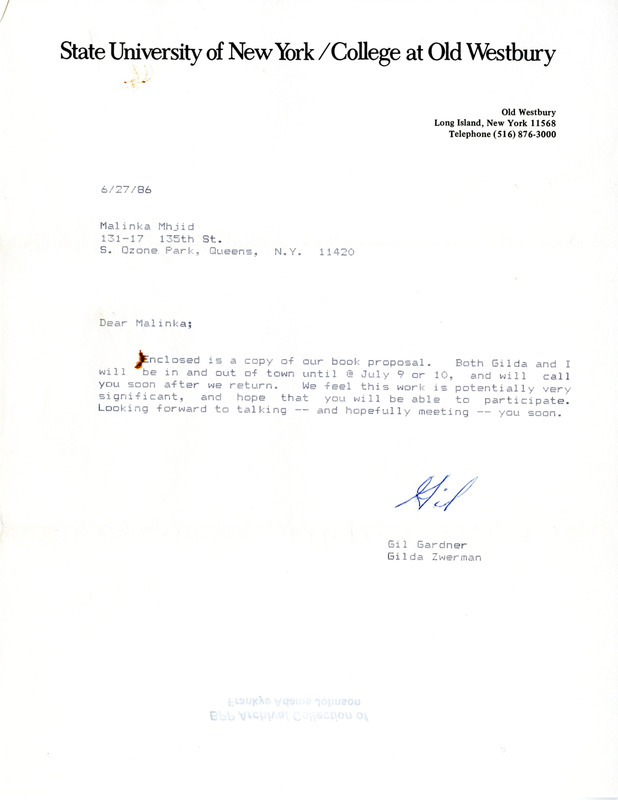
The letter is a book proposal that Gil Gardner (from the State University of New York/College at Old Westbury) is looking for Frankye Adam Johnson's participation with. The research focuses on women who carry out political violence.
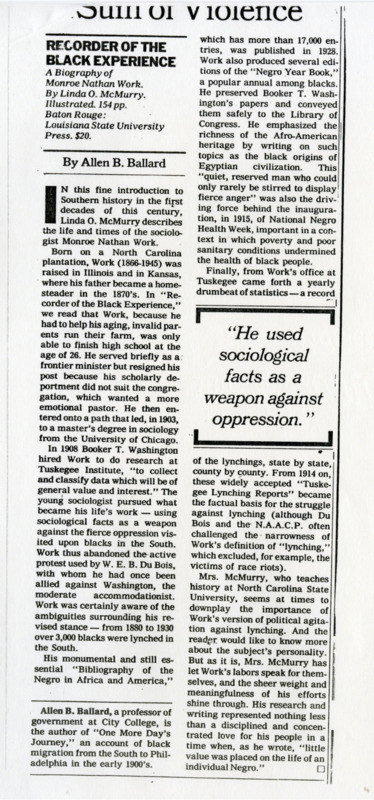
Dr. Luther H. Foster, fourth president of Tuskegee University, highlights Booker T. Washington's life and legacy, emphasizing his administrative strength, humanitarian commitment, and systemic problem-solving amid personal sacrifice, with his impact seen as even more profound when understood within the challenges of his time.
Hattie Simmons Kelly, James W. Williams and Leloa Belton being interviewed for a docmentary on Booker T. Washington and his achievements with Tuskegee University.
Interviewing Leola Belton, James W. Woodson and Dr. Luther Foster on Booker T. Washington, the creation of Tuskegee Institute, and the philosphy of his life.
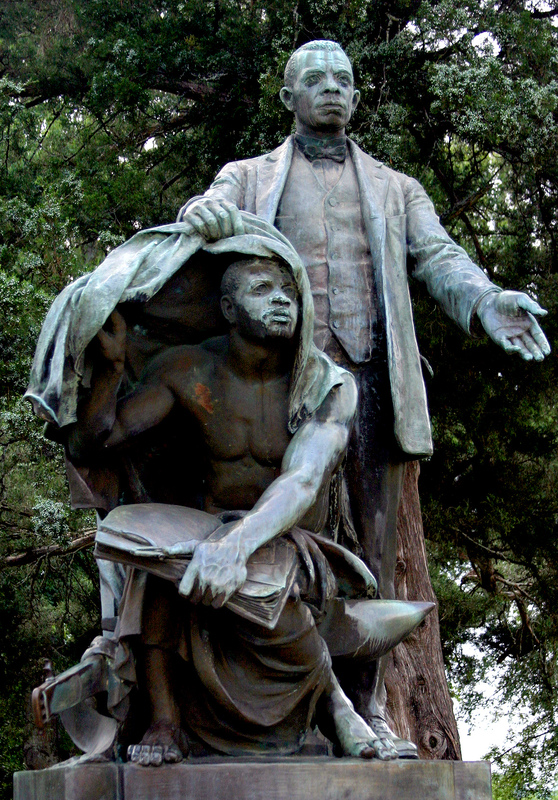
Image of BTW monument on Tuskegee University's campus. The statue was commissioned by Booker T. Washington High School's principal, Charles Lincoln Harper in 1927. The sculptor of this statue was Charles Keck.
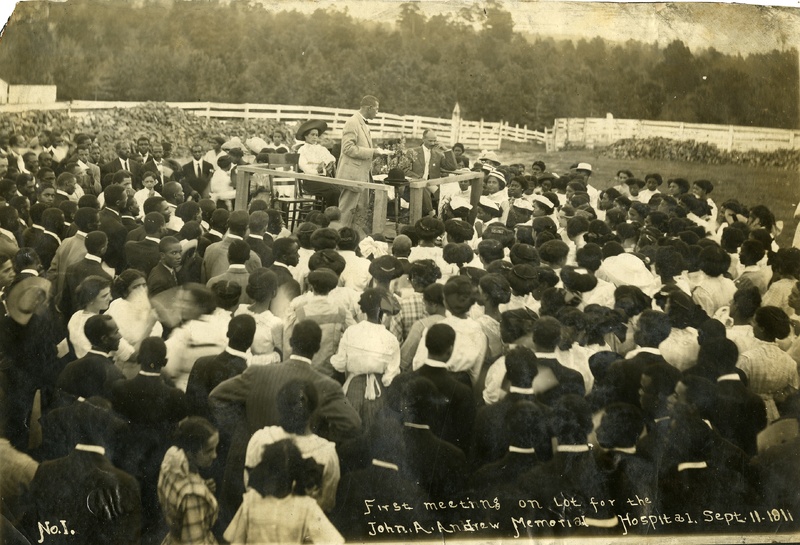
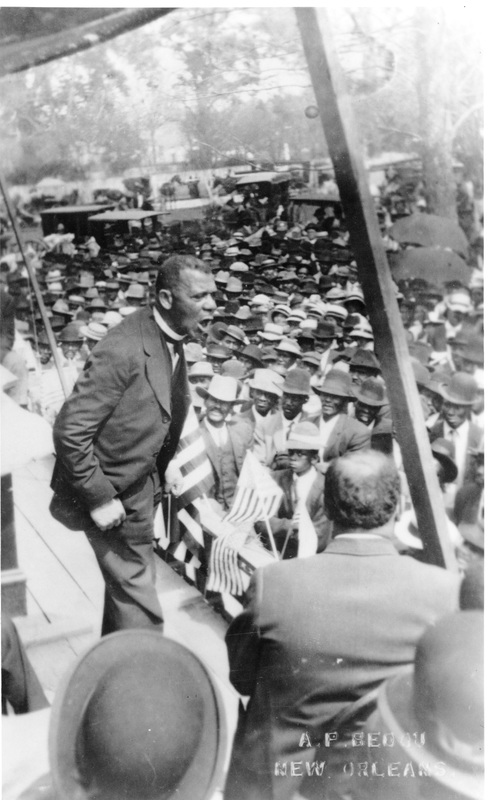
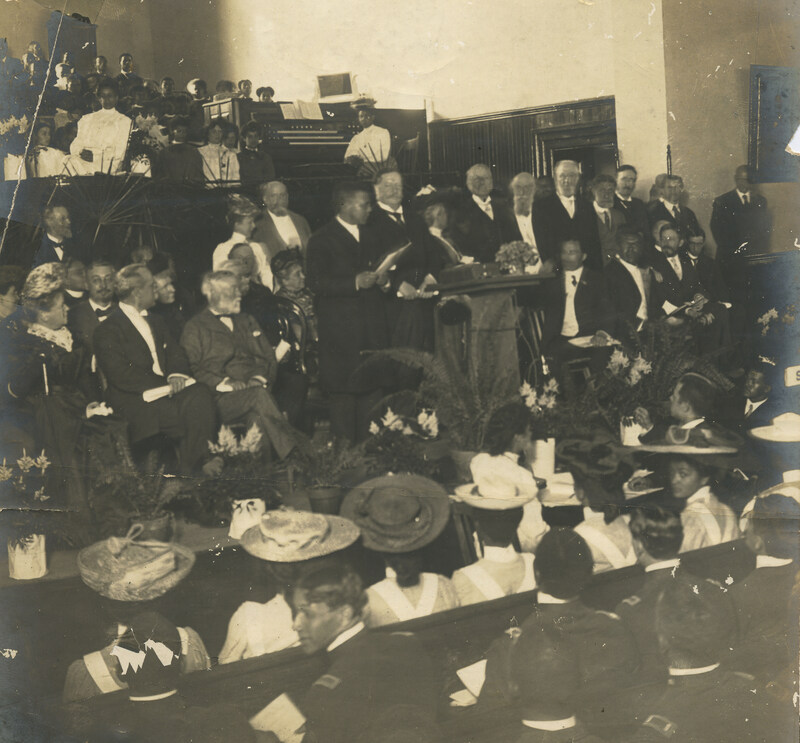
Black and white image of Booker T. Washington giving a speech in the old chapel building. Some notable figures are Andrew Carnegie and William H. Taft.
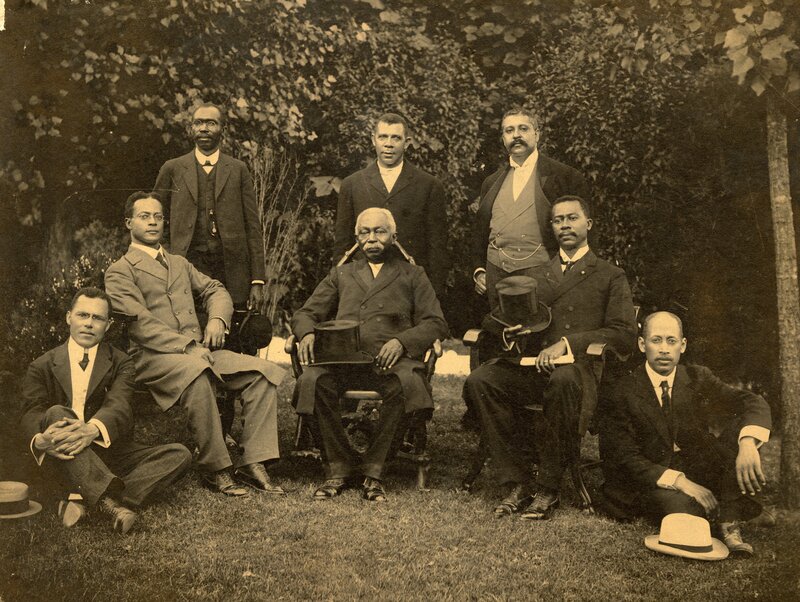
Booker T. Washington welcomed the Liberian Commission to the United States in 1909. This photograph shows the Commissioners seated from left to right: Charles B. Dunbar, G. H. Gibson, a former president of the Republic of Liberia, J. J. Dossen, a former Vice President of the Republic.
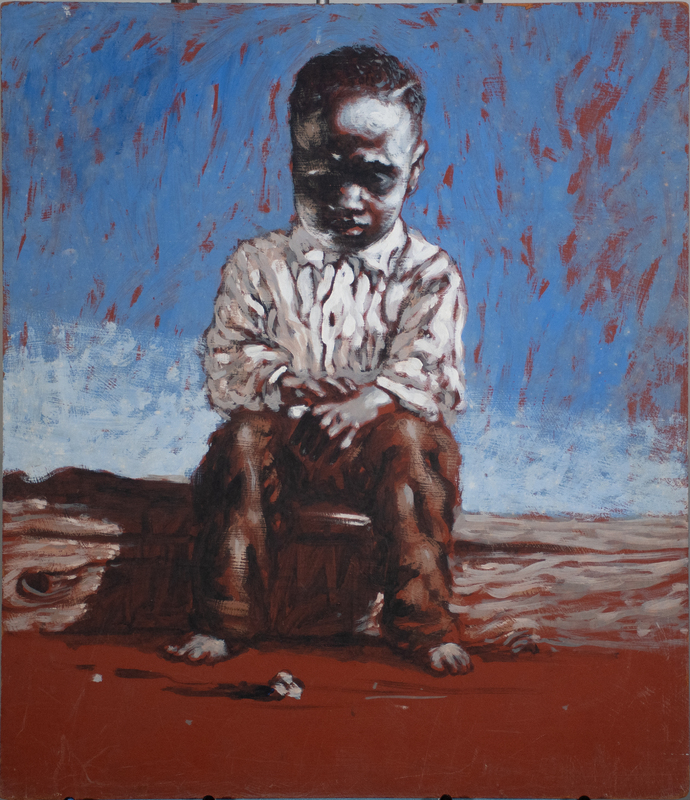
Oliver’s painting depicts a young boy sitting on the stump of a tree. The boy is barefoot and wearing a contemplative expression on his face. Oliver’s style in this painting is very free-form, with quick and abrupt brushstrokes throughout the composition. Oliver is one of the most successful art graduates from TSU, going on to be the only North American artist to design scarves for the fashion house Hermes.
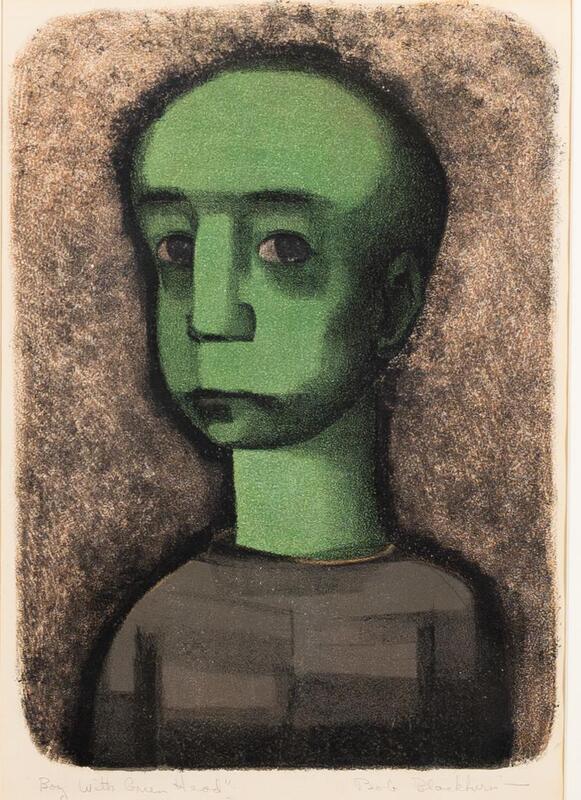
Robert Blackburn was a notable printmaker from Summit, NJ who grew up in Harlem, NY. "Boy with Green Head" is a print of a green-headed boy wearing a black shirt with a muted background. The boy is looking at the viewer with a pensive expression.
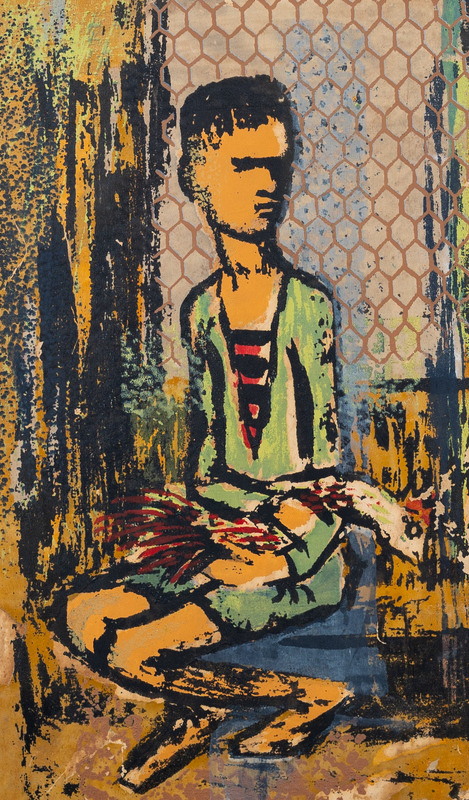
Howard E. Lewis was an Art professor and Korean War veteran from Columbus, OH. "Boy with Pet" depicts a young man sitting outside with a domesticated chicken. The bird rests in his lap as it sits along a curb in front of a chain link fence.