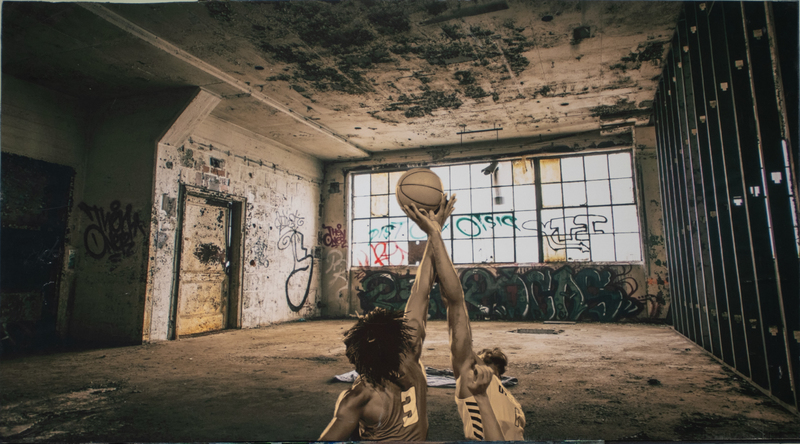
This work by Allen shows two basketball players reaching up for a jump ball amidst a run-down, graffiti-covered warehouse. The scene has minimal color, save for the graffiti, which enhances the abandoned atmosphere. Allen is an alumnus of Texas Southern and focuses on highlighting the Black experience in his work, often creating collages that include sports imagery.
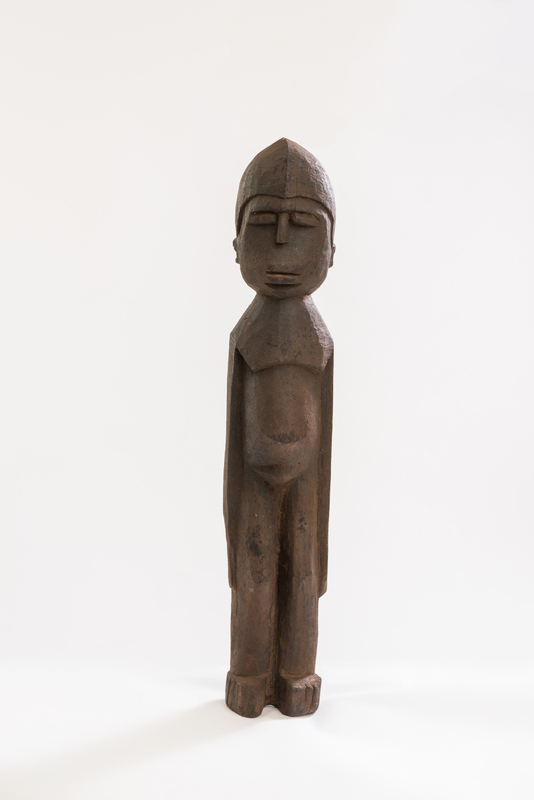
The Bateba, in Fante culture, is a guardian spirit that protects women and children from harmful field spirits. It symbolizes nurturing, protection, and resilience. At FAMU, the Bateba represents a cultural link to African heritage, emphasizing the protective role of spiritual figures in the lives of families and communities throughout history.
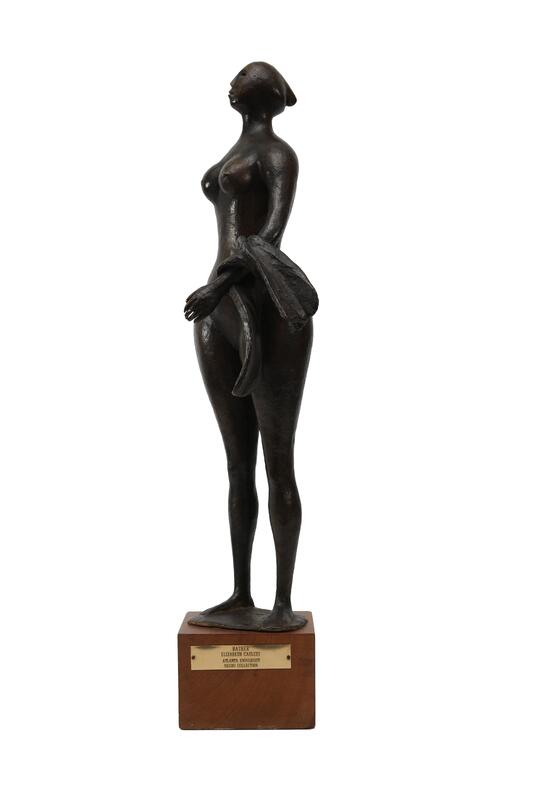
Elizabeth Catlett was an artist and educator from Washington, D.C., who repatriated to Mexico. "Bather" is a bronze sculpture of a woman preparing to bathe. The subject is nude, standing with their head held high with a towel hanging from their arm.
Beatrice Coats talks about her involvement in voter registration work with the Mississippi Freedom Democratic Party. She talks extensively about her experiences helping to register people to vote in 1964, after being a registered voter herself since 1946. That work led her to helping open a Head Start Center in Hollandale, Mississippi.
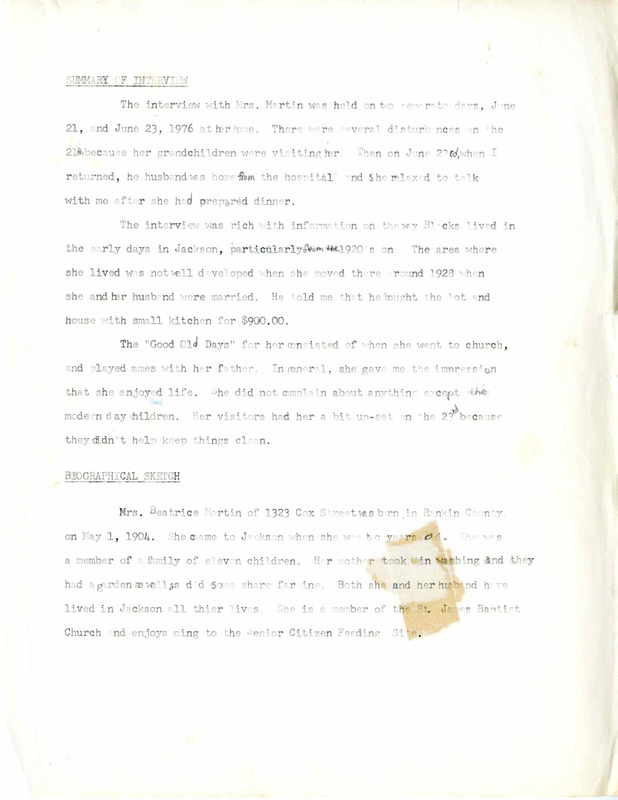
Beatrice Martin was born in Rankin County, Mississippi, in 1904 and moved to Jackson two years later. For her, the "Good Old Days" were when she was younger and went to church and played games with her father. She discusses getting married in 1928 and purchasing some land and a home in a part of Jackson that had not yet been fully developed.
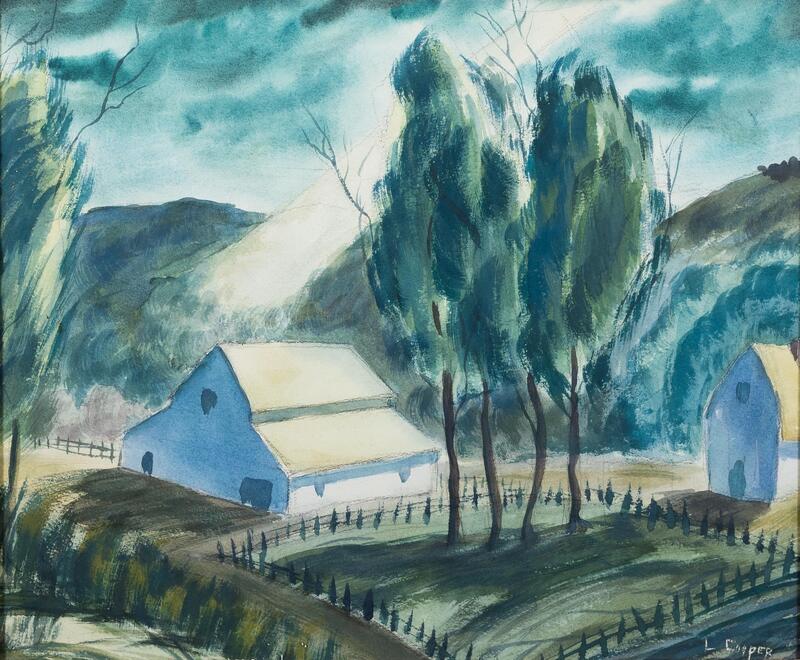
Leonard Cooper was a painter, musician, and piano teacher from Salinas, CA. "Before the Rains Came" illustrates a rural landscape prior to a rainstorm. It depicts two barns, a thicket of trees, a fenced area, and rolling hills under a dark cloudy sky.
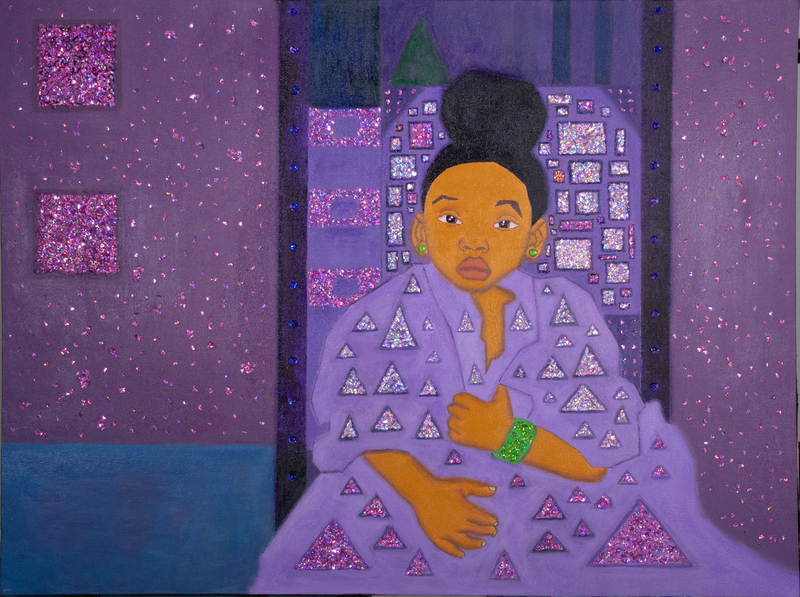
Hicks’ shimmering painting shows a young girl, clad in purple cloth, wearing emerald jewelry against a purple geometric background. Purple is often associated with royalty and the glittering elements add to the piece’s sense of luxury and decadence. Hicks graduated from Texas Southern University in 2018.
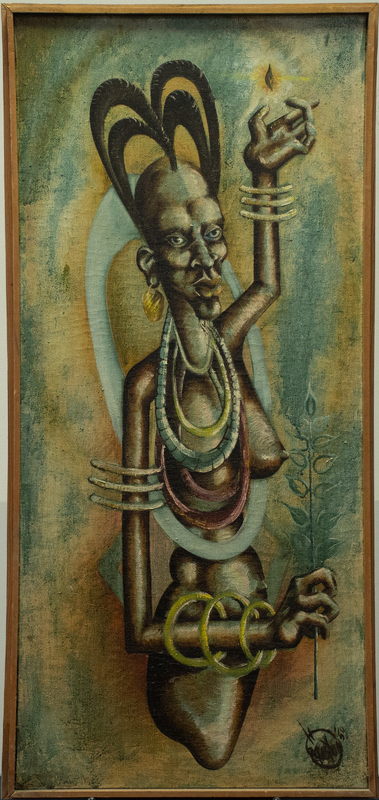
Michaux’s painting shows a nude woman draped with jewelry from her ears, neck, and arms. In her right hand, she holds a branch with leaves; a small flame extends from her left hand, above her head. After graduating from Texas Southern, Michaux went on to teach art at several universities, including HBCUs Southern University, North Carolina Central University, and South Carolina State University.
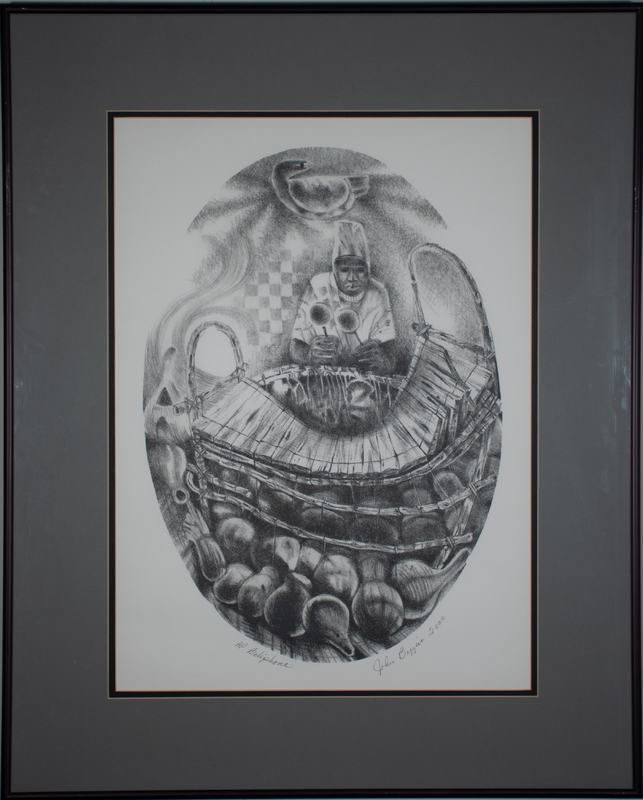
This Biggers print shows a figure playing a balafon, with a sankofa bird overhead. The balafon is a West African percussion and the sankofa bird signifies the importance of the past in improving the future. Taken together, they show the importance of music in preserving culture.
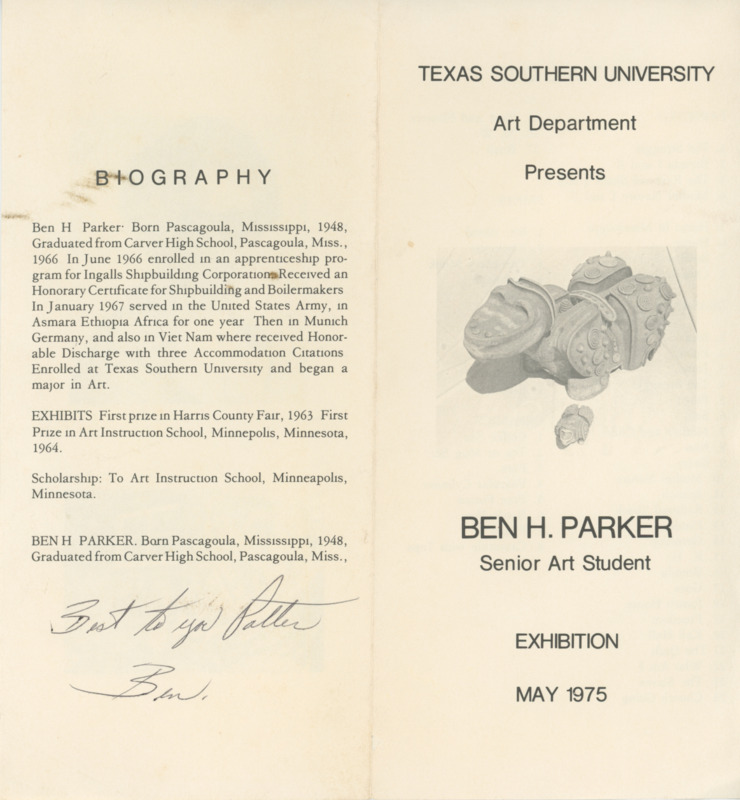
This is a brochure for Parker’s senior art exhibition. The culmination of the Texas Southern art curriculum is a senior exhibition where students showcase artwork created over the course of their undergraduate studies. The brochure features a photo of Parker, a brief biography, a catalog of the artwork featured in the exhibition, a photo of his terracotta sculpture, and a photo of his mural. It is inscribed with a note from Parker
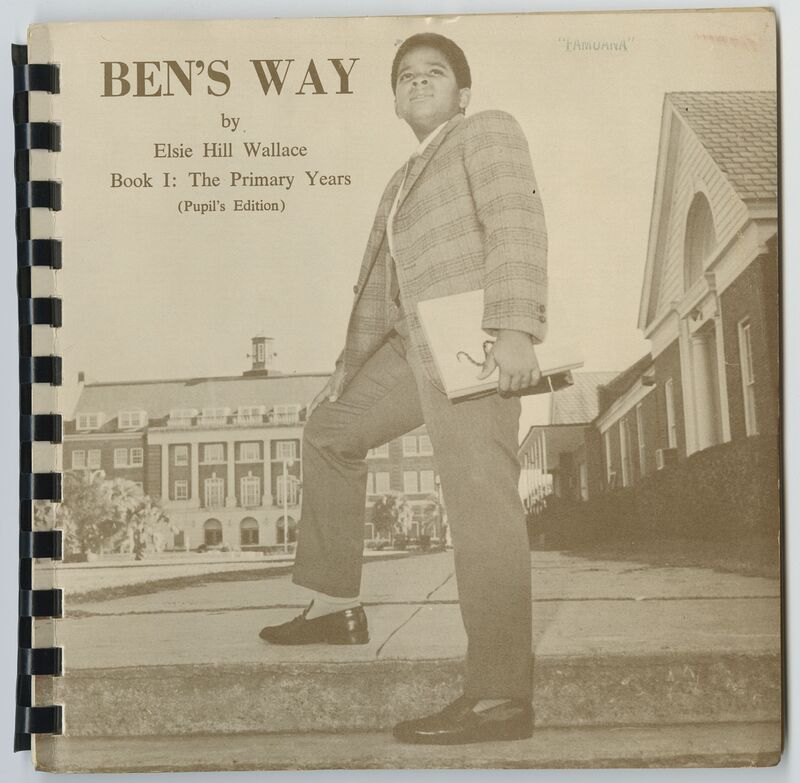
This dual-edition book, available in a pupil’s and parent’s version, includes a charming collection of short stories and poems inspired by B. L. Perry Jr.'s life. Accompanied by vivid illustrations, it bridges generations with creativity and heartfelt reflections.
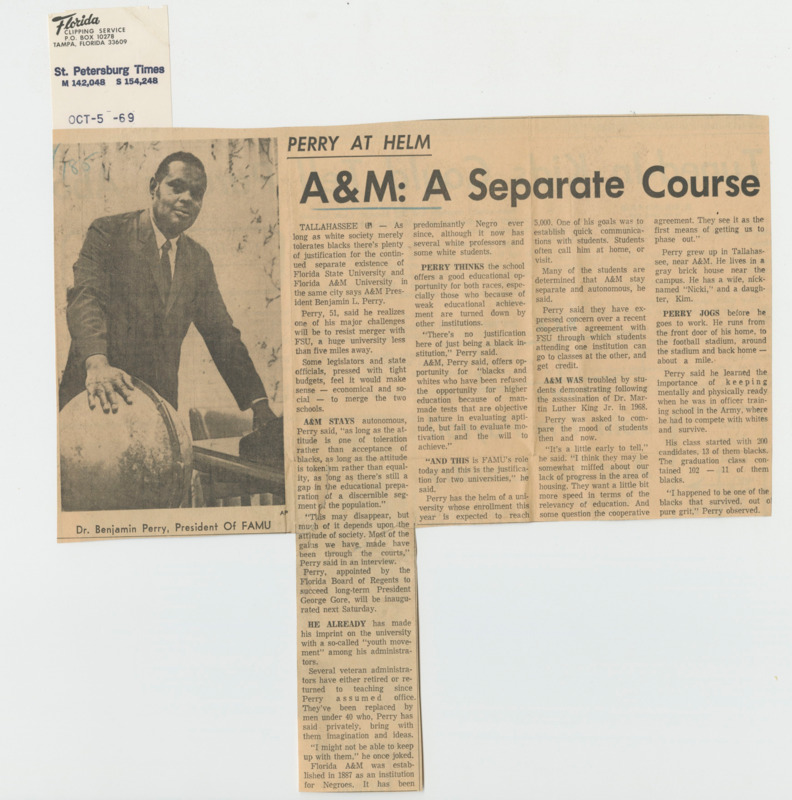
The St. Petersburg Times released this article on Florida A&M President Benjamin L. Perry as a profile feature piece. He vocalizes a resolute position on remaining autonomous and separate from neighboring, predominantly white institution, Florida State University, to fill “an educational gap” caused by “toleration rather than acceptance of blacks.”
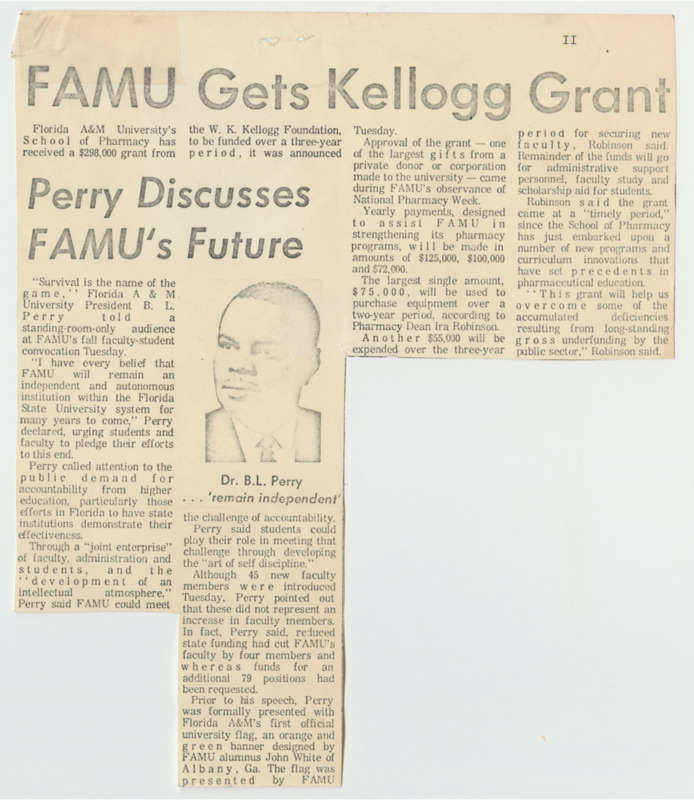
A Tallahassee Democrat newspaper clipping talks about a tumultuous period of the university’s history. Faculty member numbers were down, state funding was reduced, and talks of a merger between FAMU and Florida State were redundant. Despite this, efforts for funding were achieved, as with the Kellogg Grant to FAMU’s School of Pharmacy.
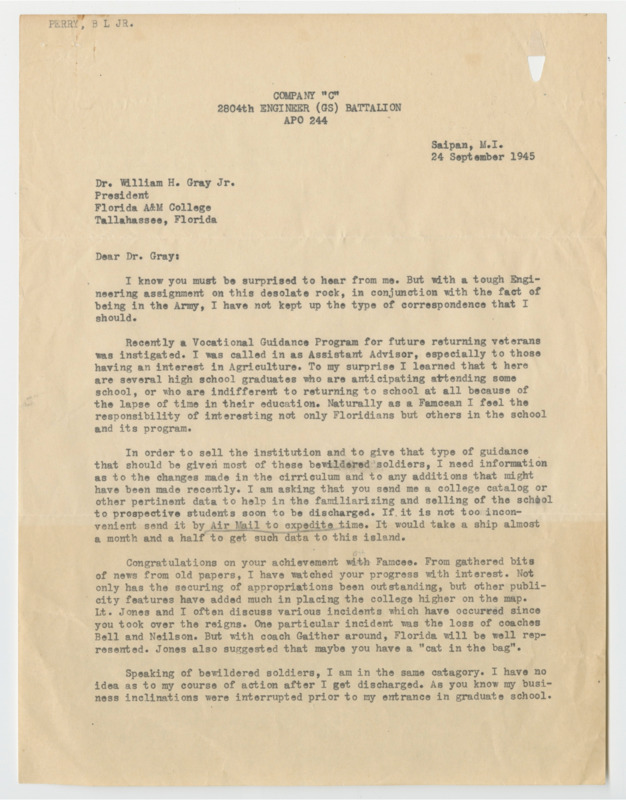
This letter between former Florida A&M president William H. Gray, Jr. and former Florida A&M president Benjamin L. Perry – when Perry was still a first lieutenant – discusses curriculum changes to a Vocational Guidance Program for future returning veterans. Perry was the Assistant Advisor and was to be discharged soon with no set plans afterward.
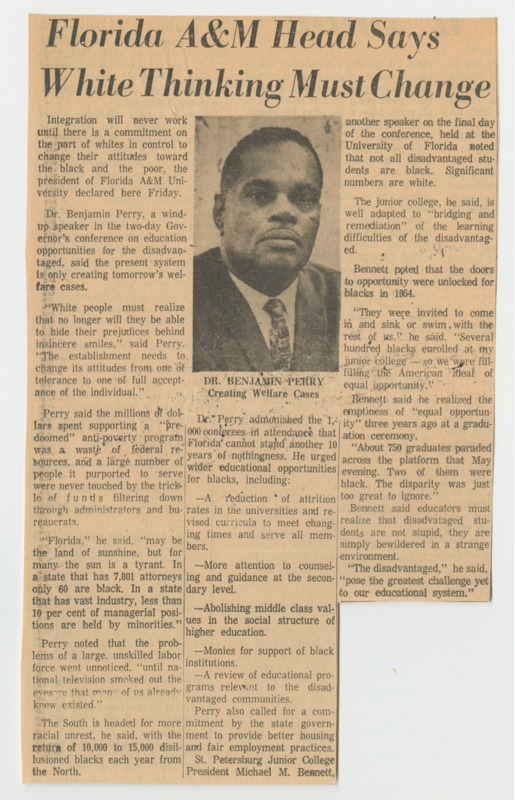
Florida A&M University President Dr. Benjamin L. Perry made bold statements during the Governor’s conference on education opportunities for the disadvantaged. He claimed that the only way to bring more fruitful educational opportunities is to address the problem at its root: white attitudes toward minority education.
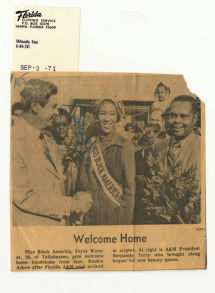
Joyce Warner, a 20-year-old junior at Florida A&M University, was crowned Miss Black Florida and represented the state at the Miss Black America Pageant at Madison Square Garden in New York. She won the title and is pictured here with Tallahsssee Governor Reubin Askew and FAMU President Dr. Benjamin L. Perry on her return home.
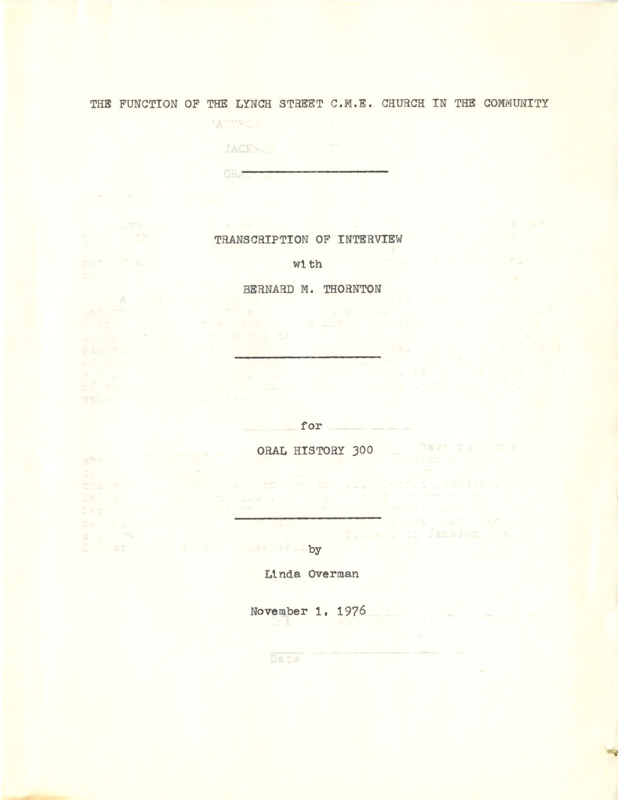
Bernard Thornton was born in 1908 in Natchez, Mississippi. He lived 53 of his 68 years in Jackson, Mississippi. The purpose of the interview was to learn information concerning the function of the Lynch Street C.M.E. Church in the community. Mr. Thornton talks about being a member of the church since 1925 and a trustee since 1945.
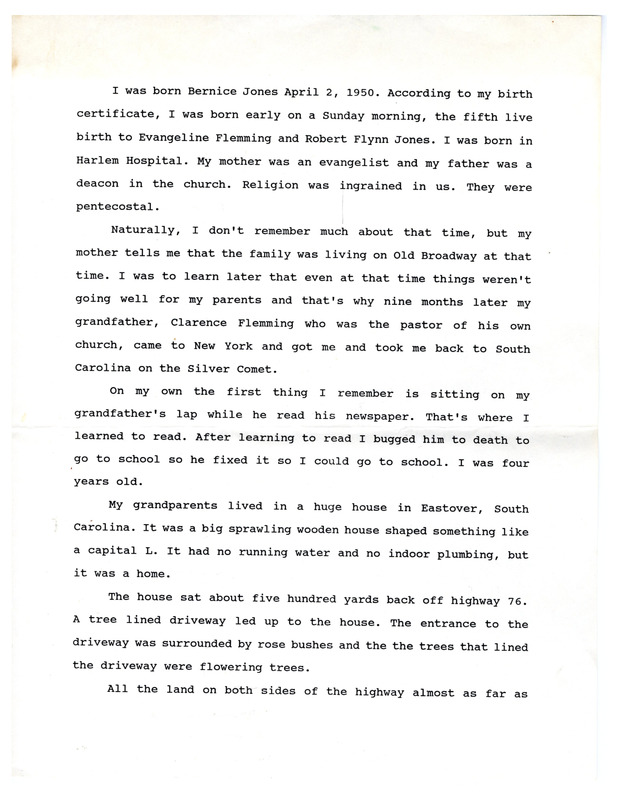
Bernice Jones (aka Safiya Bukhari) was a Black Panther Party member and vice president of the Republic of New Afrika. In this personal narrative, she tells her life story from the time of her birth in 1950 until her time in high school.
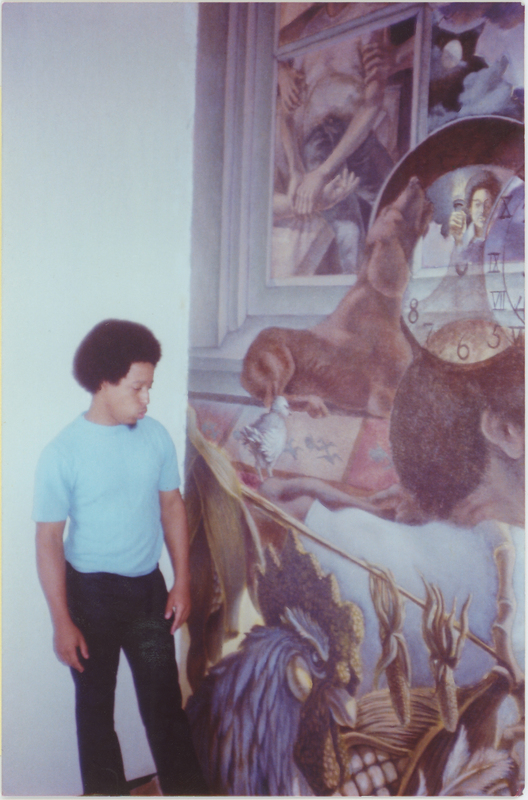
Texas Southern art alumnus Bertram (Bert) Samples is pictured here admiring his mural, which he painted on a first floor wall of Hannah Hall. Samples' mural shows the artist sleeping on his desk after his mother died, dreaming and remembering moments from his life. Samples went on to become one of the founders of Project Rowhouses, a Third Ward-based community art and social impact organization.
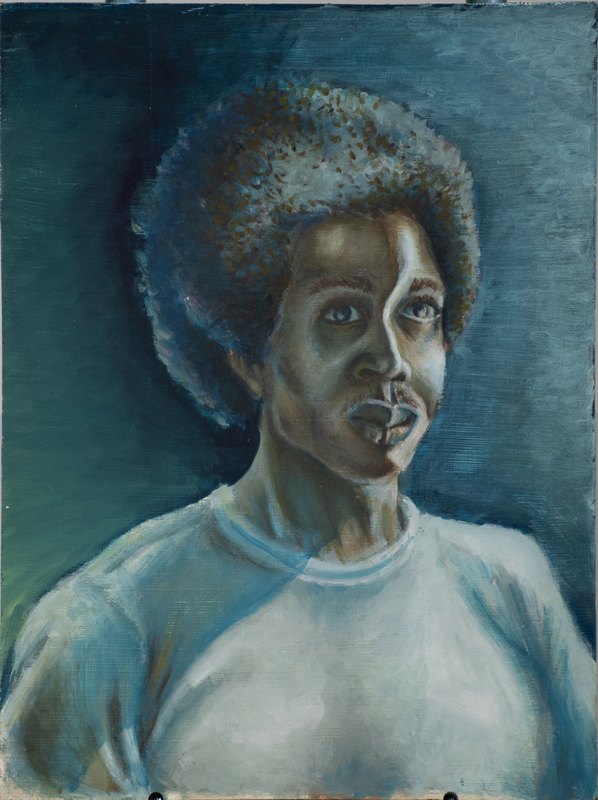
Samples’ painting is a self-portrait. During the elementary painting course, Texas Southern art majors are required to paint self-portraits. Samples’ classmates recall being intimidated and inspired by his talent and work pace when they sat next to him in the studio. Samples was one of the founders of Houston’s Project Row Houses and now works as an art conservator at the Museum of Fine Arts, Houston.
Samples’ senior notebook includes his written philosophy of art and photographs of the artist’s works. As a part of the Texas Southern art curriculum under Dr. John T. Biggers and Professor Carroll Harris Simms, students would create these notebooks to explain their artistry and showcase the works they created as students.
Bessie Funches began work as a teacher at the first Head Start in Gulfport, Mississippi (Harrison County Head Start) in 1966 and worked as a resource teacher for that summer. In 1973, Ms. Funches became Special Service Director of Harrison County Head Start. She talks about her experiences in the classrooms with the students and other workers.
Bessie Warren took a job in 1972 at Lift Incorporated Community Action Agency in Tupelo, Mississippi, where she worked as a rotating teacher’s assistant. Later, she became Head Start Educational Coordinator and Career Development Officer, positions she had held for 12 years up to the time of the interview.
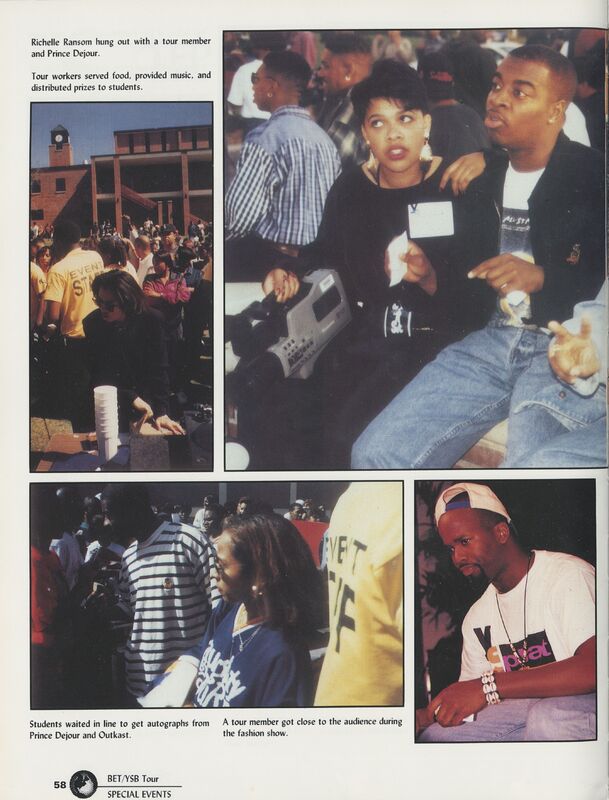
Black Entertainment Television (BET) was the first cable network dedicated to African Americans. In February 1994, BET and the Young Sisters and Brothers Magazine hosted their first annual Campus Tour at Florida A&M University, with events on professional media opportunities and a special taping of “Rap City Live,” where OutKast performed.
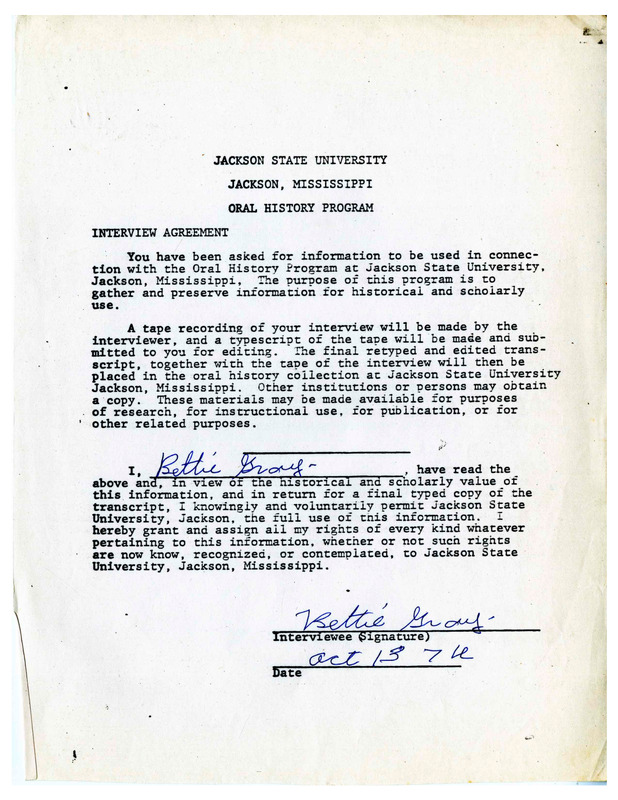
Betty Gray was born in Jackson, Mississippi, in 1903. She remembers the "Good Old Days" as a child growing up in Jackson when school days, games, and family all made for pleasant times. She also talks about her memories of the Farish Street District as well as Emmett Till and Martin Luther King, Jr. The transcript is edited with handwritten notes.
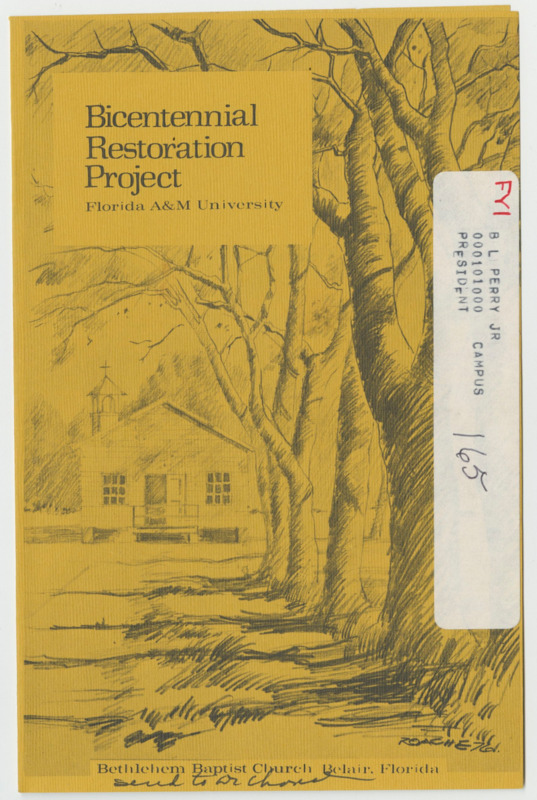
This collection includes a pamphlet explaining the Bicentennial Restoration Project, an initiative undertaken by FAMU’s Black Church Restoration Committee to mend the Bethlehem Church, and a check. The last page of the pamphlet was photocopied and attached to a $10 donation check to the FAMU Foundation made by B. L. Perry, Jr. on November 2, 1976.
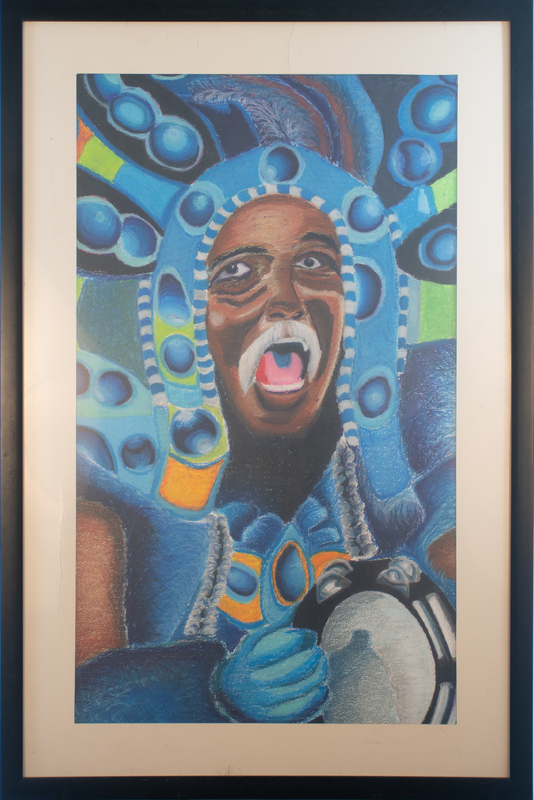
Remble's drawing portrays renowned Mardi Gras Indian chief David Montana. Mardi Gras Indians refers to Black New Orleanians who draw from Creole, Indigenous, African, and Afro-Caribbean tradition to develop a unique form of visual culture and resistance. Remble, a Texas Southern graduate, was born in New Orleans and later moved to Houston. In his own words, he aims to "explore and preserve the diverse subcultures of the American South" through his art.
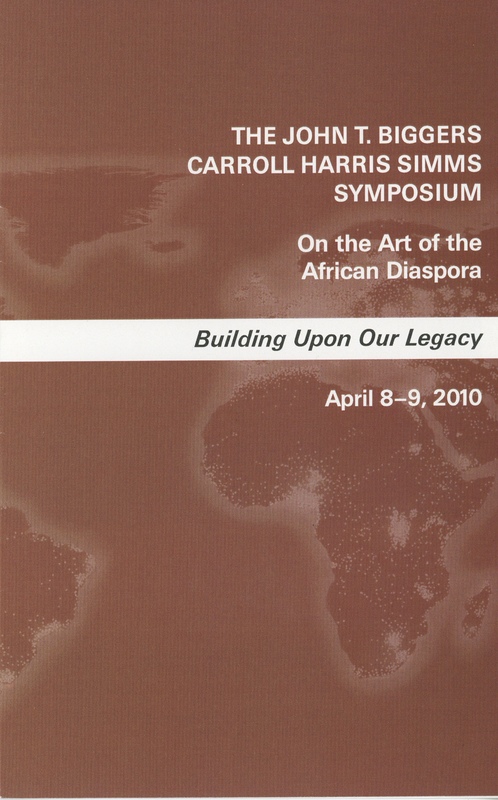
This is a brochure for the April 2010 John T. Biggers Carroll Harris Simms Symposium On the Art of the African Diaspora: Building Upon Our Legacy. This regular event from the University Museum at Texas Southern brings together artists, historians, educators, students, alumni, and members of the public to celebrate the legacy of Biggers and Simms, who worked together to build TSU’s art department from the ground up.
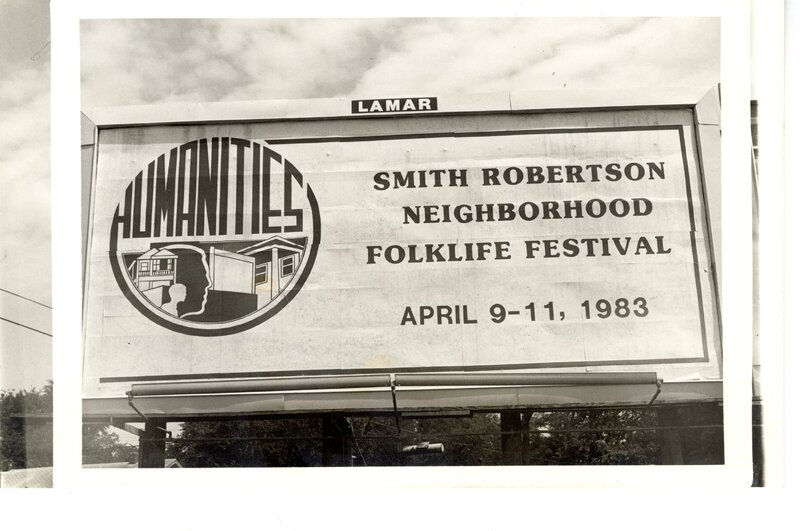
A photograph of a billboard advertising the Smith Robertson Neighborhood Folklife Festival, April 9-11, 1983. The festival was a one-time grant sponsored event held on the grounds of the Smith Robertson Museum to celebrate the rich history and culture of the Farish Street Historic District.