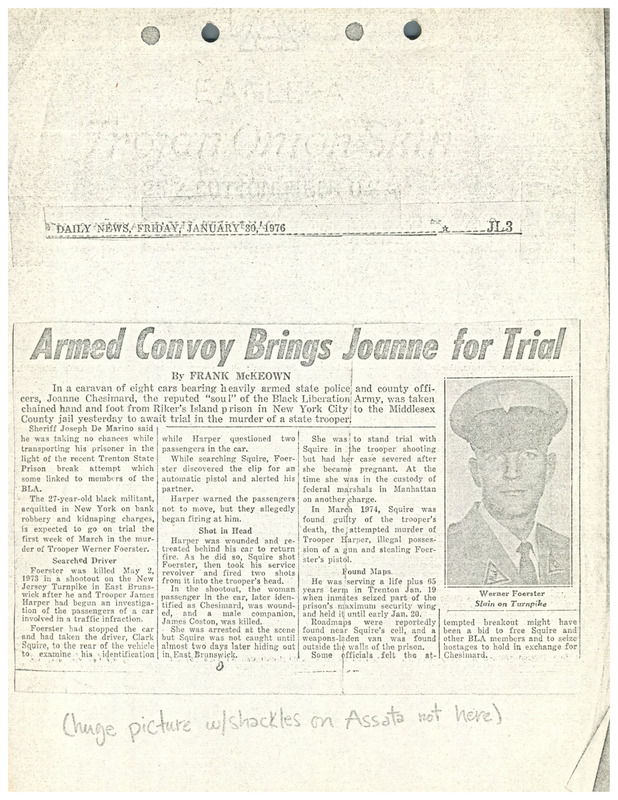
A newspaper article from Daily News about Assata Shakur (JoAnne Chesimard) being in New Jersey to stand trial for the May 1973 killing of a state trooper. Shakur was convicted in 1977 of killing the state trooper during a shootout, escaped prison in 1979, and is still wanted by the FBI.
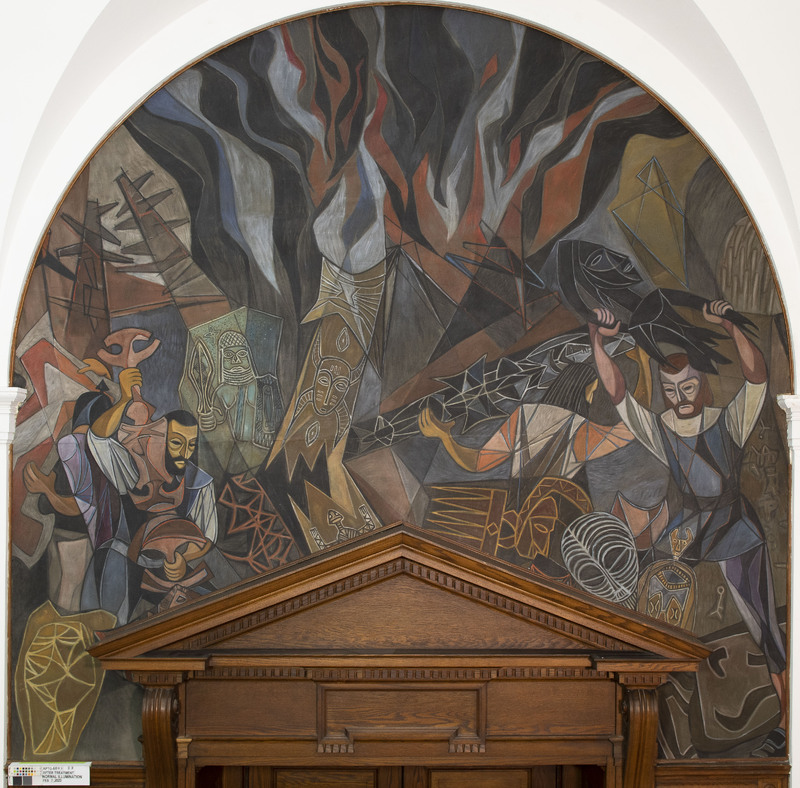
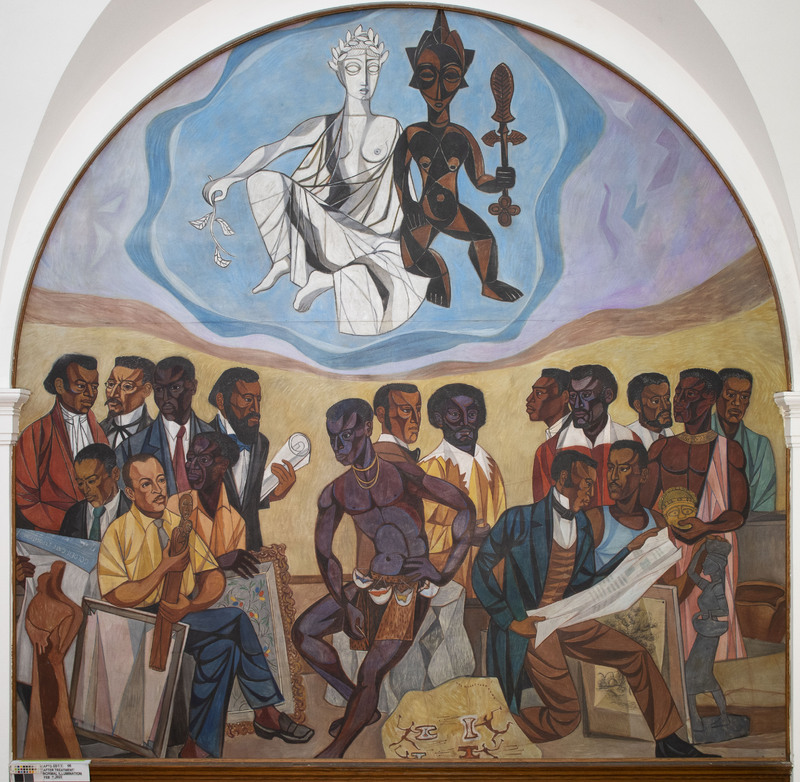
Hale Aspacio Woodruff was an artist and art educator known for his murals, paintings, and prints from Cairo, IL. "Dissipation," the third panel in the Art of the Negro mural series, portrays the theft and disruption of African art and culture by Europeans through colonization.
Hale Aspacio Woodruff was an artist and art educator known for his murals, paintings, and prints from Cairo, IL. "Influences," the fifth panel in the Art of the Negro mural series, conveys the role of traditional African art in the development of 20th-century Western art movements.
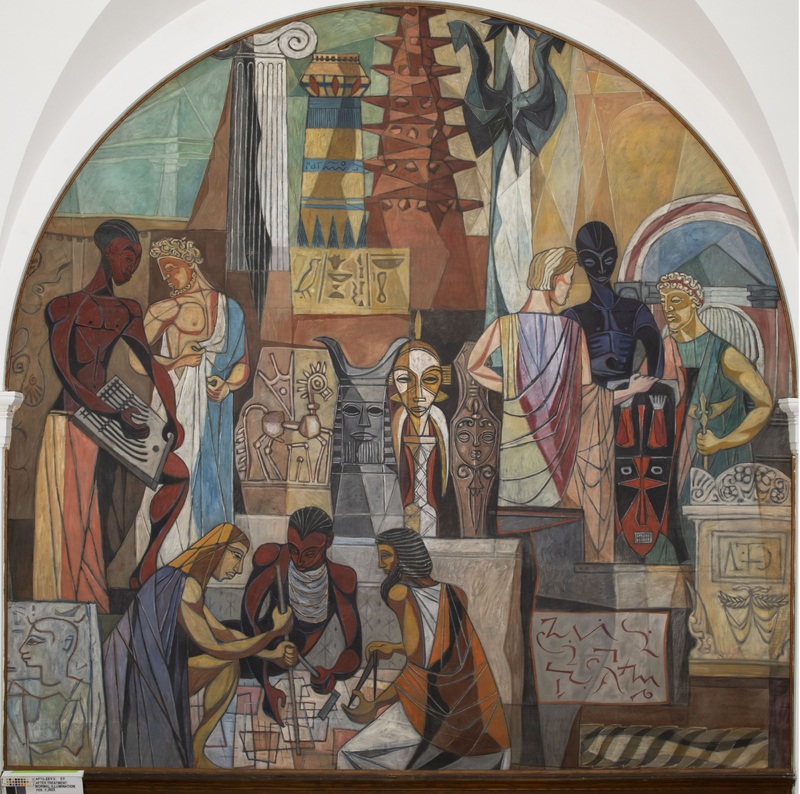
Hale Aspacio Woodruff was an artist and art educator known for his murals, paintings, and prints from Cairo, IL. "Interchange," the second panel in the Art of the Negro mural series, depicts Africans exchanging knowledge of arts and sciences in antiquity.
Hale Aspacio Woodruff was an artist and art educator known for his murals, paintings, and prints from Cairo, IL. "Muses," the sixth panel in the Art of the Negro mural series, presents a canon of seventeen male African diasporic artists from the 13th-20th centuries alongside their medium.
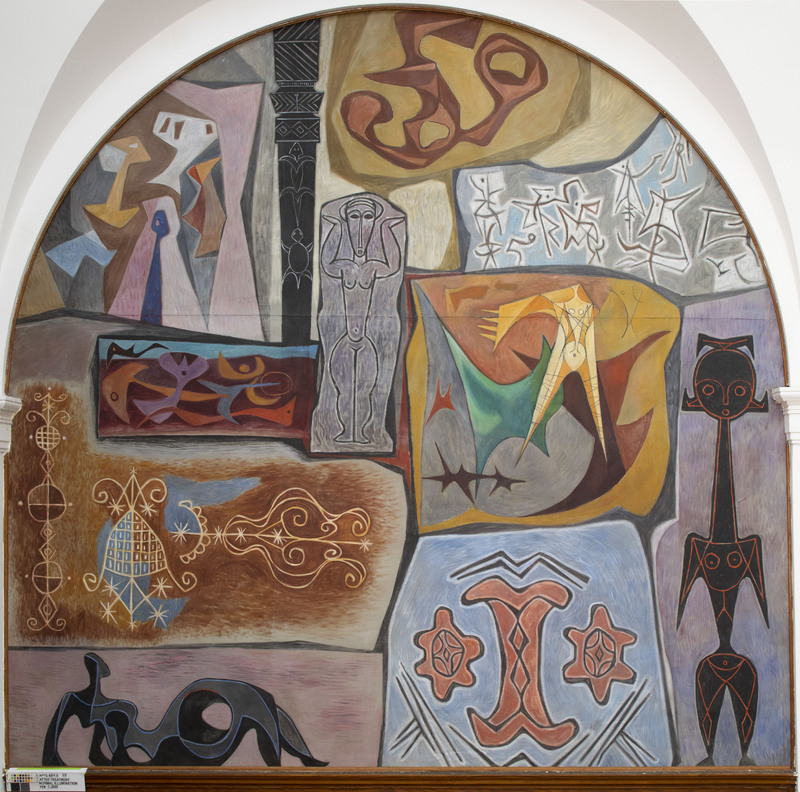
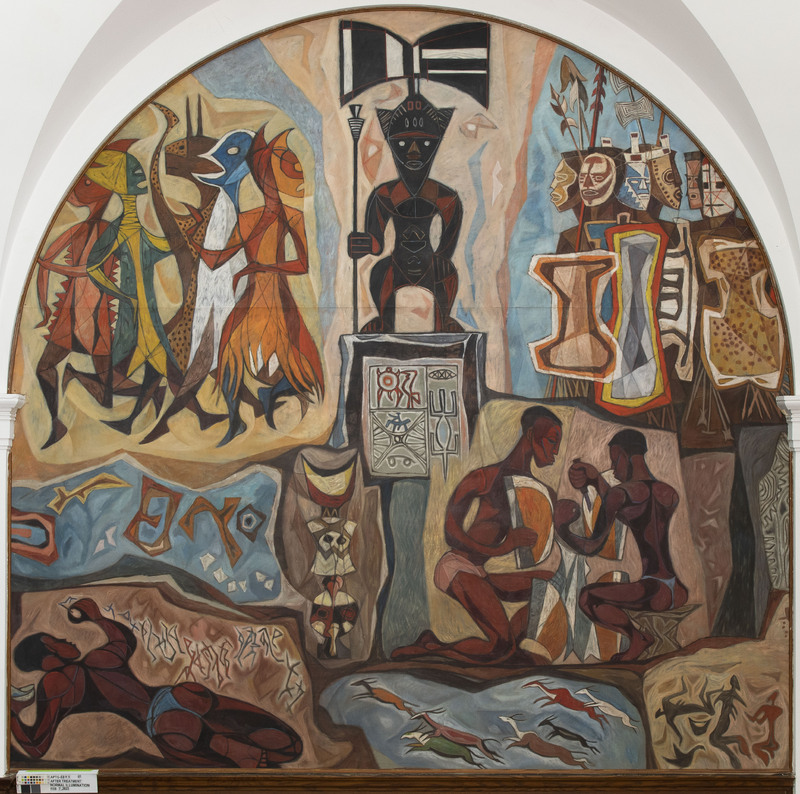
Hale Aspacio Woodruff was an artist and art educator known for his murals, paintings, and prints from Cairo, IL. "Native Forms," the first panel in the Art of the Negro mural series, illustrates the range, diversity, and function of art in traditional African societies.
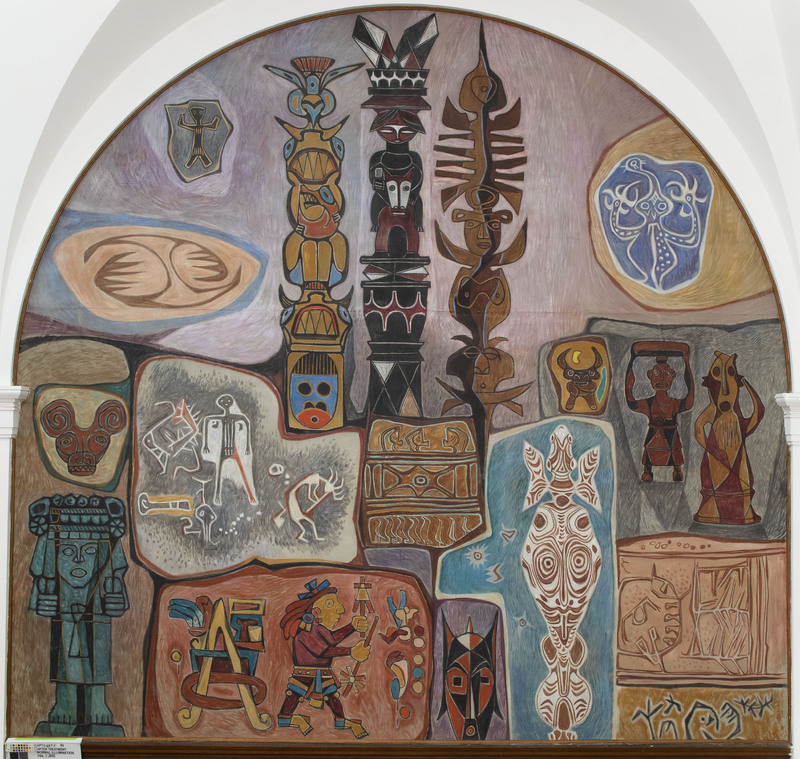
Hale Aspacio Woodruff was an artist and art educator known for his murals, paintings, and prints from Cairo, IL. "Parallels," the fourth panel in the Art of the Negro mural series, shows the innate connection between non-European indigenous cultures despite geographic divisions.
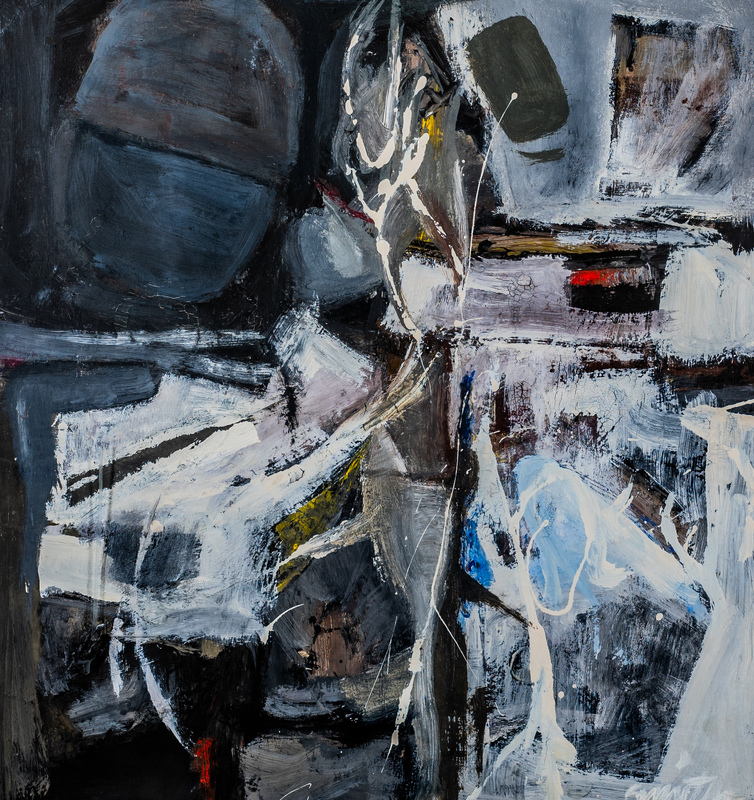
Alvin Smith was an artist from Brooklyn, NY. "As in an Arctic Sunrise" is an abstract depiction of the sunrise in a frozen landscape. Muted yellows shine through an array of black, white, and muted blues.
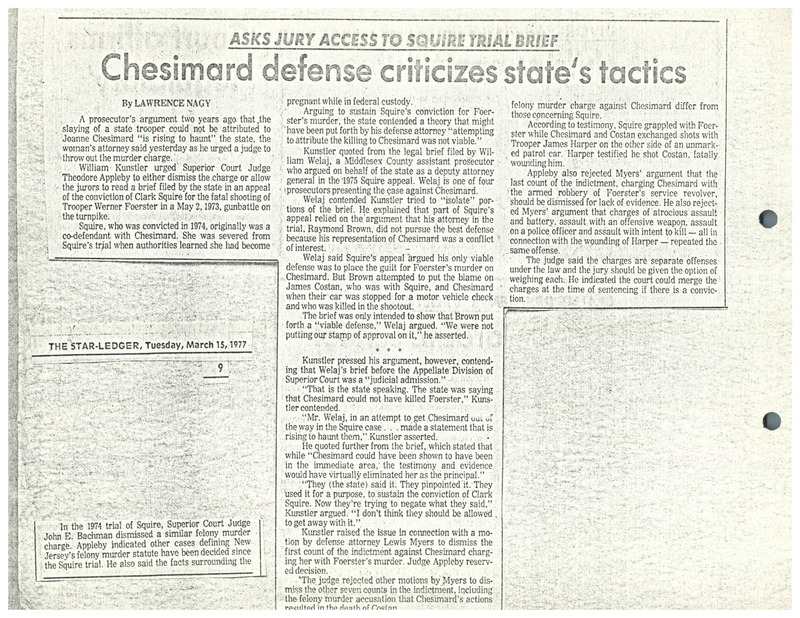
A newspaper article from The Star Ledger about the defense team for Assata Shakur (JoAnne Chesimard), who was on trial for the 1973 killing of a state trooper, opening their case by calling for dismissal of the murder charge on the grounds that she cannot be convicted since Clark Squire has already been convicted of the killing.
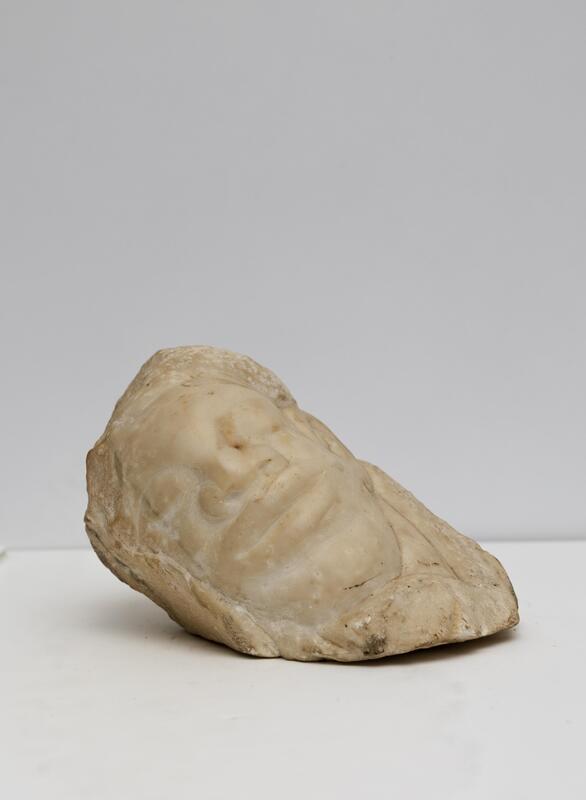
Gregory L. Ridley, Jr., was an artist from Smyrna, TN. "Asleep in Stone" is a marble sculpture of a person asleep. The subject's face is subtly carved into the marble, giving the impression that the subject is not separate from the stone.
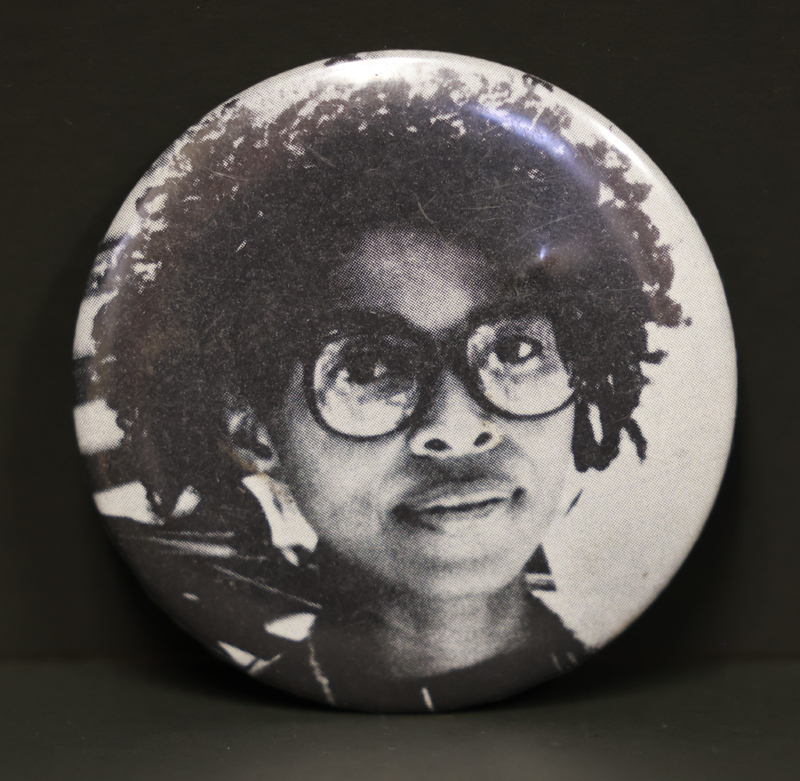
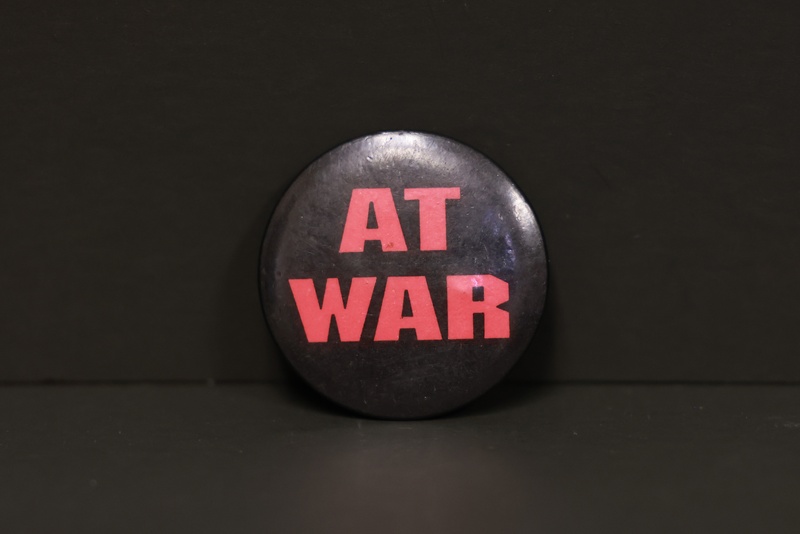
A button with a black and white photo of Assata Shakur. She is a political activist and was a member of the Black Liberation Army (BLA), an organization that engaged in armed struggle with the U.S. government. In 1977, she was convicted in a cop-killing case from 1973. Escaping prison in 1979, she has lived in political asylum in Cuba ever since.
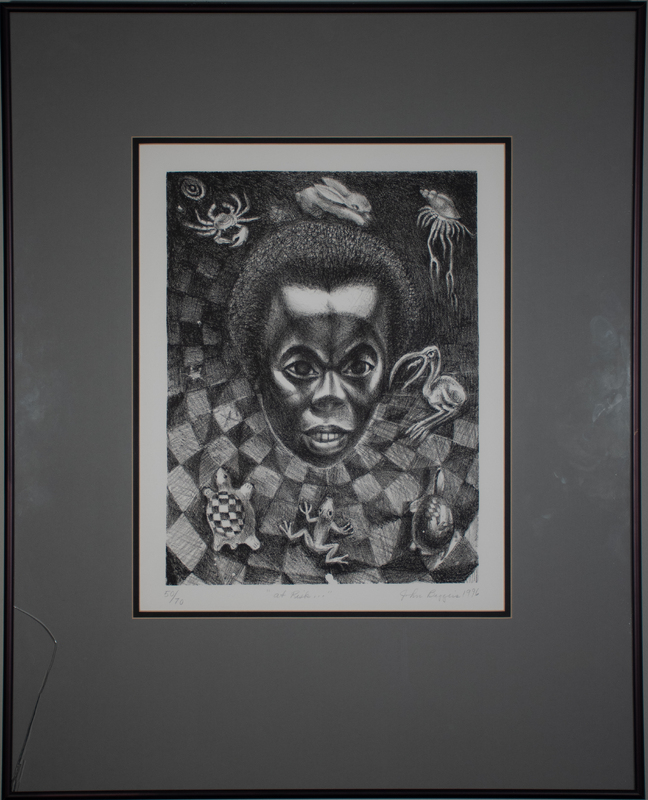
This Biggers print shows a person's head surrounded by animals and a checkerboard. Checkerboards and swirls are common motifs in Biggers' work, which he referred to as sacred geometry. The pictured animals are symbolic; for instance, tortoises represent longevity and rabbits represent bad omens.
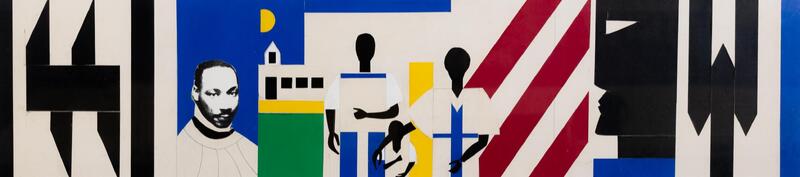
Romare Bearden was an artist, author, and songwriter from Charlotte, NC. "Atlanta Mural" is a maquette of a mural created for City Scenes '76-'77, the National Paint and Coatings Association bicentennial. Bearden includes the Kente symbol, Dr. Martin Luther King Jr's head, the silhouette of a Black family, a church, and a plot of land to represent the African American influence in the city.
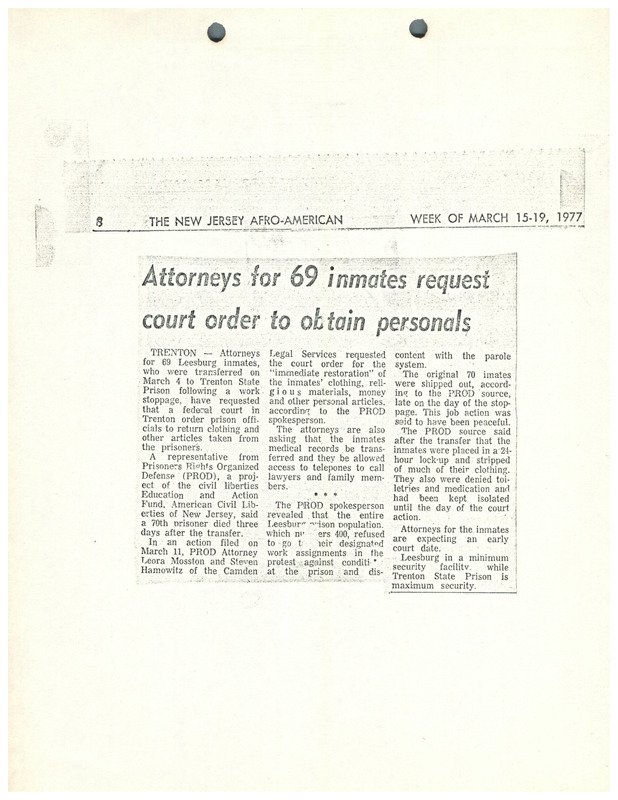
A newspaper article from The New Jersey Afro-American about prisoners who refused work assignments as a protest over living conditions. The prisoners were transferred and denied their personal belongings, telephone calls, and medical care. The group Prisoner’s Rights Organized Defense (PROD) asked a judge to restore everything for the inmates.
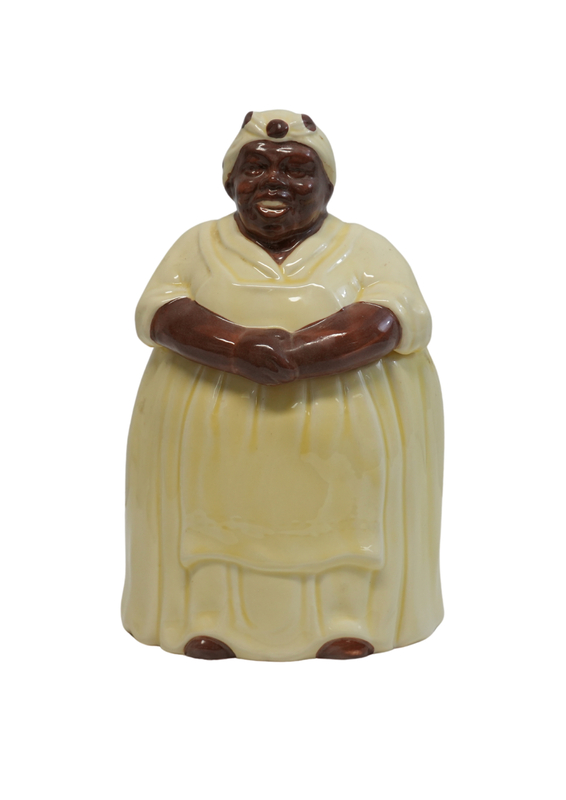
This ceramic cookie jar was part of a collection released by Ohio-based company Mosaic Tile. Albeit rare, the original and most common reproduction is the version depicted here, standing around 13 inches tall with a yellow dress and yellow headwrap. However, the dress can show up in a variety of rarer colors such as blue, peach, and green.
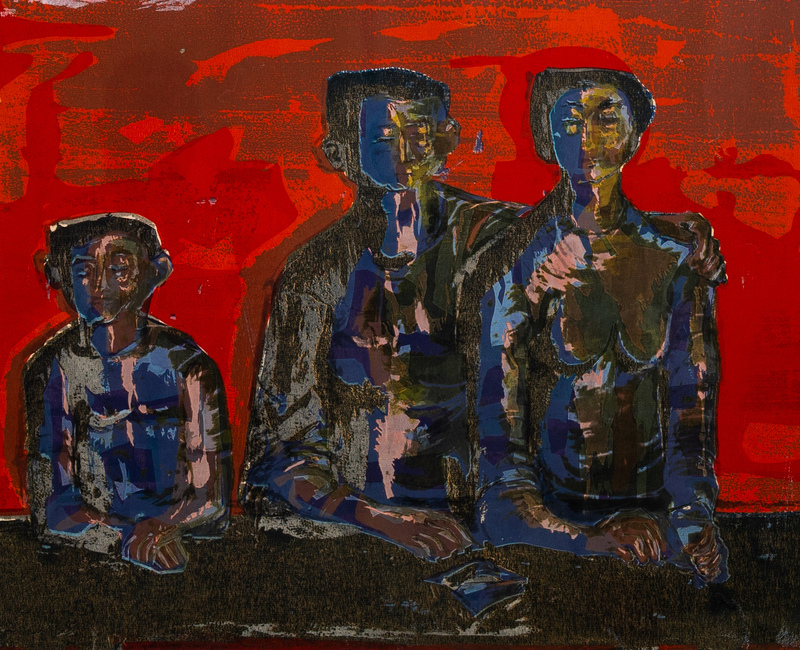
John Payne was an artist from New Orleans, LA. "Awaiting the Welfare Agents" is a mixed-media depiction of a traditional family with pensive expressions. They are sitting together preparing for a visit from a representative of the Department of Human Services.
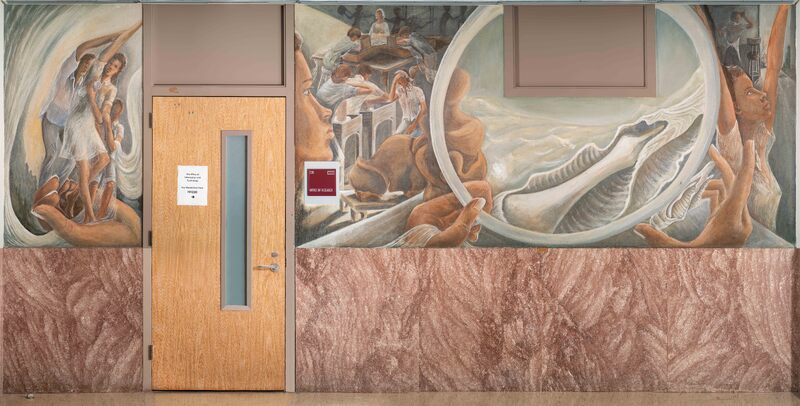
Gordon’s mural examines her own life and personal development. A wispy fabric running through the mural serves as a metaphor for her emerging self-awareness; this motif is found in some of her other works. Gordon’s mural showcases herself working on several art projects from her undergraduate period.
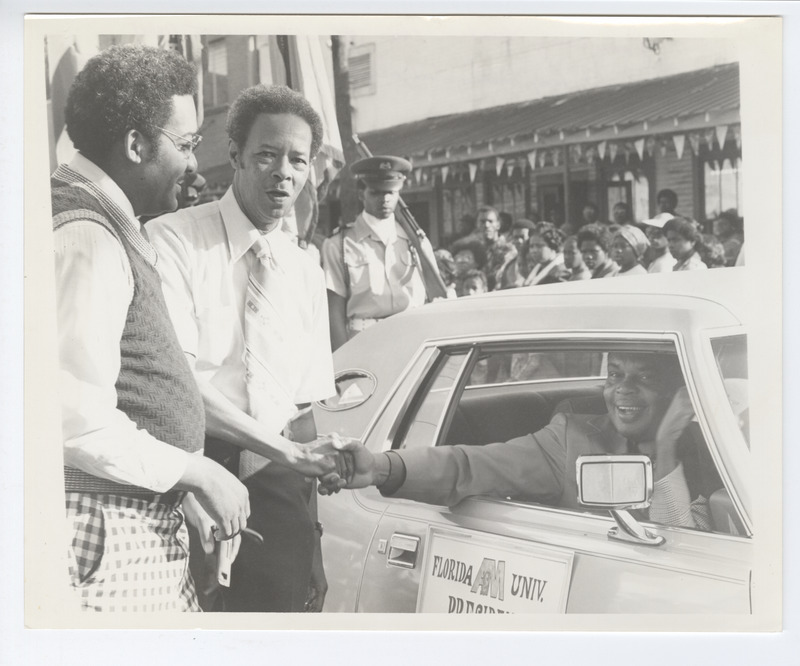
This photograph was taken at Florida A&M University’s annual Homecoming Parade on October 18, 1975. As the procession strolled through Frenchtown, a historic Black, middle-class Tallahassee neighborhood, someone shot University President B. L. Perry shaking hands with Mr. Roberts of Economy Drugstore, a Black-owned pharmacy vital to the community.
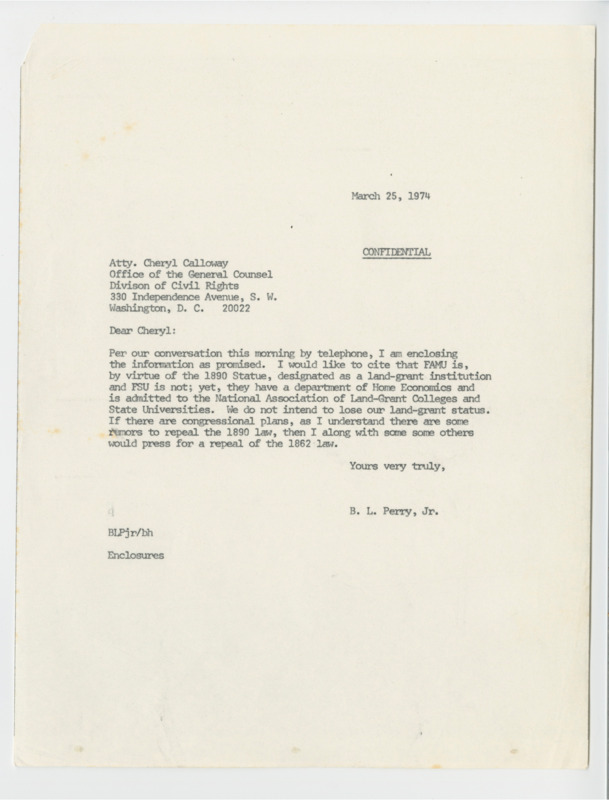
In a letter from B. L. Perry, Jr. to Attorney Cheryl Calloway of the Office of the General Counsel under the Division of Civil Rights, Perry threatens legal action against the federal government for threats to Florida A&M’s land-grant status and access given to non-land-grant institutions, like Florida State University.
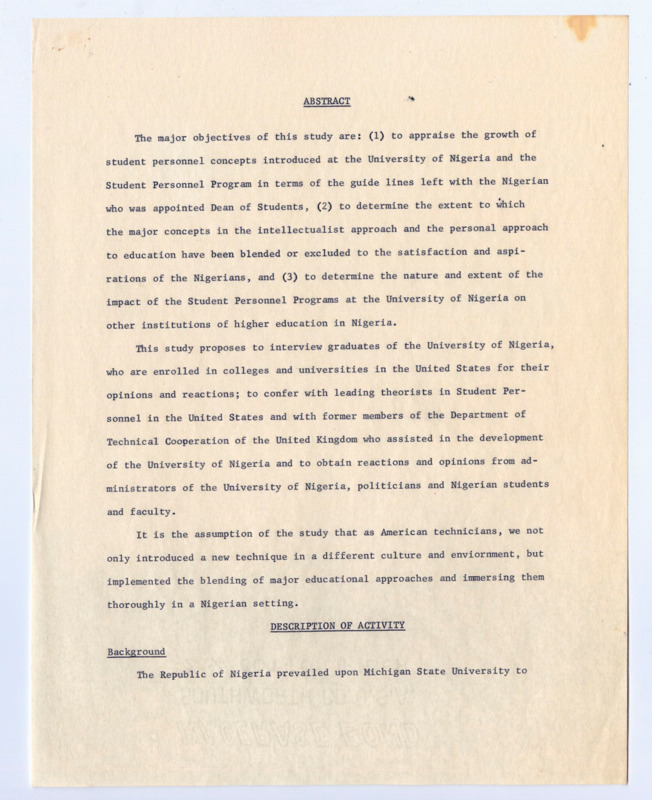
This abstract presents a detailed analysis of the logistics needed to successfully achieve the collaboration between Michigan State University, the University of Nigeria, and other higher education institutions. It details the securement of proper documentation, professional contacts, and the extent of the curricula of this unique venture.
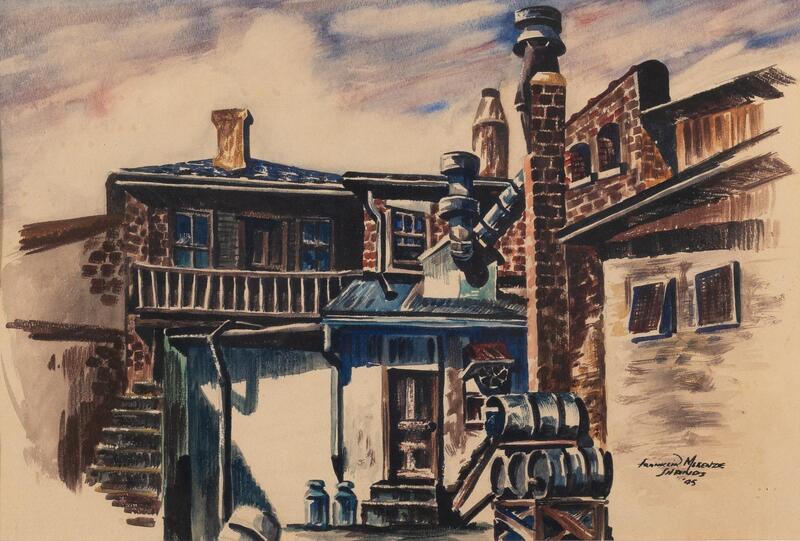
Franklin Shands was a painter from Cincinnati, Ohio. "Back Way" shows the rear view of conjoined brick buildings with chimneys, a staircase, and a balcony. A door sits at the center of the painting, with four stacked barrels on the right.
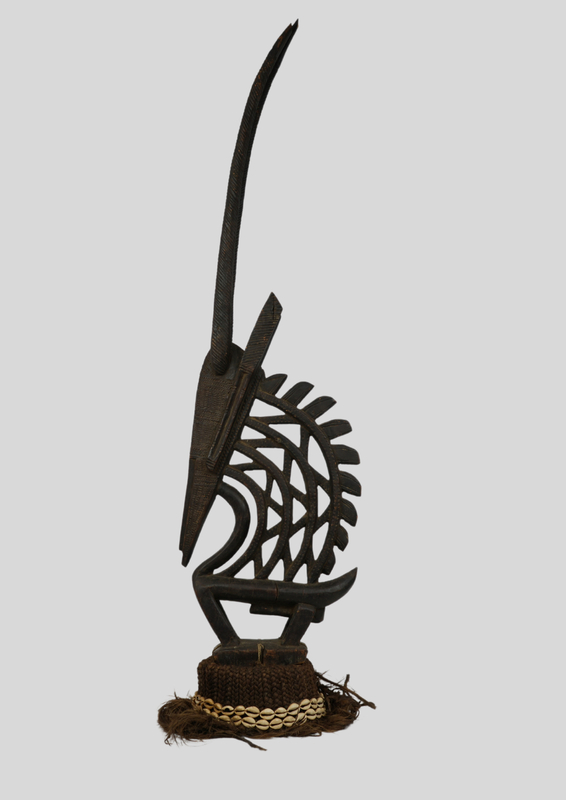
The agricultural society of the Bamana people in West Africa (mainly Mali), also known as Bambara, honors Ci Wara, the mythical being they believe granted them the gift of farming, through wooden carved headdresses. This sculpture combines the features of humans, antelopes, and other native animals for performances celebrating successful farmers.
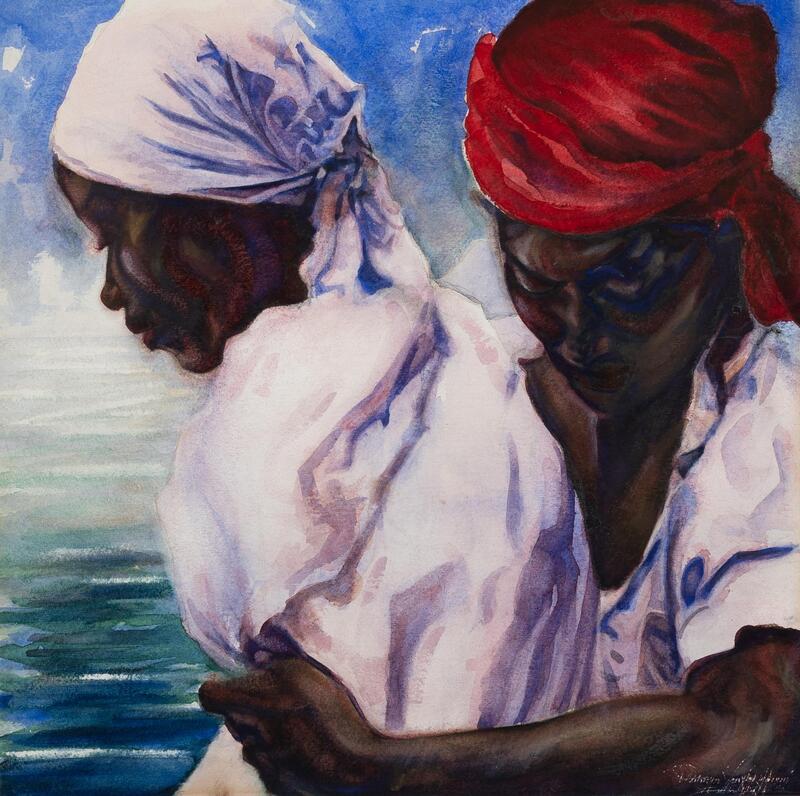
Romeyn van Vleck Lippman was a 19th-century painter and educator. "Baptismal (I Give This Child to Baptism)" depicts a religious scene of a woman preparing to baptize a girl. Both female subjects are dark-skinned and standing in water, dressed in white, under a dark blue sky. The woman is wearing a red kerchief, and the girl's is white.
Barbara Strauss was a member of the board of directors of the Bethlehem Center in Jackson, Mississippi, a United Methodist Church organization that does work in impoverished communities. She talks about her extensive work in these communities and the Bethlehem Center sponsoring the opening of the first Head Start in Jackson.
Barbara Mason discusses the beginnings of Head Start in Utica, Mississippi, in 1965 and sending her daughter to attend the Head Start Center at St. Mark's Catholic Church. She goes on to talk about working at a Head Start center in Jackson, Mississippi, as a driver for the kids in the program.
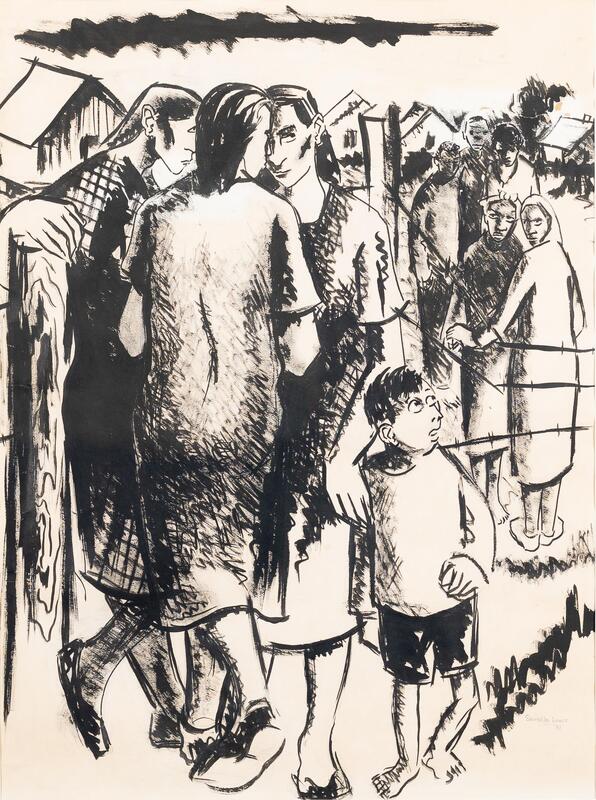
Samella Sanders Lewis was a printmaker, painter, sculptor, and art historian from New Orleans, LA. "Barrier" is a drawing that depicts the physical and social barriers between groups of people. In the foreground, three women and a boy suspiciously look at a group of townspeople who return their stare from the other side of a barbed wire fence.
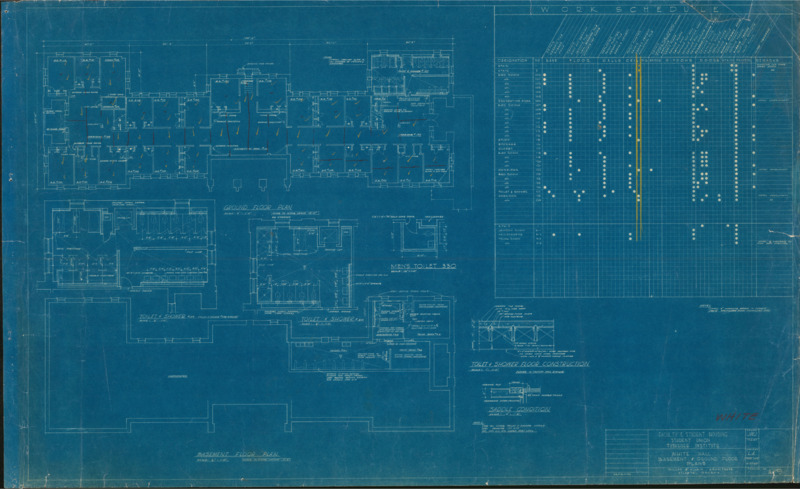
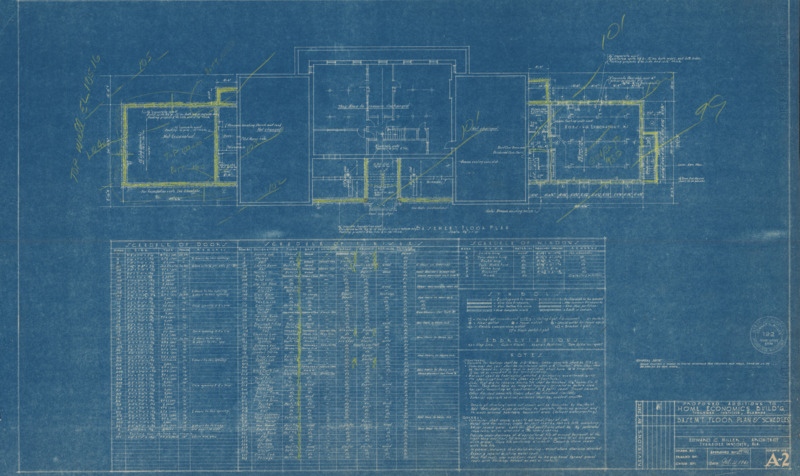
A annotated blueprint for the basement floor plan of home economics buildings with measurements for lab wall renovations. Drawing also includes door schedule, finishes schedule, and window schedule.