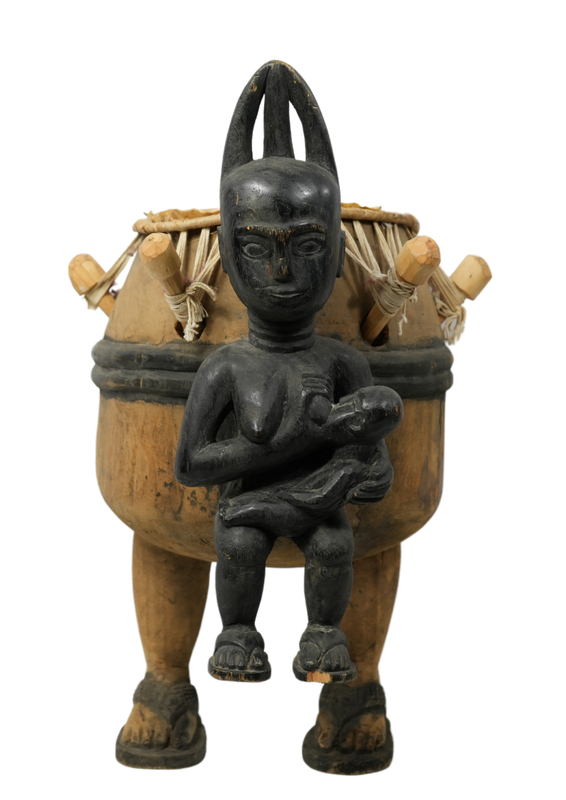
This drum, fastened from wood and animal hide, is reminiscent of an Akan Kettle Drum from Ghana. The Akan are an ethnic group that includes the Fante, Asante, and Akuapem cultures; their culture is most prevalent in present-day Ghana. This type of drum was used for any event that required entertainment (except for court-reserved performances).
Alfred Rhodes was part of the original 8-week Head Start program in Quitman County, Mississippi, as a teacher. He talks about his work as a teacher and his later work out of Tougaloo College to supervise Head Start Centers in 4 counties and going into communities to open new centers.
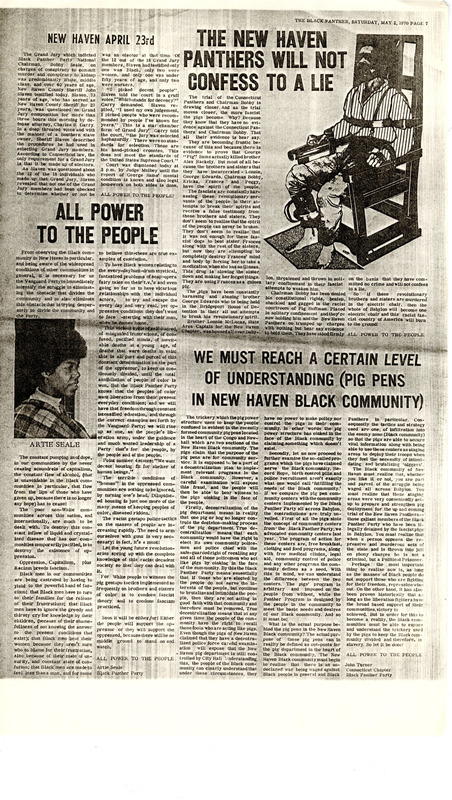
A newspaper article from The Black Panther written by party member and wife of Black Panther founder Bobby Seale. The article explains the psychological warfare committed on Black people as a way to divide and conquer the movement. The author states that the Black Panther party will act as a liberation army for the oppressed people.
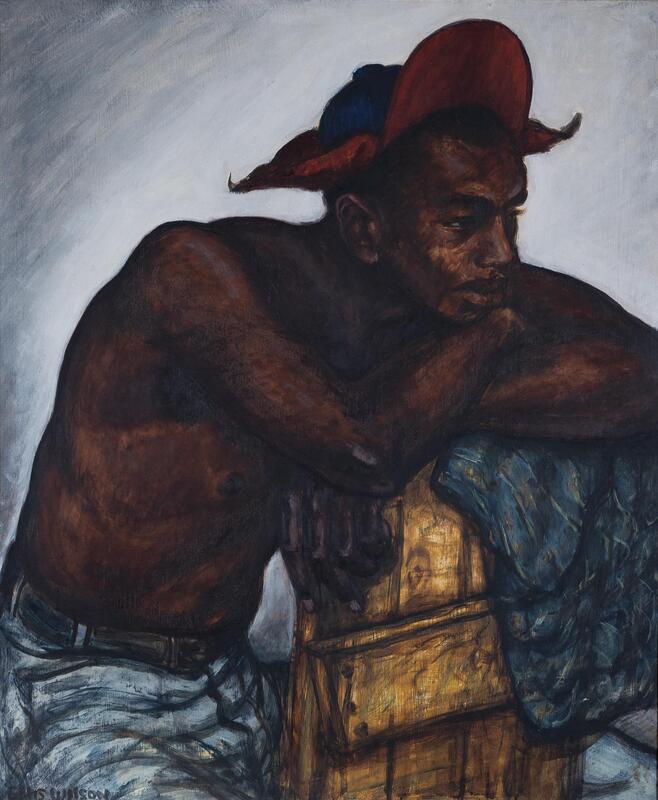
Ellis Wilson was an artist from Mayfield, KY. "Allen" is a portrait depicting a shirtless, seated Black man wearing an aviator hat. The subject is leaning against the backrest of a wooden chair with his arms crossed, looking away from the viewer.
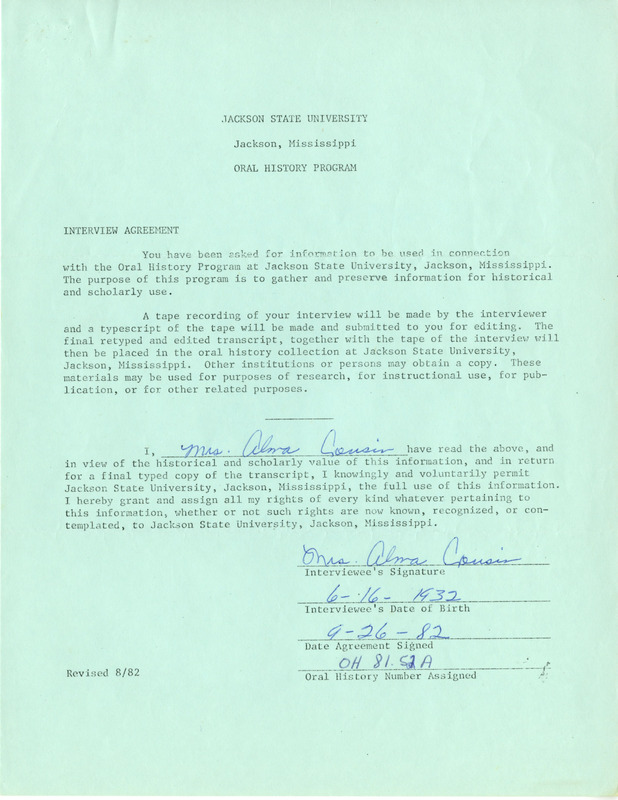
Alma Cousins moved to the Farish Street District in 1953 and previously owned a restaurant in the neighborhood. Ms. Cousins recounts what the district was like back then compared to the present. She talks about businesses and restaurants in the district; the effects of White people moving into the area; and several Black lawyers in the district.
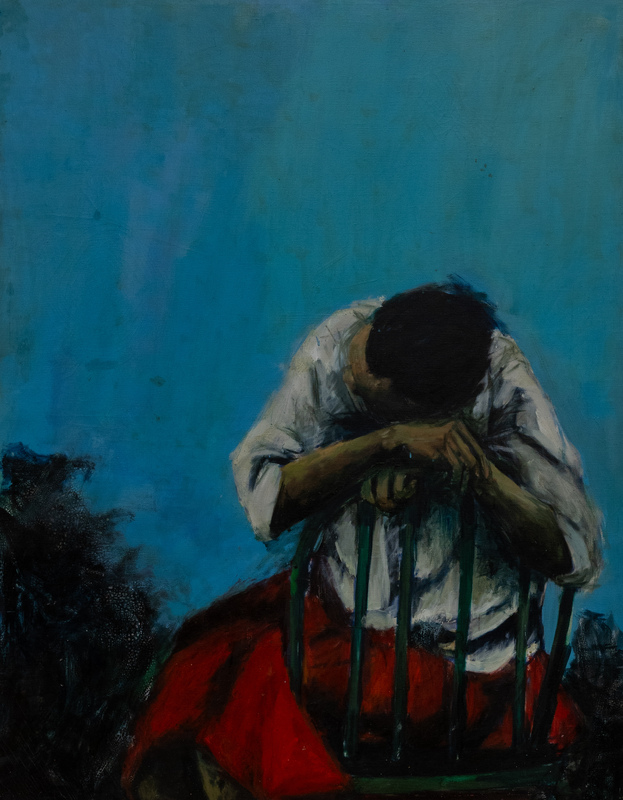
Henri Linton was an artist and art professor from Tuscaloosa, AL. "Alone" depicts a melancholy woman sitting in a chair. The muted blue background emphasizes her solemnity as she rests her head in solitude.
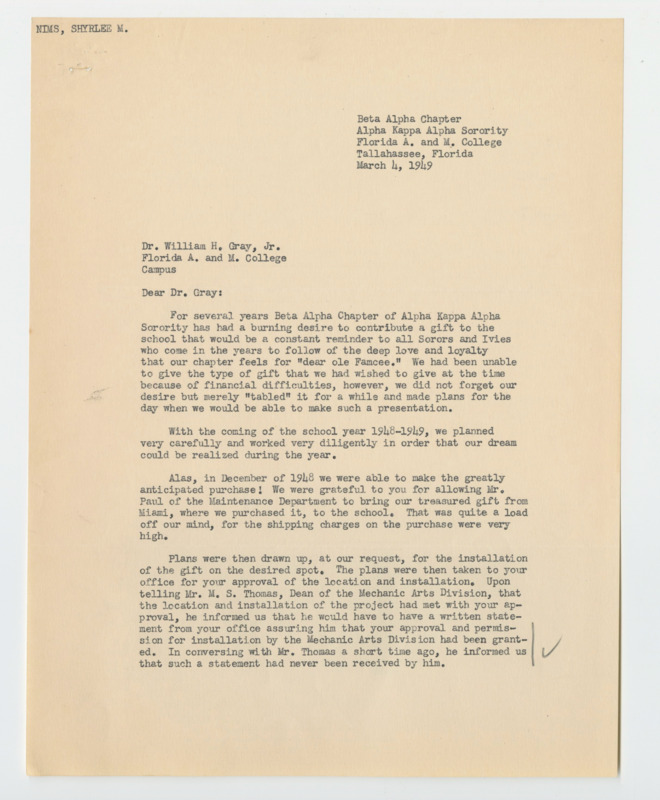
A symbol of Florida A&M, straight down from the Eternal Flame, is the fountain installation before the steps of Coleman Library. In 1949, the Beta Alpha Chapter of Alpha Kappa Alpha Sorority, Inc. was the reason for that gift; these correspondences detail the process behind that.
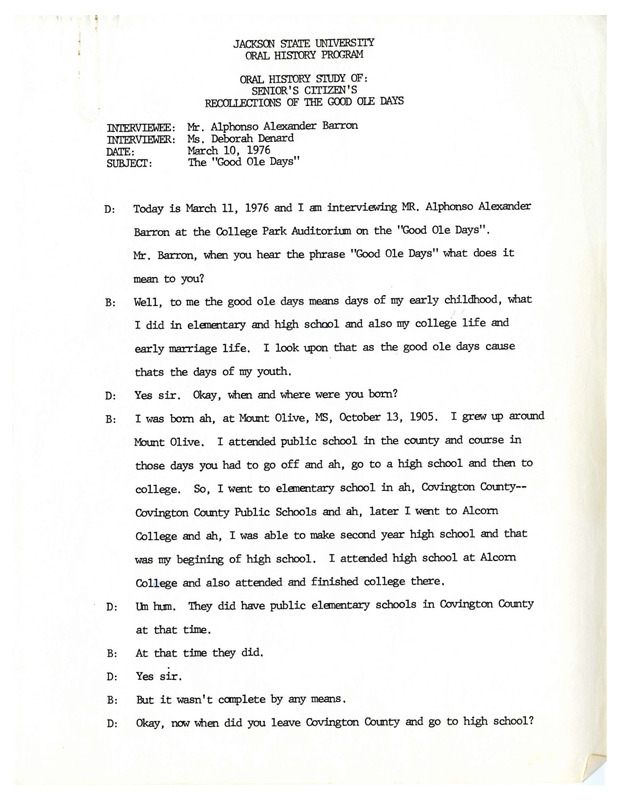
Alphonso Alexander Barron was born in Mt. Olive, Mississippi, in 1905. He talks about what he considers the "good old days," the years from his childhood through the early years of his marriage. He discusses family, his education, his church life, his marriage, his career as an educator, and his experiences living in Jackson, Mississippi.
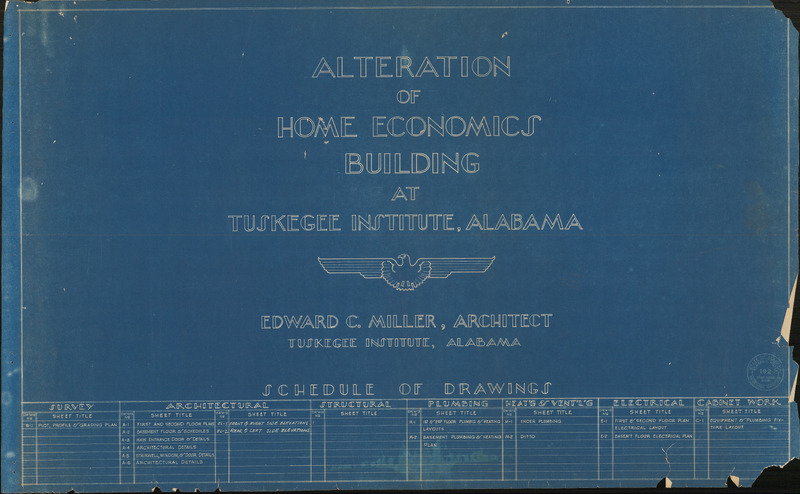
A construction blueprint cover sheet for the home economics building drawings at Tuskegee Institute located in Tuskegee, Alabama. Cover sheet depicts types of drawings within construction set.
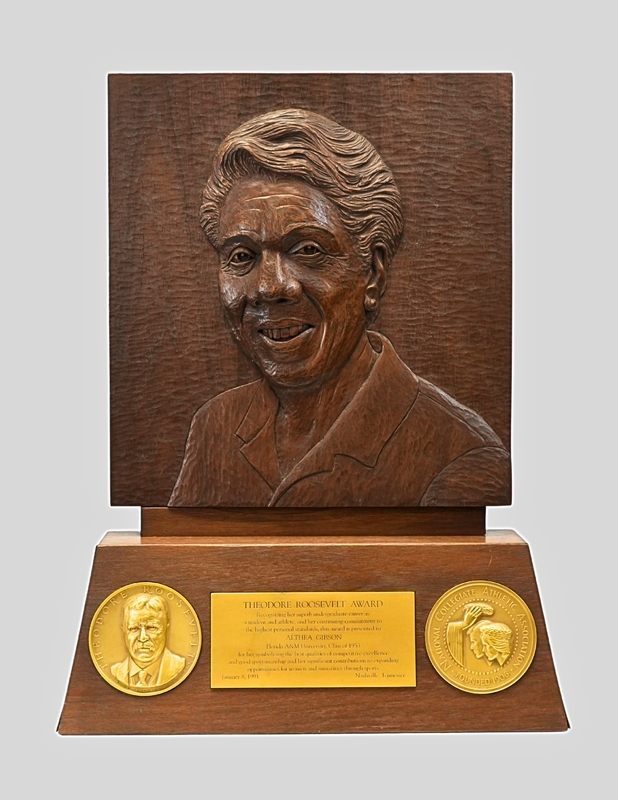
The 1991 Theodore Roosevelt Award, presented to Althea Gibson, honors her groundbreaking achievements in sports and her role as a trailblazer for African Americans in athletics. Recognized for her resilience and excellence, Gibson shattered racial barriers, becoming the first Black player to compete at Wimbledon and the U.S. Nationals.
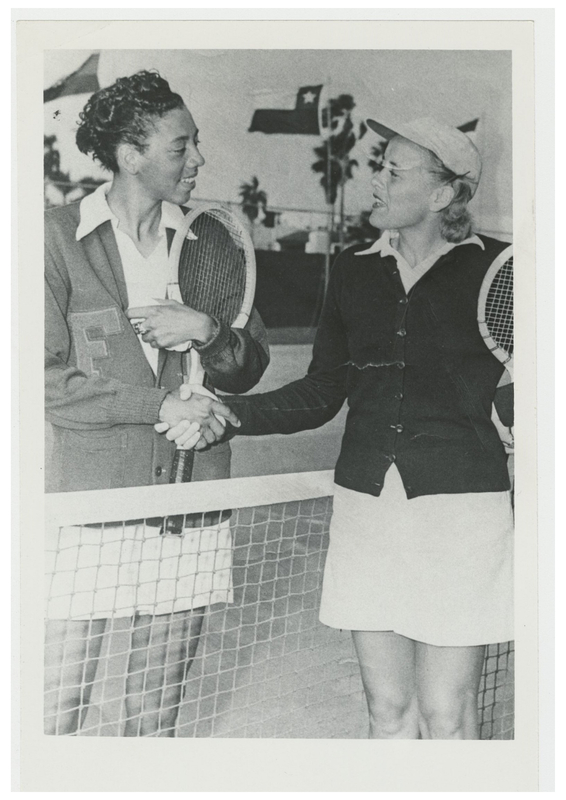
In this rare photograph, Althea Gibson is wearing a Florida A&M cardigan and shaking Alice Marble’s hand as they stand over the net conversing. Marble was a heavily decorated tennis player, and her American Tennis Magazine editorial on segregation in tennis paved the way for Gibson’s entry in the 1950 U.S. National Championship (which she won).
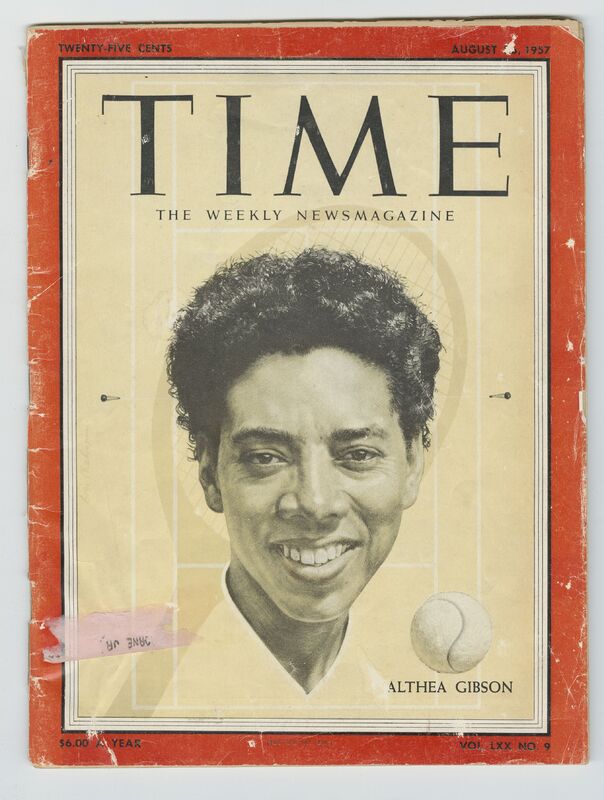
Florida Agricultural and Mechanical University alumna and Black tennis star Althea Gibson graces the cover of this rare, original 1957 TIME magazine. Just the year prior, in 1956, Gibson became the first African American to win a Grand Slam event. She also was the first to play in the U.S. and French Opens and Wimbledon.
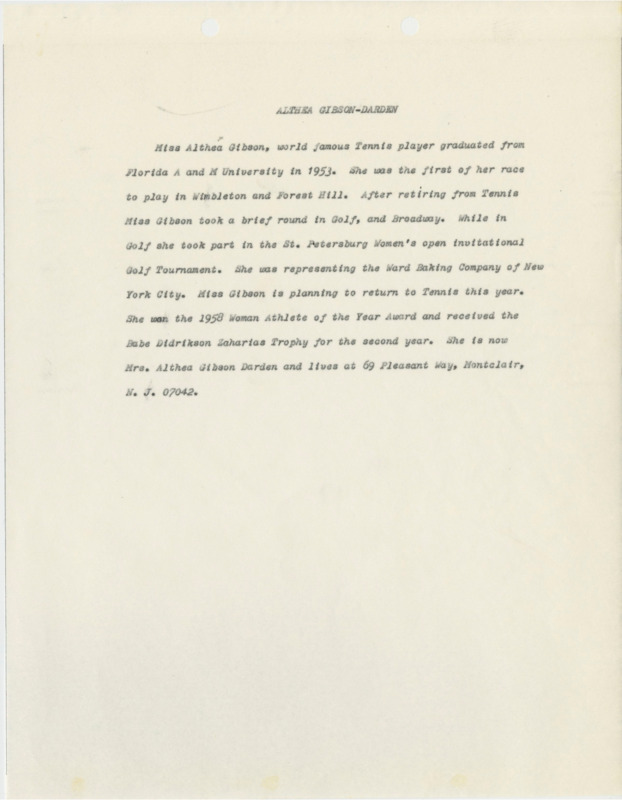
President B. L. Perry gathered records of celebrated alumni and contributors, including Joseph Kershaw, LaSalle D. LeFall Jr., Robert Hayes, Althea Gibson, and Julian and Nat Adderley, reflecting their legacies, notable achievements, and the enduring imprint they left on FAMU’s history.
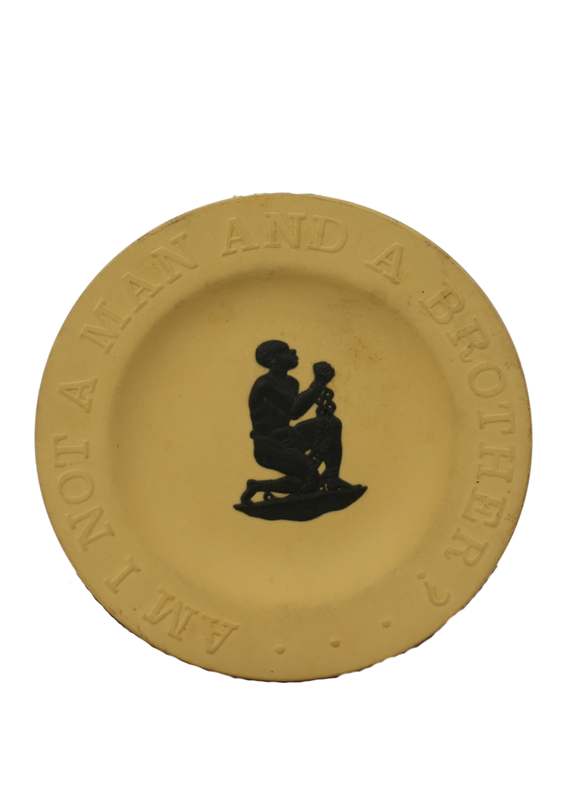
In 1787, Josiah Wedgwood’s London-based ceramics company created a medallion depicting a kneeling, shackled Black man with the engraved inscription “Am I Not A Man And A Brother?”. This symbol quickly spread across antislavery movements in Britain, France, and the United States and was used on many consumer goods, including this pin dish.
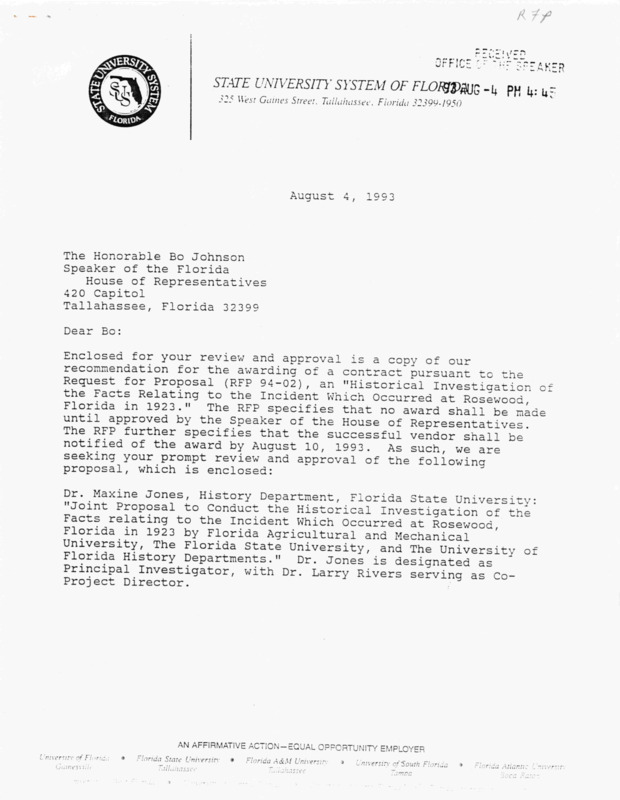
An amendment received by the Florida Board of Regents in 1993 proposing joint research between Florida A&M, FSU, FAU, and the University of Florida history departments. The proposal requested a $50,000 budget to document and investigate the 1923 Rosewood incident, aiding the state of Florida in the research and documentation process.
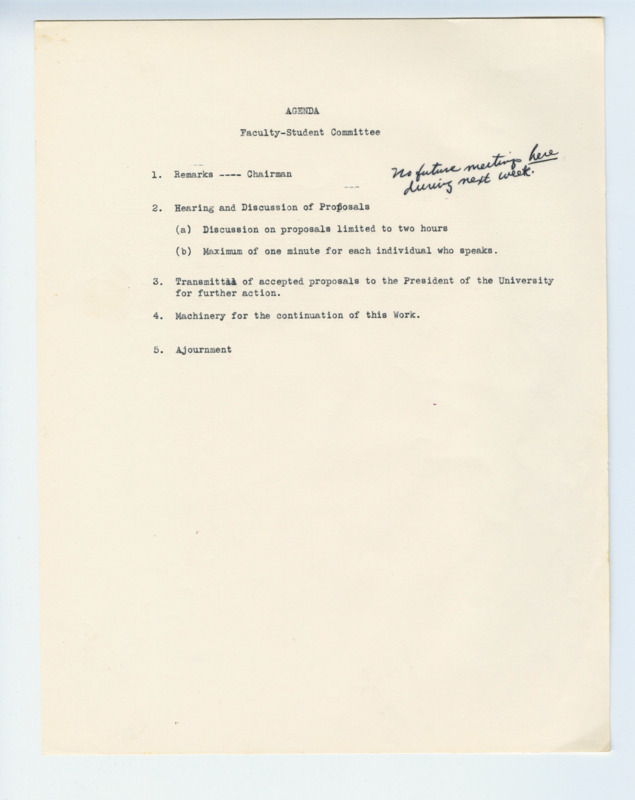
The Faculty-Student Committee agenda begins with remarks from the chairman, followed by a discussion on redefining its role to emphasize Afro-American studies. Proposed enhancements aim to strengthen the committee’s influence on academic progress and campus dialogue, with all proposals awaiting approval from President Gore.
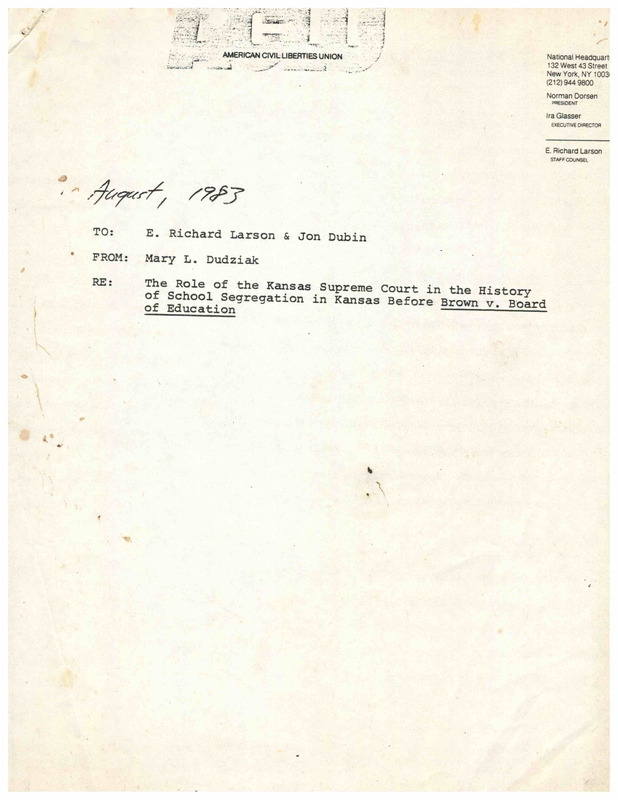
Case Data and Exhibits for Brown III, a relitigation of Brown v. Topeka Board of Education (1954) that corrected resegregation issues caused by open enrollment school choice in 1992. This essay from an unnamed author examines thirteen court cases that predated the first Brown case taken on by the Kansas Supreme Court that dealt with segregation.
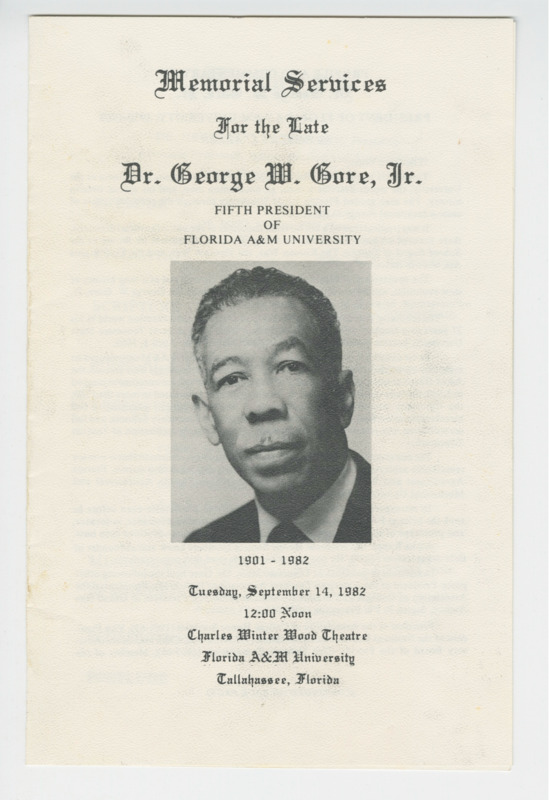
An obituary honoring President Gore, a Tennessean and visionary leader of FAMC and FAMU, remembers his lifelong dedication to education and service. In loving memory, a service was held in Tallahassee, Florida in 1982, celebrating his legacy and the profound impact he left on the university and community.
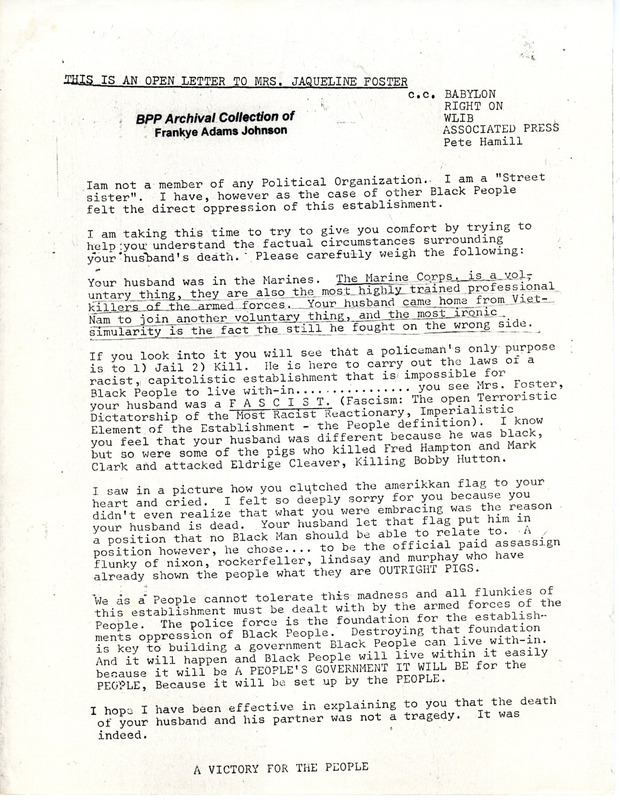
A letter to Jacqueline Foster, whose husband was recently killed in the line of duty as a police officer. The author writes that the officer, even though he was Black, was fighting on the side of the “racist, capitolistic (sic) establishment” and therefore his death was not a tragedy but “it was indeed a victory for the people.”
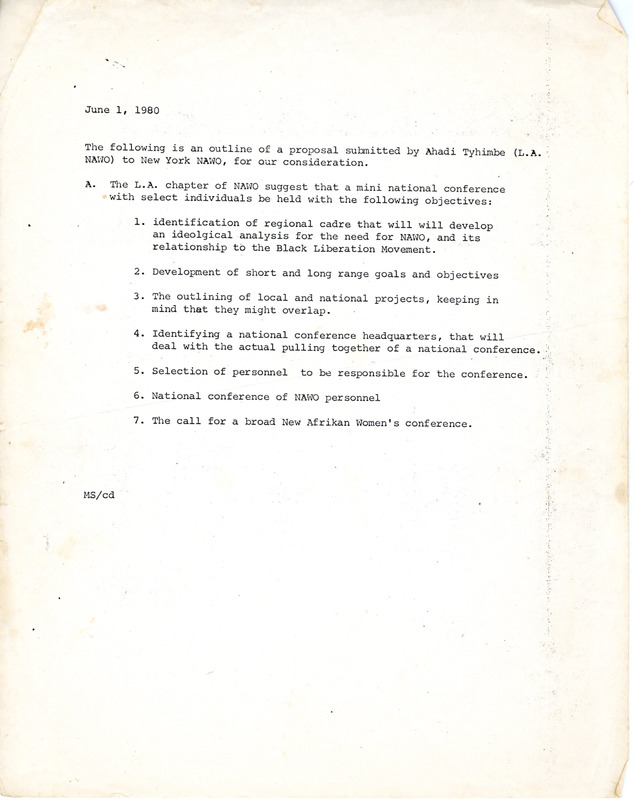
An outline of a proposal of objectives for a national conference submitted by Ahadi Tyhimbe of the Los Angeles New Afrikan Women’s Organization for the consideration of the New York New Afrikan Women’s Organization. Objectives include development of goals and objectives, outlining of projects, and selecting a city to host a national conference.
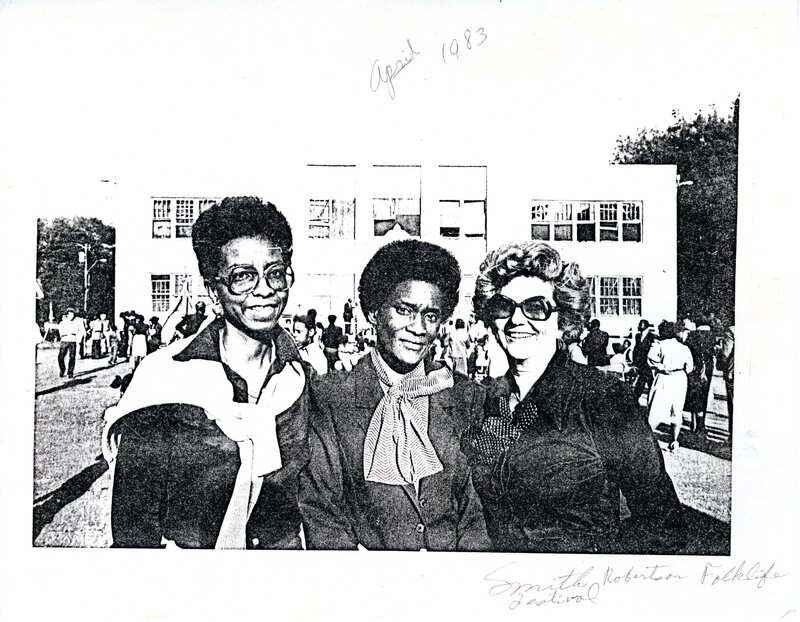
A copy of a photograph of an unknown woman, Dr. Alferdteen Harrison, and Dr. Cora Norman at the Smith Robertson Neighborhood Folklife Festival, April 9-11, 1983. The festival was a one-time grant sponsored event held on the grounds of the Smith Robertson Museum to celebrate the rich history and culture of the Farish Street Historic District.
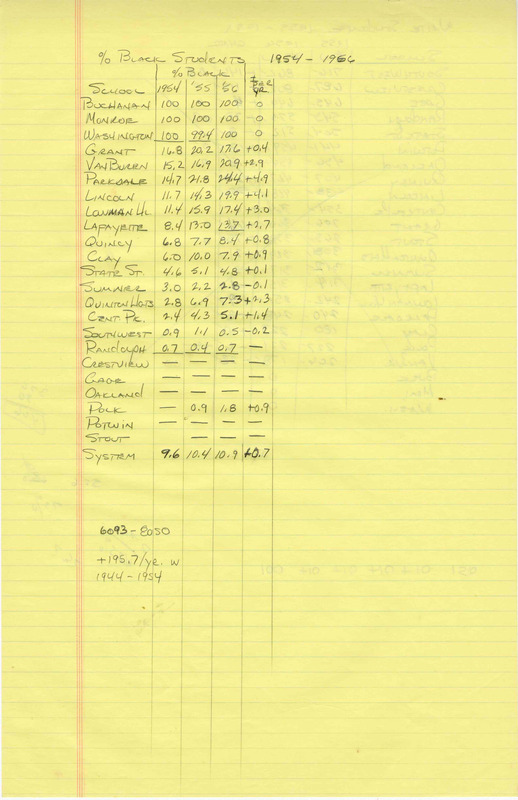
Case Data and Exhibits for Brown III, a relitigation of Brown v. Topeka Board of Education (1954) that corrected resegregation issues caused by open enrollment school choice in 1992. Analysis (handwritten notes and spreadsheets by William Lamson) of numbers and percentages of Black students in Topeka Public Schools from 1950-1983.
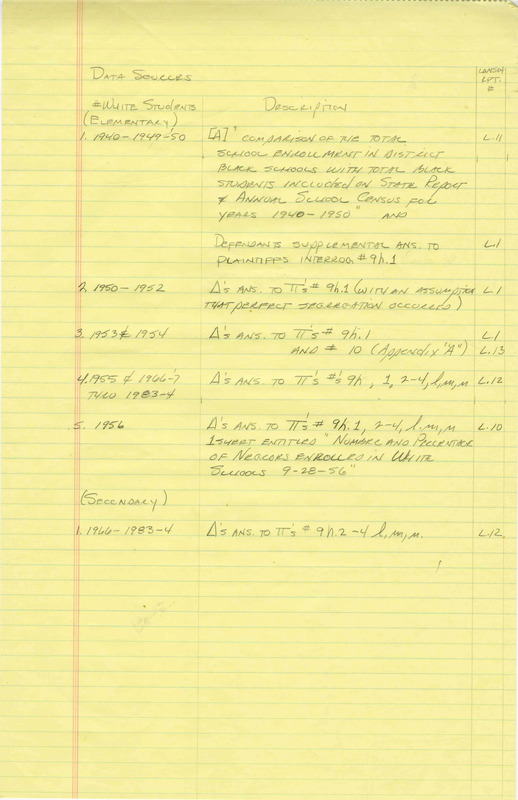
Case Data and Exhibits for Brown III, a relitigation of Brown v. Topeka Board of Education (1954) that corrected resegregation issues caused by open enrollment school choice in 1992. Spreadsheets calculating percentages of white students in Topeka Public Schools plus a handwritten page listing data sources, all by William Lamson.
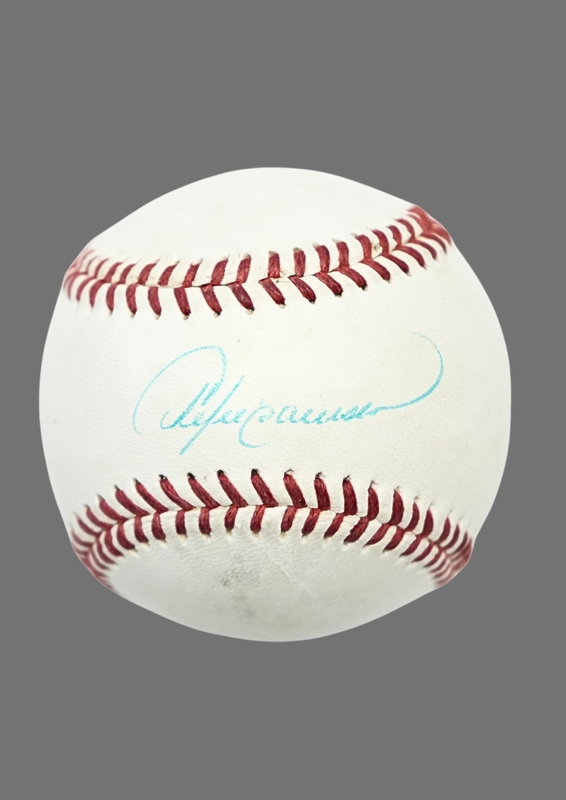
The autographed baseball belonging to Andre Dawson, an alumnus of FAMU and hall of famer. The baseball is s a tangible piece of history, imbued with the memories and moments of Dawson’s journey from college baseball at FAMU to major league baseball's Hall of Fame.
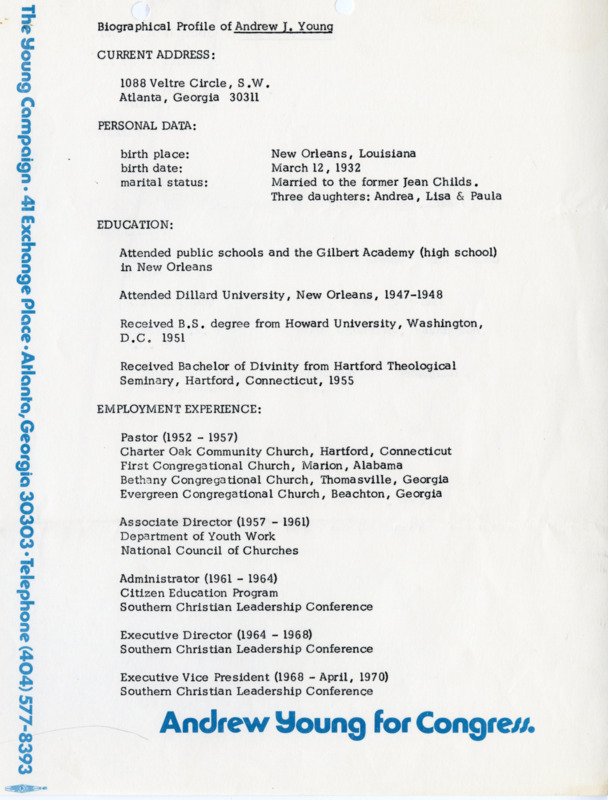
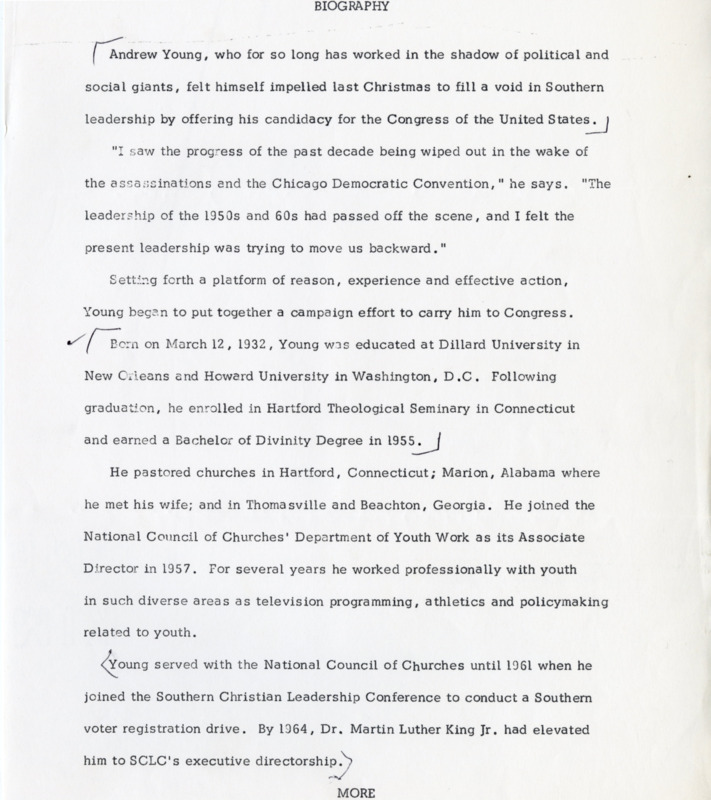
A biography of congressional candidate Andrew Young. This document explains his education and experience and why he is qualified to run for political office.