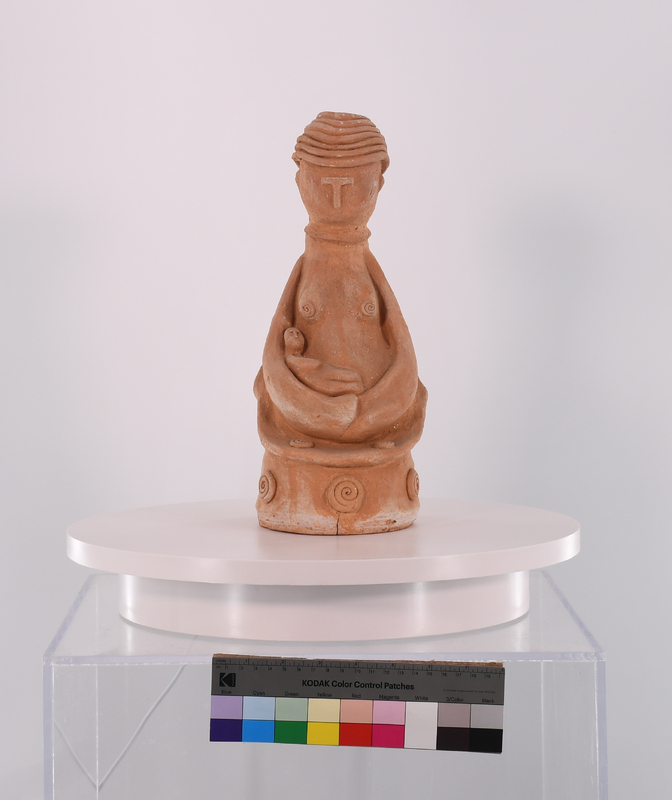
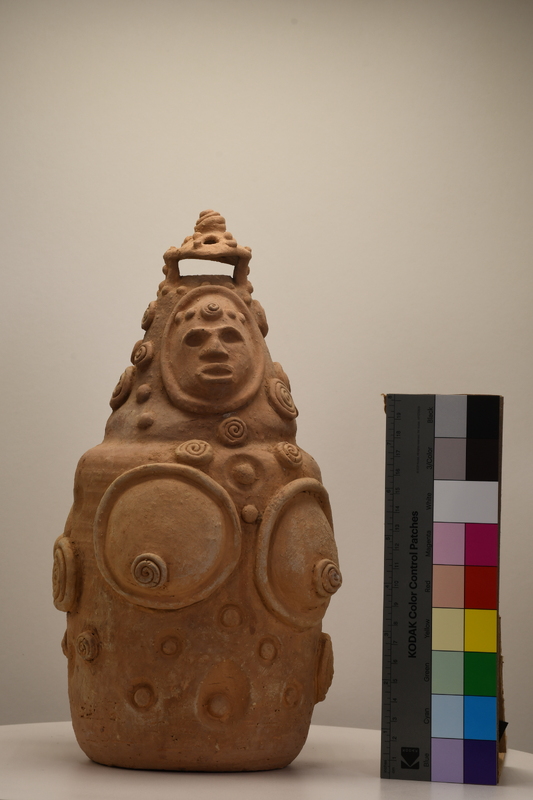
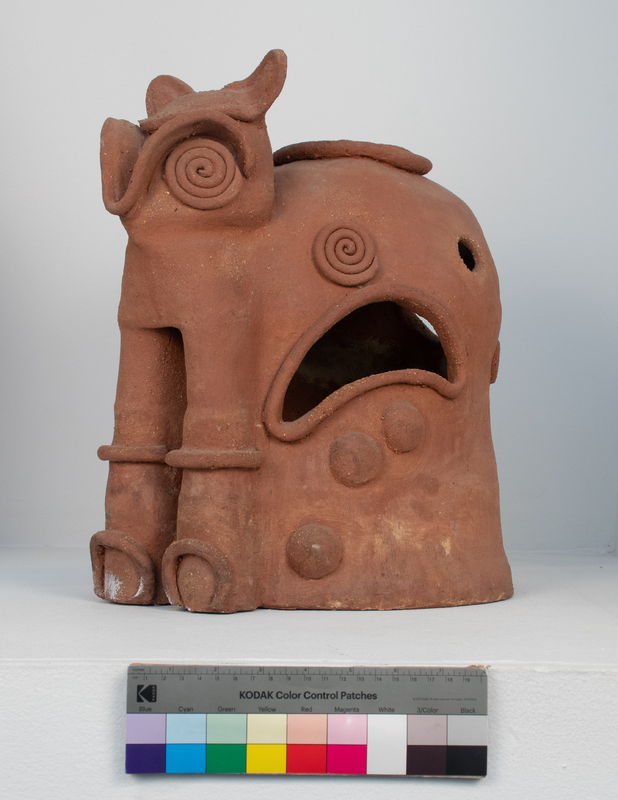
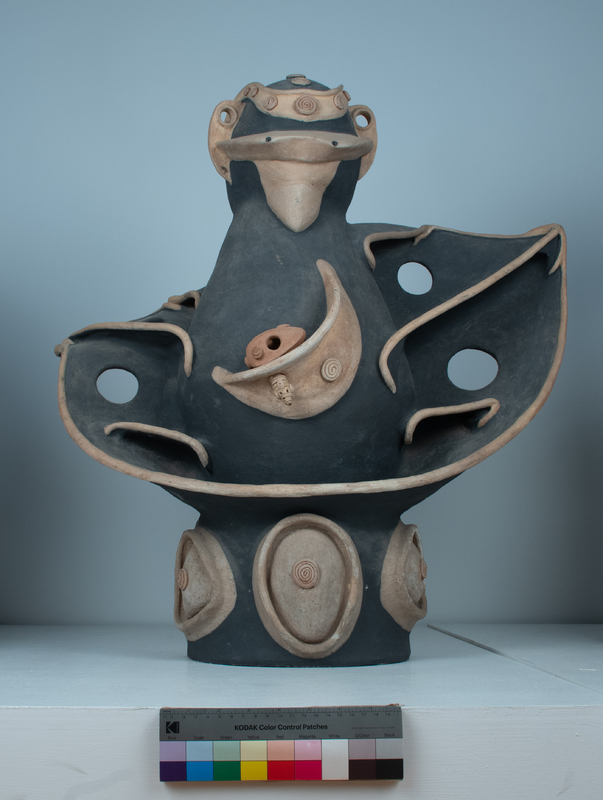
Under the instruction of Professor Carroll Harris Simms, Texas Southern University art students created terracotta sculptures inspired by his travels to West Africa. Themes such as the mother-child relationship, animals, and shrines are frequently seen in this collection featuring their works, along with signature embellishments like swirls.
Curated By
Ben Schachter
Rita Reyes
Contributing Institution
Texas Southern University
About This Record
The HCAC public history focused digital archive cataloging is an ongoing process, and we may update this record as we conduct additional research and review. We welcome your comments and feedback if you have more information to share about an item featured on the site, please contact us at: HCAC-DigiTeam@si.edu
“Mother and Child,” by Warren Williams, reflects a theme of unity. The smaller figure is placed in the lap of the larger, held in place by two fingers connecting to form a circle. The sculpture’s form resembles a mother and child bird, perhaps perched in their nest. The mother-child relationship is an important motif in Texas Southern artwork.
This terracotta maquette is of a woman cradling a child in her arms. The woman is shown naked, with simplified facial features. A circular base supports the sculpture, and spiral motifs are embedded throughout the piece. The crown of the head is topped with layered rings to indicate hair texture. The mother and child theme is prevalent in TSU’s terracotta collection.
This is a maquette created by an unknown Texas Southern University art student. This maquette displays a stout figure with various swirls on the body. The swirls are a required component for the maquette project, as Carroll Harris Simms pushed his students to richly embellish their works.
This terracotta features a snail-like creature with long legs, adorned with spiraled embellishments for the eyes and outer shell. The spiral motifs are placed in a symmetrical pattern on both sides of this sculpture. The clay is mixed with grog to create a better texture and prevent the terracotta from shrinking when fired.
“Owl,” by Oliver Parson, features spiraled embellishments on the head and symmetrical holes on the wings, with a gray slip painted on the body. In the middle of the figure’s body, a crescent shape cradles a small egg, perhaps referencing owls’ nocturnal natures. Parson experimented with different clay colors in his terracotta sculptures.
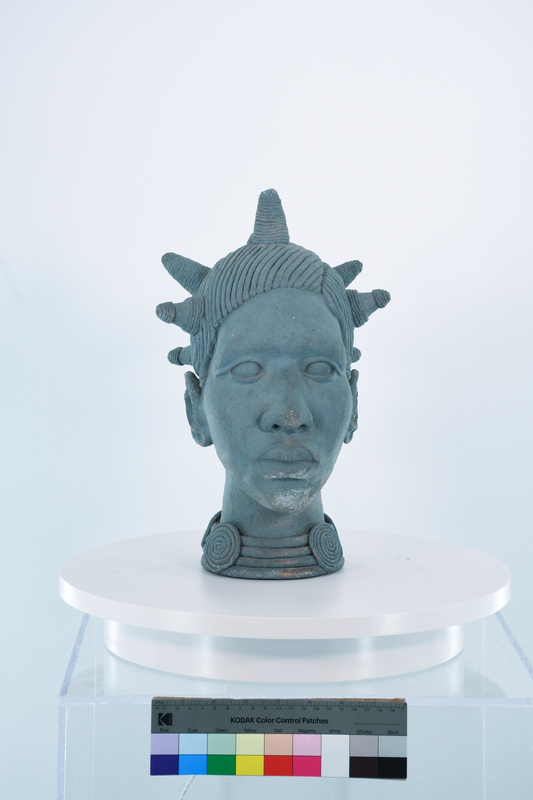
Morris's sculpture depicts a stylized version of the artist's own head and neck. As was required by Professor Simms, the artist adorned her self-portrait with swirls on the neck and rear of the scalp. The bust's blue hue is unique within the Texas Southern terracotta collection.
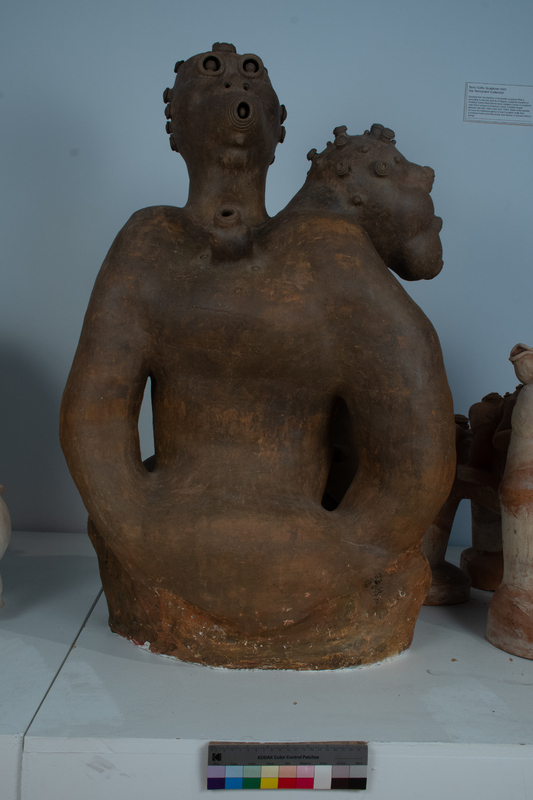
Obey’s sculpture, “Primeval Couple,” features a prehistoric male and female couple fused within the arms of one another. The heads of the figures are decorated with embellished swirls, often featured in the terracottas made by students of Carroll Harris Simms. Simms related Obey’s design to those he had seen in the mountains of northern Nigeria.
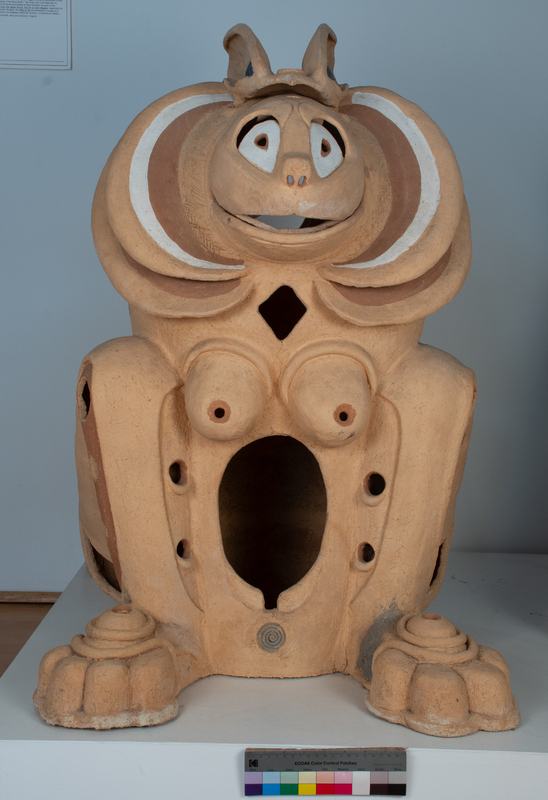
“Queen Rabbit,” by Earl Jones, features a mythical female rabbit. The center of the body includes an oval-like opening with identical circular holes on the legs and feet, creating balance. The rabbit’s ears are constructed with a removable crown piece; the same technique is used in several busts created by other Texas Southern artists.
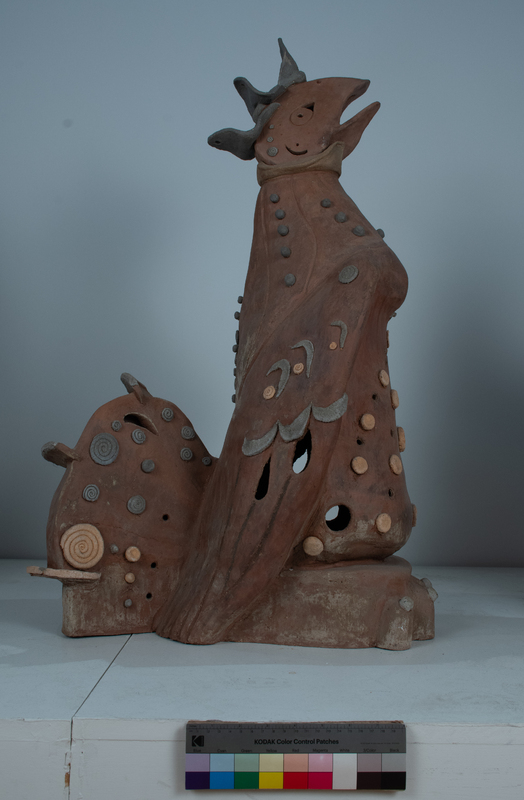
Scott’s sculpture depicts a large rooster crowing. The artist uses multiple colors of clay in his piece. Like other sculptures created for classes that Professor Simms taught, “Rooster” features numerous embellishments throughout the work, including various nodules and swirls. Creating sculptures of this style requires multiple firings in the kiln.
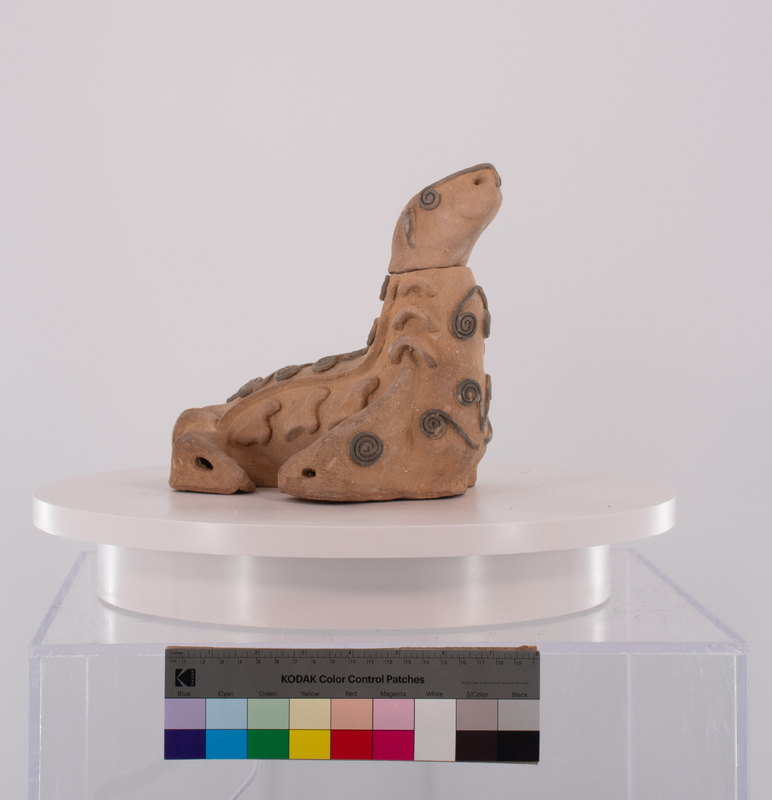
This maquette is a largely realistic depiction of a sea lion. The sea lion is adorned with swirls, the most common visual motif used by Simms' students in their sculptures. The final, full-size version of the sculpture contains even more embellishments that the maquette lacks.
Elizabeth Montgomery Shelton’s “Self-portrait” is a bust of the artist herself, carrying her child on her back. Embellishments, including spirals, adorn her head in a faithful execution of Professor Carroll Harris Simms’ instruction. The artist had previously created a different self-portrait sculpture and was encouraged to create this piece by Biggers and Simms after the birth of her child.
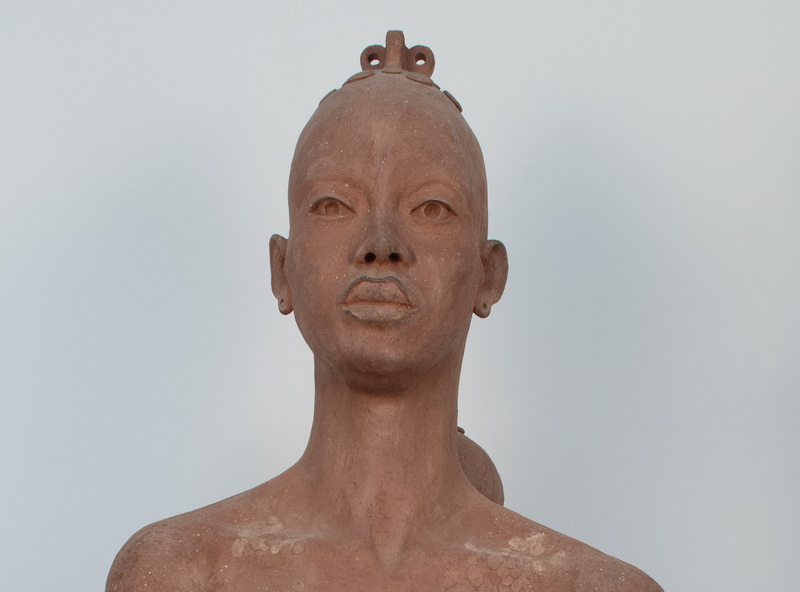
This unknown student’s bust was created during their time as an art student at TSU. Under the instruction of Professor Carroll Harris Simms, artists would create self-portraits embellished with decorations like spirals and accentuated crown pieces, like in this sculpture. These busts are inspired by Nok terracotta sculptures and Ife busts, which Simms saw during his travels to Western Africa.
This unknown student’s bust was created during their time as an art student at TSU. Under the instruction of Professor Carroll Harris Simms, artists would create self-portraits embellished with decorations like spirals and accentuated crown pieces, like in this sculpture, which features a tortoise, a common symbol of longevity. These busts are inspired by Nok terracotta sculptures and Ife busts, which Simms saw during his travels to Western Africa.
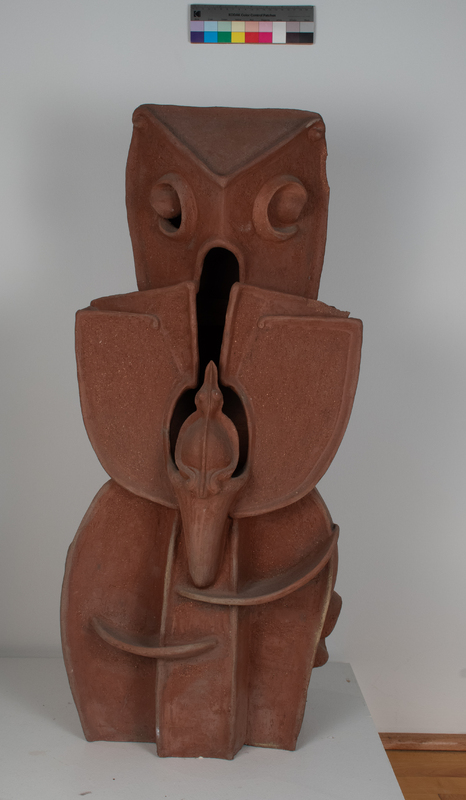
“Shrine #2,” by Harry Vital, features an intersex bird with both male and female features. This is a common theme found in Dogon sculptures originating from West Africa; these types of statues play a role in fertility rituals. The body has a smooth surface, while the wings and head are embellished with spiral designs.
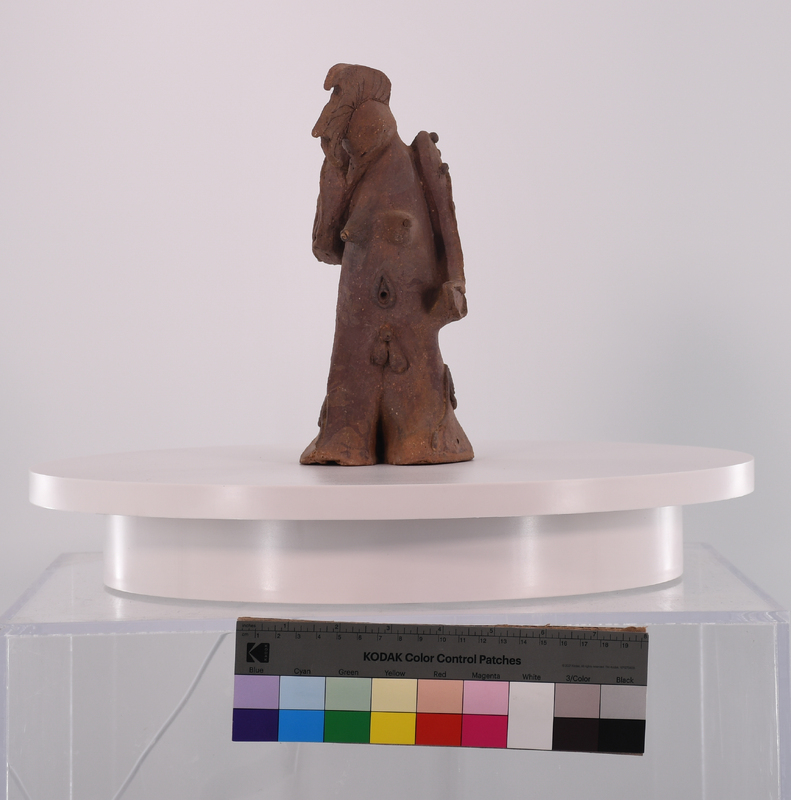
Vital's maquette appears to portray an intersex human-chicken hybrid, which displays both male and female sex organs. The artist adorned the sculpture with swirl embellishments, a common motif in TSU terracottas. Vital would go on to make a full-scale version of this sculpture.
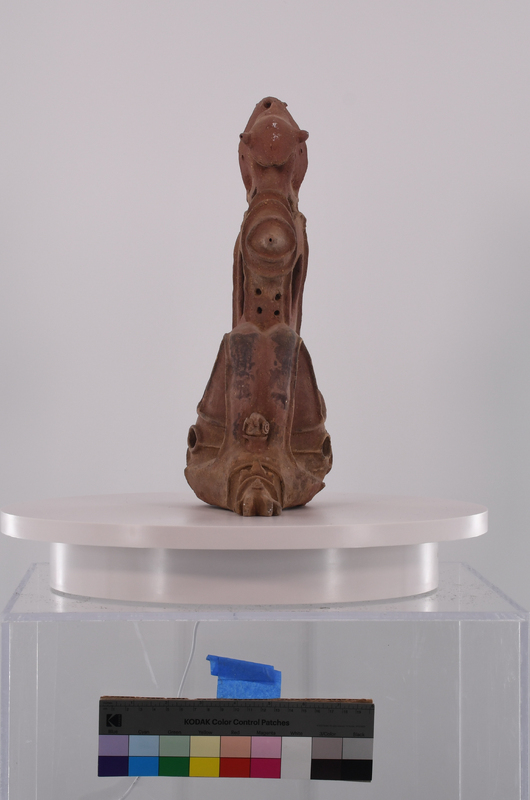
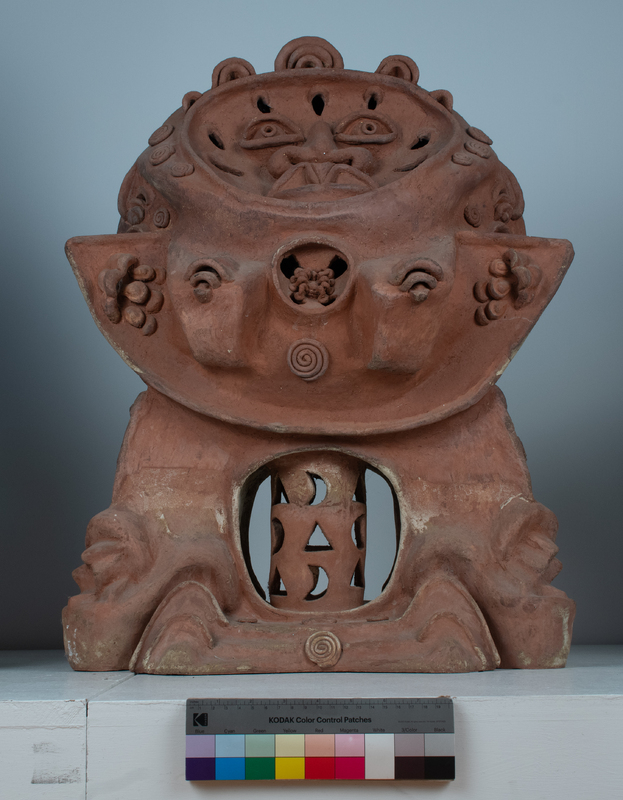
Like his other sculptures, Vital's maquette highlights hybridism, animal forms, and sexuality. Overall, the sculpture's form resembles a person sitting on a throne. On both sides of the top, a reptile creature sits above the shape of an open eye or breast. Towards the bottom, a phallic form is decorated with swirls, while a single claw-like structure supports the sculpture. The sculpture makes use of negative space in multiple sections.
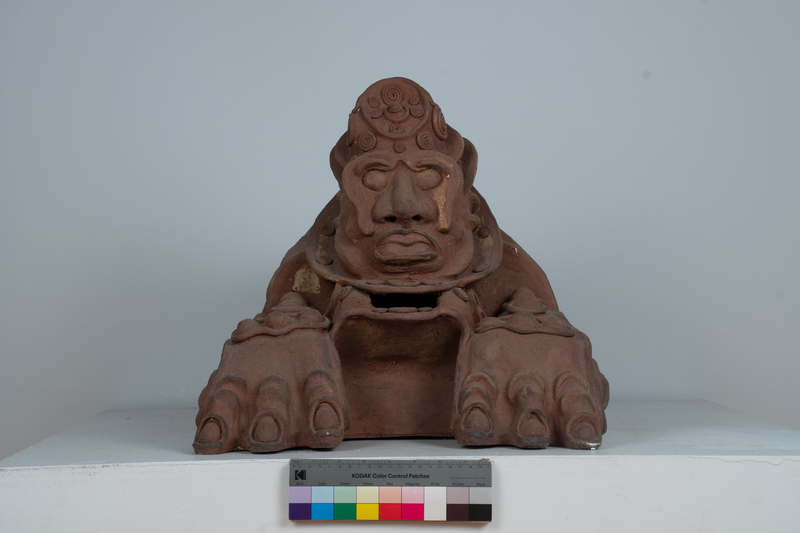
This sculpture’s form resembles a sphinx, with its humanlike face and animal body parts. The body is covered in ornamental embellishments, especially spirals. These decorations are a key characteristic of the terracotta sculptures created by the students of Professor Carroll Harris Simms, with spirals as a key motif.
This sculpture features a small bird placed in the lap of a larger abstract figure, perhaps suggesting the larger figure is the small bird’s mother. The body of this sculpture has a smooth surface finished with a thin rim around the edges. The act of nurturing and providing shelter is reflected in the placement of the smaller bird. Mother-child relationships are frequently showcased in TSU student terracottas.
“Sun Stool,” created by Anthony Haynes, resembles an Ashanti stool, a seat for royalty of the Ashanti Empire. The sculpture is decorated with spiral embellishments, triangles, moons, and other indentations. Facial features are also included at the front head of the stool; the rear face of the stool resembles a baboon's face.
Moore’s bust was created during his time as an art student at TSU. Under the instruction of Professor Carroll Harris Simms, artists would create self-portraits embellished with decorations like spirals and accentuated crown pieces, like in Moore’s sculpture. Moore’s crown details include horns on both sides, green holes in the head, and a miniature mask in the center of the forehead. These busts are inspired by Nok terracotta sculptures and Ife busts, which Simms saw during his travels to Western Africa.
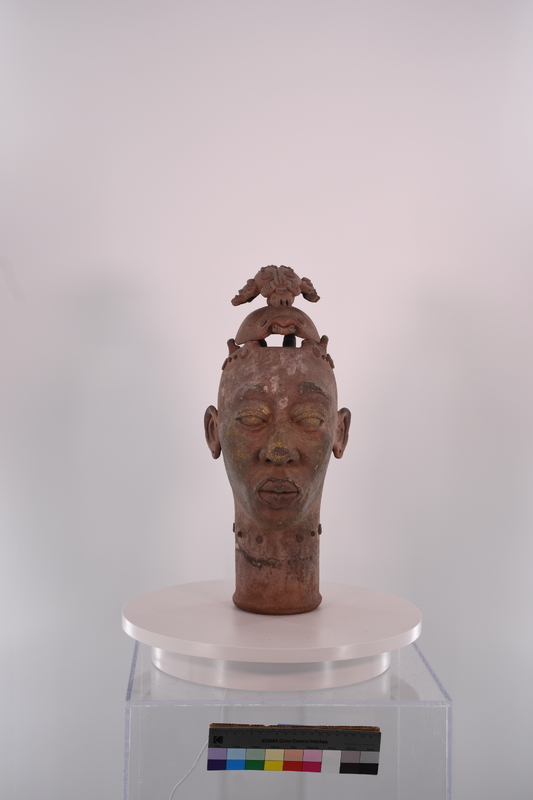
Davis's sculpture depicts a stylized version of the artist's head and neck, with a removable crown piece. The crown looks like a turtle with an insect atop it. The neck, crown, and forehead are all adorned with swirls, the most common motif in the terracottas of Simms' students.