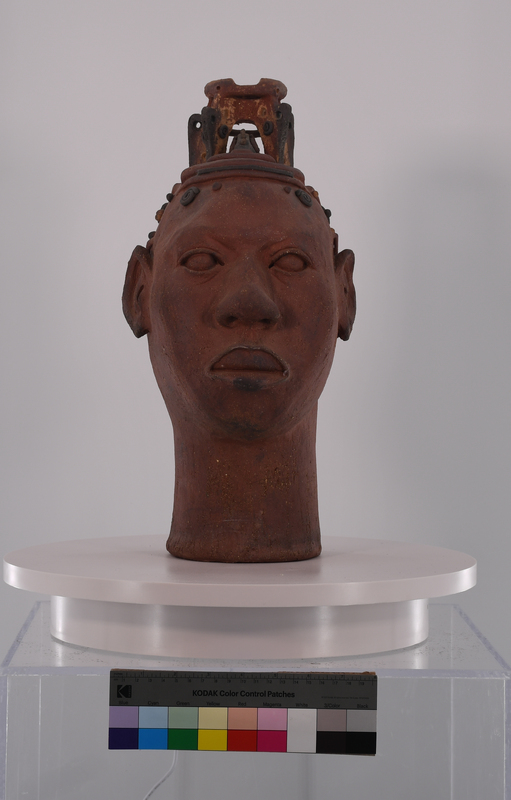
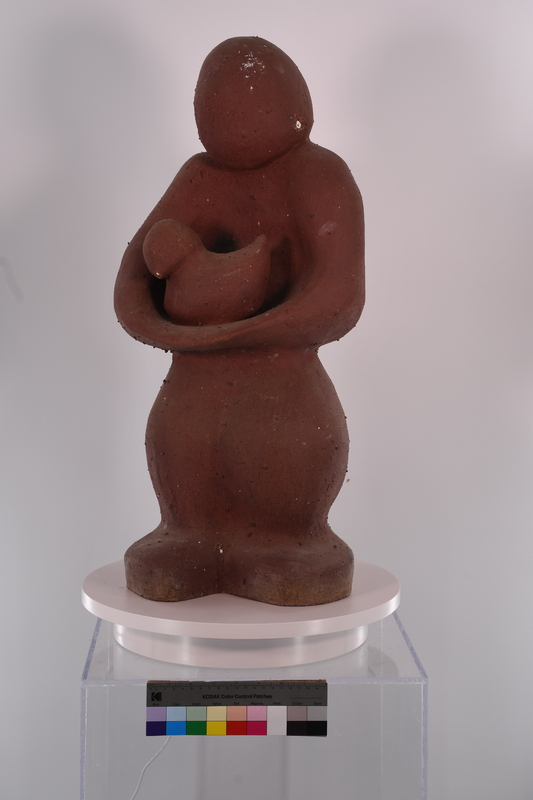
Under the instruction of Professor Carroll Harris Simms, Texas Southern University art students created terracotta sculptures inspired by his travels to West Africa. Themes such as the mother-child relationship, animals, and shrines are frequently seen in this collection featuring their works, along with signature embellishments like swirls.
Curated By
Ben Schachter
Rita Reyes
Contributing Institution
Texas Southern University
About This Record
The HCAC public history focused digital archive cataloging is an ongoing process, and we may update this record as we conduct additional research and review. We welcome your comments and feedback if you have more information to share about an item featured on the site, please contact us at: HCAC-DigiTeam@si.edu
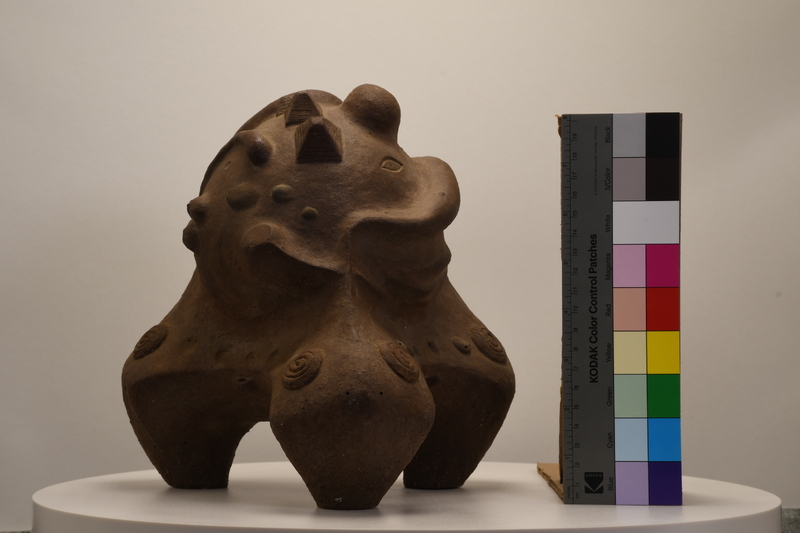
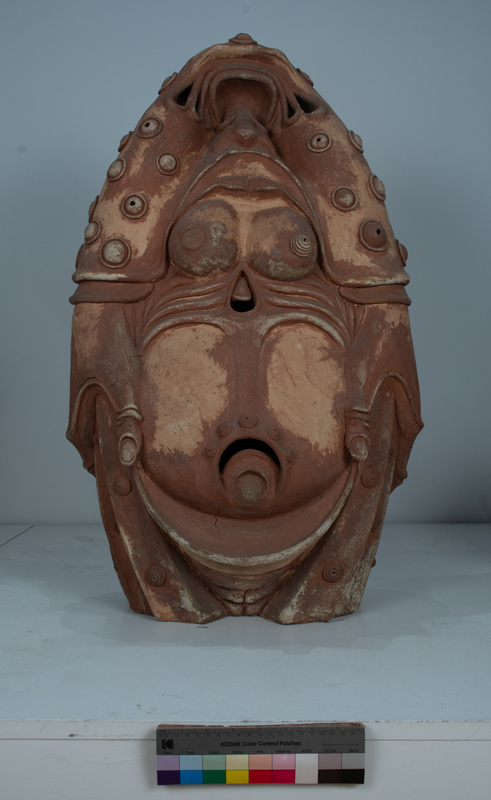
This is an abstract work featuring adornments like swirls, eyes, and pyramids. This blend of symbols suggests themes of hybridity and the fusion of cultures. Professor Carroll Harris Simms' terracotta tradition was inspired by the shrine sculptures of the Nok and Ife peoples of West Africa. In diasporic contexts, the sculptures' significance evolves.
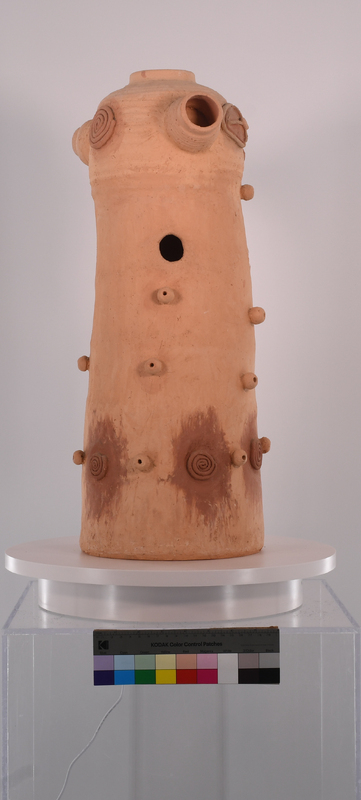
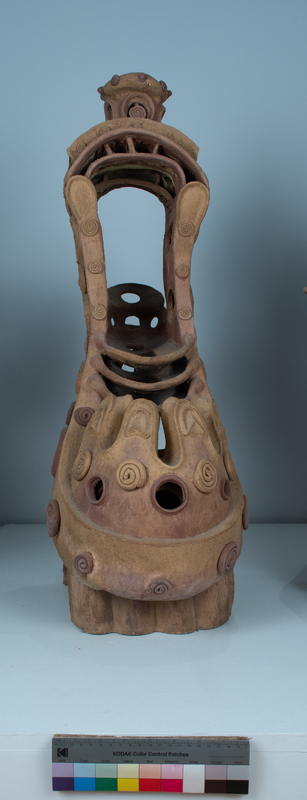
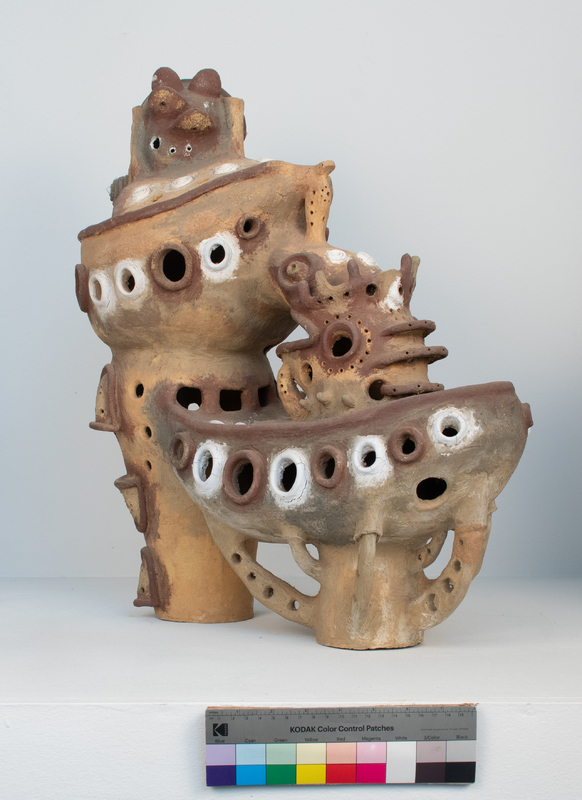
Lacy’s terracotta tower sculpture features cut-outs throughout the body. The top bears an abstract, smiling face with conical ears. The work is decorated with spirals and rolled balls of clay, both of which are among the signature embellishments used by students of Professor Simms. Lacy features this sculpture prominently in her Hannah Hall mural, where it appears as a building.
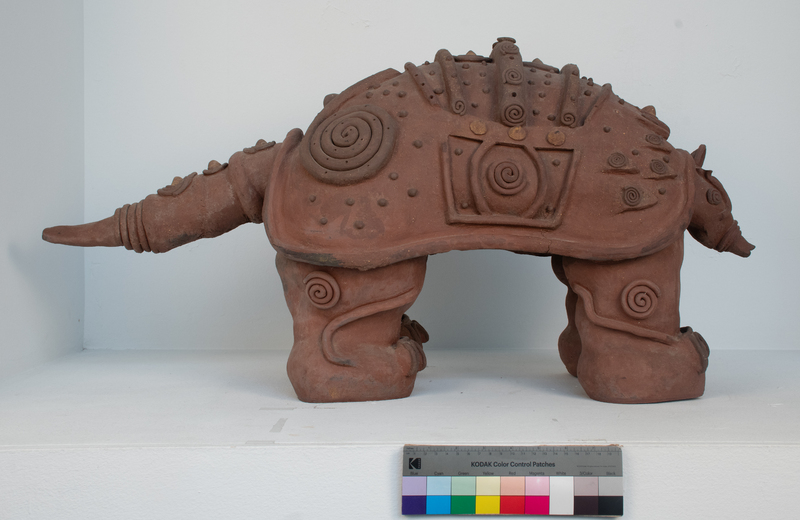
Johnny Jones’s sculpture, “Armadillo,” features decorative embellishments along the body of the animal, especially the shell. The spiral motif is often found on the sculptures of student artists taught by Carroll Harris Simms. Armadillos, which utilize their shells for protection, are commonly found in Texas.
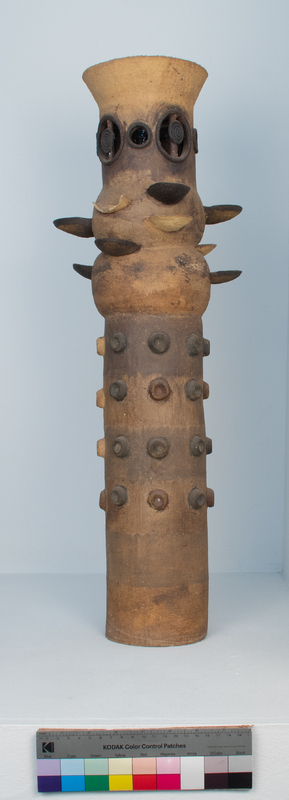
Elizabeth Montgomery Shelton’s terracotta is made up of a variety of colored clays with embellishments that have been painted using black and tan slips. The top half includes layers of plates extending out from the surface, while the bottom half is evenly decorated with pressed circular clay. The structure perhaps mimics an instrument or a bird feeder.
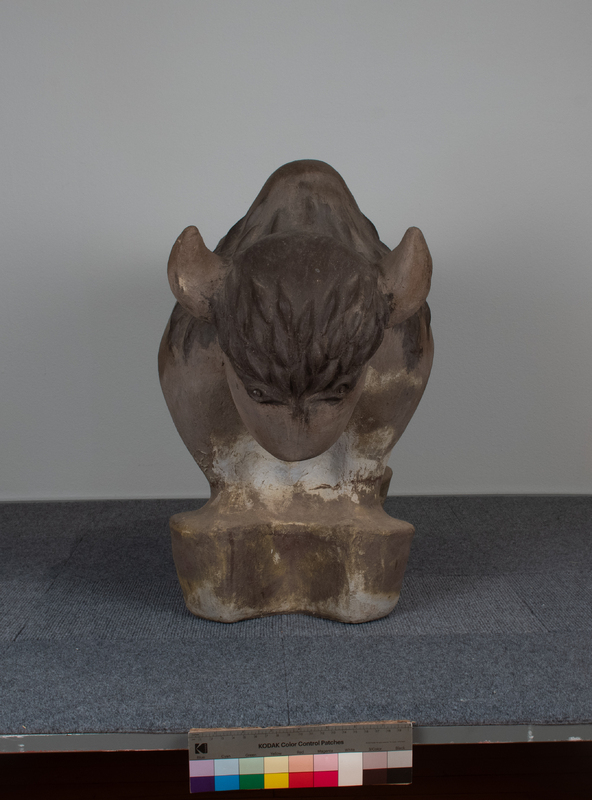
Erma Gordon’s “Bison” sculpture includes two-toned clay with a smooth finish on the body. The hair of the bison is carefully sculpted on the top of its body, lending a realistic, soft texture. The artist depicted herself creating this sculpture in her Hannah Hall mural. Wildlife are frequent subjects of TSU student terracottas.
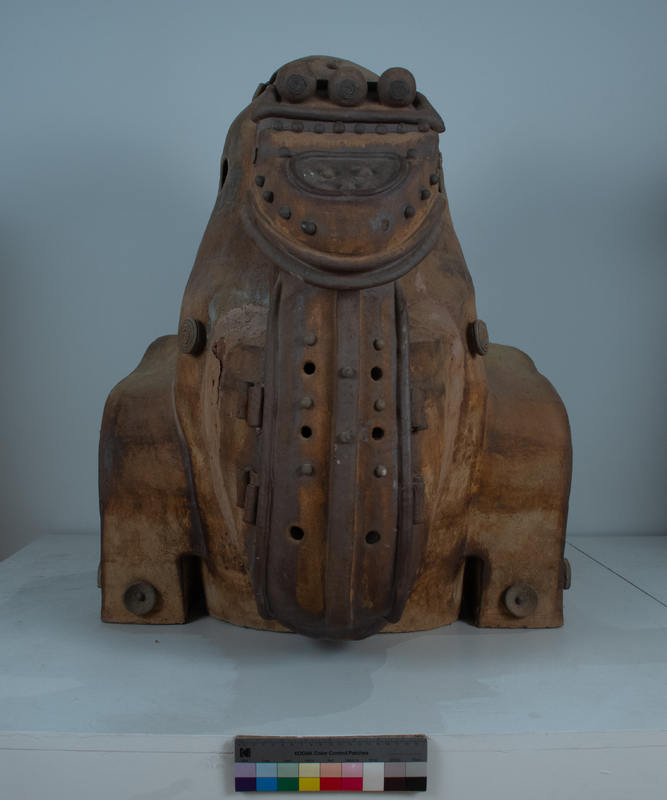
Settles, a student of Carroll Harris Simms, created the sculpture “Camel” in 1978. The creation of a large terracotta sculpture was a part of each art student's curriculum. The design features include a huge hump and embellishments, including spirals, on the exterior. Sculptures lacking sufficient ornamentation were often not retained for the collection.
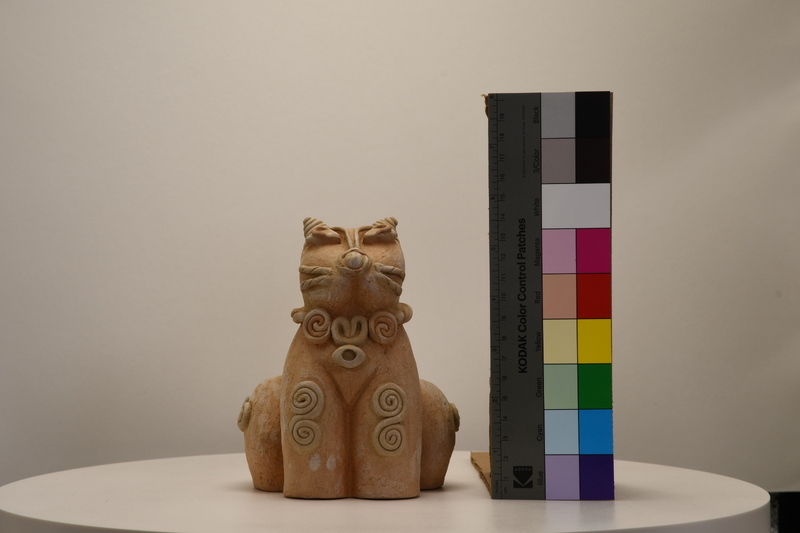
This maquette, created by an unknown Texas Southern University art student, shows a feline creature at attention. There are various swirl patterns and textures on the figure. The swirls are a required component for the maquette project, as Carroll Harris Simms pushed his students to richly embellish their works.
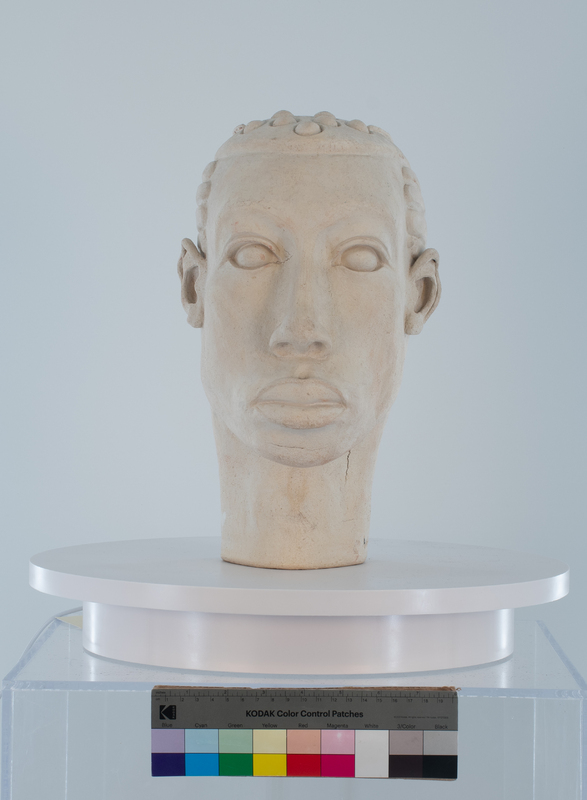
Walker’s bust was created during his time as an art student at TSU. Under the instruction of Professor Carroll Harris Simms, artists would create self-portraits embellished with textures, like those seen in the hair of this sculpture. While most were made from terracotta clay, this one is made from plaster. These busts are inspired by Nok terracotta sculptures and Ife busts, which Simms saw during his travels to Western Africa.
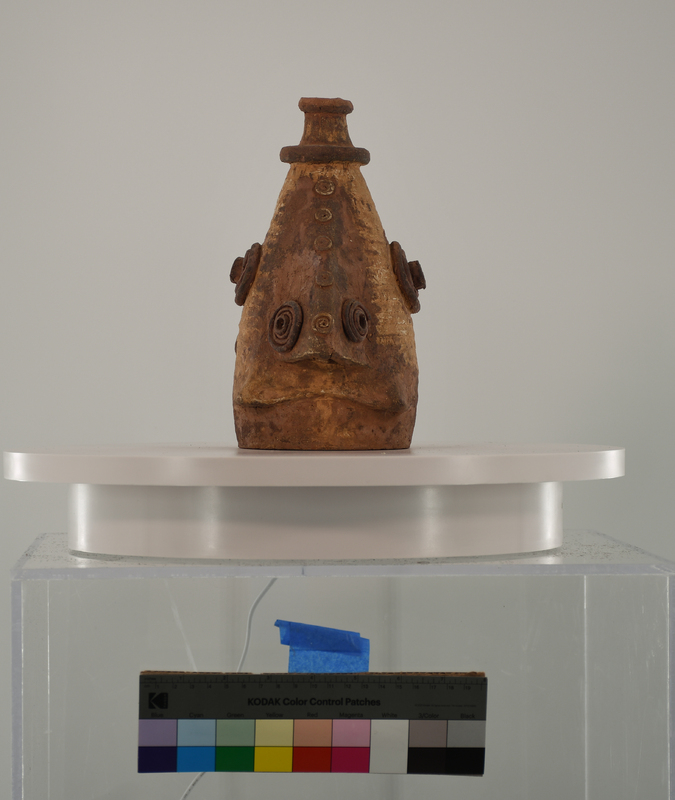
“Shrine,” by Curtis Watson Jr., features a duck-like creature surrounded by various embellishments, including spirals, a commonly used visual motif in the student terracottas. Unfortunately, the head of the figure is missing, leaving only the body in view. The full sculpture can be seen in archival photos shot by Dr. John T. Biggers of the artist at work.
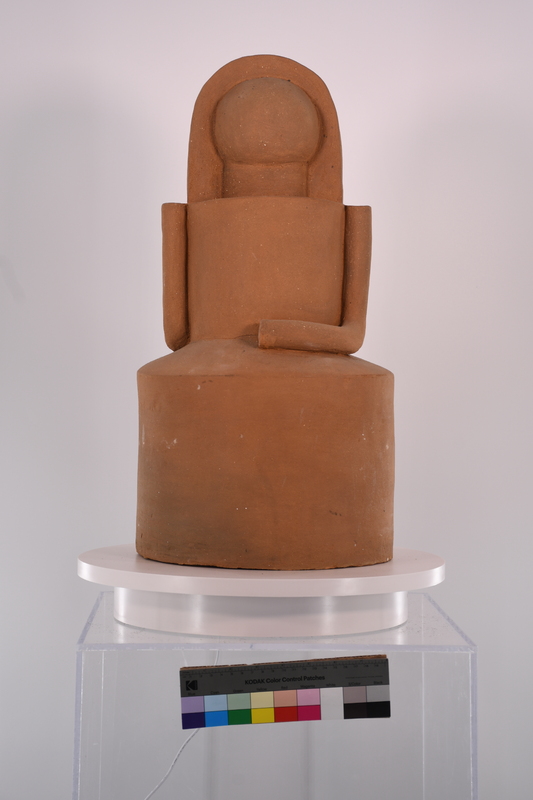
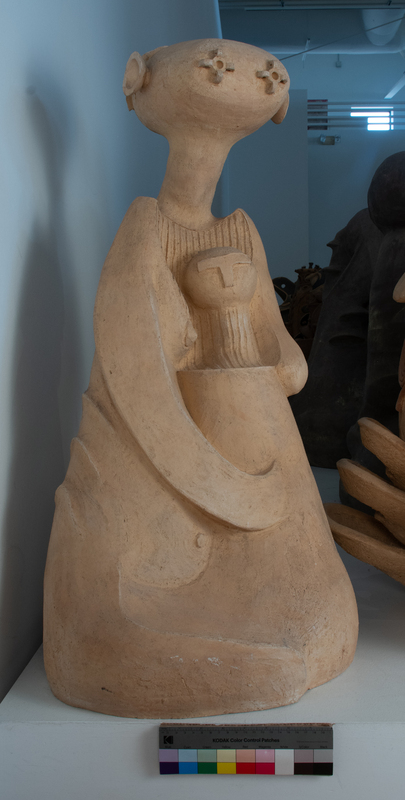
Jafar’s terracotta depicts a mother figure carrying her child on her back. The exterior of the sculpture is smooth and lacking any of the motifs that are normally featured on Texas Southern students’ terracottas, perhaps suggesting the sculpture was left unfinished. The mother and child relationship is one of the most frequently featured themes in the artwork of students of Dr. Biggers and Professor Simms.
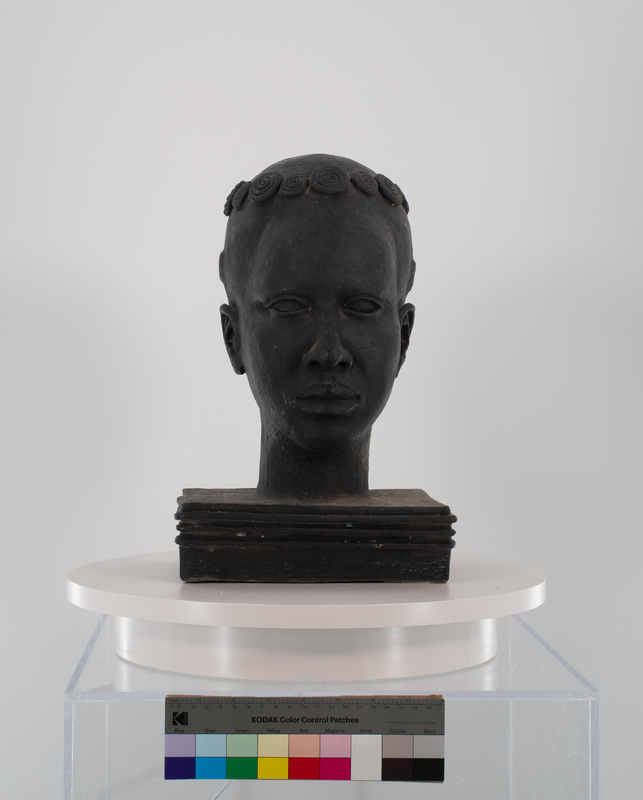
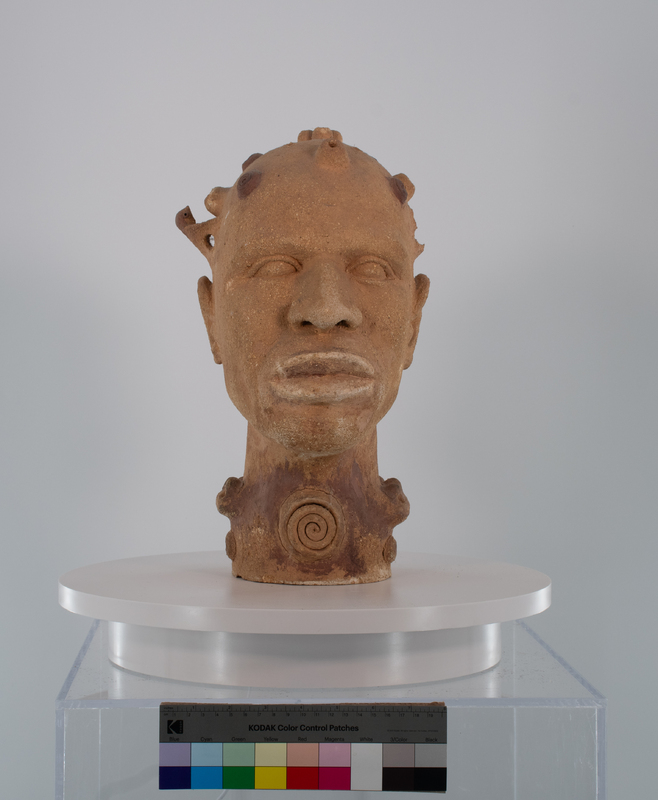
This unknown student’s bust was created during their time as an art student at TSU. Under the instruction of Professor Carroll Harris Simms, artists would create self-portraits embellished with decorations like spirals and accentuated crown pieces, like in this sculpture. These busts are inspired by Nok terracotta sculptures and Ife busts, which Simms saw during his travels to Western Africa. This bust is different from others due to its black ceramic and large rectangular base.
“Fertility” shows an abstract female figure with breasts, an enlarged belly, and oversized hands. Like nearly all students of Professor Simms, Thomas covered his piece in various embellishments, particularly spirals. Oversized hands are also a characteristic of John Biggers’ artwork. The piece has discolored over the years since its creation.
Hubbard, a student of Carroll Harris Simms, created “Figure With Turtle and Bird” in 1966. This terracotta depicts a bird, atop an abstract tree, surrounding a tortoise. These animals are often paired in folktales, including an Igbo tale where a tortoise fools birds and is punished by having his shell broken. The fable says this is the cause of the irregular shape of tortoise shells.
Green’s sculpture is a maquette for his terracotta, which depicts the head and upper fins of a fish. The fish is decorated with ornamental swirls, holes, and ridges. Professor Carroll Harris Simms required his students to add these additional embellishments to their sculptures.
This sculpture is of a mother wrapping her arms around a childlike figure. The artist uses geometric shapes and line work to decorate the bodies and facial features and animate their embrace. Parental protection and the mother-child relationship are frequent subject matters displayed in students' work at Texas Southern University.
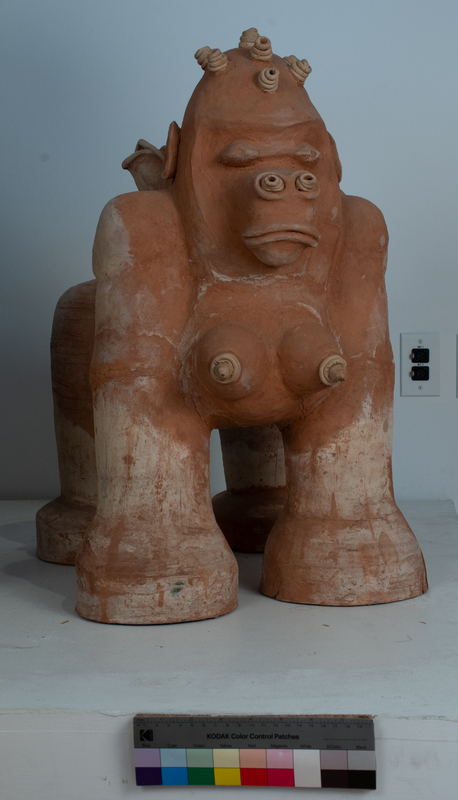
This terracotta sculpture features a mother gorilla with a child clinging to her back. The mother’s head, face, and body are adorned with spiral embellishments. A common theme featured in Texas Southern University’s permanent collection of terracotta sculptures is the relationship between mothers and their children.
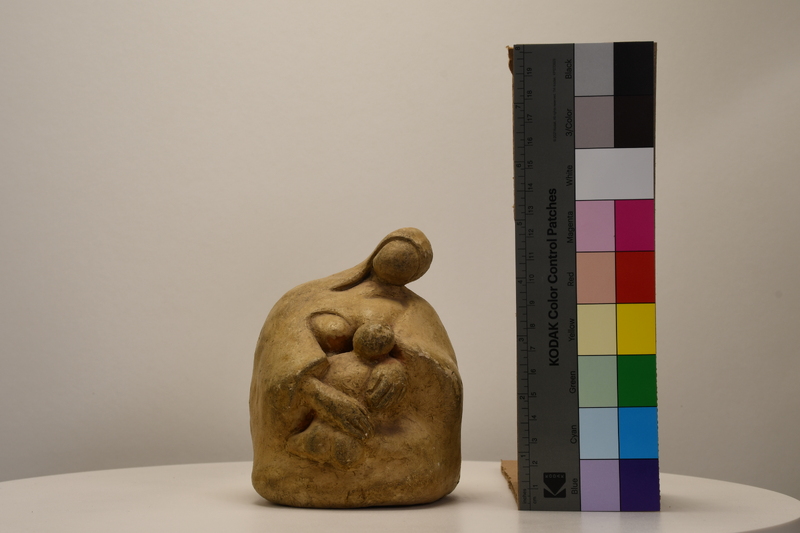
Taylor's maquette shows a mother tightly embracing one or two children. The theme of the mother and child was a recurring motif amongst the students of Professor Carroll Harris Simms, the ceramics instructor at TSU. Simms worked alongside Dr. Biggers to build TSU's art program.
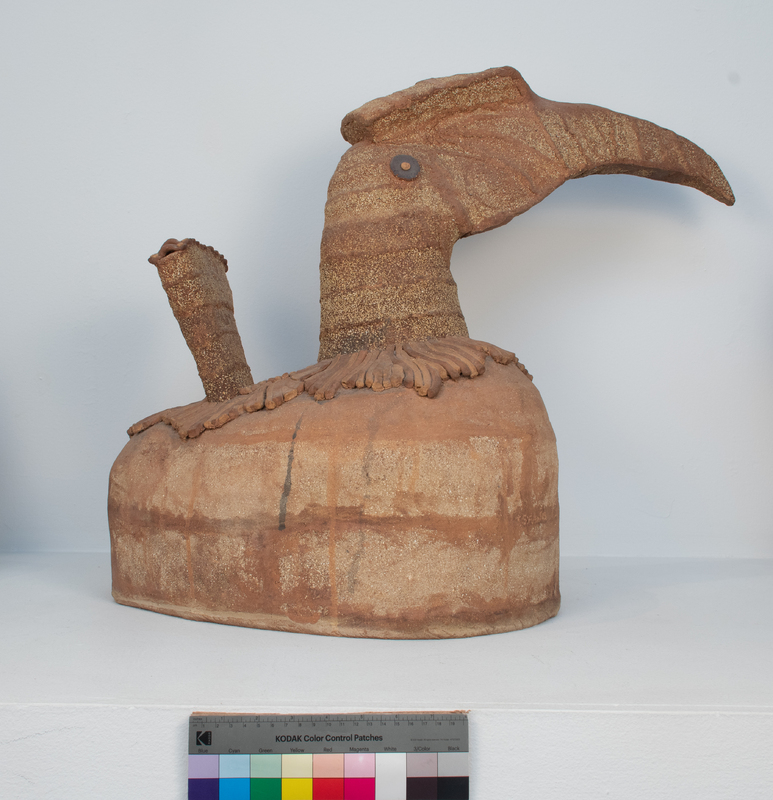
Jesse Sifuentes’ “Greater Hornbill” was created using the slab method, which was taught to students of Carroll Harris Simms. This method entails layering evenly rolled clay mixed with sand as artists build up their figures, working from the bottom layer to the top. Sifuentes frequently features hornbills, unique birds found in parts of Africa and Southeast Asia, in his art.
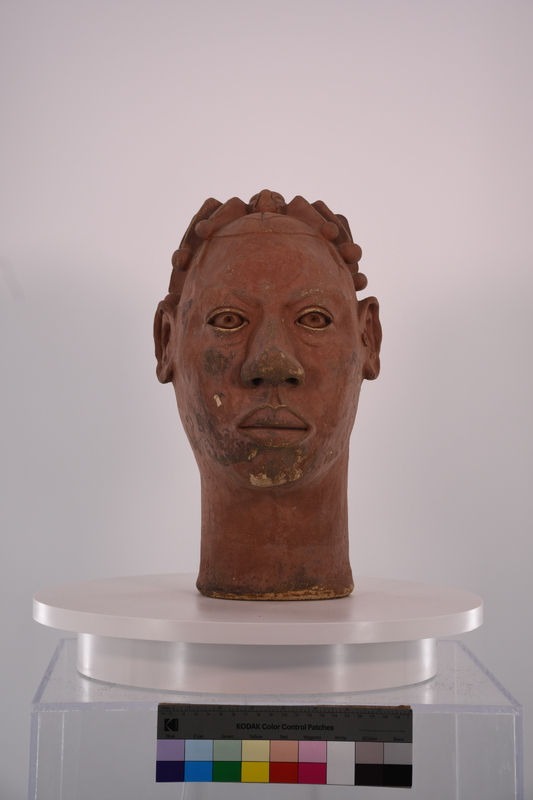
Vital’s bust was created during his time as an art student at TSU. Under the instruction of Professor Carroll Harris Simms, artists would create self-portraits embellished with decorations like spirals and accentuated crown pieces, like in Vital’s sculpture. These busts are inspired by Nok terracotta sculptures and Ife busts, which Simms saw during his travels to Western Africa. Vital later became a member of TSU’s art faculty.
Harvey L. Johnson’s “Shrine” includes embellishments painted with white and brown slips, with small holes punched in various placements along the body of the sculpture. A variety of shrines are featured in the collection of student artists at Texas Southern University. These shrines were inspired by Professor Carroll Harris Simms’ travels to Nigeria.
Jones' self-portrait has a piercing facial expression and displays protruding veins near the brow line and a direct stare from the eyes. The crown is adorned with a spider and the outline of a web along the scalp, along with a spiral near the left ear. The design may have been inspired by Spiderman, who debuted in comics 8 years earlier.
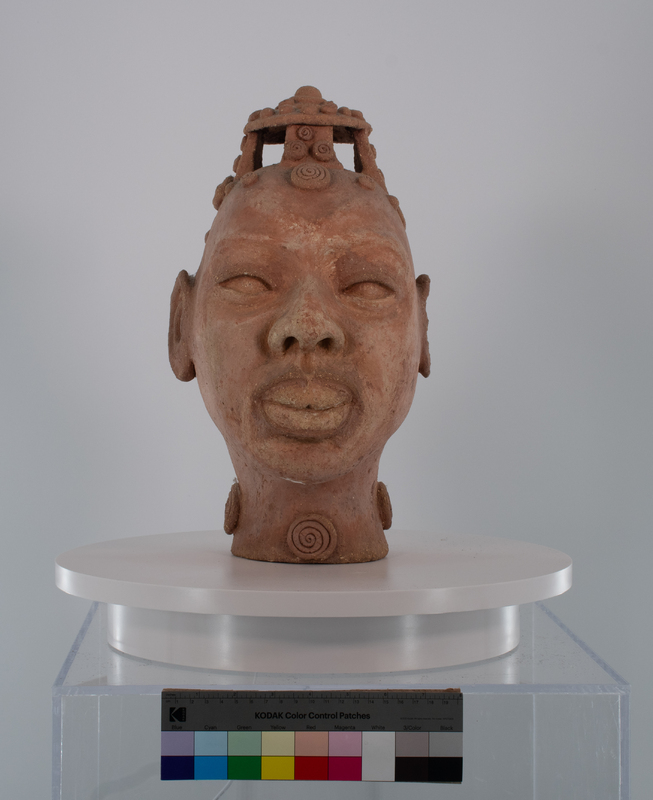
This bust is a self-portrait of the artist. Jones depicted his face with sharp features, high cheekbones, and protruding veins near the brow line. The crown is adorned with spiral motifs, dots, and rolled clay. Atop is a shrine structure, with a turtle within. Turtles and tortoises are often used to symbolize longevity. Students were encouraged to adorn their self-portraits with additional embellishments.
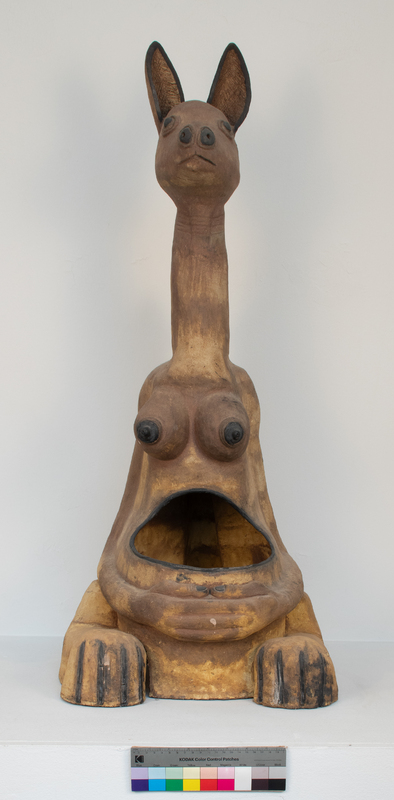
Moses Adams Jr.'s sculpture depicts a kangaroo mother with human-like hands and breasts. The clasped hands under the open pouch signify protection. Detailed, oversized hands are characteristic of the work of John Biggers and his students. Additionally, mothers of various forms and species are a common subject of the student terracottas from Texas Southern University.
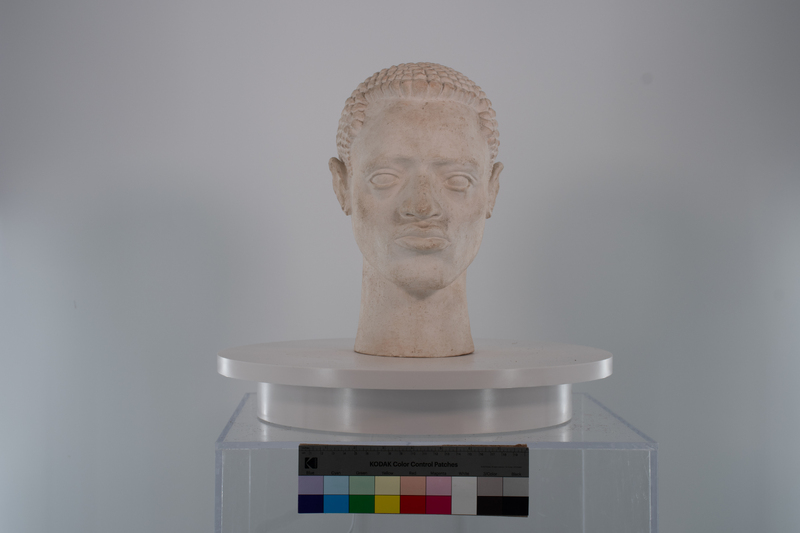
Leon Renfro’s bust is unique within the Texas Southern sculpture collection. It is one of only two busts made from a white plaster (as opposed to the standard terracotta material). The sculpture is also rather bare, lacking the intricate embellishments and ornamentation that are typical of the work of Carroll Harris Simms’ students.
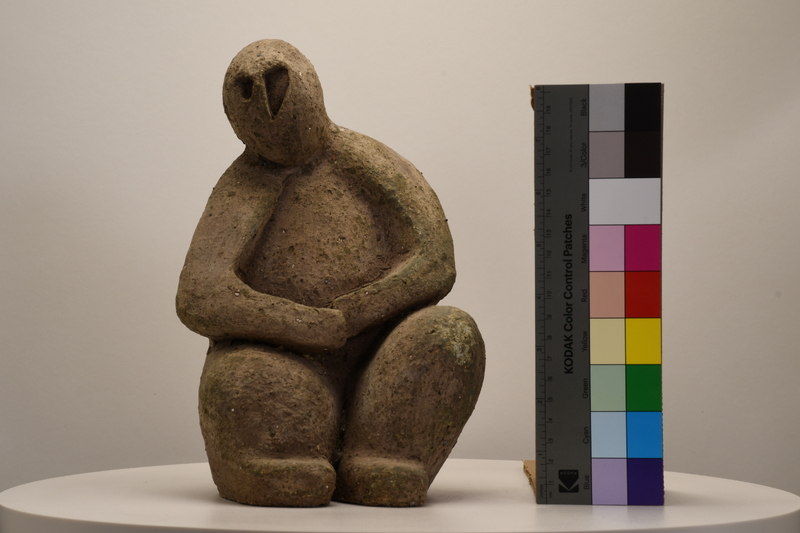
This maquette was created by a Texas Southern University art student. It is a lone figure with defined arms. The porous material and greenish hue evoke the appearance of a mossy rock.
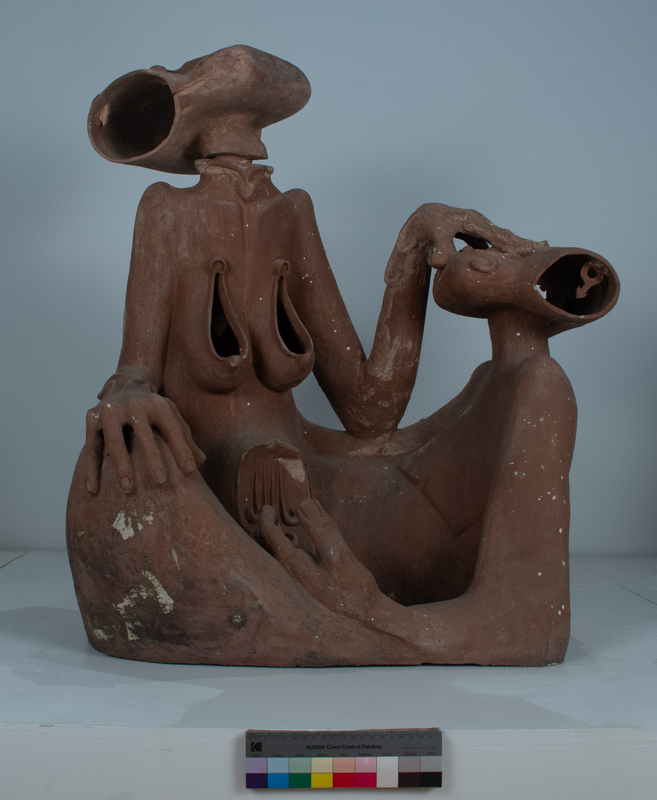
This terracotta was created by an unknown Texas Southern art student. The form suggests a surreal male and female pair warmly embracing each other. The artist employs negative space uniquely in this sculpture; additional gendered embellishments can be seen within the open heads. These exterior decorations were required by Professor Carroll Harris Simms.
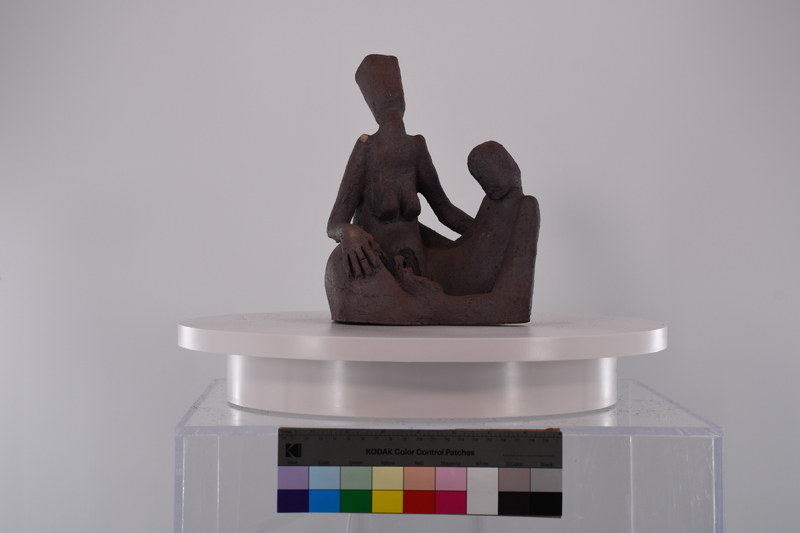
This maquette shows a human-like couple with enlarged heads and hands. The artist suggests their intimacy by joining their lower bodies together. The full-scale sculpture features finer details, such as modified head shapes, embellishments, and greater use of negative space.
Ellison’s bust was created during his time as an art student at TSU. Under the instruction of Professor Carroll Harris Simms, artists would create self-portraits embellished with decorations like spirals and accentuated crown pieces, like in Ellison’s sculpture. These busts are inspired by Nok terracotta sculptures and Ife busts, which Simms saw during his travels to Western Africa.
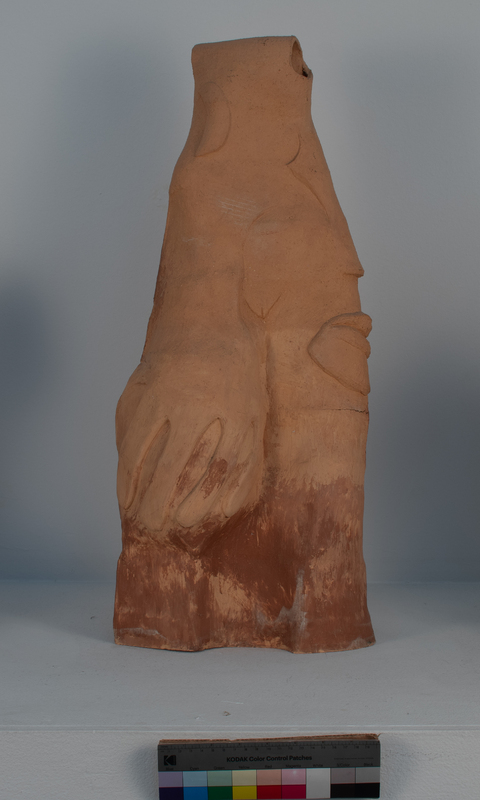
This sculpture is of an abstract side face profile, prominently featuring the nose and lips, with a large hand on one side of the sculpture. The oversized hand is an example of the influence of Dr. John Biggers’ style. This sculpture is two-toned due to varying levels of oxidation of the clay. The structure bears some resemblance to the Moai of Rapa Nui (also known as Easter Island heads).
Windle’s terracotta portrays a figure embracing a bird in its arms. The exterior of the sculpture is smooth and lacking any of the decorative motifs typically featured on Texas Southern students’ terracottas. The embrace reflects the compassion of a mother and her child, while also displaying interspecies grace and kindness through the act of picking up this bird.