The Hannah Hall murals include more than 84 student murals painted on the walls of Texas Southern University's second-oldest building, a selection of which is featured in this collection. Created between 1951 and 2013, the murals cover a wide variety of subjects, including the Civil Rights Movement, Black power, religion, rural life in Texas, fantasy, and more. The mural program was created by Dr. John T. Biggers, founder of Texas Southern's art department.
Curated By
Ben Schachter
Rita Reyes
Contributing Institution
Texas Southern University
About This Record
The HCAC public history focused digital archive cataloging is an ongoing process, and we may update this record as we conduct additional research and review. We welcome your comments and feedback if you have more information to share about an item featured on the site, please contact us at: HCAC-DigiTeam@si.edu
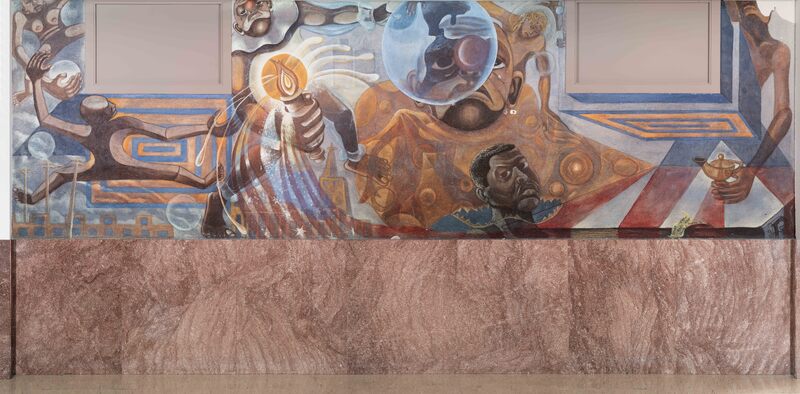
Thomas’ mural depicts an abstracted circus scene. In the center, three clowns, perhaps self-portraits, dressed in collars and muted colors, look seriously towards the viewer. The figures’ contemplative expressions stand in sharp contrast to their dress and profession.
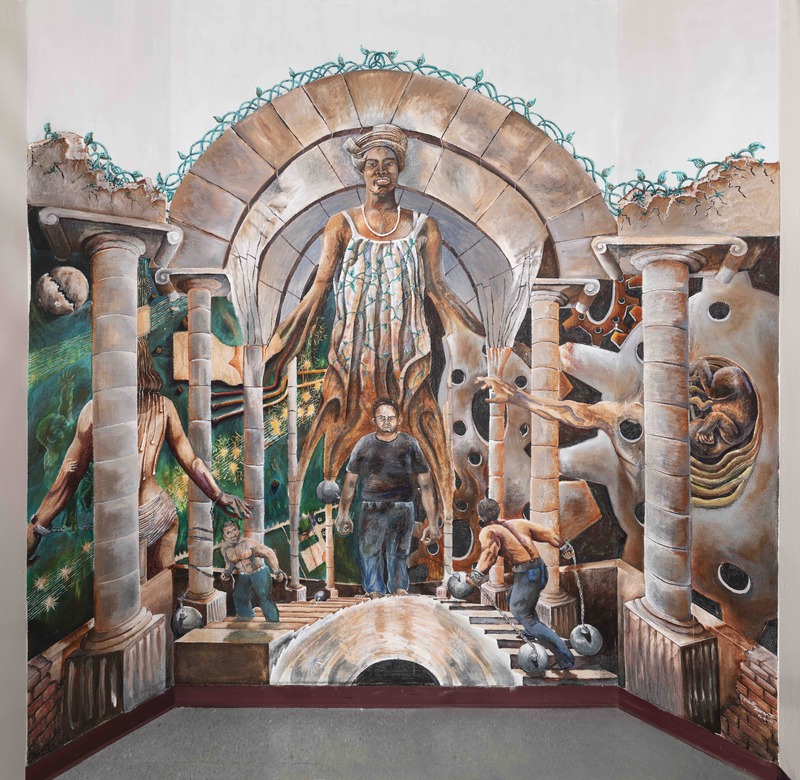
The mural centers an image of Mother Nature as a Black woman. In the foreground of the center panel, the artist stands in front of the towering female figure. On either side of Turner, men are weighed down by heavy irons. On the right, an embryo is gestating in a womb within a gear.
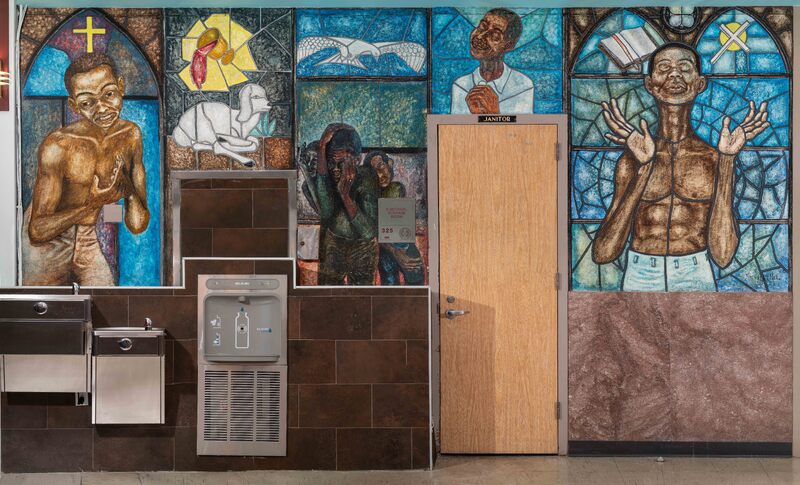
McNeil creates a scene of Black spirituality and worship, surrounding images of Black men with the traditional symbols of the cross, the lamb, the dove, and the wine of communion. Placing two of the figures against stained glass windows yields a direct connection with the interior of the Black church.
Oliver's mural reflects his classical painting style in a composition that shows Black men struggling to lift up an imposing weight above them, represented by the closed window on the wall. The mural appears to have been painted over an older design, as can be seen in the lower right section.
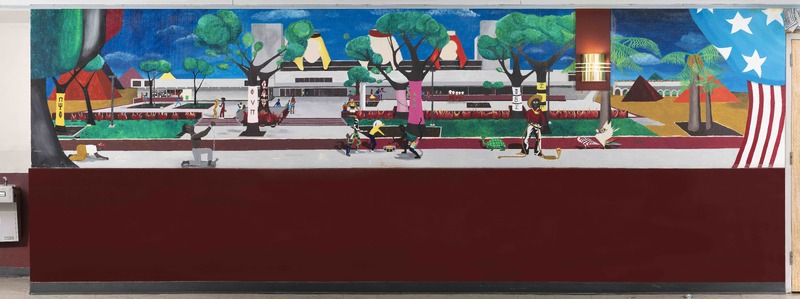
Focusing on the Sterling Student Life Center, the artist captures the lively activities of students and reflects the importance of Black fraternities and sororities in HBCU student life. Realism is paired with the surreal imagery of fantastic figures dancing around the music blasting from a boombox.
A commentary on the conflict between technology and progress, history and culture, Davis painted this mural in response to the destruction of several Hannah Hall murals to create windows into a new computer lab. Davis’ own mural was later damaged by subsequent construction, as foreseen in its design.
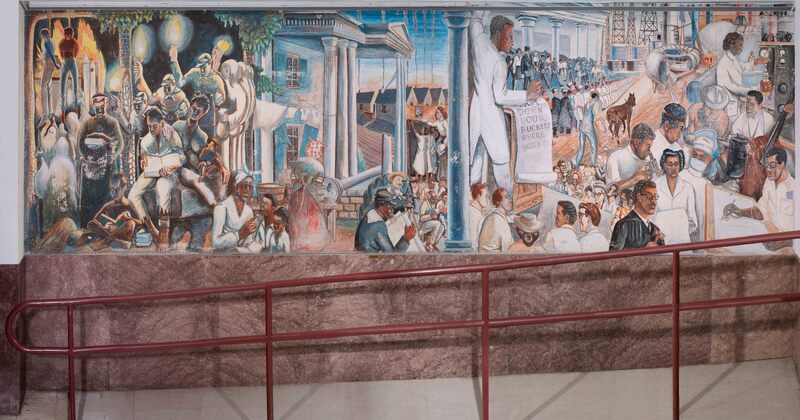
Washington’s mural is a timeline of Black education. On the left, he depicts slavery and lynching above enslaved people secretly reading. In the center, students write “Emancipation Proclamation” and Booker T. Washington delivers his "Atlanta Compromise" speech. The right depicts emerging Black professionals.
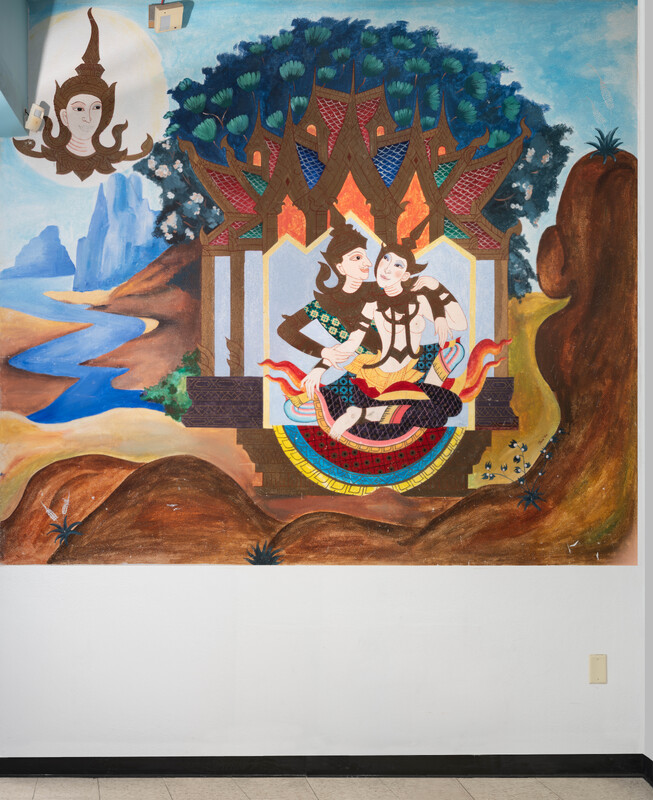
Charoennimuang’s Hannah Hall mural draws inspiration from her birth country, Thailand. In her own words, it “is a Thai style mural-painting that expresses the love of two human beings…surrounded by the beauty of nature…. The man and woman are dressed up in Thai-style like the old days…neatly weaved and knitted in a Thai pattern…made of Thai silk.” The study for this mural included a dragon in the upper right corner that was cut from the final design.
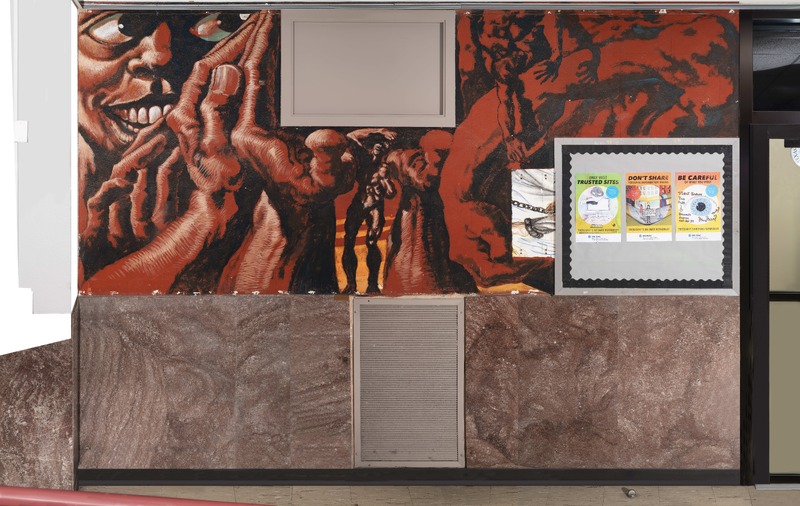
In this mural, Mother Nature is attacked by oil derricks, pollution, and industrialization. Jones painted this work as a response to the rapid expansion of oil drilling throughout Texas. Jones still engages with nature, now creating wood carvings from fallen timber after Galveston storms.
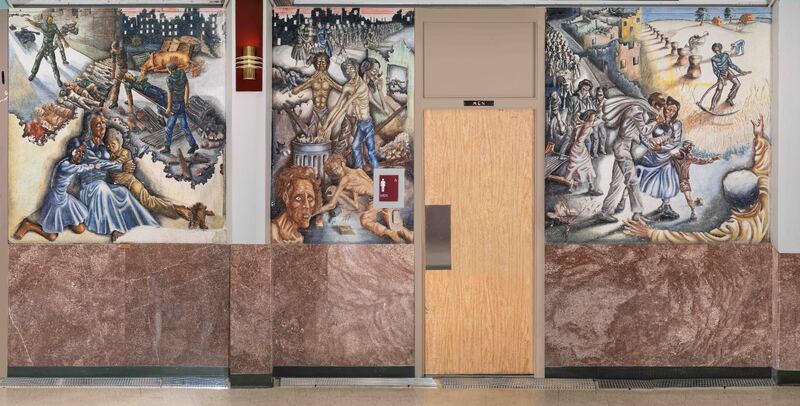
Michaux, a war veteran, was given the opportunity by Dr. Biggers to paint this mural during his first year as an art major. Reflecting on the devastation of the then-recent World War II, the mural depicts terror, hunger, and human compassion.
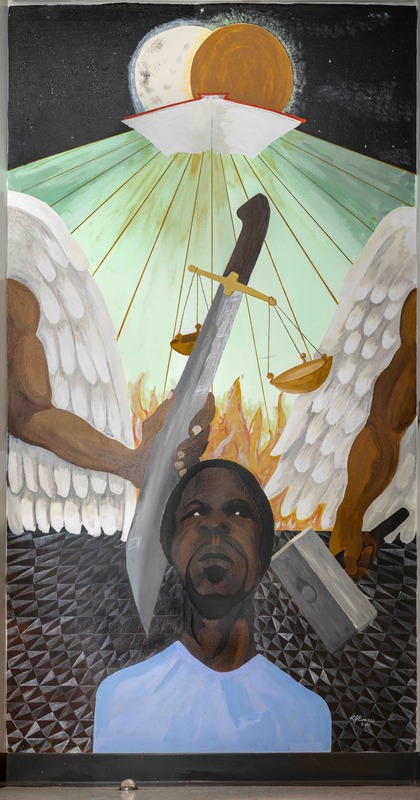
Evans’ mural features a self-portrait of the artist below the muscular arms of two angels. Above, an open book radiates light onto the setting. Evans is a founding member of Otabenga Jones & Associates, an artists’ collective founded by four former TSU students.