This collection highlights the Black Liberation Army (BLA), an underground Marxist-Leninist organization that operated in the United States from 1970-1981. BLA was primarily made up of former Black Panthers and Republic of New Afrika members. The organization's goal was to “take up arms for the liberation and self-determination of Black people in the United States” and they openly declared war on the United States government. Former Black Panther Party member and Jackson State University professor Frankye Adams-Johnson’s Black Panther Party Collection includes many items associated with the BLA such as newspaper clippings, BLA newsletters, drafts of speeches, position papers, and more. These materials offer a rare glimpse into the inner workings of this underground organization.
Curated By
Garrad Lee
Contributing Institution
Jackson State University
About This Record
The HCAC public history focused digital archive cataloging is an ongoing process, and we may update this record as we conduct additional research and review. We welcome your comments and feedback if you have more information to share about an item featured on the site, please contact us at: HCAC-DigiTeam@si.edu
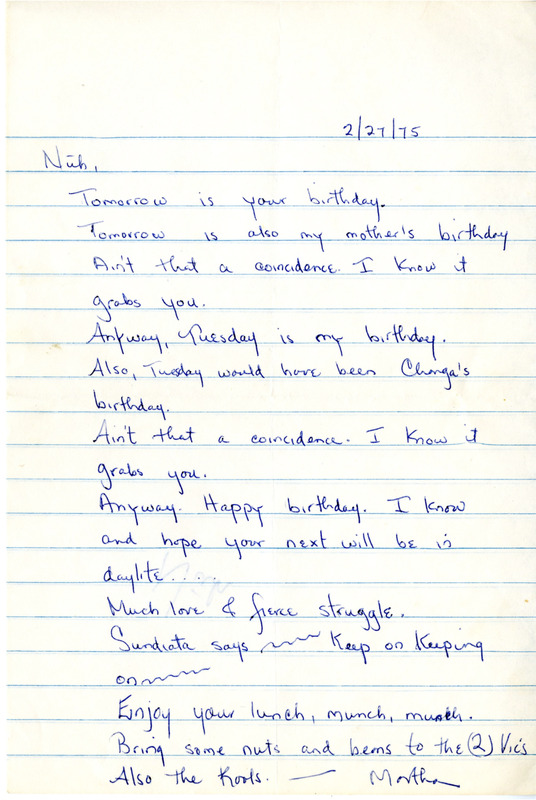
A letter to Nuh Abdul Qaiyum from Martha Pitts wishing him a happy birthday while he is in prison. The letter contains birthday messages from others as well, including Assata Shakur (Joanne Chesimard) and Sundiata Acoli. Both of those birthday wishes were relayed through Martha Pitts, who was a friend and confidant to each of them.
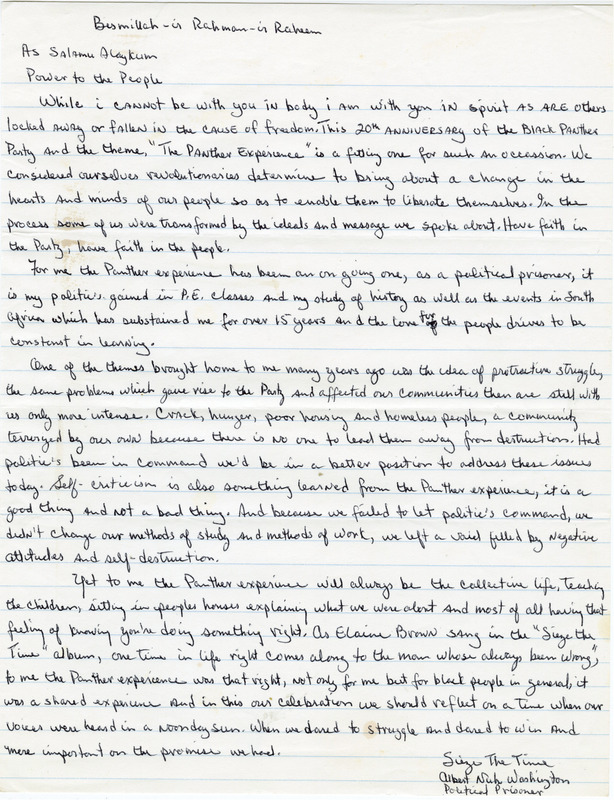
A letter from imprisoned Black Panther Party member Nuh Abdul Qaiyum on the occasion of the 20th anniversary of the Black Panther Party in 1986. He writes about the Black Panther Party, its impact, and its legacy. He explains the void that the Party left in the community after its end due to having no political power.
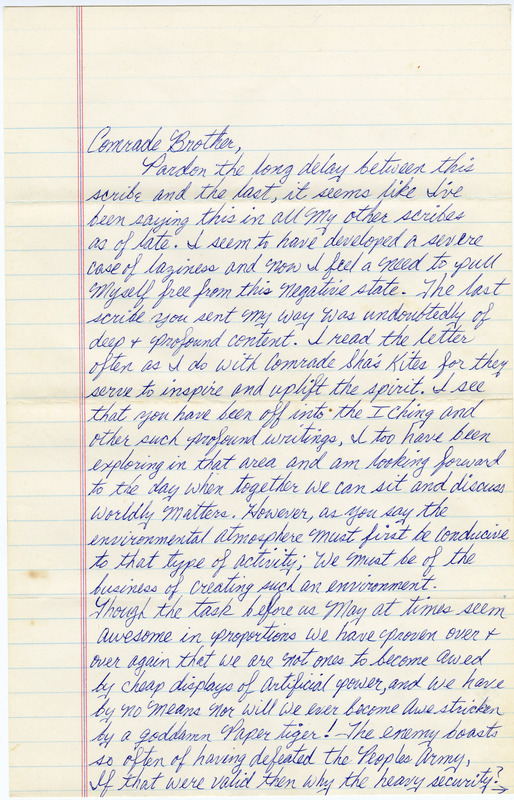
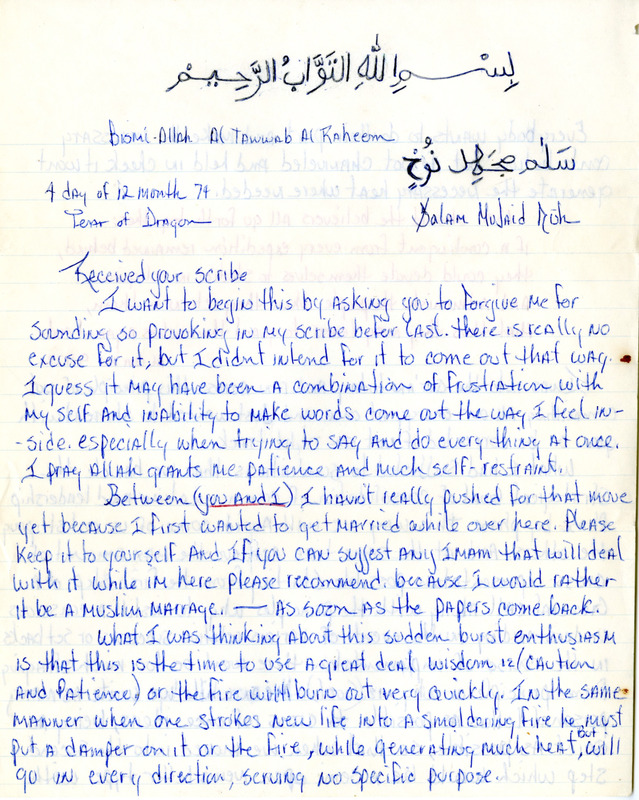
Pedro Monges (Chango Caribe), who was sentenced to prison in 1973 on robbery and weapons charges in connection with a Black Liberation Army (BLA) robbery, writes to Nuh Abdul Qaiyum to apologize for the delay between letters. He writes that he is hopeful for the future because their fight is a natural one that the people must get serious about.
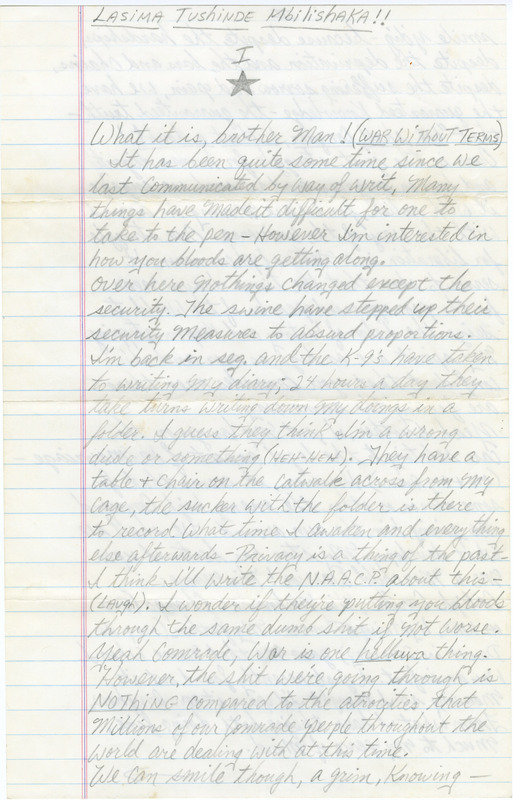
Pedro Monges (Chango Caribe), who was sentenced to prison in 1973 on robbery and weapons charges in connection with a Black Liberation Army (BLA) robbery, writes to Nuh Abdul Qaiyum to explain his current conditions and treatment in jail, saying he is under extreme surveillance. He writes about his newly born son, case proceedings, and other news.
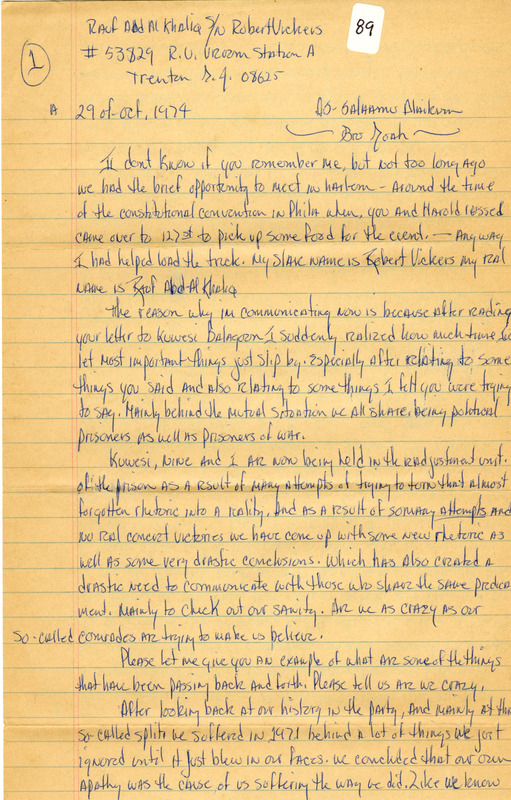
Raul Abd Al Khaliq, a fellow imprisoned Black revolutionary, writes to Nuh Abdul Qaiyum. He writes about forming a mass network of communications between all revolutionaries across the country. He feels there is a lack of those willing to take action and that a mass re-organization of the party, their structure, and ideals is necessary.
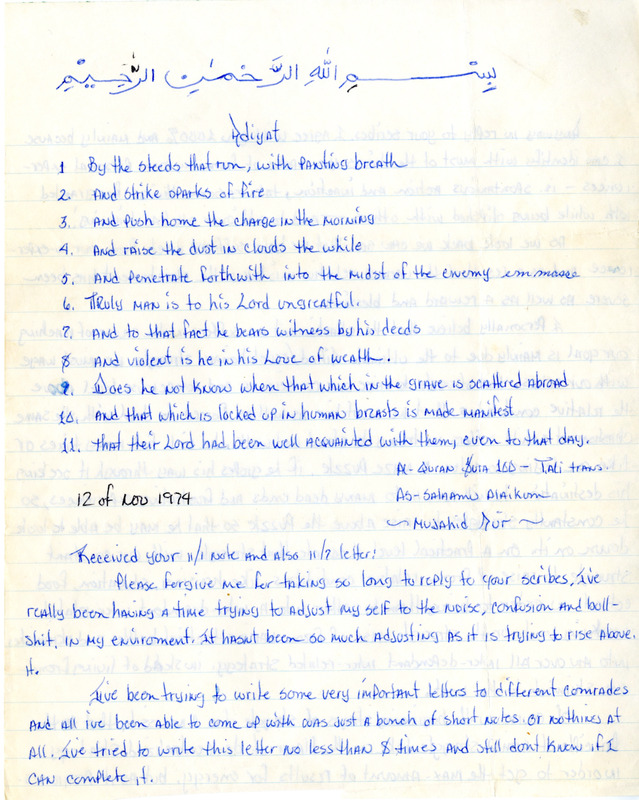
Raul Abd Al Khaliq, a fellow imprisoned Black revolutionary, writes to Nuh Abdul Qaiyum. He opens the letter with a passage from the Quran. He then focuses on the mental and conscious change that imprisoned and free revolutionaries must go through to fight the battle properly. He explains the need for an organized structure for resistance groups.
Raul Abd Al Khaliq, a fellow imprisoned Black revolutionary, writes to Nuh Abdul Qaiyum. In the letter, he mentions some of Nuh Abdul Qaiyum's writings, and stresses the importance of prisoners communicating with one another. He also lays out a vision and ideology for armed Black resistance, namely the need for centralized leadership.
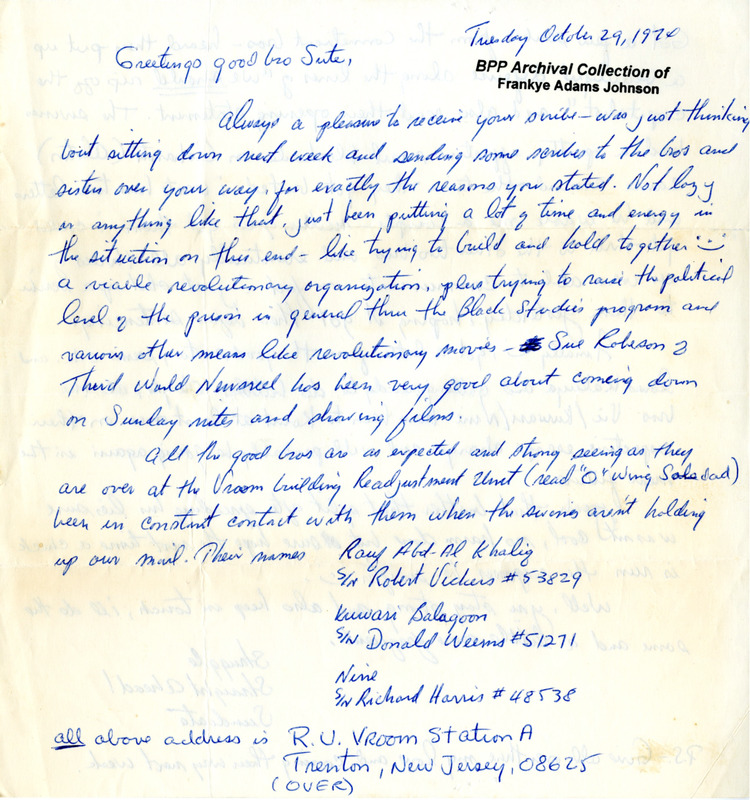
Sundiata Acoli, a member of the Black Liberation Army (BLA) who was convicted in 1974 for the murder of a cop, writes to fellow revolutionary Sute. He addresses his lack of writing, as he is trying to organize revolutionaries in prison. He tells Sute the location of other brothers in the prison and news of their court proceedings.
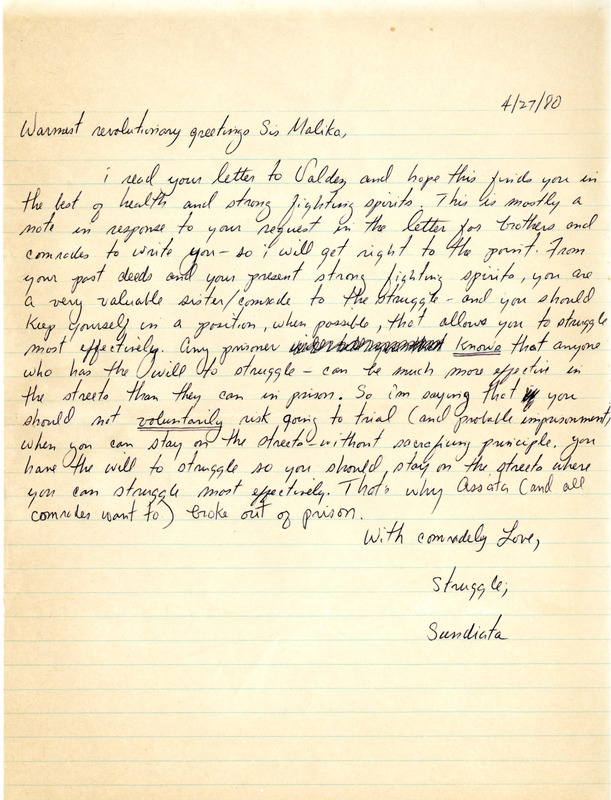
Sundiata Acoli, a member of the Black Panther Party and Black Liberation Army (BLA) who was convicted in 1974 for the murder of a cop, writes Frankye Adams-Johnson (Malika) to tell her that she should do everything in her power to avoid trial and prison, because her effectiveness in the struggle would be weakened in prison.
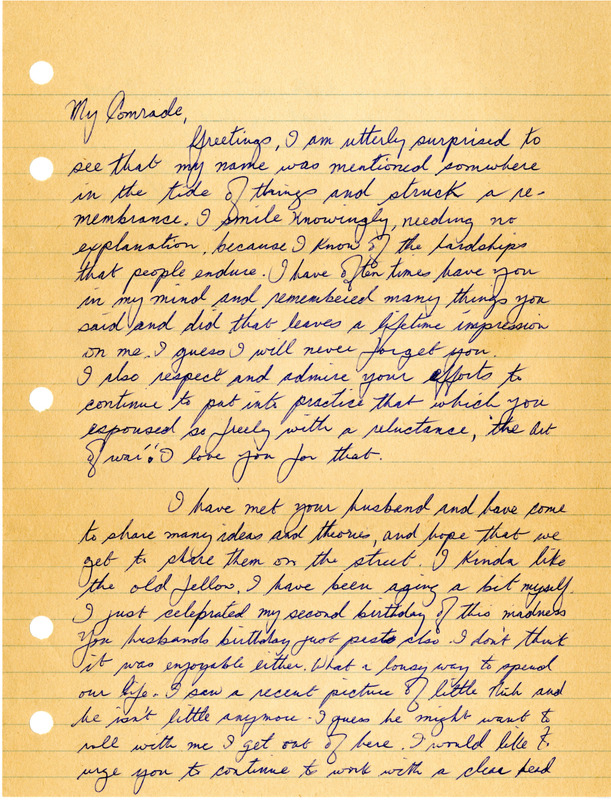
Victor Cumberbatch, sentenced to prison in 1973 on robbery and weapons charges in connection with a Black Liberation Army (BLA) robbery, writes to Frankye Adams-Johnson (Malika). He explains the impression and lifelong impact that she left on him. He mentions meeting her husband, and he relates to him in the sense of growing older in prison.
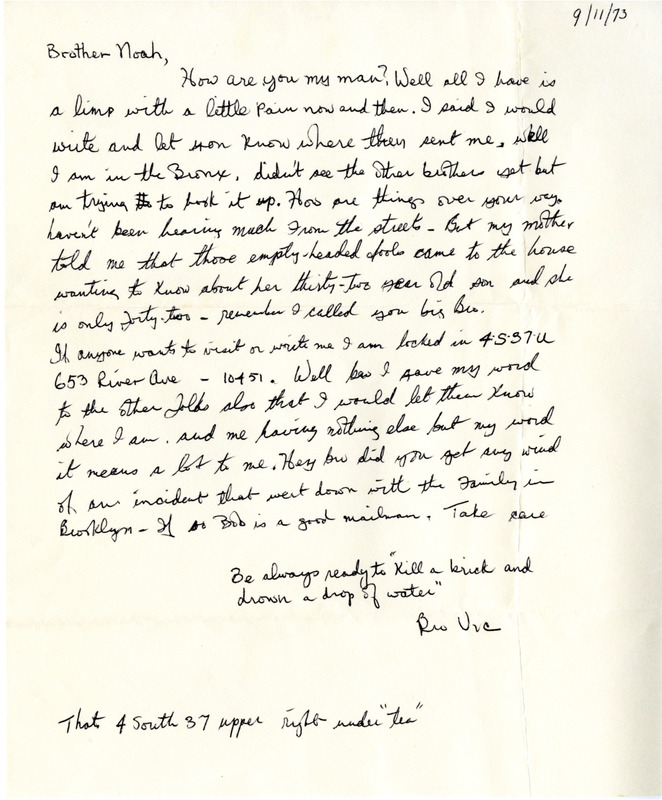
Victor Cumberbatch, who was sentenced to prison in 1973 on robbery and weapons charges in connection with a Black Liberation Army (BLA) robbery, writes to update Albert Washington (Nuh Abdul Qaiyum) on his physical wellbeing and where he is serving his prison sentence. He asks if he has heard anything about an incident in Brooklyn.
A letter addressed to “All Black and Oppressed Third World People” from the Malcolm X Section of the Afro-American Liberation Army. The letter is a call for Black people to take up arms and take their freedom from America, even if that means “killing those who stand between us and the oppressor”
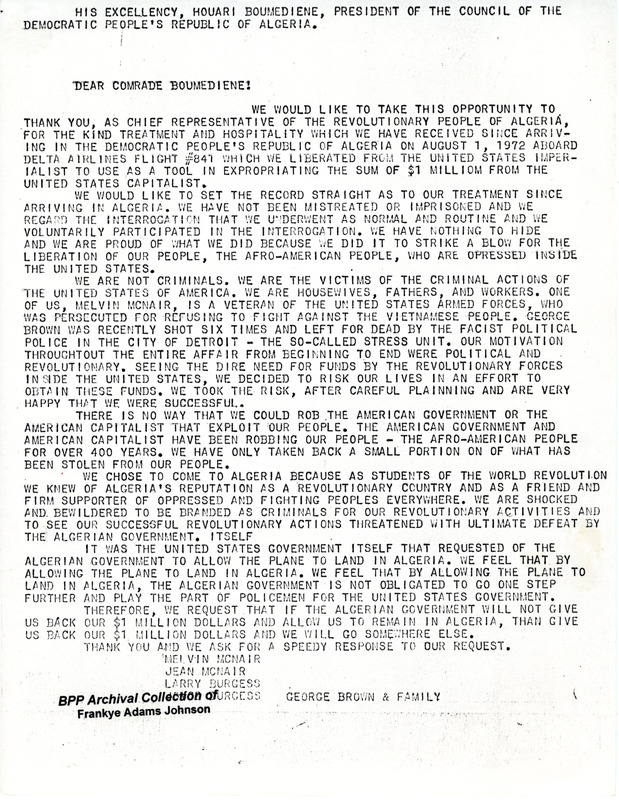
A letter to Algerian president Houari Boumediene from members of the Black Liberation Army (BLA) who had fled to his country from the United States. Melvin McNair, Jean McNair, Larry Burgess, and George Brown hijacked a plane in Miami on July 31, 1972 to seek political asylum in Algeria. The letter talks about their treatment in the country.
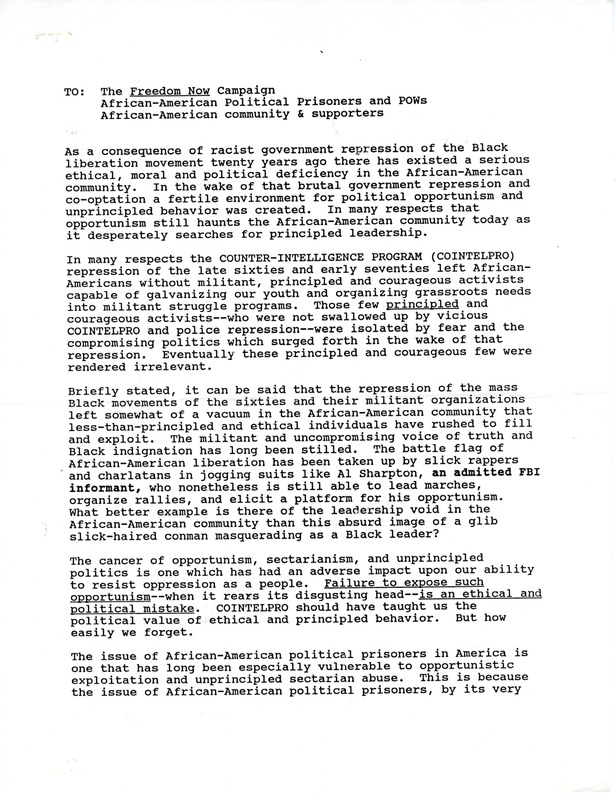
Black Panther Party leader, co-founder of the Black Liberation Army, and political prisoner Dhoruba Bin Wahd (Richard Moore) writes to the Freedom Now Campaign concerning several of the group's members exhibiting opportunistic tendencies on the issue of African-American political prisoners because of a power vacuum in the Black liberation struggle
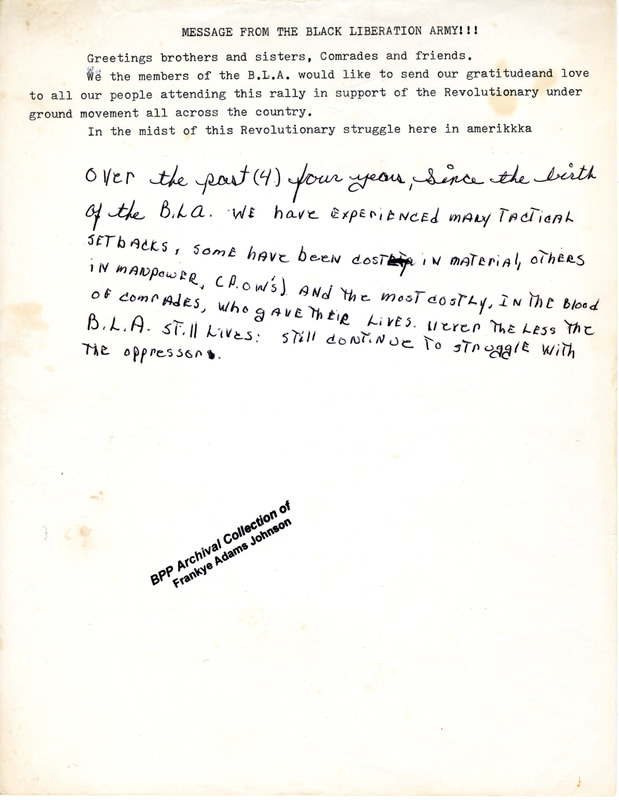
Brief greetings given on behalf of the Black Liberation Army (BLA) to people attending a rally in support of revolution. With handwritten notes by Frankye Adams-Johnson (Malika) about some of the tactical setbacks the BLA has experienced, the most costly of which being the loss of people who gave their lives to the struggle.
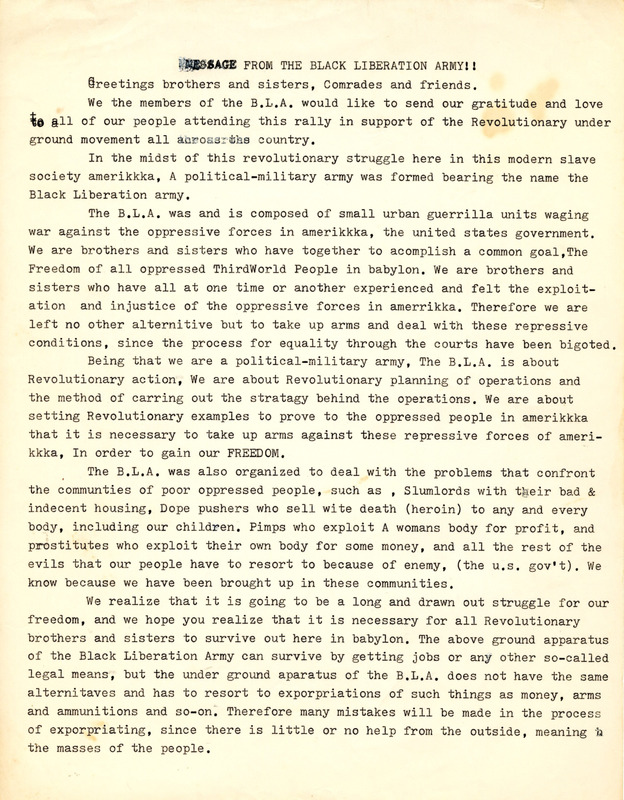
A message from the Black Liberation Army (BLA) to brothers and sisters, comrades and friends attending a rally. The message briefly outlines the history and tenets of the organization, including taking up arms against the oppressive government as well as combatting ills in the community such as slumlords, drug pushers, and pimps.
A message declaring the revolutionary intentions of the Black Liberation Army (BLA). The author sets up a dystopian military state scene and writes that revolutionaries must be prepared to do anything, including infiltration, violence, and more. The author also writes that those who die for the cause of revolution must be celebrated, not mourned.
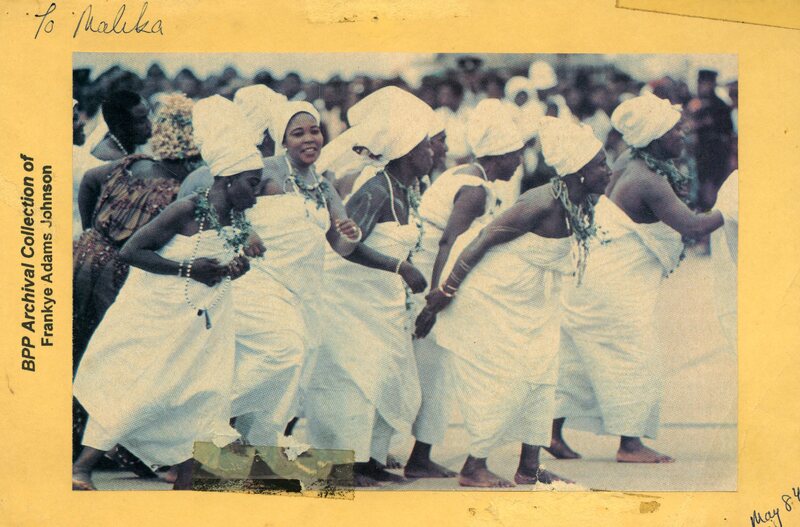
On the front of the Mother’s Day card there is a picture of a group of women. On the back of the card, Black Liberation Army (BLA) member Ashanti Alston expresses his Mother's Day wishes to Frankye Adams-Johnson (Malika), and he says that one day may come where there is no struggle because she deserves so much more from life.
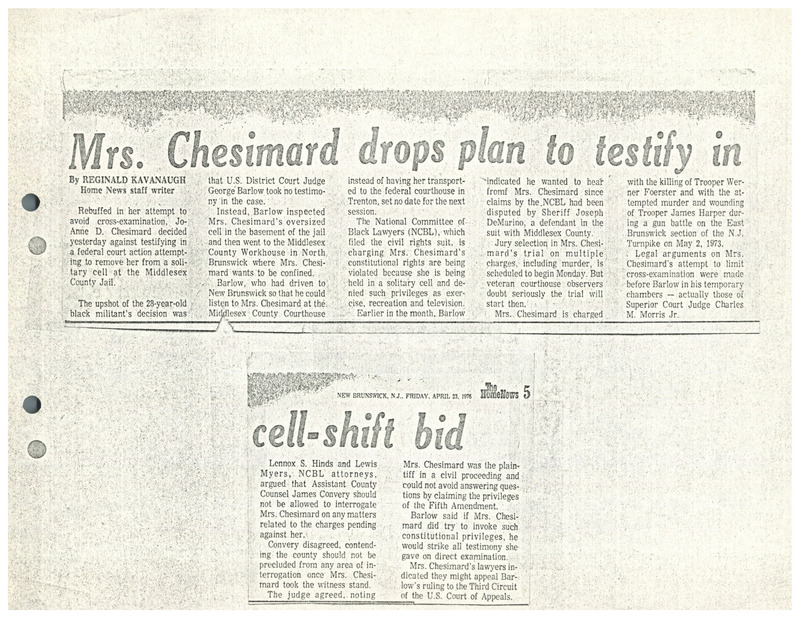
A newspaper article from The Home News about Assata Shakur (JoAnne Chesimard) dropping her plan to testify in her attempt to get moved to a larger cell while in Middlesex County to stand trial for the May 1973 killing of a state trooper. Shakur was convicted in 1977 of the killing and escaped prison in 1979.
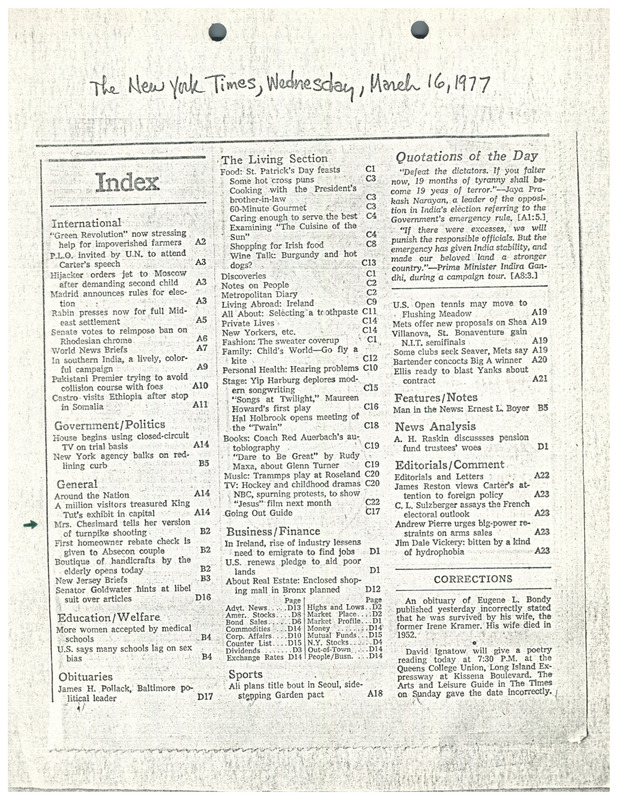
A newspaper article from The New York Times detailing the testimony Assata Shakur (JoAnne Chesimard) gave during her trial for the 1973 killing of a state trooper. In her testimony, she denied shooting anyone, or possessing a firearm, and gave her account of what happened that day.
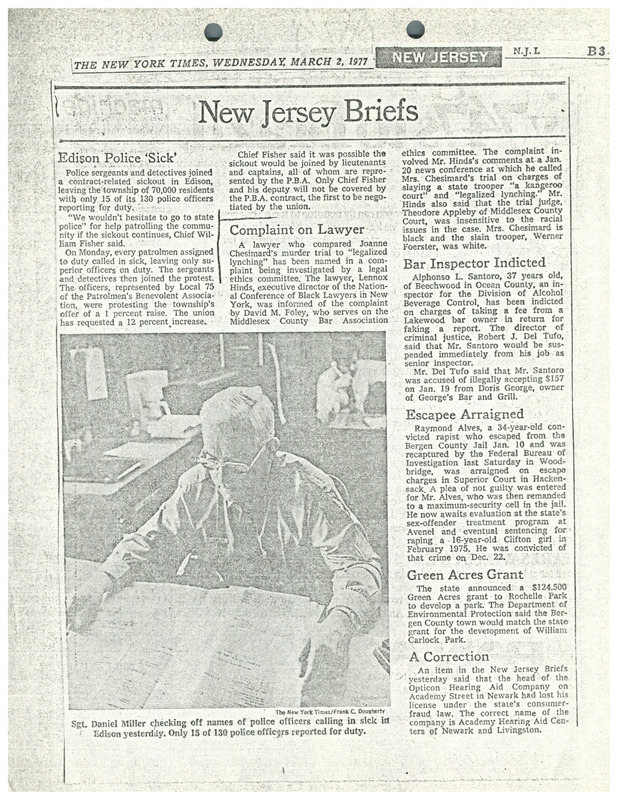
A news blurb from The New York Times about Lennox Hinds, president of the National Conference of Black Lawyers, speaking out against his critics for his support of Assata Shakur (JoAnne Chesimard), in her trial for the 1973 killing of a state trooper, after being cited by The Ethics Committee of the Middlesex County Bar Association.
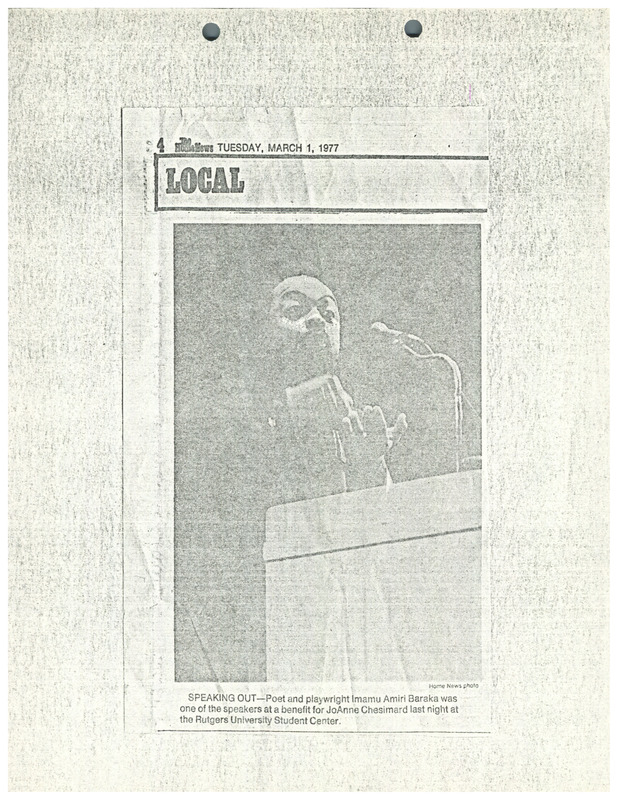
A photograph from the newspaper The Home News of poet and playwright Amiri Baraka speaking at a benefit for Assata Shakur (JoAnne Chesimard) at the Rutgers University Student Center in New Jersey. Shakur was on trial for the 1973 killing of a state trooper. Baraka was one of several speakers speaking on Shakur’s behalf at the benefit.
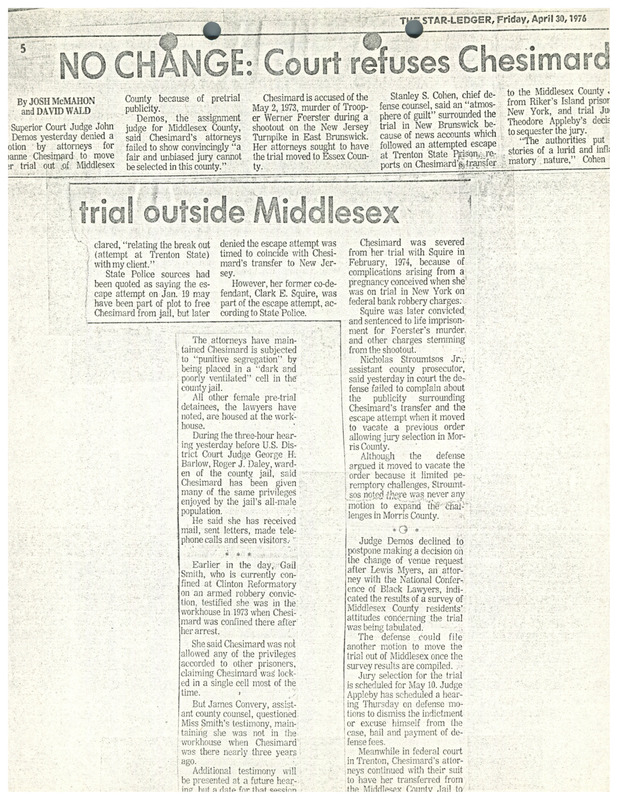
A newspaper article from The Star Ledger about Superior Court Judge John C. Demos denying a motion to move the murder trial of Assata Shakur (JoAnne Chesimard) for the 1973 killing of a state trooper out of Middlesex County because of the defense's inability to show that an unbiased jury couldn't be selected.
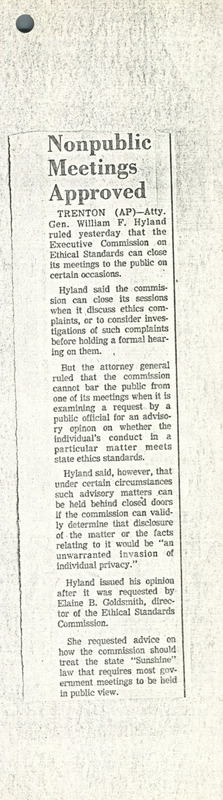
A newspaper article from the Asbury Park Press about Attorney General William F. Hyland ruling that the Executive Commission on Ethical Standards can close its meetings to the public on certain occasions. This article pertains to hearings in the trial of Assata Shakur (JoAnne Chesimard) for the 1973 killing of a state trooper.
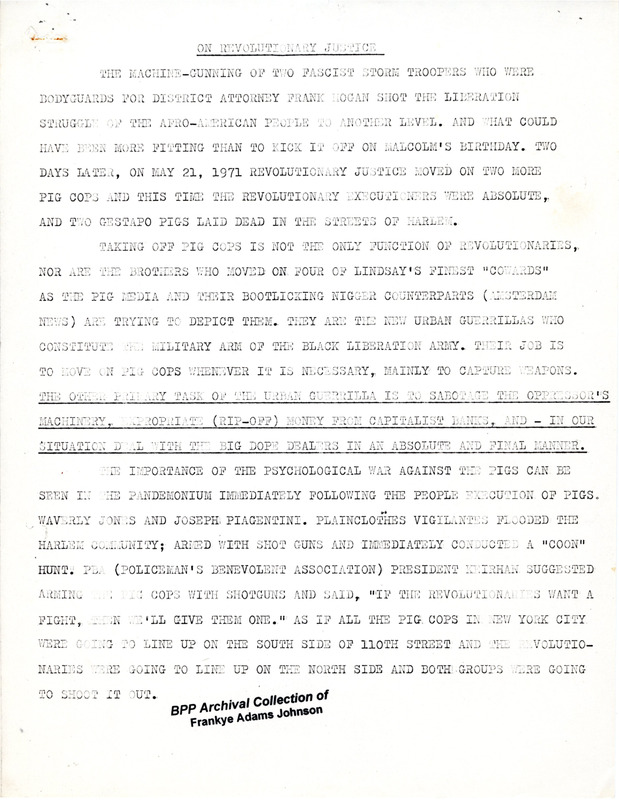
A short essay about the revolutionary killing of cops. The author gives two recent examples of revolutionaries killing cops, saying the killers are urban guerillas who constitute the military arm of the Black Liberation Army (BLA). The tagline of the essay is “All Power to the New Urban Guerilla, War to the End.”
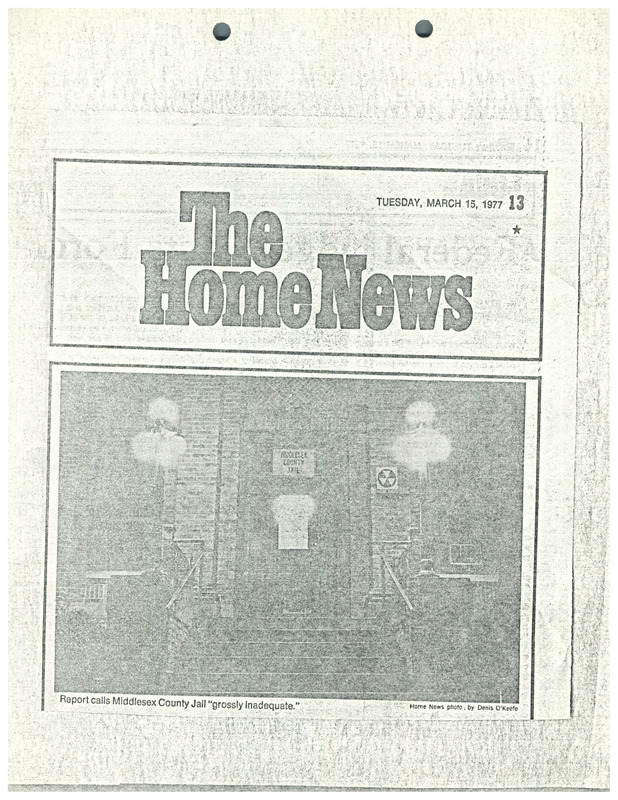
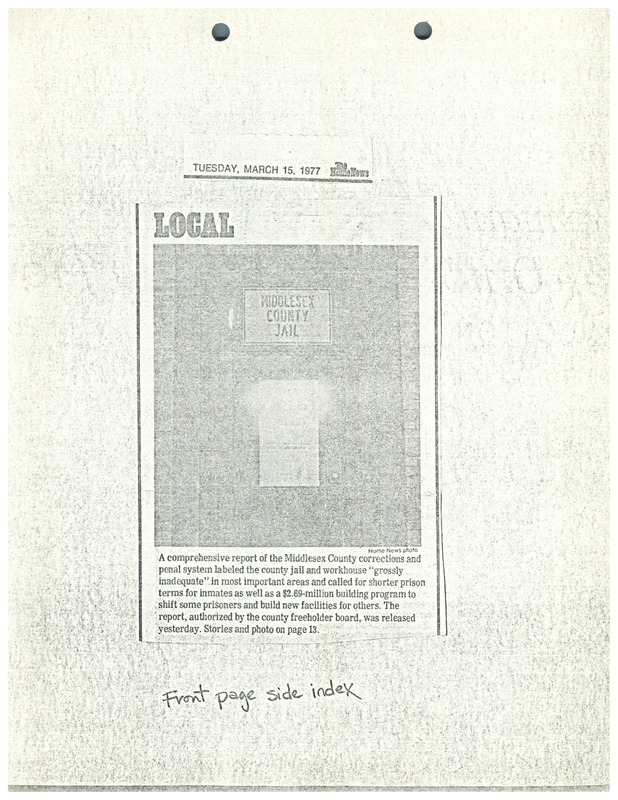
A photograph from the newspaper The Home News of Middlesex County Jail. The jail, where Assata Shakur (JoAnne Chesimard) was staying for her New Jersey trial for the 1973 killing of a state trooper, had been found "grossly inadequate" in a comprehensive report. Shakur was attempting to get transferred from the jail.
A photograph from the newspaper The Home News of Middlesex County Jail. The jail, where Assata Shakur (JoAnne Chesimard) was staying for her New Jersey trial for the 1973 killing of a state trooper, had been found "grossly inadequate" in a comprehensive report. The report called for shorter terms and millions of dollars in upgrades.
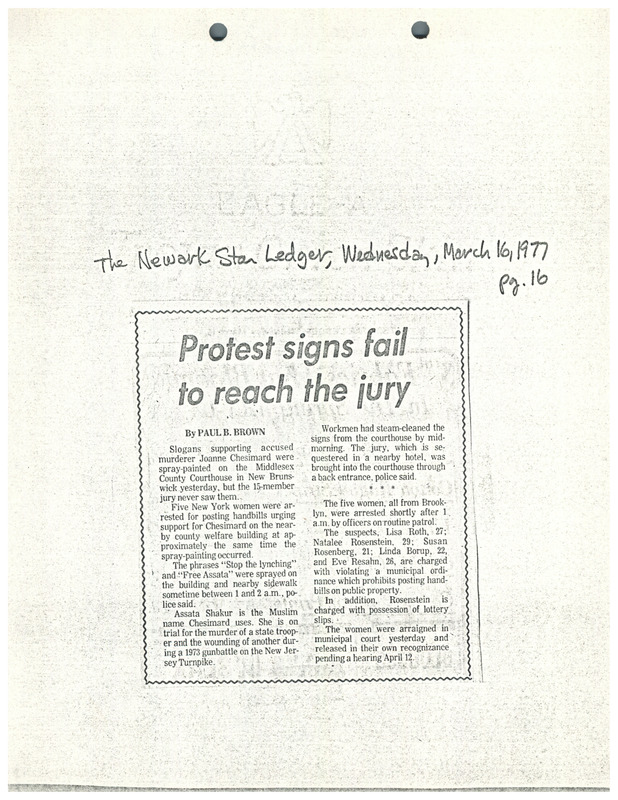
A newspaper article from The Star Ledger about slogans spray painted on the Middlesex County Courthouse in support of Assata Shakur (JoAnne Chesimard) during her trial trial for the 1973 killing of a state trooper. Five women were arrested for another incident where pro-Shakur handbills were posted on the nearby county welfare office.
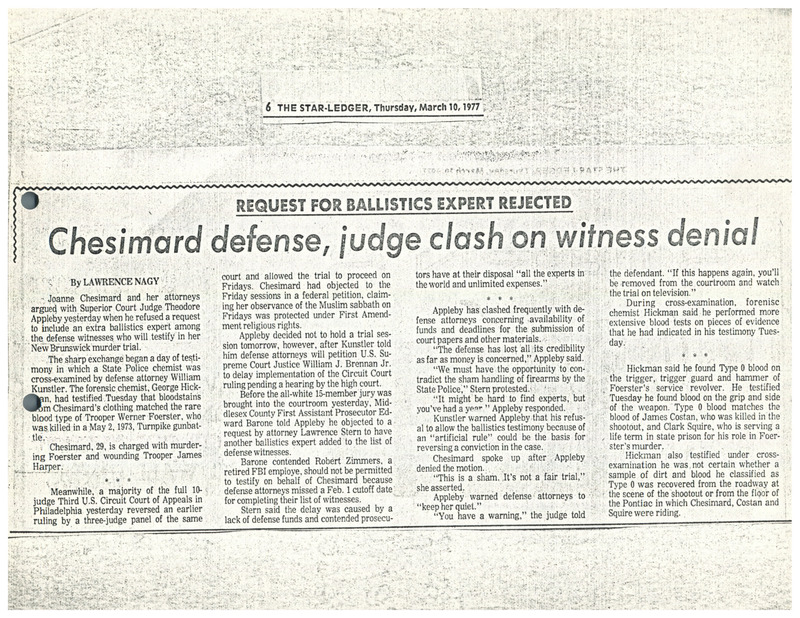
A newspaper article from The Star Ledger about the defense team for Assata Shakur (JoAnne Chesimard), on trial for the 1973 killing of a state trooper, being denied calling an extra ballistics witness by the judge. The prosecution contended the witness was not valid since the defense team missed the cutoff date to add witnesses to their list.
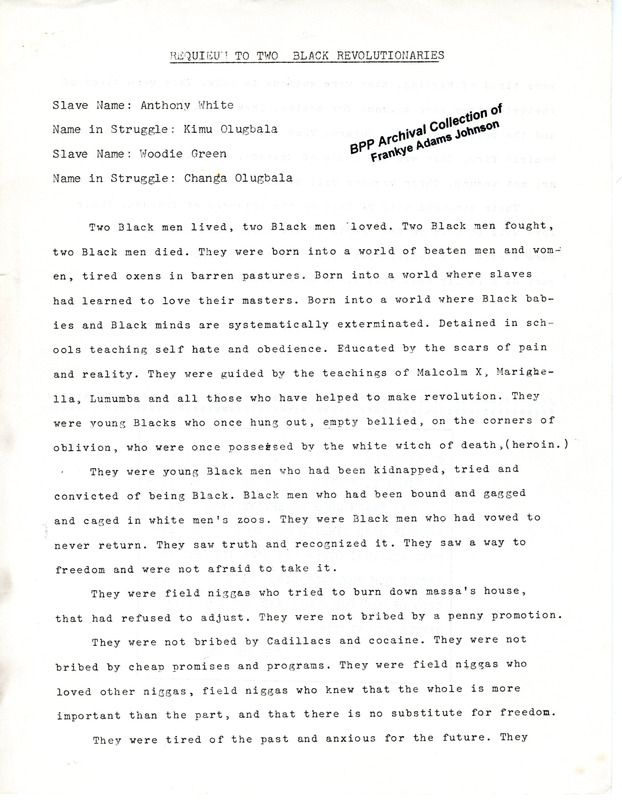
A requiem written to Anthony White (Kimu Olugbala) and Woodie Green (Changa Olugbala), two members of the Black Liberation Army (BLA) who died in prison. The author writes that their memory will be used as fuel for the ongoing struggle against oppression. A quote from Argentine Marxist revolutionary Che Guevara is printed at the bottom of page 2.