This collection highlights the Black Liberation Army (BLA), an underground Marxist-Leninist organization that operated in the United States from 1970-1981. BLA was primarily made up of former Black Panthers and Republic of New Afrika members. The organization's goal was to “take up arms for the liberation and self-determination of Black people in the United States” and they openly declared war on the United States government. Former Black Panther Party member and Jackson State University professor Frankye Adams-Johnson’s Black Panther Party Collection includes many items associated with the BLA such as newspaper clippings, BLA newsletters, drafts of speeches, position papers, and more. These materials offer a rare glimpse into the inner workings of this underground organization.
Curated By
Garrad Lee
Contributing Institution
Jackson State University
About This Record
The HCAC public history focused digital archive cataloging is an ongoing process, and we may update this record as we conduct additional research and review. We welcome your comments and feedback if you have more information to share about an item featured on the site, please contact us at: HCAC-DigiTeam@si.edu
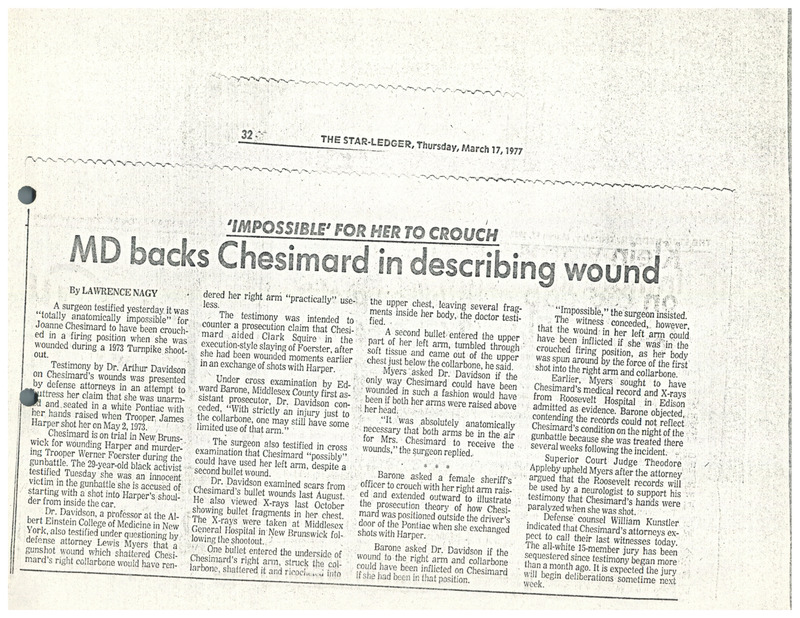
A newspaper article from The Star-Ledger about the testimony of defense witness Dr. Arthur Davidson during the trial of Assata Shakur (JoAnne Chesimard) for the 1973 killing of a state trooper. He testified about the wounds sustained by Shakur and argued that she could not have shot from the crouching position due to her wounds from the shootout.
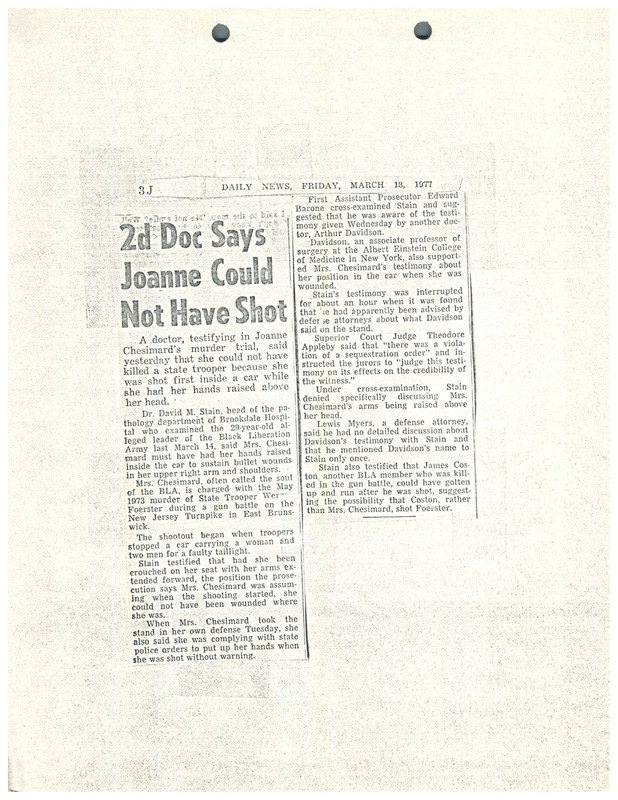
A newspaper article from Daily News about the testimony of defense witness Dr. David Spain during the trial of Assata Shakur (JoAnne Chesimard) for the 1973 killing of a state trooper. He testified about the wounds she sustained, arguing that she couldn’t have shot from a crouching position due to the position of her wounds from the shootout.
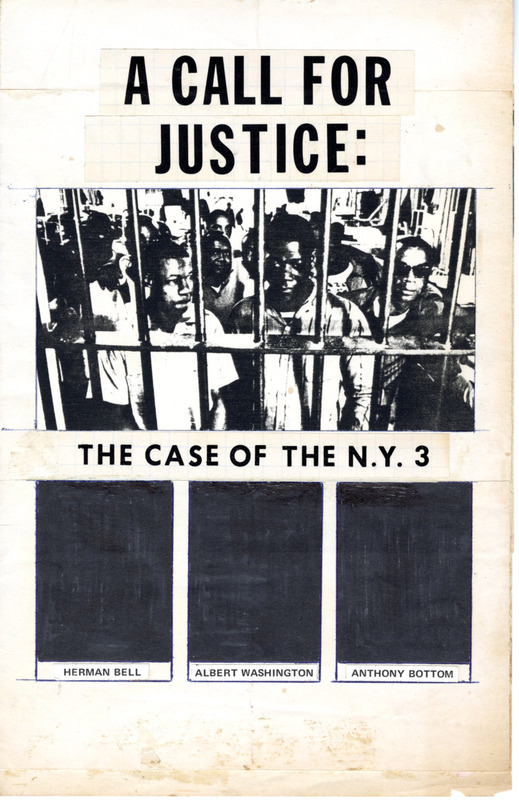
A handmade flier with a picture of prisoners behind bars. The pictures of Herman Bell, Albert Washington, and Anthony Bottom have been blacked out. The three men, known as the New York 3, were Black Panther Party and Black Liberation Army (BLA) members who were arrested and convicted of the May 21, 1971, killing of two police officers in Harlem.
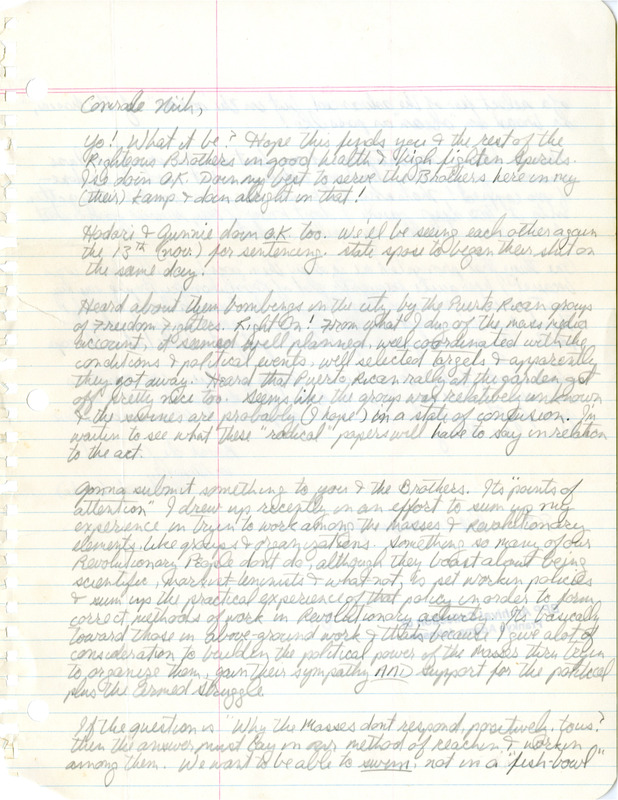
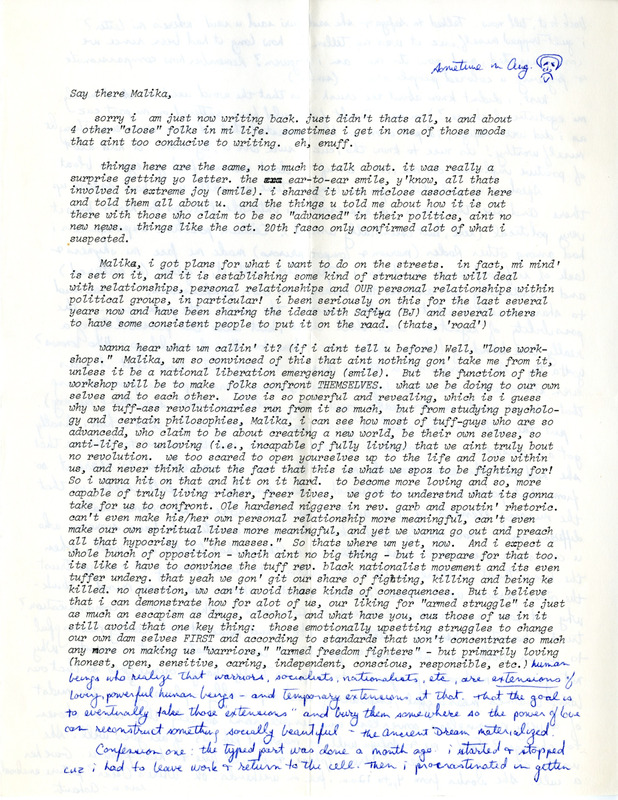
A letter from Ashanti Alston, a Black Liberation Army (BLA) member who was imprisoned for 11 years for a robbery to raise money for the BLA, to Nuh Abdul Qaiyum. He has come up with "points of attention" for the revolutionaries, and he wants Nuh Abdul Qaiyum and the other members to critique them.
Ashanti Alston, a Black Liberation Army (BLA) member who was imprisoned for 11 years for a robbery to raise money for the BLA, writes that he would like to set up love workshops for revolutionaries to make them better leaders after seeing the positive impact that being open and loved has had in his life. The letter is dated “sometime in August.”
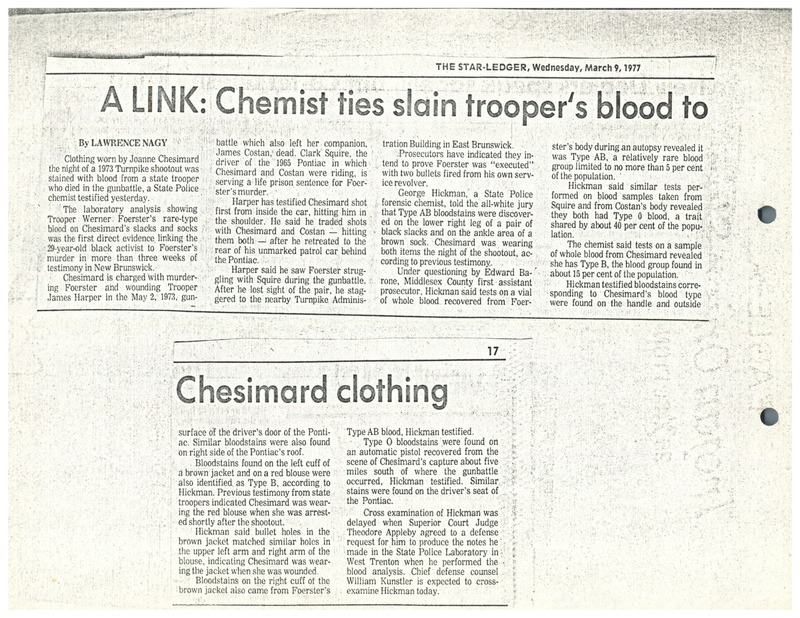
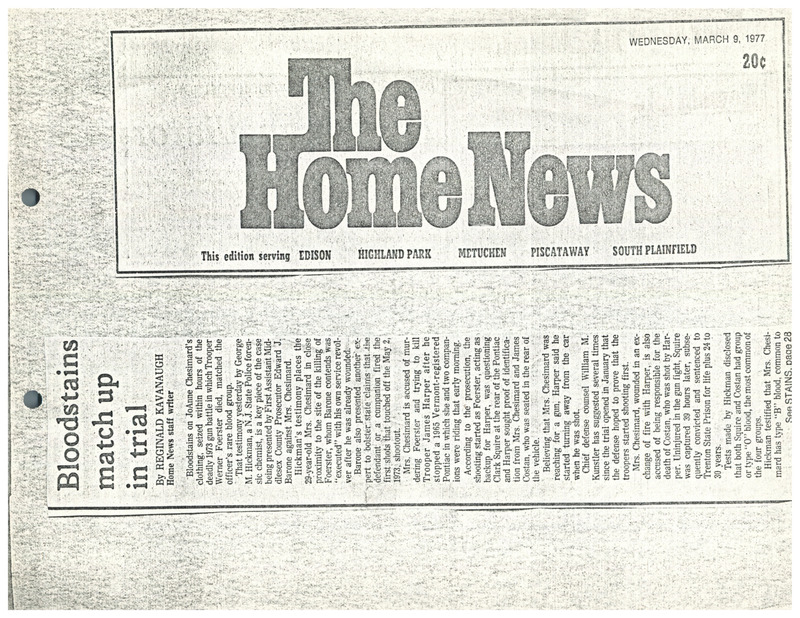
A newspaper article from The Star Ledger about evidence in the trial of Assata Shakur (JoAnne Chesimard) for the 1973 killing of a state trooper. Prosecution witnesses showed that blood found on the clothes of Assata Shakur (JoAnne Chesimard) matched the rare AB blood type of the slain state trooper.
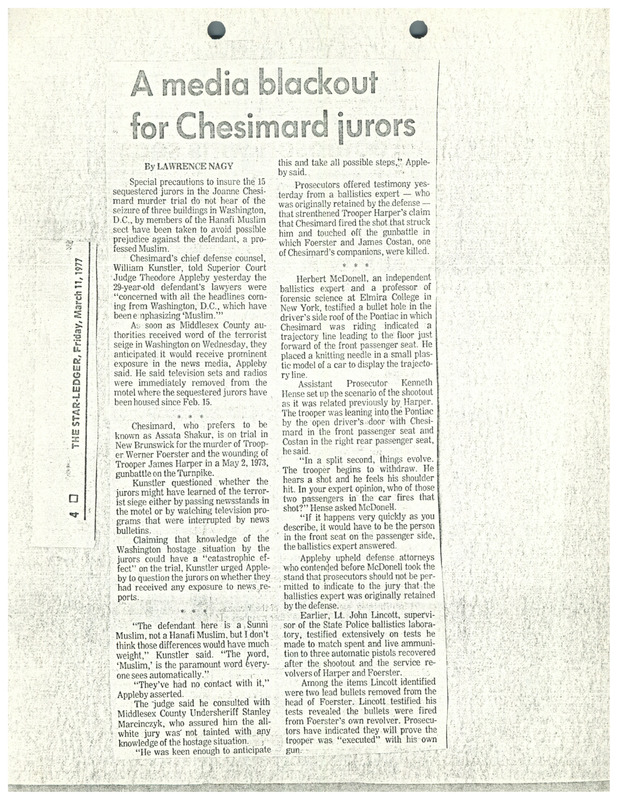
A newspaper article from The Star Ledger about the 15 sequestered jurors in the Assata Shakur (JoAnne Chesimard) trial for the 1973 killing of a state trooper being given a media blackout after the seizure of three buildings in Washington, D.C. by the Hanafi Muslim sect to avoid possible prejudice against Shakur, a professed Muslim.
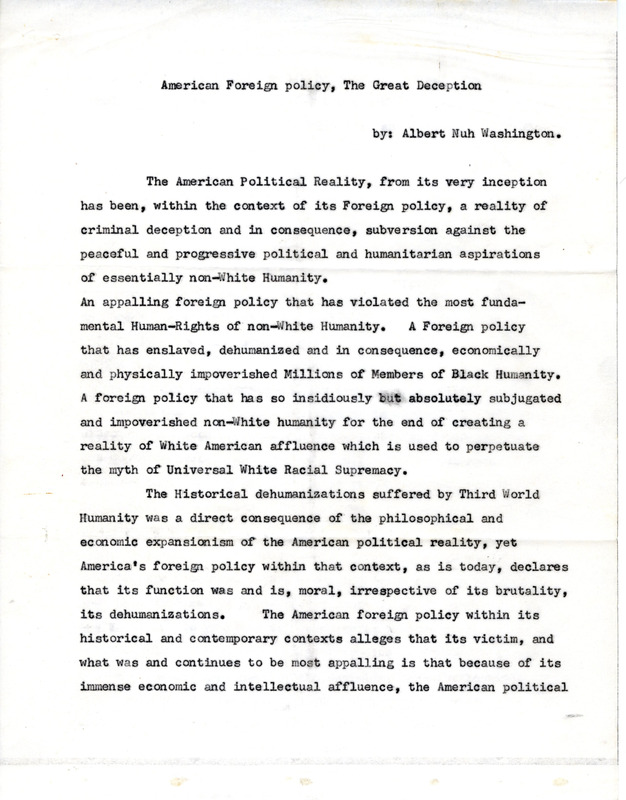
A paper by Albert Nuh Washington (Nuh Abdul Qaiyum) arguing that America's foreign policy serves the larger function of the subjugation of non-white people in the United States. Nuh Abdul Qaiyum was sentenced to prison in 1975 for a 1971 Black Liberation Army (BLA) connected shooting of police officers in New York,
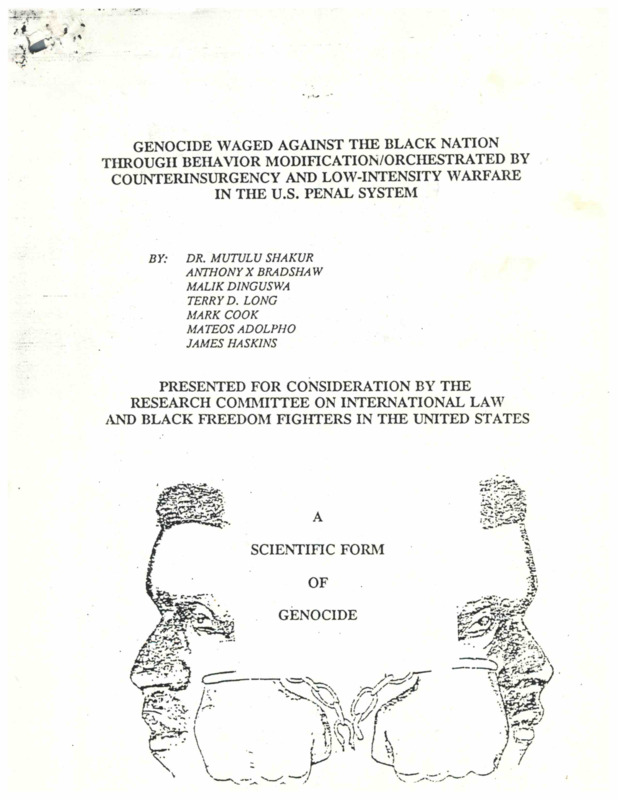
A paper by a team of Black prisoners who experienced behavior modification in prison. In this paper they argue that Black prisoners being given behavior modification is a form of genocide against Black people. The paper was presented for consideration by the Research Committee on International Law and Black Freedom Fighters in the United States.
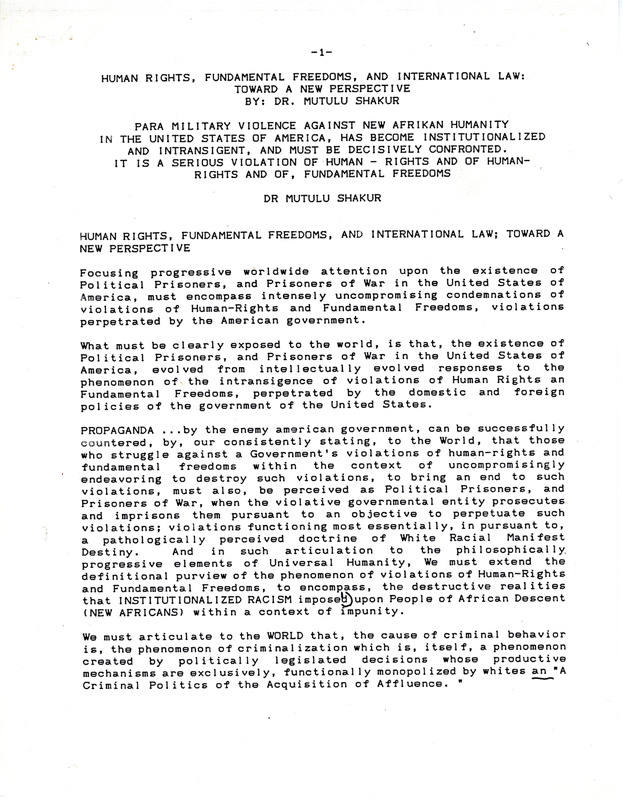
A paper by Dr. Mutulu Shakur that argues the existence of political prisoners reveals the violations of human rights perpetuated by the United States government against Black people. Dr. Shakur wrote this from prison, where he was serving a 60 year sentence for his role in a Black Liberation Army (BLA) led robbery in 1981.
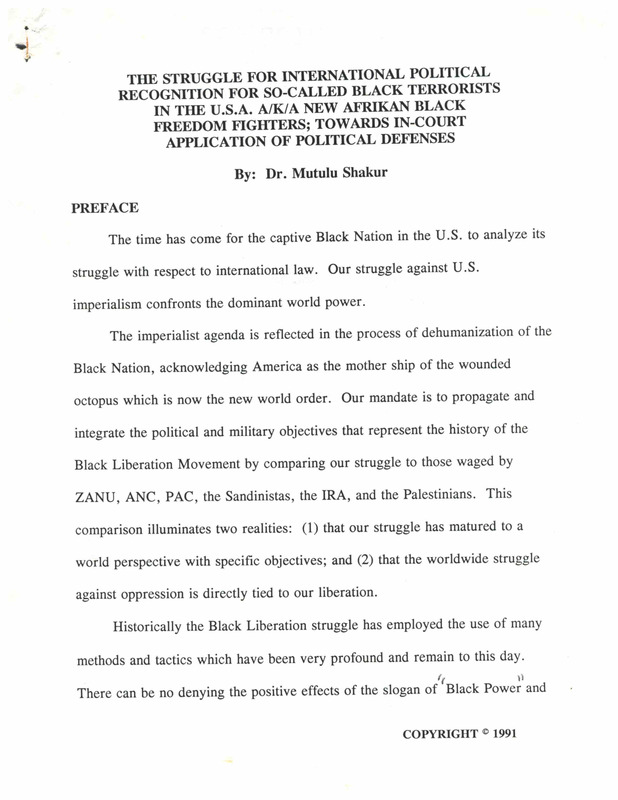
A paper by Dr. Mutulu Shakur arguing that the Black nation in the imperialistic United States is a captive nation and thus must look at the situation and solutions through the lens of international law. Dr. Shakur wrote this from prison, where he was serving a 60 year sentence for his role in a Black Liberation Army (BLA) led robbery in 1981.
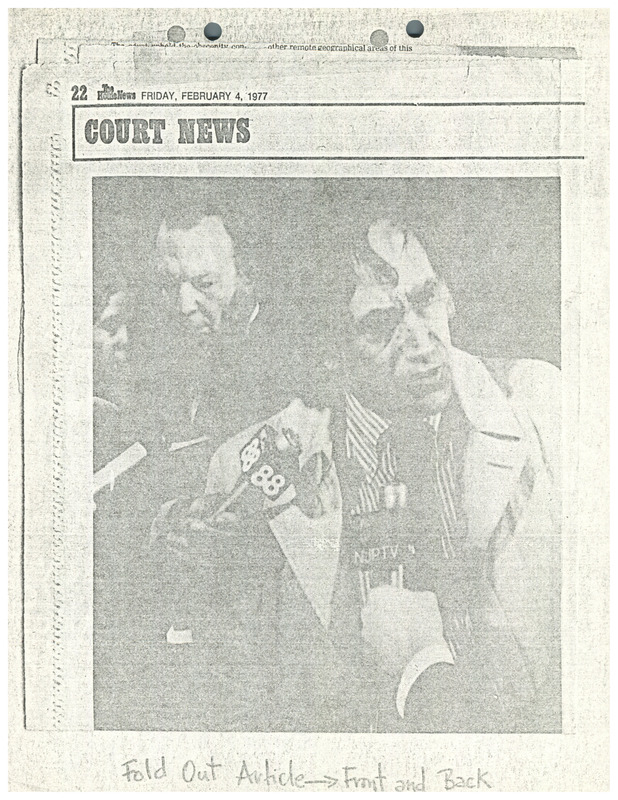
A cover photograph from the Court News Section of the newspaper The Home News featuring members of the defense team for Assata Shakur (JoAnne Chesimard) who was on trial for the 1973 killing of a state trooper. Shakur was convicted in 1977 of killing the state trooper during a shootout, escaped prison in 1979, and is still wanted by the FBI.
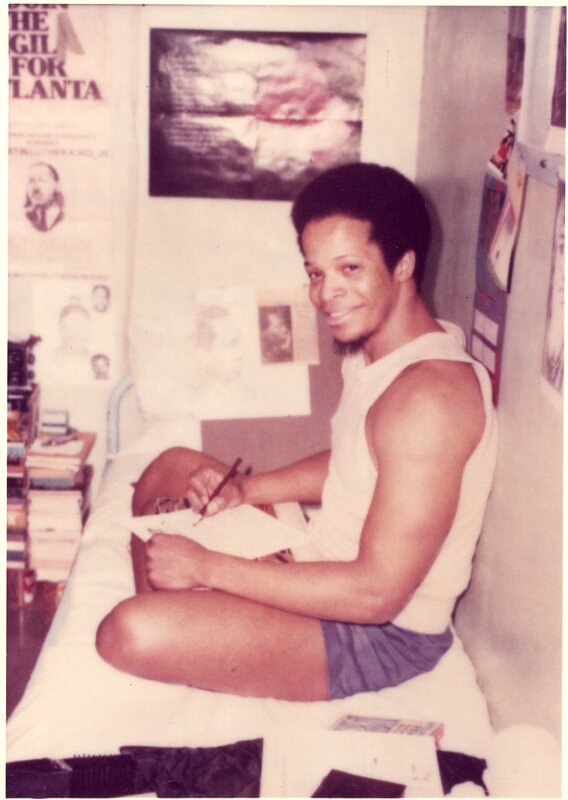
Ashanti Alston, a Black Liberation Army (BLA) member who was imprisoned for 11 years for a robbery to raise money for the BLA, says that he is getting big and his beard is too. He mentions his attempt to draw Nina Simone and says that the photo is two years old. The note is dated September 17th with no year listed.
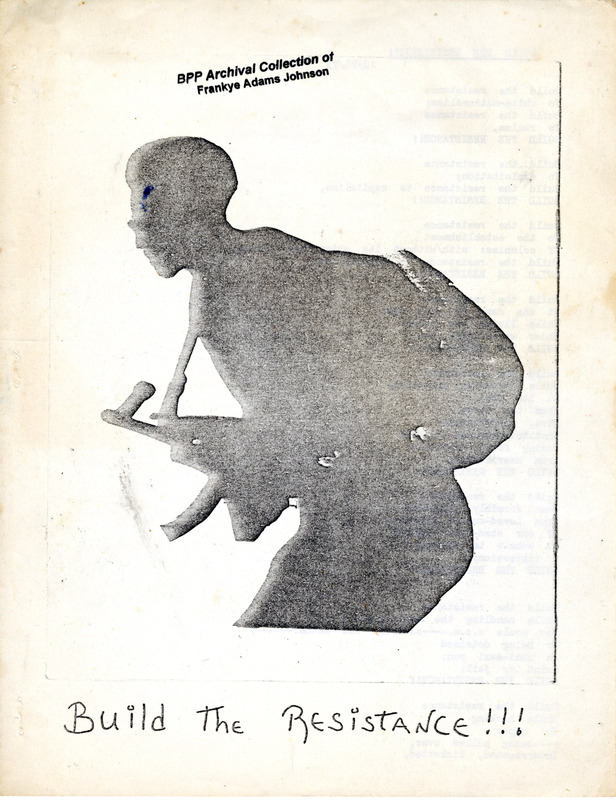
A poem by Ndugu Al-Jamil titled “Build the Resistance!!!” The cover page features the silhouette of an armed man appearing ready for combat. The poem is a call to arms for revolutionaries that outlines the problems facing the community such as police brutality, taxes, eviction, health care, education, and more.
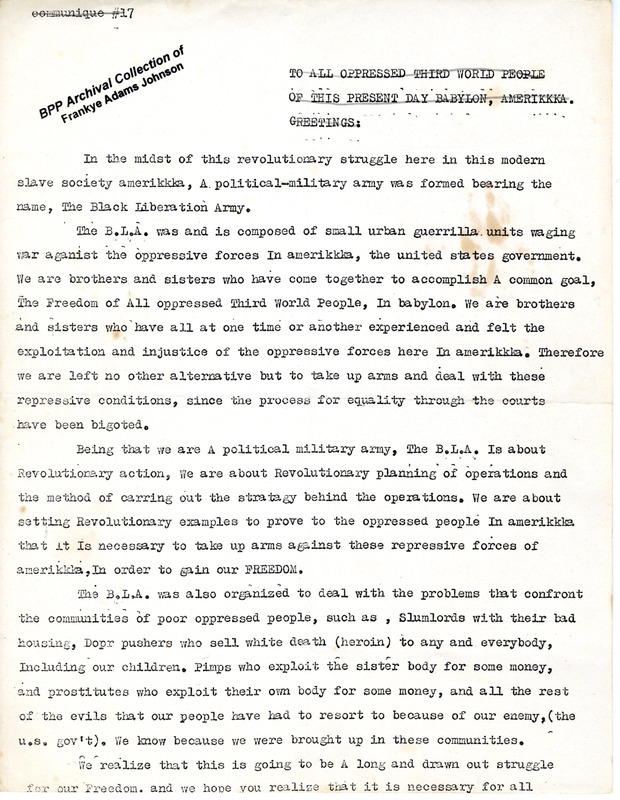
A rough draft of greetings to be given to people attending a Black Liberation Army (BLA) rally, with edits by an unknown person. The greetings outline the history and tenets of the BLA. “Communique #17” and “To All Oppressed Third World People of This Present Day Babylon, Amerikka. Greetings” on the top of page 1 were both crossed out.
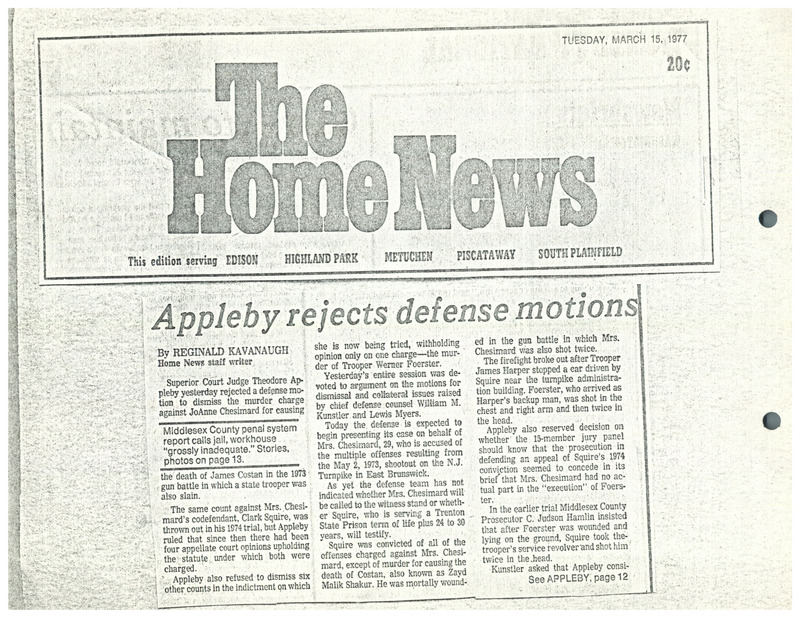
A newspaper article from The Home News about a day long juryless court session where defense lawyers made numerous motions to dismiss the indictments against Assata Shakur (JoAnne Chesimard) who was on trial for the 1973 killing of a state trooper. The judge rejected these motions and the attorneys are scheduled to call witnesses that day.
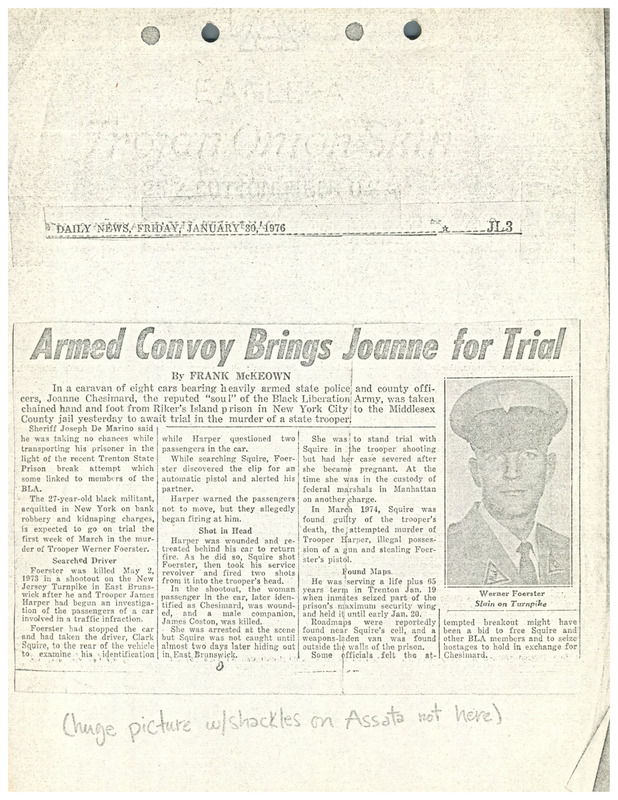
A newspaper article from Daily News about Assata Shakur (JoAnne Chesimard) being in New Jersey to stand trial for the May 1973 killing of a state trooper. Shakur was convicted in 1977 of killing the state trooper during a shootout, escaped prison in 1979, and is still wanted by the FBI.
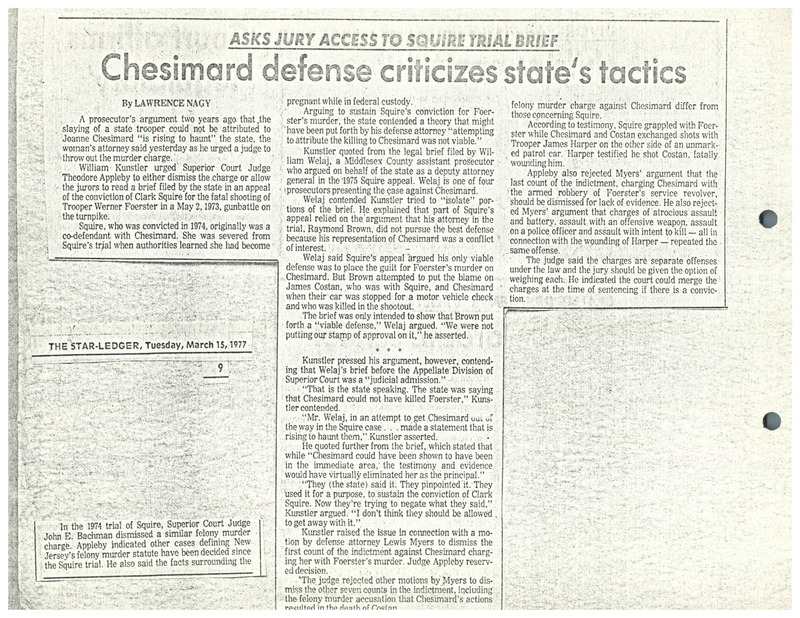
A newspaper article from The Star Ledger about the defense team for Assata Shakur (JoAnne Chesimard), who was on trial for the 1973 killing of a state trooper, opening their case by calling for dismissal of the murder charge on the grounds that she cannot be convicted since Clark Squire has already been convicted of the killing.
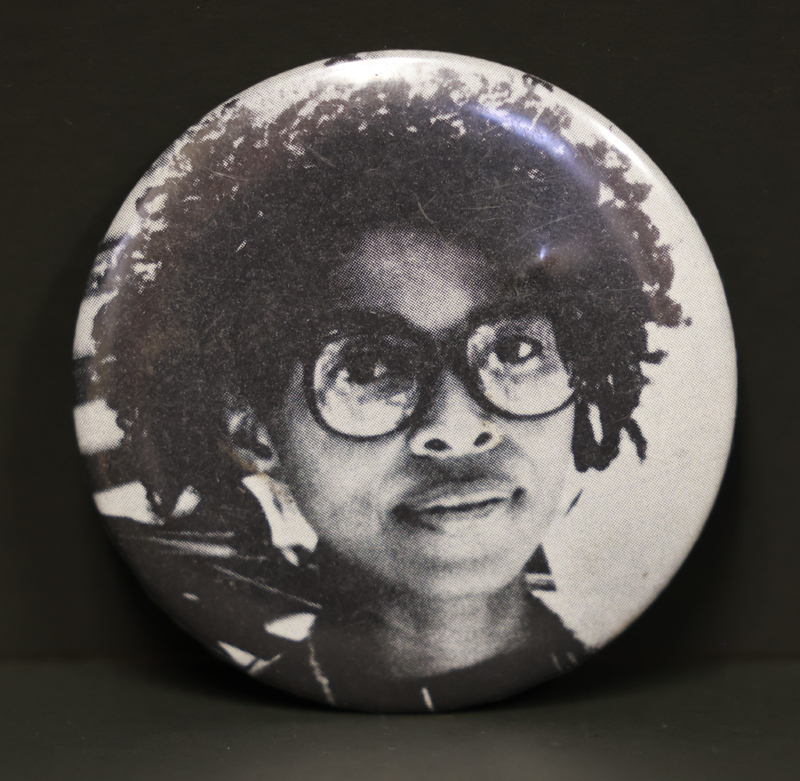
A button with a black and white photo of Assata Shakur. She is a political activist and was a member of the Black Liberation Army (BLA), an organization that engaged in armed struggle with the U.S. government. In 1977, she was convicted in a cop-killing case from 1973. Escaping prison in 1979, she has lived in political asylum in Cuba ever since.
A birthday card from Ashanti Alston, a Black Liberation Army (BLA) member who was imprisoned for 11 years for a robbery to raise money for the BLA, to Frankye Adams-Johnson (Malika). Ashanti Alston wishes her a happy birthday and gives her an update on her birthday gift.
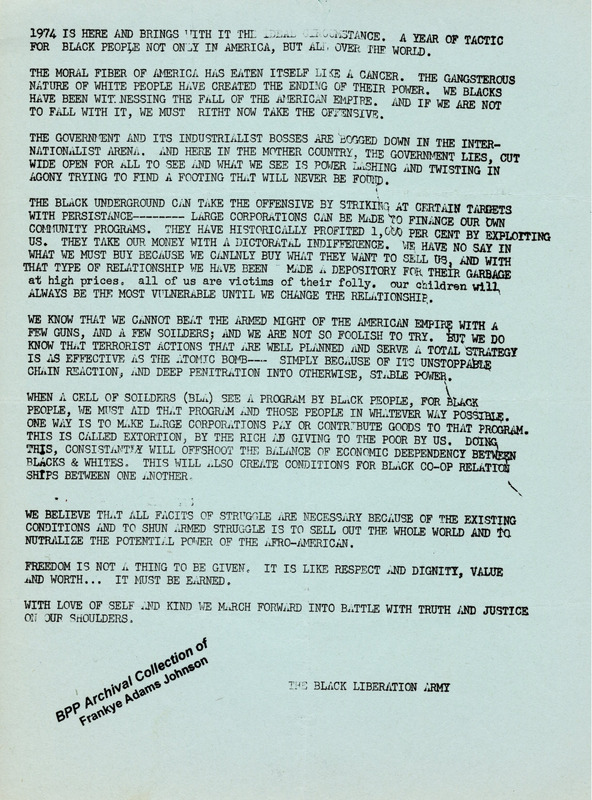
A directive from the Black Liberation Army (BLA) calling Black people in the United States to organize against the white power complex. The author writes that the end of the American empire is near and that the BLA will aid any programs that are for Black people, by Black people, including forcing corporations to contribute goods to the cause.
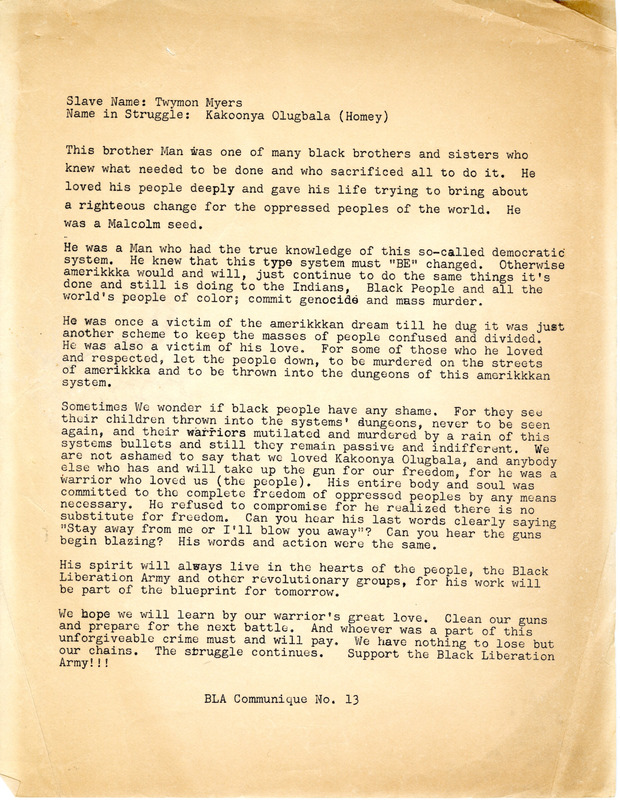
A memo from the Black Liberation Army (BLA) eulogizing Kakoonya Olugbala (Twymon Myers) who gave his life to the struggle against oppression. He was killed in a shootout with New York Police and FBI agents on November 14, 1973, after a long manhunt (he was on the FBI’s most wanted list) because of his involvement with previous police shootings.
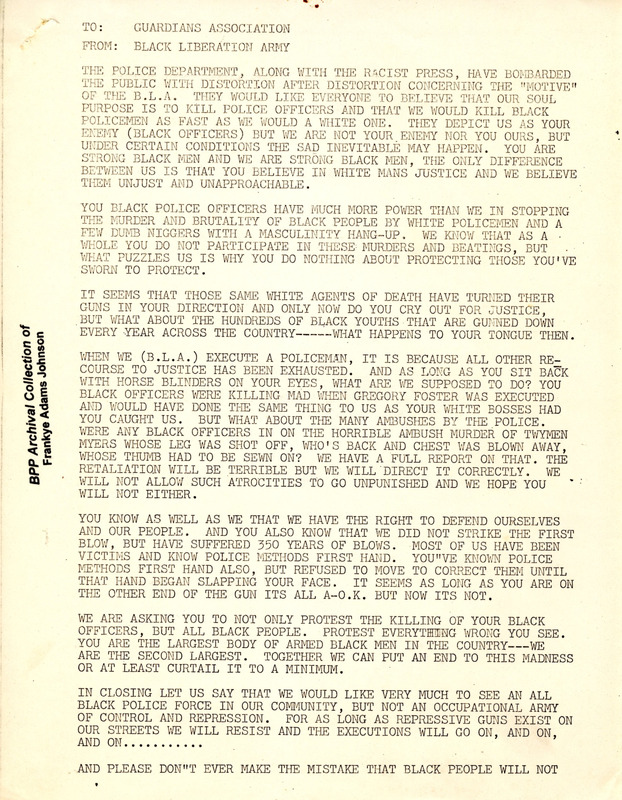
A memo from the Black Liberation Army (BLA) to the Guardians Association. The memo explains the BLA's stance on killing police and pleads with Black police officers to no longer side with their white counterparts. The Guardian’s Association is a fraternal organization primarily composed of Black law enforcement officers.
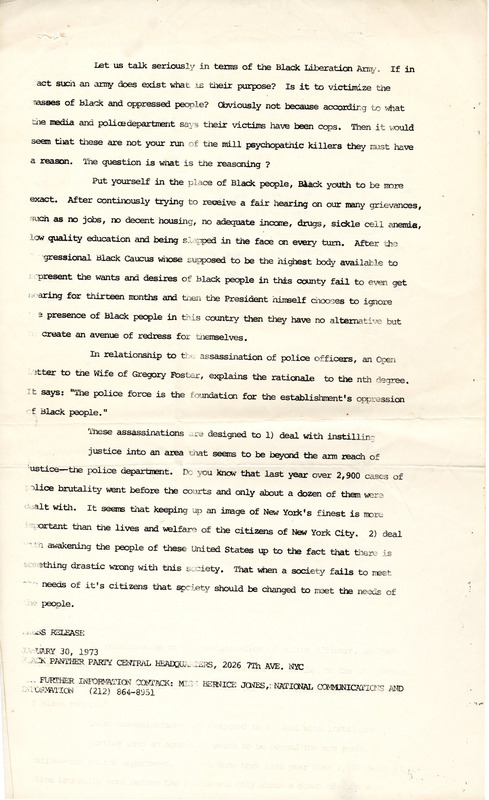
A press release from the Black Panther Party Central Headquarters in New York City about recent acts of police brutality and the response of the Black Liberation Army (BLA). The author writes that the recent assassinations of New York police officers is a direct response to the amount of police brutality that goes unnoticed and unpunished.
A newspaper article from The Home News about evidence in the trial of Assata Shakur (JoAnne Chesimard) for the 1973 killing of a state trooper. Prosecution witnesses showed that blood found on the clothes of Assata Shakur (JoAnne Chesimard) matched the rare AB blood type of the slain state trooper.
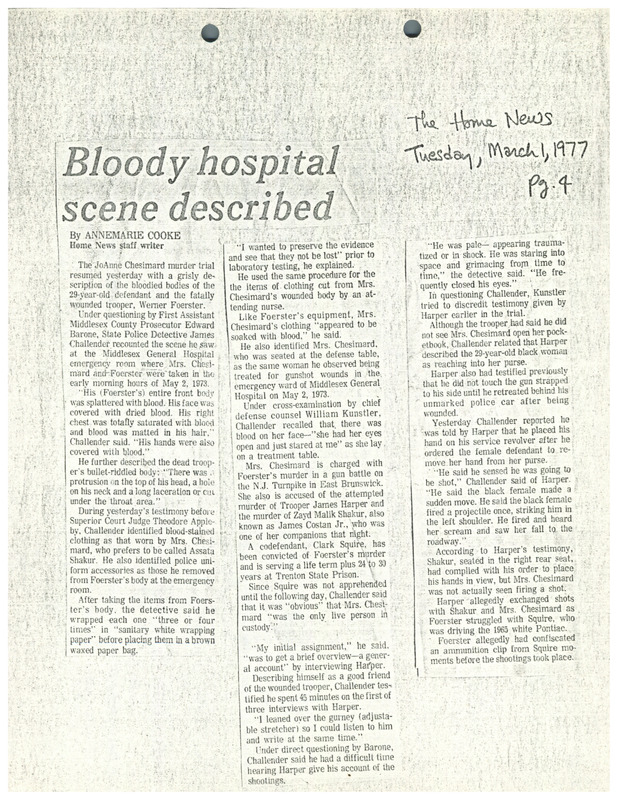
A newspaper article from The Home News about the testimony of State Police Detective James Challender describing what he saw at the emergency room where Assata Shakur (JoAnne Chesimard) and wounded state trooper Werner Foerster were taken after he was fatally shot. Shakur was on trial for the 1973 murder of Foerster.
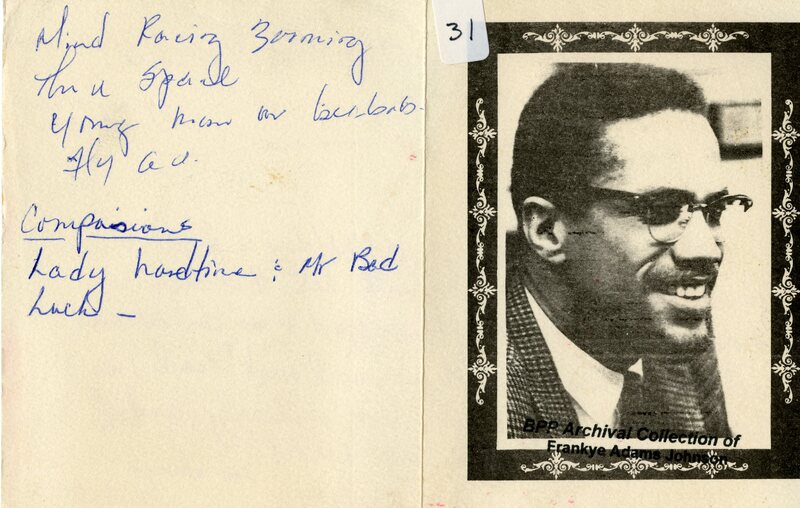
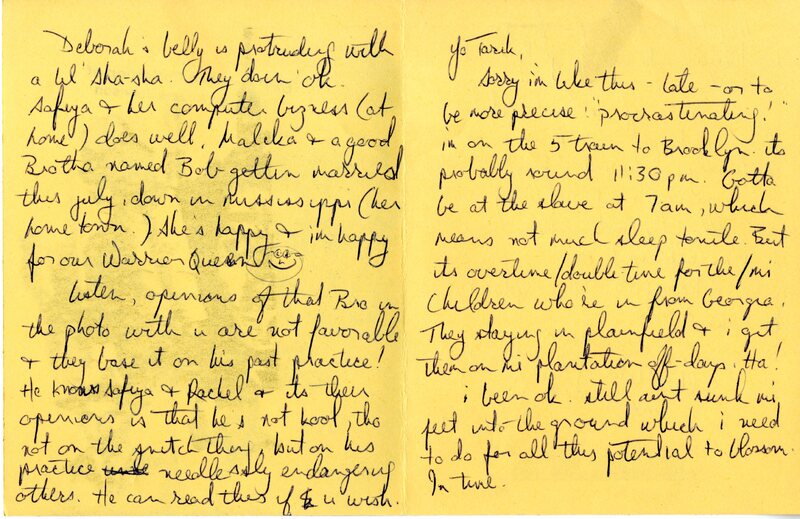
A card from Ashanti Alston, a Black Liberation Army (BLA) member who was imprisoned for 11 years for a robbery to raise money for the BLA, to an unknown recipient. A collage of Malcolm X photos is on the cover. He updates the recipient on a pregnancy and marriage taking place and informs them of his schedule and admits to procrastination.
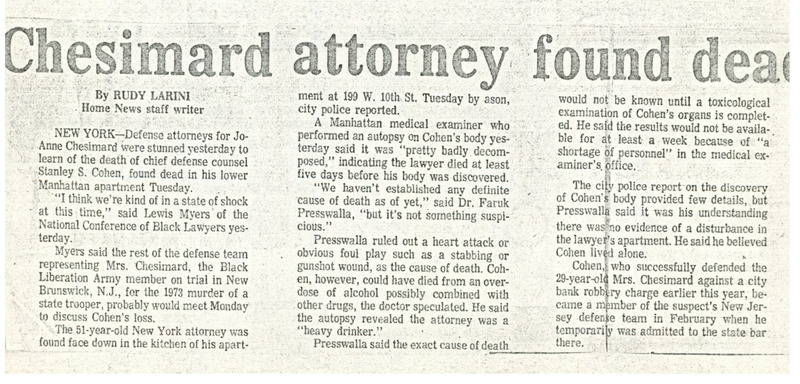
A newspaper article from The Home News about Stanley Cohen, the chief defense counsel in the murder trial of Assata Shakur (JoAnne Chesimard) for the 1973 killing of a state trooper, being found dead in his Manhattan apartment. At the time of reporting, the cause of death was unknown.
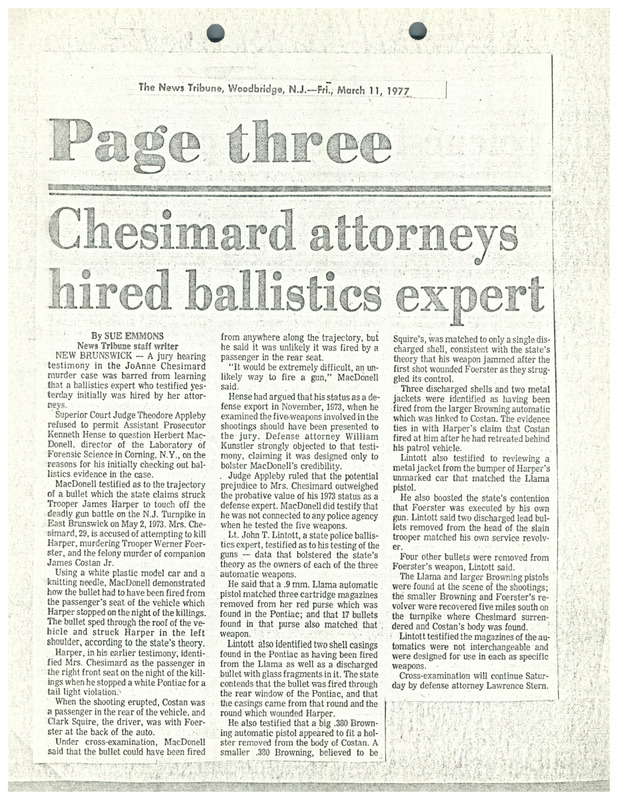
A newspaper article from The News Tribune about testimony on ballistics and gunshot trajectories given by two different expert witnesses in the trial of Assata Shakur (JoAnne Chesimard) for the 1973 killing of a state trooper. The judge in the case barred the jury from learning that one of the experts was hired by the defense.
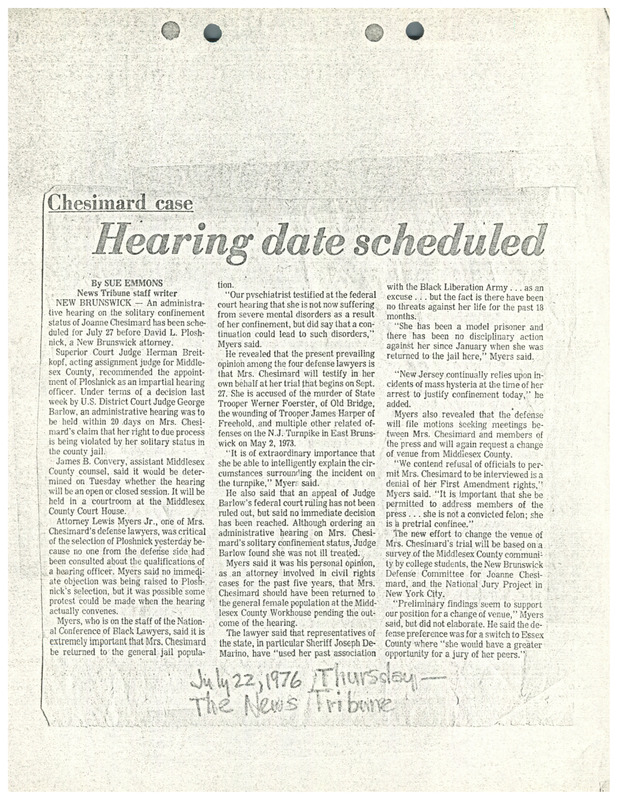
A newspaper article from The News Tribune about an administrative hearing for Assata Shakur (JoAnne Chesimard) being scheduled for July 27th. The hearing will determine if Assata Shakur (JoAnne Chesimard) should be moved out of solitary confinement and into women's general population. She was on trial for the 1973 killing of a state trooper.