This collection highlights how HBCUs have promoted community on their campus and engaged with their broader communities through a selection of documents and visual artworks.
Description
A culture of community and collective responsibility is created and reinforced in settings where groups share time and space. On HBCU campuses, a sense of community is fostered through historic events, such as homecomings and choral concerts, and through organizations, such as student clubs and sororities.
Date Modified
2025-12-17
About This Record
The HCAC public history focused digital archive cataloging is an ongoing process, and we may update this record as we conduct additional research and review. We welcome your comments and feedback if you have more information to share about an item featured on the site, please contact us at: HCAC-DigiTeam@si.edu
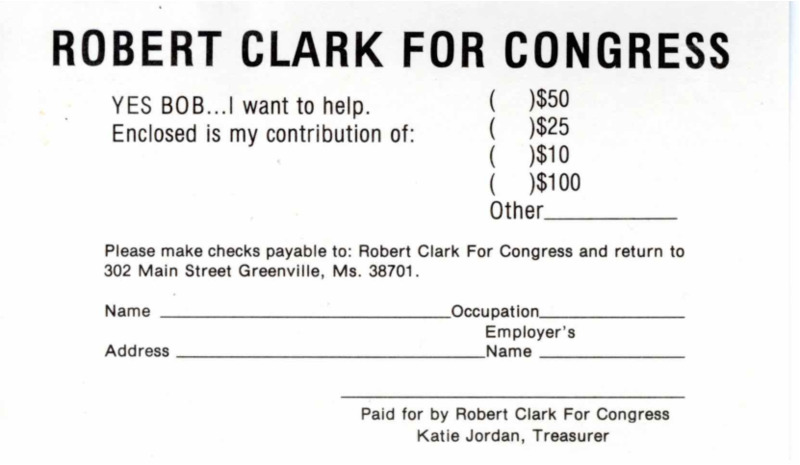
Collection of campaign materials from Robert Clark's 1984 campaign for the United States House of Representatives, 2nd Congressional District of Mississippi. This collection consists of letters, mailers, fliers, and more.
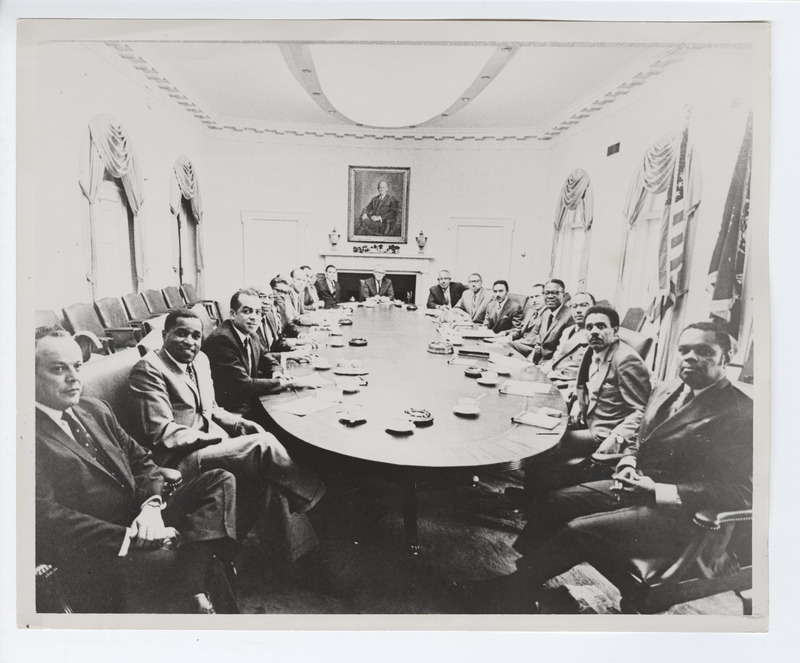
On May 20, 1970, various Historically Black Colleges/Universities presidents met with President Richard Nixon to represent their schools for the National Association of Equal Opportunity in Higher Education. Those included were Florida A&M President Benjamin L. Perry, Jr., Meharry Medical College leader Lloyd C. Elam, and many more.
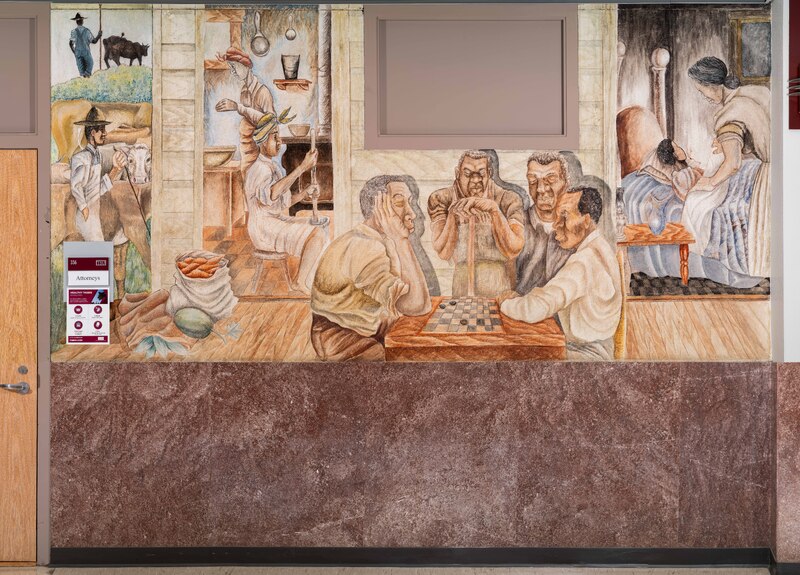
Ross’s mural represents Black rural life in the early to mid twentieth century. The composition highlights the gendered division of labor, and how women’s work focuses on maintaining the home. Ross grew up in Huntsville, Texas, and this scene may represent his background and experiences.
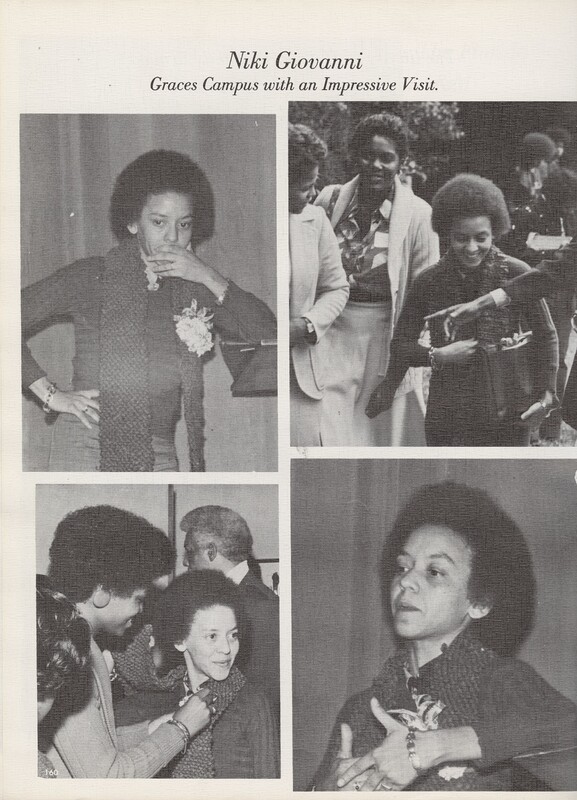
Nikki Giovanni, a highly awarded African American poet, visited the campus of Florida A&M University in 1975. In these images, Giovanni is seen being gifted a corsage by students, walking around campus, and speaking on a stage.
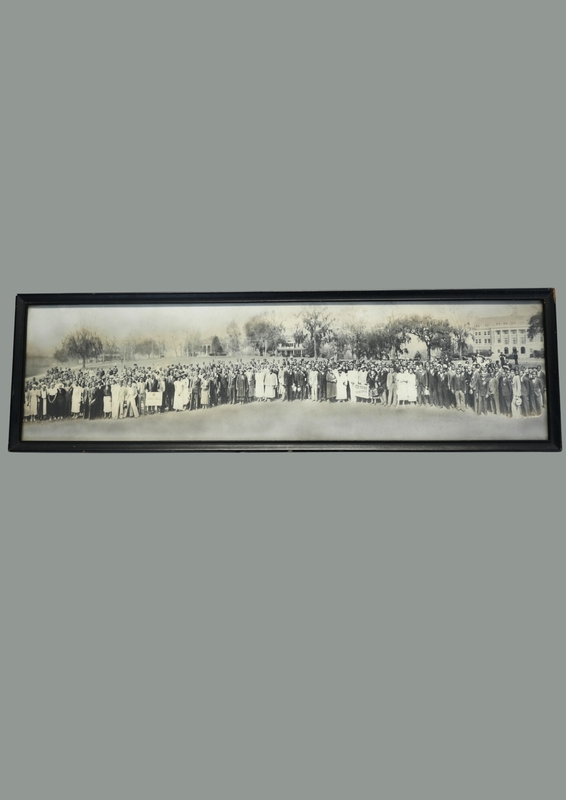
A 1934 panoramic group picture on the campus of Florida A&M University. The picture was taken in the midst of the Great Depression. It captures members of the Fourth State Basketball Tournament, and members of the 42nd Annual Florida State Teachers Association (FSTA), including Dr. Mary McLeod Bethune, founder of Bethune Cookman College.
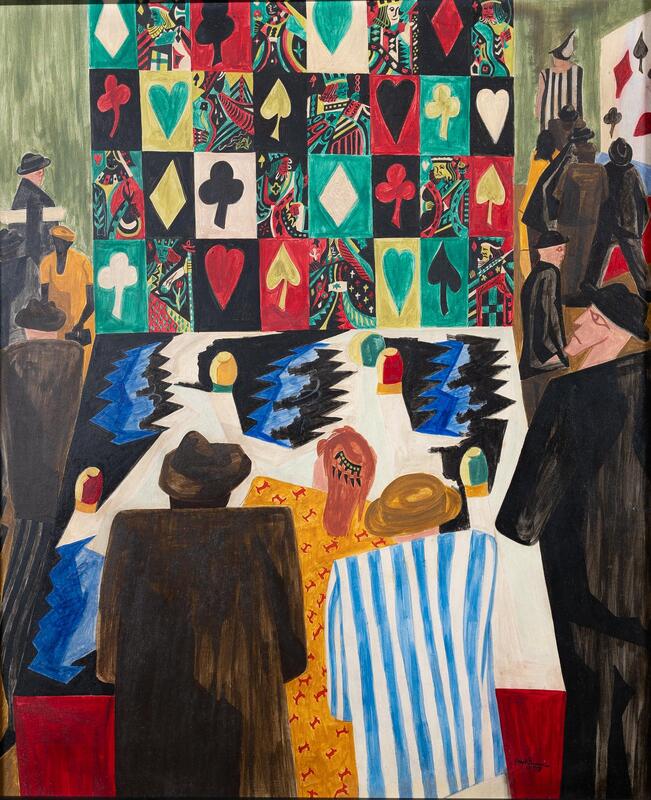
Jacob Lawrence was a renowned painter from Atlantic City, NJ. Playland shows a room with people standing around a table with a crowd. The majority wear black trench coats and fedoras. Three people wear yellow dresses, and two wear striped clothing and headwear. Gambling occurs in front of a decorated wall with various suits of playing cards.
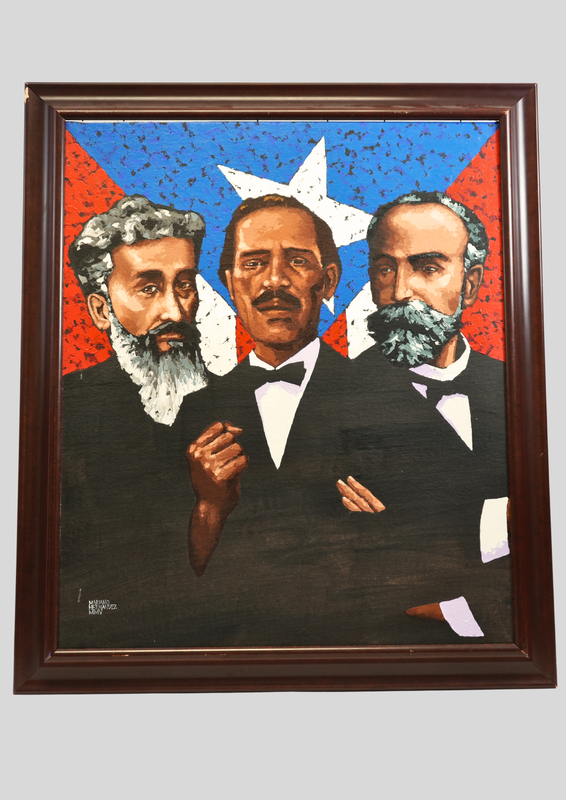
In this original 2005 piece by Mariano Hernandez, physician Ramon Emetrio Betances and attorneys Pedro Albizo Campos and Eugenio Maria de Hostos are honored as instrumental leaders in the Puerto Rican independence movement. FAMU alum and former assistant director for the Meek-Eaton Black Archives Dr. Will Guzman donated this artwork.
Dr. Arthur L. Britt was an artist and educator from Cuthbert, GA. Poverty Toy Chest is an installation that displays items impoverished children use for recreational play. It shows the disparity and ingenuity of people with little resources.
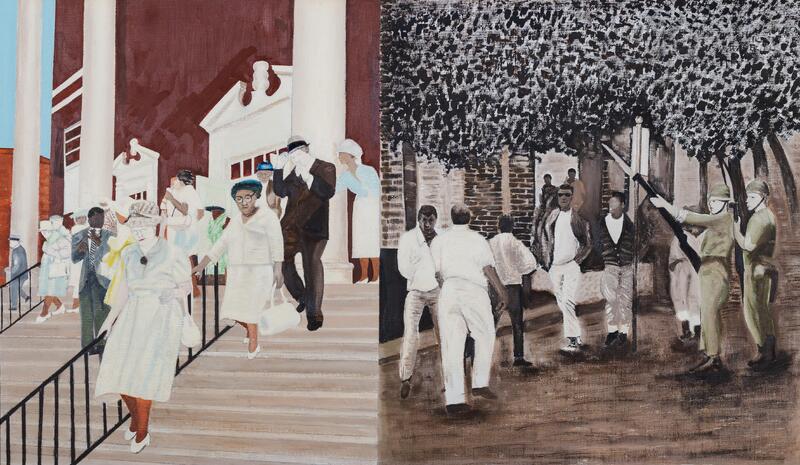
Al Tyler was an artist known for his figurative murals and landscape paintings. Prayer for Freedom shows two scenes from the fight for Civil Rights. On the left, black and white people are leaving a courthouse, and on the right, armed officials are stopping Black men from entering a building.
Oliver's painting depicts vanguard Black politicians from the Reconstruction period following emancipation. Radical Reconstruction saw the election of dozens of Black lawmakers in former slave states like Texas. After 1897, Texas didn't elect another Black legislator until 1966.
A photocopy of the program for the Child Development Group of Mississippi/Community Education Extension 25th Anniversary Reunion from June 30-July 2, 1989 in Warren Hall at Tougaloo College in Jackson, Mississippi. This reunion brought together over 400 former Head Start employees and over 100 students from the Head Start classes of 1965-1969.
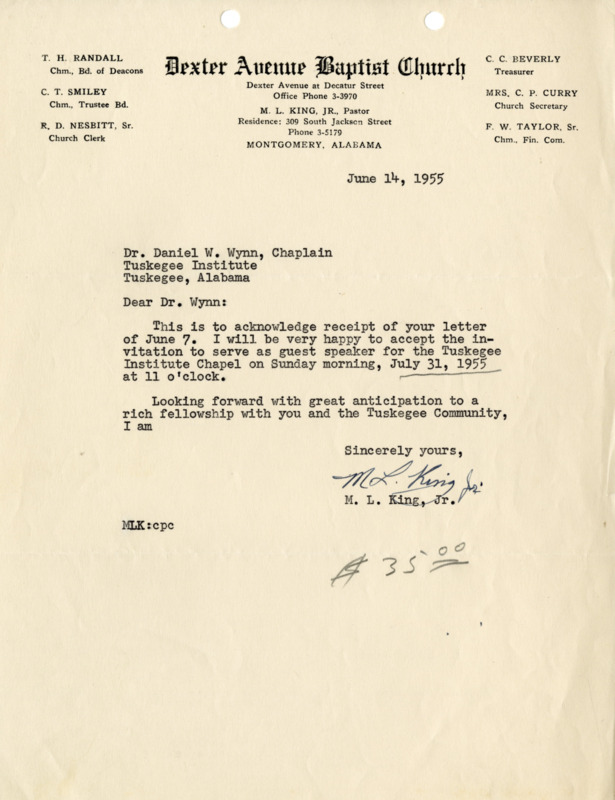
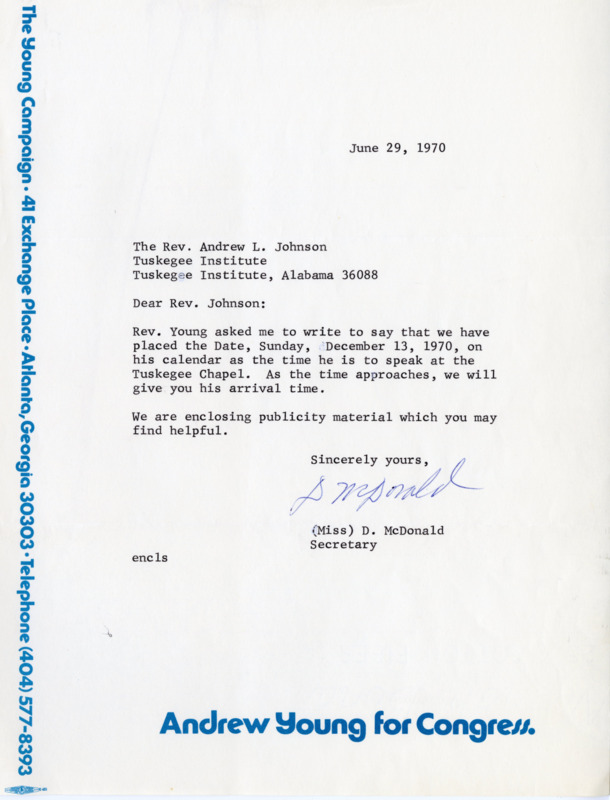
A Letter from Miss Dora McDonald to Chaplain Johnson that Congressman Andrew Young has saved the date of 12/13/1970 to speak at Tuskegee on his calendar.
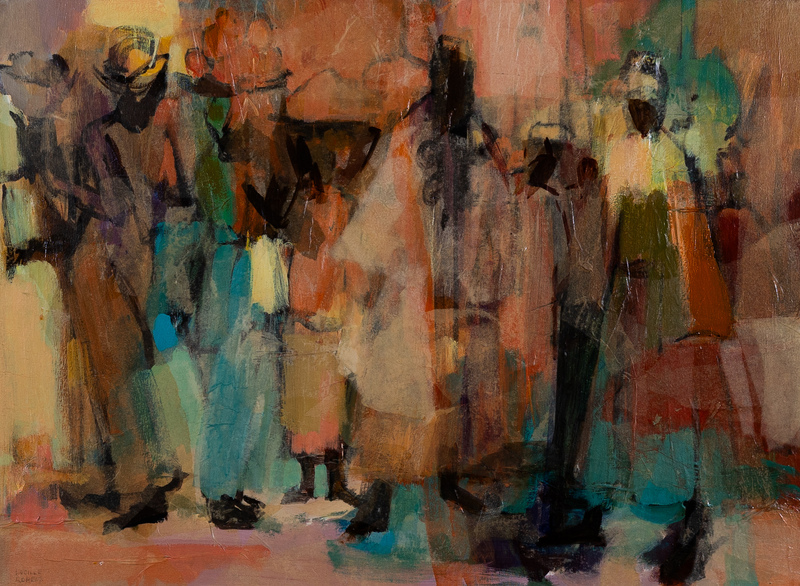
Lucille Malkia Roberts was a painter and educator from Washington, D.C. Street in Senegal is an abstract depiction of people shopping on a market street in Senegal, West Africa. Roberts uses muted colors to create the robust marketplace environment and emphasizes the shoppers and their goods with Black silhouettes.
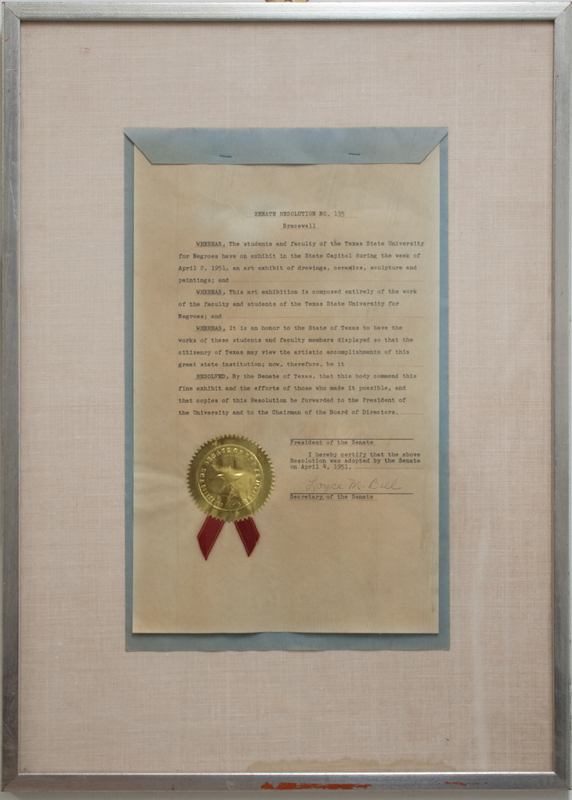
This Texas Senate resolution commends the art students and faculty of Texas State University for Negroes (now Texas Southern University) for their exhibition in the State Capitol in April 1951. It is notable that this exhibition took place years before desegregation.
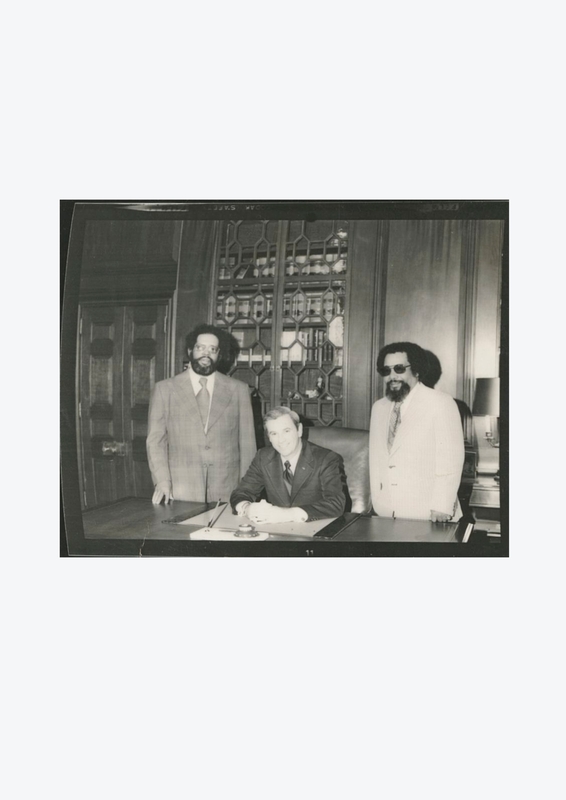
This undated, black-and-white photograph features Julian “Cannonball” and Nathaniel “Nat” Adderley, jazz and blues musicians, and Reubin O’Donovan Askew, the governor of Florida in the 1970s. The Adderley brothers were Florida A&M students and Tallahassee jazz legends, playing saxophone (Cannonball) and cornet (Nat) with Ray Charles and others.
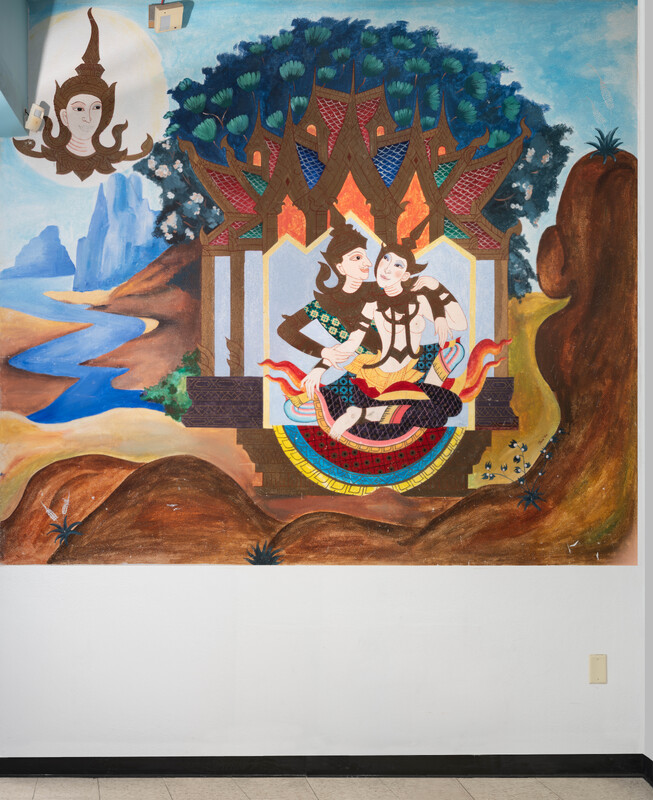
Charoennimuang’s Hannah Hall mural draws inspiration from her birth country, Thailand. In her own words, it “is a Thai style mural-painting that expresses the love of two human beings…surrounded by the beauty of nature…. The man and woman are dressed up in Thai-style like the old days…neatly weaved and knitted in a Thai pattern…made of Thai silk.” The study for this mural included a dragon in the upper right corner that was cut from the final design.
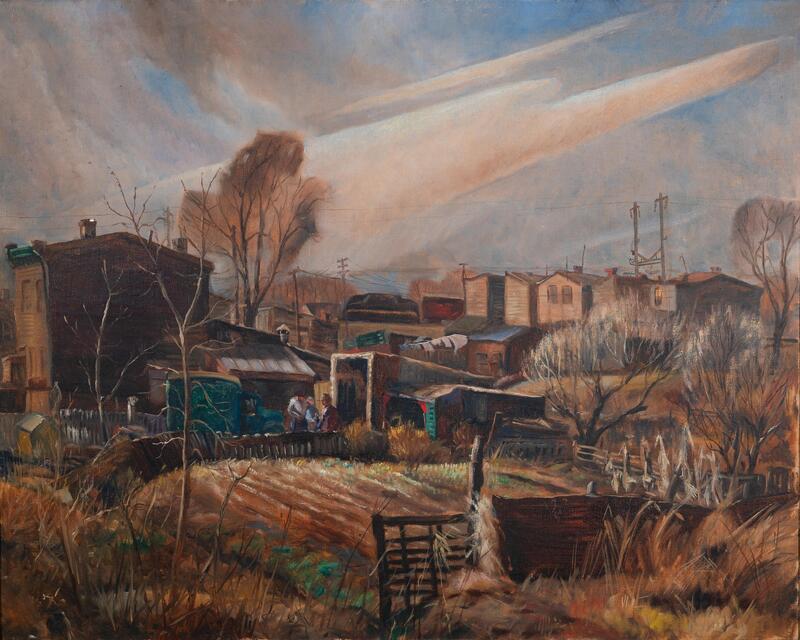
Edward L. Loper was an artist and teacher from Delaware known for his vibrant palette and juxtaposition of colors. Twelfth Street Gardens is a landscape piece illustrating a rural town under a slightly cloudy, blue sky during Autumn. The piece shows three men conversing beside a field in a rural residential area.
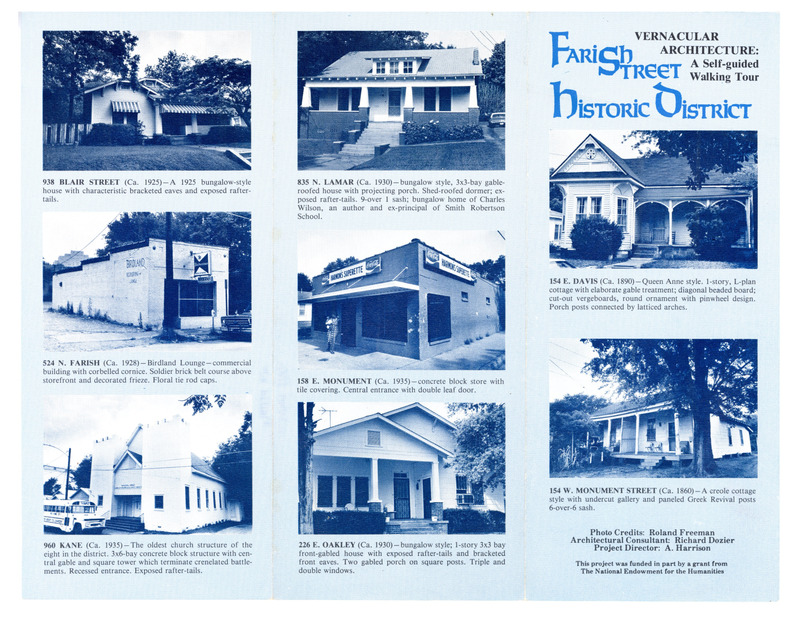
A brochure for a walking tour of the Farish Street Historic District, containing a tour map and pictures of significant homes, churches, nightclubs, and other buildings in the District.
Lloyd’s painting depicts the facade of the historic Wesley Chapel AME Church, founded in Houston’s Third Ward in the 1870s. The landscape and sky are painted in geometric form, commonly found in 1970s TSU student artwork. The church is set to be renovated and turned into a multi-purpose complex with a gospel music museum, recording studio, and affordable housing units.
The interview was used for a paper that Mr. Langdon wrote for Dr. Alferdteen Harrison's Summer 1977 Workshop on Oral History. He outlines the history of Head Start in Mississippi and writes about his research goals and outcomes and creates a lesson plan for the workshop.