This collection showcases the myriad ways that African Americans have engaged in activism on and off HBCU campuses through a selection of items such as oral histories, visual artworks, and written works.
Description
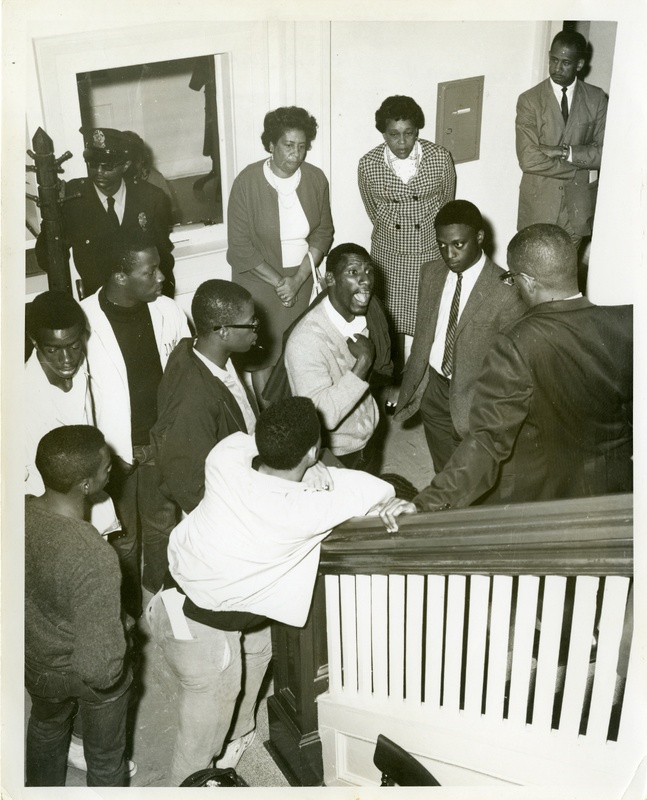
Since the early 20th century, HBCU students, faculty and their communities have demonstrated a spirit of activism to catalyze change within or on behalf of their own institutions to improve campus accommodations, strengthen the level of instruction, and explicitly connect the mission of their HBCUs to the project of Black liberation.
Date Modified
2025-12-17
About This Record
The HCAC public history focused digital archive cataloging is an ongoing process, and we may update this record as we conduct additional research and review. We welcome your comments and feedback if you have more information to share about an item featured on the site, please contact us at: HCAC-DigiTeam@si.edu
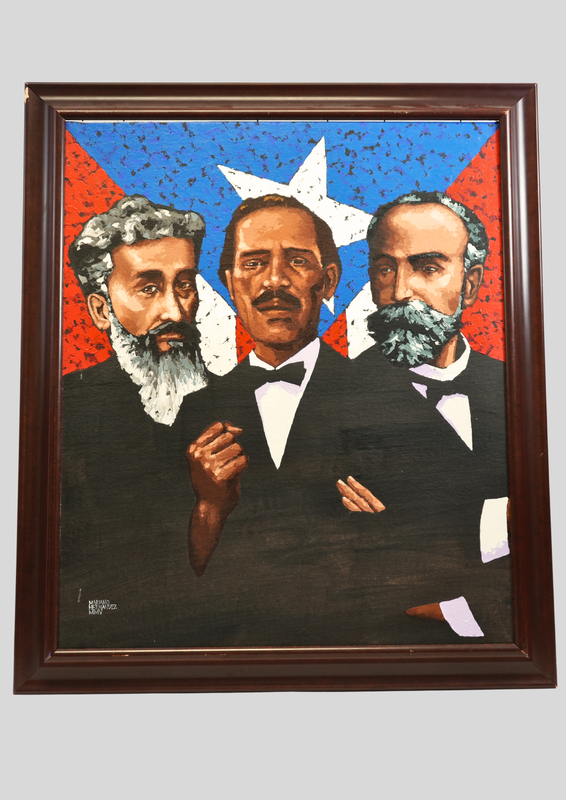
In this original 2005 piece by Mariano Hernandez, physician Ramon Emetrio Betances and attorneys Pedro Albizo Campos and Eugenio Maria de Hostos are honored as instrumental leaders in the Puerto Rican independence movement. FAMU alum and former assistant director for the Meek-Eaton Black Archives Dr. Will Guzman donated this artwork.
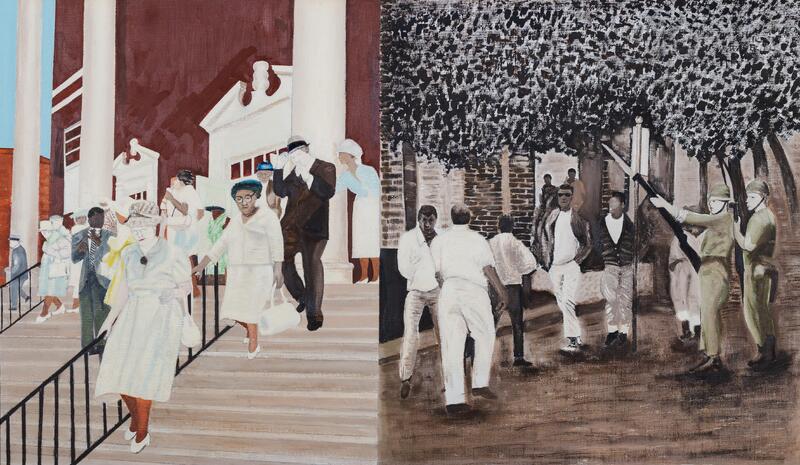
Al Tyler was an artist known for his figurative murals and landscape paintings. Prayer for Freedom shows two scenes from the fight for Civil Rights. On the left, black and white people are leaving a courthouse, and on the right, armed officials are stopping Black men from entering a building.
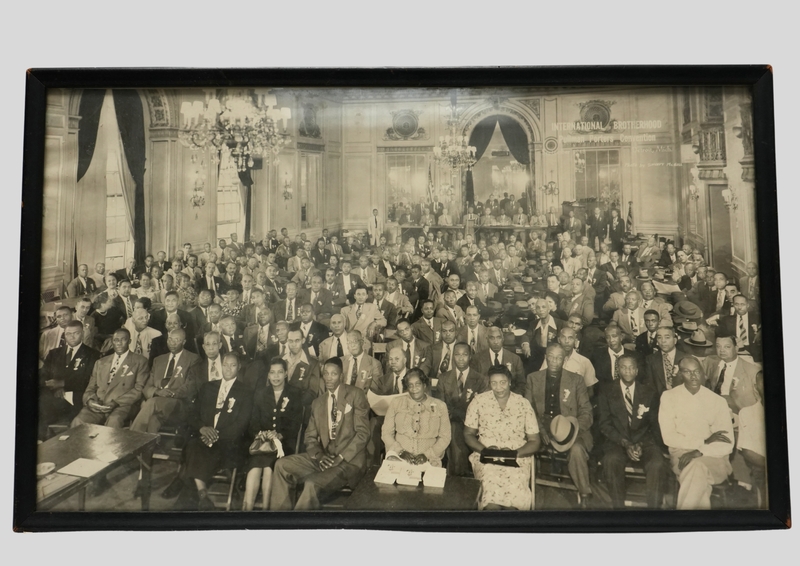
The Brotherhood of Sleeping Car Porters was the first Black-led labor union. It was headed by A. Phillip Randolph, who created the organization to protect the African American men who worked for the Pullman railroad company. Photographer Snuffy McGill snapped this photograph at the union’s September 1948 convention in Detroit, Michigan.
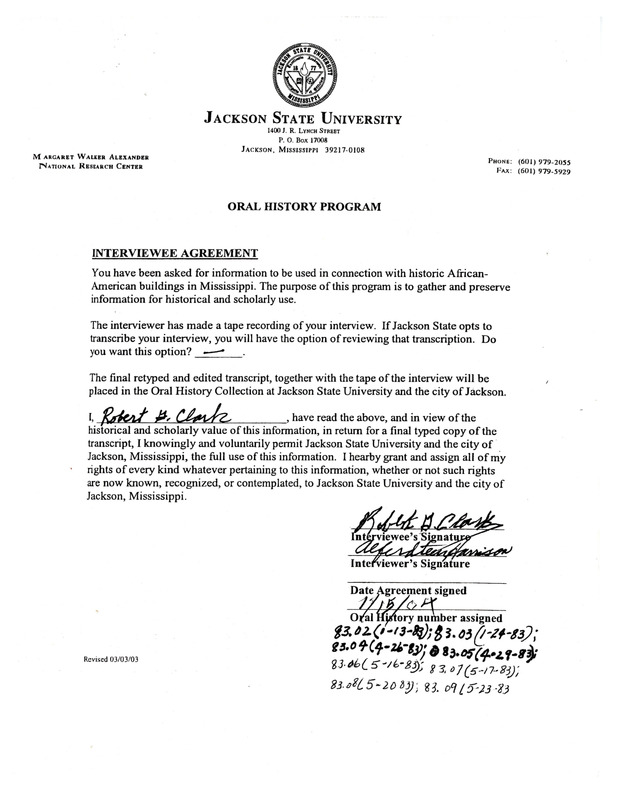
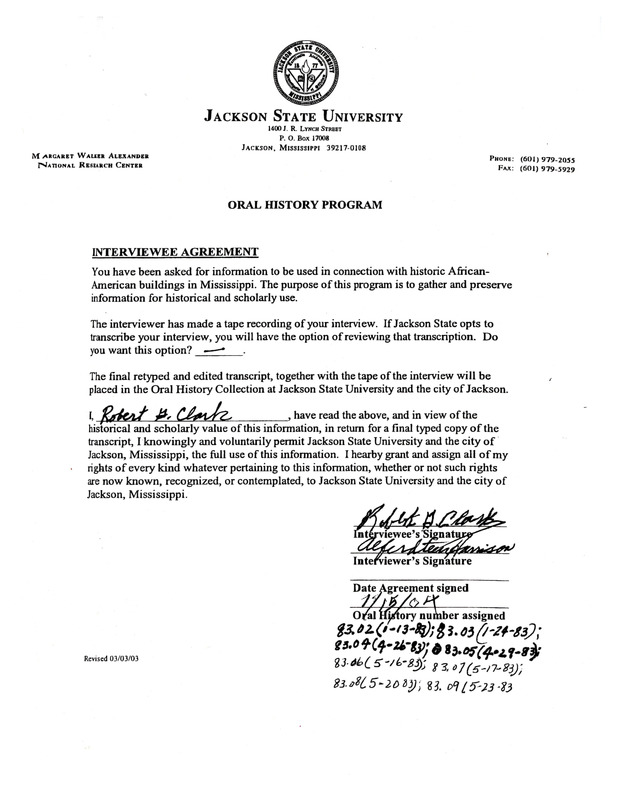
Rep. Robert G. Clark served in the Mississippi House of Representatives from 1968 to 2004. In this interview, Rep. Clark talks about his childhood, his time at Jackson State College, and his time as a teacher. He talks about threats his campaign received but also the support he got from the Mississippi Freedom Democratic Party.
Rep. Robert G. Clark served in the Mississippi House of Representatives from 1968 to 2004. Rep. Clark talks about his legislative career and the racism he faced. He also talks about the impact the Civil Rights Movement had on him winning the election and his introduction of bills to create holidays for Martin Luther King, Jr., and Medgar Evers.
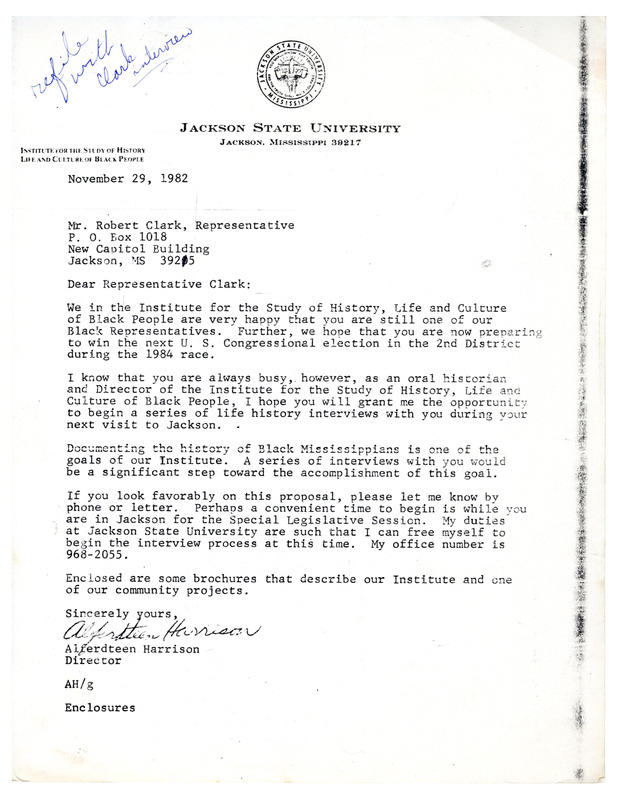
Collection of materials leading up to Robert Clark speaking on campus at Jackson State University for the 1983 Afro-American History Month Celebration. There are letters of invitation from Dr. Alferdteen Harrison as well as a biography of Robert Clark and the event program.
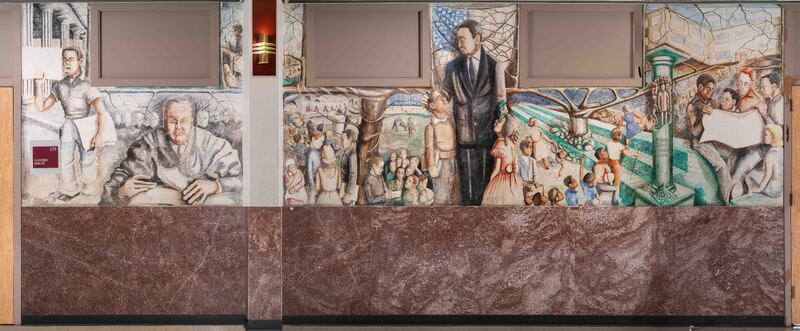
Royal’s mural illustrates the desegregation of public schools following Brown v. Board of Education (1954). In the center of the scene is attorney and future Supreme Court justice Thurgood Marshall, with Black students entering integrated schools. At the far left is Chief Justice Earl Warren.
A speech by Frankye Adams-Johnson (Malika) about the Black Panthers delivered to the Community Self-Defense Program. She addresses the goals of the revolution, the actions of government agencies against them, and her motivation for joining the Party. With handwritten edits.
Lee’s collage speaks to the 1998 lynching of James Byrd, Jr., in Jasper, Texas. Byrd’s murder provided part of the impetus for the passage of stronger anti-hate crime laws in Texas and federally. The collage references the anti-lynching poem/song “Strange Fruit,” made famous by Billie Holiday. Lee, sometimes called “Da Mayor of Fifth Ward,” grew up in Houston’s Fifth Ward, but his family traces its roots to Jasper, where three white supremacists lynched Byrd and desecrated his body.
Black and white image of Tuskegee Institute students marching in response to the shooting and death of SNCC member and Tuskegee Institute political science student Sammy Younge Jr. in 1966.
James Newton was a painter, printmaker, scholar, and professor from Delaware. The American Sixties is an assemblage that symbolizes the political turmoil and militarization that arose in the 1960s after the Civil Rights Movement.
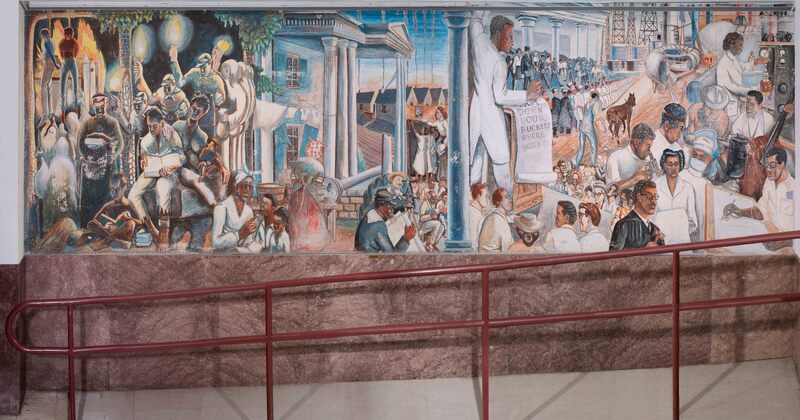
Washington’s mural is a timeline of Black education. On the left, he depicts slavery and lynching above enslaved people secretly reading. In the center, students write “Emancipation Proclamation” and Booker T. Washington delivers his "Atlanta Compromise" speech. The right depicts emerging Black professionals.
In this mural, Mother Nature is attacked by oil derricks, pollution, and industrialization. Jones painted this work as a response to the rapid expansion of oil drilling throughout Texas. Jones still engages with nature, now creating wood carvings from fallen timber after Galveston storms.
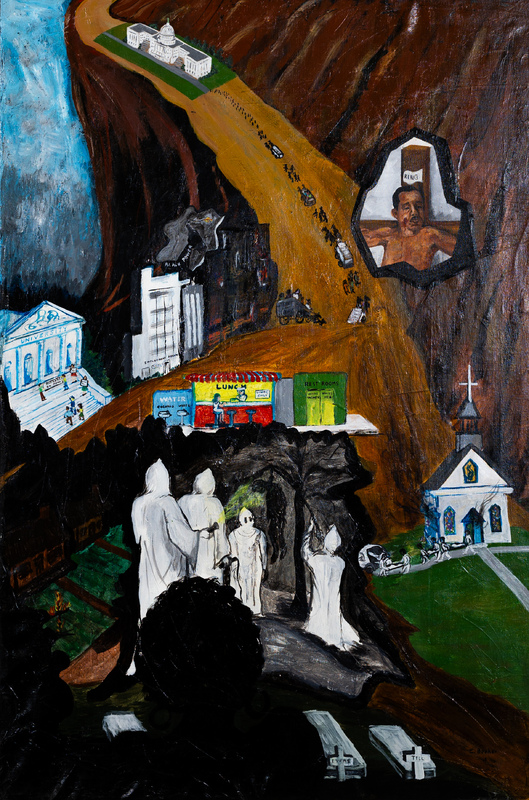
Eva Booker was an artist from Atlanta, GA. The Road we Trod depicts Black American experiences with white supremacy during the Civil Rights Movement. The piece critiques the KKK, lynching, lunch counter discrimination, education inequality, job orientation, religious hypocrisy and Black people's long march toward freedom in spite of.
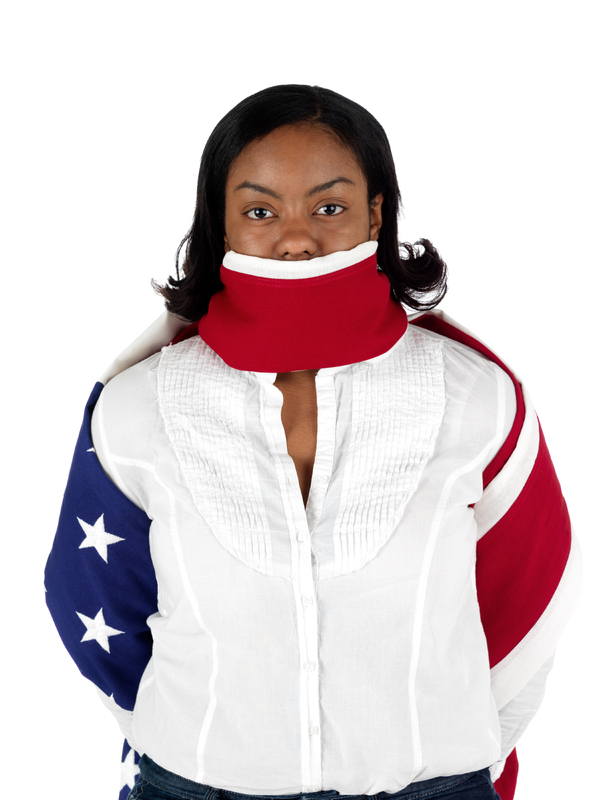
Shelia Pree Bright is a cultural anthropologist and photographer from Waycross, GA. Young Americans Series: Tarrynn Deavens, age 18, African American depicts a young Black woman posing with the American flag binding her arms and mouth. This series is an examination of Generation Y's response to America.