This collection showcases the rich legacies of HBCUs through ephemera and material objects, including maps, blueprints, audiovisual materials, newspaper articles, buttons, collectibles, memorabilia, clothing and accessories, scrapbooks, speeches, photographs, brochures, and posters.
Date Modified
2025-12-17
About This Record
The HCAC public history focused digital archive cataloging is an ongoing process, and we may update this record as we conduct additional research and review. We welcome your comments and feedback if you have more information to share about an item featured on the site, please contact us at: HCAC-DigiTeam@si.edu
Beatrice Coats talks about her involvement in voter registration work with the Mississippi Freedom Democratic Party. She talks extensively about her experiences helping to register people to vote in 1964, after being a registered voter herself since 1946. That work led her to helping open a Head Start Center in Hollandale, Mississippi.
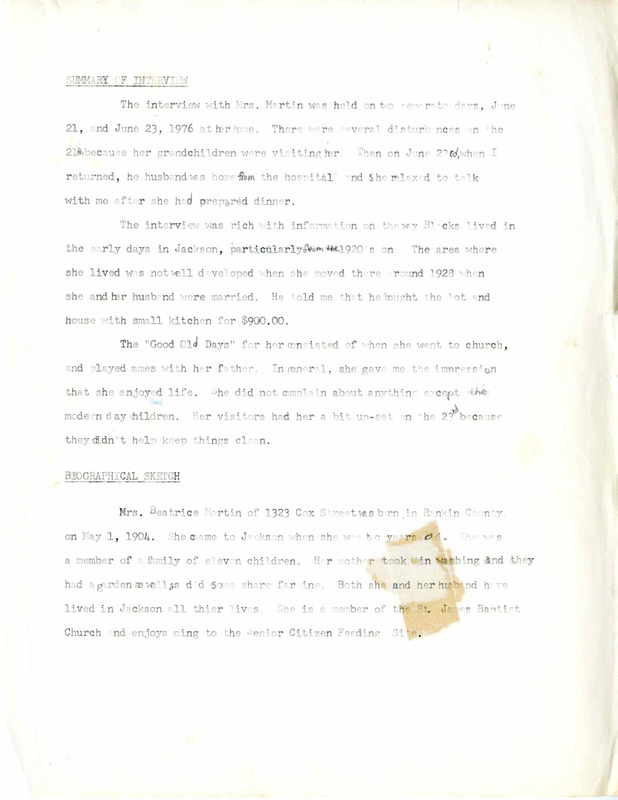
Beatrice Martin was born in Rankin County, Mississippi, in 1904 and moved to Jackson two years later. For her, the "Good Old Days" were when she was younger and went to church and played games with her father. She discusses getting married in 1928 and purchasing some land and a home in a part of Jackson that had not yet been fully developed.
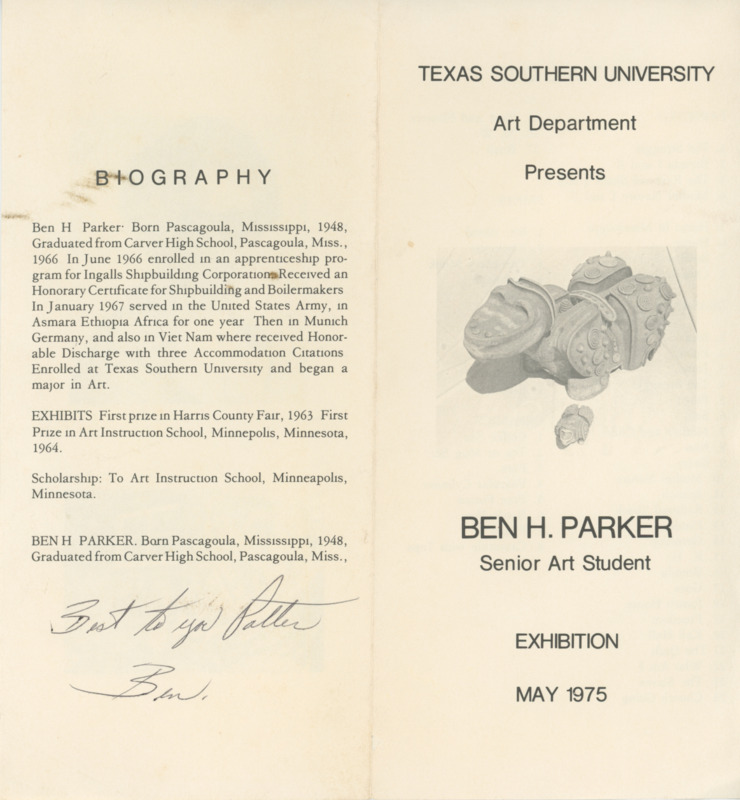
This is a brochure for Parker’s senior art exhibition. The culmination of the Texas Southern art curriculum is a senior exhibition where students showcase artwork created over the course of their undergraduate studies. The brochure features a photo of Parker, a brief biography, a catalog of the artwork featured in the exhibition, a photo of his terracotta sculpture, and a photo of his mural. It is inscribed with a note from Parker
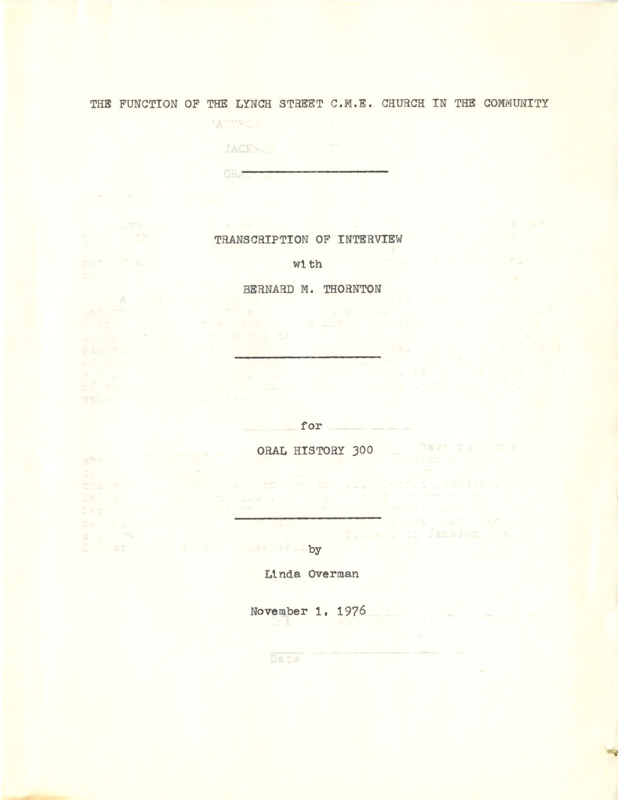
Bernard Thornton was born in 1908 in Natchez, Mississippi. He lived 53 of his 68 years in Jackson, Mississippi. The purpose of the interview was to learn information concerning the function of the Lynch Street C.M.E. Church in the community. Mr. Thornton talks about being a member of the church since 1925 and a trustee since 1945.
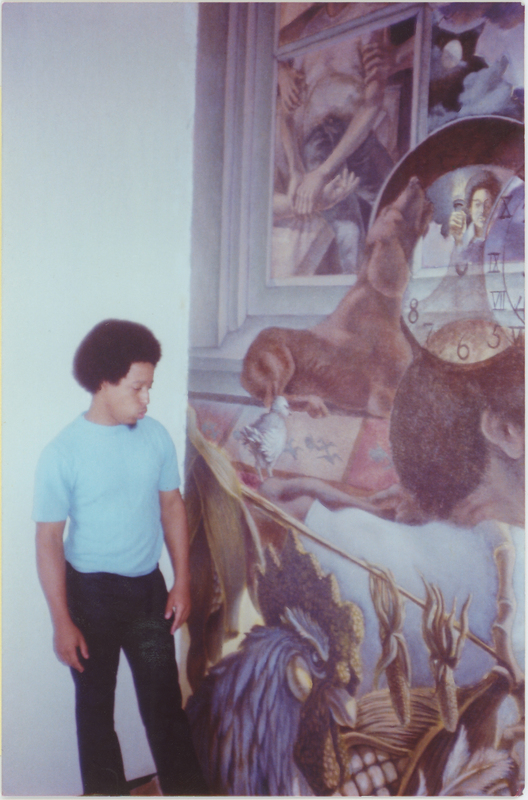
Texas Southern art alumnus Bertram (Bert) Samples is pictured here admiring his mural, which he painted on a first floor wall of Hannah Hall. Samples' mural shows the artist sleeping on his desk after his mother died, dreaming and remembering moments from his life. Samples went on to become one of the founders of Project Rowhouses, a Third Ward-based community art and social impact organization.
Bessie Funches began work as a teacher at the first Head Start in Gulfport, Mississippi (Harrison County Head Start) in 1966 and worked as a resource teacher for that summer. In 1973, Ms. Funches became Special Service Director of Harrison County Head Start. She talks about her experiences in the classrooms with the students and other workers.
Bessie Warren took a job in 1972 at Lift Incorporated Community Action Agency in Tupelo, Mississippi, where she worked as a rotating teacher’s assistant. Later, she became Head Start Educational Coordinator and Career Development Officer, positions she had held for 12 years up to the time of the interview.
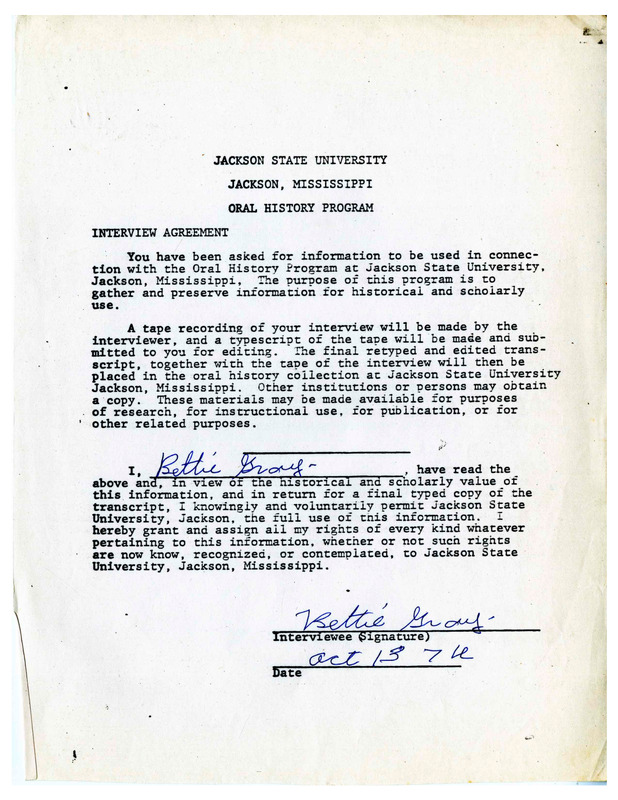
Betty Gray was born in Jackson, Mississippi, in 1903. She remembers the "Good Old Days" as a child growing up in Jackson when school days, games, and family all made for pleasant times. She also talks about her memories of the Farish Street District as well as Emmett Till and Martin Luther King, Jr. The transcript is edited with handwritten notes.
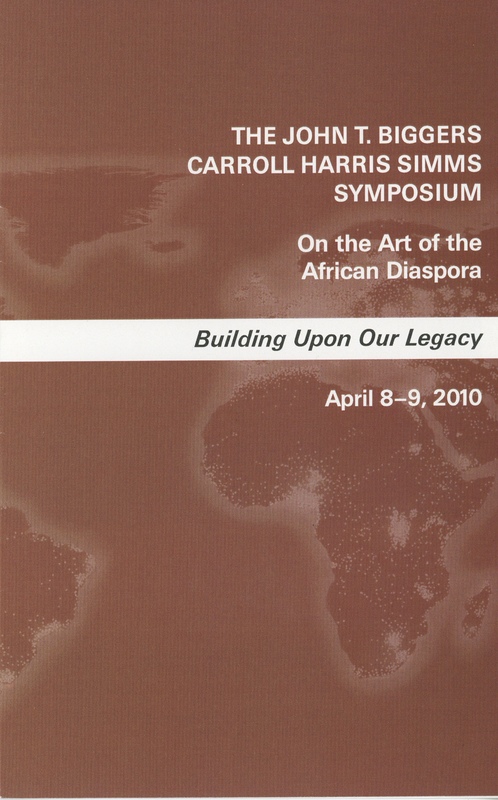
This is a brochure for the April 2010 John T. Biggers Carroll Harris Simms Symposium On the Art of the African Diaspora: Building Upon Our Legacy. This regular event from the University Museum at Texas Southern brings together artists, historians, educators, students, alumni, and members of the public to celebrate the legacy of Biggers and Simms, who worked together to build TSU’s art department from the ground up.
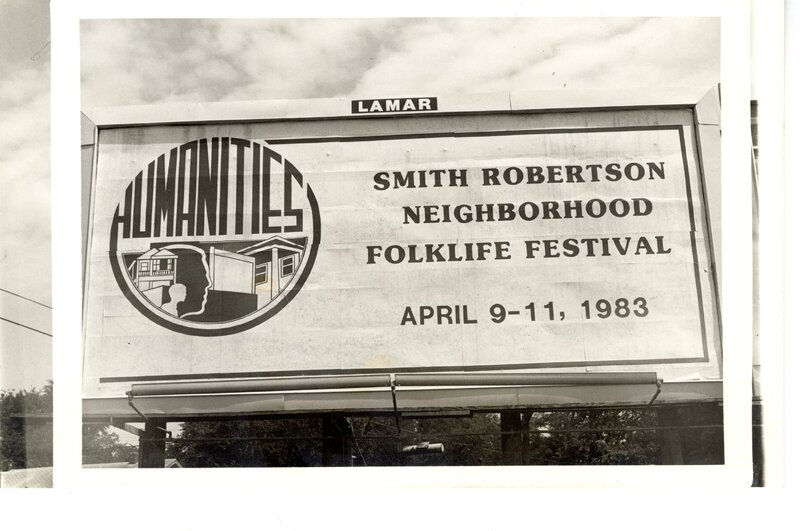
A photograph of a billboard advertising the Smith Robertson Neighborhood Folklife Festival, April 9-11, 1983. The festival was a one-time grant sponsored event held on the grounds of the Smith Robertson Museum to celebrate the rich history and culture of the Farish Street Historic District.
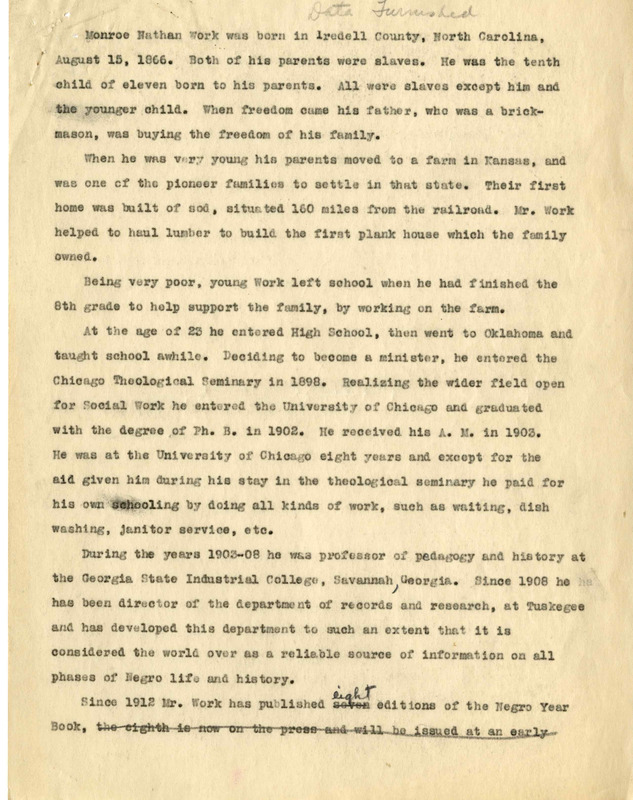
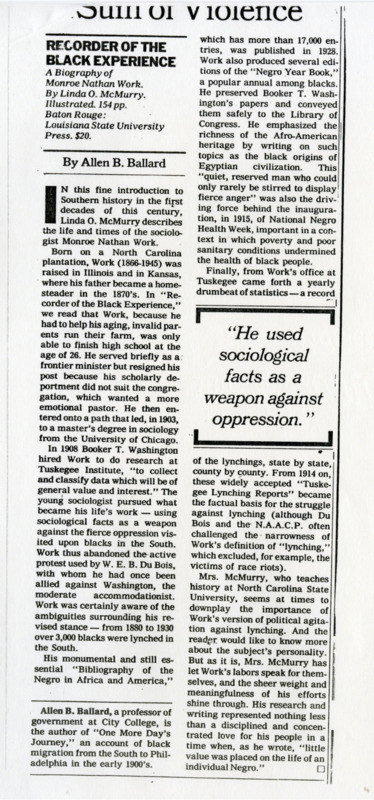
Seven pages of typed biographical information on Monroe N. Work, with many edits written in pencil. Undated, but latest date listed is 1932. "For Miss [Jessie] Parkhurst" is written on one page.
White square button for the Birmingham, Alabama, 1963 Foot Soldiers Reunion. There is also text on the button that says: "Inspired by what we did for ourselves-and the world." The 1963 Foot Soldiers were children marchers in Birmingham who encountered police resistance in the form of water hoses, attack dogs, and arrests.
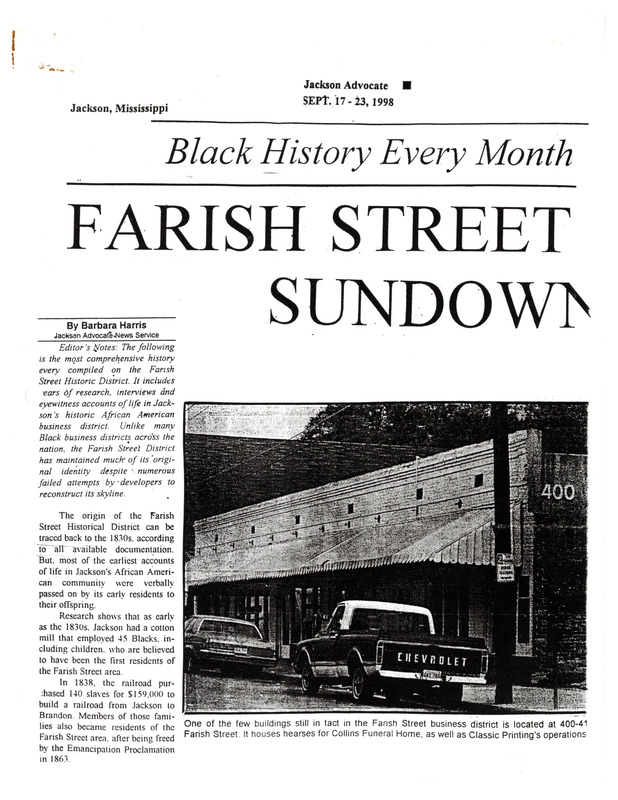
A newspaper article from the Jackson Advocate about the history of the Farish Street Historic District. Some research for the article comes from Jackson State's Farish Street Oral History Collection.
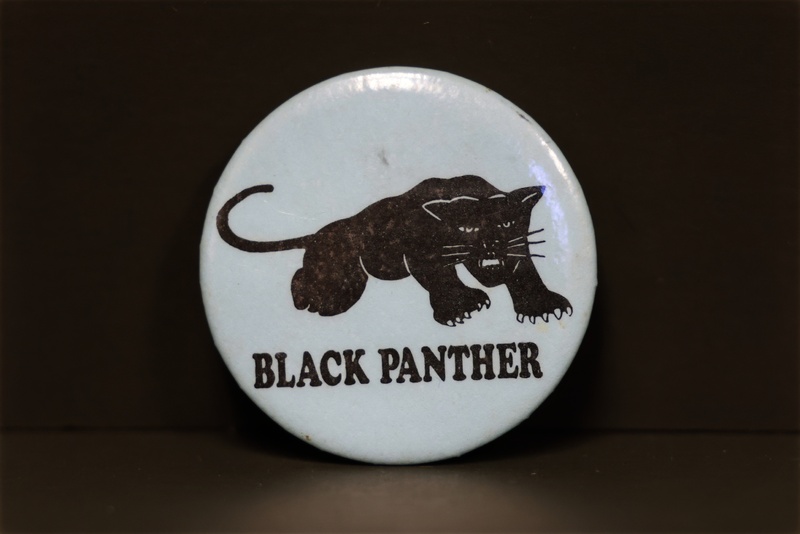
A blue button with the Black Panther logo and text that says “Black Panther.” The Black Panther Party for Self Defense was founded in 1966 by Bobby Seale and Huey P. Newton in Oakland, California. Rooted in Black Power and Marxist-Leninist ideologies, the Black Panther Party would soon spread with branches all over the United States.
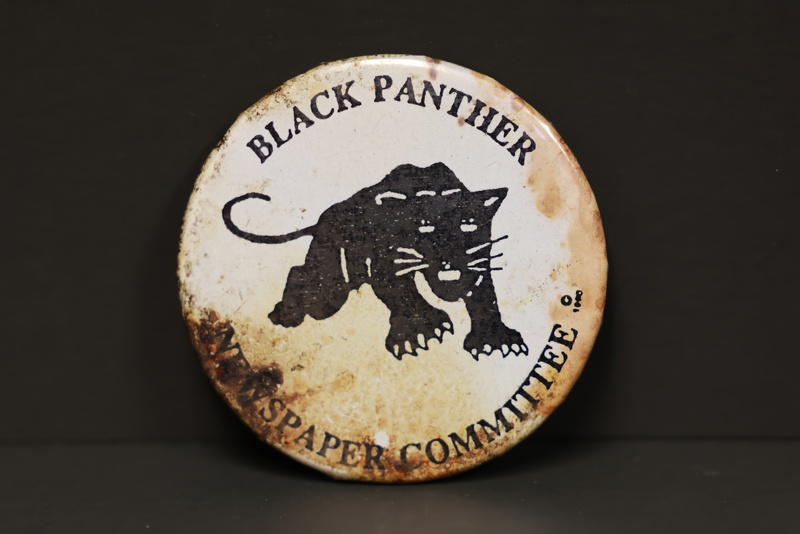
A white button with a picture of the Black Panther Party logo. The text says "Black Panther Newspaper Committee." The Black Panther newspaper began as a 4 page newsletter in 1967 by Black Panther Party founders Huey P. Newton and Bobby Seale. The paper went on to express the party’s core ideologies to a large national and international readership.
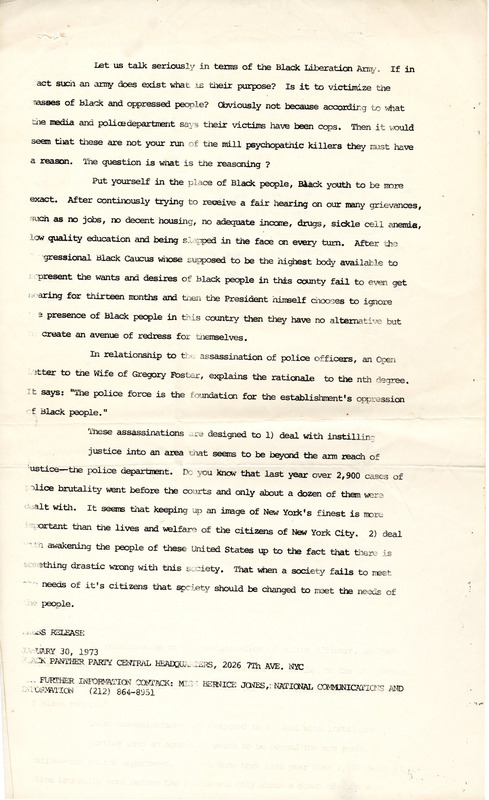
A press release from the Black Panther Party Central Headquarters in New York City about recent acts of police brutality and the response of the Black Liberation Army (BLA). The author writes that the recent assassinations of New York police officers is a direct response to the amount of police brutality that goes unnoticed and unpunished.
A newspaper article from The Black Panther. This is a transcript of the address Roberta Alexander gave at the Black Panthers’ United Front Against Fascism (UFAF) conference in August of 1969 in Oakland, California. Alexander, a Black Panther Party member, talks about the role of women in the party and in the larger struggle against oppression.
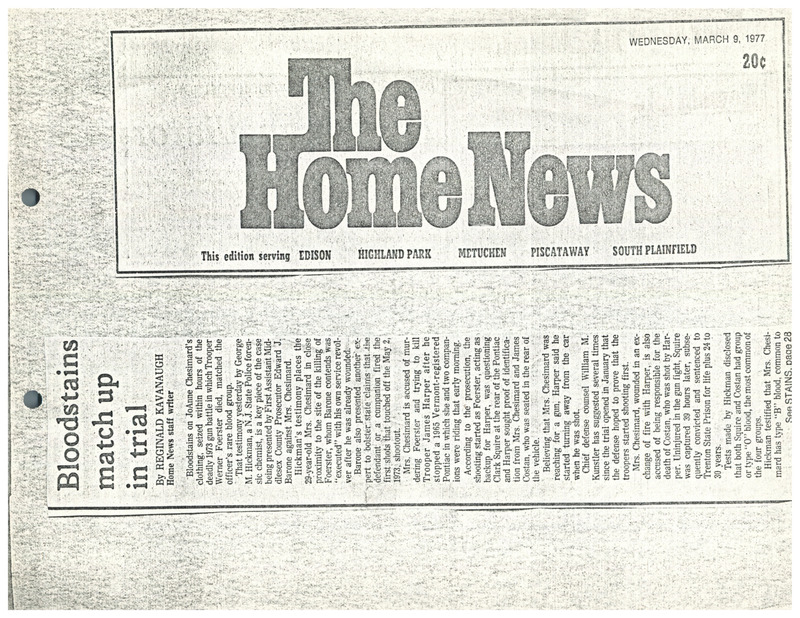
A newspaper article from The Home News about evidence in the trial of Assata Shakur (JoAnne Chesimard) for the 1973 killing of a state trooper. Prosecution witnesses showed that blood found on the clothes of Assata Shakur (JoAnne Chesimard) matched the rare AB blood type of the slain state trooper.
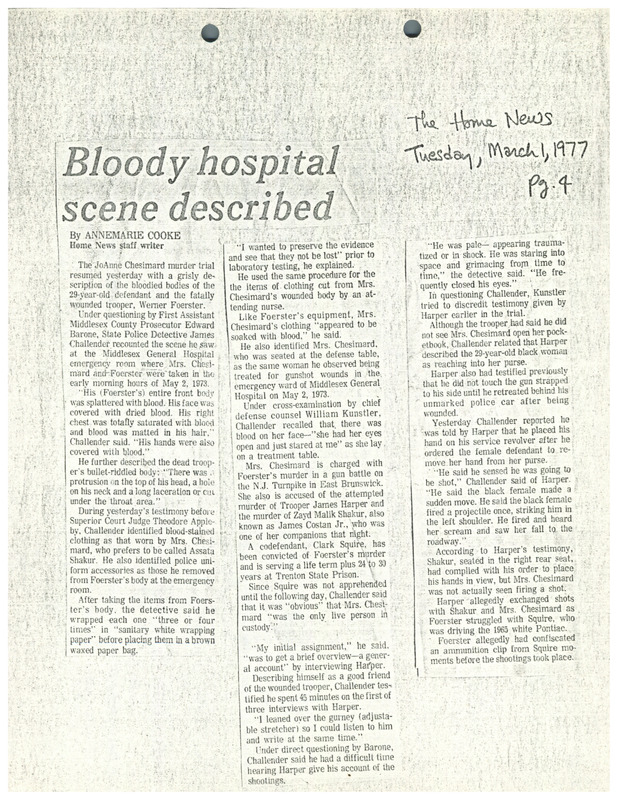
A newspaper article from The Home News about the testimony of State Police Detective James Challender describing what he saw at the emergency room where Assata Shakur (JoAnne Chesimard) and wounded state trooper Werner Foerster were taken after he was fatally shot. Shakur was on trial for the 1973 murder of Foerster.
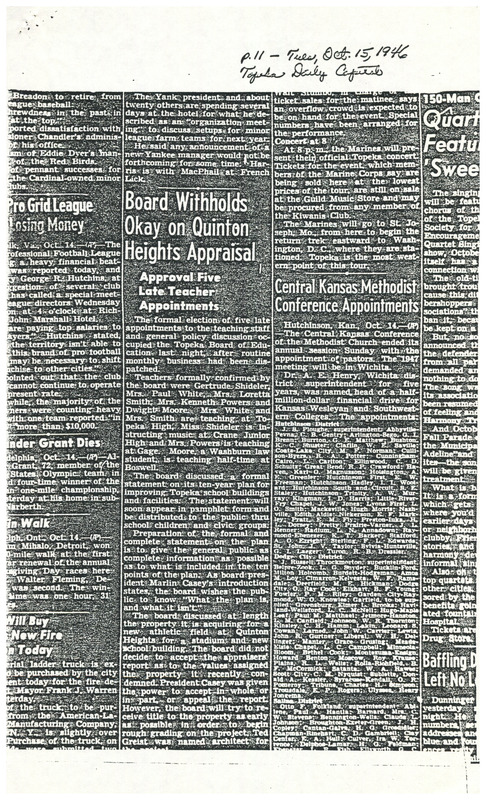
Case Data and Exhibits for Brown III, a relitigation of Brown v. Topeka Board of Education (1954) that corrected resegregation issues caused by open enrollment school choice in 1992. A 1946 newspaper article from the Topeka Daily Capital about the Topeka School Board's discussion of the ten year plan for the school district.
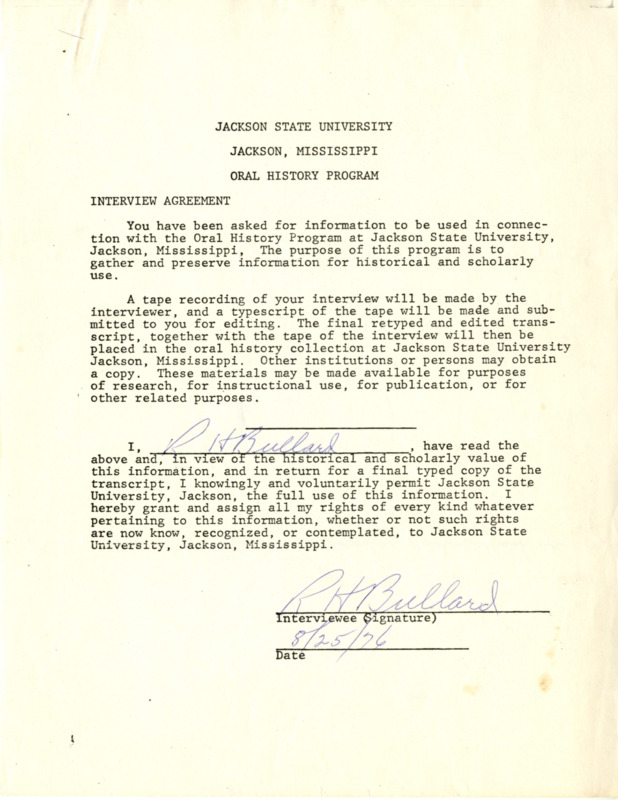
Bob Bullard was born in Jackson, Mississippi, in 1905. Mr. Bullard discusses his earliest recollections of Jackson, Mississippi, forms of entertainment, church life, and school life. He recalls the “Good Old Days” as the days he attended Poindexter Junior High School and worked in his father’s brickyard.
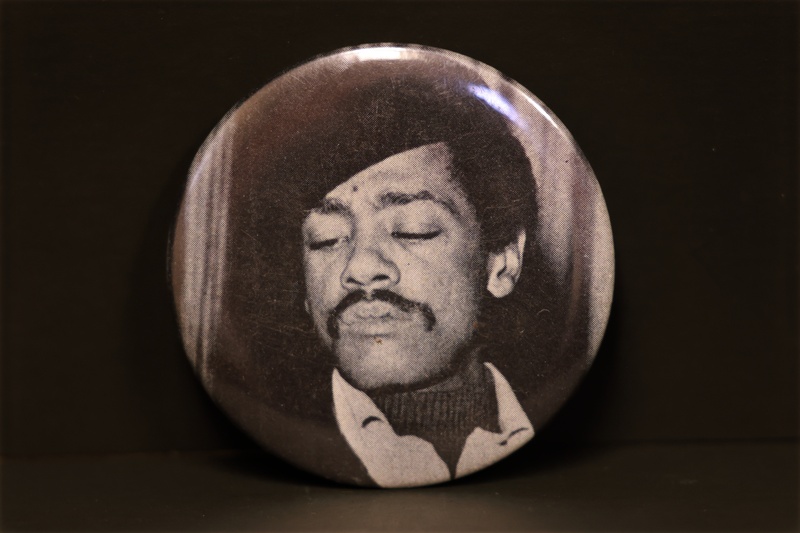
A button with a black and white photo of Bobby Seale. The Black Panther Party for Self Defense was founded in 1966 by Bobby Seale and Huey P. Newton in Oakland, California. Rooted in Black Power and Marxist-Leninist ideologies, the Black Panther Party would soon spread with branches all over the United States.
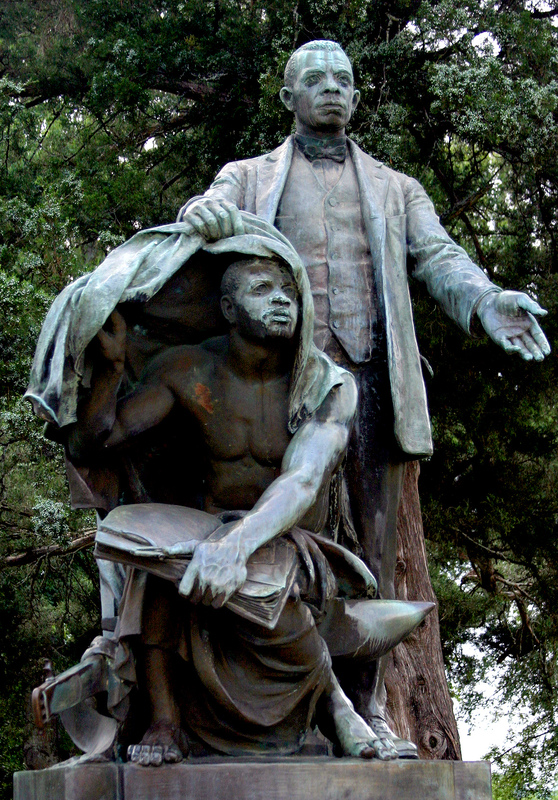
Image of BTW monument on Tuskegee University's campus. The statue was commissioned by Booker T. Washington High School's principal, Charles Lincoln Harper in 1927. The sculptor of this statue was Charles Keck.