This collection showcases the rich legacies of HBCUs through ephemera and material objects, including maps, blueprints, audiovisual materials, newspaper articles, buttons, collectibles, memorabilia, clothing and accessories, scrapbooks, speeches, photographs, brochures, and posters.
Date Modified
2025-12-17
About This Record
The HCAC public history focused digital archive cataloging is an ongoing process, and we may update this record as we conduct additional research and review. We welcome your comments and feedback if you have more information to share about an item featured on the site, please contact us at: HCAC-DigiTeam@si.edu
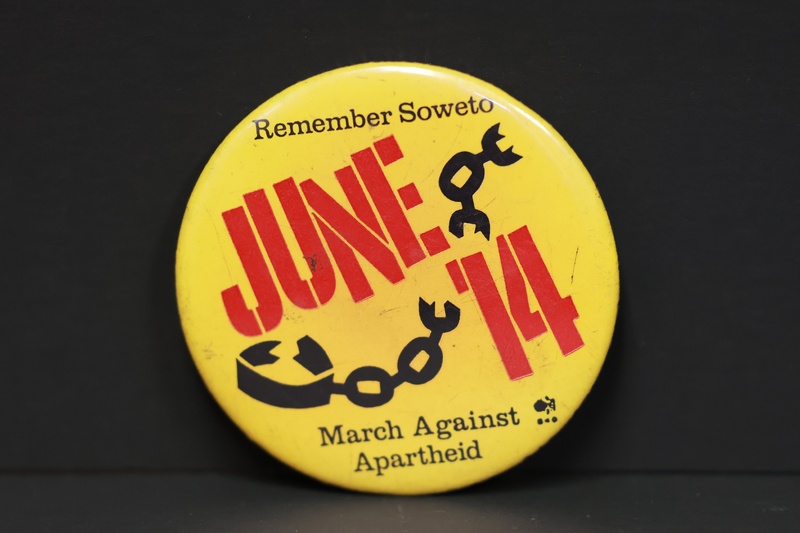
A gold button with a drawing of a broken shackle and chain with the text "Remember Soweto June 14 March Against Apartheid." On June 14, 1986, 40,000 people rallied in Central Park in New York City to call on President Ronald Reagan to impose strict economic sanctions on the government of South Africa as a means to ending apartheid in the country.
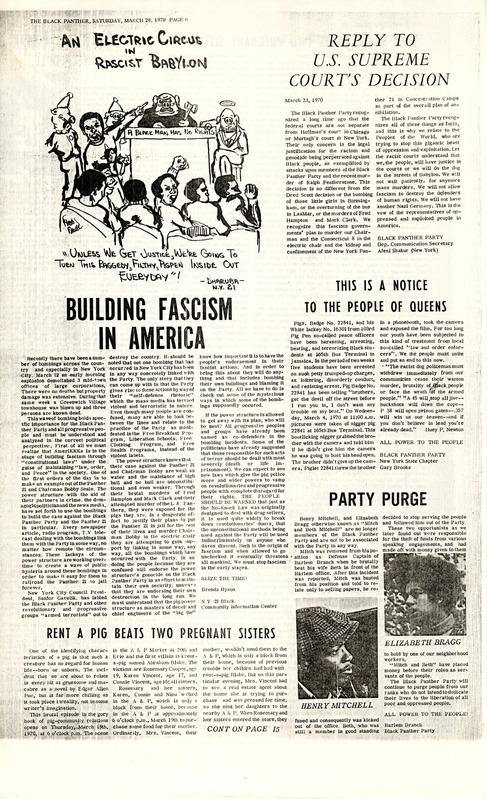
A newspaper article from The Black Panther describing an incident in Philadelphia, Pennsylvania, where two pregnant women suffered injuries after a run-in with a grocery store security guard who was notorious for harassing Black customers. The women were subsequently arrested by the police and calls were made for firing the security guard.
Sen. Alyce Griffin Clarke served in the Mississippi House of Representatives from 1984-2004. She talks about her work in education before running for office in 1984. She also discusses Robert Clark’s passion for education, the different committees she is involved in, the Institute of Higher Learning, and more.
Rep. Charles Young Sr. served in the Mississippi House of Representatives from 1980 until his death in 2009. He explains how Robert Clark was a mentor for him and those elected before him. While detailing his own campaign strategy for 1980, he talks about the calculated and aggressive nature of Robert Clark’s campaign and the effect it had on him.
Rep. David Gibbs served in the Mississippi House of Representatives from 1992 until his death in 2013. In this interview, Gibbs discusses how he became involved in Mississippi politics. Heavily influenced by his military service, Gibbs explains his campaign strategies and his work with other notable politicians such as Robert Clark and Aaron Henry.
Rep. Leonard Morris served in the Mississippi House of Representatives from 1993 until his death in 2007. He was head of the House Medicaid Committee. In this interview, Rep. Morris explains the nature of the Black Caucus and his time working with Henry Kirksey, Robert Clark, Ed Blackmon, and other notable Black Mississippi politicians.
Rep. Mary Stevens served in the Mississippi House of Representatives from 1981-2012 and was the mayor of West, Mississippi, for eight years. She has close ties to Robert Clark and speaks on her experiences in the Mississippi Legislature, serving on several committees such as Public Health and Appropriations.
Rep. Thomas Lamar Woods served in the Mississippi House of Representatives from 1988–2012. Robert Clark eventually appointed him to the Ways and Means committee. Rep. Woods discusses his district’s makeup, bills he supported with Robert Clark, and Clark’s famous fox hunts.
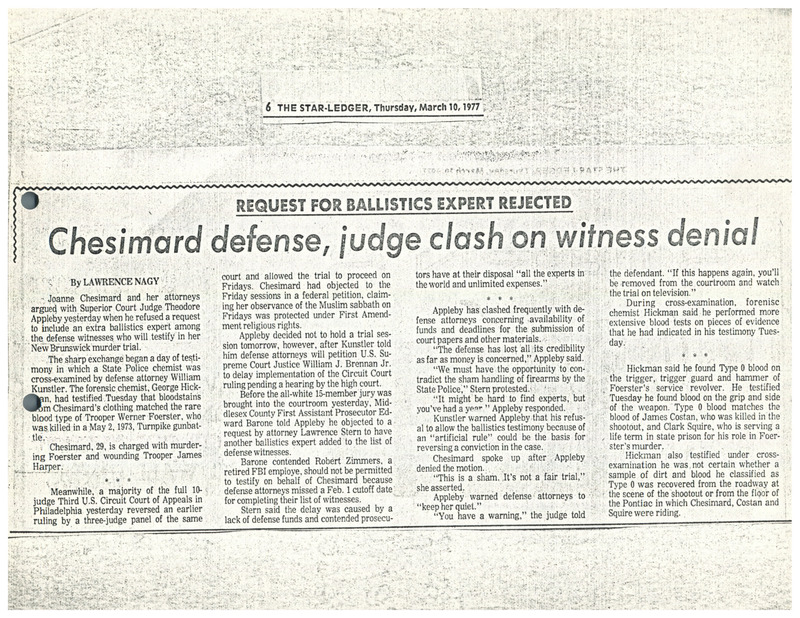
A newspaper article from The Star Ledger about the defense team for Assata Shakur (JoAnne Chesimard), on trial for the 1973 killing of a state trooper, being denied calling an extra ballistics witness by the judge. The prosecution contended the witness was not valid since the defense team missed the cutoff date to add witnesses to their list.
Rev. Coleman Turner was a Methodist minister and became involved with the Child Development Group of Mississippi (CDGM) through his ministry. He talks about his time as a member of the CDGM board and becoming the chairman of the board later.
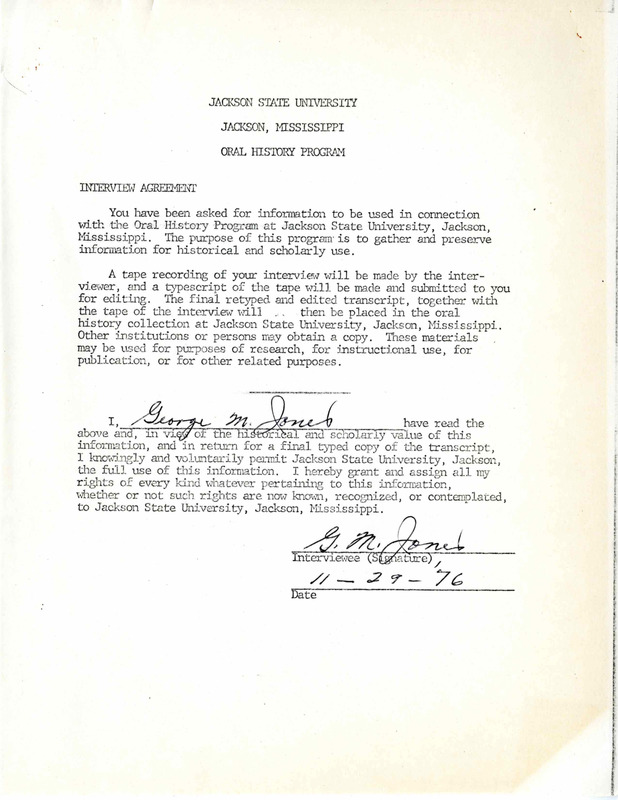
Rev. George Jones was born in 1903 in Hermanville, Mississippi. He says the “Good Old Days” was the time about 40 years ago when he enjoyed baseball games and the fashions of the time. He talks about his education and his career as a teacher and principal, eventually moving to the Jackson area to teach. The transcript contains handwritten edits.
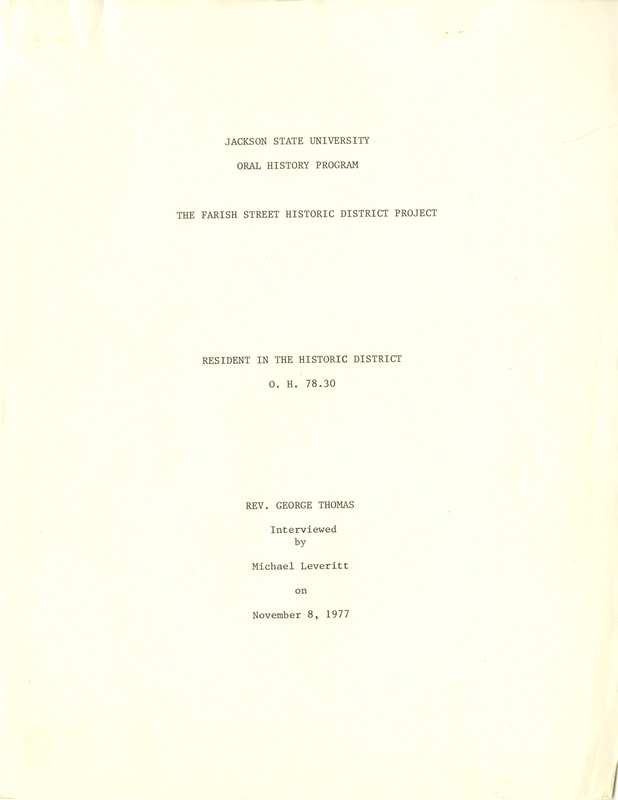
Rev. George Thomas was a pastor at a church in Terry, Mississippi, and also worked as a contractor and carpenter. He possessed several plans from early buildings which he built in the Farish Street District. He talks about the construction of new roads and buildings as Jackson converted from dirt roads and horses to a more metropolitan space.
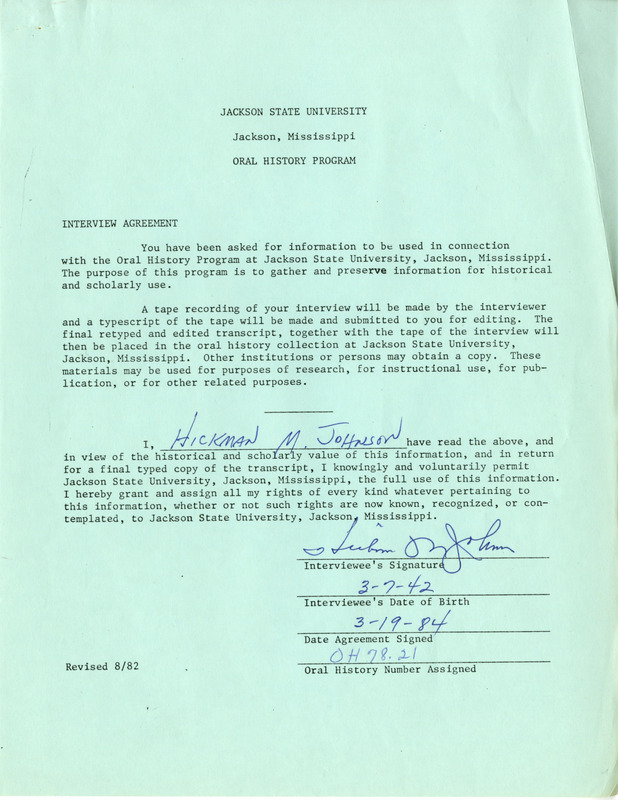
Hickman M. Johnson came to Jackson in 1967 and had just finished his 10th year as pastor of Farish Street Baptist Church. He talks about the civil rights activist spirit that existed there in 1967. He goes on to discuss the deterioration of the district and discusses his ideas about how to revitalize the area. Transcript contains handwritten edits.
Rev. Horace L. Buckley was elected to the Mississippi House of Representatives in 1975 to a four year term. In the interview, he reflects on his time in politics and working with Robert Clark. He also discusses what made him run for a representative seat as a pastor, and the connections he made within the church community and the legislature.
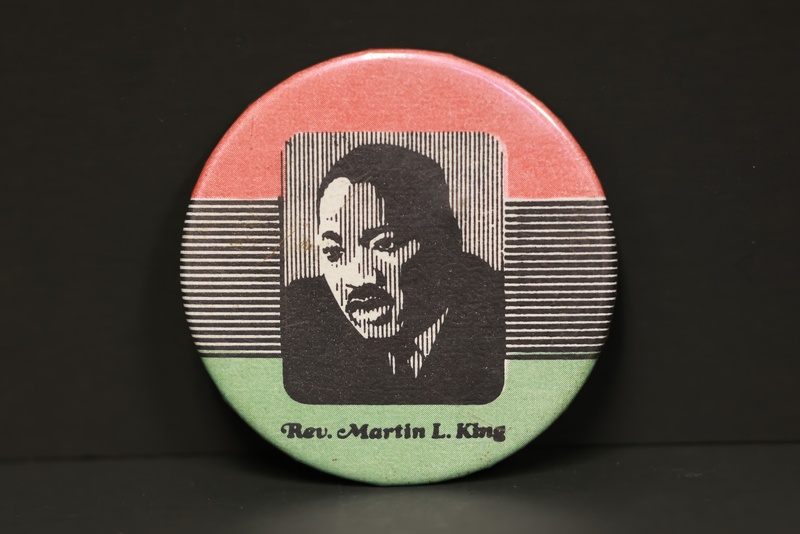
A red, green, and black button with an image of Dr. Martin Luther King Jr. Dr. King was a co-founder of the Southern Christian Leadership Conference (SCLC) and remained its leader, and the most prominent leader of the Civil Rights Movement in the South, until his assassination in Memphis in 1968.
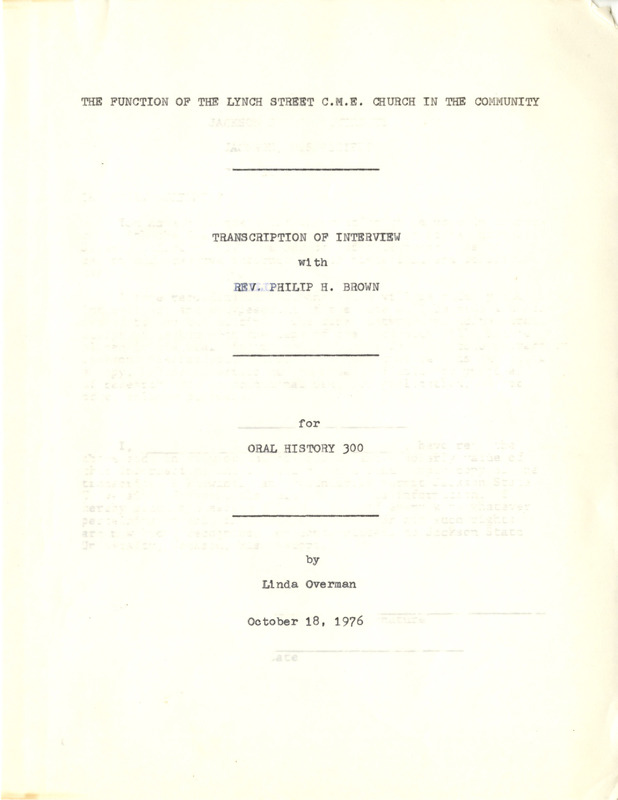
Rev. Phillip Brown was a minister at Lynch Street C.M.E. Church from 1952-1953. The purpose of the interview was to learn about the function of the Lynch Street C.M.E. Church in the community. Rev. Brown talks about being a life-long member of the church since its inception. The transcript is edited with handwritten notes.
At the time of the interview, Rev. R.L.T. Smith was on the board of directors of Mississippi Action for Progress (MAP), which was part of his larger work within the community for people in need. He tells the story of how Head Start came to be in Mississippi.
Rev. Rims Barber came to Mississippi in 1964 to assist in the Civil Rights Movement. He talks about his work in the movement and Delta Ministry and about the connection between the Child Development Group of Mississippi (CDGM) and Delta Ministry in bringing Head Start to Mississippi through grassroots organizing and community development.
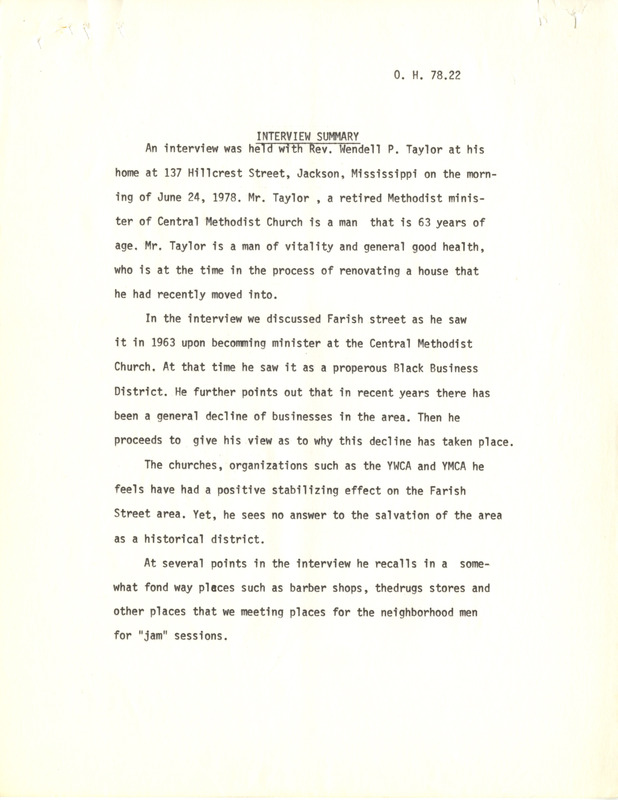
Rev. Wendell P. Taylor became minister at Central Methodist Church in the Farish Street District in 1963 and was retired at the time of the interview. He talks about the district being prosperous for Black businesses at that time but that a decline has taken place since businesses have left. The transcript is heavily edited with handwritten notes.
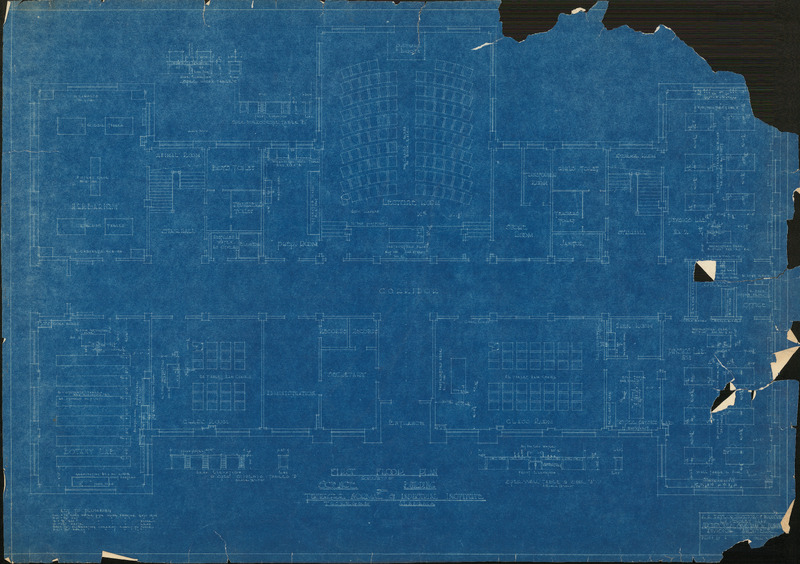
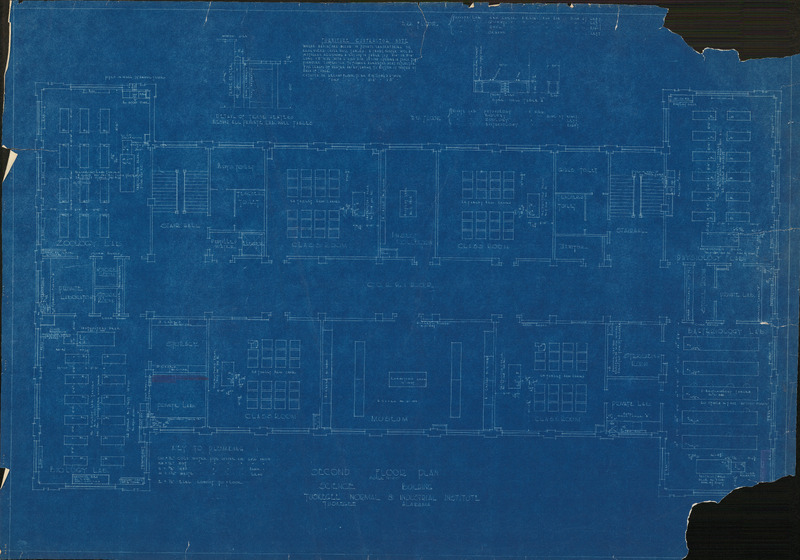
A revised construction floor plan blueprint for the first floor of Science Building at Tuskegee Normal and Industrial Institute at Tuskegee, Alabama. This floor plan includes science labs, offices, restrooms, lecture room with seating arrangements, and measurements for table spacing.
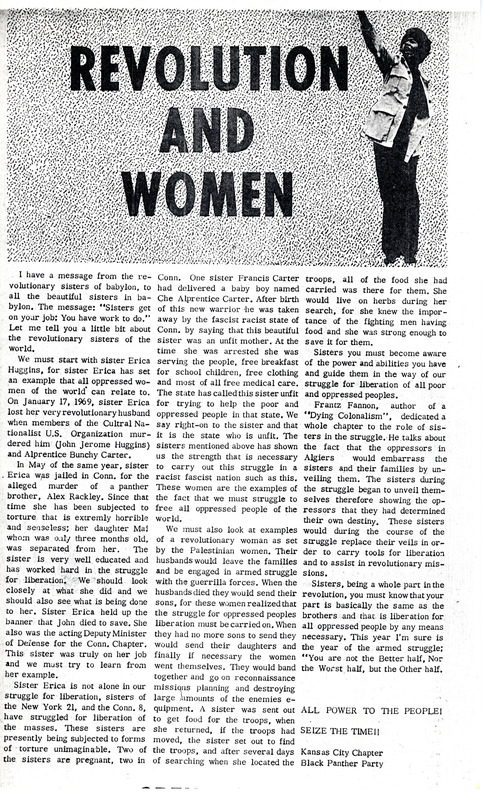
A newspaper article from The Black Panther recounting several examples of the role Black women have played in the movement for Black liberation (date unknown). The article is credited to the Kansas City Chapter of Black Panther Party. A poem about Black women is also included in the article, author unknown.
In this interview, Texas Southern art alumnus Richard "Sunnyside" Williams discusses his experiences as a student who graduated in 1994. He learned from faculty like Biggers, Simms, and Vital, and cites classmates and fellow alumni Roy Vinson Thomas and Karl Hall as influences. Williams taught at Worthing High School for years after graduating.
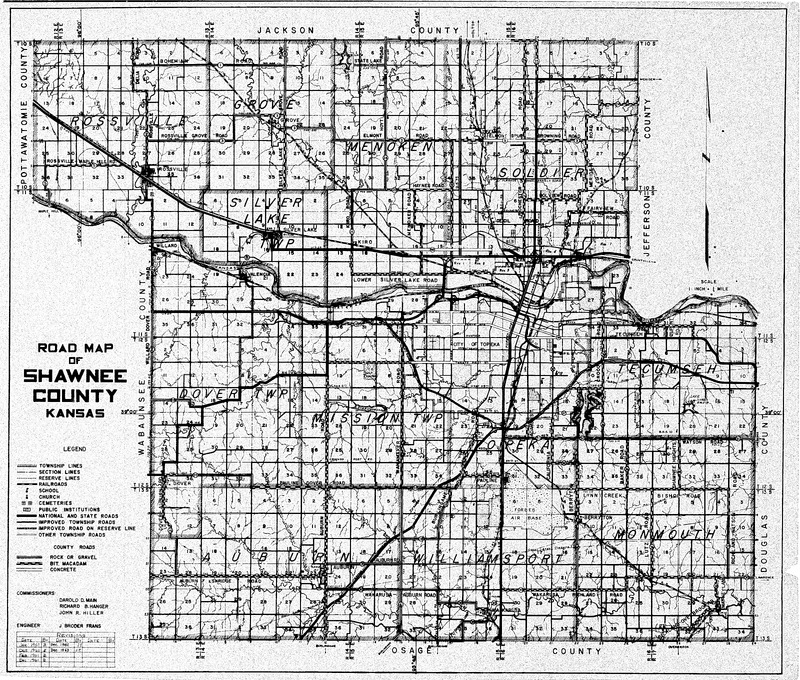
Case Data and Exhibits for Brown III, a relitigation of Brown v. Topeka Board of Education (1954) that corrected resegregation issues caused by open enrollment school choice in 1992. The legend marks township boundaries; railroads; public institutions; national roads, state roads, and township roads; and indicates roads that have been improved.
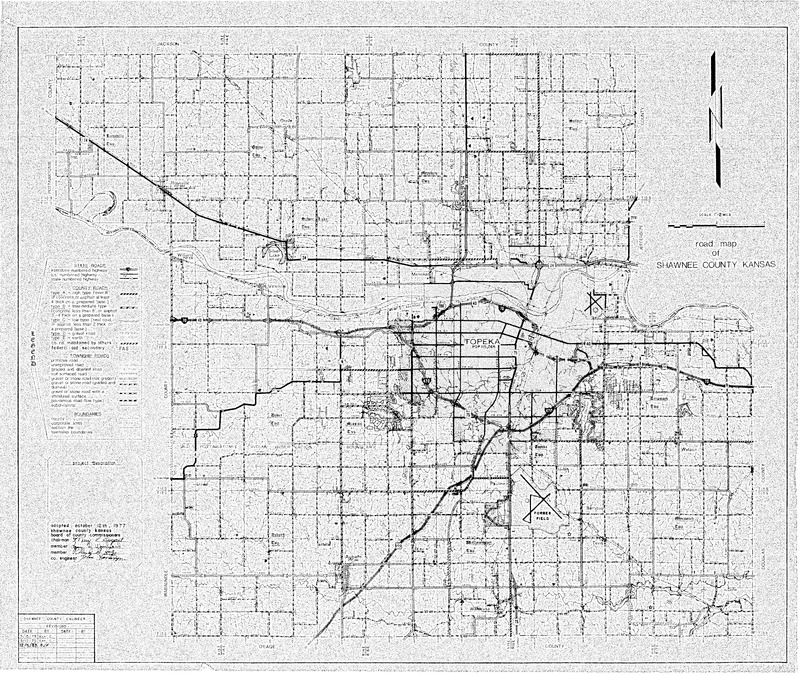
Case Data and Exhibits for Brown III, a relitigation of Brown v. Topeka Board of Education (1954) that corrected resegregation issues caused by open enrollment school choice in 1992. Map includes state roads, county roads, township roads, and county, corporate limit, section line, and township boundaries.
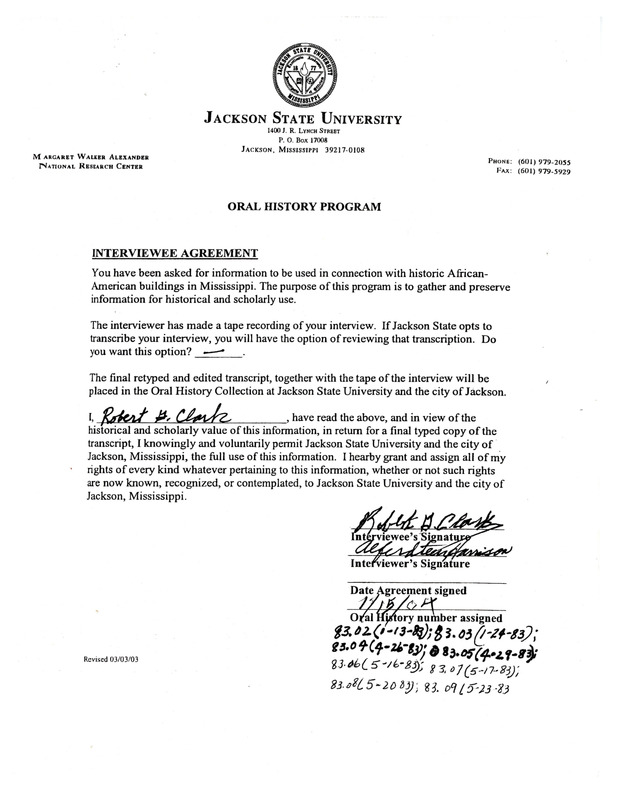
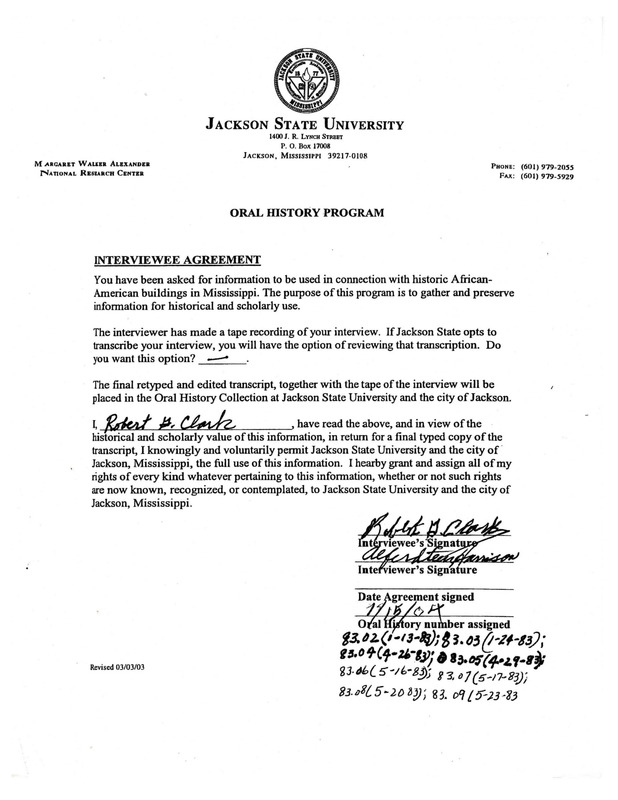
Rep. Robert G. Clark served in the Mississippi House of Representatives from 1968 to 2004. In this interview, Rep. Clark talks about his childhood, his time at Jackson State College, and his time as a teacher. He talks about threats his campaign received but also the support he got from the Mississippi Freedom Democratic Party.
Rep. Robert G. Clark served in the Mississippi House of Representatives from 1968 to 2004. In this interview, Rep. Clark talks about his childhood, his experiences in school up to 8th grade, and his membership at Pleasant Green Missionary Baptist Church. He also talks about interactions he had with white people when he was teenager.