This collection showcases the rich legacies of HBCUs through ephemera and material objects, including maps, blueprints, audiovisual materials, newspaper articles, buttons, collectibles, memorabilia, clothing and accessories, scrapbooks, speeches, photographs, brochures, and posters.
Date Modified
2025-12-17
About This Record
The HCAC public history focused digital archive cataloging is an ongoing process, and we may update this record as we conduct additional research and review. We welcome your comments and feedback if you have more information to share about an item featured on the site, please contact us at: HCAC-DigiTeam@si.edu
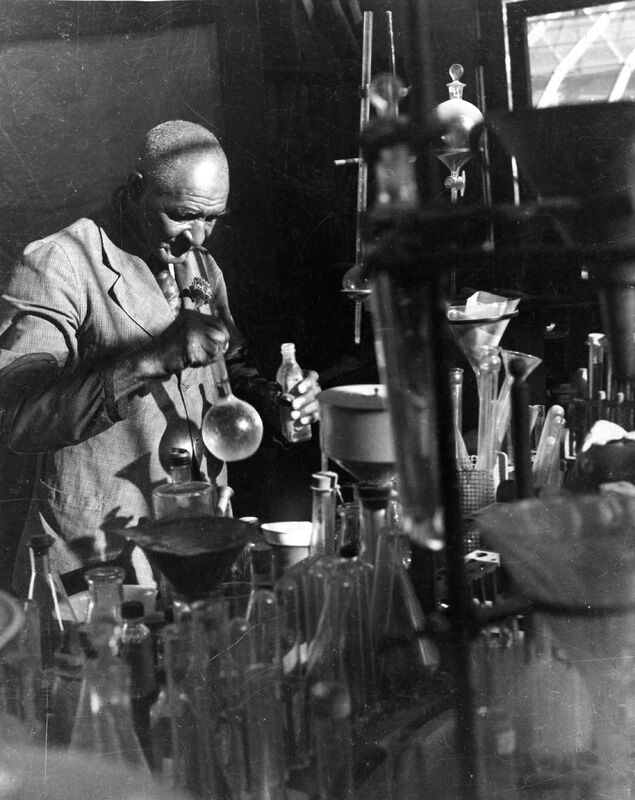
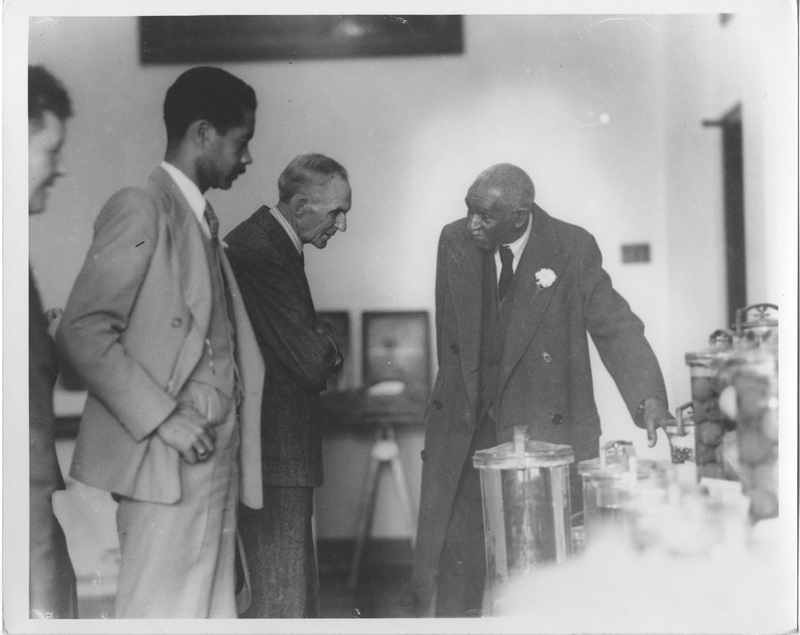
A black and white photo of an elderly George Washington Carver in his lab in the now George Washington Carver Museum. Dr. Carver has a bottle and a beaker in his hands. Carver's picture was tacken by the university's head of photography department and university photographer P.H. Polk.
Georgia Ross was an educator in Mississippi for 29 years, beginning her career in 1971 when schools were still segregated. In this interview, Ms. Ross talks about the influence Robert Clark, as a state representative, had on education, saying that he was very forward thinking for a Mississippi legislator and probably ahead of his time.
Ginevera Reaves helped to start the Head Start program in Benton, Mississippi, in 1965. She talks about the psychology and home economics classes she took in school, her Bachelor’s Degree in Education and her Master’s Degree in School Administration, and how that broad background gave her a unique perspective on teaching the disadvantaged.
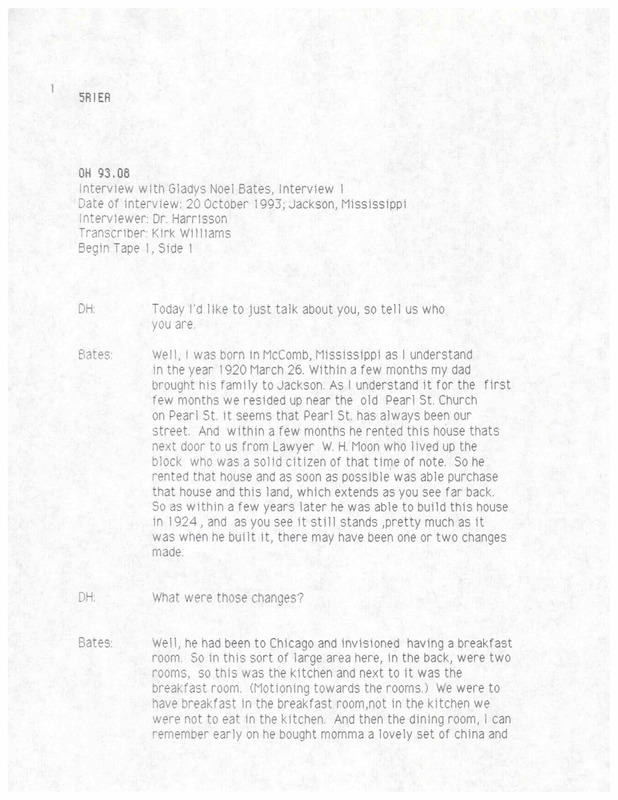
Gladys Noel Bates moved to Jackson with her family in 1920 and soon after settled in the Farish Street District. She talks extensively about her entire life, including her childhood and family, attending school during desegregation, and her involvement in the Civil Rights Movement.
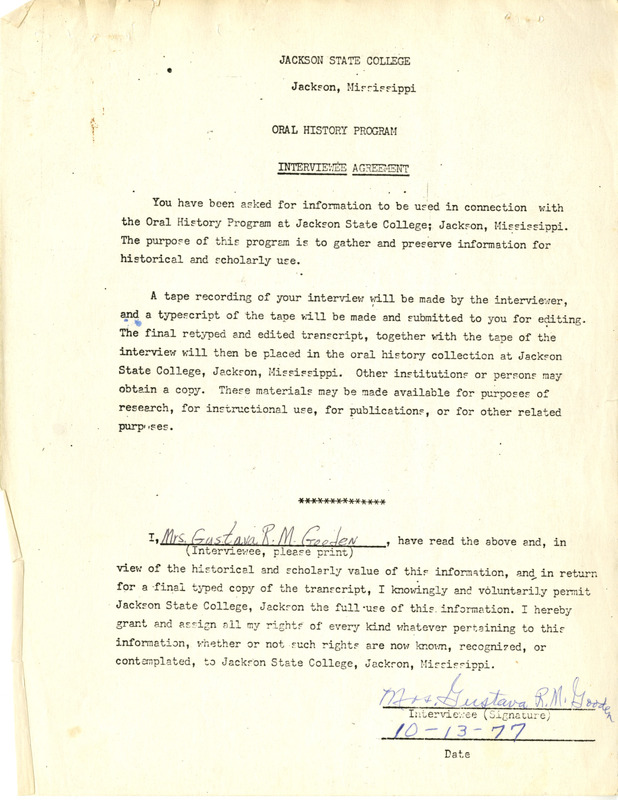
Gustava Gooden was born in the Farish Street District and at the time of the interview had lived in the home she was in since she was a teenager. She talks about growing up in what she calls the "slum" of the Farish Street District. She discusses the red light district, schools, churches, and businesses in the area.
Gwendolyn Hampton was born in the Farish Street District in 1953 and attended several schools in the area, including Smith Robertson School. Mrs. Hampton reflects on changes in many areas in the district, including the disciplining of neighborhood children and the attitude of "country folk" who came to Farish Street to shop.
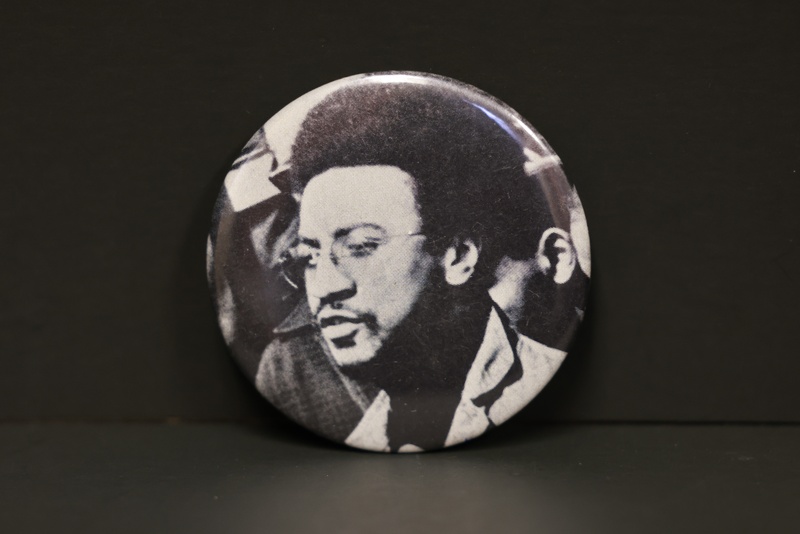
A button with a black and white photo of H. Rap Brown (Jamil Al-Amin). After organizing in Mississippi during Freedom Summer in 1964, H. Rap Brown became chairman of the Student Nonviolent Coordinating Committee (SNCC) in 1967. He continued SNCC’s adoption of Black Power ideologies which began under his predecessor Stokely Carmichael.
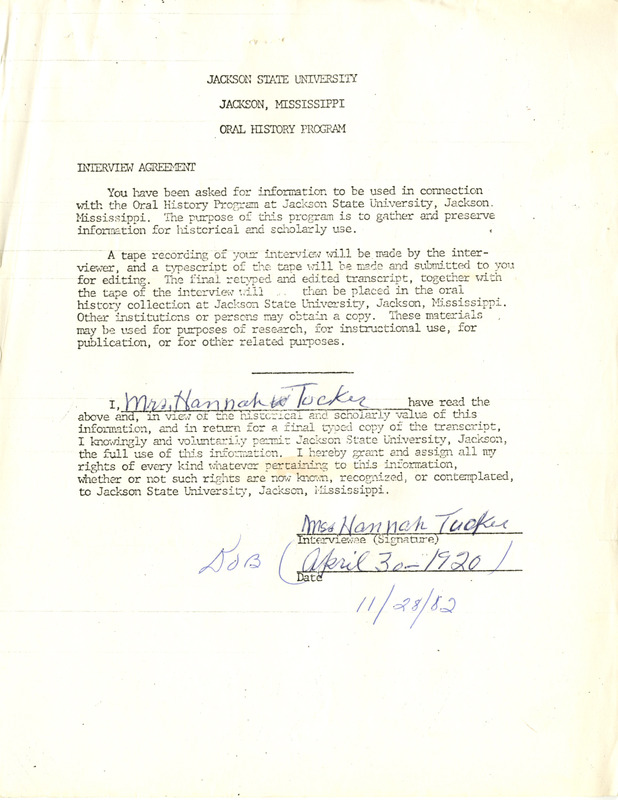
Hannah Tucker moved to the Farish Street District in 1935 and opened Eat & Beat It Cafe in 1952. She talks about growing up in the district and some of the jobs she had. She also discusses some of the changes in the district over the years and her decision to soon move her business out of the district. Transcript is edited with handwritten notes.
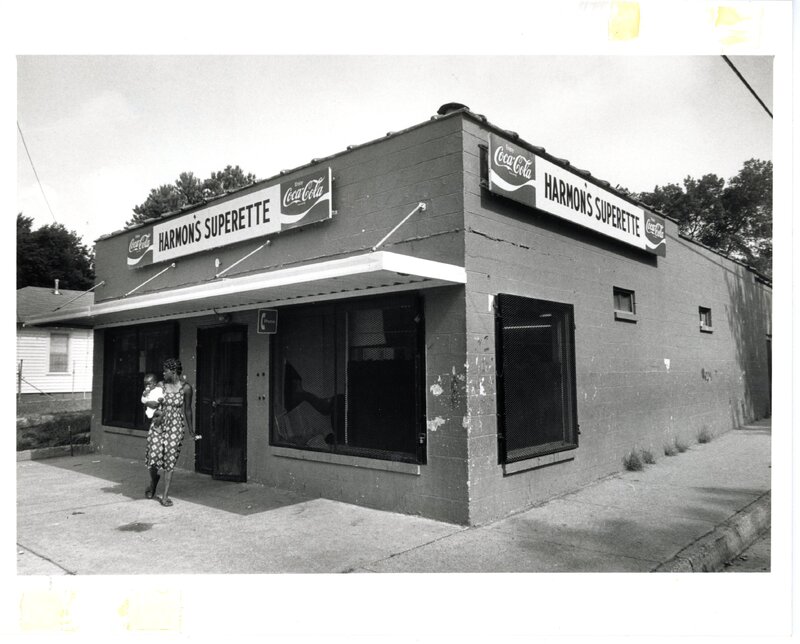
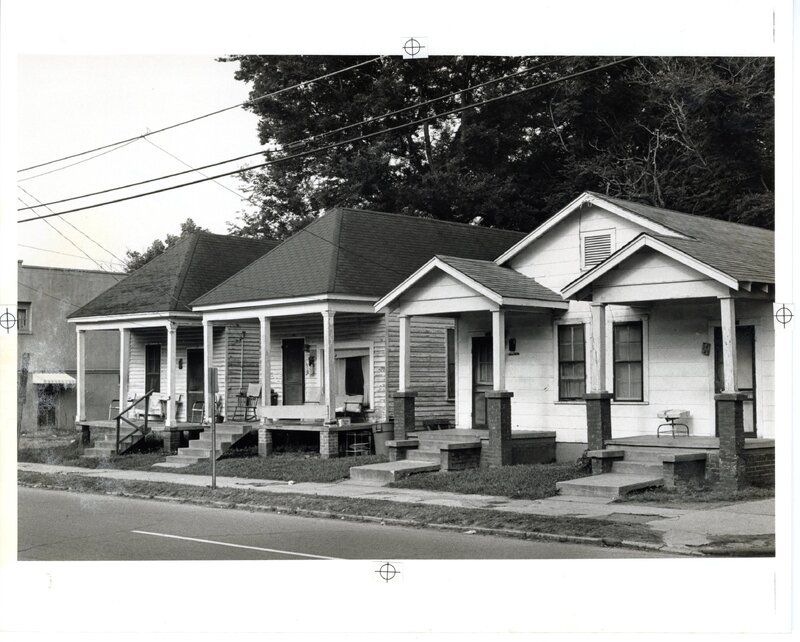
A photograph of Harmon's Superette, a shop on East Monument Street in the Farish Street Historic District. At the time of the photograph, the business was closed and the building was in disrepair.
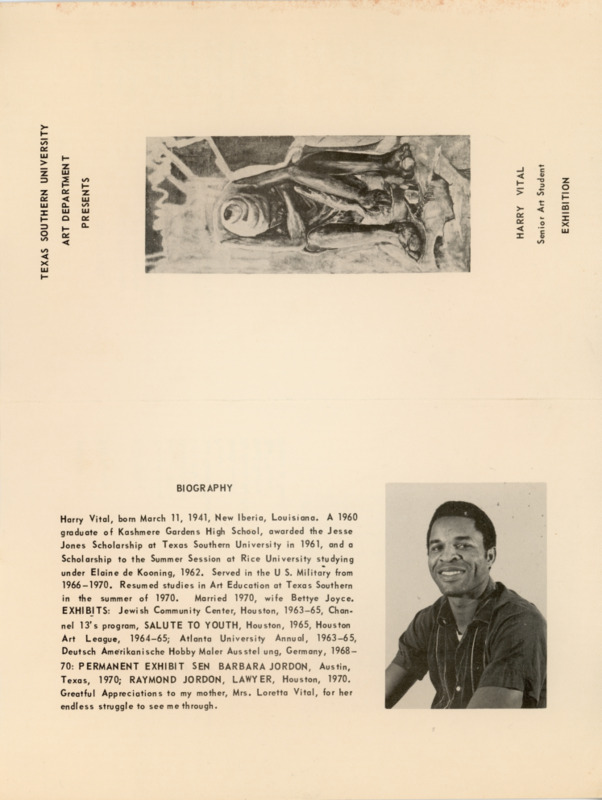
This is a brochure for Vital’s senior art exhibition. The culmination of the Texas Southern art curriculum is a senior exhibition where students showcase artwork created over the course of their undergraduate studies. The brochure features a portrait of Vital, a brief biography, a catalog of the artwork featured in the exhibition, and a photo of one of his paintings and sculptures. After graduating, Vital returned to TSU to teach art for many years.
Helen Ware was involved with the Greenwood, Mississippi, Head Start program in Leflore County from its initial planning stages in 1969. She talks about her time working as a social worker for Head Start, including her role going into the community to get parents excited about enrolling their children.
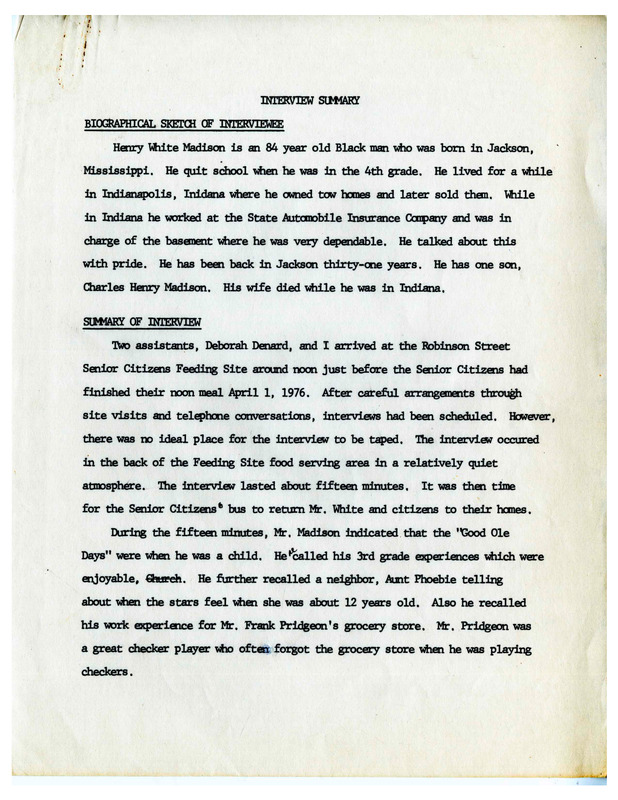
Henry White Madison was born in Jackson, Mississippi, in 1892. Mr. Madison talks about his first voting experience and recalls the "Good Old Days" when he was a youth with his own band (Madison Band), playing baseball, and working for Pridgeon's Grocery Store in Jackson, Mississippi. The transcript is heavily edited with handwritten notes.
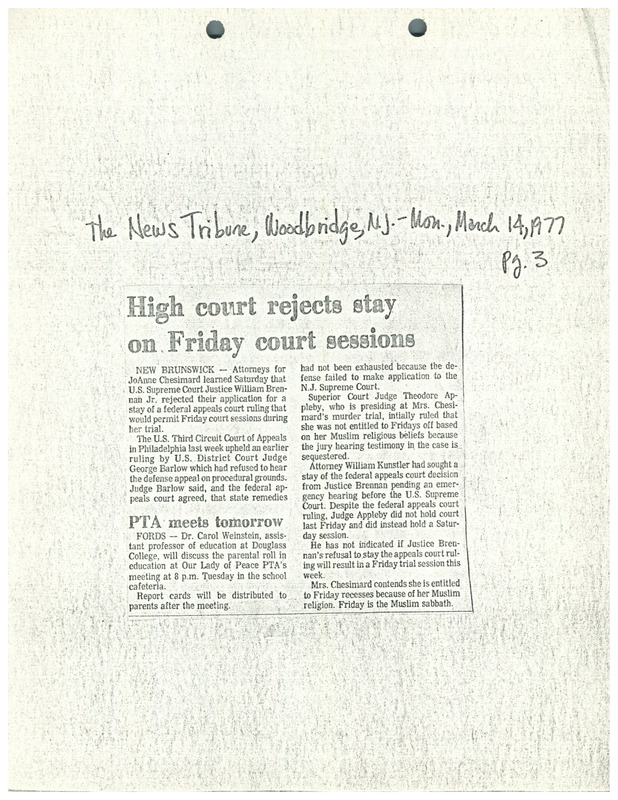
A newspaper article from The News Tribune about the question of Friday recesses asked for by the defense because of the Muslim faith of Assata Shakur (JoAnne Chesimard), who was on trial for the 1973 killing of a state trooper. The question has been a feature of the trial and the defense, prosecution, and judge continue to argue over it.
Hollis Watkins was a Civil Rights organizer in Mississippi in the 1960s. This interview was recorded in a meeting of Dr. Alferdteen Harrison's Oral History class at Jackson State and featured questions from Dr. Harrison and several students. Mr. Watkins talks about his experiences with the Civil Rights Movement and the beginnings of Head Start.
This is a digital flyer for the Fall 2023 Homecoming: The Eleventh Biennial TSU Art Alumni Exhibition at the University Museum at Texas Southern. The University Museum hosts an art alumni exhibition every other fall, alternating with an art faculty exhibition. Alumni showcase their artwork, which ranges from paintings, prints, and photographs to sculpture, jewelry, and wood carving.
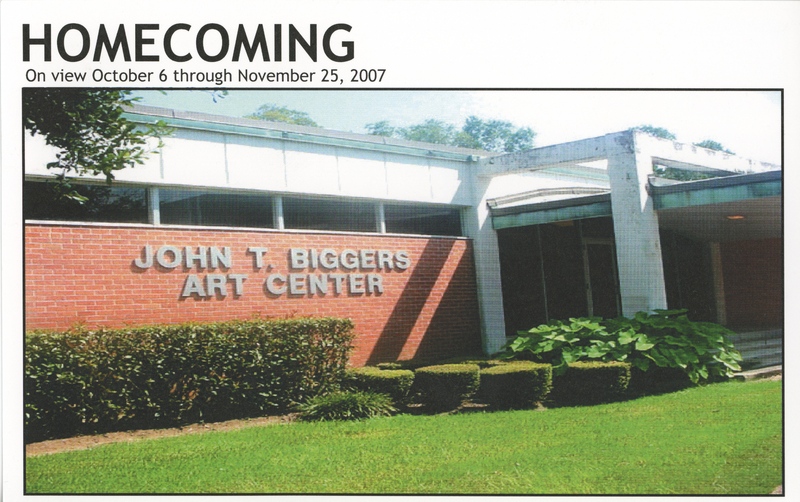
This is an invitation to the Fall 2007 Homecoming: The Third Biennial TSU Art Alumni Exhibition at the University Museum at Texas Southern. The University Museum hosts an art alumni exhibition every other fall, alternating with an art faculty exhibition. Alumni showcase their artwork, which ranges from paintings, prints, and photographs to sculpture, jewelry, and wood carving.
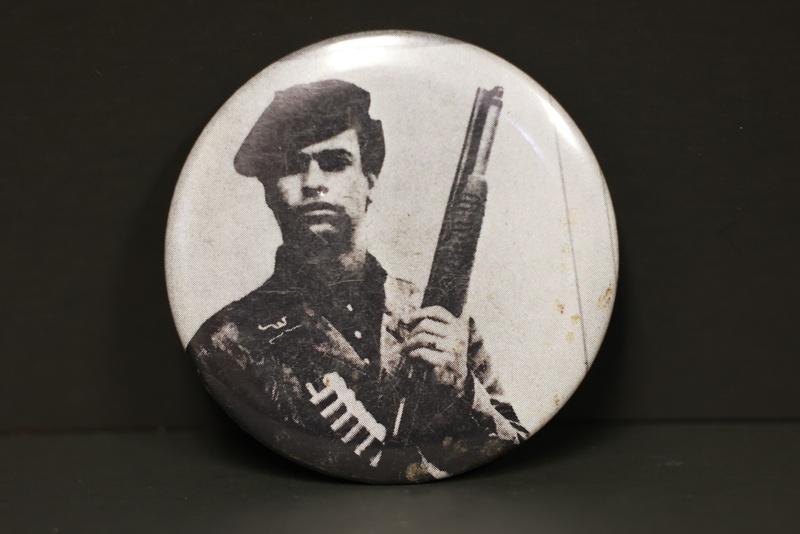
A button with a black and white photo of Huey Newton holding a shotgun. Huey Newton, alongside Bobby Seale, founded the Black Party for Self Defense in Oakland, California, in 1966. The Black Panther Party held an ideology of armed self-defense against the oppressive and racist forces of the United States government and police.
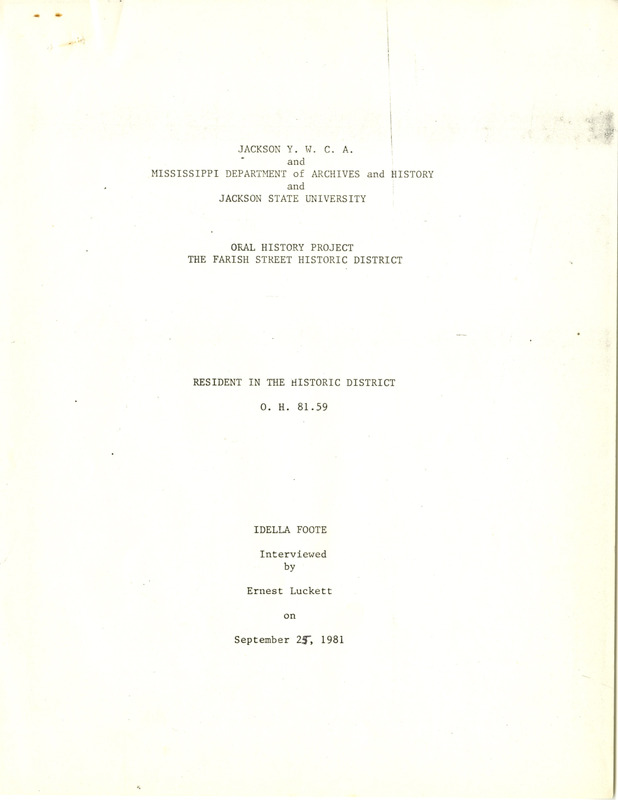
Idella Foot moved to the Farish Street District in 1931 and lived her entire life on multiple different streets in the district. Ms. Foote discusses her children and her church affiliation. She also talks about the changes the district has undergone over the decades, saying that the district underwent big changes after the older generation died.
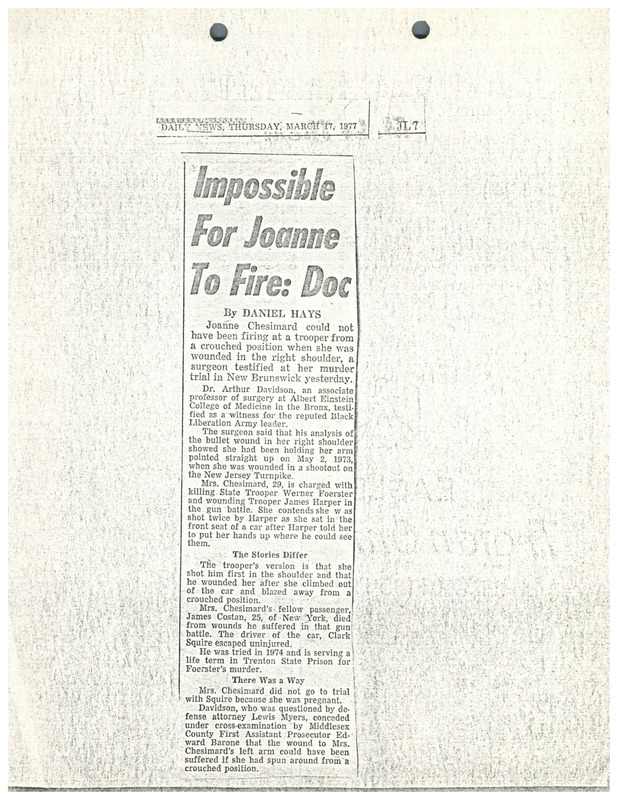
A newspaper article from Daily News about the testimony of defense witness Dr. Arthur Davidson during the trial of Assata Shakur (JoAnne Chesimard) for the 1973 killing of a state trooper. He testified that the wound in her right shoulder showed that she was holding her right arm pointed straight when she was wounded in the shootout.
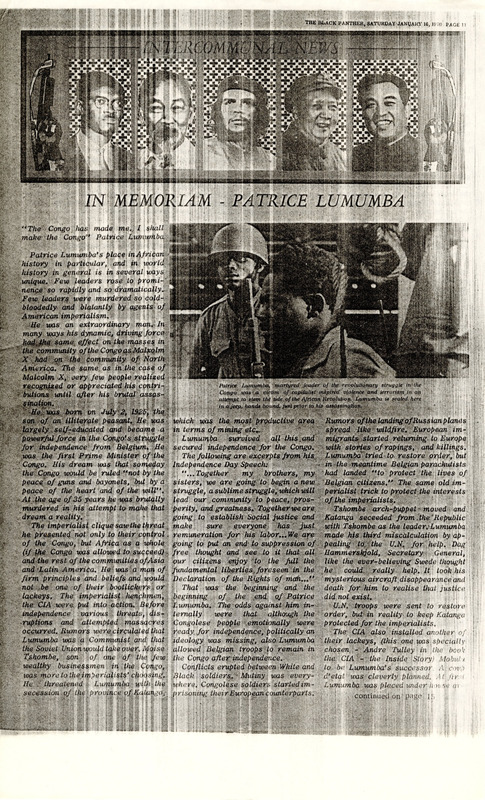
A newspaper article from The Black Panther telling the story of Patrice Lumumba, who became the first prime minister of the Republic of the Congo in June of 1960, shortly after Congo gained independence from Belgium. He was assassinated in January of 1961 and is an icon in the anti-colonial movement that was embraced by the Black Panther Party.
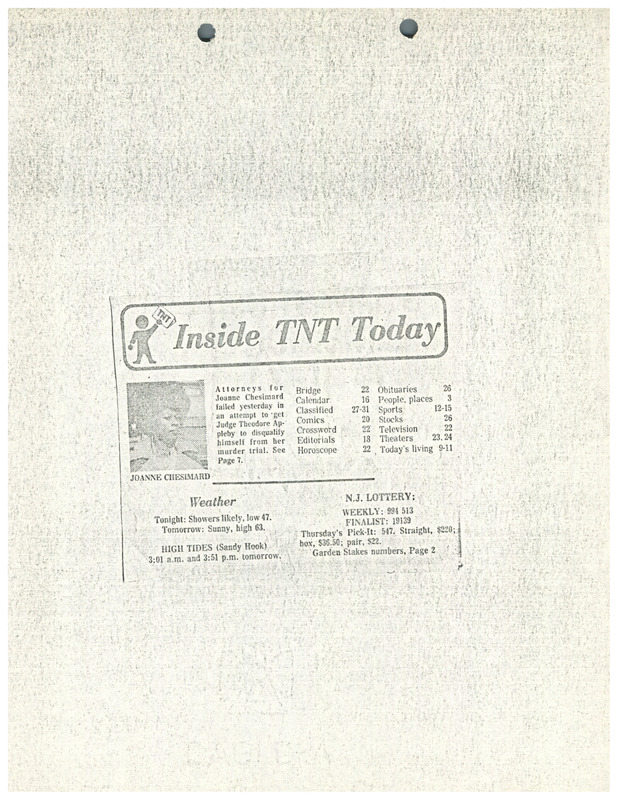
A news blurb from The News Tribune about the failure of defense attorneys to have Judge Theodore Appleby disqualify Assata Shakur (JoAnne Chesimard) from her murder trial for the 1973 killing of a state trooper. Shakur was convicted in 1977 of the killing and escaped prison in 1979.
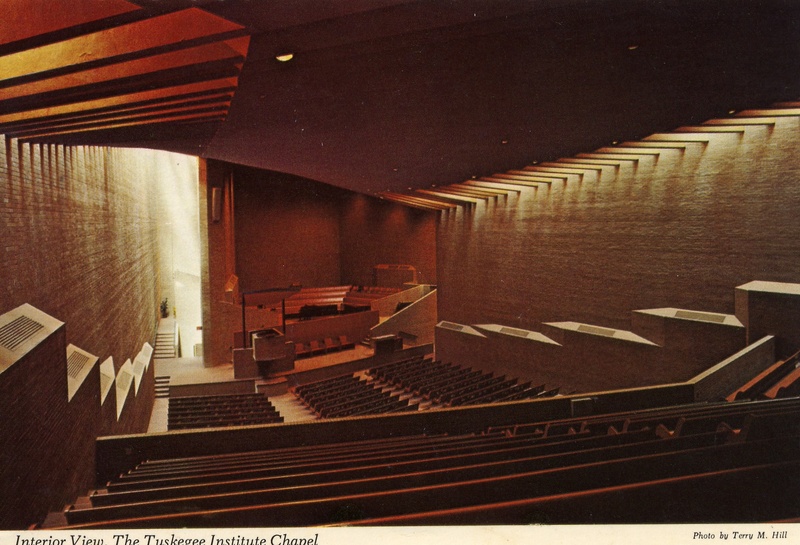
A colored image of the interior of the new Tuskegee Institute Chapel, designed by Paul Rudolph, John A. Welch, and Louis Fry. Welch and Fry were former Tuskegee students.