This collection showcases the rich legacies of HBCUs through the medium of text. It includes both published and unpublished items such as reports, correspondence, legal documents, books, letters, essays, government publications, and journals.
Date Modified
2025-12-17
About This Record
The HCAC public history focused digital archive cataloging is an ongoing process, and we may update this record as we conduct additional research and review. We welcome your comments and feedback if you have more information to share about an item featured on the site, please contact us at: HCAC-DigiTeam@si.edu
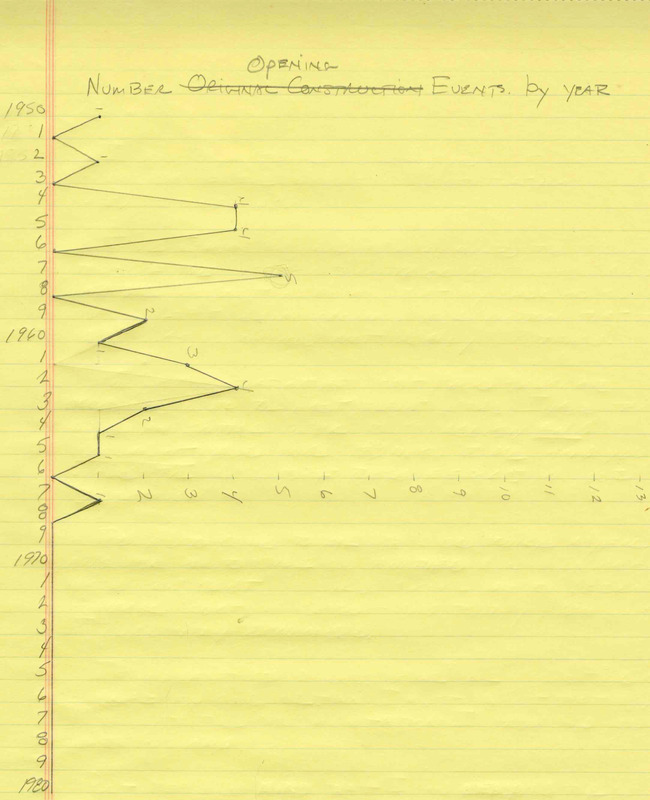
Case Data and Exhibits for Brown III, a relitigation of Brown v. Topeka Board of Education (1954) that corrected resegregation issues caused by open enrollment school choice in 1992. Handwritten charts and timelines by William Lamson breaking down the years 1950-1980 by new school construction, boundary changes, classroom additions, and more.
Case Data and Exhibits for Brown III, a relitigation of Brown v. Topeka Board of Education (1954) that corrected resegregation issues caused by open enrollment school choice in 1992. Handwritten charts and analysis by William Lamson comparing census data on race by decade from 1950-1980 in Topeka, Kansas.
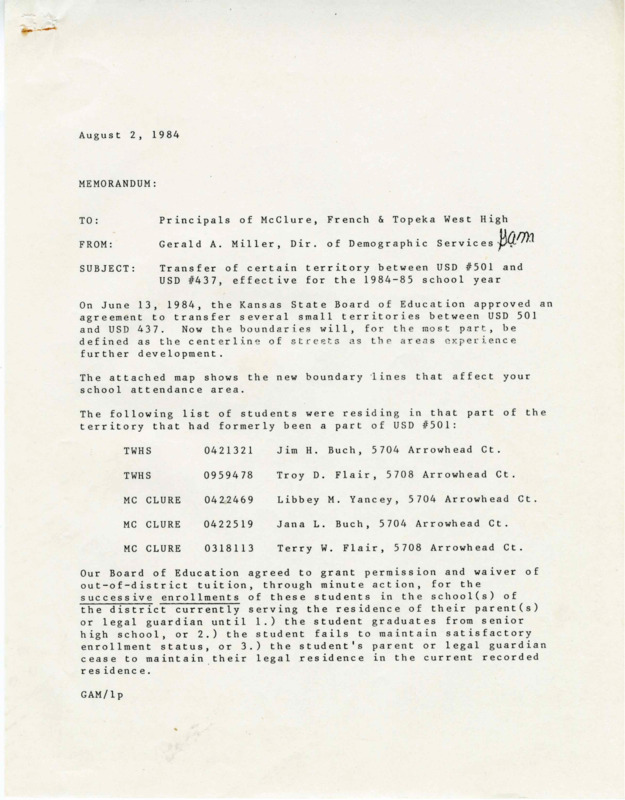
Case Data and Exhibits for Brown III, a relitigation of Brown v. Topeka Board of Education (1954) that corrected resegregation issues caused by open enrollment school choice in 1992. Demographic reports, memorandums, maps with overlays, and handwritten notes titled "Historical Racial Trends in U.S.D. 501's High Schools by William Lamson."
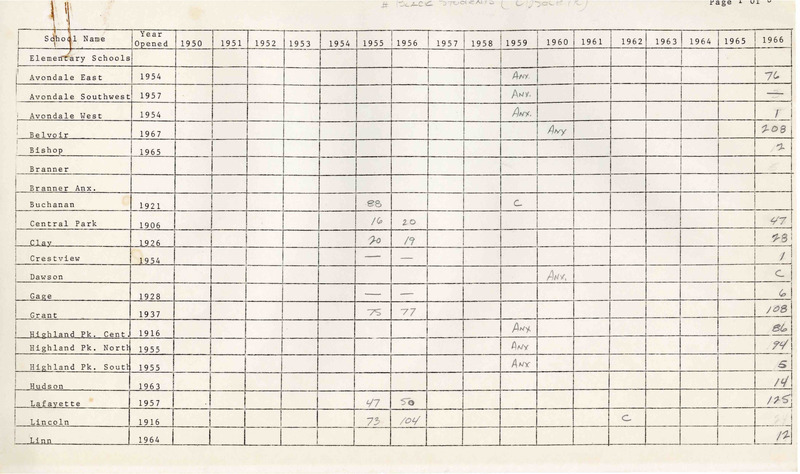
Case Data and Exhibits for Brown III, a relitigation of Brown v. Topeka Board of Education (1954) that corrected resegregation issues caused by open enrollment school choice in 1992. Handwritten charts and spreadsheets by William Lamson analyzing Topeka Public School students by percentage Black, with each individual school broken out.
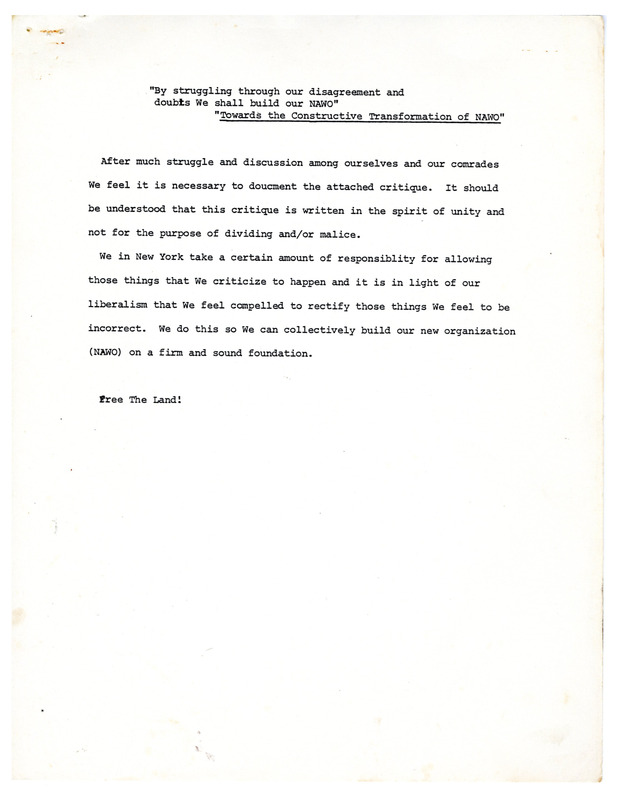
An essay that critiques certain aspects of the New Afrikan Women's Organization (NAWO). The author notes that "this critique is written in the spirit of unity and not for the purpose of dividing and/or malice."
Obey's senior notebook includes her written philosophy of art, photographs of the artist’s works and her process, and a copy of her senior exhibition brochure. As a part of the Texas Southern art curriculum under Dr. John T. Biggers and Professor Carroll Harris Simms, students would create these notebooks to explain their artistry and showcase the works they created as students.
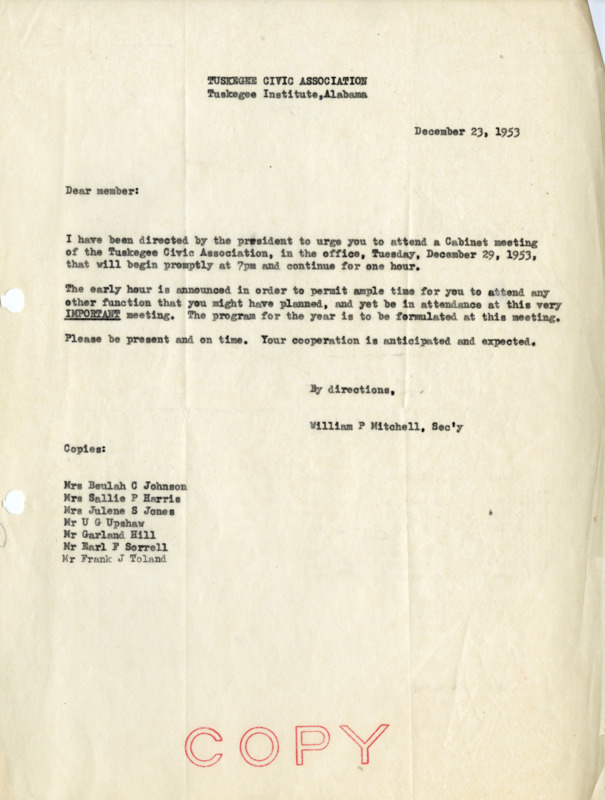
A letter for the Tuskegee Civic Association secretary William P. Mitchell requesting the presence of each member which is needed for an important upcoming TCA meeting.
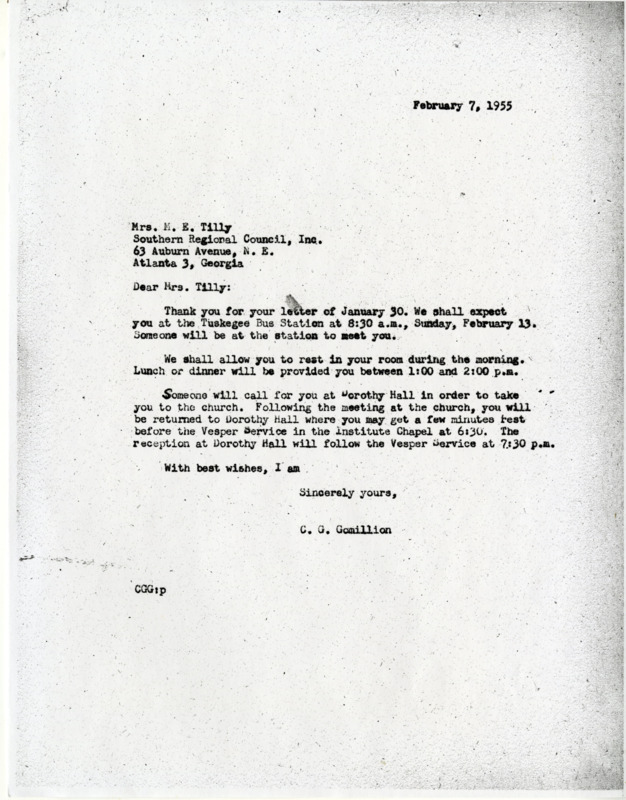
A letter from Charles G. Gomillion to Mrs. Dorothy Tilly explaining the itinerary of her visit and stating that someone will be at the bus station to meet and pick her up.
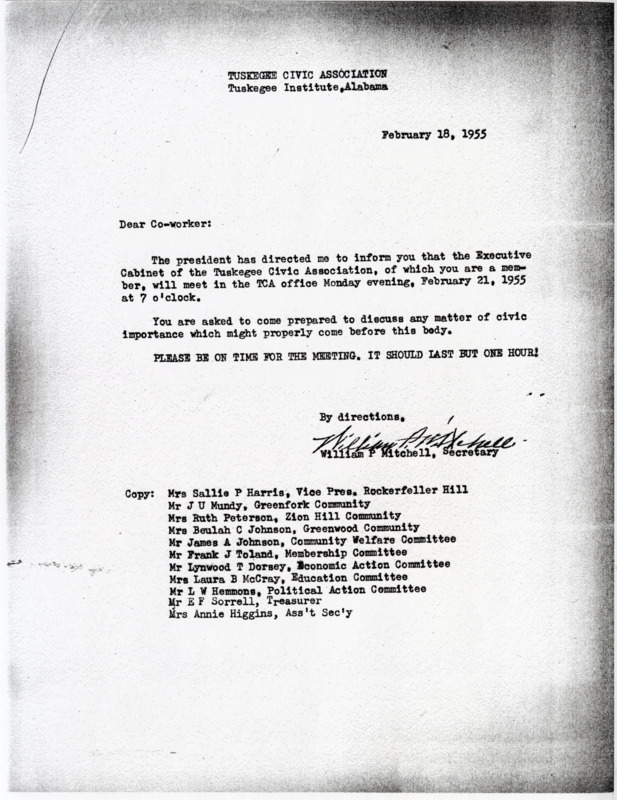
A letter from the Secretary of the Tuskegee Civic Association William P. Mitchell to a coworker to be ready for a general meeting at 7pm on 02/18/1955.
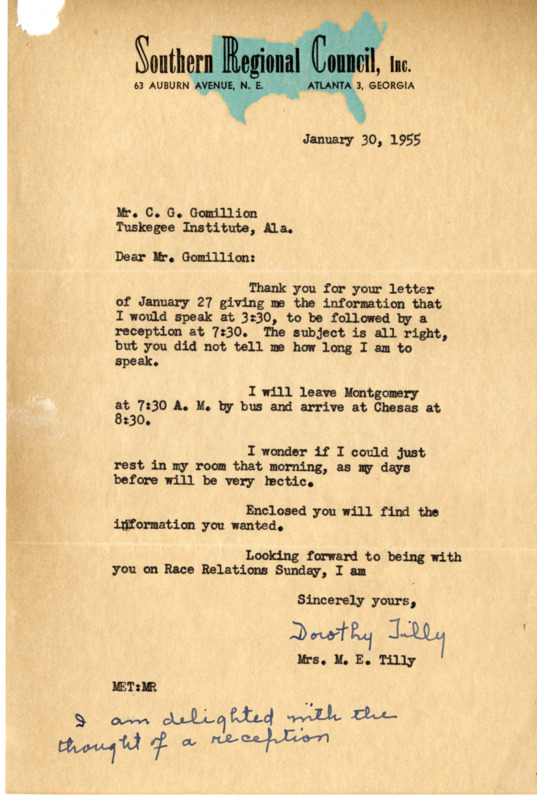
A letter from Mrs. Dorothy Tilly to Charles G. Gomillion in which she states that she will speak at 3:30 p.m. She also asks if she can rest in the morning due to the hectic nature of the past few days of travel.
An announcment made by Dr Charles G. Gomillion inviting the public to attend a meeting over race relation with Mrs. Dorothy Tilly being a guest speaker.
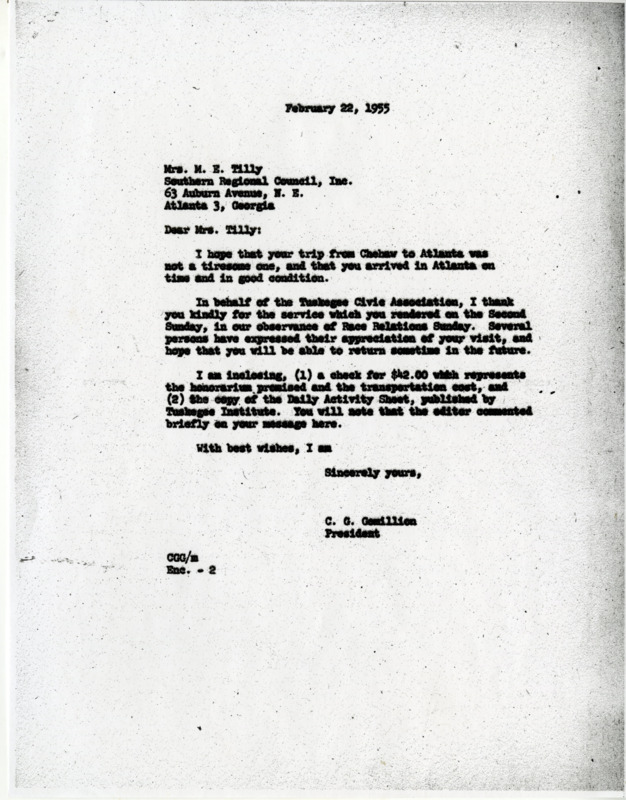
A thank-you letter from Charles G. Gomillion to Mrs. Dorothy Tilly, expressing gratitude for her visit and the services she rendered in observance of Race Relations Sunday.
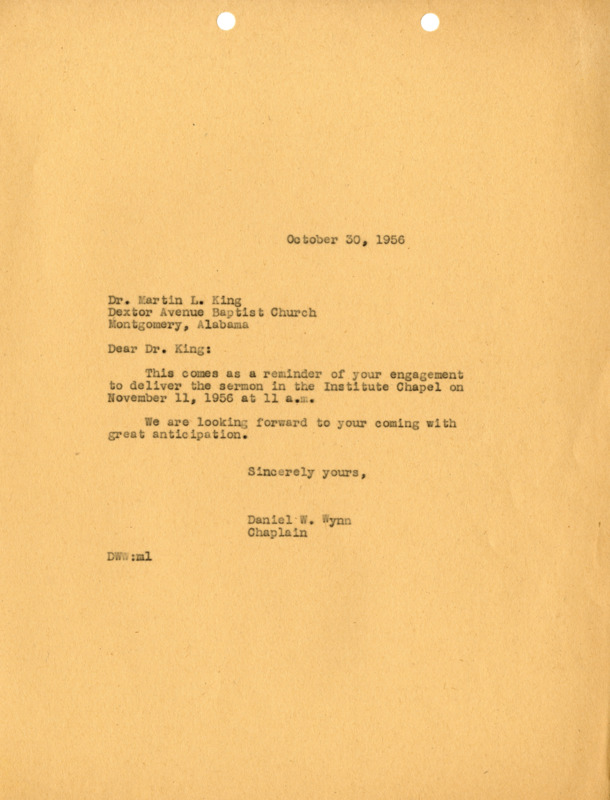
A letter from Chaplain Wynn to Dr. Martin Luther King Jr. reminding Dr. King of his speaking engagement at Tuskegee Institute’s Chapel on 11/11/1956 at 11am.
A letter from Frankye Adams-Johnson (Malika) to her husband, Nuh Abdul Qaiyum, who has been imprisoned since 1975. She writes about their rare correspondence and lack of depth in conversation. She also writes about her faith and how Allah will continue to protect her and the children through hard times.
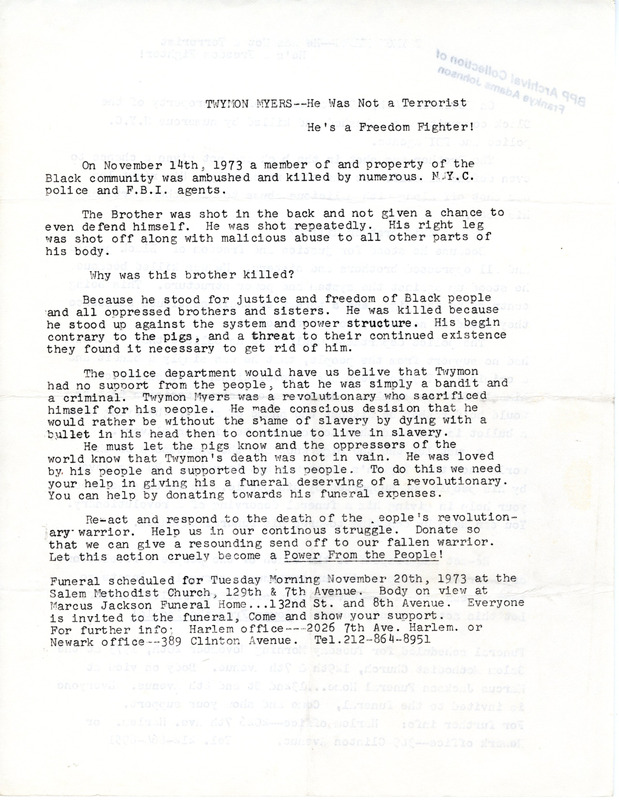
A memo calling for assistance with the funeral for Twymon Myers who was killed by New York City police officers and F.B.I. agents on November 14th, 1973. The unknown author asks the community for donations toward his funeral as a way to show the police that he was a beloved freedom fighter with the support of the people and not a criminal.
A letter from Nuh Abdul Qaiyum, who is imprisoned, to his wife Frankye Adams-Johnson (Malika). He details their love as it relates to their nature and their religion. He writes of their divine connection and compares their physical love to arena warfare. He compares her presence to an engraving on his brain.