This collection showcases the rich legacies of HBCUs through the medium of text. It includes both published and unpublished items such as reports, correspondence, legal documents, books, letters, essays, government publications, and journals.
Date Modified
2025-12-17
About This Record
The HCAC public history focused digital archive cataloging is an ongoing process, and we may update this record as we conduct additional research and review. We welcome your comments and feedback if you have more information to share about an item featured on the site, please contact us at: HCAC-DigiTeam@si.edu
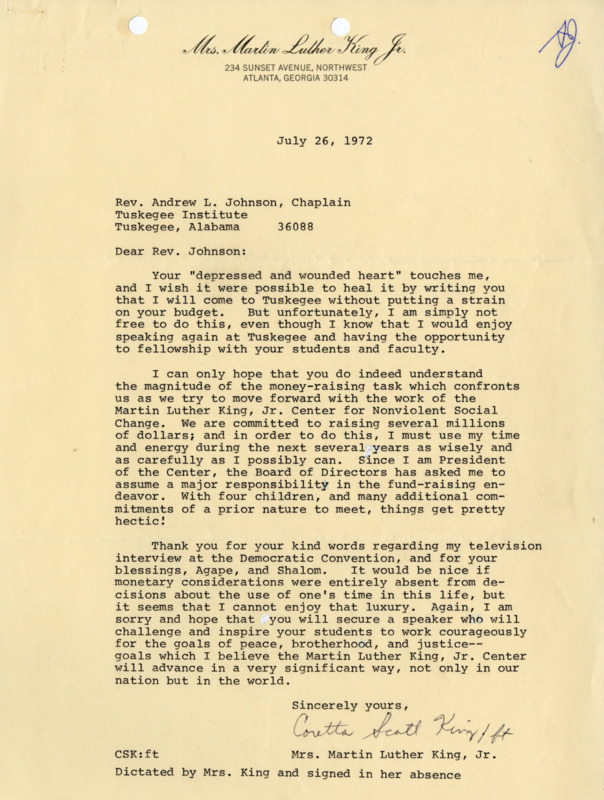
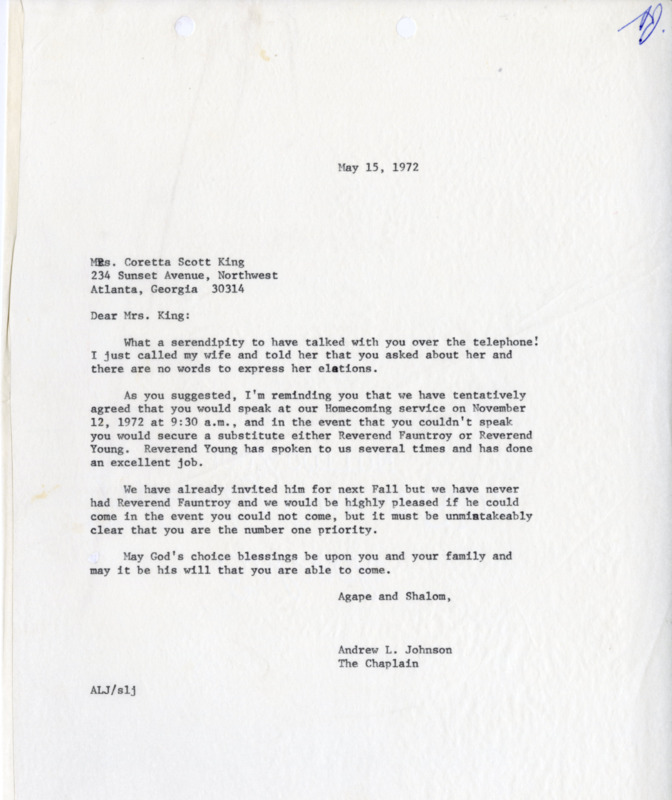
A letter from Coretta Scott King to Chaplain Johnson stating that she will not be able to speak at this time due to her trying raise money for the upcoming center.
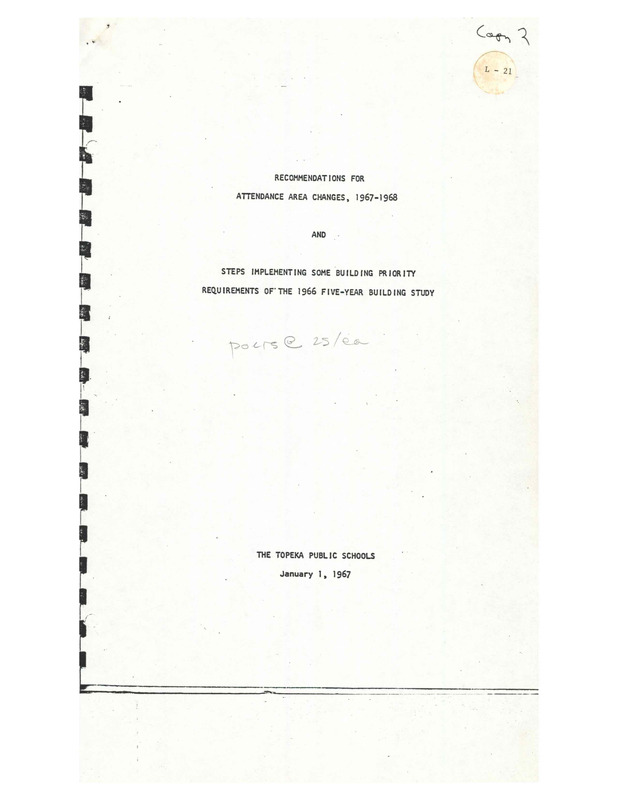
Case Data and Exhibits for Brown III, a relitigation of Brown v. Topeka Board of Education (1954) that corrected resegregation issues caused by open enrollment school choice in 1992. A report prepared in January 1967 by Topeka Public School District leaders concerning attendance area changes in the district and priorities for new buildings.
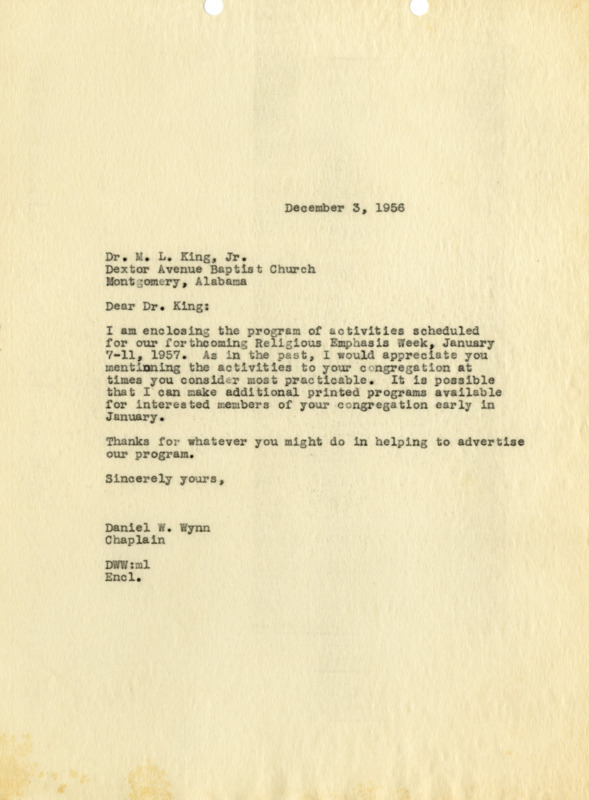
A letter from Chaplain Wynn to Dr. Martin Luther King Jr. about Religious Emphasis Week and programs. He also stated that he is able to print more programs for his interested memers of his congregation in January.
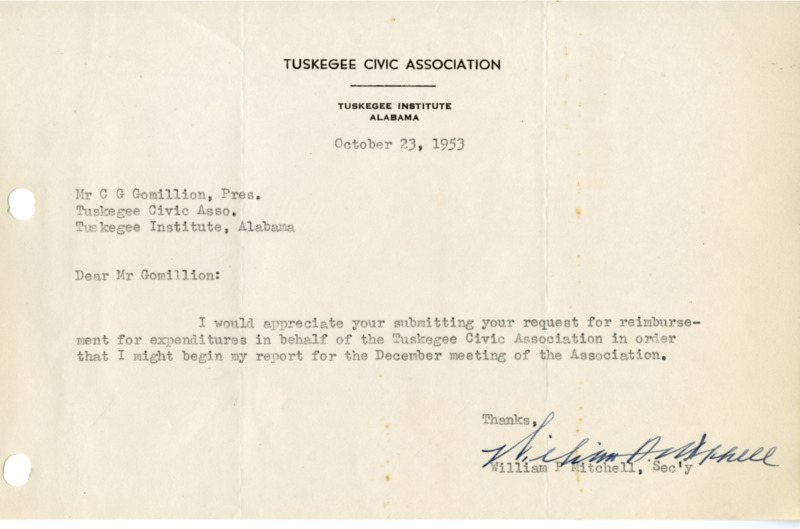
A letter from the Tuskegee Civic Association secretary William P. Mitchell to the president Charles G. Gomillion advising advising him a request for reimbursement.
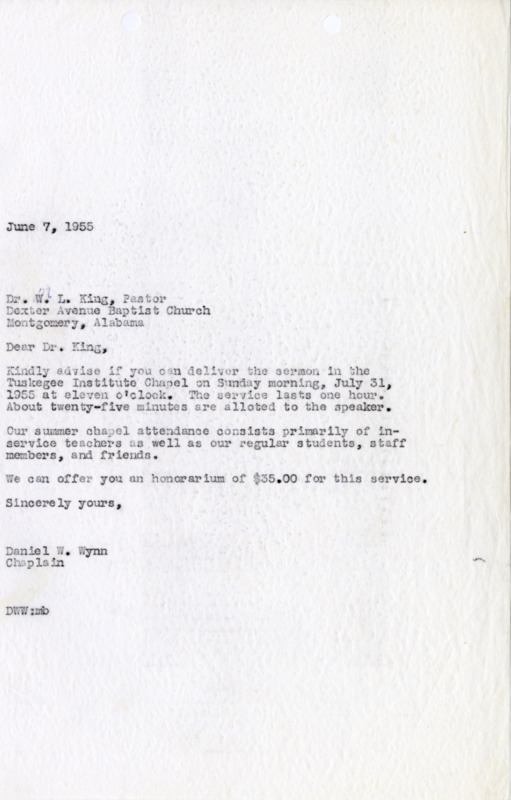
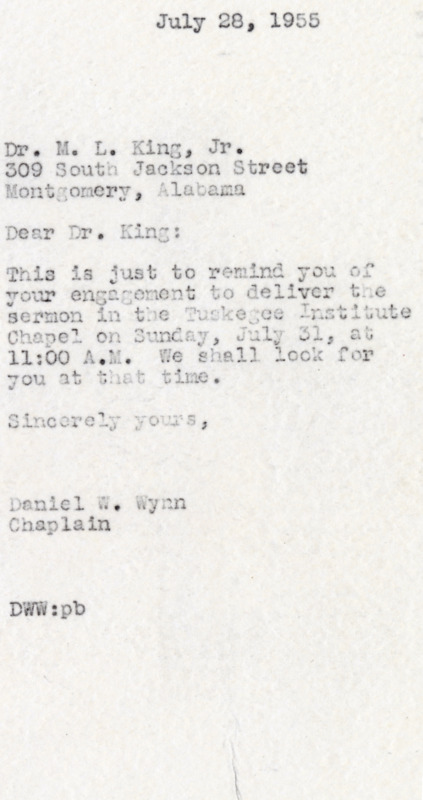
A letter from Chaplain Wynn to Dr. Martin Luther King Jr. asking if he can preach a sermon on 07/31/1955. Those who will be in attendance would be in-service teachers, as well as students, staff members and friends.
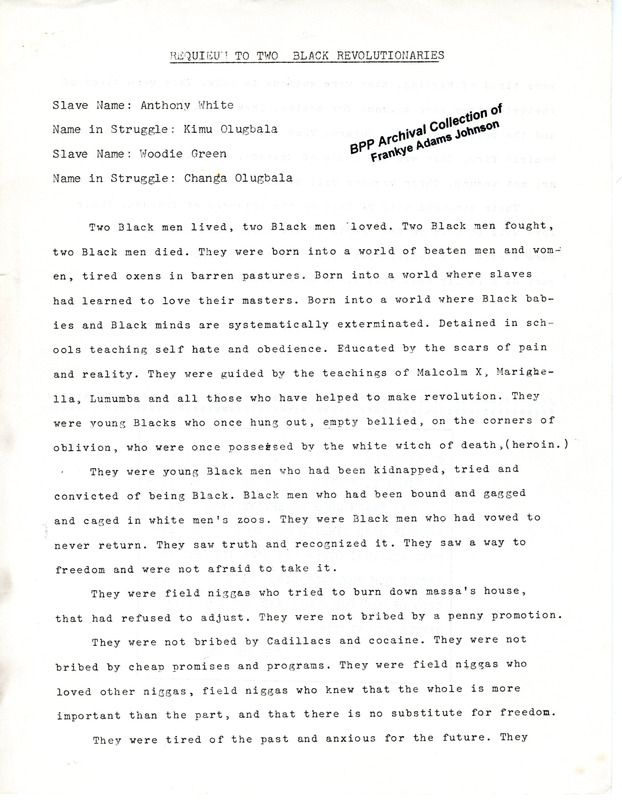
A requiem written to Anthony White (Kimu Olugbala) and Woodie Green (Changa Olugbala), two members of the Black Liberation Army (BLA) who died in prison. The author writes that their memory will be used as fuel for the ongoing struggle against oppression. A quote from Argentine Marxist revolutionary Che Guevara is printed at the bottom of page 2.
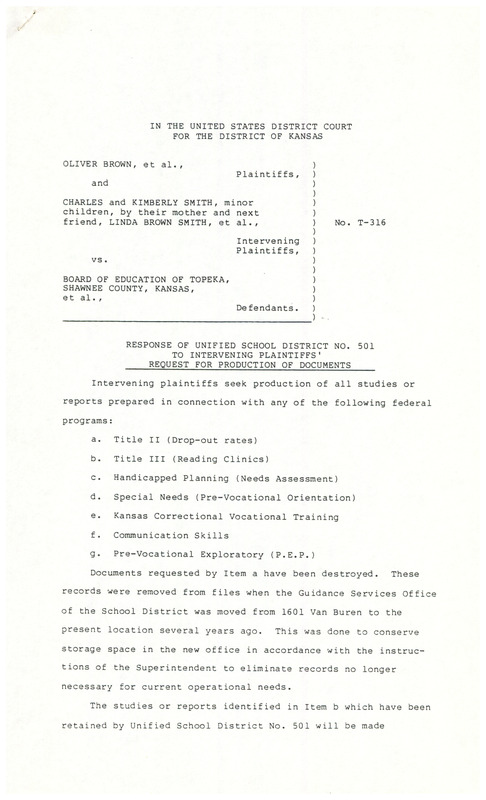
Case Data and Exhibits for Brown III, a relitigation of Brown v. Topeka Board of Education (1954) that corrected resegregation issues caused by open enrollment school choice in 1992. Response of Topeka Public Schools defense attorneys to plaintiff attorneys request for production of documents. Many of the documents requested no longer exist.
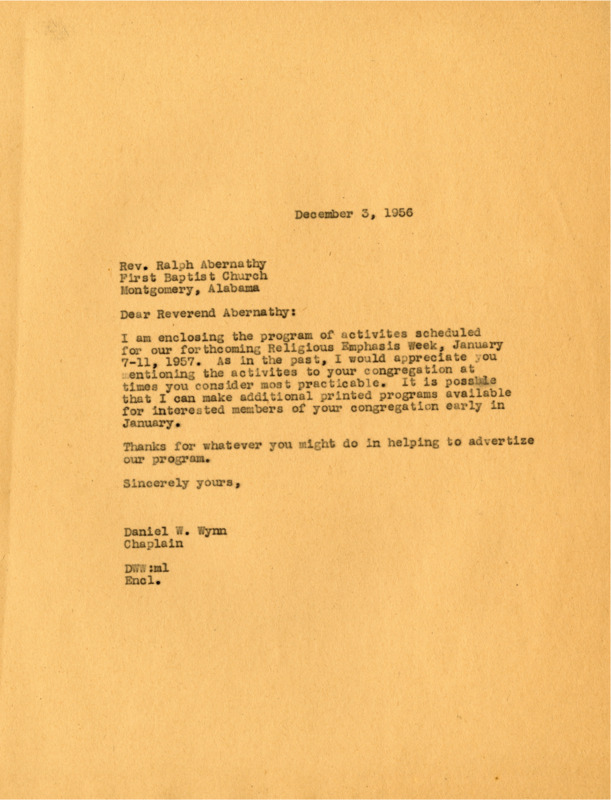
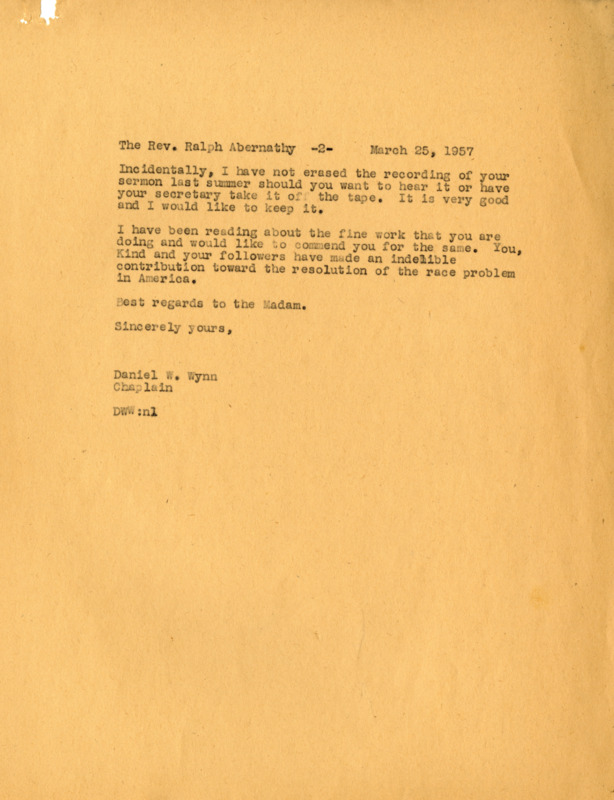
The second page of a letter from Chaplain Wynn to Rev. Abernathy stating that they kept his recording from the previous summer and commend him on his work in the Civil Rights Movement.
A letter from Chaplain Johnson to Coretta Scott King advising that she is the number one priority to have speak however, if she could not Rev. Fauntroy would be a welcomed second choice.
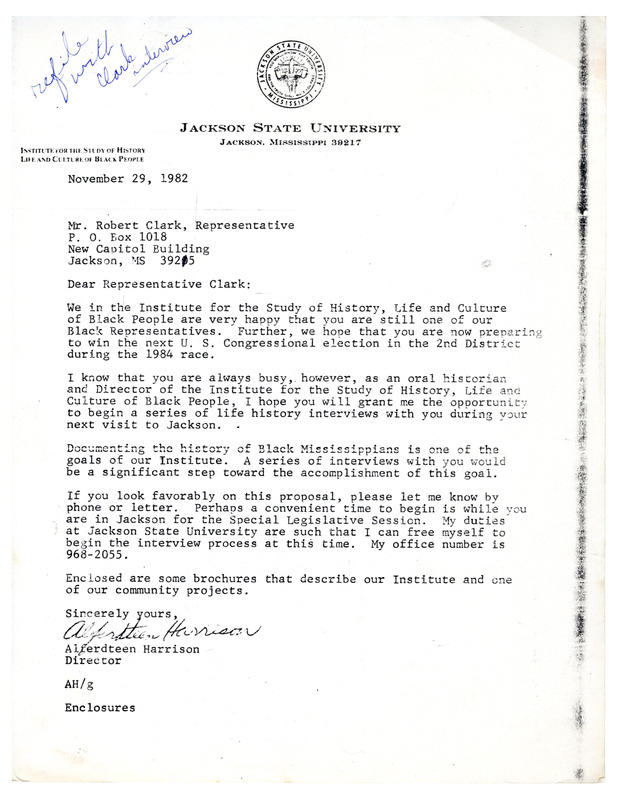
Collection of materials leading up to Robert Clark speaking on campus at Jackson State University for the 1983 Afro-American History Month Celebration. There are letters of invitation from Dr. Alferdteen Harrison as well as a biography of Robert Clark and the event program.
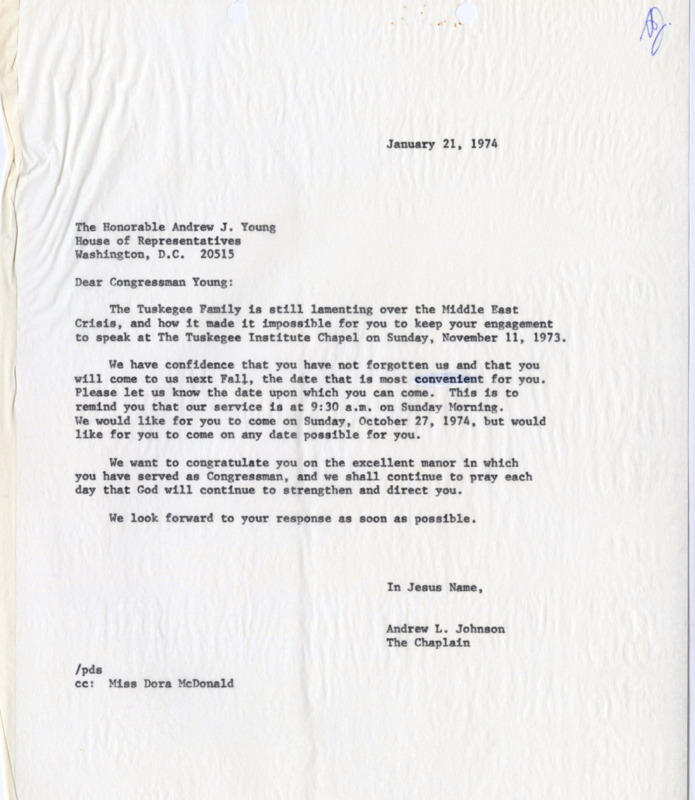
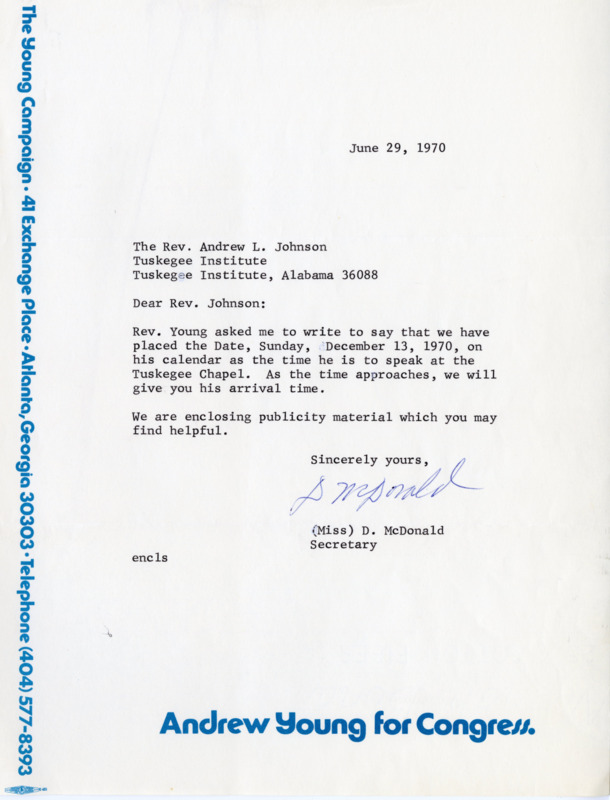
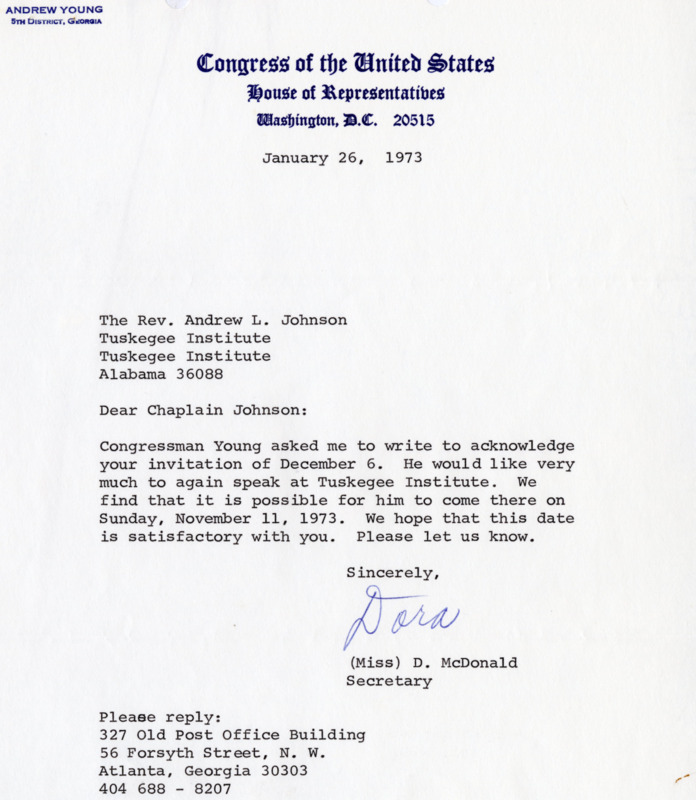
A Letter from Miss Dora McDonald to Chaplain Johnson that Congressman Andrew Young has saved the date of 12/13/1970 to speak at Tuskegee on his calendar.
A letter from Chaplain Wynn to Dr. Martin Luther King Jr. on onion skin paper reminding Dr. King of his preaching engagement on 07/31/1955 at Tuskegee Institute’s Chapel at 11am.
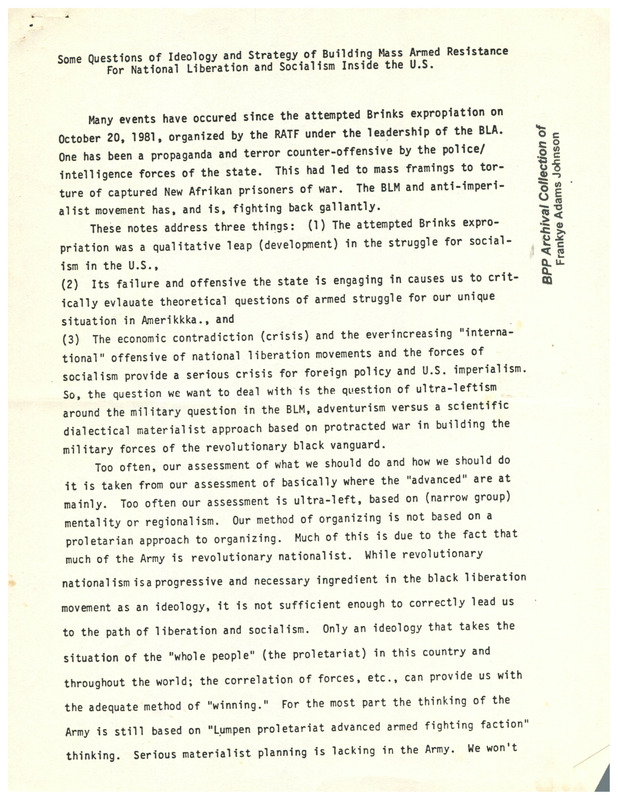
An essay about the Black Liberation Army (BLA) and the need for politically mobilizing an armed populace toward the collective goal of Marxism-Socialism-Leninism in America. The author writes that the BLA must do a better job of organizing the Black working class to achieve liberation and socialism.
An essay from an unknown author sharing thoughts about the idea of an upcoming guerilla war in the United States and the tactics that would be necessary. The author writes that the years after 1970 could see a rise in political assassinations, bombings, and sabotage of power plants and technological systems.
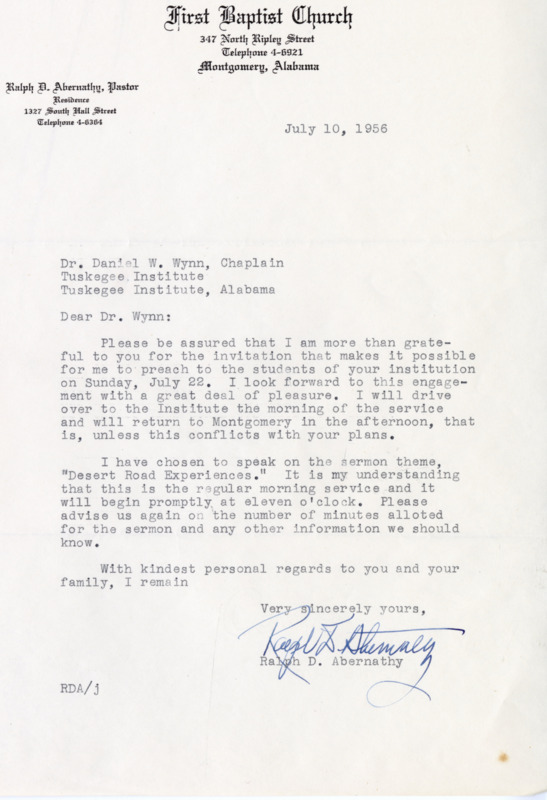
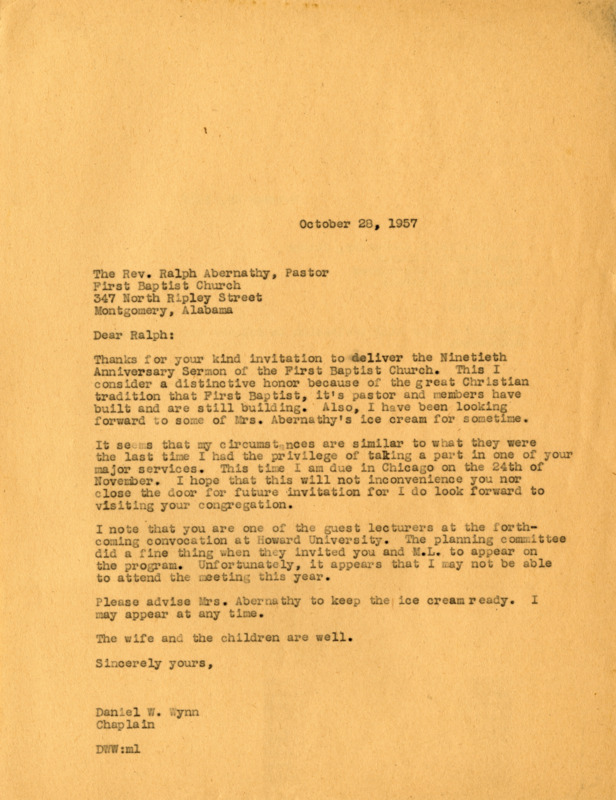
A letter from Chaplain to Rev. Ralph Abernathy expressing his regret that he will not be able to be the guest speaker for First Baptist Church nintieth celebration.
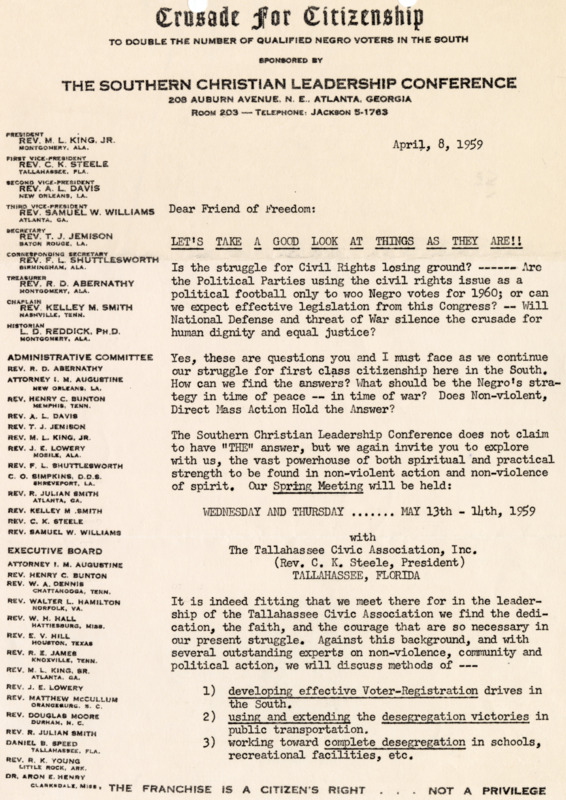
A program detailing the events of the Southern Christian Leadership Conference being held in Tallahassee, FL during May 13-14 1959. Dr. King is inviting people who are interested in hearing and learning about the practices of non-violence to attend the conference hosted by the Tallahassee Civic Association.
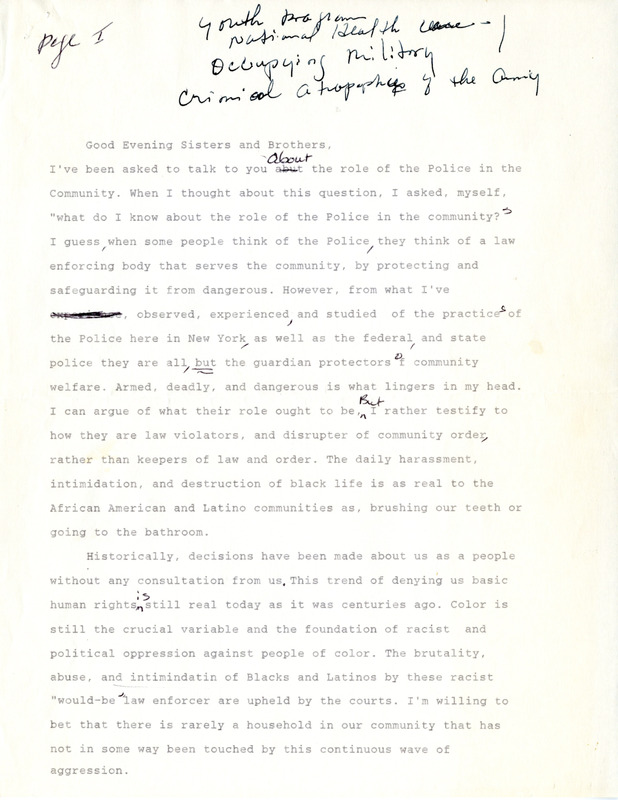
A speech by Frankye Adams-Johnson (Malika) about police in the community. She recalls interactions with the police that she has witnessed and contrasts what the police claim to be with what she sees. There is an outline for a portion of her speech about Black women leading the fight for liberation. She notes that the speech will contain poems.
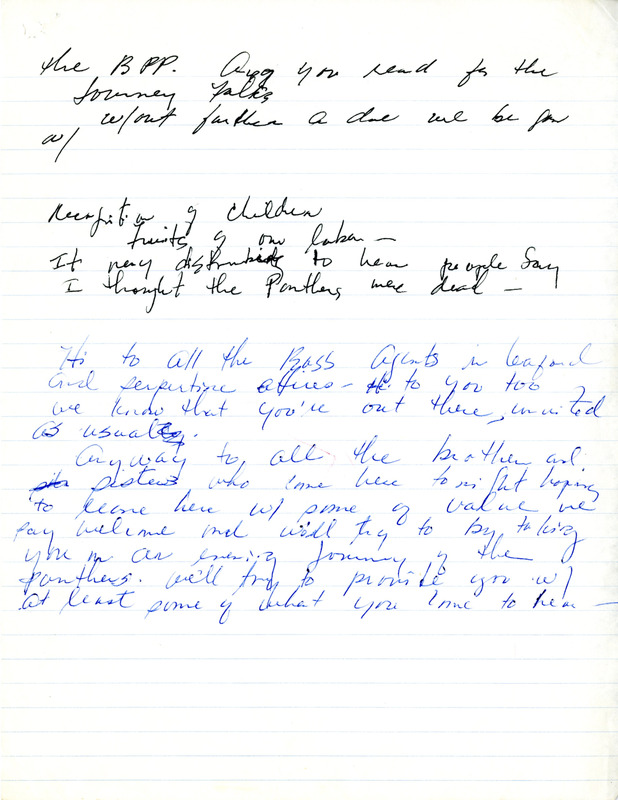
A speech by Frankye Adams-Johnson (Malika) about the Black Panthers delivered to the Community Self-Defense Program. She addresses the goals of the revolution, the actions of government agencies against them, and her motivation for joining the Party. With handwritten edits.
Outline of a speech by Frankye Adams-Johnson (Malika). Her speech is about the Black Panther Party's history, preserving it, and the power of information.
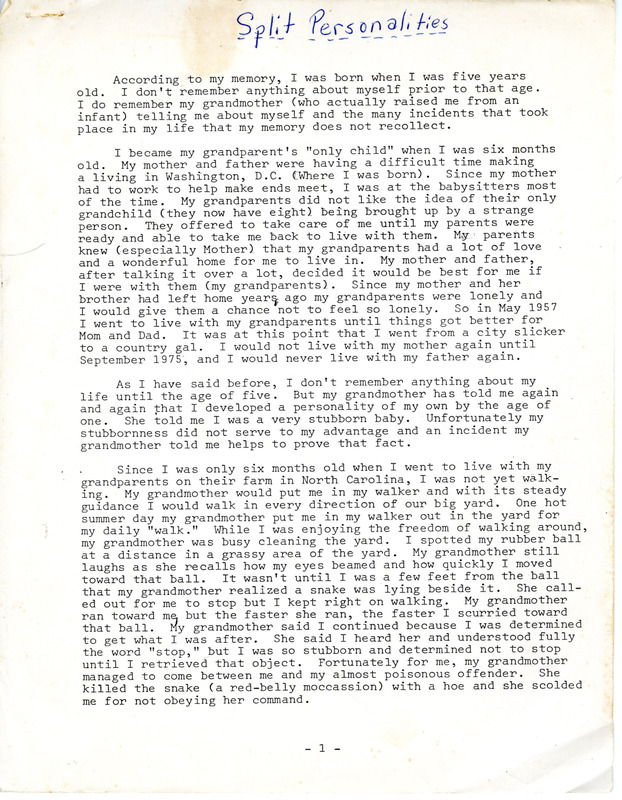
An essay by an unknown woman writing about her different experiences in the South and New York and how those experiences have shaped her personality and worldview. She writes, “I guess I have two personalities. One is my real personality (my Southern upbringing) and the other is the personality the people of New York have forced upon me.”
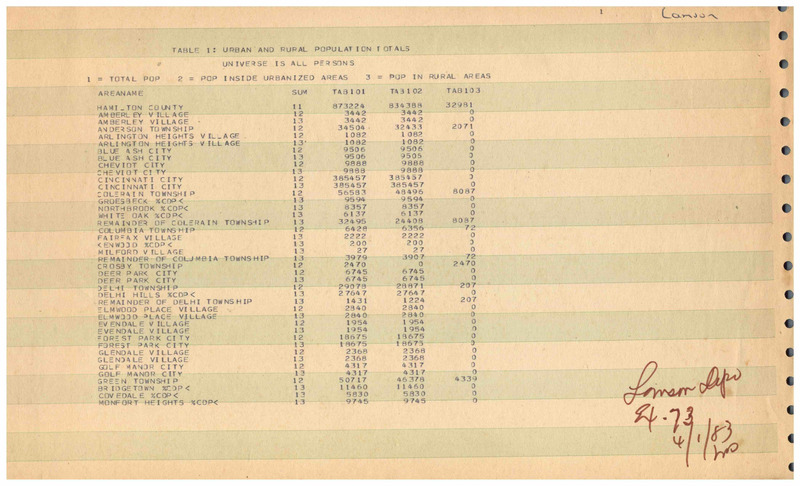
Case Data and Exhibits for Brown III, a relitigation of Brown v. Topeka Board of Education (1954) that corrected resegregation issues caused by open enrollment school choice in 1992. Printed spreadsheets containing detailed census reports for the state of Kansas from April 1982 through April 1983.
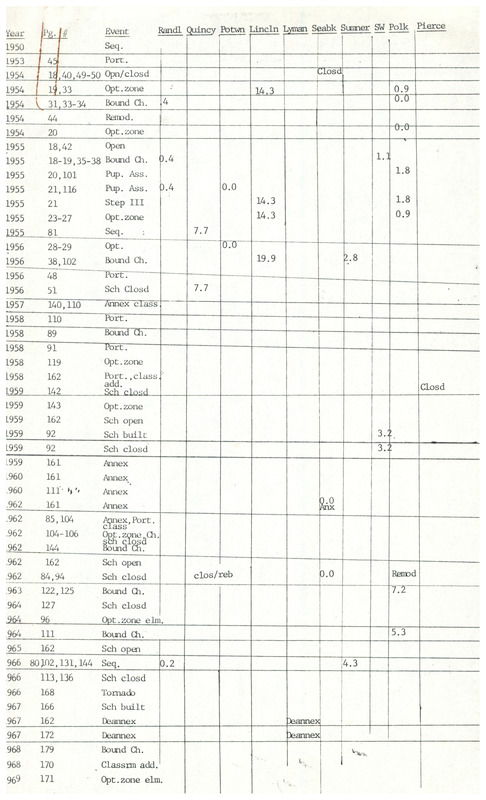
Case Data and Exhibits for Brown III, a relitigation of Brown v. Topeka Board of Education (1954) that corrected resegregation issues caused by open enrollment school choice in 1992. Typed spreadsheets of changes in Topeka Schools from 1950-1980. The types of changes include classroom additions, new construction, natural disasters, and more.
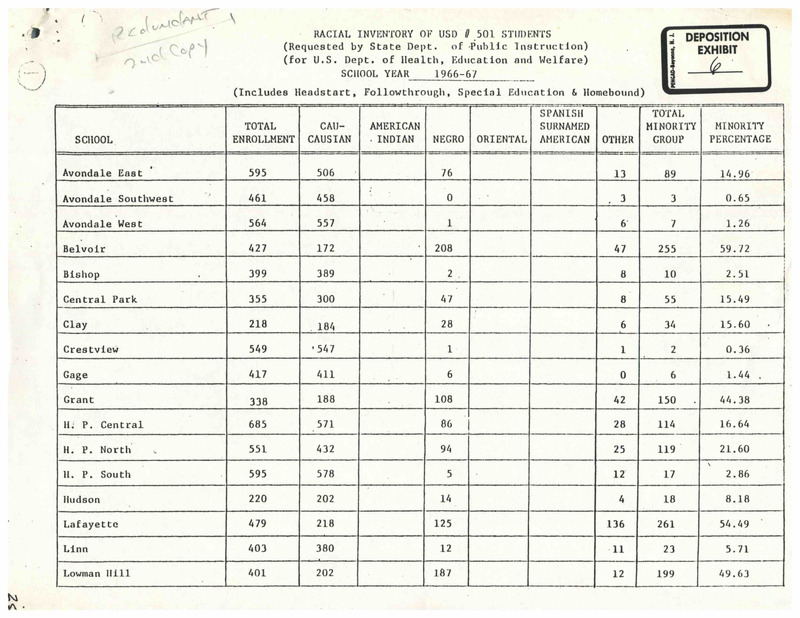
Case Data and Exhibits for Brown III, a relitigation of Brown v. Topeka Board of Education (1954) that corrected resegregation issues caused by open enrollment school choice in 1992. Spreadsheets showing the racial makeup of Topeka Public School students, by school, from 1966-1980. Labeled as deposition exhibit 6.
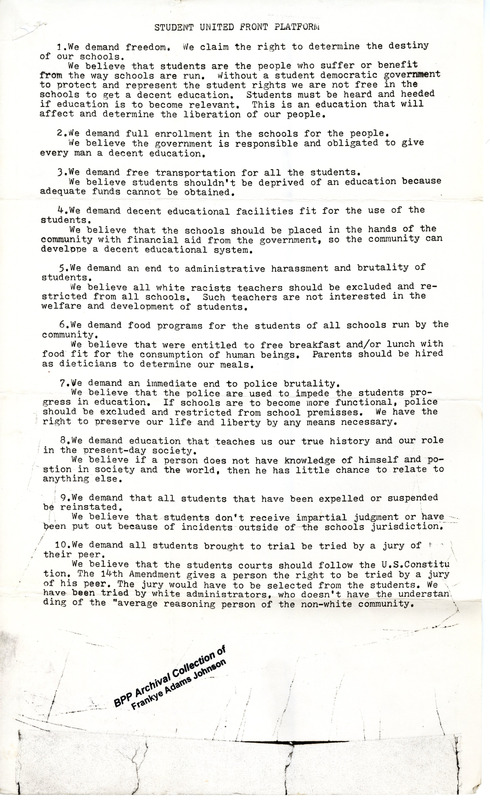
A 10 point platform for the Student United Front. The platform, drawing inspiration from the Black Panther Party Ten Point-Point Program, is a list of demands by students for better services on campus as well as a call for expelling all white racist teachers, free education for all, and the exclusion of police from school premises.