This collection showcases the rich legacies of HBCUs through the medium of text. It includes both published and unpublished items such as reports, correspondence, legal documents, books, letters, essays, government publications, and journals.
Date Modified
2025-12-17
About This Record
The HCAC public history focused digital archive cataloging is an ongoing process, and we may update this record as we conduct additional research and review. We welcome your comments and feedback if you have more information to share about an item featured on the site, please contact us at: HCAC-DigiTeam@si.edu
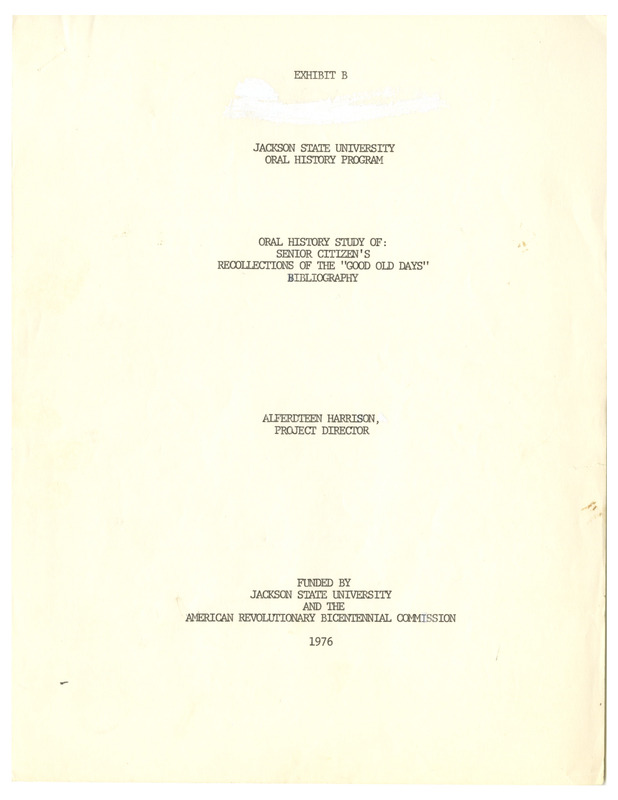
A List of interviews conducted as part of the "Good Old Days" Oral History Project. Each entry in the bibliography includes the name of the interviewee as well as biographical information, interview date, interviewer name, length of interview, and catalog number.
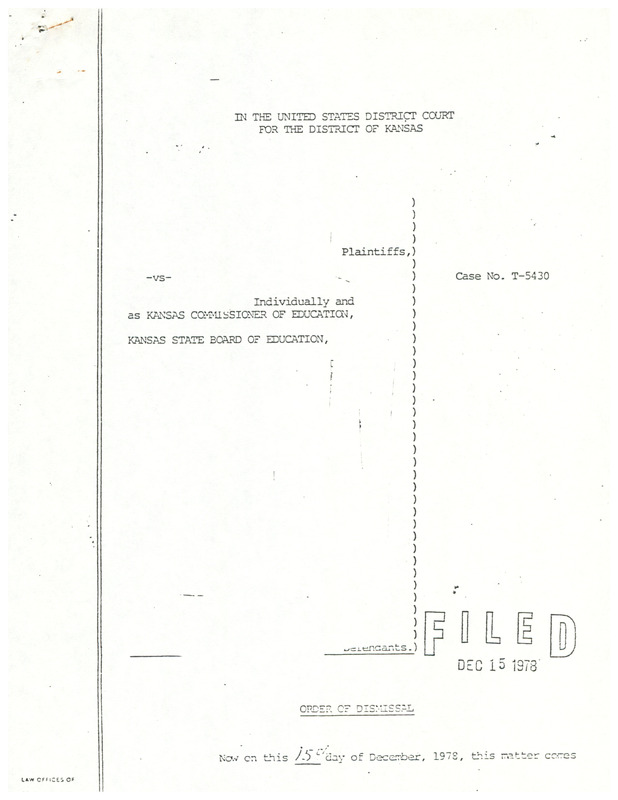
Case Data and Exhibits for Brown III, a relitigation of Brown v. Topeka Board of Education (1954) that corrected resegregation issues caused by open enrollment school choice in 1992. A court order dismissing a plaintiff (name is redacted because they are a minor) and affirming a $19,500 plus costs settlement for the plaintiff.
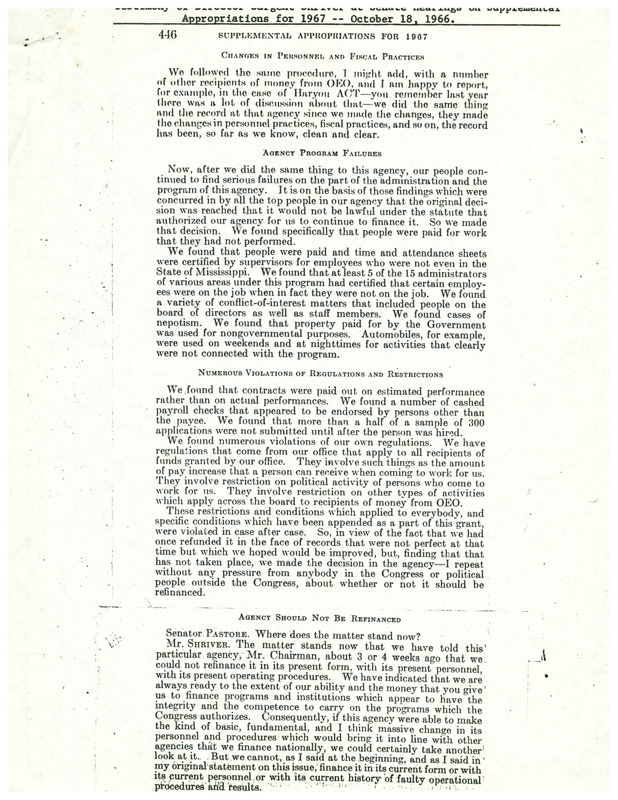
In this report on supplemental appropriations by the Office of Economic Opportunity (OEO) for Child Development Group of Mississippi (CDGM), the OEO outlines the decision not to fund CDGM because an investigation showed discrepancies in finances and operating procedures. OEO suggests funding can be regained if CDGM makes operational changes.
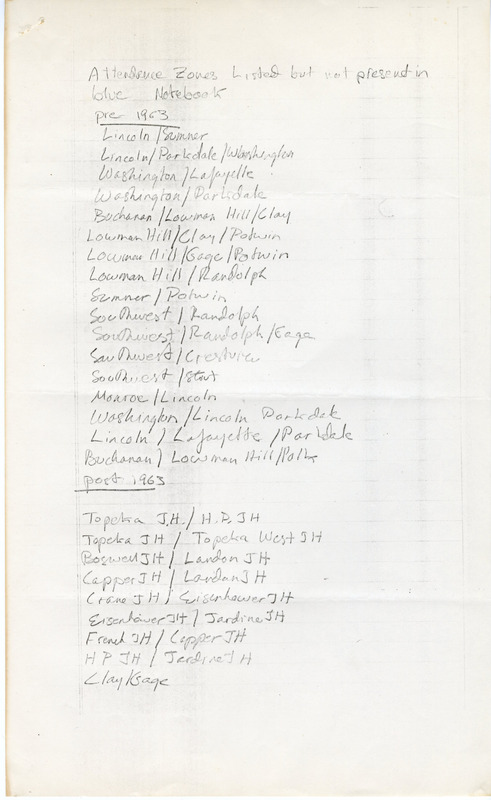
Case Data and Exhibits for Brown III, a relitigation of Brown v. Topeka Board of Education (1954) that corrected resegregation issues caused by open enrollment school choice in 1992. Photocopy of "Attendance Boundaries Listed but not Present in Blue Notebooks" for Topeka, Kansas, by William Lamson with headings for pre-1963 and post-1963.
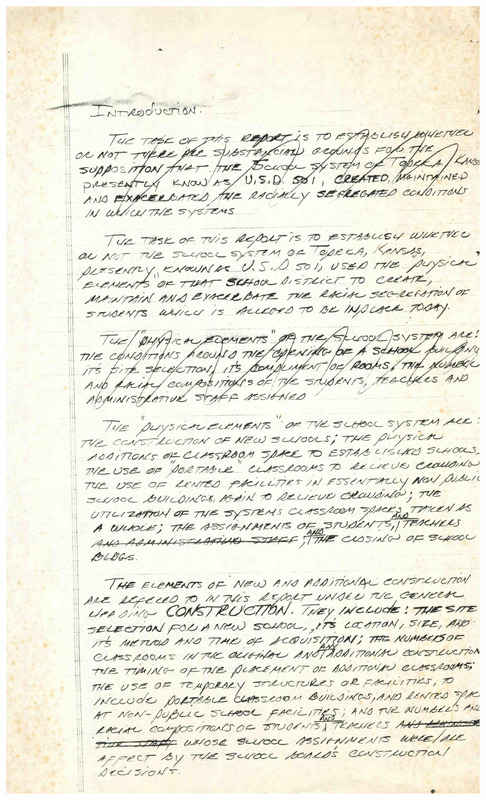
Case Data and Exhibits for Brown III, a relitigation of Brown v. Topeka Board of Education (1954) that corrected resegregation issues caused by open enrollment school choice in 1992. Photocopy of handwritten notes and charts by William Lamson concerning the history of racial segregation in the Topeka Public School District.
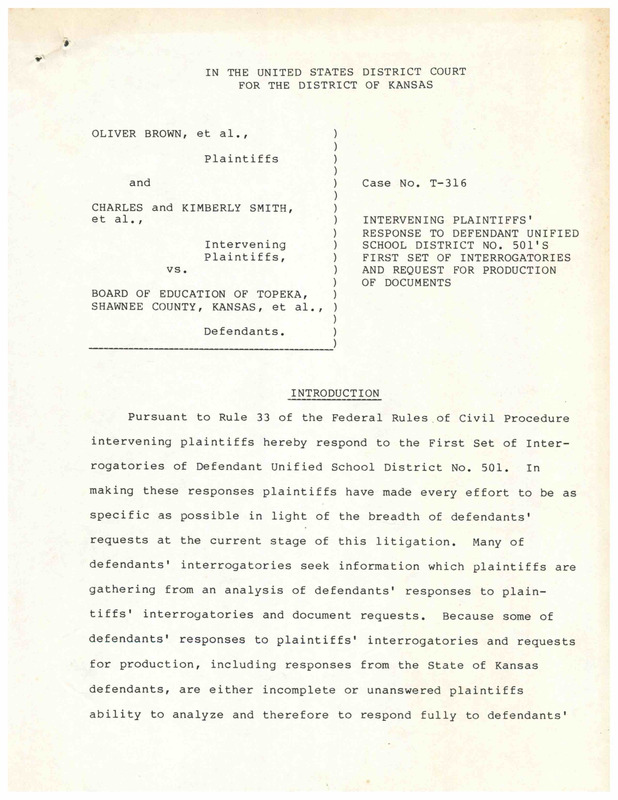
Case Data and Exhibits for Brown III, a relitigation of Brown v. Topeka Board of Education (1954) that corrected resegregation issues caused by open enrollment school choice in 1992. Plaintiff attorney’s response to the defense team’s first set of questions, many of which will need supplemental answers because some answers will be incomplete.
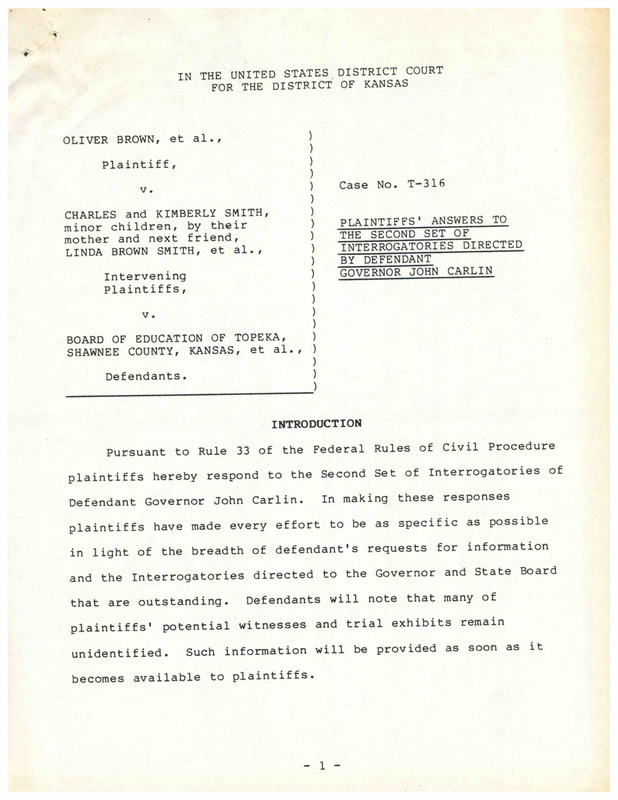
Case Data and Exhibits for Brown III, a relitigation of Brown v. Topeka Board of Education (1954) that corrected resegregation issues caused by open enrollment school choice in 1992. Plaintiff attorney’s response to the defense team’s first set of questions directed by defendant Kansas Governor John Carlin.
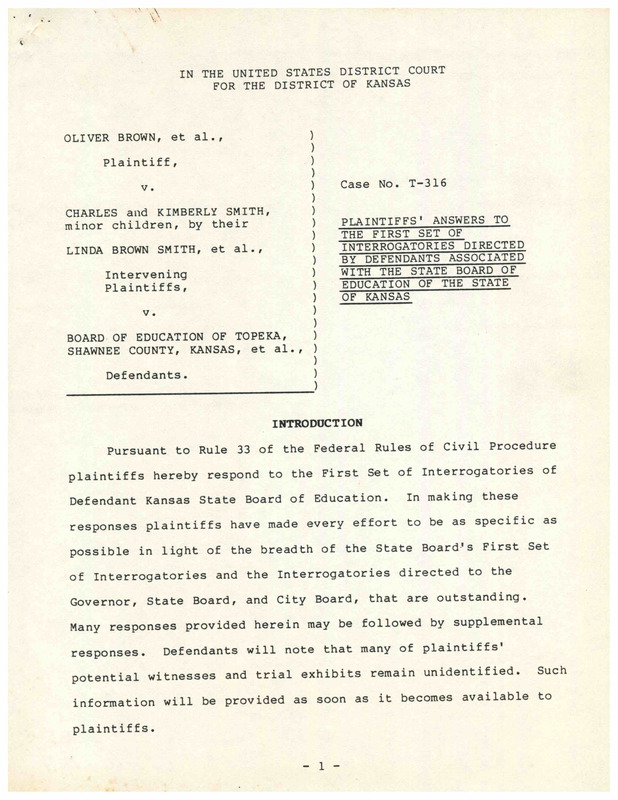
Case Data and Exhibits for Brown III, a relitigation of Brown v. Topeka Board of Education (1954) that corrected resegregation issues caused by open enrollment school choice in 1992. Plaintiff attorney’s response to the defense team’s first set of questions directed from the defendants associated with the Kansas State Board of Education.
Case Data and Exhibits for Brown III, a relitigation of Brown v. Topeka Board of Education (1954) that corrected resegregation issues caused by open enrollment school choice in 1992. Request from the Plaintiff Attorneys to the Topeka Board of Education for documents to be produced for the discovery phase of the case.
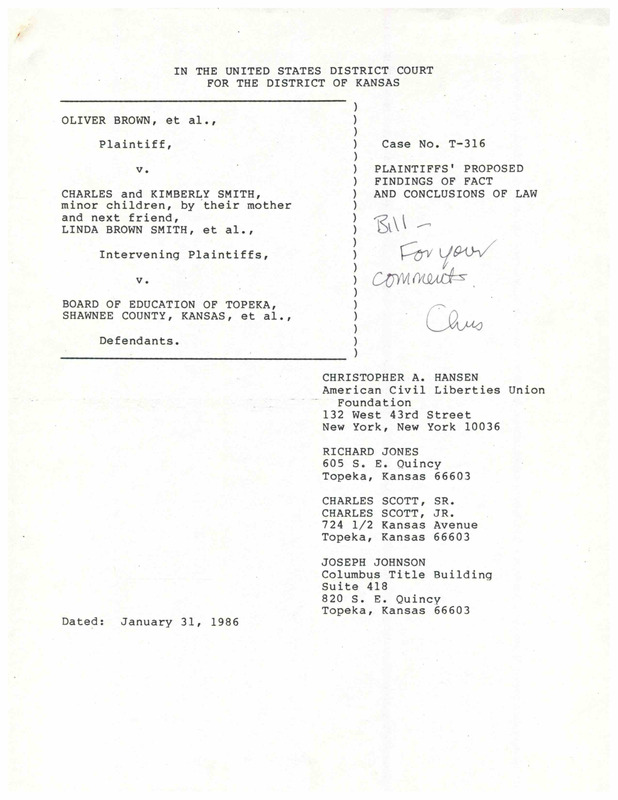
Case Data and Exhibits for Brown III, a relitigation of Brown v. Topeka Board of Education (1954) that corrected resegregation issues caused by open enrollment school choice in 1992. Document containing the plaintiff team’s complete finding of facts. Note on the first page from Chris Hansen of the ACLU requesting comments from William Lamson.
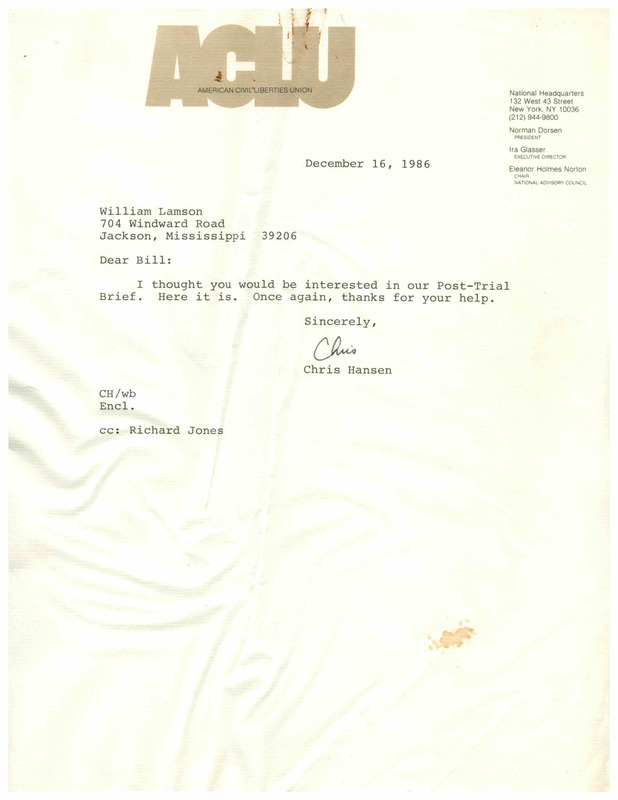
Case Data and Exhibits for Brown III, a relitigation of Brown v. Topeka Board of Education (1954) that corrected resegregation issues caused by open enrollment school choice in 1992. The Plaintiff’s post-trial brief. The plaintiff attorneys conclude that the Topeka schools are still segregated and the school board must submit a desegregation plan.
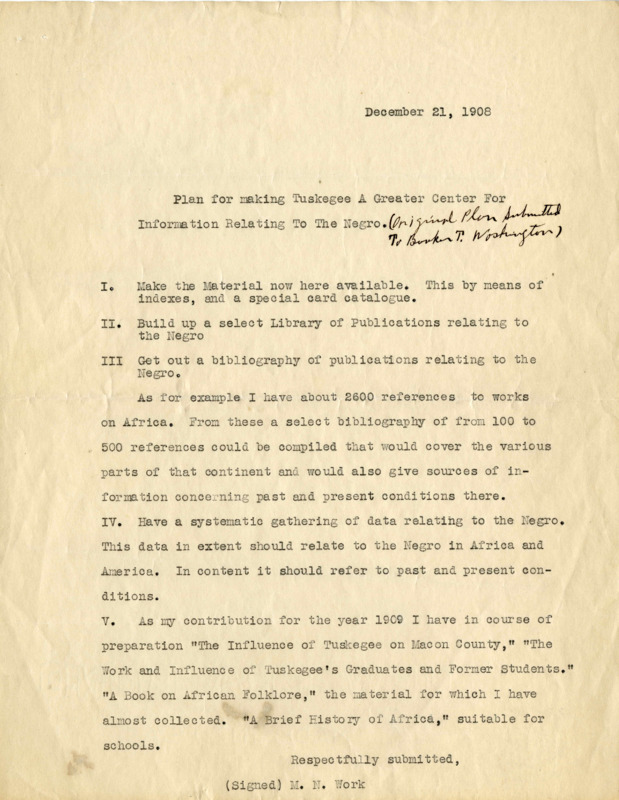
One-page typed document outlining Work's five-step plan, including building a library, releasing a bibliography, and creating a systemic gathering of data. "Original plan submitted to Booker T. Washington," is handwritten on document.
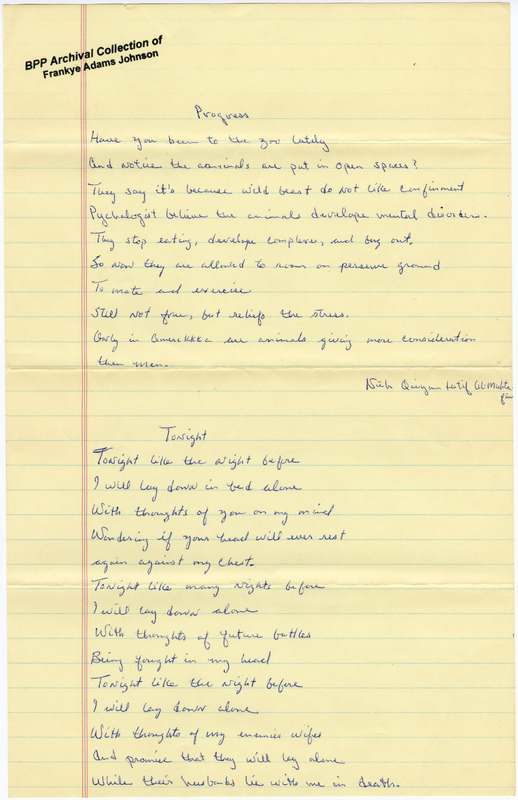
Poems by Nuh Abdul Qaiyum, who was sentenced to prison in 1975 for a 1971 Black Liberation Army (BLA) connected shooting of police officers in New York. This collection of poems is titled "I am Told" and explores themes such as freedom, humanity, and emotion.
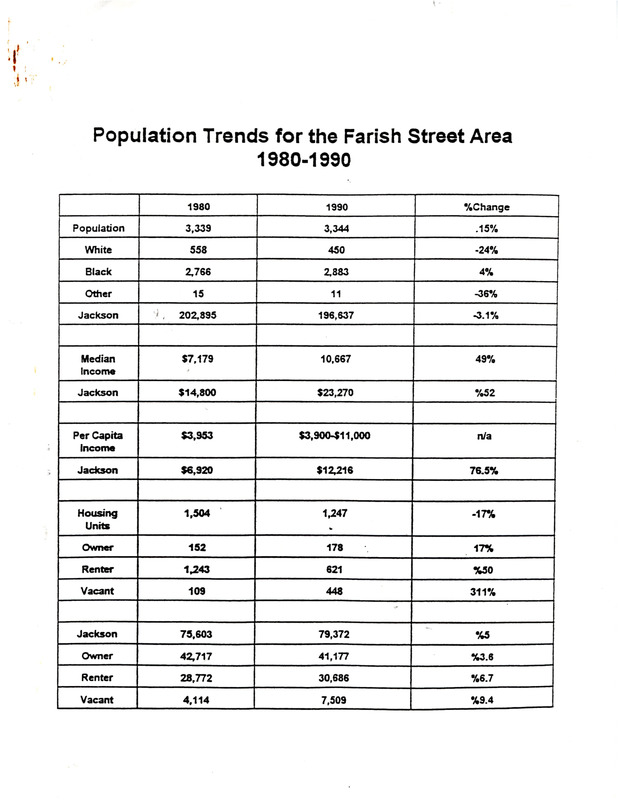
A chart showing trends such as population, income, and number of housing units for the Farish Street Historic District between the years 1980 and 1990.
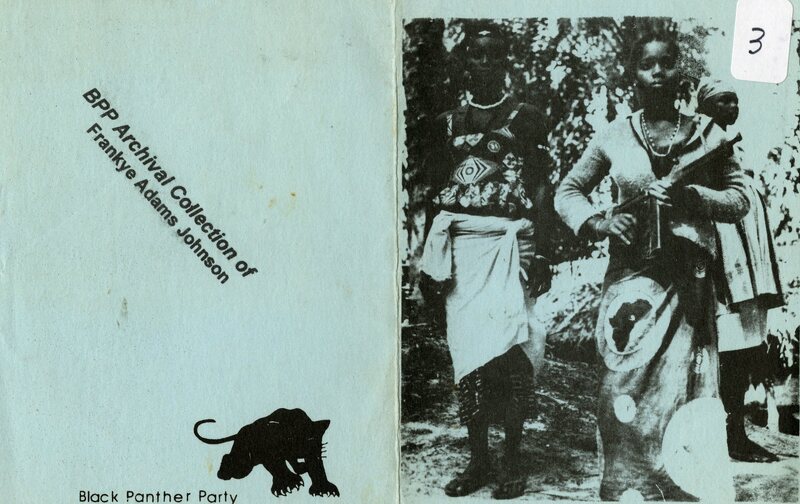
In this postcard, Frankye Adams-Johnson (Malika)’s husband, Nuh Abdul Qaiyum, who is imprisoned, writes about seeing a young family member and the good that does for him. He updates his wife on the current situation with some of the comrades in the Black Panther Party. He mentions the solutions he must create and says he has much to learn.
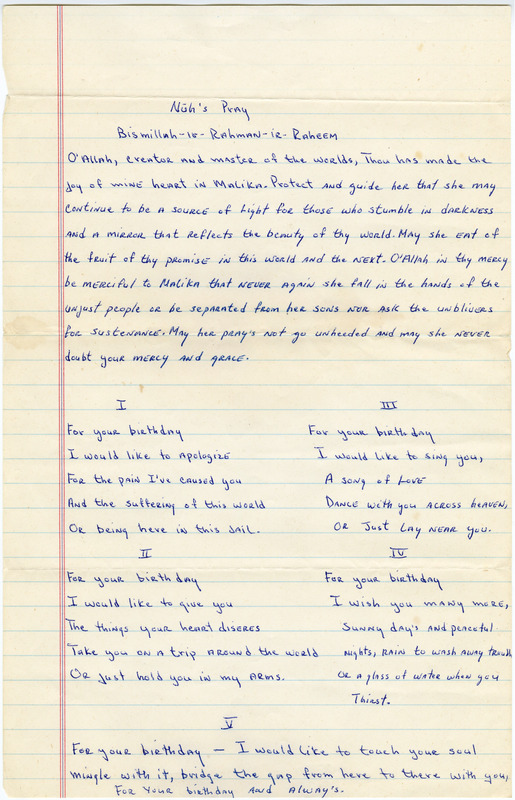
A letter from Nuh Abdul Qaiyum, who was sentenced to prison in 1975 for a 1971 Black Liberation Army (BLA) connected shooting of police officers in New York, to his wife Frankye Adams-Johnson (Malika). He sends a prayer and poems for her birthday.
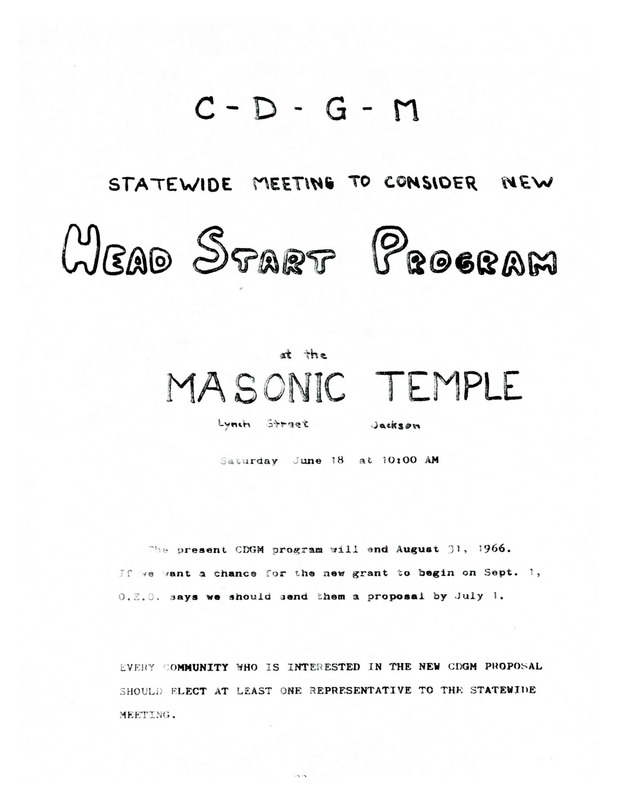
A proposal presented at a meeting at the Masonic Temple on Lynch Street in Jackson, Mississippi. The proposal was approved by the people of Mississippi who applied for funds to operate 170 Head Start Centers. Sections: Foreword, HIstory of Child Development Group of Mississippi (CDGM), The New CDGM, Appendices 1-10.
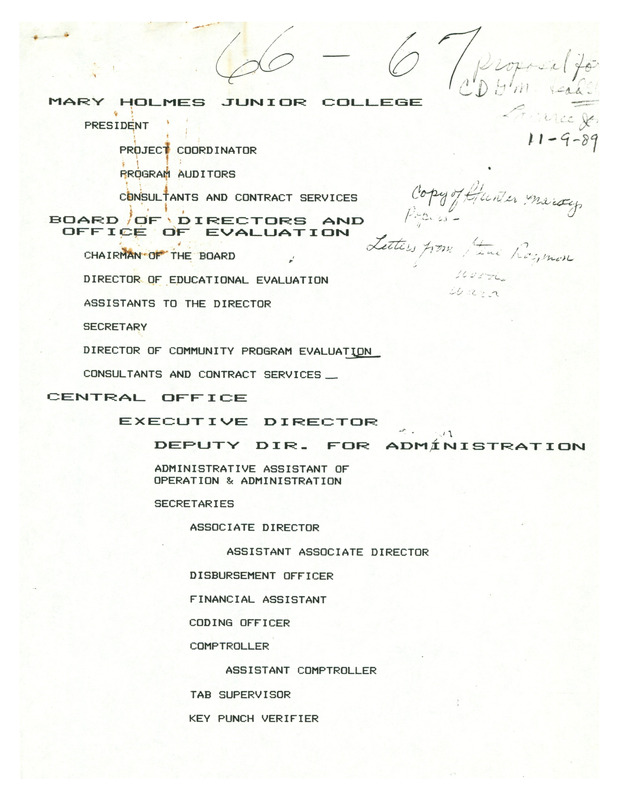
Proposal for opening the first Head Start in Mississippi: List of staff positions and hierarchy. This proposal breaks down the entire administrative structure of Mississippi’s first Head Start program, including the board of directors, central office staff, area directors, and medical and food staff.
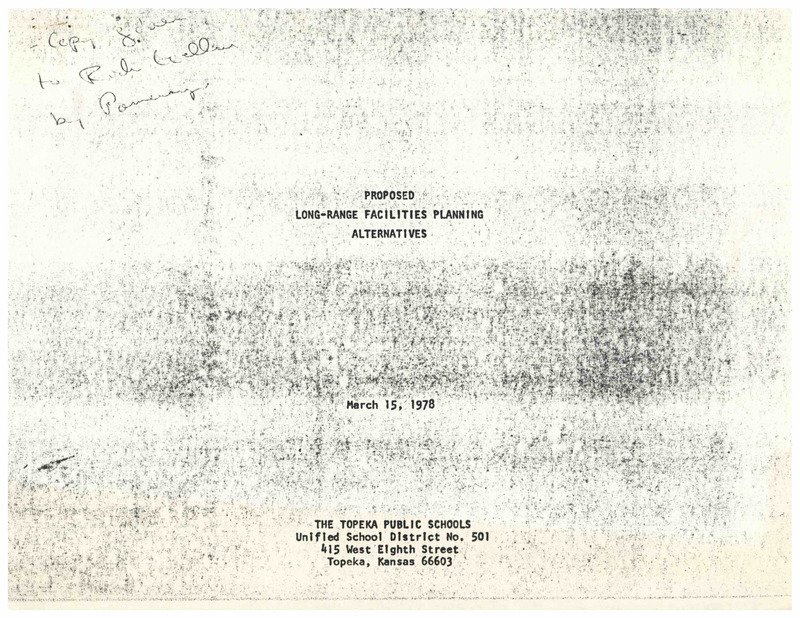
Case Data and Exhibits for Brown III, a relitigation of Brown v. Topeka Board of Education (1954) that corrected resegregation issues caused by open enrollment school choice in 1992. A report prepared by leaders in the Topeka Public School District using maps to depict their suggested alternatives for long-range planning for the district.
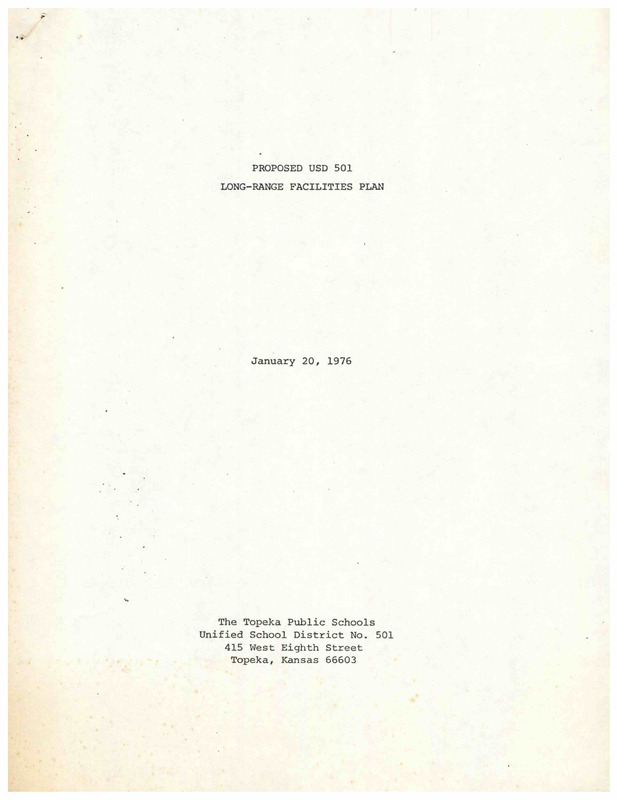
Case Data and Exhibits for Brown III, a relitigation of Brown v. Topeka Board of Education (1954) that corrected resegregation issues caused by open enrollment school choice in 1992. A January 1976 report from the Topeka Public Schools Office of Planning and Evaluation that explains the long-term plan for facilities improvements.
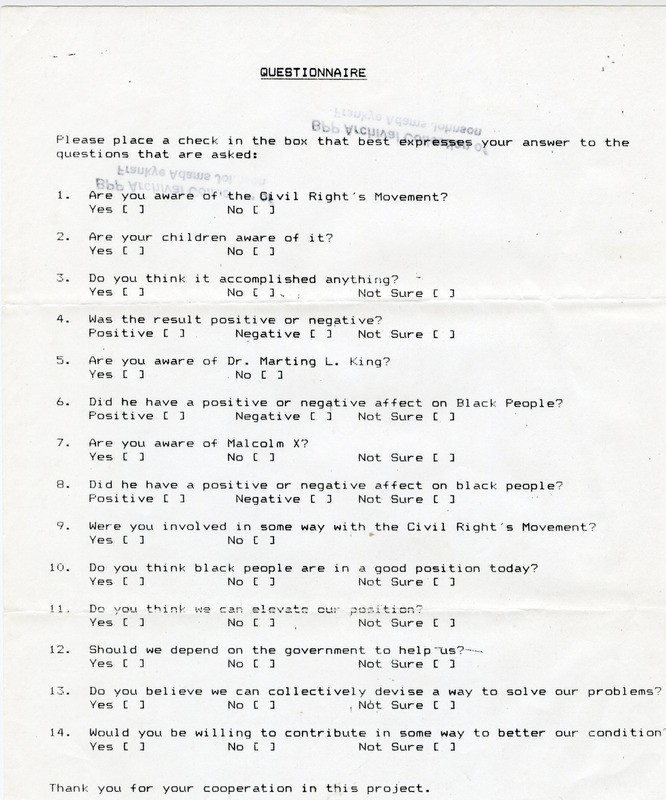
A questionnaire about the Civil Rights Movement and its impact on Black people. The questionnaire has 14 yes/no/not sure questions and has not been filled out. Questions include: “Are you aware of the Civil Rights Movement?;” “Do you think it accomplished anything?;” and “Do you think Black people are in a good position today?”
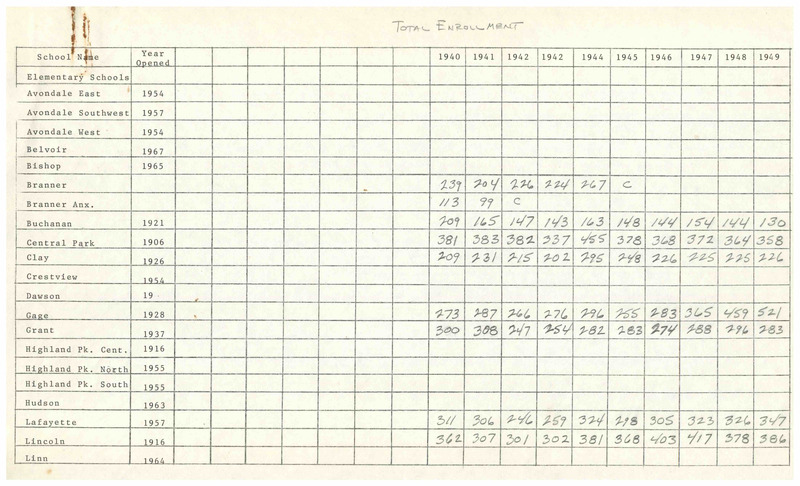
Case Data and Exhibits for Brown III, a relitigation of Brown v. Topeka Board of Education (1954) that corrected resegregation issues caused by open enrollment school choice in 1992. Handwritten charts and spreadsheets by William Lamson analyzing total student enrollment and breakdowns of that enrollment by race in Topeka Public Schools.
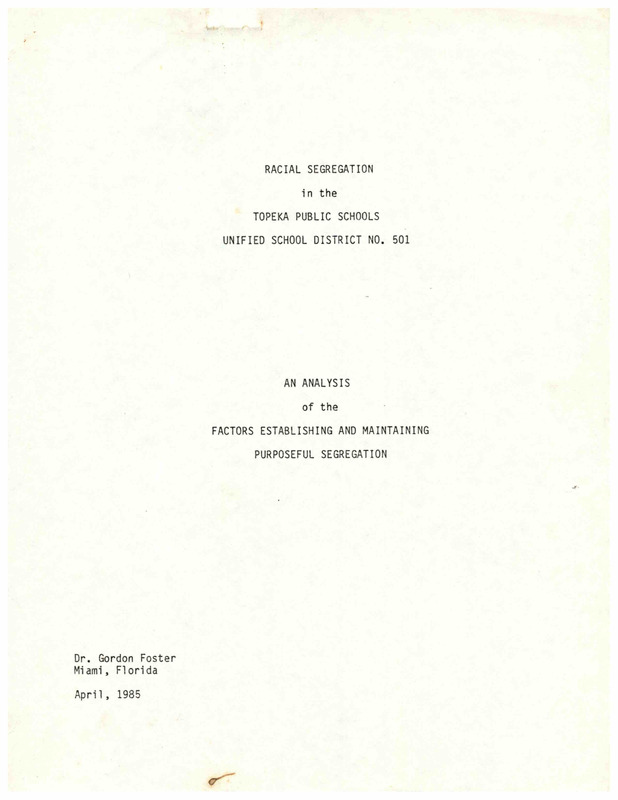
Case Data and Exhibits for Brown III, a relitigation of Brown v. Topeka Board of Education (1954) that corrected resegregation issues caused by open enrollment school choice in 1992. An April 1985 report by Dr. Gordon Foster that examines racial segregation in Topeka Schools. He concludes that complete desegregation has not taken place.