This collection showcases the rich legacies of HBCUs through the medium of text. It includes both published and unpublished items such as reports, correspondence, legal documents, books, letters, essays, government publications, and journals.
Date Modified
2025-12-17
About This Record
The HCAC public history focused digital archive cataloging is an ongoing process, and we may update this record as we conduct additional research and review. We welcome your comments and feedback if you have more information to share about an item featured on the site, please contact us at: HCAC-DigiTeam@si.edu
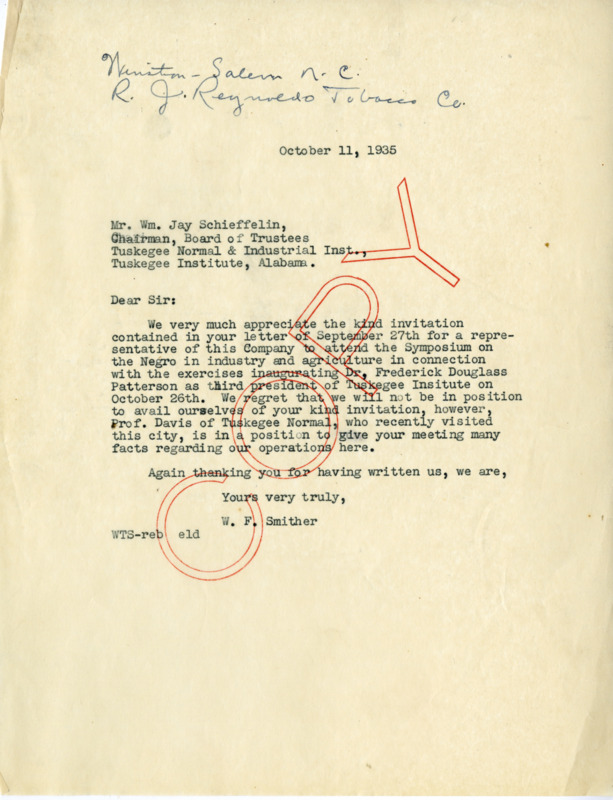
Letter from W. M. Smither to William Jay Schieffelin declining an invitation to attend the "Symposium on the Negro" at Tuskegee Institute. "Winston-Salem, N.C., R. J. Reynolds Tobacco Company" is handwritten across the top of the letter.
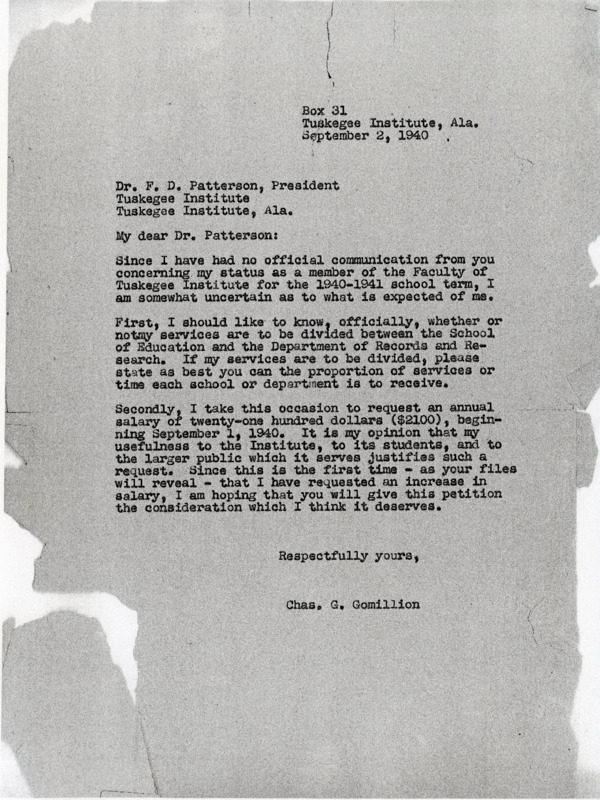
A letter from Charles G. Gomillion, the Dean of Students of Tuskegee University and president of the Tuskegee Civic Association, to President Patterson inquiring about his status as employment status for the 1940-1941 academic year.
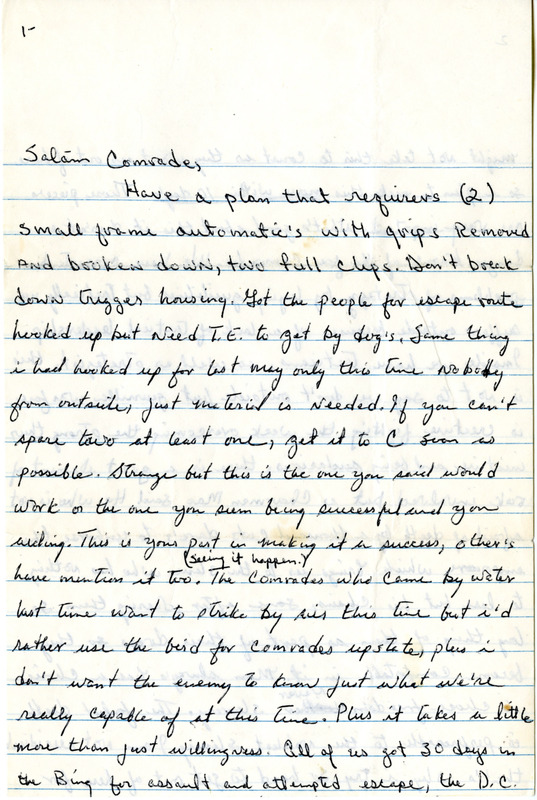
A letter from Nuh Abdul Qaiyum, who is imprisoned, to his wife Frankye Adams-Johnson (Malika). Nuh Abdul Qaiyum writes about materials he needs for an escape from prison. He explains that they are enslaved in prison, and he will choose freedom even if he dies. He ends by writing retrospectively about his personal life and the Black Panther Party.
A letter addressed to “All Black and Oppressed Third World People” from the Malcolm X Section of the Afro-American Liberation Army. The letter is a call for Black people to take up arms and take their freedom from America, even if that means “killing those who stand between us and the oppressor”
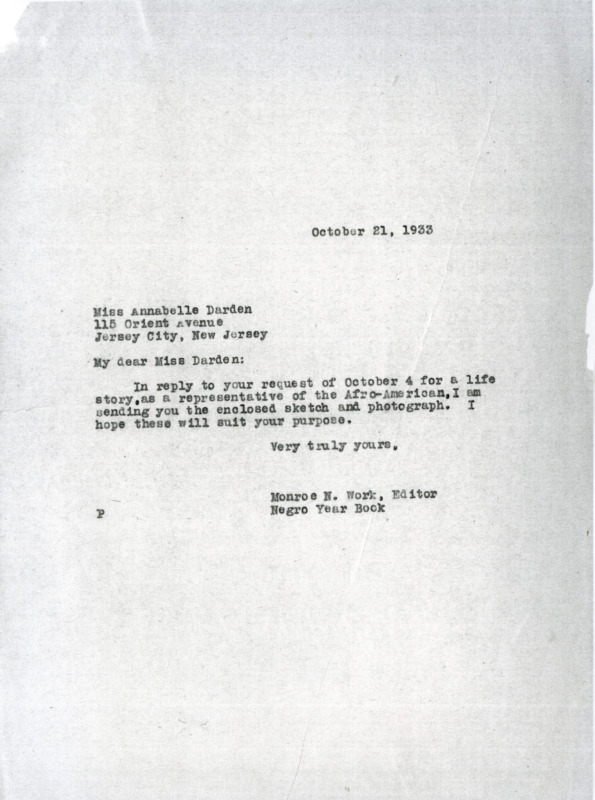
One-page letter responding to Anabelle Darden's request for information about Monroe N. Work to include in the New Jersey Afro-American newspaper. Work included a sketch of his life story and a photograph with his response.
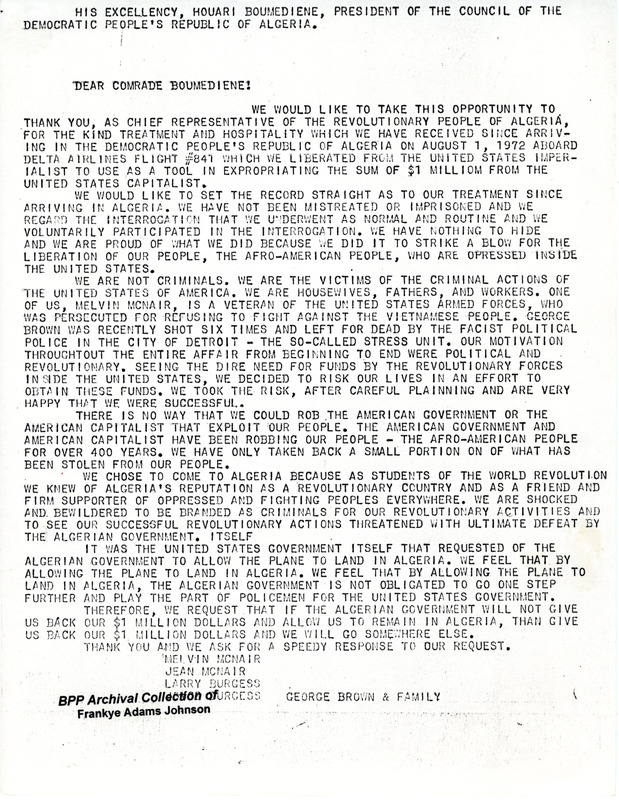
A letter to Algerian president Houari Boumediene from members of the Black Liberation Army (BLA) who had fled to his country from the United States. Melvin McNair, Jean McNair, Larry Burgess, and George Brown hijacked a plane in Miami on July 31, 1972 to seek political asylum in Algeria. The letter talks about their treatment in the country.
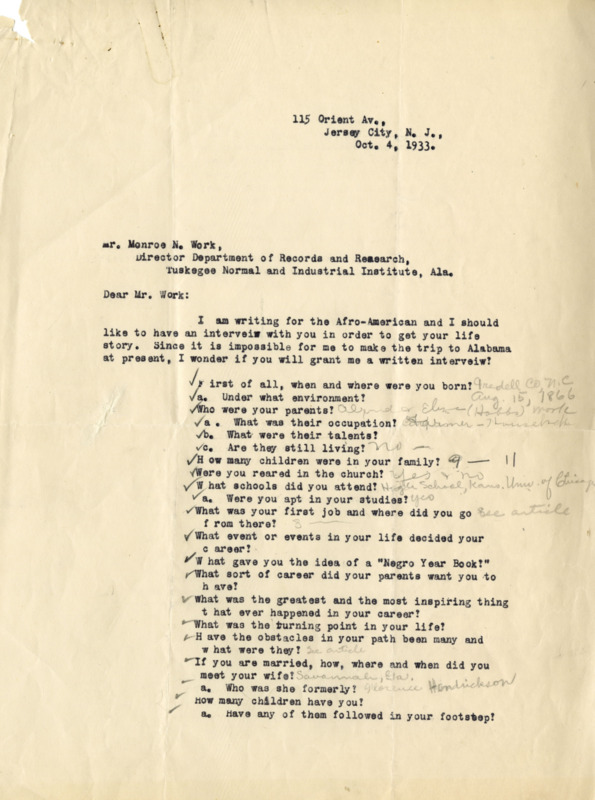
Two-page letter seeking information from Monroe N. Work about his life for inclusion in the New Jersey Afro-American newspaper. More than 20 questions are listed in the letter, some of which have responses next to them written in pencil.
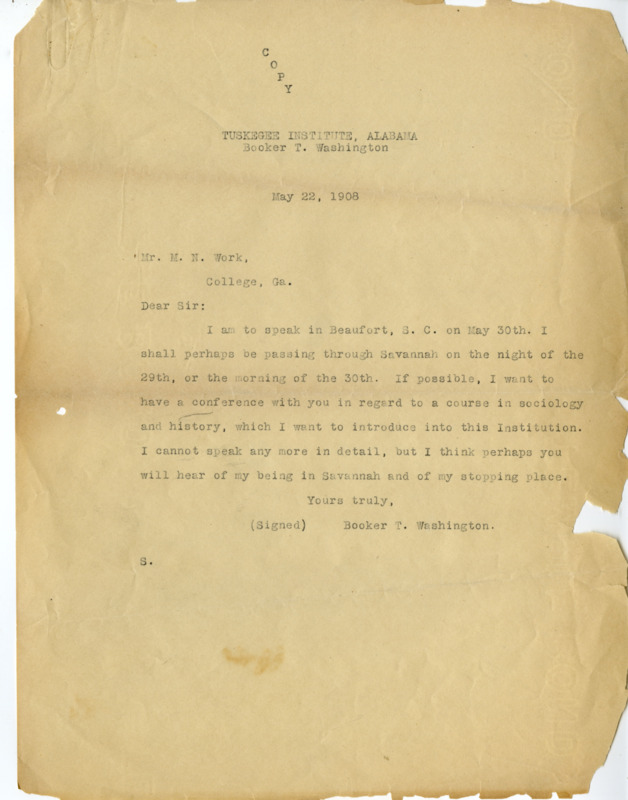
One-page letter requesting that Work meet with Washington about introducing a course at Tuskegee about sociology and history. Washington mentions he will be in Savannah on the 29th or 30th.
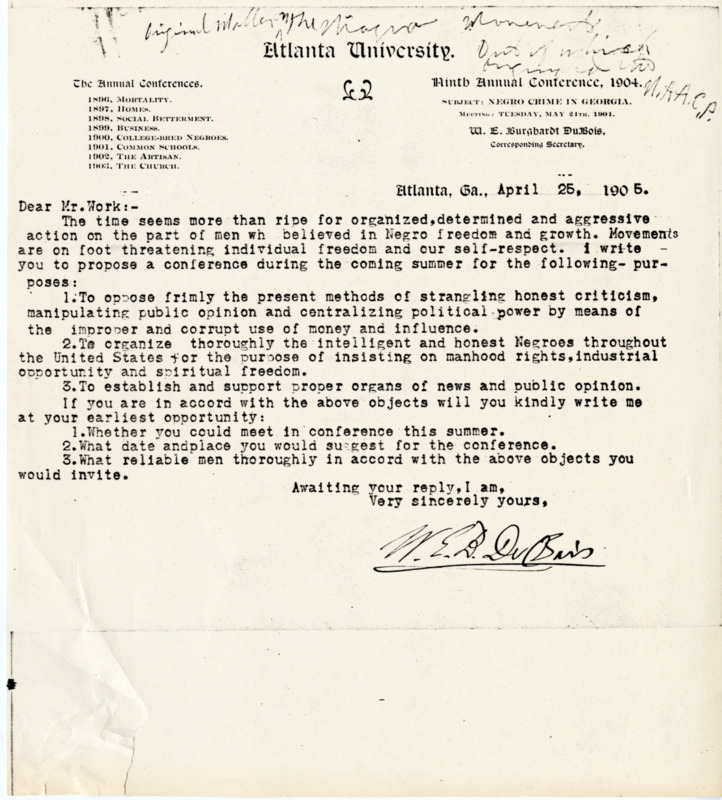
One-page letter from Dr. W.E.B. DuBois to Monroe Work asking him to attend a conference in the coming summer to discuss methods of uplifting the black community. The Niagara Movement and N.A.A.C.P. are written on top of the letter.
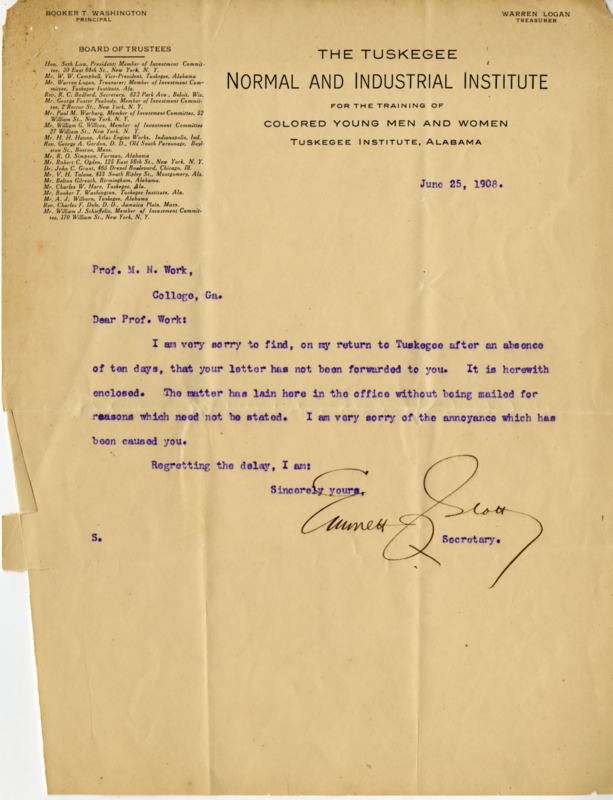
One-page letter to Monroe N. Work in College, Georgia, from Emmett Scott, a secretary at Tuskegee. Scott's letter references a separate letter for Work that had not been forwarded to him. Scott's letter is typed on Tuskegee Institute stationery.
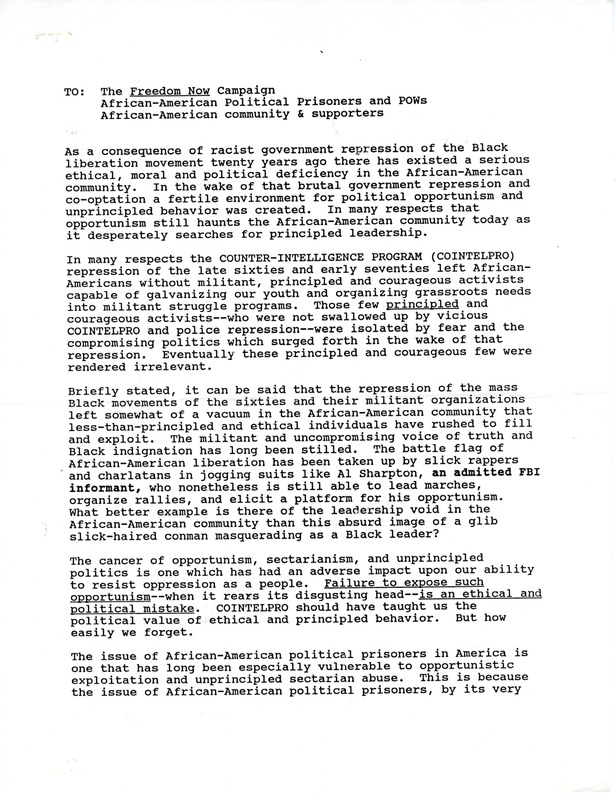
Black Panther Party leader, co-founder of the Black Liberation Army, and political prisoner Dhoruba Bin Wahd (Richard Moore) writes to the Freedom Now Campaign concerning several of the group's members exhibiting opportunistic tendencies on the issue of African-American political prisoners because of a power vacuum in the Black liberation struggle
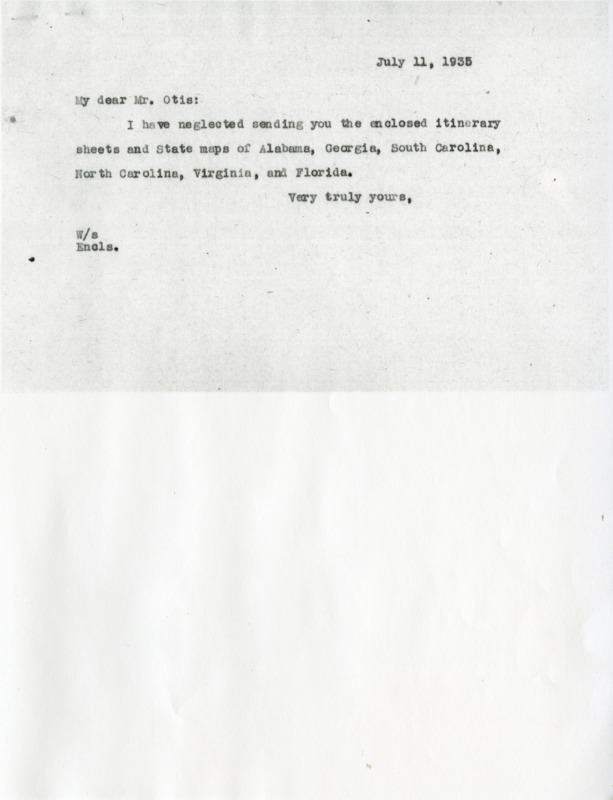
Four letters from Monroe N. Work to "Mr. Otis" regarding a "study of occupations in the Southern areas" in conjunction with the Agriculture Department. Three letters are dated July 1935, one letter is dated November 1935.
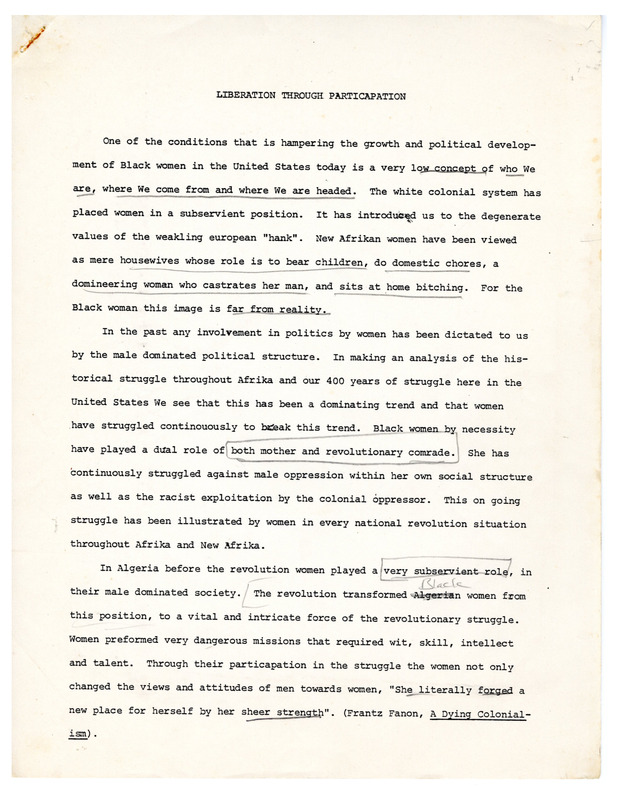
Bernice Jones (aka Safiya Bukhari) was a Black Panther Party member and vice president of the Republic of New Afrika. In this essay, she writes about the concept of New Afrikan Women and the New Afrikan Women's Organization (NAWO).
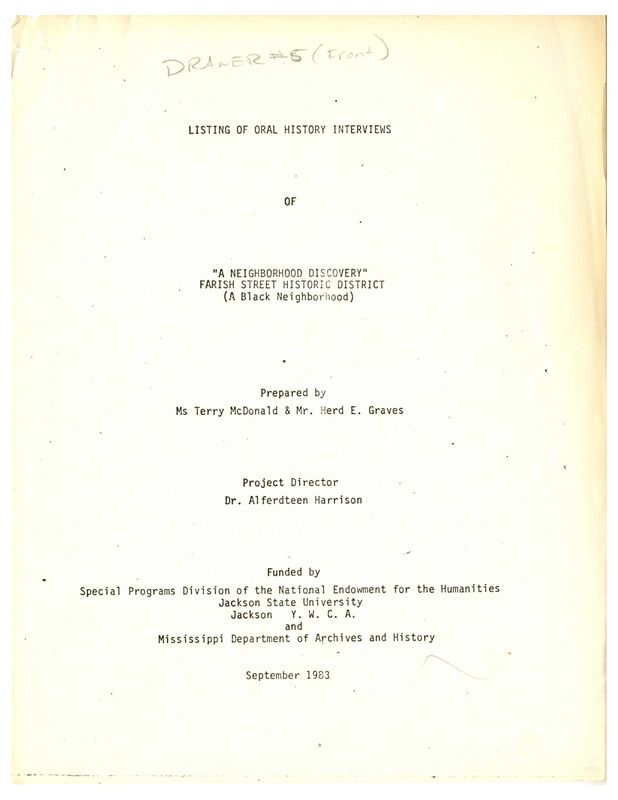
A list of all the interviews conducted as part of the Farish Street Oral History Project and a short essay outlining the history of the Farish Street Historic District.
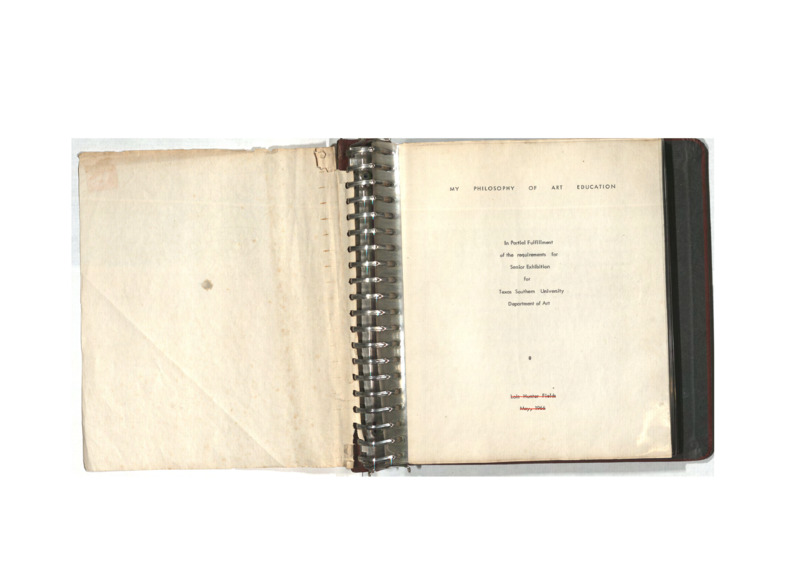
Fields’ senior notebook includes her written philosophy of art, photographs of the artist’s works and her process, and a copy of her senior exhibition brochure. As a part of the Texas Southern art curriculum under Dr. John T. Biggers and Professor Carroll Harris Simms, students would create these notebooks to explain their artistry and showcase the works they created as students.
Case Data and Exhibits for Brown III, a relitigation of Brown v. Topeka Board of Education (1954) that corrected resegregation issues caused by open enrollment school choice in 1992. This long-term master plan was proposed by the Topeka Board of Education. The District Citizens Advisory Council was asked to have recommendations by March 1984.
Case Data and Exhibits for Brown III, a relitigation of Brown v. Topeka Board of Education (1954) that corrected resegregation issues caused by open enrollment school choice in 1992. A March 1976 report from the Topeka Public Schools Office of Planning and Evaluation that explains the long-term plan for facilities improvements.
Case Data and Exhibits for Brown III, a relitigation of Brown v. Topeka Board of Education (1954) that corrected resegregation issues caused by open enrollment school choice in 1992. A report from the Topeka Public Schools Office of Planning and Evaluation that revises and updates the long-term plan for facilities improvements from 1977-1978.
Case Data and Exhibits for Brown III, a relitigation of Brown v. Topeka Board of Education (1954) that corrected resegregation issues caused by open enrollment school choice in 1992. A report from the Topeka Public Schools Office of Planning and Evaluation that revises and updates the long-term plan for facilities improvements from 1976-1977.
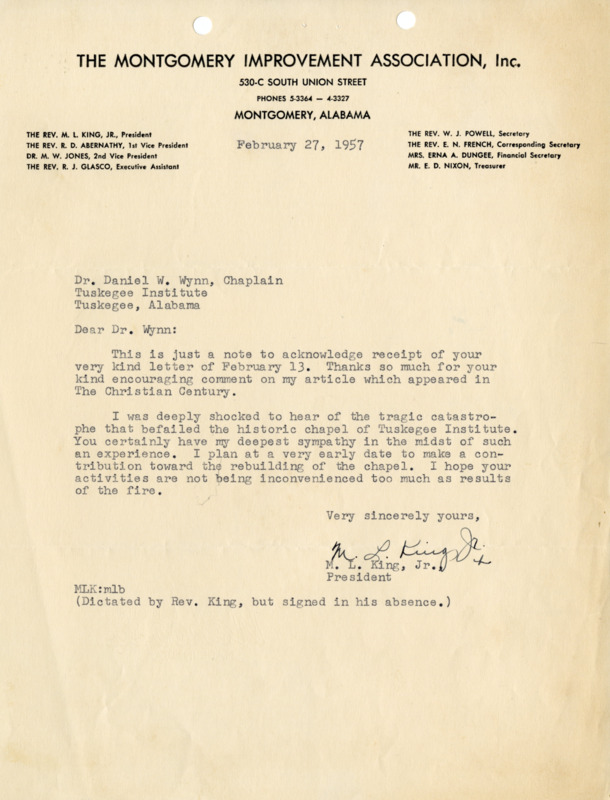
A letter from Dr. Martin Luther King Jr. to Chaplain Wynn thanking him for his support of his article in the Christian Newspaper article in The Christian Century and offering condolences for what happened to burning of the original Chapel Building.
Blueitt’s senior notebook includes her written philosophy of art, photographs of the artist’s works and her process, and a copy of her senior exhibition brochure. As a part of the Texas Southern art curriculum under Dr. John T. Biggers and Professor Carroll Harris Simms, students would create these notebooks to explain their artistry and showcase the works they created as students.
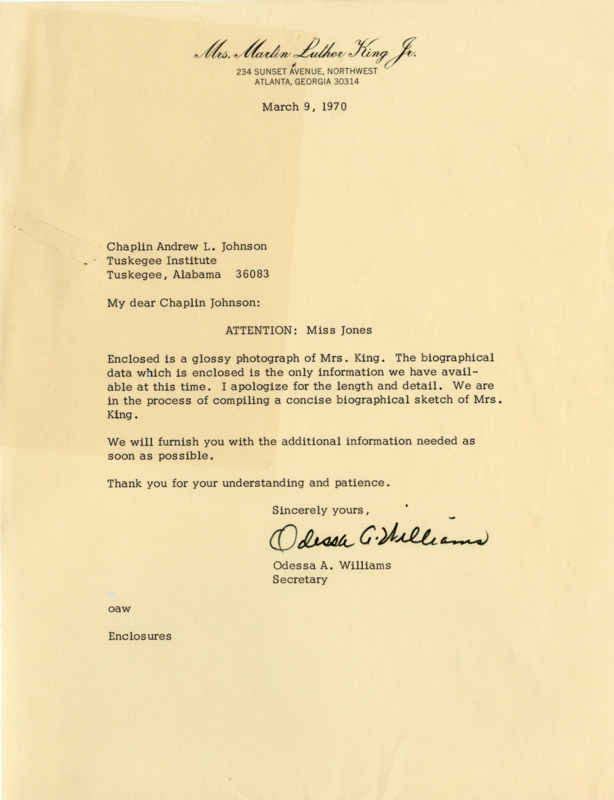
A letter from Odessa Williams Mrs. King's secretary to Chaplain Johnson providing a glossy black and white photo and biographical sketch of Coretta Scott King.
Ellison’s senior notebook includes his written philosophy of art, photographs of the artist’s works and his process, and a copy of his senior exhibition brochure. As a part of the Texas Southern art curriculum under Dr. John T. Biggers and Professor Carroll Harris Simms, students would create these notebooks to explain their artistry and showcase the works they created as students.
Meeting minutes From a Topeka Board of Education meeting on June 21, 1965. Topics discussed include the adoption of the Topeka Plan; a report on the five year projection of building and site needs; a new site for Highland Park Junior High School; and an experimental remote teaching project.
Meeting minutes From a Topeka Board of Education meeting on September 8, 1964. Topics discussed include the naming of a new school; a report on the five year projection of building and site needs; an enrollment report; and purchases.