This collection showcases the rich legacies of HBCUs through artistic expression. Featured works include paintings, sculptures, murals, mixed media, prints, drawings, and fine art photography.
Date Modified
2025-12-17
About This Record
The HCAC public history focused digital archive cataloging is an ongoing process, and we may update this record as we conduct additional research and review. We welcome your comments and feedback if you have more information to share about an item featured on the site, please contact us at: HCAC-DigiTeam@si.edu
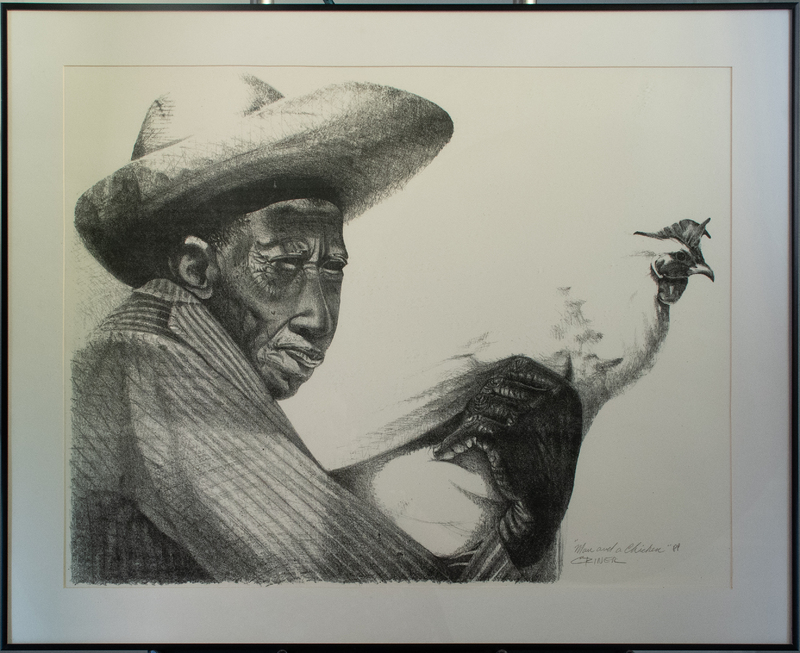
Criner’s print shows an older man wearing a hat and holding a chicken. This print is a black-and-white version of Criner’s piece “Mr. Alvin White, Man With Chicken.” Criner learned printmaking firsthand from Dr. John Biggers and was the longtime artist-in-residence at Houston’s Museum of Printing History.
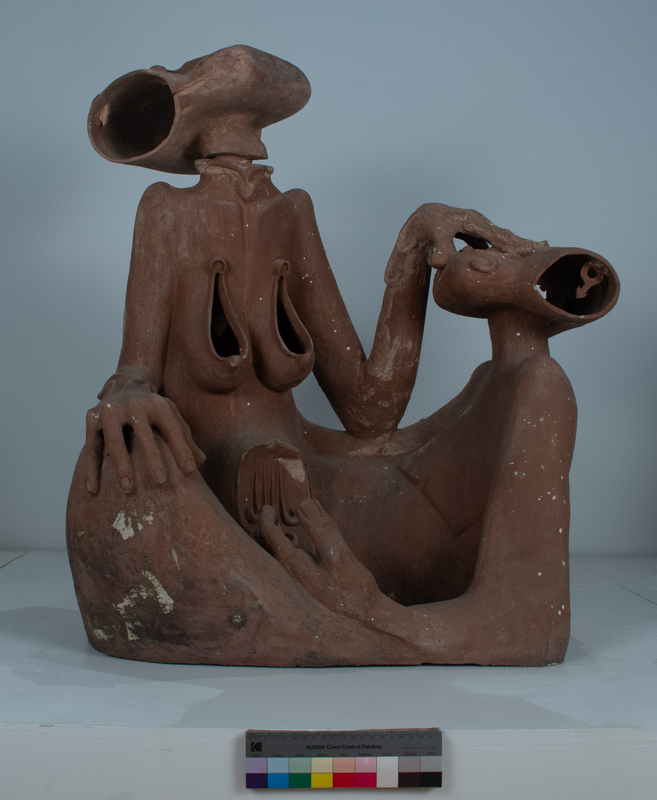
This terracotta was created by an unknown Texas Southern art student. The form suggests a surreal male and female pair warmly embracing each other. The artist employs negative space uniquely in this sculpture; additional gendered embellishments can be seen within the open heads. These exterior decorations were required by Professor Carroll Harris Simms.
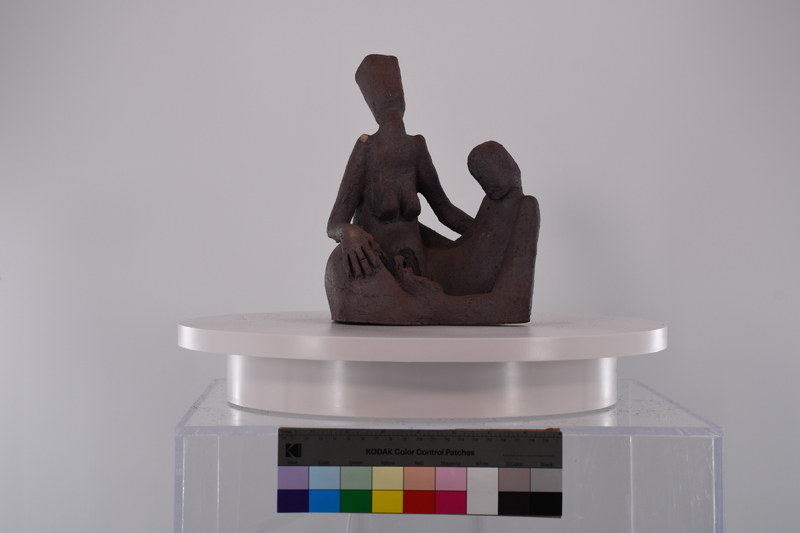
This maquette shows a human-like couple with enlarged heads and hands. The artist suggests their intimacy by joining their lower bodies together. The full-scale sculpture features finer details, such as modified head shapes, embellishments, and greater use of negative space.
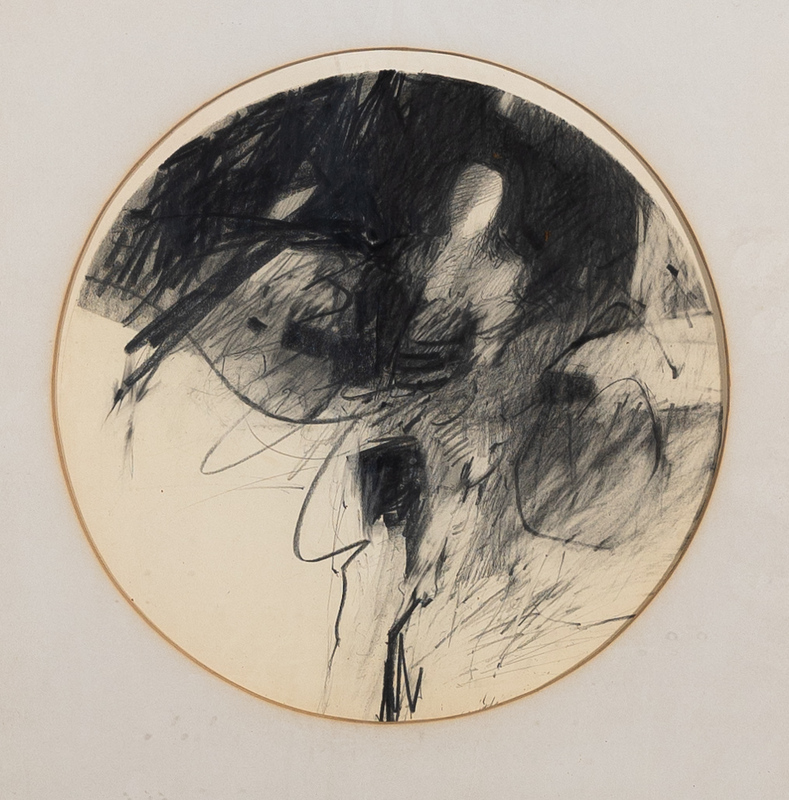
Alvin Smith was an artist from Brooklyn, NY. Man Fleeing from Himself depicts an abstract figure running within a centered circle. Smith creates the figure through the white space left by black pencil strokes.
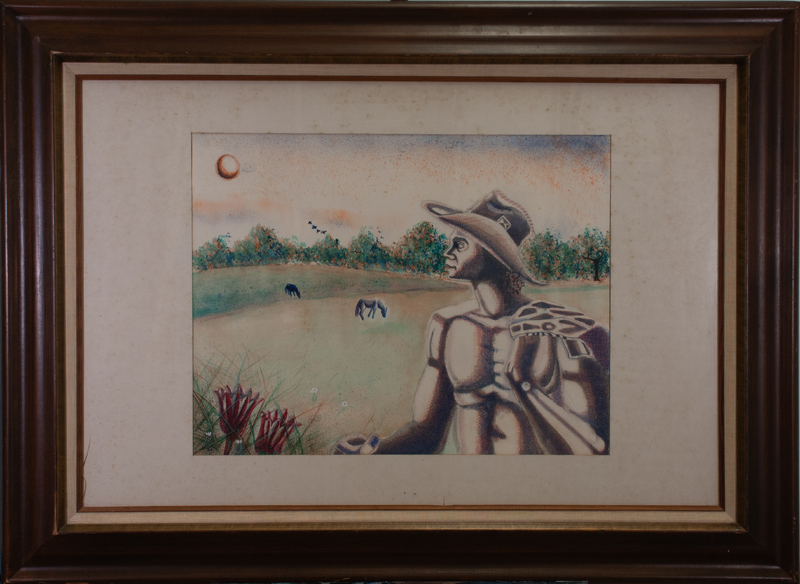
This piece by Bennie Settles shows a man wearing a cowboy hat, looking out onto a mostly empty field with two horses grazing. Settles' works in the permanent collection frequently showcase his style of using rounded shapes and gradients to depict his subjects' muscles and deep care for portraying Black hair.
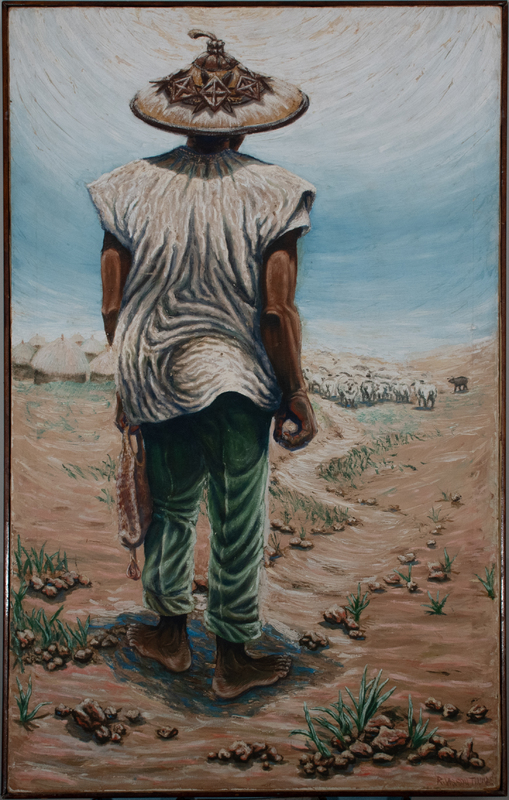
Thomas’s painting shows a barefooted man, looking upon a village and a herd of sheep from a distance. The movement of wind is depicted through his garments swaying around his body. Thomas has a particular way of creating movement in his paintings, especially in the clothing and scenery in his artworks.
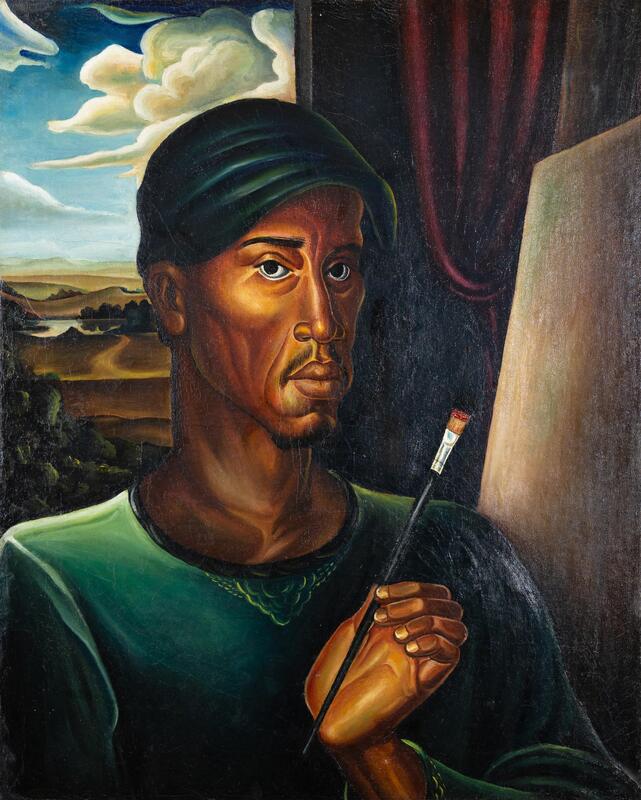
Frederick C. Flemister was an artist from Jackson, GA. Man with Brush is a mannerist self-portrait depicting him in front of an arched window at an empty canvas. Outside of the window is a landscape scene featuring a lake, rolling hillsides, and mountains in the distance.
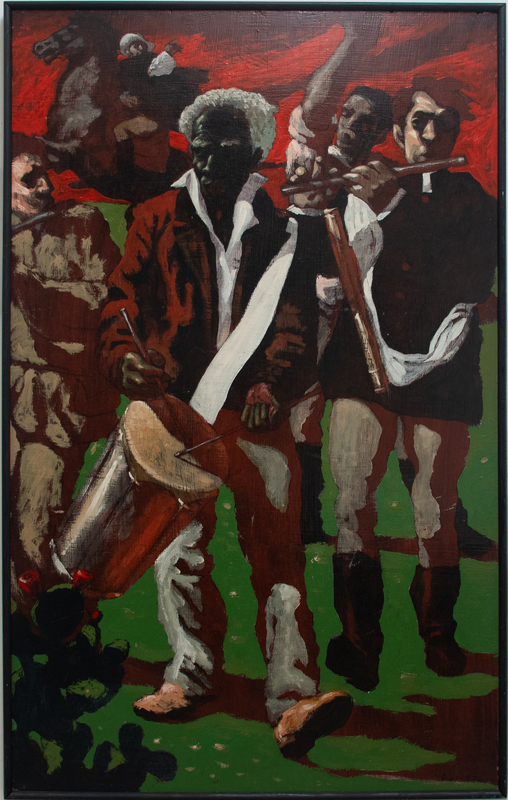
Oliver's painting depicts a group of men marching and playing drums and flutes, seemingly as part of a military expedition. The scene is believed to be drawn from the Battle of San Jacinto, the culminating battle of Texas's war against Mexico. The Black man may be Dick the Drummer, a free Black man who was part of the Texas army band.
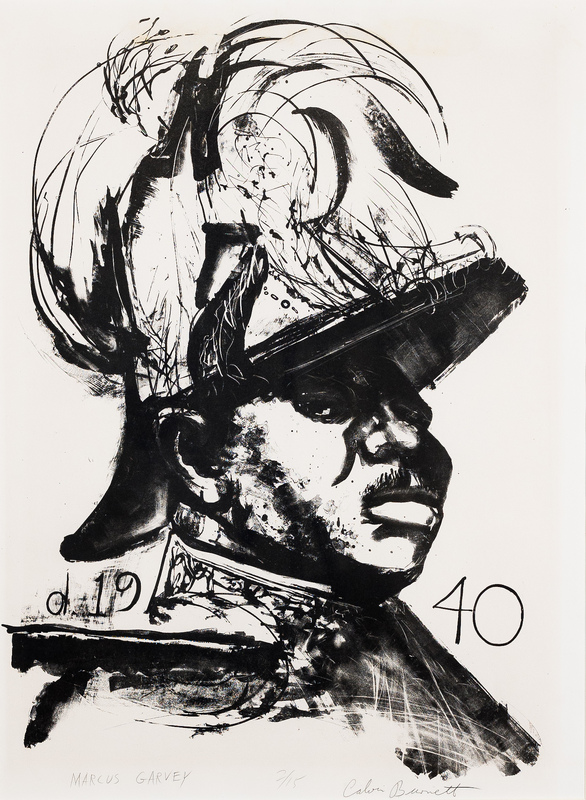
Calvin Burnett was a graphic artist, illustrator, painter, designer, and art teacher from Cambridge, MA. Marcus Garvey is a portrait of its namesake, a Jamaican political activist. Marcus Garvey was a renowned Black nationalist and Pan-Africanist.
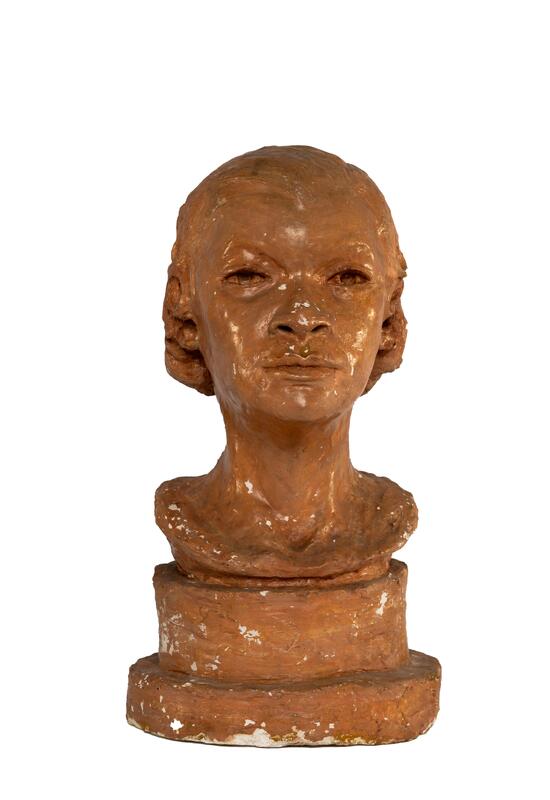
Jewell Woodard Simon was an internationally acclaimed artist, teacher, and poet from Houston, TX. Margaret is a plaster bust of a Black woman. Like her other sculptures, Simon details the subject's features, including her nose, mouth, eyes, ears, and hair texture.
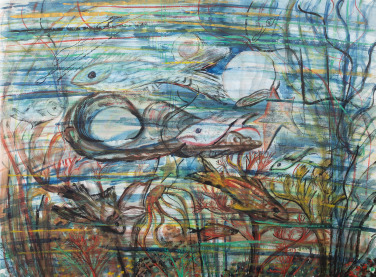
Jewell Woodard Simon was an internationally acclaimed artist, teacher, and poet from Houston, TX. Marine Land Fantasy is an underwater landscape drawing of fish and plants. Simon uses a variety of colors that illustrate aquatic biodiversity. Her use of lines evokes the depth of open water.
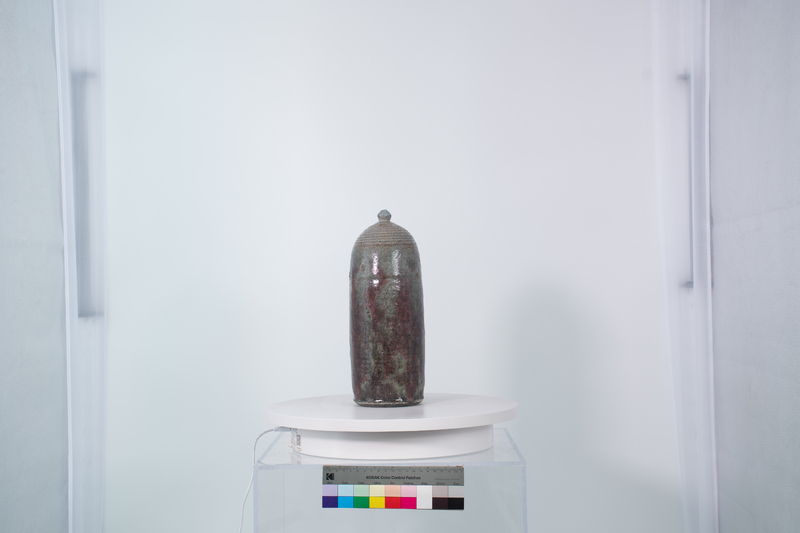
Simms’ ceramic vessel is round and stout, with ridges and a node at the top, and has a maroon and gray glaze. Carroll Harris Simms worked alongside Dr. John T. Biggers to establish the Texas Southern University Art Department. Simms taught sculpture, ceramics, and jewelry-making classes.
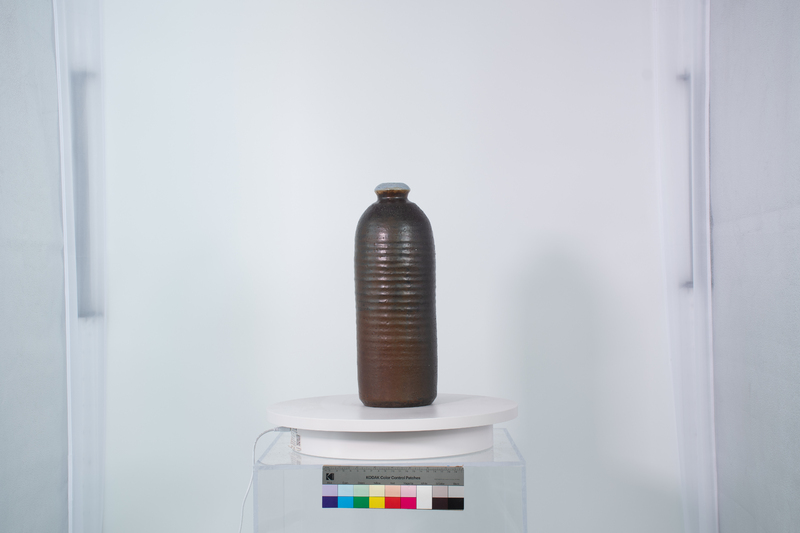
Simms’ ceramic vessel is hollow, with an opening at the top, and has ridges and a dark maroon glaze. Carroll Harris Simms worked alongside Dr. John T. Biggers to establish the Texas Southern University Art Department. Simms taught sculpture, ceramics, and jewelry-making classes.
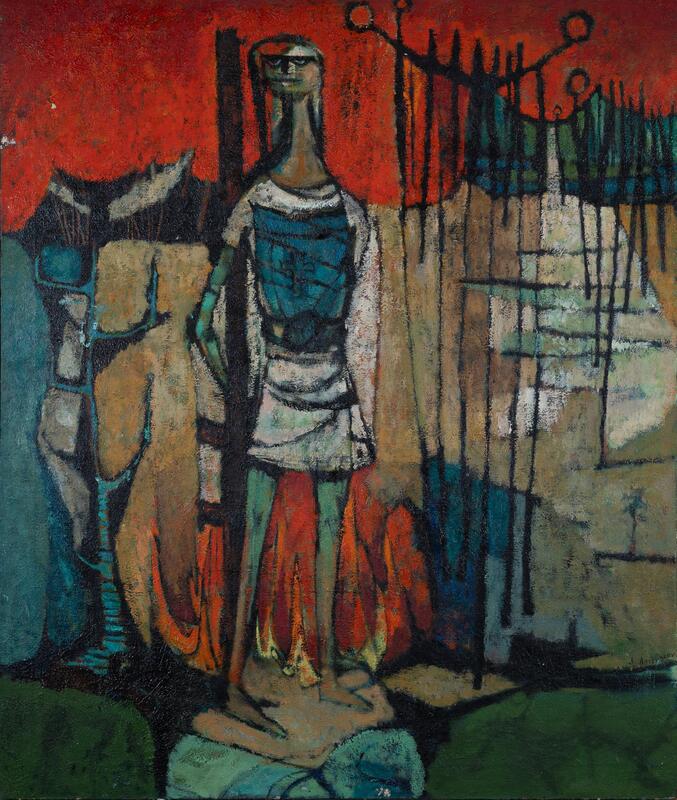
John Arterberry was an artist who worked in the art department at Langston University from Tallahassee, FL. Martyr shows a woman wearing a top with a cross and standing barefoot in a natural setting. The woman looks straight ahead, slightly smiling as a small fire sits behind her.
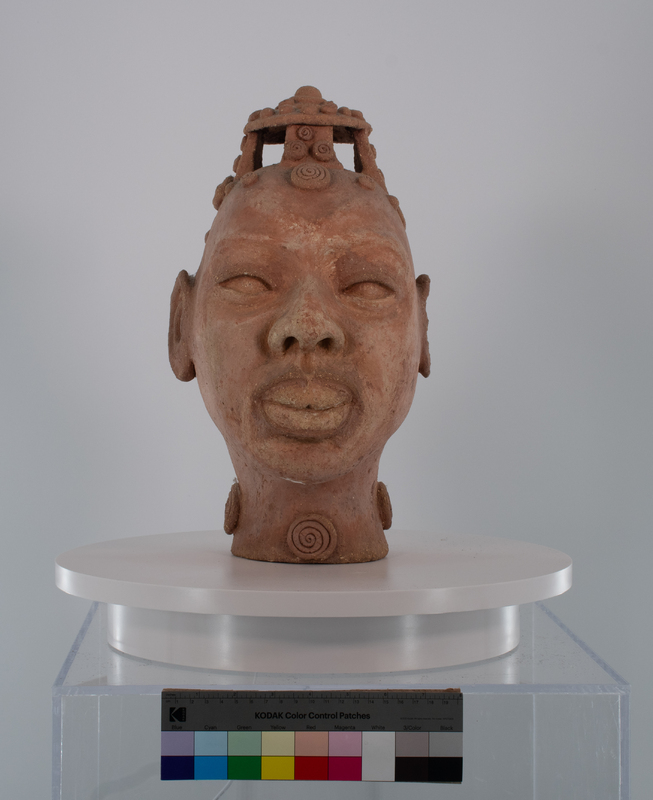
Ellison’s bust was created during his time as an art student at TSU. Under the instruction of Professor Carroll Harris Simms, artists would create self-portraits embellished with decorations like spirals and accentuated crown pieces, like in Ellison’s sculpture. These busts are inspired by Nok terracotta sculptures and Ife busts, which Simms saw during his travels to Western Africa.
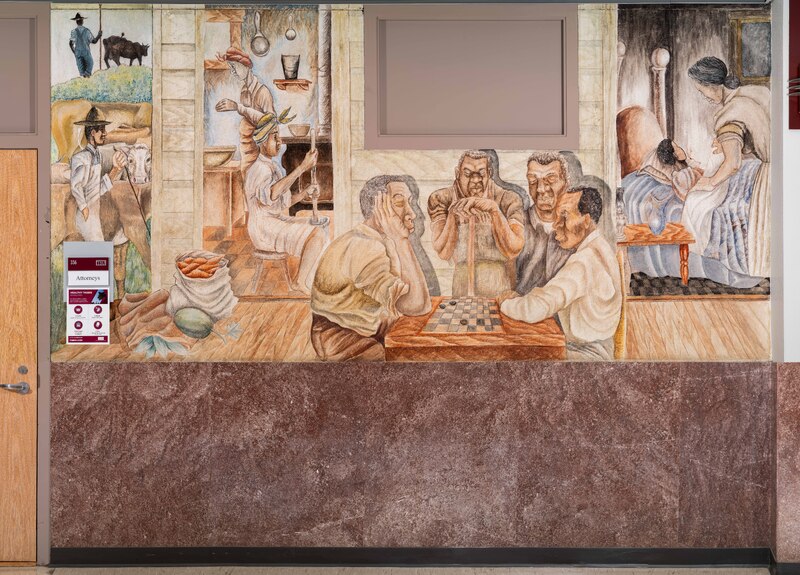
Ross’s mural represents Black rural life in the early to mid twentieth century. The composition highlights the gendered division of labor, and how women’s work focuses on maintaining the home. Ross grew up in Huntsville, Texas, and this scene may represent his background and experiences.
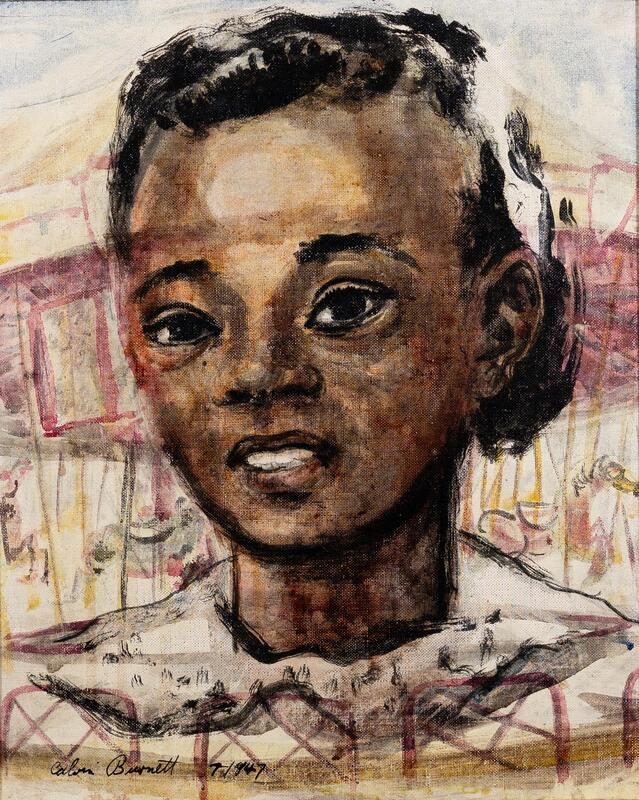
Calvin Burnett was a graphic artist, illustrator, painter, designer, and art teacher from Cambridge, MA. Merry-Go-Round depicts a young Black girl smiling in a park. Burnett overlays a limpid red merry-go-round over the girl's face.
Biggers’ drawing shows several linked and overlapping human figures, with babies within the open space their bodies create. Above their heads, children divide and multiply like cells. The lower half of the drawing resembles the shape of the female reproductive system. Biggers called this form the "morning star." A very similar image to this piece appears in Biggers’ mural Family Unity. His artwork often emphasizes themes of motherhood, family, and life cycles.
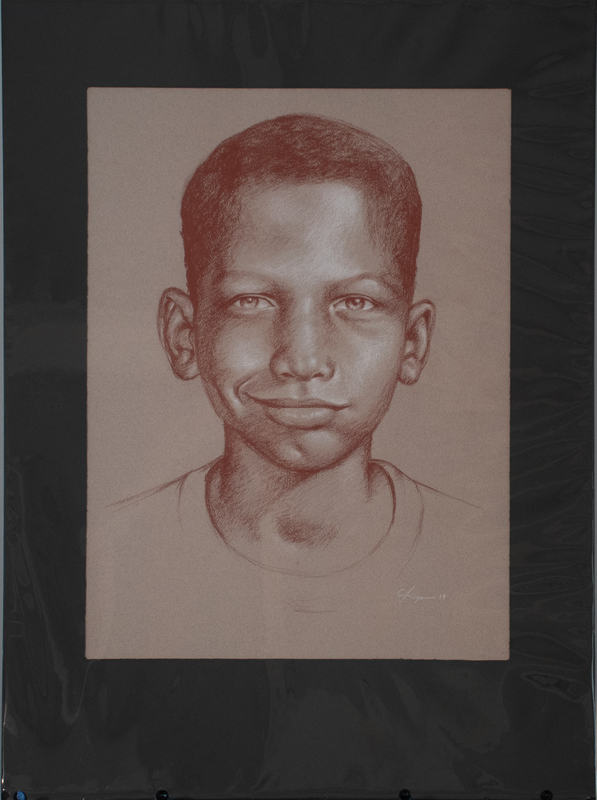
Onyeiwu’s drawing is of a young boy wearing a smirk on his face. Onyeiwu creates incredible, realistic portraits with fine details. Originally from Nigeria, Onyeiwu received his undergraduate arts degree from Texas Southern, and has since returned to teach drawing and painting classes at TSU.
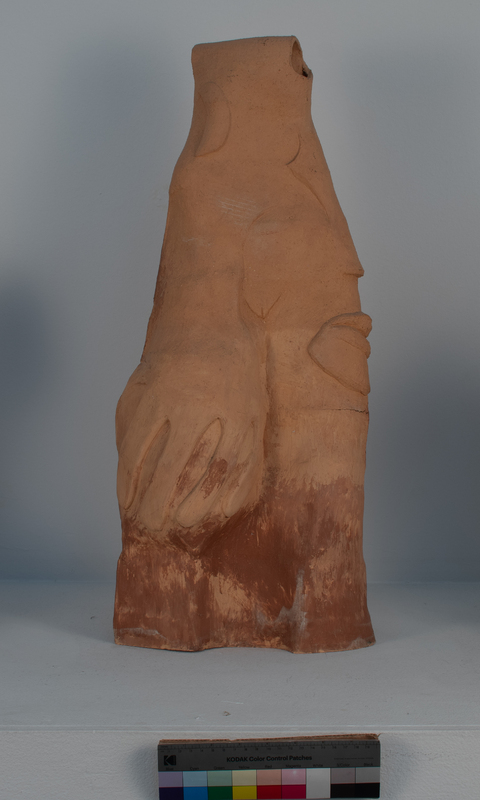
This sculpture is of an abstract side face profile, prominently featuring the nose and lips, with a large hand on one side of the sculpture. The oversized hand is an example of the influence of Dr. John Biggers’ style. This sculpture is two-toned due to varying levels of oxidation of the clay. The structure bears some resemblance to the Moai of Rapa Nui (also known as Easter Island heads).
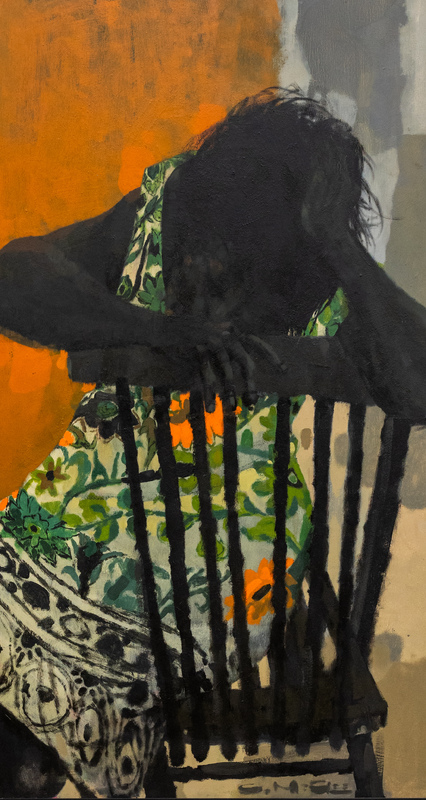
Charles McGee was an artist and educator from Clemson, SC. Moods of Martha is a portrait of a young Black woman sitting with her head down hiding her face. Her hair and skin are black and almost blend in with the black chair she sits in. She wears a bright flower dress that is mostly green with orange flowers.
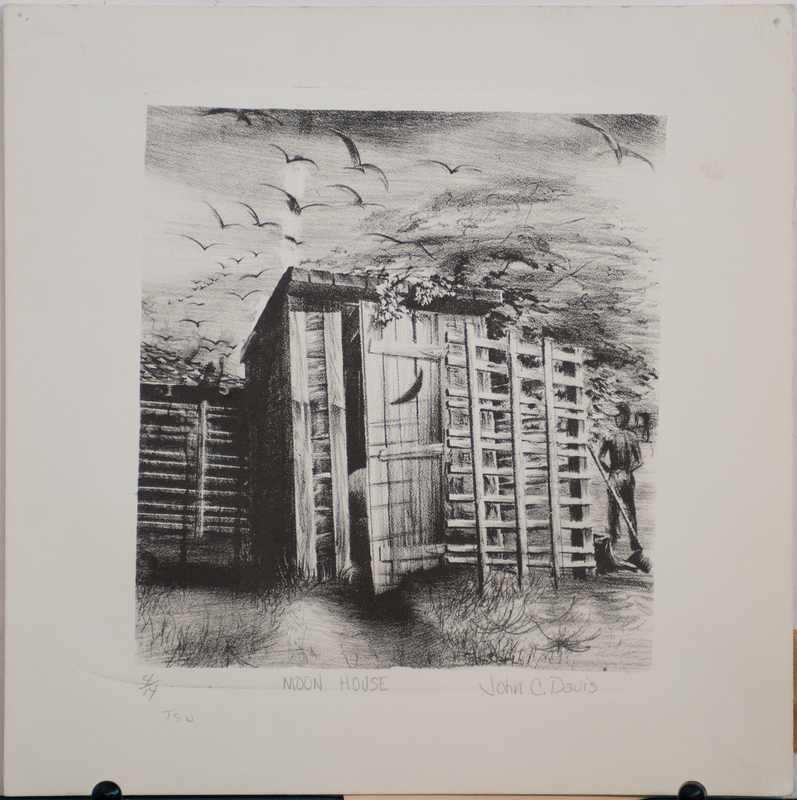
Davis’s print is of an outhouse, colloquially referred to as a moon house. In modern imagination, the crescent moon on an outhouse door has become an identifying symbol of frontier living. Davis’ print also shows a shirtless man zipping up his pants upon exiting the outhouse, while a huge flock of birds fly overhead.
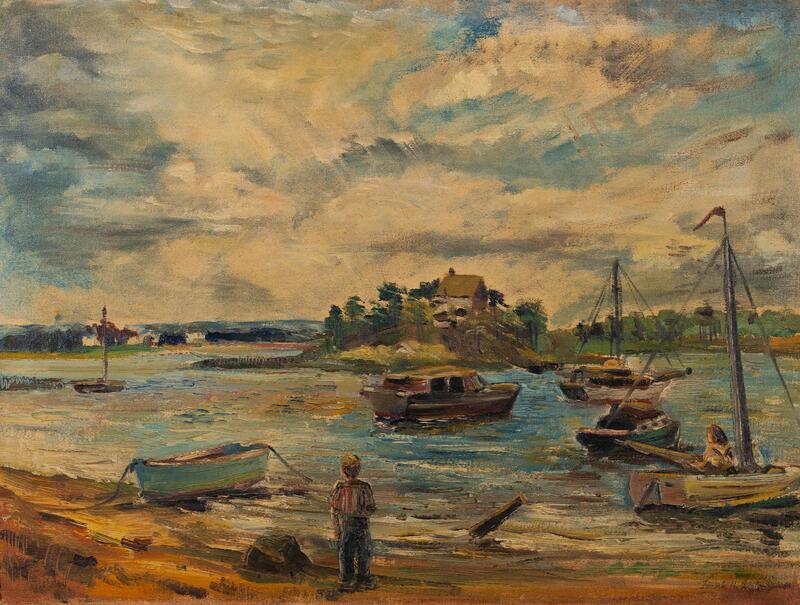
Frank H. Alston, Jr. was an artist and teacher from Providence, RI. Morning on Cape Cod illustrates a cloudy morning along the coast of a peninsula on the Massachusetts Coast. The image depicts a boy standing at the shoreline, boats sailing across the water, a house on top of a hill, and a residential area in the distance.
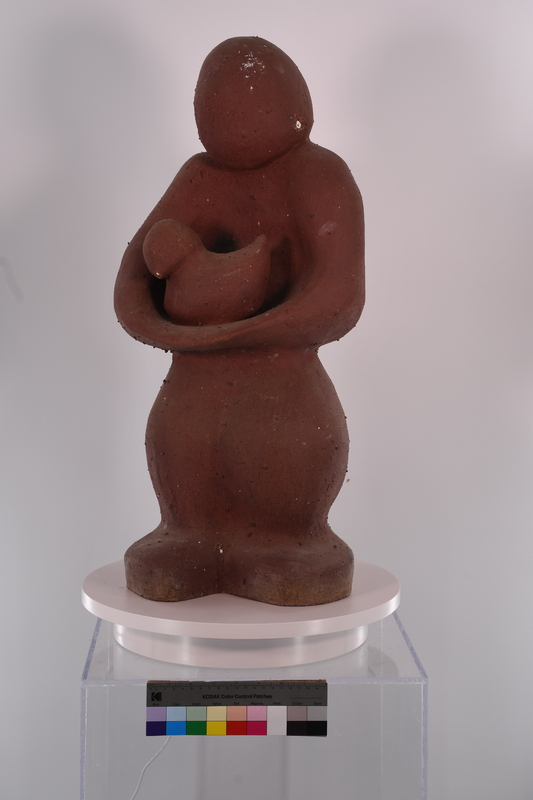
Windle’s terracotta portrays a figure embracing a bird in its arms. The exterior of the sculpture is smooth and lacking any of the decorative motifs typically featured on Texas Southern students’ terracottas. The embrace reflects the compassion of a mother and her child, while also displaying interspecies grace and kindness through the act of picking up this bird.
“Mother and Child,” by Warren Williams, reflects a theme of unity. The smaller figure is placed in the lap of the larger, held in place by two fingers connecting to form a circle. The sculpture’s form resembles a mother and child bird, perhaps perched in their nest. The mother-child relationship is an important motif in Texas Southern artwork.
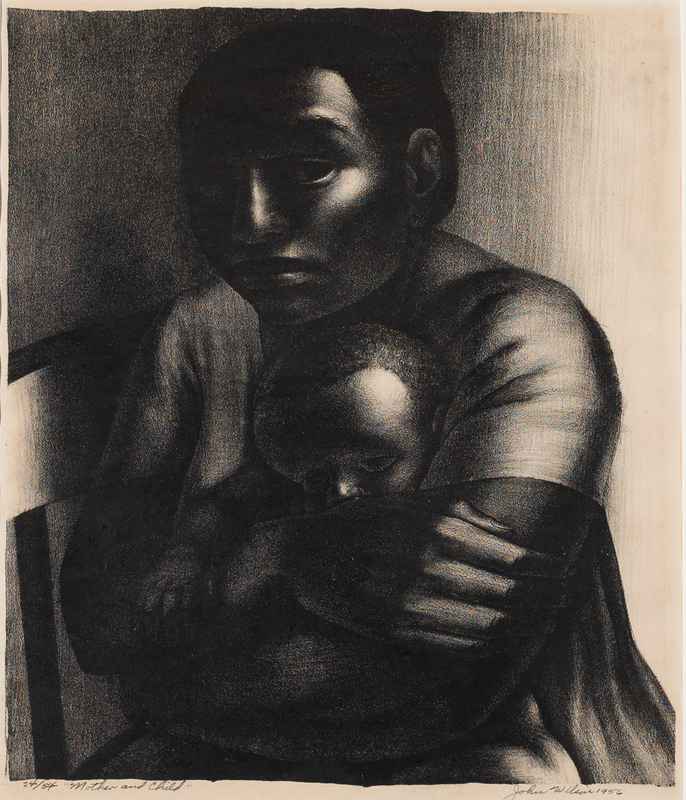
John Woodrow Wilson was a famous painter known for his creative portraits and stylistic approach to social justice. Mother and Child is a black-and-white depiction of a mother embracing their child. The mother has a solemn expression as she looks away from the viewer; her child is tucked into her arms, facing the viewer.
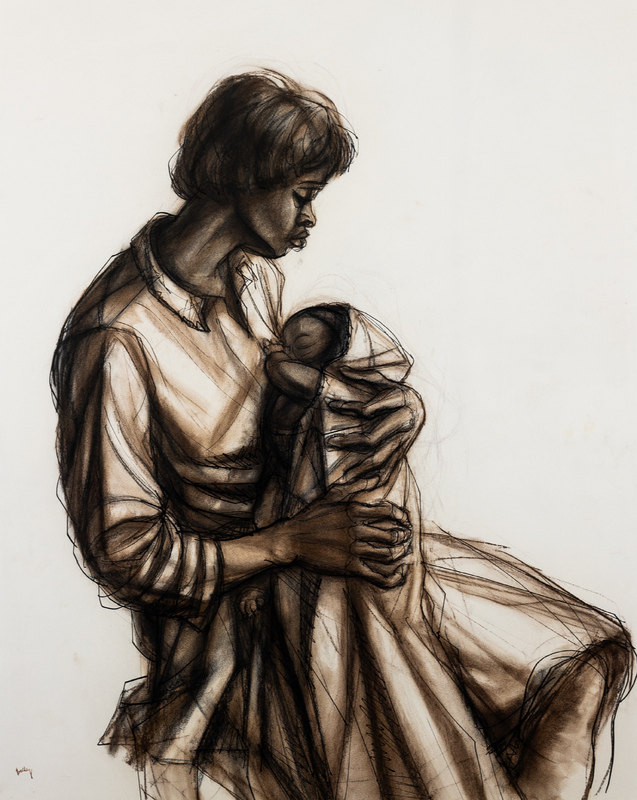
Herman "Kofi" Bailey was an artist from Chicago, IL. Mother and Child is a sepia-toned depiction of a Black mother holding her child in her lap. The mother looks down at the child as a blanket covers them.
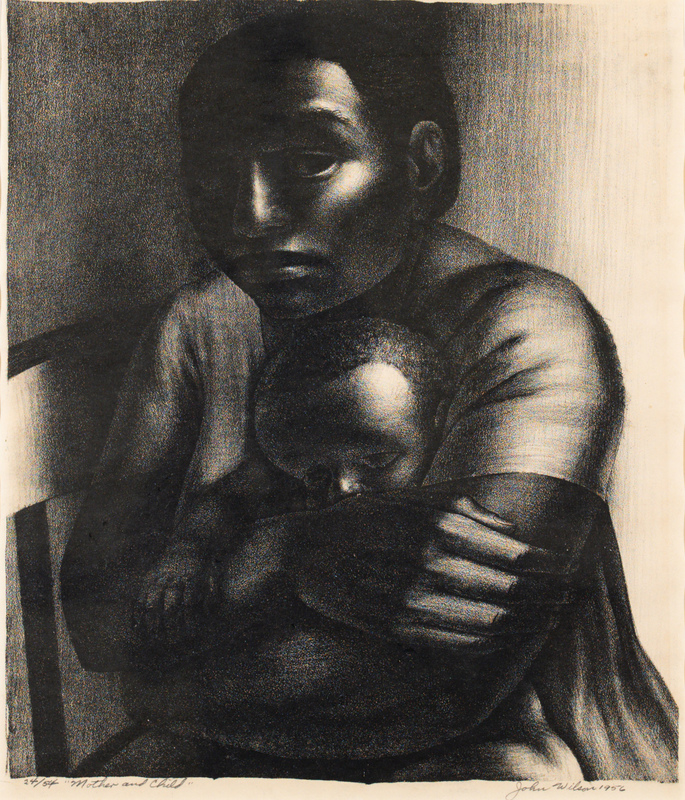
John Woodrow Wilson was a famous painter known for his creative portraits and stylistic approach to social justice. Mother and Child is a black-and-white depiction of a mother embracing their child. The mother has a solemn expression as she looks away from the viewer; her child is tucked into her arms, facing the viewer.
Marion Perkins was a sculptor from Marche, AK. Mother and Child is a limestone bust of its namesake. The mother is placed behind the child as she holds his head. The mother looks toward the viewer as the child looks away.