This collection showcases the rich legacies of HBCUs through artistic expression. Featured works include paintings, sculptures, murals, mixed media, prints, drawings, and fine art photography.
Date Modified
2025-12-17
About This Record
The HCAC public history focused digital archive cataloging is an ongoing process, and we may update this record as we conduct additional research and review. We welcome your comments and feedback if you have more information to share about an item featured on the site, please contact us at: HCAC-DigiTeam@si.edu
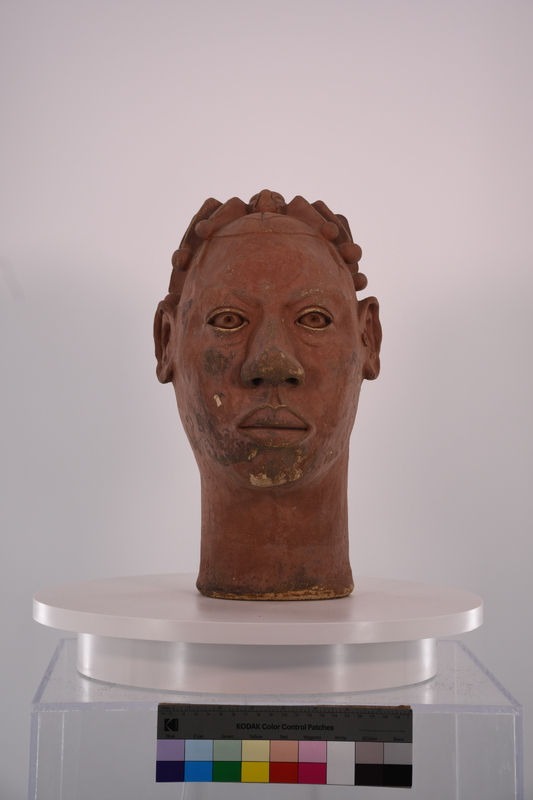
Jones' self-portrait has a piercing facial expression and displays protruding veins near the brow line and a direct stare from the eyes. The crown is adorned with a spider and the outline of a web along the scalp, along with a spiral near the left ear. The design may have been inspired by Spiderman, who debuted in comics 8 years earlier.
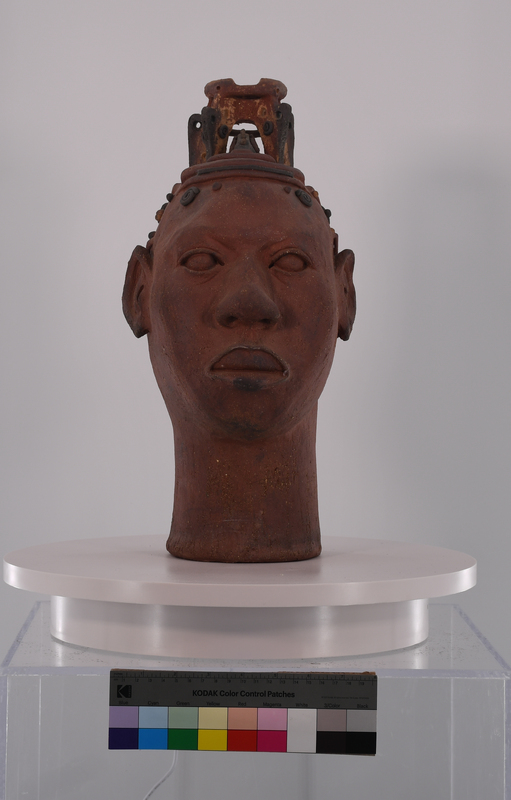
This bust is a self-portrait of the artist. Jones depicted his face with sharp features, high cheekbones, and protruding veins near the brow line. The crown is adorned with spiral motifs, dots, and rolled clay. Atop is a shrine structure, with a turtle within. Turtles and tortoises are often used to symbolize longevity. Students were encouraged to adorn their self-portraits with additional embellishments.
Lloyd’s scene closely focuses on three faces wracked with strong feelings. In the foreground, an angry man reaches out, while the middle figure turns completely inward, and the far right figure is deep in thought. These emotions are heightened by the dark hues in the composition.
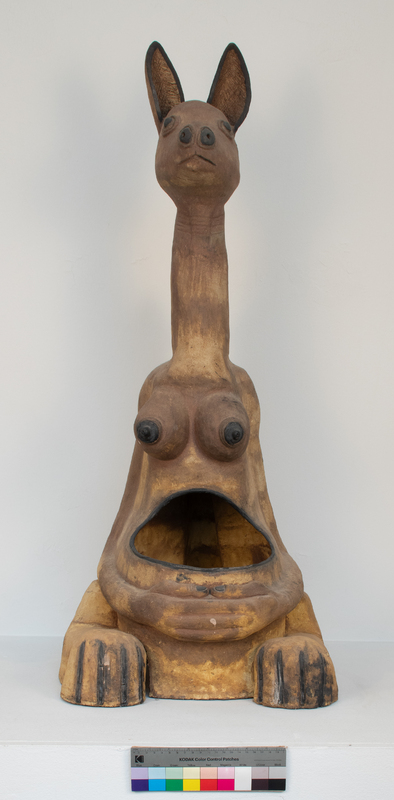
Moses Adams Jr.'s sculpture depicts a kangaroo mother with human-like hands and breasts. The clasped hands under the open pouch signify protection. Detailed, oversized hands are characteristic of the work of John Biggers and his students. Additionally, mothers of various forms and species are a common subject of the student terracottas from Texas Southern University.
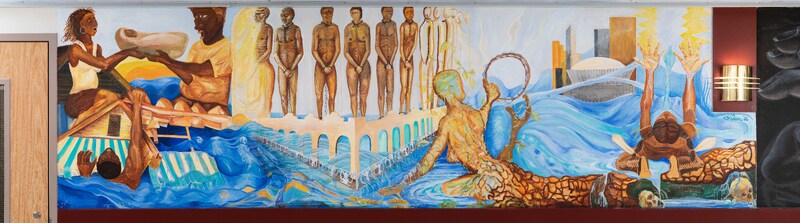
A native of New Orleans, Green transferred to TSU’s art program following Hurricane Katrina. His mural ties different aspects of New Orleans history and culture together through floodwaters. Enslaved ancestors stand at auction, and the city skyline, including the Superdome, is featured prominently.
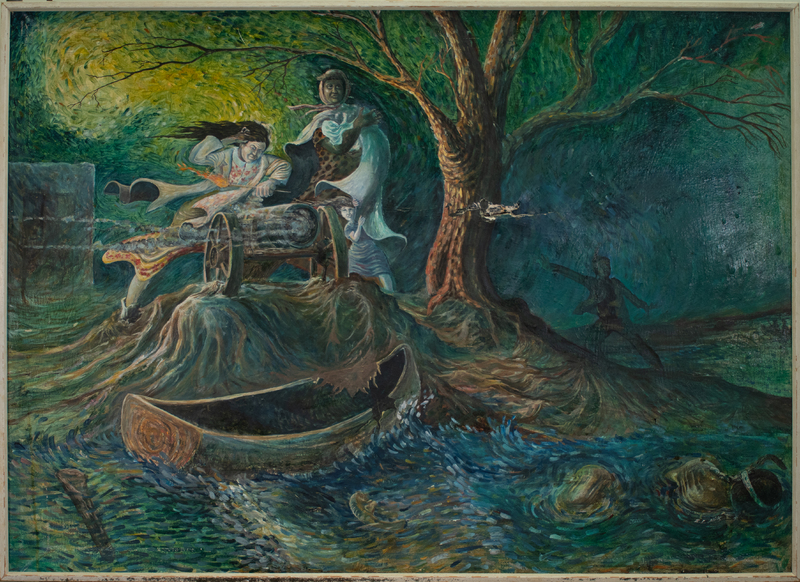
Mills paints a compelling and complex commentary on violence against indigenous people in the United States. In the foreground, a lifeless indigenous person floats next to a wrecked canoe. In the center, a white woman prepares to fire a cannon, still smoking from its last round. Behind her, a stoic Black woman holds one white baby and shelters another white child within her cloak. In the background, a faceless indigenous person reaches towards the scene.
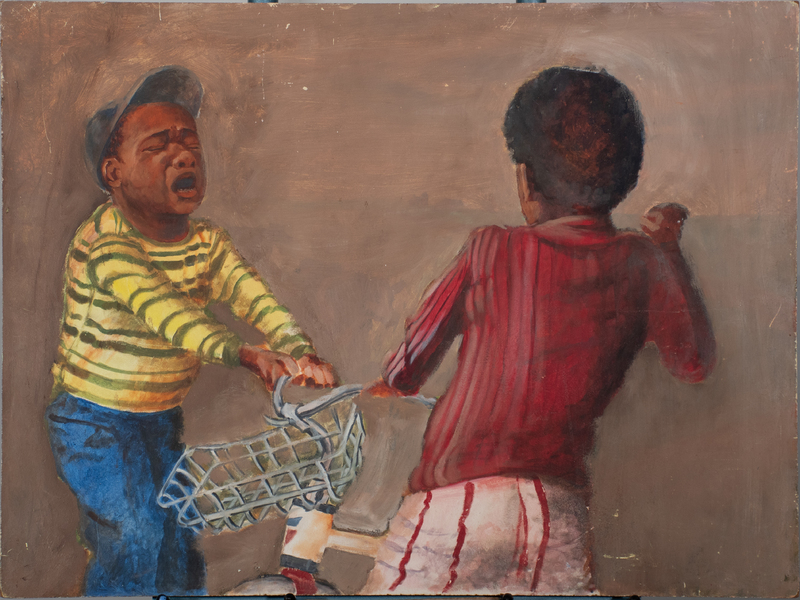
This painting shows children quarreling over a bicycle. The young boy in yellow is painted dramatically wailing, while the other child is portrayed from behind with a raised, balled fist. Dr. John Biggers encouraged Texas Southern student artists to create art based on what they saw. Scenes of children often appear in the permanent collection of TSU.
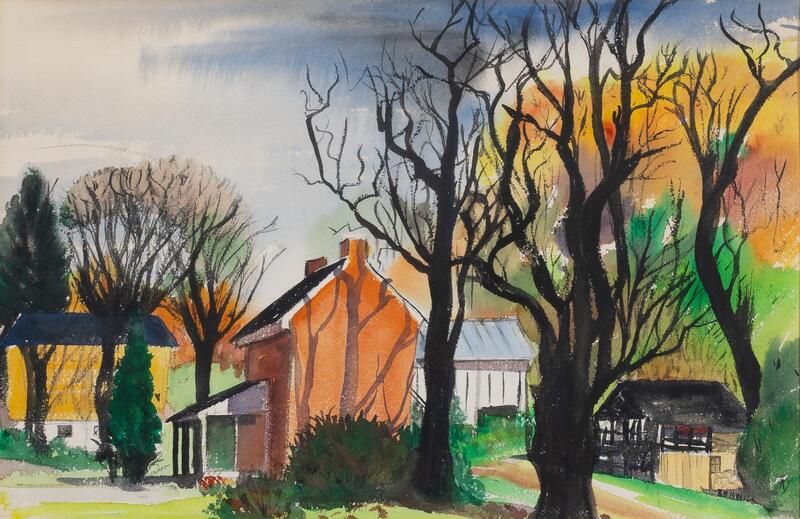
Gladys Williams Renwick was a painter from St.Louis, MO. Kirks Mill is a watercolor painting of a rural neighborhood in Autumn. The painting features four homes of various sizes and colors. There are various trees in the background: some barren and others with orange and green leaves.
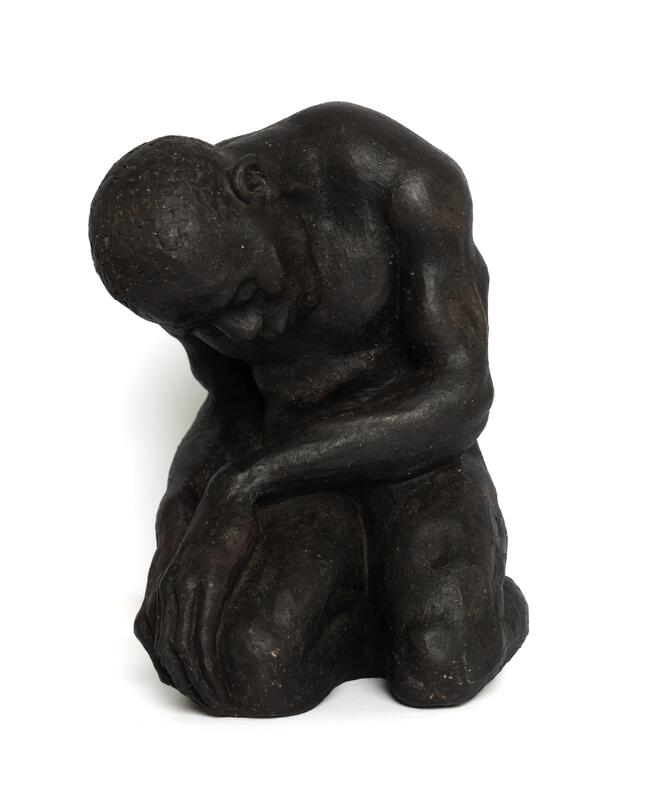
John T. Biggers was an educator, painter, and muralist from Gastonia, NC. Kneeling Figure is a sculpture of a nude man kneeling on his knees. His back is hunched over as he leans to the left with his hands resting on his left knee.
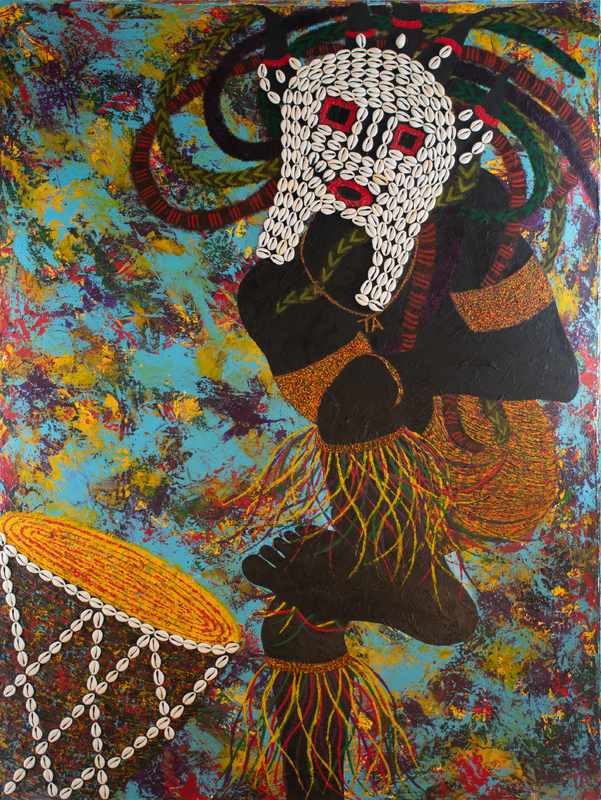
Alcee's mixed media painting, “Konga,” is a testament to music's power to uplift and excite. The artist draws inspiration from his experience working alongside Franck Kemkeng Noah, who taught him about the significance of Bamileke masks and symbols during a residency at TSU, and his St. Lucian heritage, shown in the vibrant colors and fluid movement of the piece. Alcee graduated from Texas Southern University is currently pursuing a teaching certification.
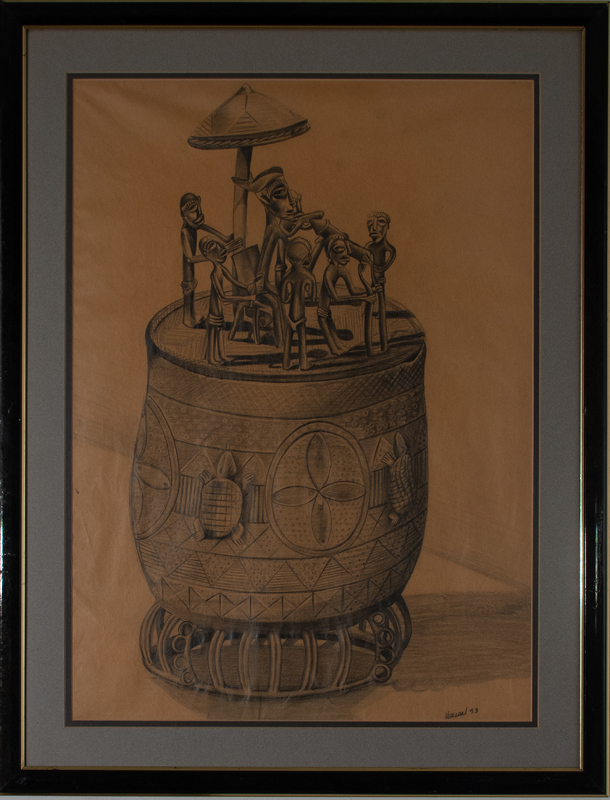
This drawing by Vernon Simmons depicts a kuduo, vessels owned by kings in Akan kingdoms (modern-day Ghana), adorned by tortoises, a sign of longevity. The central figure seated under the umbrella is the nana, a ruler of the Akan people; he is surrounded by attendants. Dr. Biggers was an avid collector of African art and he used pieces from his collection as teaching tools for his students.
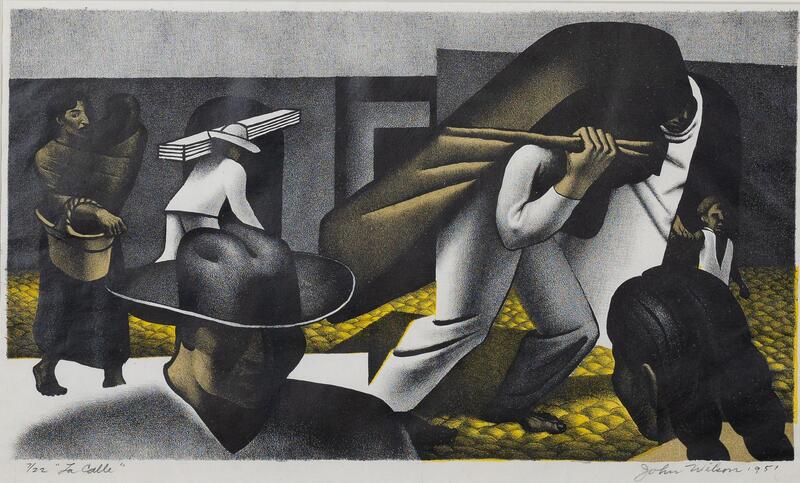
John Woodrow Wilson was a sculptor, painter, printmaker, and educator from Roxbury, MA. La Calle, or The Street, is a print depiction of people traveling a gold cobblestoned street. There are male workers carrying wood and rock slabs, women and their children walking, a woman watching the street, and a man facing the viewer.
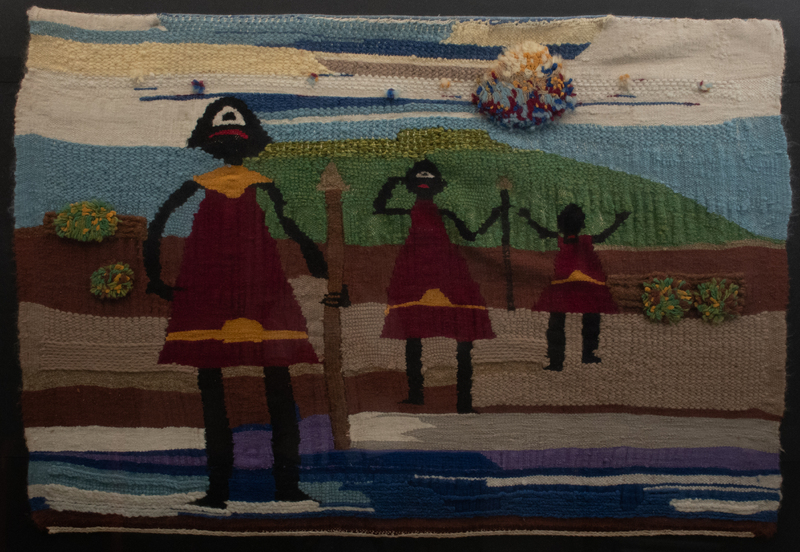
Cole blends weaving methods with surrealist elements in this piece. The work depicts three cyclopes, mythological figures with one eye in the center of their foreheads, standing on a shore. Two of them are holding spears, while a meteor hurtles through the sky. The frowning faces of the figures add to the sense of impending doom.
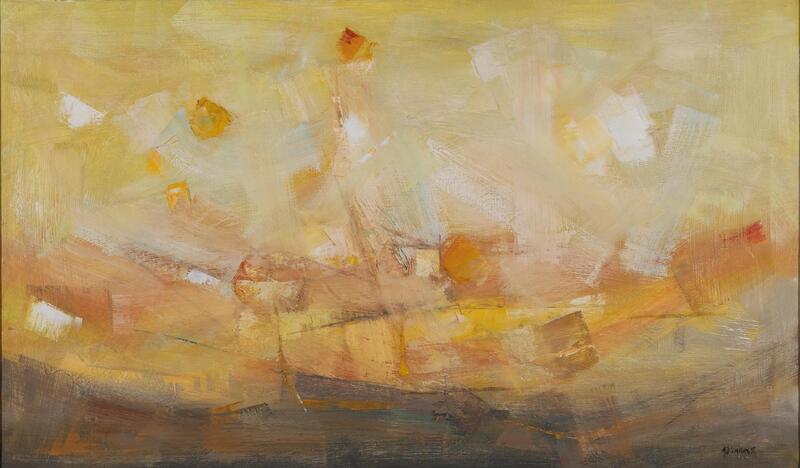
Merton D. Simpson was an abstract expressionist painter and African art collector from Brooklyn, N.Y. Landscape of Summer is an abstract depiction of a sunny day. Simpson blends shades of yellow, orange, and brown to emulate the luminence of a summer day.
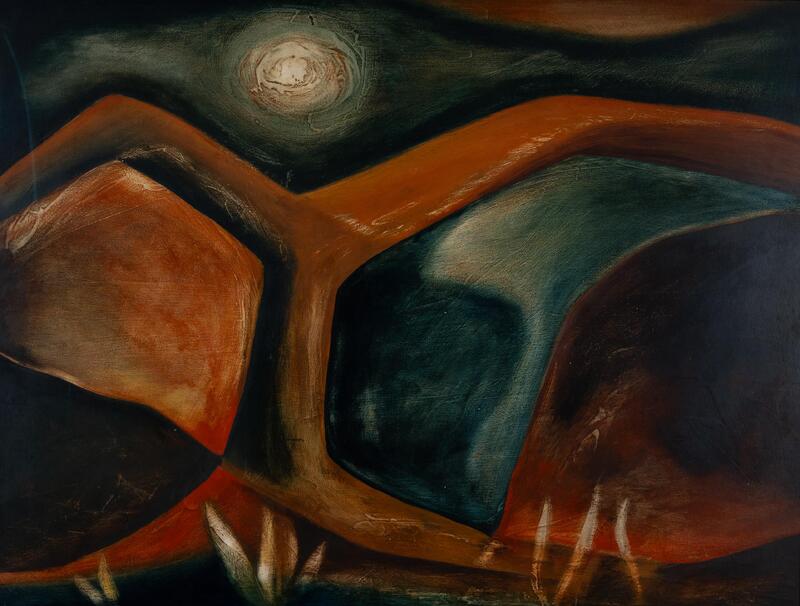
Merton D. Simpson was an abstract expressionist painter and African art collector. Landscape Symphony is an abstract landscape that depicts a white sun with hues of a dark blue-green sky. The connected polygons of vibrant red, green, and orange are the main emphasis of the piece. They reach three bunches of short highlighted strokes in the landscape.
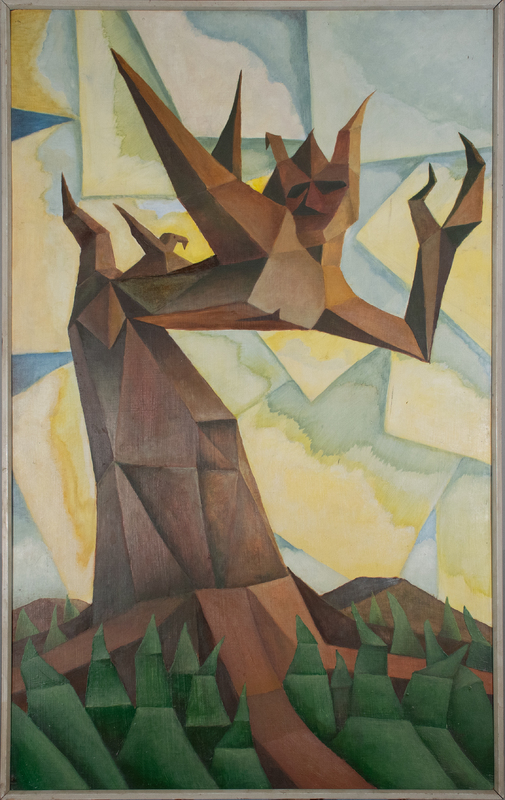
Sifuentes' painting shows a landscape filled with grass and a barren tree, with a bird perched atop. The tree bears human characteristics, perhaps symbolizing the interconnectedness of all living beings. This piece is painted in a geometric style that appears frequently in the work of students of Dr. John T. Biggers during the mid to late 1970s. Sifuentes later went on to become an art professor at Texas Southern.
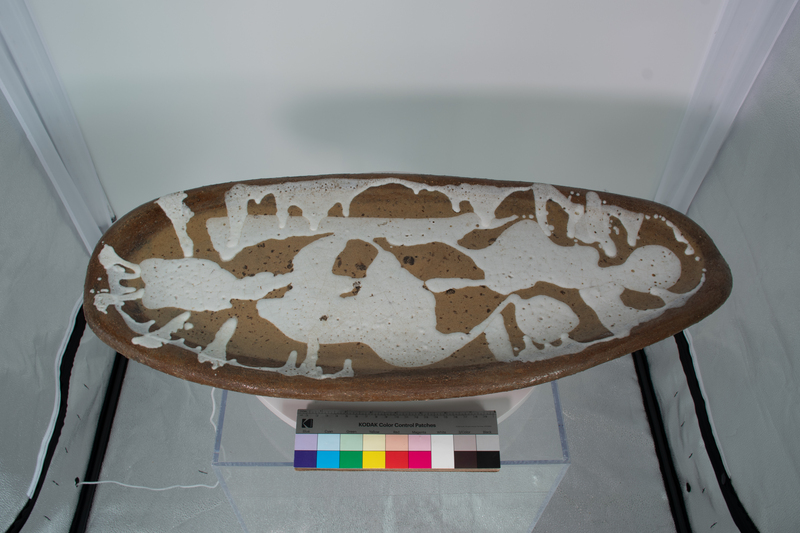
Simms’ large ceramic platter is made from clay with a splotchy white glaze on the top. Carroll Harris Simms worked alongside Dr. John T. Biggers to establish the Texas Southern University Art Department. Simms taught sculpture, ceramics, and jewelry-making classes.
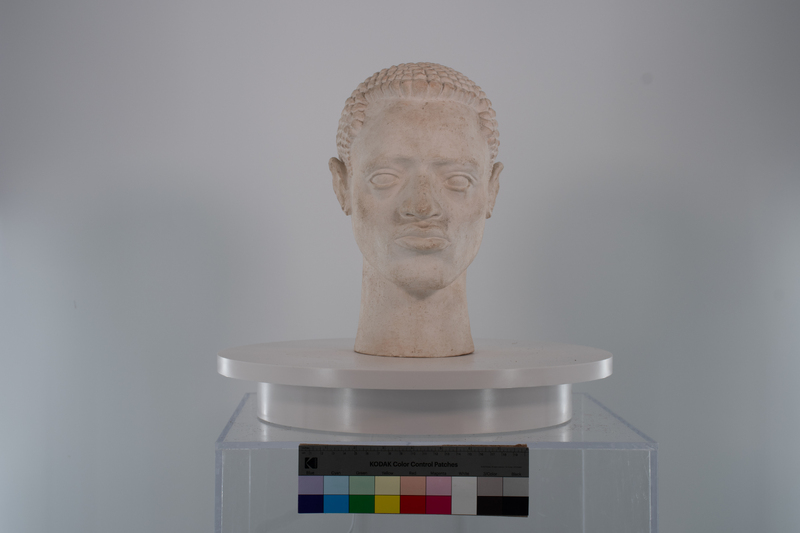
Leon Renfro’s bust is unique within the Texas Southern sculpture collection. It is one of only two busts made from a white plaster (as opposed to the standard terracotta material). The sculpture is also rather bare, lacking the intricate embellishments and ornamentation that are typical of the work of Carroll Harris Simms’ students.
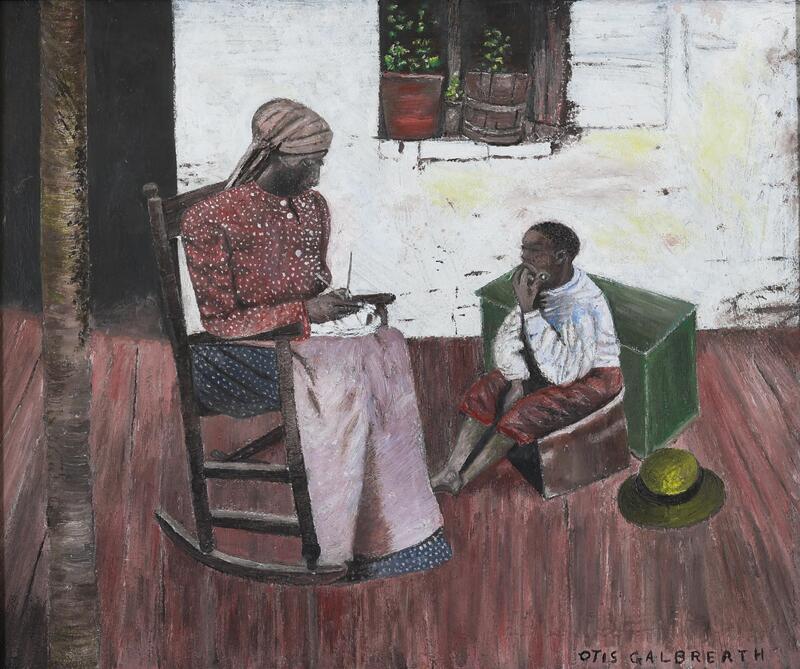
Otis Galbreath was an artist from Jackson, MI. Let By-Gones be By-Gones shows a woman and a young boy sitting down in a room with wooden floors and plant barrels behind them. The woman sits in a rocking chair looking down to knit, while the boy sits across from her with a hand in his mouth. A green hat sits beside him.
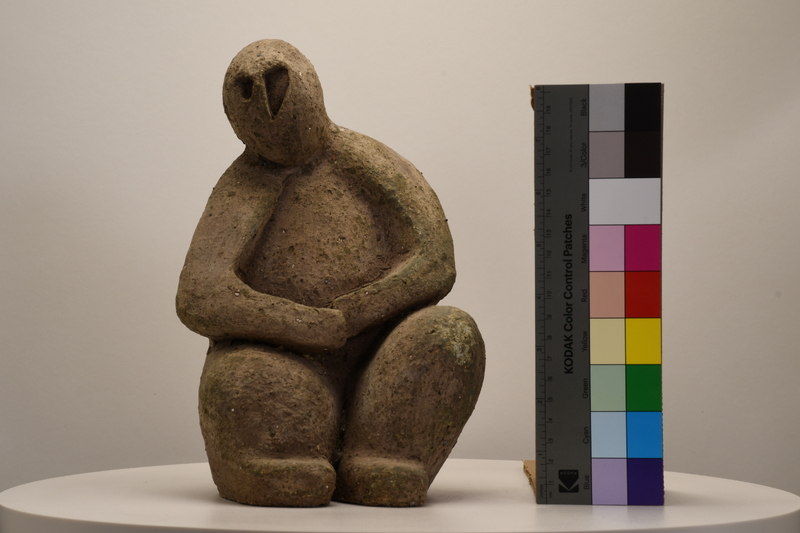
This maquette was created by a Texas Southern University art student. It is a lone figure with defined arms. The porous material and greenish hue evoke the appearance of a mossy rock.
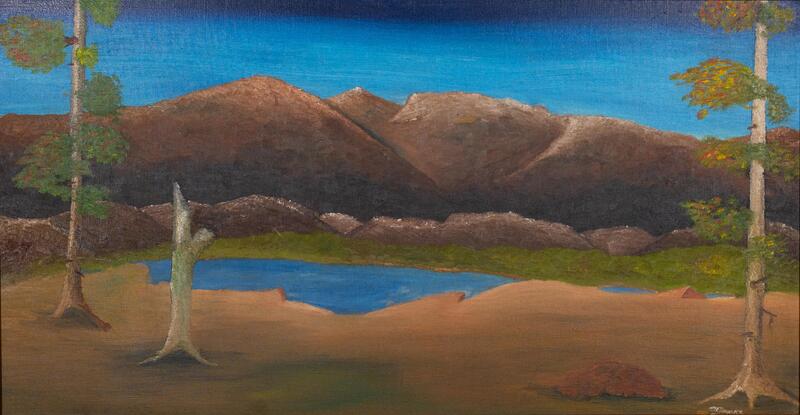
Oliver Banks Jr. was an artist from Atlanta, GA. Loneliness depicts a lone valley outside of a mountain range. In the foreground is flat land with scantily leafed trees. Beyond that is a body of water that separates the valley from the foot of the mountain.
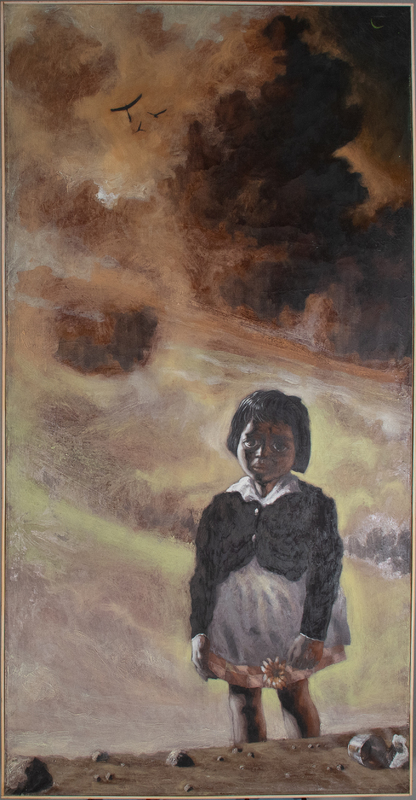
Oliver's painting is of a young girl, standing by herself, with large eyes and a mournful expression. She is positioned on dry, rocky land with a single flower in her hand, perhaps alluding to feelings of emptiness and desertion. Behind her is a bleak skyline, with birds overhead. They are the girl’s only companions in the painting.
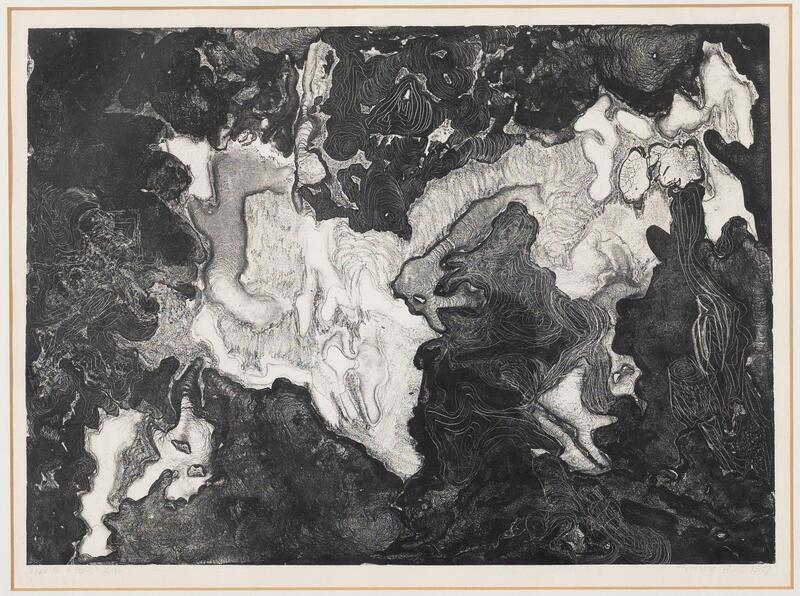
Tommie E. Price was an artist from Tulsa, OK. Lost For A Name shows white and black abstract shapes and forms with thinly drawn lines. They are layered to create contrast, variety, and movement for the viewer to experience.
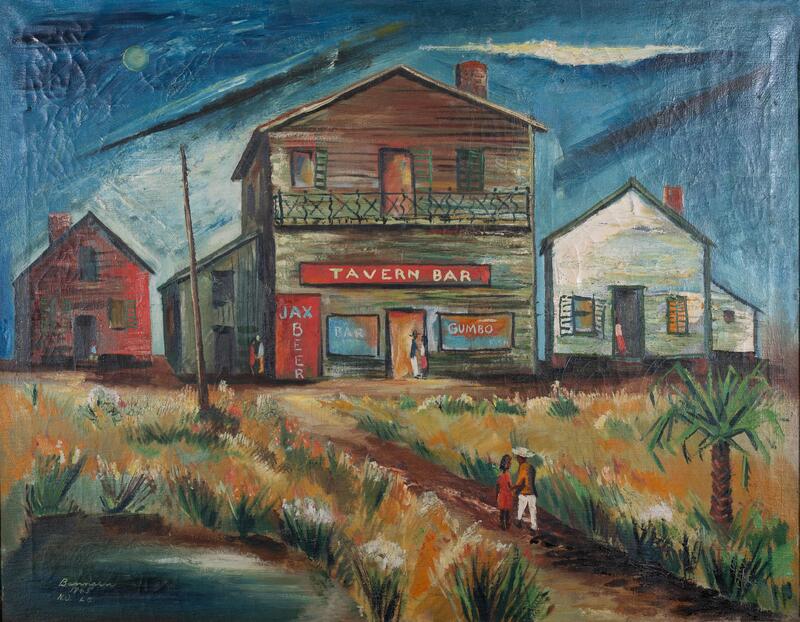
Henry Wilmer Bannarn was a Harlem Renaissance sculptor and artist who worked in pastel and free-form sketching. Louisiana Nocturne depicts the nightlife of a rural town in Louisiana. The piece shows three couples around a two-story building marked Tavern Bar. The bar is between two buildings, and a person is on both porches.
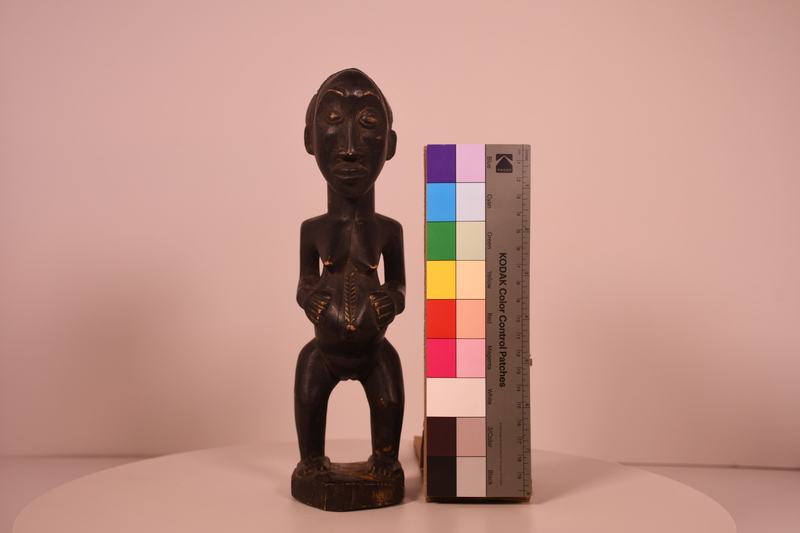
This is a Luba sculpture from the Democratic Republic of Congo of a pregnant woman holding her stomach. The Luba are a matriarchal society and often create art centered around women, placing emphasis on their importance in their society. Some suggest that these figures are used to promote fertility.
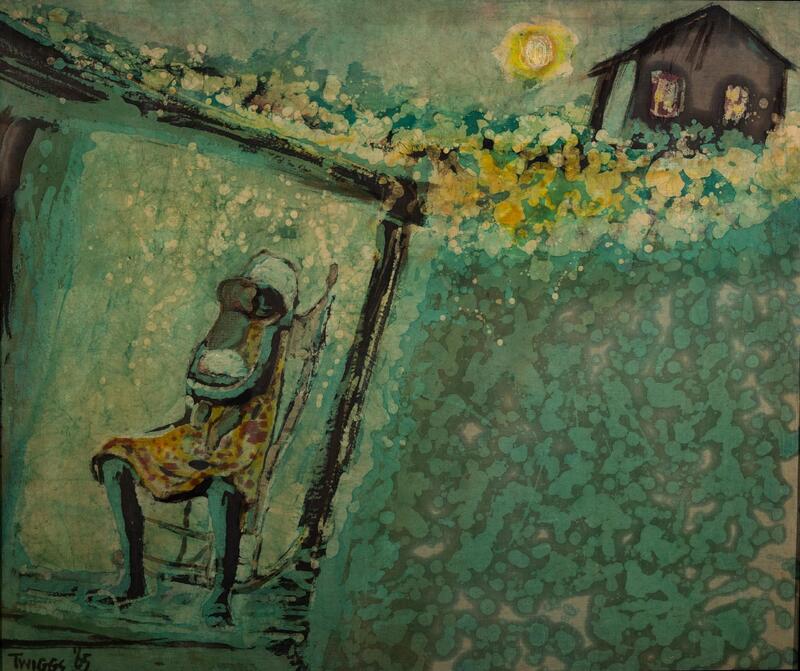
Leo Twiggs was an artist and art professor from St. Stephen, SC. Lullaby depicts a mother singing to her child in a rocking chair. The abstracted background shows farmland as the sun sets just beyond a barn.
Renee Stout is an artist and sculptor from Junction City, KS. Lunch at the Bush White House is a conceptual gothic painting that explores the intersection of Stout's critique of the Bush administration and numerology from an atmospheric perspective. Above a plantation-like landscape, Stout depicts a heart impaled by an ornate fork.
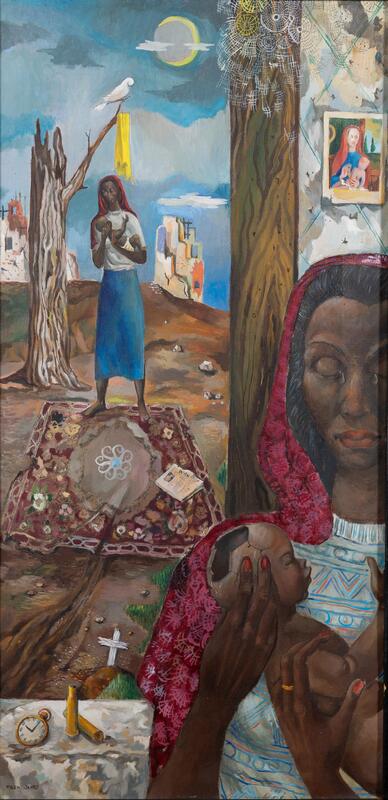
Frederick D. Jones, Jr. is a twentieth-century artist from Chicago, Ill. Madonna Moderne depicts surrealist vignettes of a Black Madonna and child. The piece shows a veiled mother holding an injured baby and the same pair at a gravesite in a war-torn landscape. Jones also includes symbols of purity, humanity, war, and mortality.
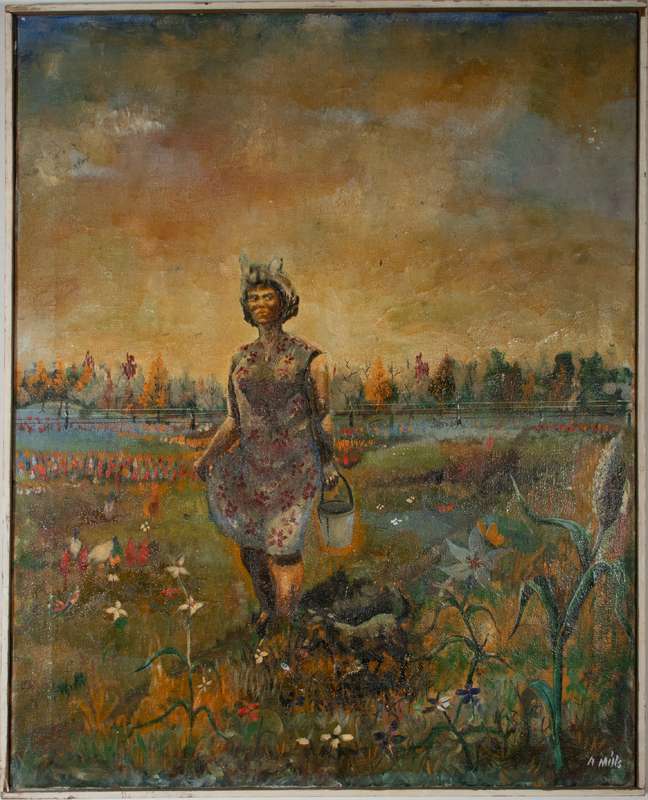
Armstead Mills' painting shows a woman holding a bucket and striding through a field of flowers, with a small dog at her ankles. Malindy, wearing a dress and carrying a bucket, is portrayed tenderly and beautifully in this colorful nature scene. Mills' brother, Edward, also attended Texas Southern as an art student.
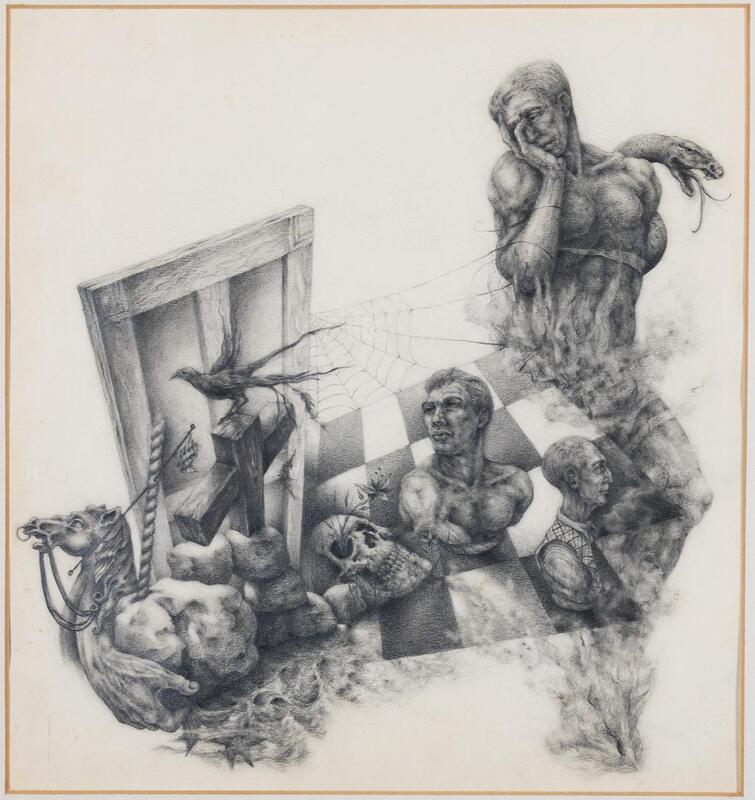
Patricia C. Walker was an artist from Worcester, MA. Man is a surrealist drawing that uses gothic symbols, such as the cross, crow on the tombstone, skull, and older man, to signify human mortality. It also uses Christian iconography, such as Adam and the Snake.