This collection showcases the rich legacies of HBCUs through artistic expression. Featured works include paintings, sculptures, murals, mixed media, prints, drawings, and fine art photography.
Date Modified
2025-12-17
About This Record
The HCAC public history focused digital archive cataloging is an ongoing process, and we may update this record as we conduct additional research and review. We welcome your comments and feedback if you have more information to share about an item featured on the site, please contact us at: HCAC-DigiTeam@si.edu
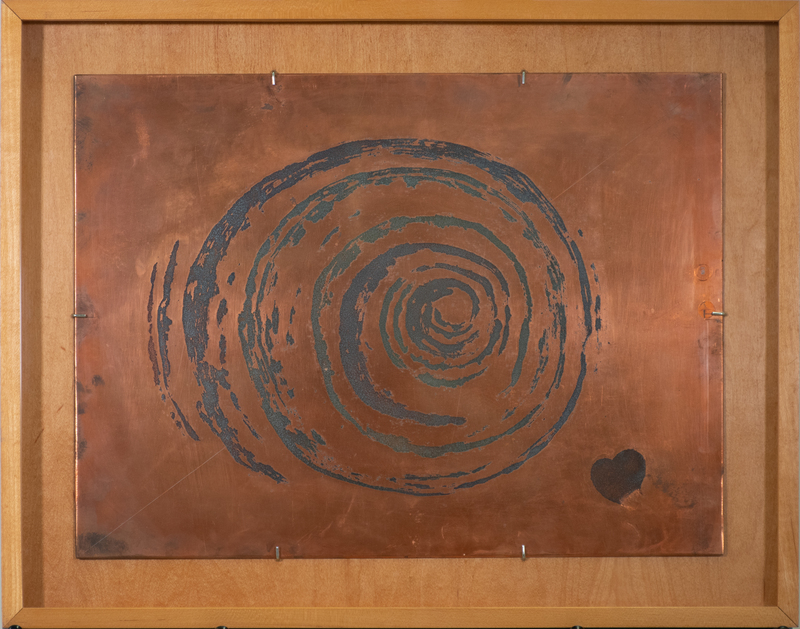
This is a copper etching plate for Long’s piece Roma, which was created during his 1990-91 Prix de Rome fellowship. Featuring one layer of the print, a series of swirls and a heart, the full composition is somewhat reminiscent of Da Vinci’s Vitruvian Man. Long rose to prominence as an “outsider artist” without formal training, later becoming one of the co-founders of Project Row Houses.
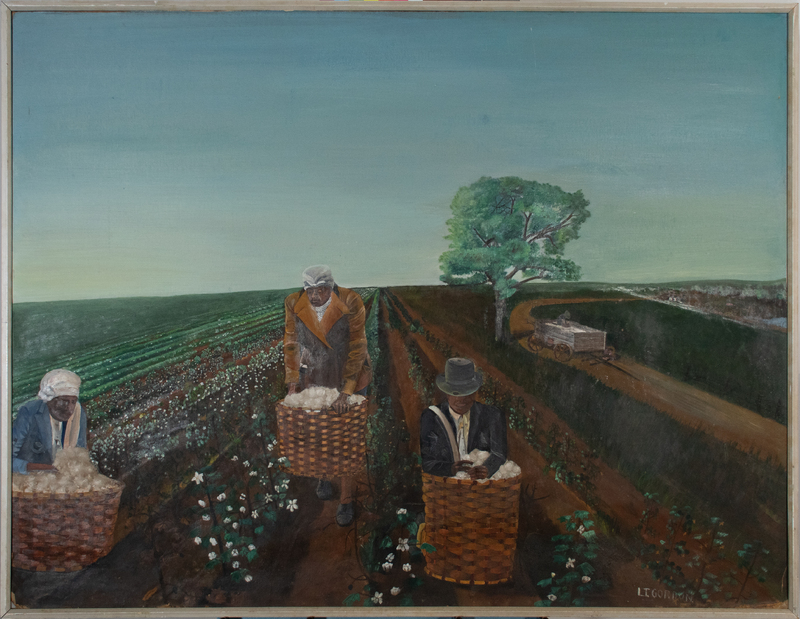
Gordon's painting reflects the work life of cotton harvesters. The three pictured laborers are older and formally dressed as they pick cotton bolls and carry baskets. Many of the cotton plants are shown with white flowers, an early stage in the plant’s development. This suggests Gordon may be familiar with the process of cotton farming and harvesting.
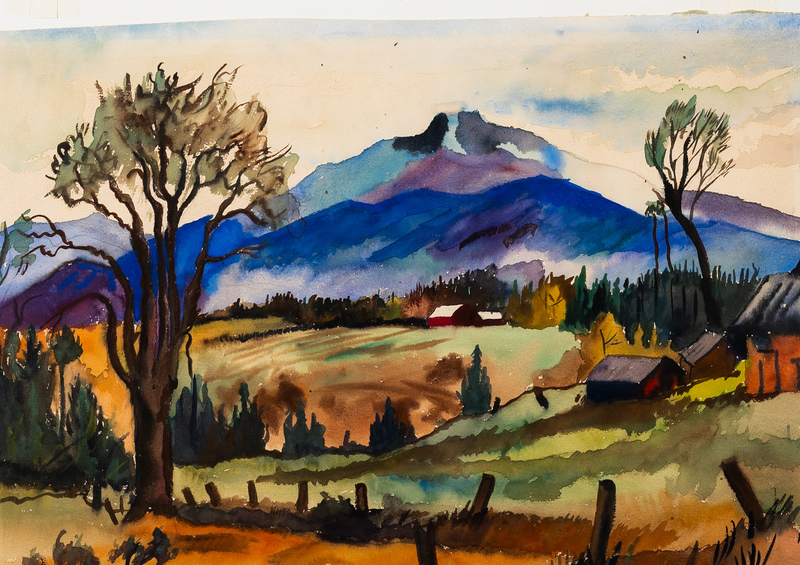
Lewis E. Stephens was an artist and photographer from Hamden, CT. "Country" is a rural landscape painting depicting a residential area beneath a mountain range. In the foreground is an open landscape with a vegetation between residential farms. In the background, Stephens uses cool hues to illustrate the mountains.
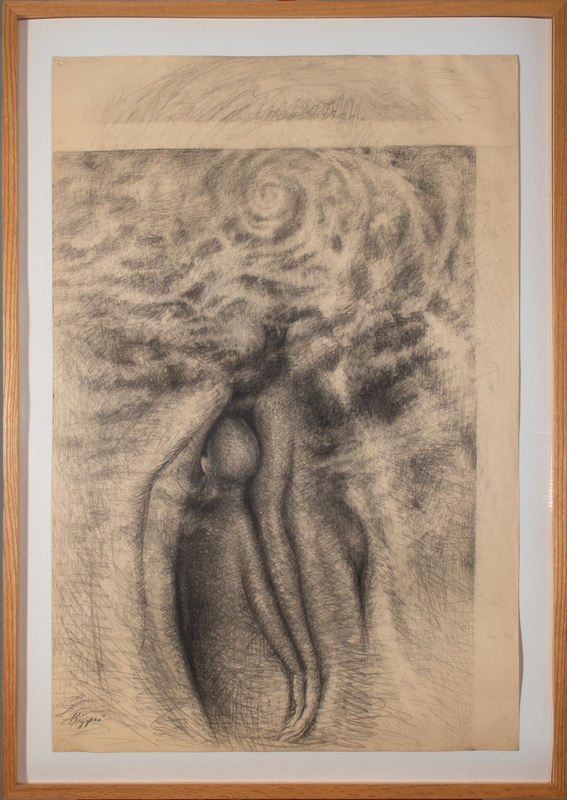
This drawing by Dr. John T. Biggers depicts a family caught up in a wild storm that is swirling around them. Biggers' artwork frequently highlights family dynamics and the centrality of mothers. Biggers appears to have later repurposed this sketch and added additional floral details to create his 1992 print Metamorphosis III.
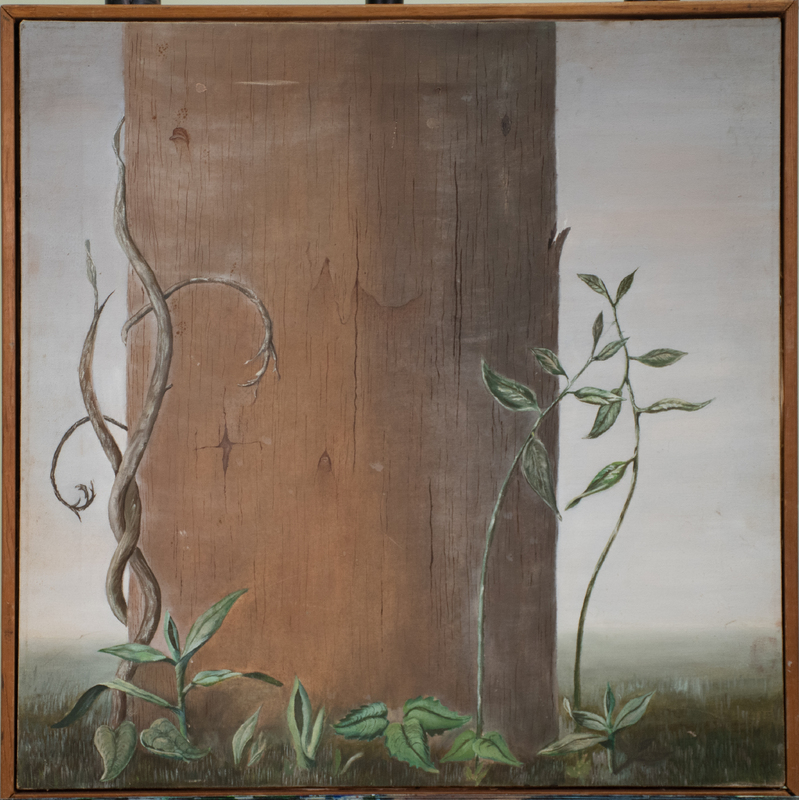
This painting, created by an unknown TSU art student, depicts the base of a tree or wooden telephone pole, with various smaller plants and vines creeping up its structure. Dr. John T. Biggers encouraged students to study the natural world and seek inspiration from it. He instructed students to sit outside for an extended period of time and observe.
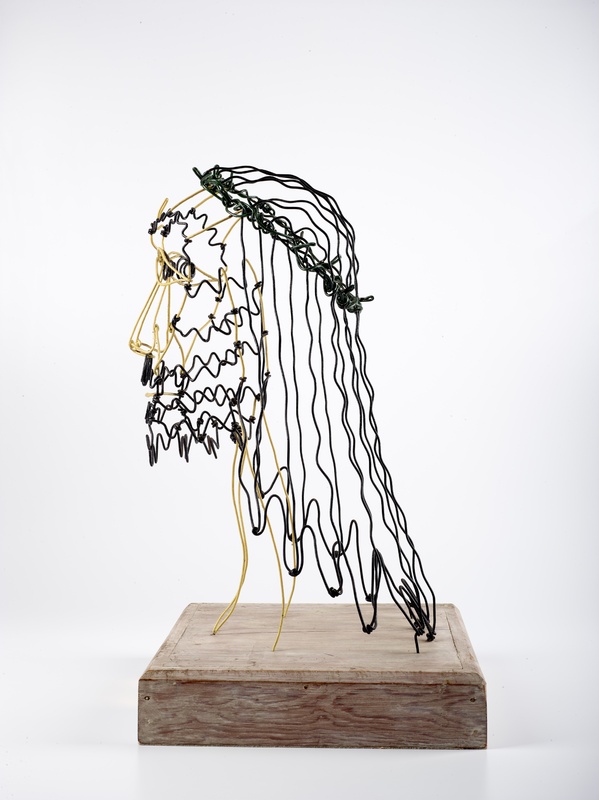
Hayward Oubre was a multimedia artist and educator from New Orleans, LA. During his time competing at the annuals, Oubre developed his artistic practice to include wire to set himself apart from his competition. "Crown of Thorns" is a metal wire framework depiction of Jesus that represents Oubre's skill in wire sculpture.
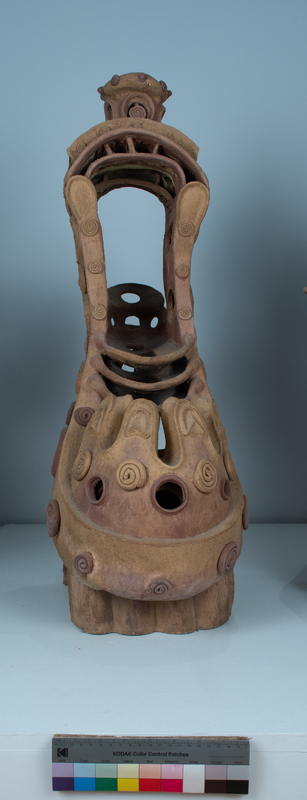
“Shrine,” by Curtis Watson Jr., features a duck-like creature surrounded by various embellishments, including spirals, a commonly used visual motif in the student terracottas. Unfortunately, the head of the figure is missing, leaving only the body in view. The full sculpture can be seen in archival photos shot by Dr. John T. Biggers of the artist at work.
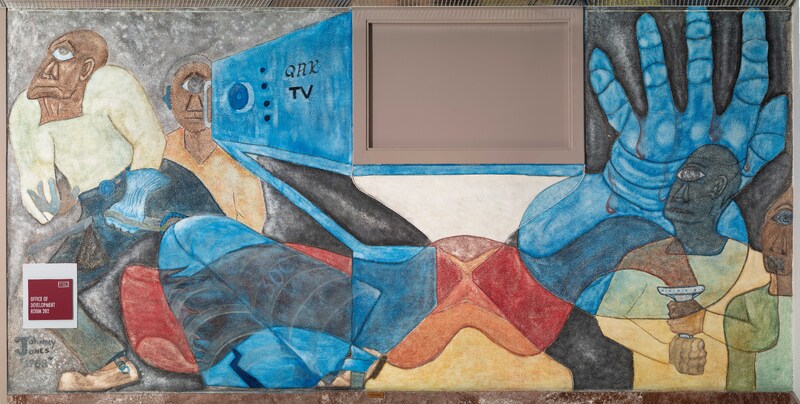
Jones’ surrealistic mural depicts bald, cyclops-like men conducting a television broadcast. Jones incorporated architecture into the design by using a window, since painted over, as the camera’s lens. A man beneath the camera carries a torch with a strong, flowing flame.
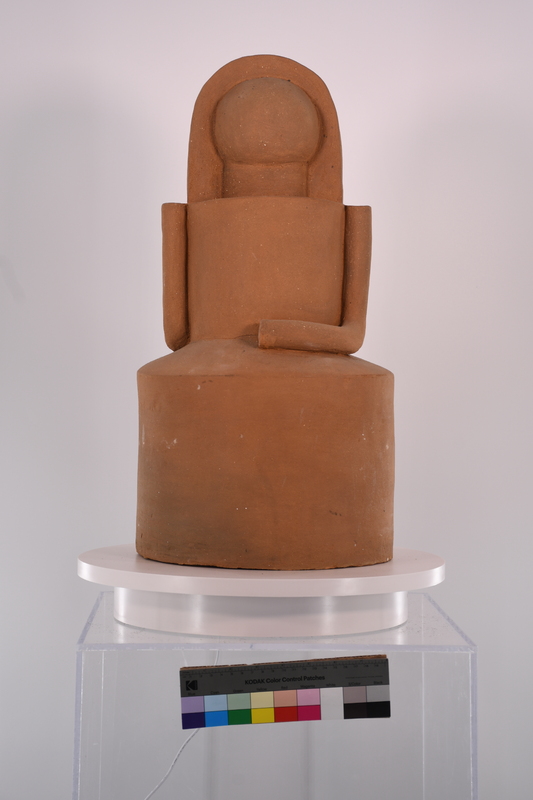
Jafar’s terracotta depicts a mother figure carrying her child on her back. The exterior of the sculpture is smooth and lacking any of the motifs that are normally featured on Texas Southern students’ terracottas, perhaps suggesting the sculpture was left unfinished. The mother and child relationship is one of the most frequently featured themes in the artwork of students of Dr. Biggers and Professor Simms.
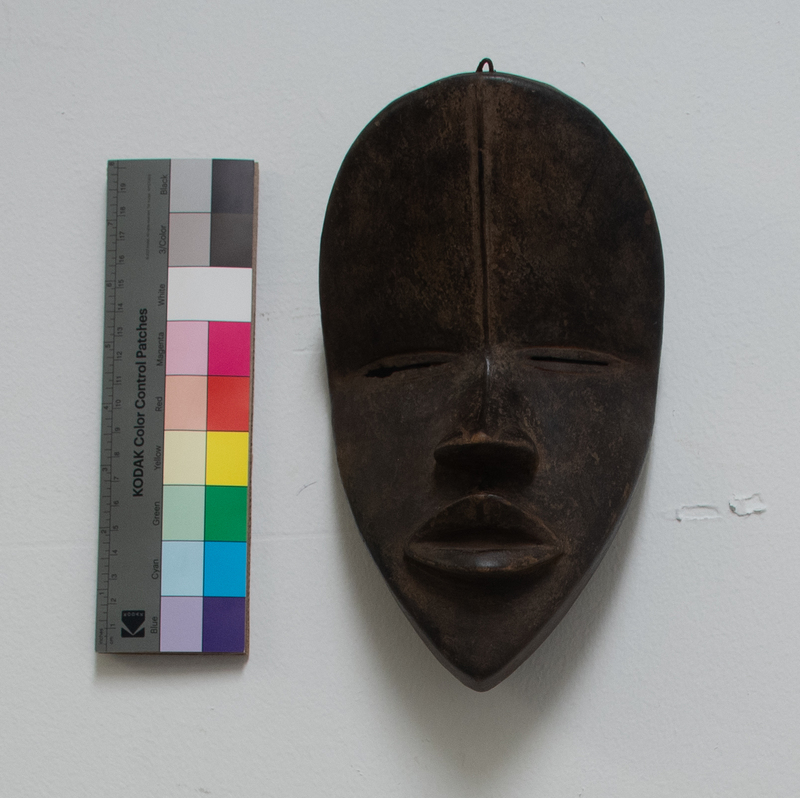
The face mask is from the Dan (Yacouba) ethnic group of Cote D'Ivoire and Liberia and is spiritually meaningful. The mask has simple facial features with small slits for eyes, a broad nose, and protruding lips and may be worn by dancers, athletes, and warriors.
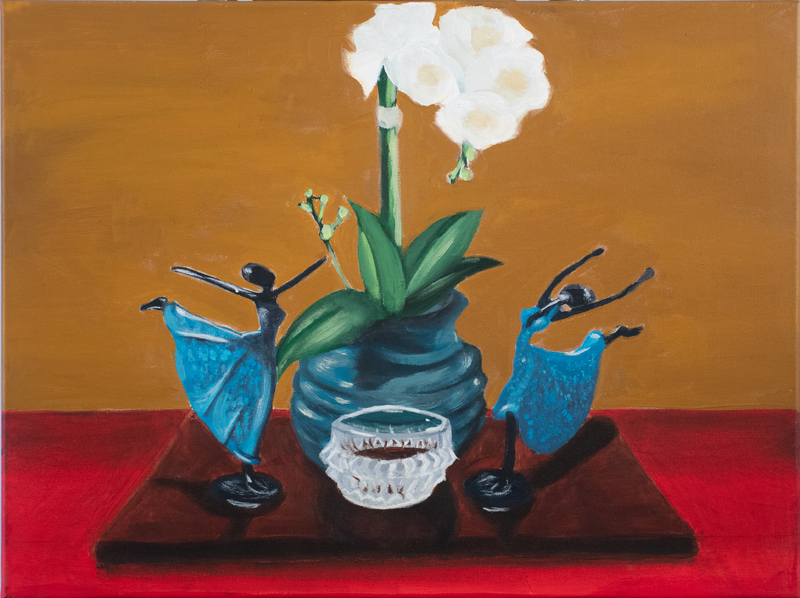
Etienne created her painting, “Dancing Still Life,” as part of a class assignment based on objects within her home. Etienne selected these figures, which her mother collected from the National Museum of African American History & Culture, white orchids in a blue pot, and a glass dish from her grandmother's home. A graduate from Texas Southern University, Etienne emphasizes femininity, movement, and flowers in her art.
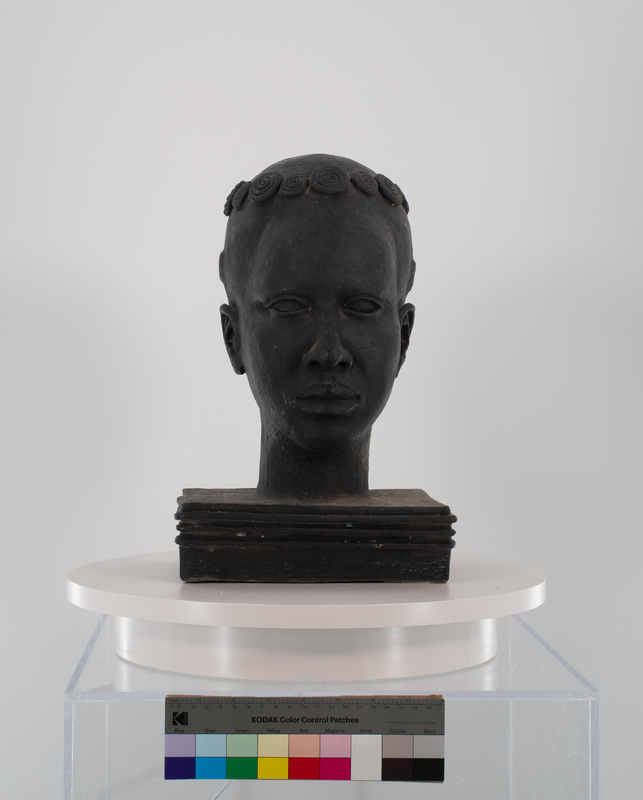
This unknown student’s bust was created during their time as an art student at TSU. Under the instruction of Professor Carroll Harris Simms, artists would create self-portraits embellished with decorations like spirals and accentuated crown pieces, like in this sculpture. These busts are inspired by Nok terracotta sculptures and Ife busts, which Simms saw during his travels to Western Africa. This bust is different from others due to its black ceramic and large rectangular base.
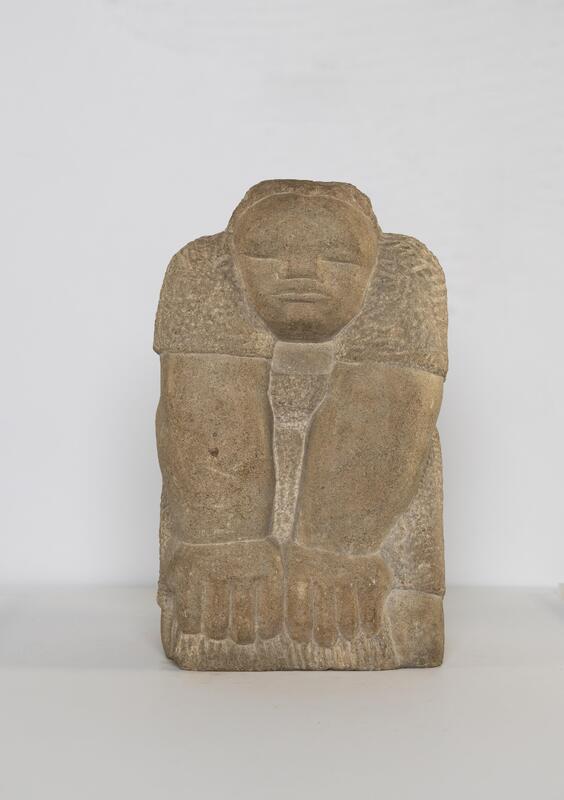
Henry Wilmer Bannarn was an educator, sculptor, painter, and sketch artist best known for his work during the Harlem Renaissance. "Daywork" is a limestone sculpture of a woman doing domestic labor. The female subject appears to be kneading something with raised shoulders.
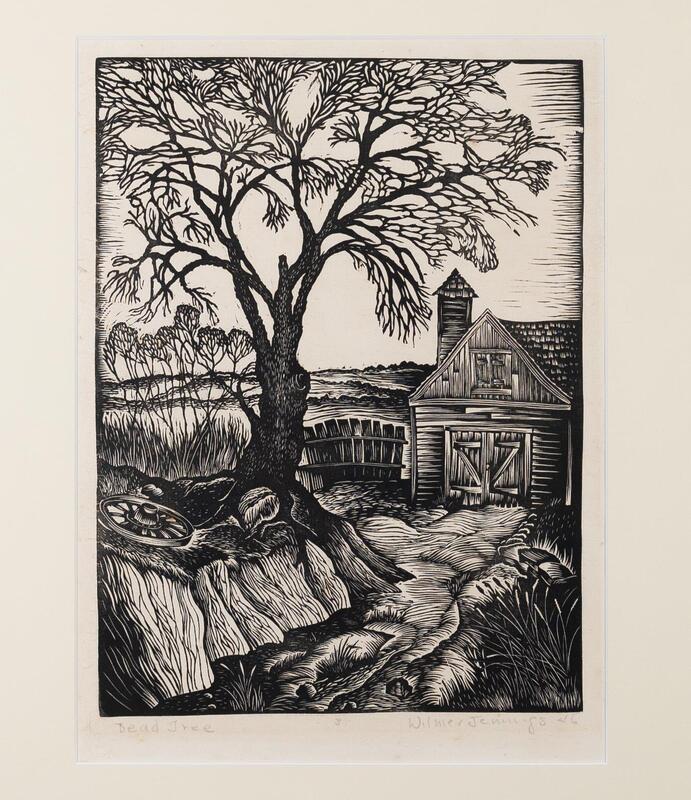
Wilmer Jennings was a printmaker, painter, and jeweler from Atlanta, GA.
"Dead Tree" depicts a small landscape of a large leafless tree and a barn with a gate. Wilmer’s hatching technique creates a range of both shadows and light throughout the scenery. The tree sitting in the foreground has a dark tone emphasizing it as the main subject.
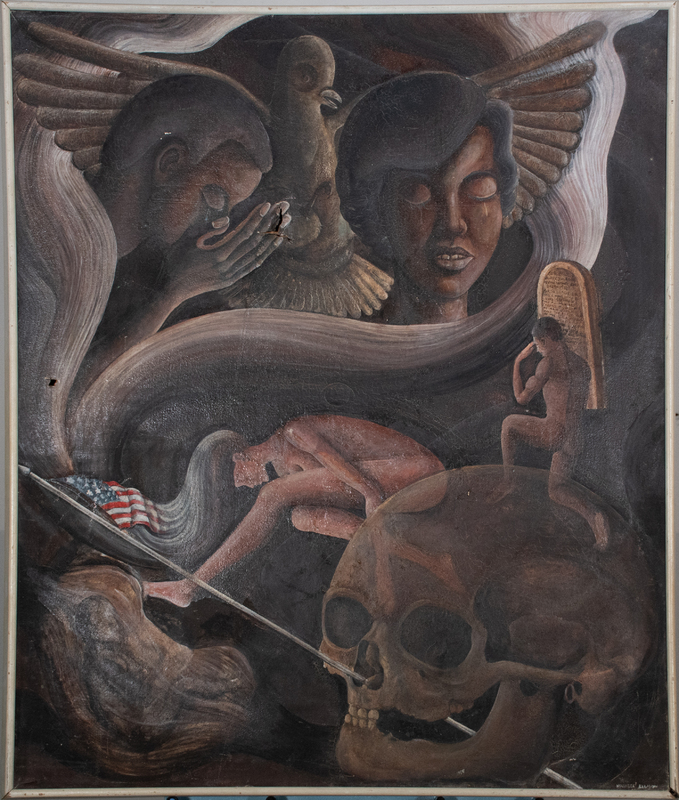
Ellison’s painting reflects the brutality and grief experienced by the Black community. In the foreground, a skull is pierced by the American flag. On the right side, a headstone honoring Martin Luther King, Jr. is surrounded by nude mourners. In the background, a shadowy dove spreads its wings, perhaps representing MLK’s dream of peace being obscured by white supremacist violence.
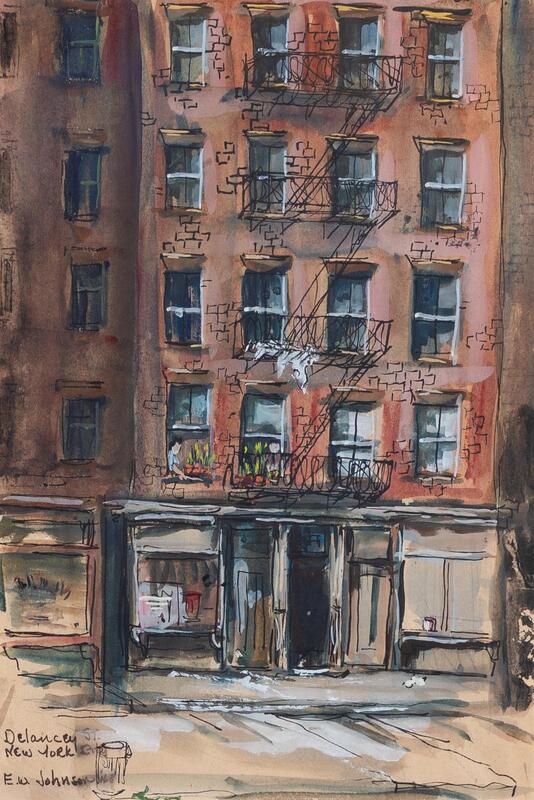
Estella W. Johnson was an artist from New York, NY. "Delancey Street, N.Y.C.," is a watercolor depiction of a multi-use building in New York. There is a red brick apartment above a storefront with a fire escape. There is also a woman watering plants out of her window.
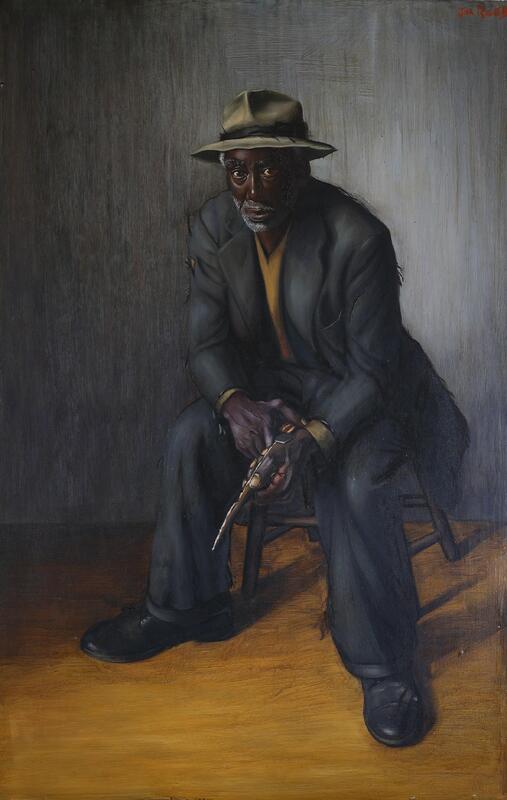
James Reuben Reed was a painter born in Kansas City, MO. "Depressed" is an oil painting of a seated man wearing a tattered gray suit, a hat, and black shoes. He is leaning forward, whiting a piece of wood and looking toward the viewer.
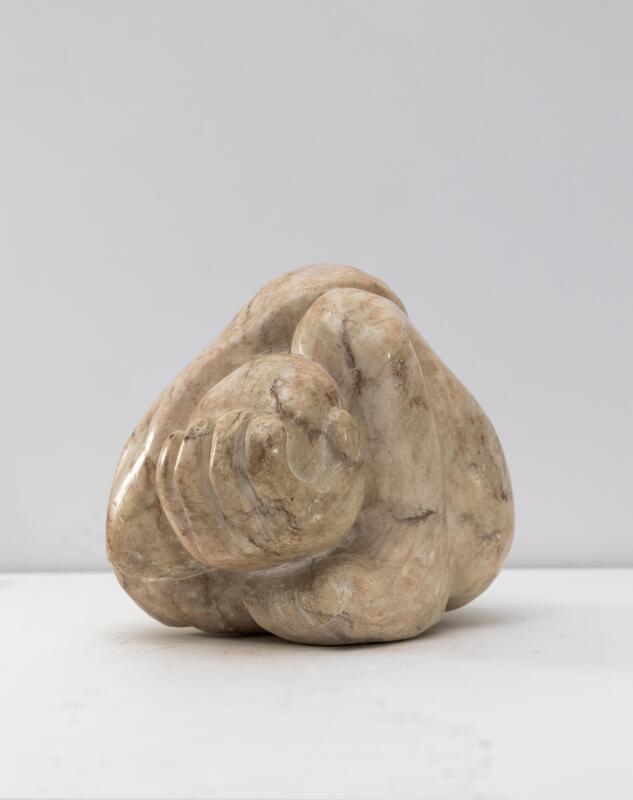
Irabell Cotton was a multidisciplinary artist from Harris, Oklahoma. "Despair" is a marble sculpture depicting a person in an anguished pose. The figure is balled into itself, with its head in one hand and the other arm wrapped around its shoulder.
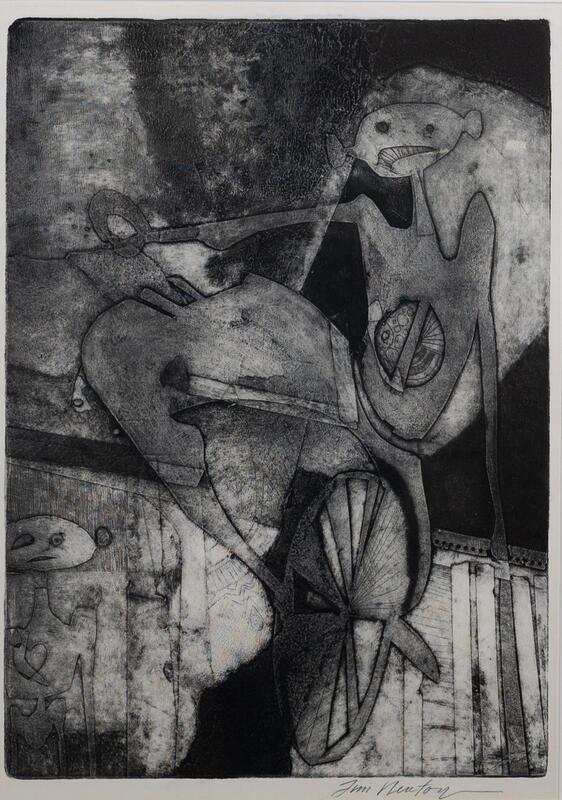
James Newton was a painter, printmaker, scholar, and professor from Delaware. "Desperate Faith" is a print depicting a mystical figure riding a unicycle as another figure watches. The dark, eery background contributes to the surrealism of the piece.
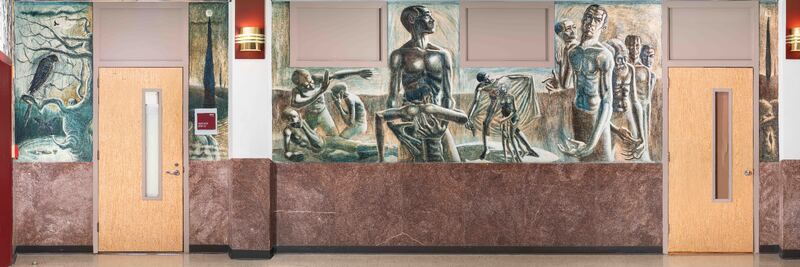
This is a universal scene of the despair and struggle facing a group determined to survive. The lone tree in the moonlight starkly symbolizes the darkness surrounding the scene (center left panel), while the tree rising from a swamp (leftmost panel) suggests hope with the bird, butterfly, and waterlily indicating transformative beauty.
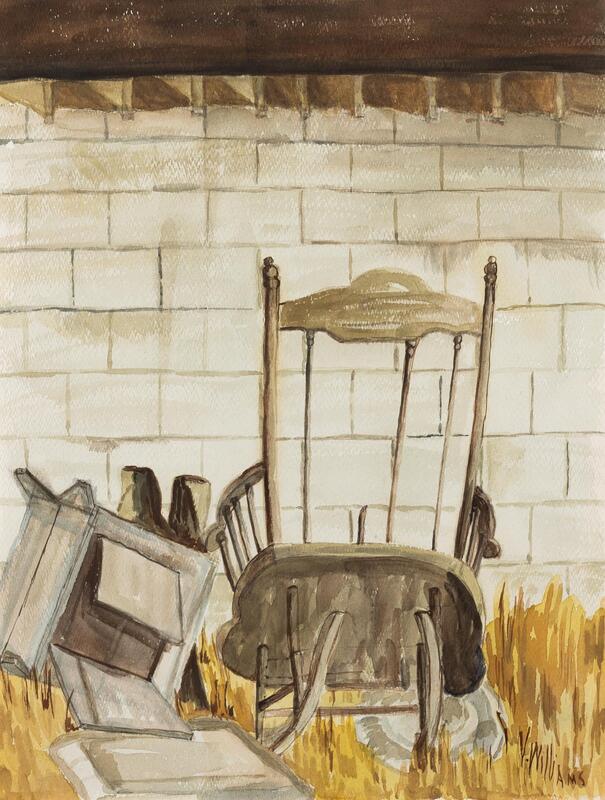
Vivian M. Williams was an artist and art teacher from Coshocton, OH. "Discards" depicts scattered pieces of wooden furniture, including a rocking chair, in a room with white-brown brick walls. The broken pieces have been cast aside on a bed of bright yellow hay with strands of golden brown.
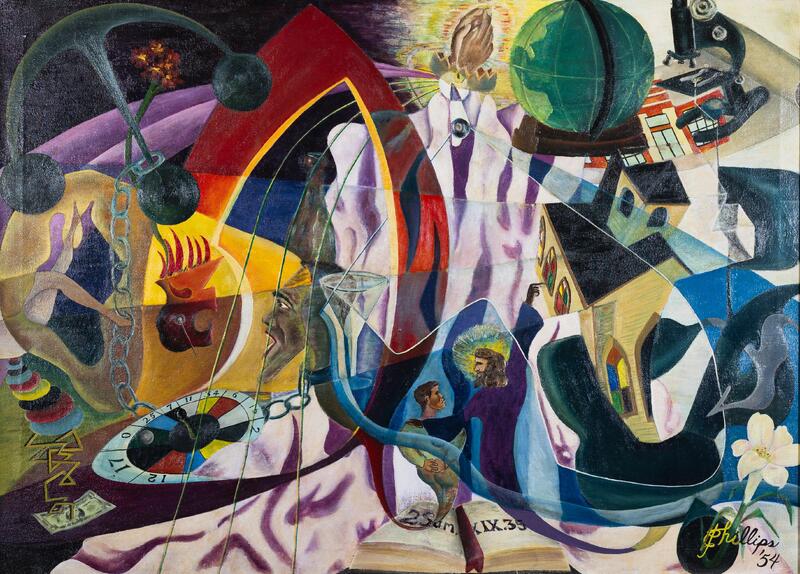
Harper T. Phillips was an artist from Courtland, AL. "Discernment" is a surrealist interrogation of the disciplines used to judge value in society. The left side has a dark background and features symbols of morality and mortality. The right side has a white background and features religious and scientific images and symbols.
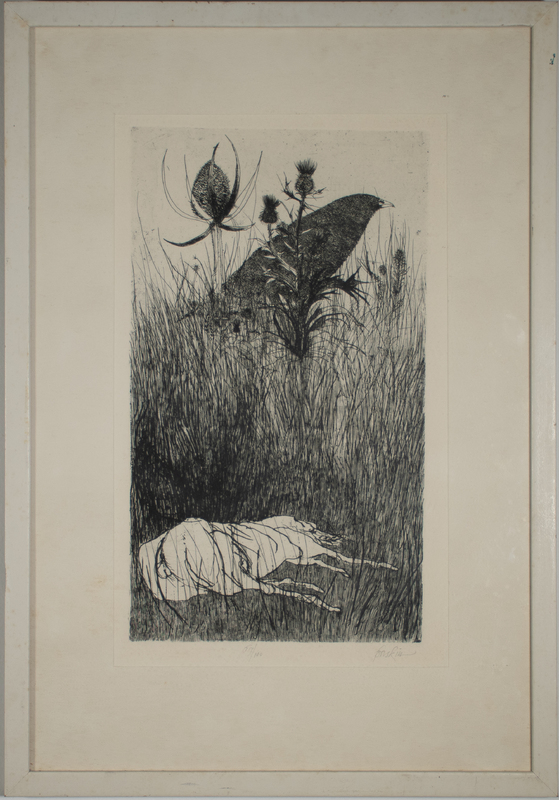
This etching by American artist Leonard Baskin shows a dog dozing in a meadow. A crow rests on a plant above the dog. Unlike most works held by the University Museum, the artist is not an alumnus of Texas Southern, nor tied to the university in any way. Instead, this piece was donated to the museum by a benefactor.
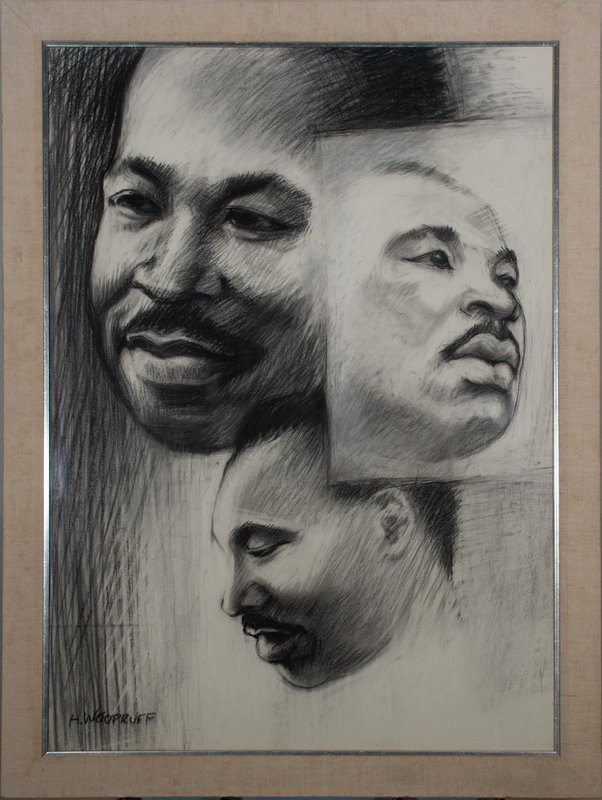
Woodruff’s portrait depicts Martin Luther King Jr., the iconic civil rights leader who was assassinated in 1968. Woodruff taught art at Atlanta University for 15 years and perhaps came into contact with MLK during this time. Two of these three side profiles appear to show King smiling, while in the third he is looking away with a serious expression. Woodruff's Art of the Negro murals at Clark Atlanta University are one of his crowning achievements.
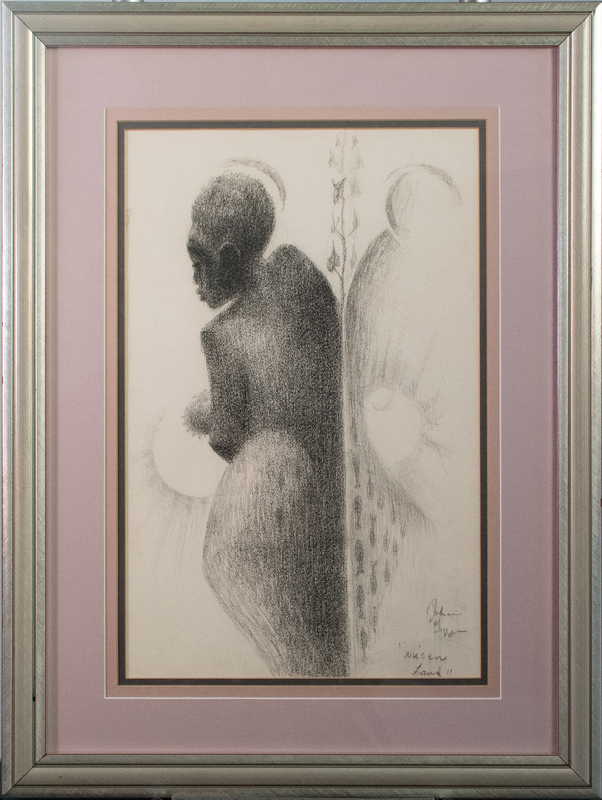
Biggers’ drawing shows a woman and her reflection. The woman, positioned on the left side of the composition, looks slightly back over her left shoulder, while the sun creeps out from around her midsection. The woman is cradling a baby in her arms. Her reflection is drawn loosely with minimal details, and the two are separated by a line of plant and fish shapes.
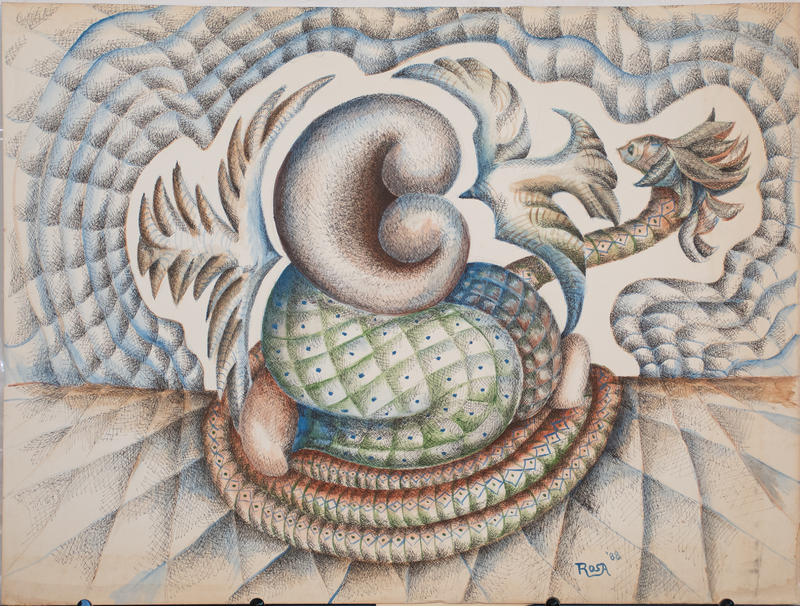
Mendoza’s drawing shows two doves and a serpent protecting an abstract, embryo-like figure. A geometric aura emanates from the bundle of creatures, perhaps alluding to the way parents protect their children. The drawing is created using crosshatching and heavy use of geometric shapes; both of these techniques are characteristic of the work of Dr. John T. Biggers and his students.
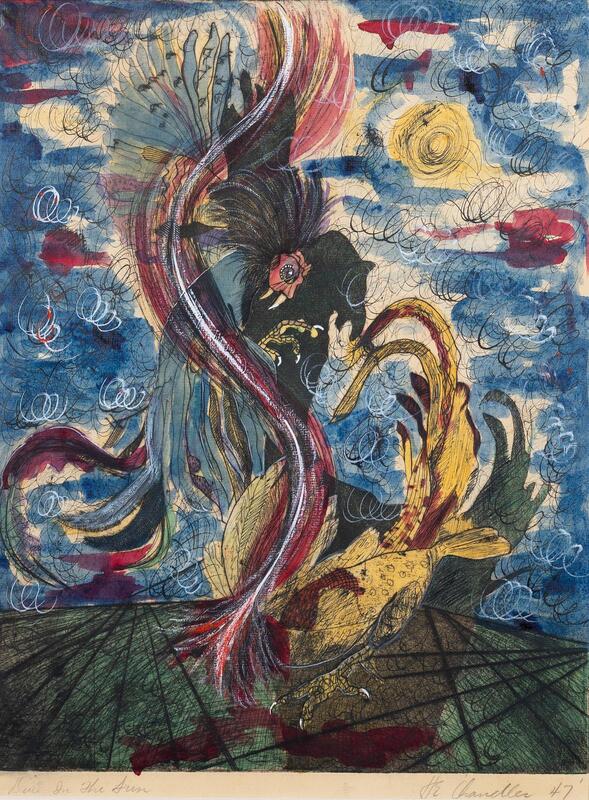
Houston Chandler was a sculptor, printmaker, painter, and teacher from Saint Louis, MO. "Duel in the Sun" is a print artwork of an avian battle on an abstracted landscape. One colorful rooster looks down upon the other it just defeated. The roosters are set on a green field against a blue sky with a swirling yellow sun.
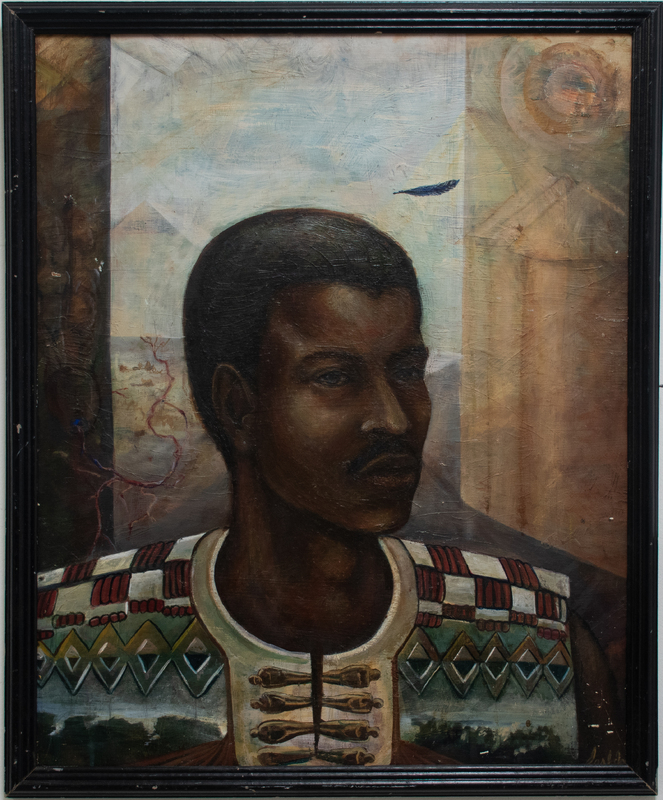
This painting is an Afrocentric self-portrait of Earl Jones, who attended Texas Southern University in the mid-1970s. Jones painted himself wearing a detailed shirt with various patterns reminiscent of African textiles. The background includes round homes with conical roofs. The buttons of Jones' shirt are in the form of humans and the shirt bears the design of a plowed field.
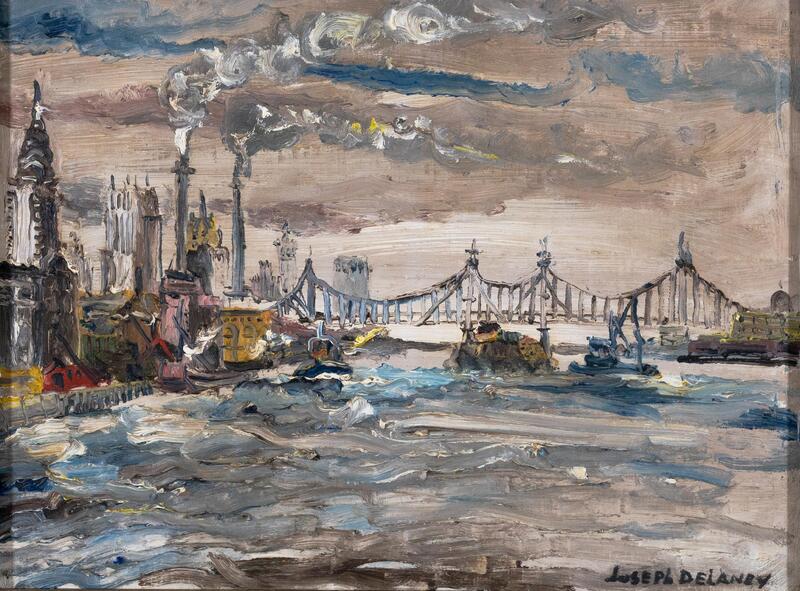
Joseph Delaney, younger brother of Beauford Delaney, was a Harlem Renaissance artist from Knoxville, TN. "East River" depicts the waterway that separates Queens from Manhattan in New York City. The impasto piece shows Queens and several boats by the Queensboro bridge with Manhattan in the distance.
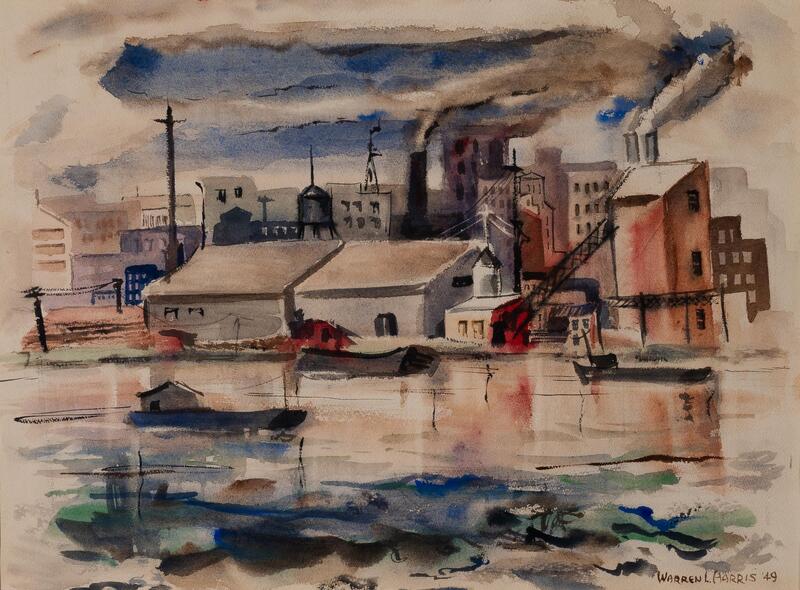
Warren L. Harris was a draftsman from Brooklyn, NY. "East River" is a watercolor painting of its namesake in New York City. Harris captures a scene of multi-floor buildings, a water tower, phone lines, and a factory along the bank of the river. There are several boats in the water.