This collection showcases the rich legacies of HBCUs through artistic expression. Featured works include paintings, sculptures, murals, mixed media, prints, drawings, and fine art photography.
Date Modified
2025-12-17
About This Record
The HCAC public history focused digital archive cataloging is an ongoing process, and we may update this record as we conduct additional research and review. We welcome your comments and feedback if you have more information to share about an item featured on the site, please contact us at: HCAC-DigiTeam@si.edu
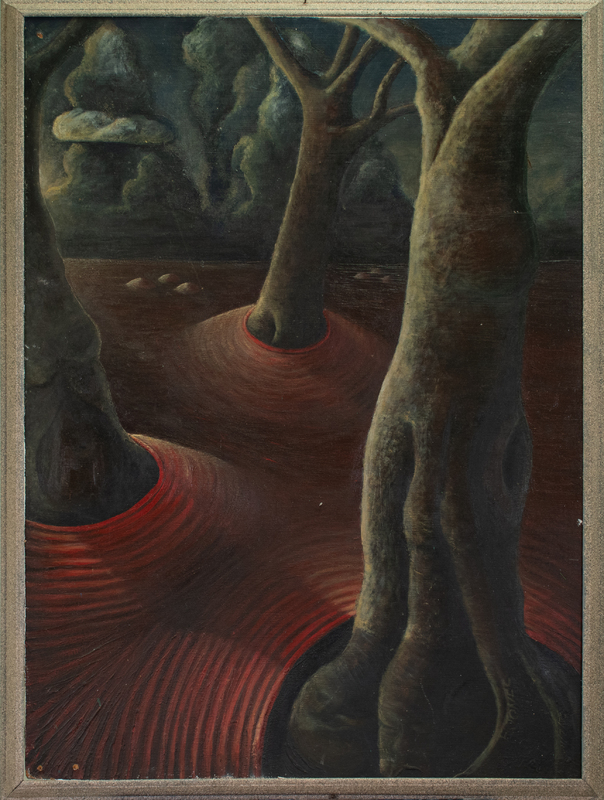
This work by Earl Jones is an abstract, desert landscape of barren trees, emerging from red and orange rings in the ground. Jones was a student at Texas Southern in the mid-1970s and was taught by artists and instructors like Dr. John T. Biggers and Professor Carroll Harris Simms. Biggers frequently urged his students to draw inspiration from nature and their immediate surroundings.
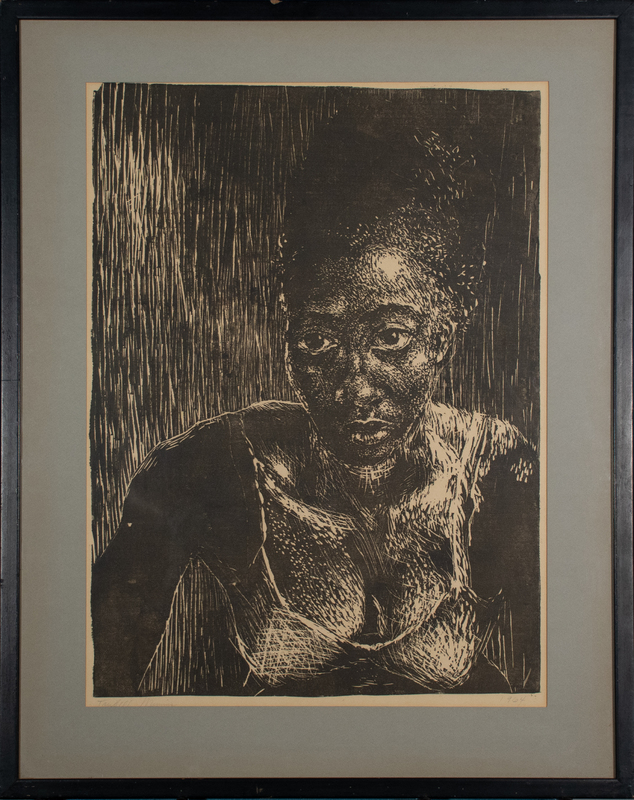
Obey’s print is a self-portrait. Under the direction of Dr. Biggers and Professor Simms, students would paint and draw self-portraits and sometimes sculpt self-portraits of their busts. This print depicts Obey in her bra; she also painted a self-portrait in a similar style. Biggers once referred to Obey as "one of our finest painters.”
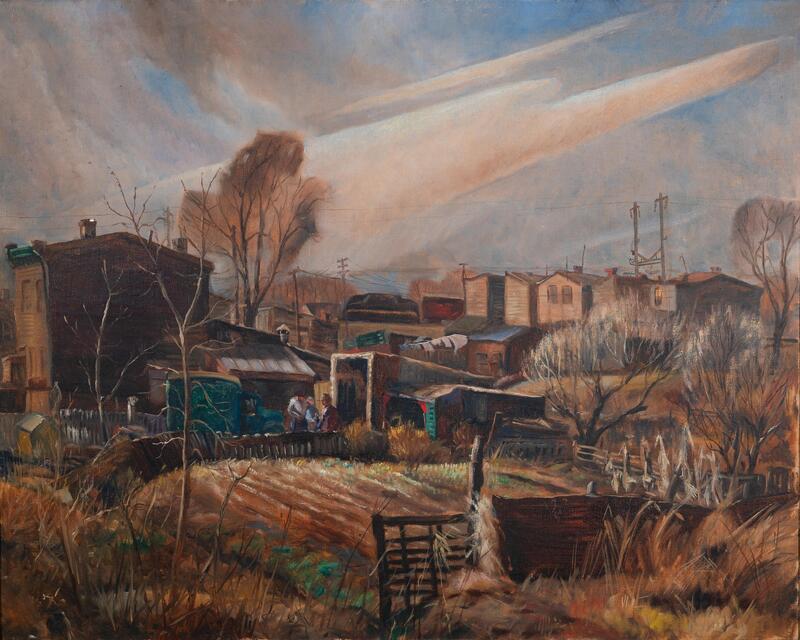
Edward L. Loper was an artist and teacher from Delaware known for his vibrant palette and juxtaposition of colors. Twelfth Street Gardens is a landscape piece illustrating a rural town under a slightly cloudy, blue sky during Autumn. The piece shows three men conversing beside a field in a rural residential area.
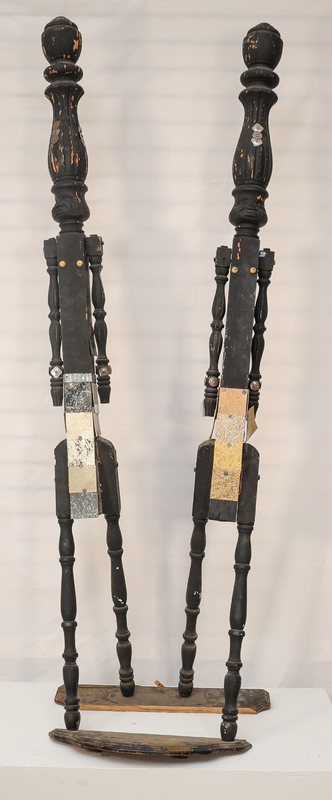
Dr. Eddie Jack Jordan, Sr. was a Southern artist from Wichita Falls, TX. Twin Fetish is a wooden sculpture of twins made from upcycled materials. This readymade art piece uses pieces of furniture to depict two twin siblings.
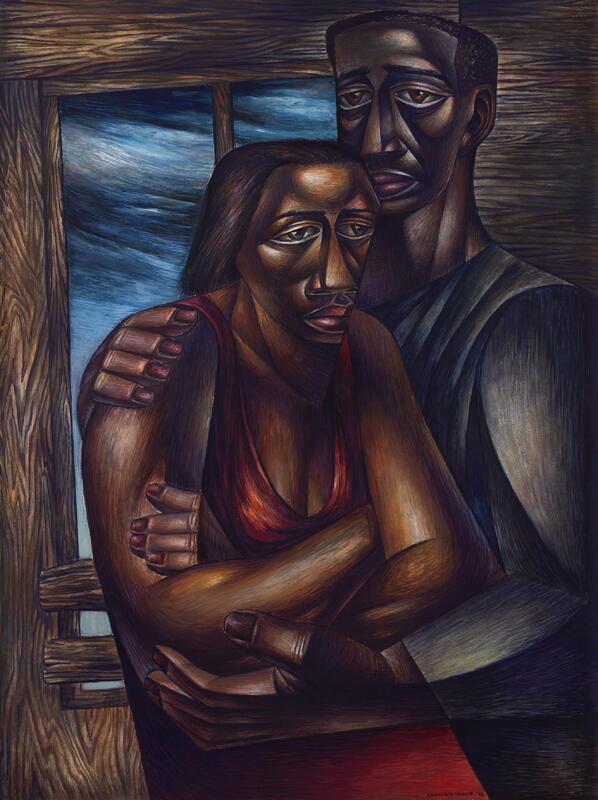
Charles White was a painter, printmaker, muralist, and educator known for his stylistic approach to African American subjects from Chicago, IL Two Alone is a painting of a man embracing a woman as they stand in front of a window. The woman stands, arms crossed, leaning into the man who looks into the distance and above her head.
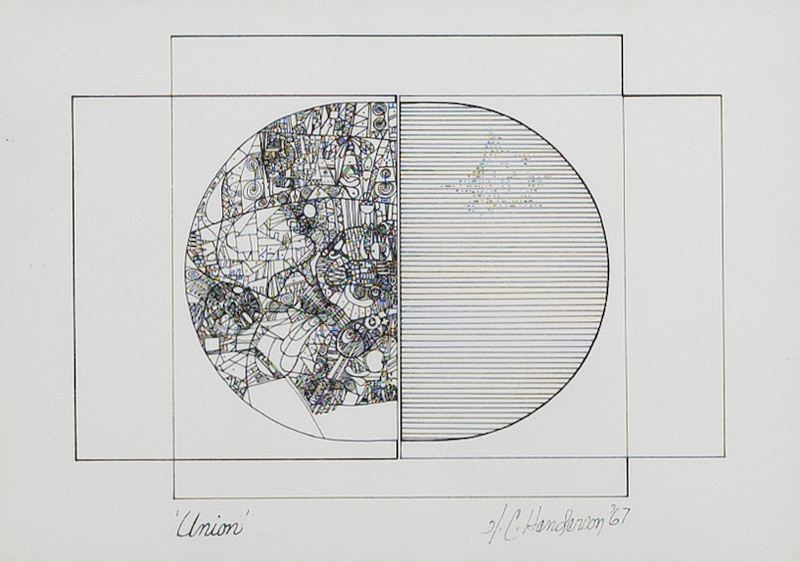
William C. Henderson II was an artist from Pontiac, MI. Union is a geometric drawing that interrogrates the intersection of lines and shapes. The piece centers a split circle, one side consisting of lines, the other of shapes, with two intersecting squares overlayed over it.
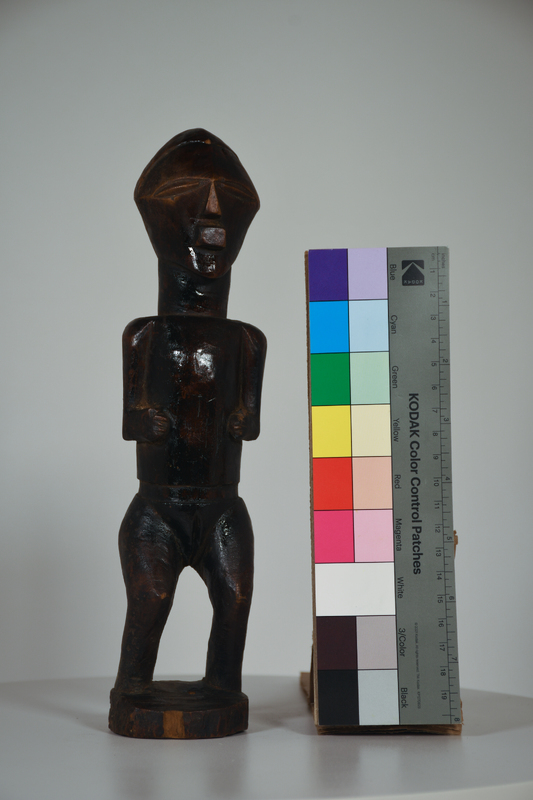
This is a simple work of a richly colored woman featuring a geometric face with oval eyes, a triangle nose, and a prominent square mouth. The sculpture has African origins, yet the specific ethnic group is unknown because of the lack of body markings and hair adornments. The sculpture has a glossy finish.
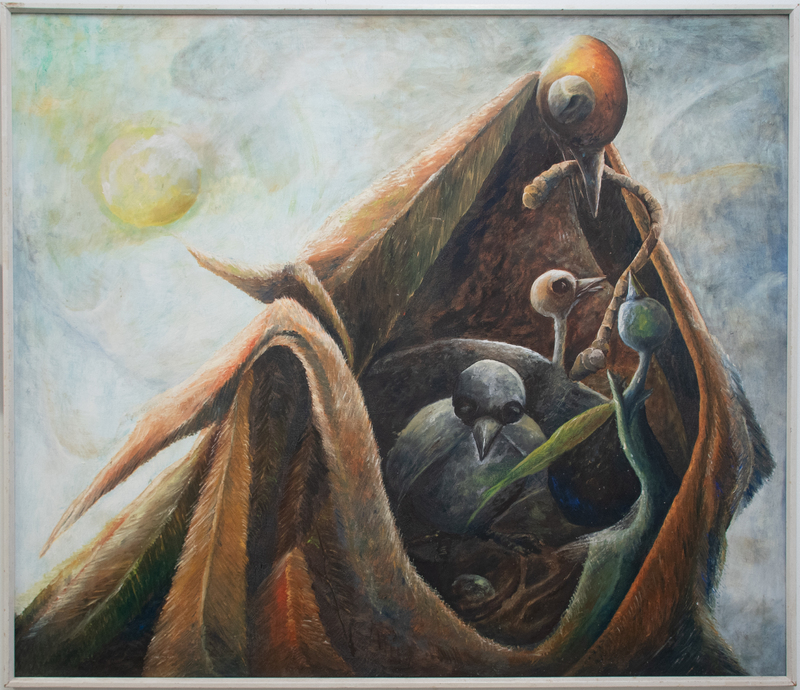
Vital's painting depicts a bird feeding a worm to its three offspring, reflecting the theme of the mother & child(ren) relationship that often appears in TSU student work. The artist often featured animals and nature in his work. After his graduation, Vital taught art for many years at Texas Southern.
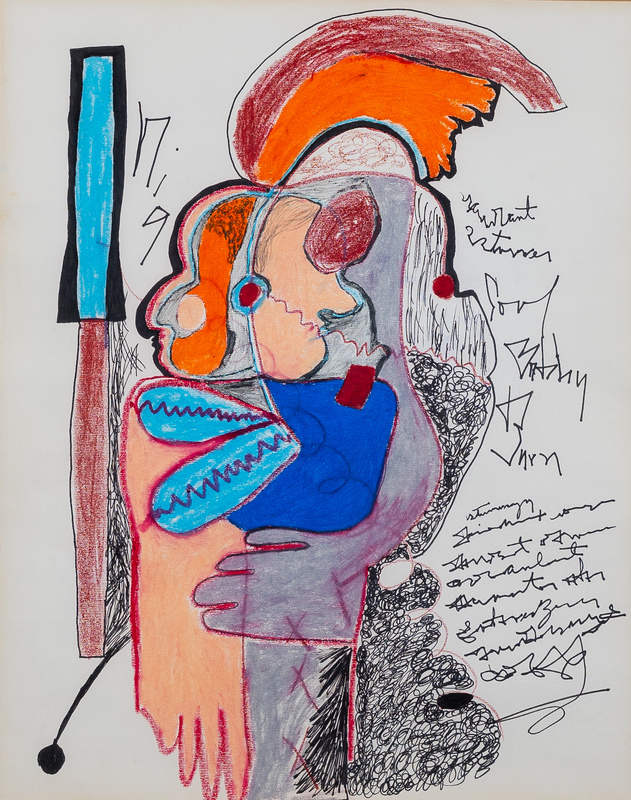
Alexander S. McMath was a painter and educator from Clinton, SC. Untitled depicts a surrealist anatomical rendering of a human figure's side profile. Signed text by the artist sits on the right of the figure.
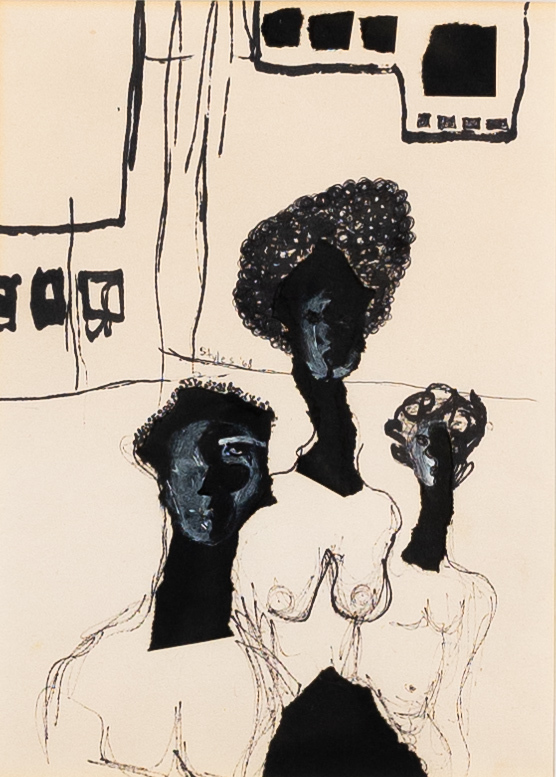
Freddie Styles was an abstract painter and collage artist from Madison, Georgia. Untitled is an ink painting of three women with elongated necks, curled hair, and black-painted skin. Their faces are partially concealed as they stare straight ahead. Their torsos are white, with exposed breasts outlined in black ink.
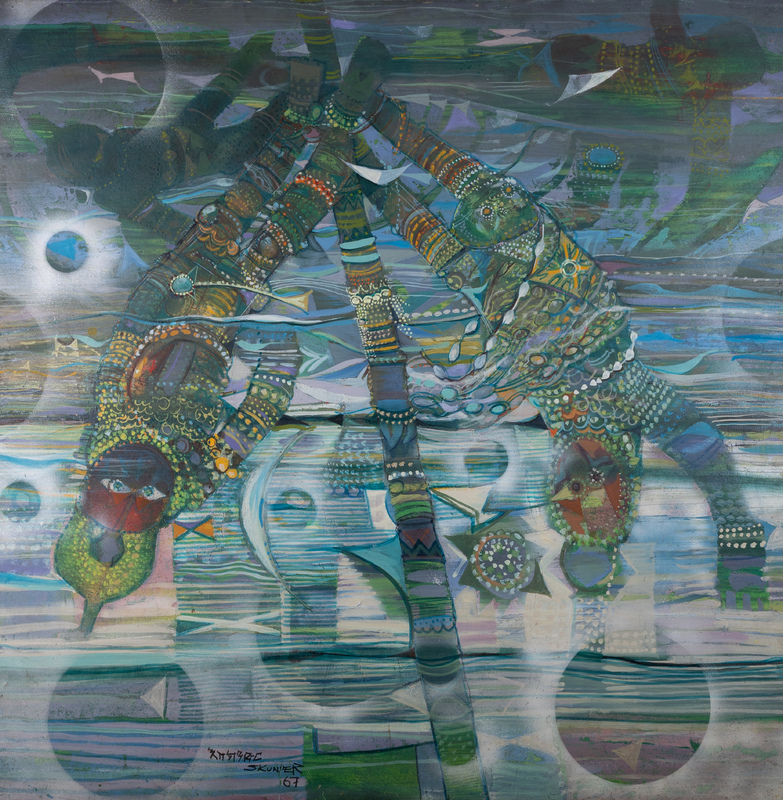
Skunder Boghossian was an artist from Addis Ababa, Ethiopia. Untitled depicts a spiritual scene of four masquerade figures hanging from a central pole. The four masquerades each wear different masks and wear beads, shells, and bands of color patterns.
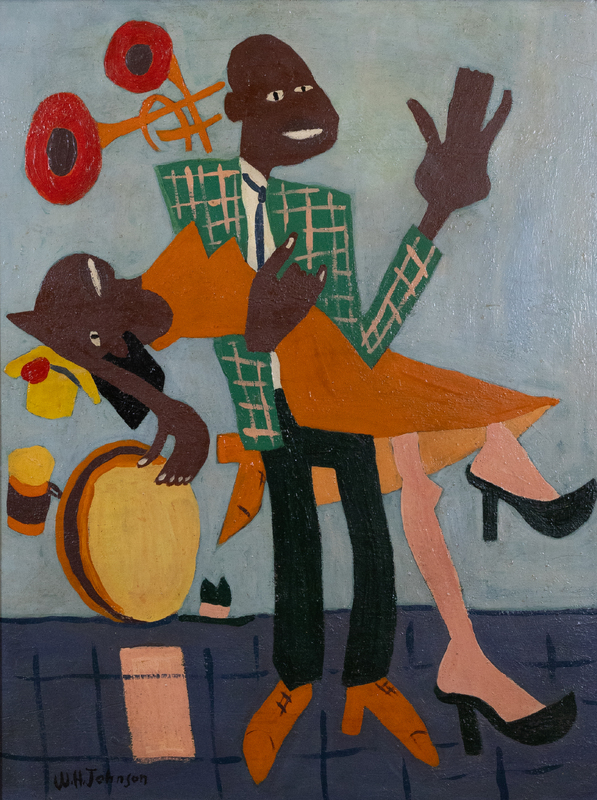
William H. Johnson was a painter from Florence, SC. Untitled Folk Scene depicts a couple doing a wide variety of dances within the Southern Jazz tradition. In this iteration of the series, a dapper man dips an equally stylish woman as instruments play around them.
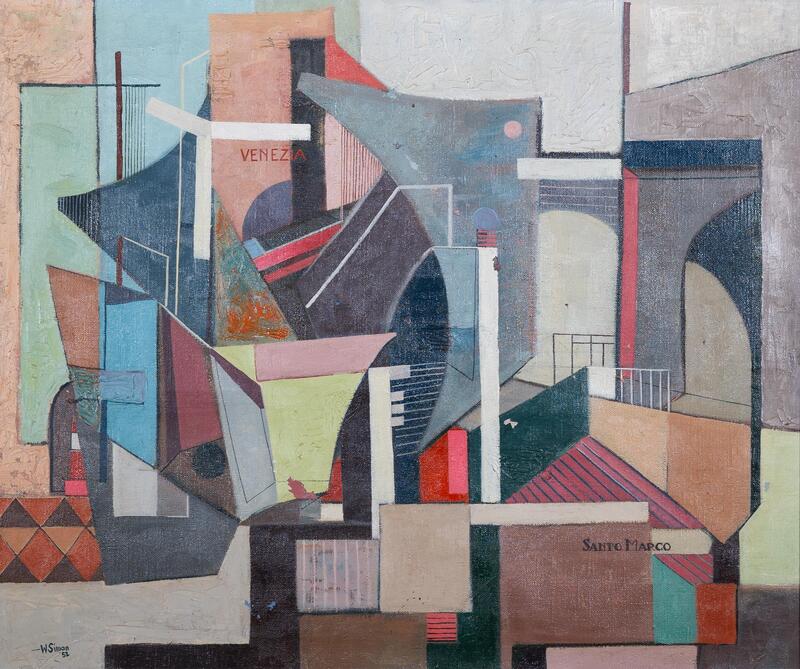
Walter Augustus Simon was an art historian, professor, and artist best known for his abstract oil paintings from Petersburg, VA. Venezia is a cubist landscape abstraction depicting San Marco, Venice, ITL. Simon uses a variety of shapes and colors to illustrate Venice’s main public square.
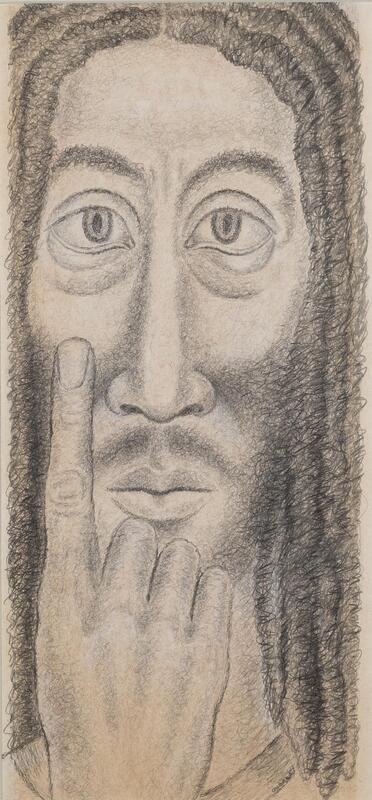
Hayward Oubre was a multimedia artist and educator from New Orleans, LA. Verily, I Say Unto You depicts a modern portrait of a Black Jesus. Jesus is drawn with an elongated nose with wide nostrils, large eyes, pursed lips, locs, and a raised finger.
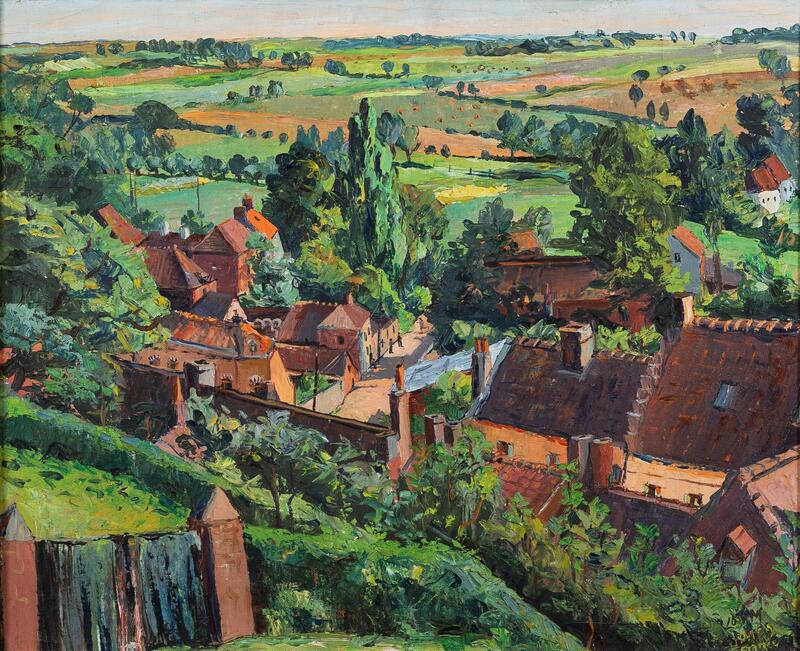
Lois Mailou Jones was an artist and art educator from Washington, D.C., known for her costumes, textile designs, watercolors, paintings, and collages. Ville d'Houdain, France, is a landscape painting depicting a community in the Pas-de-Calais department in the Hauts-de-France region.
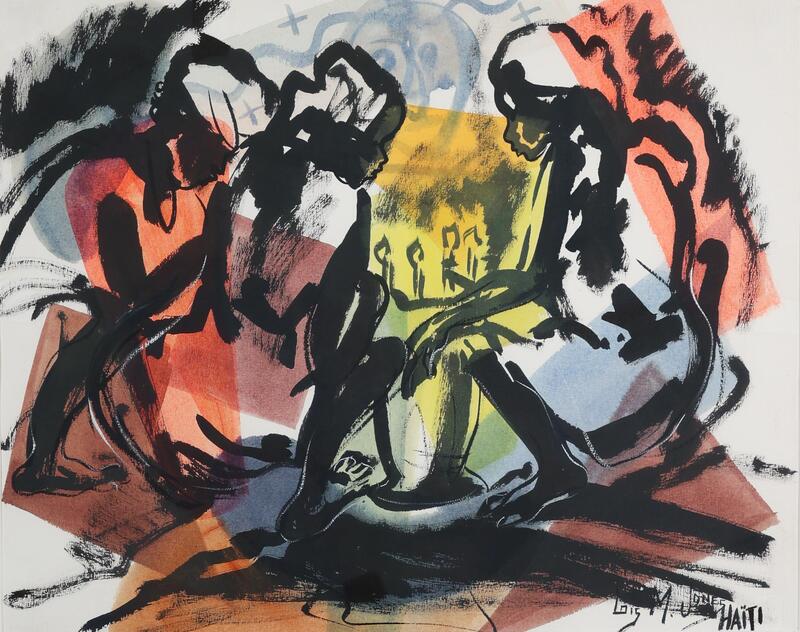
Lois Mailou Jones was an artist and art educator known for her costumes, textile designs, watercolors, paintings, and collages from Washington, D.C. Voodoo Worshippers, Haiti, is a watercolor scene of three Haitian Voodoo practitioners around four candles under a full moon. Jones places colorful shapes behind black brushstrokes that create depth.
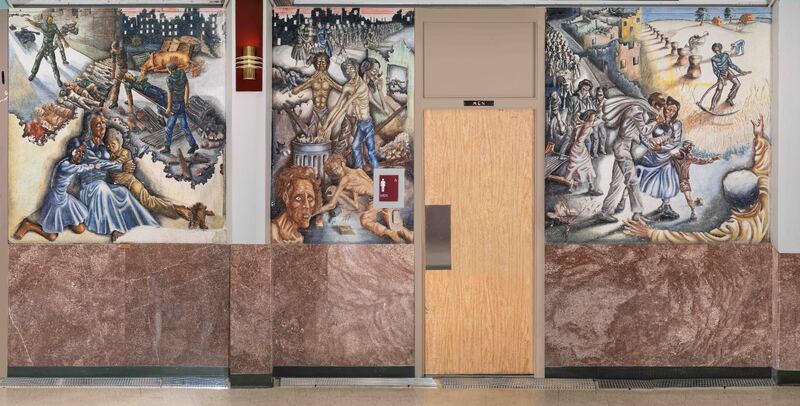
Michaux, a war veteran, was given the opportunity by Dr. Biggers to paint this mural during his first year as an art major. Reflecting on the devastation of the then-recent World War II, the mural depicts terror, hunger, and human compassion.
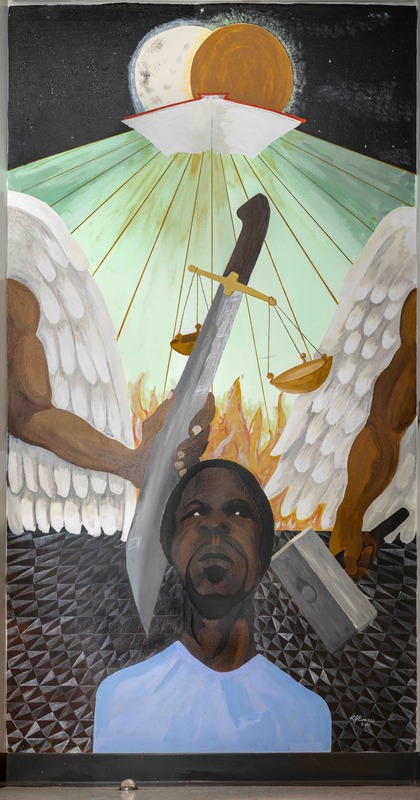
Evans’ mural features a self-portrait of the artist below the muscular arms of two angels. Above, an open book radiates light onto the setting. Evans is a founding member of Otabenga Jones & Associates, an artists’ collective founded by four former TSU students.
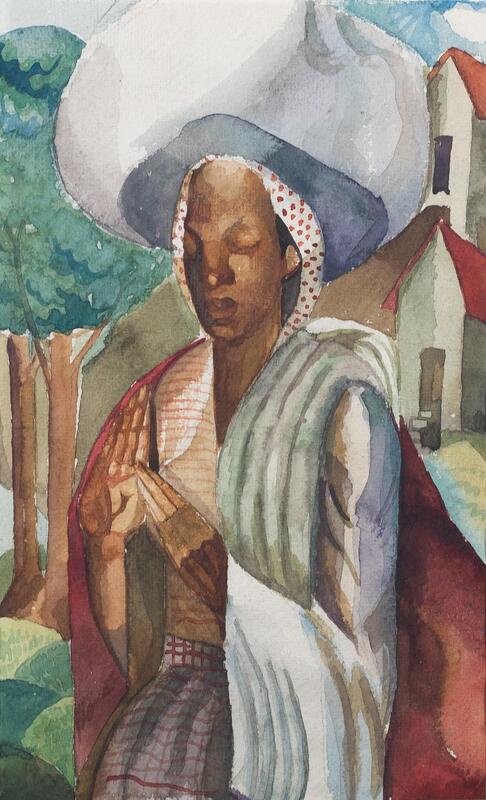
Frederick D. Jones, Jr., was a mid-twentieth-century artist from South Carolina. Wash Day is an impressionistic painting depicting a Black woman doing laundry. In the piece, a robed woman with a laundry bag on her head is washing linens outside in a neighborhood. In the background, a house and two trees are visible.
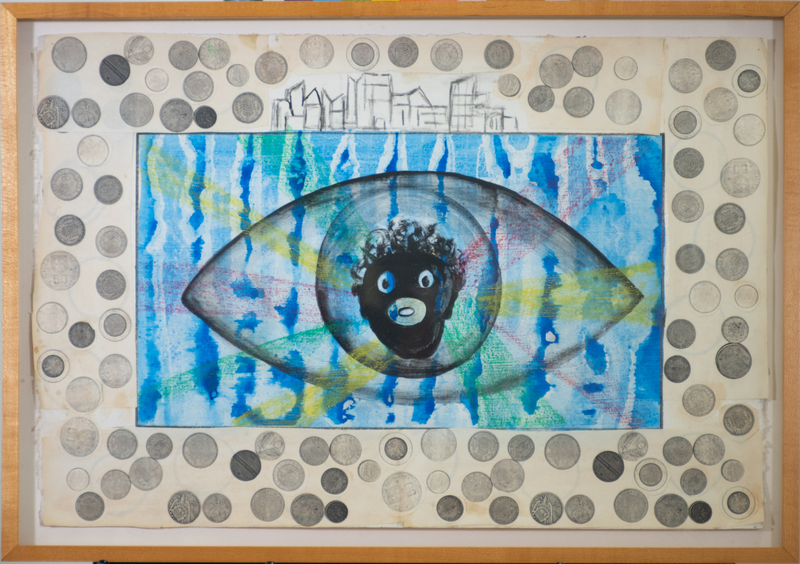
This is a watercolor sketch of Long’s Post Rome. In the full print, the center of the design is a large, oval-shaped eye. This is a frequently used motif in Long’s artwork, across many different mediums. Vertical and diagonal rays and bars draw attention towards the eye, which features a man’s face where the pupil would be. The final piece is placed in a cast bronze frame embedded with coins, like this sketch shows. Long’s print was created during his 1990 Prix de Rome fellowship.
This is a watercolor sketch for Long’s piece Roma, which was created during his 1990-91 Prix de Rome fellowship. Featuring a blobby figure and colorful swirls, the composition is somewhat reminiscent of Da Vinci’s Vitruvian Man. Long also included a sketch of the frame he intended to create for the piece. Long rose to prominence as an “outsider artist” without formal training, later becoming one of the co-founders of Project Row Houses.
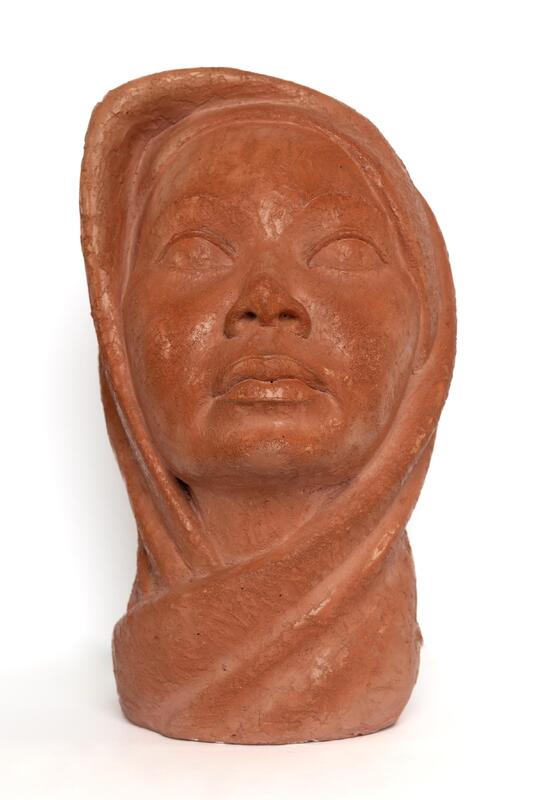
William Artis was a sculptor from Washington, NC. We Have Seen His Face is a ceramic bust of a hooded woman with her head raised. The subject holds a reverent expression as she looks toward God.
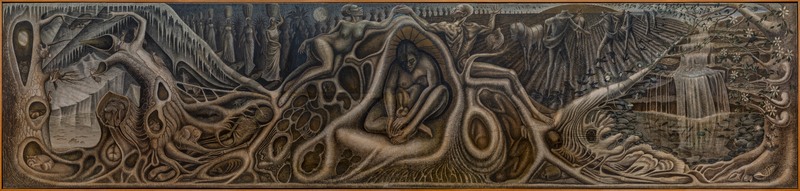
Biggers completed work on this mural in 1959 after returning from his UNESCO fellowship in West Africa. Originally installed in the Samuel M. Nabrit Science Building on Texas Southern’s campus, it is now located in the University Museum. Mother Nature is at the center of this work, surrounded by embryos and skeletons, animals and fish, and men and women. It speaks to the interconnectedness of life.
Lloyd’s painting depicts the facade of the historic Wesley Chapel AME Church, founded in Houston’s Third Ward in the 1870s. The landscape and sky are painted in geometric form, commonly found in 1970s TSU student artwork. The church is set to be renovated and turned into a multi-purpose complex with a gospel music museum, recording studio, and affordable housing units.
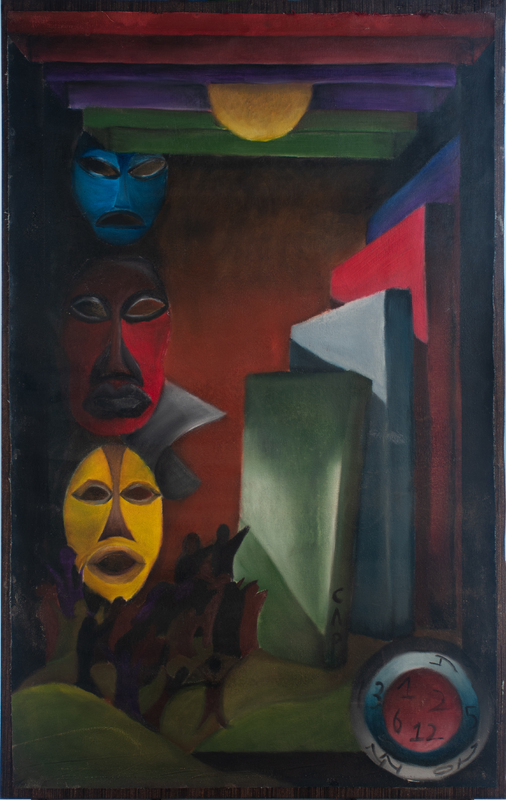
Boyd's painting is inspired by philosopher Charles W. Mills's book, "Blackness Visible." Boyd's painting responds to the question of "what makes Blackness visible?" with, in her words, "three possible answers to this: our culture, our revolutions, and/or our d/Death. Is it our culture? Our revolution? Our d/Death? Or is it an amalgamation of all three?" The artist is a graduate of Texas Southern University and cites her parents, who always encouraged her to write and draw, as creative inspirations.
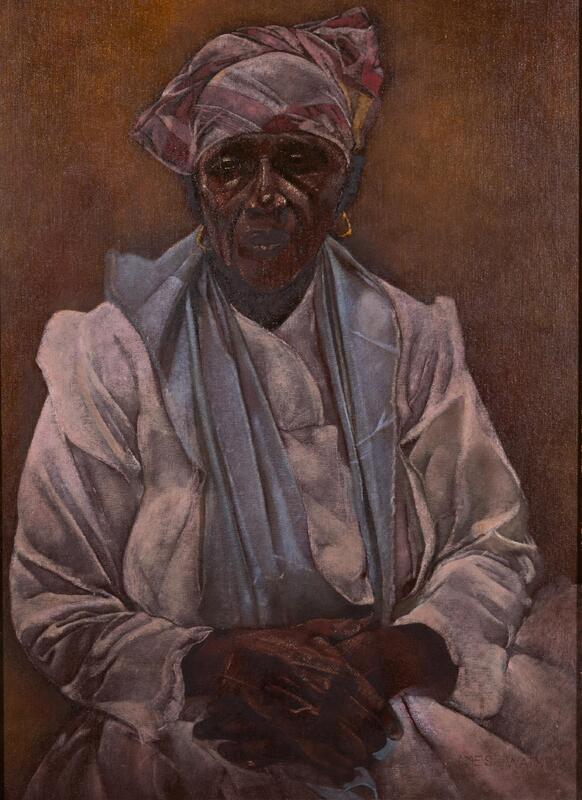
James Watkins was an artist from Akron, OH. Widow Woman is a portrait of an elderly Black woman wearing a long white dress, a light blue shawl, a pink headwrap, and small golden earrings. She looks straight ahead in solitude, her hands folded over one another.
June Hector was an artist from Atlanta, GA. Wild Flowers displays a landscape of flowers in multiple colors and plant organisms all surrounding a small body of water. The colors blue, red, yellow, and purple are layered throughout the painting.
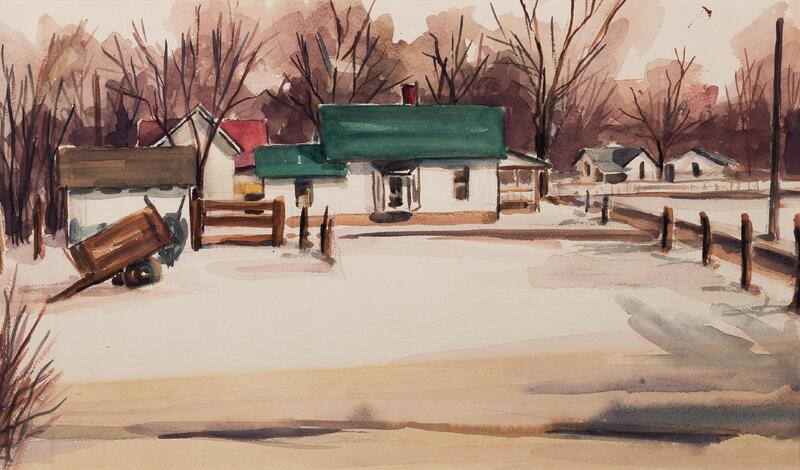
Julia Ann Fields was an artist from Lawrence, KS. Winter Feeling illustrates a residential area after a snowfall. The painting depicts a green-roofed house with a shed and wheelbarrow. In the background are three other homes in various colors and barren trees.
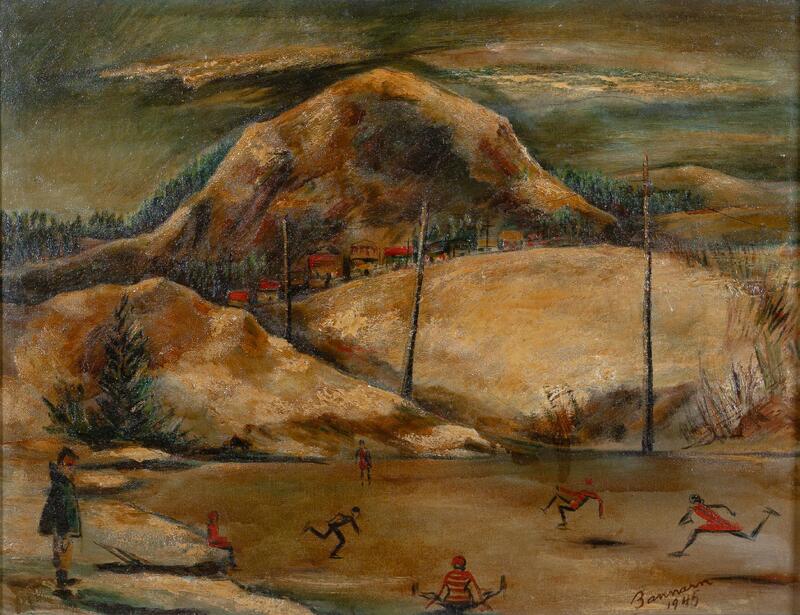
Henry Wilmer Bannarn was an educator, sculptor, painter, and sketch artist best known for his work during the Harlem Renaissance. Winter Sports is an oil painting of seven figures in a frozen pond below a town on a hill. Four figures are skating, two are sitting near the lake, and one is watching from a short distance.