This collection showcases the rich legacies of HBCUs through artistic expression. Featured works include paintings, sculptures, murals, mixed media, prints, drawings, and fine art photography.
Date Modified
2025-12-17
About This Record
The HCAC public history focused digital archive cataloging is an ongoing process, and we may update this record as we conduct additional research and review. We welcome your comments and feedback if you have more information to share about an item featured on the site, please contact us at: HCAC-DigiTeam@si.edu
Thomas’ mural depicts an abstracted circus scene. In the center, three clowns, perhaps self-portraits, dressed in collars and muted colors, look seriously towards the viewer. The figures’ contemplative expressions stand in sharp contrast to their dress and profession.
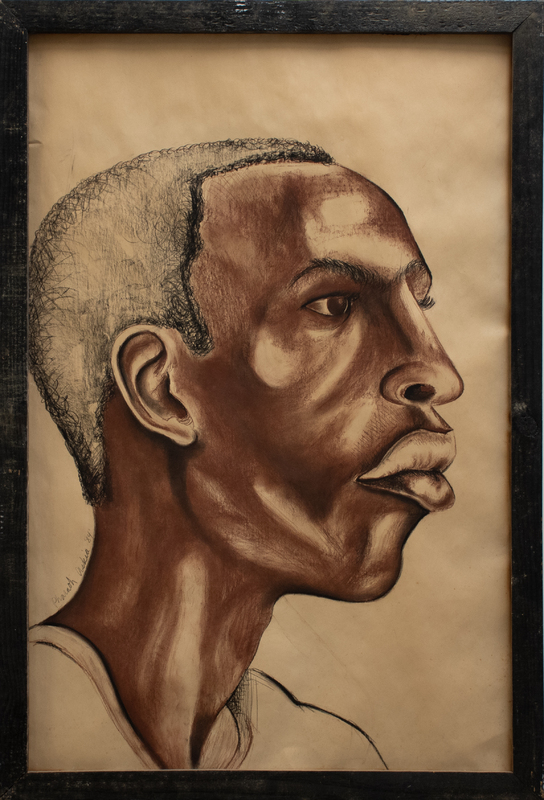
Askia’s drawing is a side portrait of a man looking into the distance. There is no background and only a sliver of his shirt is visible, implying the man is not confined to a specific time or setting. Many of Askia’s pieces are similar - drawn with pastel on paper, and placing the subjects outside of time and space.
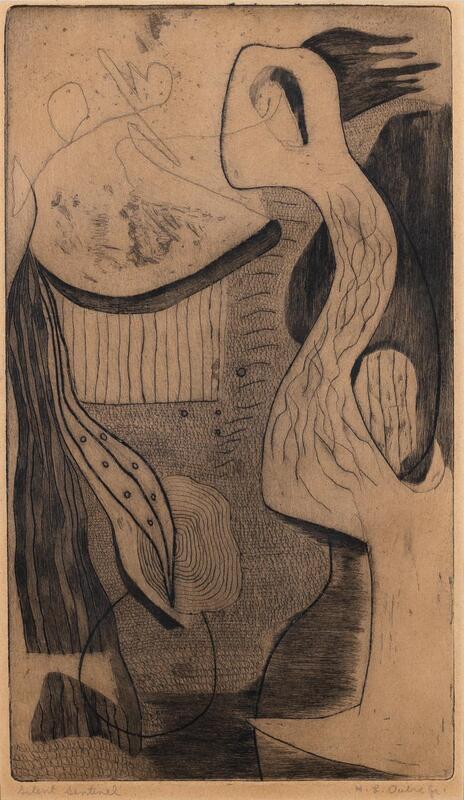
Hayward Oubre was a multimedia artist and educator from New Orleans, LA. His etching Silent Sentinel, created during his MFA at the University of Iowa, reflects his interrogation of social realism and cultural symbology.
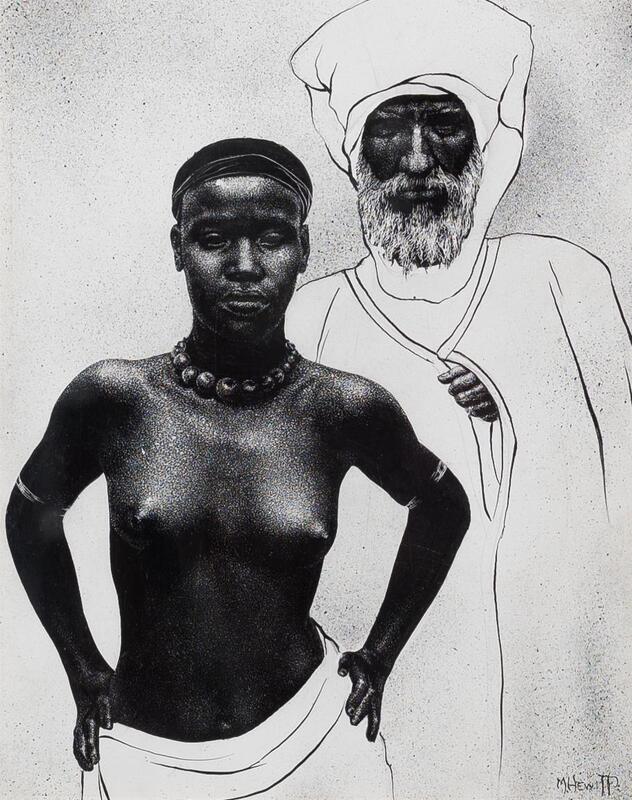
Mark Hewitt was an artist from Boston, MA. Slave Girl is a black and white print of a young African woman standing before a bearded man wearing all white. The man’s hand rests on his chest, and the shirtless woman wears a solemn expression and looks towards the viewer.
This small ceramic plate created by Carroll Harris Simms is made from red clay with a white, bubbling glaze. It has slightly raised, curved edges. Simms worked alongside Dr. John T. Biggers to build Texas Southern's art department from the ground up. Simms' decorative artworks remain in high demand by collectors.
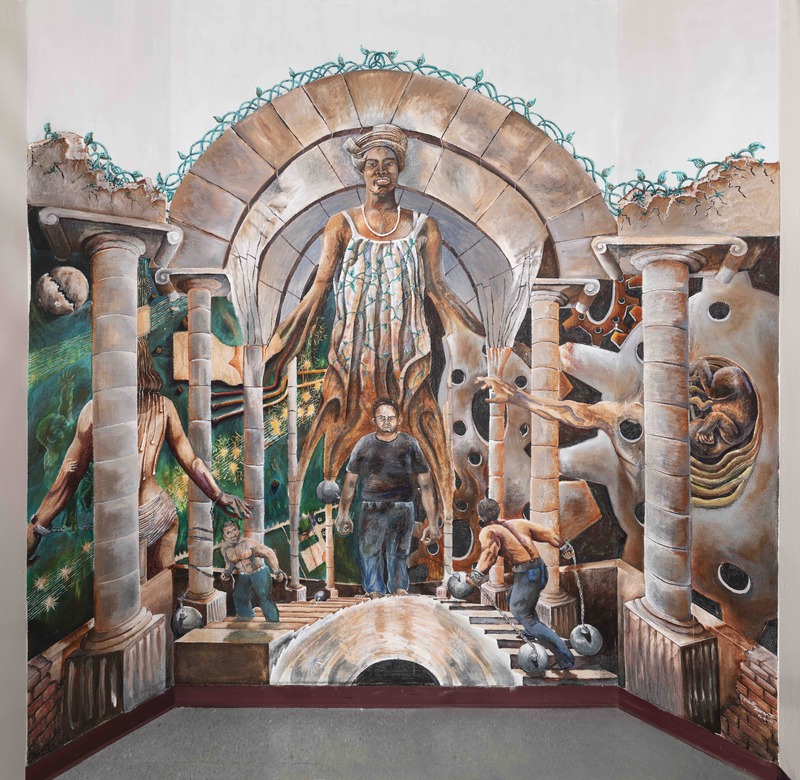
The mural centers an image of Mother Nature as a Black woman. In the foreground of the center panel, the artist stands in front of the towering female figure. On either side of Turner, men are weighed down by heavy irons. On the right, an embryo is gestating in a womb within a gear.
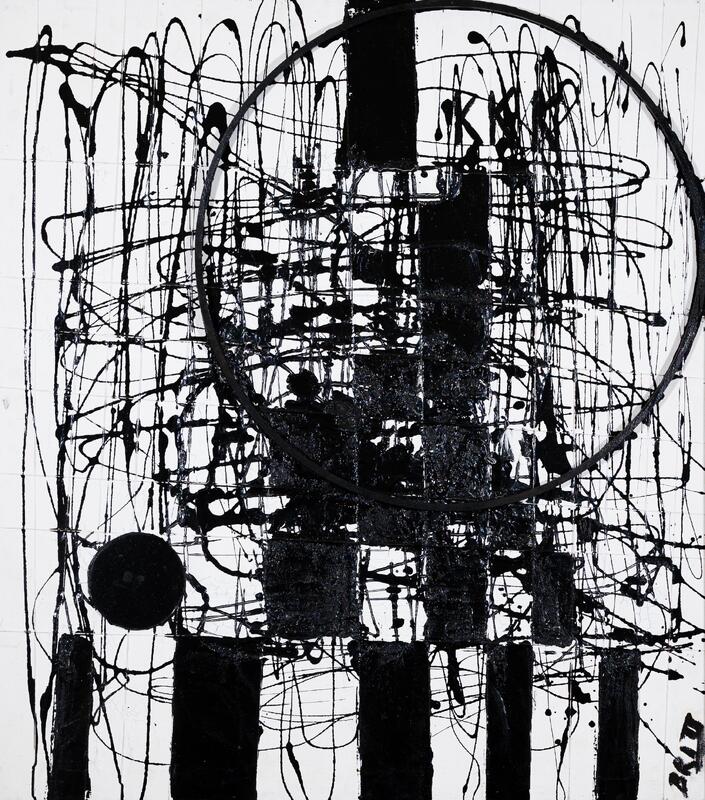
Dr. Arthur L. Britt was an artist and educator from Cuthbert, GA. Society Wheels is an abstraction that uses black and white to enact visual chaos and composition. The inclusion of "KKK" positions it as a critique of American race relations and racial violence.
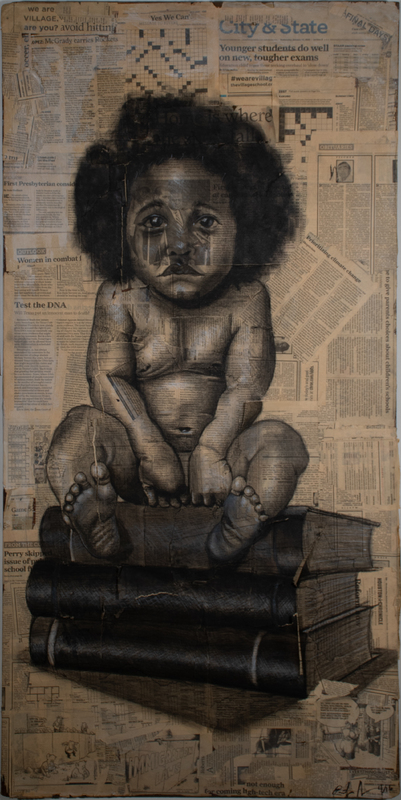
This drawing by Prinston Nnanna shows a Black baby sitting on a pile of books. Behind the baby, there is a collection of various political newspaper clippings and headlines, which may be provoking the child's saddened disposition.
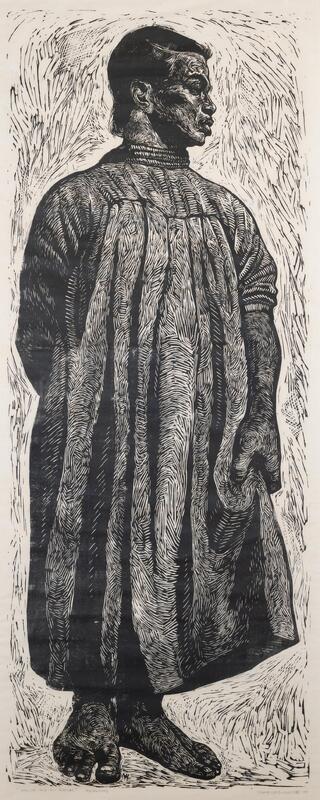
Charles White was a painter, printmaker, muralist, and educator known for his stylistic approach to African American subjects from Chicago, IL. Solid as a Rock is a print of the profile of a robed Black man. The barefoot man is holding on to his robe with his left and hides his right hand.
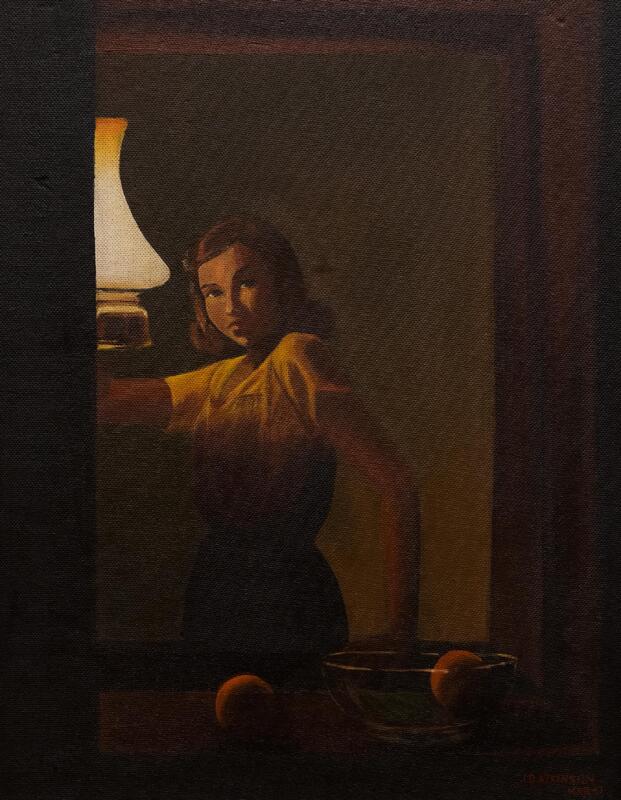
Joseph D. Atkinson, Jr., was an artist from Atlanta, GA. Solitude depicts a white woman posing in front of a mirror, illuminating her with a lamp. The woman stands slightly profiled while facing the viewer; her right hand is raised, and the left is in a fruit bowl.
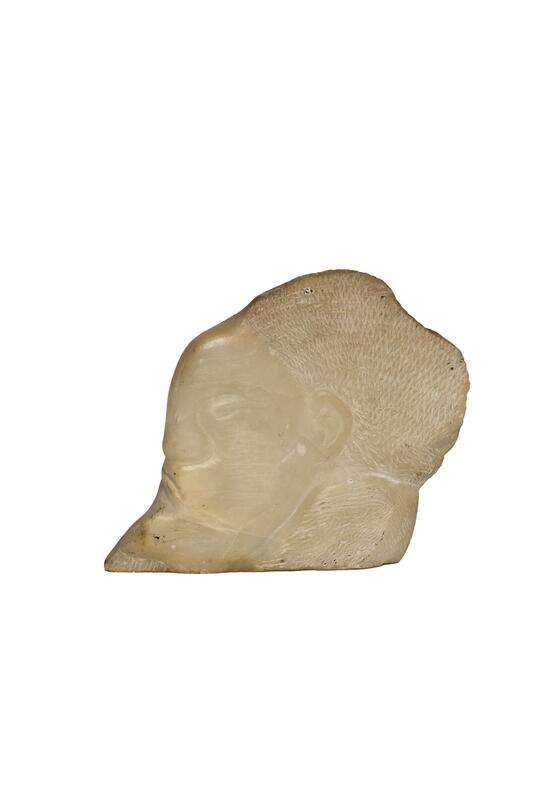
Charles W. Stallings was a painter, printmaker, sculptor, and educator from Springfield, MO. Soothsayer is a marble sculpture of a psychic medium. The smooth texture of the face contrasts with the rougher texture depicting the hair.
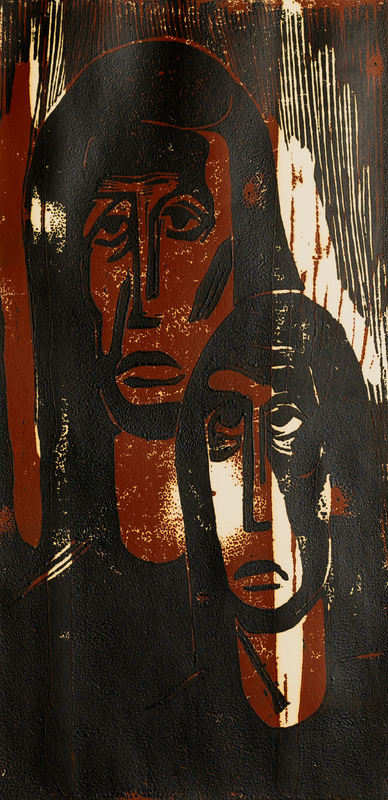
Charles W. Stallings was a painter, printmaker, sculptor, and educator from Gary, IN. Sorrowing Woman is a print depicting a woman with a sad expression. Stallings overlays two images of the woman: in the foreground, her expression is contemplative as she looks upward, and in the background, she wears a solemn expression.
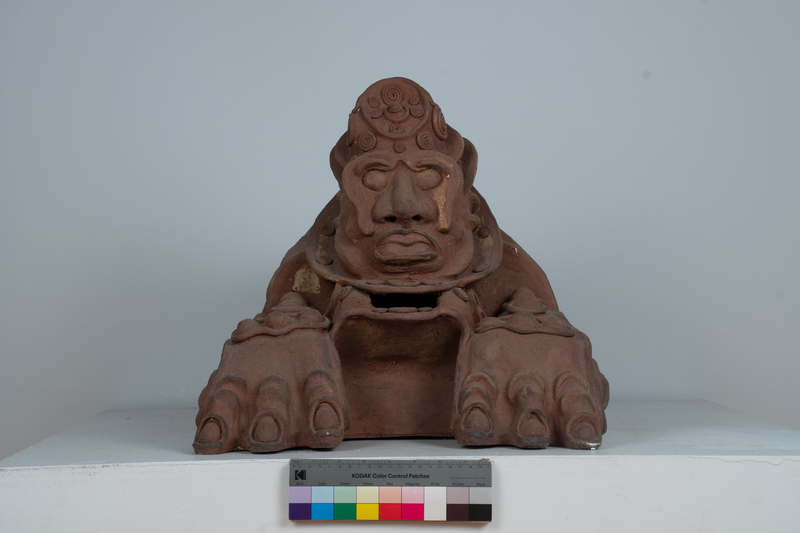
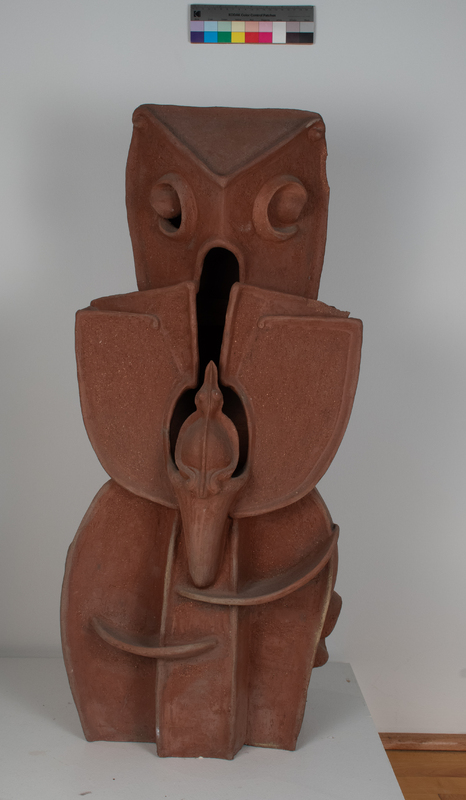
This sculpture’s form resembles a sphinx, with its humanlike face and animal body parts. The body is covered in ornamental embellishments, especially spirals. These decorations are a key characteristic of the terracotta sculptures created by the students of Professor Carroll Harris Simms, with spirals as a key motif.
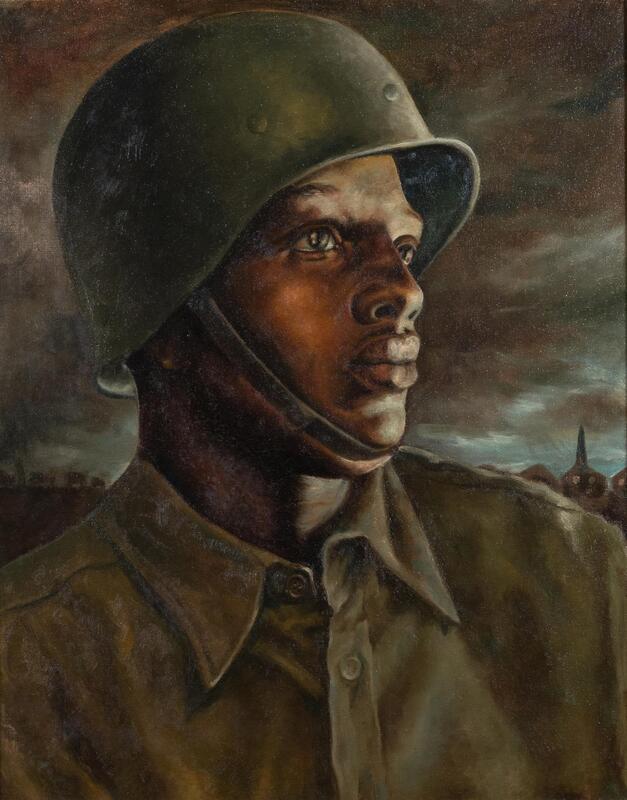
Mark Hewitt was an artist from Boston, MA. Spirit of 366th depicts a portrait of a young Black man from the 366th infantry in an Army uniform. The soldier looks into the distance of a shining light while dark-hued clouds of brown, black, and purple gather overhead.
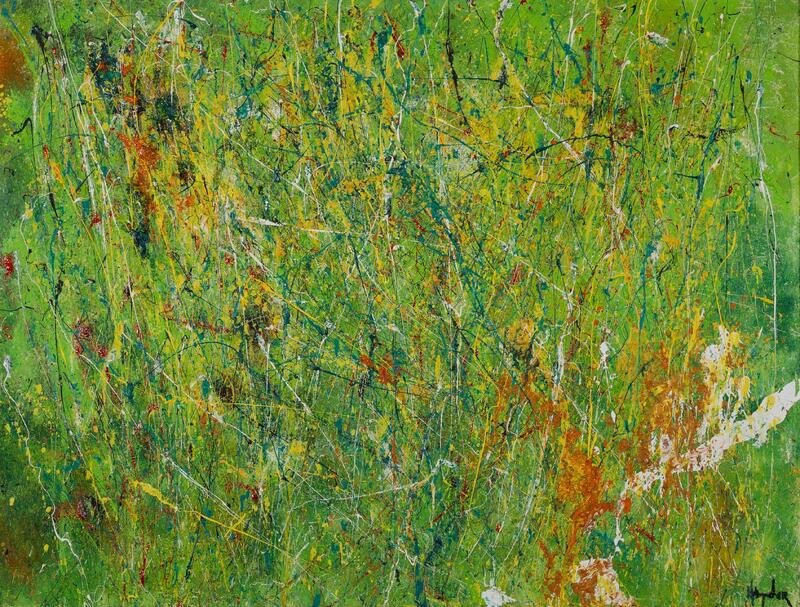
Gilbert H. Hatcher was a painter from Augusta, GA. Spring Folic is an abstract painting with a green background. The color palette includes hues of yellow, red, orange, green, white, and black. Gestural strokes of paint are layered to create a feeling of nature and springtime.
This sculpture features a small bird placed in the lap of a larger abstract figure, perhaps suggesting the larger figure is the small bird’s mother. The body of this sculpture has a smooth surface finished with a thin rim around the edges. The act of nurturing and providing shelter is reflected in the placement of the smaller bird. Mother-child relationships are frequently showcased in TSU student terracottas.
This watercolor painting by Frank Perkins features a scene at a baseball stadium. This work may be an homage to the Negro Leagues, which offered Black baseball players the chance to play professionally prior to Jackie Robinson's integration of Major League Baseball. Iconic Black baseball players like Robinson, Willie Mays, Satchel Paige, Josh Gibson, and many more played in the Negro Leagues.
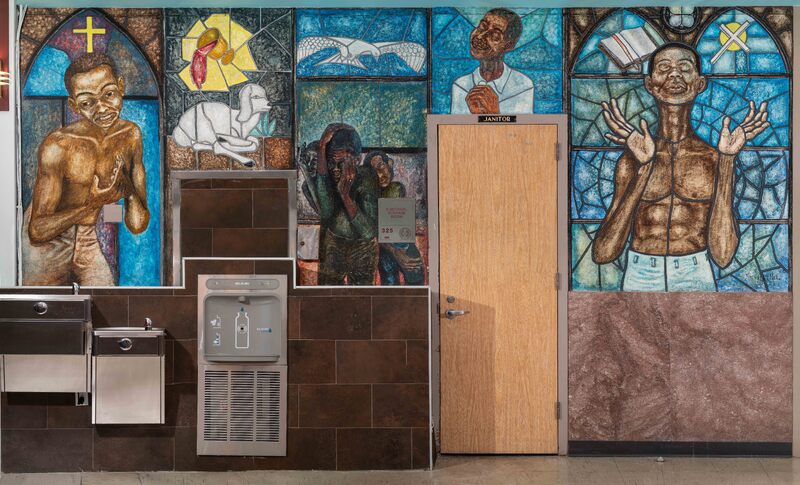
McNeil creates a scene of Black spirituality and worship, surrounding images of Black men with the traditional symbols of the cross, the lamb, the dove, and the wine of communion. Placing two of the figures against stained glass windows yields a direct connection with the interior of the Black church.
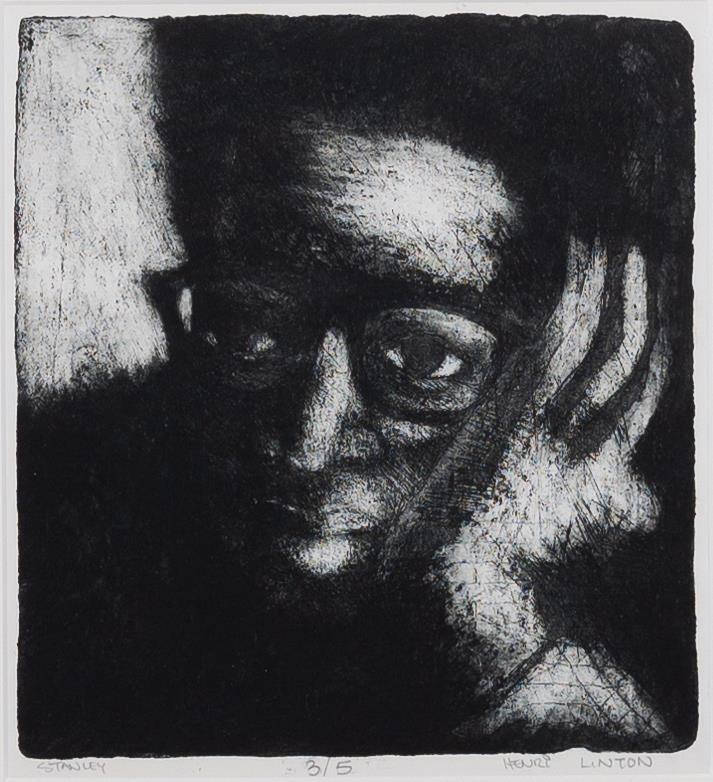
Henri Linton was an artist and art professor from Tuscaloosa, AL. Stanley is a print of a solemn Black man. The subject rests his head in his hand as he looks past the viewer.
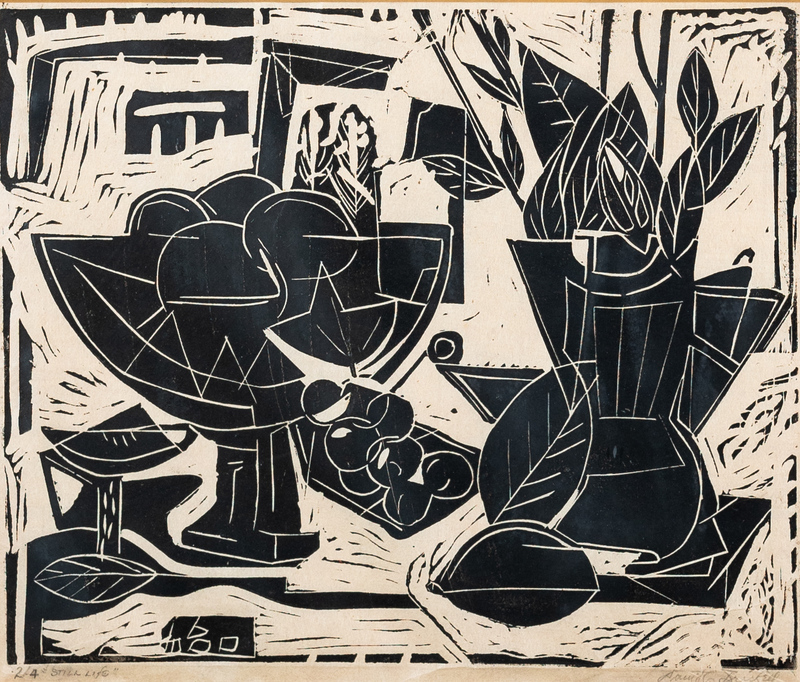
David Driskell was a Black artist, scholar, and curator known for his fusion of African abstract forms and modern aesthetics. Still Life is an abstract print of inanimate kitchen objects. It features a bowl of fruit, plates of food, vases of flowers, and other objects atop a table.
William S. Carter was an abstract, landscape, still-life, and figurative painter from St. Louis, Missouri. Still Life embodies its namesake by depicting a table of commonplace objects with a muted background. Carter's subjects include a teacup, a vase with flowers, fruit, a feather, and an empty vase on top of a haphazard cloth.
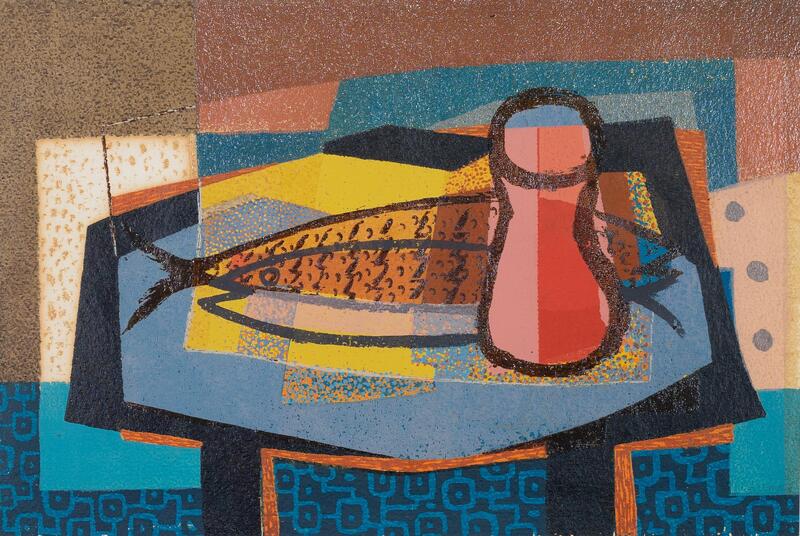
Howard E. Lewis was an Art professor and Korean War veteran from Columbus, OH. Still Life with Fish is a watercolor depiction of two fish and a vase on a table. Lewis uses stark shapes, colors, and patterns to create the fish, vase, table, and background.
Alfa Bell was an artist from Montgomery, AL. Still Life with Fruit is an abstracted print of inanimate kitchen objects with an abstracted background. The piece features a cup, pieces of fruit, and gourds on top of a white sheet in front of a water pitcher and a plate.
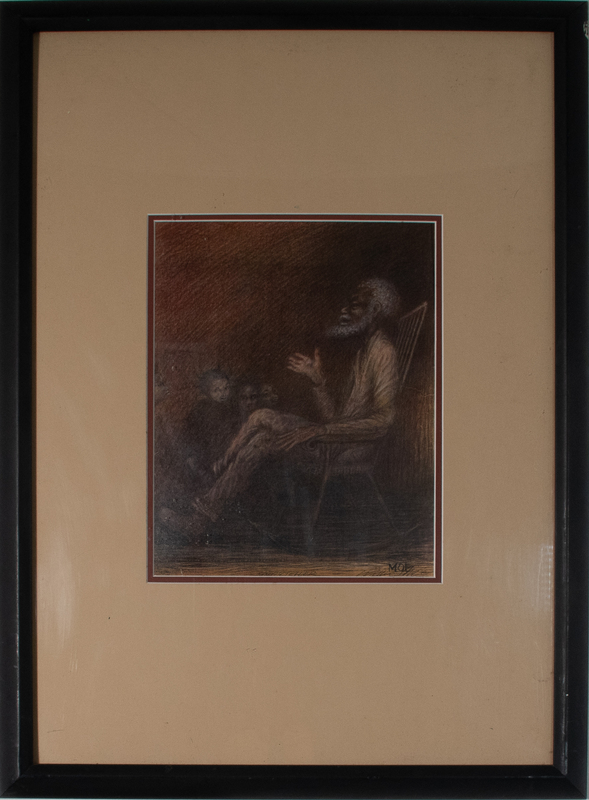
In this drawing by Willie Moe, a group of children gather around an elderly man in a rocking chair to hear his stories. Oral storytelling is an essential part of preserving the past, particularly in communities that have been denied the opportunity to write their own histories.
Lee’s collage speaks to the 1998 lynching of James Byrd, Jr., in Jasper, Texas. Byrd’s murder provided part of the impetus for the passage of stronger anti-hate crime laws in Texas and federally. The collage references the anti-lynching poem/song “Strange Fruit,” made famous by Billie Holiday. Lee, sometimes called “Da Mayor of Fifth Ward,” grew up in Houston’s Fifth Ward, but his family traces its roots to Jasper, where three white supremacists lynched Byrd and desecrated his body.
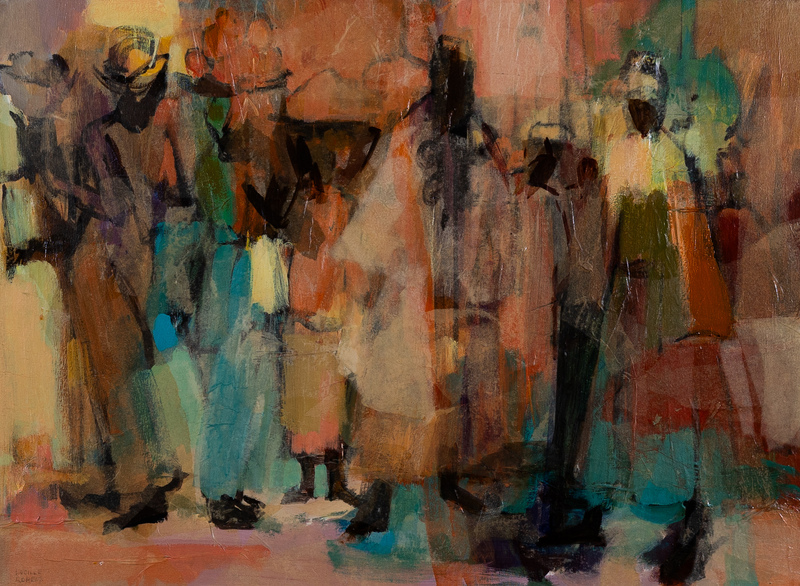
Lucille Malkia Roberts was a painter and educator from Washington, D.C. Street in Senegal is an abstract depiction of people shopping on a market street in Senegal, West Africa. Roberts uses muted colors to create the robust marketplace environment and emphasizes the shoppers and their goods with Black silhouettes.
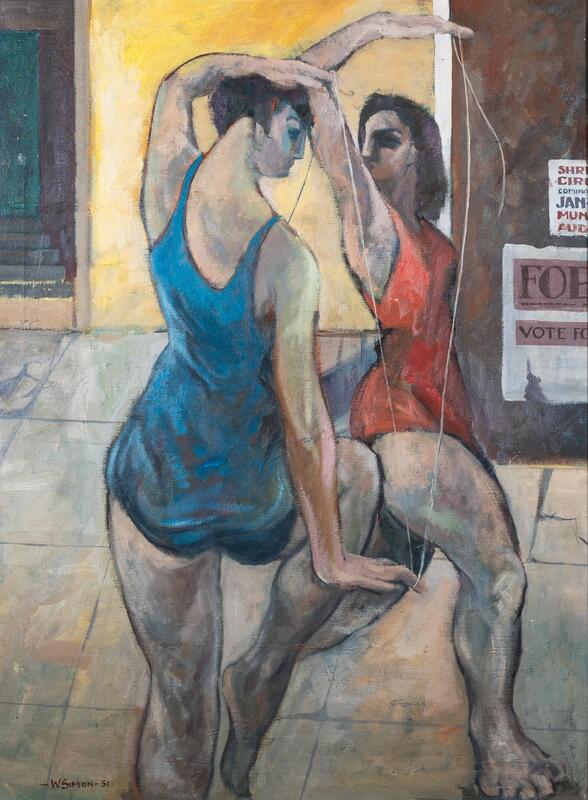
Walter Augustus Simon was an art historian, professor, and artist best known for his abstract oil paintings from Petersburg, VA. String Dance shows two women dancing with a thin white string. Their arms are stretched above their heads to pull the string as they dance together barefooted.
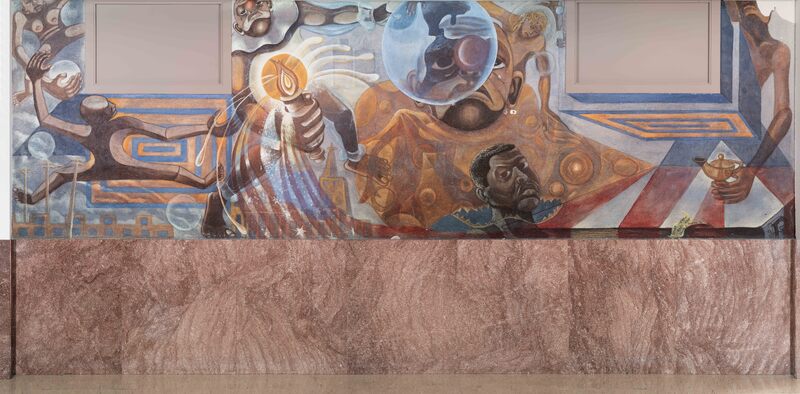
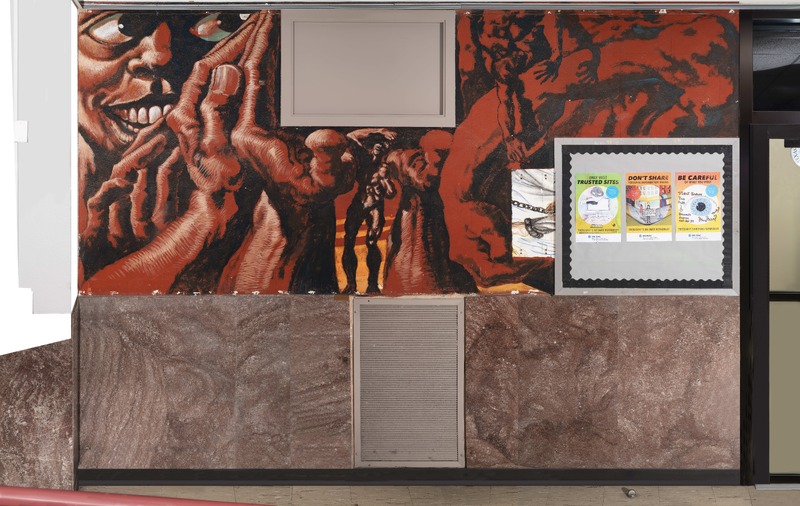
Oliver's mural reflects his classical painting style in a composition that shows Black men struggling to lift up an imposing weight above them, represented by the closed window on the wall. The mural appears to have been painted over an older design, as can be seen in the lower right section.
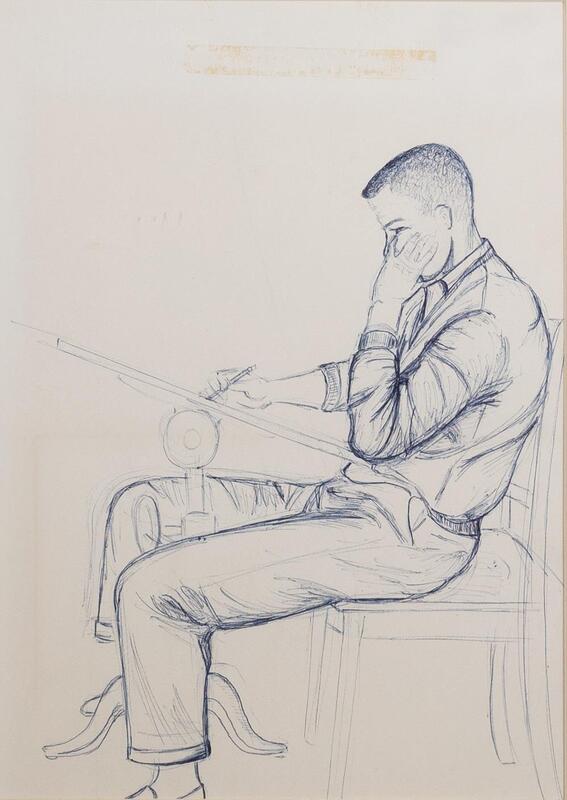
Zenobia Hammonds was an artist from Hampton, VA. Student Artist is a sketch of a male student working at a tabletop easel. The artist has his head resting on his hand as he creates his own art.
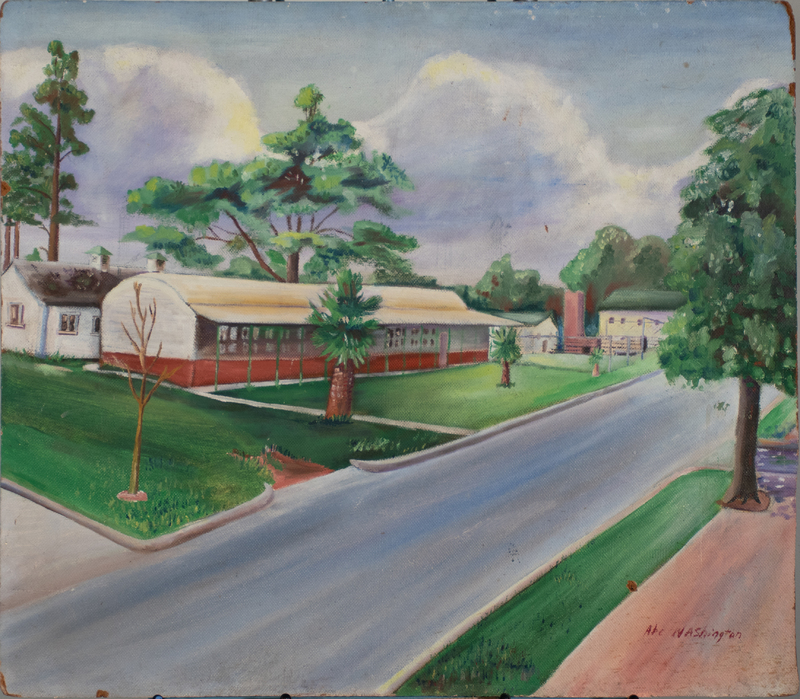
Washington’s landscape painting shows a suburban setting, with a paved road, low homes, and a mix of palm and deciduous trees. Washington grew up in Port Arthur, Texas, a small oil city along the Gulf Coast. This scene is perhaps reminiscent of Washington’s home and early life. Dr. John Biggers encouraged Texas Southern student artists to create art based on what they saw – perhaps this instruction inspired Washington’s painting.