This collection showcases the rich legacies of HBCUs through artistic expression. Featured works include paintings, sculptures, murals, mixed media, prints, drawings, and fine art photography.
Date Modified
2025-12-17
About This Record
The HCAC public history focused digital archive cataloging is an ongoing process, and we may update this record as we conduct additional research and review. We welcome your comments and feedback if you have more information to share about an item featured on the site, please contact us at: HCAC-DigiTeam@si.edu
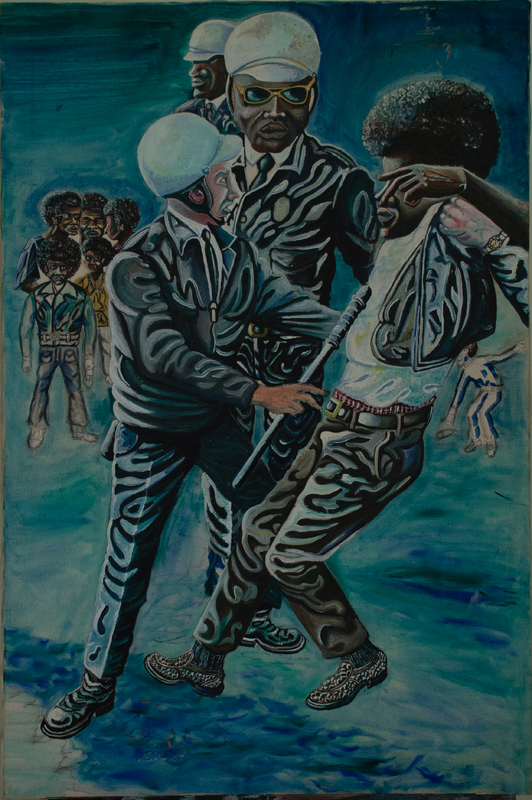
Settles' painting tackles the ongoing issue of police brutality against and harassment of Black Americans. The fluid swirls on the men's clothing, the anxious onlookers, and the white officer's drawn baton illustrate the high intensity and precarious emotion of the piece.
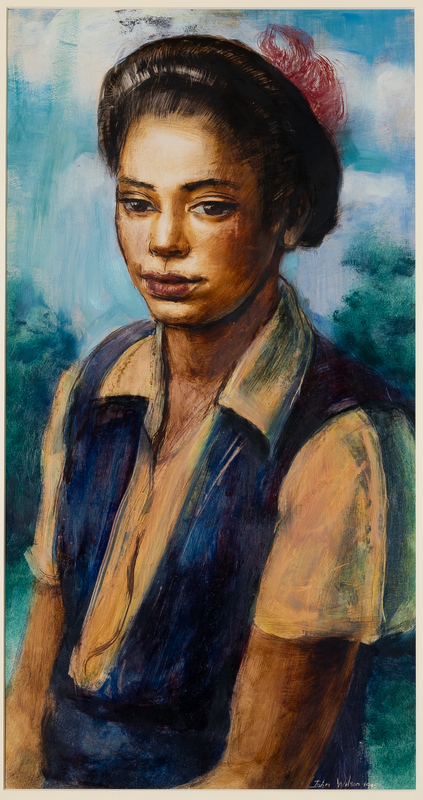
John Woodrow Wilson, a sculptor, painter, and printmaker from Roxbury, MA, was known for his creative portraits. Portrait of Claire is a portrait of a young Black woman. Her black hair is styled upwards, and a pink ornament is pinned. She wears a yellow collared blouse, a blue vest, and blue bottoms.
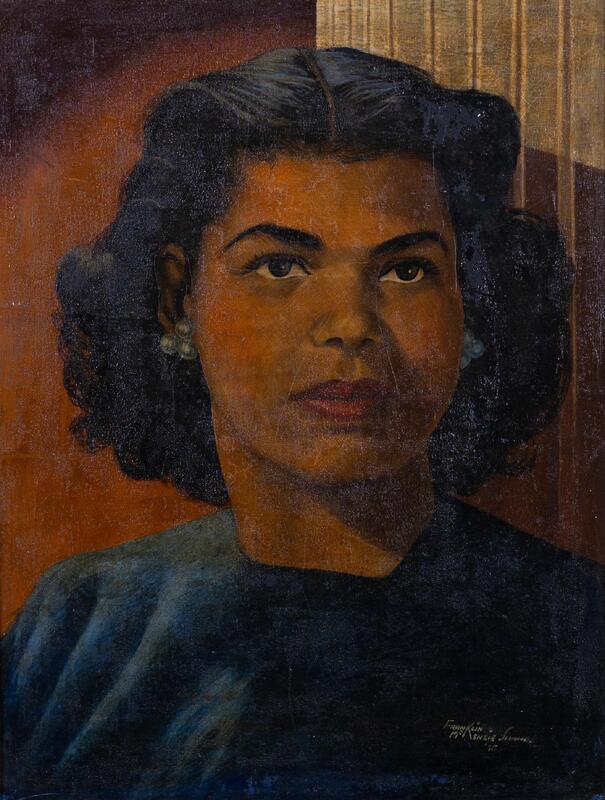
Franklin Shands was a painter from Cincinnati, Ohio. Portrait of Jo is a portrait of a woman looking sternly into a distance as a light shines on the left side of her face. The woman, named Jo, wears her black hair pinned upwards, wears a blue top, small earrings, and red lipstick.
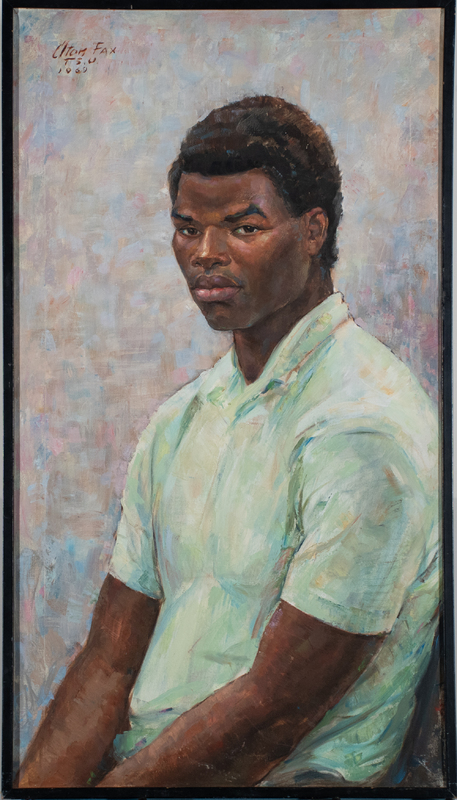
Fax’s painting is a portrait of a young man sitting with his hands in his lap. Yearbook photos suggest the subject may be George Latson, who was an art student at TSU at this time. During his career, Fax taught and held residencies at a variety of institutions, including Texas Southern University. He became internationally acclaimed for his work as a cartoonist, illustrator, and writer.
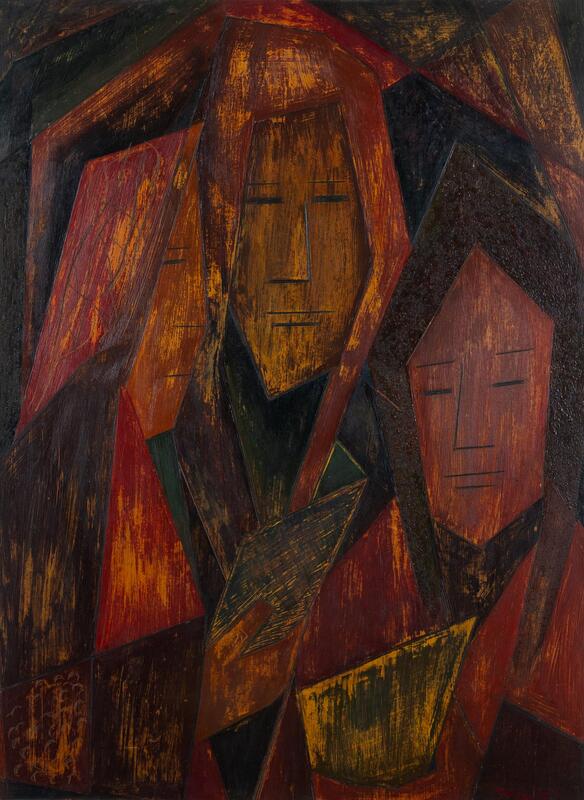
Merton D. Simpson was an abstract expressionist painter and African art collector from Brooklyn, N.Y. Portrait of The Wise Men is an oil painting of the three male Biblical magi. The men on the left and right hold texts, and the central man's head is visible between them. Simpson uses muted colors throughout the piece.
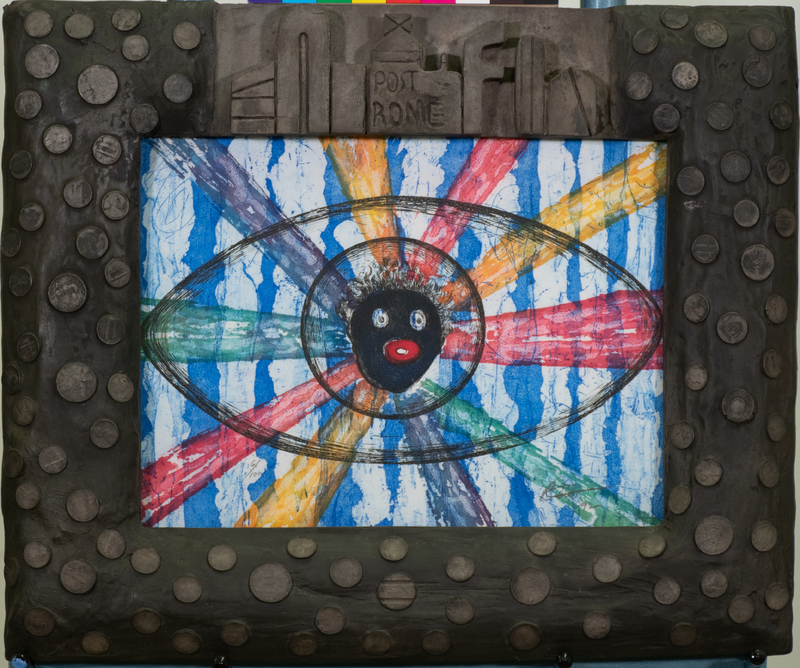
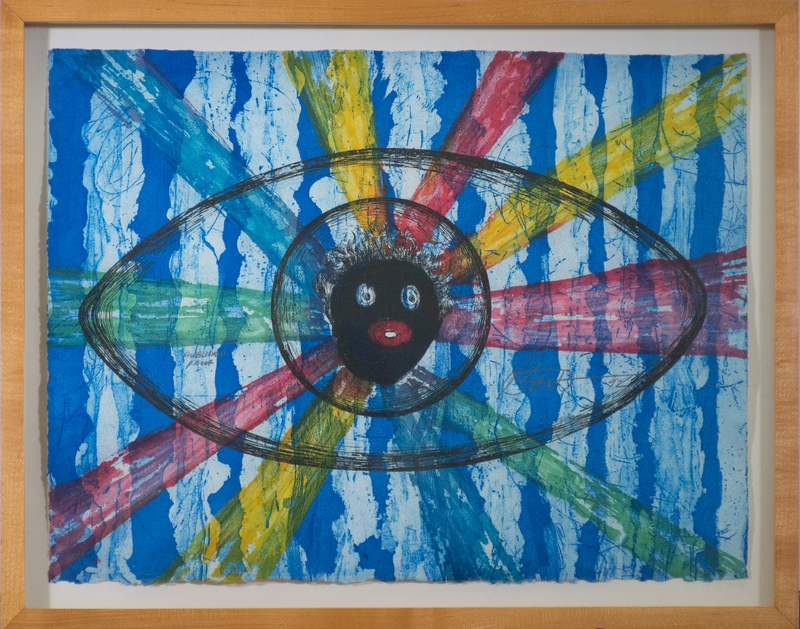
Long’s print was created during his 1990 Prix de Rome fellowship. At the center of the design is a large, oval-shaped eye. This is a frequently used motif in Long’s artwork, across many different mediums. The vertical and diagonal rays and bars draw attention towards the eye, which features a man’s face where the pupil would be. The frame, made from cast bronze, features a city skyline, embedded coin shapes, and the words “Post Rome.”
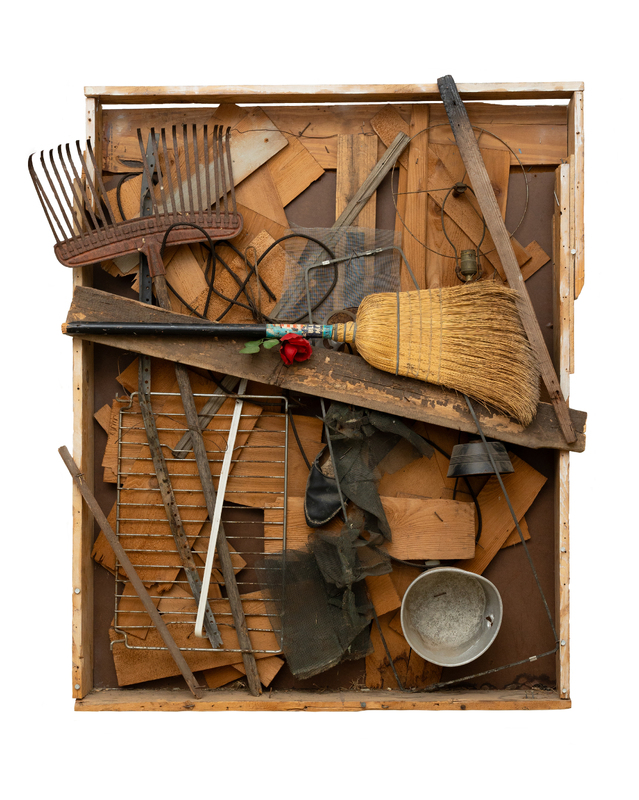
Dr. Arthur L. Britt was an artist and educator from Cuthbert, GA. Poverty Toy Chest is an installation that displays items impoverished children use for recreational play. It shows the disparity and ingenuity of people with little resources.
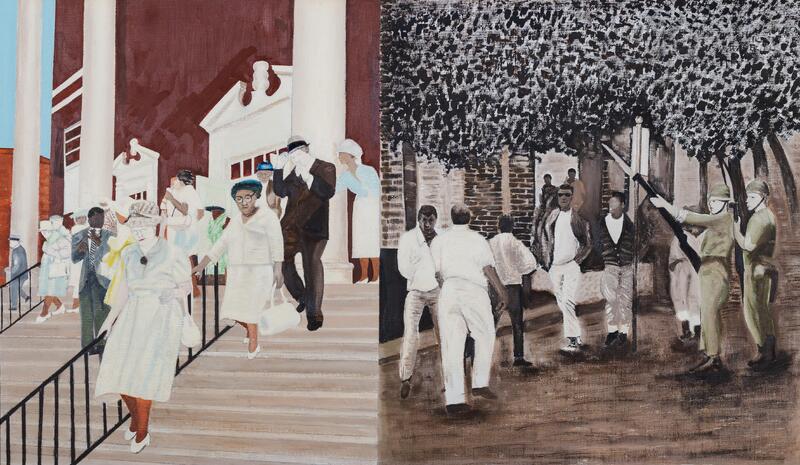
Al Tyler was an artist known for his figurative murals and landscape paintings. Prayer for Freedom shows two scenes from the fight for Civil Rights. On the left, black and white people are leaving a courthouse, and on the right, armed officials are stopping Black men from entering a building.
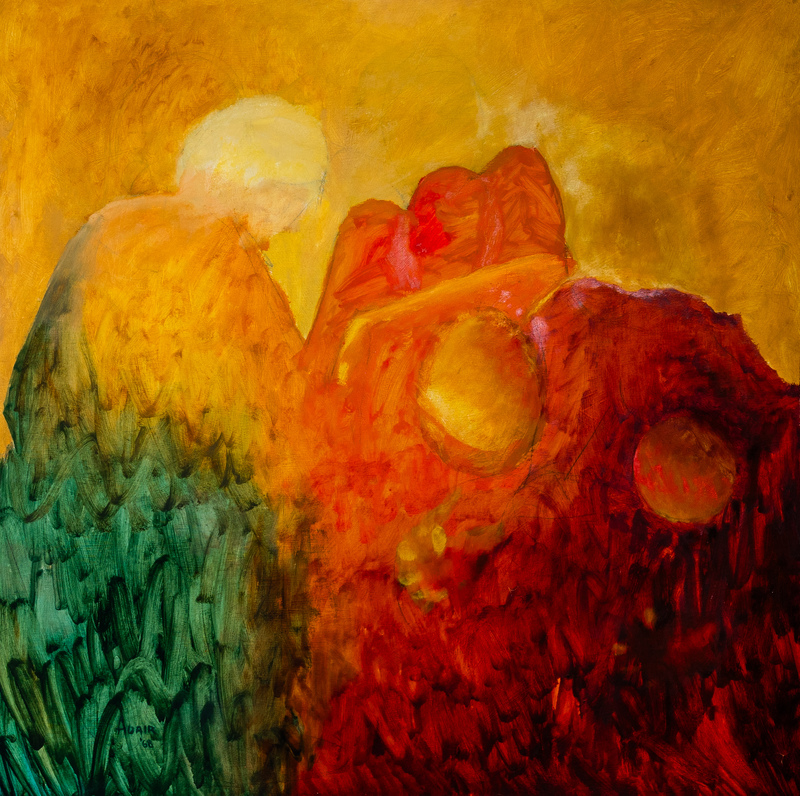
James Adair was an artist from Atlanta, GA. A prayer Meeting is an abstract depiction of a group of people practicing a religious ritual. Adair uses broad brush strokes of green, red, and yellow to create this scene of piety.
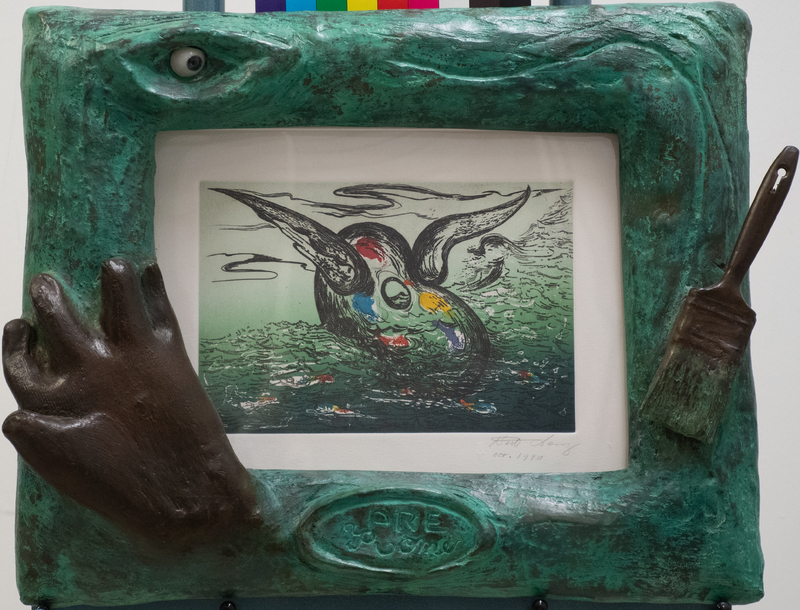
Long’s print was created during his 1990 Prix de Rome fellowship. The print features two aquatic animals, possibly whales or birds, emerging from the water, while other colorful creatures float around and within them. The cast bronze frame features the words “Pre Rome,” a hand, a paintbrush, and an eyeball, which is one of the motifs that appears most frequently in Long’s artwork.
Oliver's painting depicts vanguard Black politicians from the Reconstruction period following emancipation. Radical Reconstruction saw the election of dozens of Black lawmakers in former slave states like Texas. After 1897, Texas didn't elect another Black legislator until 1966.
Alexander S. McMath was a painter and educator from Clinton, SC. Prelude to a Kiss is a non-figurative abstraction consisting of gestural brush strokes.
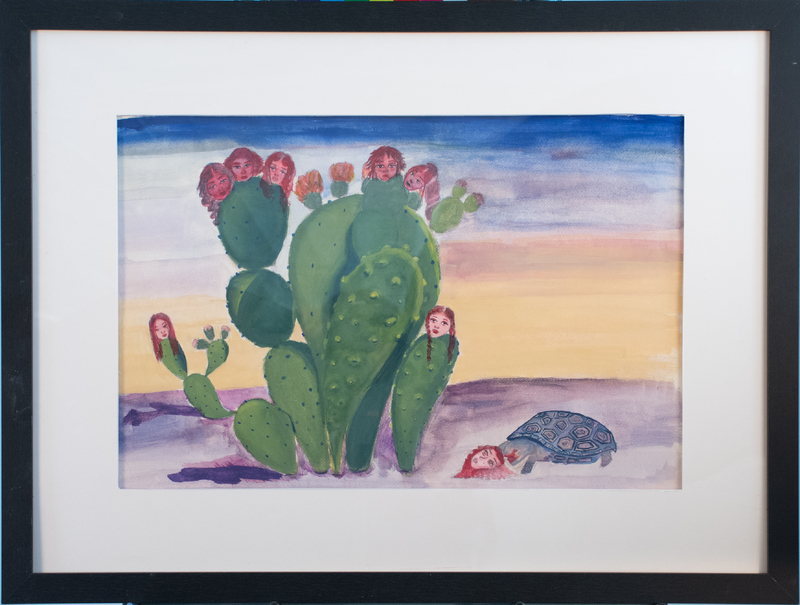
Toussaint's painting, "Prickled," pushes back against the notion that women's role is limited to being nurturers. In her own words, her "creative perspective is rooted in a sensitive and feminine lens—one that challenges the common reduction of femininity to gentleness and passivity." After graduating from Texas Southern University, Toussaint started teaching art in a Houston-area middle school.
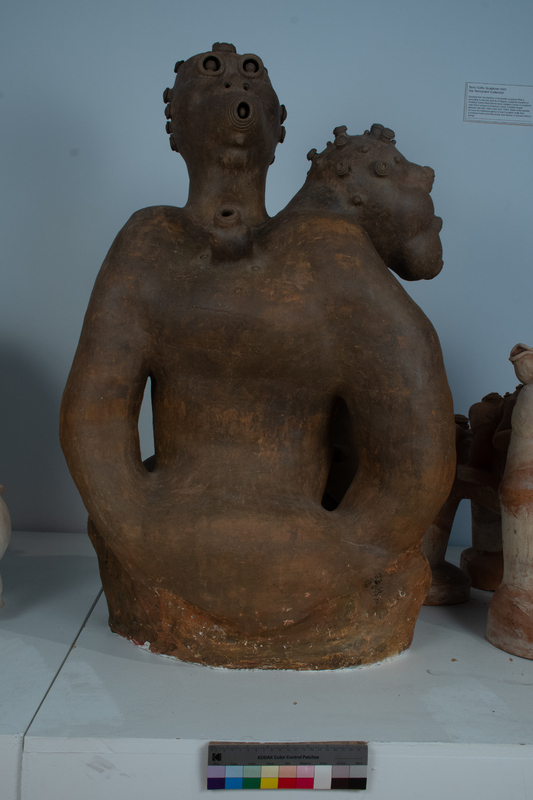
Obey’s sculpture, “Primeval Couple,” features a prehistoric male and female couple fused within the arms of one another. The heads of the figures are decorated with embellished swirls, often featured in the terracottas made by students of Carroll Harris Simms. Simms related Obey’s design to those he had seen in the mountains of northern Nigeria.
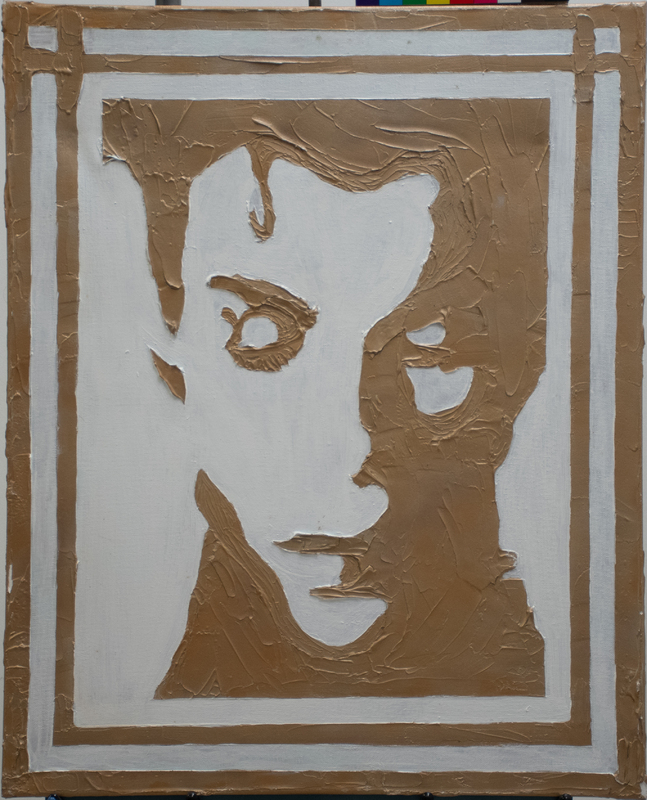
Morris’ painting is a golden, close-up portrait of singer and performer Prince; his head is slightly bowed and his eyes are closed. The painting is inspired by Prince 3, a photograph of the singer taken by Herb Ritts in 1991. Before his death, Prince became one of the best-selling musicians of all time, celebrated for his soaring vocals, multi-instrumental skills, and pioneering aesthetics and sounds.
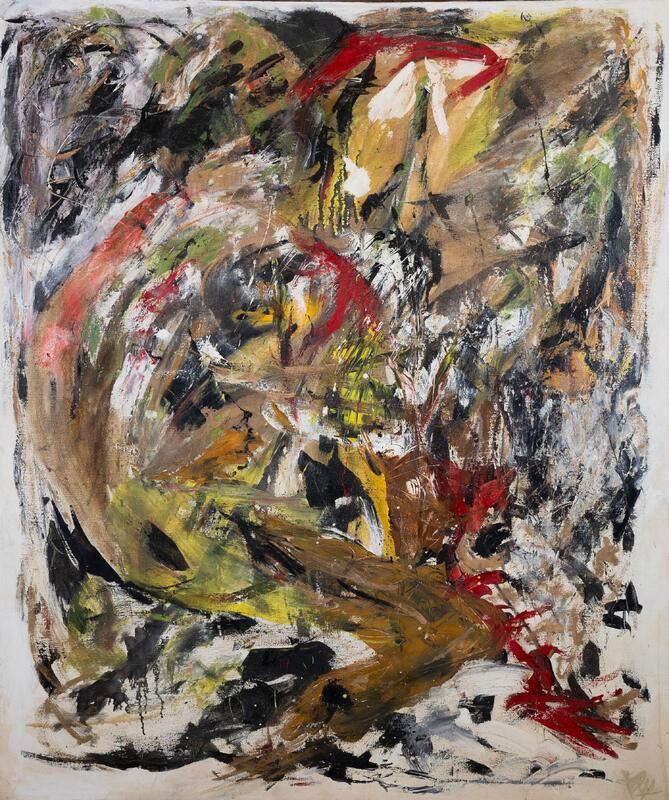
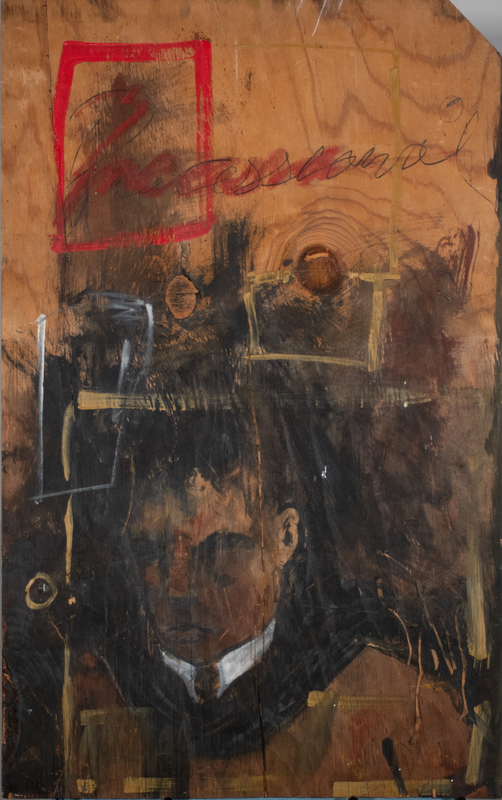
Pruitt’s painting is based on a photo he took of the preacher of his childhood church. At the time this piece was painted, the artist was exploring different faiths and struggling with his religious beliefs. Pruitt cites Basquiat and Rauschenberg as stylistic inspirations that influenced this painting. The muddied brushstrokes used to create this piece reflect the internal struggle of the artist.
This is a publisher’s proof for Long’s print Post Rome, which was created during his 1990 Prix de Rome fellowship. At the center of the design is a large, oval-shaped eye. This is a frequently used motif in Long’s artwork, across many different mediums. The vertical and diagonal rays and bars draw attention towards the eye, which features a man’s face where the pupil would be.
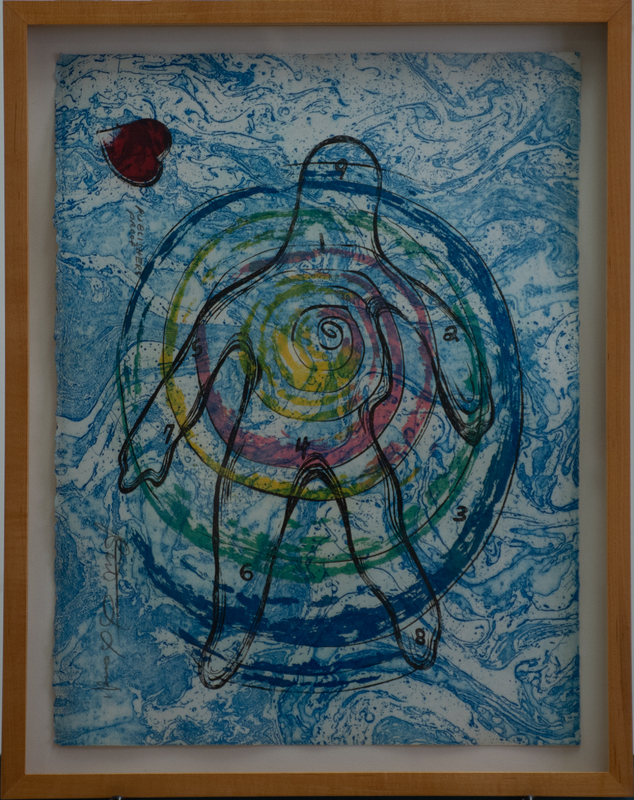
This is a publisher’s proof for Long’s piece Roma, which was created during his 1990-91 Prix de Rome fellowship. Featuring a blobby figure and colorful swirls, the composition is somewhat reminiscent of Da Vinci’s Vitruvian Man. Long rose to prominence as an “outsider artist” without formal training, later becoming one of the co-founders of Project Row Houses.
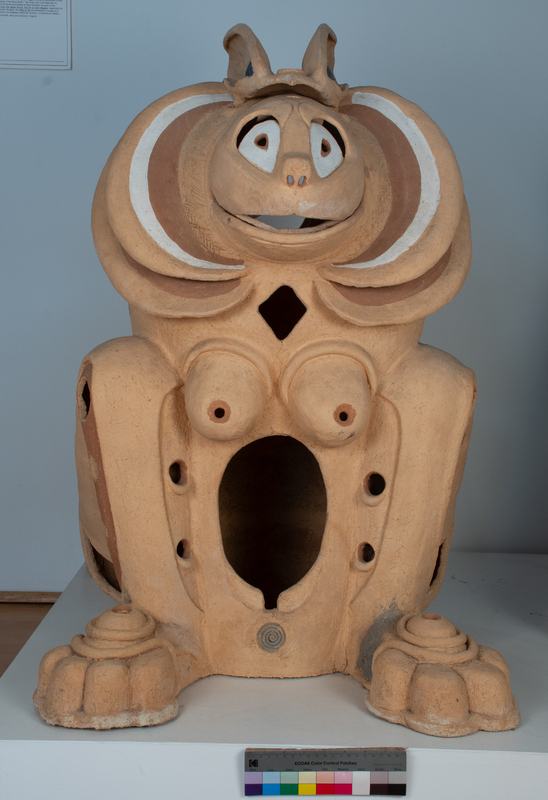
“Queen Rabbit,” by Earl Jones, features a mythical female rabbit. The center of the body includes an oval-like opening with identical circular holes on the legs and feet, creating balance. The rabbit’s ears are constructed with a removable crown piece; the same technique is used in several busts created by other Texas Southern artists.
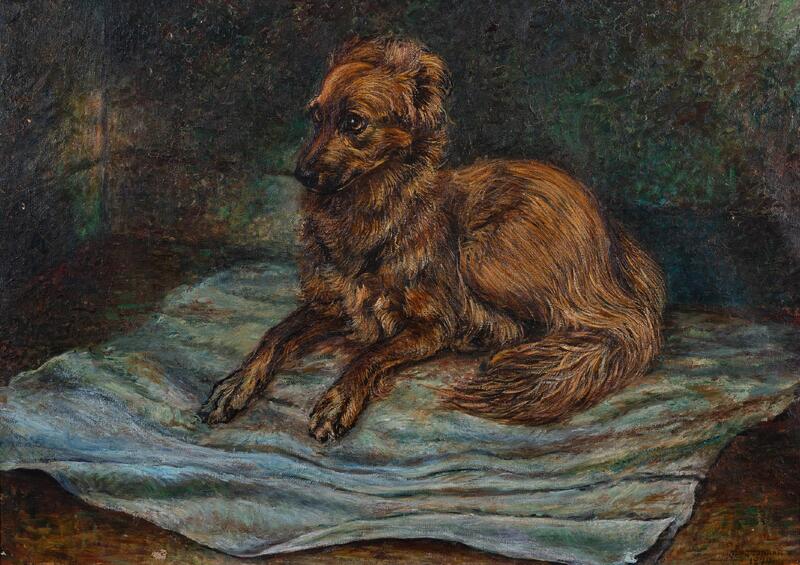
John Farrar was a child prodigy who won the 3rd Atlanta Art Annuals at age 15. His winning piece, Queenie, is a realist depiction of a dog lying on a white sheet in a dark room.
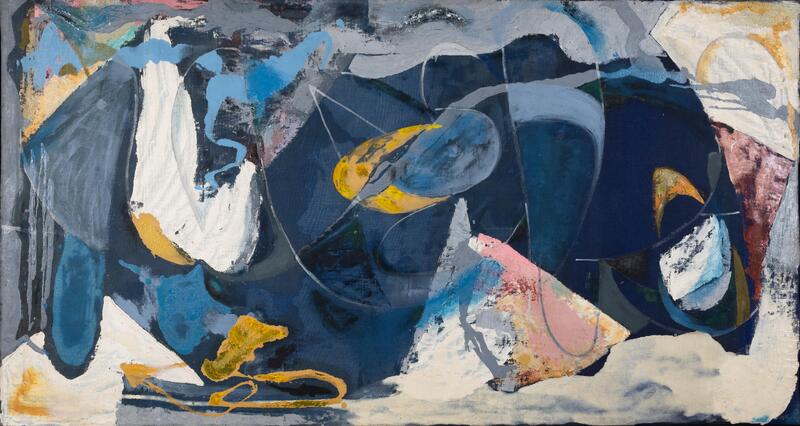
James Conroy Yeargans was a painter from Kansas City, MI. Quest of Blue is an abstract painting with colored layers that create a myriad of forms. The word “quest” can be seen as the letters are connected by gestured strokes and lines.
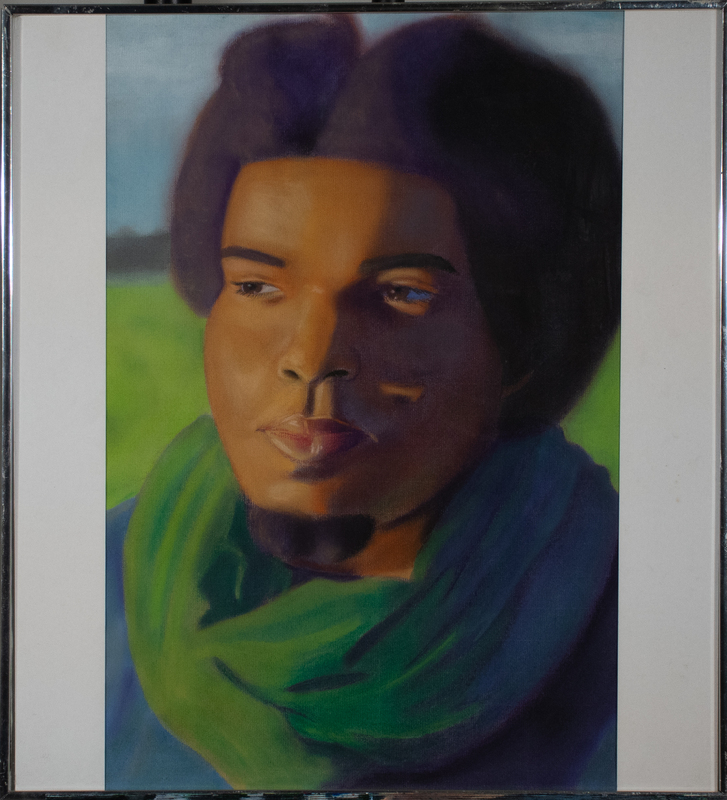
This work by Raheem Bellard is a self-portrait of the artist, with his face illuminated by the sun, wearing a green scarf. Cool colors are used throughout the piece, which enhances the tranquility of the composition.
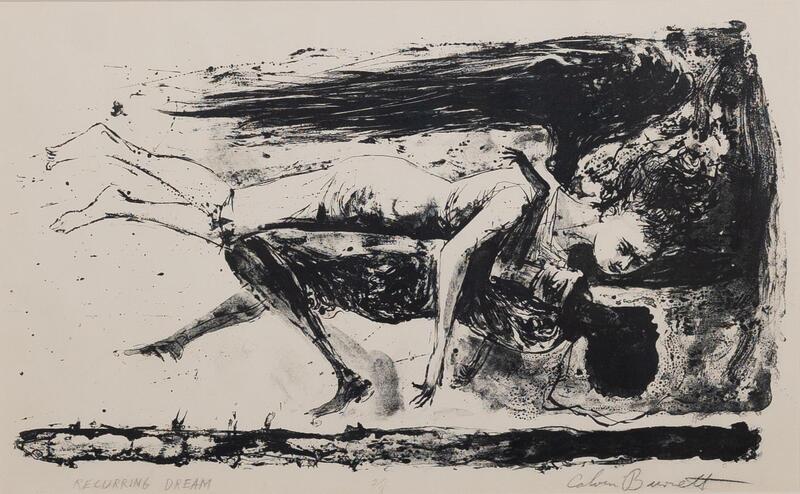
Calvin Burnett was a graphic artist, illustrator, painter, designer, and art teacher from Cambridge, MA. Recurring Dream depicts a girl plagued by supernatural nightmares. The sleeping Black girl rises in the air as a white hag floats above her.
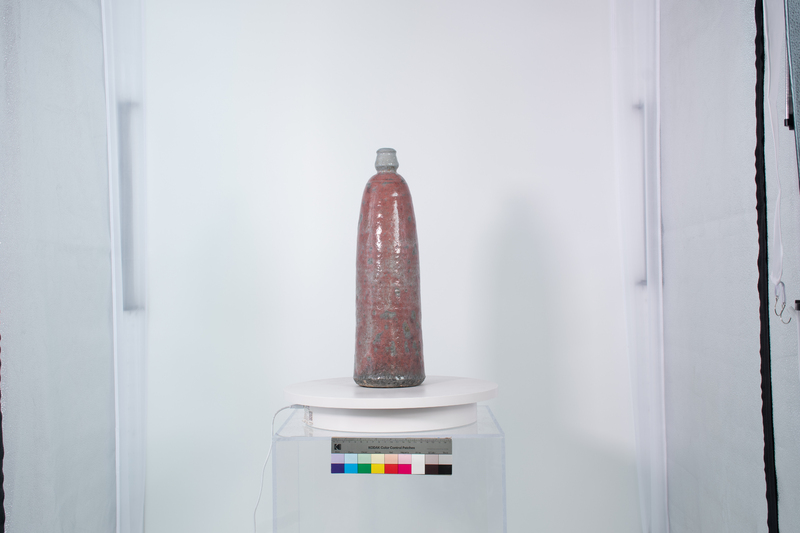
Simms’ ceramic vessel is hollow, with an opening at the top, and has a red and gray glaze. Carroll Harris Simms worked alongside Dr. John T. Biggers to establish the Texas Southern University Art Department. Simms taught sculpture, ceramics, and jewelry-making classes.
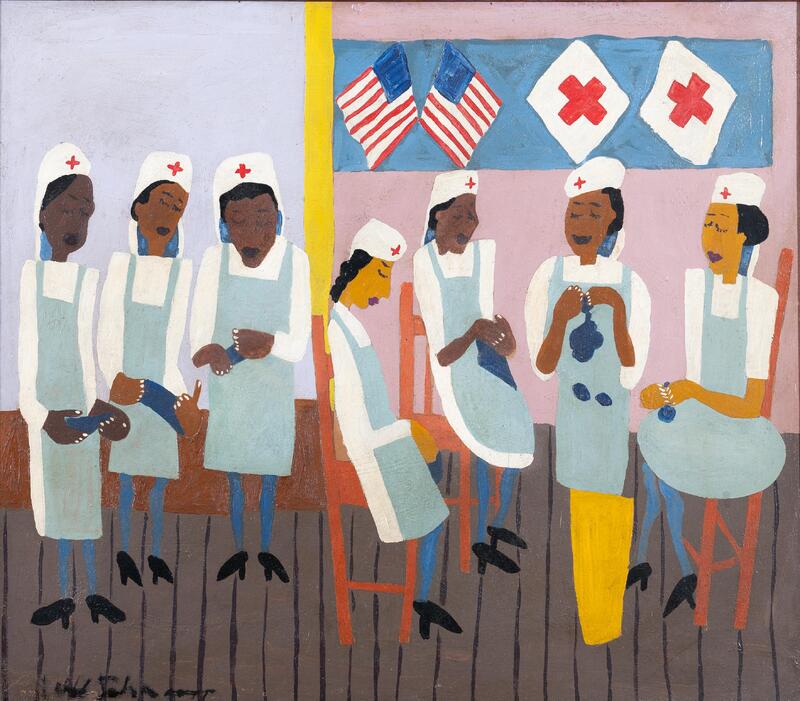
William H. Johnson was a painter from Florence, SC. Red Cross Knitting Center depicts seven Black women in lab coats and aprons. The women are knitting in support of the Red Cross' relief efforts. The Red Cross began knitting campaigns in 1917 during World War I.
Romeyn van Vleck Lippman was a 19th-century painter and educator. Revival depicts three figures standing in a position of grief and consolation. The central Black boy is looking down grievingly, a Black woman is behind him with an averted gaze, and to his left is a veiled elderly White woman gazing at him while holding his chest.
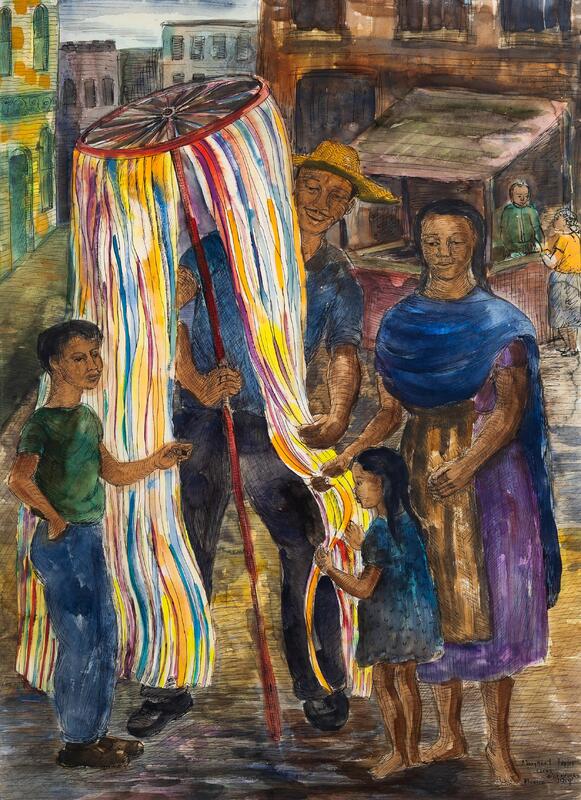
Margaret Taylor Goss Burroughs was an artist, historian, teacher, and writer from St. Rose, LA. Ribbon Man: Mexico City Market is a watercolor scene of a mother buying ribbons for her children. The ribbon seller joyously sells his colorful ribbons in the middle of a market in Mexico City, MX.
Moe's work displays a joyous religious gathering, featuring a preacher, dancers, musicians, and others. The group appears to be performing a ring shout, or praise break, a characteristic tradition of some Black churches in the Southern US involving dancing, stomping, and singing.
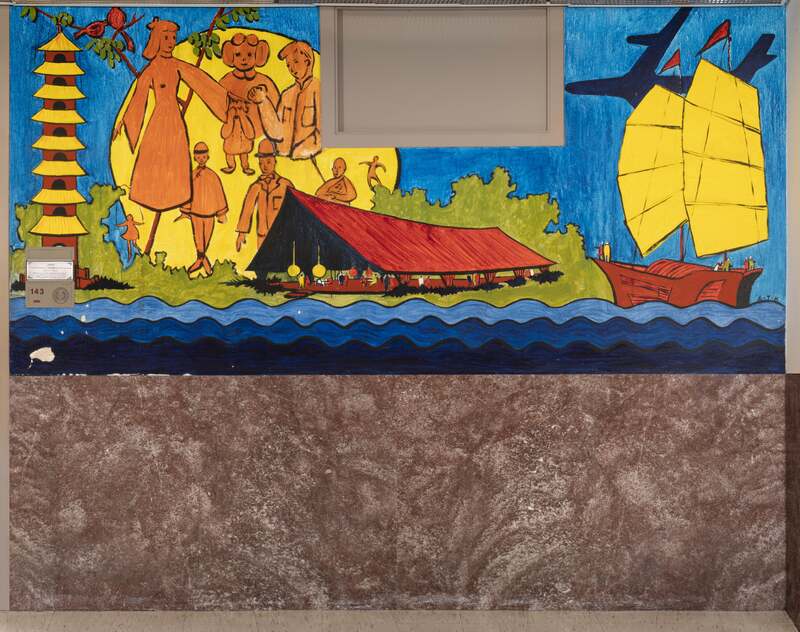
This mural was painted by one of the many Asian students who enrolled in Texas Southern during the 1980s. A wooden ship with sails is seen in contrast with a modern airplane on the right side. On the left, a tower suggestive of a pagoda imbues a sense of history and culture.