This collection showcases the rich legacies of HBCUs through artistic expression. Featured works include paintings, sculptures, murals, mixed media, prints, drawings, and fine art photography.
Date Modified
2025-12-17
About This Record
The HCAC public history focused digital archive cataloging is an ongoing process, and we may update this record as we conduct additional research and review. We welcome your comments and feedback if you have more information to share about an item featured on the site, please contact us at: HCAC-DigiTeam@si.edu
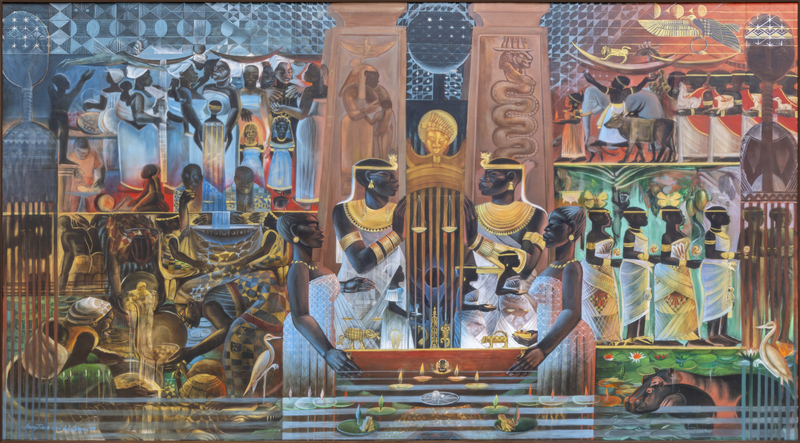
Biggers and Harvey Johnson, a former TSU art professor and student of Dr. Biggers, painted this mural in the lobby of the Jesse H. Jones School of Business. It speaks to the history of commerce and the wealth of Africa. NUBIA is full of visual symbols drawn from African art, including ceremonial combs, gold weights, and several meaningful animals, like the hippo, buzzard, sacred ibis, double crocodile, spider, tortoise, and more.
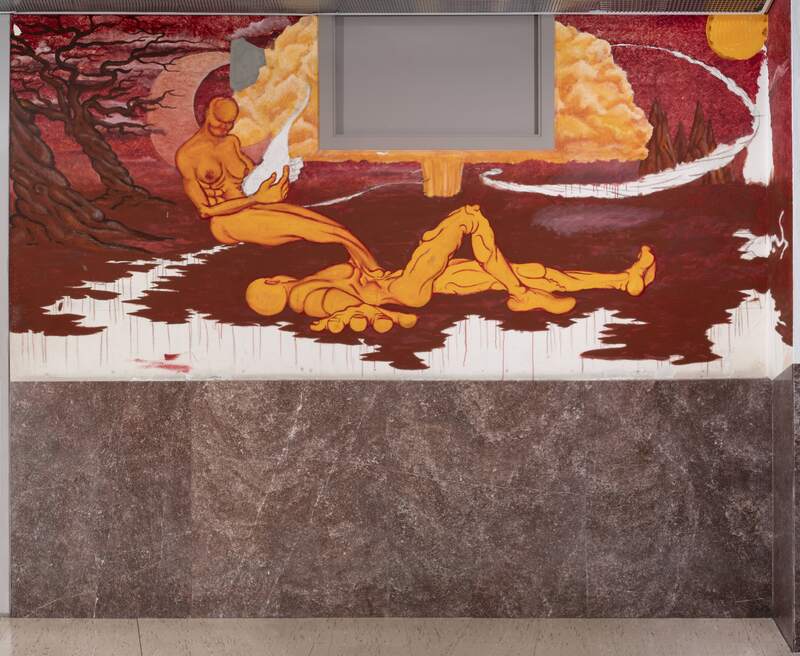
The red and orange-hued apocalyptic scene shows the moments after an explosion. In the middle, a dying woman’s soul leaves her body. The mural appears to have been left unfinished, as the baby, one hand, and parts of the foreground and background are not painted in.
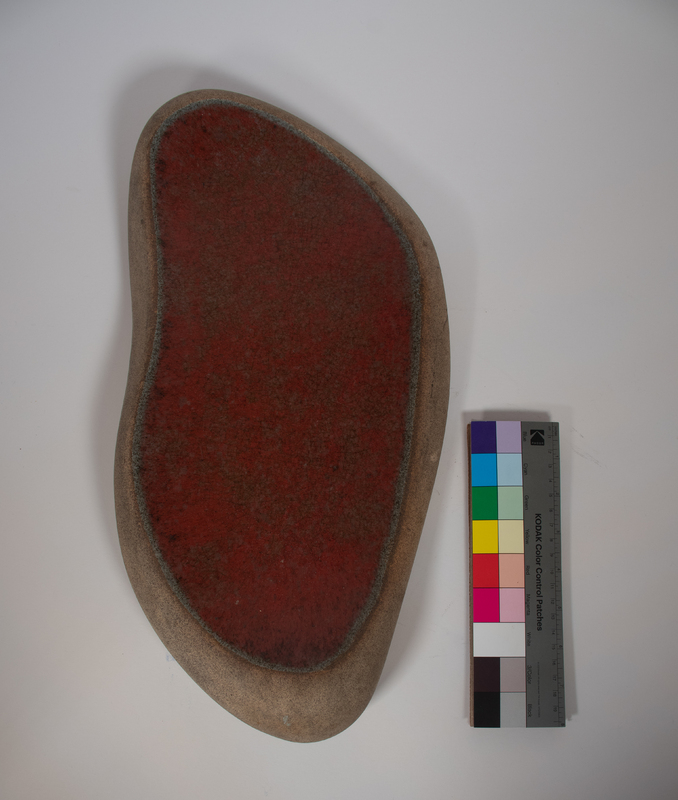
This large, oblong ceramic plate created by Carroll Harris Simms has a red glaze. This piece is among those that Professor Simms chose to feature in the 1976 book he co-authored with Dr. Biggers and John Edward Weems, Black Art in Houston: The Texas Southern Experience.
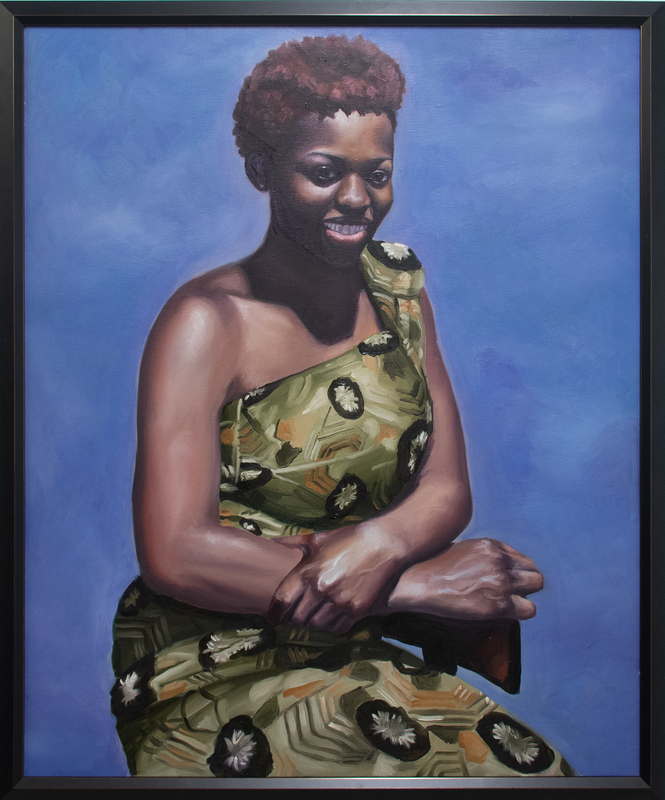
Onyeiwu's painting depicts a smiling woman wearing a green dress with geometric designs, against a blue background. The artist is a Texas Southern alumnus and current art professor, teaching painting, drawing, and murals courses. Much of his work highlights the beauty of Black women.
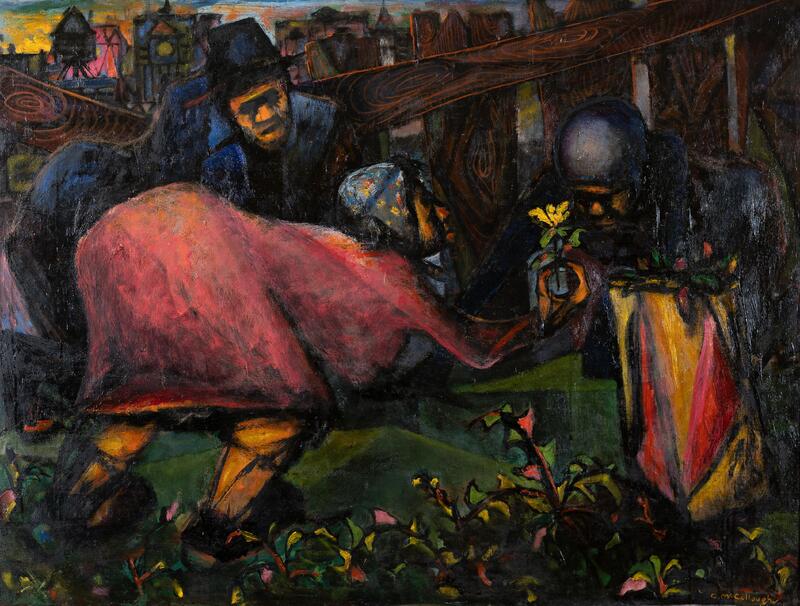
Geraldine McCullough was a renowned painter and sculptor from Kingston, AR. Of Hope depicts three figures picking flowers along a picket fence. In the foreground are two women and a man; one of the women is bent over in a red dress and holds a yellow flower. In the background is an urban skyline.
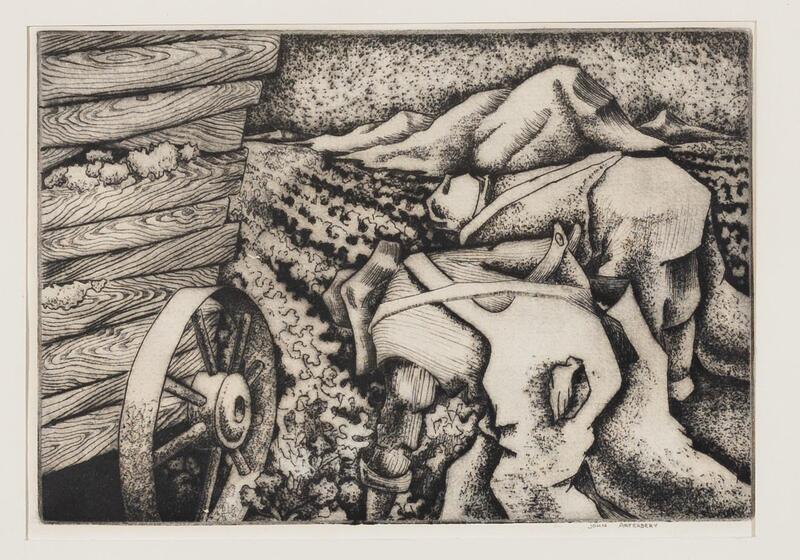
John Arterberry was an artist who worked in the art department at Langston University from Tallahassee, Florida. Of the Soil is a print depicting two farmers working the land. The two workers, dressed in overalls and straw hats, are bent over, picking crops to place in their wagons.
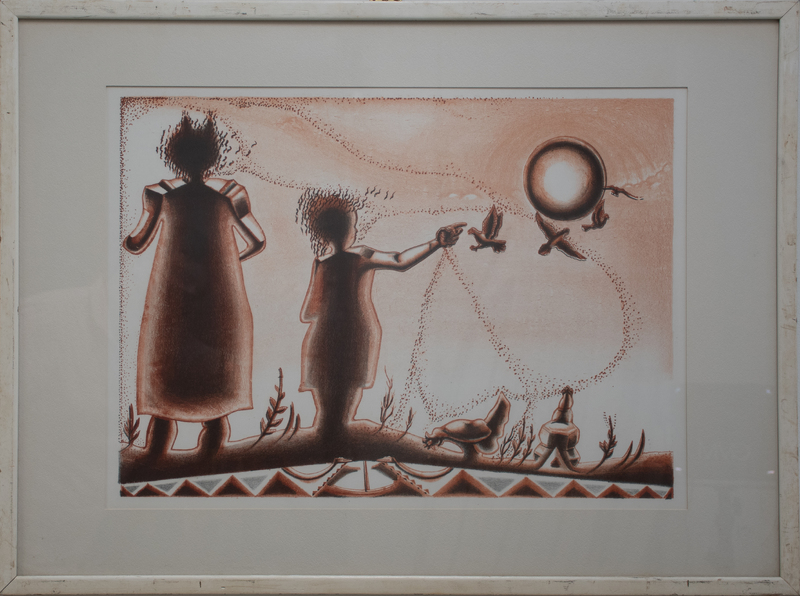
This print by Bennie Settles shows a mother and child standing in a field and feeding chickens and other birds. Settles' illustration of seeds is reminiscent of the way John Biggers paints seeds in his mural "Web of Life." Settles' work can be recognized by the power imbued in his careful portrayal of Black hair.
Lois Mailou Jones was an artist and art educator known for her costumes, textile designs, watercolors, paintings, and collages. Old House Near Frederick, Virginia depicts a slightly dilapidated house near Frederick, VA, a county about 50 miles from Washington, D.C., in watercolor. There are two children on the porch and two children and a chicken.
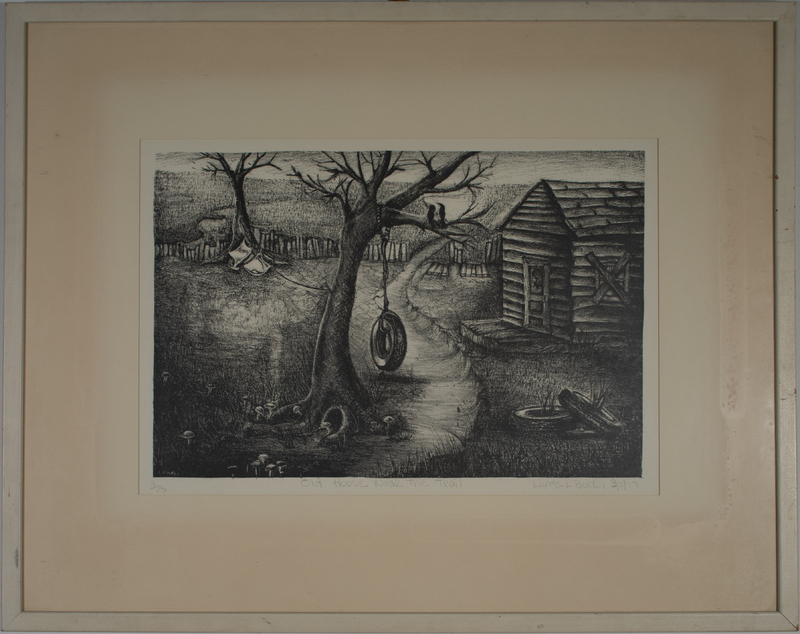
The print by Booker shows a rural landscape featuring a small, neglected house. A tire swing and clothesline hang from the two trees. The area appears not to be frequented by people, as suggested by the boarded window, overgrown weeds, and mushrooms.
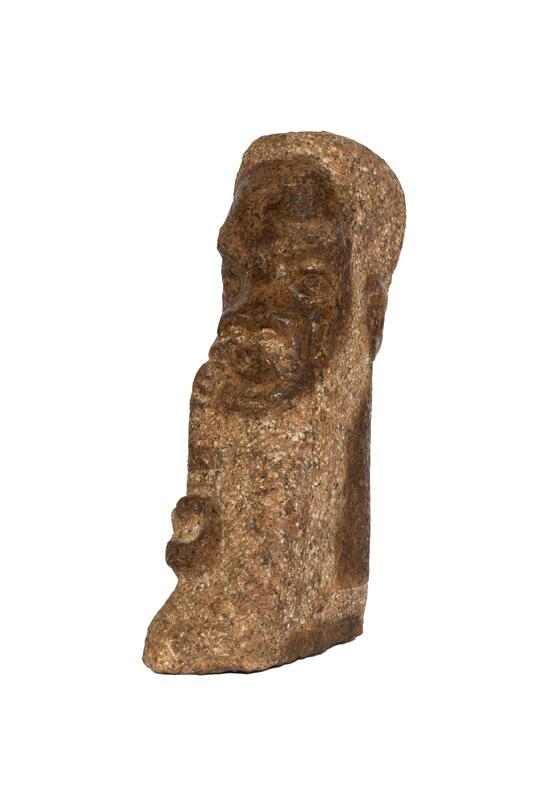
Dr. Eddie Jordan, Sr. was a Southern artist from Wichita Falls, TX. Old Slave is a granite sculpture depicting an elderly Black man. The subject has a full, long beard and is smoking a pipe.
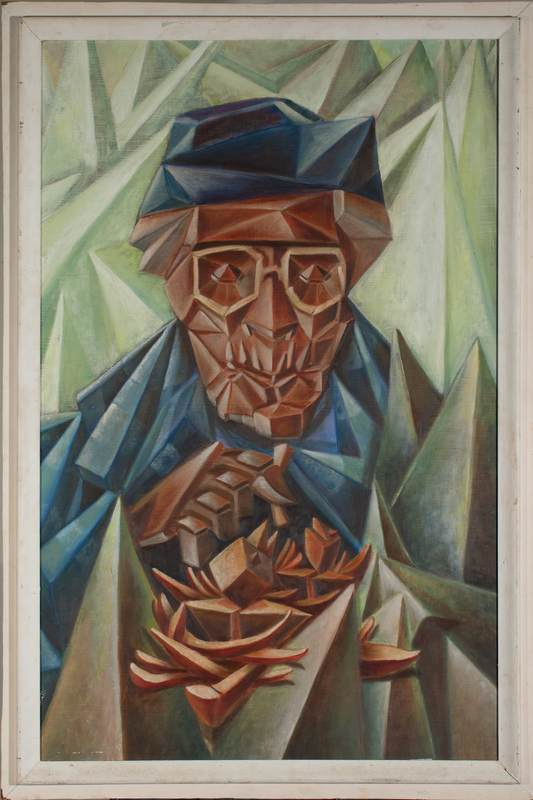
Donato’s painting portrays an elderly woman feeding hungry birds. This particular geometric style of painting is characteristic of students of Dr. Biggers who attended Texas Southern in the mid-to-late 1970s. The mother-child relationship is a common motif in the artwork of TSU students, usually a human mother and child or an animal mother and child. This painting seems to be unique in its depiction of a cross-species maternal relationship.
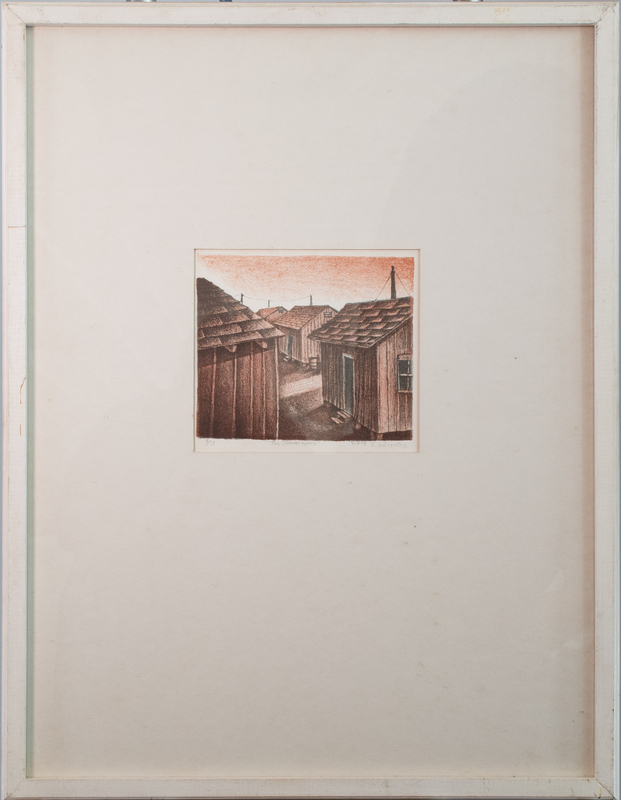
Sifuentes’ print shows a series of shotgun houses. The composition portrays Oleander Homes, a public housing complex in Galveston, Texas, the artist's hometown. The complex was destroyed by Hurricane Ike in 2008 and was rebuilt and reopened in September 2024. Shotgun houses and urban environments are common settings for Texas Southern student artworks.
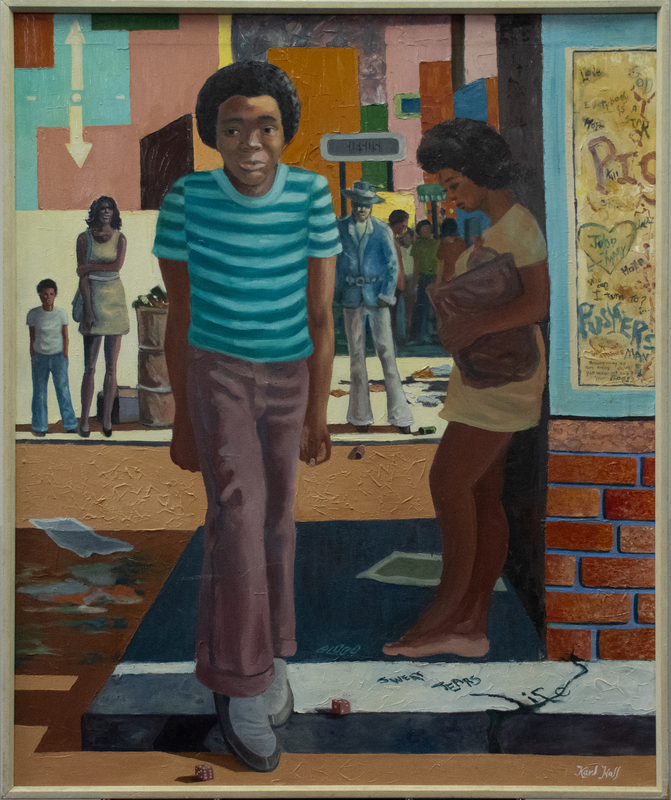
Hall's colorful painting highlights the view of a busy street corner. The main figure walks through the scene with tense shoulders and a balled fist, with a crowd of people lining the background. Graffiti, dice, and litter are seen on the street, sidewalk, and walls. This may be a depiction of Hall’s experiences growing up in Sunnyside, a historically Black neighborhood in southeast Houston.
This mural reflects themes of emancipation and progress. The figure of a Black man raises his fist, while broken chains dangle from his waist. The bales of cotton and chains allude to slavery. Black men in various professions represent changes brought by emancipation.
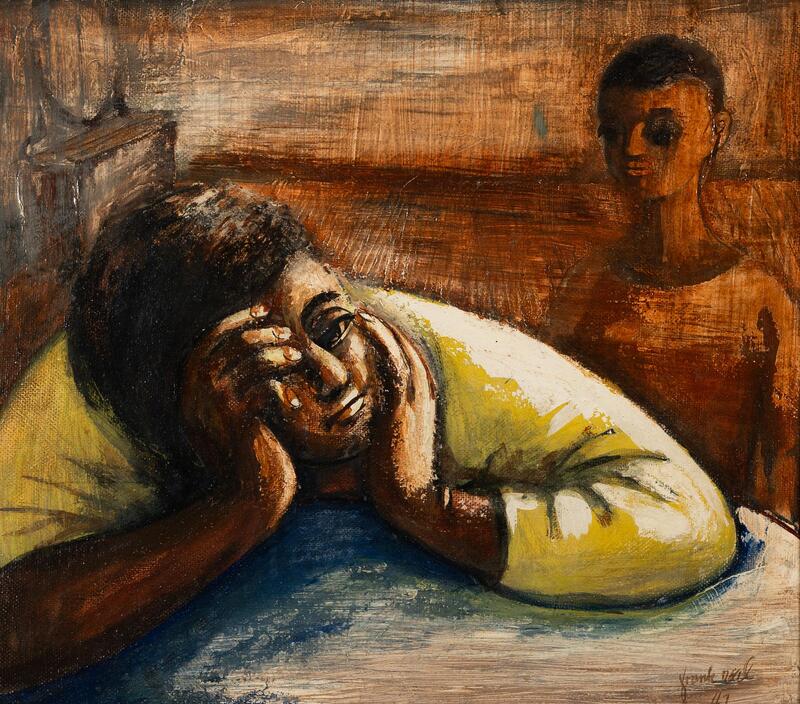
Frank W. Neal was a multidisciplinary artist born in Texas but raised in New York City. Oppression depicts a child watching a weary woman sitting at a table. The woman is at the table, resting her head in her hands in a yellow shirt. The child and the house's interior, including a vanity, is sepia-toned.
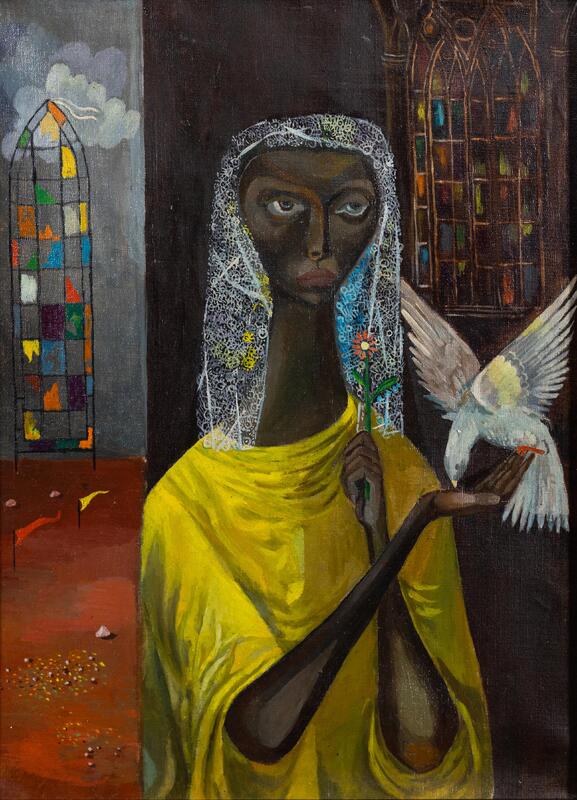
Frederick D. Jones, Jr. is a mid-twentieth-century African-American artist from South Carolina. Our Lady of Peace is a surrealist painting utilizing nature and religious symbols. The painting depicts a veiled Black woman with an elongated neck holding a flower and feeding a bird in a church with broken stained-glass windows
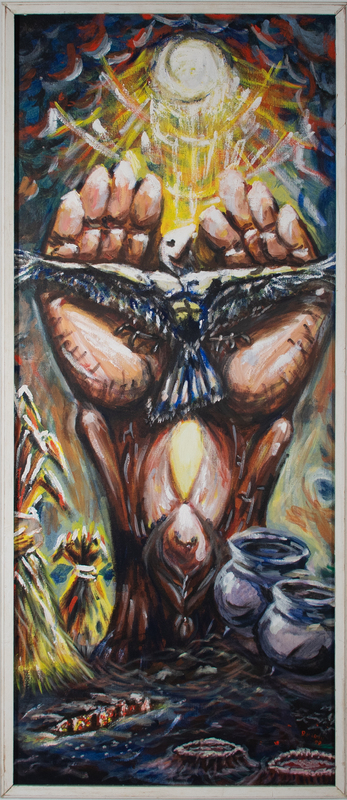
This detailed painting by Barry Morris includes a pair of hands rising up and clasping a bird. There are also bundles of wheat and a set of vessels. This work is very similar to the leftmost section of Morris's Hannah Hall mural and may have served as a partial study for the mural. Oversized, detailed hands and birds are frequent motifs in the artist's work.
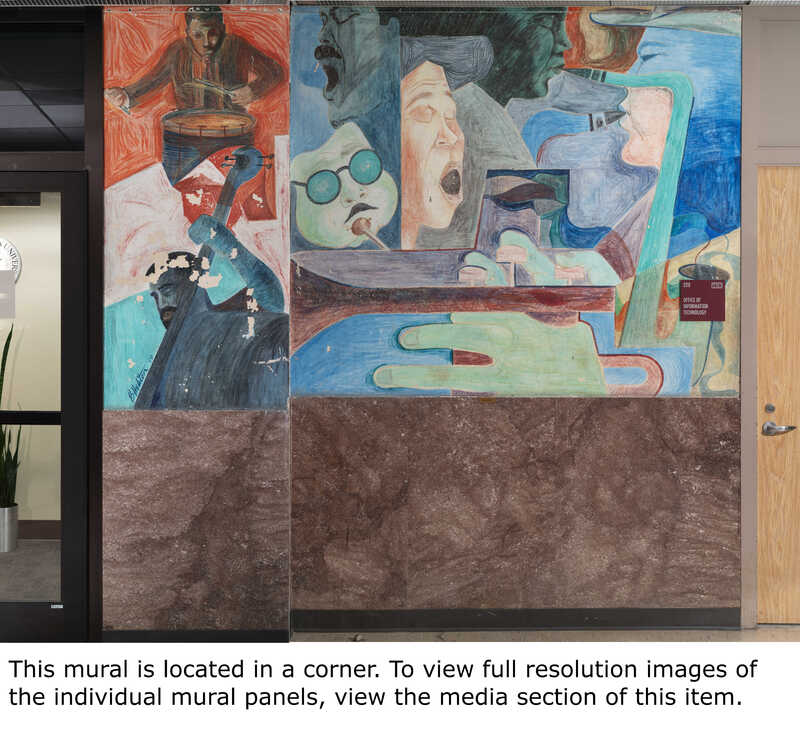
The mural captures the emotion and creative environment of a mid-20th century jazz club. Heliton chose a corner spot for his mural, which lends a sense of depth to the piece. The overlapping of patterns, portraits, and instruments suggests the intimacy of a small club interior.
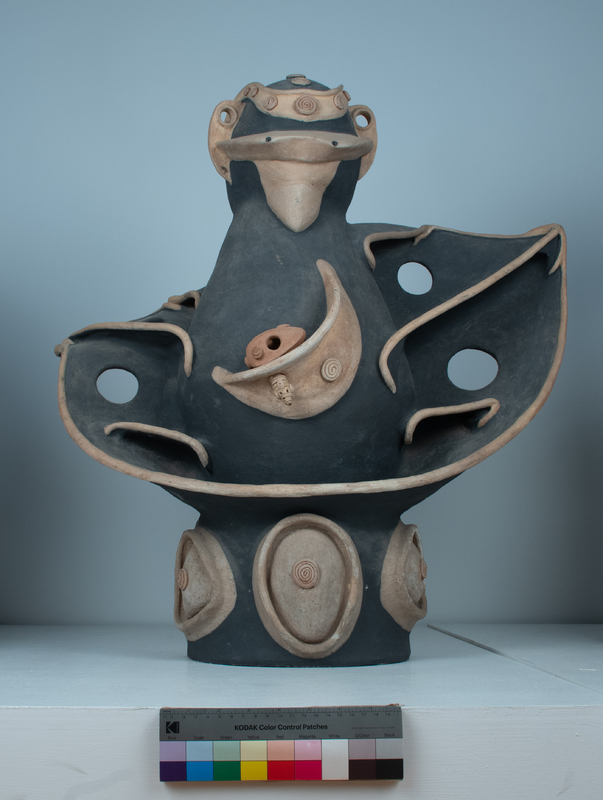
“Owl,” by Oliver Parson, features spiraled embellishments on the head and symmetrical holes on the wings, with a gray slip painted on the body. In the middle of the figure’s body, a crescent shape cradles a small egg, perhaps referencing owls’ nocturnal natures. Parson experimented with different clay colors in his terracotta sculptures.
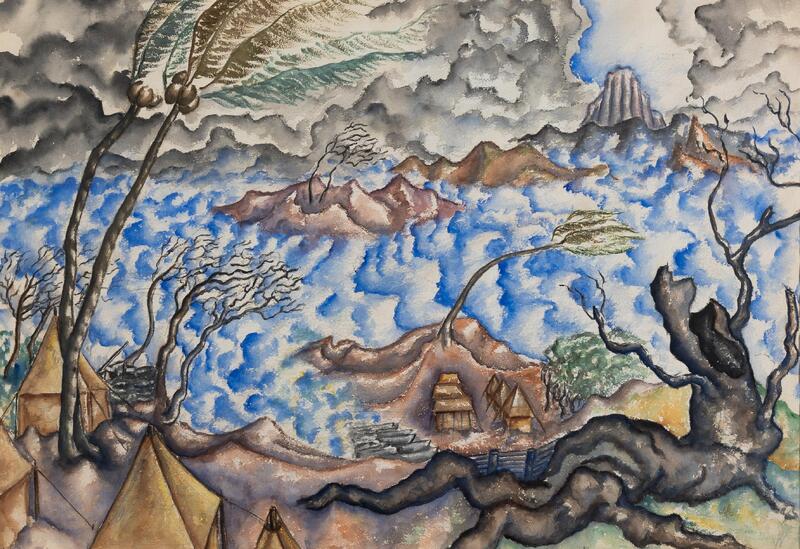
Born in Georgia, Robert Willis was an artist who studied art at Morehouse College. Pacific Movements is a watercolor painting of a landscape during a storm. The piece shows pitched tents surrounded by trees blowing in the wind under a dark clouded sky and rolling ocean waves.
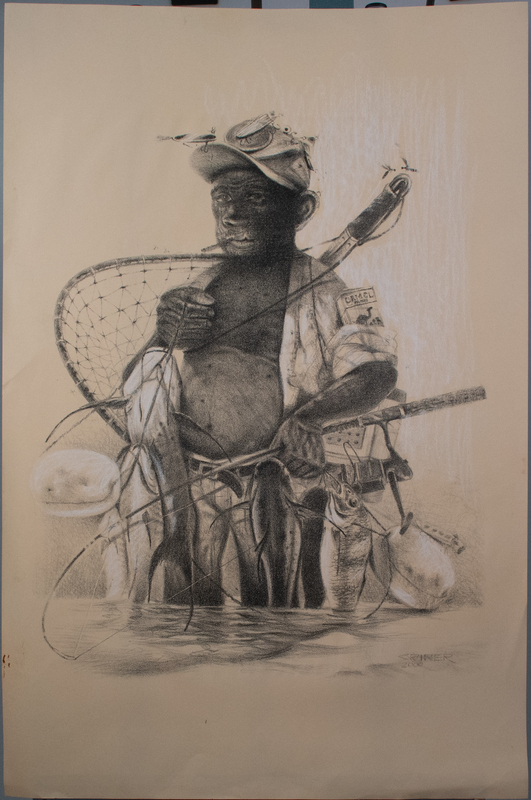
Criner’s print shows a man fishing; he is holding several catfish that he has caught. He is wading in the water with his hands full of fishing gear. Criner learned printmaking firsthand from Dr. John Biggers and was the longtime artist-in-residence at Houston’s Museum of Printing History.
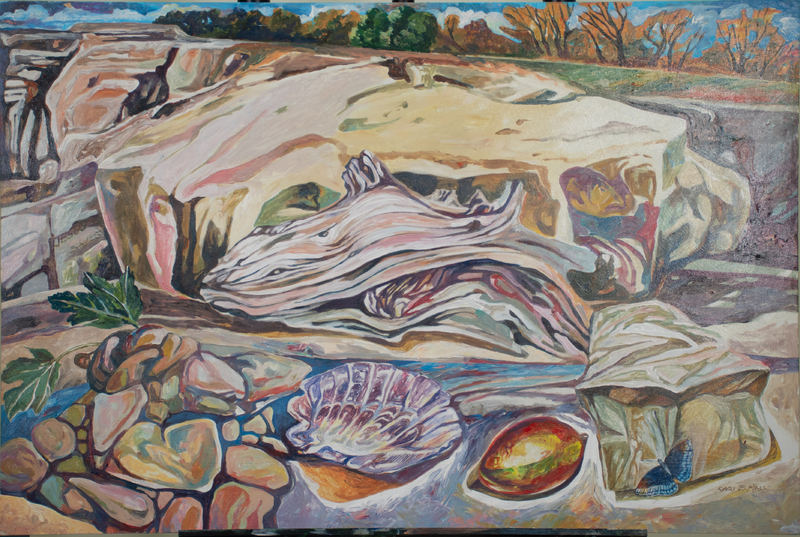
Hall’s painting is a surreal landscape of water flowing through a creek with various items along the path. There is also a faint inscription that reads “Jesus Saves” on a boulder to the far left. A mango, fossil, and butterfly are all pictured in the foreground. The loose and fluid paint strokes are reminiscent of impressionist paintings and characteristic of Hall’s style, particularly his more recent works.
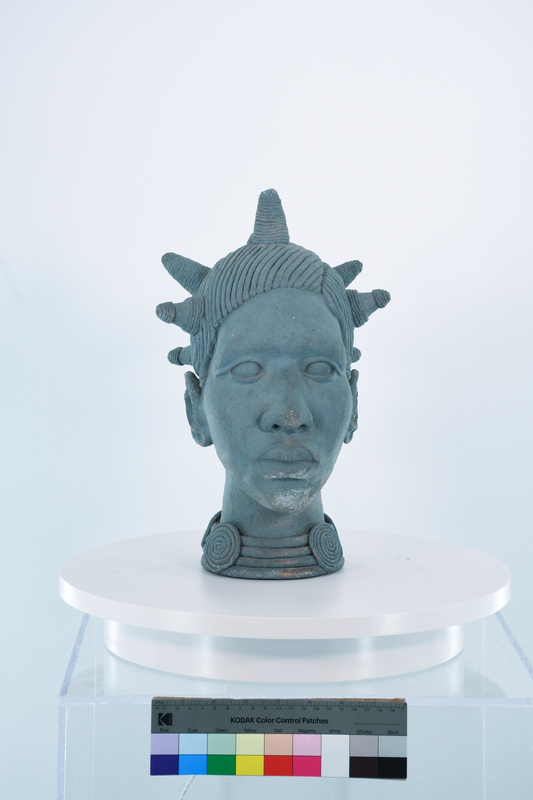
Morris's sculpture depicts a stylized version of the artist's own head and neck. As was required by Professor Simms, the artist adorned her self-portrait with swirls on the neck and rear of the scalp. The bust's blue hue is unique within the Texas Southern terracotta collection.
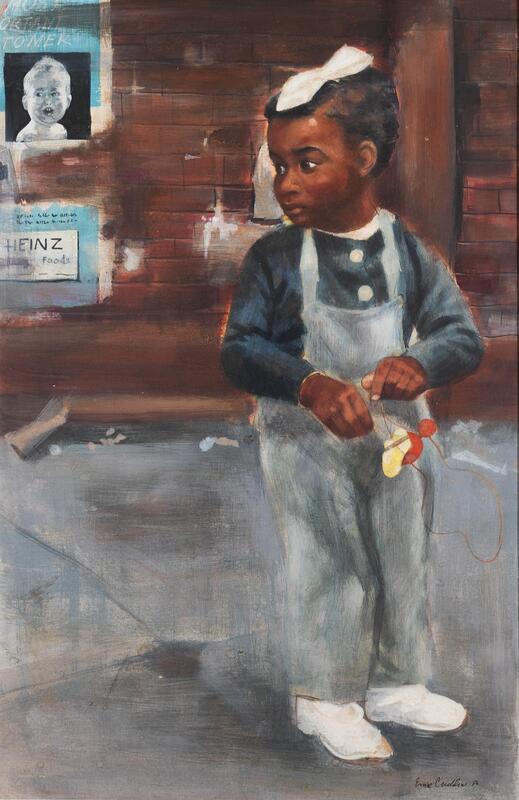
Ernest Chrichlow was a narrative painter and illustrator from Brooklyn, NY. In 1940, he started a picture book series displaying Black children in positive roles. Paulette depicts a young Black girl playing with a toy. She is wearing overalls, a navy shirt, white sneakers, and a white bow. Behind her is a Heinz Food poster with a white baby.
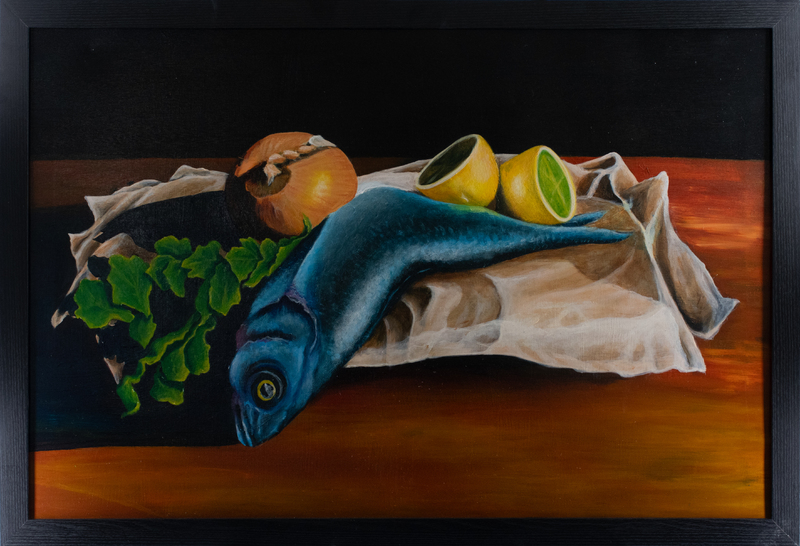
Hinojos' painting, "Pescador de Hombres," draws on Christian themes. The painting references the story of Jesus' miraculous feeding of the multiple with bread and fish, but also a symbolic representation of Christ as the "Bread of Life," a source of spiritual sustenance. Hinojos is a graduate of Texas Southern, accomplished airbrush artist, and founder of the Houston Art Center, an organization that aims to support artists in the Hobby area of Houston.
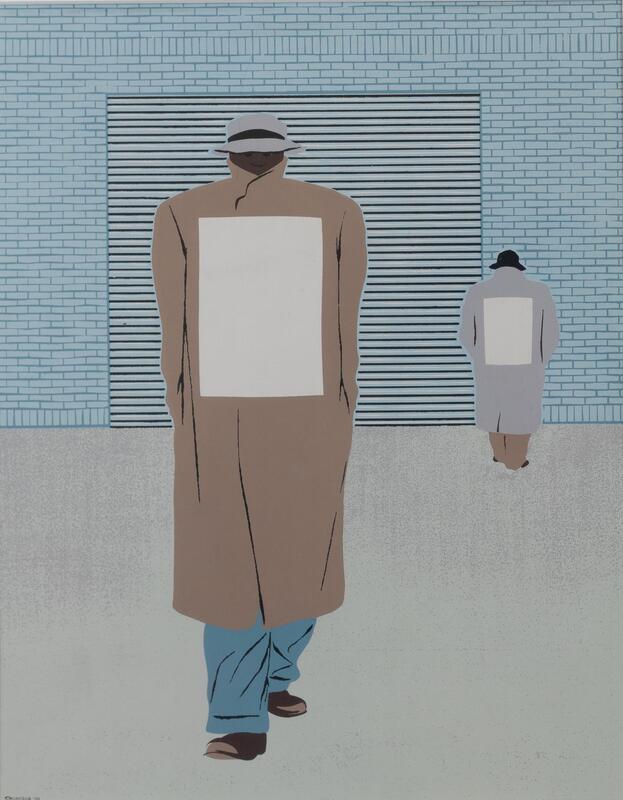
Roy DeCarava was a painter and printmaker before becoming known as a Harlem Renaissance photographer. Pickets depicts two men in winter wear standing in a picket line; they both wear sandwich boards. This lithograph was created in response to the frustration with wages and working conditions after the end of the wartime no-strike pledge.
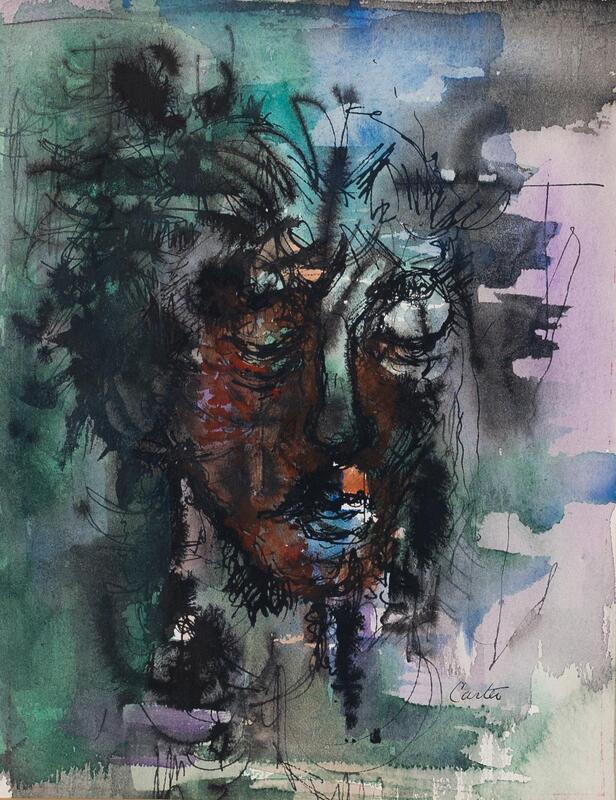
William S. Carter was an abstract, landscape, still-life, and figurative painter from St. Louis, Missouri. Pieta is an interpretation of Michaelangelo's Madonna della Pietà. The gestural ink markings create facial features and show eyes looking downward on top of a pastel-colored backdrop.
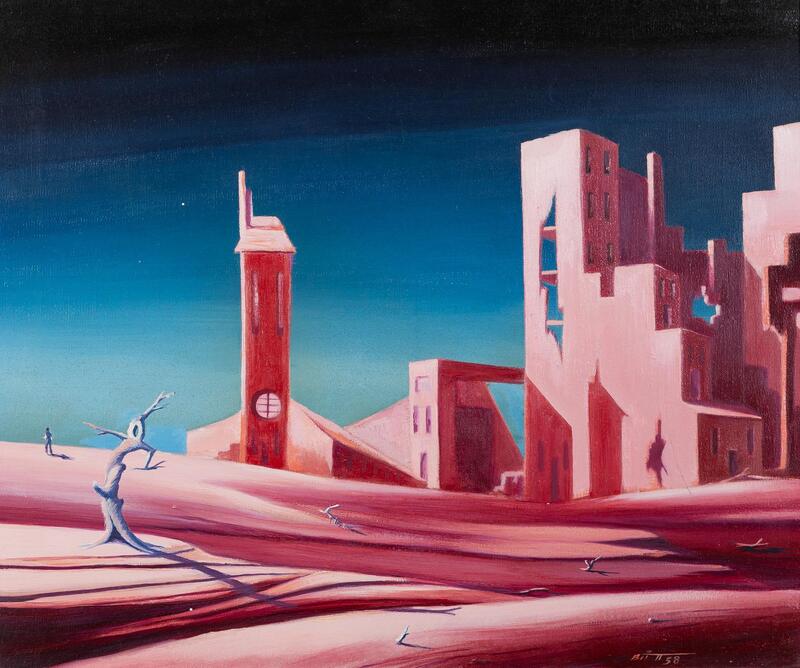
Benjamin Britt was a figurative, surrealist, and abstract painter and art teacher from Winfall, NC. Pink Sand #2 is a surrealist depiction of a post-apocalyptic urbanscape. In the background is a lone figure walking away from a dilapidated pink-tinted city surrounded by pink sand. In the foreground is a warped tree and other organic debris.
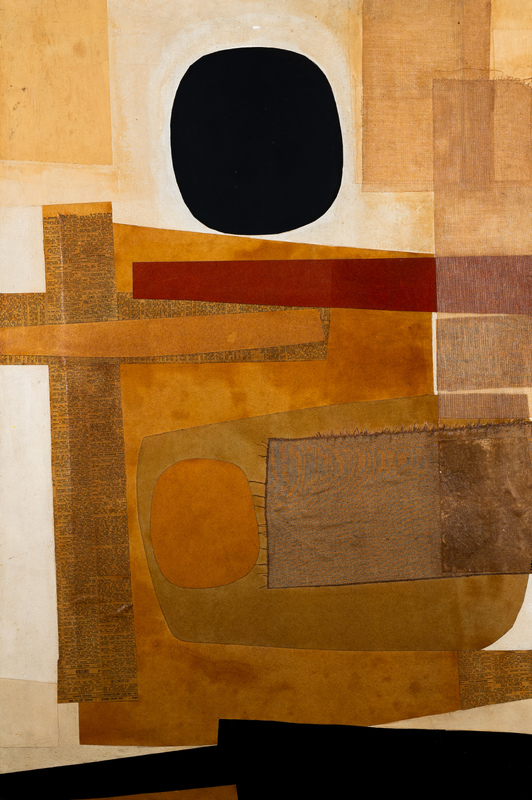
Howard E. Lewis was an Art professor and Korean War veteran from Columbus, OH. Pitiless Sun is an abstract depiction of a desert landscape during an eclipse.
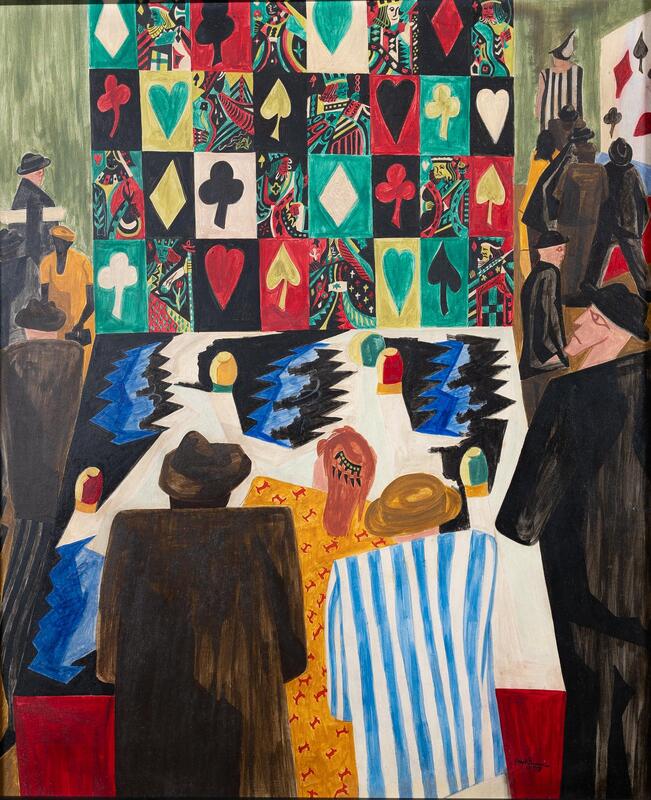
Jacob Lawrence was a renowned painter from Atlantic City, NJ. Playland shows a room with people standing around a table with a crowd. The majority wear black trench coats and fedoras. Three people wear yellow dresses, and two wear striped clothing and headwear. Gambling occurs in front of a decorated wall with various suits of playing cards.