Frankye Adams-Johnson Black Panther Party Collection
Title
Frankye Adams-Johnson Black Panther Party Collection
Date Modified
2025-12-12
Description
Frankye Adams-Johnson is a former English Professor at Jackson State University and former active member of the Black Panther Party for Self-Defense in New York City, where she served as an officer in the New York State Chapter. This collection, created or collected during her involvement in the Black Panther Party, consists of personal journal notebooks, correspondence, newspaper articles, fliers, meeting documents and her collection of political and movement buttons.
Curated By
Garrad Lee
Contributing Institution
Jackson State University
About This Record
The HCAC public history focused digital archive cataloging is an ongoing process, and we may update this record as we conduct additional research and review. We welcome your comments and feedback if you have more information to share about an item featured on the site, please contact us at: HCAC-DigiTeam@si.edu
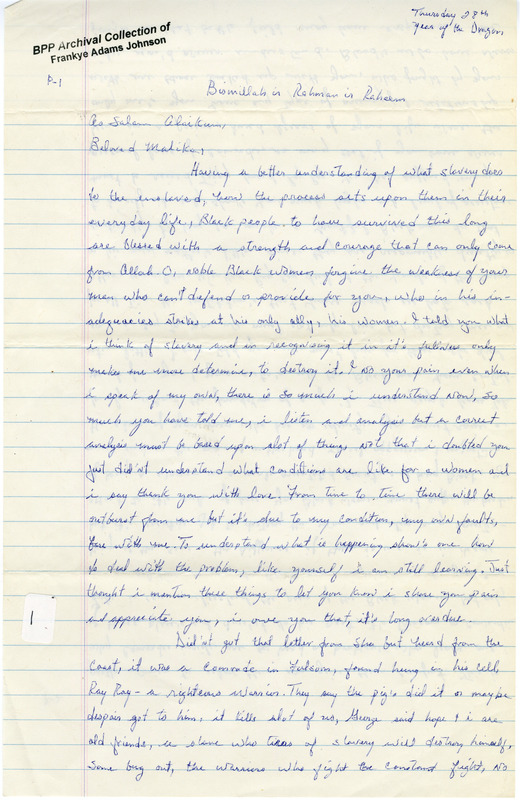
A letter from Nuh Abdul Qaiyum, who is imprisoned, to his wife Frankye Adams-Johnson (Malika). He explains how his imprisonment has helped him gain knowledge on slavery and the reality of Black women in America. He mentions a project he's been working on with the other imprisoned Black Panther Party members. Letter is dated ”Thursday 28th, 1976.”
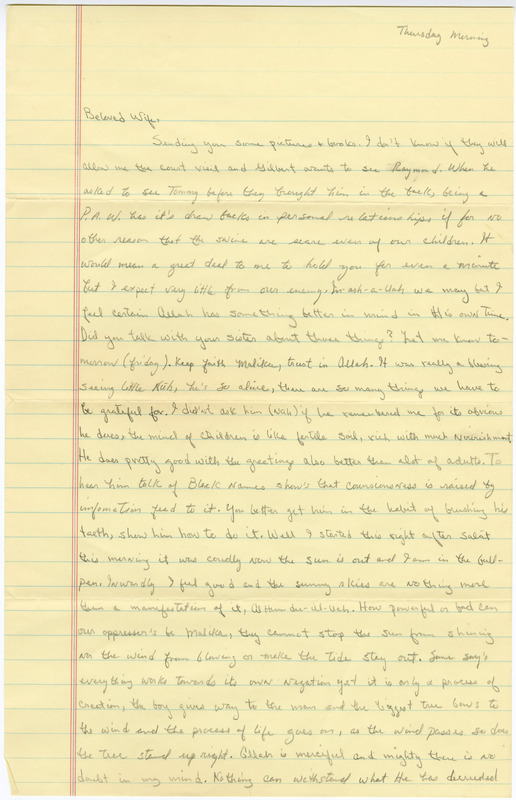
A letter from Nuh Abdul Qaiyum, who is imprisoned, to his wife Frankye Adams-Johnson (Malika). He writes about love: as a family, in marriage, and how the oppressors affect their relationships. He writes that the oppressors will not win, blessings will come, and their relationship will stay strong. The letter is dated “Thursday.”
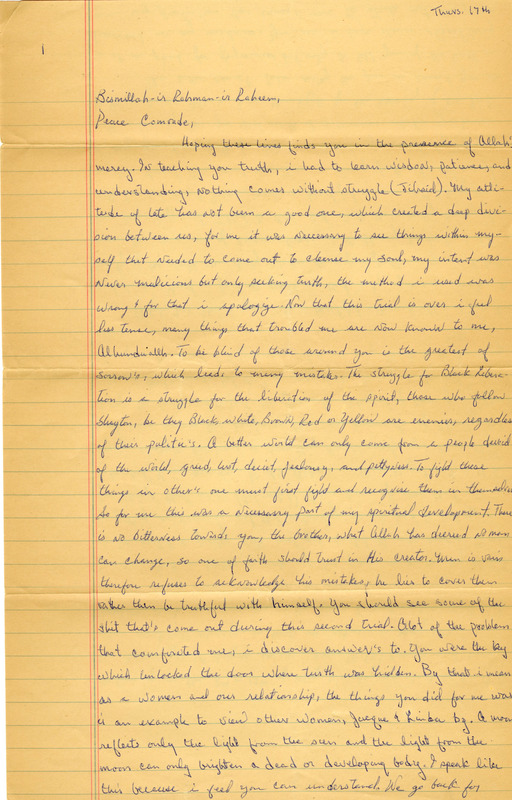
A letter from Nuh Abdul Qaiyum, who is imprisoned, to his wife Frankye Adams-Johnson (Malika). He focuses on his mental growth through hardship and his relationship with his family. He mentions events happening regarding Black Panther Party members before focusing on the importance of keeping faith in Allah. The letter is dated “Thursday the 17th.”
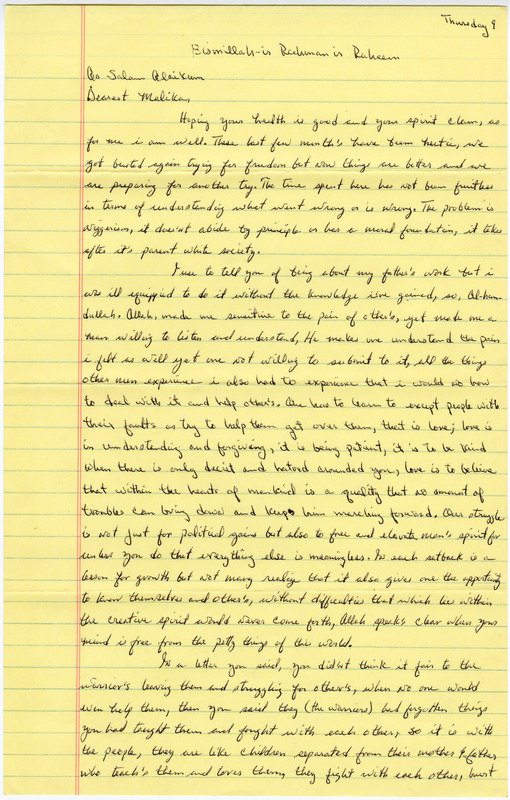
A letter from Nuh Abdul Qaiyum, who is imprisoned, to his wife Frankye Adams-Johnson (Malika). He writes about struggles for freedom, the knowledge that he has gained, and implies that she should focus more on the children. He writes that they both should keep their faith and continue the work. The letter is dated “Thursday the 9th.”
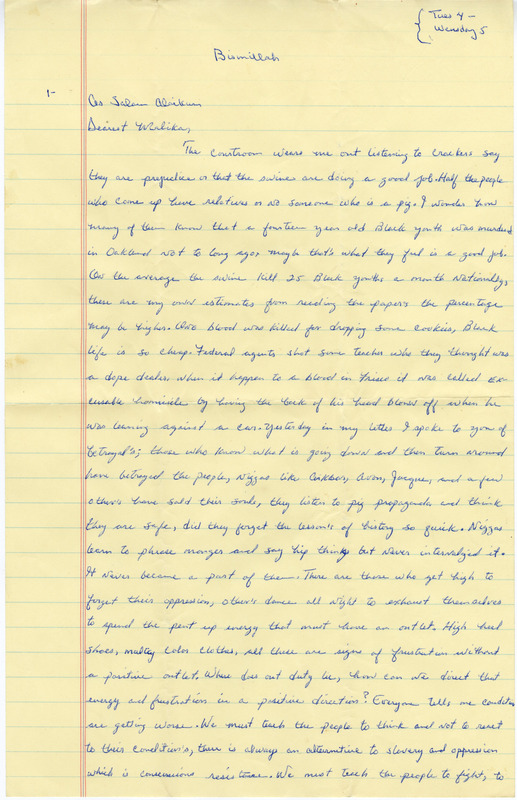
A letter from Nuh Abdul Qaiyum, who is imprisoned, to his wife Frankye Adams-Johnson (Malika) about his trial. Throughout his sentence, he has been able to maintain his faith in Allah and the future. He also attached some pieces of poetry. The letter is dated “Tues 4-Wednesday 5.”
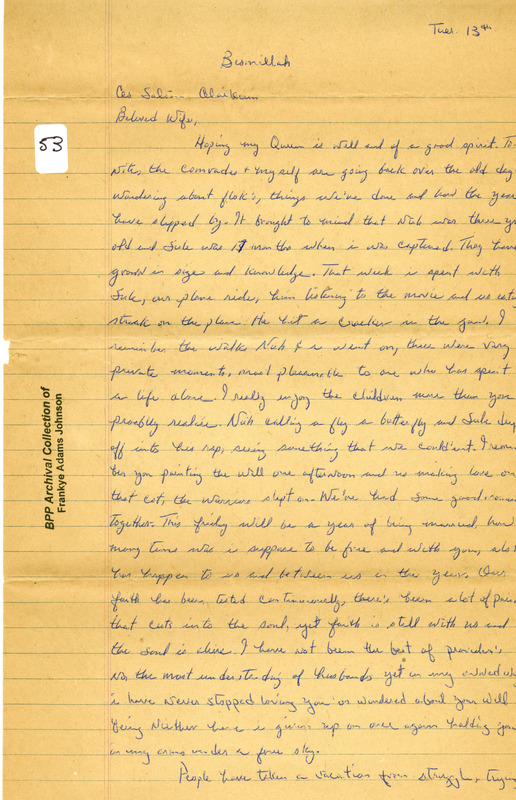
A letter from Nuh Abdul Qaiyum, who is imprisoned, to his wife Frankye Adams-Johnson (Malika). He writes about the amount of time that has passed, his love for his wife and family and his will to fight oppression. He explains that fear and wrong priorities hinder the Black Panther Party. The letter is dated “Tuesday the 13th.”
A letter from Nuh Abdul Qaiyum, who is imprisoned, to his wife Frankye Adams-Johnson (Malika). He updates her on his struggle for freedom, and his progress in gaining knowledge and coming up with solutions with the other imprisoned Black Panther Party members. The letter is dated “Tuesday the 15th, 1976.”
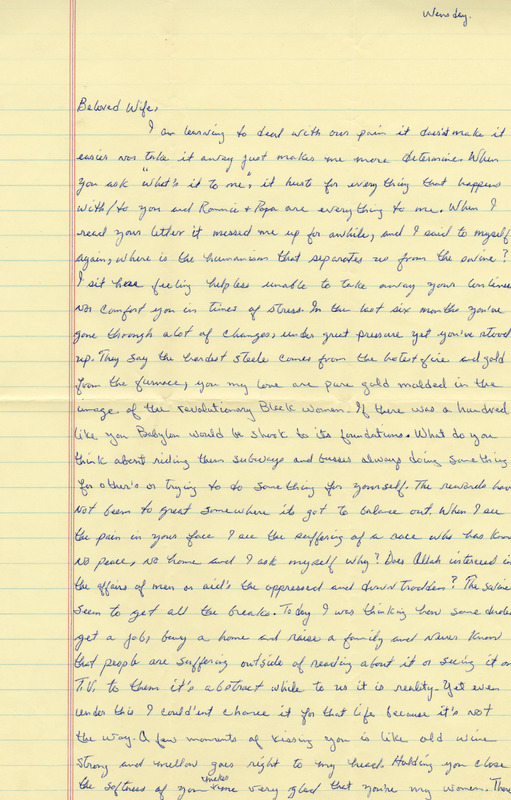
A letter from Nuh Abdul Qaiyum, who is imprisoned, to his wife Frankye Adams-Johnson (Malika). He writes about the pain and helplessness of being separated from her in her time of need. He reasons that better times are coming and attaches a poem about love written for them. He tells her to keep a strong faith. The letter is dated “Wednesday.”
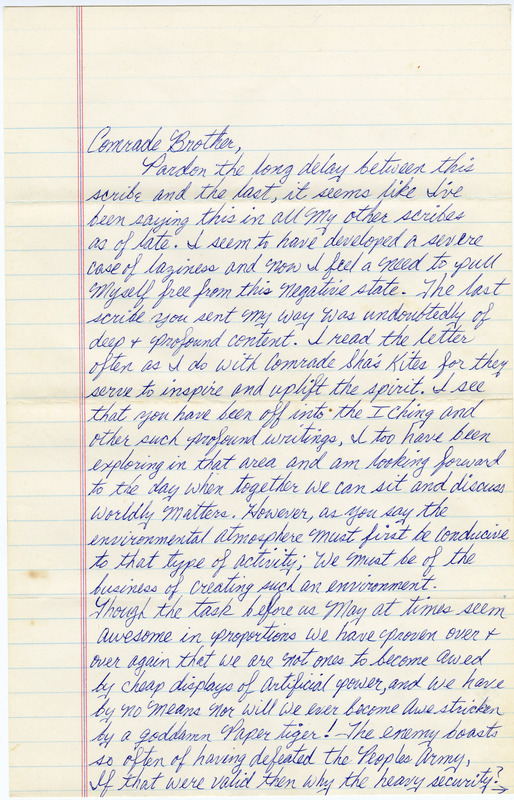
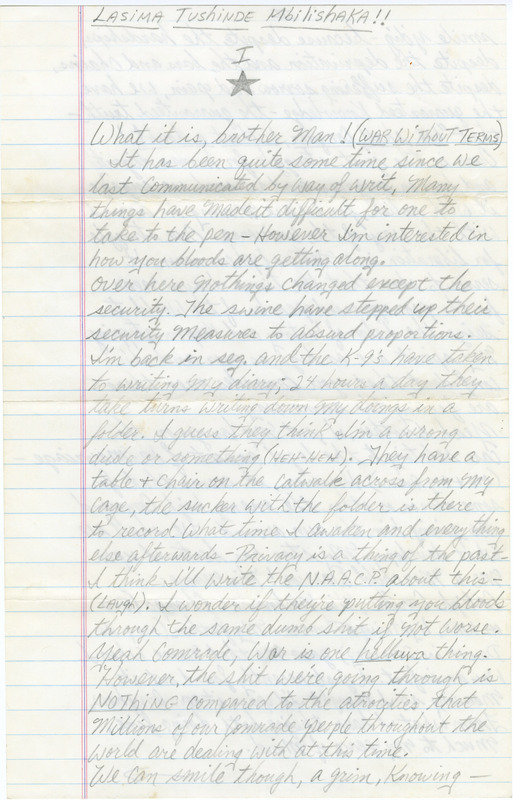
Pedro Monges (Chango Caribe), who was sentenced to prison in 1973 on robbery and weapons charges in connection with a Black Liberation Army (BLA) robbery, writes to Nuh Abdul Qaiyum to apologize for the delay between letters. He writes that he is hopeful for the future because their fight is a natural one that the people must get serious about.
Pedro Monges (Chango Caribe), who was sentenced to prison in 1973 on robbery and weapons charges in connection with a Black Liberation Army (BLA) robbery, writes to Nuh Abdul Qaiyum to explain his current conditions and treatment in jail, saying he is under extreme surveillance. He writes about his newly born son, case proceedings, and other news.
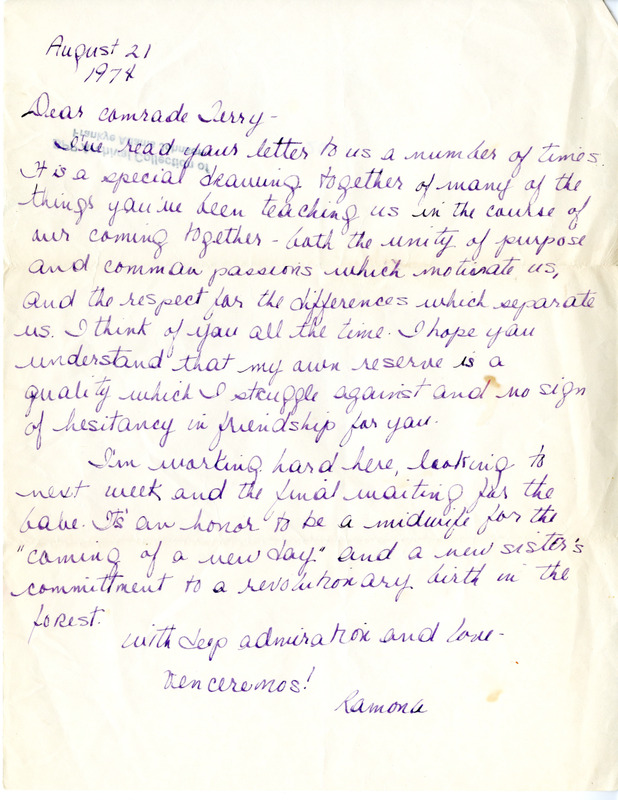
A letter from Ramona to Terry. She mentions the letters received and the great content of them. Romona writes about her reserve before mentioning that she has been chosen to be a midwife for an upcoming pregnancy happening in the forest. Lastly, she sends her love.
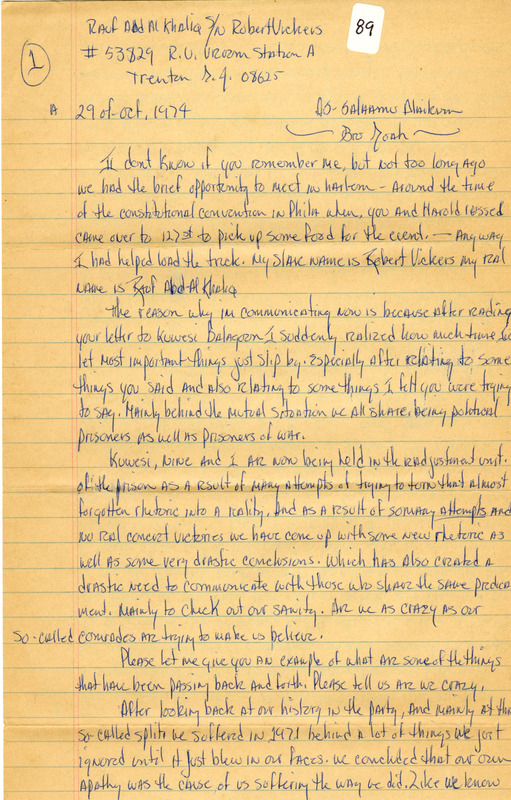
Raul Abd Al Khaliq, a fellow imprisoned Black revolutionary, writes to Nuh Abdul Qaiyum. He writes about forming a mass network of communications between all revolutionaries across the country. He feels there is a lack of those willing to take action and that a mass re-organization of the party, their structure, and ideals is necessary.
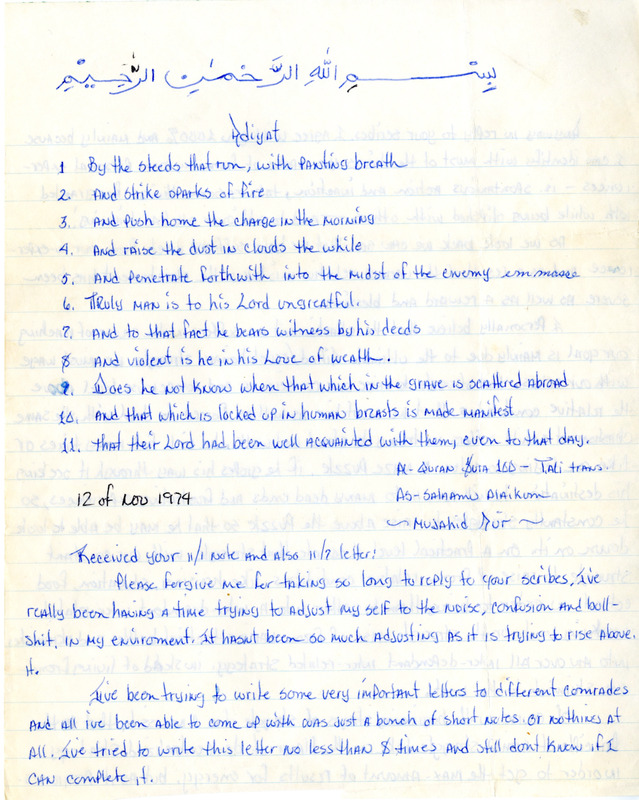
Raul Abd Al Khaliq, a fellow imprisoned Black revolutionary, writes to Nuh Abdul Qaiyum. He opens the letter with a passage from the Quran. He then focuses on the mental and conscious change that imprisoned and free revolutionaries must go through to fight the battle properly. He explains the need for an organized structure for resistance groups.
Raul Abd Al Khaliq, a fellow imprisoned Black revolutionary, writes to Nuh Abdul Qaiyum. In the letter, he mentions some of Nuh Abdul Qaiyum's writings, and stresses the importance of prisoners communicating with one another. He also lays out a vision and ideology for armed Black resistance, namely the need for centralized leadership.
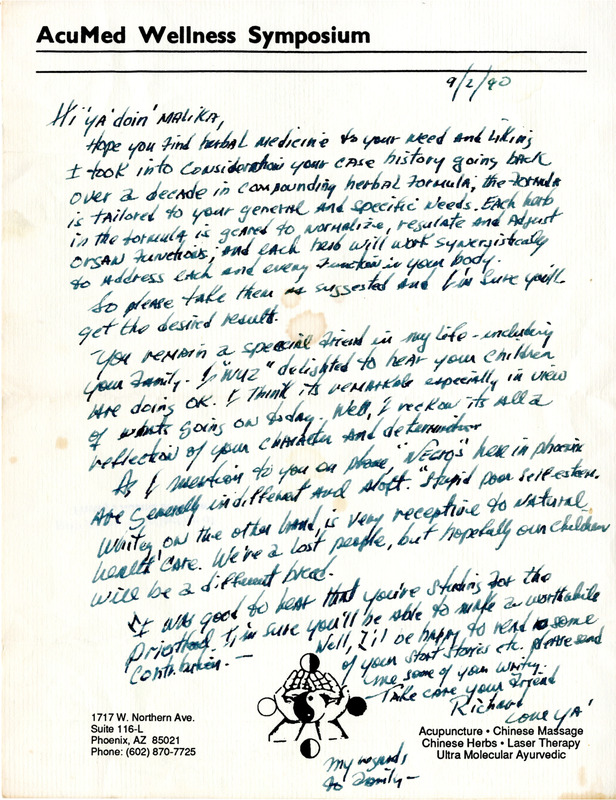
Richard, a natural healer and herbal medicine specialist, writes Frankye Adams-Johnson (Malika) regarding the herbal remedies and medicine that she received. He also addresses their strong relationship and the future of the movement from his viewpoint.
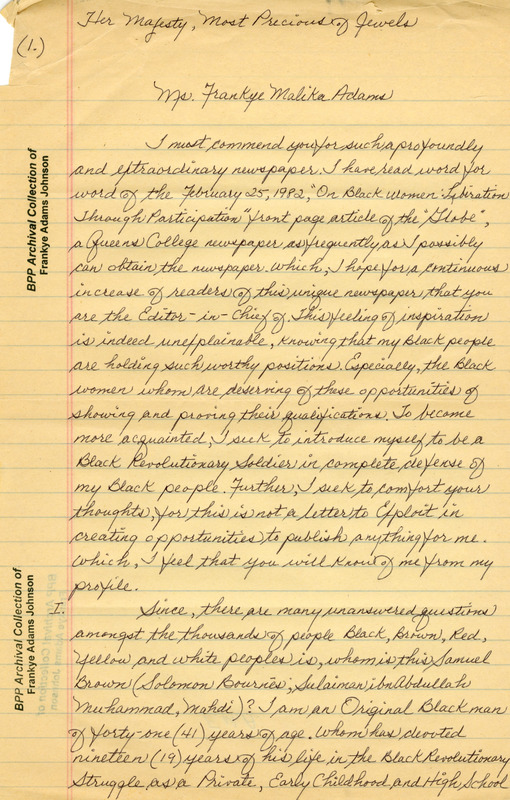
Samuel Brown, who was convicted in 1983 of an armed robbery of a Brinks armored truck, describes his history in education, the Black Economic Survival organization, helping the addicted, and the Crime Prevention Task Force that broke up the gangs in his area. He writes about his health issues and his involvement with the Republic of New Afrika.
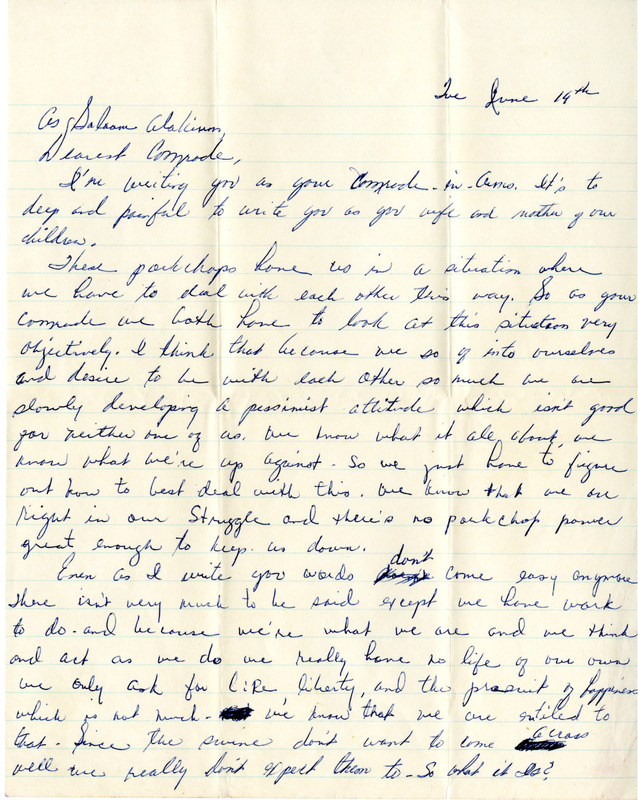
Sister Cone is writing this letter to an unknown recipient about the struggle for liberation, their love, and the pain their separation causes each of them. The letter is dated “Tuesday June 19th.”
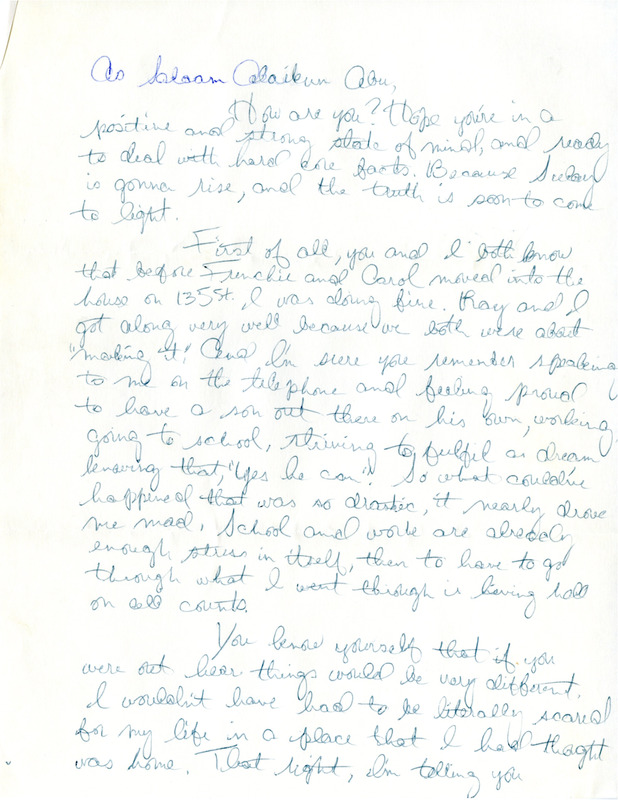
Sulaman Majid writes to his father about the terrible experience that he's had since being on his own. His living situation is tough dealing with three family members that mistreat him. He explains the reasons for his decline in school and depression and says that he will move away.
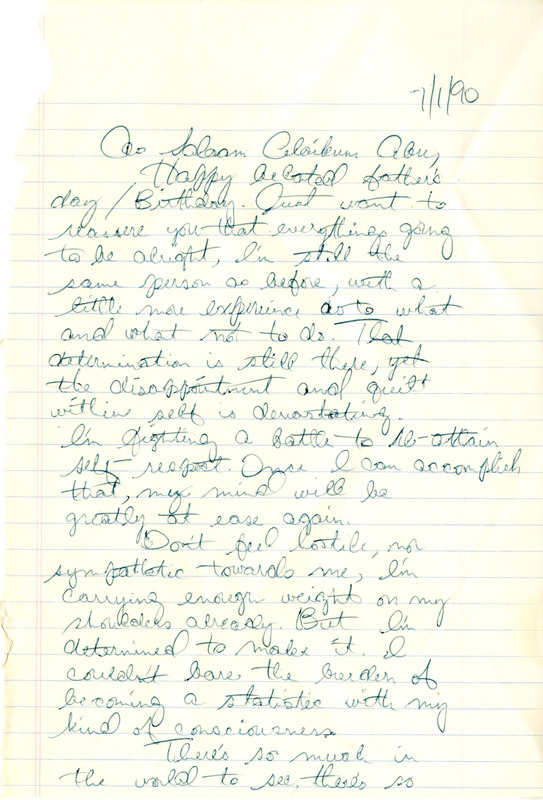
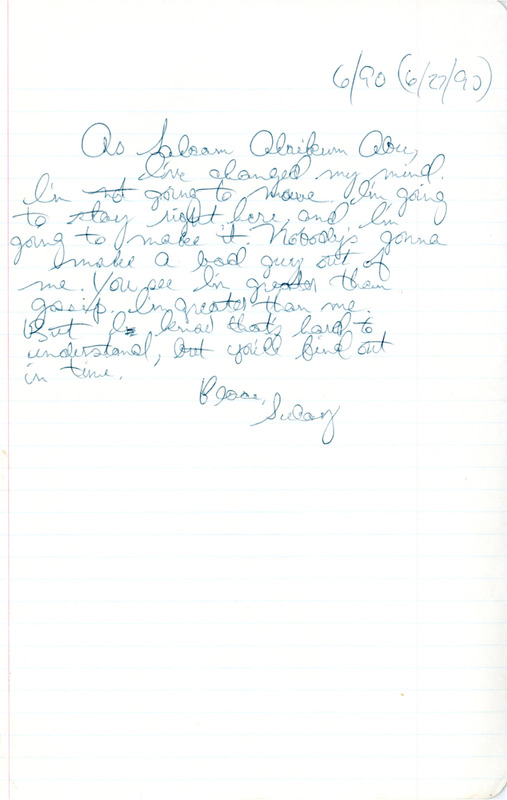
Sulaman Majid wishes Abu Majid a happy birthday and Father's Day before explaining their newfound passion to live life, have purpose, and not be a statistic. Sulaman Majid also lists their problems and acknowledges the mental change they will have to undergo.
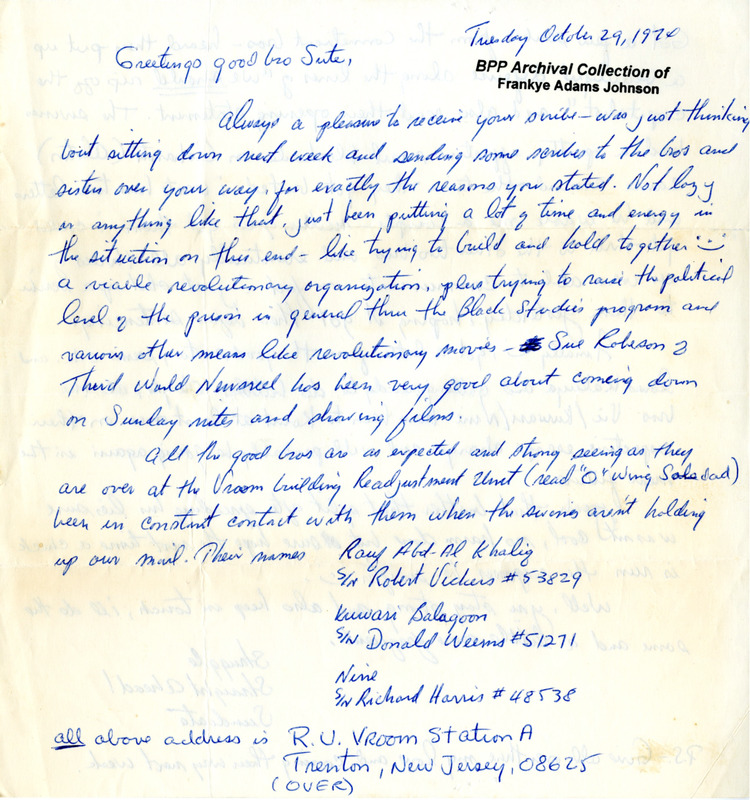
Sundiata Acoli, a member of the Black Liberation Army (BLA) who was convicted in 1974 for the murder of a cop, writes to fellow revolutionary Sute. He addresses his lack of writing, as he is trying to organize revolutionaries in prison. He tells Sute the location of other brothers in the prison and news of their court proceedings.
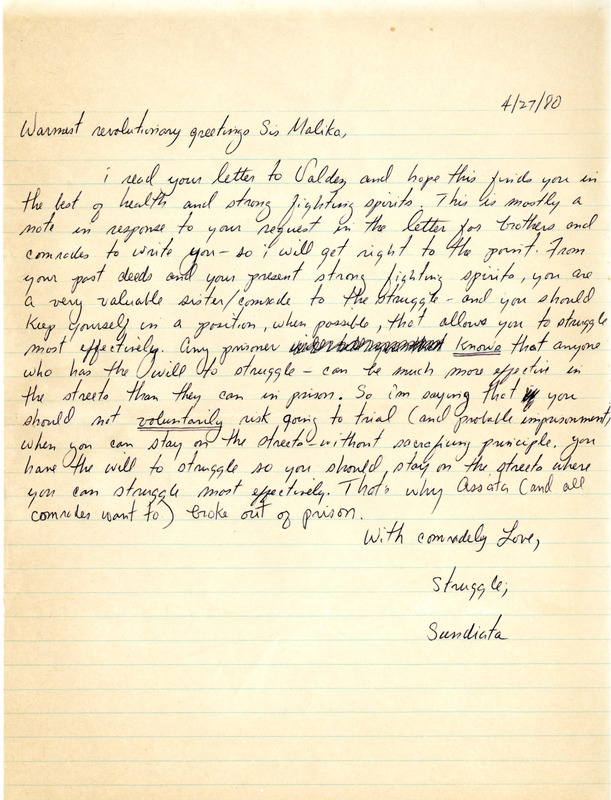
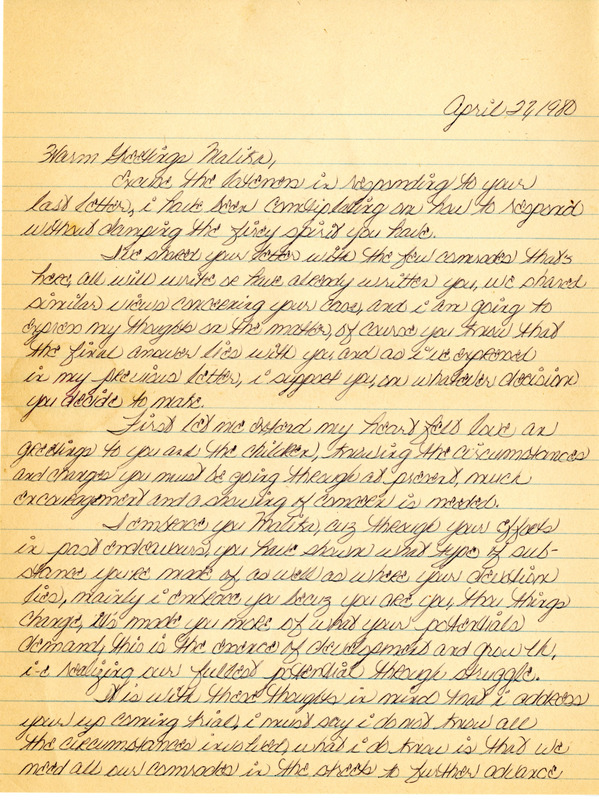
Sundiata Acoli, a member of the Black Panther Party and Black Liberation Army (BLA) who was convicted in 1974 for the murder of a cop, writes Frankye Adams-Johnson (Malika) to tell her that she should do everything in her power to avoid trial and prison, because her effectiveness in the struggle would be weakened in prison.
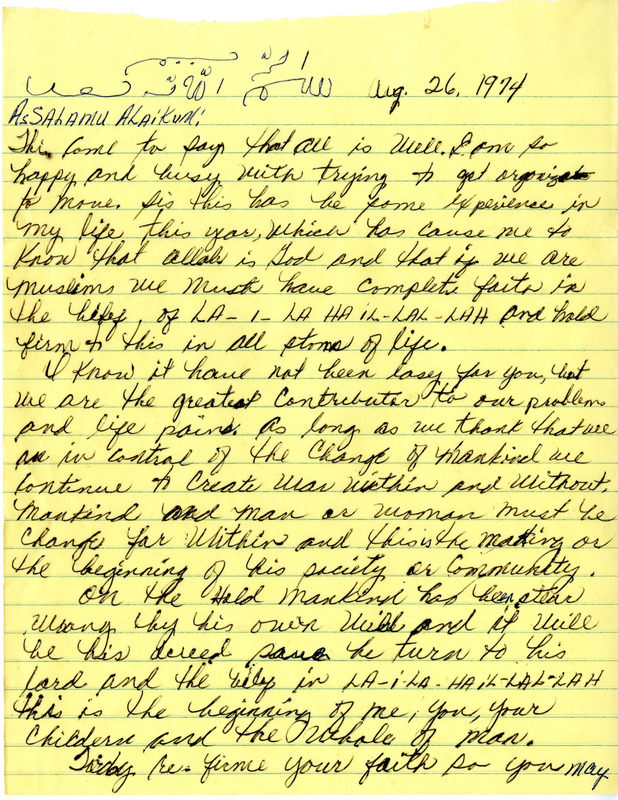
Tahiar Bashir Abu Buthair Adu Hakim explains the importance of keeping the faith as the recipient is separated from their children. She offers to take care of the children and gives advice to the recipient.
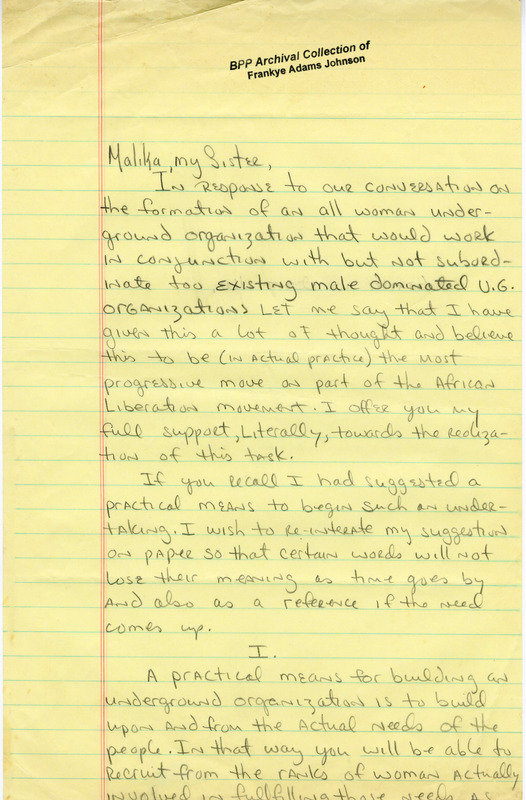
The sender, following up with Frankye Adams-Johnson (Malika) on a previous conversation, writes to her regarding her idea to start a woman-led Black liberation group. The sender gives steps on creating a military intelligence apparatus that will serve the women's militia and connect them to other organizations in the struggle for Black liberation.
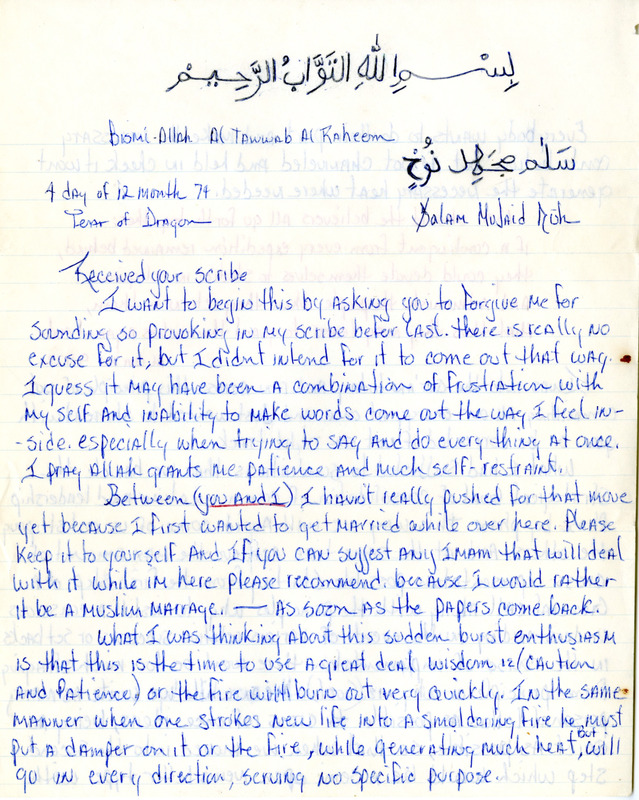
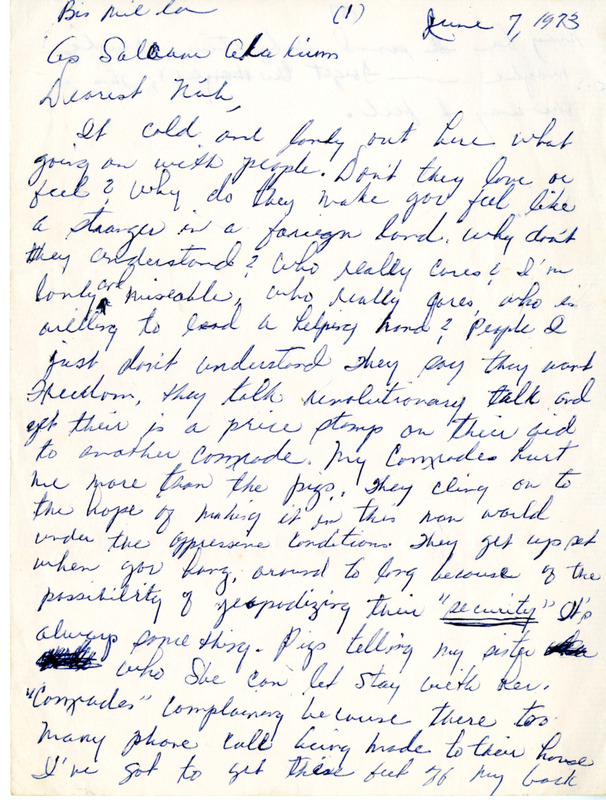
The unknown sender and fellow revolutionary writes to Nuh Abdul Qaiyum, who at this time was being held awaiting trial for a 1971 police shooting, to get some feelings off of their chest about the community, the Black Panther Party, and how people behave. They compare the way they are both treated and viewed by the people around them.
Brother Valdez, an imprisoned member of the Black Panther Party, writes about Frankye Adams-Johnson (Malika)’s court case, explaining the need for people like her, and that prison would diminish her role to nothing. He tells her his desire to see a picture of her and to give his love to everyone.
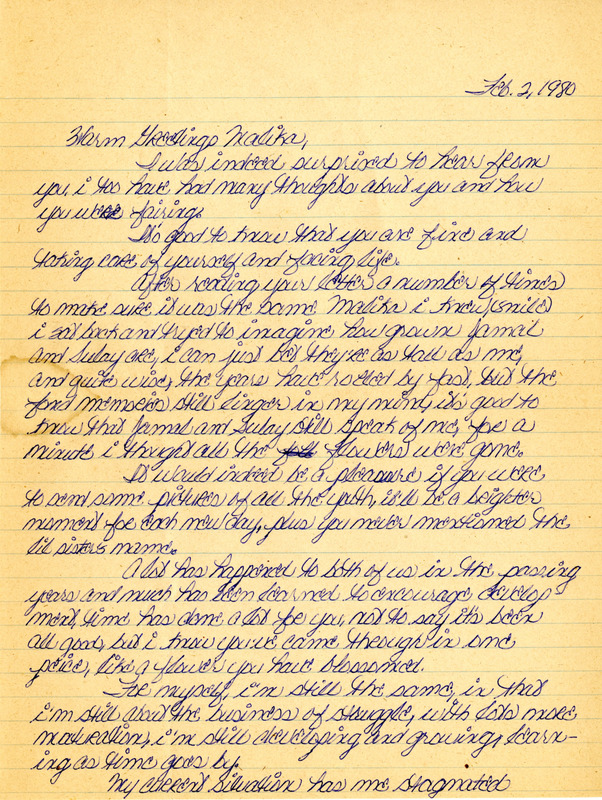
Brother Valdez, an imprisoned member of the Black Panther Party, writes of the youth in the Party while imagining how much they have grown and learned. He details his time in prison and updates Frankye Adams-Johnson (Malika) on the current situation of other members of the Party and tells her to stay strong.
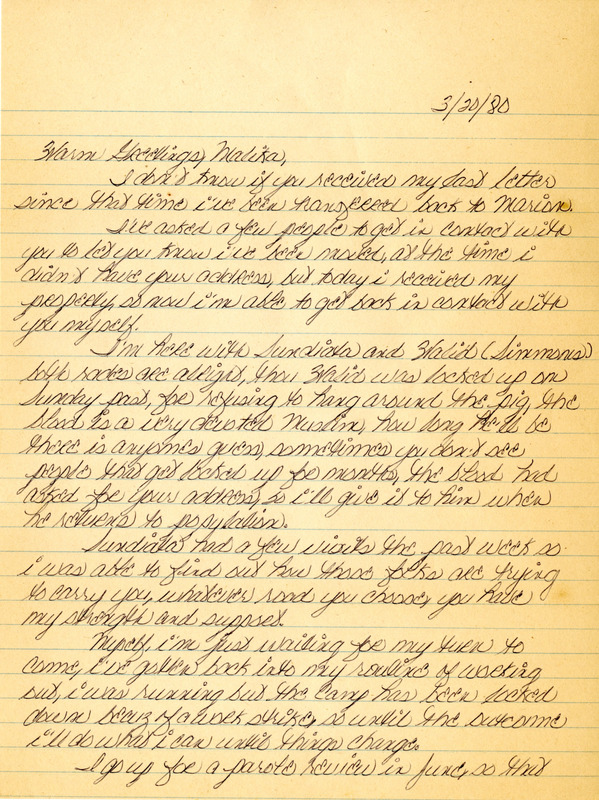
Brother Valdez, an imprisoned member of the Black Panther Party, updates Frankye Adams-Johnson (Malika) on another prisoner that wanted to write to her. He also updates her on his health and maturity. He tells her that the youth must be educated better and faster than they were, and says he will see them soon.
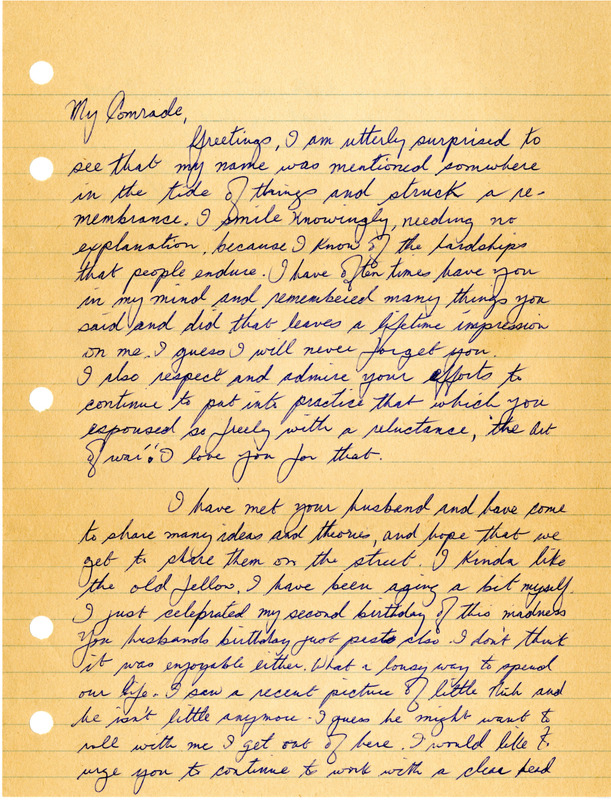
Victor Cumberbatch, sentenced to prison in 1973 on robbery and weapons charges in connection with a Black Liberation Army (BLA) robbery, writes to Frankye Adams-Johnson (Malika). He explains the impression and lifelong impact that she left on him. He mentions meeting her husband, and he relates to him in the sense of growing older in prison.
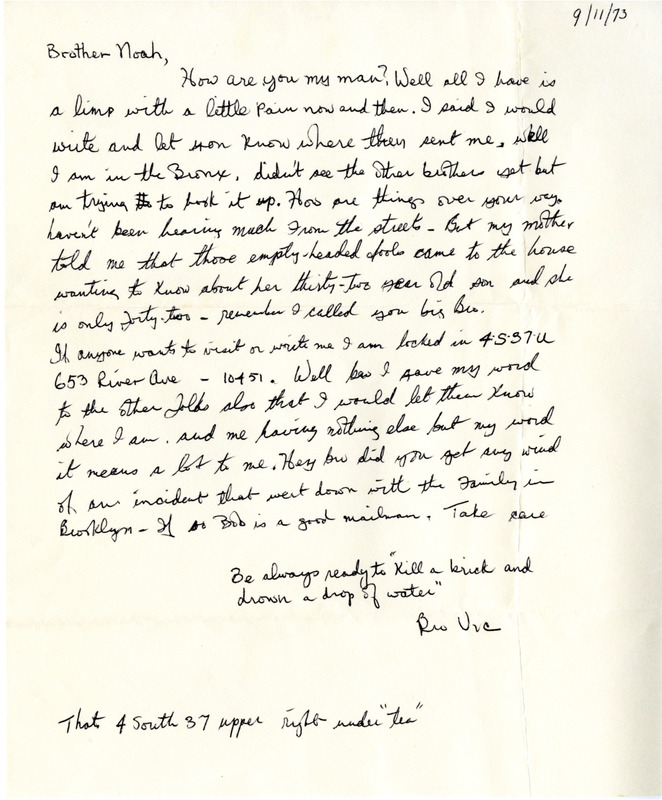
Victor Cumberbatch, who was sentenced to prison in 1973 on robbery and weapons charges in connection with a Black Liberation Army (BLA) robbery, writes to update Albert Washington (Nuh Abdul Qaiyum) on his physical wellbeing and where he is serving his prison sentence. He asks if he has heard anything about an incident in Brooklyn.