Frankye Adams-Johnson Black Panther Party Collection
Title
Frankye Adams-Johnson Black Panther Party Collection
Date Modified
2025-12-12
Description
Frankye Adams-Johnson is a former English Professor at Jackson State University and former active member of the Black Panther Party for Self-Defense in New York City, where she served as an officer in the New York State Chapter. This collection, created or collected during her involvement in the Black Panther Party, consists of personal journal notebooks, correspondence, newspaper articles, fliers, meeting documents and her collection of political and movement buttons.
Curated By
Garrad Lee
Contributing Institution
Jackson State University
About This Record
The HCAC public history focused digital archive cataloging is an ongoing process, and we may update this record as we conduct additional research and review. We welcome your comments and feedback if you have more information to share about an item featured on the site, please contact us at: HCAC-DigiTeam@si.edu
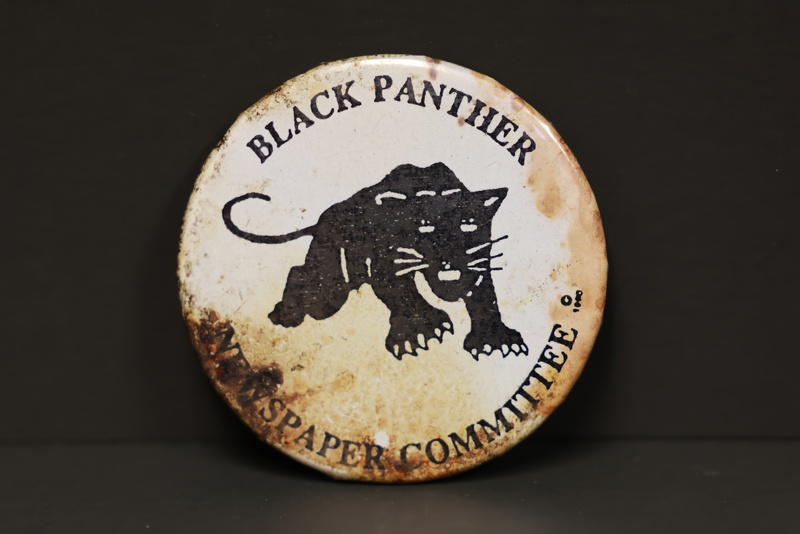
A white button with a picture of the Black Panther Party logo. The text says "Black Panther Newspaper Committee." The Black Panther newspaper began as a 4 page newsletter in 1967 by Black Panther Party founders Huey P. Newton and Bobby Seale. The paper went on to express the party’s core ideologies to a large national and international readership.
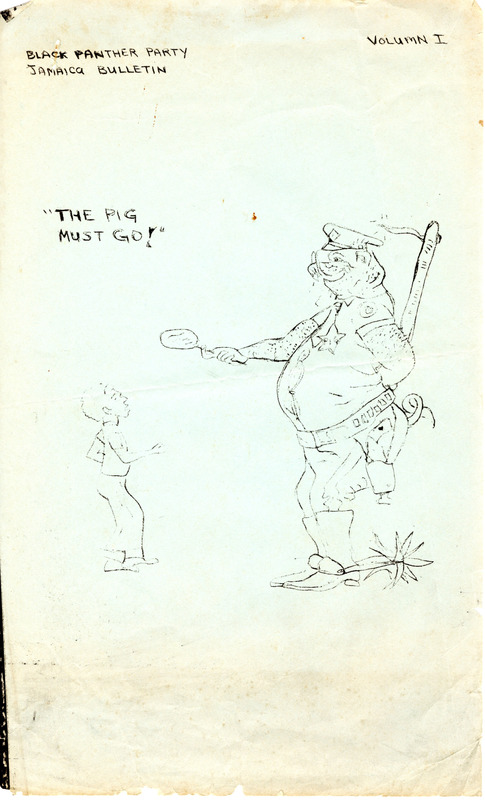
Volume 1 of The Black Panther Party Jamaica Bulletin from Jamaica Queens, NY, February 28, 1969. Included in the bulletin are a political cartoon titled "The Pig Must Go"; an article titled "Panthers Harassed by F.B.I."; and an abridged version of Black Panther Party Ten Point Program.
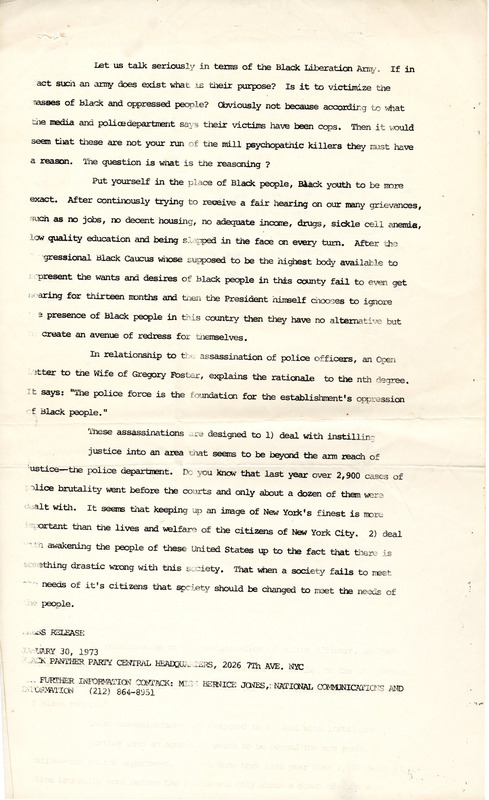
A press release from the Black Panther Party Central Headquarters in New York City about recent acts of police brutality and the response of the Black Liberation Army (BLA). The author writes that the recent assassinations of New York police officers is a direct response to the amount of police brutality that goes unnoticed and unpunished.
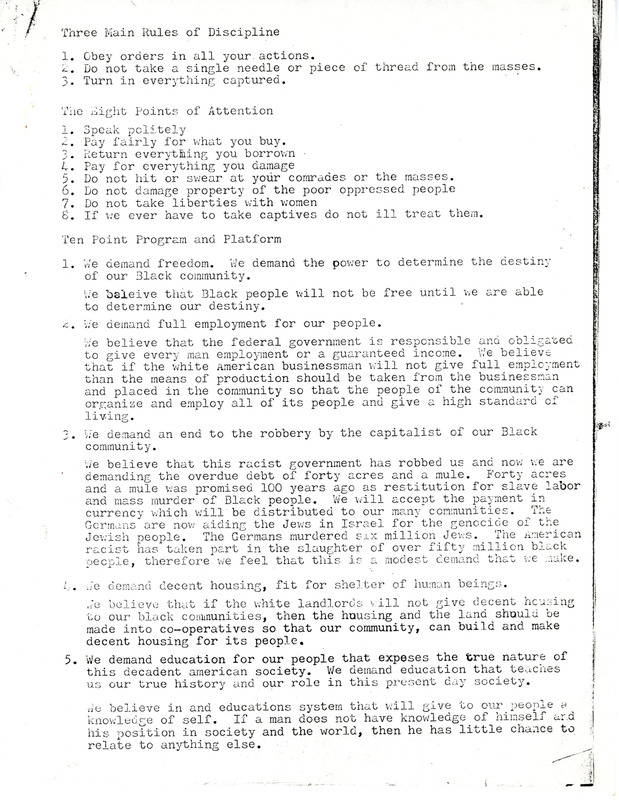
A three page handout given to members of the Black Panther Party. The sections are: Three Main Rules of Discipline; The Eight Points of Attention; Ten Point Program and Platform; and Rules of the Black Panther Party.
A newspaper article from The Black Panther. This is a transcript of the address Roberta Alexander gave at the Black Panthers’ United Front Against Fascism (UFAF) conference in August of 1969 in Oakland, California. Alexander, a Black Panther Party member, talks about the role of women in the party and in the larger struggle against oppression.
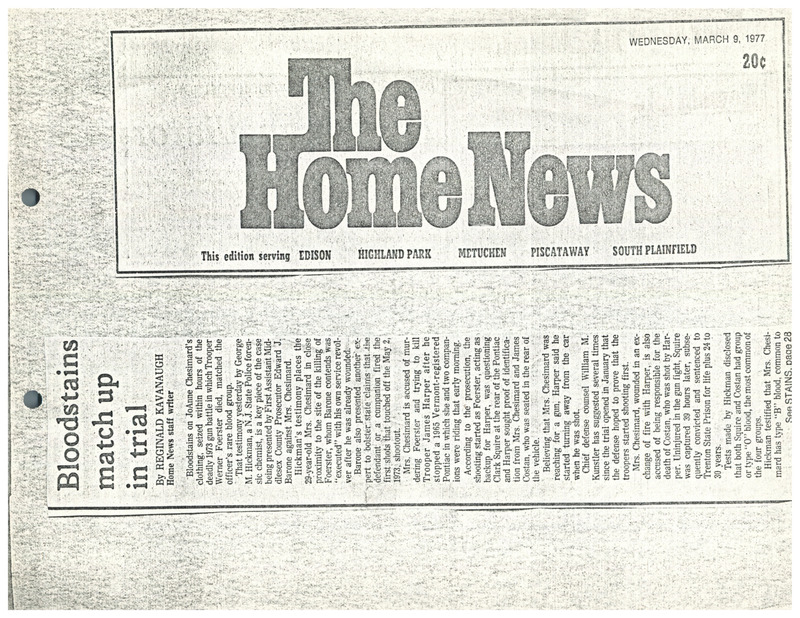
A newspaper article from The Home News about evidence in the trial of Assata Shakur (JoAnne Chesimard) for the 1973 killing of a state trooper. Prosecution witnesses showed that blood found on the clothes of Assata Shakur (JoAnne Chesimard) matched the rare AB blood type of the slain state trooper.
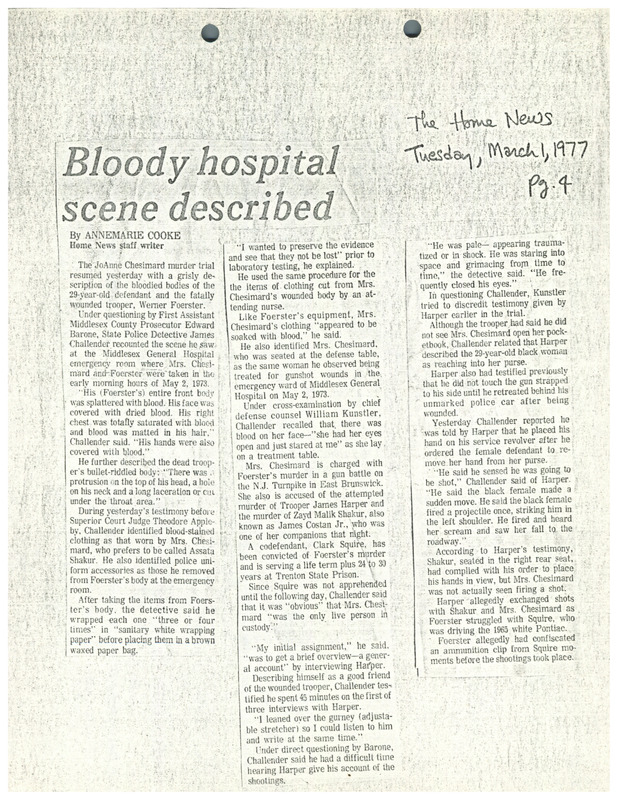
A newspaper article from The Home News about the testimony of State Police Detective James Challender describing what he saw at the emergency room where Assata Shakur (JoAnne Chesimard) and wounded state trooper Werner Foerster were taken after he was fatally shot. Shakur was on trial for the 1973 murder of Foerster.
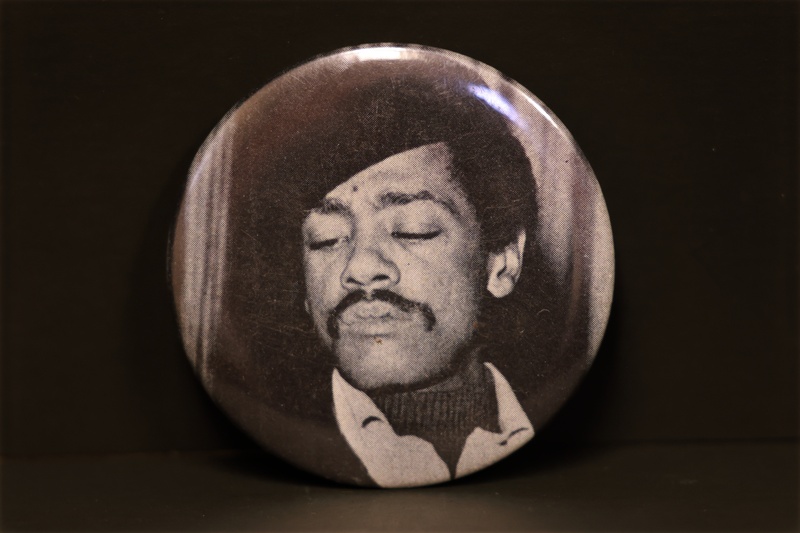
A button with a black and white photo of Bobby Seale. The Black Panther Party for Self Defense was founded in 1966 by Bobby Seale and Huey P. Newton in Oakland, California. Rooted in Black Power and Marxist-Leninist ideologies, the Black Panther Party would soon spread with branches all over the United States.
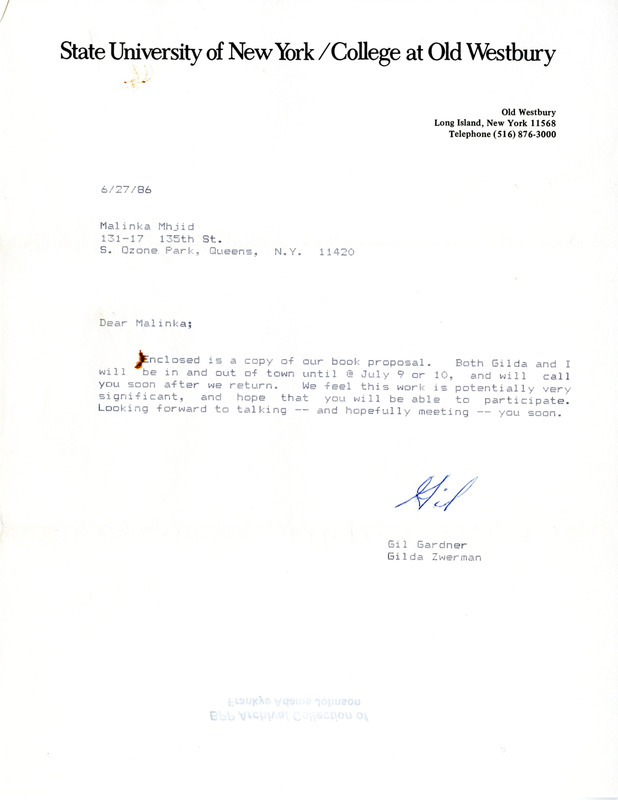
The letter is a book proposal that Gil Gardner (from the State University of New York/College at Old Westbury) is looking for Frankye Adam Johnson's participation with. The research focuses on women who carry out political violence.
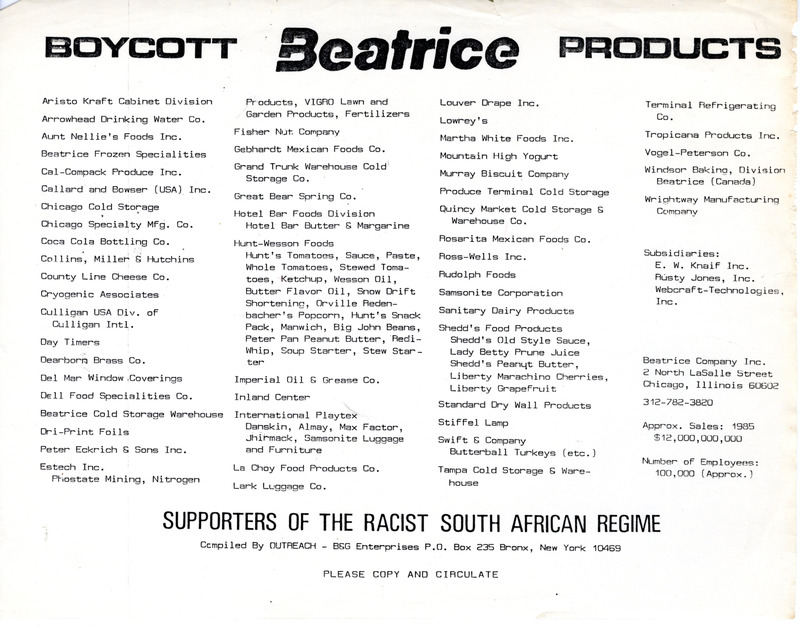
A flier listing the different companies that fall under the ownership of business conglomerate Beatrice. The memo suggests that people boycott these companies because of South Africa’s institutionalized system of racial segregation that lasted from 1948 until the early 1990s, known as apartheid.
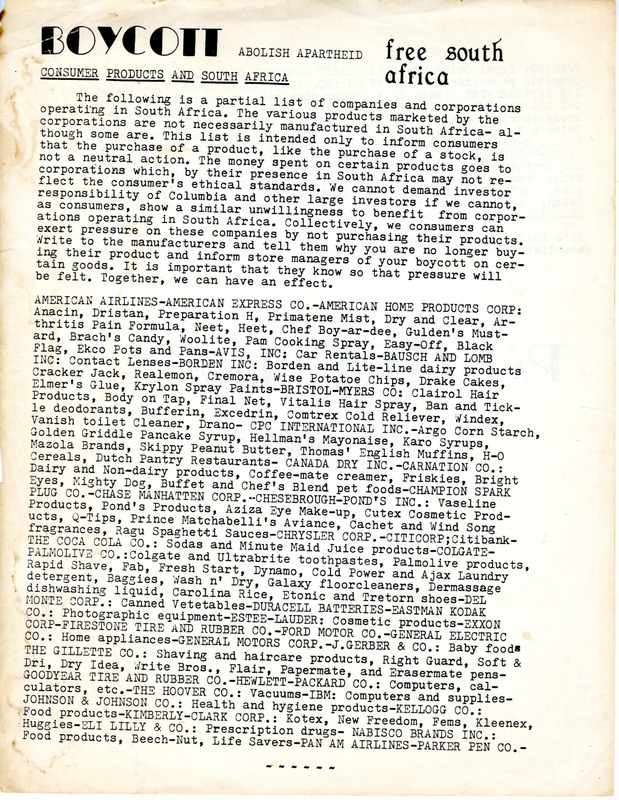
A list of companies doing business in South Africa. The memo suggests that people boycott these companies because of apartheid, South Africa’s institutionalized system of racial segregation that lasted from 1948 until the early 1990s. The memo also suggests for people to write to the companies and speak to store managers about the boycott.
A newspaper article from The Black Panther arguing that the greed inherent in capitalism leads to racism which leads to a fascist state defined by police brutality on Black people. The author writes that capitalism is “a parasitic growth that devours whole countries,” and therefore police brutality is a form of genocidal extermination.
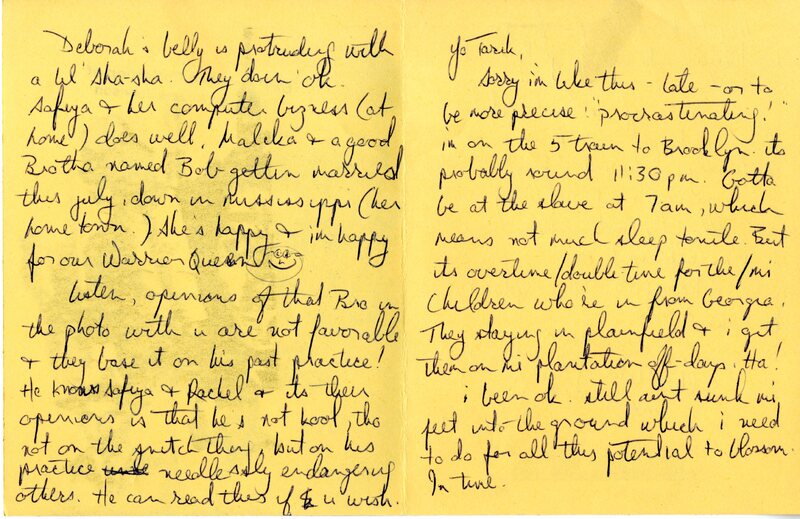
A card from Ashanti Alston, a Black Liberation Army (BLA) member who was imprisoned for 11 years for a robbery to raise money for the BLA, to an unknown recipient. A collage of Malcolm X photos is on the cover. He updates the recipient on a pregnancy and marriage taking place and informs them of his schedule and admits to procrastination.
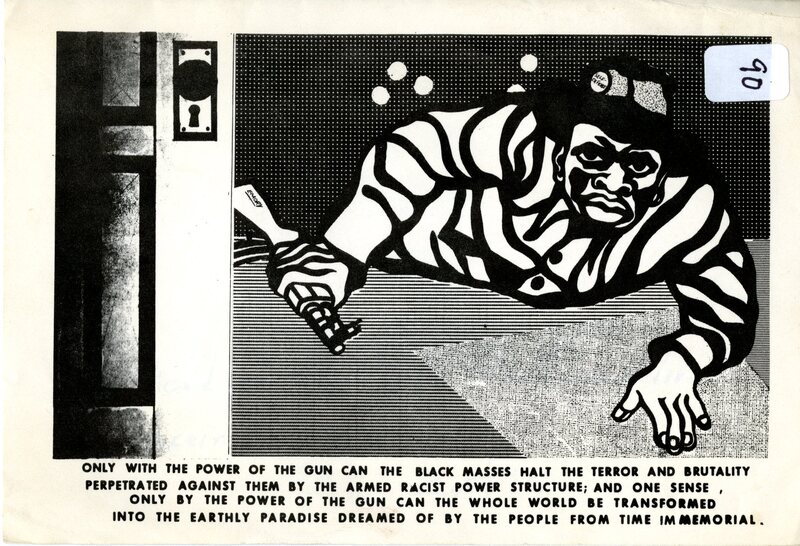
A card from fellow Black revolutionary and friend of Frankye Adams-Johnson (Malika), Curtis. The front of the card is a depiction of a man with a gun and text explaining that only through the gun can freedom be realized by the Black people. On the back of the card he writes “We send you this with revolutionary love and concern, Curtis.”
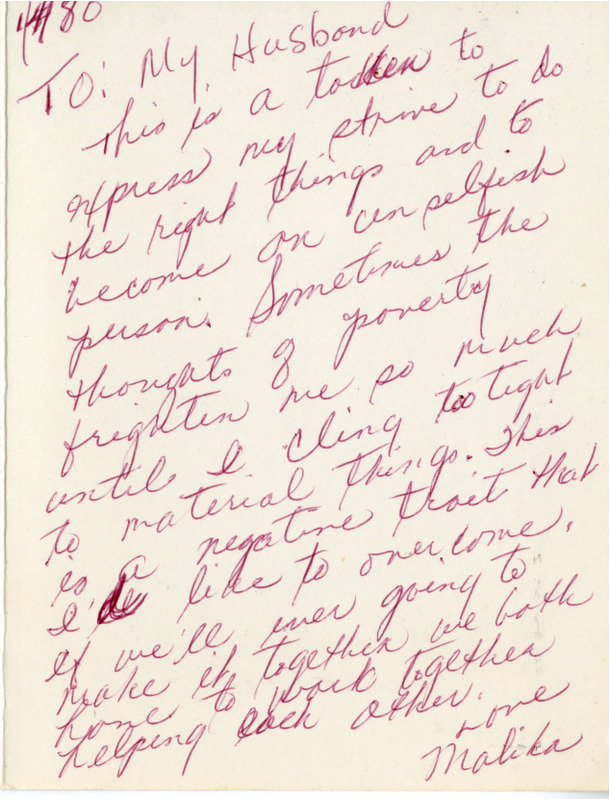
A card from Frankye Adams-Johnson (Malika) to her husband, Nuh Abdul Qaiyum, who was sentenced to prison in 1975 for a 1971 Black Liberation Army (BLA) connected shooting of police officers in New York. She relates her desire to become a complete person and expresses the need for mutual love and effort for her and her husband to last together.
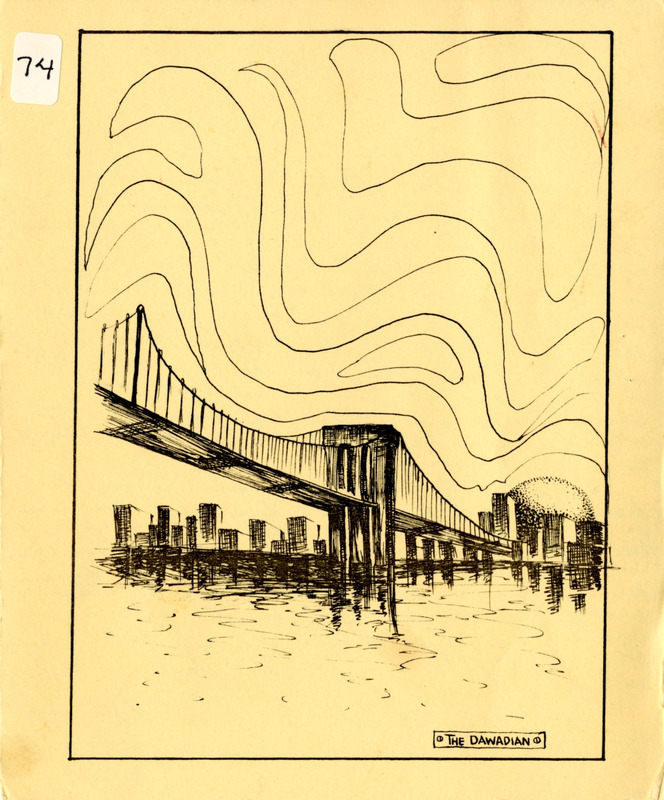
A card from Frankye Adams-Johnson (Malika) to her husband, Nuh Abdul Qaiyum, who is imprisoned. The front of the card is a depiction of a bridge. She writes of the beauty of Black and imagines a day where there will be no fight, and they can be the beautiful people they truly are.
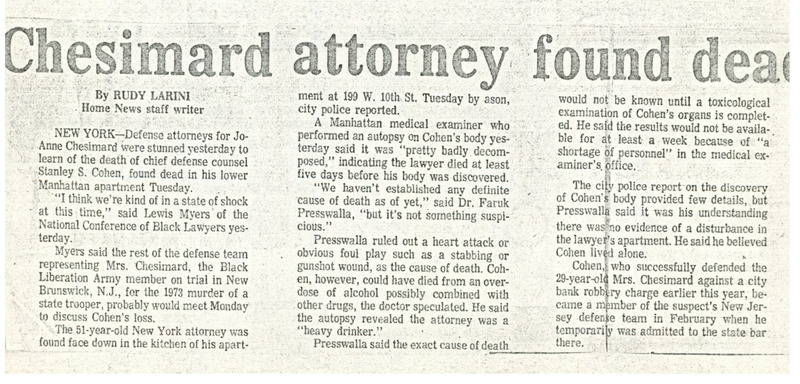
A newspaper article from The Home News about Stanley Cohen, the chief defense counsel in the murder trial of Assata Shakur (JoAnne Chesimard) for the 1973 killing of a state trooper, being found dead in his Manhattan apartment. At the time of reporting, the cause of death was unknown.
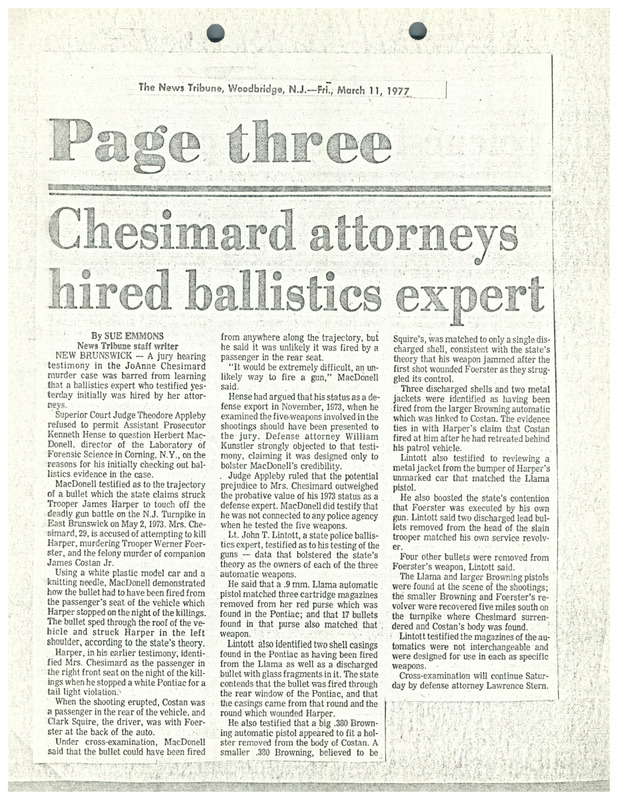
A newspaper article from The News Tribune about testimony on ballistics and gunshot trajectories given by two different expert witnesses in the trial of Assata Shakur (JoAnne Chesimard) for the 1973 killing of a state trooper. The judge in the case barred the jury from learning that one of the experts was hired by the defense.
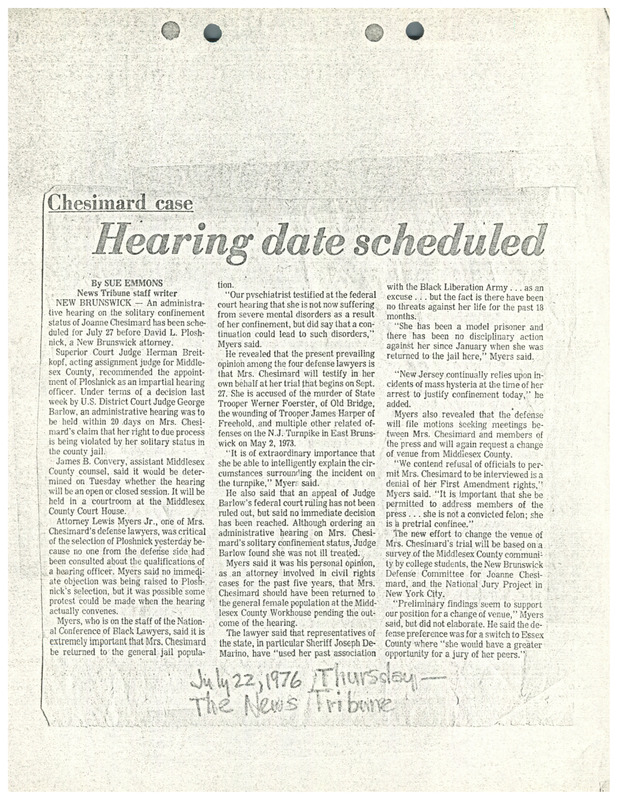
A newspaper article from The News Tribune about an administrative hearing for Assata Shakur (JoAnne Chesimard) being scheduled for July 27th. The hearing will determine if Assata Shakur (JoAnne Chesimard) should be moved out of solitary confinement and into women's general population. She was on trial for the 1973 killing of a state trooper.
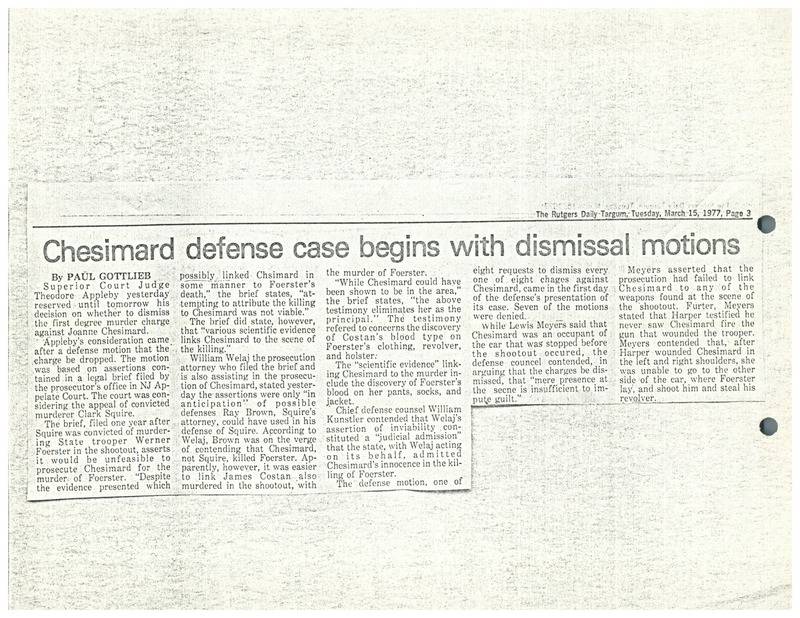
A newspaper article from The Rutgers Daily-Targum about the defense team for Assata Shakur (JoAnne Chesimard), who was on trial for the 1973 killing of a state trooper, opening their case by calling for dismissal of the murder charge on the grounds that she cannot be convicted since Clark Squire has already been convicted of the killing.
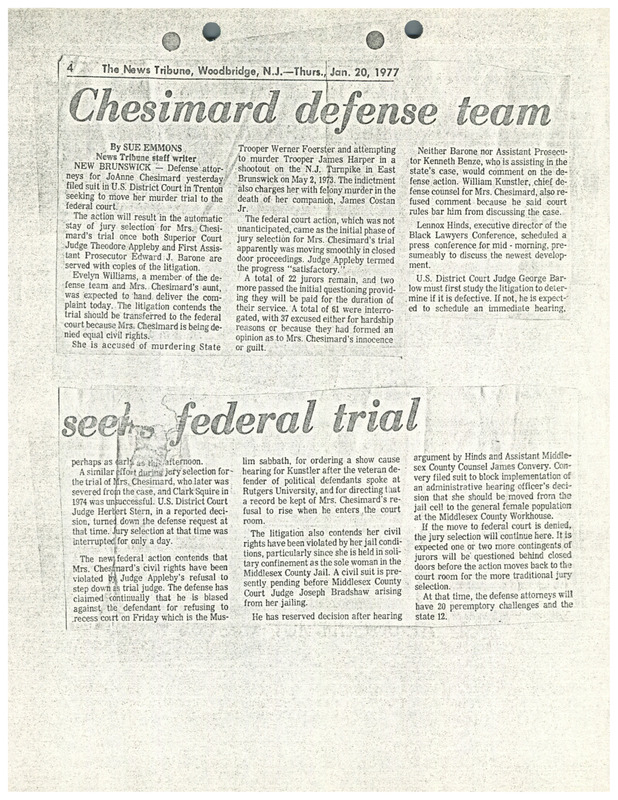
A newspaper article from The News Tribune about defense attorneys for Assata Shakur (JoAnne Chesimard) filing suit to move her trial for the 1973 killing of a state trooper to the federal court. They contend that her civil rights are being violated in at least two ways. The litigation came during jury selection.
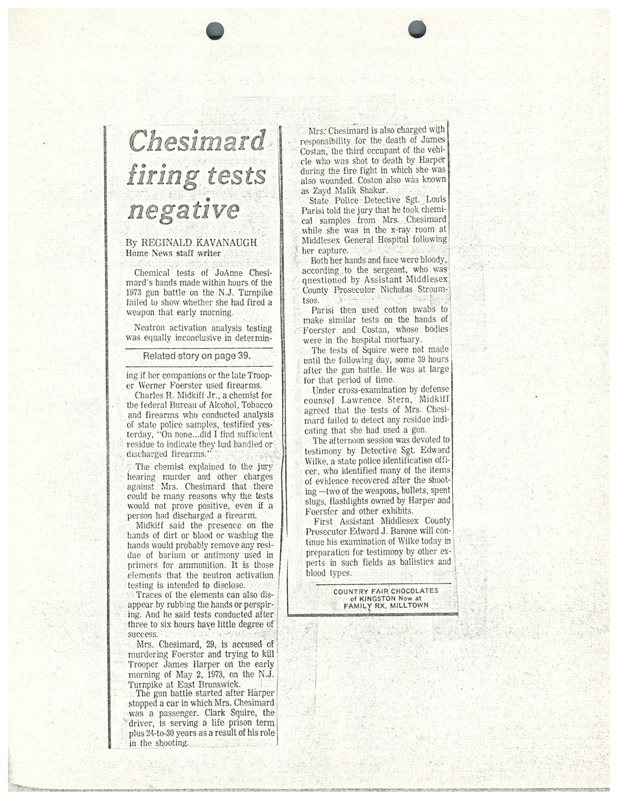
A newspaper article from Home News about chemical and neutron activation tests both being inconclusive on the matter of whether Assata Shakur (JoAnne Chesimard), the other defendants, or the state trooper had fired the gun in question in Shakur’s trial for the 1973 killing of a state trooper.
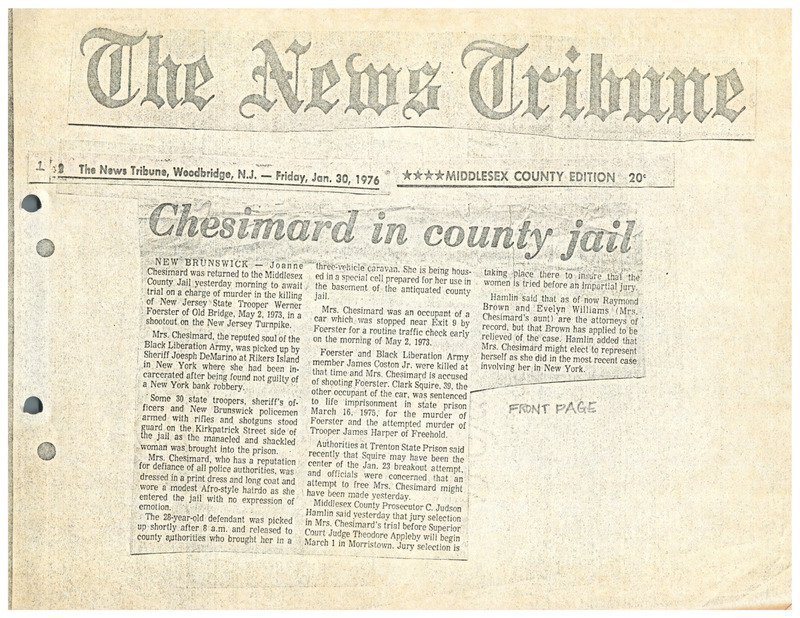
A newspaper article from The News Tribune about Assata Shakur (JoAnne Chesimard) being in New Jersey to stand trial for the May 1973 killing of a state trooper. Shakur was convicted in 1977 of killing the state trooper during a shootout, escaped prison in 1979, and is still wanted by the FBI.
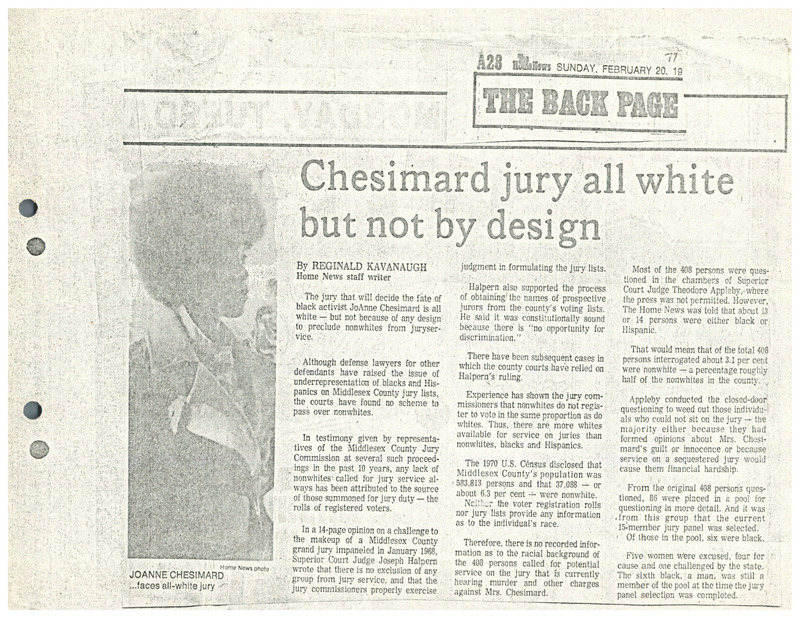
A newspaper article from The Home News about the all white jury in the murder trial of Assata Shakur (JoAnne Chesimard) for the 1973 killing of a state trooper. Courts have decided that the jury selection is fair since the selections are made from voter registration rolls. Shakur was convicted in 1977 of the killing and escaped prison in 1979.
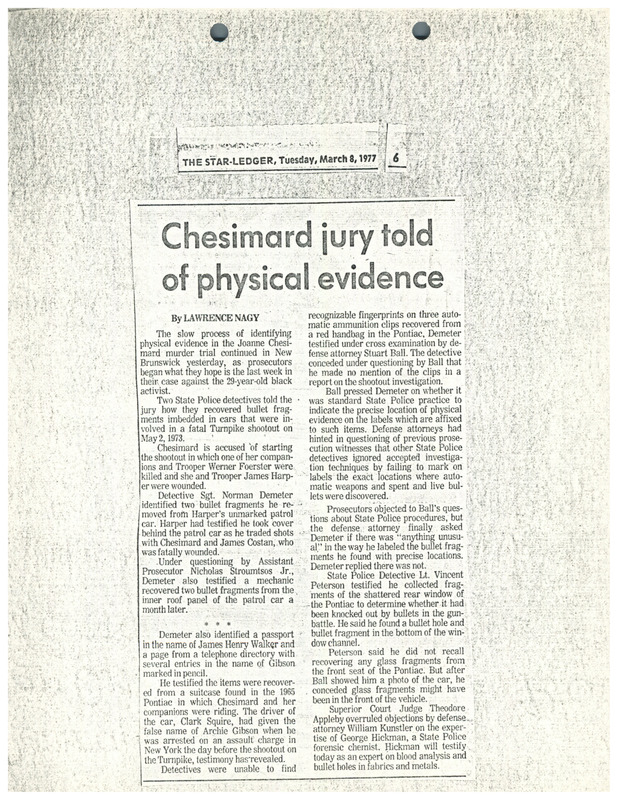
A newspaper article from The Star Ledger about bullet fragments the prosecution is putting into evidence in what they hope is the last week in their case against Assata Shakur (JoAnne Chesimard) for the 1973 killing of a state trooper. Defense attorneys questioned if the fragments were marked on the scene in an unusual way.
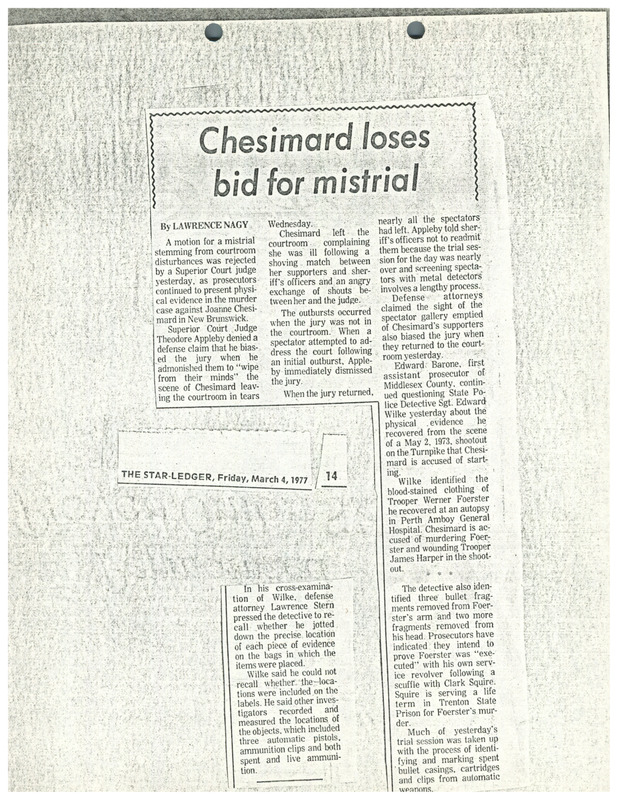
A newspaper article from The Star Ledger about the defense team for Assata Shakur (JoAnne Chesimard) being rejected in their motion to have a mistrial called after disturbances in the courtroom on March 2, 1977, during Shakur’s trial for the 1973 killing of a state trooper. The article also discusses physical evidence presented by the prosecution.
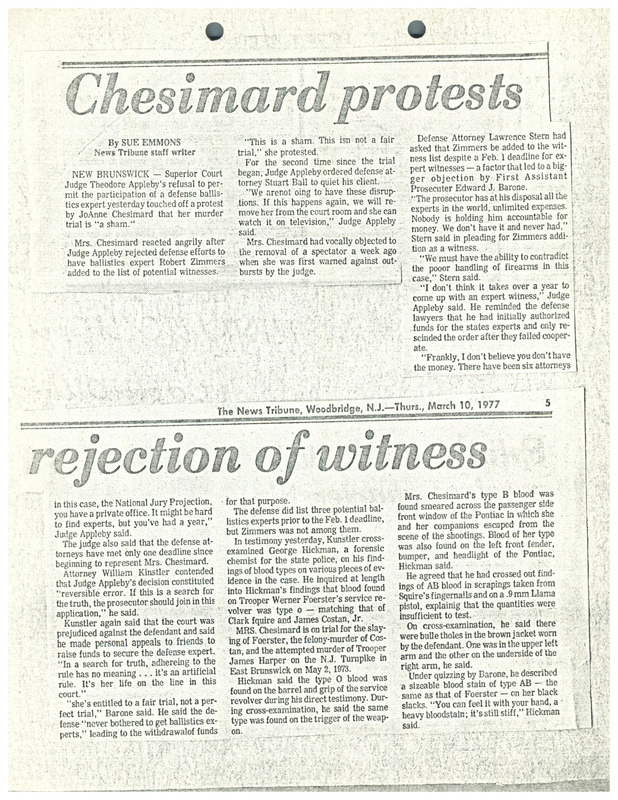
A newspaper article from The News Tribune about the defense team for Assata Shakur (JoAnne Chesimard), on trial for the 1973 killing of a state trooper, being denied calling an extra ballistics witness by the judge. The prosecution contended the witness was not valid since the defense team missed the cutoff date to add witnesses to their list.
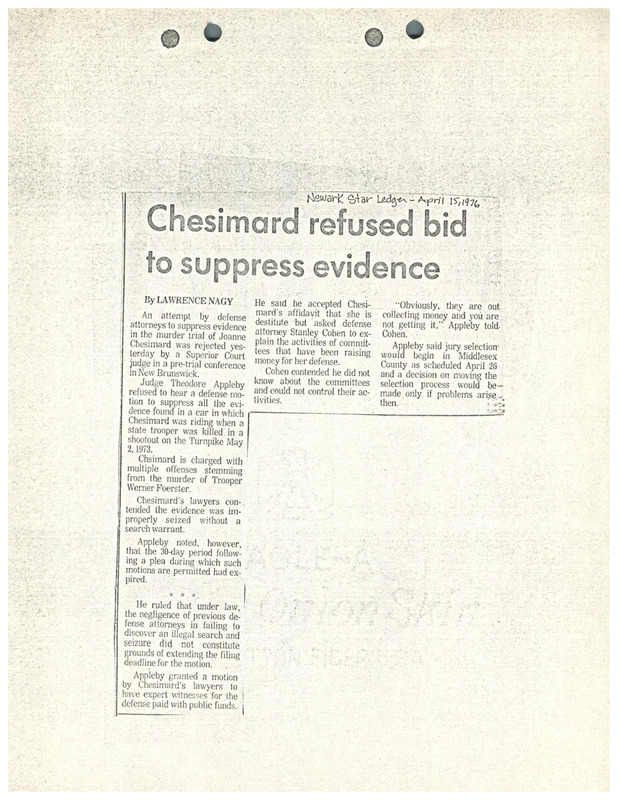
A newspaper article from the Star Ledger about the defense team in Assata Shakur's (JoAnne Chesimard) trial being denied a motion to suppress evidence found in the car after the May 1973 shootout. Shakur was convicted in 1977 of killing the state trooper during a shootout, escaped prison in 1979, and is still wanted by the FBI.
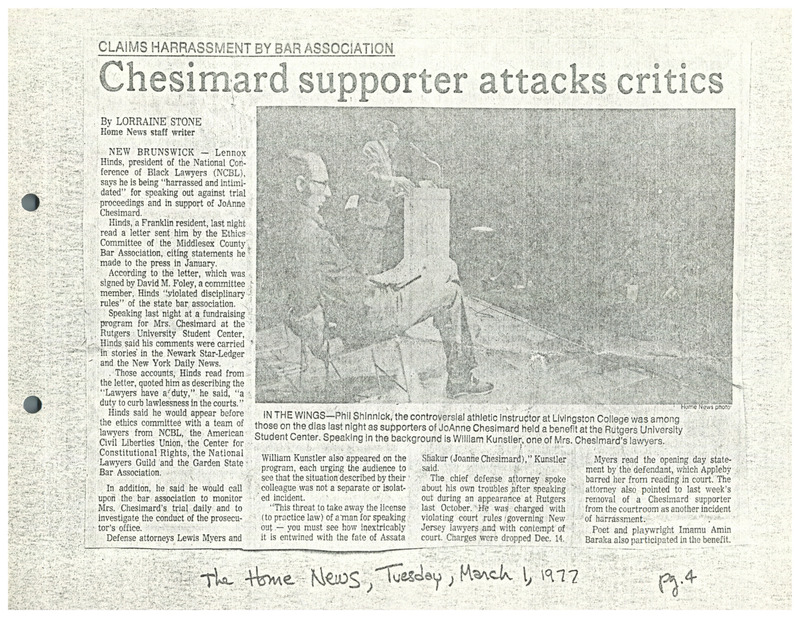
A newspaper article from The Home News about Lennox Hinds, president of the National Conference of Black Lawyers, being cited by The Ethics Committee of the Middlesex County Bar Association for statements he made to the press against critics of Assata Shakur (JoAnne Chesimard), who was on trial for the 1973 killing of a state trooper.
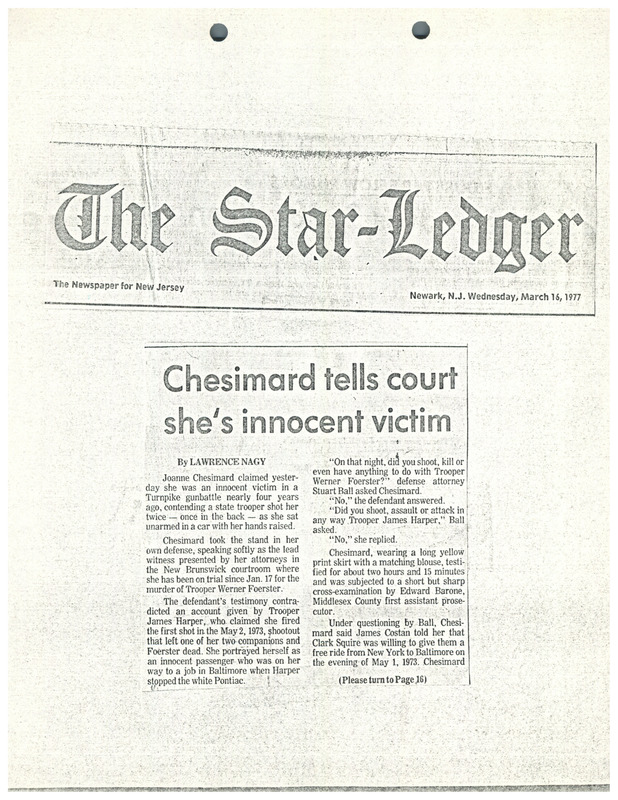
A newspaper article from The Star Ledger detailing the testimony Assata Shakur (JoAnne Chesimard) gave during her trial for the 1973 killing of a state trooper. In her testimony, she claimed her innocence and gave her account of what happened that day.