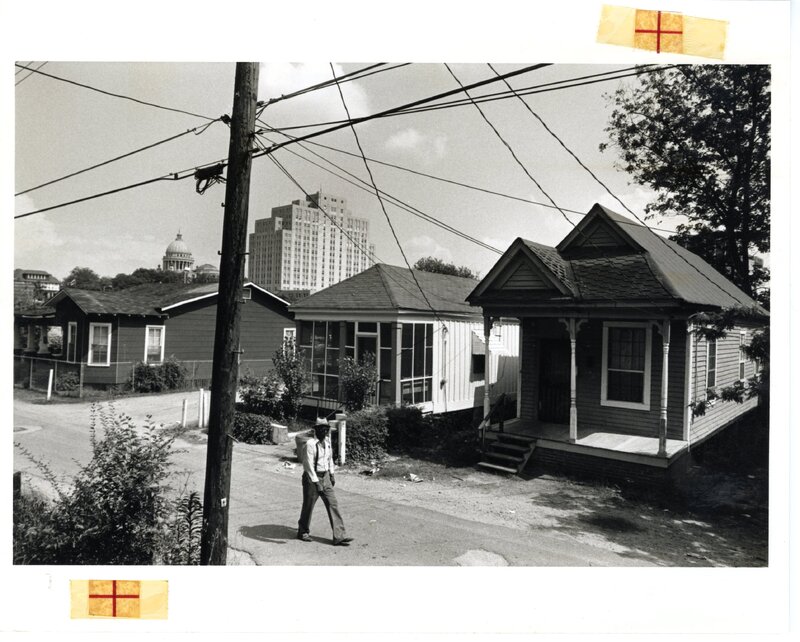
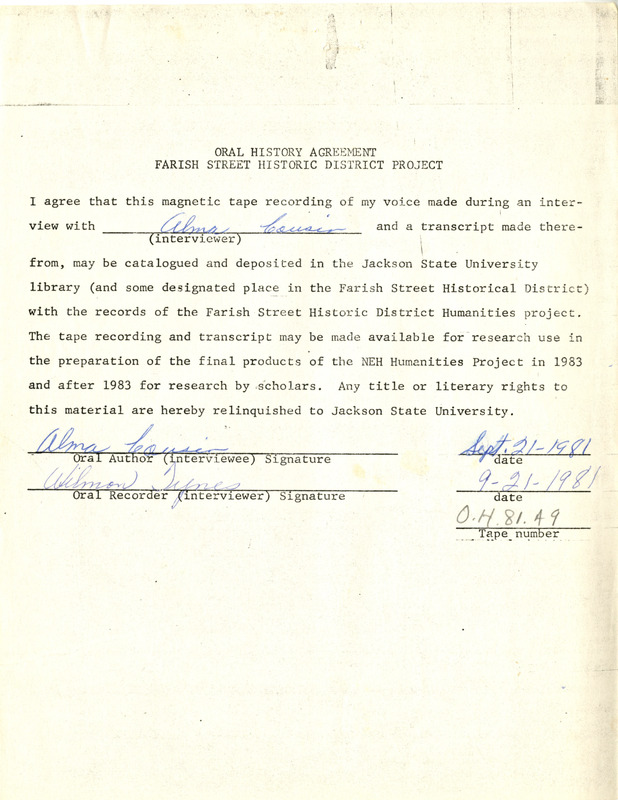
This oral history project documents the history of the Farish Street Historic District of Jackson, one of the oldest Black neighborhoods in the city of Jackson, Mississippi. When Jackson State University, then known as Jackson College, first moved to the city from Natchez, Mississippi, in 1883, its temporary home until 1885 was the basement of Mt. Helm Missionary Baptist Church on Lamar Street in the District. The collection consists of interview transcripts, photographs, and supplementary materials.
Curated By
Garrad Lee
Contributing Institution
Jackson State University
About This Record
The HCAC public history focused digital archive cataloging is an ongoing process, and we may update this record as we conduct additional research and review. We welcome your comments and feedback if you have more information to share about an item featured on the site, please contact us at: HCAC-DigiTeam@si.edu
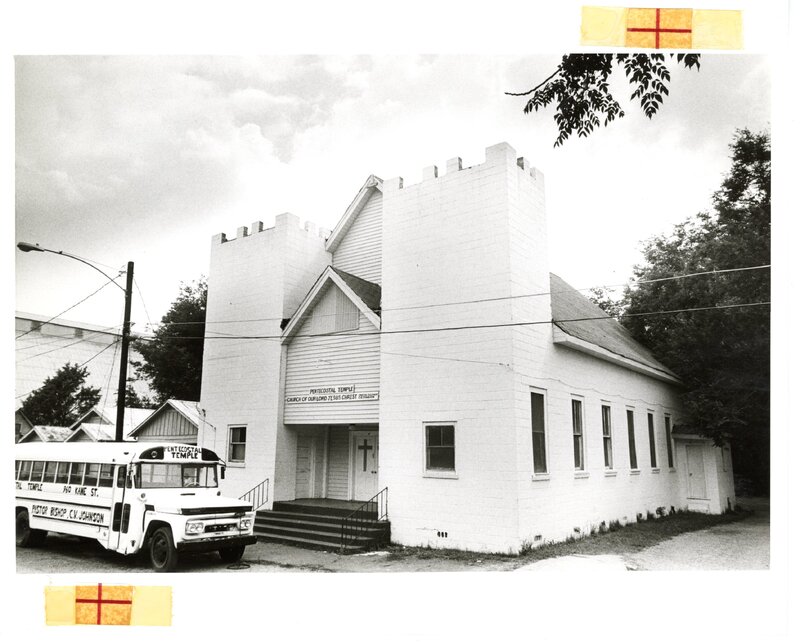
A photograph of the Pentecostal Temple Church of Our Lord Jesus Christ on Kane St. in the Historic Farish Street District. The church bus is parked in front of the entrance. Notation on the photograph indicates the church was built ca. 1935.
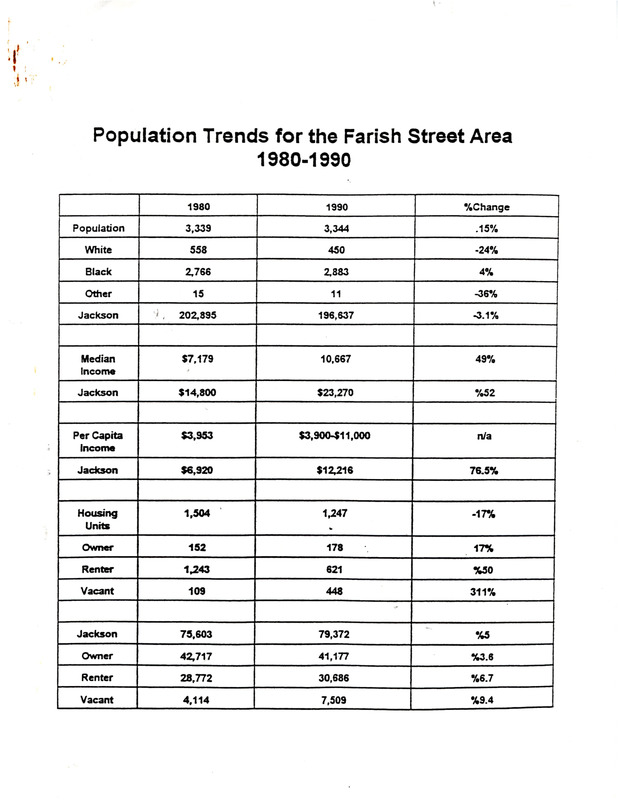
A chart showing trends such as population, income, and number of housing units for the Farish Street Historic District between the years 1980 and 1990.
Rahman Saleem was a student at Smith Robertson School starting in 1956 when he was 5 years old. He talks about his experience at the school and tells other stories of his childhood in Jackson. The transcript is heavily edited with handwritten notes.
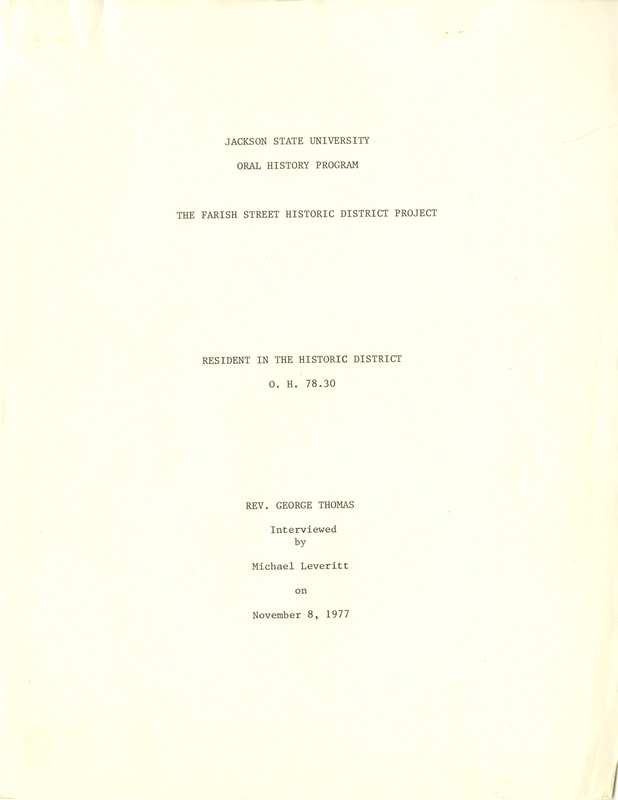
Rev. George Thomas was a pastor at a church in Terry, Mississippi, and also worked as a contractor and carpenter. He possessed several plans from early buildings which he built in the Farish Street District. He talks about the construction of new roads and buildings as Jackson converted from dirt roads and horses to a more metropolitan space.
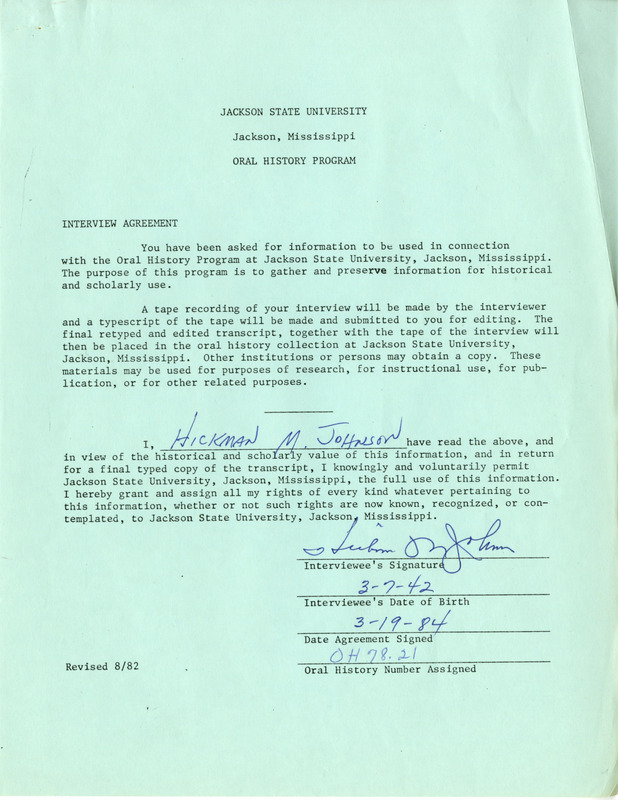
Hickman M. Johnson came to Jackson in 1967 and had just finished his 10th year as pastor of Farish Street Baptist Church. He talks about the civil rights activist spirit that existed there in 1967. He goes on to discuss the deterioration of the district and discusses his ideas about how to revitalize the area. Transcript contains handwritten edits.
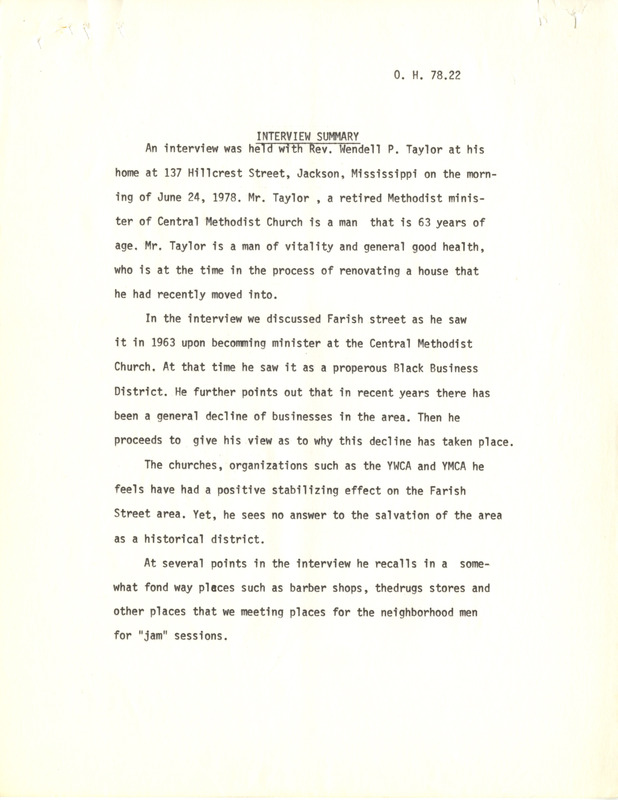
Rev. Wendell P. Taylor became minister at Central Methodist Church in the Farish Street District in 1963 and was retired at the time of the interview. He talks about the district being prosperous for Black businesses at that time but that a decline has taken place since businesses have left. The transcript is heavily edited with handwritten notes.
Robert Rhodes III was born in Jackson and was a well known carpenter from doing work in the Farish Street District. He worked with his father, who owned a business in the district, until taking the business over for himself. He discusses his work during the Jim Crow Era and the difference in pay between white and Black carpenters.
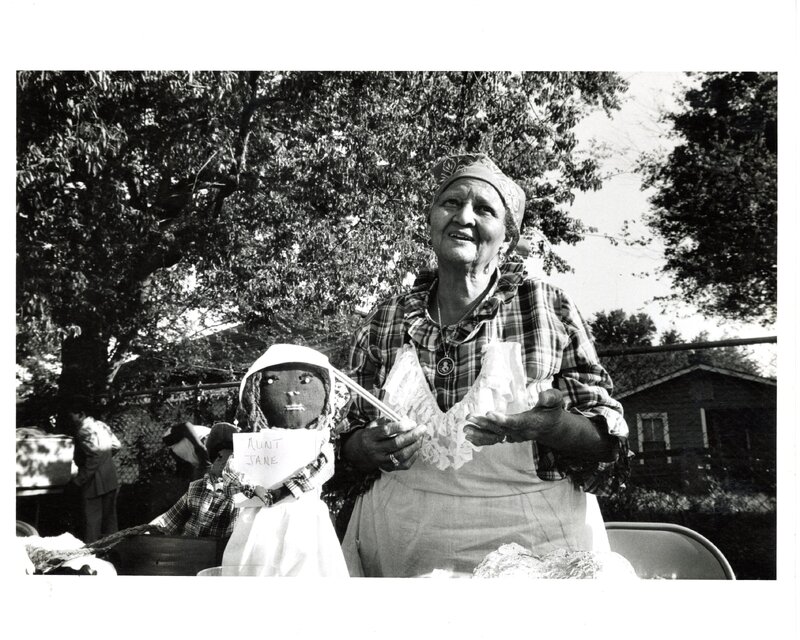
A photograph of Rosie Holden of the National Council of Negro Women and Woman Power Unlimited at the Smith Robertson Neighborhood Folklife Festival, April 9-11, 1983. The festival was a one-time grant sponsored event held on the grounds of the Smith Robertson Museum to celebrate the rich history and culture of the Farish Street Historic District.
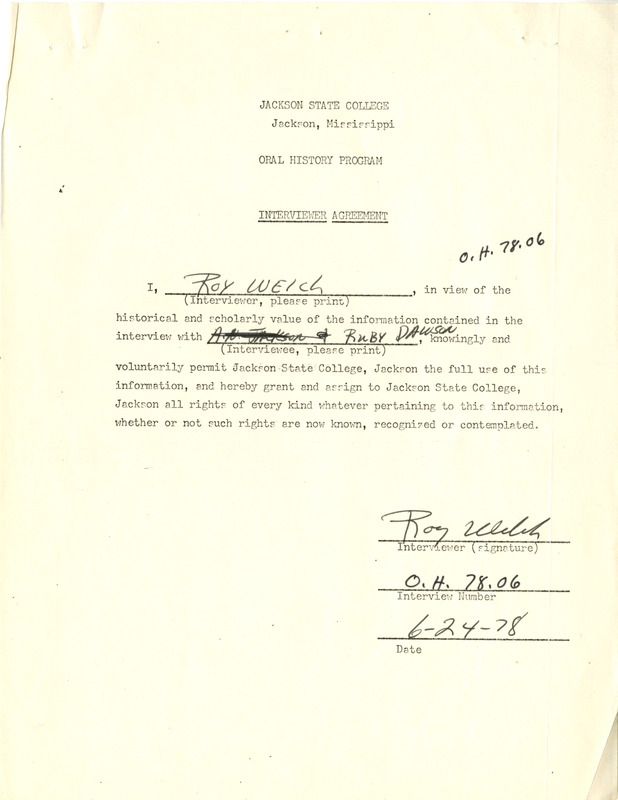
Ruby Dawson was born in Jackson in 1904 and attended Smith Robertson School until the 4th grade before attending Tougaloo College in Jackson. In 1928 she returned to Smith Robertson as a teacher. In the interview, she talks about her time as both a student and teacher. The transcript is edited with handwritten notes.
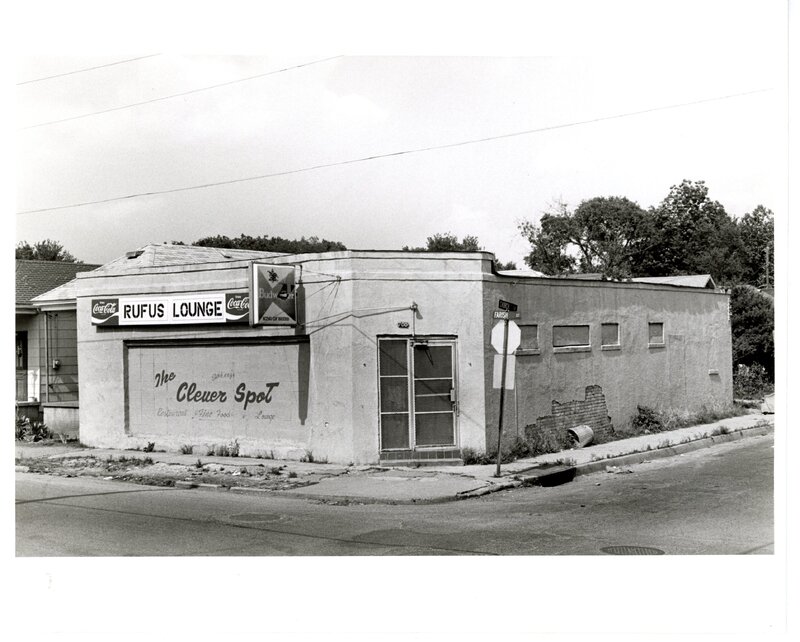
A photograph of Rufus Lounge on N. Farish Street in the Farish Street Historic District. At the time of the photograph, the business was closed and the building was in disrepair.
Stevella Adams moved to Jackson in 1932 after graduating from college and getting married. Mrs. Adams talks about her time operating a grocery store on the corner of Monument and Blair Streets in the Farish Street District from 1952 to 1973. The store was originally owned and operated by her late father in law.
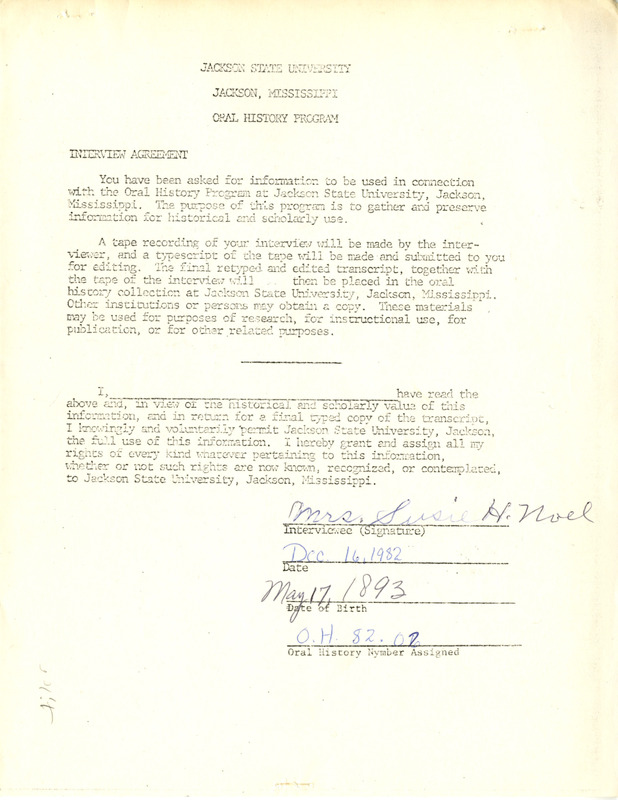
Susie Noel has lived in the Farish Street District since 1922. She talks about her experiences with the NAACP and the violence against Black people in the district during the Civil Rights Movement. She recounts her relationships with some of the Freedom Riders. She also talks about the different businesses and people in the district from the past.
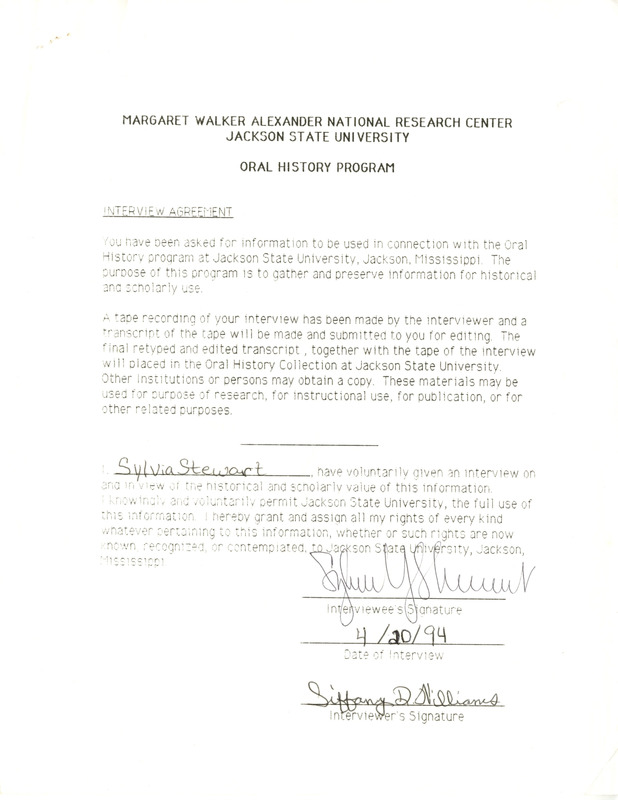
Sylvia Stewart was born in the Farish Street District. Ms. Stewart talks about her experiences growing up in the district during the era of Jim Crow segregation; the business her grandfather and father owned; and her experiences with racism. The transcript is edited with handwritten notes.
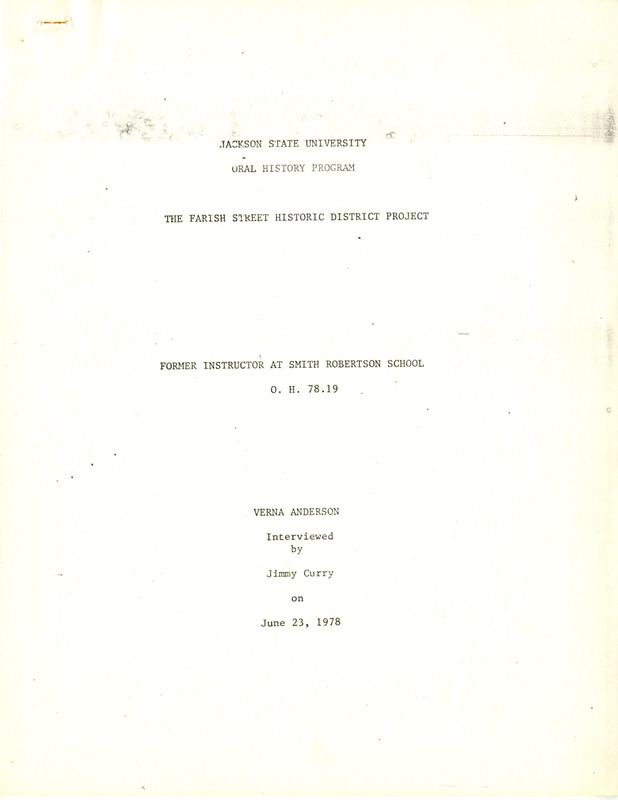
Verna Anderson began teaching 2nd grade at Smith Robertson School in 1936 and worked there until the school’s closing in 1971. She discusses her experiences as a teacher and the factors that caused the school to close in 1971 as well as actions taken to preserve the school in the present.
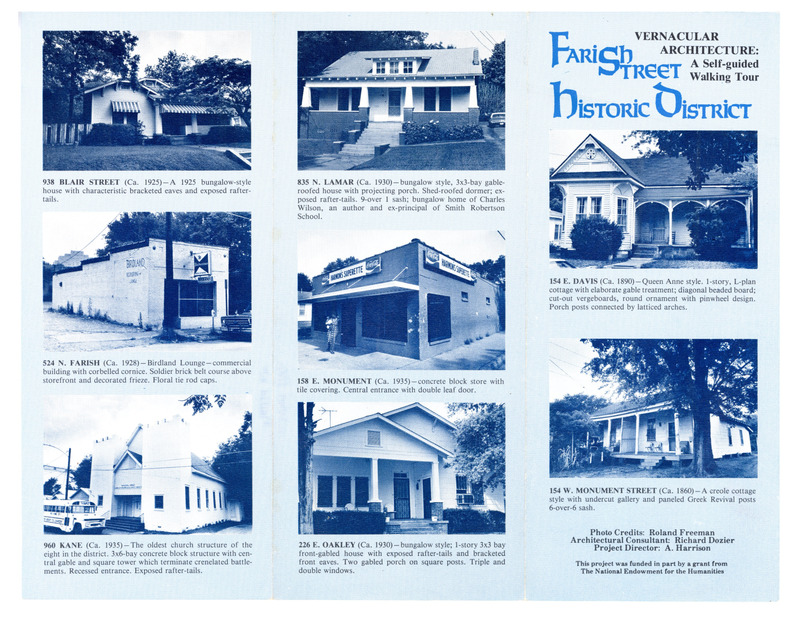
A brochure for a walking tour of the Farish Street Historic District, containing a tour map and pictures of significant homes, churches, nightclubs, and other buildings in the District.
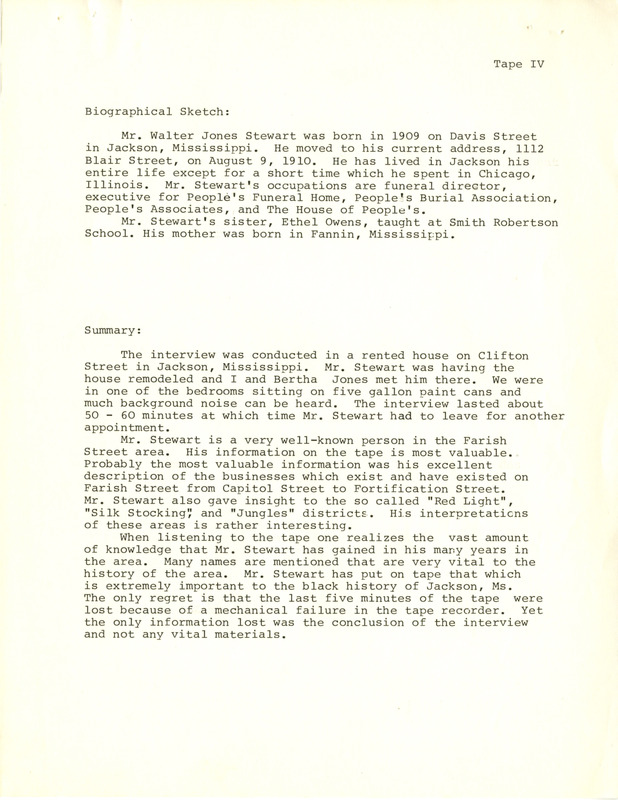
Walter Stewart lived his entire life in the Farish Street District from 1910 and was the funeral director at People's Funeral Home in the district. He talks about the changes the area has gone through over the years and recounts several stories about people and places in the area. The transcript is edited with handwritten notes.
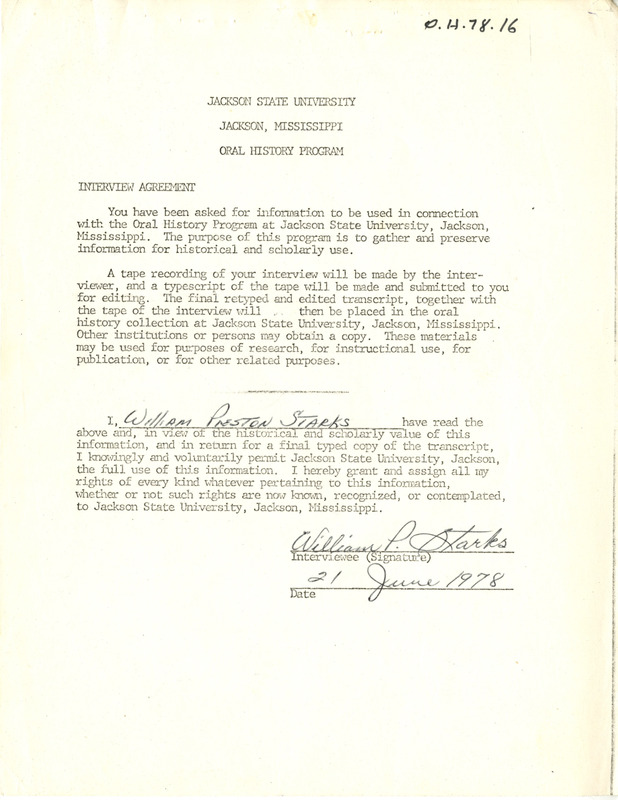
William Preston was born in Jackson in 1921 and worked as a mail carrier for the City of Jackson. In the interview, Mr. Preston talks about the food culture in the Farish Street District, including the Big Apple Inn, Big John's, and other restaurants located in the district. The transcript is heavily edited with handwritten notes.
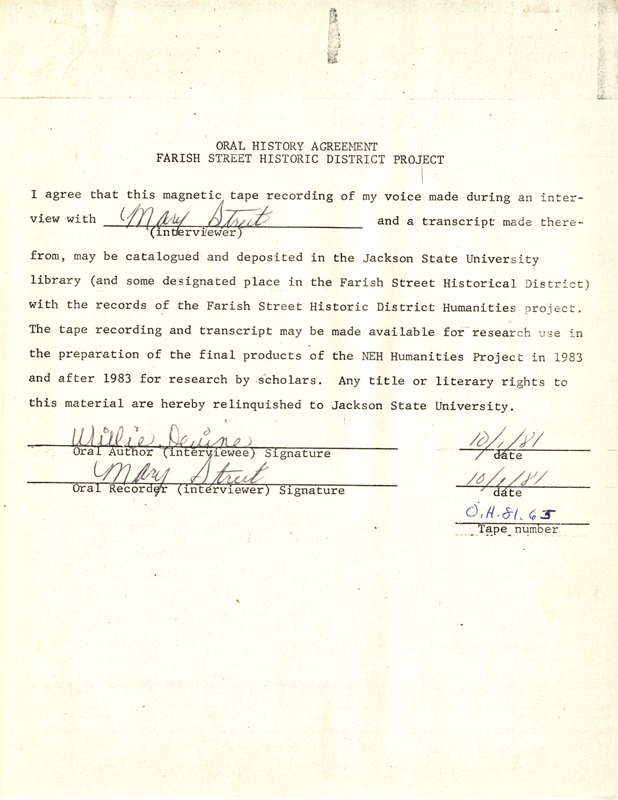
Willie Devine lived many years in the Farish Street District. He talks about growing up and the activities he did, including swimming at the newly built pool and the music and dancing in the district. He recounts the harassment of young Black children by White people on the streets when he was in grade school.
Wilmon Tynes has lived in the Farish Street District since she was 6 weeks old. She left for Chicago at the age of 10 for several years and moved back for good after that. Ms. Tynes talks about growing up in the Farish Street Historic District, recalling her church, education, and the music she heard at clubs like Crystal Palace.