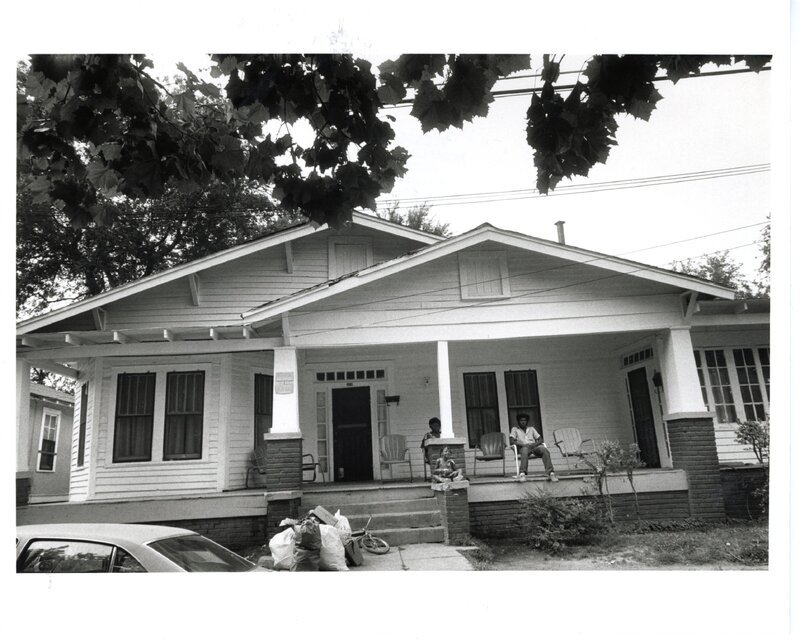
This oral history project documents the history of the Farish Street Historic District of Jackson, one of the oldest Black neighborhoods in the city of Jackson, Mississippi. When Jackson State University, then known as Jackson College, first moved to the city from Natchez, Mississippi, in 1883, its temporary home until 1885 was the basement of Mt. Helm Missionary Baptist Church on Lamar Street in the District. The collection consists of interview transcripts, photographs, and supplementary materials.
Curated By
Garrad Lee
Contributing Institution
Jackson State University
About This Record
The HCAC public history focused digital archive cataloging is an ongoing process, and we may update this record as we conduct additional research and review. We welcome your comments and feedback if you have more information to share about an item featured on the site, please contact us at: HCAC-DigiTeam@si.edu
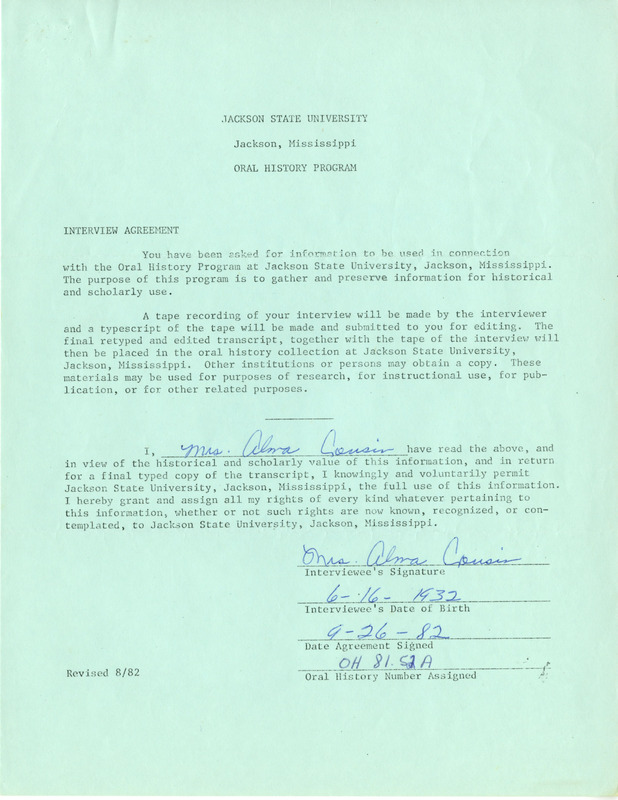
Alma Cousins moved to the Farish Street District in 1953 and previously owned a restaurant in the neighborhood. Ms. Cousins recounts what the district was like back then compared to the present. She talks about businesses and restaurants in the district; the effects of White people moving into the area; and several Black lawyers in the district.
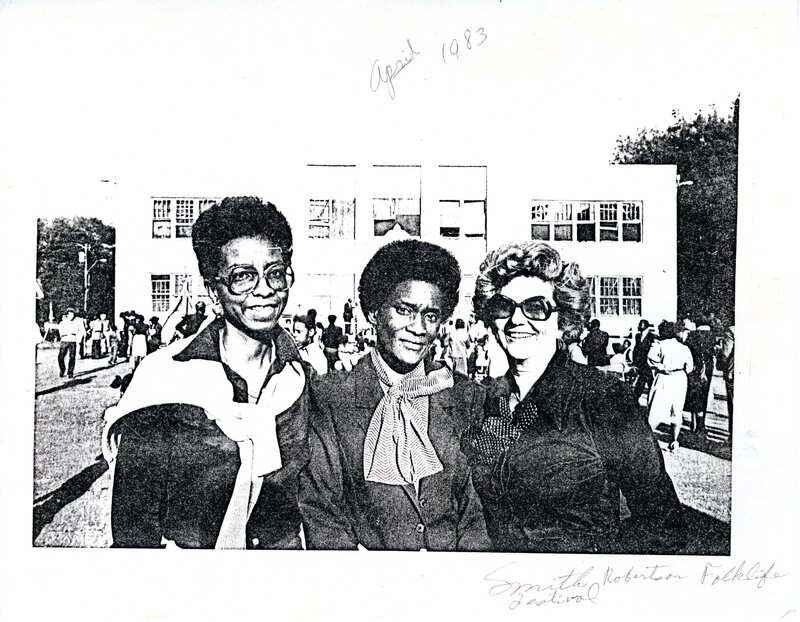
A copy of a photograph of an unknown woman, Dr. Alferdteen Harrison, and Dr. Cora Norman at the Smith Robertson Neighborhood Folklife Festival, April 9-11, 1983. The festival was a one-time grant sponsored event held on the grounds of the Smith Robertson Museum to celebrate the rich history and culture of the Farish Street Historic District.
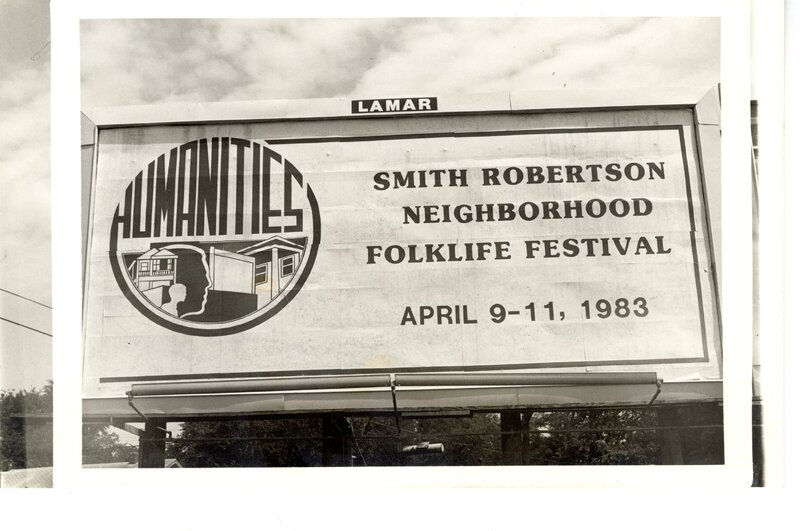
A photograph of a billboard advertising the Smith Robertson Neighborhood Folklife Festival, April 9-11, 1983. The festival was a one-time grant sponsored event held on the grounds of the Smith Robertson Museum to celebrate the rich history and culture of the Farish Street Historic District.
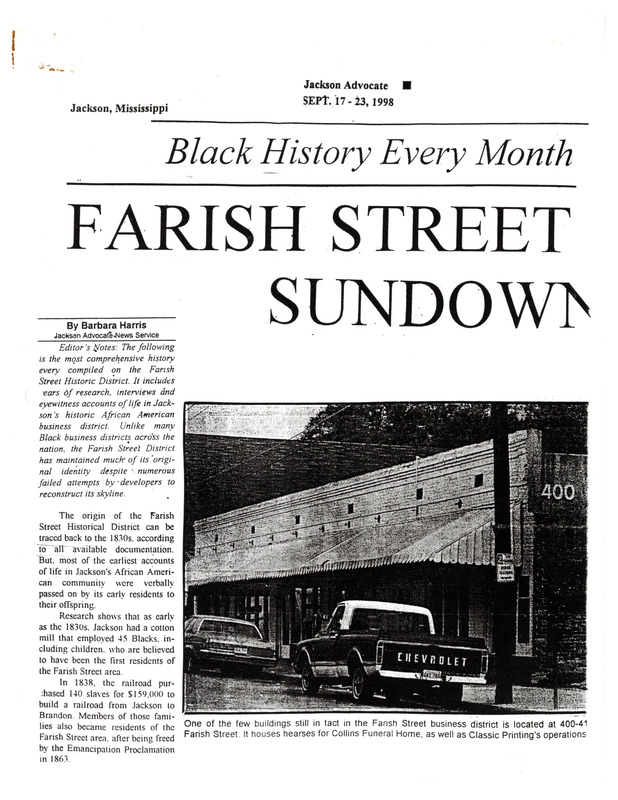
A newspaper article from the Jackson Advocate about the history of the Farish Street Historic District. Some research for the article comes from Jackson State's Farish Street Oral History Collection.
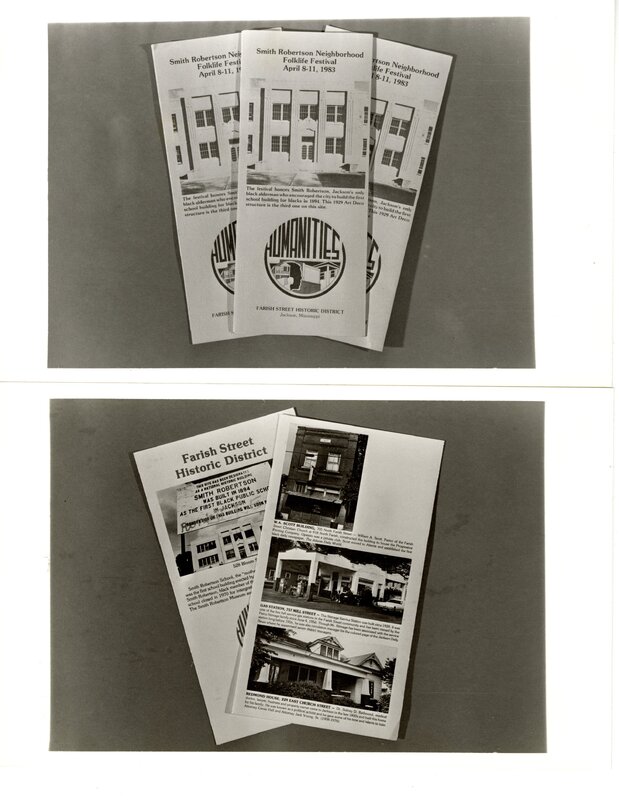
Two photographs of brochures for the Smith Robertson Neighborhood Folklife Festival, April 9-11, 1983. The festival was a one-time grant sponsored event held on the grounds of the Smith Robertson Museum to celebrate the rich history and culture of the Farish Street Historic District.
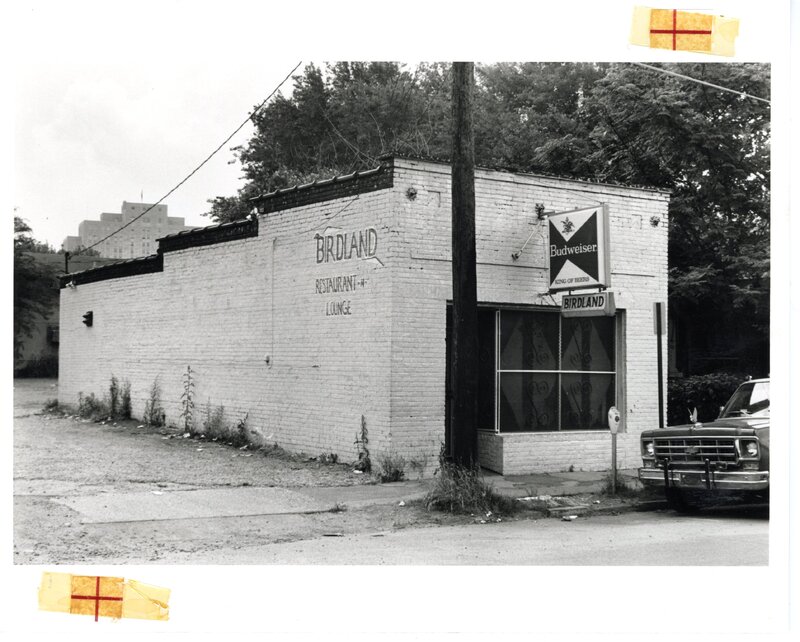
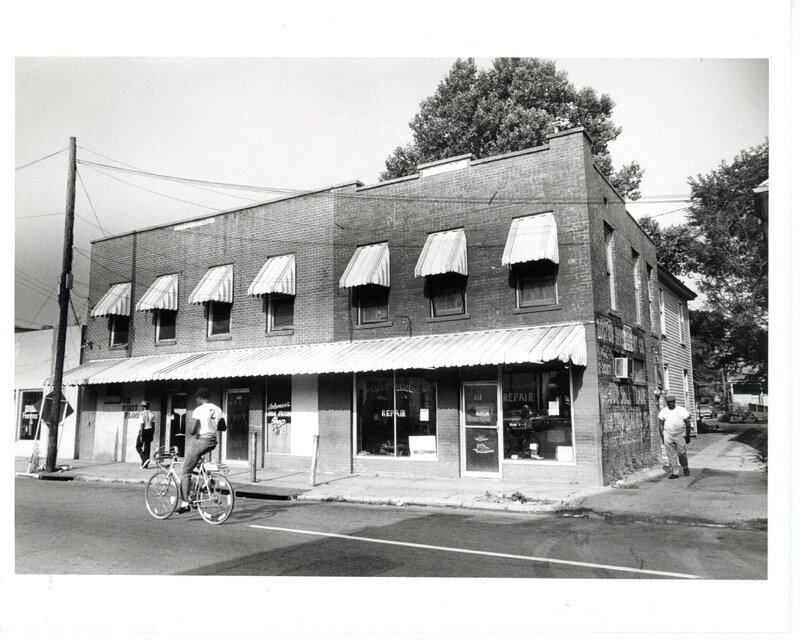
A front-view photograph of businesses on N. Farish Street in the Farish Street Historic District. At the time of the photograph, the businesses were closed and the building was in disrepair.
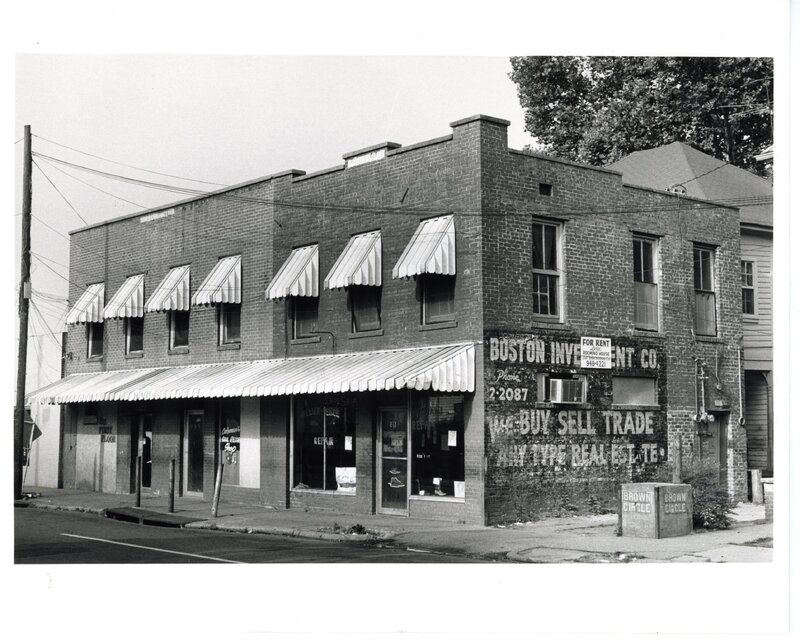
A side-view photograph of businesses on N. Farish Street in the Farish Street Historic District. At the time of the photograph, the businesses were closed and the building was in disrepair.
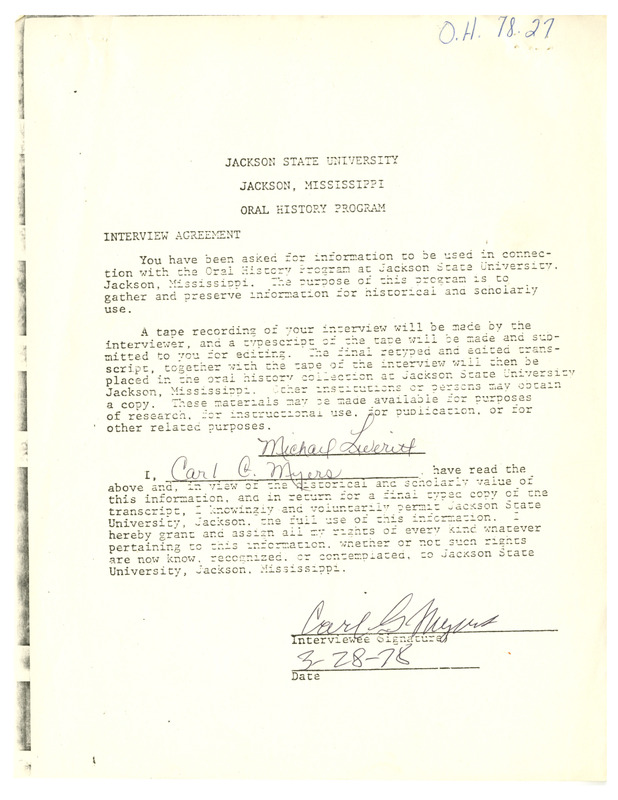
Mr. Myers was the owner of Myers Coffee Company on Farish Street. He talks about his business as well as other businesses in the district and breaks down the different sections of the neighborhood.
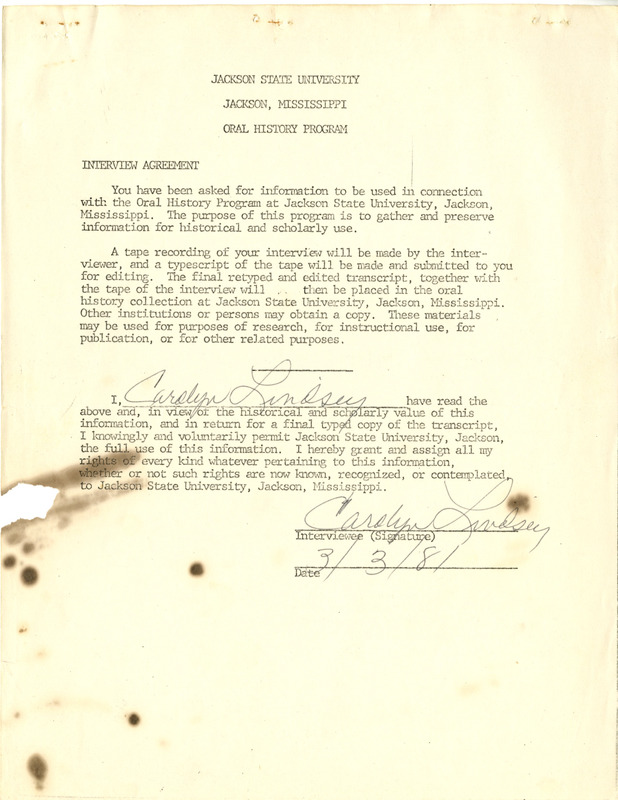
Carolyn Cannon Lindsey attended Smith Robertson School as an elementary student beginning in 1952. At the school she completed 1st, 2nd, 3rd, 5th, and 8th grades. She discusses the segregation of schools during that time. She also recalls some of her teachers and fondest memories of her time as a student there.
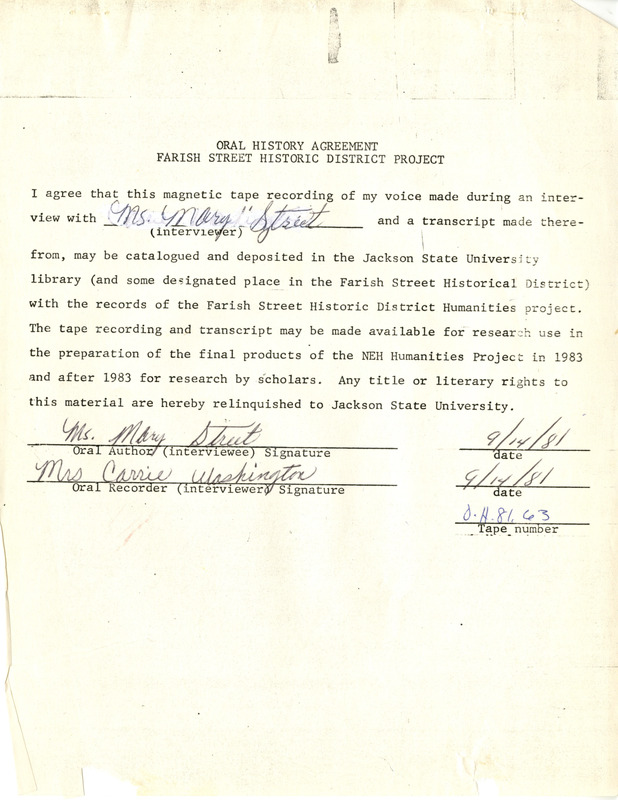
Carrie Washington was born in 1895 and moved to the Farish Street District in 1933 and has lived there since. Ms. Washington talks about her time in the district and her experiences working in the homes of white people. She also talks about businesses and buildings in the district and the Great Mississippi Flood of 1927.
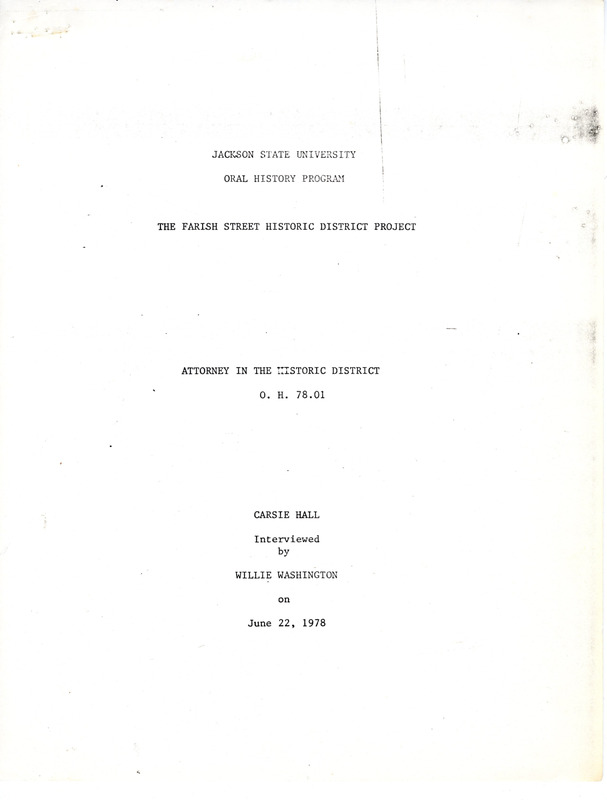
Attorney Carsie Hall moved to Jackson in 1921 to attend Jackson College. He passed the bar exam in 1953 and operated a law firm in the Farish Street District. He talks about a case he worked with the Freedom Marchers during the Civil Rights Movement. He discusses the effect of desegregation on Black businesses and current revitalization efforts.
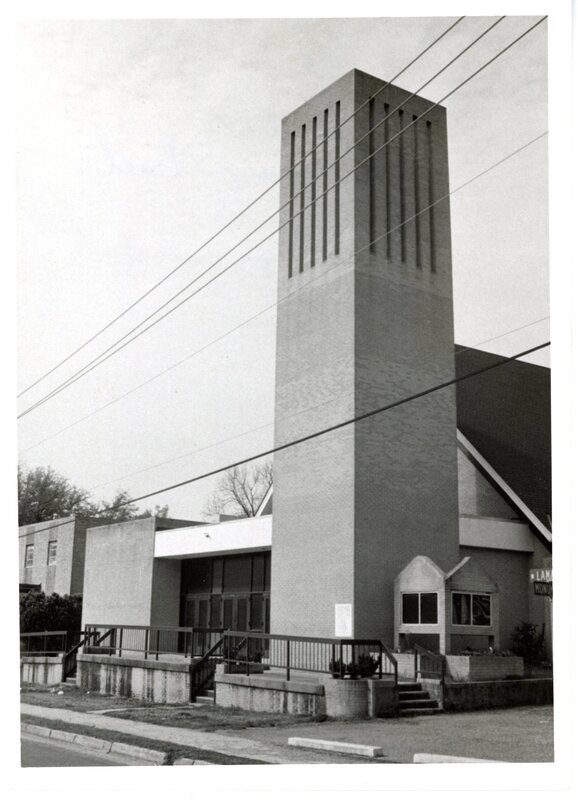
A photograph of Christ Temple Church on Lamar Street in the Farish Street Historic District. The denomination, which has over 160 member churches in the U.S., was founded ca. 1896 in Jackson by the Rev. Charles Price Jones. A historical marker was erected in front of the church in 1992 by Mississippi Department of Archives and History.
Dr. David White was the first Black optometrist in the state of Mississippi when he moved onto Farish Street in 1951. He talks about Farish Street before and after integration: Black businesses became less prosperous after integration as some Black customers went to white owned businesses. He also talks about his involvement with the NAACP.
Dr. David White was the first Black optometrist in the state of Mississippi when he moved onto Farish Street in 1951. He talks about how his first White customers came during the Civil Rights Movement as there was an active meeting place for activists above his business.
A copy of a photograph of Dr. Jessie Bryant Mosley, Dr. Alferdteen Harrison, and Mayor Dale Danks, Jr. at the Smith Robertson Neighborhood Folklife Festival, April 9-11, 1983. The festival was a grant sponsored event held on the grounds of the Smith Robertson Museum to celebrate the history and culture of the Farish Street Historic District.
Dr. Lee Williams was a homeowner in the Farish Street District from 1924-1954 and worked as Vice President of Administration at Jackson State University. He talks about his time as a student at Smith Robertson School and Lanier high School. He discusses the effects of segregation on the district and also the current efforts to revitalize the area.
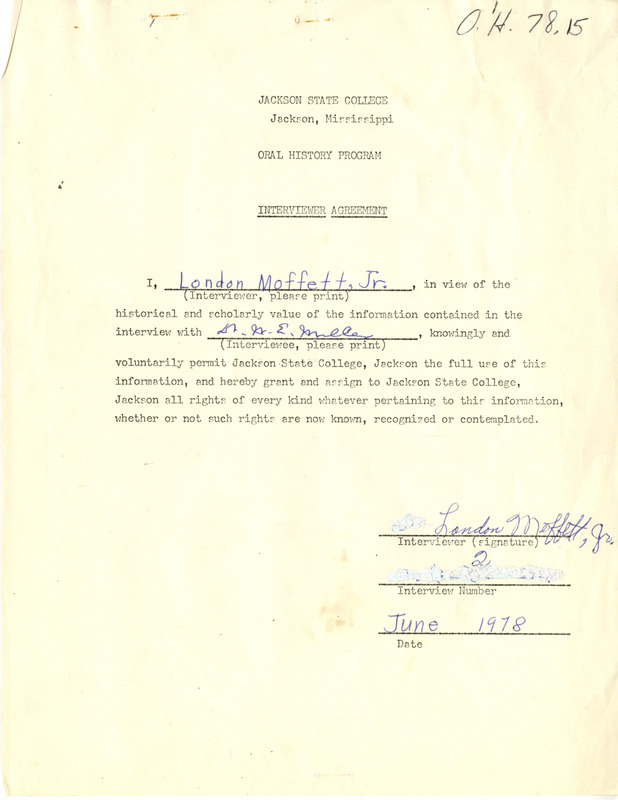
Dr. W.E. Miller was a physician and surgeon. He was born in 1903 and attended Smith Robertson School from 1908-1913. Dr. Miller talks about his time at Smith Robertson School and the community around the school, recounting the activities that were available for young people at the time. The transcript is edited with handwritten notes.
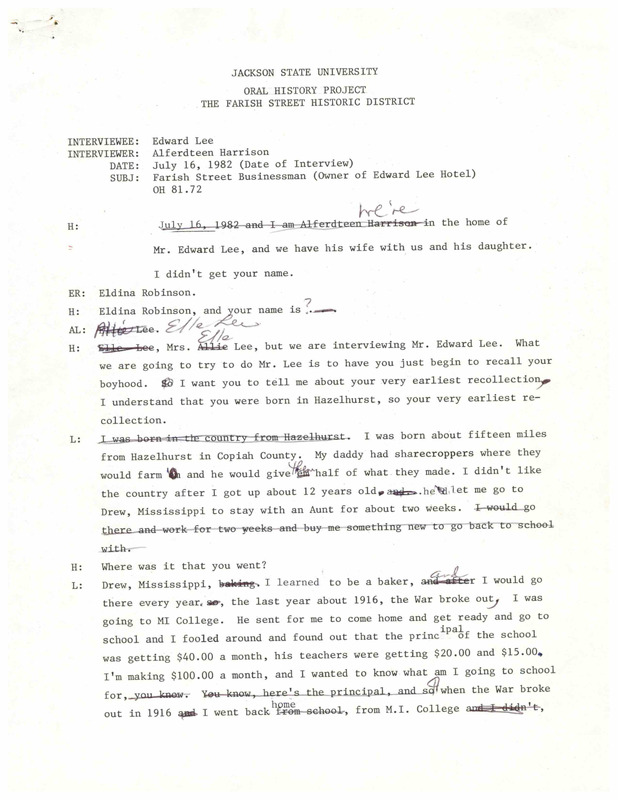
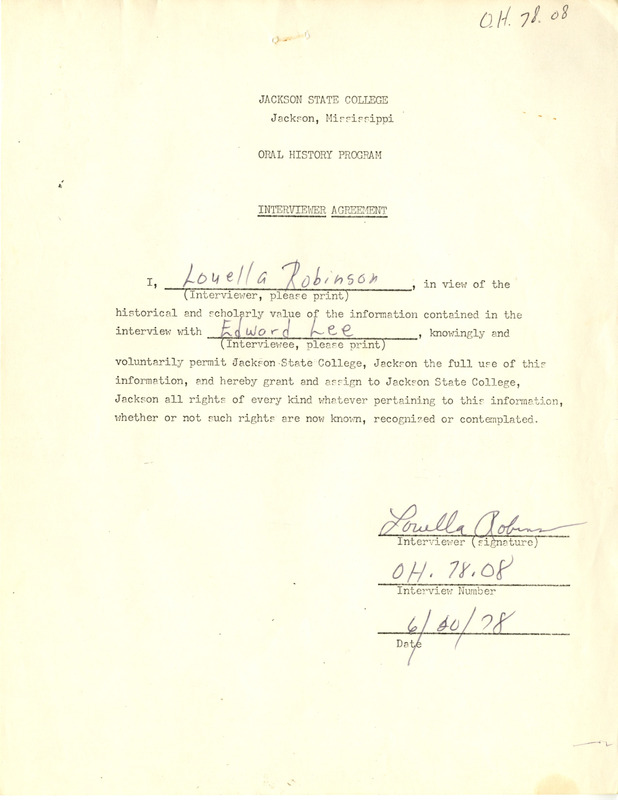
Edward Lee moved to the Farish Street District in 1925 and went on to own several restaurants in the area. He also booked and promoted dances and concerts for clubs and dance halls in the district. Mr. Lee talks about his education, life on a farm, family, and his youth. The transcript is heavily edited with handwritten notes.
Edward Lee moved to the Farish Street District in 1925 and went on to own businesses in the district including The Crystal Palace restaurant and lounge and the Edward Lee Hotel. Mr. Lee talks about his experiences with owning businesses in the district and gives advice to future Black business owners. Transcript is edited with handwritten notes.
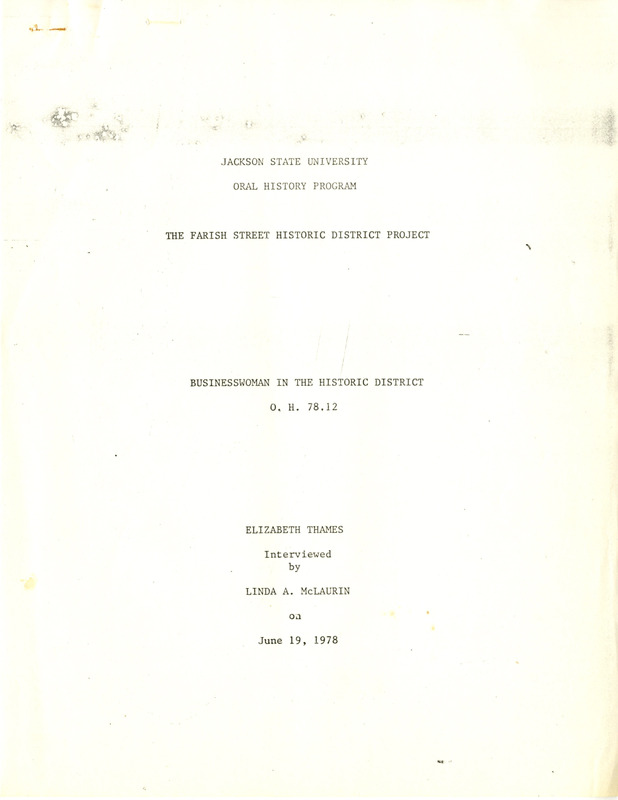
Native Jacksonian, Elizabeth Thames discusses her experiences as the owner of Boot's Flower Shop on Farish Street, where she worked over 25 years as designer, manager and owner. She talks about the effect of the Civil Rights Movement on the general welfare of the people in the district as well as the effects on her business.
Elsie Slaughter was a years-long homeowner in the Farish Street District. She talks about her parents' background and occupations and her education. She discusses how White people were able to buy large amounts of property in the district by paying delinquent property taxes and how this was a different experience from most Black property owners.
Ernest Luckett moved to the Farish Street District in 1922 at the age of 6 to attend Smith Robertson School. Mr. Luckett talks about his time as a student at the school and his admiration of a teacher. He discusses his relationship with P.G. Cooper, a lawyer on Farish Street who collected rent from tenants in the area for one of his clients.
Esther Solomon Howard was born in the Farish Street District in 1915. Ms. Howard talks about her childhood in the Farish Street District, including attending Smith Robertson School, Central Church, and the Young Women’s Christian Association (Y.W.C.A.). She also talks extensively about her husband. The transcript is edited with handwritten notes.
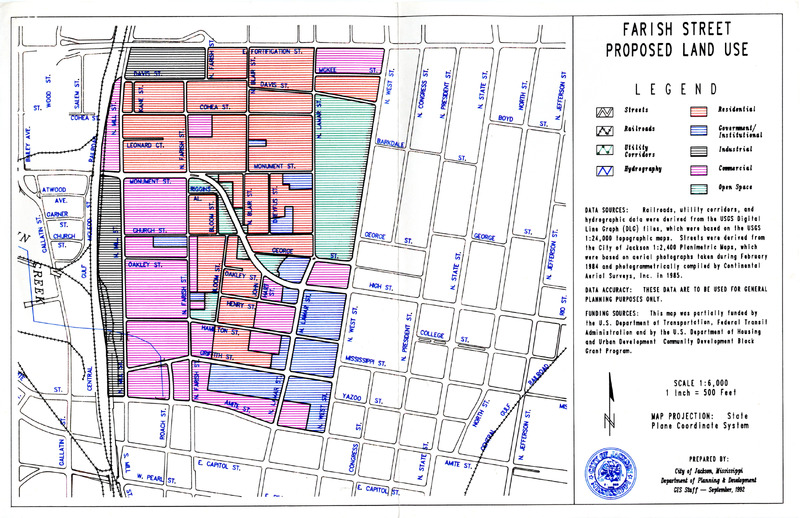
A map of the Farish Street Historic District with markers for different land uses: streets, railroads, utility corridors, hydrography, residential, government/institutional, industrial, commercial, and open space.
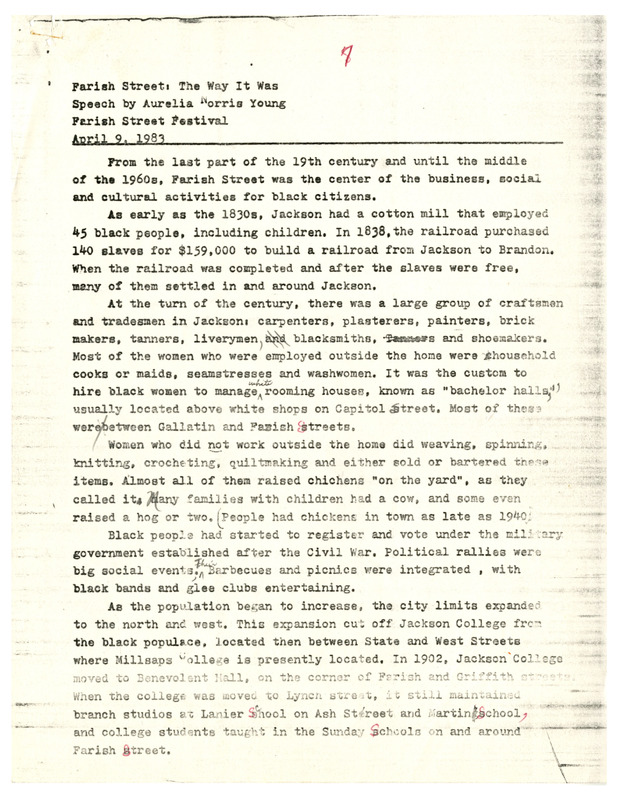
Aurelia Norris Young was a prominent Civil Rights activist and professor of music at Jackson State College and Tougaloo College. She gave this speech on the history of the Farish Street Historic District on April 9, 1983, at the Smith Robertson Neighborhood Folklife Festival, which honored the history and legacy of the district.
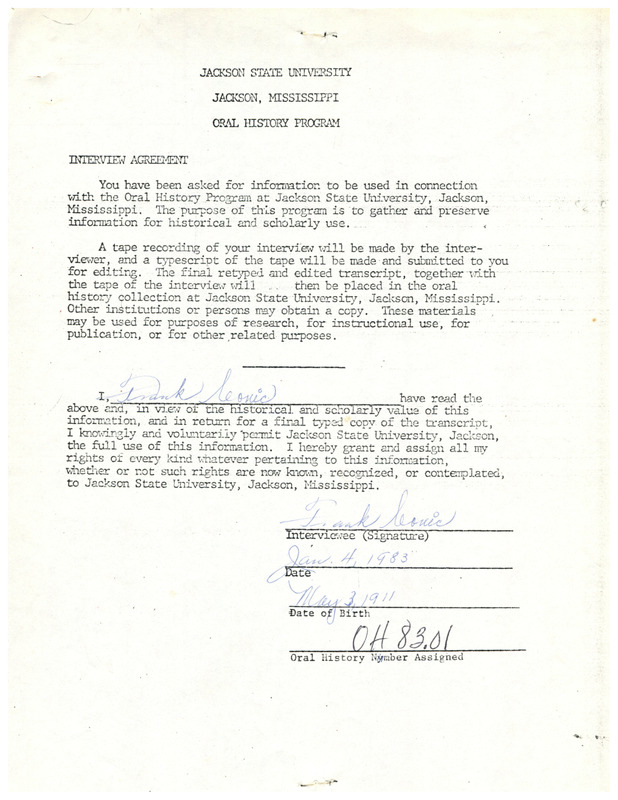
Frank Conic moved to the Farish Street District in 1919. He talks about his time growing up on Farish Street and working as a barber with his father while in high school. In 1950 he opened Conic Beauty and Barber Supply and he talks about that experience as a business owner in the district. The transcript is heavily edited with handwritten notes.