University Museum at Texas Southern Permanent Collection
Title
University Museum at Texas Southern Permanent Collection
Date Modified
2025-09-22
Description
The University Museum at Texas Southern has collected a rich body of artwork by students, faculty, alumni, and outside artists. Dr. John T. Biggers, who founded the art department at Texas Southern University in 1949, established a tradition of collecting a selection of works from every graduating senior art student. Over the years, the collection has grown to include more than a thousand pieces of student artwork. Also included are works donated by alumni of the art program and art faculty members, including iconic artists John Biggers and Carroll Harris Simms. Lastly, there is a small but significant body of work by outside artists that has been donated by various collectors.
Contributing Institution
Texas Southern University
About This Record
The HCAC public history focused digital archive cataloging is an ongoing process, and we may update this record as we conduct additional research and review. We welcome your comments and feedback if you have more information to share about an item featured on the site, please contact us at: HCAC-DigiTeam@si.edu
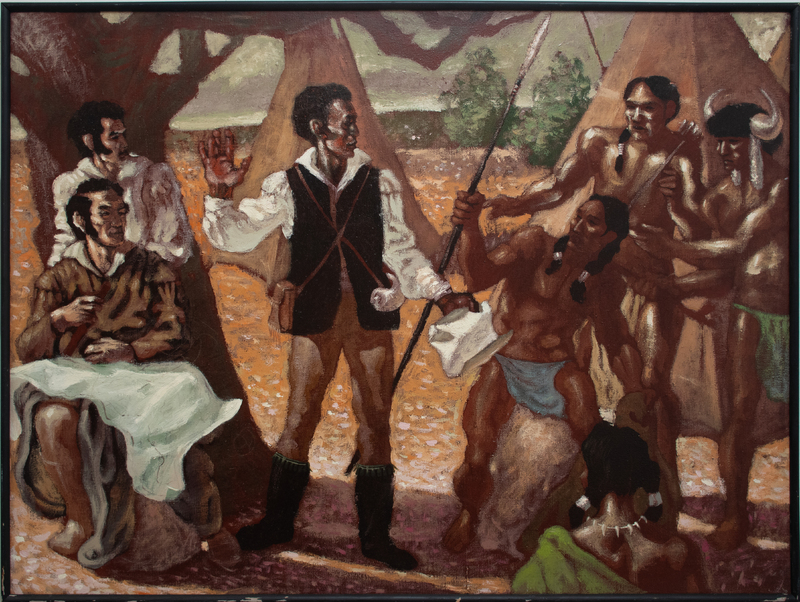
Oliver's painting depicts an accord between settlers and a group of indigenous Americans. Colonizers consistently broke their agreements with tribes and took more and more land from them. Indigenous peoples of the American Southwest are frequent subjects of Oliver's work.
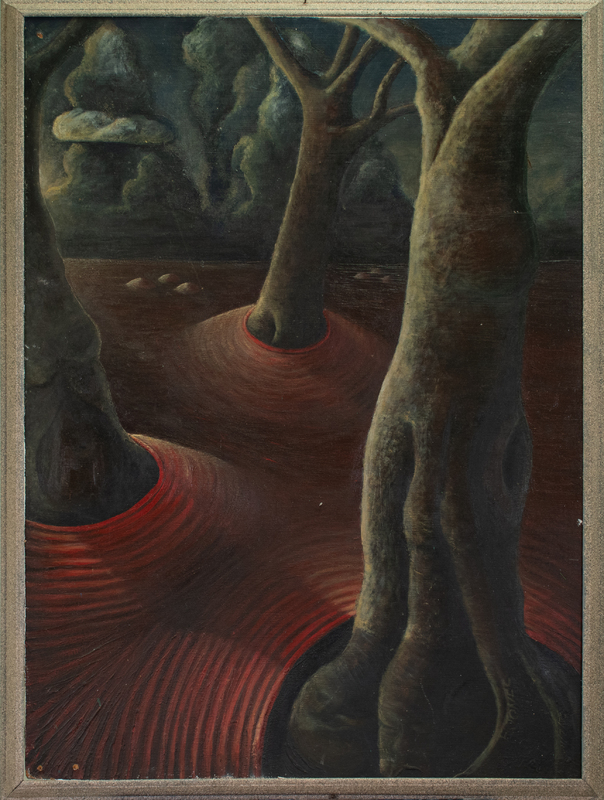
This work by Earl Jones is an abstract, desert landscape of barren trees, emerging from red and orange rings in the ground. Jones was a student at Texas Southern in the mid-1970s and was taught by artists and instructors like Dr. John T. Biggers and Professor Carroll Harris Simms. Biggers frequently urged his students to draw inspiration from nature and their immediate surroundings.
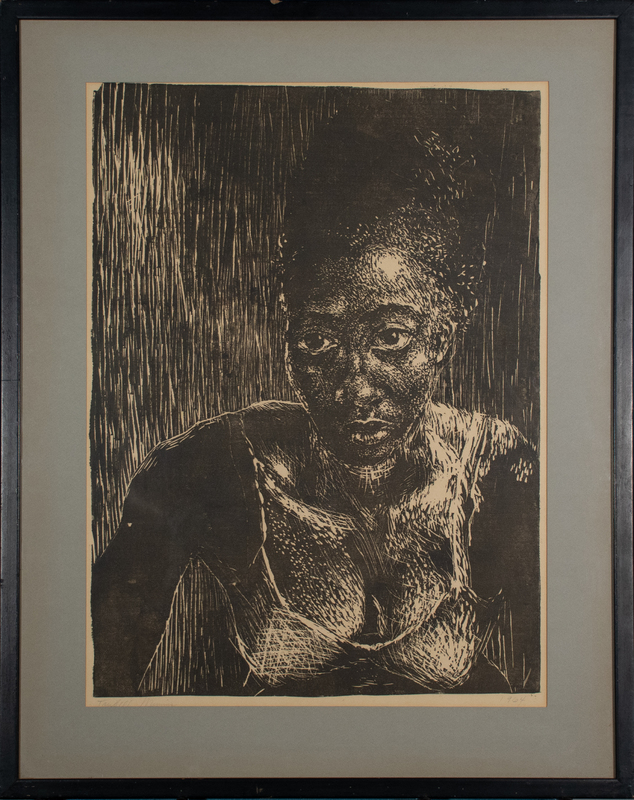
Obey’s print is a self-portrait. Under the direction of Dr. Biggers and Professor Simms, students would paint and draw self-portraits and sometimes sculpt self-portraits of their busts. This print depicts Obey in her bra; she also painted a self-portrait in a similar style. Biggers once referred to Obey as "one of our finest painters.”
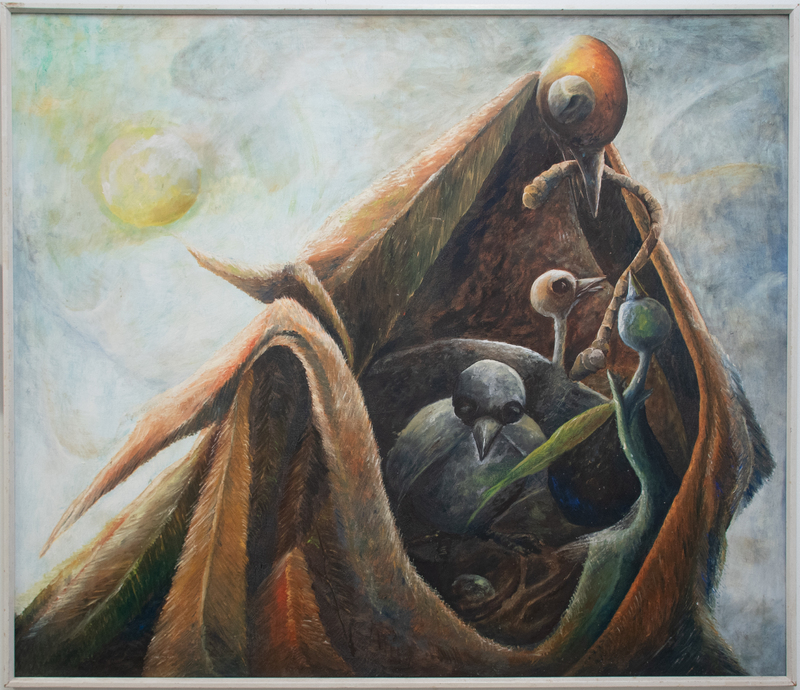
Vital's painting depicts a bird feeding a worm to its three offspring, reflecting the theme of the mother & child(ren) relationship that often appears in TSU student work. The artist often featured animals and nature in his work. After his graduation, Vital taught art for many years at Texas Southern.
Lloyd’s painting depicts the facade of the historic Wesley Chapel AME Church, founded in Houston’s Third Ward in the 1870s. The landscape and sky are painted in geometric form, commonly found in 1970s TSU student artwork. The church is set to be renovated and turned into a multi-purpose complex with a gospel music museum, recording studio, and affordable housing units.
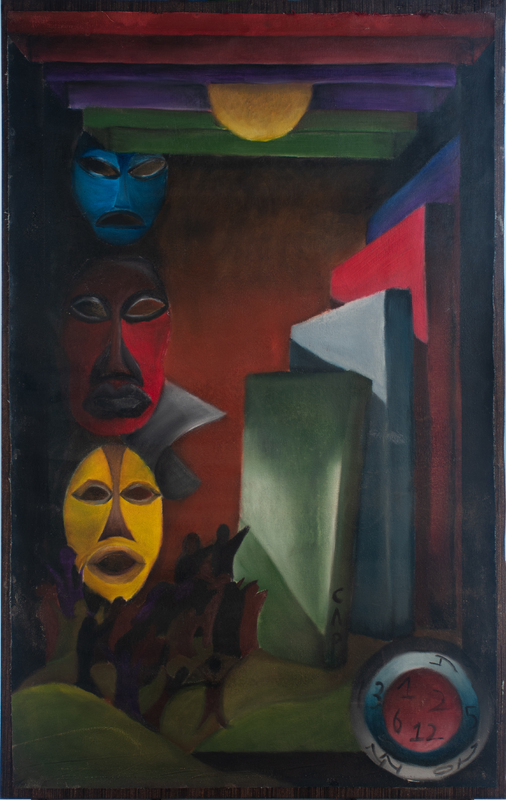
Boyd's painting is inspired by philosopher Charles W. Mills's book, "Blackness Visible." Boyd's painting responds to the question of "what makes Blackness visible?" with, in her words, "three possible answers to this: our culture, our revolutions, and/or our d/Death. Is it our culture? Our revolution? Our d/Death? Or is it an amalgamation of all three?" The artist is a graduate of Texas Southern University and cites her parents, who always encouraged her to write and draw, as creative inspirations.
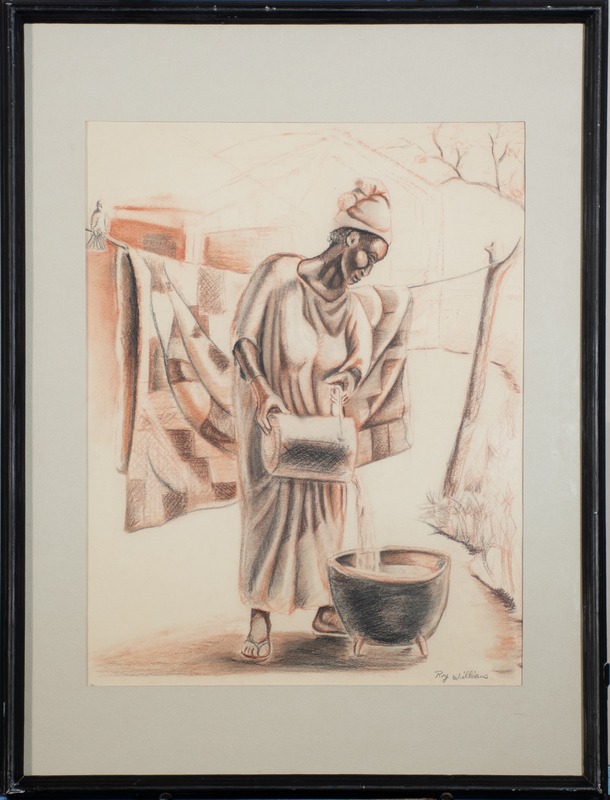
Williams' drawing depicts a woman dressed in a large, flowing garment with her hair covered, pouring water into a bin. Behind her, a checkerboard quilt hangs over a clothesline to dry. This piece highlights some of the unseen and unappreciated domestic labor performed by Black women. The checkerboard motif was frequently used by Dr. John Biggers and often appears in the artwork of his students.
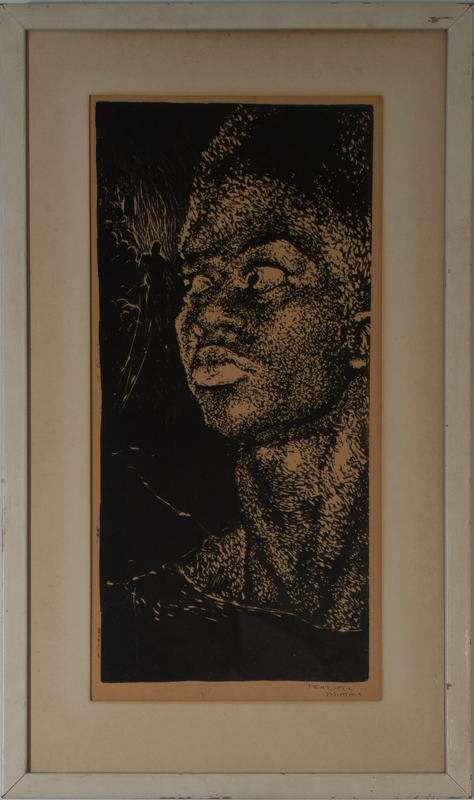
This print by Trudell Mimms shows a woman gazing to her right, with unidentifiable figures in the background. In Black Art in Houston: The Texas Southern University Experience, Dr. John T. Biggers referred to Mimms as "one of our finest painters."
Askia’s drawing depicts a weary woman at work, stooped over a woven basket. As a student, Askia made a series of drawings that highlight Black women and the different types of labor they perform. Feminist thinkers have long argued that unpaid, domestic labor performed by women is often rendered invisible in discussions of their contributions.
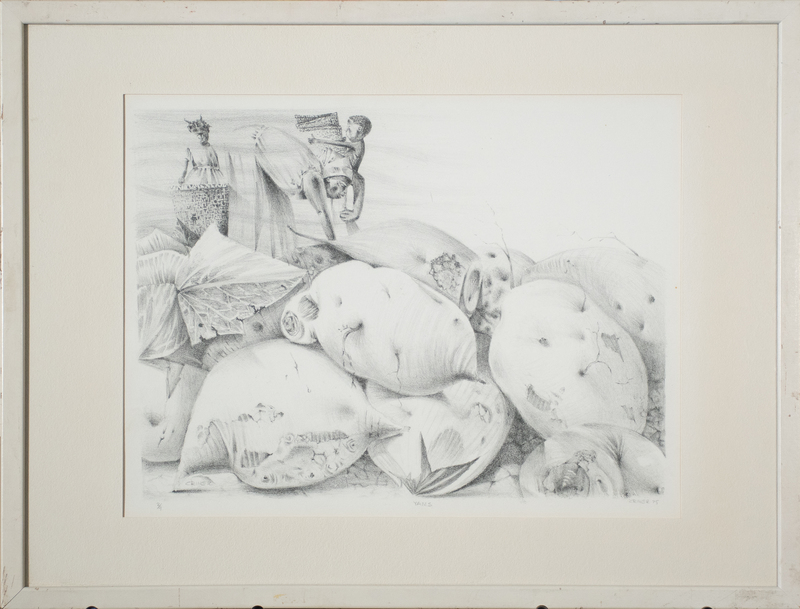
Criner's print uses forced perspective to depict a field of oversized yams and a mother picking from the land, with her children alongside. The son and daughter each hold baskets, presumably full of freshly harvested yams. Yams are a staple crop in West African culture and cuisine. In the African diaspora, sweet potatoes sometimes take yams’ place.
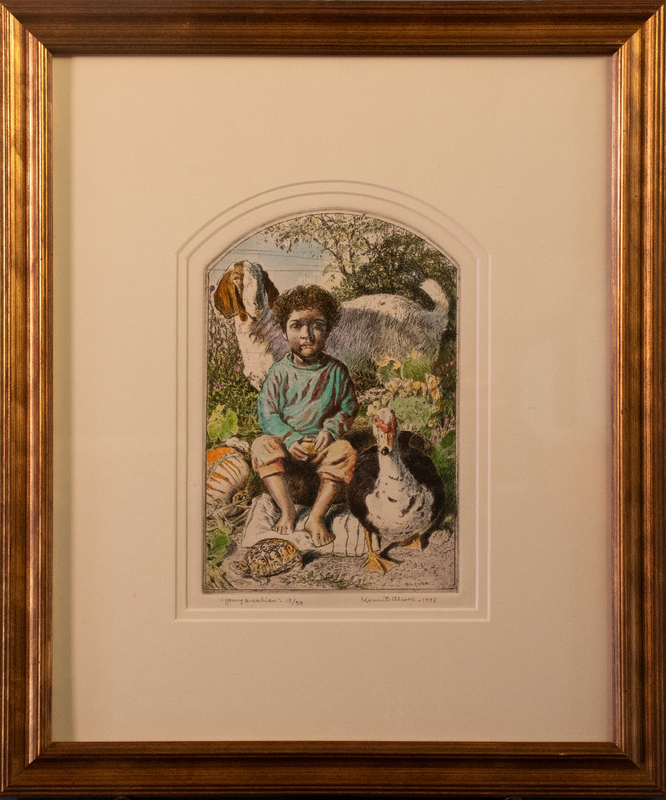
Oliver’s etching shows an idyllic scene, with a young boy surrounded by Texan flora and fauna. These include a muscovy duck, a goat, a turtle, a pumpkin, and more plants. Oliver grew up in Refugio in southeastern Texas, attended TSU, and moved to Waco after his graduation. Texas wildlife is a frequent subject of Oliver’s work, including his Hermes scarves.