University Museum at Texas Southern Permanent Collection
Title
University Museum at Texas Southern Permanent Collection
Date Modified
2025-09-22
Description
The University Museum at Texas Southern has collected a rich body of artwork by students, faculty, alumni, and outside artists. Dr. John T. Biggers, who founded the art department at Texas Southern University in 1949, established a tradition of collecting a selection of works from every graduating senior art student. Over the years, the collection has grown to include more than a thousand pieces of student artwork. Also included are works donated by alumni of the art program and art faculty members, including iconic artists John Biggers and Carroll Harris Simms. Lastly, there is a small but significant body of work by outside artists that has been donated by various collectors.
Contributing Institution
Texas Southern University
About This Record
The HCAC public history focused digital archive cataloging is an ongoing process, and we may update this record as we conduct additional research and review. We welcome your comments and feedback if you have more information to share about an item featured on the site, please contact us at: HCAC-DigiTeam@si.edu
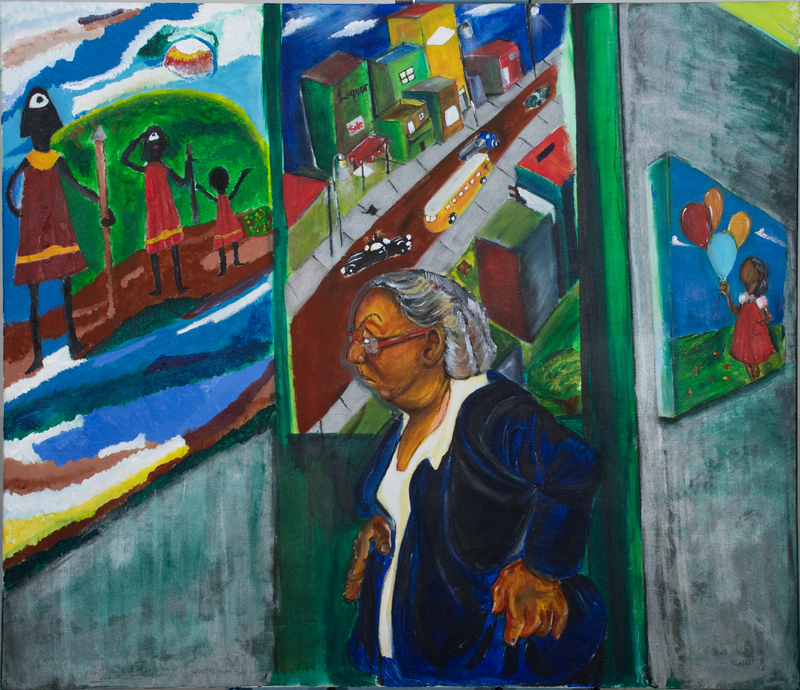
Caldwell’s painting reflects a comical scene from an art museum. An elderly woman walks past the artworks exhibited, glaring with a dubious expression on her face. Her posture and facial expression suggest disapproval and criticism. The leftmost piece pictured in Caldwell’s painting is “Landscape” by Marrion Cole, a textile piece from Texas Southern’s permanent collection. This is one example of how art students interact with TSU’s art legacy.
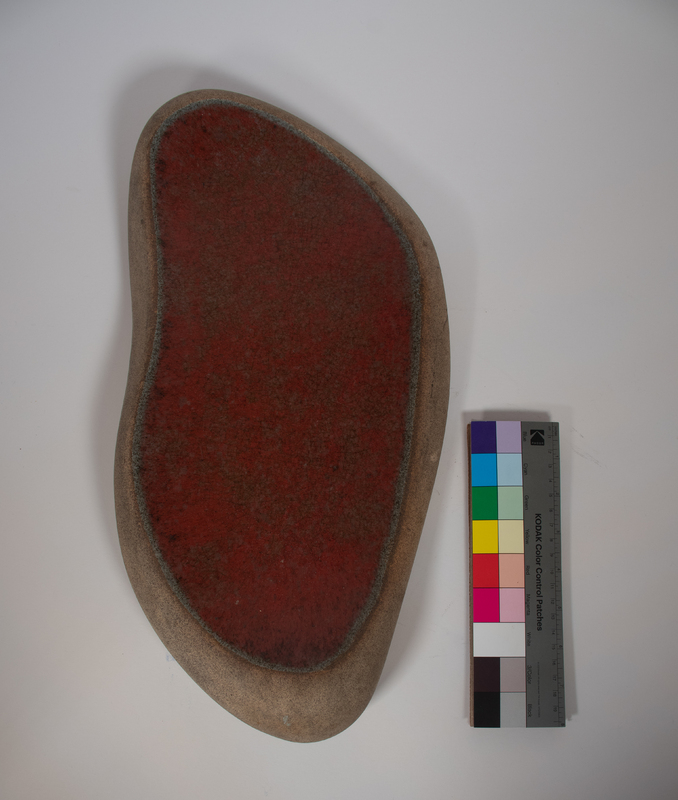
This large, oblong ceramic plate created by Carroll Harris Simms has a red glaze. This piece is among those that Professor Simms chose to feature in the 1976 book he co-authored with Dr. Biggers and John Edward Weems, Black Art in Houston: The Texas Southern Experience.
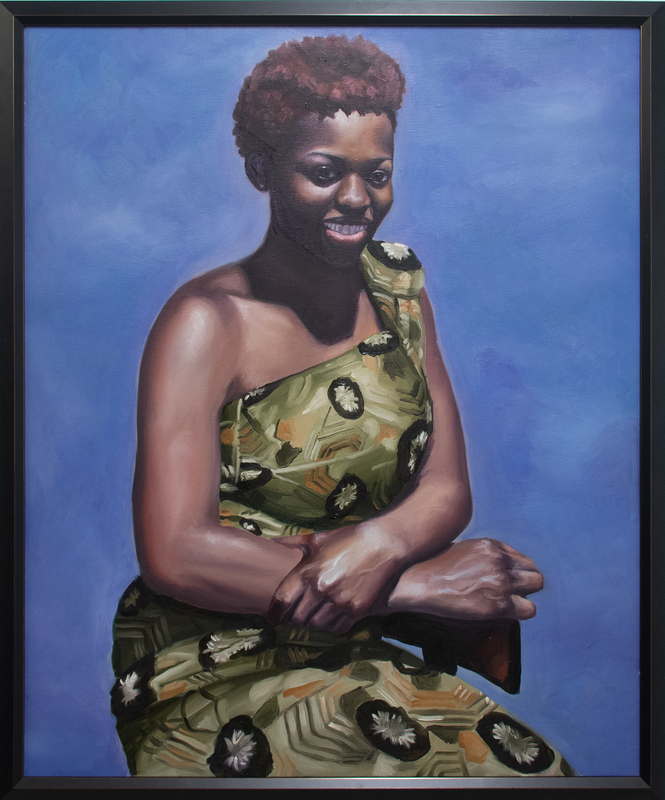
Onyeiwu's painting depicts a smiling woman wearing a green dress with geometric designs, against a blue background. The artist is a Texas Southern alumnus and current art professor, teaching painting, drawing, and murals courses. Much of his work highlights the beauty of Black women.
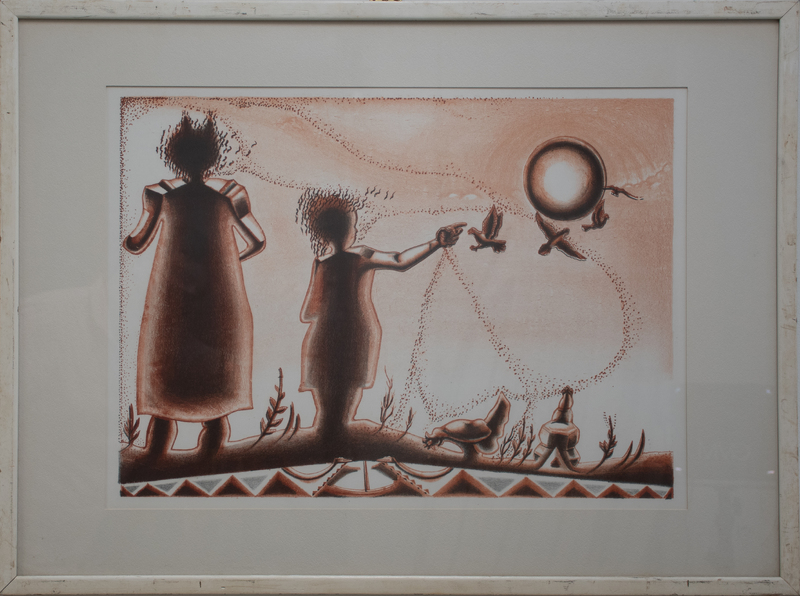
This print by Bennie Settles shows a mother and child standing in a field and feeding chickens and other birds. Settles' illustration of seeds is reminiscent of the way John Biggers paints seeds in his mural "Web of Life." Settles' work can be recognized by the power imbued in his careful portrayal of Black hair.
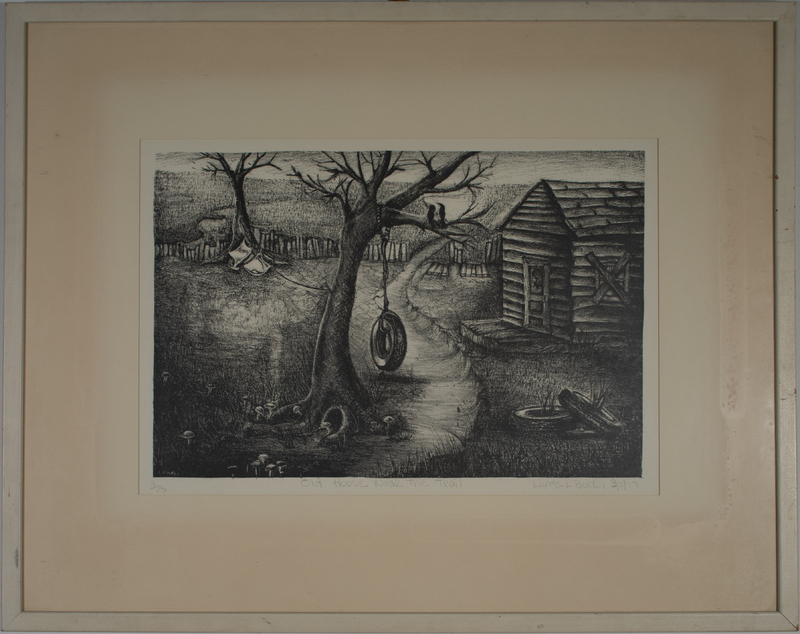
The print by Booker shows a rural landscape featuring a small, neglected house. A tire swing and clothesline hang from the two trees. The area appears not to be frequented by people, as suggested by the boarded window, overgrown weeds, and mushrooms.
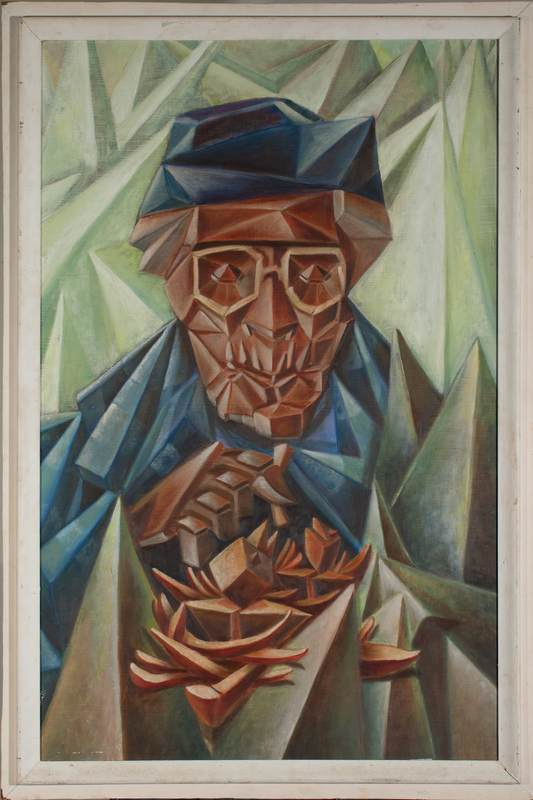
Donato’s painting portrays an elderly woman feeding hungry birds. This particular geometric style of painting is characteristic of students of Dr. Biggers who attended Texas Southern in the mid-to-late 1970s. The mother-child relationship is a common motif in the artwork of TSU students, usually a human mother and child or an animal mother and child. This painting seems to be unique in its depiction of a cross-species maternal relationship.
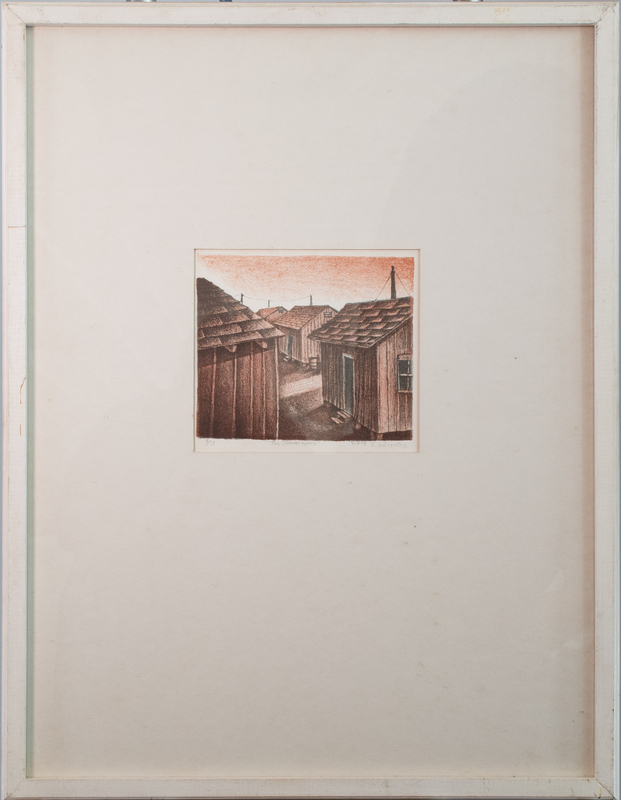
Sifuentes’ print shows a series of shotgun houses. The composition portrays Oleander Homes, a public housing complex in Galveston, Texas, the artist's hometown. The complex was destroyed by Hurricane Ike in 2008 and was rebuilt and reopened in September 2024. Shotgun houses and urban environments are common settings for Texas Southern student artworks.
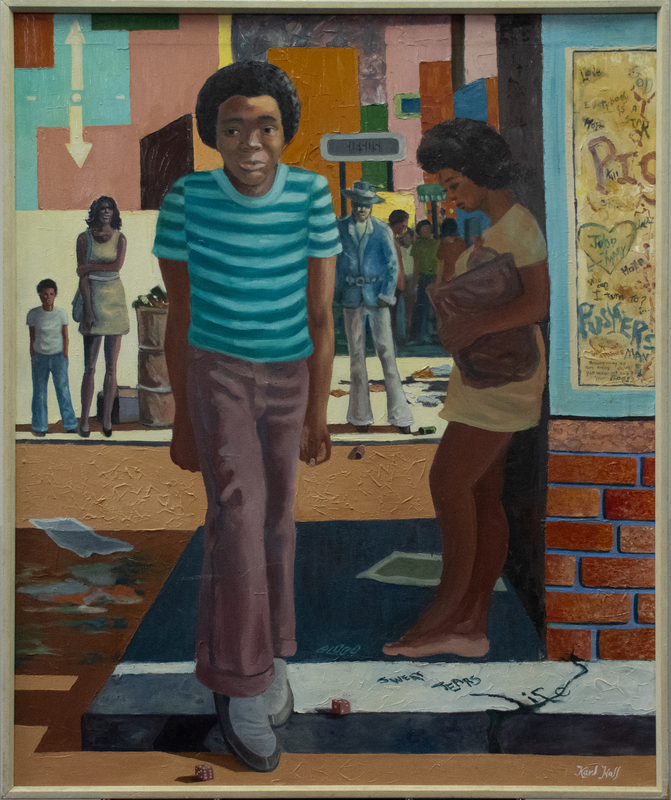
Hall's colorful painting highlights the view of a busy street corner. The main figure walks through the scene with tense shoulders and a balled fist, with a crowd of people lining the background. Graffiti, dice, and litter are seen on the street, sidewalk, and walls. This may be a depiction of Hall’s experiences growing up in Sunnyside, a historically Black neighborhood in southeast Houston.
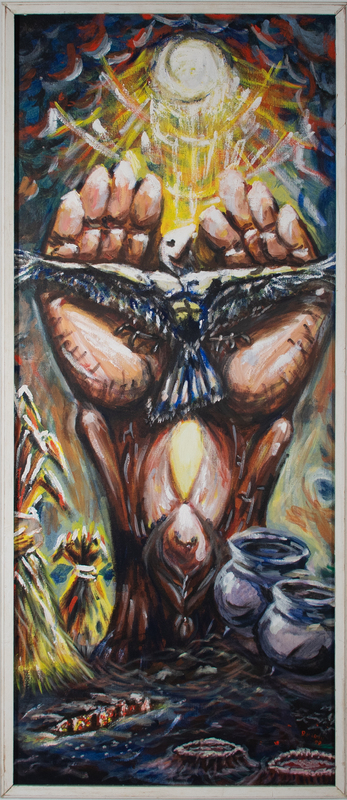
This detailed painting by Barry Morris includes a pair of hands rising up and clasping a bird. There are also bundles of wheat and a set of vessels. This work is very similar to the leftmost section of Morris's Hannah Hall mural and may have served as a partial study for the mural. Oversized, detailed hands and birds are frequent motifs in the artist's work.
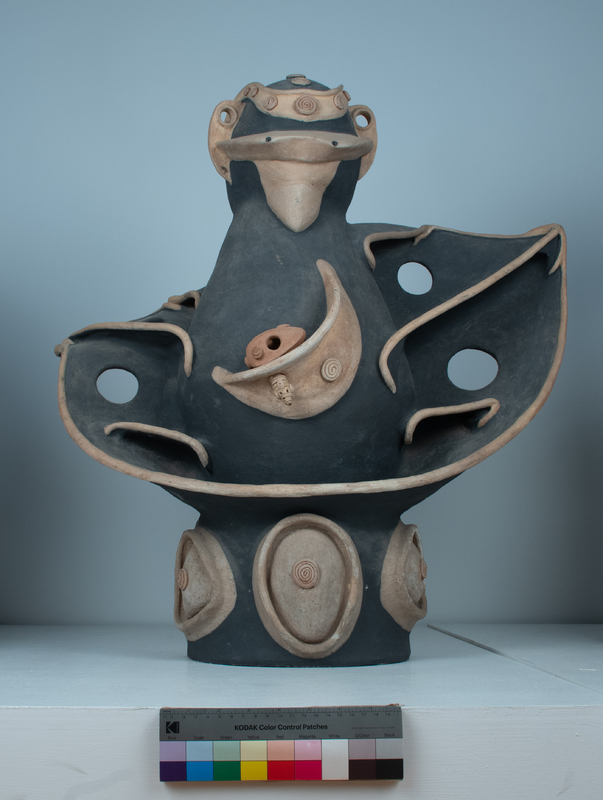
“Owl,” by Oliver Parson, features spiraled embellishments on the head and symmetrical holes on the wings, with a gray slip painted on the body. In the middle of the figure’s body, a crescent shape cradles a small egg, perhaps referencing owls’ nocturnal natures. Parson experimented with different clay colors in his terracotta sculptures.
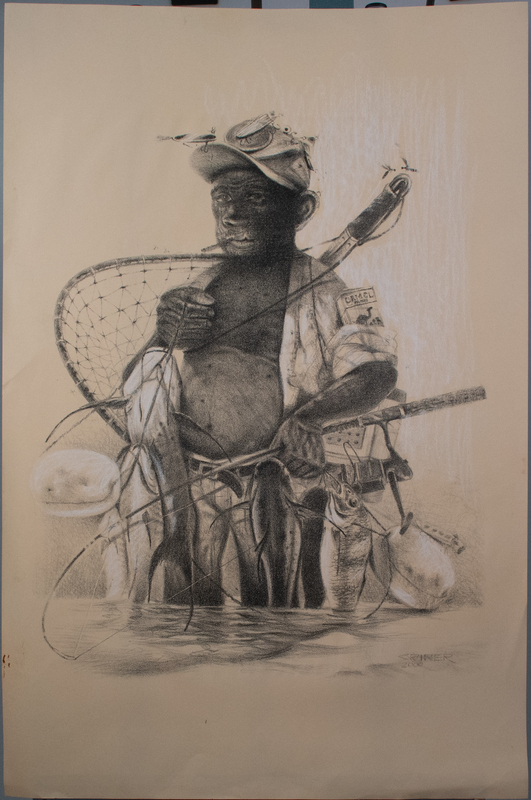
Criner’s print shows a man fishing; he is holding several catfish that he has caught. He is wading in the water with his hands full of fishing gear. Criner learned printmaking firsthand from Dr. John Biggers and was the longtime artist-in-residence at Houston’s Museum of Printing History.
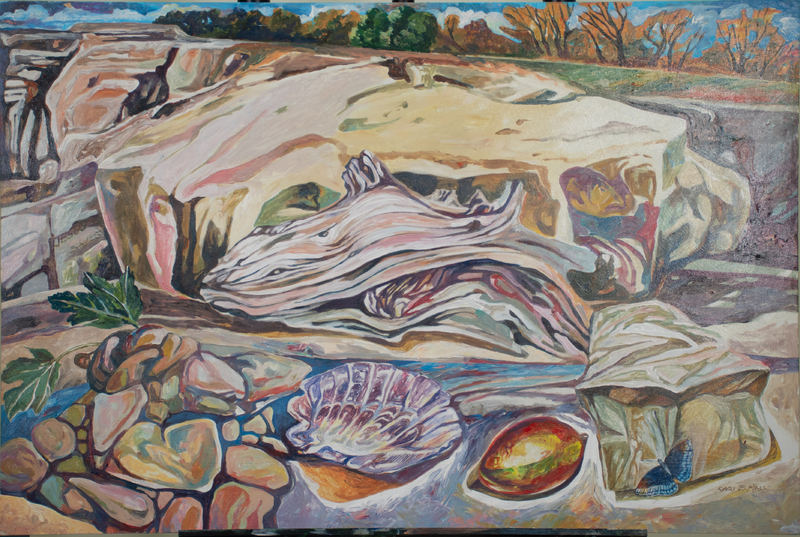
Hall’s painting is a surreal landscape of water flowing through a creek with various items along the path. There is also a faint inscription that reads “Jesus Saves” on a boulder to the far left. A mango, fossil, and butterfly are all pictured in the foreground. The loose and fluid paint strokes are reminiscent of impressionist paintings and characteristic of Hall’s style, particularly his more recent works.
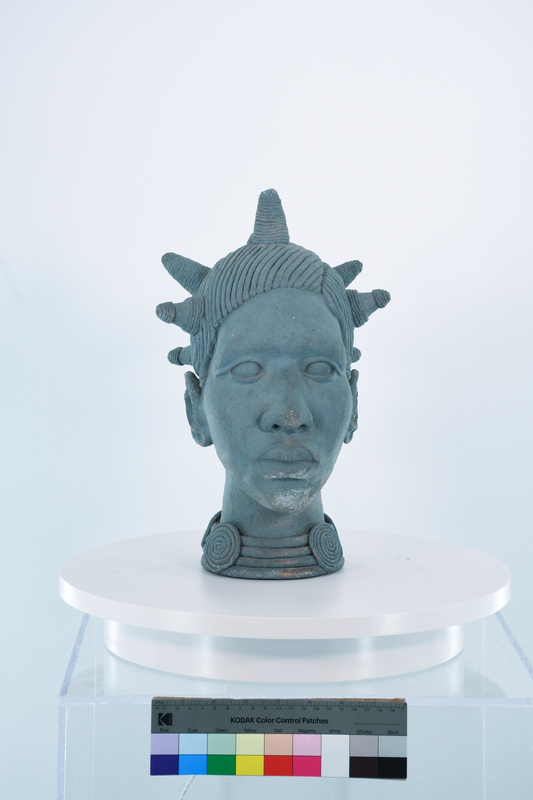
Morris's sculpture depicts a stylized version of the artist's own head and neck. As was required by Professor Simms, the artist adorned her self-portrait with swirls on the neck and rear of the scalp. The bust's blue hue is unique within the Texas Southern terracotta collection.
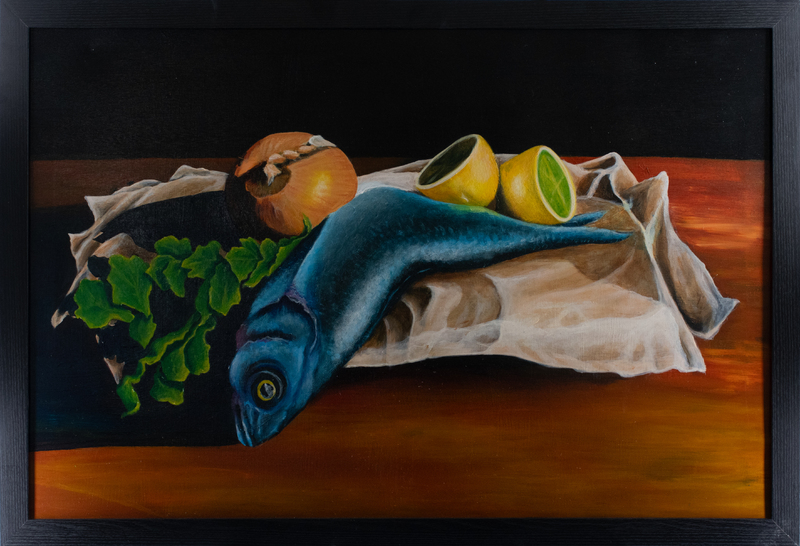
Hinojos' painting, "Pescador de Hombres," draws on Christian themes. The painting references the story of Jesus' miraculous feeding of the multiple with bread and fish, but also a symbolic representation of Christ as the "Bread of Life," a source of spiritual sustenance. Hinojos is a graduate of Texas Southern, accomplished airbrush artist, and founder of the Houston Art Center, an organization that aims to support artists in the Hobby area of Houston.
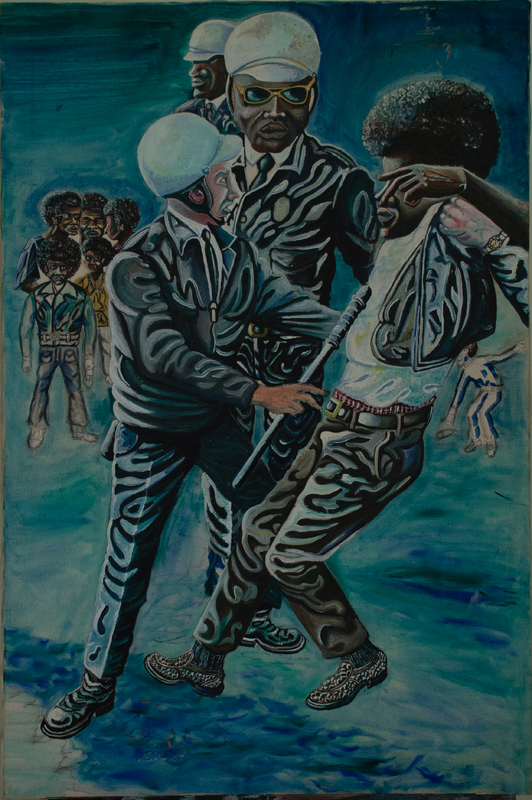
Settles' painting tackles the ongoing issue of police brutality against and harassment of Black Americans. The fluid swirls on the men's clothing, the anxious onlookers, and the white officer's drawn baton illustrate the high intensity and precarious emotion of the piece.
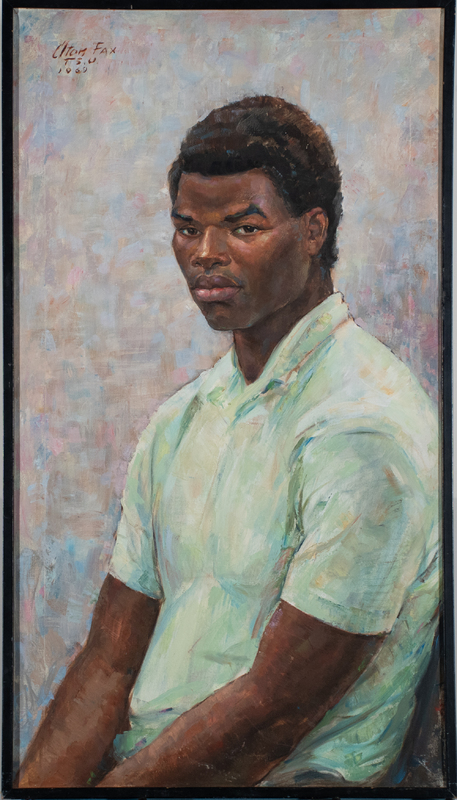
Fax’s painting is a portrait of a young man sitting with his hands in his lap. Yearbook photos suggest the subject may be George Latson, who was an art student at TSU at this time. During his career, Fax taught and held residencies at a variety of institutions, including Texas Southern University. He became internationally acclaimed for his work as a cartoonist, illustrator, and writer.
Oliver's painting depicts vanguard Black politicians from the Reconstruction period following emancipation. Radical Reconstruction saw the election of dozens of Black lawmakers in former slave states like Texas. After 1897, Texas didn't elect another Black legislator until 1966.
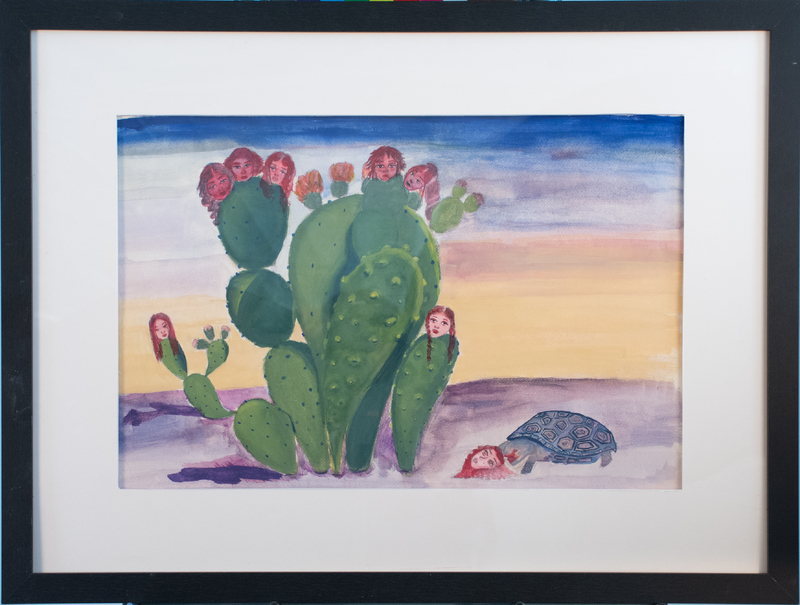
Toussaint's painting, "Prickled," pushes back against the notion that women's role is limited to being nurturers. In her own words, her "creative perspective is rooted in a sensitive and feminine lens—one that challenges the common reduction of femininity to gentleness and passivity." After graduating from Texas Southern University, Toussaint started teaching art in a Houston-area middle school.
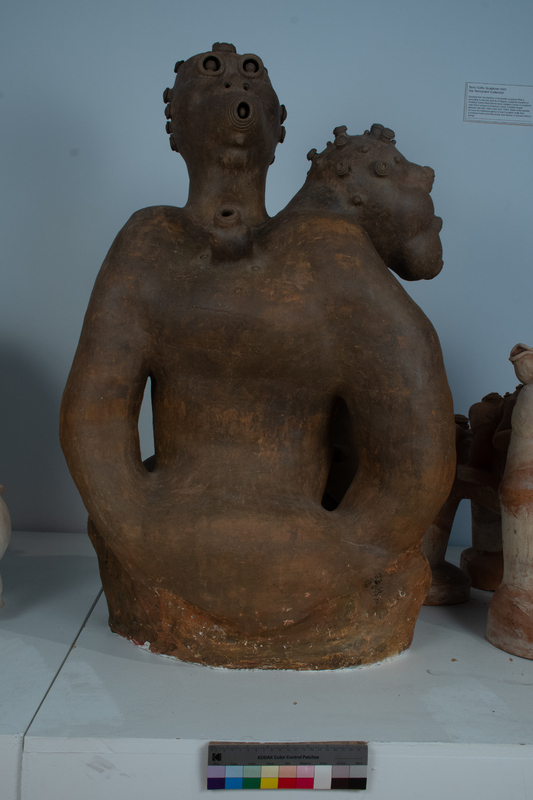
Obey’s sculpture, “Primeval Couple,” features a prehistoric male and female couple fused within the arms of one another. The heads of the figures are decorated with embellished swirls, often featured in the terracottas made by students of Carroll Harris Simms. Simms related Obey’s design to those he had seen in the mountains of northern Nigeria.
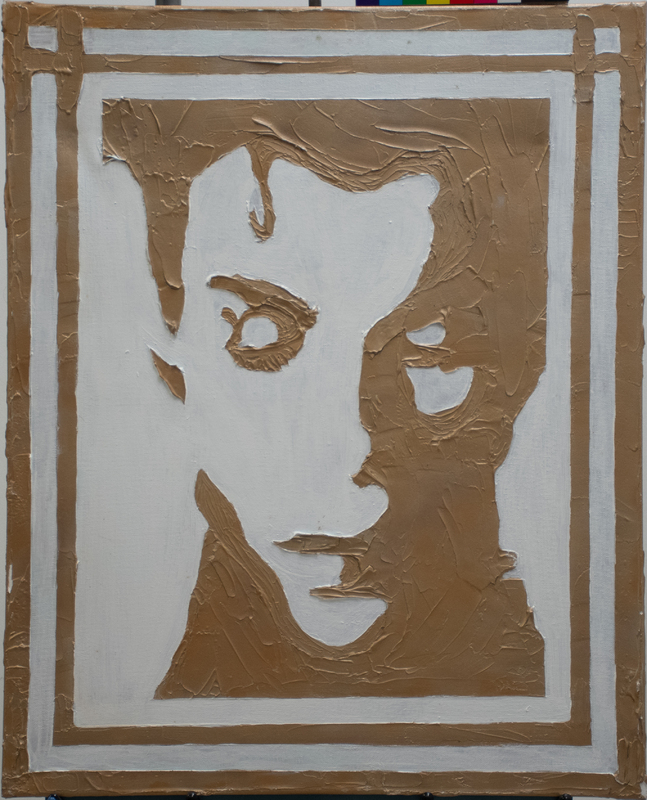
Morris’ painting is a golden, close-up portrait of singer and performer Prince; his head is slightly bowed and his eyes are closed. The painting is inspired by Prince 3, a photograph of the singer taken by Herb Ritts in 1991. Before his death, Prince became one of the best-selling musicians of all time, celebrated for his soaring vocals, multi-instrumental skills, and pioneering aesthetics and sounds.
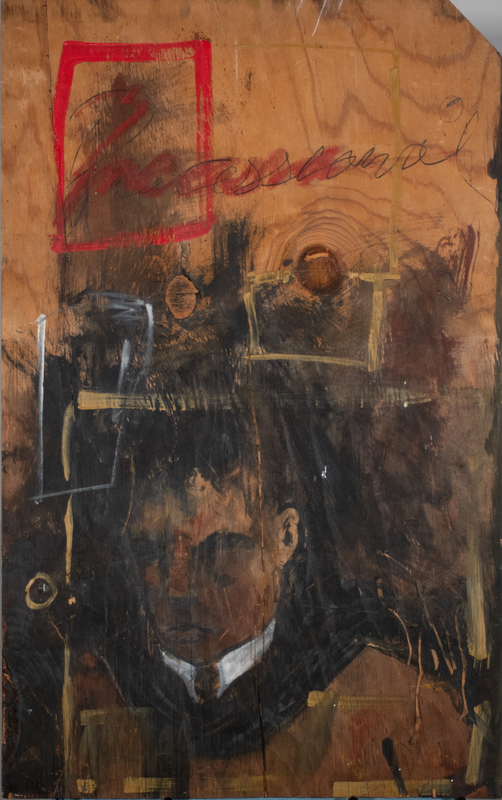
Pruitt’s painting is based on a photo he took of the preacher of his childhood church. At the time this piece was painted, the artist was exploring different faiths and struggling with his religious beliefs. Pruitt cites Basquiat and Rauschenberg as stylistic inspirations that influenced this painting. The muddied brushstrokes used to create this piece reflect the internal struggle of the artist.
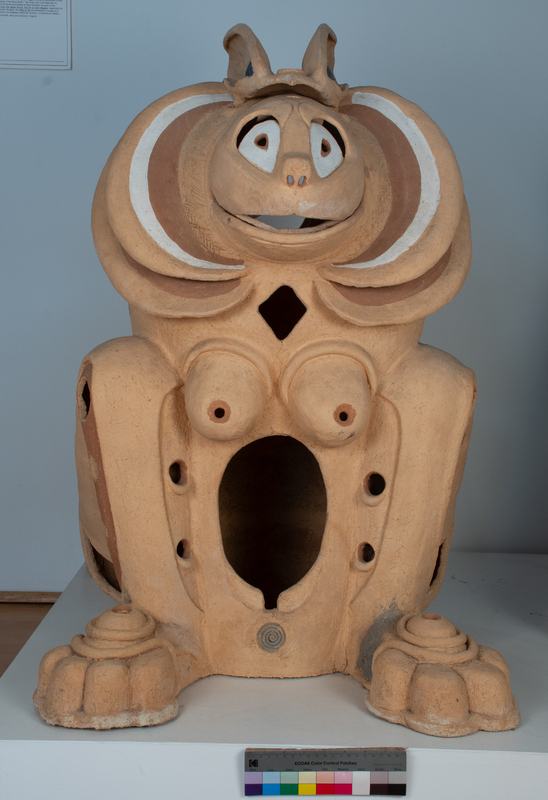
“Queen Rabbit,” by Earl Jones, features a mythical female rabbit. The center of the body includes an oval-like opening with identical circular holes on the legs and feet, creating balance. The rabbit’s ears are constructed with a removable crown piece; the same technique is used in several busts created by other Texas Southern artists.
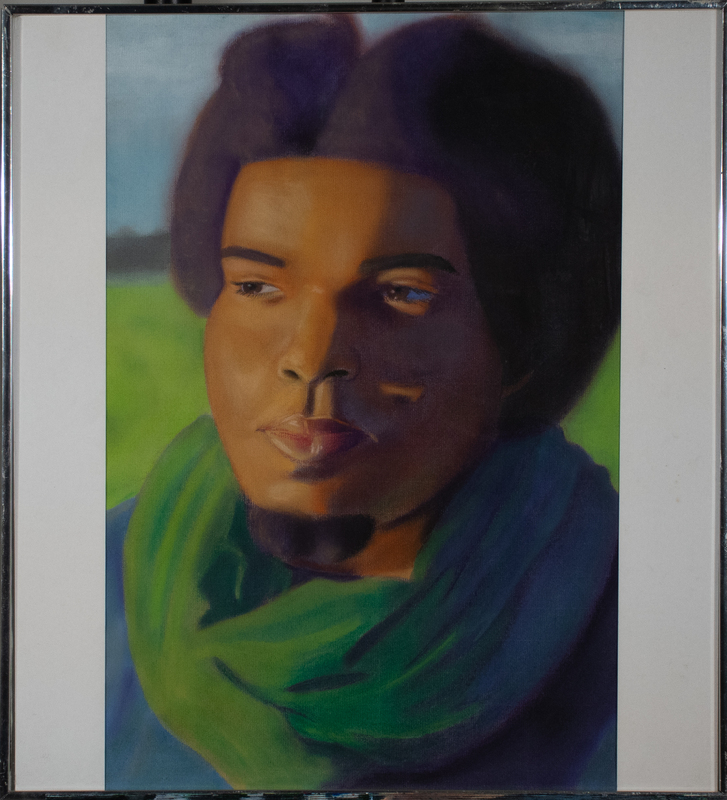
This work by Raheem Bellard is a self-portrait of the artist, with his face illuminated by the sun, wearing a green scarf. Cool colors are used throughout the piece, which enhances the tranquility of the composition.
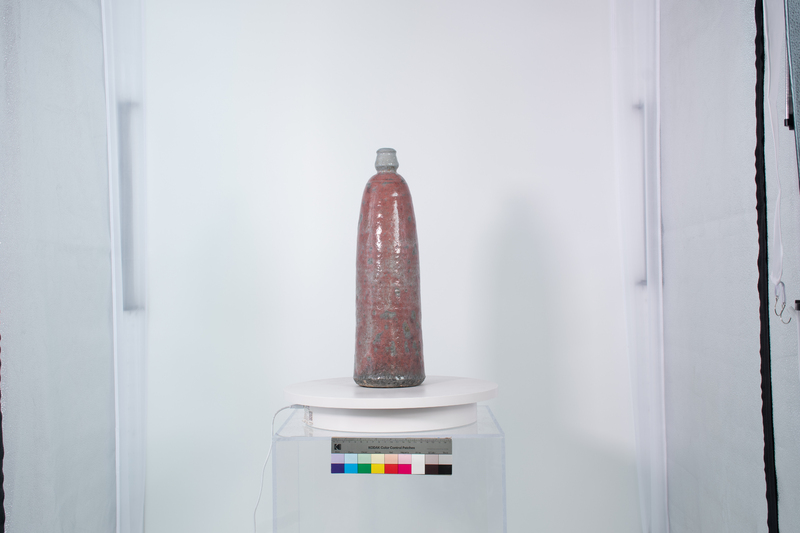
Simms’ ceramic vessel is hollow, with an opening at the top, and has a red and gray glaze. Carroll Harris Simms worked alongside Dr. John T. Biggers to establish the Texas Southern University Art Department. Simms taught sculpture, ceramics, and jewelry-making classes.
Moe's work displays a joyous religious gathering, featuring a preacher, dancers, musicians, and others. The group appears to be performing a ring shout, or praise break, a characteristic tradition of some Black churches in the Southern US involving dancing, stomping, and singing.
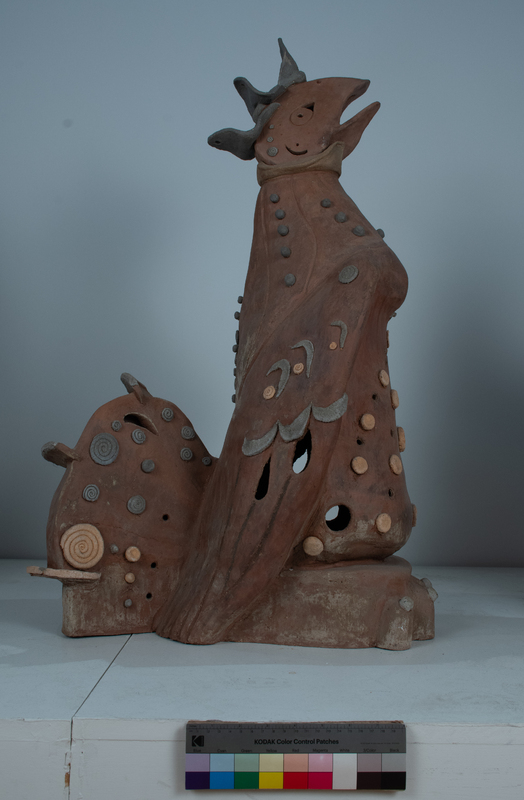
Scott’s sculpture depicts a large rooster crowing. The artist uses multiple colors of clay in his piece. Like other sculptures created for classes that Professor Simms taught, “Rooster” features numerous embellishments throughout the work, including various nodules and swirls. Creating sculptures of this style requires multiple firings in the kiln.
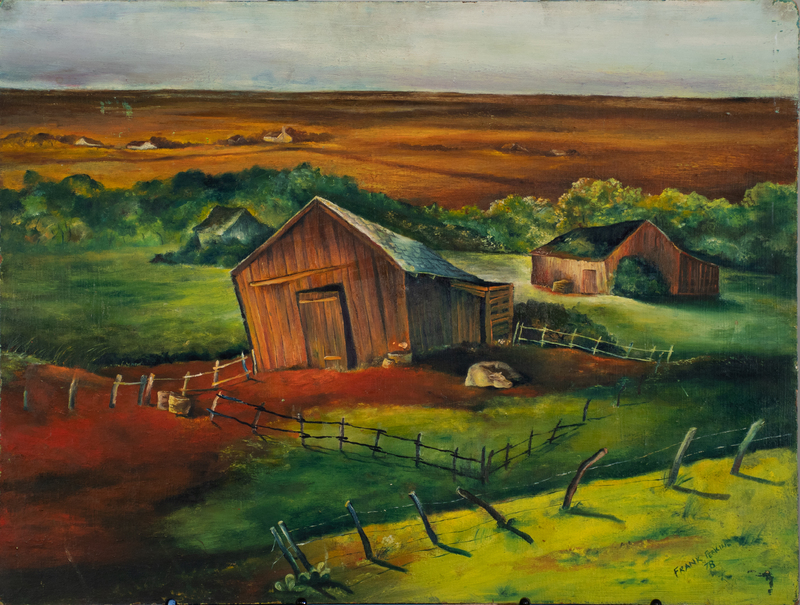
Perkins’ landscape painting displays a rural scene featuring barns, farmhouses, and a sleeping cow. The landscape is divided with lush greenery and dry, brown land. The fence shows its age in its bent and leaning posts. Dr. John Biggers encouraged Texas Southern student artists to create art based on what they saw – perhaps this instruction inspired Perkins, who may have grown up in a rural environment similar to this one.
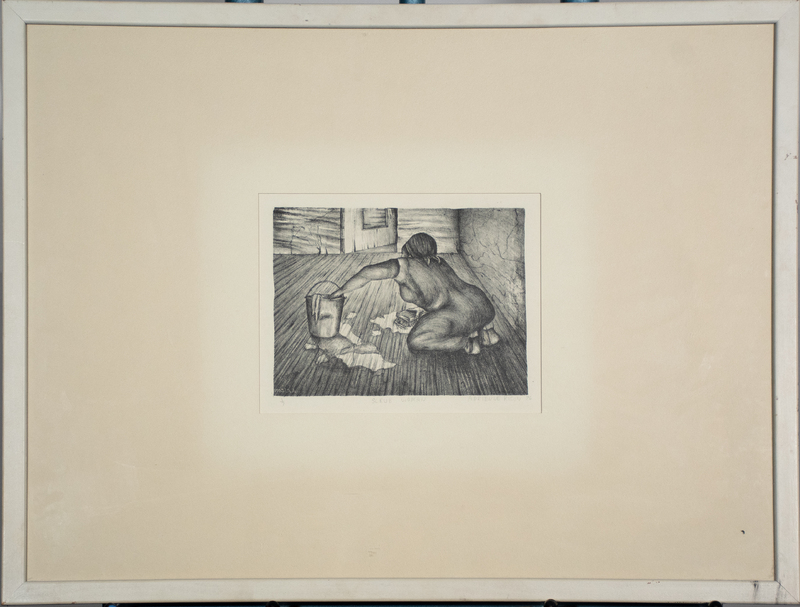
Rison-Isom’s print depicts a woman kneeling to clean wooden floors with a scrubber and bucket. The room appears worn and cracked, indicating age and heavy use. This work highlights the importance of Black women’s labor, which has too often been neglected. In the 19th and 20th centuries, huge numbers of Black women worked as domestic laborers.
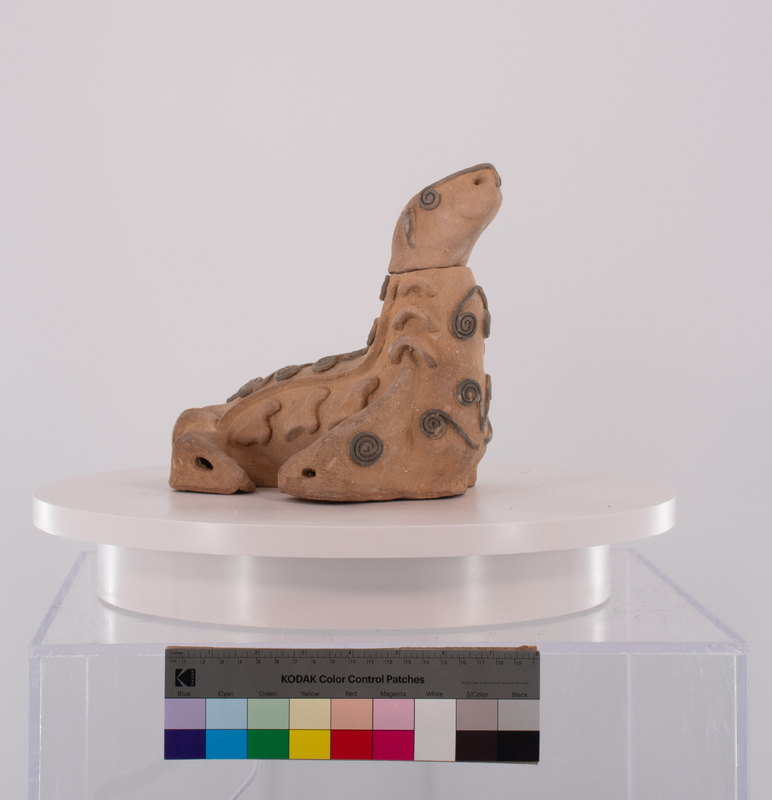
This maquette is a largely realistic depiction of a sea lion. The sea lion is adorned with swirls, the most common visual motif used by Simms' students in their sculptures. The final, full-size version of the sculpture contains even more embellishments that the maquette lacks.
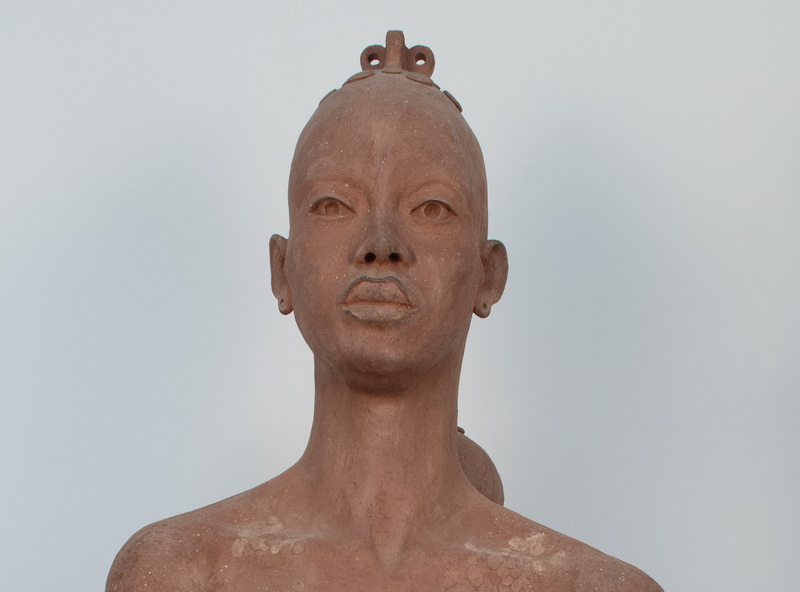
Elizabeth Montgomery Shelton’s “Self-portrait” is a bust of the artist herself, carrying her child on her back. Embellishments, including spirals, adorn her head in a faithful execution of Professor Carroll Harris Simms’ instruction. The artist had previously created a different self-portrait sculpture and was encouraged to create this piece by Biggers and Simms after the birth of her child.