University Museum at Texas Southern Permanent Collection
Title
University Museum at Texas Southern Permanent Collection
Date Modified
2025-09-22
Description
The University Museum at Texas Southern has collected a rich body of artwork by students, faculty, alumni, and outside artists. Dr. John T. Biggers, who founded the art department at Texas Southern University in 1949, established a tradition of collecting a selection of works from every graduating senior art student. Over the years, the collection has grown to include more than a thousand pieces of student artwork. Also included are works donated by alumni of the art program and art faculty members, including iconic artists John Biggers and Carroll Harris Simms. Lastly, there is a small but significant body of work by outside artists that has been donated by various collectors.
Contributing Institution
Texas Southern University
About This Record
The HCAC public history focused digital archive cataloging is an ongoing process, and we may update this record as we conduct additional research and review. We welcome your comments and feedback if you have more information to share about an item featured on the site, please contact us at: HCAC-DigiTeam@si.edu
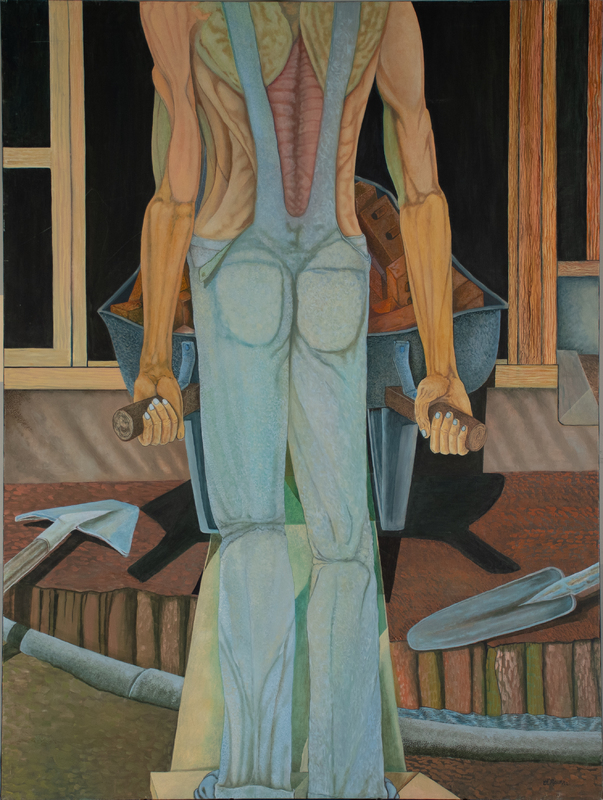
Renfro’s painting displays an image of a working man dressed in overalls from behind. The man is wheeling bricks towards a construction site. His bones and muscles are made visible in the composition, perhaps to highlight the physical demands of his labor. Dr. Biggers taught his students to portray the human form with care and detail, particularly oft-neglected features like hands and feet.
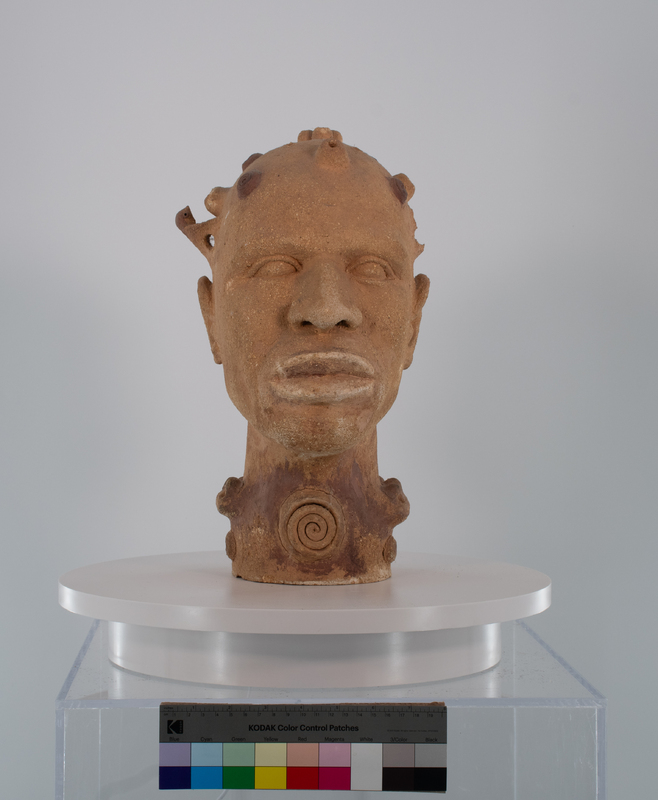
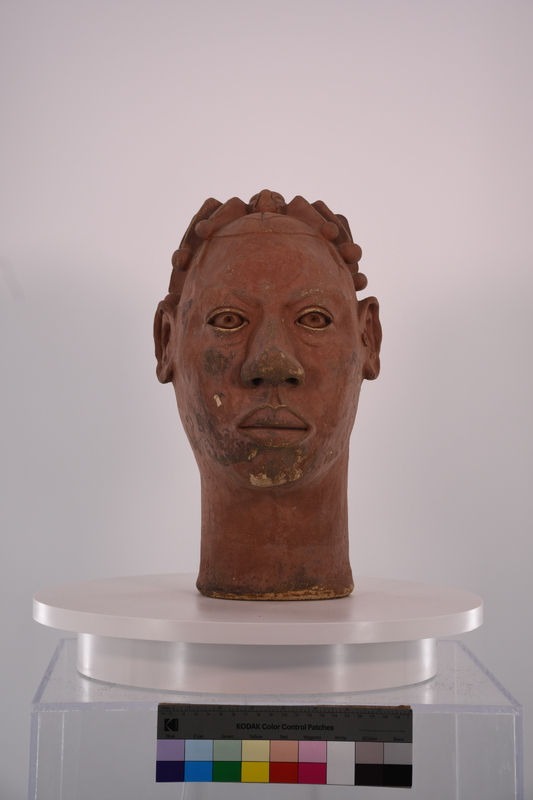
Vital’s bust was created during his time as an art student at TSU. Under the instruction of Professor Carroll Harris Simms, artists would create self-portraits embellished with decorations like spirals and accentuated crown pieces, like in Vital’s sculpture. These busts are inspired by Nok terracotta sculptures and Ife busts, which Simms saw during his travels to Western Africa. Vital later became a member of TSU’s art faculty.
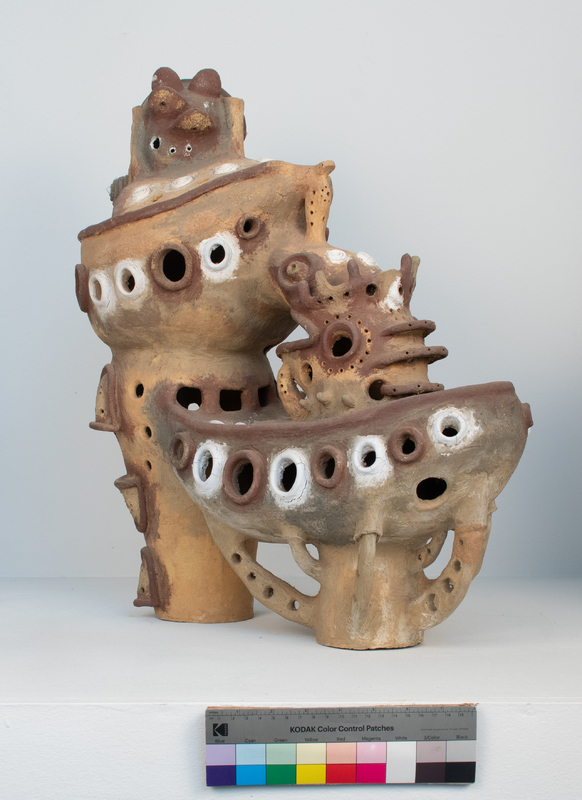
Harvey L. Johnson’s “Shrine” includes embellishments painted with white and brown slips, with small holes punched in various placements along the body of the sculpture. A variety of shrines are featured in the collection of student artists at Texas Southern University. These shrines were inspired by Professor Carroll Harris Simms’ travels to Nigeria.
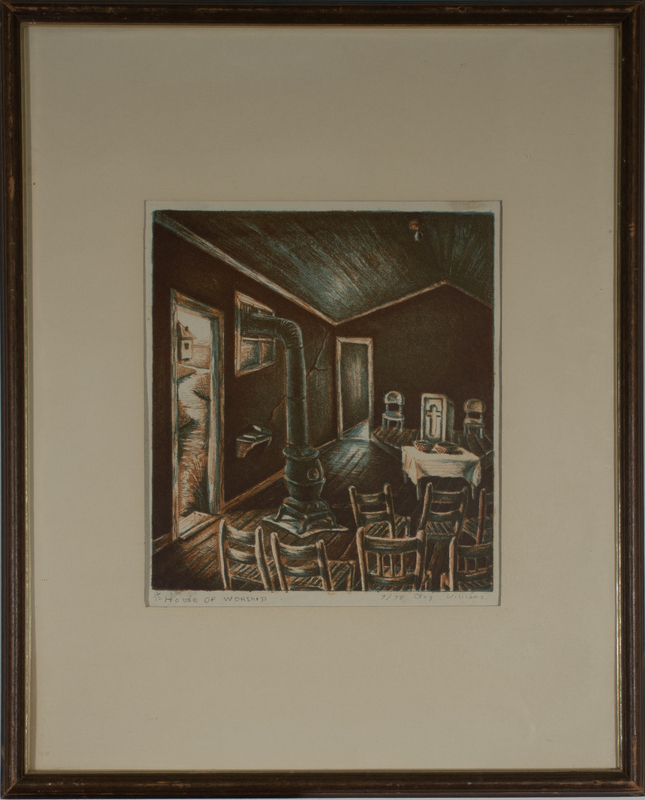
This print by Roy Williams depicts a modest Christian worship house. The door is open, and the seats are arranged as if a service is about to begin or has just ended. A fireplace warms the church, and a path out the door snakes through a field. Dr. John T. Biggers taught students the craft of printmaking while he was a professor at Texas Southern University.
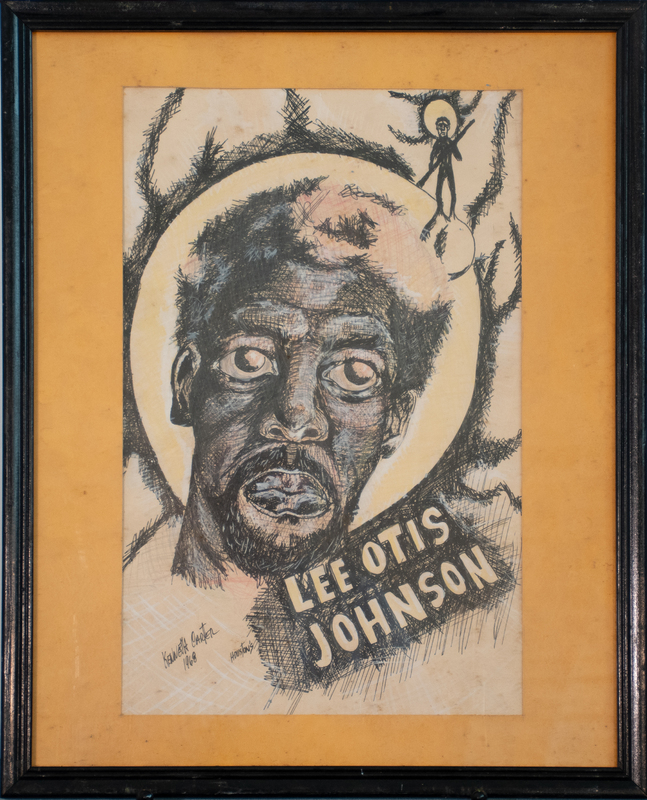
Carter’s drawing is of Lee Otis Johnson, a former TSU student, organizer, and leader of the Houston Student Non-Violent Coordinating Committee. Houston police repeatedly targeted Johnson, and in 1968 they arrested him for passing marijuana to an undercover officer, and a judge sentenced him to 30 years in prison. This injustice gained widespread notoriety, and “Free Lee Otis” became a rallying cry.
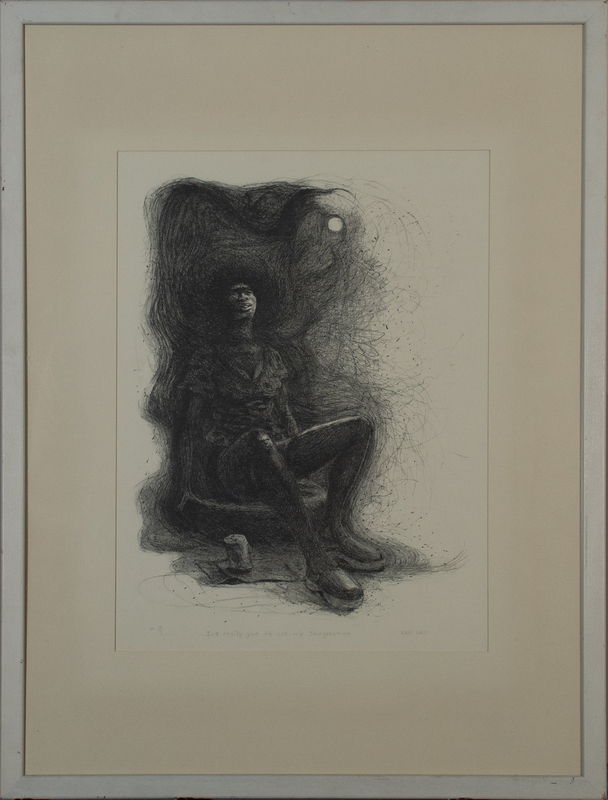
Hall's print depicts a seated woman with a dark aura around her. A candle sits near her feet, perhaps just having been blown out. Light from the moon reflects on her face, knee, and shoe. The sketched lines extending out from the figure may suggest her imagination expanding past her physical form. Hall later became a longtime art teacher in Houston Independent School District.
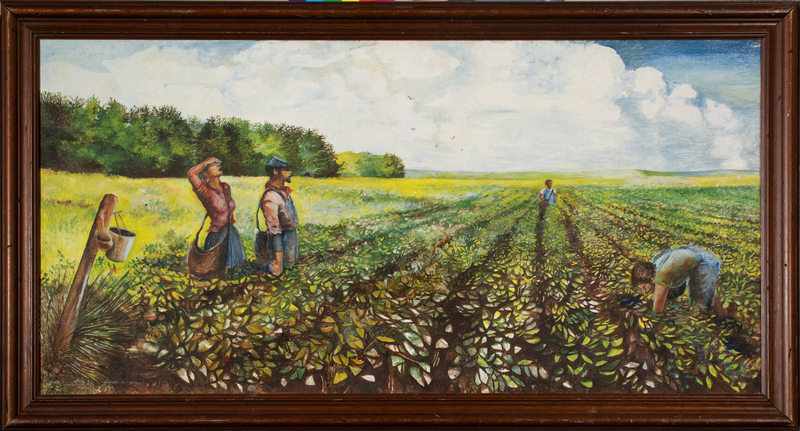
Curnell's painting shows a field of crops stretching into a cloudy horizon, with four people working the field. Two men are actively picking, while a man and woman stand to the side, resting next to a water pail. The figures’ dress and posture seem to suggest that this may be a family farm, rather than a plantation scene depicting slavery.
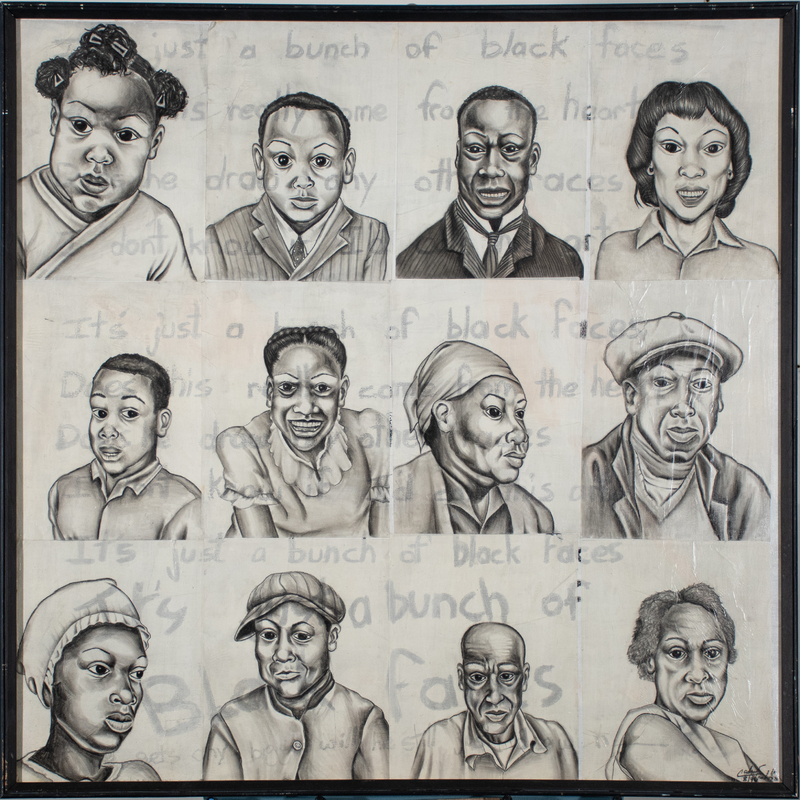
Franklin’s painting contains 12 portraits of Black people, ranging in age from children to elders. The postures and facial expressions range from smiles to blank stares, and there is also a range in attire from formal to casual wear. Behind the faces are the words: “It’s just a bunch of black faces/Does this really come from the heart/Does he draw any other races/I dont know if I’d call this art (2x)/It’s just a bunch of black faces/It’s just a bunch of Black faces/If he gets any bigger will he still just draw n___”
Vital’s drawing may be a mural pre-study. The scene depicts a spirit of revelry, with musicians entertaining a large crowd gathered to enjoy the music and dance. The instruments vary from those of a typical blues and jazz ensemble, like the drum set, trumpet, and guitar, to the tambourine, often associated with southern gospel. The figures' fluidity suggests movement and freedom.
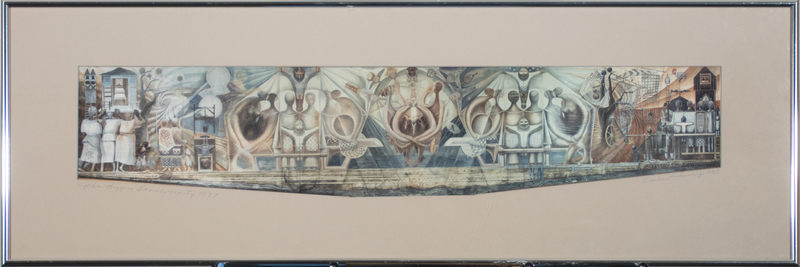
This image was captured by Earlie Hudnall, Jr., longtime TSU campus photographer and student of Dr. Biggers. This photo is of Biggers’ mural Family Unity, located on TSU’s campus in the student center dining hall. The mural was commissioned by the student body in the mid-1970s, and reflects themes of family, ancestry, and rural & urban house structures.
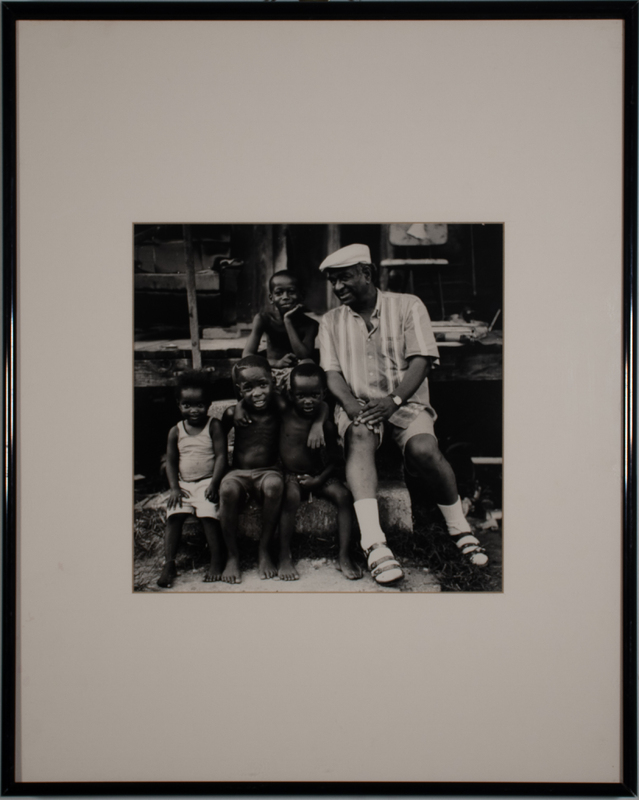
This photograph by Earlie Hudnall, Jr. shows John Biggers seated with boys on a porch. The setting is Laurel, MS, where the men stopped during a road trip on their way to Gastonia, North Carolina, Biggers' hometown. Lacking proper materials, Hudnall stored the negative in water in a McDonald's cup until he could develop it.
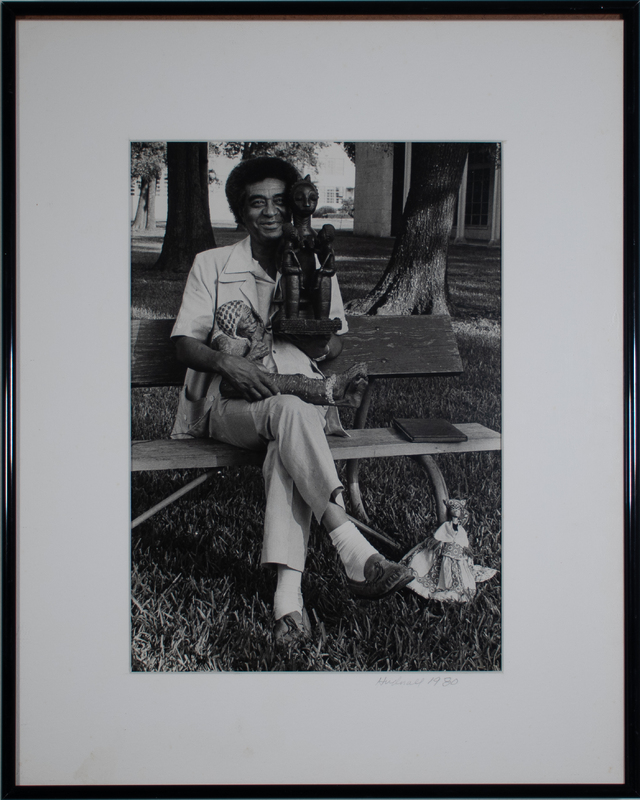
This photograph by Earlie Hudnall, Jr. shows John Biggers seated on a bench near Texas Southern's Fairchild Building. He holds a mother & child sculpture in his left hand and an Aunt Dicy sculpture in his right. A mammy doll is seen to his left on the ground. In 1955, Biggers illustrated J. Mason Brewer's version of the African-American folktale, Aunt Dicy Tales: Snuff-Dipping Tales of the Texas Negro.
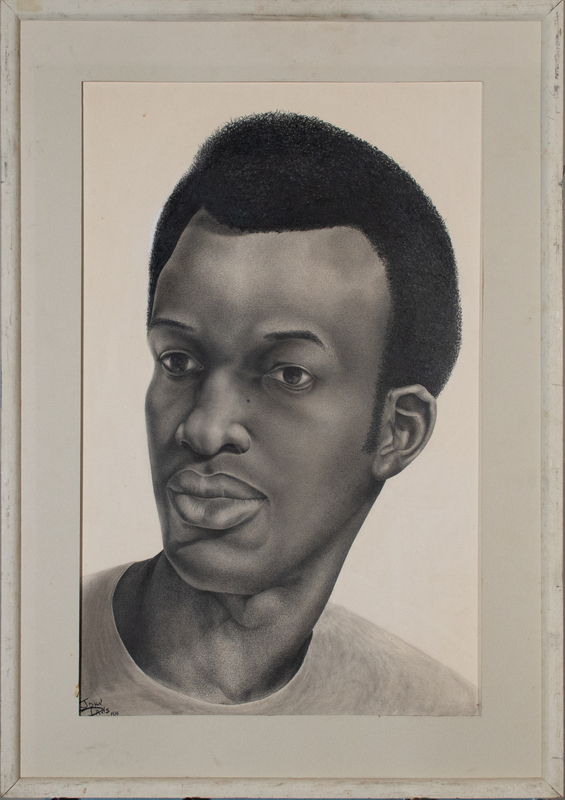
Davis drew his black-and-white self portrait during his time as an art student at Texas Southern University. He drew himself clean-shaven with long sideburns. His use of charcoal creates the smooth and balanced shading seen in this piece.The artist also completed a terracotta self portrait of his head. Self-portraits in drawing classes remain a part of the art major curriculum at TSU.
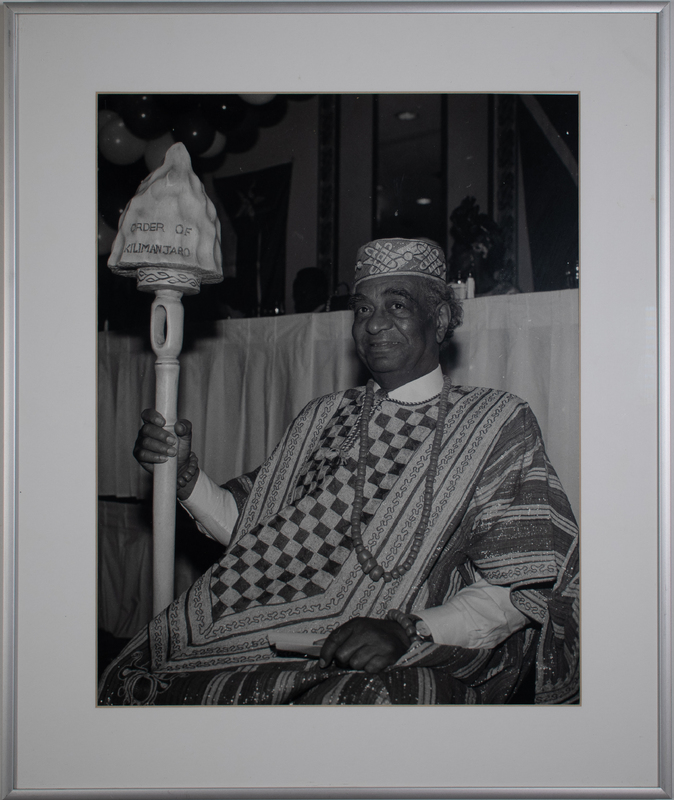
This photograph by Earlie Hudnall, Jr. shows John Biggers being inducted into the Order of Kilimanjaro, an award given to him by the African Union at an event in Houston. Africa and African roots were essential parts of Biggers' art and teachings. He is often credited as one of the first African American artists to visit Africa and begin to incorporate African art and traditions into his art.
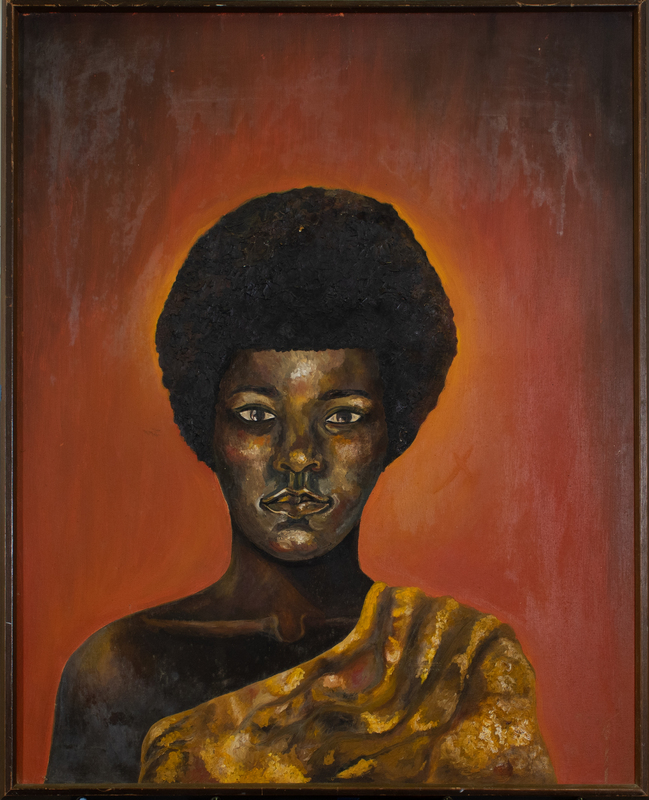
Tinker's painting is a self-portrait of the artist wearing her hair in an afro and a tunic draped over one shoulder. A golden halo emanates from behind her afro, attracting the viewer's eye to the center. As a part of the art curriculum, students would create various self-portraits. Tinker continues to practice art and is now based in Boston.
Jones' self-portrait has a piercing facial expression and displays protruding veins near the brow line and a direct stare from the eyes. The crown is adorned with a spider and the outline of a web along the scalp, along with a spiral near the left ear. The design may have been inspired by Spiderman, who debuted in comics 8 years earlier.
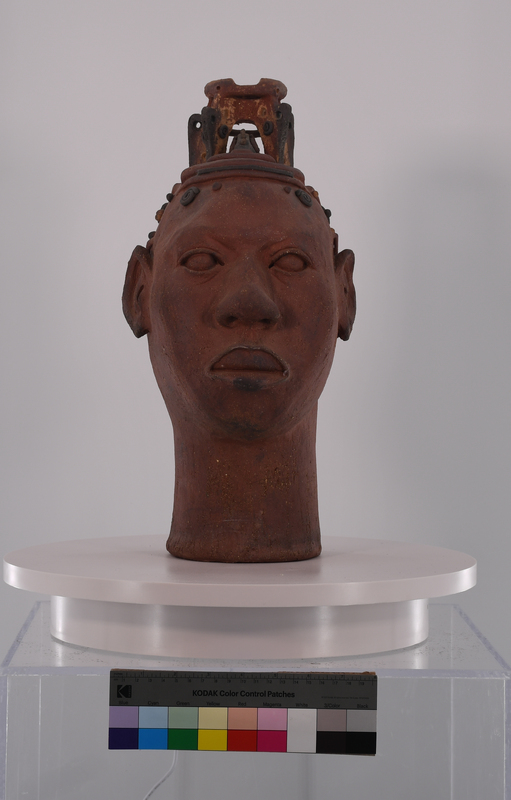
This bust is a self-portrait of the artist. Jones depicted his face with sharp features, high cheekbones, and protruding veins near the brow line. The crown is adorned with spiral motifs, dots, and rolled clay. Atop is a shrine structure, with a turtle within. Turtles and tortoises are often used to symbolize longevity. Students were encouraged to adorn their self-portraits with additional embellishments.
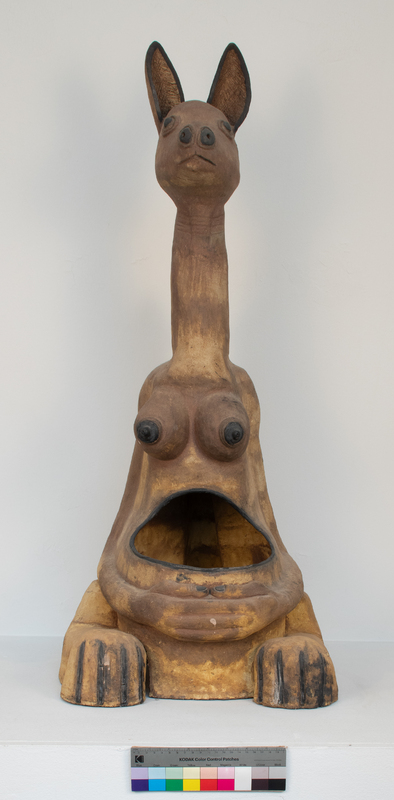
Moses Adams Jr.'s sculpture depicts a kangaroo mother with human-like hands and breasts. The clasped hands under the open pouch signify protection. Detailed, oversized hands are characteristic of the work of John Biggers and his students. Additionally, mothers of various forms and species are a common subject of the student terracottas from Texas Southern University.
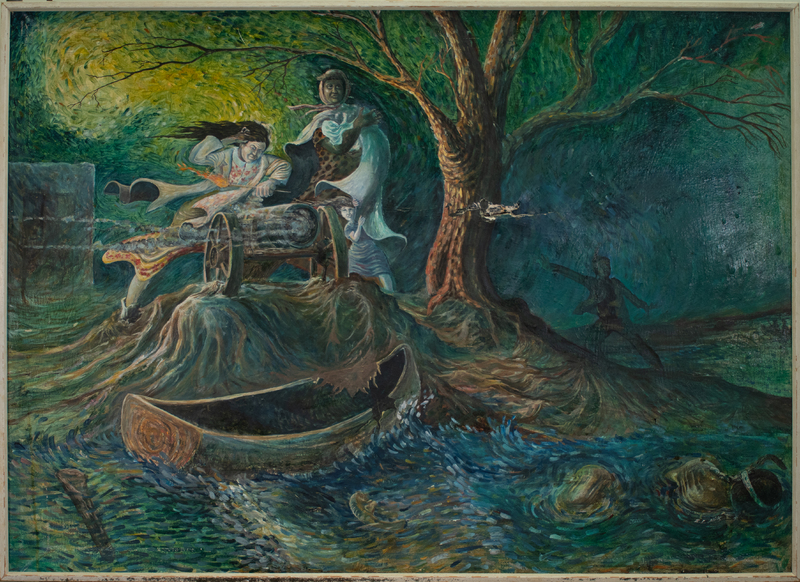
Mills paints a compelling and complex commentary on violence against indigenous people in the United States. In the foreground, a lifeless indigenous person floats next to a wrecked canoe. In the center, a white woman prepares to fire a cannon, still smoking from its last round. Behind her, a stoic Black woman holds one white baby and shelters another white child within her cloak. In the background, a faceless indigenous person reaches towards the scene.
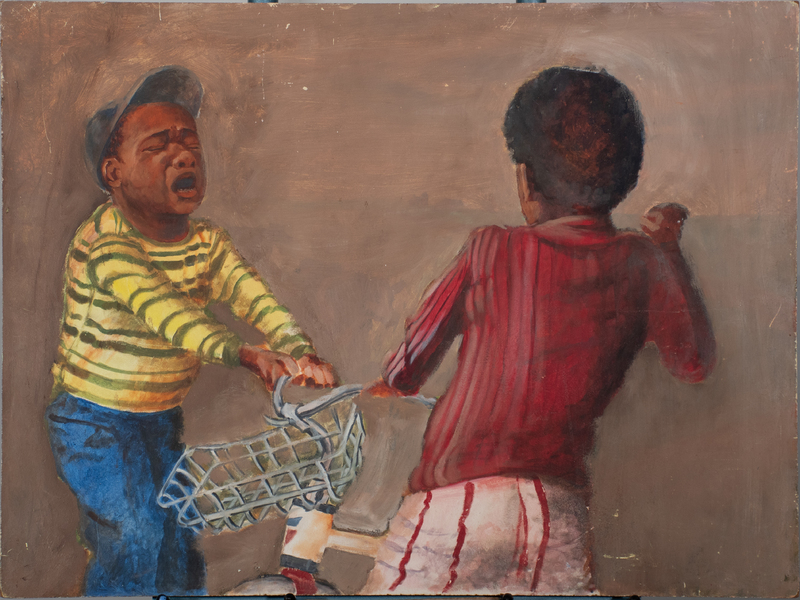
This painting shows children quarreling over a bicycle. The young boy in yellow is painted dramatically wailing, while the other child is portrayed from behind with a raised, balled fist. Dr. John Biggers encouraged Texas Southern student artists to create art based on what they saw. Scenes of children often appear in the permanent collection of TSU.
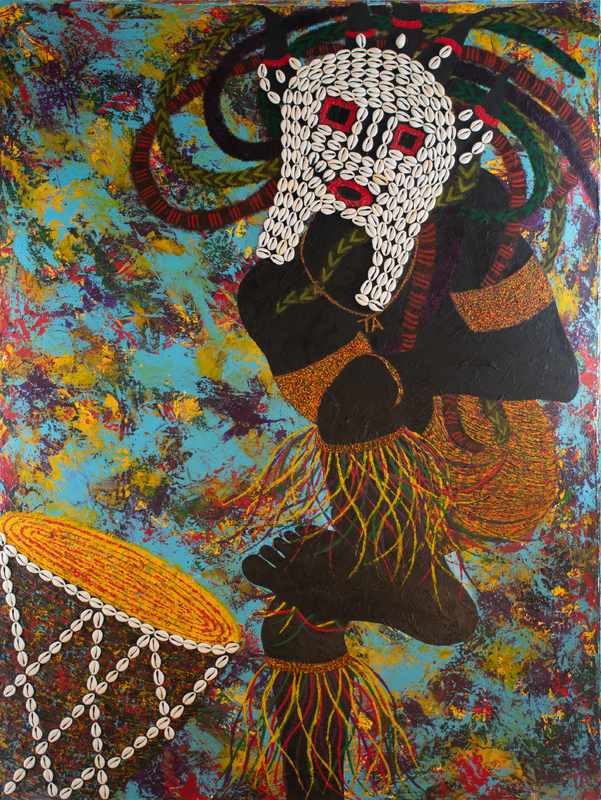
Alcee's mixed media painting, “Konga,” is a testament to music's power to uplift and excite. The artist draws inspiration from his experience working alongside Franck Kemkeng Noah, who taught him about the significance of Bamileke masks and symbols during a residency at TSU, and his St. Lucian heritage, shown in the vibrant colors and fluid movement of the piece. Alcee graduated from Texas Southern University is currently pursuing a teaching certification.
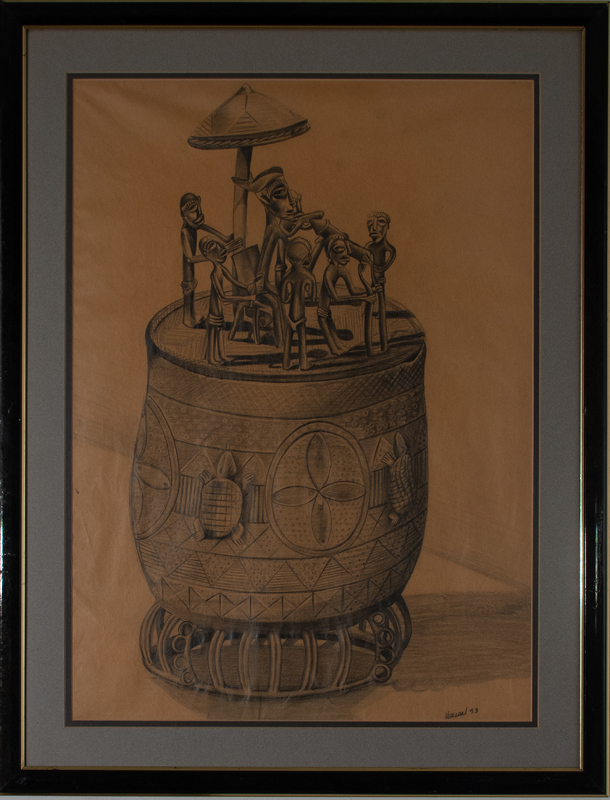
This drawing by Vernon Simmons depicts a kuduo, vessels owned by kings in Akan kingdoms (modern-day Ghana), adorned by tortoises, a sign of longevity. The central figure seated under the umbrella is the nana, a ruler of the Akan people; he is surrounded by attendants. Dr. Biggers was an avid collector of African art and he used pieces from his collection as teaching tools for his students.
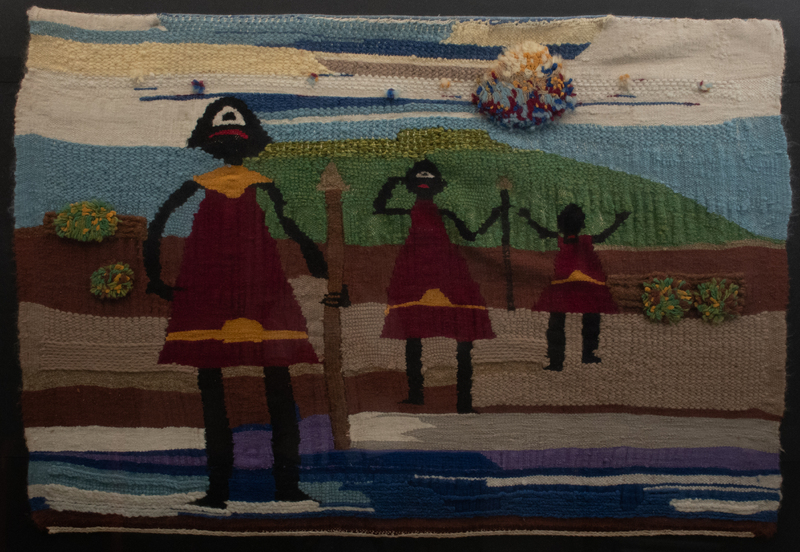
Cole blends weaving methods with surrealist elements in this piece. The work depicts three cyclopes, mythological figures with one eye in the center of their foreheads, standing on a shore. Two of them are holding spears, while a meteor hurtles through the sky. The frowning faces of the figures add to the sense of impending doom.
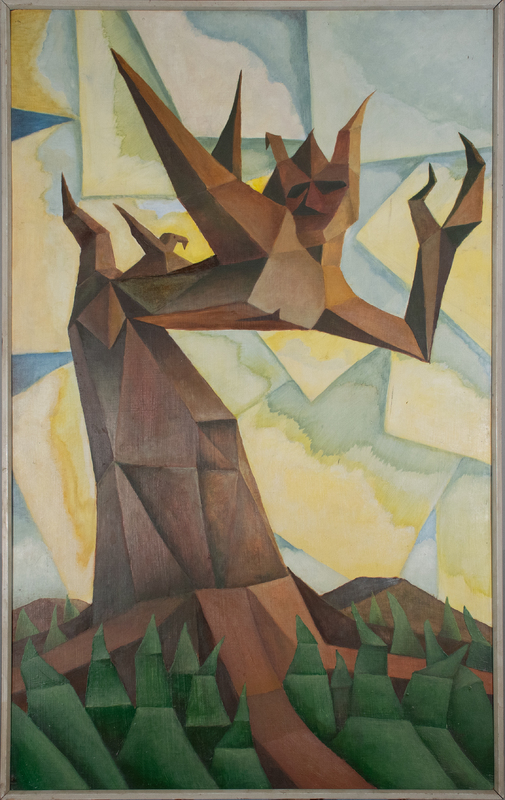
Sifuentes' painting shows a landscape filled with grass and a barren tree, with a bird perched atop. The tree bears human characteristics, perhaps symbolizing the interconnectedness of all living beings. This piece is painted in a geometric style that appears frequently in the work of students of Dr. John T. Biggers during the mid to late 1970s. Sifuentes later went on to become an art professor at Texas Southern.
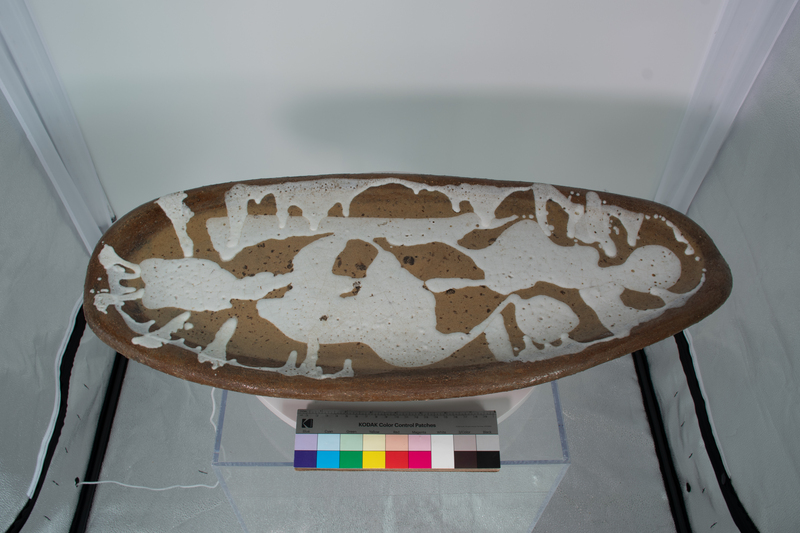
Simms’ large ceramic platter is made from clay with a splotchy white glaze on the top. Carroll Harris Simms worked alongside Dr. John T. Biggers to establish the Texas Southern University Art Department. Simms taught sculpture, ceramics, and jewelry-making classes.
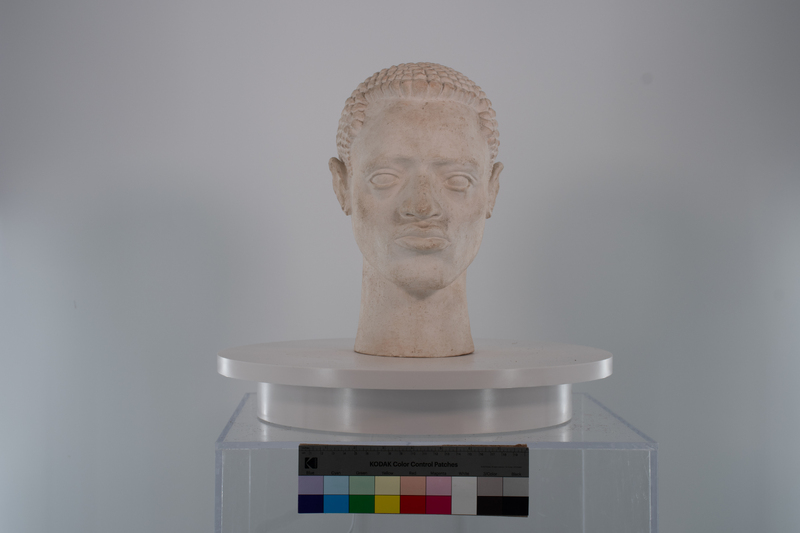
Leon Renfro’s bust is unique within the Texas Southern sculpture collection. It is one of only two busts made from a white plaster (as opposed to the standard terracotta material). The sculpture is also rather bare, lacking the intricate embellishments and ornamentation that are typical of the work of Carroll Harris Simms’ students.
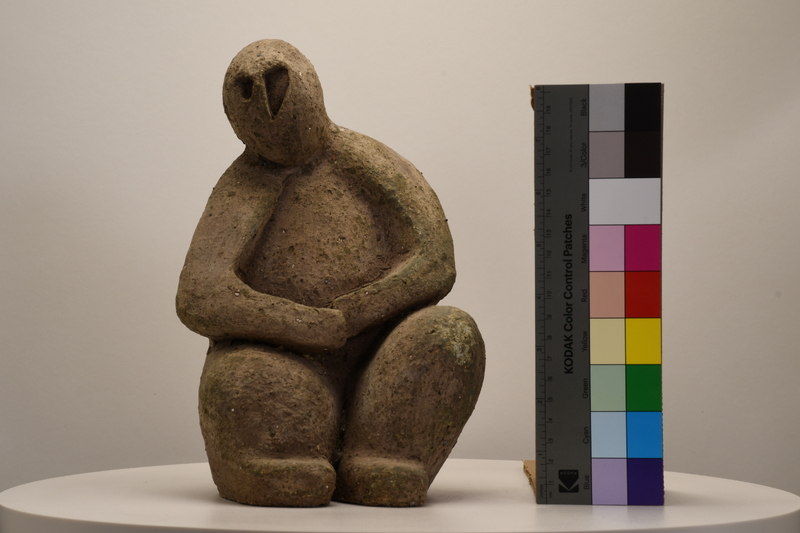
This maquette was created by a Texas Southern University art student. It is a lone figure with defined arms. The porous material and greenish hue evoke the appearance of a mossy rock.
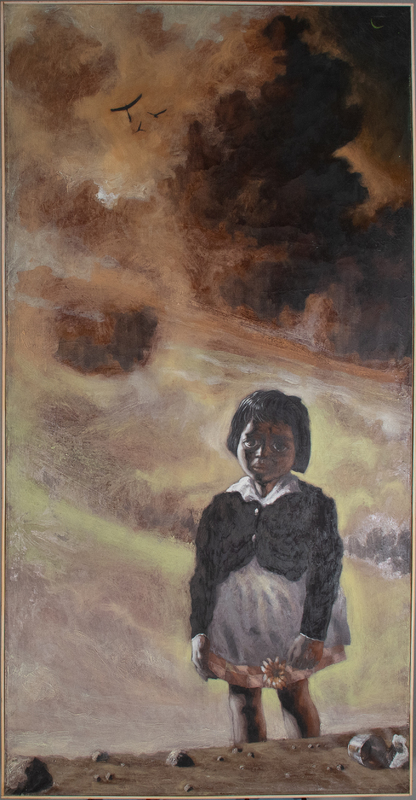
Oliver's painting is of a young girl, standing by herself, with large eyes and a mournful expression. She is positioned on dry, rocky land with a single flower in her hand, perhaps alluding to feelings of emptiness and desertion. Behind her is a bleak skyline, with birds overhead. They are the girl’s only companions in the painting.
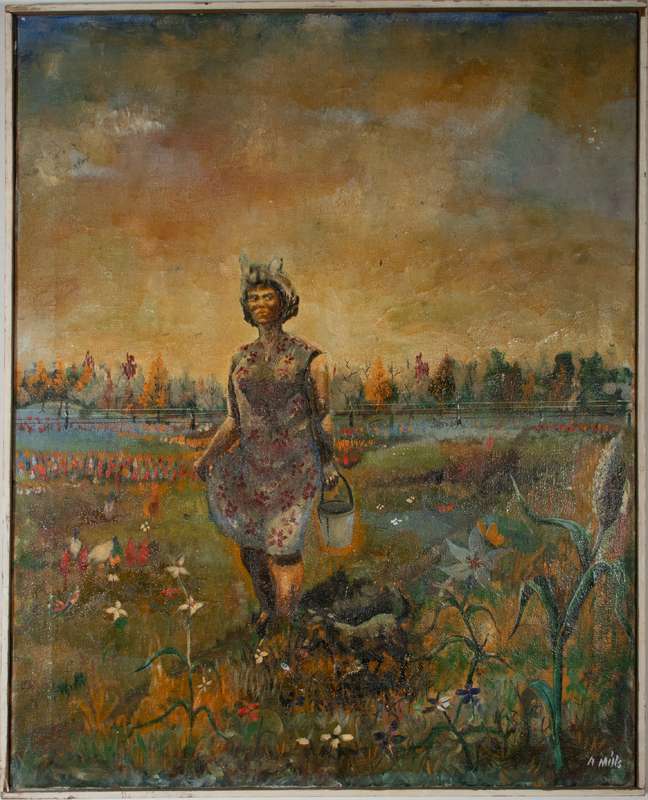
Armstead Mills' painting shows a woman holding a bucket and striding through a field of flowers, with a small dog at her ankles. Malindy, wearing a dress and carrying a bucket, is portrayed tenderly and beautifully in this colorful nature scene. Mills' brother, Edward, also attended Texas Southern as an art student.
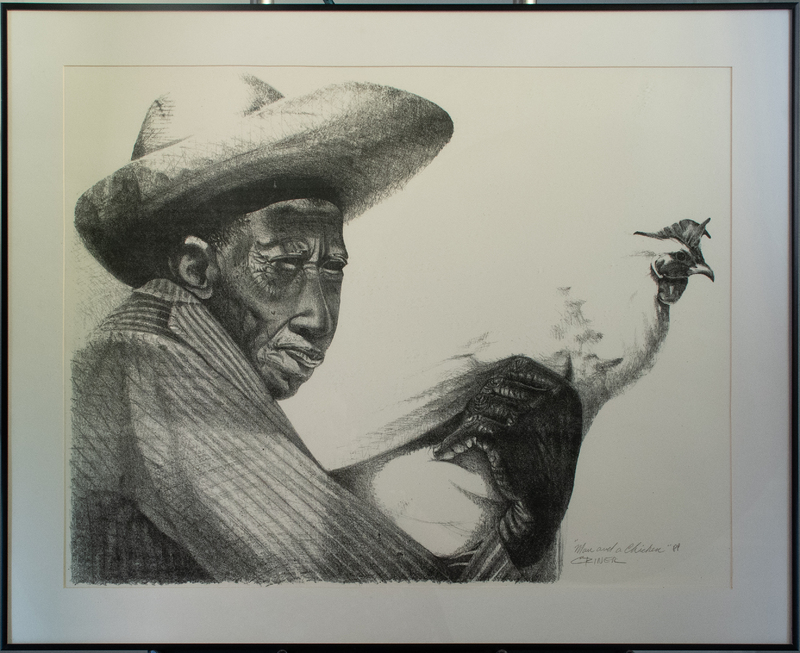
Criner’s print shows an older man wearing a hat and holding a chicken. This print is a black-and-white version of Criner’s piece “Mr. Alvin White, Man With Chicken.” Criner learned printmaking firsthand from Dr. John Biggers and was the longtime artist-in-residence at Houston’s Museum of Printing History.