University Museum at Texas Southern Permanent Collection
Title
University Museum at Texas Southern Permanent Collection
Date Modified
2025-09-22
Description
The University Museum at Texas Southern has collected a rich body of artwork by students, faculty, alumni, and outside artists. Dr. John T. Biggers, who founded the art department at Texas Southern University in 1949, established a tradition of collecting a selection of works from every graduating senior art student. Over the years, the collection has grown to include more than a thousand pieces of student artwork. Also included are works donated by alumni of the art program and art faculty members, including iconic artists John Biggers and Carroll Harris Simms. Lastly, there is a small but significant body of work by outside artists that has been donated by various collectors.
Contributing Institution
Texas Southern University
About This Record
The HCAC public history focused digital archive cataloging is an ongoing process, and we may update this record as we conduct additional research and review. We welcome your comments and feedback if you have more information to share about an item featured on the site, please contact us at: HCAC-DigiTeam@si.edu
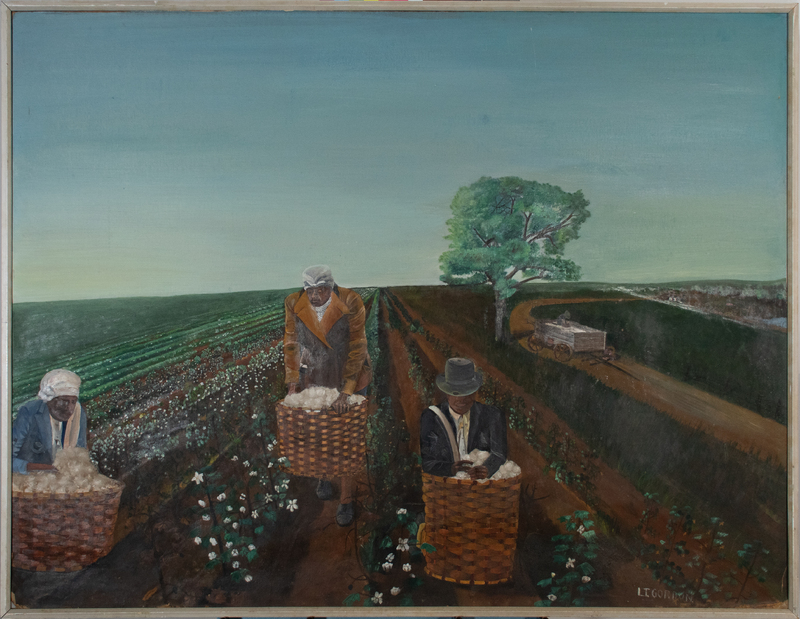
Gordon's painting reflects the work life of cotton harvesters. The three pictured laborers are older and formally dressed as they pick cotton bolls and carry baskets. Many of the cotton plants are shown with white flowers, an early stage in the plant’s development. This suggests Gordon may be familiar with the process of cotton farming and harvesting.
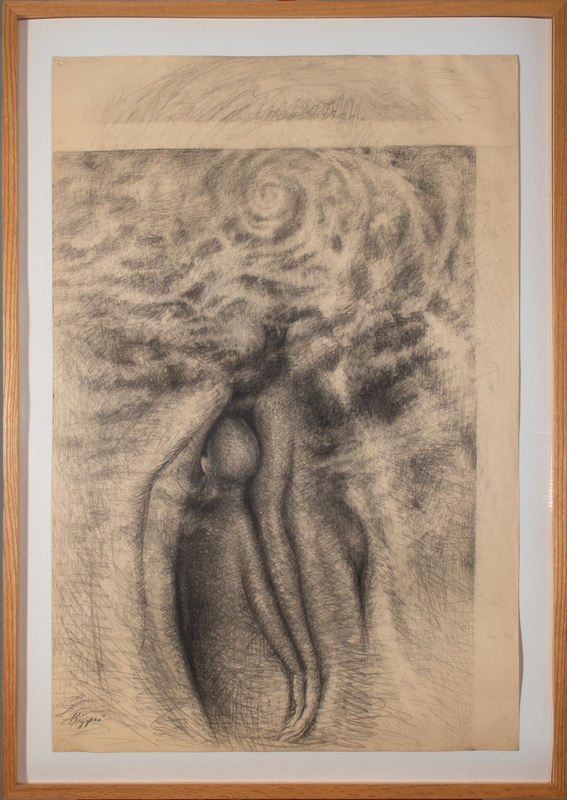
This drawing by Dr. John T. Biggers depicts a family caught up in a wild storm that is swirling around them. Biggers' artwork frequently highlights family dynamics and the centrality of mothers. Biggers appears to have later repurposed this sketch and added additional floral details to create his 1992 print Metamorphosis III.
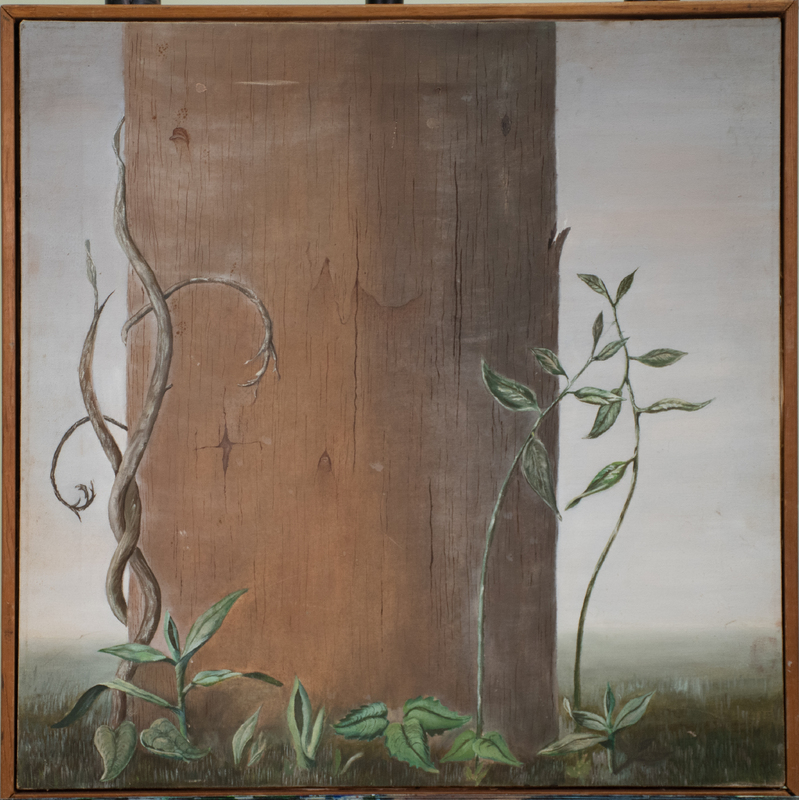
This painting, created by an unknown TSU art student, depicts the base of a tree or wooden telephone pole, with various smaller plants and vines creeping up its structure. Dr. John T. Biggers encouraged students to study the natural world and seek inspiration from it. He instructed students to sit outside for an extended period of time and observe.
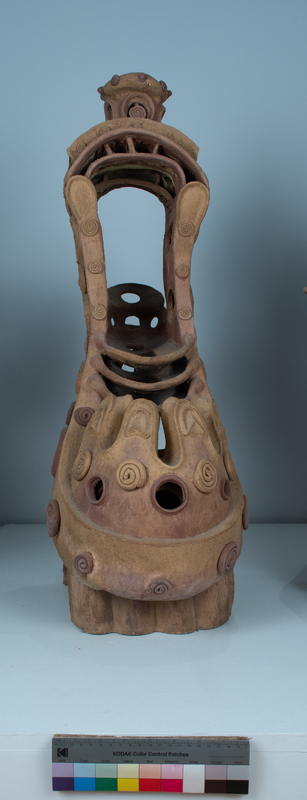
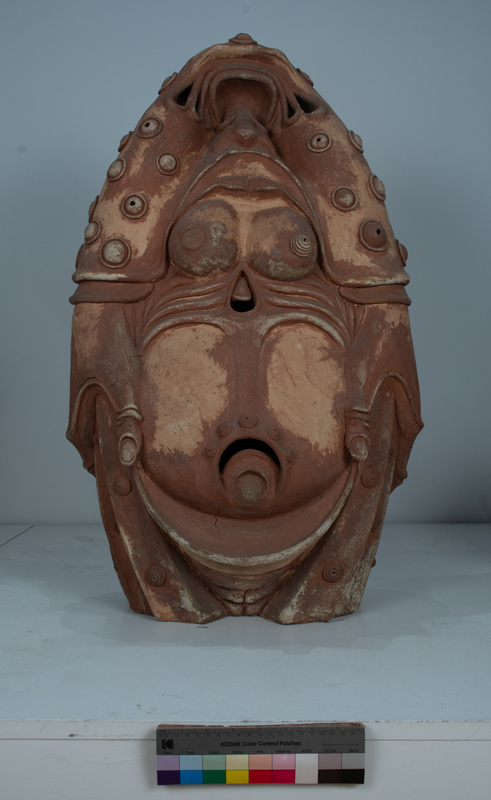
“Shrine,” by Curtis Watson Jr., features a duck-like creature surrounded by various embellishments, including spirals, a commonly used visual motif in the student terracottas. Unfortunately, the head of the figure is missing, leaving only the body in view. The full sculpture can be seen in archival photos shot by Dr. John T. Biggers of the artist at work.
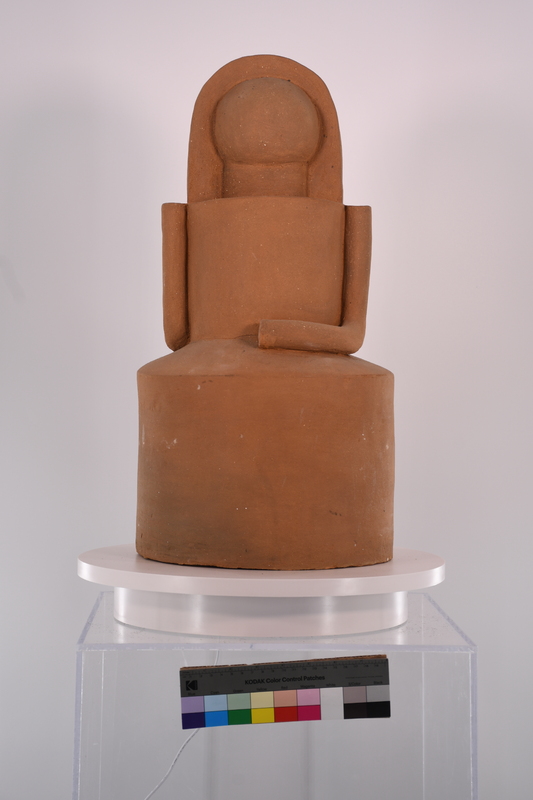
Jafar’s terracotta depicts a mother figure carrying her child on her back. The exterior of the sculpture is smooth and lacking any of the motifs that are normally featured on Texas Southern students’ terracottas, perhaps suggesting the sculpture was left unfinished. The mother and child relationship is one of the most frequently featured themes in the artwork of students of Dr. Biggers and Professor Simms.
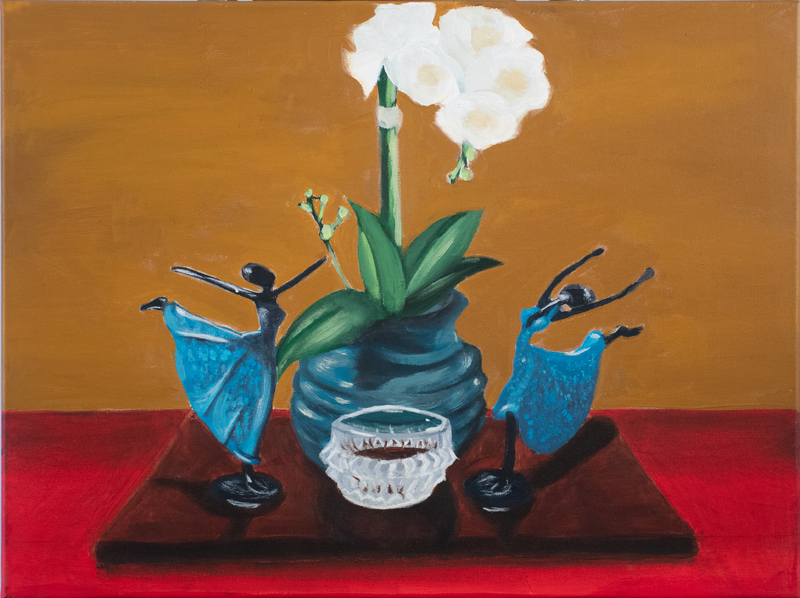
Etienne created her painting, “Dancing Still Life,” as part of a class assignment based on objects within her home. Etienne selected these figures, which her mother collected from the National Museum of African American History & Culture, white orchids in a blue pot, and a glass dish from her grandmother's home. A graduate from Texas Southern University, Etienne emphasizes femininity, movement, and flowers in her art.
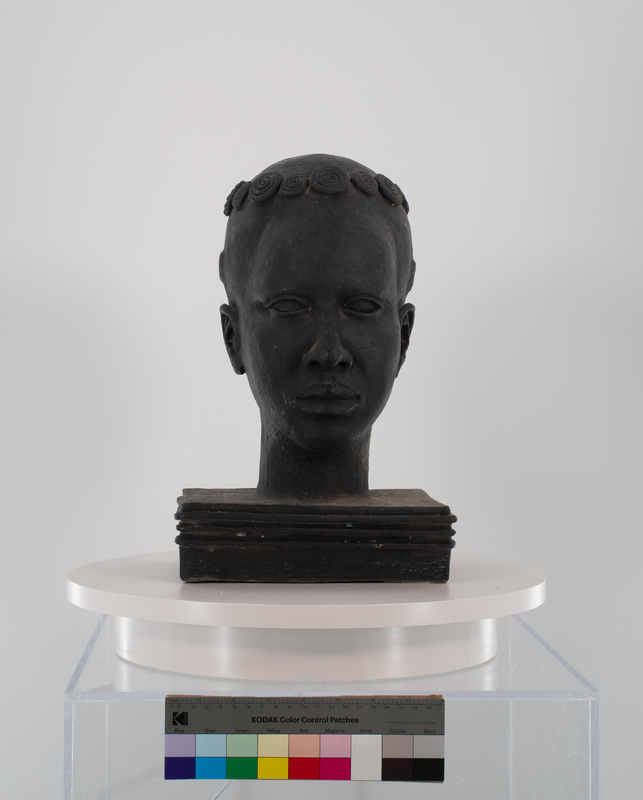
This unknown student’s bust was created during their time as an art student at TSU. Under the instruction of Professor Carroll Harris Simms, artists would create self-portraits embellished with decorations like spirals and accentuated crown pieces, like in this sculpture. These busts are inspired by Nok terracotta sculptures and Ife busts, which Simms saw during his travels to Western Africa. This bust is different from others due to its black ceramic and large rectangular base.
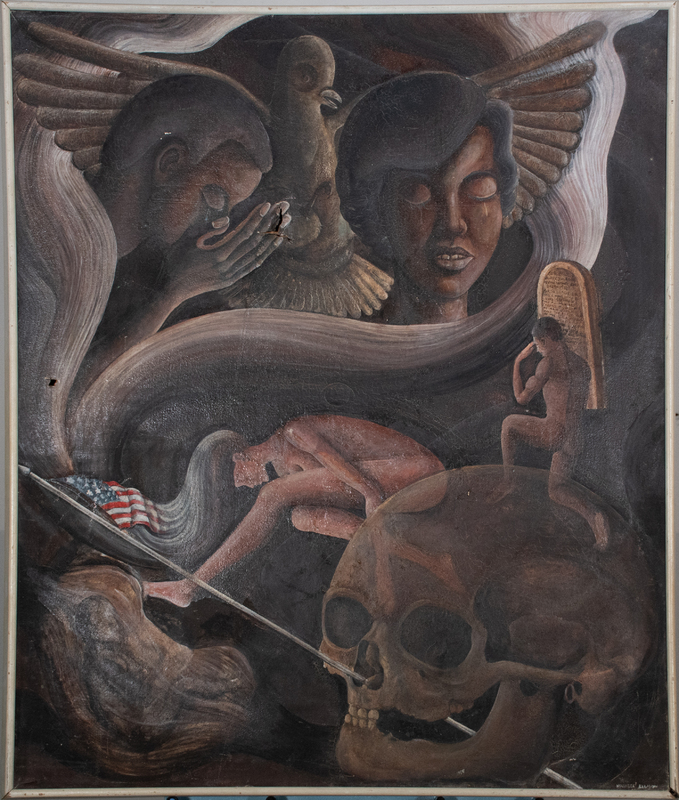
Ellison’s painting reflects the brutality and grief experienced by the Black community. In the foreground, a skull is pierced by the American flag. On the right side, a headstone honoring Martin Luther King, Jr. is surrounded by nude mourners. In the background, a shadowy dove spreads its wings, perhaps representing MLK’s dream of peace being obscured by white supremacist violence.
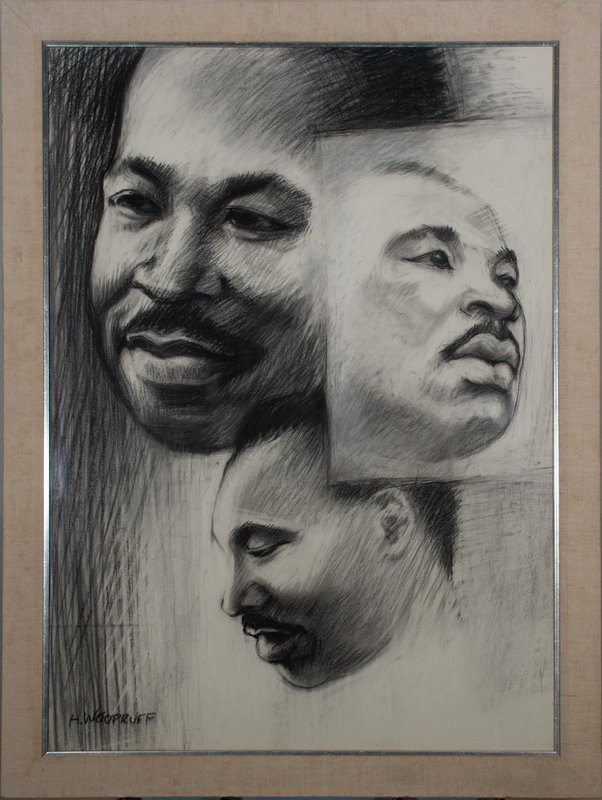
Woodruff’s portrait depicts Martin Luther King Jr., the iconic civil rights leader who was assassinated in 1968. Woodruff taught art at Atlanta University for 15 years and perhaps came into contact with MLK during this time. Two of these three side profiles appear to show King smiling, while in the third he is looking away with a serious expression. Woodruff's Art of the Negro murals at Clark Atlanta University are one of his crowning achievements.
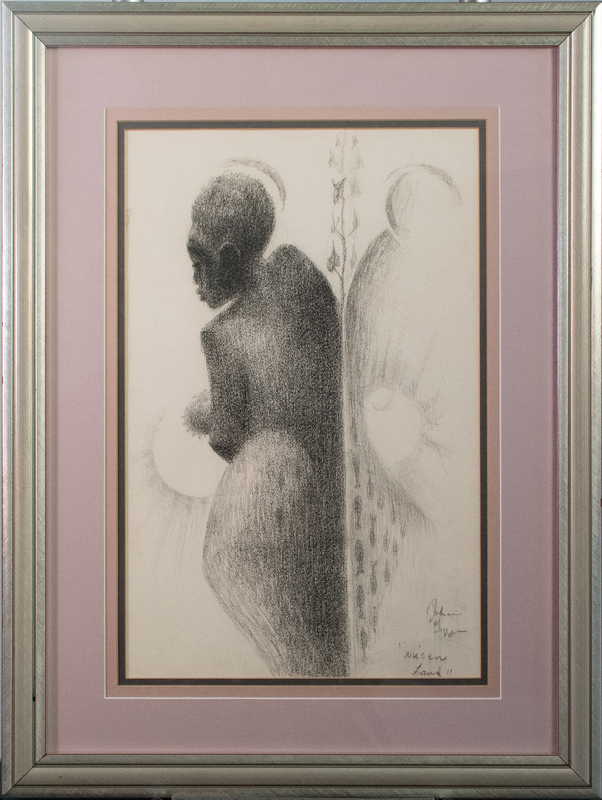
Biggers’ drawing shows a woman and her reflection. The woman, positioned on the left side of the composition, looks slightly back over her left shoulder, while the sun creeps out from around her midsection. The woman is cradling a baby in her arms. Her reflection is drawn loosely with minimal details, and the two are separated by a line of plant and fish shapes.
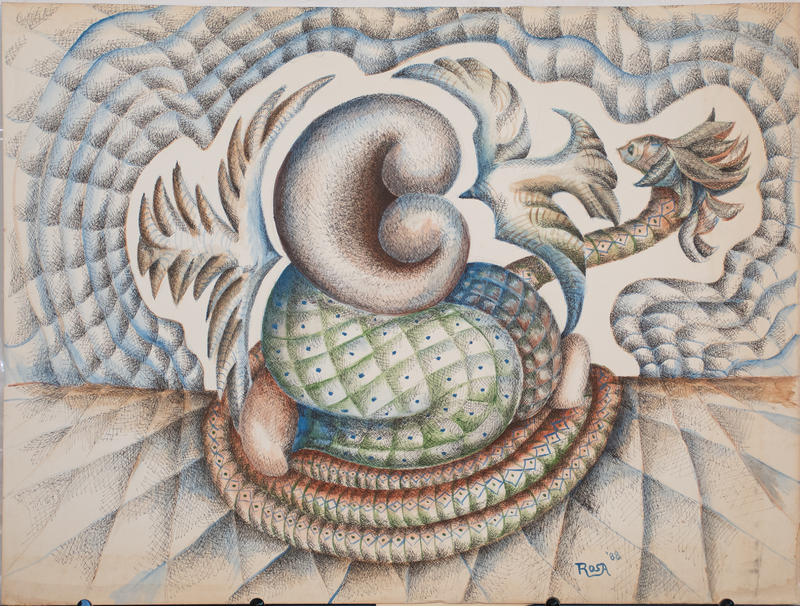
Mendoza’s drawing shows two doves and a serpent protecting an abstract, embryo-like figure. A geometric aura emanates from the bundle of creatures, perhaps alluding to the way parents protect their children. The drawing is created using crosshatching and heavy use of geometric shapes; both of these techniques are characteristic of the work of Dr. John T. Biggers and his students.
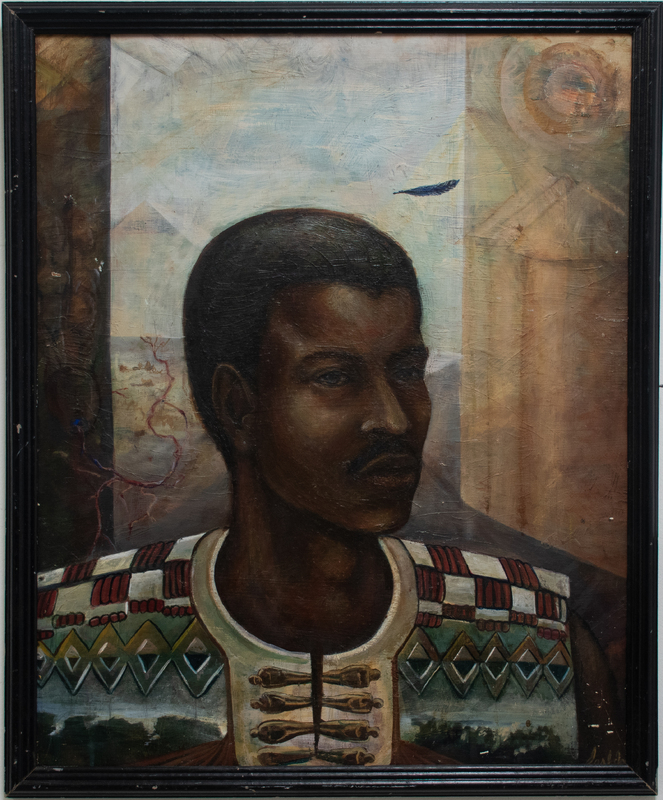
This painting is an Afrocentric self-portrait of Earl Jones, who attended Texas Southern University in the mid-1970s. Jones painted himself wearing a detailed shirt with various patterns reminiscent of African textiles. The background includes round homes with conical roofs. The buttons of Jones' shirt are in the form of humans and the shirt bears the design of a plowed field.
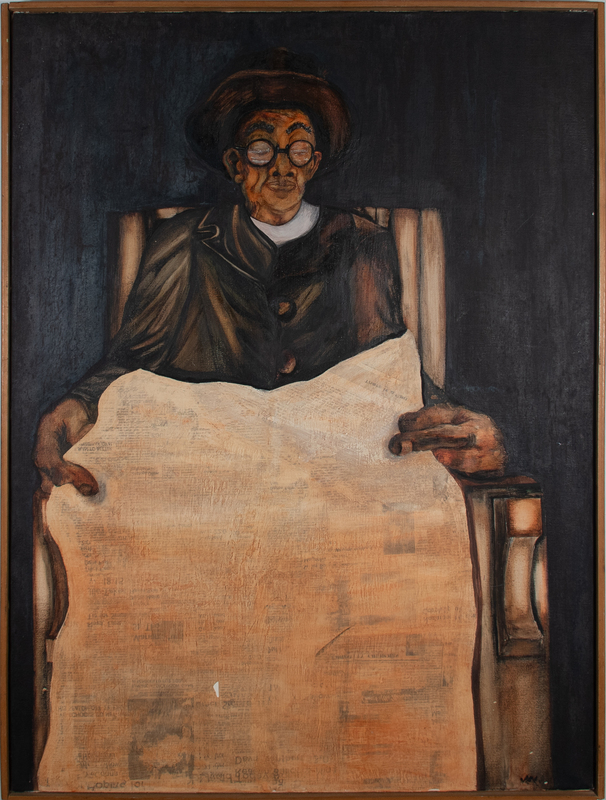
This painting depicts an older Black man sitting and reading a newspaper. The dimly lit scene is minimal and the man, his chair, and the paper are the only aspects visible, highlighting the focus of the painting. The artist cleverly incorporates real newspapers into the piece's media.
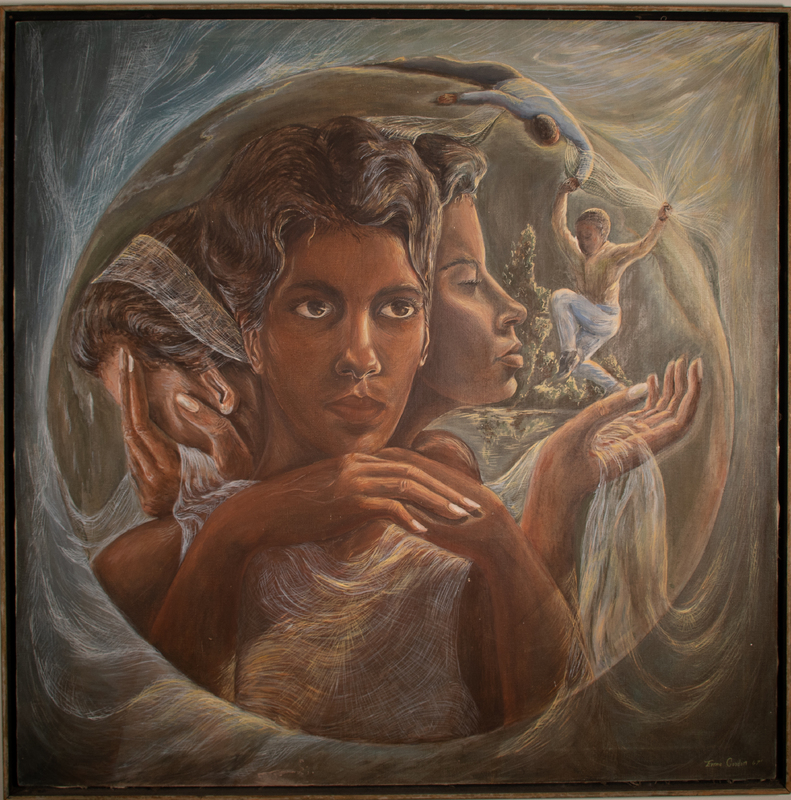
Erma Gordon's self-portrait shows the artist from three different angles. The three profiles are tied together by a light, almost translucent fabric that is worn by the frontmost figure and held by the others. This motif is used repeatedly by the artist, including in her mural. Two boys move fluidly and playfully through the background.
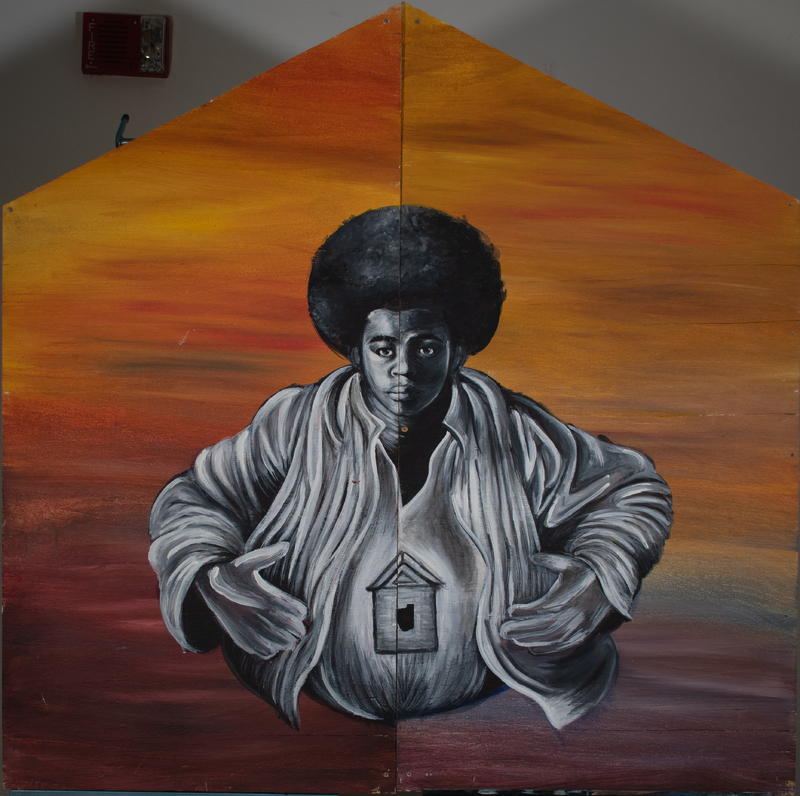
Foster’s painting is inspired by Charles White’s Sound of Silence. Third Ward is the historically Black neighborhood of Houston that Texas Southern calls home. Where White’s original features a seashell, Foster substitutes a rowhouse, the style of homes that are the heart of Third Ward. Dr. John T. Biggers, founder of Texas Southern's art department, studied under White at Hampton University.
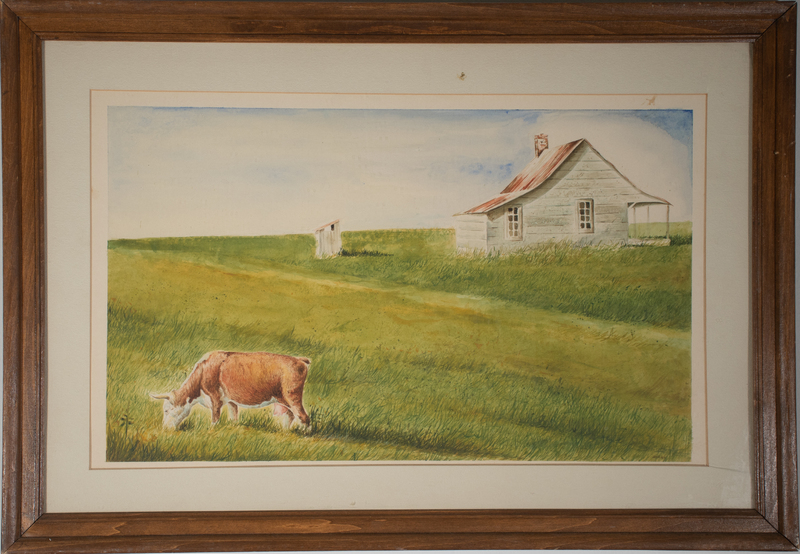
This watercolor painting by Joseph A. Moran features a grazing cow in the foreground and an outhouse and farmhouse in the background. Dr. Biggers encouraged students to create based on what they saw, which may have been this rural scene for this artist.
“Fertility” shows an abstract female figure with breasts, an enlarged belly, and oversized hands. Like nearly all students of Professor Simms, Thomas covered his piece in various embellishments, particularly spirals. Oversized hands are also a characteristic of John Biggers’ artwork. The piece has discolored over the years since its creation.
Hubbard, a student of Carroll Harris Simms, created “Figure With Turtle and Bird” in 1966. This terracotta depicts a bird, atop an abstract tree, surrounding a tortoise. These animals are often paired in folktales, including an Igbo tale where a tortoise fools birds and is punished by having his shell broken. The fable says this is the cause of the irregular shape of tortoise shells.
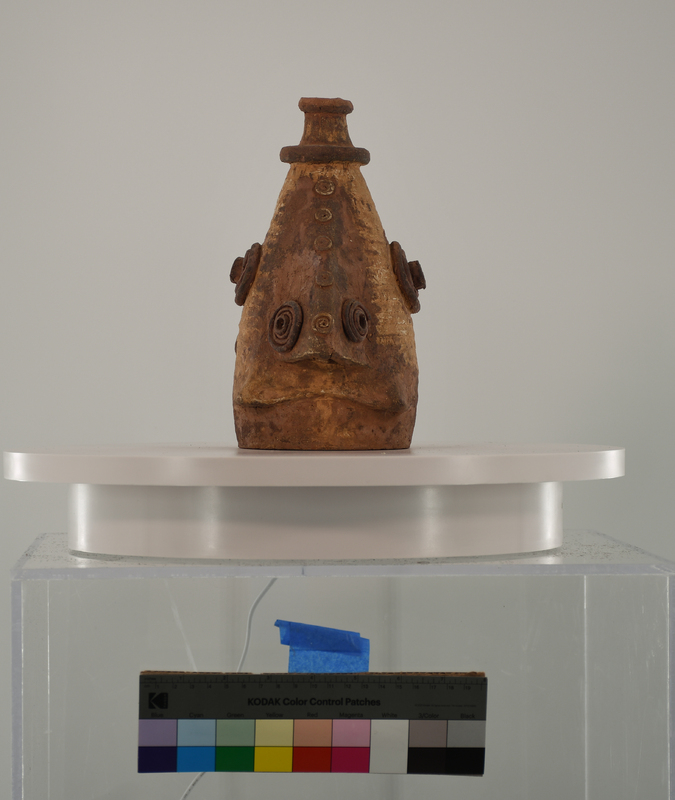
Green’s sculpture is a maquette for his terracotta, which depicts the head and upper fins of a fish. The fish is decorated with ornamental swirls, holes, and ridges. Professor Carroll Harris Simms required his students to add these additional embellishments to their sculptures.
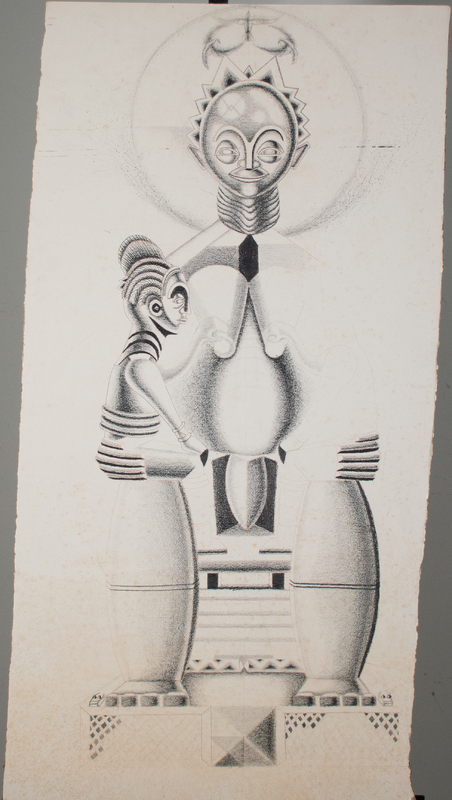
This drawing combines elements of traditional African sculpture and futuristic motifs. The figures’ faces resemble Ashanti akuaba (fertility dolls). The seated mother with a child is also a common motif in African sculpture, as seen in some works from the University Museum’s collection. The figures’ hair textures suggest a more futuristic design.
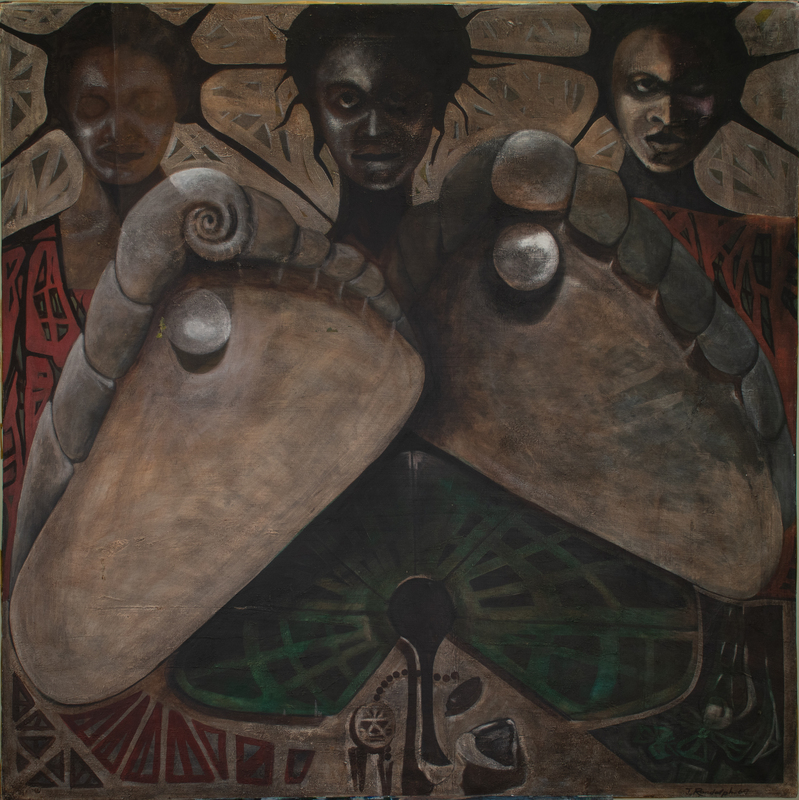
Randolph’s painting shows giant pearls, embedded in oversized shells, in front of a group of three Black women. The pearls reference the beauty of the women, whose hair extends out from their heads to form a unifying pattern between them. Towards the bottom, a leaf fan implies regalness, while the small mask indicates African heritage.
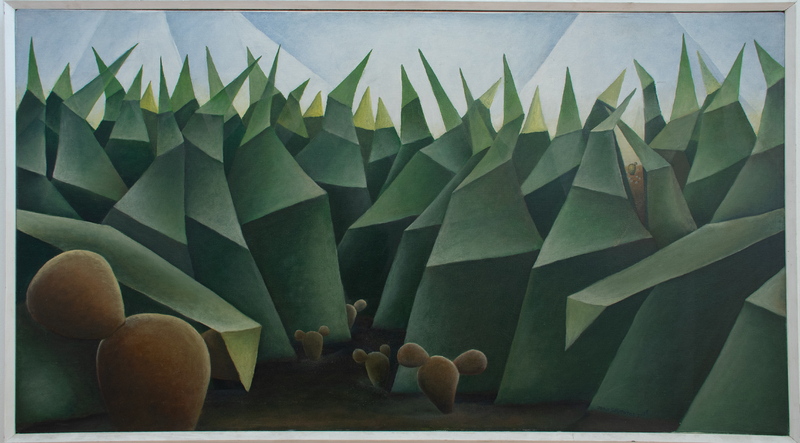
This painting by Jesse Sifuentes shows a landscape scene featuring cactuses. Several TSU art alumni have recalled that Dr. John Biggers taught them based on themes more than techniques. Many works from the 1970s use geometric styles, perhaps a reflection of lessons from the time. Sifuentes went on to become a ceramics professor at Texas Southern.
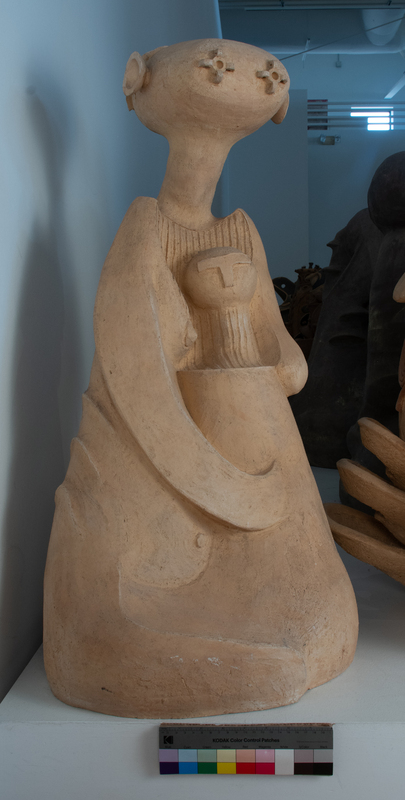
This sculpture is of a mother wrapping her arms around a childlike figure. The artist uses geometric shapes and line work to decorate the bodies and facial features and animate their embrace. Parental protection and the mother-child relationship are frequent subject matters displayed in students' work at Texas Southern University.
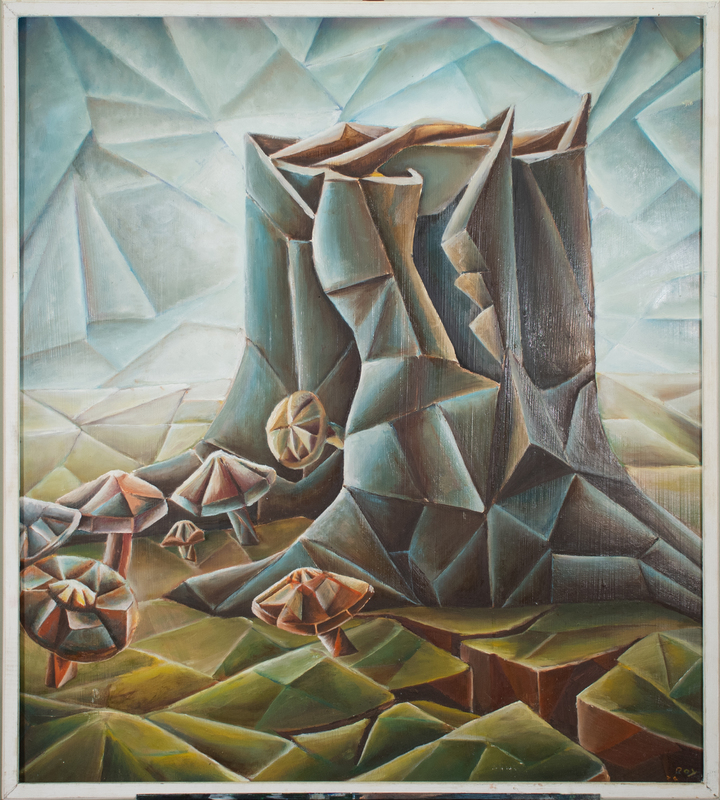
This painting by Roy Vinson Thomas is a landscape piece depicting a tree stump and mushrooms in cubist style. Cubism depicts forms using multiple geometric shapes to create depth. Many works in Texas Southern's permanent collection, particularly from the late 1970s, use this art style.
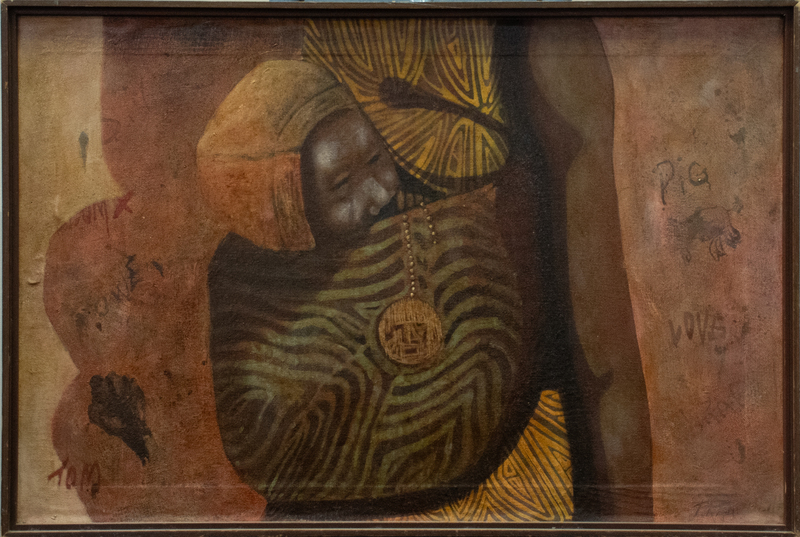
Randolph’s painting shows a mother in an African dress wearing her child on her back with a chitenge. The wall is graffitied with words like pig, power, and love, and an image of a Black power fist. The work contrasts the African aesthetic of the figures with the African-American political graffiti, expressing an idea of global Blackness.
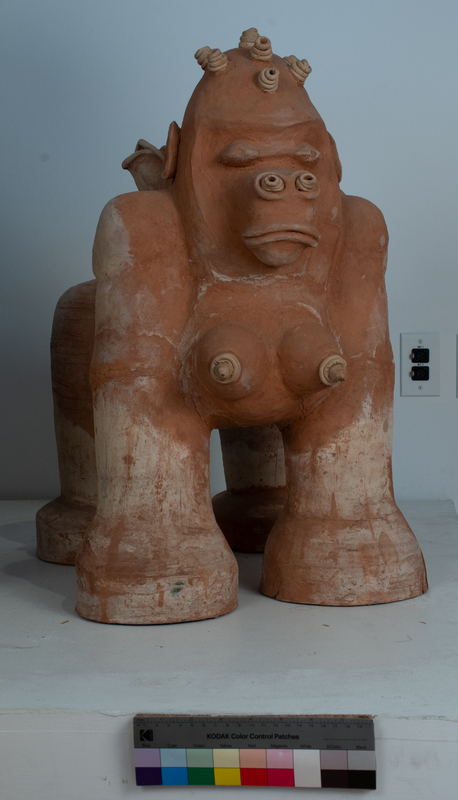
This terracotta sculpture features a mother gorilla with a child clinging to her back. The mother’s head, face, and body are adorned with spiral embellishments. A common theme featured in Texas Southern University’s permanent collection of terracotta sculptures is the relationship between mothers and their children.
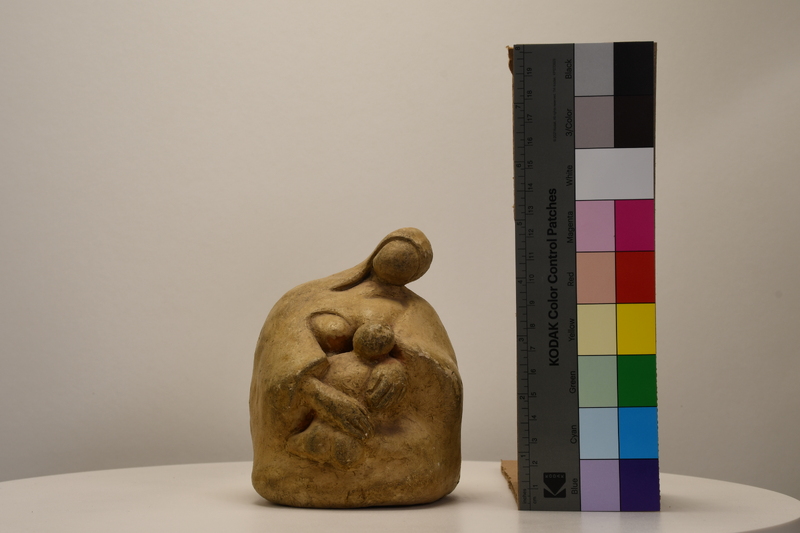
Taylor's maquette shows a mother tightly embracing one or two children. The theme of the mother and child was a recurring motif amongst the students of Professor Carroll Harris Simms, the ceramics instructor at TSU. Simms worked alongside Dr. Biggers to build TSU's art program.
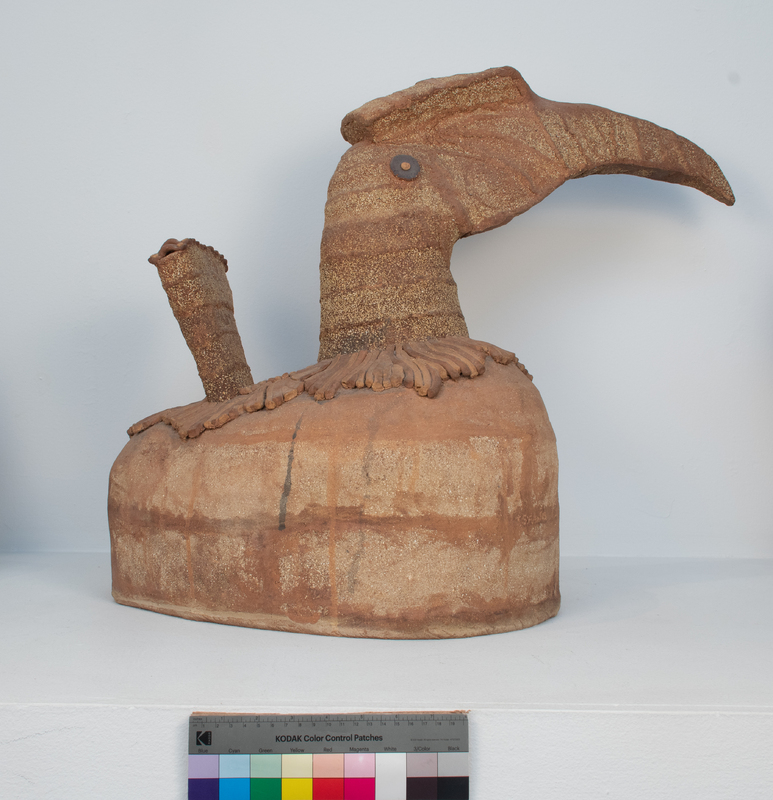
Jesse Sifuentes’ “Greater Hornbill” was created using the slab method, which was taught to students of Carroll Harris Simms. This method entails layering evenly rolled clay mixed with sand as artists build up their figures, working from the bottom layer to the top. Sifuentes frequently features hornbills, unique birds found in parts of Africa and Southeast Asia, in his art.
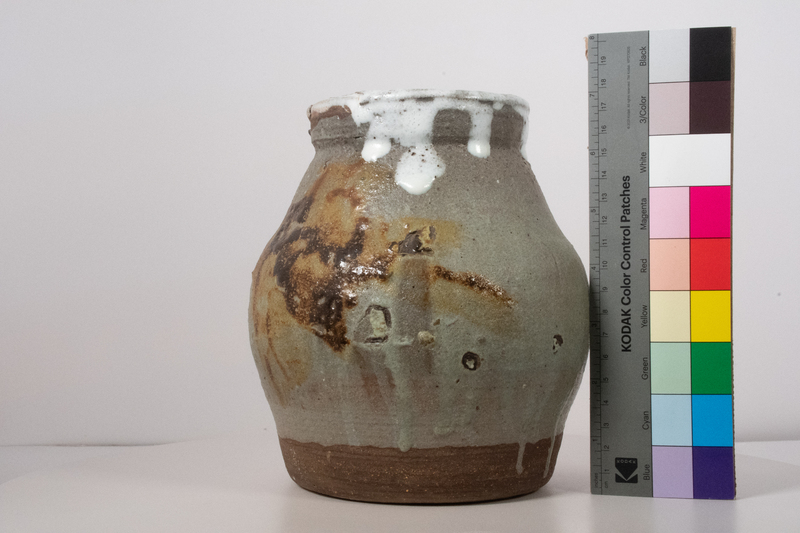
This small ceramic vessel created by Professor Carroll Harris Simms has a green hue, with a brown base and white-glazed lip and interior. Simms believed pottery to be an equally important artistic pursuit to sculpture and was encouraged to hear pottery was held in the same regard in West Africa.
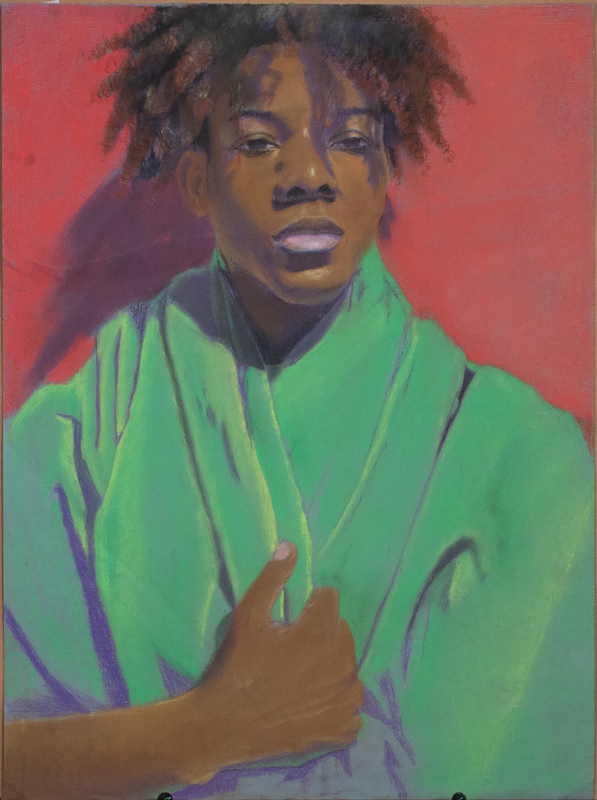
Sauls’ drawing is a portrait, completed in pastel, of a person with curly hair wrapped in a green robe. As a part of the curriculum at TSU, art students are required to create portraits. Some opt for self-portraits, while others begin to create images of those including family, friends, and peers. A variety of portraits created with different mediums can be found in the permanent collection.