University Museum at Texas Southern Permanent Collection
Title
University Museum at Texas Southern Permanent Collection
Date Modified
2025-09-22
Description
The University Museum at Texas Southern has collected a rich body of artwork by students, faculty, alumni, and outside artists. Dr. John T. Biggers, who founded the art department at Texas Southern University in 1949, established a tradition of collecting a selection of works from every graduating senior art student. Over the years, the collection has grown to include more than a thousand pieces of student artwork. Also included are works donated by alumni of the art program and art faculty members, including iconic artists John Biggers and Carroll Harris Simms. Lastly, there is a small but significant body of work by outside artists that has been donated by various collectors.
Contributing Institution
Texas Southern University
About This Record
The HCAC public history focused digital archive cataloging is an ongoing process, and we may update this record as we conduct additional research and review. We welcome your comments and feedback if you have more information to share about an item featured on the site, please contact us at: HCAC-DigiTeam@si.edu
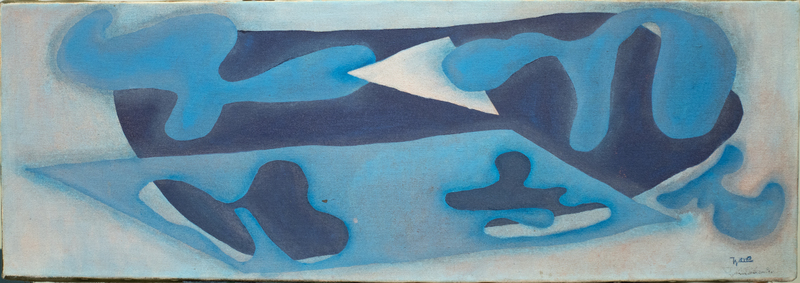
Ware’s blue, abstract painting is created in landscape form. Curved shapes are layered over an oval-shaped form. The top layer is a slanted prism with cutout shapes that slightly imitate the forms floating around. Abstract art of this sort is not commonly featured in the permanent collection of Texas Southern University.
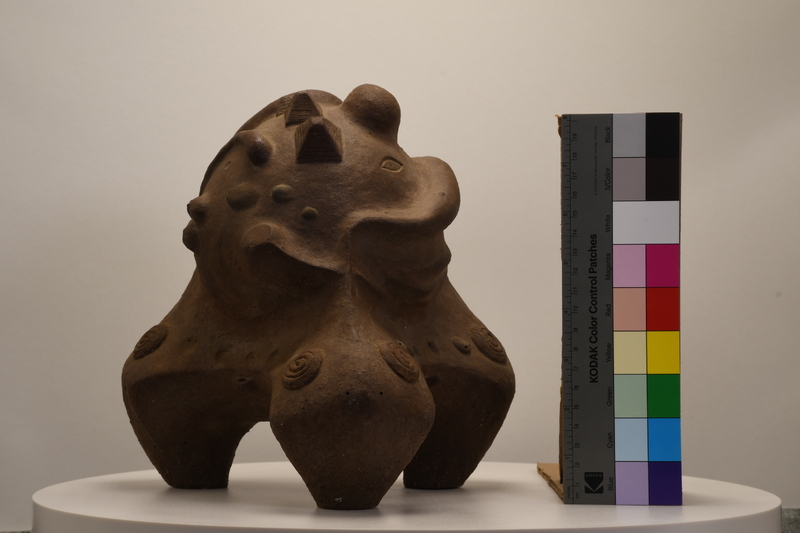
This is an abstract work featuring adornments like swirls, eyes, and pyramids. This blend of symbols suggests themes of hybridity and the fusion of cultures. Professor Carroll Harris Simms' terracotta tradition was inspired by the shrine sculptures of the Nok and Ife peoples of West Africa. In diasporic contexts, the sculptures' significance evolves.
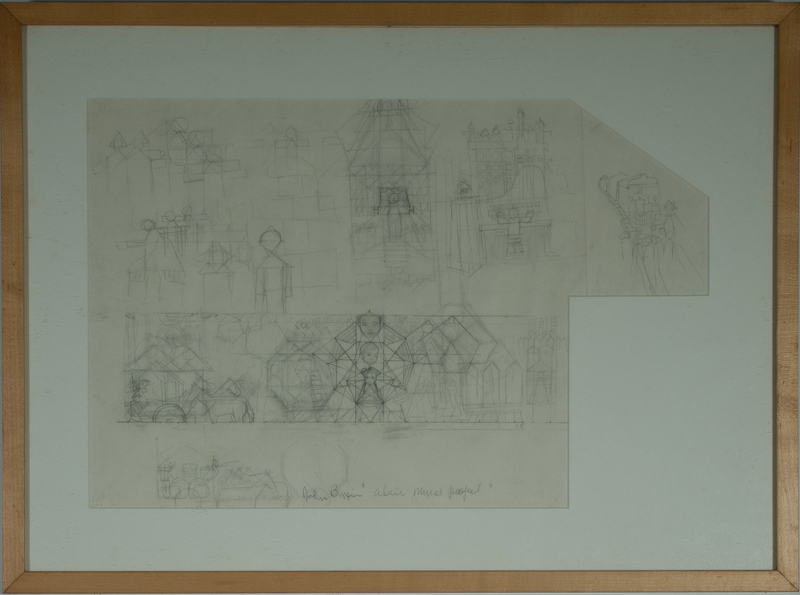
This sketch by John Biggers is part of his planning process for his mural in Christia V. Adair Park, named for an iconic Houston civil rights activist. As part of this project, Biggers also designed a pavilion to contain this mural, drawing inspiration from the homes of the Dogon people of Mali. The mural itself features scenes from Adair's life interspersed with Biggers's own Afrocentric iconography.
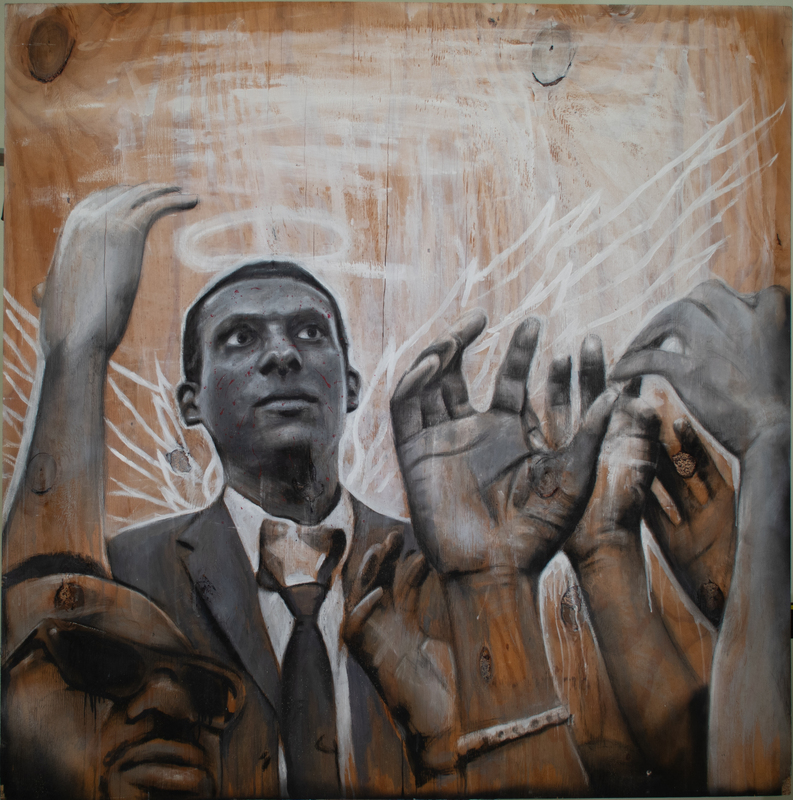
Cornett's work shows Stokely Carmichael with angelic features amidst raised hands. He was a key civil rights activist, a leader of the SNCC, and popularized the term "Black Power." He spoke at Texas Southern one month prior to the TSU Invasion, when Houston police invaded the campus, fired 5,000 rounds into dormitories, and arrested 488 students.
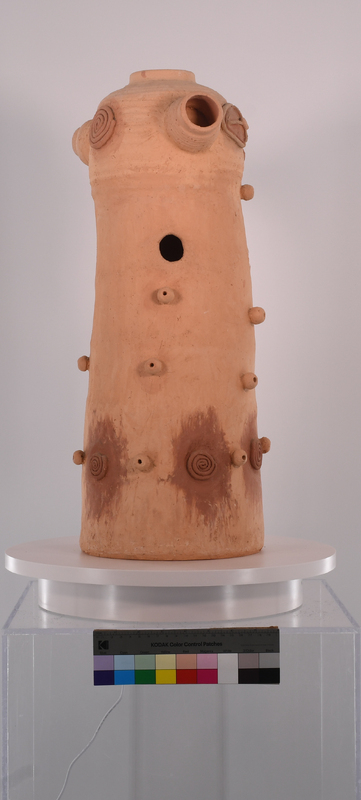
Lacy’s terracotta tower sculpture features cut-outs throughout the body. The top bears an abstract, smiling face with conical ears. The work is decorated with spirals and rolled balls of clay, both of which are among the signature embellishments used by students of Professor Simms. Lacy features this sculpture prominently in her Hannah Hall mural, where it appears as a building.
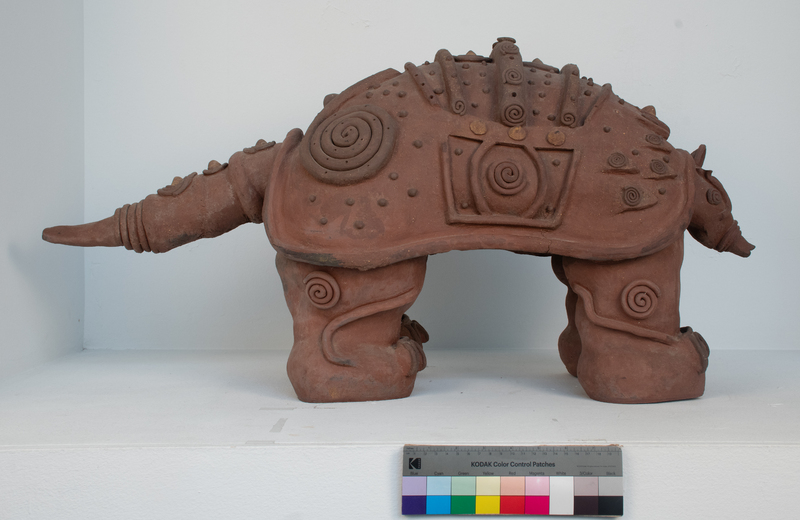
Johnny Jones’s sculpture, “Armadillo,” features decorative embellishments along the body of the animal, especially the shell. The spiral motif is often found on the sculptures of student artists taught by Carroll Harris Simms. Armadillos, which utilize their shells for protection, are commonly found in Texas.
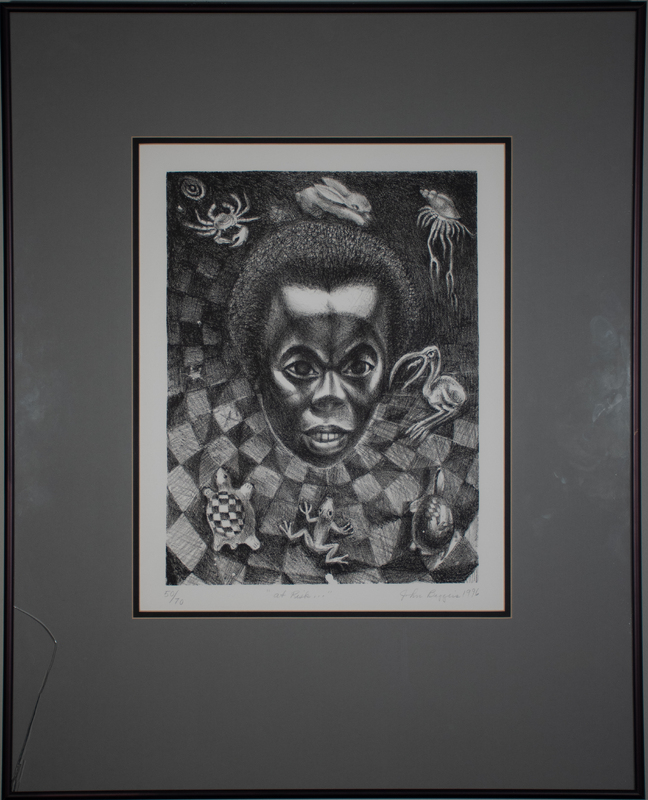
This Biggers print shows a person's head surrounded by animals and a checkerboard. Checkerboards and swirls are common motifs in Biggers' work, which he referred to as sacred geometry. The pictured animals are symbolic; for instance, tortoises represent longevity and rabbits represent bad omens.
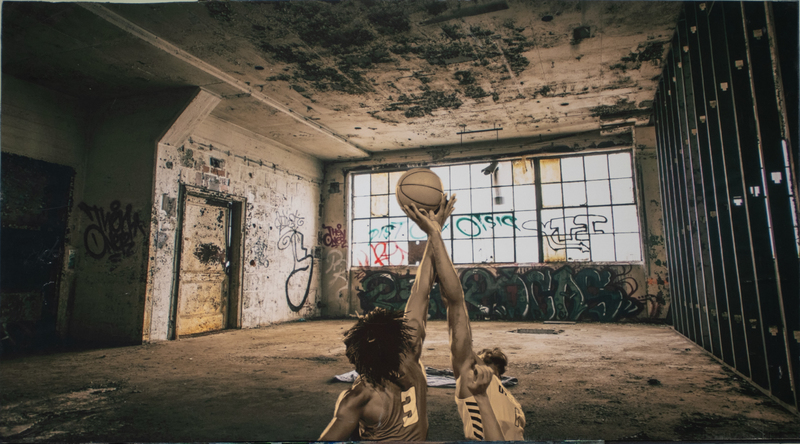
This work by Allen shows two basketball players reaching up for a jump ball amidst a run-down, graffiti-covered warehouse. The scene has minimal color, save for the graffiti, which enhances the abandoned atmosphere. Allen is an alumnus of Texas Southern and focuses on highlighting the Black experience in his work, often creating collages that include sports imagery.
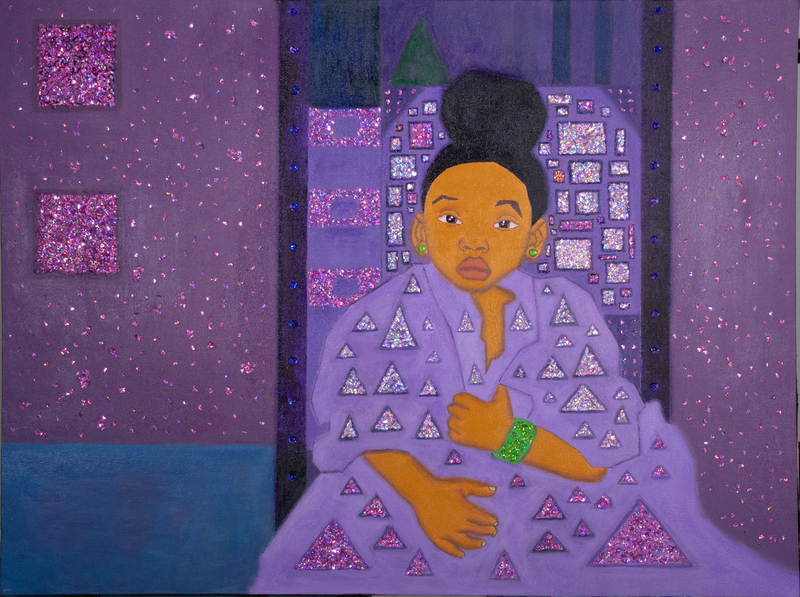
Hicks’ shimmering painting shows a young girl, clad in purple cloth, wearing emerald jewelry against a purple geometric background. Purple is often associated with royalty and the glittering elements add to the piece’s sense of luxury and decadence. Hicks graduated from Texas Southern University in 2018.
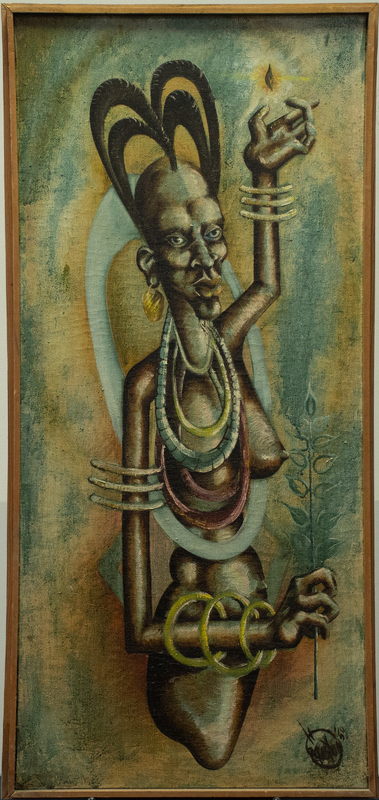
Michaux’s painting shows a nude woman draped with jewelry from her ears, neck, and arms. In her right hand, she holds a branch with leaves; a small flame extends from her left hand, above her head. After graduating from Texas Southern, Michaux went on to teach art at several universities, including HBCUs Southern University, North Carolina Central University, and South Carolina State University.
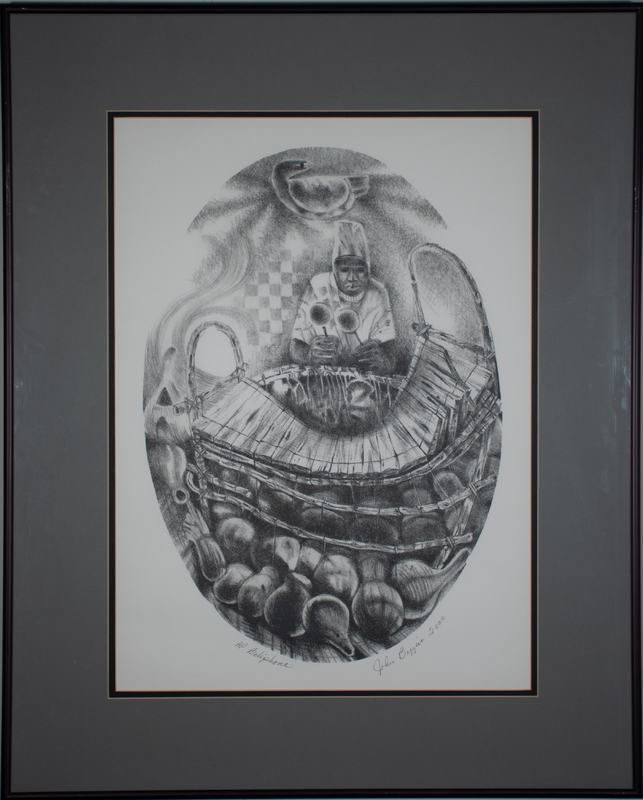
This Biggers print shows a figure playing a balafon, with a sankofa bird overhead. The balafon is a West African percussion and the sankofa bird signifies the importance of the past in improving the future. Taken together, they show the importance of music in preserving culture.
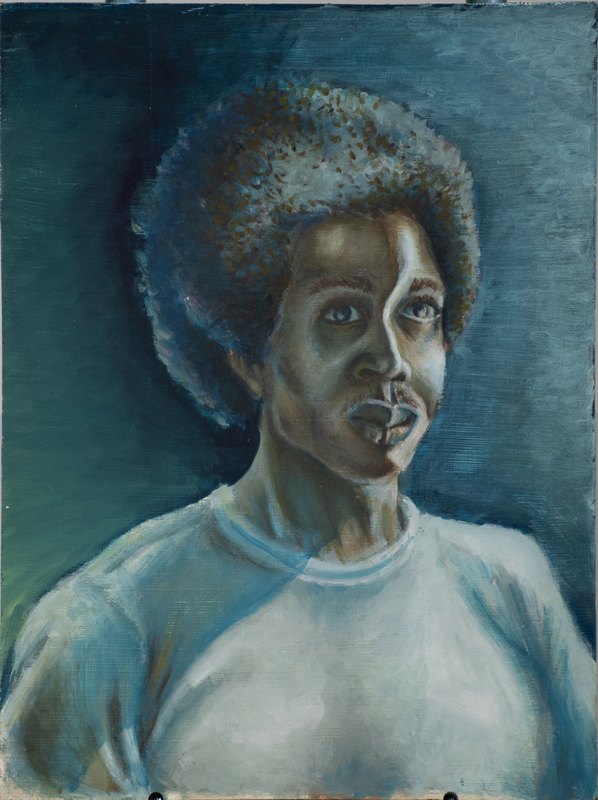
Samples’ painting is a self-portrait. During the elementary painting course, Texas Southern art majors are required to paint self-portraits. Samples’ classmates recall being intimidated and inspired by his talent and work pace when they sat next to him in the studio. Samples was one of the founders of Houston’s Project Row Houses and now works as an art conservator at the Museum of Fine Arts, Houston.
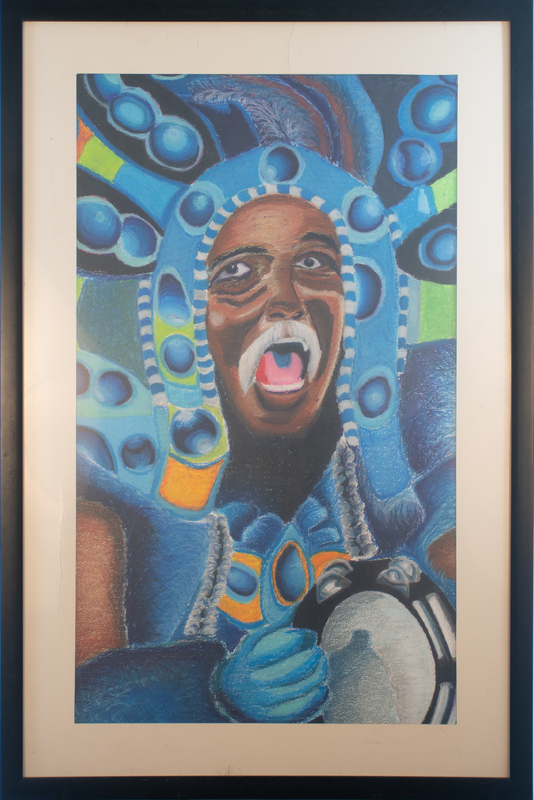
Remble's drawing portrays renowned Mardi Gras Indian chief David Montana. Mardi Gras Indians refers to Black New Orleanians who draw from Creole, Indigenous, African, and Afro-Caribbean tradition to develop a unique form of visual culture and resistance. Remble, a Texas Southern graduate, was born in New Orleans and later moved to Houston. In his own words, he aims to "explore and preserve the diverse subcultures of the American South" through his art.
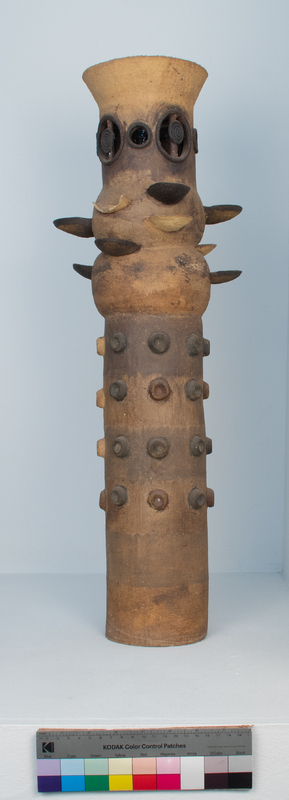
Elizabeth Montgomery Shelton’s terracotta is made up of a variety of colored clays with embellishments that have been painted using black and tan slips. The top half includes layers of plates extending out from the surface, while the bottom half is evenly decorated with pressed circular clay. The structure perhaps mimics an instrument or a bird feeder.
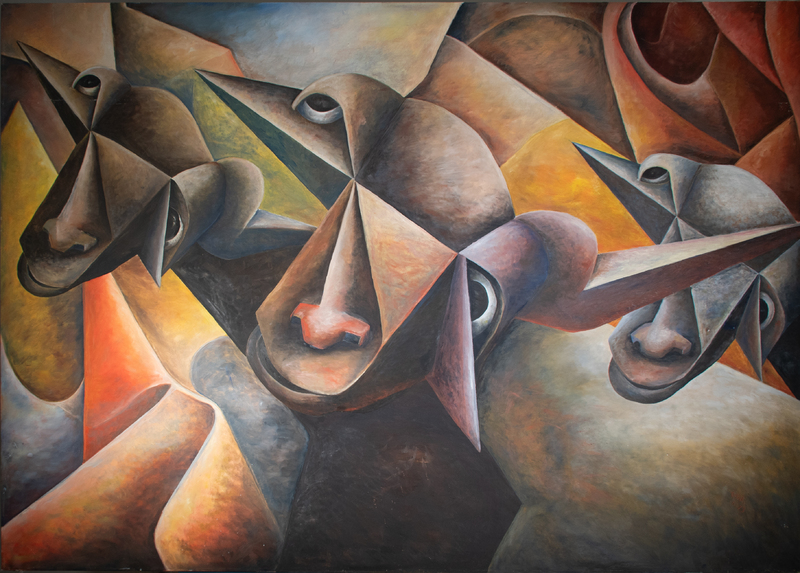
This abstract work features three distorted cows’ faces that seem to be staring upwards and at the viewer, against a colorful triangular background. Vital was an art student at Texas Southern and later went on to become a faculty member in the art department. Many works in the school’s collection, particularly from the 1970s, use cubist styles.
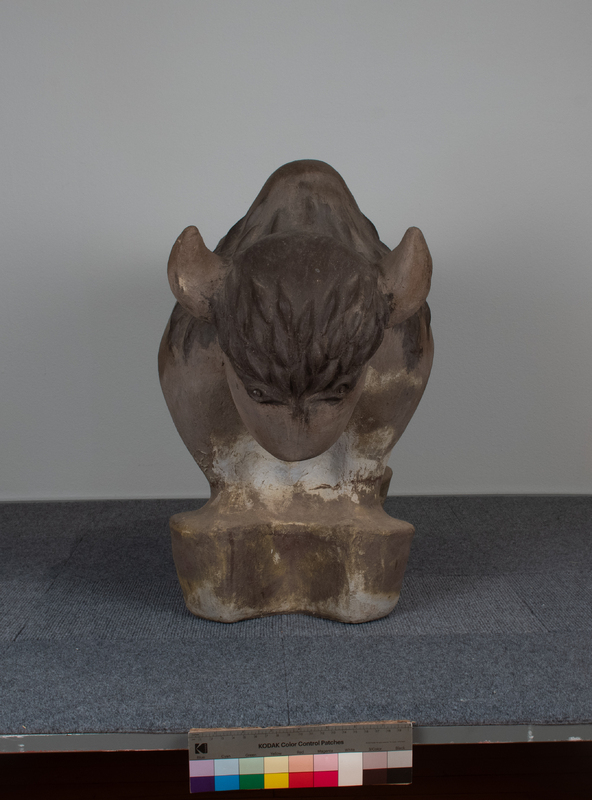
Erma Gordon’s “Bison” sculpture includes two-toned clay with a smooth finish on the body. The hair of the bison is carefully sculpted on the top of its body, lending a realistic, soft texture. The artist depicted herself creating this sculpture in her Hannah Hall mural. Wildlife are frequent subjects of TSU student terracottas.
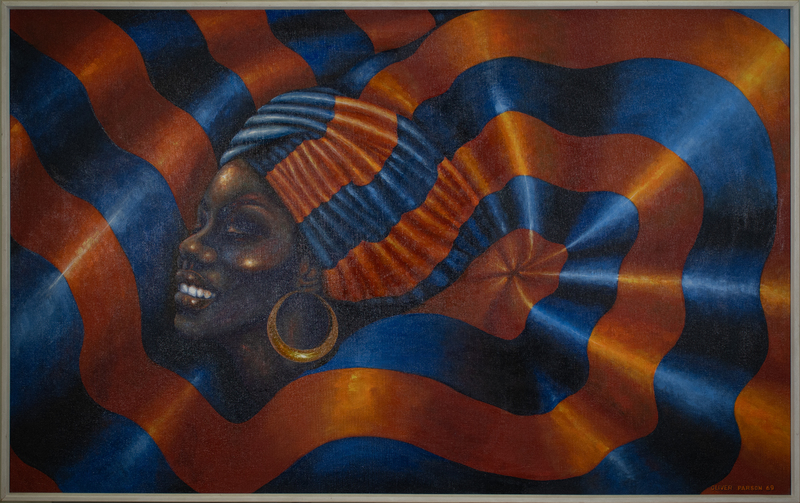
This radiant work by Oliver Parson engulfs the viewer in the spiraling flow of a smiling woman's silky headwrap. The headwrap is a fashionable method of hair protection and expression of identity that is shared among women across the African diaspora.
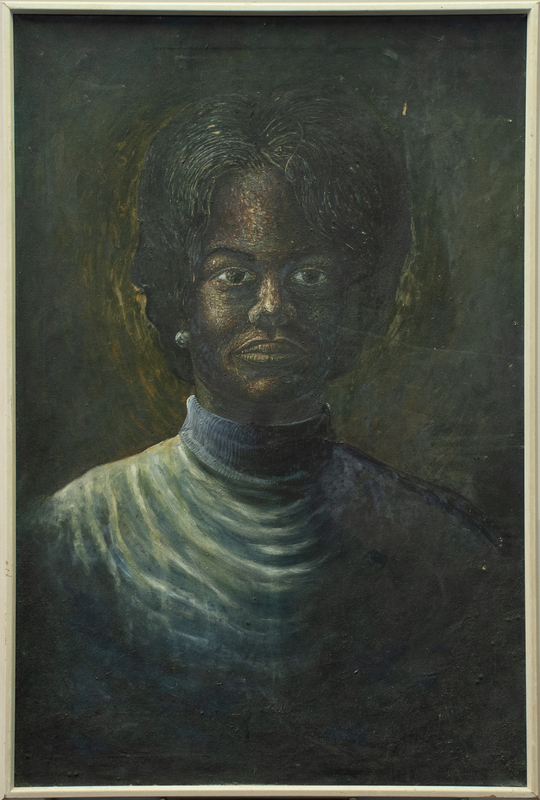
Mills' painting is a portrait of an unknown woman, dressed conservatively in a turtleneck, with short hair and a pearl earring. As a part of the art curriculum, students are required to create portraits during elementary painting. Many of Mills’ pieces share this painting’s muted and dark color palette. Some of Mills’ classmates recall him being color-blind, perhaps partly explaining these color choices.
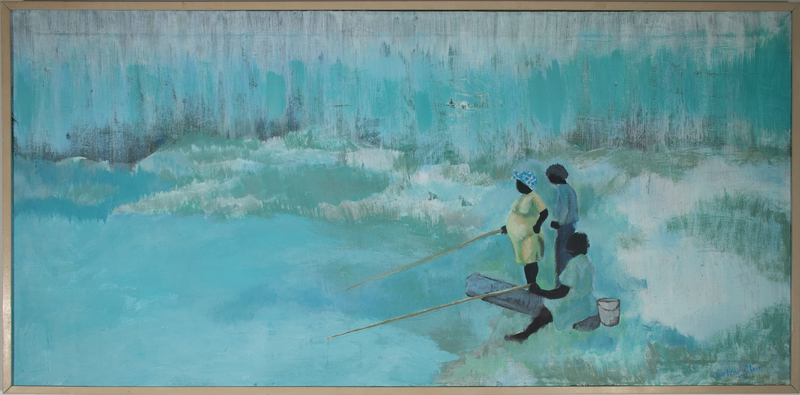
This painting by Charlene Claye shows a group of three people, including at least two women, fishing by a pond. This painting highlights one of the many types of labor Black women perform to support their families and communities. The broad, blue strokes extend a sense of timelessness and depth.
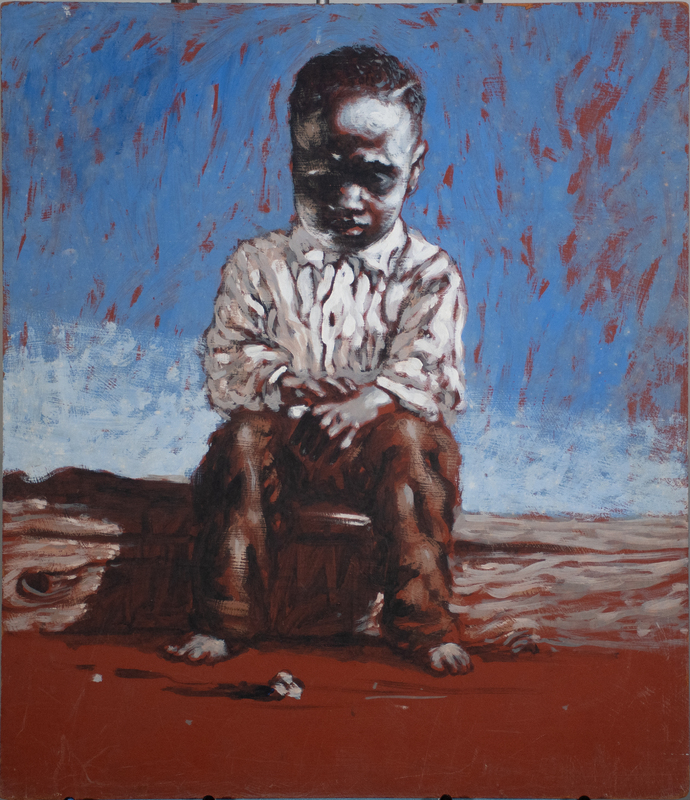
Oliver’s painting depicts a young boy sitting on the stump of a tree. The boy is barefoot and wearing a contemplative expression on his face. Oliver’s style in this painting is very free-form, with quick and abrupt brushstrokes throughout the composition. Oliver is one of the most successful art graduates from TSU, going on to be the only North American artist to design scarves for the fashion house Hermes.
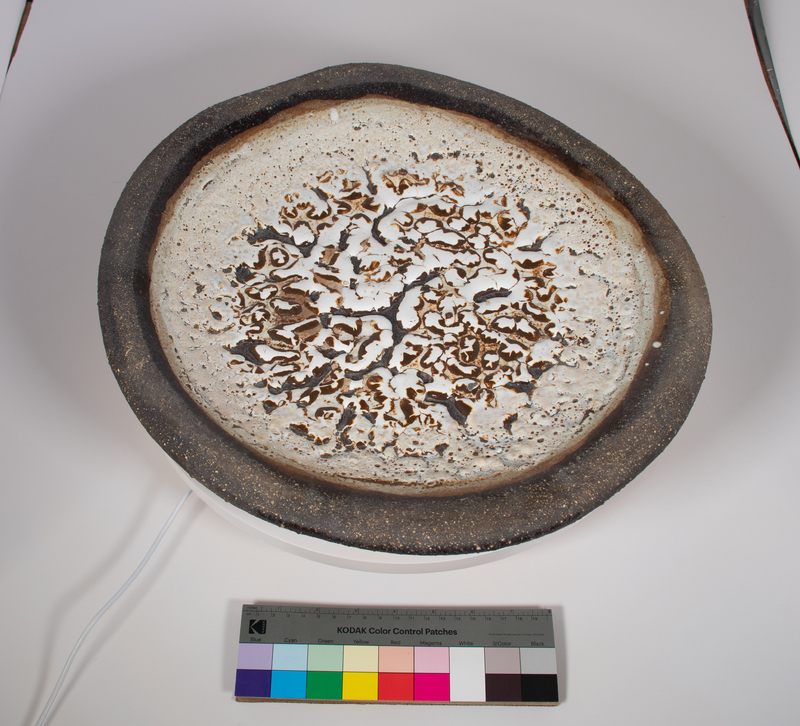
This large ceramic plate created by Carroll Harris Simms features multiple textures, including a bubbling glaze covering most of the top of the piece. Simms worked alongside Dr. John T. Biggers to build Texas Southern's art department from the ground up. Simms' decorative artworks remain in high demand by collectors.
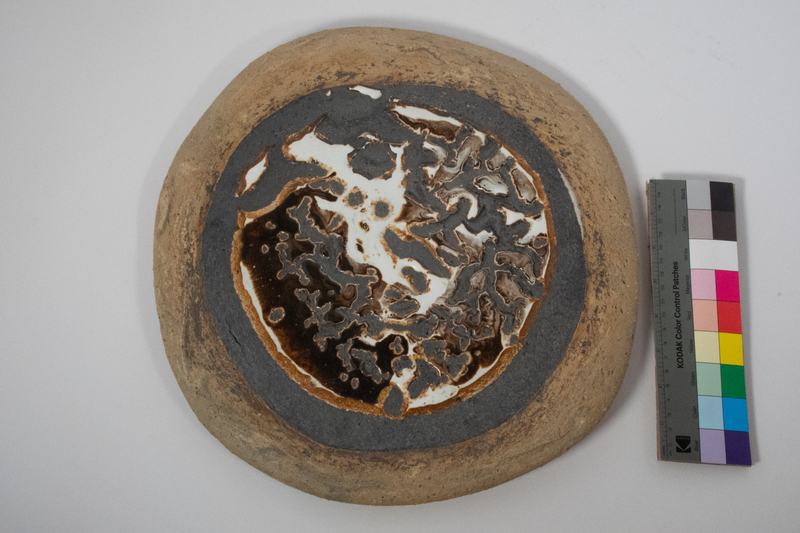
This large, brown ceramic plate created by Carroll Harris Simms features multiple textures, including a bubbling glaze covering most of the top of the piece. Simms worked alongside Dr. John T. Biggers to build Texas Southern's art department from the ground up. Simms' decorative artworks remain in high demand by collectors.
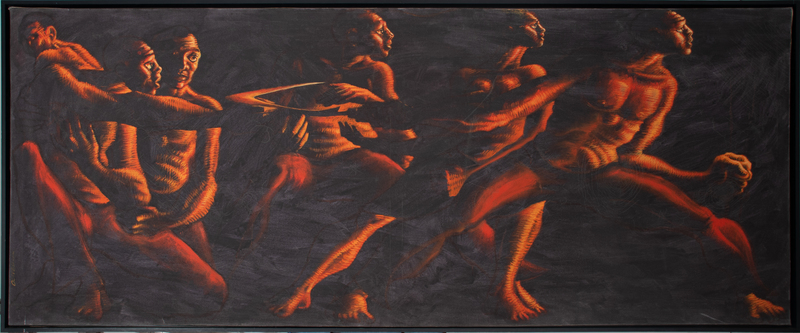
Oliver's painting shows a group of shirtless men looking towards an unseen figure or force. The painting makes heavy use of crosshatching and red and black hues. The composition bears significant resemblance to Oliver's mural Fire Fighters, which can be seen in the 1978 book, Black Art in Houston: The Texas Southern University Experience.
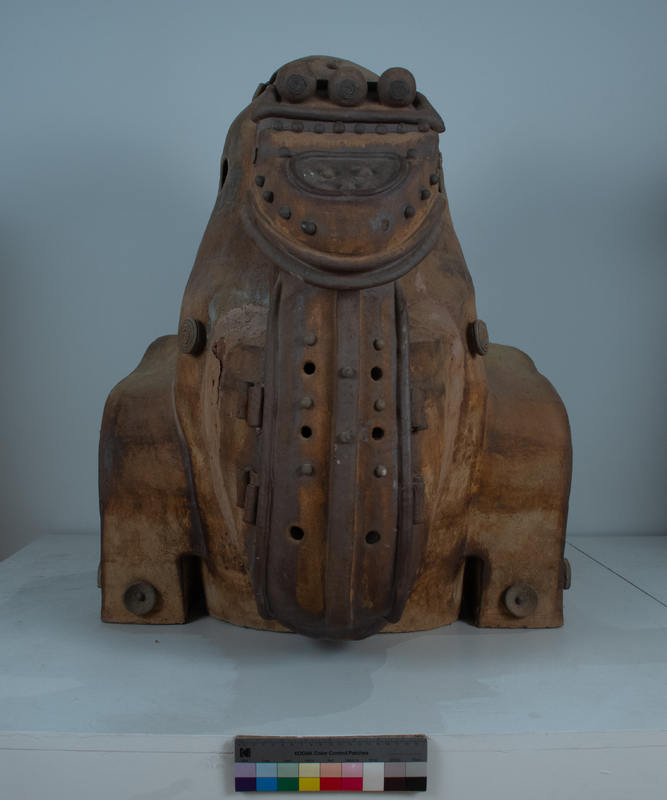
Settles, a student of Carroll Harris Simms, created the sculpture “Camel” in 1978. The creation of a large terracotta sculpture was a part of each art student's curriculum. The design features include a huge hump and embellishments, including spirals, on the exterior. Sculptures lacking sufficient ornamentation were often not retained for the collection.
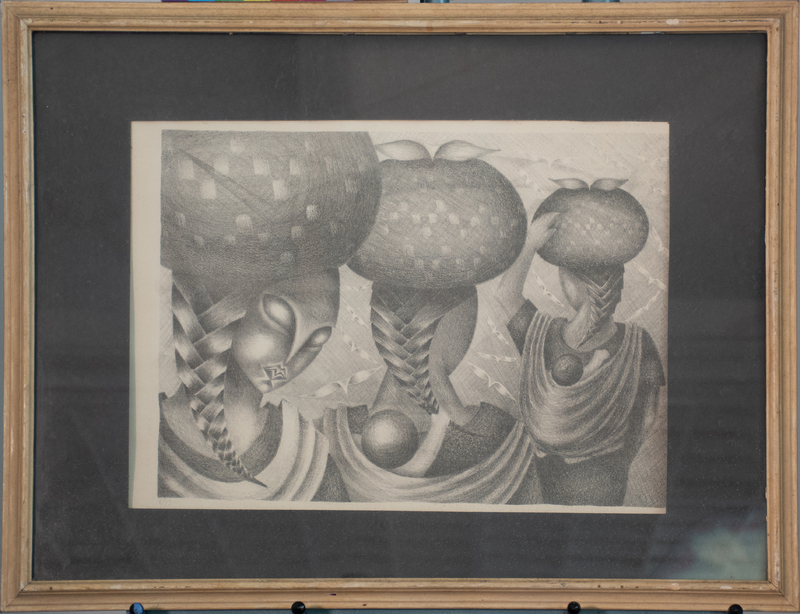
Charoennimuang’s print shows three women wearing babies on their backs and carrying baskets atop their heads. Two of the women’s faces are turned away from the viewer, while the closest gazes back fiercely. All three women’s hair is braided. This print highlights some of the varied and essential types of labor that women carry out.
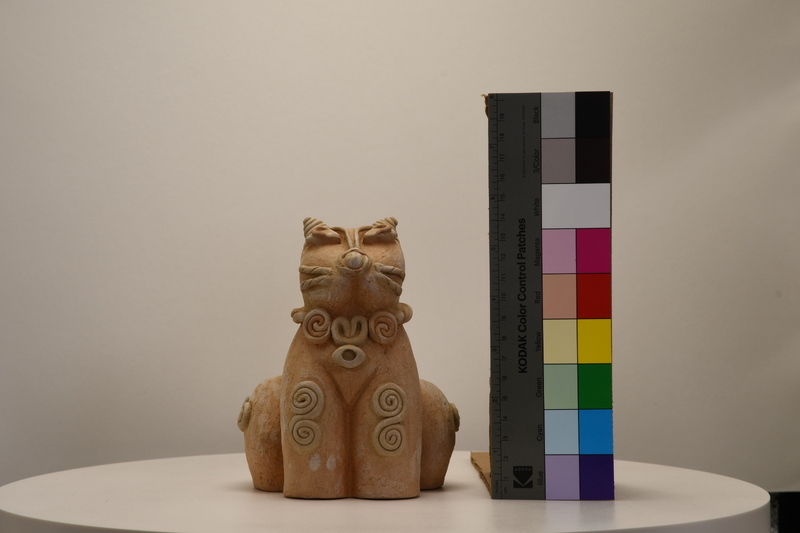
This maquette, created by an unknown Texas Southern University art student, shows a feline creature at attention. There are various swirl patterns and textures on the figure. The swirls are a required component for the maquette project, as Carroll Harris Simms pushed his students to richly embellish their works.
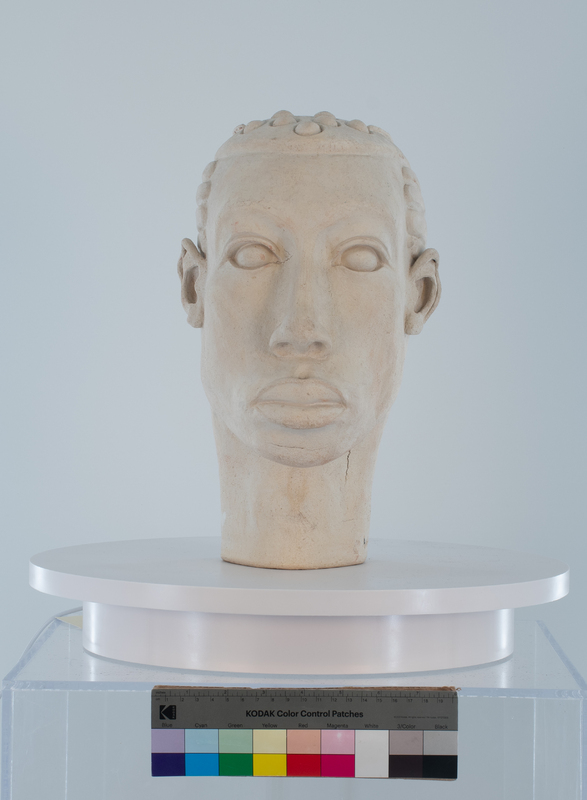
Walker’s bust was created during his time as an art student at TSU. Under the instruction of Professor Carroll Harris Simms, artists would create self-portraits embellished with textures, like those seen in the hair of this sculpture. While most were made from terracotta clay, this one is made from plaster. These busts are inspired by Nok terracotta sculptures and Ife busts, which Simms saw during his travels to Western Africa.
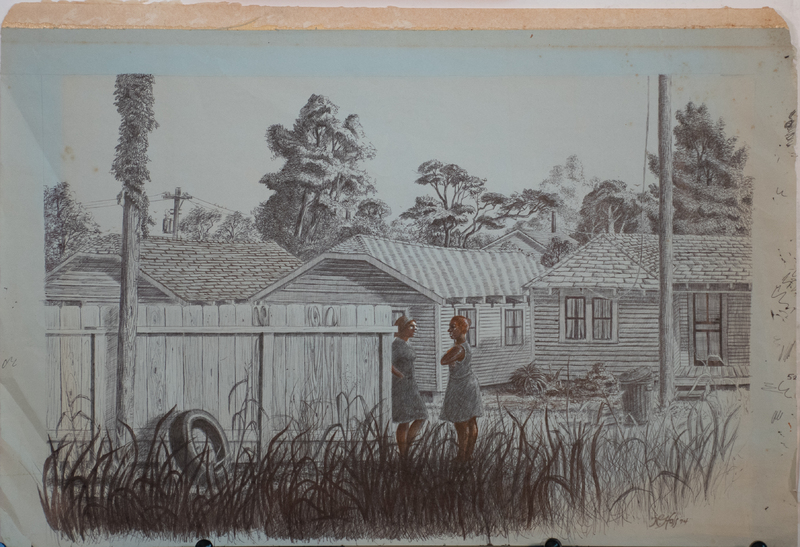
Hals’ drawing shows two women chatting on the street. Their environment, filled with shotgun homes and tall grass, resembles Houston’s Third Ward, the historically Black neighborhood that Texas Southern University calls home. TSU art students, at Dr. Biggers’ instruction, often looked to their surroundings for inspiration.
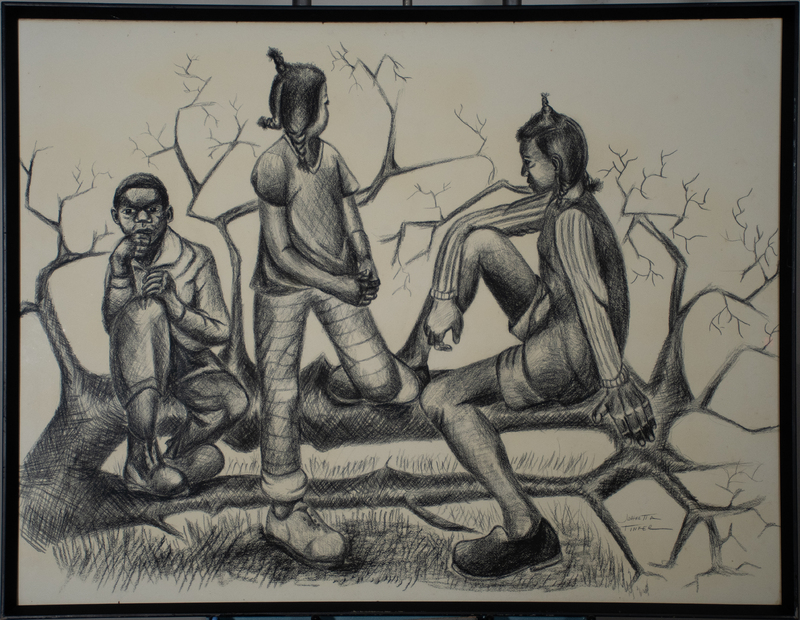
Tinker’s drawing shows three children lounging around a fallen tree. The two girls are depicted with elongated limbs, and the rightmost girl also has oversized hands. Dr. Biggers influenced his students to draw the hands and feet of their subjects in great detail and disproportionately large. This style continues to be taught to and implemented in the works of TSU artists in the 21st century.
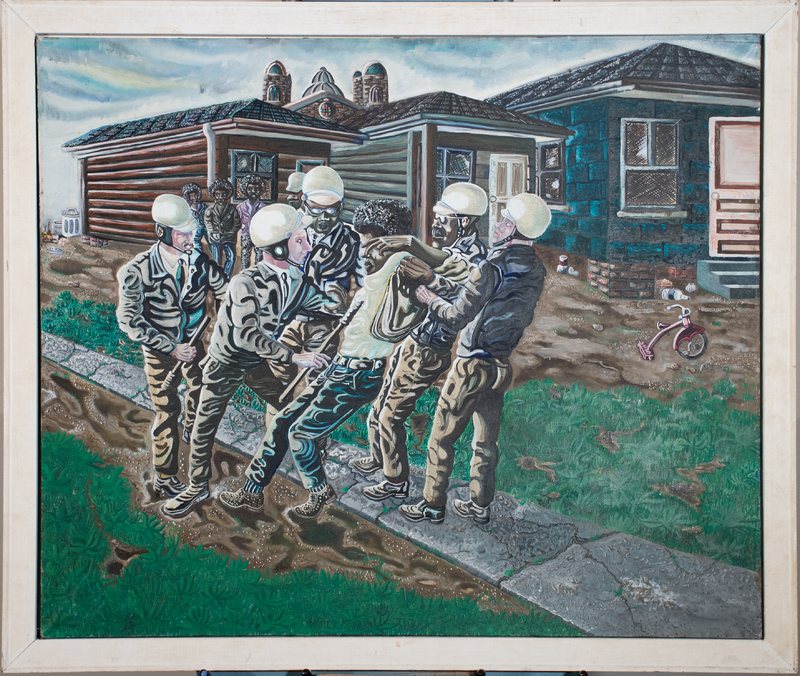
Settles' painting shows a Black man abused by a group of 5 police, while a group looks on in the background. This painting reflects frustration with police brutality and racism towards the Black community. Settles replicated this image (of the police surrounding the man) in another of his paintings with a different, more abstract background.